A resolution expressing the sense of the Senate on the arrest of Mikhail B. Khodorkovsky by the Russian Federation.
Legislative Activity
Stay on top of the latest movement without scrolling through every action
Resolution agreed to in Senate without amendment and with a preamble by Unanimous Consent. (consideration: CR S16201-16202; text as passed Senate: CR S16202)
December 9, 2003
View full timeline
Introduced in Senate
November 4, 2003
Referred to the Committee on Foreign Relations. (text of measure as introduced: CR S13911)
November 4, 2003
Committee on Foreign Relations. Ordered to be reported without amendment favorably.
November 6, 2003
Committee on Foreign Relations. Reported by Senator Lugar without amendment and with a preamble. Without written report.
November 7, 2003
Placed on Senate Legislative Calendar under General Orders. Calendar No. 380.
November 7, 2003
Resolution agreed to in Senate without amendment and with a preamble by Unanimous Consent. (consideration: CR S16201-16202; text as passed Senate: CR S16202)
December 9, 2003
Floor Debate
9 membersWhat members said about S.Res. 258 on the floor
 TL
TL TL
TL FRW
FRW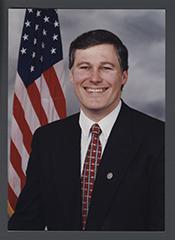 JI
JI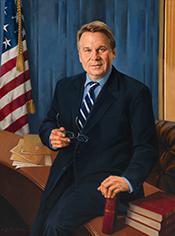 CHS+4
CHS+4
Floor Debate
9 membersWhat members said about S.Res. 258 on the floor
Mr. Speaker, I ask unanimous consent that all Members may have 5 legislative days within which to revise and extend their remarks on the topic of my 5-minute speech, and that I may include extraneous…
Mr. Speaker, I ask unanimous consent that all Members may have 5 legislative days within which to revise and extend their remarks on the topic of my 5-minute speech, and that I may include extraneous material on the same.
Mr. Speaker, I rise today to call the attention of my colleagues to my serious concern with the lack of the rule of law in Russia.
Fifteen years ago, all of us watched with great excitement and great optimism as the Communist system came to a resounding close while the Russian people and the government went through an historic transformation. We saw President Boris Yeltsin stand up against tanks in the streets of Moscow, and we watched as Russia moved to embrace Democratic change.
Mr. Speaker, unfortunately, in the last few years, we have watched as the government of Mr. Putin has slowly but surely pulled back from Democratic change. Freedom of the press has increasingly declined, particularly in the realm of television. Elections have been less open and less Democratic. The rule of law has been proscribed by government regulation. Increasingly, government control has restricted the freedoms that had just begun to blossom in post-Soviet Russia.
Mr. Speaker, the most recent, and in many ways the most dramatic, example of this decline of the rule of law in Russia has been the Russian government's political prosecution and persecution of Mikhail Khodorkovsky, the former chairman of Yuko Oil, one of Russia's largest companies, and the one that had gone the farthest in moving towards transparent western market-oriented business practices. It was the Russian company which had made the greatest progress in corporate transparency. The company was on the verge of an unprecedented business deal with Western oil companies.
The Russian prosecutors, clearly at the demand of the political leadership, initiated a political prosecution of Mr. Khodorkovsky. He was arrested last summer by a mob of armed security forces as his plane landed at a Siberian airfield. Since that time, he has been held in a Russian jail. He has been limited in his contact with his own attorneys, he is not permitted to communicate with the outside world, and he appears in court in a steel cage.
This treatment of an individual who at this point has a tax dispute with the Putin regime violates all principles of due process and the rule of law.
Mr. Speaker, I am calling attention today of our colleagues in the Congress to this decline of civil and human rights in Russia. Together with my distinguished colleague, the gentleman from California (Mr. Cox), we have established the Russia Democracy Caucus to work for the development of the rule of law and the consolidation of civil and human rights in Russia.
Mr. Speaker, a number of my colleagues will be submitting their statements joining me in deploring the rollback of freedom and civil rights in Russia during recent years.
Mr. Speaker, last month, on a visit to Moscow, I met with Ambassador Alexander Vershbow and other embassy officials to get an update on the political situation in that country. I also met with legal experts and human rights groups who provided a grim account of the recurring threats to individual and political freedoms that regrettably harkens back to the old Soviet days.
Respect for human rights is the cornerstone of a civilized society. Even the Russian constitution recognizes this fact, as provided in Article 2:
The individual and the individual's rights and freedoms
represent the highest value. It is the duty of the state to
recognize, respect, and protect the rights and freedoms of
the individual and the citizen.
Our own commitment to human rights as it relates to Russia and other former Communist countries is manifest in the Helsinki Final Act in 1975, in which we effectively utilized the so-called ``Basket Three'' of that document to publicly hold the Soviet Union accountable for its violations of human rights and civil liberties.
For a brief moment, during President Yeltsin's presidency, we thought indeed there would be freedom and liberty in Russia. It was during this time, the G-8 member nations allowed Russia to participate as an ad-hoc member, so long as it adhered to the principles of Constitutional democracy, rule of law and human rights. My colleague Chris Cox and Senator Joe Biden have spoken out recently about whether Russia, under President Vladimir Putin, deserves a place at the G-8 table and indeed if that country should host the next session in 2006.
I would also remind my colleagues that Resolution H. Con. Res. 336, which enumerates these shortfalls and recommends that Russia be denied participation in G-8 sessions until it demonstrates its worthiness as a Democratic state, recently passed the House International Relations Committee. A similar measure is cosponsored by Senators McCain and Lieberman.
Mr. Speaker, our own State Department has documented what we have learned from a variety of sources concerning the deteriorating situation as it relates to rule of law, freedom of expression, and human rights in Russia. Over the past year, reports from human rights groups, NGOs, the European Union, legal scholars, and wide spread media reporting of conditions in Russia bear out what our own government has reported. On Secretary of State's last trip to Russia, he made it a point to voice his concerns directly to President Putin and publicly expressed them through the limited media outlets that exist in Moscow.
There is much that concerns me about Russia today. In view of the time limitation I cannot address all of them, but I would like to mention a few that I believe deserve urgent attention.
First is the case against Mr. Mikhail Khodorkovsky, chairman of YUKOS Oil Company. This week Mr. Khodorkovsky goes to trail in a court that is hardly known for its integrity or independence. Virtually all of the legal entities and courts outside Russia have ruled against the Russian government, generally finding the cases lack in legal merit and being political in nature. Little wonder Mr. Khodorkovsky is already a condemned man. Hardly anyone inside or outside Russia seriously believes he will receive a fair and just trial.
Since his arbitrary arrest last fall by masked gunmen and detention, Mr. Khodorkovsky has been subjected to numerous violations of his due process rights. The Kremlin has directed the case against him for purposes that are widely seen as political, not criminal. Indeed the case is being held in the notoriously corrupt Basmanny Court, which is controlled by Kremlin and Russia security forces. His corporate and lawyers' offices, foundations, daughter's school have been repeatedly searched without warrant or warning.
The relentless attacks on the YUKOS Company and efforts to cripple the once prominent and Western-oriented company raises questions about the true motives by the authorities involved. It is one thing to bring a case against Mr. Khodorkovsky and other officers in the company, depending on the charges brought against them. But clearly the Kremlin has other motives as well, not the least of which is to bring about a stake takeover or ownership of the once thriving private company.
Mr. Speaker, I draw the attention of my colleagues to Senate Res. 258, which expresses concern about the circumstances surrounding Mr. Khodorkovsky's case, and which has passed the full Senate.
My second concern has to do with state ownership and control of the media in Russia. Under President Boris Yeltsin, privately owned and independently operated media began to take root and for the first time citizens of that country could read and view objectively reported news and even criticism of government officials, even the president himself.
The vanguard of this new era was Mr. Vladimir Gusinky, an entrepreneur who had the genius of a William Randolph Hearst and the resources to build a media empire worthy of any in the West. However, Boris Yeltsin's successor had no tolerance and certainly not the temperament to allow any criticism of him or his politics.
The result, as we have seen in subsequent events, was predictable. An angry Vladimir Putin, utilizing extralegal means, forced a shutdown of Mr. Gusinsky's media outlets, save one--the prominent and popular NTV television station, which was taken over by the
state-owned Gazprom and has been under Kremlin influence ever since. Just a few weeks ago, the one newscaster on NTV who dared to lightly criticize government officials was sacked on orders from intelligence agencies inside the Kremlin. Mr. Leonid Parfyonov, a popular host of a Sunday-night political news program and one of the most independent voices in Russia, apparently crossed over the line on the Kremlin- directed censorship.
I was personally well acquainted with Mr. Gusinsky, who today operates a media conglomerate in Israel. Not only did he lose his media businesses in Russia, but he suffered personal hardship and humiliation. President Putin ordered raids by masked gunmen on his business headquarters and the arrest and detention in Moscow's infamous Butyrskaya prison, and eventually forced him into exile. Since then Russian authorities have sought his extradition by way of requests to Interpol, and the courts of Spain and Greece. In every single case, the requests were denied for lacking in legal merit and being political in nature.
Finally, I would like to address the issue of expropriation of property. There is little secret that many of Russia's crown jewels, its natural resources, were acquired by individuals during the privatization that occurred in the early 1990s. Whatever the circumstances and the controversial amounts that were paid for these acquisitions, they were conducted within the laws that existed at the time. Yet there are recurring threats, some outright as in the case of YUKOS and others implied, that the government may renationalize these assets.
This poses several disturbing questions. One, of course, is the overall affect on direct foreign investment in the country. At the moment, Russia's economy is performing well only because of the sizable revenue that is pouring in from the exportation of energy, primarily oil and gas. Foreign investment and Western business cooperation, which is necessary if Russia is to truly develop its industrial and exporting sectors, will be jeopardized if the Kremlin-directed assaults on these enterprises is allowed to continue.
Other questions concern the Russian government's official position with regard to these privatized businesses, most of which are in the resource-based sectors. At the moment, the government policy is, if anything, arbitrary and unpredictable, if not outright threatening to the privatized companies involved. At best, President Putin has sent conflicting messages by making reassuring statements, on the one hand, while authorizing contrary actions on the other.
A case in point is the SPI Group, which acquired production and distribution rights to Russia's most famous vodka trademarks (including Stolichnaya). In 1997, a group of investors, headed by Mr. Yuri Shefler, bought the rights to 43 Russian vodka brands from the original investors who acquired the production and trademark rights during the privatization of this and other resource-based sectors. They assumed a $50 million debt and promptly invested another $20 million, and today it is a well managed and successful business.
SPI Group has registered the trademarks for its vodka brands in more than 150 countries. It has a 10 year distribution deal with Allied Domecq in the United States and equally well established distributors throughout Europe. Yet the Russian authorities, principally Rospatent and the Ministry of Agriculture, have aggressively challenged the SPI Groups rights inside Russia and elsewhere, and while court rulings have been mixed in Russia they have been uniformly in favor, of the SPI Group outside the country. Among the more prominent cases, ruling in favor of the SPI Group, occurred in Germany, a Rotterdam decision affecting the Benelux countries, France, and more recently in Kazakhstan.
Mr. speaker, what I have recounted here is limited simply because there is no time to go on further. But it underscores the disturbing trends in Russia today.
I have always counted myself as a friend of Russia and have expressed on many occasions my gratitude for the huge sacrifices made by the people of the country to halt the march of Nazism in Europe. It greatly saddens me, therefore, to witness the unraveling of democratic freedoms in that country today. The Russia democracy Caucus, cochaired by Christopher Cox and myself, is fully committed to helping guide Russia through this period so that it can be counted among the truly great democracies of the world.
Mr. Speaker, in conclusion to this discussion of concerns about the rule of law and related problems, there is an urgent humanitarian issue that I want to bring to your attention. That is the grave medical condition of Mr. Platon Lebedev, a prominent businessman who, along with his partner, Mr. Mikhail Khodorovosky, is in detention under rather inhuman conditions in Moscow. The gravity of Mr. Lebedev's deteriorating health and the absolute neglect of his condition by the Russian authorities demands international outrage and it underscores why I, along with many of our colleagues, have asked for this time on the floor today.
Last week, a dozen of the leading human rights activists in Russia representing major human rights groups issued a statement critical of the treatment by Russian authorities of Platon Lebedev, the head of Group Menatep, the parent company of YUKOS Oil.
Mr. Lebedev has been detained and jailed for nearly a year and has not been allowed to have an independent medical examination or treatment, despite the fact that credible Russian and foreign experts have confirmed that he has severe and life-threatening ailments. In fact Mr. Lebedev was originally taken into custody from a hospital bed and in December 2003 had to have an ambulance take him from a court hearing.
Russian human rights activists point out that the denial of appropriate medical attention violates several articles of Russian law that indicate that detainees may receive medical treatment at medical establishments should this be required by the detainees condition. It is clear that Russia is not only violating universal human rights and the rule of law but their own laws.
Let me read a quote from the recent statement:
It is out conviction that in order to protect the sacred
human rights--the right to live and the right to a fair
trial--the court must change the custodial restraint for
Platon Lebedev to a format that does not involve prison
detention so that an independent medical examination and
full-fledged treatment can be provided immediately.
Mr. Speaker, the treatment of Platon Lebedev is clear evidence that the Russian legal system is broken.
Mr. Speaker, I am submitting for the Record a series of articles and extraneous material on the lack of the rule of law in Russia. These articles are from the Washington Post, the Wall Street Journal, and the International Herald Tribune.
[From the Washington Post, July 13, 2004]
Same Old Ruthless Russia
(By Michael R. Caputo)
American journalist Paul Klebnikov was shot to death
outside my office building on Friday. At least it used to be
my office. I worked with Klebnikov, Forbes magazine's
maverick correspondent, several times in the past 10 years,
sometimes in Moscow, sometimes in New York. Out paths crossed
often through one of Russia's wildest decades.
Eight years after we first met as he covered Boris
Yeltsin's 1996 presidential election, his murder brings
clarity: Nothing has changed. Brutal criminals still run amok
in Russia, operating with impunity and no fear of
prosecution.
Klebnikov had high hopes for Russia and was determined to
urge democracy along. He grew up in the United Sates, cradled
in the close-knot Russian American community; his Russian
skills were perfect and his devotion to the culture ran deep.
He blossomed in journalism just as the communist bloc
crumbled, and his unique understanding of ``the story'' in
the region propelled his career.
As we toured the Russian countryside eight years ago, he
talked to peasants waiting in line to vote and grilled me
with questions, too. Had I run across billionaire Boris
Berezovsky in my work with the Yeltsin administration? I
hadn't. Klebnikov had recently been scratching the surface of
Berezovsky's brazen get-rich-quick schemes. He was convinced
there was much more to the oligarch. He was in town to
investigate him as well as to cover the elections.
Berezovsky was one of several super-wealthy men who had
back doors to Yeltsin's Kremlin. His popularity waxed and
waned, but as he amassed wealth he gained unparalleled power.
Experienced expatriates in Russia shared an essential rule:
Don't cross these brutal billionaires, ever, or you're likely
to go home in a box.
Klebnikov knew this well. In Russia the mafia kills every
day. He knew Paul Tatum, the Oklahoma entrepreneur who ran
afoul of Moscow's mafia and was shot dead just a few hundred
yards from a hotel he had founded and had fought against
Mayor Yuri Luzhkov to control. After Tatum's murder. Hizzoner
promised swift justice. We're still waiting.
Tatum had led a loud life in Moscow. Klebnikov told me he
knew Tatum's battle with city ``authorities'' was never a
sound strategy for survival. The Tatum murder shook him, but
he was determined to go forward with what grew into a series
of articles exposing Russian corruption. After all, he was a
reporter, not a businessman.
As a journalist, Klebnikov was the real deal. He was based
in New York through the 1990s but had more contacts in Moscow
than most reporters on the ground full time.
During his frequent trips to the region he accomplished
more meetings before lunch than many of us could pull off in
a week.
Klebnikov listened as intently to the griping of a
pensioner as he did to the drone of politicians. He was quick
to the point, wasted no time, and drove to the center of his
story like a tank. Some thought he was bold, others thought
him brash, but everyone was reading.
``Godfather of the Kremlin,'' his December 1996 Forbes
cover story on Berezovsky, threw new light on the doings of
Russia's oligarchs. The story grew into Klebnikov's first
book,
with the same title, published in 2001. The exiled
industrialist took the magazine to court in London, and
eventually Forbes recanted accusations of violence. Those of
us who lived in Moscow during Berezovsky's heyday still
believe.
His follow-up stories on Russian industrialists were always
fair and thorough, but he didn't make many friends in the
country. Soon after Vladimir Putin stepped into the
presidency, Klebnikov and I met in New York. I told him he
needed to watch his back with so much change afoot. He
shrugged and said he was uniquely positioned to get to the
heart of corruption in Russia. ``Who else is going to do
it?'' he asked. I had no answer.
When Forbes announced Klebnikov would lead its new Russian
publications and relocate to Moscow, I immediately feared for
his safety. A few months later he was dead. I think about
him, sprawled bleeding on the sidewalk, coughing his final
words to a reporter colleague who found him dying.
Russia hasn't changed in the past decade and at this
trajectory it won't be truly civilized for generations. Those
who killed Klebnikov are killing today, plan to kill
tomorrow, and know they'll roam free to kill for years to
come. Hellbent on getting rich, they have no boundaries.
Raised in a communist world devoid of morals, they have no
soul.
There is no valid reason why a nation so tolerant--even
complicit--in organized crime should stand on par with world
leaders in groups such as the World Trade Organization. Putin
must stand as the guarantor of media freedom. And the Bush
administration must demand results in this murder
investigation and require the assassins and their bosses be
detected, arrested, tried and punished to the fullest extent
of the law.
Or will it let Paul Klebnikov, like Paul Tatum, be just
another footnote in Russia's disingenuous flirtation with
world-class rule of law? We're waiting.
Mr. President, I would like to give notice to Members and staff of the Senate that the Committee on Rules and Administration has approved amendments to six committee regulations. Pursuant to Title V…
Mr. President, I would like to give notice to Members and staff of the Senate that the Committee on Rules and Administration has approved amendments to six committee regulations. Pursuant to Title V of the Rules of Procedure for the Committee on Rules and Administration, and having provided advance notice of our intention to approve the following amendments to the regulations attached hereto, we hereby approve said amendments effective November 1, 2003, except for amendments to the regulations governing furniture, accessories and special allowances policy which shall be effective January 3, 2005.
I. The following regulations are approved as amended:
A. Committee Regulations Governing the Payment of Funeral Expenses of Deceased Members, as amended, by adding, deleting and substituting as follows:
Delete the last sentence in the first paragraph and substitute-- ``Such arrangements may include ordinary and necessary expenses for the following:''
Add the following after item 4--``(floral expenses themselves are personal in nature and are not considered an official expense, with the exception of one floral arrangement from the United States Senate);''
Delete the word ``Service'' and substitute the word ``Reasonable'' at the beginning of item 6, and insert the words ``use of a'' after the word ``for'' and before the word ``church''. Also insert the word ``other'' after the word ``or'' and before the word ``place''.
Substitute ``$5,000'' for ``$2,000'' for casket expense in item 9.
Substitute ``$2,000'' for ``$1,000'' for burial plot in item 10.
Add the following as item 11--``Miscellaneous expenses directly related to the funeral (e.g., fee for minister and musician) and not personal in nature (e.g., food, flowers, cards), not to exceed $2,500 in the aggregate.''
Add the following as item 12--``Any request for exceptions to this list must be made to the Sergeant at Arms, and approved by the Committee on Rules and Administration.''
A copy of the Committee Regulations governing funeral expenses for deceased Members, as amended, is included as Attachment A. These amended regulations shall be effective as of November 1, 2003.
B. Committee Regulations Governing Advance Payment, as amended, by adding new sections (l) and (m) as follows:
``(l) Metro subsidy, one week in advance of the new month''
``(m) Pre-paid cellular and telephone communications''.
A copy of the Committee Regulations governing advance payment, as amended, is included as Attachment B. These amended regulations shall be effective as of November 1, 2003.
C. Committee Regulations Governing Furniture, Accessories and Special Allowances Policy for Senate Office Buildings, as amended, by substituting as follows:
Substitute ``$5,000'' for ``$2,500'' under Operational Policy for Senators' Special Furniture and Accessory Allowance.
A copy of the Committee Regulations governing furniture, accessories and special allowances policy, as amended, is included as Attachment C. These amended regulations shall be effective as of January 3, 2005.
D. Committee Regulations Governing Payments and Reimbursements From
the Senate Contingent Fund for Expenses of Senate Committees and Administrative Offices (adopted by the Committee on Rules and Administration on July 23, 1987 as authorized by Senate Resolution 258, 100th Congress, 1st session, these regulations supercede regulations adopted by the Committee on October 22, 1975 and April 30, 1981), as amended, by substituting as follows:
Substitute ``$50'' for ``$35'' in Section 1.
Substitute ``$50'' for ``$35'' in Section 3.
Substitute ``$50'' for ``$35'' in Section 6 in both instances.
Substitute ``$50'' for ``$35'' in Section 8.
A copy of the Committee Regulations governing reimbursements for Senate Committee expenses, as amended, is included as Attachment D. These amended regulations shall be effective as of November 1, 2003.
E. Committee Regulations Governing Senators' Official Personnel and Office Expense Accounts (adopted by the Committee on Rules and Administration Pursuant to Senate Resolution 170 agreed to September 19, 1979), as amended, by substituting as follows:
Substitute ``$50'' for ``$35'' in Section 2.
Substitute ``$50'' for ``$35'' in Section 3.
Substitute ``$50'' for ``$35'' in Section 6 in both instances.
A copy of the Committee Regulations governing Senators' official personnel and office expense accounts, as amended, is included as Attachment E. These amended regulations shall be effective as of November 1, 2003.
F. Committee Regulations Governing Assignment, Accountability, and Inventory Control of Equipment, as amended, by adding a new section as follows:
``De Minimis Exception for Use of Senate Equipment
Sec. 11. It is the normal and standing policy of the Senate
that official Senate resources may only be used in connection
with official business. However, in recognition of the
infrequent need for authorized users of official Senate
resources or equipment to take care of occasional personal
matters during normal business hours, pursuant to S. Res. 238
(108th Congress, 1st Session), the de minimis use of official
Senate resources (i.e. computers, Internet services, cellular
telephones, copiers and facsimile machines and other such
similar devices) is hereby permitted.
For purposes of this policy, ``de minimis use'' is defined
as the incidental, unofficial use of Senate resources or
equipment when such use is significantly negligible in nature
and frequency and at nominal expense to the government. Such
use must also not create the appearance of impropriety. The
de minimis use of official resources as described herein is
considered to be in the interest of the Senate. The de
minimis uses permitted herein are only acceptable when such
uses are performed without measurable interference to the
performance of the official duties of the authorized user and
are in compliance with the Senate Code of Official Conduct.
Nothing contained herein shall be construed to permit the
use of Internet services or any other official resources for
partisan, political or campaign purposes--such use is
strictly prohibited under any circumstances. Nothing
contained herein shall be construed to permit the use of
official Senate resources for any commercial activity or any
income-generating purpose or for any other illegal activity.
It is the responsibility of each Senator, Committee
Chairman, Officer of the Senate, or administrative office
head to oversee the use of official Senate resources by their
office and to ensure that the use is consistent with the
requirements established by this policy as well as any other
applicable laws and regulations. Nothing contained in the
above policy shall prevent a Senator, Committee Chairman,
Officer of the Senate or administrative office head from
adopting a more restrictive de minimis use policy.''
A copy of the Committee Regulations governing Assignment, Accountability, and Inventory Control of Equipment, as amended, is included as Attachment F. These amended regulations shall be effective as of November 1, 2003.
I ask unanimous consent that the attachments be printed in the Record.
Mr. Speaker, as co-chair of the Congressional Human Rights Caucus I continue to be concerned that Russia has significant problems in honoring the universal human rights standards that are widely…
Mr. Speaker, as co-chair of the Congressional Human Rights Caucus I continue to be concerned that Russia has significant problems in honoring the universal human rights standards that are widely accepted in many parts of the world. Russia aspires to be a leading force on the world economic and political scene, but it is failing to respect some of the fundamental and universal principles of the rule of law, human rights and freedom of speech and expression.
I am concerned about freedom of expression in Russia, given the fact that the Russian government's commitment to independent and free media, freedom of assembly, and religious freedom appear to be wavering. In fact, Russia's last major non-state television station was eliminated in 2003 as a result of government pressure. This is a disturbing trend which is in stark contrast to the value placed on freedom of speech by other democracies around the world.
Earlier this year the State Department released its annual Country Reports on Human Rights Practices, which included documentation of many abuses. Serious violations of basic human rights in Chechnya were highlighted including unlawful killings, abuse of civilians and Chechen fighters and politically motivated disappearances. The report also mentioned that the December 7, 2003, Duma elections failed to meet international standards. Factors undermining party competition included criminal charges and threats of arrest or actual arrest against major financial supporters of opposition parties and the seizure of party materials from opposition parties.
I remain concerned that Russia is named in the State Department's annual report on trafficking in persons as a tier two country and this year was placed on the tier two ``special watch list.'' Trafficking in persons is an evil that must be directly confronted and ended. Countries that fall under the special watch list have high numbers of trafficking victims and fail to provide evidence of increasing efforts to combat severe forms of trafficking from the previous year. Russia is named as the largest source country in Europe for trafficking and is a significantly large transit country. It is my hope that the Russian government will acknowledge the extent of its trafficking problem and play a more active role in ending trafficking in the region.
I also am concerned that Russia still does not fully accept or encourage religious freedom. The 2004 annual report on religious freedom by the United States Commission on International Religious Freedom states about Russia:
``A federal law on religious organizations enacted in 1997 contains provisions that have prevented some religious groups from registering and thus practicing freely. Regional governments have often passed ordinances that result in discrimination against minority religious groups, and acts of violence against members of religious minorities are widespread.
``In the past few years, however, trends have emerged that have raised serious questions about Russia's commitment to democratic reform and protection of religious freedom. Russian authorities have denied registration efforts of certain religious communities, based on the allegedly insufficient time they have existed, despite a February 2002 Russian Constitutional Court decision that found that an active religious organization registered before the 1997 law could not be deprived of its legal status for failing to re-register. The government has meddled in the internal affairs of religious communities, including the Jewish and orthodox Old Believer communities.''
The U.S. Congress must speak out about human rights abuses around the world. It is my hope that Russia will begin to encourage religious freedom, crack down on trafficking in persons and comply with international standards on human rights.
I would like to submit for the Record an article from The Wall Street Journal, highlighting the concern for the lack of rule of law in Russia.
[From the Wall Street Journal, July 12, 2004]
Lawless Russia
The murder of Forbes Russian Editor-in-Chief Paul Klebnikov
on a Moscow street Friday night was the most dramatic display
yet of the lawlessness that has Russia in its grip.
Prosecutor General Vladimir Ustinov says he has taken
``personal control'' of the case, a suggestion that the
Russian state is finally conscious of its bad image in the
world. But under its present leadership, the state is itself
an important part of the problem.
The 41-year-old Mr. Klebnikov was a brilliant journalist
and student of Russian history. He had written for our pages
several times, most recently last November when he argued
that the arrest of Russia's richest businessman, Mikhail
Khodorkovsky, was a blow against the ``kleptocracy'' that had
enriched itself with state assets under Boris Yeltsin's
privatization program.
He knew a lot about the subject, having written a
controversial 2000 book, ``Godfather of the Kremlin,'' about
one of the leading Russian oligarchs, Boris Berezovsky. In
the May issue of Forbes Russia, Mr. Klebnikov broke the news
that Moscow has more dollar billionaires than New York City.
The magazine, licensed by Forbes of the U.S. and published
by the German Axel Springer organization, published the names
of Russia's 100 richest business leaders, giving them the
sort of attention many don't welcome. Mr. Klebnikov was not
afraid to make powerful enemies in the interest of honest
journalism.
In a recent book, ``Darkness at Dawn,'' David Satter, a
former Journal Moscow correspondent, wrote that Russia has
been taken over by a criminal elite in which gangsters,
businesses and corrupt officials work together. The result is
a climate of fear and public cynicism. The collapse of
communism, with its history of state-sponsored violence, left
a moral vacuum that persists in a different form. Some of the
modern thugs got their training with the Soviet secret
police.
The Committee to Protect Journalists, which records attacks
on journalists throughout the world, cites Russia as a
special problem. Attempts to shut up the press have been made
by the Federal Security Bureau, formerly the KGB. Russian
President Vladimir Putin, who has systematically seized
control of Russian TV, retains some of the habits he
developed when he himself was a KGB functionary.
Yet Mr. Putin is welcomed to international parleys, such as
G-8 meetings, as if he were the leader of a normal country.
The murder of Paul Klebnikov demonstrates that Russia is not
a normal country. Perhaps it's time for the leaders of free
democracies to ask Mr. Putin whether the rule of law exists
in Russia.
Mr. Speaker, I would like to share with my colleagues information that raises serious concerns about the development of a free-market system in Russia. Many of my constituents who develop products…
Mr. Speaker, I would like to share with my colleagues information that raises serious concerns about the development of a free-market system in Russia. Many of my constituents who develop products such as software and biological drugs rely on the enforcement of strong intellectual property rights laws and copyright protection, and therefore have an interest in ensuring that countries such as Russia maintain fair and enforceable laws in this regard. For this reason, there is cause for concern regarding the Russian government placing significant pressure on SPI, the company that produces the Stolichnaya beverage, in an effort to reclaim the intellectual property rights of its brands. Stolichnaya, nicknamed Stoli to many Americans, is one of many brands of production the Russian government is attempting to reclaim from SPI in the wake of the privatization of other beverage companies in the 1990's.
I am concerned about the implications of such actions on international global property rights, Russia's potential WTO and G-8 membership, and the direction of Russian Democracy and rule of law. This case is emblematic of a general situation and is part of a pattern of disrespect for the rule of law that has unnerved foreign investors who are concerned about long-term economic, legal and political stability of Russia. If we are to hope to crack down on the copyright infringements on software produced in the Puget Sound, I believe that proper enforcement of this issue is an important step.
I would like to offer my colleagues some background on SPI and its issues.
SPI is a Dutch-based company that owns the trademark rights to a large number of beverage brands including Russia's most famous brands, Stolichnaya and Moscovskaya as well as Russkaya and Limonnaya. It is my understanding that the SPI Group acquired the rights for these trademarks by means of buying out the minority shareholders of a Russian company, which owned the above-mentioned trademarks worldwide and was privatized between 1990-1992. It also assumed a $50 million debt that was inherited by the previous owner from its state-owned predecessor. SPI has since invested another $100 million to develop into a successful international competitor.
The SPI Group has registered the trademarks for the 43 brands in more than 150 countries. It has a 10-year distribution deal with Allied Domecq in the U.S. as well as a distribution deal with First Drinks in the UK
and Bacardi in Greece. Last year, SPI recorded sales of $680 million. This success, however, has merely brought the company to the forefront of the debate over who owns these trademarks.
It is also my understanding that from 2000 onwards, certain entities within the Russian State have started various actions against SPI to obtain its trademark registrations.
In late 2001, in a case brought by the Russian State Trademark Organization, the Russian courts ruled that the original privatization of the company that owned the brand before SPI was invalid (on a technicality) and returned the rights for 17 brands controlled (now) by the SPI Group to the Russian Ministry of Agriculture.
Since then, SPI, while producing the product in Russia, has been forced to move its bottling plant to Riga in Latvia, after the Russian authorities seized and blocked its exports from the Russian port of Kaliningrad. Various heated legal battles have been fought in a number of Russian and foreign courts as SPI continues to sell Stolichnaya internationally. In Russia, a company resurrected by the Government markets its own Stolichnaya brand after confiscating back the trademark there.
On 4 March 2002, the Leninsk-Kuznetskiy City Court seemingly resolved the dispute by ruling that the Ministry of Agriculture had illegally registered 17 trademarks belonging to SPI, including the Stolichnaya trademark, and ordered that SPI be reinstated as the registered trademark owner.
However, Russian authorities ignored the Leninsk-Kuznetskiy City Court's ruling and employed intimidation and police-state tactics to grab the company's assets and trademark rights for its own purposes. Some examples of these tactics include:
The Government's Federal Security Service, in a letter dated March 5, 2002, ordering Kaliningrad Customs to prohibit bulk export of Stolichnaya produced by SPI in Kaliningrad.
The confiscation of more than 150,000 cases of SPI products seized in Kaliningrad along with related packaging material.
The filing of criminal charges levied against Audrey Skurikhin, president of SPI Spirits-Russia, and its Kaliningrad facility.
As a result of these events, it is my understanding that the Ministry of Agriculture currently produces these products in Russia with virtually identical labeling and uses libel and intimidation to force distributors and customers to stop doing business with SPI. In addition, the Russian Patent Agency gave the rights for the re- nationalized trademarks to the newly incorporated company of the Russian Ministry for Agriculture.
International courts have ruled in favor of SPI. Court rulings in October 2002 in Hamburg, Germany and May 2003 in Rotterdam, Netherlands, rejected the lawsuits brought against SPI, substantiating SPI's claims.
Mr. Speaker, in conclusion, the SPI case is about something larger and more fundamental for Russia and its relationship with the United States and other nations of the world--adherence to the rule of law and political, social and economic freedom. SPI is an example of the need to uphold the rule of law and ensure a better business environment for Russian business. A stable and democratic Russia, based on a rule of law, is critical to U.S. interests; not only for U.S. firms interested in doing business there, but also for the overall, long-term U.S.- Russia relationship. Many of my constituents depend on adherence to the rule of law and copyright protections to ensure that their products, particularly software and biotechnology, are not stolen. We should not let this SPI case set precedence or be a harbinger for software and other U.S. industries.
Mr. Speaker, I thank the distinguished gentleman from California for requesting this time to discuss rule of law in Russia. Not only is this an issue of great importance to the citizens of Russia but…
Mr. Speaker, I thank the distinguished gentleman from California for requesting this time to discuss rule of law in Russia. Not only is this an issue of great importance to the citizens of Russia but U.S.-Russia relations are affected by the regard given to this critical component of democratic and civil society.
I have the privilege of serving as chairman of the Commission on Security and Cooperation in Europe, commonly known as the ``Helsinki Commission,'' an independent agency of the United States Government charged with monitoring and encouraging compliance with the Helsinki Final Act of 1975 and subsequent documents of the Organization on Security and Cooperation in Europe. The fate of rule of law in Russia, an OSCE member, will determine to a great degree the future of the Russian state and its role in the world community.
With the collapse of the Soviet Union in 1991, Russia moved from an authoritarian police state under communist rule to a sovereign nation with democratically elected leadership and many of the civil liberties that we in this country take for granted. We were encouraged by those positive and historic steps. On paper at least, there have been significant reforms designed to bring the Russian political and legal system into conformity with the accepted norms and practices of the United Nations, the OSCE, the Council of Europe, etc.
In recent years, though, the Putin government has undermined these reforms. In its Nations in Transit 2004 report, Freedom House sums it up: ``Russia is backsliding in key areas of democratic governance and rule of law.''
Two months ago, on May 20th, the Hensinki Commission held hearings on the issue of human rights in President Putin's Russia. One of our distinguished witnesses, Mr. Gary Kasparov, chairman of the Free Choice 2008 Committee in Russia and world-famous chess champion, spoke with passion about restrictions on freedom of speech in the electronic media, a process that we see continuing today.
In the area of rule of law per se, we are also seeing some disturbing moves against individuals who have apparently offended the powers-that- be in the Kremlin or the intelligence apparat.
The first case is that of industrialist Mikhail Khodorkovsky, former head of the Yukos Oil Company. Mr. Khodorkovsky's arrest on charges of fraud and tax evasion has received a lot of publicity. I don't claim to know whether Khodorkovsky is guilty or innocent, but this appears to be very much a case of selective justice. His real crime seems to have been, as David Satter wrote in the Wall Street Journal last week, that he ``had demonstrated independence, and, by financing opposition political parties, had contributed to political pluralism.''
Will Khodorkovsky get a fair trial? Let me jut quote from a report by the Organisation for Economic Cooperation and Development: ``The courts are often subservient to the executive, while the security services, the prosecutors and the police remain highly politicized . . . the so- called `Yukos case' reflects these problems.'' As if to confirm the OECD assessment, officials at the Matrosskaya Tishina prison confiscated documents from one of his lawyers after she met with her client.
Another case is that of Dr. Igor Sutyagin, a Russian scientist who was sentenced to 15 years of labor camp for espionage, i.e., passing military secrets to British intelligence agents. Sutyagin never denied that he had worked with foreign scholars or that he shared previously published material with them. Indeed, Federal Security Service (FSB) agents never found evidence of any classified documents in his possession, and he had neither security clearance nor access to classified material. However, the FSB and the court came to the conclusion that Sutyagin's research was so accurate that he must have used classified documents to draw his conclusions. Think of it: one may be imprisoned for espionage for being too competent an analyst in military-security issues.
Deputy Assistant Secretary Steven Pifer of the State Department has testified before the Commission that ``most observers agree that [Sutyagin] had no access to classified information and consider the severe sentence an effort to discourage information-sharing by Russians with professional colleagues from other countries.''
The final case I would mention in this brief presentation is that of Mikhail Trepashkin, an attorney and former FSB officer who was arrested on October 24, 2003, a week before he was scheduled to represent relatives of a victim who perished in an apartment explosion at a trial in Moscow. At the trial, Trepashkin was expected to present the findings of his investigation which implicated the FSB in the 1999 apartment bombing in Moscow and the aborted attempted bombing of Ryazan.
A week before the trial opened, the police just happened to pull Trepashkin over on the highway, and just happened to find a revolver in his car. Trepashkin claims the gun was planted, a venerable KGB tactic. Three weeks later, he was put on trial and sentenced to four years labor camp for allegedly divulging state secrets to a foreign journalist.
I don't know all the details of this case, but it has the whiff of the proverbial mackeral by moonlight. It is very possible that Trepashkin was arrested in order to prevent him from releasing potentially damaging information regarding the activities of the FSB.
These are just few examples of the challenges to rule of law and human rights that Russia is now experiencing under President Putin. Let us hope that he will soon realize that the way to a genuinely stable and prosperous society is paved with rule off law and civil society, not the high price of crude oil.
Show 4 more
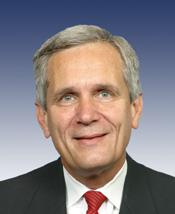
Mr. Speaker, the Khodorkovsky/Lebedev trial resumed on Monday last week before a three judge panel in Moscow. Since the last hearing three weeks ago, the physical appearance of the court was much…
Mr. Speaker, the Khodorkovsky/Lebedev trial resumed on Monday last week before a three judge panel in Moscow. Since the last hearing three weeks ago, the physical appearance of the court was much improved: the courtroom had been air conditioned and the halls outside had been refurbished and painted.
Appearances are important, but substance is critical.
Respect for the rule of law in Russia is essential for the same reason it is essential in every democratic society--citizens, the press, and the business community must have confidence that the legal system affords them protection of their rights and that everyone is treated equally under that law.
In Russia there is a pattern of troubling signs that the rule of law and a free press are threatened. I know a number of my House colleagues share these concerns. Members of the Congressional Human Rights Caucus, the Helsinki Commission, and the Russia Democracy Caucus are just some of those who have expressed their misgivings.
One high profile example of concern is the seizure of the assets of Russia's largest oil company, YUKOS, and the trial of two of YUKOS's largest stockholders, Mikhail Khodorkovsky and Platon Lebedev.
Many Russian and Western observers view the Russian Government seizure of the assets of YUKOS as a result of political motivations.
Here are just a few recent statements on these events:
On July 7, the Washington Post quoted a senior level U.S. diplomat as saying ``there are increasing signs that destruction of the company is the intended endpoint,'' and that it appears likely that a ``sizeable percentage of the company's assets will move into the hands of the state.''
On July 7, the Organization for Economic Cooperation and Development (OECD) called the YUKOS affair ``a case of highly selective law enforcement'' and a case that reveals how ``the courts are often subservient to the executive, while the security services, prosecutors and police remain highly politicized.''
What is now occurring in Russia has significant human, political, and economic consequences. Justice, freedom, and human rights are all directly tied to the rule of law, open and accountable government, and a free press, which are increasingly absent in Russia.
There are several disturbing trends that demonstrate problems with the rule of law in Russia.
The general prosecutor and courts cannot be merely an extension of the political will and agenda of the Kremlin. In his visit to Moscow earlier this year, Secretary of State Colin Powell was unambiguous in his concern over the rule of law in Russia, saying ``Russia's democratic system seems not yet to have found the essential balance among the executive, legislative and judicial branches of government. Political power is not yet fully tethered to the law.''
Furthermore, the selective and arbitrary use of judiciary power by the Kremlin undermines the rule of law.
Mikhail Khodorkovsky, as many observers have noted, shows how a businessman has been singled out for prosecution because his political activities are not appreciated.
Journalist German Galkin was thrown into jail and prosecuted for revealing the corrupt behavior of local government officials. His appeal was denied and he was only freed under the weight of international pressure.
Aleksandr Nikitin is a former submarine officer and nuclear safety inspector who was pursued relentlessly through the courts by the Russian security service in retaliation for his outspokenness about radioactive contamination by the Russian military. These rulings bear out what prominent legal experts have been saying about the flawed legal system in Russia.
More recent events in Russia threaten a free press, an essential element of any strong democracy.
We do not know who murdered Paul Klebnikov, the editor in chief of Forbes Russia, who was writing the truth about Russia's dark
underside, but the government must insist on a thorough, open, and full investigation of his killers. As one observer noted in the New York Times, ``Twenty journalists have now been assassinated in Russia for their work; 14 since Mr. Putin became president. Not one of the murders has been solved.''
A crackdown of media freedom has resulted in all major TV networks under state control. The last independent TV station disappeared last summer. TV is the number one way Russians get their news.
If Russia continues down this path, she will never fully become the peaceful and democratic nation that the Russian people and the international community desire. It is essential that Russia undertake a sincere effort to reform its judicial system and establish the highest degree of credibility for the rule of law and free press, which are essential for a prosperous and peaceful Russia.
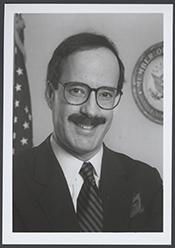
Mr. Speaker, an undeniable tenant of any democracy is the rule of law. Sadly, this is not the case in Russia today. That country's legal system is taking on the appearance of Czarist Russia and the…
Mr. Speaker, an undeniable tenant of any democracy is the rule of law. Sadly, this is not the case in Russia today. That country's legal system is taking on the appearance of Czarist Russia and the Soviet Union, when the legal system and courts were merely instruments of the State. This past year, we have witnessed a series of arbitrary and discriminatory actions, directed by the Kremlin, against select individuals and companies, that are politically motivated and lacking in legal merit, according reputable human rights groups and widely reported in the Western press.
The most notable case is the YUKOS Oil Company, one of Russia's early privatized companies, known for its Western management style and global outlook, that today is under siege by a government clearly intent on destroying or taking control of Russia's largest oil producer. The chairman of YUKOS, Mikhail Khodorkovsky, was arrested and indefinitely detained on charges that are murky and, again, appear to be of a political nature rather than criminal intent.
Our colleagues on the Senate side last year unanimously approved S. Res. 258, which stated, in part, ``the law enforcement and judicial authorities of the Russian Federation should ensure that Mr. Mikhail B. Khodorkovsky is accorded the full measure of his rights under the Russian Constitution to defend himself against any and all charges that may be brought against him, in a fair and transparent process, so that individual justice may be done. . . .''
Mr. Speaker, the U.S. Senate spoke out one year ago, and since then the Russian government has levied an $18 billion tax bill on YUKOS, far beyond its earnings, which is apparently intended to pave the way for a government take over of one of the world's largest oil companies. Mr. Khodorkovsky is confined to a cage on his daily trips to the courtroom, where he is denied the customary rights of a defendant and indeed is facing a verdict that may well be pre-ordained by the Kremlin.
Mr. Speaker, I also call to the attention of my colleagues another example of Russia's crude application of a legal system that denies, rather than protects the rights of the accused and clearly violates the norms and standards of decency and respect for human rights.
Mr. Alexei Pichugin, a former white collar security officer for the YUKOS Company, is currently on trial in Moscow on charges, so it is alleged, of murder. This is another case that is being closely monitored by human rights groups and others because of the bizarre series of actions by prosecutors who appear to be using the formal charges to pressure Mr. Pichugin to testify against his former bosses at YUKOS.
I do not presume to know the guilt or innocence of Mr. Pichugin; that is for a properly conducted court trial and unbiased jury to determine. But I am troubled, as are many of my colleagues, about the politicizing of Russia's legal system and the denial of a just and fair trial because the court itself is not truly independent.
Indeed, the Council of Europe's rapporteur, Sabine Leutheusser- Schnarrenberger, has called the allegations reguarding Mr. Pichugin's mistreatment ``very serious.'' She notes: ``I cannot myself help worrying about the possibly illicit investigative methods and pressures that Mr. Pichugin could be subjected to at a prison that remains withdrawn from the normal supervisory procedures by the Ministry of Justice.''
Just yesterday, the Parliamentary Assembly of the Council of Europe PACE released a report pointing out that Russian authorities continue to violate the principle of equality before the law, based on legal analysis of the facts surrounding the arrests and prosecutions of former YUKOS executives Mikhail Khodorkovsky, Alexei Pichugin and Platon Lebedev.
While the trial of Alexi Pichugin is being conducted in secrecy, the evidence of abuse by the prosecutors and court handling the matter has been widely reported in the press. I, therefore, urge the Administration to refocus its attention on the deterioration of the rule of law in Russia. It would be very unfortunate if while we were striving to establish a democracy in Iraq, one broke down completely in the Russian Federation.
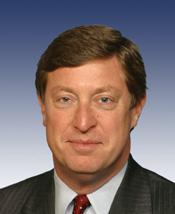
Mr. Speaker, last March, I had the opportunity to meet with human rights groups, legal experts, media representatives, and others concerning the situation on the ground in Russia. I learned firsthand…
Mr. Speaker, last March, I had the opportunity to meet with human rights groups, legal experts, media representatives, and others concerning the situation on the ground in Russia. I learned firsthand that Russia is enduring a difficult transition to what hopefully will become a modern, fully democratic nation. While there have been many positive developments in Russian society over the past decade, particularly with regard to the freedoms that average Russian citizens now enjoy, there are disturbing signs that Russia under President Vladimir Putin may be slipping back to its old authoritarian ways.
My primary concern is with the rule of law. Prior to coming to Congress, I served for eight years as the Attorney General of Kentucky. I understand that there are inherent principles in any constitutional democracy, chief among them the rule of law. Recent events have called into question Russia's unequivocal commitment to a transparent judicial system, defendants' rights, and the presumption of innocence within the Russian legal system.
As we speak, there is a major trial taking place in Moscow. It concerns the controversial arrest and detention of prominent Russian businessman Mikhail Khodorkovsky. The case of Mr. Khodorkovsky has raised concerns from legal experts, human rights groups, and the media that his trial may have more to do with his opposition to President Putin's policies rather than the crimes for which he is accused.
The most disturbing element of Mr. Khodorkovsky's trial is that it may signify a reassertion of state influence over Russia's private sector economy. Such a move by the Russian government, I fear, would raise questions about the state of property rights in Russia, discourage foreign investment, and slow progress towards Russia's full integration into the global economy.
Mr. Speaker, the U.S. must continue to deliver the message that adherence to the rule of law and support for political and economic freedom is essential to developing successful free-market economies and prosperity. As I mentioned earlier, Russia is truly at a crossroads in its history. I urge my colleagues to
work with me to convince Russia to choose the path of transparency, adherence to the rule of law, and a commitment to the security of private investment.
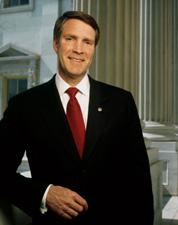
Mr. President, I ask unanimous consent that the Senate proceed to the immediate consideration of Calendar No. 380, S. Res. 258. Mr. President, I ask unanimous consent that the resolution be agreed…
Mr. President, I ask unanimous consent that the Senate proceed to the immediate consideration of Calendar No. 380, S. Res. 258.
Mr. President, I ask unanimous consent that the resolution be agreed to, the preamble be agreed to, the motion to reconsider be laid upon the table en bloc, and that any
statements relating to the bill be printed in the Record.
Bill Text
3 versions available
        [Congressional Bills 108th Congress]
[From the U.S. Government Publishing Office]
[S. Res. 258 Agreed to Senate (ATS)]

108th CONGRESS
1st Session
S. RES. 258

Expressing the sense of the Senate on the arrest of Mikhail B.
Khodorkovsky by the Russian Federation.

_______________________________________________________________________

IN THE SENATE OF THE UNITED STATES

November 4, 2003

Mr. Lugar (for himself and Mr. Biden) submitted the following
resolution; which was referred to the Committee on Foreign Relations

November 7, 2003

Reported by Mr. Lugar, without amendment

December 9, 2003

Considered and agreed to

_______________________________________________________________________

RESOLUTION

Expressing the sense of the Senate on the arrest of Mikhail B.
Khodorkovsky by the Russian Federation.

Whereas the Russian Federation is now a member of the family of democratic
countries;
Whereas the United States supports the development of democracy, free markets,
and civil society in the Russian Federation and in other states of the
former Soviet Union;
Whereas the rule of law, the impartial application of the law, and equal justice
for all in courts of law are pillars of all democratic societies;
Whereas investment, both foreign and domestic, in the economy of Russia is
necessary for the growth of the economy and raising the standard of
living of the citizens of the Russian Federation;
Whereas property rights are a bulwark of civil society against encroachment by
the state, and a fundamental building block of democracy; and
Whereas reports of the arrest of Mikhail B. Khodorkovsky and the freezing of
shares of the oil conglomerate YUKOS have raised questions about the
possible selective application of the law in the Russian Federation and
may have compromised investor confidence in business conditions there:
Now, therefore, be it
Resolved, That it is the sense of the Senate that--
(1) the law enforcement and judicial authorities of the
Russian Federation should ensure that Mikhail B. Khodorkovsky
is accorded the full measure of his rights under the Russian
Constitution to defend himself against any and all charges that
may be brought against him, in a fair and transparent process,
so that individual justice may be done, but also so that the
efforts the Russian Federation has been making to reform its
system of justice may be seen to be moving forward; and
(2) such authorities of the Russian Federation should make
every effort to dispel growing international concerns that--
(A) the cases against Mikhail B. Khodorkovsky and
other business leaders are politically motivated; and
(B) the potential remains for misuse of the justice
system in the Russian Federation.
<all>