Recognizing the 50th anniversary of Rosa Louise Parks' refusal to give up her seat on the bus and the subsequent desegregation of American society.
Legislative Activity
Stay on top of the latest movement without scrolling through every action
Message on Senate action sent to the House.
November 18, 2005
View full timeline
Introduced in House
July 13, 2005
Sponsor introductory remarks on measure. (CR E1481)
July 13, 2005
Referred to the House Committee on the Judiciary.
July 13, 2005
Reported by the Committee on Judiciary. H. Rept. 109-193.
July 27, 2005
Placed on the House Calendar, Calendar No. 70.
July 27, 2005
Mr. Sensenbrenner moved to suspend the rules and agree to the resolution.
September 14, 2005 • 11:16 AM
Considered under suspension of the rules. (consideration: CR H7881-7883)
September 14, 2005 • 11:16 AM
DEBATE - The House proceeded with forty minutes of debate on H. Con. Res. 208.
September 14, 2005 • 11:16 AM
Passed/agreed to in House: On motion to suspend the rules and agree to the resolution Agreed to by voice vote.(text: CR H7881)
September 14, 2005 • 11:27 AM
On motion to suspend the rules and agree to the resolution Agreed to by voice vote. (text: CR H7881)
September 14, 2005 • 11:27 AM
Motion to reconsider laid on the table Agreed to without objection.
September 14, 2005 • 11:27 AM
Received in the Senate and referred to the Committee on the Judiciary.
September 15, 2005
Senate Committee on the Judiciary discharged by Unanimous Consent.(consideration: CR S13409)
November 18, 2005
Senate Committee on the Judiciary discharged by Unanimous Consent. (consideration: CR S13409)
November 18, 2005
Resolution agreed to in Senate without amendment and with a preamble by Unanimous Consent.
November 18, 2005
Message on Senate action sent to the House.
November 18, 2005
Floor Debate
21 membersWhat members said about H.Con.Res. 208 on the floor
 BLJCJ
BLJCJ SRR
SRR SJL
SJL DS+16
DS+16
Floor Debate
21 membersWhat members said about H.Con.Res. 208 on the floor
Mr. Speaker, first let me thank the gentleman from Michigan (Mr. Conyers) for his leadership in organizing this tribute to a great leader, Mrs. Rosa Parks. My heart goes out to the gentleman from…
Mr. Speaker, first let me thank the gentleman from Michigan (Mr. Conyers) for his leadership in organizing this tribute to a great leader, Mrs. Rosa Parks. My heart goes out to the gentleman from Michigan (Mr. Conyers) in his personal loss. He is truly a remarkable human being, and I know that his memories and the love Mrs. Parks had for the gentleman will sustain him during this very difficult time.
My deepest condolences and prayers are with Mrs. Parks's family and her friends tonight as we lift her up, lift up her great spirit on this House floor on this very somber occasion.
Mrs. Parks passing away on Monday evening jolted the world. A giant has gone home. This has been a very difficult year full of losses. Rosa Parks joins other great African American heroes who recently passed away: Shirley Chisholm, Judge Constance Baker Motley, and C. Dolores Tucker, to name a few, all who faced opposition, stood their ground and sacrificed so much for freedom and for justice.
Mrs. Parks's simple nonviolent act 50 years ago to refuse to give up her seat on a bus changed the course of America. The mother of the modern civil rights movement, Mrs. Parks shattered the walls of legal segregation and opened the doors of opportunities for many, including myself. And, yes, I remember those days of the colored only faucets and not being able to go to the theaters and on the train only being able to ride in one car and not being able to attend public schools. I remember those days very vividly.
Let me say this act of defiance and dissent by Mrs. Parks, it toppled Jim Crow. Her life was recognized just this past September when the House, led by the gentleman from Michigan (Mr. Conyers), and I must remind us, we unanimously passed a resolution in recognition of her legacy, H. Con. Res. 208.
A recipient of this Nation's highest honors, the Presidential Medal of Freedom in 1996 and the Congressional Gold Medal in 1999, Rosa Parks stood tall by sitting down. She quietly and peacefully challenged the status quo. She took on, though, the entire government, and she took down its shameful system of segregation.
Personally I was so inspired by Mrs. Parks in some of the most difficult moments in my career. In fact, just 2 years ago Mrs. Parks wrote me a personal reminder, and I read that letter again last night. And in her letter to me she said, Never think that you are alone when you stand for right, because God is with you. I cannot even explain what that meant and means to me.
Rosa Parks's quiet strength, as her 1994 book is titled, shattered the walls of legal segregation. And I had the privilege to be with her on many occasions in Los Angeles and in Oakland and in Sacramento, California, and I was in awe of this great woman, and I could not help but notice her love for children and her commitment to education.
She was a humble woman, yet a giant of a human being who loved her country and insisted that it live up to its creed of liberty and justice for all. Three thousand miles away and 50 years later, my constituents in the East Bay of California still honor Mrs. Parks's legacy. Students enrolled at the Rosa Parks Environmental Science Magnet School in Berkeley are reminded every day of her example by the painting of Mrs. Parks in the front seat of a bus that hangs above the door to the campus's main office. Their school anthem thanks Mrs. Parks for her role in bringing segregation to its knees.
She also inspired my constituents to create the Martin Luther King, Jr., Freedom Center, on which I serve as a founding board member. The MLK Freedom Center teaches social justice, equality and nonviolence in our community, especially with its outreach efforts to our youth. In fact, the young people from the center participated in the 40th anniversary of the historic civil rights march from Selma to Montgomery, Alabama, where they visited the bus stop where Rosa Parks protested and dared not to get up, and also the Dexter Avenue Baptist Church where Dr. King preached.
It is an important historical reminder of where we have been, just what Rosa Parks really did for us and for the country. It is a reminder of how far we have come, but also it reminds us of how far we have to go, as we have been recently reminded by Hurricane Katrina.
Daphne Muse, the director of the Women's Leadership Institute at my alma mater, Mills College in Oakland, wrote an essay entitled ``Our Week With Rosa Parks--Her Presence is a Gift that Remains Part of our Hearts and Home.'' And in this essay she wrote about Mrs. Parks's visit to Oakland, California, and she said, In the course of preparing for Mrs. Parks's visit, she noted to members of the committee that hotels just did not suit her spirit, and she preferred the tradition extended through southern hospitality of putting people up in your home. She then asked if I would mind if she could be our guest during her week- long stay in Oakland. She made only one request of me, and that is that we keep her presence a secret. She and her longtime friend Elaine Steele were eager to be in a place where they could relax, listen to music, and eat great food without being disturbed.
Daphne Muse goes on to say, Although we had never even met, when Rosa Parks walked through our front door, she instantly became family.
Mr. Speaker, tonight as we remember this dignified, courageous and remarkable woman, let us honor her life and her legacy by standing up for what is right, for embracing peace and nonviolence as an effective tool in our work as public servants. And let us keep her family and her friends in our prayers and in our hearts and in our souls.
Thank you, Rosa Parks. May you finally now rest in peace.
Mr. Speaker, the full text of that essay is as follows:
Our Week With Rosa Parks: Her Presence Is a Gift That Remains Part of
Our Heart and Home
(By Daphne Muse)
Everyday, history is made by people whose names remain
unknown as well as those who become eternal icons. In May of
1980, a woman who forever changed our country spent a week in
our home. The East Bay Area Friends of Highlander Research
and Education Center joined with founder Myles Horton to
honor two of the Civil Rights Movements most courageous
pioneers: Rosa Parks and Septima Clark. Clark broke ground as
a pioneering force in citizenship training and voter
education. The two women met at Highlander in 1955, a place
where my own mother-in-law Margaret Landes was trained during
the 1930s.
Founded in 1932, Highlander is a civil rights training
school located on a 104-acre farm atop Bays Mountain, near
New Market, Tennessee. Over the course of its history,
Highlander has played important roles in many major political
movements, including the Southern labor movements of the
1930s, the Civil Rights Movement of the 1940s-60s, and the
Appalachian people's movements of the 1970s-80s. Through
books in our home library, her teachers and my own work as a
writer, Anyania knew about the role Ms. Parks played in
changing the course of history.
Like millions of other African Americans, Mrs. Parks was
tired of the racism, segregation and Jim Crow laws of the
times. Through her commitment to freedom and training at
Highlander Research and Education Center, her refusal to move
to the back of a bus in Montgomery, Alabama on December 1,
1955, spawned a movement. Parks took a seat in the section of
a Montgomery city bus designated for whites. She was
arrested, tried and fined for violating a city ordinance.
Mrs. Parks, a seamstress, often had run-ins with bus drivers
and had been evicted from buses. Getting on the front of the
bus to pay her fare and then getting off going to the back
door was so humiliating. There were times the driver simply
would shut the door and drive off. Her very conscious
decision turned into an economically crippling, politically
dynamic boycott and ended legal segregation in America. A
three hundred and eighty two day bus boycott followed her
morally correct and courageous act.
In the course of preparing for Ms. Parks' visit, she noted
to members of the committee that hotels just didn't suit her
spirit and she preferred the tradition extended through
southern hospitality of putting people up in your home. She
then asked if I would mind if she could be our guest during
her week long stay in Oakland. She made only one request of
us: that we keep her presence a secret. She and her long time
friend Elaine Steele were eager to be in a place where
they could relax, listen to music and eat great food
without being disturbed. The disturbed part was my
greatest concern for between the bullet blasting drug wars
and the press, I was concerned about how to maintain that
part of the agreement.
Our modest home in the Fruitvale community of Oakland,
California had served as a cultural center and refuge to many
writers, filmmakers, artists and activists including S1weet
Honey in the Rock, novelist Alice Walker and poet Gwendolyn
Brooks. Although we'd never even met, when Rosa Parks walked
through our front door, she instantly became family. She and
Anyania melted into one another's arms like a grandmother
seeing her grandchild for the first time. One morning as
Anyania was about to take off for school, the button on her
dress popped off. It was a jumper filled with multicultural
images of ,I children my mother had made Anya. Ms. Parks
asked if I had a sewing box, II threaded the needle and sewed
the button back on. My spirit spilled over and I just burst
into tears.
Anyania was so good at keeping the secret. I, on the other
hand, wanted to blurt out to my family, friends and students
at Mills College ``Guess who's sleeping in my bed? A few
months ago, a former neighbor came by to pay a visit and
started set searching the scores of photographs hanging on
the walls in our living room. She stopped, turned around and
blurted out, ''No that isn't.'' I instantly knew the
photograph to which she was referring. Along with pictures of
Fannie Lou Hamer, Eleanor Holmes Norton and Jim Forman hangs
a very precious photograph of Rosa Parks surrounded by my
then seven-year-old daughter and her playmate Kai Beard.
Dottie was simply undone that in all the years she'd come
into our home, she like so many others simply thought the
woman sitting next to Anyania was her grandmother. A few
weeks after she returned to Detroit, Ms. Parks sent Anyania
an exquisite portrait of her painted by Paul Collins. That
portrait now hangs in Anya's home in Brentwood, California
where my grandchildren Maelia and Elijah live, read and play
everyday.
Rosa & Raymond Parks Institute for Self Development.
January 15, 2003.
Hon. Barbara Lee,
U.S. Congress,
Washington, DC.
Dear Congresswoman Lee: Never think you are alone when you
stand for right because GOD is with you. We are very proud of
you. It makes us feel good that you are a Congressional
Member.
Love, Peace and Prosperity,
Rosa Parks.
Mr. Speaker, I ask unanimous consent that all Members may have 5 legislative days within which to revise and extend their remarks and include extraneous material on the subject of this Special Order.…
Mr. Speaker, I ask unanimous consent that all Members may have 5 legislative days within which to revise and extend their remarks and include extraneous material on the subject of this Special Order.
Mr. Speaker, I want to thank my colleague from Alabama (Mr. Davis) whose district I had the pleasure of being in, and with him, only a few days ago.
Mr. Speaker, this is a sad moment for me. The truth of the matter is that we have known that Mrs. Rosa Louise Parks had been in poor health; that frequently we would ask, how is she doing this week? Is she any better? How are things going? And now that this moment has come 2 days ago, we still cannot accept this reality of this dear, powerful, gentle lady going to her reward after 92 years of being with us on this Earth.
She has been regarded as an ordinary person, as an example of what an ordinary person can do in our system. But I am not convinced that she is an ordinary person, because I have seen her at very close range. The fact of the matter is I believe she is an extremely extraordinary person because of these two qualities. First of all, she was a gentle lady. She was soft-spoken. She had never in the years I have known her ever raised her voice in anger. She did not debate anyone. She was a very mild-mannered person. She never sought the limelight. She never, ever issued a press release. She never sought awards or commendations. Yet she received more than most people do in this world that we live in.
So that was this one aspect of her, but there was another. There was inside her forged a set of principles of which two were very prominent in terms of my analysis here this evening. One, she was a very religious woman. She attended church with great regularity, but, more than that, she worked in the church. She helped out. She was there during the week. And combined with her religious convictions was this fierce antipathy to segregation. And I do not know how many people we can think of that combine these two kinds of characteristics, soft spoken and humble, and yet fiercely prepared, in a nonviolent way, to fight segregation.
So she came to this activity not as something that she just happened to get into or that she moved one day, she did something different; she had always been an activist in Alabama. She was a member of the NAACP, she was always the first to sign the membership card, and it is hard to remember that this could be the case, but in the 1940s, being a member of the NAACP in the South, and publicly acknowledging it, was a very daring and courageous move in and of itself.
She subscribed to the theory of nonviolence. So when, on December 1, 1955, she decided that she would not give up her seat on a public bus in Montgomery, Alabama, some thought that was the first time that she had ever done it. But to the contrary, previously she had refused to give up her seat, but she was ordered off the bus. She had never been arrested. And so this time they told her, you will be arrested, you are going to be arrested.
And she said, I am not giving up my seat. You can do whatever you want. And so we marched into this great history.
Now, I wanted to point out that she was the one that brought Dr. Martin Luther King, Jr., into the civil rights movement. Martin Luther King, Jr., was at that time 26 years old, and he was called in to come after she had been arrested; and it was decided that everyone was going to boycott the buses as a result.
And so it is ironic that she had this role in addition to restarting the civil rights movement in America. She brought in the person who would ultimately lead it at the same time.
I am sure Dr. King may not have been thinking about his future and his destiny, and I am sure that Mrs. Parks could not anticipate what this one move was going to mean. And so I am very happy to tell you that I had the opportunity to meet her, to know her before she came to Detroit, and what a blessing it was to find out that she ultimately with her husband left Montgomery.
Why? Because she wanted to go somewhere else? No. She was fired from her job. She was black-balled. She could not get employment. And she and her husband and family were receiving death threats regularly. So they decided to relocate with relatives that were in Detroit, and so it was my good fortune to be able to get to know her.
She joined in my campaign. I said, the first person I am going to ask to be on my congressional staff when I get elected would be Rosa Parks. And I asked her to join my staff. She did not ask me for a job. I asked her to please come and join me, and it was a great source of pleasure and delight that she was a minor celebrity.
People came to my office to see not the Congressman on a constituent basis, but merely to get a picture of Rosa Parks or get a signature or ask if they could talk with her, and she was as accommodating with them as she was with everybody else.
She was a confidante I was able to connect up. The biggest legislative challenge in my very first year was the passage, the consideration and passage of the Voter Rights Act of 1965. And here she was right in the middle of that, working with the likes of Ralph Abernathy and Andrew Young and Fred Shuttleworth, and of course Dr. Martin Luther King, and many other of the great names that were around that original group that started the civil rights movement, the modern civil rights movement as we know it.
She had a great passion for young people, and she and her husband formed the Raymond and Rosa Parks Foundation which still exists today and which she and her husband and staff trained young people, and then they went visiting the major civil rights sites throughout the South, so that they could get the flavor of what was going on, and what happened and when it transpired.
And so, ladies and gentlemen, I see in the firmament of the great trilogy of leaders of freedom and justice, Nelson Mandella, Martin Luther King, Jr., and Rosa Louise Parks.
When Nelson Mandella came to Detroit and found out that Rosa Parks had come out to join him in welcoming him as he came out of 27 years of imprisonment, he began a chant for Rosa Parks, Rosa Parks. And here were these two great icons, both well aware of each other and their contributions. So it is with some pride that I have had the privilege of associating my congressional career with both Dr. King and Rosa Louise Parks.
And this Special Order will continue the discussion that has already begun to take place about all of the roles, the contributions, the feelings, the legacy of Rosa Parks; and that is how I think she will be remembered, as this gentle person with the determination of steel.
So it is with great pleasure that I yield now to the distinguished gentlewoman from Texas (Ms. Jackson-Lee).
Mr. Speaker, I am pleased now to recognize the distinguished gentleman from Georgia (Mr. Scott).
Mr. Speaker, it is my pleasure to recognize the gentlewoman from Oakland, California (Ms. Lee).
What a beautiful remembrance of a great lady. I am sure the gentlewoman is one of the few people in Congress that have a written communication from Mrs. Parks. I congratulate the gentlewoman.
Mr. Speaker, I am pleased to recognize the gentlewoman from California (Ms. Watson).
Mr. Speaker, I thank the gentlewoman from California for her kind remarks and remembrances of Rosa Parks; and now, Mr. Speaker, I am very pleased to yield to the gentleman from North Carolina (Mr. Watt), the chairman of the Congressional Black Caucus, a veteran member of the North Carolina bar and member of the Committee on the Judiciary of the House of Representatives.
Mr. Speaker, I thank the gentleman from North Carolina (Mr. Watt) for his eloquent statement.
Mr. Speaker, I am now pleased to yield to the gentlewoman from California (Ms. Millender-McDonald), who has been a strong supporter of civil rights, affirmative action, and the Voter Rights Act.
Mr. Speaker, I thank the gentlewoman from California (Ms. Millender-McDonald) for those remembrances, and we had no idea that she and Rosa Parks had so much in common.
Mr. Speaker, that concludes our list of people that wanted to speak tonight. The celebrations of her life and legacy go on, though we will be observing memorial activities in Montgomery, Alabama; in the Nation's capital; and in Detroit, Michigan, as well. I want to thank you for the privilege of allowing me and other Members to come forward this evening for this round of tributes to the life and legacy of Rosa Louise Parks.
Mr. Speaker, I yield back the balance of my time.
Mr. Speaker, I yield myself such time as I may consume. (Mr. CONYERS asked and was given permission to revise and extend his remarks, and include extraneous material.) Mr. Speaker, this is a proud…
Mr. Speaker, I yield myself such time as I may consume.
(Mr. CONYERS asked and was given permission to revise and extend his remarks, and include extraneous material.)
Mr. Speaker, this is a proud moment in our history, and I begin by commending the gentleman from Wisconsin (Mr. Sensenbrenner), chairman of the Committee on the Judiciary, for the work he has done in helping me bring this concurrent resolution to the floor today.
Why is this historic? Because the impetus to reconnect with this struggle for racial justice in America began with this humble lady, a seamstress in Alabama, who on December 1, 1955, chose to no longer obey the ordinance that blacks sit in the back of the bus and if it was full, then they give up the bus to white passengers.
It is hard to conceive of the total segregation that this Nation was immersed in. On that day, she refused to obey a bus driver's order; and it began the chain of actions and organizations and commitments that led to a resurgence of the civil rights movement as we know it.
Her arrest sparked a boycott of the Montgomery city bus lines. It went on for over a year as more and more people of all backgrounds and colors and economic classes joined in. Finally this matter reached, in November of 1956, the Supreme Court of the United States. The Supreme Court of the United States affirmed that desegregation codes deny under the 14th amendment the equal protection of laws to African Americans.
This is a great moment because the present is tied to the past. The other body is in the process of determining who the next Chief Justice of that Supreme Court will be.
Hurricane Katrina has made us remember how deeply poverty and race have brought most of the hardship upon people of color in New Orleans and in Mississippi where the havoc is still being counted, 400 deaths now known; but the number is sure to go far, far beyond that.
Now a word about Rosa Parks herself because I happen to be connected with this, meeting her through my work with Dr. Martin Luther King as an attorney and then getting to know her when she left Montgomery and came to Detroit.
She was so modest. They said she got fired from her job a month after the boycott. Here is what she said in the book she wrote: ``A month after the boycott began, I lost my $25-a-week job when the Montgomery Fair department store closed its tailor shop. I was given no indication from the store that my boycott activities were the reason I lost my job. People always wanted to say it was because of my involvement in the boycott. I cannot say this is true. I do not like to form in my mind something I do not have any proof of.'' That exemplifies this incredible humbleness that marked everything that she did.
I said the first person I am going to bring into my congressional office staff is Rosa Parks, and she accepted. Never once have I ever heard her raise her voice in anger. Never once have I heard her speak negative or unkind remarks about anybody, this persona, this modest woman of incredible determination who, by the way, brought Martin Luther King into Montgomery to help lead the Montgomery bus boycott, which was the start of his career as a civil rights leader. Yet this humble woman, quiet, dignified, always pleasantly composed, was able to bring forward this and other countless acts of civil disobedience which resulted in us changing the way that America operates.
It was Rosa Parks that did all of this; and what I wanted to do was let Members know that she, by bringing Martin King into this matter, was able to begin a civil rights movement much, much larger than the boycott itself.
She then started the Rosa and Raymond Parks Institute for Self- Development, a nonprofit organization that sought to motivate youth. On this recognition of the 50th anniversary of that refusal to give up her seat, I am very proud that the Congress has chosen to join in with us by way of this concurrent resolution and remember this incredible point in American history.
I lift up the name of Ms. Elaine Steele, who has been with Rosa Parks for years and years as her assistant, as her counselor, as her dearest friend, and attorney Gregory J. Reed who has given her the legal background and support that she has needed from time to time.
This is a great day in the history of America that we remember. It is a great day in the Congress that we can remember that Martin King challenged his own country which he loved very much. But when he felt it was wrong, dissent was the highest form of patriotism that he could exemplify what this country stood for. And civil rights pioneer Rosa Parks, by displaying her defiant act of courage 50 years ago, has made this country more of what it ought to be than anyone else that I can think of.
So I join with my colleagues in celebrating the ideals of Ms. Parks and the civil rights movement.
Today we honor Rosa Parks and her decision to stand up to injustice 50 years ago. On December 1, 1955, Ms. Parks refused to obey a bus driver's order that she give up her bus seat in the black section to a white man because the white section was full.
It is the courage, dignity, and determination that Ms. Parks exemplified on this day that allows most historians to credit her with beginning the modern day civil rights movement. Ms. Parks' actions on December 1, 1955 led to the desegregation of American society and enabled all of this Nation's citizens to realize freedom and equality.
The arrest of Ms. Parks led African-Americans and sympathizers of other races to boycott the Montgomery city bus line until the buses in Montgomery were desegregated. The 381-day Montgomery bus boycott encouraged other courageous people across the United States to organize in protest and demand equal rights for all.
The fearless acts of civil disobedience displayed by Rosa Parks and others resulted in the United States Supreme Court, on November 13, 1956, affirming a district court decision that held that Montgomery segregation codes deny and deprive African-Americans of the equal protection of the laws. This decision would lead to other landmark Supreme Court decisions in which the Court would rule in the interest of justice and equality.
In the years following the Montgomery bus boycott, Ms. Parks moved to Detroit, MI in 1957 and continued her civil rights work by working in my district office. Ms. Parks was with the office from 1965 until 1988. In the more than 20 years that Ms. Parks was in the office, she worked with a tireless spirit for the people of Detroit and other Americans.
In 1987, she started the Rosa and Raymond Parks Institute for Self Development in Detroit, a nonprofit organization which motivates youth to reach their highest potential. So it is with great pleasure and honor that I stand today to recognize not only a civil rights pioneer, but a member of my staff, a constituent, and a friend.
It is in this recognition of the 50th anniversary of Ms. Parks' refusal to give up her seat on the bus, that I ask the Congress and the great people of this Nation to work with the same courage, dignity, and determination exemplified by her to address modern day inequalities and injustices. As a result of Hurricane Katrina, these inequalities and injustices are at the forefront of public consciousness and it is our job to do something about it.
Ms. Parks has said, ``Until everyone can enjoy the same opportunities, people cannot be equal. I am glad that segregation is no longer considered acceptable, but the fight for equal rights must go on until we have the same privileges and opportunities as those who are in power.''
Civil rights pioneer Rosa Parks displayed a defiant act of courage 50 years ago to better this country for all of its citizens. I know that this Congress and the people of this Nation can work to further the ideals of Ms. Parks and the civil rights movement.
Mr. Speaker, I yield back the balance of my time.
Mr. Speaker, I rise today to pay tribute to a courageous American hero, Rosa Parks. Mrs. Parks passed away on Monday evening at the age of 92 in her home in Detroit, Michigan. On February 4, 1913,…
Mr. Speaker, I rise today to pay tribute to a courageous American hero, Rosa Parks. Mrs. Parks passed away on Monday evening at the age of 92 in her home in Detroit, Michigan.
On February 4, 1913, Rosa Louise McCauley was born in Tuskegee, Alabama. The daughter of a carpenter and a teacher, Rosa was home schooled until the age of 11 when she attended Industrial School for Girls in Montgomery. She obtained her high school diploma from Alabama State Teachers College, while caring for her ailing grandmother. Rosa married Raymond Parks in 1932 and volunteered for the National Association for the Advancement of Colored People, NAACP from 1943 to 1966 while she worked as a seamstress and housekeeper. She and her family eventually moved to Detroit and joined the staff of Congressman John Conyers (D-MI) in 1965, where she worked for 23 years.
Mrs. Parks' finest hour occurred on December 1, 1955, when four black passengers on a bus were asked to give up their seats for a single white man. Three of the passengers complied, one did not. It was at that moment that Rosa Parks changed the course of history forever. What seemed like a simple gesture made a huge impact on the character of our Nation then--and continues to affect our lives now. Following Mrs. Parks' brave gesture, residents of Montgomery then began a boycott of the city's bus system, in order to protest the treatment as second class citizens that African-Americans were subjected to on segregated buses.
Her courage, and the 380-day Montgomery, Alabama bus boycott that followed her heroic stand, culminated in the United States Supreme Court decision in Browder v. Gayle, which declared segregation on buses to be unconstitutional. Her refusal to ``move to the back of the bus'' ultimately helped spark the civil rights movement of the 1960s, which achieved stronger civil rights guarantees for Americans in all areas of life, including housing, employment, schools, and places of public accommodation.
One of Mrs. Parks' main concerns was her desire that Americans understand their rights. The day she refused to give up her seat, she was fed up with being treated as an inferior human being and simply wanted to be treated with dignity. She taught us that we must always defend our rights. We must continue the great work spurred on by Mrs. Parks. As she said later in life, ``[W]ithout courage and inspiration, dreams will die--the dream of freedom and peace.''
On May 21, 1983, as Mayor of the City of Englewood, New Jersey, I had the distinct honor to meet Mrs. Parks and personally bestow upon her a key to that city. In addition, two of our Nation's highest honors have been awarded to Rosa Parks. In 1996, President Clinton bestowed upon Mrs. Parks the Presidential Medal of Freedom, which recognizes meritorious service and outstanding contributions to American life. Three years later, I had the privilege to vote for the bill that awarded a Congressional Gold Medal, our Nation's highest civilian honor, to Mrs. Parks on June 15, 1999 for her ``quiet dignity [that] ignited the most significant social movement in the history of the United States.''
I have also supported two recent pieces of legislation that pay tribute to Mrs. Parks. I voted in favor of H. Con. Res. 208, a resolution which commemorates the 50th anniversary of Rosa Parks' refusal to give up her seat on the bus and the subsequent desegregation of American society. This resolution was unanimously approved by the House of Representatives on September 14, 2005. Another resolution that I support, which will be introduced this week by my colleague, Congressman Mike Rogers, will honor the 50th Anniversary of the Montgomery Bus Boycott, which resulted from Mrs. Parks' heroic actions and ultimately led to the Supreme Court decision in Browder. It is my hope that this bill will also be unanimously approved.
Mr. Speaker, I rise with sadness today as our Nation has lost a cherished historical figure and civil rights hero. However, we can all take comfort in knowing how much Rosa Parks changed the course of history and, by doing so, improved the lives of us all.
Mr. Speaker, I thank the distinguished gentleman for yielding. I am moved by the gentleman's words. I want to thank him for this Special Order. I want to also thank him for wisdom more than his years…
Mr. Speaker, I thank the distinguished gentleman for yielding.
I am moved by the gentleman's words. I want to thank him for this Special Order. I want to also thank him for wisdom more than his years at that time for the friendship and relationship that he established with Mrs. Parks and the fact that she served and honored all of the congressional staff by being a congressional staffer and working with him over the years.
I want to point out a few items regarding Mrs. Parks and thank her so very much for the service that she has given. John Hope Franklin made a comment that I think is very telling of Rosa Parks: her prominence endures. And she did not strike a cord for African American women, but she struck a cord for Americans. And when we look at the fabric of history, American history, world history, and particularly focus on our history, there were certain volcanic historical incidents in America: the founding of Plymouth Rock, the Revolutionary War, the Civil War, World War I, World War II, certainly different categories, and the beginning of the birth of the civil rights movement in the 20th century.
No one can be more attributed to that than Rosa Parks. For those of us who are the beneficiaries of that simple act from a very diminutive woman, the act of refusing to adhere to an unjust law, we owe her an enormous debt of gratitude.
For those of us who had the pleasure and opportunity of interfacing with her during her lifetime, simply as any one of us would acknowledge being in her presence, again we owe her a debt of gratitude. And, frankly, I think it is important to note that as she sat down on the bus, with intentions to be arrested, she set off a 300-day plus movement, boycott, march, walk, described by Dr. King in his words of watching one of the Montgomerians, if you will, citizens, walk back and forth, back and forth.
Dr. King eventually asked that person who participated in the Montgomery Improvement Association was she not tired. And in her own words she said, My feet is tired, but my soul is rested. Rosa Parks set the tone and the movement to empower these citizens in Montgomery, Alabama to walk and walk and walk and walk.
We should not ignore the fact that she was a trained member of the NAACP, and she will acknowledge that her courage, but also her training to accept that nonviolent approach to challenging an unjust law, came through that very effective NAACP training that was utilized across the deep South.
For the NAACP was the first body politic on the ground that empowered Medgar Evers, and Rosa Parks, many others, Christy Adar in my hometown, to become the kind of leaders and pioneers in the civil rights movement.
Mr. Speaker, I want to rise today to thank my good friend and colleague, the gentleman from Michigan (Mr. Conyers), the ranking member of the Committee on the Judiciary, for his voice and giving us the opportunity to speak, and to be able to say, as I close, for there are many of us who want to share in our commitment and purpose and our celebration of Rosa Parks, that, Mr. Speaker, you well know, and I might imagine that someone in your life has spoken to you and taught you and said words are not necessarily the best tribute. It has to be deeds.
So I think we stand tonight, many of us, from the Congressional Black Caucus who happen to be Members of this Congress, to hopefully say to Rosa Parks, as she flies away, for that is a song we often sing in a home-going ceremony, she will fly away, flying up to heaven, is that we are committed to the reauthorization of the 1965 Voter Rights Act, we are committed to the voting rights of every single American, that every vote counts, we are committed to a Nation that respects the human dignity of each person, and we are committed to finally breaking the cycle of segregation, discrimination, and racism in this country.
We owe Rosa Parks that commitment that we will forever be indebted to her by our words. Rosa Parks, will you please rest in peace, and I know that you will fly away.
Show 8 more
Mr. Speaker, this is indeed an extraordinary time. I want to thank the gentleman from Michigan (Mr. Conyers) for allowing me to participate in this great testimonial to an extraordinary woman, Mrs.…
Mr. Speaker, this is indeed an extraordinary time. I want to thank the gentleman from Michigan (Mr. Conyers) for allowing me to participate in this great testimonial to an extraordinary woman, Mrs. Rosa Parks.
Mrs. Rosa Parks was indeed an extraordinary lady who made extraordinary contributions at an extraordinary time in American history.
You know, sometimes at certain moments in life you feel that there are no words that are adequate to really tell the true story and to give the worth that a life like Rosa Parks deserves.
But the word that comes to my mind, as I think of Rosa Parks, is that word ``great,'' because Rosa Parks was a great lady. But she was a great lady of greatness.
It might be wise of us just to take a moment and look at that word great, greatness. The great Greek philosopher Aristotle, when asked what did it take to be a great person, said, in order to be a great person, you must first of all know yourself, know thyself.
Well, Rosa Parks certainly knew herself. She not only knew who she was, she knew whose she was. For Rosa Parks more than anything else was foremost and first of all a child of God, as was so eloquently pointed out by the gentleman from Michigan (Mr. Conyers), who knew her so personally well. She was truly a child of God.
When that question was put to the great Roman general, Marcus Aurelius, what does it take to be a great person, Marcus Aurelius said, in order to be a great person, you must first of all discipline yourself. She was disciplined. She was focussed. She had her mind set on that goal of freedom and quality for everyone.
When that question of greatness was put to the great abolitionist Frederick Douglass, of what does it take to be a great person, Frederick Douglass said, in order to be a great person, you must have courage. Well, Rosa Parks certainly had courage. She was a woman of extraordinary courage. Think about that time when the Ku Klux Klan was running rampant, when black men were getting lynched for barely not tipping their hat or getting off the sidewalk. These were tough, dark days for a woman to sit and defy the white power structure. Courage, courage.
Finally, when that question of greatness was put to the Messiah Jesus Christ what a great person is, he said, you first of all have to sacrifice yourself. And Rosa Parks sacrificed herself. She had what I call the great Isaiah instinct, that instinct when God said, ``Who would go for us and whom shall we send,'' Isaiah cried out, ``Here am I, Lord, send me.''
At that moment of history when Rosa Parks on December 1, 1955, when God called out, ``Who will go for us and who shall we send,'' Rosa Parks said, ``Here am I, Lord, send me.''
My God, what a woman. How much gratitude we have that we must give for her. And as an African American sitting and standing in the well of this House of Representatives, it is important for us to understand that when Rosa Parks sat down and did not get up to give that white man her seat on that bus in Montgomery, as she so eloquently stated, many people said they thought I was sitting there because my feet were tired. Well, that was not the truth. Rosa Parks said, it was not that my feet were tired, it was because my soul was tired of being a second- class citizen. When I sat down and would not give up my seat, I was standing up for justice, for equality for all.
So as an African American standing here, yes, I know she stood up for all of us. She certainly stood up for black people. But let it be said that more than that, Rosa Parks stood up for America, for black people, for white people, for brown people, for yellow people, for everybody who believes in that American dream of justice, of equality, of freedom for all of us. God bless Rosa Parks, and we thank God for sending this extraordinary sojourner of truth our way.

Mr. Speaker, there are many today who may not understand today why December 1, 1955, will long be remembered throughout American history. That was the day a quiet, somewhat shy, 42-year old African…
Mr. Speaker, there are many today who may not understand today why December 1, 1955, will long be remembered throughout American history. That was the day a quiet, somewhat shy, 42-year old African American seamstress named Rosa Parks was ordered to get up and give her seat to a white passenger on a city bus in Montgomery, Alabama. For many years, countless times, all day, every day, all throughout the American South, African Americans had submitted to that humiliating demand. But that one December day, Rosa Parks simply refused to get up. It is true, she volunteered for the local NAACP chapter in Montgomery, but she had not planned a protest that day. She was just trying to get home. She was tired, and she had had enough.
Through that one simple act, Rosa Parks displayed nothing short of raw courage. It was dangerous--very dangerous--to defy the customs, traditions, and laws of racial discrimination and segregation in the South. The Brown v. Board of Education decision had been issued by the Supreme Court only 18 months before. In reaction, violence arid intimidation erupted all across the South. There was so much tension, so much hate. In August of 1955, a 14-year-old African American boy, named Emmett Till had been murdered and mutilated by two white men while he was visiting his uncle in Money, Mississippi.
I believe there is a force--call it God or the spirit of history-- that tracks us down and selects us to participate in a cause much greater than ourselves. Rosa Parks followed her own compass that day, and she allowed herself to be used for good. She could have been killed. Instead she was arrested, booked, and taken to jail because she would not give up her seat on a public bus. When the African American community of Montgomery heard what had happened to the demure and beautiful woman they knew as Rosa Parks, the news spread like wildfire. And people began to say, ``If Rosa Parks can do it, so can I.''
By sitting down, Rosa Parks was standing up, and with her she carried the hopes, dreams, aspirations, and yearnings of hundreds and thousands of oppressed people. She inspired an entire generation to take a stand by sitting-in at lunch counters and restaurants, by standing-in at theaters, by integrating public transportation on the Freedom Rides, and by organizing voter registration campaigns in the deepest and most dangerous part of the South. It was also in response to Rosa Parks' protest that a new, young minister named Martin Luther King, Jr. was called upon to be the spokesperson and leader of the movement that would ultimately become the Montgomery Bus Boycott.
That one simple, elegant act ignited a powerful non-violent movement that changed America forever. So when we pay tribute to Rosa Parks, we are saluting more than the mother of the modern day civil rights movement. We are honoring one of the founders of the New America, perhaps ultimately a founder of the Beloved Community, a truly interracial democracy where we lay down the burden of race and class.
The story of Rosa Parks reminds us that we are all one people, one family--the American family, the human family. And she reminds us that the actions of one single person have power, power to inspire a generation to greatness, power to make presidents, governors and members of Congress do what is right, even if they had not intended to. Rosa Parks teaches us that no matter what the challenge, even in the face of death, sometimes each of us is called upon to stand up, speak up, and speak out against the injustice of our day and time. And if we do, maybe, just maybe it might change a nation. And if we are as lucky as Rosa Parks, maybe it might even change the world.
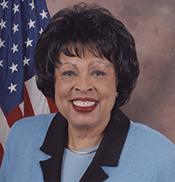
Mr. Speaker, Rosa Parks's life is a milestone in American history. I stand here because she sat there. Her simple defiance of refusing to relinquish her seat 50 years ago on a bus in Montgomery,…
Mr. Speaker, Rosa Parks's life is a milestone in American history. I stand here because she sat there. Her simple defiance of refusing to relinquish her seat 50 years ago on a bus in Montgomery, Alabama, ignited the civil rights movement that transformed these United States. Without Rosa Parks there may not have been a Martin Luther King or a civil rights movement.
Her death at the age of 92 reminds us all that one person can make a profound difference in the lives of others and in the course of history. She is the embodiment and exemplar of today's human rights movements around the world.
Part of Rosa Parks's legacy was her quiet dignity and disdain for injustice. She was truly a woman of peace. What she determined that fateful day on the bus in Montgomery, Alabama, is that she could not compromise her essential humanity. Her grace and her strength exemplified a purity of spirit and commitment to truth.
The road less traveled by Rosa Parks was not always smooth or kind. She and her husband received numerous death threats and lost their jobs in the aftermath of the historic bus boycott. Her supporters' houses were fire-bombed.
Congress stood by and did nothing. Mrs. Parks finally moved north to Detroit where she had relatives and eventually ended up working for the gentleman from Michigan (Mr. Conyers), the esteemed Congressman.
We all grieve the loss of Rosa Parks, and we extend our heartfelt sympathy to her family, friends, as well as my friends and colleagues here on the floor today and particularly the gentleman from Michigan (Mr. Conyers), my friend. We are a better Nation and people because of Rosa Parks.
Mr. Speaker, I also want to briefly acknowledge the passing of two other heroes in the struggle for civil and human rights, Dr. C. Delores Tucker, buried last Saturday, and the former Congressman, Ed Roybal.
C. Delores Tucker was a pioneer in the field of civil rights and politics. She counted Martin Luther King, Jr., Rosa Parks, and many others among the civil rights luminaries as close friends and allies.
In 1971, Pennsylvania Governor Milton Shapp appointed Dr. Tucker as the first Secretary of the Commonwealth.
Dr. Tucker had many firsts in her long public career. She was the first black woman to be named vice chair of Pennsylvania's State Democratic Party and the first African American to serve as president of the National Federation of Democratic Women. She was also founder and chairwoman of the National Congress of Black Women.
Dr. Tucker was always on the front lines in the struggle for civil rights and the rights of African American women. She led with strength and dignity, always stood tall, and was concerned about inequities and justice for all. Her spirit lives on.
Mr. Speaker, Congressman Ed Roybal was a true pioneer in the struggle for human and civil rights in California. He was an advocate his whole life for the poor, the disenfranchised, and for seniors.
Ed stood up not only for the rights of Latinos but all people who have been denied an equal opportunity. I looked to him as he served on the Los Angeles City Council and then in Congress as a voice that could be trusted to consistently respond on behalf of those who could not speak for themselves. During his long career and many accomplishments, he never lost sight of those in need.
My prayers and thoughts are with the gentlewoman from California (Ms. Roybal-Allard), his daughter, and his family during their period of grieving for the loss of a great American. Ed's strong and dedicated message will never be silenced. He leaves behind a spiritual, indelible legacy that will live on.
Mr. Speaker, we have lost a triumvirate.
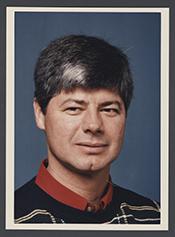
Mr. Speaker, we all have the opportunity to make choices in our lives. We have the choice to take the easy route, to blindly follow societal values no matter how false they may be. Or, we have the…
Mr. Speaker, we all have the opportunity to make choices in our lives. We have the choice to take the easy route, to blindly follow societal values no matter how false they may be. Or, we have the choice to take a stand and do what is right no matter how challenging the consequences may be.
December 1st this year will mark the day 50 years ago when one brave, great American took a stand that, while resulting in many challenges, would spur a civil rights movement that shaped a growing country in a very positive way.
In 1955, when Rosa Parks boarded that bus on her way home from work, she may not have been seeking to start a revolution; she may not have been looking to change the world; she may not have been hoping to lead a noble cause. Rosa Parks was presented with a choice: to accept the restrictions forced on her by false values or to take advantage of the opportunity to do the right thing.
Rosa Parks, right then and there in Montgomery Alabama, decided she would not give up her seat that day because as a leader in the NAACP, she understood that by accepting the restrictions imposed on her under segregation she was only enabling it further. Although she was weary from a hard day at work as a seamstress, Rosa Parks found the strength to challenge that plague of conformity so that she and others might no longer have to endure another day under its agonizing credence.
In making the choice to stand up to the monstrous ill of segregation, Rosa Parks joined heroes that have adorned legendary stories throughout the centuries when a common individual displays uncommon valor in the name of righteousness and against all odds.
Rosa Parks set off a chain of events that, over time, would slay that dragon of segregation. Her bravery would inspire other common individuals moved by the desire to promote equal rights to ban together to form an army committed to a mission. Their mission would force a society that had accepted an immoral practice to stop and reevaluate its priorities and values.
That day, Rosa Parks did start a revolution. That day, she inspired the Civil Rights movement that changed the world. That day she led a noble cause that she spent her entire life dedicated to seeing that we all have a seat of our choice at mankind's table. It all began with Rosa Parks making the choice to stand up for what she knew, in her heart, was right. America has reaffirmed that Rosa Parks was ``right'' in Montgomery, Alabama and ``right'' still today and in the future.
On October 25th, 2005, our great American hero, Rosa Parks, died at the age of 92 in her adopted home of Detroit, Michigan. While our country grieves for the loss of one of its most treasured patriots, we can rest assured that the stand Rosa Parks took nearly 50 years ago and the contributions she made thereafter, continues to shape and change the values of this growing country. We are reminded that we must evaluate our priorities and values each day if we are to protect the equal rights endowed to us by our Creator. Most of all, as common individuals, we are reminded that each of us has the uncommon valor to stand up for what is right no matter the consequences because, just like Rosa Parks, each of us has a hero within.

Mr. Speaker, I thank the gentleman from Michigan (Mr. Conyers) for yielding. I was trying to decide how to approach this issue and decided that probably there were two things I need to do: number…
Mr. Speaker, I thank the gentleman from Michigan (Mr. Conyers) for yielding.
I was trying to decide how to approach this issue and decided that probably there were two things I need to do: number one, I want to thank the gentleman from Alabama (Mr. Davis), my good friend and colleague, and the gentleman from Michigan (Mr. Conyers), my good friend and colleague, the two States with whom Rosa Parks probably had the strongest physical connections, for convening this Special Order for us to pay tribute to Rosa Parks.
I have listened to the gentleman from Michigan (Mr. Conyers) and the gentleman from Alabama (Mr. Davis) and the gentlewoman from California (Ms. Lee) and my other colleagues talk about some of their personal connections to Rosa Parks. One would think that maybe the chairman of the Congressional Black Caucus would have some personal stories, too; but when I reflect, I can only say that I never met Rosa Parks, nor for that matter but for the fact that Martin Luther King spoke at my high school graduation in 1963 did I ever meet Martin Luther King.
So why would we be here talking about somebody that we have never met? Because they have had an impact on our lives. What would compel a person to go visit a bus stop in Alabama? Simply because you knew that there was a particular significance to that bus stop, that that was the stop at which Rosa Parks got on the bus.
I cannot talk about the personal things about Rosa Parks that some of my colleagues have talked about. I can only talk about the impact that she had on my life and the lives of other people who viewed her from a distance and respected and admired her gentle but defiant stand, the stand that she took actually by sitting down and refusing to stand up, and by knowing that it had a tremendous impact on everybody around us as we were growing up, because by her sitting down and refusing to stand up, it allowed other people to stand up and straighten their backs and raise their shoulders and look up and start to move in a direction that we had not been moving before, starting with a bus boycott, and then sit-ins and other public accommodations and the entry of Martin Luther King as a leader of a whole series of things that started to take place.
What does that say for us who never met this wonderful woman, except from a distance? It says that there are probably many, many, many people who are watching us and would it not be a wonderful tribute to have somebody someday pay tribute to us who never, ever met us in person, by saying this person had an impact on my life.
I cannot think of a higher way to pay tribute to her. She had an impact on my life, and I cannot think of a greater challenge to issue to my colleagues in this body, to people who may be watching around the Nation, than to say what a wonderful tribute to have somebody think that you could impact their lives by simply sitting down or taking a stand for what you know is right.
We have that opportunity every single day, and I am delighted to pay tribute to Rosa Parks for exercising that opportunity and for allowing me to stand taller on her shoulders, on that giant commitment that she made.

Mr. Speaker, I rise today as an original cosponsor of H. Con. Res. 208, a resolution recognizing the 50th anniversary of Rosa Louise Parks' refusal to give up her seat on a city bus in Montgomery,…
Mr. Speaker, I rise today as an original cosponsor of H. Con. Res. 208, a resolution recognizing the 50th anniversary of Rosa Louise Parks' refusal to give up her seat on a city bus in Montgomery, Alabama. On December 1, 1955, Ms. Parks challenged decades of social injustice and inequality; she opposed a racist authority; she initiated a movement of change. It was on that day 50 years ago, that a woman spoke up for not only herself, but for the freedoms of all people, everywhere when she refused to give up her seat.
Ms. Parks' service to the civil rights movement began long before that fateful December day. Born and raised in Alabama, Rosa Louise McCauley attended the Alabama State Teachers College before marrying Raymond Parks in 1932. Together, they worked for the Montgomery branch chapter of the National Association for the Advancement of Colored People (NAACP). Ms. Parks took on leadership roles in the organization, serving as a secretary and then as an advisor to the NAACP Youth Council. These efforts to improve the lives of those in segregated societies grew into a movement to end segregation outright. That movement found a voice in Rosa Parks.
On December 1, 1955, Ms. Parks boarded a Montgomery city bus through the rear entrance. She sat in the section designated for ``colored.'' She obeyed the ludicrous segregation laws until a white man, wanting a seat, demanded hers. It was then that Ms. Parks decided that her compliance would end.
Ms. Parks was arrested for her civil disobedience. The arrest incited a reaction. Ms. Parks, Martin Luther King Jr., and others channeled that reaction to form one of the most powerful and positive movements in world history. The following day, civil rights advocates organized a boycott of the bus system that lasted for 381 days. On November 13, 1956, the Supreme Court ruled that segregation on the transportation system was unconstitutional and this provided one of the first victories for desegregation. We recognize the many people responsible for the effective boycott and the tremendous support of civil rights leadership. But, today, we celebrate the woman who imbued the movement with such dedication, dignity, and courage.
Rosa Parks' commitment to civil rights continued with her work in the office of my colleagues, Representative John Conyers, Jr., from 1965- 1988. In 1987, she established the Rosa and Raymond Parks Institute for Self Development to motivate youths. She has been honored for her contributions to society with the NAACP's Springarn Medal in 1979, the Martin Luther King, Jr., Nonviolent Peace Prize in 1980, the Presidential Medal of Freedom in 1996, and the Congressional Gold Medal in 1999.
Let us honor the 50th anniversary of Ms. Parks' refusal to give up her seat. Let us celebrate the lifetime achievements of a truly incredible woman. I urge my colleagues to join me in supporting H. Con. Res. 208.
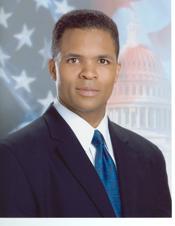
Mr. Speaker, it is my privilege to pay tribute to the life and work of Rosa Lee Parks, a quiet but courageous woman who, by sitting down against injustice allowed a mass civil rights movement to…
Mr. Speaker, it is my privilege to pay tribute to the life and work of Rosa Lee Parks, a quiet but courageous woman who, by sitting down against injustice allowed a mass civil rights movement to stand up for justice.
She was a small woman who had a large impact.
Rosa Parks was more than the ``Mother of the Civil Rights Movement.''
The three civil rights workers--Schwerner, Goodman and Cheney--were inspired by Rosa Parks before they set out on their journey to register people to vote in Mississippi prior to their tragic deaths.
Viola Gregg Liuzzo, an Italian American Detroit housewife who was killed driving marchers back to Selma after the 1965 Selma to Montgomery march, knew of the witness of Rosa Parks.
In 1966 James Meredith gained strength from Rosa Parks as he led a ``March Against Fear'' from Memphis to Jackson, Mississippi--in which he was shot.
Her dignified leadership inspired those abroad to engage in courageous acts--for example, the young man who stood in front of the tank in Tiananmen Square.
Nelson Mandela knew of her actions before he spent 27 years in a South African jail.
She burst on the scene before Pope John Paul II was able to use his pontifical office to
oppose communism. And when those in Eastern Europe struggling for independence from the Soviet Union sang ``We Shall Overcome,'' they were paying tribute to Rosa Parks, not Ronald Reagan.
Believing in American democracy she affirmed that one person--without money or military might--could make a difference.
In the face of danger, entrenched racism, a ``states' rights'' philosophy--and a belief by many that any effort toward civil rights for ``Negroes'' was communist inspired--this graceful woman acted with the courage of a lion, and out of a grassroots bus boycott in Montgomery, Alabama, came a young man, Dr. Martin Luther King, Jr., and a mass movement to end legal apartheid in America.
Rosa Parks took the legal principle of ``equal protection under the law'' for all Americans in the 1954 Brown decision and applied it to public transportation--which eventually led to a 1964 Civil Rights Act, a 1965 Voting Rights Act and a 1968 Open Housing Act, all of which helped to build a more perfect union among the states and make America better.
Do we memorialize her with tributes like this around the nation? Absolutely.
But it also occurred to me that there are few statues of people of color and women in the Capitol. I think Rosa Parks deserves to be honored with a statue in Statuary Hall in the U.S. Capitol and, therefore, today I introduced H.R. 4145, legislation to design, sculpture and place her among the greats who have helped to make America and the world a better place in which to live. I think that is the most appropriate way to permanently memorialize Rosa Parks.
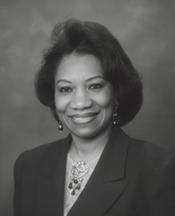
Mr. Speaker, I thank the gentleman from Michigan (Mr. Conyers) so much for yielding, and I am absolutely privileged to stand here today on the shoulders of a woman who stood so proud, though her…
Mr. Speaker, I thank the gentleman from Michigan (Mr. Conyers) so much for yielding, and I am absolutely privileged to stand here today on the shoulders of a woman who stood so proud, though her frame was so small. One act, infused with courage, changed this world.
Her act was a spark that ignited a movement that altered the course of history for America. She sat down in order for America to stand up and look at itself, look at herself, and to see the atrocities that they were doing on a group of people, we African Americans.
I am so privileged to have had the opportunity to meet this great woman. She came to California; and while she came to California, she and I both hailed from Alabama. Yes, she was a native Alabaman and so am I.
Rosa Parks, a seamstress who refused to get up from her seat to give to it a white man, that is the type of courage that she displayed; and yet she did not want anyone to showcase her. In California, when we showcased her in the State legislature, she said, I do not want all of this. I said to her, I am sorry, you have all of this, because you have made this country a better country because of one act that you did.
All Americans should be standing up at this point, praising Rosa Parks for what she did, not only for a group of people but for this country. She raised the consciousness of this country and brought it to its knees in terms of segregation.
I am looking at the Washington Post Style, and they say: ``Appreciation. The Thread That Unraveled Segregation.'' Indeed, she did. What a mighty force she was, a woman who used threads to make a living, and yet when she was about to make a dress for one of her persons, a person who was really not of her ilk, they told her, you have made this wedding dress so beautifully you should come to the wedding. She says, well, I would like to come to the wedding. But then officials at St. John's Episcopal Church told Lucy, the young woman for whom she was making the wedding dress, that if Rosa Parks was to attend this wedding, she would have to wear a uniform like a servant or sit in the balcony. She refused to do that. She was a woman of such great spirit, great soul.
I know the time is passing, but I just want to say to my dear sister, she has made us all proud. My daughters met her. I am sorry my granddaughters Ayanna, Ramia, and Blair did not meet her, nor my grandson Myles; but they will know her because their grandmother will tell them how she stood tall in spite of her small frame.
So thank you, Rosa Parks, for the distinction of becoming the mother of a civil rights movement and having the courage to act on behalf of all man- and womankind.
Show 11 more
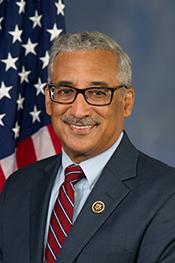
Mr. Speaker, it was with great sadness that I learned of the passing of Mrs. Rosa Parks on October 24, 2005. I rise today along with my colleagues to celebrate and remember the life of a remarkable…
Mr. Speaker, it was with great sadness that I learned of the passing of Mrs. Rosa Parks on October 24, 2005. I rise today along with my colleagues to celebrate and remember the life of a remarkable woman. I know that I speak for my colleagues here today when I say that America has lost one of its greatest citizens.
Mrs. Rosa Parks became one the Nation's first heroes of the Civil Rights Movement. Her refusal to give up her seat on a Montgomery Alabama bus solely because of her race sparked a result that no one could have predicted. The 381-day boycott of the Montgomery Alabama bus system and Mrs. Parks' court case were the first nationally recognized battles of the Civil Rights Movement. This movement eventually brought about legislation to end segregation in public accommodations, to secure the voting rights of all citizens, and to eliminate discriminatory housing practices, effectively changing the face of American society forever.
Although Mrs. Parks' actions were pivotal in creating laws, her actions also galvanized public support for the equal treatment of African Americans. It's important to remember that Mrs. Parks' actions did not exist in a vacuum. Less than a year had passed since the grisly lynching death of Emmett Till in Mississippi. Violence was a constant threat to anyone, black or white, who spoke out against the status quo. Mrs. Parks' actions resulted in death threats against her and her husband, threats which caused her to leave Alabama. The fact that people could harbor such hatred against Mrs. Parks solely for her desire to be treated as an equal person exposed to much of the country the cruel and ignorant practices of Jim Crow. The images from the fight for civil rights filled television screens throughout the world and were central in changing public opinions.
I had the honor and pleasure to meet Mrs. Parks when I was a fifth grade student in the late 1950's. She worked at Hampton Institute, now Hampton University, with my grandmother at the Holly Tree Inn. After leaving Hampton, she moved to Detroit, Michigan where she found work as a seamstress. In 1965, she went on to serve in the office of our distinguished colleague, the gentleman from Michigan, Mr. Conyers. Her 23 years of service to him and to this body are also worthy of commendation.
I want to express my condolences to the Parks family. Rosa Parks' act of non-violent resistance showed the world the power of one person in the face of injustice. Her name rightly belongs in the pantheon of individuals who have put the civil rights of all above their own personal safety. We have lost a national treasure.
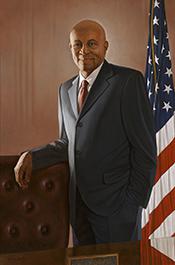
Mr. Speaker, I rise today in full support of H. Con. Res. 208, which recognizes the pivotal contribution of Mrs. Rosa Louise Parks. Mrs. Parks is best known as the seamstress who became a courageous…
Mr. Speaker, I rise today in full support of H. Con. Res. 208, which recognizes the pivotal contribution of Mrs. Rosa Louise Parks. Mrs. Parks is best known as the seamstress who became a courageous activist and changed America forever with bold defiance of segregation. Although she has been portrayed as a quiet woman, her actions have spoken volumes. Her refusal, on December 1, 1955, to yield her seat to a white patron on a Montgomery, Alabama bus resulted in a charge of disorderly conduct. However, her action precipitated the famous Montgomery Bus Boycott, which brought Reverend Dr. Martin Luther King, Jr., to national prominence and prompted the U.S. Supreme Court decision to rule that segregation in public transportation is unconstitutional.
As a result, many regard her as the ``Mother of the Civil Rights Movement.'' But there is far more to the story of the icon, Mrs. Rosa Parks. She was born on February 4, 1913 in Tuskegee, Alabama and educated at the Alabama State Teacher's College. Mrs. Parks and her husband, Raymond Parks, were very active in their local branch of the National Association for the Advancement of Colored People (NAACP). She, in particular, served both as secretary and youth leader. After the boycott, Mrs. Parks' civil rights advocacy did not end. In 1957, she moved to Detroit to continue her work through the Office of Congressman John Conyers, Jr. Then, in 1988, after leaving his office, she started the Rosa and Raymond Parks Institute for Self Development to motivate youth to reach their highest potential.
During the past four decades, she has continued to remind Americans of the history of the civil rights struggle. As a pioneer in the struggle for racial equality, subsequent generations owe her the sincerest appreciation. Although she is the recipient of innumerable honors, including the NAACP's Springarn Medal (1979), the Martin Luther King Jr. Nonviolent Peace Prize (1980), the Presidential Medal of Freedom (1996), and the Congressional Gold Medal (1999), we recognize the need for a national celebration of her contributions to the Civil Rights Movement.
Mrs. Parks is a living symbol of courage and determination and an inspiration to freedom-loving people everywhere. Since 2005 marks the 50th anniversary of her act of civil disobedience and the beginning of desegregation efforts throughout America, Mr. Speaker, it behooves us to recognize her this year. It is my hope that in celebrating Mrs. Parks, this great Nation will continue to uphold her legacy.
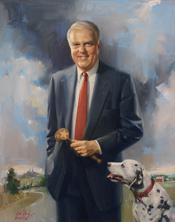
Mr. Speaker, I move to suspend the rules and agree to the concurrent resolution (H. Con. Res. 208) recognizing the 50th anniversary of Rosa Louise Parks' refusal to give up her seat on the bus and…
Mr. Speaker, I move to suspend the rules and agree to the concurrent resolution (H. Con. Res. 208) recognizing the 50th anniversary of Rosa Louise Parks' refusal to give up her seat on the bus and the subsequent desegregation of American society.
Mr. Speaker, I ask unanimous consent that all Members may have 5 legislative days within which to revise and extend their remarks and include extraneous material on H. Con. Res. 208 currently under consideration.
Mr. Speaker, I yield myself such time as I may consume.
Mr. Speaker, I rise in strong support of H. Con. Res. 208, recognizing the 50th anniversary of Rosa Louise Parks' refusal to give up her seat on the bus and the subsequent desegregation of American society.
Fifty years ago, one individual, through one courageous act, gave strength to the citizens of Montgomery, Alabama, to stand up to the injustice and indignity that had become commonplace among its citizens. Rosa Parks accomplished this heroic feat through the single act of refusing to give up her seat on the bus to a white man. Her single act of defiance and refusal to accept the status quo led to the 381-day Montgomery bus boycott and eventually to the desegregation of Montgomery, Alabama.
However, Rosa Parks' courageous act meant much more. It inspired a broader movement that struggled and pushed back against a Nation that had failed to keep its promise to all its citizens to promote equality, justice, and fairness under the laws. It paved the way for this Nation to hold unacceptable the injustices and disparate treatment experienced by many of its citizens. Rosa Parks' courage helped restore to all citizens the dignity and respect that every person deserves. Her
single act of courage will forever serve as a constant reminder of the true meaning of equal protection under the laws and the responsibility of each of us to stand up to inequality and injustice.
Rosa Parks is an inspiration to all of us and is a reflection of what it means to be an American. I encourage my colleagues to join me in recognizing Rosa Parks and her important contribution toward helping America realize the freedom and equality envisioned by our Constitution.
Mr. Speaker, I reserve the balance of my time.
Mr. Speaker, I yield back the balance of my time.
Mr. Speaker, I rise in support of H. Con. Resolution 208, recognizing the 50th anniversary of Rosa Parks' refusal to give up her seat on the bus and the subsequent desegregation of American society.…
Mr. Speaker, I rise in support of H. Con. Resolution 208, recognizing the 50th anniversary of Rosa Parks' refusal to give up her seat on the bus and the subsequent desegregation of American society. Passage of this bill will not only recognize the important anniversary, but also reaffirm the United States' continuing commitment to the legacy of Rosa Parks and the civil rights movement as a whole.
On December 1, 1954, Rosa Parks boarded her normal bus home and sat down in one of the ``colored'' aisles toward the back of the bus. Soon, the bus began to fill, and Rosa was ordered to vacate her seat to accommodate the white passengers. She simply but stubbornly refused.
This peaceful act of protest sparked a citywide boycott of the bus system by the African American community. Men, women and children of Montgomery, Alabama refrained from riding the bus and instead either walked, rode their bikes or carpooled to work. In an impressive show of strength and courage, the boycott endured for over a year, and people across the nation joined with those in Montgomery. After 381 days, the City bus line finally relented and desegregated the buses.
Four days after the initial incident on the bus, a young man stood up in front of a large audience, having just been appointed as the head of the boycott: ``There comes a time,'' the man said, ``that people get tired. We are here this evening to say to those who have mistreated us for so long, that we are tired, tired of being segregated and humiliated, tired of being kicked about by the brutal feet of oppression.'' The name of that young man spurred to action by Rosa Parks was Dr. Martin Luther King, Jr.
Rosa was found guilty that very same day of breaking the city's segregation law. It was 50 years ago that Rosa Parks chose to peacefully but willfully stand up--or rather sit down--against the abhorrent laws that segregated this country. Let us honor and celebrate what Rosa Louise Parks helped this country accomplish half a century ago, but also remember that her fight is not over. This anniversary reminds us of the battles against inequality and injustice still being fought here and across the world today.
I support H. Con. Res. 208 for the foregoing reasons, and I urge my colleagues to follow suit.
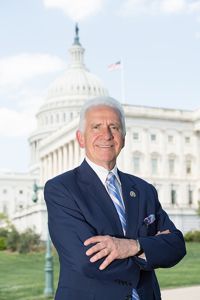
Mr. Speaker, I rise today in honor and memory of the civil rights icon Rosa Louise Parks. Almost half a century ago, Mrs. Parks' refusal to surrender her bus seat triggered the first organized…
Mr. Speaker, I rise today in honor and memory of the civil rights icon Rosa Louise Parks. Almost half a century ago, Mrs. Parks' refusal to surrender her bus seat triggered the first organized actions in the civil rights movement. Because of her action that day, Mrs. Parks will always be remembered as the ``mother of the civil rights movement.''
Rosa Parks was born in Tuskegee, Alabama on February 4, 1913. As a girl, she wrote, ``I had a very strong sense of what was fair.'' She led a life dedicated to improving civil rights and acted as an inspiration to many Americans.
On December 1, 1955, Mrs. Parks sat in an unreserved section of a city bus. When asked to give up her seat for a white man she politely refused. It is a common misconception that Rosa Parks was unwilling to give up her seat because she was tired from a long day at work. As she told it, ``the only tired I was, was tired of giving in.''
Mrs. Parks' act of civil disobedience is the popular inspiration that led to Martin Luther King Jr.'s decision to lead a bus boycott that lasted an amazing 381 days. On November 13, 1956, in an important victory for the civil rights movement, the Supreme Court outlawed segregation on buses. The civil rights movement would experience many important victories, but Rosa Parks will always be remembered as its catalyst.
Mrs. Parks was a shy, soft spoken woman who was uncomfortable being revered as a symbol of the civil rights movement. She only hoped to inspire young people to achieve great things. However, in 1996 her place in U.S. history was cemented when she was awarded the Nation's highest civilian honor, the Presidential Medal of Freedom by President Bill Clinton. Mrs. Parks passed away October 24th at the age of 92, at her home in Detroit.
Rosa Parks will be remembered for her lasting contributions to society. Her legacy lives on in the continued struggle for civil rights around the world. She will be missed.
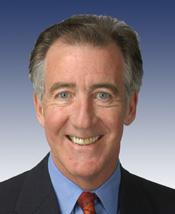
Mr. Speaker, I am saddened by the death of Rosa Parks, and I rise today to pay tribute to this exemplary woman who dynamically changed the 20th Century. Rosa Parks became a major catalyst for racial…
Mr. Speaker, I am saddened by the death of Rosa Parks, and I rise today to pay tribute to this exemplary woman who dynamically changed the 20th Century.
Rosa Parks became a major catalyst for racial reform in December 1955 when she refused to give up her seat to a white man on a public bus in Montgomery, Alabama, defying the racial standards of that time. As a result, she was arrested and fined for violating a city ordinance. But this arrest began a bus boycott movement that ended legal segregation in America, and made Ms. Parks an inspiration to those who longed for freedom for everyone. Although the boycott was a success, Rosa Parks later lost her job. But, despite of this mistreatment she still held on to what she believed in ``freedom and equality.''
Ms. Parks' valor, on that particular day, helped to make Americans aware of the history of the civil rights struggle. She was truly an example of courage, determination and inspiration to all Americans and for her courageous deed, Rosa Parks was hailed ``the mother of the civil rights movement.'' Therefore, on June 15, 1999, we in Congress honored Ms. Parks' bravery by awarding her the Congressional Gold Medal in an historic ceremony at the Capitol Rotunda.
It was truly an honor to meet such an outstanding woman, and I will never forget her action and dedication that led to the end of segregation. Her heroism inspired the freedom and equality that African Americans so rightly deserve.
Mr. Speaker, I hope that Rosa Parks' legacy will be carried forward by future generations so that African Americans will continue to experience equality amongst all mankind.
Mr. Speaker, I rise today in strong support of the resolution commemorating Rosa Parks on the 50th Anniversary of her refusal to give up her seat on a Montgomery, Alabama bus and comply with an…
Mr. Speaker, I rise today in strong support of the resolution commemorating Rosa Parks on the 50th Anniversary of her refusal to give up her seat on a Montgomery, Alabama bus and comply with an unjust law.
I also want to thank my colleague from Michigan, Mr. Conyers, for offering this important amendment and for his courage, leadership, and vision as the ranking member on the House Judiciary Committee and the Dean of the Congressional Black Caucus.
Without question, Rosa Parks, was a pivotal force in the struggle for civil rights in America.
Ms. Parks' courageous action touched millions of lives, serving as a catalyst for the legendary bus boycott in Alabama and acting as a critical turning point in the African-American civil rights movement.
With the support of Dr. Martin Luther King Jr. and other civil rights activists, Rosa Parks demonstrated the power of individuals and communities to tear down injustice and bring about social change.
Her spark ignited a fire that helped to reverse segregation, raise public consciousness, and challenge our democracy to guarantee and secure liberty and justice for all.
Rosa Parks is a true shero. But as we commemorate Rosa and her actions today, let us not forget that we still have much more work to do.
It is our job as representatives of the people to pick up the banner carried by Rosa Parks, Martin Luther King, Medger Evers, and others and ensure that our children and our children's children can live in a world free of ignorance, prejudice, discrimination and racism.
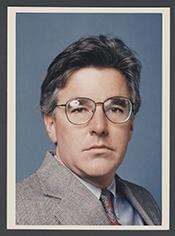
Mr. Speaker, I rise in support of H. Con. Res. 208 and commend the gentlemen from Wisconsin and Michigan for bringing this concurrent resolution to the floor today. Fifty years ago this coming…
Mr. Speaker, I rise in support of H. Con. Res. 208 and commend the gentlemen from Wisconsin and Michigan for bringing this concurrent resolution to the floor today.
Fifty years ago this coming December, Rosa Louise Parks inspired a town, a movement, and a Nation to hold true to the ideals and principles upon which our Nation was founded. By refusing to give up her seat after a long day of work because she felt she was being treated unfairly, Rosa Parks demonstrated the quiet strength that typified her life.
Her arrest led to the 381-day Montgomery bus boycott and to the eventual repeal of the segregation laws of the South. Her individual act of defiance is considered by many to be the beginning of the civil rights movement.
Ten years later, on August 6, 1965, President Lyndon Johnson signed into law the Voting Rights Act, which in later years was strengthened with amendments to affirm the rights of non-Whites to vote and to be represented fairly in government. This fall, parts of the Voting Rights Act will come before Congress to be reauthorized. We must not only renew our commitment to the voting rights protected under that legislation, but look to strengthen voter rights and to improve our electoral systems. And we must forever link our current state of freedom with the sacrifice of exceptional individuals like Rosa Parks who stood up to oppression and changed history.
Let us celebrate the lifetime achievements of a truly remarkable woman. I urge my colleagues to join me in supporting H. Con. Res. 208.
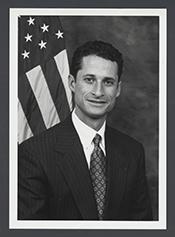
Mr. Speaker, in 1913, a little girl name Rosa Louise McCauley was born in Alabama. As she grew up, her mother, Leona McCauley, encouraged her daughter to ``take advantage of the opportunities, no…
Mr. Speaker, in 1913, a little girl name Rosa Louise McCauley was born in Alabama. As she grew up, her mother, Leona McCauley, encouraged her daughter to ``take advantage of the opportunities, no matter how few they were,'' and she did just that. In 1932, she married Raymond Parks, an active participant in civil rights causes. The couple joined the Voters League in the 1940s.
On December 1, 1955, Rosa Parks' life changed forever and she became an icon of the civil rights movement when she refused to give up her seat on a public bus to make extra room for white passengers. She was arrested and convicted of disorderly conduct for violating a local ordinance. Parks' arrest led to the formation of the Montgomery Improvement Association, which organized a boycott of public buses until the U.S Supreme Court ruled that Montgomery's policy of segregation on buses was unconstitutional.
Later, Parks moved to Michigan, where Rosa initially worked as a seamstress and later as an aide to the gentleman from Michigan, Mr. Conyers, from 1965 to 1988. She cofounded the Rosa and Raymond Parks Institute for Self Development in 1987 with, which sponsors a summer bus tour for teenagers that were interested in learning the history of America and civil rights.
Yesterday, at the age of 92, Rosa Parks passed away. Her contributions to American history will never be forgotten. Her dedication to the cause of civil rights will be sorely missed, but her legacy will live on forever.

Mr. Speaker and colleagues, I rise today to acknowledge the passing of a great American, the venerable Rosa Louise Parks. On a cold afternoon in December 1955, Rosa Parks could not have known she…
Mr. Speaker and colleagues, I rise today to acknowledge the passing of a great American, the venerable Rosa Louise Parks.
On a cold afternoon in December 1955, Rosa Parks could not have known she would soon become a national symbol and civil rights icon. But in standing her ground and demanding her fair and equal treatment on that bus in Montgomery, Alabama, Rosa Parks became the first lady of civil rights and the mother of the freedom movement.
Her simple action and committed resolve that day empowered a people, ignited a movement and changed the course of American history.
The events that followed Ms. Parks' protest that day--her arrest, the Montgomery bus boycott, and the eventual integration of the bus system--set the stage for Dr. Martin Luther King and the Civil Rights Act.
As a young college student, I was inspired by the stories of Ms. Parks' courageous action. I traveled to the south as a ``freedom ride'' in support of the emerging civil rights movement.
Rosa Parks' courage, determination, and tenacity continue to be an inspiration to all those committed to non-violent protest and change nearly half a century later. She will be remembered as an everlasting symbol and advocate for justice and equality throughout America.
Thank you Rosa, America will forever be indebted to you.

Mr. Speaker, I rise today to help pay tribute to one of Alabama's great Civil Rights leaders, Rosa Parks. Nearly 50 years ago, Rosa Parks started a quiet, but determined, protest against the status…
Mr. Speaker, I rise today to help pay tribute to one of Alabama's great Civil Rights leaders, Rosa Parks.
Nearly 50 years ago, Rosa Parks started a quiet, but determined, protest against the status quo.
What began as a principled refusal to give up her seat, grew into a movement that has helped change the world.
All of us assembled here today are beneficiaries of her courage, regardless of our race. We're deeply saddened by her passing, but we're also humbled by her life and legacy. Our Nation is stronger because of her actions.
Mr. Speaker, yesterday I introduced a resolution recognizing the 50th Anniversary of the Montgomery Bus Boycott.
Over 60 members of this chamber are co-sponsors of that resolution, including all of my colleagues from Alabama.
It is my hope that resolution will also help honor Rosa Parks, and help pay tribute to those who laid the foundations for the modern-day Civil Rights movement.
I thank Mr. Conyers for leading this tribute today, and thank my colleagues for their attention to the life and legacy of Rosa Parks.
Bill Text
5 versions available
        [Congressional Bills 109th Congress]
[From the U.S. Government Publishing Office]
[H. Con. Res. 208 Enrolled Bill (ENR)]

H.Con.Res.208
Agreed to November 18, 2005

One Hundred Ninth Congress

of the

United States of America

AT THE FIRST SESSION

Begun and held at the City of Washington on Tuesday,
the fourth day of January, two thousand and five

Concurrent Resolution

Whereas most historians date the beginning of the modern-day Civil
Rights Movement in the United States to December 1, 1955;

Whereas December 1, 1955, is the date of Rosa Louise Parks' refusal to
give up her bus seat to a white man and her subsequent arrest;

Whereas Rosa Louise Parks was born on February 4, 1913, as Rosa Louise
McCauley to James and Leona McCauley in Tuskegee, Alabama;

Whereas Rosa Louise Parks was educated in Pine Level, Alabama, until
the age of 11, when she enrolled in the Montgomery Industrial School
for Girls and then went on to attend the Alabama State Teachers
College's High School;

Whereas on December 18, 1932, Rosa Louise McCauley married Raymond
Parks and the two settled in Montgomery, Alabama;

Whereas, together, Raymond and Rosa Parks worked in the Montgomery,
Alabama, branch of the National Association for the Advancement of
Colored People (NAACP), where Raymond served as an active member and
Rosa served as a secretary and youth leader;

Whereas on December 1, 1955, Rosa Louise Parks was arrested for
refusing to give up her seat in the ``colored'' section of the bus to
a white man on the orders of the bus driver because the ``white''
section was full;

Whereas the arrest of Rosa Louise Parks led African Americans and
others to boycott the Montgomery city bus line until the buses in
Montgomery were desegregated;

Whereas the 381-day Montgomery bus boycott encouraged other courageous
people across the United States to organize in protest and demand
equal rights for all;

Whereas the fearless acts of civil disobedience displayed by Rosa
Louise Parks and others resulted in a legal action challenging
Montgomery's segregated public transportation system which
subsequently led to the United States Supreme Court, on November 13,
1956, affirming a district court decision that held that Montgomery
segregation codes deny and deprive African Americans of the equal
protection of the laws (352 U.S. 903);

Whereas, in the years following the Montgomery bus boycott, Rosa Louise
Parks moved to Detroit, Michigan, in 1957, and continued her civil
rights work through efforts that included working in the office of
Congressman John Conyers, Jr., from 1965 until 1988, and starting the
Rosa and Raymond Parks Institute for Self Development, a nonprofit
501(c)(3) that motivates youth to reach their highest potential, in
1987;

Whereas Rosa Louise Parks has been commended for her work in the realm
of civil rights with such recognitions as the NAACP's Springarn Medal
in 1979, the Martin Luther King, Jr., Nonviolent Peace Prize in 1980,
the Presidential Medal of Freedom in 1996, and the Congressional Gold
Medal in 1999; and

Whereas in 2005, the year marking the 50th anniversary of Rosa Louise
Parks' refusal to give up her seat on the bus, we recognize the
courage, dignity, and determination displayed by Rosa Louise Parks as
she confronted injustice and inequality: Now, therefore, be it

Resolved by the House of Representatives (the Senate concurring),
That the Congress--
(1) recognizes and celebrates the 50th anniversary of Rosa
Louise Parks' refusal to give up her seat on the bus and the
subsequent desegregation of American society;
(2) encourages the people of the United States to recognize and
celebrate this anniversary and the subsequent legal victories that
sought to eradicate segregation in all of American society; and
(3) endeavors to work with the same courage, dignity, and
determination exemplified by civil rights pioneer, Rosa Louise
Parks, to address modern-day inequalities and injustice.
Attest:

Clerk of the House of Representatives.

Attest:

Secretary of the Senate.