Federal Prison Industries Competition in Contracting Act of 2006
 Rep. Peter Hoekstra (R-MI)
Legislative Activity
Stay on top of the latest movement without scrolling through every action
Referred to the Committee on the Judiciary.
September 21, 2006
View full timeline
Introduced in House
June 17, 2005
Referred to the House Committee on the Judiciary.
June 17, 2005
Referred to the Subcommittee on Crime, Terrorism, and Homeland Security.
June 29, 2005
Subcommittee Hearings Held.
July 1, 2005
Subcommittee on Crime, Terrorism, and Homeland Security Discharged.
July 8, 2005
Mr. King (IA) asked unanimous consent that the Committee on Judiciary have until midnight on July 21 to file a report on H.R. 2965. Agreed to without objection.
July 20, 2006
Reported (Amended) by the Committee on Judiciary. H. Rept. 109-591.
July 21, 2006
Placed on the Union Calendar, Calendar No. 342.
July 21, 2006
Rules Committee Resolution H. Res. 997 Reported to House. Rule provides for consideration of H.R. 2965 with 1 hour of general debate. Previous question shall be considered as ordered without intervening motions except motion to recommit with or without instructions. Measure will be considered read. Specified amendments are in order. It shall be in order to consider as an original bill for the purpose of amendment under the five-minute rule the amendment in the nature of a substitute recommended by the Committee on the Judiciary now printed in the bill.
September 12, 2006 • 7:56 PM
Rule H. Res. 997 passed House.
September 13, 2006 • 11:07 AM
Considered under the provisions of rule H. Res. 997. (consideration: CR H6561-6580; text of measure as reported in House: CR H6567-6575)
September 14, 2006 • 11:31 AM
Rule provides for consideration of H.R. 2965 with 1 hour of general debate. Previous question shall be considered as ordered without intervening motions except motion to recommit with or without instructions. Measure will be considered read. Specified amendments are in order. It shall be in order to consider as an original bill for the purpose of amendment under the five-minute rule the amendment in the nature of a substitute recommended by the Committee on the Judiciary now printed in the bill.
September 14, 2006 • 11:32 AM
House resolved itself into the Committee of the Whole House on the state of the Union pursuant to H. Res. 997 and Rule XVIII.
September 14, 2006 • 11:33 AM
The Speaker designated the Honorable John Boozman to act as Chairman of the Committee.
September 14, 2006 • 11:33 AM
GENERAL DEBATE - The Committee of the Whole proceeded with one hour of general debate on H.R. 2965.
September 14, 2006 • 11:33 AM
DEBATE - Pursuant to the provisions of H. Res. 997, the Committee of the Whole proceeded with 10 minutes of debate on the Sensenbrenner amendment.
September 14, 2006 • 12:16 PM
DEBATE - Pursuant to the provisions of H. Res. 997, the Committee of the Whole proceeded with 10 minutes of debate on the Scott (VA) amendment.
September 14, 2006 • 12:18 PM
POSTPONED PROCEEDINGS - At the conclusion of debate on the Scott (VA) amendment #2, the Chair put the question on adoption of the amendment and by voice vote announced that the noes had prevailed. Mr. Scott (VA) demanded a recorded vote and the Chair postponed further proceedings on the question of adoption of the amendment until later in the legislative day.
September 14, 2006 • 12:26 PM
POSTPONED PROCEEDINGS - At the conclusion of debate on the Scott (VA) amendment #5, the Chair put the question on adoption of the amendment and by voice vote announced that the noes had prevailed. Mr. Scott (VA) demanded a recorded vote and the Chair postponed further proceedings on the question of adoption of the amendment until later in the legislative day.
September 14, 2006 • 12:36 PM
UNFINISHED BUSINESS - The Chair announced that the unfinished business was the question of adoption of amendments which had been debated earlier and on which further proceedings had been postponed.
September 14, 2006 • 12:36 PM
The House rose from the Committee of the Whole House on the state of the Union to report H.R. 2965.
September 14, 2006 • 1:14 PM
The previous question was ordered pursuant to the rule. (consideration: CR H6579)
September 14, 2006 • 1:15 PM
The House adopted the amendment in the nature of a substitute as agreed to by the Committee of the Whole House on the state of the Union.
September 14, 2006 • 1:15 PM
Passed/agreed to in House: On passage Passed by the Yeas and Nays: 362 - 57 (Roll no. 443).
September 14, 2006 • 1:34 PM
On passage Passed by the Yeas and Nays: 362 - 57 (Roll no. 443).
September 14, 2006 • 1:34 PM
Motion to reconsider laid on the table Agreed to without objection.
September 14, 2006 • 1:34 PM
Received in the Senate and Read twice and referred to the Committee on Homeland Security and Governmental Affairs.
September 15, 2006
Senate Committee on Homeland Security and Governmental Affairs discharged by Unanimous Consent.(consideration: CR S10003)
September 21, 2006
Senate Committee on Homeland Security and Governmental Affairs discharged by Unanimous Consent. (consideration: CR S10003)
September 21, 2006
Referred to the Committee on the Judiciary.
September 21, 2006
Voting History
3 votes recorded • Roll call available
HOUSE
Roll Call AvailableSeptember 14, 2006 at 1:34 PM
On Passage
Majority required: 1/2 (50%)
362 - 57
HOUSE
Roll Call AvailableSeptember 14, 2006 at 1:14 PM
On Agreeing to the Amendment
Majority required: 1/2 (50%)
80 - 332
HOUSE
Roll Call AvailableSeptember 14, 2006 at 1:06 PM
On Agreeing to the Amendment
Majority required: 1/2 (50%)
77 - 339
Floor Debate
19 membersWhat members said about H.R. 2965 on the floor


 +14
+14
Floor Debate
19 membersWhat members said about H.R. 2965 on the floor
Mr. Speaker, by direction of the Committee on Rules, I call up House Resolution 997 and ask for its immediate consideration. Mr. Speaker, for the purpose of debate only, I yield the customary 30…
Mr. Speaker, if there is a positive element to being here on the very brink of the holiday season, on a Saturday, it is the passage of this legislation. I thank the ranking member for his leadership.…
Mr. Chairman, I rise in opposition to H.R. 2965, the Federal Prison Industries Competition in Contracting Act. The Federal Prison Industries program was signed into law by President Roosevelt in…
Mr. Speaker, I yield myself such time as I may consume. Mr. Chairman, I rise in strong support of H.R. 3402, the Department of Justice Appropriations Authorization Act for Fiscal Years 2006 through…
Mr. Chairman, I yield myself such time as I may consume. Mr. Chairman, I rise in support of the legislation beginning by commending the gentleman from Wisconsin (Mr. Sensenbrenner), the chairman of…
Show 8 more
Mr. Chairman, I yield myself such time as I may consume. Mr. Chairman, I rise in strong support of H.R. 2965, the Federal Prison Industries Competition and Contracting Act of 2006. This bill is…

Mr. Speaker, I rise for the purpose of inquiring of the majority leader the schedule for the week to come, and I yield to my friend, Mr. Boehner, the majority leader. I thank the gentleman for…
Mr. Speaker, I move to suspend the rules and concur in the Senate amendment to the bill (H.R. 3402) to authorize appropriations for the Department of Justice for fiscal years 2006 through 2009, and…
Mr. Chairman, I thank the gentleman from Michigan (Mr. Conyers) for yielding me this time; and let me thank the chairman, first of all, for his willingness to include, or to continue to include, an…
Mr. Chairman, I yield myself as much time as I may consume. Ladies and gentlemen of the Congress, this is a very important and sensitive issue that is being brought by Chairman Sensenbrenner and…

I want to thank my colleague from Maryland for yielding. Mr. Speaker, next week the House will convene on Tuesday at 12:30 for morning hour and 2 p.m. for legislative business. We will consider a…
Mr. Chairman, I rise today to thank the bipartisan leadership of the Judiciary Committee for its hard work shepherding through this powerful reauthorization of Department of Justice activities, a…

Mr. Chairman, I rise in opposition to the bill. Before I make some comments, let me say I have great respect for the gentleman from Michigan (Mr. Hoekstra). He is a good person. But I do not believe…
Show 11 more
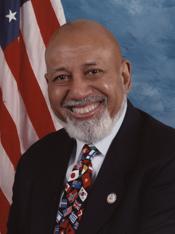
I thank Mr. Gingrey for the time, and I yield myself such time as I may consume. Mr. Speaker, I rise today in opposition to this rule and to the underlying bill. In 1934, Congress had established…

Mr. Chairman, I thank the gentleman for yielding me this time and giving me this opportunity to be heard. I would like to say specifically to the gentleman from Wisconsin, time sometimes is of the…
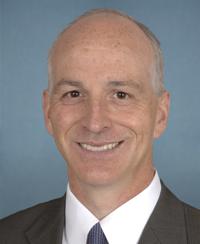
Mr. Chairman, I rise in support of the reauthorization of the Violence Against Women Act (VAWA) that is a part of today's Department of Justice Authorization Act. Enacted in 1994, this law provides…

Mr. Chairman, I rise in support of H.R. 3402, the Department of Justice Appropriations Authorization Act, which contains an amendment that I proposed during the consideration of the bill by the House…
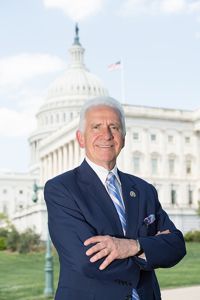
Mr. Speaker, I rise today to speak on the rule, not due to the merits of the bill before us, but because I am compelled to call to attention the complete debacle that I think is existing at the…
Mr. Chairman, I would like to thank the chairman of the Judiciary Committee, as well as the ranking member of the committee, for the great work that we have been able to do together and the support…
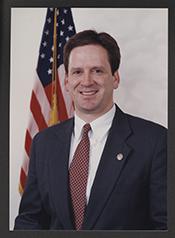
Mr. Chairman, I rise in support of the Department of Justice Reauthorization Act. Mr. Chairman, this is a good bill. It has many great programs. But there is one I would like to focus on today, one…

Mr. Chairman, I thank the gentleman for yielding and for leading so strongly on this important issue, and I rise in strong support of H.R. 2965, of which I have been a lead sponsor in many prior…
Mr. Speaker, I yield myself such time as I may consume. Mr. Speaker, I began on a note of congratulating the chairman of this committee who has been the first chairman to have began to get…

Mr. Chairman, I rise in support of H.R. 2965, the Federal Prison Industries Competition in Contracting Act of 2005. I thank my colleagues in the Committee on the Judiciary for their overwhelming…
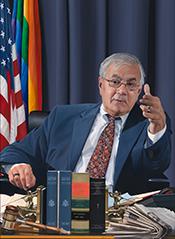
Mr. Chairman, I thank the ranking member, and I speak strongly in support of this bill. I have not yet had anyone explain to me why it is our strong policy to ban the products of prison labor that…
Bill Text
5 versions available
        [Congressional Bills 109th Congress]
[From the U.S. Government Publishing Office]
[H.R. 2965 Reference Change Senate (RCS)]

109th CONGRESS
2d Session
H. R. 2965

_______________________________________________________________________

IN THE SENATE OF THE UNITED STATES

September 15, 2006

Received; read twice and referred to the Committee on Homeland Security
and Governmental Affairs

September 21, 2006

Committee discharged; referred to the Committee on the Judiciary

_______________________________________________________________________

AN ACT

To amend title 18, United States Code, to require Federal Prison
Industries to compete for its contracts minimizing its unfair
competition with private sector firms and their non-inmate workers and
empowering Federal agencies to get the best value for taxpayers'
dollars, to provide a five-year period during which Federal Prison
Industries adjusts to obtaining inmate work opportunities through other
than its mandatory source status, to enhance inmate access to remedial
and vocational opportunities and other rehabilitative opportunities to
better prepare inmates for a successful return to society, to authorize
alternative inmate work opportunities in support of non-profit
organizations and other public service programs, and for other
purposes.

Be it enacted by the Senate and House of Representatives of the
United States of America in Congress assembled,

SECTION 1. SHORT TITLE; TABLE OF CONTENTS.

(a) Short Title.--This Act may be cited as the ``Federal Prison
Industries Competition in Contracting Act of 2006''.
(b) Table of Contents.--The table of contents for this Act is as
follows:

Sec. 1. Short title; table of contents.
Sec. 2. Governmentwide procurement policy relating to purchases from
Federal Prison Industries.
Sec. 3. Public participation regarding expansion proposals by Federal
Prison Industries.
Sec. 4. Transitional mandatory source authority.
Sec. 5. Authority to perform as a Federal subcontractor.
Sec. 6. Inmate wages and deductions.
Sec. 7. Clarifying amendment relating to services.
Sec. 8. Conforming amendment.
Sec. 9. Rules of construction relating to chapter 307.
Sec. 10. Providing additional rehabilitative opportunities for inmates.
Sec. 11. Re-entry employment preparation through work-based training
and apprenticeship.
Sec. 12. Restructuring the Board of Directors.
Sec. 13. Management matters.
Sec. 14. Transitional personnel management authority.
Sec. 15. Federal Prison Industries report to Congress.
Sec. 16. Definitions.
Sec. 17. Implementing regulations and procedures.
Sec. 18. Rules of construction.
Sec. 19. Effective date and applicability.
Sec. 20. Clerical amendments.

SEC. 2. GOVERNMENTWIDE PROCUREMENT POLICY RELATING TO PURCHASES FROM
FEDERAL PRISON INDUSTRIES.

Section 4124 of title 18, United States Code, is amended to read as
follows:
``Sec. 4124. Governmentwide procurement policy relating to purchases
from Federal Prison Industries
``(a) In General.--Purchases from Federal Prison Industries,
Incorporated, a wholly owned Government corporation, as referred to in
section 9101(3)(E) of title 31, may be made by a Federal department or
agency only in accordance with this section.
``(b) Solicitation and Evaluation of Offers and Contract Awards.--
(1)(A) If a procurement activity of a Federal department or agency has
a requirement for a specific product or service that is authorized to
be offered for sale by Federal Prison Industries, in accordance with
section 4122 of this title, and is listed in the catalog referred to in
subsection (g), the procurement activity shall solicit an offer from
Federal Prison Industries, if the purchase is expected to be in excess
of the micro-purchase threshold (as defined by section 32(f) of the
Office of Federal Procurement Policy Act (41 U.S.C. 428(f))).
``(B) The requirements of subparagraph (A) shall also apply to a
procurement that a Federal department or agency intends to meet by
placing an order against a contract maintained by the General Services
Administration under the Multiple Award Schedule Contracts Program.
``(C) Federal Prison Industries, upon its request, shall be listed
on any Schedule, referred to in subparagraph (B), as offering products
or services which Federal Prison Industries believes to be comparable
to those products and services being offered by commercial contractors
through the Multiple Award Schedule Contracts Program.
``(2) A contract award for such product or service shall be made
using competitive procedures in accordance with the applicable
evaluation factors, unless a determination is made by the Attorney
General pursuant to paragraph (3) or an award using other than
competitive procedures is authorized pursuant to paragraph (7).
``(3) The procurement activity shall negotiate with Federal Prison
Industries on a noncompetitive basis for the award of a contract if the
Attorney General determines that--
``(A) Federal Prison Industries cannot reasonably expect
fair consideration to receive the contract award on a
competitive basis; and
``(B) the contract award is necessary to maintain work
opportunities otherwise unavailable at the penal or
correctional facility at which the contract is to be performed
to prevent circumstances that could reasonably be expected to
significantly endanger the safe and effective administration of
such facility.
``(4) Except in the case of an award to be made pursuant to
paragraph (3), a contract award shall be made with Federal Prison
Industries only if the contracting officer for the procurement activity
determines that--
``(A) the specific product or service to be furnished will
meet the requirements of the procurement activity (including
any applicable prequalification requirements and all specified
commercial or governmental standards pertaining to quality,
testing, safety, serviceability, and warranties);
``(B) timely performance of the contract can be reasonably
expected; and
``(C) the contract price does not exceed a current market
price.
``(5) A determination by the Attorney General pursuant to paragraph
(3) shall be--
``(A) supported by specific findings by the warden of the
penal or correctional institution at which a Federal Prison
Industries workshop is scheduled to perform the contract;
``(B) supported by specific findings by Federal Prison
Industries regarding why it does not expect to win the contract
on a competitive basis; and
``(C) made and reported in the same manner as a
determination made pursuant to section 303(c)(7) of the Federal
Property and Administrative Services Act of 1949 (41 U.S.C.
253(c)(7)).
``(6) If the Attorney General has not made the determination
described in paragraph (3) within 30 days after Federal Prison
Industries has been informed of a contracting opportunity by a
procurement activity, the procurement activity may proceed to conduct a
procurement for the product or service in accordance with the
procedures generally applicable to such procurements by the procurement
activity.
``(7) A contract award may be made to Federal Prison Industries
using other than competitive procedures if such product or service is
only available from Federal Prison Industries and the contract may be
awarded under the authority of section 2304(c)(1) of title 10 or
section 303(c) of the Federal Property and Administrative Services Act
of 1949 (41 U.S.C. 253(c)(1)), as may be applicable, and pursuant to
the justification and approval requirements relating to such
noncompetitive procurements specified by law and the Governmentwide
Federal Acquisition Regulation.
``(8) A contract award may be made to Federal Prison Industries
using other than competitive procedures by the Federal Bureau of
Prisons.
``(9) A solicitation for a contract shall first be made to Federal
Prison Industries using other than competitive procedures if the
product or service to be acquired would otherwise be furnished by a
contractor performing the work outside of the United States.
``(c) Offers From Federal Prison Industries.--(1) A timely offer
received from Federal Prison Industries to furnish a product or service
to a Federal department or agency shall be considered for award without
limitation as to the dollar value of the proposed purchase, unless the
contract opportunity has been reserved for competition exclusively
among small business concerns pursuant to section 15(a) of the Small
Business Act (15 U.S.C. 644(a)) and its implementing regulations.
``(2)(A) Any offer made by Federal Prison Industries to furnish a
product or service may exclude from the offered price the following:
``(i) The costs related to security of the facilities at
which the contract will be performed.
``(ii) The costs of educating and training the prison work
force performing the contract.
``(iii) Excess capital costs of machinery and excess
inventories used within a prison environment that are the
result of the unique environment of prison life.
``(iv) Other costs of performing the contract resulting
from the unique environment of prison facilities.
``(d) Performance by Federal Prison Industries.--Federal Prison
Industries shall perform its contractual obligations under a contract
awarded by a Federal department or agency to the same extent as any
other contractor.
``(e) Finality of Contracting Officer's Decision.--(1) A decision
by a contracting officer regarding the award of a contract to Federal
Prison Industries or relating to the performance of such contract shall
be final, unless reversed on appeal pursuant to paragraph (2) or (3).
``(2)(A) The Chief Operating Officer of Federal Prison Industries
may protest a decision by a contracting officer not to award a contract
to Federal Prison Industries pursuant to subsection (b)(4), in
accordance with section 33.103, (Protests to the agency) of the Federal
Acquisition Regulation (48 C.F.R. part 33.103).
``(B) In the event of an adverse decision of a protest filed
pursuant to subparagraph (A), the Assistant Attorney General for
Administration may request a reconsideration of such adverse decision
by the head of the Federal agency or department, which shall be
considered de novo and the decision issued by such agency head on a
non-delegable basis. Such decision upon reconsideration by the agency
head shall be final.
``(3) A dispute between Federal Prison Industries and a procurement
activity regarding performance of a contract shall be subject to--
``(A) alternative means of dispute resolution pursuant to
subchapter IV of chapter 5 of title 5; or
``(B) final resolution by the board of contract appeals
having jurisdiction over the procurement activity's contract
performance disputes pursuant to the Contract Disputes Act of
1978 (41 U.S.C. 601 et seq.).
``(f) Reporting of Purchases.--Each Federal department or agency
shall report purchases from Federal Prison Industries to the Federal
Procurement Data System (as referred to in section 6(d)(4) of the
Office of Federal Procurement Policy Act (41 U.S.C. 405(d)(4))) in the
same manner as it reports to such System any acquisition in an amount
in excess of the simplified acquisition threshold (as defined by
section 4(11) of the Office of Federal Procurement Policy Act (41
U.S.C. 403(11))).
``(g) Catalog of Products.--Federal Prison Industries shall publish
and maintain a catalog of all specific products and services that it is
authorized to offer for sale. Such catalog shall be periodically
revised as products and services are added or deleted by its board of
directors (in accordance with section 4122(b) of this title).
``(h) Compliance With Standards.--Federal Prison Industries shall
be subject to Federal occupational, health, and safety standards with
respect to the operation of its industrial operations.''.

SEC. 3. PUBLIC PARTICIPATION REGARDING EXPANSION PROPOSALS BY FEDERAL
PRISON INDUSTRIES.

Section 4122(b) of title 18, United States Code, is amended--
(1) by redesignating paragraph (6) as paragraph (13); and
(2) by striking paragraphs (4) and (5) and inserting the
following new paragraphs:
``(4)(A) Federal Prison Industries is authorized to offer a new
specific product or furnish a new specific service in response to a
competitive solicitation or other purchase request issued by a Federal
department or agency. No subsequent offering of such product or service
may be made by Federal Prison Industries until the board of directors
has approved the offering for sale of such new specific product or new
specific service, in conformance with the requirements of paragraphs
(5) through (9).
``(B) Federal Prison Industries may produce a product or furnish a
service in excess of the authorized level of production for such
product or service, in response to an order placed pursuant to an
existing contract with a Federal department or agency, if the agency's
need for the product or service is of such an urgency that it would
justify the use of procedures other than competitive procedures
pursuant to section 2304(c)(2) of title 10 or section 303(c)(2) of the
Federal Property and Administrative Services Act of 1949 (41 U.S.C.
253(c)(2)), as may be applicable.
``(5) A decision to authorize Federal Prison Industries to offer a
new specific product or specific service or to expand the production of
an existing product or service for sale to the Federal Government shall
be made by its board of directors in conformance with the requirements
of subsections (b), (c), (d), and (e) of section 553 of title 5, and
this chapter.
``(6)(A) Whenever Federal Prison Industries proposes to offer for
sale a new specific product or specific service or to expand production
of a currently authorized product or service, the Chief Operating
Officer of Federal Prison Industries shall submit an appropriate
proposal to the board of directors and obtain the board's approval
before initiating any such expansion. The proposal submitted to the
board shall include a detailed analysis of the probable impact of the
proposed expansion of sales within the Federal market by Federal Prison
Industries on private sector firms and their non-inmate workers.
``(B)(i) The analysis required by subparagraph (A) shall be
performed by an interagency team on a reimbursable basis or by a
private contractor paid by Federal Prison Industries.
``(ii) If the analysis is to be performed by an interagency team,
such team shall be led by the Administrator of the Small Business
Administration or the designee of such officer with representatives of
the Department of Labor, the Department of Commerce, and the Federal
Procurement Data Center.
``(iii) If the analysis is to be performed by a private contractor,
the selection of the contractor and the administration of the contract
shall be conducted by one of the entities referenced in clause (ii) as
an independent executive agent for the board of directors. Maximum
consideration shall be given to any proposed statement of work
furnished by the Chief Operating Officer of Federal Prison Industries.
``(C) The analysis required by subparagraph (A) shall identify and
consider--
``(i) the number of vendors that currently meet the
requirements of the Federal Government for the specific product
or specific service;
``(ii) the proportion of the Federal Government market for
the specific product or specific service currently furnished by
small businesses during the previous 3 fiscal years;
``(iii) the share of the Federal market for the specific
product or specific service projected for Federal Prison
Industries for the fiscal year in which production or
performance will commence or expand and the subsequent 4 fiscal
years;
``(iv) whether the industry producing the specific product
or specific service in the private sector--
``(I) has an unemployment rate higher than the
national average; or
``(II) has a rate of unemployment for workers that
has consistently shown an increase during the previous
5 years;
``(v) whether the specific product is an import-sensitive
product;
``(vi) the requirements of the Federal Government and the
demands of entities other than the Federal Government for the
specific product or service during the previous 3 fiscal years;
``(vii) the projected growth or decline in the demand of
the Federal Government for the specific product or specific
service;
``(viii) the capability of the projected demand of the
Federal Government for the specific product or service to
sustain both Federal Prison Industries and private vendors; and
``(ix) whether authorizing the production of the new
product or performance of a new service will provide inmates
with the maximum opportunity to acquire knowledge and skill in
trades and occupations that will provide them with a means of
earning a livelihood upon release.
``(D)(i) The board of directors may not approve a proposal to
authorize the production and sale of a new specific product or
continued sale of a previously authorized product unless--
``(I) the product to be furnished is a prison-made product;
or
``(II) the service to be furnished is to be performed by
inmate workers.
``(ii) The board of directors may not approve a proposal to
authorize the production and sale of a new prison-made product or to
expand production of a currently authorized product if the product is--
``(I) produced in the private sector by an industry which
has reflected during the previous year an unemployment rate
above the national average; or
``(II) an import-sensitive product.
``(iii) The board of directors may not approve a proposal for
inmates to provide a service in which an inmate worker has access to--
``(I) personal or financial information about individual
private citizens, including information relating to such
person's real property, however described, without giving prior
notice to such persons or class of persons to the greatest
extent practicable;
``(II) geographic data regarding the location of surface
and subsurface infrastructure providing communications, water
and electrical power distribution, pipelines for the
distribution of natural gas, bulk petroleum products and other
commodities, and other utilities; or
``(III) data that is classified.
``(iv)(I) Federal Prison Industries is prohibited from furnishing
through inmate labor construction services, unless to be performed
within a Federal correctional institution pursuant to the participation
of an inmate in an apprenticeship or other vocational education program
teaching the skills of the various building trades.
``(II) For purposes of this clause, the term `construction' has the
meaning given such term by section 2.101 of the Federal Acquisition
Regulation (48 C.F.R. part 2.101), as in effect on June 1, 2004,
including the repair, alteration, or maintenance of real property in
being.
``(7) To provide further opportunities for participation by
interested parties, the board of directors shall--
``(A) give additional notice of a proposal to authorize the
production and sale of a new product or service, or expand the
production of a currently authorized product or service, in a
publication designed to most effectively provide notice to
private vendors and labor unions representing private sector
workers who could reasonably be expected to be affected by
approval of the proposal, which notice shall offer to furnish
copies of the analysis required by paragraph (6) and shall
solicit comment on the analysis;
``(B) solicit comments on the analysis required by
paragraph (6) from trade associations representing vendors and
labor unions representing private sector workers who could
reasonably be expected to be affected by approval of the
proposal to authorize the production and sale of a new product
or service (or expand the production of a currently authorized
product or service); and
``(C) afford an opportunity, on request, for a
representative of an established trade association, labor
union, or other private sector representatives to present
comments on the proposal directly to the board of directors.
``(8) The board of directors shall be provided copies of all
comments received on the expansion proposal.
``(9) Based on the comments received on the initial expansion
proposal, the Chief Operating Officer of Federal Prison Industries may
provide the board of directors a revised expansion proposal. If such
revised proposal provides for expansion of inmate work opportunities in
an industry different from that initially proposed, such revised
proposal shall reflect the analysis required by paragraph (6)(C) and be
subject to the public comment requirements of paragraph (7).
``(10) The board of directors shall consider a proposal to
authorize the sale of a new specific product or specific service (or to
expand the volume of sales for a currently authorized product or
service) and take any action with respect to such proposal, during a
meeting that is open to the public, unless closed pursuant to section
552(b) of title 5.
``(11) In conformance with the requirements of paragraph (10) of
this subsection, the board of directors may--
``(A) authorize the donation of products produced or
services furnished by Federal industries and available for
sale;
``(B) authorize the production of a new specific product or
the furnishing of a new specific service for donation; or
``(C) authorize a proposal to expand production of a
currently authorized specific product or specific service in an
amount in excess of a reasonable share of the market for such
product or service, if--
``(i) a Federal agency or department, purchasing
such product or service, has requested that Federal
Prison Industries be authorized to furnish such product
or service in amounts that are needed by such agency or
department; or
``(ii) the proposal is justified for other good
cause and supported by at least two-thirds of the
appointed members of the board.''.

SEC. 4. TRANSITIONAL MANDATORY SOURCE AUTHORITY.

(a) In General.--Notwithstanding the requirements of section 4124
of title 18, United States Code (as amended by section 2 of this Act),
a Federal department or agency having a requirement for a product that
is authorized for sale by Federal Prison Industries and is listed in
its catalog (referred to in section 4124(g) of title 18, United States
Code) shall first solicit an offer from Federal Prison Industries and
make purchases on a noncompetitive basis in accordance with this
section or in accordance with section 2410n of title 10, United States
Code, or section 318 of title III of the Federal Property and
Administrative Services Act of 1949 (as added by subsection (j)).
(b) Preferential Source Status.--Subject to the limitations of
subsection (d), a contract award shall be made on a noncompetitive
basis to Federal Prison Industries if the contracting officer for the
procurement activity determines that--
(1) the product offered by Federal Prison Industries will
meet the requirements of the procurement activity (including
commercial or governmental standards or specifications
pertaining to design, performance, testing, safety,
serviceability, and warranties as may be imposed upon a private
sector supplier of the type being offered by Federal Prison
Industries);
(2) timely performance of the contract by Federal Prison
Industries can be reasonably expected; and
(3) the negotiated price does not exceed a fair and
reasonable price.
(c) Contractual Terms.--The terms and conditions of the contract
and the price to be paid to Federal Prison Industries shall be
determined by negotiation between Federal Prison Industries and the
Federal agency making the purchase. The negotiated price shall not
exceed a fair and reasonable price determined in accordance with the
procedures of the Federal Acquisition Regulation.
(d) Performance of Contractual Obligations.--
(1) In general.--Federal Prison Industries shall perform
the obligations of the contract negotiated pursuant to
subsection (c).
(2) Performance disputes.--If the head of the contracting
activity and the Chief Operating Officer of Federal Prison
Industries are unable to resolve a contract performance dispute
to their mutual satisfaction, such dispute shall be resolved
pursuant to section 4124(e)(3) of title 18, United States Code
(as added by section 2 of this Act).
(e) Limitations on Use of Authority.--
(1) In general.--As a percentage of the sales made by
Federal Prison Industries during the base period, the total
dollar value of sales to the Government made pursuant to
subsection (b) and subsection (c) of this section shall not
exceed--
(A) 90 percent in fiscal year 2008;
(B) 85 percent in fiscal year 2009;
(C) 70 percent in fiscal year 2010;
(D) 55 percent in fiscal year 2011; and
(E) 40 percent in fiscal year 2012.
(2) Sales within various business sectors.--Use of the
authority provided by subsections (b) and (c) shall not result
in sales by Federal Prison Industries to the Government that
are in excess of its total sales during the base year for each
business sector.
(3) Limitations relating to specific products.--Use of the
authorities provided by subsections (b) and (c) shall not
result in contract awards to Federal Prison Industries that are
in excess of its total sales during the base period for such
product.
(4) Changes in design specifications.--If a buying agency
directs a change to the design specification for a specific
product, the costs associated with the implementation of such
specification change by Federal Prison Industries shall not be
considered for the purposes of computing sales by Federal
Prison Industries for the purposes of paragraphs (2) and (3).
(f) Additional Authority to Sustain Inmate Employment.--During the
period specified in subsection (g), the authority of section
4122(b)(11)(C)(ii) of title 18, United States Code (as added by section
3), may be used by the Board to sustain inmate employment.
(g) Duration of Authority.--The preferential contracting
authorities authorized by subsection (b) may not be used on or after
October 1, 2012, and become effective on the effective date of the
final regulations issued pursuant to section 17.
(h) Definitions.--For the purposes of this section--
(1) the term ``base period'' means the total sales of
Federal Prison Industries during the period October 1, 2003,
and September 30, 2004 (Fiscal Year 2004);
(2) the term ``business sectors'' means the seven product/
service business groups identified in the 2004 Federal Prison
Industries annual report as the Clothing and Textiles Business
Group, the Electronics Business Group, the Fleet Management and
Vehicular Components Business Group, the Industrial Products
Business Group, the Office Furniture Business Group, the
Recycling Activities Business Group, and the Services Business
Group; and
(3) the term ``fair and reasonable price'' shall be given
the same meaning as, and be determined pursuant to, part 15.8
of the Federal Acquisition Regulation (48 C.F.R. 15.8).
(i) Finding by Attorney General With Respect to Public Safety.--(1)
Not later than 60 days prior to the end of each fiscal year specified
in subsection (e)(1), the Attorney General shall make a finding
regarding the effects of the percentage limitation imposed by such
subsection for such fiscal year and the likely effects of the
limitation imposed by such subsection for the following fiscal year.
(2) The Attorney General's finding shall include a determination
whether such limitation has resulted or is likely to result in a
substantial reduction in inmate industrial employment and whether such
reductions, if any, present a significant risk of adverse effects on
safe prison operation or public safety.
(3) If the Attorney General finds a significant risk of adverse
effects on either safe prison management or public safety, he shall so
advise the Congress.
(4) In advising the Congress pursuant to paragraph (3), the
Attorney General shall make recommendations for additional
authorizations of appropriations to provide additional alternative
inmate rehabilitative opportunities and additional correctional
staffing, as may be appropriate.
(j) Procedural Requirements for Civilian Agencies Relating to
Products of Federal Prison Industries.--Title III of the Federal
Property and Administrative Services Act of 1949 (41 U.S.C. 251 et
seq.) is amended by adding at the end the following new section:

``SEC. 318. PRODUCTS OF FEDERAL PRISON INDUSTRIES: PROCEDURAL
REQUIREMENTS.

``(a) Market Research.--Before purchasing a product listed in the
latest edition of the Federal Prison Industries catalog under section
4124(g) of title 18, United States Code, the head of an executive
agency shall conduct market research to determine whether the Federal
Prison Industries product is comparable to products available from the
private sector that best meet the executive agency's needs in terms of
price, quality, and time of delivery.
``(b) Competition Requirement.--If the head of the executive agency
determines that a Federal Prison Industries product is not comparable
in price, quality, or time of delivery to products available from the
private sector that best meet the executive agency's needs in terms of
price, quality, and time of delivery, the agency head shall use
competitive procedures for the procurement of the product or shall make
an individual purchase under a multiple award contract. In conducting
such a competition or making such a purchase, the agency head shall
consider a timely offer from Federal Prison Industries.
``(c) Implementation by Head of Executive Agency.--The head of an
executive agency shall ensure that--
``(1) the executive agency does not purchase a Federal
Prison Industries product or service unless a contracting
officer of the agency determines that the product or service is
comparable to products or services available from the private
sector that best meet the agency's needs in terms of price,
quality, and time of delivery; and
``(2) Federal Prison Industries performs its contractual
obligations to the same extent as any other contractor for the
executive agency.
``(d) Market Research Determination Not Subject to Review.--A
determination by a contracting officer regarding whether a product or
service offered by Federal Prison Industries is comparable to products
or services available from the private sector that best meet an
executive agency's needs in terms of price, quality, and time of
delivery shall not be subject to review pursuant to section 4124(b) of
title 18.
``(e) Performance as a Subcontractor.--(1) A contractor or
potential contractor of an executive agency may not be required to use
Federal Prison Industries as a subcontractor or supplier of products or
provider of services for the performance of a contract of the executive
agency by any means, including means such as--
``(A) a contract solicitation provision requiring a
contractor to offer to make use of products or services of
Federal Prison Industries in the performance of the contract;
``(B) a contract specification requiring the contractor to
use specific products or services (or classes of products or
services) offered by Federal Prison Industries in the
performance of the contract; or
``(C) any contract modification directing the use of
products or services of Federal Prison Industries in the
performance of the contract.
``(2) In this subsection, the term `contractor', with respect to a
contract, includes a subcontractor at any tier under the contract.
``(f) Protection of Classified and Sensitive Information.--The head
of an executive agency may not enter into any contract with Federal
Prison Industries under which an inmate worker would have access to--
``(1) any data that is classified;
``(2) any geographic data regarding the location of--
``(A) surface and subsurface infrastructure
providing communications or water or electrical power
distribution;
``(B) pipelines for the distribution of natural
gas, bulk petroleum products, or other commodities; or
``(C) other utilities; or
``(3) any personal or financial information about any
individual private citizen, including information relating to
such person's real property however described, without the
prior consent of the individual.
``(g) Definitions.--In this section:
``(1) The term `competitive procedures' has the meaning
given such term in section 4(5) of the Office of Federal
Procurement Policy Act (41 U.S.C. 403(5)).
``(2) The term `market research' means obtaining specific
information about the price, quality, and time of delivery of
products available in the private sector through a variety of
means, which may include--
``(A) contacting knowledgeable individuals in
government and industry;
``(B) interactive communication among industry,
acquisition personnel, and customers; and
``(C) interchange meetings or pre-solicitation
conferences with potential offerors.''.

SEC. 5. AUTHORITY TO PERFORM AS A FEDERAL SUBCONTRACTOR.

(a) In General.--Federal Prison Industries is authorized to enter
into a contract with a Federal contractor (or a subcontractor of such
contractor at any tier) to produce products as a subcontractor or
supplier in the performance of a Federal procurement contract. The use
of Federal Prison Industries as a subcontractor or supplier shall be a
wholly voluntary business decision by the Federal prime contractor or
subcontractor, subject to any prior approval of subcontractors or
suppliers by the contracting officer which may be imposed by the
Federal Acquisition Regulation or by the contract.
(b) Limitations on Use.--Federal Prison Industries is prohibited
from being a subcontractor or supplier at any tier if--
(1) the product or service is to be acquired by a Federal
department or agency pursuant to section 3 of the Javits-
Wagner-O'Day Act (41 U.S.C. 48); or
(2) the product to be acquired by the Federal department or
agency is subject to section 2533a of title 10, United States
Code.
(c) Commercial Sales Prohibited.--The authority provided by
subsection (a) shall not result, either directly or indirectly, in the
sale in the commercial market of a product or service resulting from
the labor of Federal inmate workers in violation of section 1761(a) of
title 18, United States Code. A Federal contractor (or subcontractor at
any tier) using Federal Prison Industries as a subcontractor or
supplier in furnishing a commercial product pursuant to a Federal
contract shall implement appropriate management procedures to prevent
introducing an inmate-produced product into the commercial market.
(d) Prohibitions on Mandating Subcontracting With Federal Prison
Industries.--Except as authorized under the Federal Acquisition
Regulation, the use of Federal Prison Industries as a subcontractor or
supplier of products or provider of services shall not be imposed upon
prospective or actual Federal prime contractors or a subcontractors at
any tier by means of--
(1) a contract solicitation provision requiring a
contractor to offer to make use of Federal Prison Industries,
its products or services;
(2) specifications requiring the contractor to use specific
products or services (or classes of products or services)
offered by Federal Prison Industries in the performance of the
contract;
(3) any contract modification directing the use of Federal
Prison Industries, its products or services; or
(4) any other means.

SEC. 6. INMATE WAGES AND DEDUCTIONS.

Section 4122(b) of title 18, United States Code (as amended by
section 3 of this Act), is further amended by adding after paragraph
(11) a new paragraph (12) as follows:
``(12)(A) The Board of Directors of Federal Prison Industries shall
prescribe the rates of hourly wages to be paid inmates performing work
for or through Federal Prison Industries. The Director of the Federal
Bureau of Prisons shall prescribe the rates of hourly wages for other
work assignments within the various Federal correctional institutions.
In the case of an inmate whose term of imprisonment is to expire in not
more than 2 years, wages shall be earned at an hourly rate of not less
than $2.50, but paid at the same rate and in the same manner as to any
other inmate, and any amount earned but not paid shall be held in trust
and paid only upon the actual expiration of the term of imprisonment.
``(B) The various inmate wage rates shall be reviewed and
considered for increase on not less than a biannual basis.
``(C) The Board of Directors of Federal Prison Industries shall--
``(i) not later than September 30, 2008, increase the
maximum wage rate for inmates performing work for or through
Federal Prison Industries to an amount equal to 50 percent of
the minimum wage prescribed by section 6(a)(1) of the Fair
Labor Standards Act of 1938 (29 U.S.C. 206(a)(1)); and
``(ii) not later than September 30, 2013, increase such
maximum wage rate to an amount equal to such minimum wage.
``(D) Wages earned by an inmate worker shall be paid in the name of
the inmate. Deductions, aggregating to not more than 80 percent of
gross wages, shall be taken from the wages due for--
``(i) applicable taxes (Federal, State, and local);
``(ii) payment of fines and restitution pursuant to court
order;
``(iii) payment of additional restitution for victims of
the inmate's crimes (at a rate not less than 10 percent of
gross wages);
``(iv) allocations for support of the inmate's family
pursuant to statute, court order, or agreement with the inmate;
``(v) allocations to a fund in the inmate's name to
facilitate such inmate's assimilation back into society,
payable at the conclusion of incarceration; and
``(vi) such other deductions as may be specified by the
Director of the Bureau of Prisons.
``(E) Each inmate worker working for Federal Prison Industries
shall indicate in writing that such person--
``(i) is participating voluntarily; and
``(ii) understands and agrees to the wages to be paid and
deductions to be taken from such wages.''.

SEC. 7. CLARIFYING AMENDMENT RELATING TO SERVICES.

(a) In General.--Section 1761 of title 18, United States Code, is
amended in subsection (a) and (c) by striking ``goods, wares, or
merchandise manufactured, produced, or mined'' each place it appears
and inserting ``products manufactured, services furnished, or minerals
mined''.
(b) Completion of Existing Agreements.--Any prisoner work program
operated by a prison or jail of a State or local jurisdiction of a
State which is providing services for the commercial market through
inmate labor on October 1, 2006, may continue to provide such
commercial services until--
(1) the expiration date specified in the contract or other
agreement with a commercial partner on October 1, 2006, or
(2) until September 30, 2011, if the prison work program is
directly furnishing the services to the commercial market.
(c) Approval Required for Long-Term Operation.--A prison work
program operated by a correctional institution operated by a State or
local jurisdiction of a State may continue to provide inmate labor to
furnish services for sale in the commercial market after the dates
specified in subsection (b) if such program has been certified pursuant
to section 1761(c)(1) of title 18, United States Code, and is in
compliance with the requirements of such subsection and its
implementing regulations.
(d) Existing Work Opportunities for Federal Inmates.--Any private
for-profit business entity having an agreement with Federal Prison
Industries in effect on the date of enactment of this Act, under which
Federal inmates are furnishing services that are being introduced into
the commercial market, may continue to furnish such services for the
duration of the term of such agreement.
(e) Additional Amendment.--Section 1761 of title 18, United States
Code, is further amended--
(1) by redesignating subsection (d) as subsection (e); and
(2) by inserting after subsection (c) the following new
subsection:
``(d) This section shall not apply to services performed as part of
an inmate work program conducted by a State or local government to
disassemble, scrap, and recycle products, other than electronic
products, that would otherwise be disposed of in a landfill. Recovered
scrap from such program may be sold.''.

SEC. 8. CONFORMING AMENDMENT.

Section 4122(a) of title 18, United States Code, is amended by
striking ``production of commodities'' and inserting ``production of
products or furnishing of services''.

SEC. 9. RULES OF CONSTRUCTION RELATING TO CHAPTER 307.

Chapter 307 of title 18, United States Code, is further amended by
adding at the end the following:
``Sec. 4130. Construction of provisions
``Nothing in this chapter shall be construed--
``(1) to establish an entitlement of any inmate to--
``(A) employment in a Federal Prison Industries
facility; or
``(B) any particular wage, compensation, or benefit
on demand, except as otherwise specifically provided by
law or regulation;
``(2) to establish that inmates are employees for the
purposes of any law or program; or
``(3) to establish any cause of action by or on behalf of
any inmate against the United States or any officer, employee,
or contractor thereof.''.

SEC. 10. PROVIDING ADDITIONAL REHABILITATIVE OPPORTUNITIES FOR INMATES.

(a) Additional Educational, Training, and Release-Preparation
Opportunities.--
(1) Program established.--There is hereby established the
Enhanced In-Prison Educational and Vocational Assessment and
Training Program within the Federal Bureau of Prisons.
(2) Comprehensive program.--In addition to such other
components as the Director of the Bureau of Prisons deems
appropriate to reduce inmate idleness and better prepare
inmates for a successful reentry into the community upon
release, the program shall provide--
(A) in-prison assessments of inmates' needs and
aptitudes;
(B) a full range of educational opportunities;
(C) vocational training and apprenticeships; and
(D) comprehensive release-readiness preparation.
(3) Authorization of appropriations.--For the purposes of
carrying out the program established by paragraph (1),
$75,000,000 is authorized for each fiscal year after fiscal
year 2007, to remain available until expended. It is the sense
of Congress that Federal Prison Industries should use some of
its net earnings to accomplish the purposes of the program.
(4) Schedule for implementation.--All components of the
program shall be established--
(A) in at least 25 percent of all Federal prisons
not later than 2 years after the date of the enactment
of this Act;
(B) in at least 50 percent of all Federal prisons
not later than 4 years after such date of enactment;
(C) in at least 75 percent of all Federal prisons
not later than 6 years after such date of enactment;
and
(D) in all Federal prisons not later than 8 years
after such date of enactment.
(b) Additional Inmate Work Opportunities Through Public Service
Activities.--
(1) In general.--Chapter 307 of title 18, United States
Code, is further amended by inserting after section 4124 the
following new section:
``Sec. 4124a. Additional inmate work opportunities through public
service activities
``(a) In General.--Inmates with work assignments within Federal
Prison Industries may perform work for an eligible entity pursuant to
an agreement between such entity and the Inmate Work Training
Administrator in accordance with the requirements of this section.
``(b) Definition of Eligible Entities.--For the purposes of this
section, the term `eligible entity' means an entity--
``(1) that is an organization described in section
501(c)(3) of the Internal Revenue Code of 1986 and exempt from
taxation under section 501(a) of such Code and that has been
such an organization for a period of not less than 36 months
prior to inclusion in an agreement under this section;
``(2) that is a religious organization described in section
501(d) of such Code and exempt from taxation under section
501(a) of such Code; or
``(3) that is a unit of local government, a school
district, or another special purpose district.
``(c) Inmate Work Training Administrator.--There is hereby
established the position of Inmate Work Training Administrator, who
shall be responsible for fostering the creation of alternative inmate
work opportunities authorized by this section. The Administrator shall
be designated by the Chief Executive Officer of Federal Prison
Industries, with the approval of the Board of Directors, and be under
the supervision of the Chief Operating Officer, but may directly report
to the Board.
``(d) Proposed Agreements.--An eligible entity seeking to enter
into an agreement pursuant to subsection (a) shall submit a detailed
proposal to the Inmate Work Training Administrator. Each such agreement
shall specify--
``(1) types of work to be performed;
``(2) the proposed duration of the agreement, specified in
terms of a base year and number of option years;
``(3) the number of inmate workers expected to be employed
in the specified types of work during the various phases of the
agreement;
``(4) the wage rates proposed to be paid to various classes
of inmate workers; and
``(5) the facilities, services and personnel (other than
correctional personnel dedicated to the security of the inmate
workers) to be furnished by Federal Prison Industries or the
Bureau of Prisons and the rates of reimbursement, if any, for
such facilities, services, and personnel.
``(e) Representations.--
``(1) Eleemosynary work activities.--Each proposed
agreement shall be accompanied by a written certification by
the chief executive officer of the eligible entity that--
``(A) the work to be performed by the inmate
workers will be limited to the eleemosynary work of
such entity in the case of an entity described in
paragraph (1) or (2) of subsection (b);
``(B) the work would not be performed in the United
States but for the availability of the inmate workers;
and
``(C) the work performed by the inmate workers will
not result, either directly or indirectly, in the
production of a new product or the furnishing of a
service that is to be offered for other than resale or
donation by the eligible entity or any affiliate of the
such entity.
``(2) Protections for non-inmate workers.--Each proposed
agreement shall also be accompanied by a written certification
by the chief executive officer of the eligible entity that--
``(A) no non-inmate employee (including any person
performing work activities for such governmental entity
pursuant to section 607 of subchapter IV of the Social
Security Act (42 U.S.C. 607)) of the eligible entity
(or any affiliate of the entity) working in the United
States will have his or her job abolished or work hours
reduced as a result of the entity being authorized to
utilize inmate workers; and
``(B) the work to be performed by the inmate
workers will not supplant work currently being
performed in the United States by a contractor of the
eligible entity.
``(f) Approval by Board of Directors.--
``(1) In general.--Each such proposed agreement shall be
presented to the Board of Directors, be subject to the same
opportunities for public comment, and be publicly considered
and acted upon by the Board in a manner comparable to that
required by paragraphs (7) and (8) of section 4122(b).
``(2) Matters to be considered.--In determining whether to
approve a proposed agreement, the Board shall--
``(A) give priority to an agreement that provides
inmate work opportunities that will provide
participating inmates with the best prospects of
obtaining employment paying a livable wage upon
release;
``(B) give priority to an agreement that provides
for maximum reimbursement for inmate wages and for the
costs of supplies and equipment needed to perform the
types of work to be performed;
``(C) not approve an agreement that will result in
the displacement of non-inmate workers contrary to the
representations required by subsection (e)(2) as
determined by the Board or by the Secretary of Labor
(pursuant to subsection (i)); and
``(D) not approve an agreement that will result,
either directly or indirectly, in the production of a
new product or the furnishing of a service for other
than resale by an eligible entity described in
paragraph (1) or (2) of subsection (b) or donation.
``(g) Wage Rates and Deductions From Inmate Wages.--
``(1) In general.--Inmate workers shall be paid wages for
work under the agreement at a basic hourly rate to be
negotiated between the eligible entity and Federal Prison
Industries and specified in the agreement. The wage rates set
by the Director of the Federal Bureau of Prisons to be paid
inmates for various institutional work assignments are
specifically authorized.
``(2) Payment to inmate worker and authorized deductions.--
Wages shall be paid and deductions taken pursuant to section
4122(b)(12)(D).
``(3) Voluntary participation by inmate.--Each inmate
worker to be utilized by an eligible entity shall indicate in
writing that such person--
``(A) is participating voluntarily; and
``(B) understands and agrees to the wages to be
paid and deductions to be taken from such wages.
``(h) Assignment to Work Opportunities.--Assignment of inmates to
work under an approved agreement with an eligible entity shall be
subject to the Bureau of Prisons Program Statement Number 1040.10 (Non-
Discrimination Toward Inmates), as contained in section 551.90 of title
28 of the Code of Federal Regulations (or any successor document).
``(i) Enforcement of Protections for Non-Inmate Workers.--
``(1) Prior to board consideration.--Upon request of any
interested person, the Secretary of Labor may promptly verify a
certification made pursuant subsection (e)(2) with respect to
the displacement of non-inmate workers so as to make the
results of such inquiry available to the Board of Directors
prior to the Board's consideration of the proposed agreement.
The Secretary and the person requesting the inquiry may make
recommendations to the Board regarding modifications to the
proposed agreement.
``(2) During performance.--
``(A) In general.--Whenever the Secretary deems
appropriate, upon request or otherwise, the Secretary
may verify whether the actual performance of the
agreement is resulting in the displacement of non-
inmate workers or the use of inmate workers in a work
activity not authorized under the approved agreement.
``(B) Sanctions.--Whenever the Secretary determines
that performance of the agreement has resulted in the
displacement of non-inmate workers or employment of an
inmate worker in an unauthorized work activity, the
Secretary may--
``(i) direct the Inmate Work Training
Administrator to terminate the agreement for
default, subject to the processes and appeals
available to a Federal contractor whose
procurement contract has been terminated for
default; and
``(ii) initiate proceedings to impose upon
the person furnishing the certification
regarding non-displacement of non-inmate
workers required by subsection (d)(2)(B) any
administrative, civil, and criminal sanctions
as may be available.''.
(2) Authorization of appropriation.--There is authorized to
be appropriated $5,000,000 for each of the fiscal years 2008
through 2012 for the purposes of paying the wages of inmates
and otherwise undertaking the maximum number of agreements with
eligible entities pursuant to section 4124a of title 18, United
States Code, as added by paragraph (1).
(3) Sense of congress.--For purposes of sections 4124a and
4124b of title 18, United States Code, as added by sections
10(b) and 11, respectively, it is the sense of Congress that an
inmate training wage that is at least 50 percent of the minimum
wage prescribed pursuant to section 6(a)(1) of the Fair Labor
Standards Act of 1938 (29 U.S.C. 206(a)(1)) will facilitate
successful achievement of the goals of the work-based training
and apprenticeship program authorized under such section 4124a.
(c) Inmate Work Opportunities in Support of Not-for-Profit
Entities.--
(1) Proposals for donation programs.--The Chief Operating
Officer of Federal Prison Industries shall develop and present
to the Board of Directors of Federal Prison Industries
proposals to have Federal Prison Industries donate products and
services to eligible entities that provide goods or services to
low-income individuals who would likely otherwise have
difficulty purchasing such products or services in the
commercial market.
(2) Schedule for submission and consideration of donation
programs.--
(A) Initial proposals.--The Chief Operating Officer
shall submit the initial group of proposals for
programs of the type described in paragraph (1) within
180 days after the date of the enactment of this Act.
The Board of Directors of Federal Prison Industries
shall consider such proposals from the Chief Operating
Officer not later than the date that is 270 days after
the date of the enactment of this Act.
(B) Annual operating plan.--The Board of Directors
of Federal Prison Industries shall consider proposals
by the Chief Operating Officer for programs of the type
described in paragraph (1) as part of the annual
operating plan for Federal Prison Industries.
(C) Other proposals.--In addition to proposals
submitted by the Chief Operating Officer, the Board of
Directors may, from time to time, consider proposals
presented by prospective eligible entities.
(3) Definition of eligible entities.--For the purposes of
this subsection, the term ``eligible entity'' means an entity--
(A) that is an organization described in section
501(c)(3) of the Internal Revenue Code of 1986 and
exempt from taxation under section 501(a) of such Code
and that has been such an organization for a period of
not less than 36 months prior to inclusion in a
proposal of the type described in paragraph (1), or
(B) that is a religious organization described in
section 501(d) of such Code and exempt from taxation
under section 501(a) of such Code.
(4) Authorization of appropriations.--There are authorized
to be appropriated $7,000,000 for each of the fiscal years 2008
through 2012 for the purposes of paying the wages of inmates
and otherwise carrying out programs of the type described in
paragraph (1).
(d) Maximizing Inmate Rehabilitative Opportunities Through
Cognitive Abilities Assessments.--
(1) Demonstration program authorized.--
(A) In general.--There is hereby established within
the Federal Bureau of Prisons a program to be known as
the ``Cognitive Abilities Assessment Demonstration
Program''. The purpose of the demonstration program is
to determine the effectiveness of a program that
assesses the cognitive abilities and perceptual skills
of Federal inmates to maximize the benefits of various
rehabilitative opportunities designed to prepare each
inmate for a successful return to society and reduce
recidivism. The demonstration program shall be
undertaken by a contractor with a demonstrated record
of enabling the behavioral and academic improvement of
adults through the use of research-based systems that
maximize the development of both the cognitive and
perceptual capabilities of a participating individual,
including adults in a correctional setting.
(B) Scope of demonstration program.--The
demonstration program shall to the maximum extent
practicable, be--
(i) conducted during a period of three
consecutive fiscal years, commencing during
fiscal year 2008;
(ii) conducted at 12 Federal correctional
institutions; and
(iii) offered to 6,000 inmates, who are
categorized as minimum security or less, and
are within five years of release.
(C) Report on results of program.--Not later than
60 days after completion of the demonstration program,
the Director shall submit to Congress a report on the
results of the program. At a minimum, the report shall
include an analysis of employment stability, stability
of residence, and rates of recidivism among inmates who
participated in the program after 18 months of release.
(2) Authorization of appropriations.--There is authorized
to be appropriated $3,000,000 in each of the three fiscal years
after fiscal year 2007, to remain available until expended, for
the purposes of conducting the demonstration program authorized
by subsection (a).
(e) Prerelease Employment Assistance.--
(1) In general.--The Director of the Federal Bureau of
Prisons shall, to the maximum extent practicable, afford to
inmates opportunities to participate in programs and activities
designed to help prepare such inmates to obtain employment upon
release.
(2) Prerelease employment placement assistance.--Such
prerelease employment placement assistance required by
subsection (a) shall include--
(A) training in the preparation of resumes and job
applications;
(B) training in interviewing skills;
(C) training and assistance in job search
techniques;
(D) conduct of job fairs; and
(E) such other methods deemed appropriate by the
Director.
(3) Priority participation.--Priority in program
participation shall be accorded to inmates who are
participating in work opportunities afforded by Federal Prison
Industries and are within 24 months of release from
incarceration.

SEC. 11. RE-ENTRY EMPLOYMENT PREPARATION THROUGH WORK-BASED TRAINING
AND APPRENTICESHIP.

(a) In General.--Chapter 307 of title 18, United States Code, is
further amended by inserting after section 4124a, as added by section
10(b), the following new section:
``Sec. 4124b. Re-entry employment preparation through work-based
training and apprenticeship
``(a) Participation Authorized.--A private for-profit business
entity shall be an eligible entity for participation in the program
authorized by section 4124a of this title, if such participation
conforms with the requirements and limitations of this section.
``(b) Requirements Relating to Products and Services.--A private
for-profit business entity is eligible for such participation if such
business entity proposes to train participating inmates, pursuant to
subsection (c), by producing a product or performing a service, if such
product or service is of a type for which there is no production or
performance within the United States by noninmate workers.
``(c) Requirements Relating to Training.--
``(1) In general.--For purposes of this section, the
training of participating inmates shall be work-based training
that provides to a participating inmate apprenticeship training
or a functionally equivalent structured program that combines
hands-on work experience with conceptual understanding of the
work being performed. Other inmates with regular work
assignments within Federal Prison Industries may be assigned to
support the program.
``(2) Documentation of program participation.--
``(A) Each inmate who successfully completes
participation in training undertaken pursuant to this
section shall be provided a certificate or other
written document memorializing such successful
completion, providing a marketable summary of the
skills learned and an overall assessment of
performance.
``(B) Copies of such documents shall be furnished
to perspective employers upon the request of the
participant for a period of not less than 24 months
from the date of such participant's release from
incarceration.
``(3) Documents required for employment.--The Federal
Bureau of Prisons, in cooperation with a business entity
providing an inmate work-based training at the time of his or
her scheduled release, shall make every reasonable effort to
help the inmate timely obtain such documentation (including a
State government-issued photo identification card) as a person
may be required to provide to a prospective employer, after
such person completes an Employment Eligibility Verification
(ICE Form I-9).
``(d) Wage Rates.--
``(1) In general.--Business entities participating in the
program authorized by subsection (a) shall propose wages for
inmates participating in the program at rates not less than the
inmate training wage promulgated pursuant to section 17(c) of
the Federal Prison Industries Competition in Contracting Act of
2006.
``(2) Inmate training wage.--Not more than 30 days after
the date of enactment of this section, the Board of Directors
of Federal Prison Industries shall request the Secretary of
Labor to promulgate an inmate training wage pursuant to section
14(a) of the Fair Labor Standards Act of 1938 (29 U.S.C.
214(a)).
``(e) Support for Other Release Preparation Programs.--In addition
to the matters listed in section 4124a(d) of this title, a proposal for
an agreement referred to in such section submitted by an eligible
business entity shall specify an amount of any supplemental funding,
specified as a per-capita amount for each inmate participating pursuant
to the agreement, that the business entity will provide for the purpose
of supporting remedial, vocational, and other release preparation
programs for other nonparticipating inmates.
``(f) Additional Standards Applicable.--In considering a proposed
agreement pursuant to section 4124a(f)(1) of this title, the Board of
Directors shall--
``(1) give preference to an agreement that proposes--
``(A) work-based training opportunities that
provide the participating inmate the best prospects for
obtaining employment paying a livable wage upon
release;
``(B) the highest per-capita amount pursuant to
subsection (e) relating to providing financial support
for release preparation for other inmates; and
``(C) the highest inmate wage rates;
``(2) not approve any agreement with respect to furnishing
services of the type described in section 4122(b)(6)(D)(iii) of
this title;
``(3) not approve any agreement with respect to furnishing
construction services described in section 4122(b)(6)(D)(iv) of
this title, unless to be performed within a Federal
correctional institution;
``(4) not approve an agreement that does not meet the
standards of subsection (b); and
``(5) request a determination from the Department of
Commerce (and such other executive branch entities as may be
appropriate), regarding whether a product or service is of the
type being produced or performed in the United States by
noninmate workers, whenever the Board determines that such an
additional assessment is warranted, including upon a request
from an interested party presenting information that the Board
deems to warrant such additional assessment prior to the
Board's consideration of the proposed agreement.
``(g) Limitations on the Use of the Authority.--
``(1) No sales by federal prison industries.--Federal
Prison Industries is prohibited from directly offering for
commercial sale products produced or services furnished by
Federal inmates, including through any form of electronic
commerce.
``(2) Duration.--
``(A) No proposed agreement pursuant to this
subsection may be approved by the Board of Directors
after September 30, 2016.
``(B) Performance of all such agreements shall be
concluded prior to October 1, 2021.''.
(b) Review and Reporting by the Attorney General.--Not less than
biannually, beginning in fiscal year 2008, the Attorney General shall
meet in person jointly with the Chairman of the Board of Directors and
the Chief Executive Officer of Federal Prison Industries to review the
progress that Federal Prison Industries is making in maximizing the use
of the authority provided by sections 4124a and 4124b of title 18,
United States Code. The Attorney General shall provide annually a
written report to the Committees on the Judiciary and Appropriations of
the House of Representatives and the Senate addressing such progress by
Federal Prison Industries.
(c) GAO Assessment of Work-Based Training Program.--
(1) In general.--The Comptroller General of the United
States shall undertake an on-going assessment of the authority
granted by section 4124b of title 18, United States Code, as
added by subsection (a).
(2) Matters to be assessed.--In addition to such other
matters as the Comptroller General deems appropriate, the
assessment shall include--
(A) efforts to recruit private for-profit business
entities to participate;
(B) the quality of training provided to inmates;
(C) the amounts and types of products and services
that have been produced incident to the work-based
training programs;
(D) the types of worksite arrangement that
encourage business concerns to voluntarily enter into
such partnerships;
(E) the extent and manner of the participation of
supervisory, quality assurance, and other management
employees of the participating business entity in
worksites within correctional facilities of various
levels of security;
(F) the extent of the facilities, utilities,
equipment, and personnel (other than security
personnel) provided by the host correctional agency,
and extent to which such resources are provided on a
nonreimbursable basis;
(G) the rates of wages paid to inmate workers and
the effect that such wage rates have on willingness of
business entities to participate;
(H) any complaints filed regarding the displacement
of noninmate workers or of inmate workers being paid
less than required wages and the disposition of those
complaints;
(I) any sanctions recommended relating to
displacement of noninmate workers or payment of less
than the required wages, and the disposition of such
proposed sanctions;
(J) the extent to which the new authority provided
additional inmate work opportunities assisting the
Bureau of Prisons in attaining its objective of
providing 25 percent of the work-eligible inmates with
work opportunities within Federal Prison Industries;
(K) measures of any adverse impacts of
implementation of the new authority on business
concerns using noninmate workers that are engaged in
providing similar types of products and services in
direct competition; and
(L) a compilation of data relating work
opportunities for Federal inmates with work assignments
with Federal Prison Industries provided by--
(i) sales to Federal agencies pursuant to
the status of Federal Prison Industries as a
mandatory source of supply during the period
fiscal year 1990 through fiscal year 2007;
(ii) sales to Federal agencies of services,
both through non-competitive interagency
transfers and as a result of direct competition
from private-sector offerors during the period
fiscal year 1990 though fiscal year 2007;
(iii) performance as a subcontrator to a
Federal prime contractor or Federal
subcontractor at a higher tier beginning in
fiscal year 1990;
(iv) introduction of inmate-furnished
services into the commercial market, beginning
in the second quarter of fiscal year 1998;
(v) alternative inmate work opportunities,
beginning in fiscal year 2007, provided by
agreements with--
(I) non-profit organizations,
pursuant to section 4124a(b)(1) of
title 18, United States Code, as added
by section 10(b), and section 10(c);
(II) religious organizations,
pursuant to section 4124a(b)(2) of
title 18, United States Code;
(III) units of local governments,
school districts, or other special
purpose districts, pursuant to section
4124a(b)(3) of title 18, United States
Code;
(IV) work-based Employment
Preparation Programs for Federal
inmates, pursuant to section 4124b of
title 18, United States Code, as added
by section 11; or
(V) other means.
(3) Opportunity for public comment.--The Comptroller
General shall provide an opportunity for public comment on the
proposed scope and methodology for the assessment required by
paragraph (1), making such modifications in response to such
comments as he deems appropriate.
(4) Reports and recommendations.--
(A) In general.--The Comptroller General shall
submit to the Congress in accordance with this
subsection two interim reports and a final report of
the assessment of implementation of the new authority,
including such recommendations as the Comptroller
General may deem appropriate.
(B) Interim reports.--The two interim reports shall
encompass the assessment of the implementation of the
new authority--
(i) from the effective date of the
authority through the end of fiscal year 2009;
and
(ii) from the effective date of the
authority through the end of fiscal year 2012.
(C) Final report.--The final report shall assess
the implementation of the new authority from the
effective date of the authority through the end of
fiscal year 2014.
(D) Submission to congress.--The Comptroller
General shall submit the reports required by this
paragraph within 6 months after the end of the fiscal
years referred to in subparagraphs (B) and (C).
(d) Conforming Amendment.--Section 1761 of title 18, United States
Code, as amended by section 7, is further amended--
(1) by redesignating subsection (e) as subsection (f); and
(2) inserting after subsection (d) the following new
subsection:
``(e) This section shall not apply to products produced or services
furnished with inmate labor incidental to the work-based training
program authorized pursuant to section 4124b of this title.''.

SEC. 12. RESTRUCTURING THE BOARD OF DIRECTORS.

(a) In General.--Section 4121 of title 18, United States Code, is
amended to read as follows:
``Sec. 4121. Federal Prison Industries; Board of Directors: executive
management
``(a) Federal Prison Industries is a government corporation of the
District of Columbia organized to carry on such industrial operations
in Federal correctional institutions as authorized by its Board of
Directors. The manner and extent to which such industrial operations
are carried on in the various Federal correctional institutions shall
be determined by the Attorney General.
``(b)(1) The corporation shall be governed by a board of 11
directors appointed by the President.
``(2) In making appointments to the Board, the President shall
assure that 3 members represent the business community, 3 members
represent organized labor, 1 member shall have special expertise in
inmate rehabilitation techniques, 1 member represents victims of crime,
1 member represents the interests of Federal inmate workers, and 2
additional members whose background and expertise the President deems
appropriate. The members of the Board representing the business
community shall include, to the maximum extent practicable,
representation of firms furnishing services as well as firms producing
products, especially from those industry categories from which Federal
Prison Industries derives substantial sales. The members of the Board
representing organized labor shall, to the maximum practicable, include
representation from labor unions whose members are likely to be most
affected by the sales of Federal Prison Industries.
``(3) Each member shall be appointed for a term of 5 years, except
that of members first appointed--
``(A) 2 members representing the business community shall
be appointed for a term of 3 years;
``(B) 2 members representing labor shall be appointed for a
term of 3 years;
``(C) 2 members whose background and expertise the
President deems appropriate for a term of 3 years;
``(D) 1 member representing victims of crime shall be
appointed for a term of 3 years;
``(E) 1 member representing the interests of Federal inmate
workers shall be appointed for a term of 3 years;
``(F) 1 member representing the business community shall be
appointed for a term of 4 years;
``(G) 1 member representing the business community shall be
appointed for a term of 4 years; and
``(H) the members having special expertise in inmate
rehabilitation techniques shall be appointed for a term of 5
years.
``(4) The President shall designate 1 member of the Board as
Chairperson. The Chairperson may designate a Vice Chairperson.
``(5) Members of the Board may be reappointed.
``(6) Any vacancy on the Board shall be filled in the same manner
as the original appointment. Any member appointed to fill a vacancy
occurring before the expiration of the term for which the member's
predecessor was appointed shall be appointed for the remainder of that
term.
``(7) The members of the Board shall serve without compensation.
The members of the Board shall be allowed travel expenses, including
per diem in lieu of subsistence, at rates authorized for employees of
agencies under subchapter I of chapter 57 of title 5, United States
Code, to attend meetings of the Board and, with the advance approval of
the Chairperson of the Board, while otherwise away from their homes or
regular places of business for purposes of duties as a member of the
Board.
``(8)(A) The Chairperson of the Board may appoint and terminate any
personnel that may be necessary to enable the Board to perform its
duties.
``(B) Upon request of the Chairperson of the Board, a Federal
agency may detail a Federal Government employee to the Board without
reimbursement. Such detail shall be without interruption or loss of
civil service status or privilege.
``(9) The Chairperson of the Board may procure temporary and
intermittent services under section 3109(b) of title 5, United States
Code.
``(c) The Director of the Bureau of Prisons shall serve as Chief
Executive Officer of the Corporation. The Director shall designate a
person to serve as Chief Operating Officer of the Corporation.''.
(b) Continued Governance.--The members of the Board of Directors
serving on the date of enactment of this Act, and the person selected
by them as Chairman, shall continue to exercise the duties and
responsibilities of the Board until the earlier of--
(1) the date on which the President has appointed at least
6 members of the Board and designated a new Chairman, pursuant
to section 4121 of title 18, United States Code (as added by
section 12(a) of this Act); or
(2) the date that is 365 days after the date of enactment
of this Act.

SEC. 13. MANAGEMENT MATTERS.

(a) Additional Flexibilities.--Section 4122(b)(3) of title 18,
United States Code, is amended--
(1) by striking ``(3)'' and inserting ``(3)(A)''; and
(2) by adding at the end the following new paragraphs:
``(B) Federal Prison Industries may locate more than one workshop
at a Federal correctional facility.
``(C) Federal Prison Industries may operate a workshop outside of a
correctional facility if all of the inmates working in such workshop
are classified as minimum security inmates.''.
(b) Cost Accounting System.--
(1) Establishment.--Federal Prison Industries shall
establish a cost accounting system that meets the requirements
of part 30 (Cost Accounting Standards Administration) of the
Federal Acquisition Regulation (48 C.F.R. part 30). The
compliance of the cost accounting system with such standards
shall be annually verified as part of the independent audit of
Federal Prison Industries, Inc., pursuant to section 9106(b) of
title 31, United States Code.
(2) Application of related provision.--Section 4124(c)(2)
of title 18, United States Code, shall apply when Federal
Prison Industries has been found to have a complaint cost
accounting system pursuant to paragraph (1).

SEC. 14. TRANSITIONAL PERSONNEL MANAGEMENT AUTHORITY.

Any correctional officer or other employee of Federal Prison
Industries being paid with nonappropriated funds who would be separated
from service because of a reduction in the net income of Federal Prison
Industries during any fiscal year specified in section 4(e)(1) shall
be--
(1) eligible for appointment (or reappointment) in the
competitive service pursuant to title 5, United States Code;
(2) registered on a Bureau of Prisons reemployment priority
list; and
(3) given priority for any other position within the Bureau
of Prisons for which such employee is qualified.

SEC. 15. FEDERAL PRISON INDUSTRIES REPORT TO CONGRESS.

Section 4127 of title 18, United States Code, is amended to read as
follows:
``Sec. 4127. Federal Prison Industries report to Congress
``(a) In General.--Pursuant to chapter 91 of title 31, the board of
directors of Federal Prison Industries shall submit an annual report to
Congress on the conduct of the business of the corporation during each
fiscal year and the condition of its funds during the fiscal year.
``(b) Contents of Report.--In addition to the matters required by
section 9106 of title 31, and such other matters as the board considers
appropriate, a report under subsection (a) shall include--
``(1) a statement of the amount of obligations issued under
section 4129(a)(1) of this title during the fiscal year;
``(2) an estimate of the amount of obligations that will be
issued in the following fiscal year;
``(3) an analysis of--
``(A) the corporation's total sales for each
specific product and type of service sold to the
Federal agencies and the commercial market;
``(B) the total purchases by each Federal agency of
each specific product and type of service;
``(C) the corporation's share of such total Federal
Government purchases by specific product and type of
service; and
``(D) the number and disposition of disputes
submitted to the heads of the Federal departments and
agencies pursuant to section 4124(e) of this title;
``(4) an allocation of the profits of the corporation, both
gross and net, to--
``(A) educational, training, release-preparation
opportunities for inmates;
``(B) opening new factories; and
``(C) improving the productivity and
competitiveness of existing factories;
``(5) an analysis of the inmate workforce that includes--
``(A) the number of inmates employed;
``(B) the number of inmates utilized to produce
products or furnish services sold in the commercial
market;
``(C) the number and percentage of employed inmates
by the term of their incarceration; and
``(D) the various hourly wages paid to inmates
employed with respect to the production of the various
specific products and types of services authorized for
production and sale to Federal agencies and in the
commercial market; and
``(6) data concerning employment obtained by former inmates
upon release to determine whether the employment provided by
Federal Prison Industries during incarceration provided such
inmates with knowledge and skill in a trade or occupation that
enabled such former inmate to earn a livelihood upon release.
``(c) Public Availability.--Copies of an annual report under
subsection (a) shall be made available to the public at a price not
exceeding the cost of printing the report.''.

SEC. 16. DEFINITIONS.

Chapter 307 of title 18, United States Code, is amended by adding
at the end the following new section:
``Sec. 4131. Definitions
``As used in this chapter--
``(1) the term `assembly' means the process of uniting or
combining articles or components (including ancillary finished
components or assemblies) so as to produce a significant change
in form or utility, without necessarily changing or altering
the component parts;
``(2) the term `current market price' means, with respect
to a specific product, the fair market price of the product
within the meaning of section 15(a) of the Small Business Act
(15 U.S.C. 644(a)), at the time that the contract is to be
awarded, verified through appropriate price analysis or cost
analysis, including any costs relating to transportation or the
furnishing of any ancillary services;
``(3) the term `import-sensitive product' means a product
which, according to Department of Commerce data, has
experienced competition from imports at an import to domestic
production ratio of 25 percent or greater;
``(4) the term `labor-intensive manufacture' means a
manufacturing activity in which the value of inmate labor
constitutes at least 10 percent of the estimate unit cost to
produce the item by Federal Prison Industries;
``(5) the term `manufacture' means the process of
fabricating from raw or prepared materials, so as to impart to
those materials new forms, qualities, properties, and
combinations;
``(6) the term `reasonable share of the market' means a
share of the total purchases by the Federal departments and
agencies, as reported to the Federal Procurement Data System
for--
``(A) any specific product during the 3 preceding
fiscal years, that does not exceed 20 percent of the
Federal market for the specific product; and
``(B) any specific service during the 3 preceding
fiscal years, that does not exceed 5 percent of the
Federal market for the specific service; and
``(7) the term `services' has the meaning given the term
`service contract' by section 37.101 of the Federal Acquisition
Regulation (48 C.F.R. 36.102), as in effect on July 1, 2004.''.

SEC. 17. IMPLEMENTING REGULATIONS AND PROCEDURES.

(a) Federal Acquisition Regulation.--
(1) Proposed revisions.--Proposed revisions to the
Governmentwide Federal Acquisition Regulation to implement the
amendments made by this Act shall be published not later than
60 days after the date of the enactment of this Act and provide
not less than 60 days for public comment.
(2) Final regulations.--Final regulations shall be
published not later than 180 days after the date of the
enactment of this Act and shall be effective on the date that
is 30 days after the date of publication.
(3) Public participation.--The proposed regulations
required by subsection (a) and the final regulations required
by subsection (b) shall afford an opportunity for public
participation in accordance with section 22 of the Office of
Federal Procurement Policy Act (41 U.S.C. 418b).
(b) Board of Directors.--
(1) In general.--The Board of Directors of Federal Prison
Industries shall issue regulations defining the terms specified
in paragraph (2).
(2) Terms to be defined.--The Board of Directors shall
issue regulations for the following terms:
(A) Prison-made product.
(B) Prison-furnished service.
(C) Specific product.
(D) Specific service.
(3) Schedule for regulatory definitions.--
(A) Proposed regulations relating to the matter
described in subsection (b)(2) shall be published not
later than 60 days after the date of enactment of this
Act and provide not less than 60 days for public
comment.
(B) Final regulations relating to the matters
described in subsection (b)(2) shall be published not
less than 180 days after the date of enactment of this
Act and shall be effective on the date that is 30 days
after the date of publication.
(4) Enhanced opportunities for public participation and
scrutiny.--
(A) Administrative procedure act.--Regulations
issued by the Board of Directors shall be subject to
notice and comment rulemaking pursuant to section 553
of title 5, United States Code. Unless determined
wholly impracticable or unnecessary by the Board of
Directors, the public shall be afforded 60 days for
comment on proposed regulations.
(B) Enhanced outreach.--The Board of Directors
shall use means designed to most effectively solicit
public comment on proposed regulations, procedures, and
policies and to inform the affected public of final
regulations, procedures, and policies.
(C) Open meeting processes.--The Board of Directors
shall take all actions relating to the adoption of
regulations, operating procedures, guidelines, and any
other matter relating to the governance and operation
of Federal Prison Industries based on deliberations and
a recorded vote conducted during a meeting open to the
public, unless closed pursuant to section 552(b) of
title 5, United States Code.
(c) Secretary of Labor.--
(1) Schedule for regulatory action.--Upon receipt of a
request from the Federal Prison Industries Board of Directors,
pursuant to section 11(d)(2), to establish an inmate training
wage pursuant to section 14(a) of the Fair Labor Standards Act
of 1938 (29 U.S.C. 214(a)), the Secretary of Labor, in
consultation with the Attorney General, shall issue--
(A) an advanced notice of proposed rulemaking
within 60 days;
(B) an interim regulation with concurrent request
for public comments within 180 days; and
(C) a final regulation within 365 days.
(2) Alternative to timely issuance.--In the event that the
Secretary of Labor fails to issue an interim inmate training
wage by the date required by paragraph (1)(B), the Federal
Prison Industries Board of Directors may prescribe an interim
inmate training wage, which shall be in an amount not less than
50 percent of the amount of the minimum wage prescribed
pursuant to section 6(a)(1) of such Act (29 U.S.C. 206(a)(1)).
(3) Continued use of interim inmate training wage.--
(A) The interim inmate training wage issued
pursuant to paragraph (1)(B) or prescribed under
paragraph (2) shall remain in effect until the
effective date of a final regulation, issued pursuant
to paragraph (1)(C).
(B) An eligible entity having an approved agreement
with Federal Prison Industries pursuant to section
4124b of title 18, United States Code, may continue to
pay participating inmates at the wages prescribed in
the agreement for the duration of the agreement, if
those wages comply with the standards of the interim
inmate training wage issued pursuant to paragraph
(1)(B) or prescribed under paragraph (2).
(4) Existing agreements with nonconforming wages.--Any for-
profit business concern having an agreement with Federal Prison
Industries in effect on the date of enactment of this Act,
under which Federal inmates are furnishing services that are
being introduced into the commercial market, may continue to
pay wages at rates specified in the agreement for the duration
of the term of such agreement.

SEC. 18. RULES OF CONSTRUCTION.

(a) Agency Bid Protests.--Subsection (e) of section 4124 of title
18, United States Code, as amended by section 2, is not intended to
alter any rights of any offeror other than Federal Prison Industries to
file a bid protest in accordance with other law or regulation in effect
on the date of the enactment of this Act.
(b) Javits-Wagner-O'Day Act.--Nothing in this Act is intended to
modify the Javits-Wagner-O'Day Act (41 U.S.C. 46 et seq.).

SEC. 19. EFFECTIVE DATE AND APPLICABILITY.

(a) Effective Date.--Except as provided in subsection (b), this Act
and the amendments made by this Act shall take effect on the date of
enactment of this Act.
(b) Applicability.--Section 4124 of title 18, United States Code,
as amended by section 2, shall apply to any requirement for a product
or service offered by Federal Prison Industries needed by a Federal
department or agency after the effective date of the final regulations
issued pursuant to section 17(a)(2), or after September 30, 2007,
whichever is earlier.

SEC. 20. CLERICAL AMENDMENTS.

The table of sections for chapter 307 of title 18, United States
Code, is amended--
(1) by amending the item relating to section 4121 to read
as follows:

``4121. Federal Prison Industries; Board of Directors: executive
management.'';
(2) by amending the item relating to section 4124 to read
as follows:

``4124. Governmentwide procurement policy relating to purchases from
Federal Prison Industries.'';
(3) by inserting after the item relating to section 4124
the following new items:

``4124a. Additional inmate work opportunities through public service
activities.
``4124b. Re-entry employment preparation through work-based training
and apprenticeship.'';
(4) by amending the item relating to section 4127 to read
as follows:

``4127. Federal Prison Industries report to Congress.'';
and
(5) by adding at the end the following new items:

``4130. Construction of provisions.
``4131. Definitions.''.

Passed the House of Representatives September 14, 2006.

Attest:

KAREN L. HAAS,

Clerk.