To extend through December 31, 2006, the authority of the Secretary of the Army to accept and expend funds contributed by non-Federal public entities to expedite the processing of permits.
Legislative Activity
Stay on top of the latest movement without scrolling through every action
Became Public Law No: 109-209.
March 24, 2006
View full timeline
Introduced in House
March 1, 2006
Referred to the House Committee on Transportation and Infrastructure.
March 1, 2006
Referred to the Subcommittee on Water Resources and Environment.
March 2, 2006
Mr. Boustany moved to suspend the rules and pass the bill.
March 14, 2006 • 3:50 PM
Considered under suspension of the rules. (consideration: CR H892-893)
March 14, 2006 • 3:50 PM
DEBATE - The House proceeded with forty minutes of debate on H.R. 4826.
March 14, 2006 • 3:50 PM
Passed/agreed to in House: On motion to suspend the rules and pass the bill Agreed to by voice vote.(text: CR H892)
March 14, 2006 • 4:01 PM
On motion to suspend the rules and pass the bill Agreed to by voice vote. (text: CR H892)
March 14, 2006 • 4:01 PM
Motion to reconsider laid on the table Agreed to without objection.
March 14, 2006 • 4:01 PM
Received in the Senate, read twice.
March 15, 2006
Passed Senate without amendment by Unanimous Consent. (consideration: CR S2388-2389)
March 16, 2006
Cleared for White House.
March 16, 2006
Message on Senate action sent to the House.
March 17, 2006
Presented to President.
March 21, 2006
Signed by President.
March 24, 2006
Became Public Law No: 109-209.
March 24, 2006
Floor Debate
22 membersWhat members said about H.R. 4826 on the floor
 FRW
FRW ABM
ABM JC
JC JES
JES EBJ+17
Floor Debate
22 membersWhat members said about H.R. 4826 on the floor
Mr. Chairman, I yield myself 11 minutes. (Mr. WOLF asked and was given permission to revise and extend his remarks.) Mr. Chairman, I am pleased to begin consideration of H.R. 5672, making…
Mr. Chairman, I yield myself 11 minutes.
(Mr. WOLF asked and was given permission to revise and extend his remarks.)
Mr. Chairman, I am pleased to begin consideration of H.R. 5672, making appropriations for fiscal year 2007 for Science, the Departments of State, Justice, Commerce, and related agencies. This bill provides a funding for programs whose impact ranges from the safety of people in their homes and communities to the conduct of diplomacy around the world and to the farthest reaches of space exploration.
The bill before the House today reflects the delicate balancing of needs and requirements. We have drafted what I consider a responsible bill for fiscal year 2007 spending levels for the Departments and agencies under the subcommittee's jurisdiction. We have carefully prioritized the funding in the bill and made hard choices about how to spend the scarce resources.
We have been very fair. We, the entire Committee, have been very fair with each and every Member that has approached the subcommittee as we went through this entire process.
I want to thank Chairman Lewis for supporting us with what I believe is a fair allocation and helping us to move the bill forward. I also want to thank the ranking member, Mr. Mollohan, who has been a very effective and valued partner and colleague on the bill. I appreciate his principled commitment and understanding of the programs in the bill.
I also want to thank members of the subcommittee for their help and assistance: Charles Taylor, Mark Kirk, Dave Weldon, Tom DeLay, Virgil Goode, John Culberson, Rodney Alexander, Jose Serrano, Bud Cramer, Patrick Kennedy, Chaka Fattah, and also Mr. Obey, the ranking member of the full committee.
I truly appreciate the professionalism and cooperation of the minority staff. In particular, I want to thank David Pomerantz, Michelle Burkett, Sally Moorhead, Julie Aaronson and Rob Nabors from the Democratic staff, who have been an enormous help during all the long hours spent putting this bill together.
I also, Mr. Chairman, want to thank the members of the subcommittee staff on both sides for their long hours to produce the fiscal year 2007 Science, State, Justice, Commerce bill. I would like to particularly thank Mike Ringler, the clerk of the subcommittee, who has done an outstanding job and really spent hours and hours away from his family, as have the others, and who has led the subcommittee through the House appropriations process.
I also want to thank publicly and personally Christine Kojac, John Martens, Anne Marie Goldsmith, Clelia Alvarado, and Darryl Hill for their tireless efforts. Their work is very much appreciated. Only a handful of us know how much time and effort they have put in, but I want to thank them. And the record ought to show, frankly, when history looks back, who gets credit for a lot of what has taken place.
In my personal office, I would like to thank Dan Scandling, Janet Shaffron, J.T. Griffin, Samantha Stockman, and Courtney Schlieter for their efforts in working with the subcommittee; and from the minority, if I left out anybody, I mentioned, I think, Dave Pomerantz, Michelle Burkett, and Julie Aaronson, but also Rob Nabors for their efforts with regard to this.
We have worked in a bipartisan manner. And that is just not rhetoric for the Congressional Record, but it has truly been a bipartisan effort in putting the bill together. And as a former staff member up here on Capitol Hill, I personally want to thank each and every one of them. They have really done an outstanding job.
The bill contains $59.8 billion in discretionary spending. At a time of fiscal constraint, we have developed a bill that preserves critical domestic and international programs while living within our allocations. We have had to make some difficult choices and focus limited resources on programs that are most critical to the Nation. Program increases are focused on the most critical areas, including science and competitiveness, counterterrorism, and law enforcement.
For the Department of Justice, the bill includes $22.1 billion, $1 billion above the request. The bill includes a total of $2.57 billion for proven State and local law enforcement crime-fighting programs to keep our communities safe.
We have restored, and I stress the word ``restored,'' $1.1 billion above the request to the highest priority programs, including SCAAP, justice assistance grants, and juvenile justice programs, all which the Administration proposed to eliminate or dramatically reduce. That is $1.1 billion with a ``B.''
The bill also includes important new investments to fight the national epidemic of methamphetamine abuse; $367 million for justice assistance grants to support local drug task forces, a $50 million increase; $99 million in grants to combat meth, a $36 million increase; and $40 million for drug courts, a $30 million increase, which is a 300 percent increase in drug courts; and a $15 million increase for DEA to support State
and local efforts to fight international trafficking.
Gangs pose one of the greatest threats to the safety and security of all Americans. Today, gangs are more violent, more organized, and more widespread than ever before. This bill focuses funding on fighting gangs and gang violence. We have increased the FBI and the ATF antigang programs, and restored funding to the gang resistance training program. In addition, we have supported a $40 million gang program following the Project Safe Neighborhoods model that would allow each U.S. Attorney's Office to finance antigang strategies in cooperation with State and local law enforcement.
The bill also includes $6.04 billion for the FBI to include counterterrorism and counterintelligence capabilities, while continuing to fight crimes such as child exploitation, human trafficking, and gang violence. Again, programs we have increased far over the administration level.
I would also like to highlight that the bill continues funding for the eight faith-based rehabilitation programs in the Federal prison system and recognizes the success that faith-based programs have had in reducing recidivism. Before I got elected to Congress I was involved in a prison program. You must give these men and women hope and an opportunity. So, I think this is a very important program at all the State, local, and Federal levels.
Statistically, two out of every three inmates are likely to re-offend and end up back in prison, often with only days or months in their release. Therefore, it is critical we promote programs that help break this cycle, thereby improving the safety and the security of our communities. In light of the success the values-based programs have had in this regard, I encourage the Bureau of Prisons and state departments of correction to continue alternative treatment programming that emphasizes the teaching of positive social values and reform character.
It is immoral just to warehouse people and not give them any rehabilitation, faith-based programs, mental health or other programs. I have long been a supporter of these value-based types of programs and think they should be continued in Federal and State prisons. I hope that Congress will work to protect these programs.
If you take these programs away, faith-based, mental health, what type of society will we have?
In Science, the other focus in the bill this year is science and competitiveness. The capacity to innovate is the primary engine of our economy and our way of life. In order to sustain it, we must increase our investment in basic scientific research and strengthen science education.
For this reason, the bill fully funds the President's American Competitiveness Initiative, which includes a recommitment to doubling the funding for basic science research over 10 years.
We have dramatically increased the NSF and NIST.
For NASA, the bill includes $16.7 billion.
I want to thank NASA and NIST chairman Sherwood Boehlert and Vern Ehlers, who really played a major role in this, and Mr. Mollohan.
In NASA, the bill restores $100 million of the cut proposed to the aeronautic research and responds to the lower than anticipated increases for space science programs.
The space shuttle is set to launch on Saturday, and the bill before you includes full funding for the shuttle program to support the completion of the International Space Station and continuation of the shuttle safety improvements.
In Commerce, we have dealt with critical functions of the National Weather Service and NOAA's weather and climate forecasting.
We have also included a 5.2 percent increase for the PTO and an increase of $72 million. For the State Department, and the broadcasting Board of governors, a recommendation of $9.66 billion within this Federal, $1.7 billion to provide full funding request for worldwide security and improvements.
We have included the requested funds for international peacekeeping to pay the assessed costs for missions in Sudan, Haiti and elsewhere. We have included language to require notification to the Committee that prevention and prosecution measures are taken to ensure zero tolerance in sexual abuse in peacekeeping. We also added language supporting the maintenance of a flat U.N. budget.
On the Small Business Administration, we have provided $90 million for small business development grants, a $2 million increase; also allows up to $17.5 billion in general 7(a) business loans, an unprecedented level, while requiring no appropriation.
In closing, a summary of the bill provides the increase necessary to maintain strength in critical law enforcement, fight terrorism, deal with drugs.
I again want to thank the staff and thank the committee.
[GRAPHIC] [TIFF OMITTED] TH27JN06.001
[GRAPHIC] [TIFF OMITTED] TH27JN06.002
[GRAPHIC] [TIFF OMITTED] TH27JN06.003
[GRAPHIC] [TIFF OMITTED] TH27JN06.004
[GRAPHIC] [TIFF OMITTED] TH27JN06.005
[GRAPHIC] [TIFF OMITTED] TH27JN06.006
[GRAPHIC] [TIFF OMITTED] TH27JN06.007
[GRAPHIC] [TIFF OMITTED] TH27JN06.008
[GRAPHIC] [TIFF OMITTED] TH27JN06.009
[GRAPHIC] [TIFF OMITTED] TH27JN06.010
Mr. Chairman, I reserve the balance of my time.
Mr. Chairman, I yield such time as he may consume to Mr. Lewis, the chairman of the full Committee.
Mr. Chairman, I recognize Mr. Kirk, a member of the committee, for 2 minutes.
Mr. Chairman, I yield 3 minutes to the gentleman from New York (Mr. Boehlert), chairman of the Science Committee.
(Mr. BOEHLERT asked and was given permission to revise and extend his remarks.)
Mr. Chairman, I yield such time as he may consume to the gentleman from Ohio (Mr. Hobson), who has really done a lot of work on a very important issue with Mr. Rogers.
Mr. Chairman, I thank Mr. Hobson. I want to thank Mr. Hobson, Mr. Rogers and Mr. Kingston for their leadership. This should be called the Hobson-Rogers-Kingston bill to help the FBI. They have done a great service.
I support the establishment of a Housing Allowance Program within the level of funds provided for the FBI in the bill and look forward to working to protect the retirement benefits of the supervisory special agents. Mr. Hobson, Mr. Rogers and Mr. Kingston, thank you very much.
I yield 1 minute to the gentleman from Florida (Mr. Weldon).
Mr. Chairman, I yield 2 minutes to the gentleman from Michigan (Mr. Ehlers).
Mr. Chairman, I yield 2 minutes to the gentleman from California (Mr. Calvert).
Mr. Chairman, I yield 2 minutes to the gentleman from Texas (Mr. Poe).
Yes, that is my understanding. The Antiterrorism Reserve is a separate portion of the Crime Victims Fund, and there is a statutory authority allowing obligations to be made on top of any limitation carried in this bill.
Frankly, the administration never sent a rescission up again with regard to this.
Mr. Chairman, if the gentleman will yield, I thank my colleague from Texas. The bill includes $10.69 million specifically for victims programs authorized by the Justice for All Act, which is $1 million above the President's request, and includes $176 million for DNA grants not earmarked, which is $68 million above the current level. As we work with the Senate in conference, we will work to ensure the highest level possible for all the programs authorized by the Justice for All Act.
Mr. Chairman, I yield back the balance of my time.
Mr. Chairman, will the gentleman yield?
Mr. Chairman, I thank the gentleman from Rhode Island, a member of our subcommittee, for raising this very, very important issue.
As you mentioned, dealing with the issues of substance abuse and prisoners is a critical component of ensuring that they do not repeat their crimes. Reducing recidivism of prisoners is a goal that those of us on both sides of the aisle can support.
I appreciate the gentleman's commitment. We will see what we can do with regard to coordination. The gentleman has been very faithful in raising this over and over. We will try to help in every way possible.
Mr. Chairman, I agree with the gentleman. Just look at the weather we have been having here in the Washington, D.C., area the last several days.
I would like to thank the gentleman from North Carolina for his leadership on the issue. We look forward to working with him on the issue as the bill moves forward.
The gentleman from California is correct.
The committee is aware of the circumstances surrounding the Mendota facility and will work with the gentleman from California.
I thank the gentleman from Texas, who is very, very, very persistent. I agree with his description of the intent of the language and acknowledge that the report should reflect what was passed by the committee last week as described by gentleman from Texas.
Mr. Chairman, will the gentlewoman yield?
Mr. Chairman, I thank the gentlewoman from Wisconsin for her very, very hard work and leadership on this issue.
The committee shares her concern of providing sources of capital for small businesses and makes a very compelling point. The committee supports this small business investment company, SBIC, program, another SBA program that provides equity investments to small businesses. The committee also understands that the NMVC program is still operational and that the SBA is still monitoring the work of the existing NMVC companies.
Mr. Chairman, if the gentlewoman would yield, the committee notes your concern; and we will do everything we can to help.
Mr. Chairman, I most certainly will work with the gentlewoman from Ohio on this project. This is very, very important.
You had lobbyists downtown lobbying for the Khartoum government on the issue of Darfur, where this House has voted, saying that what is taking place in Darfur is genocide, and yet you actually had a high- level official who had worked at the State Department and National Security Council out there representing the Khartoum government.
You also have a number of law firms in this city that are now representing China, and I do not know how you live with yourself if you represent China and you are an American citizen. We had a meeting yesterday and we found out there are now 40 Catholic bishops and priests in jail in China today, 40. There are 4 to 6,000 evangelical house church people in jail today in China, and yet some of the big law firms downtown are representing China.
And then the beat goes on. You have them representing China with regard to what is taking place in the Uighurs, what is taking place with the Dalai Lama and in Tibet.
So I think the gentlewoman's amendment and position is exactly right. We will do everything we can to make sure that it is on line so we can find out who has the audacity to represent Sudan and the Khartoum government during the days of genocide and the same thing with regard to China.
So we will look forward to working with the gentlewoman.
Mr. Chairman, I thank the gentleman from Washington for raising this issue. He has talked to me so many times, and I appreciate his persistence.
I want to thank him for his leadership on issues important to law enforcement and the fight against meth and the spread of gangs in our communities. I understand your perspective on this concern as a former law enforcement officer, and I am glad I was able to work with you to provide increased funding under the COPS program; and, frankly, if we could do more when we get to conference, we will be glad to do that.
Mr. Chairman, I move that the Committee do now rise.
Mr. Chairman, I yield myself such time as I might consume. Mr. Chairman, I first want to compliment Chairman Wolf on his efforts with regard to this bill. He has had a really tough job balancing the…
Mr. Chairman, I yield myself such time as I might consume.
Mr. Chairman, I first want to compliment Chairman Wolf on his efforts with regard to this bill. He has had a really tough job balancing the subcommittee's portfolio, which is considerable, with diverse important programs. He has managed in a very tough budgetary climate. I truly admire his passion, and his conviction, which are all evident in this bill.
Chairman Wolf characteristically does an excellent job, and certainly his experience working for a number of years on this bill has served him well in a very difficult situation. He is to be complimented here today.
There are very definitely some great things, Mr. Chairman, that can be said about this bill. Federal law enforcement is fully funded. Many of those accounts, such as the U.S. Attorney's account, the Drug Enforcement Administration, the Bureau of Prisons, are all funded above the President's requested level. Some are funded at the requested level, such as the U.S. Marshal's service and the Federal Bureau of Investigation.
This funding is a priority. It is important, and I support the Chairman's efforts to provide it.
The bill also fully funds the American Competitiveness Initiative, which in this bill will double over 10 years the research and development lines for physical science and engineering at NIST and the National Science Foundation.
Two significant funding improvements were made during full committee. The chairman accepted an amendment to increase funding for the Survey of Income and Program Participation by $10 million and accepted an amendment providing partial funding for the SBA Microloan program. These are two programs that many Members expressed concern about, and I am pleased the amendments were adopted after being accepted by the chairman.
Mr. Chairman, a number, around 80 to 90 at last count, of well- meaning Members will offer amendments today. We ought to be offering amendments to increase law enforcement funding. We ought to be offering amendments to restore science funding at NASA and to help NASA with the expensive and numerous tasks on its plate. We ought to be offering amendments to increase funding for the Economic Development Administration.
The list of programs needing more funding in this bill goes on and on. But the funding just isn't there. The offsets just aren't there. These well-intentioned amendments will come at the cost of important programs when they are offered up as offsets, important programs such as the census, U.N. peacekeeping efforts, salaries and expenses at the Department of State, the Department of Justice, and the Department of Commerce, which have already been cut back.
I just want to take a moment, Mr. Chairman, to remind Members about why many of these amendments will need to be opposed. It is because the insufficient budget resolution that was passed on this floor has resulted in a narrow allocation for this bill that will not allow us to fund all of the priorities that Members will advocate for on the floor.
As a matter of fact, the number of amendments that are being offered today is the greatest number that I can ever remember being offered on this bill. But they have been increasing every year as that budget allocation has become smaller and smaller because of the budget resolutions that we passed at the beginning of this process.
The number of amendments offered here today is in and of itself, I think, one of the best indicators that we are not providing enough money for domestic discretionary programs. Members are recognizing that program by program by program. Members are offering amendments, trying to increase funding for those programs, those worthy programs that I just mentioned.
It is beginning to really hurt. It is beginning to really hurt law enforcement, beginning to really hurt NASA and other science programs. It is beginning to really hurt economic development programs.
For example, I know the chairman is committed to providing adequate funding for our Nation's law enforcement, the men and women who put their lives on the line every day in the name of public safety back in our communities. The President's budget cut $1.3 billion out of State and local law enforcement, about half of the funding provided in fiscal year 2006.
Now, let me repeat that. The request that the President of the United States sent to the United States Congress cut $1.3 billion out of State and local law enforcement, about half the funding that we provided last year. These funds are important resources to the men and women who are keeping our districts safe, our communities safe.
Chairman Wolf restored $1.1 billion of this funding, for a total of $2.3 billion for Federal assistance to State and local law enforcement. That is what is in this bill, $2.3 billion for Federal assistance to State and local law enforcement.
Last year, Mr. Chairman, the Congress provided $2.5 billion for State and local law enforcement. That was $1 billion above the President's request then, but $300 million below the 2005 level. The 2005 level that we passed here was $1.2 billion above the request, but $200 million below the 2004 level. The 2004 level was $500 million below the 2003 level, and the 2003 level was $500 million below the 2002 level. The 2002 level was $400 million below the high water mark for Federal assistance to State and local law enforcement of $4.4 billion in 2001.
While we see what is happening here, the bottom line is that we have cut about $2 billion in funding for State and local law enforcement since 2001. Well, do we care about that? Does that have an effect? Well these cuts, Mr. Chairman, are not without consequences.
Preliminary data from the FBI's uniform crime report for 2005 indicate that violent crime rates have increased 2.5 percent from 2004 to 2005. This is the largest increase since 1992. Is anyone surprised? Certainly not.
Violent crime rates fell steadily from 1993 to 2002, and this nearly coincides with the establishment of the community policing program known as the COPS program under the Clinton administration. The Office of Community Oriented Policing Services, COPS, was created in 1994; 100,000 police officers were put on the beat by funds provided under the COPS program.
Consider these facts. COPS funded its 100,000th community policing professional in May of 1999, and violent crime rates continued to fall. Congress funded State and local assistance programs at $4.4 billion, their highest level in 2001. Violent crime rates dropped between 2001 and 2002. Congress decreased State and local law enforcement funding in 2002 by $400 million, as I mentioned before, and violent crime rates increased in 2003 and rose again in 2004 and rose again dramatically in 2005, coinciding with the lack of assistance coming from the Federal Government to help our State and local law enforcement.
Well, Mr. Chairman, there is a correlation between the funding we provide here in this committee for State and local law enforcement and incidents of violent crime. There is a relationship.
With respect to this bill, Mr. Chairman, the President's fiscal 2007 budget, for the second year in a row, contained a .02 cents per pound tax on the users of explosives. My State, due to its extraction industry, would bear the largest share of the burden with this tax. The repeated proposal of this tax by the President, coupled with the inadequate allocation provided our subcommittee, has resulted in an insufficient budget resolution; and this placed the chairman, Chairman Wolf, in a very difficult position. So he used part of that tax, understanding that in the process this would be challenged, and at the appropriate point, Mr. Chairman, during consideration of this bill, I intend to make a point of order against this tax. We appreciate the Rules Committee not protecting this provision.
Well, anyone on this subcommittee knows of the chairman's passion for helping the weakest and most vulnerable in our society. To that end, Chairman Wolf restored $367 million to the Justice Assistance Formula Grant Program funds that helps our youngest and our most troubled citizens. These funds were zeroed out by the President, and I applaud Chairman Wolf for restoring them.
Further, in continuance of his commitment to assisting law enforcement with the ever-increasing gang epidemic in this country, Chairman Wolf has restored $25 million cut from the President's budget from the anti-gang initiative in the COPS program.
In the Department of Commerce, the funding provided for the American Competitiveness Initiative came at a price. One of the programs that couldn't be fully restored is the Manufacturing Extension Partnership. This program is very important to basic industry areas across this country. Mr. Chairman, the President slashed the funding for this program but the chairman doubled it, bringing it to $92 million, about $17 million below last year's enacted program.
Another program that suffers is the Advanced Technology Program, which was eliminated by the President. We are able to fully fund the decennial census and the American Community Survey. I well remember the problems that arose during the last census and the fight for emergency funding for census on the floor, and full funding this year keeps us on track for the future.
In NASA, the President's budget request again made dramatic reductions to science and aeronautics funding, as NASA tries to fit in these programs and the return to flight, the International Space Station and the Moon-Mars proposal at the same time it fails to deliver on promised funding. The chairman again is forward-looking in his restoration of $75 million to the science programs and $100 million to aeronautics, which is a huge contributor to the American economy. Despite these increases, however, funding levels will still generate cause for alarm from our science community.
The bottom line is, for all of these programs and numerous others that I have not mentioned, $59.8 billion is simply not enough. The chairman has been extremely responsive to Members and to the needs of the people who benefit from these programs, restoring and increasing where he was able to do so in this tight allocation. But, despite these noble efforts, we have seen for the past several years and will see again this year programs being whittled away through attrition by the administration that is reducing necessary discretionary spending in the name of balancing a budget which, in truth, these actions would demonstrate the administration has no intention of balancing.
One could easily make the argument that this bill needs several billion dollar in additional funding, increased funding for the Economic Development Administration, for the Small Business Administration Microloans, for Legal Services Corporation, for funding above the restoration that the Chairman provided for State and local justice programs, funding for OSHA and for fisheries programs in the National Oceanic and Atmospheric Administration, a program supported by so many Members here. More funding is needed for life sciences funding at NASA and biology funding at the National Science Foundation and the perceived need to accelerate the Crew Exploration Vehicle at NASA to maintain the United States' access to space after shuttle retirement. These all add up quickly.
Each of these is a need for which I have heard support, either from constituents or from the community at large or from other Members.
And each of these needs has meritorious arguments for funding. I would hope all Members would view favorably any opportunity to seek an increased allocation to support these critical programs.
I would like to again note how fortunate we are to have had such a principled chairman for the past 6 years. It has been an honor to work with you, Mr. Chairman, and I look forward to working with you again next year, regardless of whether you remain on this subcommittee or move to another one.
And, Mr. Chairman, I would like to note that every member of the minority on this subcommittee has equally high regard for the chairman, as he has worked with more than one of us as his ranking member.
I also would like to thank the majority staff, Mike Ringler, Christine Kojac, John Martens, Anne Marie Goldsmith, Clelia Alvarado and Darryl Hill, as well as J.T. Griffin from the chairman's personal staff, for the fair and open way in which they have worked with the minority in crafting this bill. Our input and the chairman's output was accepted at every turn.
I also want to thank the minority appropriations staff, David Pomerantz, Michelle Burkett, and Chris Martin for their tireless efforts. And I want to thank Sally Moorhead and Julie Aaronson, of my personal staff, for their valuable work on this bill.
Mr. Chairman, I reserve the balance of my time.
Mr. Chairman, I yield such time as he may consume to the distinguished ranking member, Mr. Obey.
Mr. Chairman, I yield such time as he may consume to the distinguished gentleman from New York (Mr. Serrano), who served as the ranking member on this subcommittee in the last several years.
Mr. Chairman, I am pleased to yield 2 minutes to the distinguished gentleman from Virginia (Mr. Scott).
Mr. Chairman, I yield 2 minutes to the distinguished gentlewoman from Texas (Ms. Jackson-Lee).
Mr. Chairman, I move to strike the last word for the purpose of engaging in a colloquy with the chairman. Mr. Chairman, I would like to first commend the chairman and the ranking member for the good…
Mr. Chairman, I move to strike the last word for the purpose of engaging in a colloquy with the chairman.
Mr. Chairman, I would like to first commend the chairman and the ranking member for the good work that they have done on this legislation.
Mr. Chairman, as you know, there is a Federal Bureau of Prisons facility that has been authorized and appropriated in a small farming community in my district, in Mendota, California. In May, 2000, the Bureau of Prisons proposed to build a medium security correctional institute in the U.S. Western Region and selected Mendota as the site. This facility, when completed, would house 1,152 beds that are needed in a system that is already over 37 percent over capacity.
In fiscal 2001 and fiscal 2002, $158.9 million was appropriated for the site planning, development, construction of the Mendota facility. However, rescissions of $57 million in fiscal year 2002 and 2004 have jeopardized this project. To maintain the existing contract, the final option must be exercised by this year, October 8, 2006.
Should this contract expire, a new bid is expected to increase the cost of the facility by over 20 percent more. Over $100 million in Federal funds has already been spent on the facility. It now sits empty, and 40 percent of the construction is completed.
If this rescission is allowed to stand, it will stand as a testament to the Federal Government's response of being penny wise and pound foolish.
Mr. Chairman, is it your understanding that the $89 million included in this bill for construction and maintenance of Federal prisons is not directed to specific facilities?
Then, Mr. Chairman, if the Bureau of Prisons deems this project a priority, would the chairman agree to work with me to try to make funds available to continue this facility so that it is not left half completed and therefore wasted Federal funds would have been spent?
Mr. Chairman, reclaiming my time, I would like to thank the gentleman from Virginia for his comments.
With the permission of the Chair, I will now submit for the Record an additional statement detailing the situation at this Mendota facility and commit to continue to work with you.
Chairman Wolf and Ranking Member Mollohan, I commend you for your leadership and good work on the Science State Justice Commerce Appropriations measure, given the limitations of the budget. I was particularly pleased with the report language addressing the Administration's shortsighted request to rescind prison construction funds bearing in mind the increasing demands on our already overcrowded federal prisons.
Mr. Chairman, on behalf of my constituents in the small rural town of Mendota, I would like to call your attention to an issue of pressing concern in the congressional district I am proud to represent. At its core this is an issue of smart budgeting, addressing security demands, and the federal government following through on its commitments.
In May of 2000, the City of Mendota was approached by the Federal Bureau of Prisons proposing to build a medium security federal correctional institution in Mendota, California. The required environmental impact study followed, after which Mendota was selected. The local elected officials and community leaders have been strong supporters of the project, proud to provide a public service to the country and encouraged by the economic stimulus the prison would create.
The demand for such a prison is imperative and the Mendota facility will provide much needed bed space for 1,152 medium-security male inmates. With crowding at medium-security facilities currently 37 percent over capacity, this institution is of critical importance. Worse yet, an additional 7,500 new federal inmates are expected to enter our federal prisons annually.
Today, California's Corrections Institutions are the second-largest prison system in the nation after the Federal Bureau of Prisons. California's prison population, according to a June 11, 2006, report in the Washington Post, ``has surged in recent months to more than 173,000, resulting in the worst overcrowding in the country and costing taxpayers more than $8 billion a year.'' Just today, The Sacramento Bee reported that California ``prisons are more overcrowded than ever, some 200 percent of design capacity.'' In response, California Governor Arnold Schwarzenegger called for a special legislative session and proposed an initiative to expedite the construction of State prisons.
The funding history for the Mendota facility is an embarrassment. Should the Administration get its way in the FY2007 budget, it is the American taxpayer that will bear the burden of increased costs. Funding for this facility includes $11.9 million in FY2001 for site and planning development and $147 million in FY 2002 for remaining construction funding. However, rescission of $5.744 million in FY 2002 and $51.895 million in FY 2004 has jeopardized the entire project. To maintain the existing contract, the final option must be exercised by October 8, 2006. Should this contract expire, it is anticipated that any new contract will cost at least 20 percent more.
However, the President's FY2007 Budget contained no funding for the completion of the Mendota facility.
The federal government has made a long term commitment to construct and operate the Mendota facility. Over $100 million in federal funds has already been spent on the facility with 40 percent of the construction complete. To bring this project to a virtual halt at this stage would be unfair to the citizens of Mendota, a city with an 18.6 percent unemployment rate and 42 percent living below the poverty line. Mendota is counting on the government to keep its promise.
Mr. Chairman, I rise in support of this bill, and before I go any further, I want to join the well-deserved chorus of folks who have praised the chairman, Mr. Wolf. For 4 years I was his ranking…
Mr. Chairman, I rise in support of this bill, and before I go any further, I want to join the well-deserved chorus of folks who have praised the chairman, Mr. Wolf. For 4 years I was his ranking member, and I have never met a gentleman who can be, in the middle of differences on issues, so fair and so humane. And Chairman Wolf knows that on many issues we didn't disagree and still don't disagree. But the way in which he handled them, the way in which he treated me, and the way in which he treated the minority party really says a lot about who you are. And if we took a poll over here, you would find out that we wish we could change the rules to make sure you remain in your position, as ranking member next year, but certainly in your position. And that is the kind of person that you are.
It is also a great pleasure for me to work with our ranking member, Mr. Mollohan. And the respect that we have for each other has really made our working together a good experience. And I thank you for that.
This bill is such a huge bill that a lot of times when we stand on the floor and we speak about it we will say that there are 25 good things in it, then we will say there are 10 things that need fixing or vice versa, and people will say, well, they are being negative about a bill. But the public and a lot of Members just do not realize how many agencies are covered by this bill; and, in spite of what at times is a very difficult allocation, Chairman Wolf, with the assistance of Ranking Member Mollohan, has been able to do wonders within this bill.
Just to give you some of the things that I pay attention to: A large increase in funding for the National Science Foundation as part of the American Competitive Initiative. Funding levels on which we can build for NOAA as we move through conference and full funding for the National Weather Service. Full funding for the crucial work that the Census Bureau must do in preparation for its next census, which we all know is mandated by the Constitution.
And if I may add to the comments that the ranking member made before,
there will be many amendments tonight, and I take this opportunity to say that some of those amendments will have offsets, I think, hurting the Census Bureau and hurting the Bureau's ability to conduct the next census. So I hope when Members put forth amendments, they will realize where the offset is coming from. It is not just this particular one but other agencies that would be hurt by the offsets. We all want to put money in certain areas. I surely will speak about that tonight. But we have to be careful where those dollars come from.
Forty million dollars in funding for the Drug Courts, which is at the fiscal year 2005 level. The full amount requested on the Diplomatic and Consular Programs for worldwide security upgrades and for security projects under the Embassy Security, Construction and Maintenance account.
Now, within the Department of Justice account, I continue to be concerned about the dwindling level of support we are providing to our State and local governments. And here is where the issue is and it is such a difficult issue. We, since September 11, and I come from New York City and I understand this issue well, have focused a lot of attention, and rightfully so, on the war on terrorism. But if you get the FBI and speak to them, they will even admit that they have had to focus a lot of their attention from other issues that they used to go after, other crimes, to focus on the war on terror.
So when you represent a district like I do in the South Bronx, you wonder just how long we can go without paying full attention to the war on drugs, to the war on crime, to the war on blue collar crime, to the war on crime in our streets. That is why recently, as we know, the FBI admitted that violent crime had spiked for the first time last year since 2001, and I believe it is a direct consequence of the war on terror. So one of our challenges for the future is to see how we can deal with and strike that balance.
Although the full amount requested was provided for international peacekeeping activities, I worry that there will not be sufficient funding for what we all know will be additional peacekeeping needs as we move forward in the fiscal year. I also regret the inability to fully fund our membership obligations to international organizations.
And, lastly, I have joined our committee ranking member, Mr. Obey, in saying that the Legal Services Corporation is a program that needs to get the full funding that it deserves. We have come a long way when you realize that I am standing here defending a program that was created by Richard Nixon but which affects a community like ours to a great extent, the ability to have people who ordinarily cannot afford a lawyer be represented in the court.
As I said before, the bill strikes a balance. We wish, as we all know, that we had more funding. But in spite of the shortcomings, the bill that was put together by the committee and under the leadership of Mr. Wolf is a good bill and one that I will support and vote for.
Mr. Speaker, I yield myself such time as I may consume. I support the passage of H.R. 6316. This bill extends through December 31, 2008, the authority of the Secretary of the Army to accept and…
Mr. Speaker, I yield myself such time as I may consume.
I support the passage of H.R. 6316. This bill extends through December 31, 2008, the authority of the Secretary of the Army to accept and expend funds contributed by non-Federal public entities to process permits under the Clean Water Act and the Rivers and Harbor Act of 1899.
The current authority for this program expires on December 31 of this year. The program is popular and well-received, particularly in the northwest part of the country.
I congratulate my committee colleague Mr. Baird for his attention to this issue and for securing today's consideration of this bill. I can think of no other Member who has served his local or regional issues with more enthusiasm and effectiveness.
The language in H.R. 6316 is similar to the two previous extensions of this program which passed the House September 20, 2005, and March 14, 2006. Both of these votes to extend the program received strong support from the House.
The language in this legislation is modeled after the language contained in H.R. 2864, the Water Resources Development Act of 2005, which passed this House on July 14, 2005, by an overwhelming vote of 406-14.
While my preference would be to address the extension of this program through passage of the broader Water Resources Development Act, at this later hour in the session it seems increasingly unlikely that work can be completed on the larger bill.
This really is unfortunate because it only further delays the opportunity for the Corps of Engineers to provide essential flood control, navigation and ecosystem restoration projects to our Nation and vital public safety and economic benefits to our constituents.
We are now just one week shy of 6 years since the last water resources bill was enacted, and this is really far too long.
I am certain that there will be questions as to why Congress was unable to enact a water resources bill in the 109th Congress, especially since this is the first time since 2000 that both the House and Senate Chambers were able to approve legislation for the other body to consider.
However, in spite of this significant achievement and roughly 5 months of staff negotiations towards a conference agreement, the fact remains that no agreement has been reached, and we are days away from the adjournment and facing one more year without a water resources bill.
Mr. Speaker, the current administration has no commitment to the Nation's premier water-related infrastructure agencies. This administration fails to understand the importance of the Corps of Engineers and the vital work that this agency does for the American people.
The administration's lack of support for a comprehensive Water Resources Development Act has only made Congress's work more difficult.
During the consideration in both the House and Senate, the administration released two statements of administration policy that were highly critical of the Congress's efforts, especially of the administration's concern with the overall cost of two bills. However, what the administration fails to recognize is that the roughly $10 billion project authorizations contained in this House-passed version and the $12 billion in the Senate-passed version reflect 6 years of requests since the Water Resources Development Act of 2000. Should Congress fail to approve this Water Resources Development Act this year, we should expect that next year's bill will cost more than both the House and Senate versions, perhaps as much as $15 billion. However, the Department of Transportation predicted it would be $19 billion this year.
These numbers are consistent with the historical costs of past water resources bills, and further delay only results in making these vital projects more expensive over time. Yet Congress must also share the blame for its failure to deliver a comprehensive water resources bill this year. With both the House and Senate and the White House under Republican control, it would seem that passage of this legislation would have been achievable. In spite of these significant efforts of both the chairman of the conference committee and my chairman, Mr. Young, the House and Senate has been unable to reach agreement on a final package. I am confident that our committee, under the leadership of our incoming chairman, Mr. Oberstar, will make the passage and enactment of the Water Resources Development Act a number one priority in 2007.
Mr. Speaker, I urge support of this bill and reserve the balance of my time.
Madam Speaker, I yield such time as he may consume to the gentleman from Washington (Mr. Baird).
Madam Speaker, I have no other requests for time, and I yield the balance of the time.
Show 8 more

Mr. Chairman, first of all, I would like to alert Members to a practical fact associated with this bill. We have pending, once general debate is over, about 100 amendments. If we assume that each one…
Mr. Chairman, first of all, I would like to alert Members to a practical fact associated with this bill. We have pending, once general debate is over, about 100 amendments. If we assume that each one of them will be debated for only 10 minutes, and that is a risky assumption, but it is nonetheless to be hoped for, but if we assume that we can get that kind of unanimous consent agreement, that means that, with slippage and the time it takes to transact business, we are talking about 25 hours of debate, not counting any time consumed by roll calls. So we could very easily hit 30 hours of activity on the House floor. I think Members need to understand that.
If they expect to get out of here at a reasonable time this week, I would suggest that perhaps some people might conclude that at least some of those amendments are duplicative, and that Members would choose not to offer them.
I don't mean that about all amendments. I think some amendments are deserving and need to be offered. But I would ask Members to look at this with a very dispassionate eye to see
whether or not an amendment needs to be offered and whether any useful message will be sent by its offering.
Secondly, I want to repeat or emphasize what the gentleman from West Virginia said about the gentleman from Virginia, the chairman of the subcommittee, Mr. Wolf. One of the things I most appreciate about him is that he is not one of those laid back, super cool people who so many people seem to think should dominate politics and government these days. He has passion, and I think that he often has passion about the right things. And I, for one, want to say that I respect greatly the job the gentleman has done as chairman of this subcommittee the last 6 years. I think that we are all proud to have been able to serve with him.
And thirdly, I would like to address this bill for just a moment, if I could, Mr. Chairman. I know that the chairman from Virginia has done his dead level best to produce a decent bill. I know the gentleman from West Virginia has done the same.
But I want to point out that as the gentleman from West Virginia says, there will be a good many amendments offered in the next 3 days. And I think it is clear, because of the number of amendments, that Members recognize that there are so many useful things, so many important things that this bill needs to do that it will not be able to accomplish because of the budget number assigned to it under the budget resolution.
Sometimes I hear people bemoaning the fact that the subcommittee doesn't have enough resources. And you would think that somehow this ceiling was imposed anonymously from on high. It was imposed from on high all right, but it wasn't anonymously. And in my view, every person who voted for the budget resolution has a responsibility for some of the important cuts in law enforcement, in Earth-based sciences, in legal services, and in other areas that this bill is forced to make because of that budget resolution. I want to point to just two.
With respect to law enforcement, what has been going on is a Kabuki dance between us and the White House over the past 5 years. The White House proposes draconian cuts; they slash deeply in law enforcement grants. The committee then restores about two-thirds of that funding. We all say, ``Oh, what good boys and girls are we.'' We pat ourselves on the back. But in the end, we haven't been able to salvage those programs, and we see that this bill is $2.1 billion below where law enforcement grants would have been in 2001.
Secondly, with respect to legal services, about which I will offer an amendment at a later point in the debate, that bill a decade ago was funded at $400 million. That program today is funded at slightly over $320 million, a slight increase over the President's request, but still a cut from last year, and a substantial reduction from where it was a decade ago.
Since that time, inflation has eaten up a significant portion of the purchasing power of that program. We should not be doing that to people in this society who, without this program, will have very little ability to take advantage of the court system when they feel that they have been abused, and they will be boxed out of our justice system simply because they have no money. I don't think that Congress ought to allow that to happen, and I regret that this bill contributes to this problem.
Having said that, I respect the work that both gentlemen have done.
Madam Speaker, I thank the gentlewoman for yielding, and I thank my good friend, the chairman of the committee from Alaska, for his insight and leadership in bringing this to the floor. As has been…
Madam Speaker, I thank the gentlewoman for yielding, and I thank my good friend, the chairman of the committee from Alaska, for his insight and leadership in bringing this to the floor.
As has been said, this legislation would extend section 214 of the Water Resources Development Act until December 31, 2008. It is a commonsense bill. It will save jobs, protect the environment, and promote economic growth.
Section 214 was enacted in WRDA 2000 to permit non-Federal public entities to contribute funds to the Army Corps to help expedite the processing of Corps permits. This is especially important in regions such as my own where we have endangered species listed and the permitting load has grown exponentially in recent years. This permission has allowed municipalities and ports to move forward with vital infrastructure projects, and these entities that provide funding are given no partiality by the Corps in their review of the project.
However, by funding additional staff to work on specific time- intensive permits, the staff and the Corps budget is freed up to work on their permit backlog. In fact, in utilizing this authority, the Army Corps of Seattle District has seen their total average review time per project reduced from 804 days to just 69 days in the first 3 years of implementation. And the City of Seattle alone estimates the cost savings at over $5 million, again from a piece of legislation that does not cost the Federal Government a penny.
Additionally, due to urgent construction needs, thousands of Corps staff have volunteered to serve in the Katrina area as well as reconstruction areas in Iraq and Afghanistan. Again turning to the Seattle Corps as an example, they have deployed a total of 233 civilian and military staff, approximately 29 percent of their staff, to these areas. First, we appreciate the service of those staff members and their courageous work in those combat areas. At the same time, however, their departure has left a limited number of staff remaining to handle the needs of the regional area. The deployments of the soldiers and men and women serving overseas can range from 30 days to a year or more, again leaving a substantial gap. It is during such times of increased deployments and increased demand for permits that we need expedited processes such as 214, and they are vital in continuing regional growth and economic need.
This section, as was mentioned, was enacted last year unanimously as H.R. 4826, and currently is unfortunately set to expire on December 31. What we are seeking is simply an extension until the committee finishes their work on WRDA before the end of the 110th, and I share my colleague's frustration that in spite of the House, as my good friend from Alaska said, we passed it across the aisle. We are with you across the aisle; it is across the Capitol that we have got the problem with the other body, as we say.
This provision is absolutely vital to Corps activities. Although this authority exists for all regions in the country, it has been particularly utilized in the Pacific Northwest by the City of Seattle, Ports of Tacoma and Long Beach, as well as the City of San Diego and public entities in Florida as well and around Sacramento. In the Northwest we have seen the backlog in the past had grown to 1,000 permits per year, but we have been able to lower that thanks to this legislation.
I am pleased to have support of all Washington State House Members as cosponsors of the bills, as well as Members representing Oregon, Idaho, and California. Again, I would thank the chairman, Mr. Young, Ranking Member Oberstar, Water Resource Subcommittee Chairman Duncan and Ranking Member Johnson, as well as their staff; and I look forward to working with them. Finally, let me give special thanks to my staff member Katie Stephens who is leaving my office this year but has worked diligently on this piece of legislation and has worked for me for several years and prior to that for Cal Dooley. I wish her all the best and I am grateful for her service
Mr. Speaker, I thank the gentlewoman, and the gentleman from Louisiana as well, and want to begin by extending my condolences to Jimmy Duncan and his family at the loss of Congressman Duncan's…
Mr. Speaker, I thank the gentlewoman, and the gentleman from Louisiana as well, and want to begin by extending my condolences to Jimmy Duncan and his family at the loss of Congressman Duncan's mother.
I rise today to support H.R. 4826, a bill to extend section 214 of the Water Resources Development Act of 2000 until December 31 of this year, 2006. This is a commonsense bill that will save jobs and continue to promote economic growth.
Section 214 was enacted in WRDA 2000 to permit non-Federal public entities to contribute funds to the Army Corps of Engineers to help expedite the processing of corps permits. This provision has allowed municipalities and ports to move forward with vital infrastructure projects; and in doing so, these entities that are providing funding are given no partiality by the corps in their review of the projects. By funding additional staff to work on specific time-intensive permits, the staff in the corps' budget is freed up to work on the permit backlog.
Let me give an example of this: the Army Corps' Seattle district has been utilizing this authority very well. They have seen their total average review time per project reduced from 804 days
to just 69 days in the first 3 years of implementation. The city of Seattle alone estimates that for $114,000 spent, they have saved over $5 million.
This is particularly urgent as the Corps staff have volunteered to assist in Hurricane Katrina response efforts, as well as reconstruction and rebuilding efforts in Iraq and Afghanistan. The Seattle Corps alone has deployed a total of 233 civilian and military staff, or approximately 29 percent of their staff, to these areas, and that leaves a limited number of staff to handle the urgent needs of local areas.
It is during times of emergency response that expedited processes such as 214 become particularly vital in continuing to support regional growth and economic need.
Let me underscore a few points. Section 214 was extended last year unanimously as H.R. 3765 in both the House and the Senate, and is currently set to expire on March 31, 2006. That is the need we face today. An extension of the provision was also passed in the House WRDA bill in 2005, and a permanent extension is included in the other body's WRDA bill. Unfortunately, WRDA is not likely to pass both Chambers before March 31 when the provision expires, so we are seeking an essential short-term extension until the end of this year.
This provision is absolutely vital to Corps activities. Although the authority exists for all regions, it has been utilized primarily in the Pacific Northwest by the ports of Seattle and Tacoma, the city of Seattle, the Port of Los Angeles, as well as the city of San Diego, and by public entities around Sacramento due to the huge backlog of Corps permits in those regions. In addition, it has been utilized by a number of ports in my home district along the Columbia River.
In the Pacific Northwest, we have seen the backlog of permits with the listing of endangered species grow to over 1,000 permits in the last years, and the residual effects have been harmful to our region's economy, resulting in expensive and costly delays.
Without extension of this authority, the Corps will need to make up the shortfall in funding the analysis of projects either through project delays or layoffs in Corps staff.
I am pleased to have the support of this legislation of all of the House Members representing my home State of Washington, our friends and neighbors in Oregon and Idaho, as well as Members representing California. I want to join my colleagues in thanking Chairman Young and Ranking Member Oberstar, reiterate my gratitude toward Mr. Duncan and the gentlewoman, Ms. Eddie Bernice Johnson. I appreciate their leadership. I also want to acknowledge the outstanding work performed by the Pacific Northwest Waterways Association, and my own staff, Katie Stevens, on this issue.
Mr. Chairman, I move to strike the last word. Mr. Chairman, let me begin by expressing my gratitude to you for your leadership and the hard work that you and your staff have put into the fiscal year…
Mr. Chairman, I move to strike the last word.
Mr. Chairman, let me begin by expressing my gratitude to you for your leadership and the hard work that you and your staff have put into the fiscal year 2007 Science, State, Justice, Commerce Appropriations bill.
Mr. Chairman, I also want to thank you for your great work in helping local law enforcement and for working to increase funding in the COPS program, which is desperately needed. While there are many ways the Federal Government protects us, ultimately local law enforcement is on the front lines in our neighborhoods when it comes to fighting crime and, now, in fighting terrorism; and the COPS program provides vital assistance to them in these efforts.
I spent 33 years of my life in law enforcement and served as a patrol officer all the way to the sheriff of the King County Sheriff's Office in Seattle, Washington, one of the largest law enforcement agencies in the country. As
a sheriff, I have witnessed how the COPS program provided much-needed funding to King County, from school resource officers to new law enforcement technology.
Mr. Chairman, the Federal Government is constantly telling local law enforcement in this new post-9/11 age that we must work in partnership, that we must work together to keep our Nation safe. After all, catching a terrorist in Seattle who may want to kill people in Los Angeles is not just a local problem; it is a national problem.
However, the word ``partnership'' rings hollow if the vital funds necessary to implement that partnership are not there. If local law enforcement upholds its end of the program, the vital funding is required. Too often, this funding comes from their budget without any Federal assistance. The local agencies are faced with a dilemma of either not participating in vital terror-fighting activities and programs, or joining in those efforts and shortchanging local programs that keep our families safe.
Starting in 2002, funding for local law enforcement under the COPS program decreased. The COPS program received $929 million in 2003, $411 million in 2006. This does not send the right message to our local law enforcement about the commitment of Congress to work with that partnership.
However, I am very grateful to you, Mr. Chairman, for being willing to listen and to work on this issue with me. With your help, this year's bill will increase total funding for the COPS program to $570.5 million. This is the first increase in COPS funding in 5 years and something to be thankful for and proud of. In addition, $99 million is included in the bill to address meth cleanup.
Adequately funding the COPS program in this bill sends the right message to our local law enforcement community that the Federal Government is an equal partner and that the Federal Government is giving local police backup in this fight.
While we still need to work to continue to increase funding for local law enforcement efforts in the fight against meth, I believe that this increase is a positive step in the right direction. Tight budget constraints make it impossible to fully fund every program, and I thank the chairman for recognizing the importance of local law enforcement and providing an increase in the COPS program.
I yield to the gentleman from Virginia.
Mr. Chairman, I thank the chairman. I look forward to working with you.
Mr. Chairman, I move to strike the last word. Mr. Chairman, I would like to enter into a colloquy with the chairman. Mr. Chairman, as you remember, 6 years ago I came to this floor and shared with…
Mr. Chairman, I move to strike the last word.
Mr. Chairman, I would like to enter into a colloquy with the chairman.
Mr. Chairman, as you remember, 6 years ago I came to this floor and shared with the body about a Hurricane Summit that I had held in the Second District of North Carolina. It was in response to devastation that took place from a major hurricane by the name of Floyd.
That hurricane was the strongest and most devastating storm to hit the United States in more than 25 years. When Floyd roared across the east coast from the Carolinas to New England and through Virginia and Washington, D.C., in September of 1999, it took 56 lives and upward of $6 billion in devastation.
Floyd showed us that much more damage, death and destruction can be created by the unexpected inland flooding of fresh water, more so than what happens on the coast. North Carolina was a good example of that. My district is an inland district and suffered greatly from that storm.
Last summer, this was displayed again with devastating intensity during Hurricanes Katrina and Rita. When, as we all witnessed, the damage that was done, that did not just limit itself to the areas on the Gulf Coast.
After the storm pushed inland in Louisiana, Mississippi and Alabama, in the weeks that followed, we saw the severe flooding and the anguish and the problems that was wrought by it. And just this past weekend we saw it right here in Washington, D.C.
That Hurricane Summit brought together metrologist experts from universities, the National Hurricane Center and the National Weather Service to develop more accurate indexes for inland flooding monitoring. The purpose of this index, simply put, is to save lives. Too many times these storms hit and bring harm to people who have a false sense of security because they believe they live far inland and too far inland to escape flooding.
With information that was gathered at that summit, we drafted legislation, as you remember, Mr. Chairman, and it ensured that NOAA and the National Weather Service would make significant improvements to the Inland
Flooding Warning System. That bill was H.R. 4826, the Inland Flood Forecasting and Warning System Act of 2002, that passed the 107th Congress, and it enjoyed wide bipartisan support.
The legislation directed NOAA to do three things: Improve the capacity to forecast inland flooding associated with tropical storms and hurricanes; two, to develop a distinctive inland flooding warning system for emergency management officials that clearly defines inland flood risks and dangers; and, third, train emergency management officials, National Weather Service personnel and metrologists to use these improved forecasting techniques on inland flooding.
And the important part of this legislation required the National Weather Service and NOAA to report annually to Congress on the progress of this new index. Mr. Chairman, this week we saw, as I said, what could happen here.
I would like to work with you and the members of the Appropriations Committee to ensure that NOAA provides these reports to Congress in a timely manner. Congress must provide the proper oversight to NOAA to ensure that the progress to develop this important index is done and it is accomplished as soon as possible to save lives.
I thank the chairman. I yield.
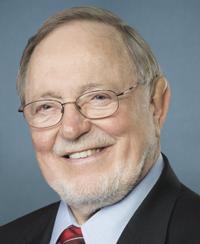
Mr. Speaker, I move to suspend the rules and pass the bill (H.R. 6316) to extend through December 31, 2008, the authority of the Secretary of the Army to accept and expend funds contributed by…
Mr. Speaker, I move to suspend the rules and pass the bill (H.R. 6316) to extend through December 31, 2008, the authority of the Secretary of the Army to accept and expend funds contributed by non-Federal public entities to expedite the processing of permits.
Mr. Speaker, I yield myself such time as I may consume.
Mr. Speaker, I rise in strong support of H.R. 6316, to authorize the extension of the Army Corps of Engineers' section 214 program.
Section 214 of the Water Resources Development Act of 2000 allows the Army Corps of Engineers to accept and expend funds provided by non- Federal public entities to hire additional personnel to process regulatory permits.
Mr. Speaker, H.R. 6316 is urgently needed since authority for this program expires on December 31 of this calendar year. If this program expires, the Corps will have to fire some regulatory personnel, reducing its ability to process permits in a timely manner.
The Committee on Transportation and Infrastructure has heard from Members on both sides of the aisle supporting the section 214 program. H.R. 6316 is nearly identical to section 2003 of the Water Resources Development Act of 2005, which passed the House on July 14, 2005 by a vote of 406-14. Since the authority for the section 214 program is expiring, it is necessary to move this piece separately.
I thank Representative Baird and our colleagues from the western United States for introducing this bill. I urge all Members to vote in favor of H.R. 6316.
Mr. Speaker, I reserve the balance of my time.
Mr. Speaker, I agree with the lady from Texas, her comments about the water resources bill. We passed it three times over to the other side of the aisle, and for three times they punted. And I think they have been kicking at the wrong goal, because we have not been able to finish this program.
This is a badly needed piece of legislation. The total bill itself has to be passed sooner or later, and it should be passed sooner; but it is not going to be. I expect to work with Mr. Oberstar and the chairman of the subcommittee; we were really thinking we would probably pass the bill that we have in conference today and go immediately to conference to get this done, and I will tell you that I will do everything in my power to work with the majority as the minority leader in trying to get this legislation passed. And, by the way, there are no dollars in the bill's authorization, but in the meantime we have things such as this bill we are talking about today that should have been passed previously that is going to expire.
And I would like to compliment Mr. Baird especially for his insistence on getting this bill on the floor, because it is crucial in the areas where we can continue and work is being done without the funding that should have been in the water bill that has passed by using a private donor or other sources of income to get the job done.
So I agree with the gentlewoman, and I do compliment Mr. Baird on his insistence of the legislation
Madam Speaker, I reserve the balance of my time.
Madam Speaker, I have no other requests for time, and I yield back the balance of my time.
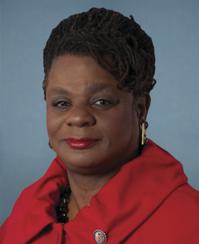
I move to strike the last word. Mr. Chairman, would the chairman of the Science, State, Justice and Commerce Appropriations subcommittee engage me in a colloquy? Thank you for yielding and engaging…
I move to strike the last word.
Mr. Chairman, would the chairman of the Science, State, Justice and Commerce Appropriations subcommittee engage me in a colloquy?
Thank you for yielding and engaging in this colloquy on the Small Business Administration's New Markets Venture Capital Program.
Mr. Chairman, we have talked before about the many small businesses located in low-income urban and rural areas that lack access to capital in the form of equity, and that presents a serious barrier to growth.
Although it is widely recognized that small businesses create 75 percent of all new jobs and account for 99 percent of all employers, conventional venture capital firms simply overlook low-income areas; and it handicaps these businesses' ability to leverage resources needed to expand existing operations and hire and train qualified employees.
The Small Business Administration's New Markets Venture Capital Program was established precisely for this purpose, to fill the access to capital gap that exists for a number of these small businesses in these communities. The program was designed for the purpose of making equity investments in growing small businesses located in economically stressed urban and rural regions through the creation of privately managed new market venture capital companies.
The overall objective of these equity investments is to provide patient capital to help promote economic development and the creation of wealth, not for individuals but wealth to support employment opportunities in underserved areas, as well as among the residents living in such neighborhoods.
Six new market venture companies were created during the initial phase of this program, Mr. Chairman; and these firms are still operating and making critical equity investment in small businesses, primarily located in low-income urban and in rural areas. It is imperative that the new market venture capital program is given a chance to succeed in order to continue its mission in bringing much- needed equity investment capital to small businesses in these communities that need them the most.
I yield to the gentleman from Virginia.
Mr. Chairman, I thank you for your concern. As you may know from our previous conversations, my congressional district includes the City of Milwaukee, a city that currently ranks 48th out of the 50 largest U.S. cities in venture capital investment dollars, 7th among the poorest cities in the Nation, and has a 52 percent unemployment rate among African American men.
I recognize that these SBICs offer another source of equity capital for small businesses. However, as you can see, more needs to be done to ensure that these investment dollars are specifically geared toward those urban and rural neighborhoods that continue to be left behind. It is so crucial that we do our part to provide the necessary incentives to encourage venture capital investments in these communities, and I respectfully ask for your help in this effort.
Thank you so much, Mr. Chairman; and I look forward to working with you.
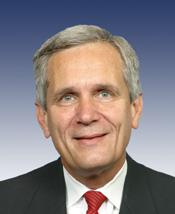
Mr. Chairman, I move to strike the last word. Mr. Chairman, over the last year, I have mentioned to Chairman Wolf on a number of occasions that I think of him every time that it rains. With the…
Mr. Chairman, I move to strike the last word.
Mr. Chairman, over the last year, I have mentioned to Chairman Wolf on a number of occasions that I think of him every time that it rains. With the torrential downpours that we have had here in the Northeast over the last several days, I have been thinking of him even more, and thanking him, thanking him sincerely as well as thanking Ranking Member Mollohan and their respective staffs for responding to the great potential for preventable flooding disaster in the part of the country that I represent along our southern border in Texas.
I very much appreciate the subcommittee including $6.4 million in this bill for improvements to the levees along the Rio Grande River. This means that construction can begin for vital protection for the cities of McAllen, Hidalgo, Pharr and Granjeno.
Thank you for reassuring the families in these communities that, despite both the very tough competition for Federal dollars and our inability to get the Administration to really place a priority on flood protection, that you heard and answered their plea for help. This is a significant increase in support that will help ensure that, in the event we have a hurricane or even a very strong tropical storm, that thousands of families will not find their homes flooded, their businesses closed, their drinking water polluted and relief efforts hampered as both the local airport and highways are inundated.
In the spring of last year, as I first began representing the Rio Grande Valley, I made what was, until recently, the only request for more levee rehabilitation dollars. I appreciate the 39 local governments, school districts and economic development corporations that endorsed this call for life-saving Federal investment.
While today's bill nearly triples the Administration request for levees, I know the subcommittee is fully aware that much more is needed every year for the next decade to ensure rehabilitation for these levees, which are up to 9 feet short, geologically flawed, structurally unsound and could be overtopped along 38 river miles.
The millions that we invest today are the beginning of a vital investment that, when repeated in future years, will save us billions in flood relief and untold human misery.
But for the fate of nature, the hurricane that hit New Orleans could just as easily have tracked west instead of tracking east and caused a similar disaster in Texas. Until the entire rehabilitation program of the International Boundary and Water Commission is completed, at a total cost that is a mere fraction of what Congress has already approved for New Orleans, we remain at very great risk.
Now the Valley looks to our Texas Senators and to the Administration to fully support what this subcommittee has done and to add funds to what is being approved here in this bill so that together we can ensure a reasonable level of safety and avoid another Katrina-style disaster.
Show 11 more
Mr. Chairman, I rise in strong support of this bill; and I want to thank my friend, Chairman Frank Wolf, for working so closely with me on the science portions of the bill. The passage of this bill…
Mr. Chairman, I rise in strong support of this bill; and I want to thank my friend, Chairman Frank Wolf, for working so closely with me on the science portions of the bill.
The passage of this bill may be looked back on as a landmark moment in American history. Now, that probably sounds like a lot of hyperbole, but I mean it. This bill puts us on course to enact the American Competitiveness Initiative, which will double the combined budgets of three key science agencies: the National Science Foundation, the National Institute of Standards and Technology, and the Department of Energy Office of Science, which already received appropriations in the Energy and Water bill.
These agencies, which are not exactly on the tip of the tongue of most Americans, are keystones of our Nation's economic future. Our Nation will remain strong and prosperous only if we remain innovative, and we will only remain innovative if we have the most robust research and education enterprise in the world. And it is these agencies that help enable the U.S. to lead the world in science, math, and engineering education and in research.
And I want to especially thank Chairman Wolf for supporting education funding as well as research funding in this bill, particularly for supporting the Noyce Scholarship Program at NSF, which attracts top science and math majors into teaching.
I also want to thank the chairman for the way he handled appropriations for the National Aeronautics and Space Administration. I have said repeatedly, and the authorization act we passed last year says clearly, that NASA must be a multi-mission agency. With this bill, the House will be putting money where its mouth is. Without interfering with the lunar mission, this bill puts desperately needed funding back in science and aeronautics.
I would like to see even more money going into science, particularly Earth science, but this is a good start, and I am especially pleased that the bill text includes explicit funding levels for science and aeronautics.
Finally, giving the competing priorities, I think the bill does the best it can for the National Oceanic and Atmospheric Administration, although, of course, I hope that, as in the past years, the final numbers are a little bit higher. I appreciate the language Chairman Wolf included in the report, drawing attention to the concerns we all share about the future of the polar satellite program, NPOESS.
So I urge my colleagues to support this forward-looking landmark bill.
Guess what? It all boils down to one thing. This bill is about my favorite four-letter word. And do not get nervous. You can say it on the House floor. You can say it in polite company. That favorite four- letter word is ``jobs.'' We must remain competitive. We must retain as much opportunity for our people here at home. This bill opens the door for that opportunity.
Mr. Speaker, I yield myself such time as I may consume. Mr. Speaker, before I begin, I would like to express my heartfelt condolences to my good friend and subcommittee chairman, Representative Jim…
Mr. Speaker, I yield myself such time as I may consume.
Mr. Speaker, before I begin, I would like to express my heartfelt condolences to my good friend and subcommittee chairman, Representative Jim Duncan, on the passing of his 89-year-old mother, Ms. Lois Swisher- Duncan. I want Jimmy and his wife, Lynn, and the entire Duncan family to know that my thoughts and prayers are with them. It is my prayer that God brings peace to each of their respective hearts during the days ahead.
Mr. Speaker, I support the passage of H.R. 4826. This bill extends through December 31, 2006, the authority of the Secretary of the Army to accept and expend the funds contributed by non-Federal public entities to process permits under the Clean Water Act and the Rivers and Harbor Act of 1899. This program is popular and well received, particularly in the northwest part of our country.
I congratulate my committee colleague, Mr. Baird, for his attention to this issue and for securing today's consideration of this bill. I can think of no other Member who has served his local and regional issues with more enthusiasm and effectiveness.
The language in H.R. 4826 is similar to language contained in H.R. 2864, the Water Resources Development Act of 2005, which passed the House on July 14, 2005, by an overwhelming vote of 406-14. The difference between the language contained in this bill and that contained in the comprehensive Water Resources Development Act is that this provision only extends the program for 9 months. The water resources bill is a full 12 months longer, but 9 months is all the Senate would agree to. However, this bill should likewise receive strong support.
Today's consideration of one section of the larger Water Resources Development Act should not be viewed as an indication that the larger bill will not be enacted this year. I remain optimistic that the other House of Congress will soon consider this vital legislation, particularly in light of the vital role of flood damage reduction, navigation, and storm damage reduction projects in protecting lives and property and enhancing economic well-being.
The tragic events associated with Hurricane Katrina indicate how important our water infrastructure truly is. However, the Senate is not likely to act on the broader legislation before the Secretary's authority to accept funds expires March 31, in just a little over 2 weeks from now. By providing this extension, the program can continue uninterrupted.
Mr. Speaker, I urge support of this bill.
Mr. Speaker, I reserve the balance of my time.
Mr. Speaker, I yield such time as he may consume to the gentleman from Washington (Mr. Baird).
Mr. Speaker, I yield back the balance of my time.

Mr. Speaker, I move to suspend the rules and pass the bill (H.R. 4826) to extend through December 31, 2006, the authority of the Secretary of the Army to accept and expend funds contributed by…
Mr. Speaker, I move to suspend the rules and pass the bill (H.R. 4826) to extend through December 31, 2006, the authority of the Secretary of the Army to accept and expend funds contributed by non-Federal public entities to expedite the processing of permits.
Mr. Speaker, I ask unanimous consent that all Members may have 5 legislative days in which to revise and extend their remarks and include extraneous material on the bill under consideration.
Mr. Speaker, I yield myself such time as I may consume.
Mr. Speaker, I rise in strong support of H.R. 4826, to authorize an extension of the Army Corps of Engineers' section 214 program. Section 214 of the Water Resources Development Act of 2000 allows the Army Corps of Engineers to accept and expend funds provided by non-Federal public entities to hire additional personnel to process regulatory permits.
Mr. Speaker, H.R. 4826 is urgently needed since authority for this program expires on March 31 of this calendar year. If this program expires, the corps will have to fire some regulatory personnel, reducing its ability to process permits in a timely manner.
The Committee on Transportation and Infrastructure has heard from Members on both sides of the aisle supporting this section 214 program. H.R. 4826 is nearly identical to section 2003 of the Water Resources Development Act of 2005, which passed the House on July 14, 2005 by a vote of 406-14.
While the other body has not yet acted on the Water Resources Development Act this year, I am hopeful, in the wake of Hurricanes Rita and Katrina, they will move quickly to pass the bill providing for the water resources needs of the Nation. But because the authority for section 214 program is expiring, it is necessary to move this piece of legislation separately.
I thank Representative Baird and our colleagues from the western United States for introducing this bill, and I urge all Members to vote in favor of H.R. 4826.
Mr. Speaker, I reserve the balance of my time.
Mr. Speaker, we have no further requests for time, and I reserve the balance of my time.
Mr. Speaker, I yield myself such time as I may consume.
Mr. Speaker, I also want to express my condolences to Chairman Duncan on the loss of his mother. I want to thank the ranking member on the subcommittee, the gentlewoman from Texas (Ms. Eddie Bernice Johnson), and I also want to thank my colleague from Washington State for introducing this very important piece of legislation and I urge its passage.
Mr. Speaker, I yield back the balance of my time.

Mr. Chairman, I rise to compliment my chairman, Mr. Wolf, and our ranking minority member, Mr. Mollohan. This bill will help small businesses to comply with the Sarbanes Oxley Act under a new…
Mr. Chairman, I rise to compliment my chairman, Mr. Wolf, and our ranking minority member, Mr. Mollohan.
This bill will help small businesses to comply with the Sarbanes Oxley Act under a new bipartisan provision which establishes an ombudsman at the Securities and Exchange Commission. Both Minority Leader Pelosi and the Speaker have called for help in this area, and the bill does that.
With regard to our critical relationship with China, we recommended retaining the current U.S. embassy site even after the new embassy is complete. This is a wise step to allow for the expansion of the U.S. Government in China, especially to help protect the Olympic Games in 2008 from terrorists.
We also took action in this bill to preserve the Turkish Service of the VOA, a critical media market for the United States bordering Iran during these days of crisis. Our action will help stabilize that NATO ally.
At USTR, we called in this bill for stronger action to stop the theft of American intellectual property in China. And while the central government in Beijing has made the right promises, Congressman Rick Larsen and I noted in our U.S. China Working Group work that this key trade issue between China and America remains unresolved at the local level. And this bill provides clear direction to the USTR in that area.
This bill also provides new resources to Federal law enforcement. ATF, the lead Federal antigang agency in this bill, gets $950 million, a $48 million increase from last year. We also provide a $15 million increase for DEA, and I applaud Chairman Wolf for approving new funding for a DEA aircraft to collect intelligence overseas against drug traffickers.
This bill funds a critical integration of DEA into the intelligence community. And in my experience, DEA has some of the best information on terror financing in the U.S. Government.
The bottom line on this bill is it funds key Federal law enforcement operations in Chicagoland, backing Andy Traver, the special agent in charge of ATF, Robert Grant, the special agent in charge of the FBI, and Rick Sanders, the special agent in charge of DEA. And that is a good thing, especially when they all support our legendary U.S. attorney, Patrick Fitzgerald.
It also provides $85 million more for U.S. Attorneys--61 more Assistant U.S. Attorneys--giving more resources to our legendary U.S. Attorney for the Northern District of Illinois--Patrick Fitzgerald--and his crusade against terror on the Sears Tower and public corruption in Illinois.
Mr. Chairman, this Nation's investment in the sciences is not only the right thing to do; it is critical to our very survival as a global leader. Throughout the 20th century, one of the strengths of…
Mr. Chairman, this Nation's investment in the sciences is not only the right thing to do; it is critical to our very survival as a global leader. Throughout the 20th century, one of the strengths of the United States was our knowledge-based resources, particularly science and technology. But now we are at a crossroad and we have the ability to continue to strengthen the scientific and technological foundations of our economic leadership, which appear to be eroding at a time when many other nations are building their innovative capacity.
Recently, Chemical and Engineering News reported that 75 percent of all new R&D sites are planned to be established in China and India over the next 3 years. Currently, China awards 59 percent of its undergraduate degrees in the areas of science and engineering, compared with 32 percent in the United States.
As chairman of the Space and Aeronautics Subcommittee, I believe the National Aeronautics and Space Administration should be funded at a higher level than the President's request, but I know the realities of funding allocations.
Aviation is currently the country's largest manufacturing export. The average sales in the aerospace industry is about $200 billion a year. It is one of the main contributors to our global competitiveness. We are main contributors to our global competitiveness. We are facing an increasing economic challenge from abroad and cannot take a chance of faltering. If we begin to slip in the wrong direction, reversing directions is even more difficult.
As my friend, Dr. Neil DeGrasse Tyson, astrophysicist for the Hayden Planetarium, has told me, ``Much work remains to convince the public and Congress of America's need for sustained investment in NASA, with returns on education, the economy and the security. It is not just about Tang and Velcro; it is about a way of enabling the future we all want to occupy.''
The House Appropriations Committee has done a great job in trying to funnel funding into the science agencies within its jurisdiction, despite its very tight allocation. I want to commend those members of the committee and ask this body to support this carefully balanced appropriations bill. We cannot move funding from science to the other areas, and we cannot rob Peter to pay Paul by moving funding from one science agency to another.
I urge my colleagues to vote against any amendments that would strip NASA of funding to add to other accounts, regardless of how well- intended those other programs may be.

Mr. Chairman, I move to strike the last word. Mr. Chairman, first let me commend the chairman and ranking member for their work on this bill. Today I rise to bring attention to a very critical issue,…
Mr. Chairman, I move to strike the last word.
Mr. Chairman, first let me commend the chairman and ranking member for their work on this bill. Today I rise to bring attention to a very critical issue, and that is how to provide evidence-based treatment for prisoners with mental illness and substance abuse disorders.
Nearly 74 percent of those arrested test positive for drugs and alcohol at the time of arrest. The disease of alcoholism and addiction is obviously a very important one in our justice system, and hence if we are going to reduce recidivism rates and reduce the revolving door of people going in and out of prison, we must tackle this issue of both trying to reduce the stigma and the access to treatment of those with alcoholism and addiction.
A study by the National Institute on Drug Abuse has said that prison- based substance abuse treatment programs combined with aftercare reduces recidivism. Those who have not received these programs have recidivism rates up to 75 percent of the time. Those who have had treatment have recidivism rates under 27 percent of the time. Seventy- five percent recidivism without treatment, 27 percent recidivism with treatment.
So the fact of the matter is, we can make an enormous difference in helping to reduce not only the lives lost, but also the cost to our prison system. We are going to add $90 million in this bill for new prison construction. How many people out there as taxpayers want to pay for new prison construction, when over half the people in prison today are there for simple possession of drugs and alcohol.
I would like to ask the chairman of the committee to engage in a colloquy, and first commend him for increasing the amount for the drug courts over 300 percent in this budget, recognizing the importance of reducing recidivism and keeping people out of the prison system, and ask him whether he would work with me to make sure that we tie in the National Institute on Drug Abuse, obviously the Substance Abuse and Mental Health Services Administration, and, of course, HHS, to help us address this overall issue that does not just lie in the justice system, but rather lies around an interagency approach to this subject.
I yield to the gentleman from Virginia.
I know the gentleman will. I thank him for all of his work in this area, and I thank him for his 6 years of service as chairman on the committee.
Mr. Chairman, I rise in support of H.R. 5672, the Science, State, Justice, Commerce Appropriations bill for fiscal year 2007. This is the 10th of 11 bills the committee has brought to the House floor…
Mr. Chairman, I rise in support of H.R. 5672, the Science, State, Justice, Commerce Appropriations bill for fiscal year 2007.
This is the 10th of 11 bills the committee has brought to the House floor as we go to the Fourth of July recess. I want to praise especially Chairman Wolf as he goes about his sixth bill for this subcommittee, and Ranking Member Mollohan. These two, working together, have been a model reflective of the best of bipartisan effort in the appropriations process.
In total, this measure provides $59.8 billion in discretionary spending. The bill contains critical funding to make America more competitive by investing in science. NASA is funded at $16.7 billion, which is $462 million above last year's level. The National Science Foundation receives $6 billion, the full amount requested as part of the American Competitiveness Initiative, and an increase of $439 million from last year.
This legislation also continues the critical effort to fight the scourge of meth and prosecute the war on terror. It also provides $2.6 billion for State and local law enforcement, including $405 million to reimburse States for the cost of incarcerating illegal aliens.
The bill also includes vital funding for the Department of Commerce, the State Department, the Small Business Administration and other Federal entities.
I would like to make two additional points about this measure. First, the Members should know the SSJC bill provides $387 million for Member projects, $1.3 billion less than last year's enacted level.
Secondly, this year's bill terminates eight programs resulting in $159 million taxpayer savings.
Mr. Chairman, I would like to make one final point. Last year, the House Appropriations Committee successfully eliminated 53 programs, for a savings of $3.5 billion. Building on that record in this year's 11 spending bills, the House Appropriations Committee has proposed eliminating 95 wasteful or redundant programs, saving the American taxpayer nearly $4 billion.
Mr. Chairman, this bill is a fine product worthy of your support. I want to especially commend Mr. Mollohan for his cooperative work with the chairman and have the entire House recognize Mr. Wolf for his work on this year's bill.

Mr. Chairman, I thank the distinguished gentleman. Let me take an appropriate time to thank both of the proponents of this bill, the ranking member, Mr. Mollohan, for his consistent leadership and…
Mr. Chairman, I thank the distinguished gentleman. Let me take an appropriate time to thank both of the proponents of this bill, the ranking member, Mr. Mollohan, for his consistent leadership and caring attitude toward these issues; and, Mr. Wolf, let me thank you very much for the 6 years of service that you have given. Obviously, you have a great passion for so many issues that deal with the improvement in the quality of lives, not only for those in this country, but around the world.
I do want to raise a number of issues, Mr. Chairman, and as I thank both the full committee chairman, Mr. Lewis, and then the ranking member, Mr. Obey, I am really disappointed as to where we find ourselves with the NASA funding. I know the choices have been made with the Moon to Mars account having risen 30 percent, but I think it is important to note that the President requested some 14 percent less for NASA education, $25 million, compared to 2 years ago, from $178.9 million to $153.3 million.
NASA's education programs capitalize on the excitement of NASA's discoveries and missions to inspire future generations of space scientists. I know in speaking to Historically Black Colleges, this has had a terrible impact.
In fact, one of the programs that was authorized under the NASA authorization that the Science Committee, of which I am a member, voted unanimously for, the Dr. Mae C. Jemison Program, the first African American female astronaut still remaining in history, a program named after her to encourage math and science among minority girls. Certainly with the brain drain that we have and the lack of scientists that we are producing in this country, this is an important program.
Might I also mention that in a few days we will launch another space shuttle. But I am concerned, and I have raised this with the director and have sent him a letter, that this shuttle is going in spite of the opposition of safety engineers at NASA. I believe that this record must not close on an appropriation bill without requiring answers from NASA, and I hope to get those answers in the next 24 hours.
Mr. Chairman, I thank the gentleman for yielding. I appreciate the hard work from Mr. Hobson, Chairman Wolf, and the FBI to address the potentially devastating impact of the FBI's Up and Out Policy…
Mr. Chairman, I thank the gentleman for yielding.
I appreciate the hard work from Mr. Hobson, Chairman Wolf, and the FBI to address the potentially devastating impact of the FBI's Up and Out Policy on agents in the field who have given decades of public service to protect our Nation. I cannot thank enough Chairman Wolf and Mr. Hobson for the long hours of negotiation that allowed us to stand with the men and women who stand in harm's way in protection of the United States.
It is critical that the Federal Government protect the retirement benefits of Supervisory Special Agents who have honorably served their country, and I look forward to working with you to address this issue this year.
Further, I am very pleased that the FBI is committed to establishing a housing allowance pilot program here in Washington, D.C., within the funds provided in this bill. We ask a lot of our agents in the field, agents who risk their lives every single day to put mobsters in jail, break up terrorist plots across America, protect the public integrity by Federal, State, and local officials, and so much more. The least we can do is give them the fair compensation that allows them to provide for their family and have a home that is not hours away from their field office. By creating this first-ever housing allowance within the Bureau, agents will be able to reduce their commute time, giving them more time to take a son to a swim meet or a daughter to a dance recital. But perhaps most importantly, Mr. Chairman, this program will be a morale boost and will allow FBI agents to focus on their vital work to protect America and all Americans.
I look forward to continuing to work with the FBI, Chairman Wolf, and yourself, Mr. Hobson, on ensuring that FBI agents are compensated fairly; and I thank you for your strong leadership on this important issue.
Mr. Chairman, I rise for the purpose of a colloquy with the chairman regarding the importance of the Crime Victims Fund and programs authorized in Justice for All Act. Mr. Chairman, I know you…
Mr. Chairman, I rise for the purpose of a colloquy with the chairman regarding the importance of the Crime Victims Fund and programs authorized in Justice for All Act.
Mr. Chairman, I know you understand the importance of the Crime Victims Fund, which provides funding for victim services programs and compensation for victims of crime from Federal criminal court fines, forfeitures and special assessments, not taxpayer dollars. For the second year in a row, your committee rejected the administration's proposal to permanently rescind the $1.2 billion in the fund, and for that I thank you.
The bill places a limit on obligations in the Crime Victims Fund at $625 million. I want to ensure that all of that money is used for crime victim programs and that the limitation does not include any obligation that may be made under the Antiterrorism Emergency Reserve.
Is that the chairman's understanding?
I want to thank the chairman. I also want to highlight the programs under the Justice for All Act of 2004 which authorizes funding to increase victims notification programs, DNA backlog programs, and Sexual Assault Forensic Exam grants.
This bill provides a significant investment for programs authorized in the act, but I want to call special attention to the Sexual Assault Forensic Exam grant program so that training, technical assistance, education, equipment and information regarding the collection, preservation and analysis of DNA in sexual assault cases can be enhanced.
I ask the chairman's help in supporting this grant program through the funds provide for the Justice For All Act.
I thank the chairman on behalf of victims of crime and the Victims Rights Caucus and the criminal justice professionals, and I thank you for your support.
Mr. Chairman, I rise to engage in a colloquy with the gentleman from Michigan and the gentleman from Virginia on the FBI's Field Office Supervisory Term Limit Policy, commonly referred to as the Up…
Mr. Chairman, I rise to engage in a colloquy with the gentleman from Michigan and the gentleman from Virginia on the FBI's Field Office Supervisory Term Limit Policy, commonly referred to as the Up and Out Policy.
This policy would require that Supervisory Special Agents who have served 5 years to transfer to headquarters and be assigned overseas or compete for an Assistant Special Agent in Charge position. If a Supervisory Special Agent
does not want to be transferred, they would be demoted at a substantial pay cut in some instances.
Representative Rogers and I have been working with Chairman Wolf and the FBI on the implementation of this policy to minimize the significant financial burden it has on Special Agents, particularly those who became supervisors before this policy went into effect. Based on our discussions, we have a commitment from the FBI to seek legislation to ensure that the retirement benefits of Supervisory Special Agents who choose to step down are not negatively impacted.
In addition, the FBI is committed to creating a pilot housing allowance program for employees in the D.C. metro area. This pilot program will improve the FBI's ability to attract talented agents to come to headquarters and will help agents manage the burden of living in a high-cost city and will improve morale.
Mr. Chairman, I now yield to the gentleman from Michigan (Mr. Rogers).
Mr. Chairman, reclaiming my time, I want to thank Chairman Wolf for his help on this. He has lived up to the discussions that we had.
And I see Mr. Kingston has arrived, who wanted to make a comment on this, with Chairman Wolf's indulgence.
Mr. Chairman, I yield to the gentleman from Georgia.
Mr. Chairman, I thank Mr. Kingston, and I thank Chairman Wolf.
Bill Text
5 versions available
        [Congressional Bills 109th Congress]
[From the U.S. Government Publishing Office]
[H.R. 4826 Enrolled Bill (ENR)]

H.R.4826

One Hundred Ninth Congress

of the

United States of America

AT THE SECOND SESSION

Begun and held at the City of Washington on Tuesday,
the third day of January, two thousand and six

An Act

To extend through December 31, 2006, the authority of the Secretary of
the Army to accept and expend funds contributed by non-Federal public
entities to expedite the processing of permits.

Be it enacted by the Senate and House of Representatives of the
United States of America in Congress assembled,

SECTION 1. FUNDING TO PROCESS PERMITS.

Section 214(c) of the Water Resources Development Act of 2000 (33
U.S.C. 2201 note; 114 Stat. 2594; 117 Stat. 1836; 119 Stat. 2169) is
amended by striking ``March 31, 2006'' and inserting ``December 31,
2006''.

Speaker of the House of Representatives.

Vice President of the United States and
President of the Senate.