Angel Island Immigration Station Restoration and Preservation Act
Legislative Activity
Stay on top of the latest movement without scrolling through every action
Became Public Law No: 109-119.
December 1, 2005
View full timeline
Introduced in House
February 2, 2005
Referred to the House Committee on Resources.
February 2, 2005
Referred to the Subcommittee on National Parks.
February 15, 2005
Mr. Radanovich moved to suspend the rules and pass the bill.
May 23, 2005 • 3:17 PM
Considered under suspension of the rules. (consideration: CR H3714-3716)
May 23, 2005 • 3:18 PM
DEBATE - The House proceeded with forty minutes of debate on H.R. 606.
May 23, 2005 • 3:18 PM
Passed/agreed to in House: On motion to suspend the rules and pass the bill Agreed to by voice vote.(text: CR H3714)
May 23, 2005 • 3:21 PM
On motion to suspend the rules and pass the bill Agreed to by voice vote. (text: CR H3714)
May 23, 2005 • 3:21 PM
Motion to reconsider laid on the table Agreed to without objection.
May 23, 2005 • 3:21 PM
Received in the Senate and Read twice and referred to the Committee on Energy and Natural Resources.
May 24, 2005
Committee on Energy and Natural Resources. Reported by Senator Domenici without amendment. With written report No. 109-157.
October 19, 2005
Placed on Senate Legislative Calendar under General Orders. Calendar No. 249.
October 19, 2005
Passed Senate without amendment by Unanimous Consent. (consideration: CR S13057)
November 16, 2005
Message on Senate action sent to the House.
November 16, 2005
Cleared for White House.
November 16, 2005
Presented to President.
November 28, 2005
Signed by President.
December 1, 2005
Became Public Law No: 109-119.
December 1, 2005
Floor Debate
15 membersWhat members said about H.R. 606 on the floor
 PS
PS ALH
ALH MES
MES SR
SR SJL+10
Floor Debate
15 membersWhat members said about H.R. 606 on the floor
Mr. Speaker, by the direction of the Committee on Rules, I call up House Resolution 1002 and ask for its immediate consideration. Mr. Speaker, for purposes of debate only, I yield the customary 30…
Mr. Speaker, by the direction of the Committee on Rules, I call up House Resolution 1002 and ask for its immediate consideration.
Mr. Speaker, for purposes of debate only, I yield the customary 30 minutes to the gentleman, my friend, from Florida (Mr. Hastings), pending which I yield myself such time as I may consume. During consideration of this resolution, all time is yielded for purposes of debate only.
This rule provides for 1 hour debate in the House, equally divided and controlled by the chairman and ranking minority member of the Committee on Homeland Security. It waives all points of order against consideration of the bill and provides that the amendment printed in the Rules Committee report accompanying the resolution shall be considered as adopted. Finally, the rule provides the minority with one motion to recommit, with or without instructions.
Mr. Speaker, I rise today in strong support of this rule and the underlying bill, H.R. 6061, the Secure Fence Act of 2006. This legislation, much of which has already been passed by the House as part of H.R. 4437, the Border Protection, Anti-terrorism, and Illegal Control Act of 2005, is a positive step in regaining operational control of our borders and achieving broad reform of the immigration process.
This legislation is the product of five formal hearings in standing committees during this Congress alone. It also draws on a number of hearings in past Congresses and a wealth of information learned through field hearings conducted over the August recess by Members of this Republican majority.
Last month, many Members of this body, who were greatly concerned with addressing the problem of our porous borders, traveled across the country to determine what steps could be taken to harden our borders and ensure that those who would wish to harm us cannot exploit this well-documented weakness.
Like many other Members, over August I traveled to our border. I traveled with Congressmen Charlie Dent, Henry Cuellar, John Doolittle, and Jo Bonner to meet with Border Patrol agents from Laredo, Texas, and to see firsthand the needs of our country as it relates to border protection.
We discussed with these dedicated men and women on the front line of our border how best to address the rampant drug and human smuggling that occurs in an area along our southern border. We learned firsthand of the challenges faced by our brave Border Patrol agents in combating the flood of criminal activity that occurs along our southern border on a daily basis. The information we learned on this trip, and the information learned from dozens of other field hearings just like this from this past August, all have been incorporated in the legislation that we will hope to take up today.
The Secure Fence Act of 2006 advances the rule of law and protects our Nation by providing our Border Patrol with the tools they need to achieve operational control of the border. The language closely mirrors sections 101, 1002, and 1003 of the border bill already passed by the House, and authorizes more than 700 miles of two-layered reinforced fencing along the southwest border with prioritized placement at critical, highly populated areas. It also requires an evaluation of infrastructure needs along the northern border of America.
The Secure Fence Act also mandates that the Department of Homeland Security achieve and maintain operational control over the entire border through a ``virtual fence'' utilizing leading edge technology and through established best practices to create optimum results at the most efficient cost. This includes the deployment of cameras, ground sensors, unmanned aerial vehicles, and integrated surveillance technology.
This legislation further requires the Department of Homeland Security to provide all necessary authority to border personnel to disable fleeing vehicles, similar to the authority already held by United States Coast Guard for maritime vessels.
Finally, this legislation requires DHS to assess our Nation's vulnerability on our northern border and to address how they can be effectively and efficiently resolved.
Mr. Speaker, this legislation represents a commonsense step that this Congress can take to deal with problems of alien smuggling, illicit drug running, and illegal immigration. The House has already passed a more comprehensive bill that enjoyed the support of 239 bipartisan Members. But because a broader package of reforms may not be enacted into law this year, our Republican leadership has decided to take the least controversial portions of this broader reform effort and to pass them in pieces that the other body can then take up and pass.
I would like to commend Speaker Hastert and Majority Leader Boehner for their vision and leadership in bringing this commonsense bill to the floor today. I would also like to thank my dear friend, Mr. Sensenbrenner, chairman of the Judiciary Committee, and Chairman Pete King, who is chairman of Homeland Security, and all the members of the Judiciary and Homeland Security Committees for their hard work in doing the research and hearings that were necessary to bring this bill to the floor.
I encourage all my colleagues to support this rule and the underlying legislation to provide operational control of our borders.
Mr. Speaker, I reserve the balance of my time.
Mr. Speaker, at this time I would like to yield 7 minutes to the gentleman from Fullerton, California, chairman of the International Terrorism and Nonproliferation Subcommittee, Chairman Royce.
Mr. Reyes, by the way, this entire body not only recognizes but appreciates your service to this Nation, not only for the professionalism that you continue to exhibit but that which you did for your 26 years.
I would say to the gentleman two things, if I could politely suggest to him that he knows it is not truthful to say that we are going to have a 2,000-mile fence along the border. That has not been suggested. We have never talked about that, and to insinuate that would simply be untruthful.
We have not suggested that, and this bill very specifically, and I would like to have the gentleman, if he would like to get a copy, relates to adding 10 miles of fencing that extends 10 miles west of the Tecate, California port entry to 10 miles east of the Tecate, California, port of entry; 10 miles west of Calexico, California to 5 miles east of Douglas, Arizona; 5 miles west of the Columbus, New Mexico, port of entry to 10 miles east of El Paso; extending 5 miles northwest of Del Rio to 5 miles southeast of Eagle Pass, Texas; extending 15 miles northwest of the Laredo, Texas, port of entry to the Brownsville, Texas, port of entry. This will be literally 100 miles worth of fencing. It will be 700 miles worth of fencing when you add up the total. What we are trying to do is to take the things that we heard firsthand that the men and women who work on the border said. This is the priority, not 2,000 miles.
I yield to the gentleman from Texas.
I would like to reclaim my time. We have talked about this since 2001. The fact of the matter is that this bill is very specific. It aims directly at where the problem is. I would like to also note that not one mile of fencing is in the Democrat plan, not even 15 feet worth of fencing. I don't know how you can have a comprehensive plan when you talk directly to Border Patrol agents who are in Laredo, Texas and other points along the border, and they say their number one concern, they are asked is the fencing, first of all, to allow them for their own safety, their own safety. The men and women of law enforcement who are down there have asked for, and, in the Republican bill, will get the fencing that they have asked for.
I will not at this time, but I know that the gentleman has lots of time left to continue the debate.
We need to make sure that we are doing what the men and women of law enforcement are asking for. What else are they asking for? They are also asking for, and I have seen firsthand, the need to better protect those people, the unassuming people, who illegally are entering our country, who do so at great risk and peril. These fences, which are in our bill, not their bill, not 10 feet of fencing that is in their bill, will allow our Border Patrol agents to effectively deal with this huge number of people who are coming here to wall off areas that are dangerous for our men and women, as well as people who are just dumped off on the border late at night and told, go that way.
Mr. Speaker, we have taken time, Republicans and Democrats have taken time to come to our border and see what we need. It is the Republicans that heard from the Border Patrol agents and others. We need to help protect this country, yes, but we need to do it to protect people who many times get in trouble, many times who need desperate help, and it is to help save our agents as well as those people.
I am proud of my bill. For the characterization that this is a do- nothing bill, I would say, I am sorry that you didn't hear what was said at these important hearings and did something about it. That is all this bill is. It is to take what we heard of the most immediate concerns. We know we have a debate with the Senate. We know we have got some problems trying to negotiate that through, but this should not be held hostage.
I would like to go directly, Mr. Speaker, to H.R. 6061, which is what we are discussing here, but bringing in to incorporate the things that we know we have already done under our FY07 Department of Homeland Security appropriations. We are going to provide for $19.6 billion for border protection.
What we are going to do, as I recall it is darn near September, and as soon as this month is over with we want to have new money. We are going to pay for this fencing. To assume or to say that it is not going to happen would really be, I think, less than honest. The administration is working with this body. We are opening up this information to the other party that had been a part of the hearings, and they know that we are going to have money that is available directly for the needs of what this bill is about.
But what this bill specifically does is it says this is the priority at this time. We believe the fencing is there for good and intended purposes.
Mr. Speaker, at this time I yield 8 minutes to the gentleman from Indiana (Mr. Souder), the vice chairman of the Criminal Justice and Drug Policy Subcommittee.
(Mr. SOUDER asked and was given permission to revise and extend his remarks.)
Mr. Speaker, I yield 1 minute to the gentlewoman from Michigan (Mrs. Miller).
Mr. Speaker, I yield 2 minutes to the gentleman from New York (Mr. King), the chairman of the Committee on Homeland Security.
Mr. Speaker, I yield myself the balance of my time.
My colleagues and good friends not only from Texas, Mr. Reyes, but also the gentleman from Florida and the gentlewoman from Texas have spoken very eloquently about the needs of this great Nation. I have every reason to believe all three of those individuals joined many other Members of this body in hearing from people about the needs of the Border Patrol, the communities along the borders and the things which they would want and need.
This bill is very specific. It talks about the types of things that would be necessary and needed on an interim basis.
Both you and I, Mr. Speaker, understand that we have passed bills many times before this that are more comprehensive, that are larger, that contain money, that do a lot of things that will enable us to get closer. The bottom line is, we need this interim step to get done now. It comes as a result of the hearings, it comes as a result of feedback from the Border Patrol, it comes as a result of communities who have asked us to please help them. So we are going to do that.
I am going to ask Members to vote ``aye.'' I am going to ask them to support this bill. And it is my prediction, Mr. Speaker, that this will be a bipartisan-passed bill today on the floor of the House of Representatives because it represents the balance and integrity of not only our Speaker, Dennis Hastert, but also John Boehner and our great chairman of Homeland Security, Pete King.
The material previously referred to by Mr. Hastings of Florida is as follows:
Previous Question on H. Res. 1002, Rule for H.R. 6061 Secure Fence Act
of 2006
In the resolution strike ``and (2)'' and insert the
following:
``(2) the amendment in the nature of a substitute printed
in Section 2 of this resolution if offered by Representative
Reyes of Texas or Representative Thompson of Mississippi or a
designee, which shall be in order without intervention of any
point of order or demand for division of the question, shall
be considered as read, and shall be separately debatable for
60 minutes equally divided and controlled by the proponent
and an opponent; and (3)''
At the end of the resolution add the following new section:
``Sec. 2. The amendment by Representatives Reyes (TX) and
Thompson (MS) referred to in Section 1 is as follows:
Amendment in the Nature of a Substitute to H.R. 606
Offered by Mr. Thompson of Mississippi
Strike all after the enacting clause and insert the
following:
Mr. Speaker, I yield back the balance of my time, and I move the previous question on the resolution.
Mr. Speaker, I thank the gentleman from Texas, my friend, Mr. Sessions, for the time, and I yield myself such time as I may consume. Mr. Speaker, I rise today in strong opposition to this closed rule…
Mr. Speaker, I thank the gentleman from Texas, my friend, Mr. Sessions, for the time, and I yield myself such time as I may consume.
Mr. Speaker, I rise today in strong opposition to this closed rule and the underlying legislation, which is nothing more than political gamesmanship in the run-up to the mid-term election. Sounds good, does nothing.
To paraphrase the Vice President, it seems to me that the majority is in the last throes of keeping control of the House and is throwing vacuous public policy at us in a vain attempt to fool the American public. Well, Mr. Speaker, I believe the American people are much smarter than that. They can see
through these charades to see that this country needs a new direction.
This bill is a case in point. If you were to believe my colleague, my friend from Texas, Mr. Sessions, and the other proponents of this legislation, this bill would lead to the construction of a fence along some parts of the United States-Mexican border. But guess what? This bill does not authorize a single nickel or dime for construction.
I asked the distinguished chairman of the Homeland Security Committee, our colleague, and my friend, Peter King of New York, yesterday, point-blank, in the Rules Committee, ``Does this bill fund construction of a fence along our border?'' The transcript of the Rules Committee hearing will back me up when I say that Chairman King answered with, ``No, but.'' And Members of the majority party always seem to have an excuse at the ready when they pretend to legislate but simply pontificate.
If Americans want to see results instead of rhetoric, if taxpayers would like solutions instead of sound bites, and hard work instead of horse trading, I suggest you take a short look, and it won't take much longer, at the accomplishments of this Congress.
I don't intend to waste too much of our time on this lazy attempt at legislating. I will let others do that. However, there are a few other things to consider when thinking about this bill.
This so-called border security bill not only doesn't spend a nickel, a penny, or a dime of money to construct a fence, it also does not increase the number of Border Patrol agents, customs, and immigration enforcement authorities.
It doesn't help law enforcement. It doesn't provide accountability, and it won't stop illegal immigration into this country.
I said in last night's meeting, there ain't no mountain high enough and there ain't no river valley wide enough to stop the tide of what is happening on our border unless we do it comprehensively.
Get real, folks. If the Congress had any real intent in making this country safer and more secure, they would have allowed the ranking Democratic member of the Homeland Security Committee to offer a substitute bill.
If our colleague and my very good friend, Mr. Bennie Thompson of Mississippi, had an opportunity to offer his legislation, then we could have had a serious debate. But, of course, the majority has no interest in allowing the House to work its will; thus, closed this rule. That only happens in a democracy. But had Mr. Thompson been allowed to offer his substitute, we would have seen what a real homeland security bill looks like.
The Thompson legislation would have provided the technology, personnel and equipment needed to monitor and secure every mile of the border 24 hours a day, 7 days a week. And there is no one in this body or in America that is concerned about this issue that does not understand the need to secure our borders. Everybody knows that.
The Thompson legislation authorized 3,000 additional Border Patrol agents. It would have allowed for the creation of 2,000 more immigration officials and hundreds more detention officials. It would have enlisted 250 more Federal marshals and more than 70 new judgeships to deal strictly with immigration issues.
Yes, all of this could have been considered today on the House floor. It would have been considered if the majority party was truly interested in protecting the American people instead of their own positions as the majority. Sounds good, does nothing.
I invite my colleague, Mr. Sessions, to point out in this legislation where any money is spent to put a border along the United States-Mexico border.
I urge a ``no'' vote on this closed rule and the underlying bill.
Mr. Speaker, I reserve the balance of my time.
Mr. Speaker, I yield myself such time as I may consume.
Mr. Speaker, I would say to the gentleman from California (Mr. Royce), if the gentleman you described was in the back of a car, in the trunk, then he came through a port of entry. He didn't ride across no mountain, and you could have built every fence on Earth and he still could have been in the back of the car.
Now let me straighten you out on something else. We already, with the Hunter amendment to the border security measure, passed the identical language that is in here. This is nothing but political gamesmanship when all is said and done. And for you to say that we have to do this before we can authorize puts the lie to you being in the majority. You have the power to authorize. You could authorize. Don't tell the American people that we have to wait for some mish-mash language that has no money in it to build a fence, that that is the only way that we can do that.
Mr. Speaker, I yield to Mr. Royce to respond.
So you also favor a fence along the Canadian border because terrorists have come through from that area as well?
Reclaiming my time, Mr. Royce, I am tired of studying and the American people are tired of studying. The Thompson substitute that was not allowed because of this closed rule does, in fact, do what is necessary for secure borders.
Mr. Speaker, at this time I am more than pleased to yield 5 minutes to a colleague that I served with on the Permanent Select Committee on Intelligence and who, for 26 years, was in charge of border security, the chief of two major regions of border security and who happened to be at the hearings that you were at, Mr. Royce, my distinguished colleague, Silvestre Reyes.
Mr. Speaker, I yield myself such time as I may consume.
Mr. Speaker, before yielding again to Mr. Reyes, I would say to Mr. Souder, there is nobody here that has opposition. We have already passed a measure that has 370 miles of fencing. Why don't the people over here just fess up? Their argument is against the Senate plan that has a guest worker program in it. It already has fence in it, so that is not even the issue.
What I continue to ask, and I invite Mr. Sessions again to answer, is whether or not the measure we are discussing today has one penny, one nickel or one dime in it to build a fence.
Mr. Speaker, I yield an additional minute to Mr. Reyes to respond to some of the matters that were brought to our attention earlier.
Mr. Speaker, I yield myself such time as I may consume.
Mr. Speaker, this place never ceases to amaze me. Our friend from Michigan talks about the southern border. I gather that there is no illegal immigration on the northern border which she lives close to.
Mr. Speaker, I am very pleased to yield 3 minutes to my distinguished colleague and good friend, the gentleman from Mississippi (Mr. Thompson), who is the distinguished ranking member of the Homeland Security Committee and author of the substitute that was not allowed under this closed rule, that would handle the problems of comprehensive border control as well as immigration.
Mr. Speaker, I yield myself such time as I may consume before yielding to my good friend, the distinguished gentlewoman from Texas, just to say to the chairman of the Homeland Security Committee, last night in the Rules Committee I asked him a simple question. He said he can't for the life of him understand what our opposition is, just because we can't do everything, we do nothing.
This measure that we are discussing today does nothing other than provide midterm yacking before the election. There are no dollars, not a penny, not a nickel, not a dime in this measure to build any fence. We have already passed legislation that has 370 miles of fences in it.
So why are we here? We have got an election coming up. That is why we are here. So you have to do things to put on a bumper sticker.
The American public can see through this charade. There isn't opposition to
protecting the border. But we are saying that you cannot come forward with something that does nothing, and that is what this is. Nothing. Talk. We need action.
Mr. Speaker, I am pleased to yield 5 minutes to the distinguished gentlewoman from Houston, Texas (Ms. Jackson-Lee), who has attended a lot of these hearings that we are talking about and is a distinguished member of the Judiciary Committee and the Homeland Security Committee.
Mr. Speaker, I am pleased at this time to yield an additional 1 minute to my colleague from Texas, the distinguished gentleman, Mr. Silvestre Reyes.
Mr. Speaker, I yield myself the balance of my time.
As I close, Mr. Speaker, I say what I said earlier, and that is the measure that we are discussing today sounds good, is needed, in part, along with comprehensive immigration reform, but does nothing.
Mr. Speaker, last night in the Rules Committee I misquoted the song, but the intent was the same: There ain't no mountain high enough and there ain't no river wide enough to stop people from seeking a better opportunity for themselves.
Some years ago outside Boynton Beach in Florida, I was among the first people to arrive at the scene of Haitian immigrants who were seeking to enter our country illegally. They all had died, and I stepped over the body of a nude pregnant woman. That hurt me an awful lot, that in seeking freedom and opportunity she and her unborn child were in that posture. I have seen many a situation where Cubans have lost their lives seeking to come to this country.
We need to get a grip and understand that we cannot become neoisolationists in a society as diverse as our own and that the most brilliant people that I know serve here in the House of Representatives on both sides of the aisle and those persons are very capable of advancing comprehensive immigration reform that will address all of our needs, including border security.
Mr. Speaker, I urge all Members of this House to vote ``no'' on the previous question so I can amend the rule and make in order the substitute offered by Homeland Security Ranking Member Thompson and Representative Reyes. This amendment was offered in the Rules Committee last night but was rejected.
Mr. Speaker, I ask unanimous consent that the text of the amendment and extraneous materials be printed in the Record immediately prior to the vote on the previous question.
Mr. Speaker, the Reyes-Thompson substitute provides for a comprehensive approach to our border security, not simply the inadequate piecemeal approach called for in the underlying bill. The substitute requires the Department of Homeland Security to develop a comprehensive border security strategy with increased Border Patrol agent deployment as well as increased surveillance using advanced technology. It provides long-term financial support for significant increases in personnel to help the Border Patrol meet its mission, including Border Patrol agents, Immigration and Customs agents, United States marshals, Coast Guard personnel, port of entry inspectors, canine enforcement teams, and other vital personnel necessary to guard and protect our borders more effectively. It will provide needed equipment such as helicopters, power boats, radio communications, night vision equipment, body armor, and other crucial tools in the war against terror.
The substitute also reestablishes the 9/11 Commission to allow them to fulfill their mission and to provide oversight and accountability.
I urge all Members of this body to vote ``no'' on the previous question so we can bring up this comprehensive and responsible alternative that will actually do something to help make this Nation less vulnerable to those from outside who would do us harm.
Mr. Speaker, on that I demand the yeas and nays.
Mr. Speaker, it has been my privilege here in Congress to serve as the Drug Policy chairman, and also as a senior member of the Homeland Security Committee, and thus, during most of my career, I have…
Mr. Speaker, it has been my privilege here in Congress to serve as the Drug Policy chairman, and also as a senior member of the Homeland Security Committee, and thus, during most of my career, I have been on both the north and south border. A number of years ago, prior to the creation of the Homeland Security Committee, we did a major border report, the most comprehensive border report ever done in the history of this Congress.
In that process, we had done roughly, I believe, six hearings on the Mexican border and three on the Canadian border, and I have personally visited nearly every border crossing on both the north and south border with very few exceptions.
In that course of time, it becomes apparent that some of what Mr. Reyes has been saying is absolutely true. We do not have enough money for the Border Patrol. We do not have a salary scale with which to keep them in the Border Patrol, and I have worked over multiple years to keep increasing that.
In fact, we have tried to increase the Border Patrol here in Congress, because it is not easy to just stay standing in the sand, in the heat, day after day. We have tried to vary their positions, but when they get other opportunities to be air marshals, when they get other opportunities to take other posts, they tend to leave.
We, in spite of our hiring, have been putting hundreds and thousands through training and can barely gain in the numbers. We need to be more aggressive, and we need to have a realistic pay scale and job opportunities for the people who go into our Border Patrol, but absolutely we need to ramp up at a faster rate the number of Border Patrol people. We need to make sure they have adequate facilities with them, cars, equipment, radios, that when some of the drug terrorists or people who are moving large numbers of people come out with more military weapons and guns than our Border Patrol have, and in greater numbers, we have a human problem at the border, and we need to understand that in many cases those who are trying to invade us are armed, and armed more aggressively.
We may have places where we have one agent or two agents with 100 to 200 people coming at them. It is a very difficult job, and we ought to raise, defend, expand and give the equipment to our Border Patrol. That is what we do in the Homeland Security bill, and we need to ramp it up faster.
But there is another problem here, and my friend Mr. Reyes and I have been at joint hearings, we have traveled together, and I very much respect his position. But with the people along the border, it is a much more controversial issue. But as we look at a broader immigration strategy in the United States, and I absolutely agree with that, we have three different problems, the illegal immigration problem,
the terrorism problem and the narcotics and contraband problem. Narcotics and contraband would also include chemical, nuclear and biological weapons and parts.
Basically, if you can't protect your border, you are not safe. If you can't protect your border, you don't know who is here. If you can't protect your border, we cannot stop what will be a flood now of meth precursors and meth coming across the border now that we have changed our internal laws.
This is a comprehensive question, and we need a comprehensive solution. But part of that is a fence, and you have to have different types of fencing, physical fencing, fences that keep people out or at least going over the top so the Border Patrol can kind of bend behind them and get them in groups, rather than having to station 20,000 Border Patrol agents who cannot cover 1,000 miles. You have to have fencing to drive them to certain locations to give time for the Border Patrol to sag and work with that. It is not realistic.
That is why the fences work well in San Diego, why the fences worked well in El Paso. In the areas where there are gaps in those fences, and it is difficult in Mr. Reyes' home area in El Paso, is where the road comes so close to the line or the railroad comes close, and there isn't fencing, and there is a huge challenge for the Border Patrol.
Now, we have some places, let me give you an illustration, which I have talked to Chairman Hunter, and I don't believe is in the 700 miles, but we have talked about we need to add it, that is over in west Texas in the sector, I believe it is Marfa, just right at the edge of the Marfa sector just east of El Paso. There we have a place called Neely's crossing.
We recently had a case where a truck was moving what we believe was 10,000 pounds of marijuana, 10,000 pounds, 5 tons. Our Border Patrol came up on the vehicle.
They negotiated with them and they said they got stuck in the sand, because when they saw the Border Patrol coming they tried to back up and they got stuck. They got about 1,700 pounds, they estimate, out; and then they came back with their guns and said basically, we have got a tow vehicle here. You can't take this. Now, if you can smuggle 10,000 pounds of marijuana, you can certainly get nuclear, chemical and biological.
Now, why are they running trucks through that area? The Rio Grande in that area is not a continuous, huge, wide river. It is pockets of water. There are only certain places in the Rio Grande and other places on the border where you can take a truck that handles 10,000 pounds because it sinks.
But there is gravel in that area, and guess what? They have a bulldozer on the other side. Every time they try to put up a border on that side, they bring the bulldozer across from the Mexican side and bulldoze it down. They bulldoze it down. When I was there with the sector chiefs on either side, they started up the bulldozer and they said, ``Mr. Souder, you need to get out of here. It is not safe anymore.'' Our agents had to retreat when they came out with their guns.
This is a huge problem at Neely's Crossing. That is one of the areas where there has to be at a minimum a barrier fence that can take a 40- mile-an-hour hit from a large vehicle, because no Border Patrol agent can stop it.
In New Mexico, as I was visiting in New Mexico, we pioneered a fence there because there have been vehicles at high speed and knocking down some of these fences that will now take that kind of hit, as well as they are doing it in Yuma, Arizona. People are coming into the Barry Goldwater Air Range. We have to either stop our training or we are going to drop a bomb on these individuals.
They are going through the Organ Pipe Cactus Park, and some of the most beautiful hiking trails in America are no longer safe. We had a park ranger killed there. It is chaos in Organ Pipe.
In South Padre Island National Park, they have, they said, drug dealers coming up, all sorts of things. It is in times in danger of being overrun. We have fish and wildlife areas where habitat is being absolutely destroyed by the number and the quantity of illegal immigrants moving through.
We need to have more Border Patrol agents, but they need the supplemental fencing to help control that. And it will not reduce the number of Border Patrol agents. It will decrease the demand.
The thing the American people need to understand is, this will be expensive. We can't work out our internal controls and figure out whether we are going to do work visas, what we are going to do for the people here, if we don't have secure IDs and we don't have a fence because, as I just heard in one of the hearings I conducted for Ms. Harris, Mrs. Myrick, Ms. Foxx and Mr. McHenry in North Carolina, they had a lady whose daughter and son-in-law were killed in an automobile wreck, one was killed, one is still comatose, and they had been deported three times for drunk driving before. Until we control the Southwest border, until we figure out how to get secure IDs, all this other talk is basically irrelevant.
I favor trying to work this out, but we can't; when you have multiple people calling in with similar names and just picture IDs and no fingerprints, you can't run employer enforcement. And if you are going to deport them, if you don't have a way to stop them at the border, it won't work.
This needs to be incremental, it needs to be comprehensive, but it has got to start with the border, and fencing is a key part of that. The agents will always be the critical part, because they will come around the fences, they will come over the fences, but it is one way to control the size of the vehicles, the size of the weapons, the quantity that is coming at you. And I strongly believe that we need this fence, and I do not understand, I do not understand, the Democratic opposition to a fence.
Mr. Speaker, as we debate the issue of border security here, as we talk about an issue that is so vitally important to the American people, I am disappointed that we can't seem to work together on…
Mr. Speaker, as we debate the issue of border security here, as we talk about an issue that is so vitally important to the American people, I am disappointed that we can't seem to work together on this particular issue. I have been in Congress for 10 years. I have been advocating that we hire 1,000 to 1,500 Border Patrol agents a year along with the resources necessary to support them. Yet we get this proposal for a fence.
This is the best we can do? This is the best you can do to assure the American people that we are going to focus on border security? It falls woefully short, and I say that with all due respect because I spent 26\1/2\ years on America's border. When I retired, I had been the chief for a little over 12 years in charge of McAllen sector and El Paso sector. I am the one who instituted Operation Hold the Line that shifted border enforcement away from apprehension and towards deterrence. I have, I think, the kind of experience that we ought to be able to count on on both sides of the aisle.
I have tried to work with many Members on the other side of the aisle and have always, as I put forth my ideas on the issue of border security for the last 10 years, have always been told, well, it is not the right time. It's too expensive, it is not the right strategy to pursue at this time.
I really felt after 9/11 we would have a new focus on border security. Today, 5 years later, the American people are focused like a laser on the fact that our borders are vulnerable.
I would say to my distinguished colleague, Chairman Royce, I was at the hearing in Laredo with you, as I have been at numerous hearings the last 2 months, hearings where the message has come across loud and clear from members of Customs and Border Protection. What they need: They need manpower, they need technology and they need infrastructure.
In Naco, Arizona, we have 1,200 to 1,300 Border Patrol agents housed out of a station that was designed for 25 people.
That is infrastructure that we need. How can we expect them to be professionals if we don't treat them like professionals, if we don't invest in the infrastructure that is so desperately needed? We were there, looking at their sensor systems, and it was a bipartisan group from the interparliamentary group. We looked at not just the physical layout of the station, but the condition of their vehicles. They need vehicles.
The vehicles, the technology that they were using, the cameras that they were monitoring, were over 15 years old. The sensors were 20 years old. That is why, consistently, the message has been at all these hearings the last couple of months that they need manpower, they need technology, and they need infrastructure support, new technology that is available that will serve as the force multiplier, Chairman, that you were referring to.
We can do much better than this. A fence is ludicrous in the face of the needs of the Customs and Border Patrol people.
When we talk about the issue of fencing, and we compare that with all the other needs, and, believe me, at all the hearings I was at the message was consistent. In fact, when the question was asked of the chiefs, what about fencing, well, fencing has limited use. As a former chief for over 12 years, I can tell you fencing would be down after those three priorities, because across that 2,000-mile border with Mexico that everybody is so concerned with, probably less than 10 percent, much less than 10 percent, in one of the hearings that we were talking about, we were concerned about a range in Yuma, Arizona. It seemed like it was an area that needed hundreds of miles of fencing. You know what? It came out to 37 miles of fencing that was needed.
I say, put up a fence for those 37 miles. I supported the fencing with my friend and colleague, Duncan Hunter, in San Diego, because it makes sense. But it does not make sense to put a 2,000-mile fence along our southern border. It does not make sense, and it is not in the best interests of the taxpayers to foolishly commit to spending at least $7 billion just on the construction of this fencing. We can do much better.
I am extremely disappointed that after all we hear about post-9/11, after all we hear about the concern that terrorists are apt to hit us here in the homeland again, that this is the best we can do. This is the equivalent of a doctor in the emergency room having a patient come in from a severe automobile accident with broken limbs and wounds over most parts of his body, and the physician saying, nurse, give me a Band-Aid. This is a Band-Aid approach that we can do much better with.
Let us do a comprehensive piece of legislation that addresses the three major priorities that the Border Patrol wants, manpower, technology, infrastructure. Let's not forget that there is a whole pipeline. If you hire more Border Patrol agents, you need to hire
marshals, you need to hire detention officers. You need to hire judges. You need to hire prosecutors. All of that is essential. Let's do a comprehensive piece of legislation that the American people will finally say, this Congress gets the fact that we are in danger from terrorism. We can do better. This is a ludicrous proposal, as far as I am concerned.
Will the gentleman yield on that point?
The reference to 2,000 miles of fencing I heard repeatedly by Members of your party at the hearing.
Will the gentleman yield?
Mr. Speaker, I thank the gentleman for yielding.
Mr. Speaker, there is a fundamental difference in how we approach this issue. Our plan says, we want to fund infrastructure, let the chief make the decisions.
When the gentleman from Texas talks about there isn't any proposal in our bill for fencing, here is what infrastructure entails. It entails buildings, antivehicle barriers, observation towers, access roads and fencing. The difference is, we don't legislate from here and tell a chief patrol agent, this is how much fence you are going to get. We tell them, this is what is available, you tell us what you need.
When the gentleman talks about what is needed, what the testimony was, heard along the border, I don't know how many hearings he attended, but I can tell you this, at the hearings that I attended, the chief patrol agents wanted three things, and I will reiterate them: manpower, technology and infrastructure. All of those things are included under ``infrastructure.''
I think the professionals that we charge in protecting the border deserve the courtesy of telling us what it is that they need, what kind of combination.
Mr. Speaker, I thank the gentleman for yielding.
Again, Mr. Speaker, let me reframe the difference between what we want to do on this side of the aisle and what is being proposed on that side of the aisle.
First and foremost, we want to work together to address the issue of border security. We want to give the professionals the support that they have been asking for throughout these last 2 months of hearings. We want to make sure that we provide them the opportunity to tell us what kind of infrastructure, including fencing, they need. The buildings, the anti-vehicle barriers, the observation towers, the access roads, all of the kinds of things that they have told us are a priority in order for them to be able to control the border.
The fundamental difference is we trust them to make those decisions. We do not tell them we need a fence starting from 5 miles east of the port of
entry in Del Rio to 6 miles east of the port of entry of Eagle Pass. Let them make those kinds of decisions. They are the professionals. They are charged with that responsibility. Our job is to provide them the support and the resources. That is the fundamental difference.
As I have said, we need to work together on this thing. Regrettably, this rule freezes us out and we are unable to participate in this.
Mr. Speaker, I do not intend to play hide and seek with the American people this morning. I think unabashedly, I believe in comprehensive immigration reform, and, frankly, so does most of America. My…
Mr. Speaker, I do not intend to play hide and seek with the American people this morning. I think unabashedly, I believe in comprehensive immigration reform, and, frankly, so does most of America.
My disappointment with my good friends is, one, that they are politicizing this very important debate. And, of course, my friend from Indiana wanted to make sure that he cast his hand to our side of the aisle and suggested that the Democrats do not want a fence or the Democrats do not believe in getting the job done.
The question that really should be asked is why the Republican majority passed a legislative initiative dealing with the immigration concerns of America and yet cannot get a compromise between the House and the Senate, both controlled by Republicans, and the presidency controlled by Republicans.
But I am not prepared to play with the lives of the American people. This legislation, 730 miles of fence, does not deal with the lives of our Border Patrol agents and Customs and Border Protection. And the reality is that time and time again we have seen that Republicans have spoken the word but have done nothing about it.
For example, this particular amendment that we had way back in 2001. Each and every time we offered amendments to provide for border security, 2001, after 9/11, Republicans voted ``no.'' In 2003 Republicans voted ``no.'' In 2001 we asked for $78 million for detention beds. The Republicans voted ``no.'' In 2003 again we asked for border security funding, Democrats. Republicans voted ``no.'' We asked for numbers of items for our Border Patrol agents and Customs and Border Protection. We asked for power boats. We asked for night goggles. We asked for laptop computers.
For those who believe that only Republicans have the knowledge of the border, I have walked the border in the day and night, and I have been at hearings all throughout the summer. I would venture to say that there were more questions asked by Border Patrol agents. It was, When are we going to get more Border Patrol agents? And as you can see, the average number of new Border Patrol agents added per year decreased under this Republican administration, 411 in 2005, but in the Democratic, President Clinton's administration we were giving them at least 642 a year. The 9/11 Commission asked us to give 2,000 a year. This administration has yet to commit to 2,000 Border Patrol agents in a year.
So, Mr. Speaker, I believe in comprehensive immigration reform. I also believe that we can compromise in a conference committee. They know that you do not need this freestanding bill that is very limited. You can go to conference and actually agree to the fencing language, if that is a priority, in the Senate's conference bill.
Now, my question to Mr. Sessions, who is on the Rules Committee, is, does he have an agreement that the Senate leadership is going to take this bill? Because if he does not, we have literally 2 weeks before we are out of session. And is there a commitment to this bill? If it is, tell us on the floor of the House. We might want to join in a reasonable response if we know that you are going to go to conference with your bill, which will pass because you have the numbers, but with the idea of comprehensive immigration reform.
Let me share a letter that has just come from Governor Rick Perry of Texas, a Republican; Governor Janet Napolitano, Governor of Arizona; the Governor of California, Governor Schwarzenegger; and Governor Bill Richardson of New Mexico. Allow me to read this:
``As governors who are on the front lines of America's immigration crisis, we write to urge you to take real action and pass comprehensive reform legislation that secures the border, protects taxpayers, and restores the rule of law by practically dealing with the estimated 12 million illegal immigrants currently in this country.
``Instead of holding dozens of field hearings that do little but stir the pot of discontent, we urge you to get back to work and pass legislation that puts the interests of taxpayers first and solves this crisis once and for all. We ask that you pass comprehensive reform and address this critical crisis before Congress adjourns for the year.''
These are two Republican governors and two Democrats who are on the front lines of immigration issues in America. And I will submit this letter for the Record.
I am not going to hide the ball. I want comprehensive immigration reform, but I am not afraid of border security. Read H.R. 4044, 100,000 detention beds. That is by a Democrat.
Mr. Speaker, I think it is important that we vote down this rule, we do what the Governors have asked us to do, comprehensive immigration reform. Let us not operate in the darkness. Let us not label Democrats weak on border security. We are ready to fight the battle. We know that 9/11 impacted all of America. I am not going to take that rap. You need to do your job.
August 25, 2006.
Hon. J. Dennis Hastert,
Speaker of the House of Representatives,
Washington, DC.
Hon. Bill Frist,
U.S. Senate,
Washington, DC.
Dear Mr. Speaker and Senator Frist: As governors who are on
the front lines of America's immigration crisis, we write to
urge you to take real action and pass comprehensive reform
legislation that secures the border, protects taxpayers and
restores the rule of law by practically dealing with the
estimated 12 million illegal immigrants currently in the
country. We believe that a solution modeled on these
principles would attain these goals and greatly benefit
taxpayers in our states.
In all of our states, we face a crisis not of our making.
Over the past 6 years the combination of lax and ineffective
enforcement of our borders and the failure to enforce
immigration laws has led to an explosion in the illegal
immigration population. As a result, our states are flooded
with illegal immigrants, our taxpayers are angry, and
citizens and noncitizens alike are losing respect for the
rule of law.
We are doing our part. At President Bush's request, we have
sent our National Guard to the border to do the job the
federal government is supposed to do. We have used state and
local law enforcement to help enforce the laws the federal
government is supposed to enforce. We ask you to do your
part.
Instead of holding dozens of field hearings that do little
but stir the pot of discontent, we urge you to get back to
work and pass legislation that puts the interest of taxpayers
first and solves this crisis once and for all. We ask that
you pass comprehensive reform and address this critical issue
before Congress adjourns for the year.
Respectfully,
Rick Perry,
Governor of Texas.
Janet Napolitano,
Governor of Arizona.
Arnold Schwarzenegger,
Governor of California.
bill Richardson,
Governor of New Mexico.
Show 8 more
Mr. Speaker, let me say, in order to spend the money, you first have to authorize the money. In the Senate, as I rise in support of this rule to consider H.R. 6061, let me say that the Senate has…
Mr. Speaker, let me say, in order to spend the money, you first have to authorize the money. In the Senate, as I rise in support of this rule to consider H.R. 6061, let me say that the Senate has attached to the defense authorization bill language, and this is what is anticipated, that will discuss the building of a border fence. But we want to make certain on the House side as we pass the authorization language and go into conference with the Senate that we disabuse our colleagues in the other House from one concept, and that is the language that would preclude the construction of any border fence without consultation with the Government of Mexico. Let me explain why I think that approach would not be in the interest of the United States.
We in California have dealt for some years now with trying to close one breach in our border fence. It is called Smugglers Gulch, a fence that runs from the foothills to the ocean. Through that small 3-mile breach, it has taken 8\1/2\ years to get the California Coastal Commission to go along with closing that fence in consultation, 8\1/2\ years, and it took an act of Congress that we passed here to do it.
So if the Senate prevails on this issue, it means no border fence. We need this legislation to authorize the border fence before we go into conference with the Senate.
I am a cosponsor of this bill, and I was a cosponsor of the border fence amendment offered by Congressman Duncan Hunter and myself that was added to the House-passed border security bill last September.
As chairman of the Subcommittee on International Terrorism and Nonproliferation, I held field hearings in San Diego on July 5 and Laredo, Texas, on July 7. We heard from the men and women of the Border Patrol whose job it is to secure our border. We heard from the sheriffs whose deputies have been shot in the line of duty. We heard from Federal inspectors who have smuggled across that porous border the materials for a dirty bomb.
And so this hearing that was focused on border vulnerabilities, we heard from these witnesses and we heard them express that the border fence is very effective. The Border Patrol testified as to that effectiveness. Daryl Griffin, who is the chief agent in San Diego, said, ``It is a great force multiplier. It expands our enforcement capacity. It allows us the discretion to redeploy agents to areas of vulnerability or risk. It is one component that certainly has been integral to everything we have accomplished here, raising the level of security.''
A fair question is, how effective has it been in San Diego? Well, apprehensions along the region with a security fence dropped from 202,000 in 1992 to 9,000 in 1994.
With the establishment of the border fence in San Diego, crime rates have fallen off dramatically. Vehicle drive-throughs have fallen. San Diego is no longer one of the most prolific drug-smuggling corridors.
This amendment puts a fence where it is needed most: in areas that have the highest instances of drug smuggling and illegal border crossings. It allows the Border Patrol to focus its resources and better protect our border. It is past time that we strengthen operational control of all the borders and ports through additional physical barriers and fencing.
In this bill is greater use of state-of-the-art technology and surveillance along the Southwest border. Expanding the border fence is needed and it is needed now. The first step is to get the authorization, and the second step is to get the appropriation with the Senate.
This last year, I can tell you, just over this last 12 months, over 450 OTMs were apprehended illegally entering the United States from special-interest countries, also from countries that are state sponsors of terrorism. So we see people coming over the border illegally from Afghanistan, Angola, Jordan, Qatar, Pakistan, Yemen. I will give you one example. Mohammed Karani is the brother of a commander of Hezbollah in south Lebanon. He came over the border in my State in the trunk of a car. He paid a coyote to get him across the border. He was later arrested in Dearborn, Michigan. He is serving 4\1/2\ years. He is a member of Hezbollah. He was in the process of securing funds and resources for Hezbollah in the United States.
Two border Governors have declared states of emergency over illegal immigration. This is something I think we
can all agree upon, and it shouldn't be held hostage to immigration policies. The 9/11 Commission studied the problem. Border security is national security. At some point we have to come to grips with the fact that our Border Patrol agents need a border fence on our southern border in order for them to be able to secure an area where we are now facing infiltration by members of terrorist organizations like Hezbollah. We should listen to those agents.
There is one who told me his personal story of stopping a man who had been trained in an Afghan training camp, originally from Uzbekistan. This man injured him, actually bit his arm as he was trying to take him down. He told me one of his concerns was, this was the second time this man tried to get illegally into the United States. Post-9/11, we have to be serious about border security. This bill should pass this House.
Mr. Speaker, I appreciate the gentleman yielding.
The reason we cannot get the bill through the Senate is because of the opposition of Senator Kennedy and others, and others, to the concept of the border fence.
Now the reason that it would be helpful to have the fence is, when you are stopping cars coming through and checking the trunks, if your Border Patrol agents are spread out all along the Southwest, it is a force multiplier to have that fence. You can then deploy more agents to the points where the smugglers bring people in in the trunks of cars.
Let me just say in this very bill is a study to do just that, and study the northern border as well to look at those areas where people are crossing illegally.
Mr. President, I ask unanimous consent that the Committee on Commerce, Science, and Transportation be authorized to meet on Wednesday, September 28, 2005, at 10 a.m., on S. 1114--Professional…
Mr. President, I ask unanimous consent that the Committee on Commerce, Science, and Transportation be authorized to meet on Wednesday, September 28, 2005, at 10 a.m., on S. 1114--Professional Athletes Drug Testing bill and S. 1334--Professional Sports Integrity and Accountability Act, in Hart 216.
Mr. President, I ask unanimous consent that the Committee on Energy and Natural Resources be authorized to meet during the session of the Senate on Wednesday, September 28, at 11:30 a.m. to consider pending calendar business.
Agenda
Agenda Item 3: S. 166--To amend the Oregon Resource Conservation Act of 1996 to reauthorize the participation of the Bureau of Reclamation in the Deschutes River Conservancy, and for other purposes.
Agenda Item 4: S. 206--To designate the Ice Age Floods National Geologic Trail, and for other purposes.
Agenda Item 5: S. 213--To direct the Secretary of the Interior to convey certain Federal land to Rio Arriba County, NM.
Agenda Item 6: S. 242--To establish four memorials to the Space Shuttle Columbia in the State of Texas.
Agenda Item 7: S. 251--To authorize the Secretary of the Interior, acting through the Bureau of Reclamation, to conduct a water resource feasibility study for the Little Butte/Bear Creek Sub-basins in Oregon.
Agenda Item 8: S. 592--To extend the contract for the Glendo Unit of the Missouri River Basin Project in the State of Wyoming.
Agenda Item 9: S. 652--To provide financial assistance for the rehabilitation of the Benjamin Franklin National Memorial in Philadelphia, PA, and the development of an exhibit to commemorate the 300th anniversary of the birth of Benjamin Franklin.
Agenda Item 11: S. 761--To rename the Snake River Birds of Prey National Conservation Area in the State of Idaho as the Morley Nelson Snake River Birds of Prey National Conservation Area in honor of the late Morley Nelson, an international authority on birds of prey, who was instrumental in the establishment of this National Conservation Area, and for other purposes.
Agenda Item 12: S. 777--To designate Catoctin Mountain Park in the State of Maryland as the ``Catoctin Mountain National Recreation Area,'' and for other purposes.
Agenda Item 13: S. 819--To authorize the Secretary of the Interior to reallocate costs of the Pactola Dam and Reservoir, SD, to reflect increased demands for municipal, industrial, and fish and wildlife purposes.
Agenda Item 14: S. 891--To extend the water service contract for the Ainsworth Unit, Sandhills Division, Pick-Sloan Missouri Basin Program,
Mr. President, I ask unanimous consent that the Committee on Environment and Public Works be authorized to meet Wednesday, September 28, 2005, at 9:30 a.m. to conduct a hearing to discuss the role of science in environmental policy making.
Mr. President I ask unanimous consent that the Committee on Finance be authorized to meet during the session on Wednesday, September 28, 2005, at 10 a.m., to hear testimony on ``Hurricane Katrina: Community Rebuilding Needs and Effectiveness of Past Proposals.''
Mr. President, I ask unanimous consent that the Committee on
Foreign Relations be authorized to meet during the session of the Senate on Wednesday, September 28, 2005, at 9:30 a.m. to hold a hearing on Darfur Revisited: The International Response.
Mr. President, I ask unanimous consent that the Committee on Homeland Security and Governmental Affairs be authorized to meet on Wednesday, September 28, 2005, at 9:30 a.m. for a hearing titled, ``Recovering from Hurricane Katrina: Responding to the Immediate Needs of Its Victims.''
Mr. President, I ask unanimous consent that the Committee Indian Affairs be authorized to meet on Wednesday, September 28, 2005, at 2:30 p.m. in Room 485 of the Russell Senate Office Building to conduct an oversight hearing on Indian Housing.
Mr. President, I ask unanimous consent that the Committee on the Judiciary be authorized to meet to conduct a hearing on ``Protecting Copyright and Innovation in a Post-Grokster World'' on Wednesday, September 28, 2005 at 9:30 a.m. in the Dirksen Senate Office Building Room 226.
Witness List
Panel I: The Honorable Mary Beth Peters, U.S. Register of Copyrights, Copyright Office, Washington, DC; and the Honorable Debra Wong Yang, U.S. Attorney for the Central District of California and Chair of the Attorney General's Advisory Committee on Cyber/Intellectual Property Subcommittee, Los Angeles, CA.
Panel II: Marty Roe, Lead Singer, Diamond Rio, Nashville, TN; Cary Sherman, President, Recording Industry Association of America, Washington, DC; Gary Shapiro, President and Chief Executive Officer, Consumer Electronics Association, Arlington, VA; Mark Lemley, William H. Neukom, Professor of Law, Stanford University Law School and Director Stanford Program in Law, Science and Technology Stanford, CA; Ali Aydar, Chief Operating Officer, SNOCAP, San Francisco, CA; and Sam Yagan, President, MetaMachine, Inc. (developer of eDonkey and Overnet) New York, NY.
Mr. President, I ask unanimous consent that the Subcommittee on Public Lands and Forests be authorized to meet during the session of the Senate on Wednesday, September 28, at 2:30 p.m.
The purpose of the hearings is to review the Grazing programs of the Bureau of Land Management and the Forest Service, including proposed changes to grazing regulations, and the status of grazing regulations, and the status of grazing permit renewals, monitoring programs and allotment restocking plans.
Mr. Speaker, I rise to speak on H.R. 606, out of order. I was working patiently at my desk. I flew in on the red eye so that I could talk about Angel Island and how wonderful it is. And I want to…
Mr. Speaker, I rise to speak on H.R. 606, out of order. I was working patiently at my desk. I flew in on the red eye so that I could talk about Angel Island and how wonderful it is. And I want to thank the ranking members of this committee for making this possible for me, and allowing the consideration of a piece of legislation that is very important to my district, the San Francisco Bay area, and to Asian Americans throughout the United States.
As you know, I have worked for the past 3 years with the Angel Island Immigration Station Foundation and the gentlewoman from California (Leader Pelosi) and the gentleman from Indiana (Mr. Souder) in an effort to preserve the historic Angel Island Immigration Station. It is located just east of Sausalito in the San Francisco Bay. Sausalito is in my district, California's 6th Congressional District.
This landmark is a particular high priority because of what it means to Asian Americans nationwide. Many of you are familiar, all of us are familiar with the symbolism of Ellis Island to European Americans. The same feelings of legacy and pride can be equated to the Americans of Asian heritage on the west coast. In fact, Angel Island was the first American soil most Asian immigrants stepped on.
With over one million people having been processed through the sites, millions of Asians and Asian descendents nationwide are eager to see their roots in this country honored in the same way that we honor Ellis Island.
In addition, Angel Island Immigration Station also houses a unique literary display of Asian American culture. The walls of the main building hold layers of poetry reflecting the record of hardship endured and the indignity suffered by the early Chinese as they were being processed into America. If these walls crumble, we will lose this one-of-a-kind documentation forever. And thank you for voting not to let that happen.
Because of its rich history, the site is currently used as a teaching tool for
students and a museum for visitors. Hundreds of school children and researchers have made the trip by ferry out to the site each year to learn about its rich history.
Mr. Speaker, I have worked with the foundation to find additional sources of funding for the restoration project to ensure future generations can learn from the site. The current estimate to complete the preservation is over $30 million, $16 million already raised through Federal grants, State funding, and private donations; $15 million still remains to finish the project.
With no more grants available and the State of California contributing close to half of the funding, it is important that the Federal Government become a part of this preservation effort, and that is what we are doing today. And I thank you for making that happen in the House.
Mr. Speaker, first I want to thank Chairman Pombo, Ranking Member Rahall and the House Leadership for allowing us to consider this piece of legislation that is important to my district and the San Francisco Bay Area.
As you may know, I have worked for the past 3 years with the Angel Island Immigration Station Foundation and Leader Pelosi and Congressman Mark Souder in an effort to preserve the historic Angel Island Immigration Station, located just east of Sausalito in the San Francisco Bay.
This landmark is a particularly high priority because of what it means to Asian Americans nationwide. Many of you are familiar with the symbolism of Ellis Island to European Americans. The same feelings of legacy and pride can be equated to the Americans of Asian heritage on the west coast. In fact, Angel Island was the first American soil most Asian immigrants stepped on.
With over one million people having been processed through this site, millions of Asian descendants nationwide are eager to see their roots in this country honored in the same way we honor Ellis Island.
In addition, Angel Island Immigration Station also houses a unique literary display of Asian American culture. The walls of the main building hold layers of poetry reflecting the record of hardship endured and the indignity suffered by the early Chinese as they were being processed into America. If these walls crumble, we will lose this ``one-of-a-kind'' documentation forever.
Because of its rich history, the site is currently used as a teaching tool for students and a museum for visitors. Hundreds of school children and researchers make the trip by ferry out to the site each year to learn about its rich history.
Mr. Speaker, I have worked with the Foundation to find additional sources of funding for the restoration project to ensure future generations can learn from this site. The current estimate to complete the preservation is over $30 million. With $16 million already raised through Federal grants, State funding and private donations, $15 million is still needed.
With no grants available, and the State of California contributing close to half of the funding, it is important that the Federal Government become a part of this preservation effort. That is what we are doing today.
Mr. Speaker, I rise in strong support of H.R. 606, the Angel Island Immigration Station Restoration and Preservation Act. For 30 years, between 1910 to 1940, Angel Island served as the first point of…
Mr. Speaker, I rise in strong support of H.R. 606, the Angel Island Immigration Station Restoration and Preservation Act.
For 30 years, between 1910 to 1940, Angel Island served as the first point of entry into our country for immigrants from around the world hopeful for the promise of America. While the history of Ellis Island, which served as a processing center for immigrants coming in from across the Atlantic, is well known, the story of Angel Island is one that is often lost between the pages of our nation's history.
While it was open, 1 million immigrants were processed on Angel Island, including immigrants from Japan, Korea, the Philippines, and Central and South America. It would be the first, and sometimes only, American soil that many of these people, who hoped to call this country their home, would walk upon.
Among these stories are the unforgettable voices of more than 170,000 Chinese immigrants, who sacrificed everything to come to what they referred to as the ``Gold Mountain,'' a land of unparalleled freedom and opportunity. While many found new life, others encountered discrimination, disappointment, and sometimes, despair.
The Chinese Exclusion Act of 1882 prevented many Chinese from entering the United States. Those allowed to enter were held in detention on Angel Island. Segregated and separated into barracks, the detainees faced stark living conditions, humiliating medical examinations, and grueling interrogations, while their detentions dragged on from days to months, and even years. All this while they awaited a decision on whether they would be permitted to enter the United States or sent back to China. While the detainees would eventually leave the Island and the Immigration Station would later close, they would leave behind their powerful testaments, inscribed as poetry, on the walls that confined them.
Today, more than 100 of these poems are still visible, etched on the barrack walls. Together, they capture the fears, sadness, and longing felt by the immigrants. Despite the extreme hardships faced on Angel Island, many of these poems also reflect the timeless legacy of the hope that is shared by all who are drawn to and believe in our country.
In 1940, Angel Island Immigration Station was closed after a fire destroyed the administration building. The U.S. Army used the Island during World War II, departing when the war was over. Angel Island became incorporated as a part of the California State Park system in 1963.
Abandoned and neglected, the structures fell into various states of disrepair and were scheduled for demolition in 1970, when a park ranger rediscovered the poetry carved on the walls. Although the buildings were spared from being torn down, more resources are needed to restore this unique and significant landmark.
This legislation would authorize $15 million, to be matched by state and private funding, to restore the buildings at Angel Island Immigration Station, and ensure its preservation for future generations.
Understanding our past is key to our nation's success and strength, today and in the future. Preserving Angel Island ensures that the collective voices of past immigrants live on in the proud immigrant heritage we all share.
I urge my colleagues to support this significant piece of legislation.
Mr. Speaker, I rise in support of H.R. 606, the Angel Island Immigration Station Restoration and Preservation Act. Historic preservation is the key to remembering our past. Without key places and…
Mr. Speaker, I rise in support of H.R. 606, the Angel Island Immigration Station Restoration and Preservation Act.
Historic preservation is the key to remembering our past. Without key places and artifacts from our history, it would be impossible to tell future generations of Americans how, when and where our country came to be what it is. Whenever a place or object is lost, a piece of history is gone forever. It is our duty to ensure that history is preserved.
The Angel Island Immigration Station Restoration and Preservation Act aims to preserve part of our history. Known as the Ellis Island of the West, Angel Island was the primary entry point for hundreds of thousands of immigrants from the Pacific Rim, including Australia and New Zealand, Canada, Mexico, Central and South America, Russia, and in particular, Asia. During Angel Island's years of operation (1910-1940), an estimated 175,000 Chinese immigrants were processed through Angel Island.
In 1940, Angel Island Immigration Station closed after a fire destroyed the Administration Building. Following the Army's departure from Angel Island, the structures fell into disrepair. Many were removed by the Army Corps of Engineers and California State Parks. Of the original Immigration Station structures, only the Detention Barracks, Hospital, Power House, Pump House and Mule Barn remain. Today, these structures are in various states of disrepair; hence the need for this legislation.
Without H.R. 606, the structures on Angel Island will fall further into decay. Many of the buildings are crumbling and leak; consequently, many poems written by the Chinese immigrants detained at Angel Island are in danger of being destroyed. State, private, and local entities have already contributed mightily to this project; sadly, they have not been able to complete the project. This bill will authorize $15 million in funding so that this unique aspect of our history can be preserved for future generations. Compared to the $156 million spent to restore Ellis Island, this restoration project is a bargain and of no less significance.
Millions of people journey to Ellis Island every year in order to see where their ancestors came ashore. This bill would allow descendents of Angel Island arrivals the same opportunity to visit the place where their ancestors' American Dreams started.
Although the status of Angel Island as part of the California State Parks system sets it apart from many other historic sites that receive federal funding, the importance of the site and its contribution to the United States makes its official designation irrelevant. Our nation's history must be preserved regardless of official status.
I urge my colleagues to support the passage of H.R. 606, the Angel Island Immigration Station Restoration and Preservation Act. Keeping our immigration heritage in good repair is essential if the United States is to maintain its unique status as a beacon of democracy and opportunity.
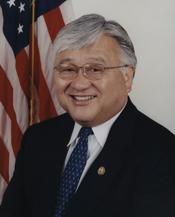
Mr. Speaker, I rise today in support of H.R. 4469, the Angel Island Immigration Station Restoration and Preservation Act. I would like to recognize my colleague Representative Lynn Woosley from…
Mr. Speaker, I rise today in support of H.R. 4469, the Angel Island Immigration Station Restoration and Preservation Act.
I would like to recognize my colleague Representative Lynn Woosley from California for
her steadfast leadership in ensuring Angel Island Immigration Station is preserved and restored.
As Chair of the Congressional Asian Pacific American Caucus (CAPAC), I support the federal authorization of $15 million for the preservation and restoration of Angel Island, where people from China, Japan, Russia, India, Korea, Australia, and the Philippines entered the United States to start a new life.
Angel Island Immigration Station is appropriately known as the ``Ellis Island of the West.'' Located in the San Francisco Bay, Angel Island served as a processing and detainment center for one million immigrants between 1910 and 1940. Of those one million people, 175,000 were Chinese immigrants and 150,000 were Japanese immigrants.
For the 30 years that Angel Island was in existence, detainees experienced overcrowded facilities, humiliating medical examinations, intense interrogations, and countless days--even years--waiting until approval of their applications or deportation. Although conditions could be deplorable, Angel Island was an entry point to a better future for many immigrants.
In 1940, Angel Island Immigration Station's administration building was destroyed. In 1963, California State Parks assumed the role of stewardship of the site when Angel Island became a state park.
In the 1970's, the site was set for demolition until a park ranger discovered etched writings on the walls. Etched by detainees, the writings and drawings on the wall reflect the hardships and hopes of detainees during the uncertain period in which they awaited decisions on their immigration applications. The cultural and historical value of these etchings sparked efforts to save this site. In 1997 Angel Island Immigration Station became a National Historic Landmark.
More than 50,000 people continue to visit Angel Island Immigration Station yearly, but sadly, the history of Angel Island is often left out of classroom lectures. However, with greater federal support, we can restore the Island's historic buildings, preserve irreplaceable immigration records, and keep alive the stories and memories of those who were detained on the Island.
While preserving the Angel Island Immigration Station is important to Asian Pacific Americans, it should be a priority for all Americans. Just as Ellis Island is a critical part of our nation's history, Angel Island offers American's a richer and more comprehensive understanding of our history and the diversity we celebrate in this nation.
Mr. Speaker, I wholeheartedly support H.R. 4469 and its authorization of $15 million to restore and preserve historic buildings at Angel Island Immigration Station. I urge my colleagues to join me in supporting this important piece of legislation.
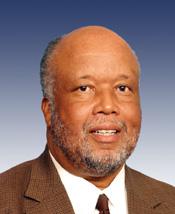
Mr. Speaker, where I stand, I have to say the majority sure seem like ponies. Last week, we were down here on the floor voting on a horse protection bill. This week, the majority is again on the…
Mr. Speaker, where I stand, I have to say the majority sure seem like ponies. Last week, we were down here on the floor voting on a horse protection bill. This week, the majority is again on the floor having us vote on a bill that has already passed.
This ``one trick pony'' approach to legislating is stale. The majority is out of fresh ideas on how to secure the border, and it shows.
Last night, I offered an amendment in Rules that would have provided an all-encompassing approach to border security and ensured that every mile of the border is monitored and secured 24 hours a day, 7 days a week.
A fence alone won't protect us from those who want to harm us. Even the Department of Homeland Security has come to realize that we need an integrated approach that combines personnel, equipment, technology and infrastructure.
The timing of this vote, Mr. Speaker, is bizarre. Why are we telling the Department to build a fence before they have come up with a comprehensive solution? Are we really going to tie up billions and billions in border security dollars to build a fence when the Border Patrol and ICE need more agents and investigators? Estimates on what it would cost to just build the fence alone is in the neighborhood of $7 billion. Once you add the maintenance costs, we are looking at possibly doubling that number.
My amendment, that the Rules Committee rejected, would have provided the Border Patrol with 3,000 more agents. We know they need the help. Why else would the National Guard be there now? It also would have added 2,000 new ICE investigators and 250 detention officers. It would have provided the men and women who police the border with equipment they need to get the job done. It would have given them helicopters, all-terrain vehicles, radio communication, GPS devices and night-vision goggles.
There are many more provisions in my bill that I am prepared to discuss today, had my amendment been allowed to be considered. But given that there are many speakers who wish to be recognized, Mr. Speaker, I will close.
The only thing I want to share is that people talk about operational control. The only way you can do it is comprehensively.
This is an unfunded mandate. There are no dollars attached to it. Republicans always talk about unfunded mandates. The priority at this time is not a fence, it is a comprehensive strategy, and because we have no comprehensive strategy for border protection at this time, I am in opposition, Mr. Speaker, to the rule.
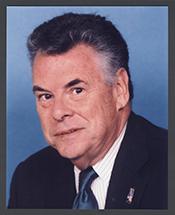
Mr. Speaker, I thank the gentleman from Texas for yielding, and I rise in strong support of H.R. 6061. H.R. 6061, to me, addresses the most direct need of the American people, and that is to show…
Mr. Speaker, I thank the gentleman from Texas for yielding, and I rise in strong support of H.R. 6061. H.R. 6061, to me, addresses the most direct need of the American people, and that is to show that we can take meaningful action to secure our border.
I have never seen more of a disconnect between the American people and the elite in Washington, between the American people and the American media, because overwhelmingly the American people want us to secure the border. They want us to show that we can fulfill the most basic requirement of a government, and that is to ensure the sanctity and the security of our borders.
Now, we did pass comprehensive legislation last December by a large vote, including almost 40 Democrats, H.R. 4437, and I strongly stand by that. The fact is that right now is not moving as quickly as we would like it to, and, therefore, rather than saying we are going to wait until everything can be done before we do anything, I am saying, let's pick areas where there has been agreement.
The Senate has agreed to have a 370-mile fence along the border. We now have a 700-mile fence. This is something which clearly can be done. It will work. Is it the entire fence? Absolutely not. More has to be done. But, in the meantime, let's show progress. Let's get this done. Let's show the American people that we have listened to what they have said and we are going to do what they want.
Then we can deal in a comprehensive way, we can go issue by issue, we can go item by item, but let's focus on what we know will work. And this will work. You add this fence, in addition to the new Border Patrol agents which are in the FY07 bills which are going to result in a 40 percent increase since 2001, and we hope to double that by 2008.
Also the idea of having a fence, it can also allow better reallocation of Border Patrol agents because the fence will serve a security purpose which can actually allow Border Patrol agents to expand their own focus more.
So, with that, Mr. Speaker, I just strongly urge the adoption of this. The American people are watching. The American people have spoken loudly and clearly. We have responded to that in a responsible, effective way. And for the life of me, I don't know why people on the other side are saying, just because we can't do everything, we should do nothing.
Doing nothing is the worst thing Congress can do, and that is why we are doing something very meaningful. I urge its adoption.
Show 4 more
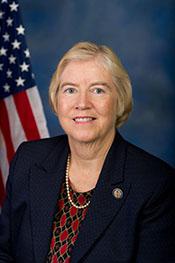
Mr. Speaker, I thank the gentleman for yielding me time. Mr. Speaker, let me say this as simply as I possibly can: The American people are fed up with our porous borders and illegal immigration. If…
Mr. Speaker, I thank the gentleman for yielding me time.
Mr. Speaker, let me say this as simply as I possibly can: The American people are fed up with our porous borders and illegal immigration. If you had the conversations that I had with constituents over the August recess, then you all know how the American
people feel about the problems at our southern border with illegal immigration.
I had an opportunity in July to travel to the southern border with Speaker Hastert and Chairman King, and I saw the situation firsthand. I saw some of the fencing being built in Yuma, by the Kentucky National Guard actually, who was there at that time. We need this fence.
I also was proud during the month of August to welcome the House Armed Services Committee to my district, which shares a very long, liquid border with Canada. I live in Michigan, of course. There we had this hearing to investigate the issue of northern border security.
As a result of that hearing, this legislation also requires the Department of Homeland Security to conduct a study that will allow us to field a state-of-the-art barrier system on the northern border. And let me say that it is very much needed. Every day smugglers are bringing drugs and people and other contraband across our northern border, which is met with little or no resistance. Terror cells have been rounded up in Toronto, which is literally only a 3-hour drive from my district.
While it is very important to secure our southern border, I am glad that this House is not losing sight of our northern border as well. I urge my colleagues to support the rule and the underlying legislation.
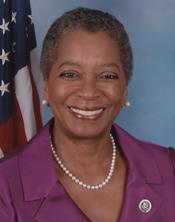
Mr. Speaker, I yield myself such time as I may consume. (Mrs. CHRISTENSEN asked and was given permission to revise and extend her remarks.) Mr. Speaker, the majority has already explained the purpose…
Mr. Speaker, I yield myself such time as I may consume.
(Mrs. CHRISTENSEN asked and was given permission to revise and extend her remarks.)
Mr. Speaker, the majority has already explained the purpose of H.R. 606, which was introduced by my colleague, the gentlewoman from California (Ms. Woolsey).
Angel Island is a nationally significant resource, as evidenced by its previous designation as a national historic landmark. Angel Island tells an important historical story about immigration into the western United States; how entry was offered to some, but denied to others under the discriminatory practices of that day.
The gentlewoman from California (Ms. Woolsey) is to be commended for her leadership on H.R. 606. She has a bipartisan coalition of support for her initiative, including California Governor Arnold Schwarzenegger. Many individuals and organizations have come to recognize the importance of a Federal-State-private partnership in the preservation and interpretation of this important aspect of our Nation's history.
Mr. Speaker, we support H.R. 606 as a means to help preserve the rich history of the Angel Island Immigration Station and urge its adoption by the House today.
Mr. Speaker, I yield such time as she might consume to the gentlewoman from California (Ms. Woolsey).
Mr. Speaker, I reserve the balance of my time.
Mr. Speaker, I yield back the balance of my time.
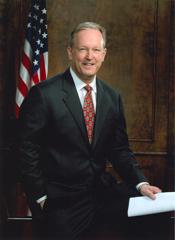
Mr. Speaker, I move to suspend the rules and pass the bill (H.R. 606) to authorize appropriations to the Secretary of the Interior for the restoration of the Angel Island Immigration Station in the…
Mr. Speaker, I move to suspend the rules and pass the bill (H.R. 606) to authorize appropriations to the Secretary of the Interior for the restoration of the Angel Island Immigration Station in the State of California.
Mr. Speaker, I yield myself such time as I may consume.
Mr. Speaker, H.R. 606, introduced by the gentlewoman from California (Ms. Woolsey), would authorize an appropriation up to $15 million to the Secretary of the Interior for the restoration of the Angel Island Immigration Station in San Francisco Bay.
The funds would be used in coordination with the Angel Island Immigration Station Foundation and the California Department of Parks and Recreation. The bill would also require funds appropriated by the Act to be used first for restoration of the Immigration Station Hospital on the island. Finally, the bill limits the Federal funding to 50 percent of the total funds from all the sources spent to restore the immigration station.
I urge adoption of the bill.
Mr. Speaker, I reserve the balance of my time.
Mr. Speaker, I have no additional speakers, and I yield back the balance of my time.
Mr. Speaker, I ask unanimous consent that all Members may have 5 legislative days within which to revise and extend their remarks and include extraneous material on H.R. 606.
Mr. Speaker, I ask unanimous consent that all Members may have 5 legislative days within which to revise and extend their remarks and include extraneous material on H.R. 606.
Bill Text
6 versions available
        [Congressional Bills 109th Congress]
[From the U.S. Government Publishing Office]
[H.R. 606 Enrolled Bill (ENR)]

H.R.606

One Hundred Ninth Congress

of the

United States of America

AT THE FIRST SESSION

Begun and held at the City of Washington on Tuesday,
the fourth day of January, two thousand and five

An Act

To authorize appropriations to the Secretary of the Interior for the
restoration of the Angel Island Immigration Station in the State of
California.

Be it enacted by the Senate and House of Representatives of the
United States of America in Congress assembled,

SECTION 1. SHORT TITLE.

This Act may be cited as the ``Angel Island Immigration Station
Restoration and Preservation Act''.

SEC. 2. FINDINGS.

The Congress makes the following findings:
(1) The Angel Island Immigration Station, also known as the
Ellis Island of the West, is a National Historic Landmark.
(2) Between 1910 and 1940, the Angel Island Immigration Station
processed more than 1,000,000 immigrants and emigrants from around
the world.
(3) The Angel Island Immigration Station contributes greatly to
our understanding of our Nation's rich and complex immigration
history.
(4) The Angel Island Immigration Station was built to enforce
the Chinese Exclusion Act of 1882 and subsequent immigration laws,
which unfairly and severely restricted Asian immigration.
(5) During their detention at the Angel Island Immigration
Station, Chinese detainees carved poems into the walls of the
detention barracks. More than 140 poems remain today, representing
the unique voices of immigrants awaiting entry to this country.
(6) More than 50,000 people, including 30,000 schoolchildren,
visit the Angel Island Immigration Station annually to learn more
about the experience of immigrants who have traveled to our shores.
(7) The restoration of the Angel Island Immigration Station and
the preservation of the writings and drawings at the Angel Island
Immigration Station will ensure that future generations also have
the benefit of experiencing and appreciating this great symbol of
the perseverance of the immigrant spirit, and of the diversity of
this great Nation.

SEC. 3. RESTORATION.

(a) Authorization of Appropriations.--There are authorized to be
appropriated to the Secretary of the Interior $15,000,000 for restoring
the Angel Island Immigration Station in the San Francisco Bay, in
coordination with the Angel Island Immigration Station Foundation and
the California Department of Parks and Recreation.
(b) Federal Funding.--Federal funding under this Act shall not
exceed 50 percent of the total funds from all sources spent to restore
the Angel Island Immigration Station.
(c) Priority.--(1) Except as provided in paragraph (2), the funds
appropriated pursuant to this Act shall be used for the restoration of
the Immigration Station Hospital on Angel Island.
(2) Any remaining funds in excess of the amount required to carry
out paragraph (1) shall be used solely for the restoration of the Angel
Island Immigration Station.

Speaker of the House of Representatives.

Vice President of the United States and
President of the Senate.