Cargo Theft Prevention Act
Legislative Activity
Stay on top of the latest movement without scrolling through every action
Sponsor introductory remarks on measure. (CR H1854)
April 12, 2005
View full timeline
Introduced in House
February 10, 2005
Referred to the House Committee on the Judiciary.
February 10, 2005
Referred to the Subcommittee on Crime, Terrorism, and Homeland Security.
April 4, 2005
Sponsor introductory remarks on measure. (CR H1854)
April 12, 2005
Floor Debate
24 membersWhat members said about H.R. 785 on the floor
 SJL
SJL RC"
RC" FJS
FJS JRC
JRC MAH+19
Floor Debate
24 membersWhat members said about H.R. 785 on the floor
Mr. Chairman, I offer an amendment. Mr. Chairman, I yield myself such time as I may consume and would just note that I am attempting to bring it up at this time and discuss it, at the same time I am…
Mr. Chairman, I offer an amendment.
Mr. Chairman, I yield myself such time as I may consume and would just note that I am attempting to bring it up at this time and discuss it, at the same time I am looking to work with my chairman, the gentleman from Wisconsin (Mr. Sensenbrenner), so that we can move this forward.
I might also add that the amendment is now Jackson-Lee-Poe.
Parliamentary Inquiry
Yes, I am, Mr. Chairman.
Modification to Amendment No. 15 Offered by Ms. Jackson-Lee of Texas
Mr. Chairman, I ask unanimous consent that the amendment to be brought up be as modified.
Mr. Chairman, I yield myself such time as I may consume; and, as I indicated, this amendment is offered by myself and my colleague, the gentleman from Texas (Mr. Poe). I thank the distinguished gentleman from Wisconsin for his cooperation in working to have this amendment be included in the final legislation as it is a sense of Congress amendment that I think makes a very important statement.
The proposal relates to the civil forfeiture provision of 18 U.S.C. 981, and would add a section that would allow civil plaintiffs to attach judgments to collect compensatory damages for which a terrorist organization has been
adjudged liable and from the pool of assets that have been forfeited under section 981.
This is distinctive, Mr. Chairman, because this pertains to circumstances of terrorism but not necessarily in circumstances when we are at war.
My amendment seeks to allow victims of terrorism who obtain civil judgments for damages caused in connection with the acts to attach foreign or domestic assets held by the United States Government under 18 U.S.C. Section 981(G) calls for the forfeiture of all assets, foreign or domestic, of any individual entity or organization that is engaged in planning or perpetrating any act of domestic or international terrorism.
As we look at H.R. 3199, the PATRIOT Act, it misses the opportunity to in fact allow victims to satisfy judgments. That is the key. For example, the Sobero case, where the gentleman from Riverside, California, was beheaded by Abu Sayyaf, leaving his children fatherless. The administration responded to this incident by sending a thousand Special Forces officers to track down the perpetrators, yet the family of this decreased could not claim any compensation for the tragedy that occurred.
The same thing occurred with the Iran hostages, which many of us are familiar with, but are my colleagues aware of the situation with our American servicemen who were harmed in the Libyan-sponsored bombing of the La Belle disco in Germany? They were obstructed from being able to enforce judgments that they received against the terrorist-sponsored attack and the attack that was sponsored by Libya.
In addition, a group of American prisoners tortured in Iraq during the Persian Gulf War were barred from collecting their judgment from the Iraqi government.
I do believe in conference we will have the opportunity to vet this and to work with all the parties concerned to finally bring some relief on this issue. Many Members have attempted to bring about relief in special claims for their particular individual constituents in their particular jurisdictions. Fortunately, in the opportunity we have today, by including this sense of Congress in the PATRIOT Act we will finally get both our debate and we will get action.
Mr. Chairman, I bring attention as well to the World Trade Center bombing victims who were barred from obtaining judgments against the Iraqi government. In their claim against the Iraqi Government, the victims were awarded $64 million against Iraq in connection with the September 20, 2001, attack. However, they were rebuffed in their efforts to attach the vested Iraqi assets. While the judgment rendered was sound, the Second Circuit Court of Appeals affirmed the lower court's finding that the Iraqi assets, now transferred to the U.S. Treasury, were protected by U.S. sovereign immunity and were unavailable for judicial attachment.
One major problem that frustrates the objective of my amendment is the fact that information is not publicly available regarding the amount and or kind of civil forfeitures made to date. So this amendment will allow the full discussion by a sense of Congress of what would be the right process to proceed, balancing the needs of the government, balancing the needs of the victims of terrorism, balancing the question of justice, and, yes, balancing the responsible actions under the PATRIOT Act, protecting us against terrorism but then, when we are victims of terrorism, to give us the opportunity for relief.
I would hope my colleagues would support this amendment so we can carry this forward into conference and be able to provide the kind of leadership necessary for the throngs of victims, those who have already suffered, and we hope not, but for those who may suffer in the future.
I would say that absent this public disclosure of this very substantial information; that is; about the assets, it is very difficult for compensation even to be requested. So I think that we will have an opportunity to address these concerns, balance the needs of the government in its need to protect certain information, and give relief to many Americans.
Mr. Chairman, I have an amendment at the desk that has been made in order by the Committee on Rules, Jackson-Lee No. 42. This proposal relates to the civil forfeiture provision of 18 U.S.C. 981 and would add a section that would allow civil plaintiffs to attach judgments to collect compensory damages for which a terrorist organization has been adjudged liable and from the pool of assets that have been forfeited under Section 981.
My amendment seeks to allow victims of terrorism who obtain civil judgment for damages caused in connection with the acts to attach foreign or domestic assets held by the United States Government under 18 U.S.C. 981(G). Section 981(G) calls for the forfeiture of all assets, foreign or domestic, of any individual, entity, or organization that has engaged in planning or perpetrating any act of domestic or international terrorism against the United States, citizens or residents of the United States.
The legislation, H.R. 3199, as drafted, fails to deal with the current limitation on the ability to enforce civil judgments by victims and family members of victims of terrorist offenses. There are several examples of how the current Administration has sought to bar victims from satisfying judgments obtained against the government of Iran, for example.
In the Sobero case, a U.S. national, Guillermo Sobero of Riverside County, CA, was beheaded by Abu Sayyaf, an Al-Qaeda affiliate, leaving his children fatherless. The Administration responded to this incident by sending 1,000 Special Forces officers to track down the perpetrators, and the eldest child of the victim was invited to the State of the Union Address. Abu Sayyaf's funds have been seized and are held by the U.S. Treasury at this time. The family of the victim should have access to those funds, at the very least, at the President's discretion.
Similarly, the Administration barred the Iran hostages that were held from 1979-1981 from satisfying their judgment against Iran. In 2000, the party filed a suit against Iran under the terrorist State exception to the Foreign Sovereign Immunity Act. While a federal district court held Iran to be liable, the U.S. government intervened and argued that the case should be dismissed because Iran had not been designated a terrorist state at the time of the hostage incident and because of the Algiers Accords--that led to the release of the hostages, which required the U.S. to bar the adjudication of suits arising from that incident. As a result, those hostages received no compensation for their suffering.
Similarly, American servicemen who were harmed in a Libyan sponsored bombing of the La Belle disco in Germany were obstructed from obtaining justice for the terrorist acts they suffered. While victims of the attack pursued settlement of their claims against the Libyan government, the Administration lifted sanctions against Libya without requiring as a condition the determination of all claims of American victims of terrorism. As a result of this action, Libya abandoned all talks with the claimants. Furthermore, because Libya was no longer considered a state sponsor of terrorism, the American servicemen and women and their families were left without recourse to obtain justice. The La Belle victims received no compensation for their suffering.
In addition, a group of American prisoners who were tortured in Iraq during the Persian Gulf War were barred from collecting their judgment from the Iraqi government. Although the 17 veterans won their case in the District Court of the District of Columbia, the Administration argued that the Iraqi assets should remain frozen in a U.S. bank account to aid in the reconstruction of Iraq. Claiming that the judgment should be overturned, the Administration deemed that the Reconstruction effort was more important than recompensing the suffering of fighter pilots who, during their 12 year imprisonment, suffered beatings, burns, and threats of dismemberment.
Finally, the World Trade Center bombing victims were barred from obtaining judgment against the Iraqi government. In their claim against the Iraqi government, the victims were awarded $64 million against Iraq in connection with the September 2001 attacks. However, they were rebuffed in their efforts to attach the vested Iraqi assets. While the judgment rendered was sound, the Second Circuit Court of Appeals affirmed the lower court's finding that the Iraqi assets, now transferred to the U.S. Treasury, were protected by U.S. sovereign immunity and were unavailable for judicial attachment.
One major problem that frustrates the objective of my amendment is the fact that information is not publicly available regarding the amount and/or kind of civil forfeitures made to date. The Executive Branch of our Government has suggested that it has no duty to disclose either the identity of the parties who own civilly forfeited property or the amounts forfeited to date. Absent public disclosure of this very substantive information, it is very difficult for compensation to even be requested--let alone expected for victims of horrific acts of terrorism.
Right now, H.R. 3199 is the most appropriate and timely vehicle in which to address this issue and allow U.S. victims of terrorism to obtain justice from terrorist-supporting or terrorist-housing nations.
The Jackson-Lee Amendment protects terror victims' rights.
Domestic and international terrorism should not be facilitated by barring successful plaintiff-victims from enforcing valid judgments.
In closing, Mr. Chairman, let me thank the chairman of the full committee and the ranking member and the ranking member of the subcommittee for their leadership on this whole entire issue of protecting Americans against terrorism and including in that protection of their civil liberties.
This amendment will not only protect Americans against the dangers of life and limb and the loss of life, but give them relief in our courts. I ask my colleagues to support this amendment sponsored by myself and my colleague, the gentleman from Texas (Mr. Poe), a sense of Congress amendment to provide relief to Americans victimized by terrorism.
Mr. Chairman, I yield back the balance of my time.
Mr. Chairman, I demand a recorded vote.
Mr. Chairman, I ask unanimous consent to claim the time in opposition, but I am not opposed to the amendment. Mr. Chairman, I yield myself such time as I may consume. Mr. Chairman, this expands the…
Mr. Chairman, I ask unanimous consent to claim the time in opposition, but I am not opposed to the amendment.
Mr. Chairman, I yield myself such time as I may consume.
Mr. Chairman, this expands the wiretap authority, but it limits the expansion to cases of terrorism. I would say to the gentleman from California and to the chairman, if the rest of the bill had been limited to terrorism, we would not have to be sitting up here arguing half the night.
I agree with the gentleman, we want to be tough on terrorism, but we don't want to open up the entire criminal code to these very expansive powers. So in this case, I think it is an appropriate expansion of the wiretap because it is limited to terrorism, and I thank the gentleman for the amendment.
Mr. Chairman, I yield such time as she may consume to the gentlewoman from California (Ms. Zoe Lofgren).
Mr. Chairman, I yield back the balance of my time.
Mr. Chairman, I thank the gentleman for yielding me this time. I would like to join my colleague from Virginia in his interest in the security of the Port of Hampton Roads.
Mr. Chairman, this amendment is well drafted to target the problem of port security. It closes an apparent oversight in the fact that it is not a Federal crime for a vessel operator to fail to stop when ordered to do so by a Federal law enforcement officer, and makes it clear that that is a crime. The penalties are increased penalties, but not mandatory minimums, so the increases will make sense.
I will not, however, be supporting the amendment because it has several new death penalties in it. It has death penalties, some of which push the envelope on constitutionality, because some can be imposed even if there is no intent to kill; they are broad enough to even include deaths which result from violating the stowaway statute.
Mr. Chairman, death penalties cannot be a deterrent to suicide bombers, so that part of the bill I think would not be helpful in terms of port security. What we do need in port security is significant increases in funding for port security, funding for bus and rail security, funding for first responders. That is the kind of thing that will make us safer. As to the other parts of the bill, I would like to thank the gentleman from California (Mr. Schiff) and the other cosponsors for their hard work in focusing us on port security, which is desperately needed.
Mr. Chairman, I ask unanimous consent to claim the time in opposition, although I am not opposed to the amendment.
Mr. Chairman, I yield myself such time as I may consume.
I would point out that the comments of the gentleman from North Carolina and the chairman of the committee have outlined the fact that this has been worked out with all of the parties involved, and we have no objection.
Mr. Chairman, I reserve the balance of my time.
I yield to the gentleman from North Carolina.
Mr. Chairman, I yield myself 5 minutes.
Mr. Chairman, I rise in opposition to this amendment. It provides for the enactment of extremely controversial provisions which we have had inadequate time to consider. We have not had the opportunity to hear critical testimony on controversial aspects of this bill such as the provision to apply the death penalty to offenses where no death results, the change in alternative jury rules and peremptory challenge rules, another change of the number of jurors needed to impose the death penalty and other changes which could constitute constitutional problems.
Another problem with the bill, it provides for expansion of the Federal death penalty, both for crimes that the supporters of the death penalty might think warrant the death penalty, as well as crimes that most people would not expect to be associated with the most severe of penalties.
This bill does not limit crimes through the death penalty eligibility to the heinous crimes or those who have traditionally been considered severe enough to require either a death penalty or even life without parole.
The bill is so broad that it includes offenses such as those related to protection of computers, property offenses and financial or other material support provisions. Because the bill makes attempts and conspiracies to commit such crimes death penalty eligible, it covers those who may have only had a minor role in the offense. If a death results, even if it was not the specific intended result, anyone who is involved in committing or attempting to commit or conspiring to commit the covert offense would be eligible for the death penalty.
The provisions of this bill create a death penalty liability tantamount to a Federal felony murder rule, and it presents constitutional issues as well as questions of the appropriateness of the death penalty in certain cases.
The provisions of this bill will be duplicative of state jurisdiction laws in many instances and actually conflicting with others. One such conflict would be where a State has chosen not to authorize capital punishment and the Federal Government pursues the death penalty against that State's wishes.
Another concern we always have to consider is expansion of the death penalty when we know that there is a frequent error rate in applying the death penalty. One study showed that 68 percent of the death penalty decisions by the trial court were eventually overturned.
Mr. Chairman, there is another conflict or difficulty that will arise in the efforts to further international cooperation in pursuing suspected terrorists. We are already experiencing difficulties in securing the cooperation of
the rest of the civilized world in bringing terrorists to justice due to our existing proliferation of death penalty offenses when other countries will not extradite criminals to the United States if they will be subject to the death penalty. When we add these difficulties to the other controversial issues as to whether someone who supports an organization's social or humanitarian programs knows that it has been designated as a terrorist organization it can only exacerbate the difficulty and further undermine United States efforts.
Mr. Chairman, I reserve the balance of my time.
Mr. Chairman, I yield myself such time as I may consume.
Mr. Chairman, the sponsor of the amendment mentioned that hearing we had. I would remind him that the hearing was a hearing on habeas corpus, also the same hearing we heard the issue of the question of whether the death penalty deters murder or other crimes, and this bill. We were given one witness to cover all of that. Our witness covered habeas corpus. We did not have the opportunity to invite a witness to discuss this bill and the policy implications of death penalty where no death occurs and alternate jury rules, peremptory challenges, the number of jurors needed to impose a death penalty, all of these death penalties involved.
So to suggest that that was a fair hearing, I think, does not do justice to actually what happened on that day and the consideration of this bill.
Mr. Chairman, I yield 2 minutes to the gentlewoman from California (Ms. Zoe Lofgren), a member of the committee.
Mr. Chairman, I yield myself the balance of my time.
As the gentleman said, we had a little piece of a hearing, but it was not much; and we did not have the opportunity to discuss this bill. It was not marked up in subcommittee or the committee. The committee elected not to make it part of the bill, and I would hope that we would make the same decision and defer this until it can be appropriately considered. I oppose the amendment.
Mr. Chairman, I yield back the balance of my time.
Mr. Chairman, I yield myself such time as I may consume.
Mr. Chairman, this amendment emphasizes a point that we are trying to do this on the floor without a mark-up, and it may have many unintended consequences. Despite the name of the title, the title of the amendment is ``Combating Terrorism Financing Act of 2005,'' but if you read the provisions, it is not limited to terrorism financing but for all violations of economic sanctions imposed under the International Emergency Economic Powers Act. I mean, a senior citizen who has traveled to Cuba on a bicycle excursion or a clergy attempting to send humanitarian services or supplies to Cuba could get caught up in this.
It talks about misuse of Social Security numbers so if somebody misuses a Social Security number to get a job, having nothing to do with terrorism, just is cheating to get a job, they could get caught up in this. It raises questions about sending money to your relatives back home. All of this is implicated in this amendment. It obviously covers terrorism, but we do not know what else it covers. People who get caught up in this are looking at 20-year sentences.
Money-laundering statutes are already very broadly written, and this just broadens it even further. I would hope we would defeat the amendment so we could have some time to make sure it could be limited to terrorism financing and just not every violation of the International Emergency Economic Powers Act and other kinds of money- laundering statutes.
We also have had not an opportunity to hear from people that may be involved in this, organizations helping immigrant populations, banks or other agencies that may have an interest in this who we just have not had time to hear from to know what their reaction would be. So I would hope that we would defeat the amendment so we could have more time to consider it.
Mr. Chairman, I yield 1 minute to the gentlewoman from California (Ms. Zoe Lofgren).
Mr. Chairman, I yield 1 minute to the gentlewoman from Pennsylvania (Ms. Hart).
Mr. Chairman, I yield 30 seconds to the gentlewoman from California (Ms. Zoe Lofgren).
Mr. Chairman, I yield myself such time as I may consume to note that these are the kinds of questions which cause me to hope we would defeat the amendment.
Mr. Chairman, I yield the balance of my time to the gentlewoman from Pennsylvania (Ms. Hart).
Mr. Chairman, parliamentary inquiry.
Could the chairman explain which amendment is being considered at this point?
Could the Reading Clerk read the amendment?
Mr. Chairman, I rise in support of the Berman- Delahunt amendment. All it does is require a report to Congress on data mining by agencies. Let me say why this is important. At the end of the last…
Mr. Chairman, I rise in support of the Berman- Delahunt amendment. All it does is require a report to Congress on data mining by agencies.
Let me say why this is important. At the end of the last decade, before 9/11 and before the PATRIOT Act was even considered, the FBI had set up a data-mining operation that went far beyond criminal and intelligence investigations and compromised the privacy of literally millions of Americans, and this was done without the knowledge of the Congress of the United States, and it was only as a result of the fact that it did not work and they wasted all of this money that the Congress found out about it.
So I think that before any of the agencies go down this route, there ought to be at least a tip-off to the Members of Congress. I grant the Members that the amendment probably is not properly drafted and we can fix this in conference, and I appreciate the commitment of the chairman of the Permanent Select Committee on Intelligence to do that, but I do not think we should turn it down and send a message to the agencies that they can data mine all they want and we are not going to do anything about it.
Mr. Chairman, will the gentleman yield?
Mr. Chairman, I support the gentleman's amendment and I hope we can adopt it fairly quickly. What this amendment does is simply add the following predicates to allow law enforcement to go to a judge to seek a wiretap order: Crimes of terrorism such as arson, plastic explosives, attacks on a Federal facility with firearms, and conspiracy to harm persons or property overseas.
I think all of these are legitimate predicates. I would hope the gentleman's amendment is adopted, and thank him for yielding.
Mr. Chairman, I ask unanimous consent claim the time in opposition, even though I am not opposed to the amendment.
Mr. Chairman, I yield myself such time as I may consume.
Mr. Chairman, I support this amendment and hope that the committee adopts it. It provides basic and much-needed protections for our Nation's seaports, and it does so by strengthening the criminal code in various areas where our seaports would be vulnerable to either a criminal act or a terrorist act.
Let me state, however, that the Congress has not been sitting idly by since 9/11 on the issue of protecting seaport security. The container security initiative was passed by this Congress several years ago and is being implemented, both in terms of better targeting of containers that come into our ports, as well as security at the ports and screening before the cargo actually arrives. But in terms of people breaking into our ports, perhaps putting bad materials such as bombs or biological or chemical materials in our ports and in the containers in our ports, this is an amendment that is extremely essential.
For that reason, I would urge its adoption.
Mr. Chairman, I reserve the balance of my time.
Mr. Chairman, I yield 2 minutes to the gentleman from Virginia (Mr. Forbes).
Mr. Chairman, I yield 2 minutes to the gentleman from Florida (Mr. Stearns).
(Mr. STEARNS asked and was given permission to revise and extend his remarks.)
Mr. Chairman, I yield back the balance of my time.
Mr. Chairman, I thank the gentleman from North Carolina for yielding.
Let me say that this amendment has a direct impact on the war against terrorism. When he was testifying on the reauthorization of the PATRIOT Act, Deputy Attorney General James Kolbe testified that the first material support for a terrorism case to be tried before a jury involved a group of Hezbollah operatives who had been operating a massive interstate cigarette smuggling scheme. He also testified that since that prosecution, material support charges have been used against other cigarette smuggling plots in Detroit.
From this information, it is obvious that the terrorists are using cigarette smuggling in order to help finance their activities, and that is why the amendment offered by the gentleman from North Carolina is a good amendment. It fits in with the antiterrorism tools that the PATRIOT Act reauthorizes, and I would urge its support.
I would also say that as a result of the modification that the gentleman from North Carolina has proposed, there is no longer a question of tribal sovereignty. That has been taken care of in the modification. So anybody who has read the ``Dear Colleague'' letter that was sent out earlier today, that is now out of date, and it is about as accurate as last year's calendar.
Mr. Chairman, will the gentlewoman yield?
Mr. Chairman, I rise in support of the amendment and thank the gentlewoman from Pennsylvania (Ms. Hart) for yielding to me and for introducing this amendment.
Let me say that this amendment makes important improvements in the financial provisions of the PATRIOT Act with regard to those who try to prevent terrorists from financing their operations. First of all, I think that trying to disrupt the terrorism operation is a legitimate issue to add to the list of predicate offenses covered under the RICO statute.
I am particularly pleased that there are some changes in the law to attempt to get at the informal money-changing operation called hawalas when those hawalas are used to finance terrorist organizations, and more and more money seems to be transferred through the hawalas system; and I am awfully afraid that that is not being done for legitimate purposes, but for the fact that the regular banking operations are under increasing scrutiny when money transfers take place.
So I would strongly support the gentlewoman's amendment, and I would urge the Committee to adopt it. I thank the gentlewoman for yielding to me.
Reserving the right to object, let me say that I will not object, because I think this modification is a significant improvement to the original amendment.
I realize that this amendment must be further honed, and I pledge to the gentlewoman from Texas my cooperation to attempt to do that in conference.
Mr. Chairman, I withdraw my reservation of objection.
Mr. Chairman, I offer an amendment. Mr. Chairman, I yield myself such time as I may consume. Mr. Chairman, I rise in support of my amendment, the Terrorist Death Penalty Enhancement Act. This measure…
Mr. Chairman, I offer an amendment.
Mr. Chairman, I yield myself such time as I may consume.
Mr. Chairman, I rise in support of my amendment, the Terrorist Death Penalty Enhancement Act. This measure is a much needed reform for our Federal criminal statutes to ensure that the death penalty is available to deter and punish the most heinous crime in our country. We must remain vigilant and united in sending out one clear message to the terrorists; if you attack our country or threaten our national security and we apprehend you, we will seek the ultimate penalty, the death penalty, against you. This amendment makes needed reforms to ensure that such punishment is carried out and is applied fairly, and is applied swiftly when the facts justify the punishment.
Many of these same provisions were overwhelmingly passed by this House last year as part of the 9/11 Recommendations Implementation Act, but removed during conference with the Senate.
As a former State district judge for over 20 years I have presided over five capital murder cases, three of which resulted in the death penalty. I have a unique perspective on the criminal justice system and I understand the importance of safety and the need for America to be tough on its criminals. We must protect our neighborhoods from the threat of violent crimes which, unfortunately, in today's world, includes the threat of terrorist attacks. Congress must act to protect U.S. citizens from such attacks and to bring justice to those who threaten our freedom.
It is unimaginable to think that a convicted terrorist responsible for American deaths could serve his sentence and be released back on the American streets free to act as he chooses. My straightforward legislation will make any terrorist who kills eligible for the Federal death penalty. This legislation will also deny these same terrorists any Federal benefits they otherwise may be eligible to receive. In my experience as a judge, I have witnessed the death penalty used as an important tool in deterring crime and saving lives. I believe it is also an instrument that can deter acts of terrorism and serves as a tool for prosecutors in negotiating sentences.
First, my amendment adds a new criminal provision to impose the death penalty to any terrorist who, while committing a terrorist offense, engages in conduct that results in the death of an individual.
Second, my amendment provides procedures for the death penalty prosecution of air piracy crimes committed before the 1994 Federal Death Penalty Act.
Third, my amendment treats terrorist offenses similar to treason and espionage cases so that the government need only prove that such offense created a grave risk of death and did not actually result in the death of a person. For example, consider a terrorist attack as we saw today in London, where a terrorist is carrying a deadly weapon, could be a radiological weapon or device, and prior to the total detonation of that bomb killing innocent civilians, he is caught by the authorities and they prevent that attack. Under this bill he could face the ultimate penalty of death.
In addition to these commonsense reforms, my amendment also authorizes the death penalty for killing that results from participation in nuclear weapons and weapons of mass destruction threats against the United States, missile systems to destroy aircraft, atomic weapons under the Atomic Energy Act.
Now, with the authorization of these new death penalties I have added some commonsense clarification to the Federal death penalty which is supported by the Justice Department. Let me highlight three of these.
First, my amendment adds a new statutory aggravating factor for obstruction of justice and in particular the killing of any person which is aimed at obstructing any investigation or prosecution.
Second, my amendment clarifies that juries must reach a unanimous sentencing verdict one way or the other for life imprisonment or for death. If the jury does not reach a unanimous sentencing verdict then the government may seek a new sentencing hearing.
Third, my amendment authorizes a judge to proceed with a death penalty case with less than 12 jurors if the excusal of the 12th juror is justified by good cause. There is simply no reason to make witnesses testify, juries sit again after a long and complex trial when a juror for some reason becomes sick or for some reason is unable to serve.
Mr. Chairman, I reserve the balance of my time.
Mr. Chairman, I yield myself such time as I may consume.
Mr. Chairman, I would remind my colleague from Virginia that a legislative hearing was held before the subcommittee on June 30, 2005 on which the Justice Department testified in favor of this bill.
Mr. Chairman, I yield 2\1/2\ minutes to the gentleman from Wisconsin (Mr. Green).
Mr. Chairman, I yield myself such time as I may consume.
Mr. Chairman, I am pleased that the President of the United States on two occasions has stated that we need to give our law enforcement authorities all the tools necessary to fight terrorism, and he agreed that he strongly supported the signal of a death penalty to deter this criminal acts, these criminal acts that are imposed upon our society.
When I decided to run for Congress, it was in response to the 9/11 attack after serving for a long time on the judiciary. I am sponsoring this legislation today because in my experience the death penalty does deter crimes, and it is my hope and my prayer that this tool given to our prosecutors and given to our courts and to our engineers will enable us to better protect freedom and protect our citizens from this disaster that lurks in the shadows along with these terrorists that attack our Nation.
I thank the gentleman from Wisconsin (Chairman Sensenbrenner) for allowing me to offer this amendment and for all the great work that he has done on this reenactment of the PATRIOT Act.
Mr. Chairman, I yield back the balance of my time.
Mr. Chairman, I offer an amendment. Mr. Chairman, I yield myself such time as I may consume. Mr. Chairman, I rise in support of the amendment. Money is a key element of terrorist organizations. If we…
Mr. Chairman, I offer an amendment.
Mr. Chairman, I yield myself such time as I may consume.
Mr. Chairman, I rise in support of the amendment. Money is a key element of terrorist organizations. If we are to prevent future attacks and continue to dismantle terrorist organizations, we must cut off their access to funding.
In order to thwart terrorists financing, President Bush in September of 2001 signed an executive order freezing the assets of terrorist organizations and their supporters and authorizing the Secretaries of Treasury and State to identify, designate, and freeze the U.S.-based assets that financially facilitate terrorism.
Since then, an unprecedented international effort to freeze terrorism financing has ensued. This has truly been an international effort with 173 nations implementing orders to freeze terrorist assets with more than 100 countries passing new legislation to fight terrorism financing, and 84 countries establishing the Financial Intelligence United to share information helping to combat terrorism.
Terrorist organizations need money, not just to carry out attacks. They especially need funding to continue their operations such as recruiting and training new terrorists and simply supporting their current organizations. One of the most important lessons we have learned is exactly how terrorists and other criminal organizations transmit money through unregulated financial markets.
Like the patchwork of terrorist organizations themselves, terrorism funding does not come from a single source. Terrorism networks are funded through rogue state sponsorship, corrupt charities, and illegitimate businesses fronting as legitimate businesses and using that money for terrorism, also through exploitation of our legitimate markets and financial networks.
Many terrorist organizations use a network known as hawalas to exchange money and finance terrorist activities. These hawalas are an informal exchange in which payments are delivered without money actually being moved. In addition, terrorists engage in criminal activities such as extortion, smuggling and trafficking, credit card and identity fraud, and the narcotics trade to fund their murderous activities.
After September 11, our Federal Government acted aggressively through domestic and international efforts to halt such activities to prevent terrorism financing. Unfortunately, we have learned that these are not enough. My amendment would address some of the loopholes.
One, we increase the penalty for terrorism financing. Under current law, violations only carry a $10,000 fine and a 10-year sentence. My amendment would increase the fine to $50,000 and the sentence to 20 years.
We also update money laundering statutes. They must keep pace to help prevent financing of terrorist activities. As Chancellor Gordon Brown stated last week, prevention of money laundering is the key element of stopping the financing of terrorist groups of the type suspected of planning and carrying out the London bombings.
First, my amendment will add a predicate offense to the money- laundering statutes, such as operating illegal money laundering and transmitting businesses, misuse of Social Security numbers, military- style training of individuals, and a new terrorism financing offense.
My amendment also clarifies the law so that a combination of transactions or parallel transactions can trigger money-laundering statutes.
Mr. Chairman, our PATRIOT Act added a new forfeiture provision for individuals planning or perpetrating the act of terrorism against the United States. My amendment adds a parallel provision for individuals planning or perpetrating an act of terrorism against a foreign state or an international organization acting within the jurisdiction of the United States. This amendment builds on our current laws to address some of the shortfalls in our laws that we have learned about from our law enforcement since 9/11. I encourage my colleagues to support this amendment.
I yield to the gentleman from Wisconsin.
Mr. Chairman, I thank the gentleman for yielding me this time.
Just to answer a couple of points: what we do in the amendment is to help to provide opportunities for a series of predicate offenses. So what you get is an opportunity to follow through a number of transactions to show that there is money laundering. And we have added a couple of new offenses, but there can be a mixture of some legal and illegal transactions to do that.
So if the concern is that a grandmother transmitting money to her family or the other way around, it is not going to trigger a problem under this amendment. It is very clear that there would have to be a series of transactions that are suspect in order for this law to be triggered; and, obviously, there has to be some suspicion of financing terrorism before law enforcement would move forward with that kind of prosecution.
Mr. Chairman, I thank the gentleman for yielding me this time, and I just want to thank the chairman of the Committee on the Judiciary, who supports the amendment, and also the chairman of the Committee on Financial Services, who certainly would have been concerned if the concern of the gentlewoman from California were a legitimate one regarding our language.
It is very clear that there would have to be a series of transactions. That series of transactions would have to lead law enforcement to believe that there is a financing of terrorism.
Mr. Chairman, I demand a recorded vote.
Show 8 more
Mr. Chairman, I thank the distinguished chairman of the full committee for yielding me this time, and I thank the gentleman from North Carolina (Mr. Coble) for his help here. I rise, obviously, in…
Mr. Chairman, I thank the distinguished chairman of the full committee for yielding me this time, and I thank the gentleman from North Carolina (Mr. Coble) for his help here.
I rise, obviously, in support of the Coble-Schiff-Forbes amendment and in favor of the underlying bill. This amendment I think is important to update and improve our seaport security, which obviously is very crucial to protecting America. It also includes three provisions from my bill, H.R. 785, the
cargo theft bill; and it is an issue that I have been concerned about for over 2 years, so I am very pleased that it is part of the bill.
Probably the most important thing with this amendment that we are talking about this evening that it accomplishes is that it requires that cargo theft reports be reflected as a separate category in the Uniform Crime Reporting System, or the UCR, the data collection system that is used by the FBI today, currently, no such category exists in the UCR, which results in ambiguous data and an inability to track and monitor trends.
So I am very pleased that the Committee on the Judiciary incorporated that provision and also raised criminal penalties for cargo theft, which is included in this bill.
As it now stands, Mr. Chairman, punishment for cargo theft is a relative slap on the wrist. Throw in the fact that cargo thieves are tough to catch, and what we have here is a low-risk, high-reward crime that easily entices potential criminals. The sentencing enhancement proposed in this amendment will go a long way in making a career in cargo theft less attractive. So the authors of this amendment are to be commended.
Last, this amendment includes a provision requiring the Attorney General to mandate the reporting of cargo thefts and to create a database containing this information, which will provide a valuable source of information and will allow States and local law enforcement officials to coordinate reports of cargo theft. This information could then be used to help fight this theft in everyday law enforcement.
Mr. Chairman, this is a commonsense cargo theft provision, along with efforts to strengthen our seaport security, vitally effective tools in our war on terrorism. I want to thank my colleagues, particularly my good friend, the gentleman from North Carolina (Mr. Coble), for their help.
I rise today in support of the Coble/Schiff/Forbes amendment, and in favor of the underlying bill.
This amendment proposes to update and improve our seaport security, which is a crucial element to protecting America.
It also includes three critical provisions from my bill H.R. 785 regarding cargo theft, an issue that I have been concerned about for some time now.
Cargo theft is a problem that has plagued our country for some 30 years, but continues unabated today. It is a problem that travels our highways, threatens our interstate commerce and undermines our homeland security. It is a problem that affects our entire country, costs tens of billions of dollars each year, and demands a Federal response.
There is no doubt that stopping cargo theft and smuggling is a national security issue. We know that terrorists can make a lot of money stealing and selling cargo, not to mention the fact that terrorists have a proven record of using trucks to either smuggle weapons of mass destruction or as an instrument of delivery.
Many of the industries involved in delivering cargo: trucking, shipping, and businesses--are genuinely concerned about how security gaps expose cargo to terrorism. Law enforcement has the same concerns. These groups support this legislation.
That's why the three particular provisions in this amendment relating to cargo theft are so important.
Probably the most important thing this amendment accomplishes is that it requires that cargo theft reports be reflected as a separate category in the Uniform Crime Reporting System, or the UCR, the data collection system that is used by the FBI today. Currently, no such category exists in the UCR, resulting in ambiguous data and the inability to track and monitor trends.
I am also pleased that the provision raising criminal penalties for cargo theft is included in this bill. As it now stands, Mr. Chairman, punishment for cargo theft is a relative slap on the wrist. Throw in the fact that cargo thieves are tough to catch, and what we have here is a low-risk, high-reward crime that easily entices potential criminals. The sentencing enhancements proposed in this amendment will go a long way in making a career in cargo theft less attractive.
And last, this amendment includes a provision requiring the Attorney General to mandate the reporting of cargo thefts, and to create a database containing this information. This database will provide a valuable source of information that would allow State and local law enforcement officials to coordinate reports of cargo theft. This information could then be used to help fight this theft in everyday law enforcement.
These common-sense cargo theft provisions, along with the efforts to strengthen our seaport security, will be vital and effective tools in our war on terror.
Mr. Chairman, I thank my colleagues on the Judiciary Committee for including this language, and I urge this House to pass this amendment and the underlying bill.
Mr. Chairman, I offer an amendment. Mr. Chairman, I ask unanimous consent that my amendment be modified by the modification at the desk. Mr. Chairman, will the gentleman yield? Mr. Chairman, I thank…
Mr. Chairman, I offer an amendment.
Mr. Chairman, I ask unanimous consent that my amendment be modified by the modification at the desk.
Mr. Chairman, will the gentleman yield?
Mr. Chairman, I thank the gentleman for yielding to me.
Basically, this is an amendment supported, I am happy to say, by the chairman of the Committee on the Judiciary, that simply does one thing: It requires the Attorney General to report to Congress once a year on a survey that it seeks from other agencies of the Federal Government surveying data-mining technologies in use or in development at federal departments and agencies. The modification that I seek simply makes clear that, first of all, any classified information will be submitted in a classified annex and, secondly, that any information regarding data-mining technologies that deals with the sources, intelligence sources and methods, will be available only in the annex to the House Permanent Select Committee on Intelligence and the Senate Select Committee on Intelligence; in other words, that to the extent this survey produces anything which should either be classified or deals with sources and methods, the traditional procedures for where that material goes will be maintained.
Mr. Chairman, I yield myself 2 minutes.
Mr. Chairman, I have indicated to the body what my intention was, and it will be my intention and one to be part of the legislative history that we will ensure that, before this bill becomes law, information about sources and methods go just where they have always gone. The Committee on Armed Services does not get this information. Only the Permanent Select Committee on Intelligence gets this information. The gentleman was wrong in his characterization.
Secondly, this imposes absolutely no burden on any other agency of government other than the Attorney General and the Justice Department. It lays out information that the Attorney General should seek from other agencies. It imposes no obligation on those agencies to respond. It does not encumber any sources or funds they do not want to spend, and it simply asks the Attorney General to then compile
whatever information those agencies have chosen to provide to the Attorney General into a report which will be sent public in the case of information which is not sensitive and classified in an annex classified where it does involve such information.
There is not one word in this bill that imposes a single mandate on any other federal agency. The only obligation on the Attorney General is to seek this information from the other agencies. There are no sanctions. There are no mandates. There is no compulsion.
The reason, I would suggest to this body, that we will hear some people raising concerns is because the Justice Department has misrepresented the obligations of both it and other agencies under this amendment.
The need for this amendment is that we have wasted millions and millions of dollars on implementing database-mining activities which, when they became public, produced such an outrage they were canceled. We are trying to get an early start, show the people that these efforts are protected, that they are targeted at sensitive information.
We could have introduced a bill or offered an amendment to ban data mining. We did not do that. There is legislation to do that. We do not want to tie the hands of our security agencies in gathering this information. We simply want to provide a logical mechanism to gather the information so that the American people can feel more comfortable that what is being done is protected.
Mr. Chairman, I reserve the balance of my time.
Mr. Chairman, I yield 1 minute to the gentleman from Wisconsin (Mr. Sensenbrenner), chairman of the Committee on the Judiciary.
Mr. Chairman, I yield myself such time as I may consume.
Mr. Chairman, in the course of yielding to my next speaker, I just want to remind the body it is one report, once a year, with anything that would tip off anybody about anything that we would not want to happen to be in a classified form, even in the amendment form without modification.
Mr. Chairman, I yield 1 minute to the gentlewoman from California (Ms. Harman), ranking member of the Permanent Select Committee on Intelligence.
Mr. Chairman, I yield myself 15 seconds.
The cynicism sometimes stuns me. I offered an amendment to ensure that sources and methods only go to the Permanent Select Committee on Intelligence, and a member of the Committee on Armed Services objects, and then the chairman says we are not protecting sources and methods so he has to oppose it.
Mr. Chairman, I reserve the balance of my time.
Mr. Chairman, I yield the balance of my time to the gentleman from Massachusetts (Mr. Delahunt), the cosponsor of this amendment.
Mr. Chairman, I demand a recorded vote.
Mr. Chairman, I offer an amendment. Mr. Chairman, I yield myself 2\1/2\ minutes. Mr. Chairman, earlier this year I introduced the Reducing Crime and Terrorism at America's Seaports Act of 2005 along…
Mr. Chairman, I offer an amendment.
Mr. Chairman, I yield myself 2\1/2\ minutes.
Mr. Chairman, earlier this year I introduced the Reducing Crime and Terrorism at America's Seaports Act of 2005 along with my colleague the gentleman from North Carolina (Mr. Coble), chairman of the Committee on the Judiciary Subcommittee on Crime, Terrorism, and Homeland Security. Our legislation is aimed at filling a gaping hole in our defense against terrorism and making America's ports, passengers and cargos safer.
Today, I offer the text of this important legislation as an amendment to the PATRIOT reauthorization bill, joined by my colleague the gentleman from North Carolina (Chairman Coble) of the Committee on the Judiciary, as well as the gentleman from Virginia (Mr. Forbes), another colleague on the Committee on the Judiciary.
There are 361 seaports in the United States that serve essential national interests by facilitating the flow of trade and the movement of cruise passengers, as well as supporting the effective and safe deployment of U.S. Armed Forces. These seaport facilities and other marine areas cover some 3.5 million square miles of ocean area and 95,000 miles of coastline.
Millions of shipping containers pass through our ports each month. A single container has room for as much as 60,000 pounds of explosives, 10 to 15 times the amount in the Ryder truck used to blow up the Murrah Federal Building in Oklahoma City. When you consider that a single ship can carry as many as 8,000 containers at one time, the vulnerability of our seaports is alarming.
Many seaports are still protected by little more than a chain link fence and in far too many instances have no adequate safeguards to ensure that only authorized personnel can access sensitive areas of the port. If we allow this system to continue unchecked, it may be only a matter of time until terrorists attempt to deliver a weapon of mass destruction to our doorstep via truck, ship or cargo container.
Strengthening criminal penalties, as the gentleman from North Carolina (Chairman Coble) and I proposed with our bill and in this amendment, is one way we can make our Nation's ports less vulnerable by filling this hole in our defense against terrorism and making America's ports, passengers and cargo safer.
This amendment makes common sense changes to our criminal laws to deter and prevent terrorist attacks on our ports, our sea vessels, and cracks down on the theft and smuggling of cargo.
I want to be clear, our amendment is intended to go after terrorists, terrorist acts and other dangerous felons. There is no intention to reach accidents or other unintentional acts that might occur at seaports.
A substantially similar bipartisan version of our legislation has already been reported favorably by the Senate Judiciary Committee and is awaiting action by the full Senate.
Mr. Chairman, I reserve the balance of my time.
Mr. Chairman, I am proud to yield 2 minutes to the gentleman from North Carolina (Mr. Coble), the chairman of the subcommittee and a lead cosponsor of this amendment. I want to thank the chairman for his important work to bring this issue before the House.
Mr. Chairman, I am happy to yield 2 minutes to the gentleman from Virginia (Mr. Scott), the ranking member of the Subcommittee on Crime, Terrorism, and Homeland Security.
Mr. Chairman, I yield myself such time as I may consume.
I want to take this opportunity to thank the chairman of the full committee, the gentleman from Wisconsin (Mr. Sensenbrenner), and thank the chairman of the subcommittee. When I offered this originally as stand-alone legislation in connection with another bill as an amendment, the chairman offered to work with me on this further down the line; and every bit true to his word, he has been a great partner to work with on this. I want to thank the gentleman from North Carolina (Chairman Coble), and I want to thank our esteemed chairman of the full committee for their work on this.
The numbers are quite startling: 141 million ferry and cruise ship passengers, more than 2 billion tons of domestic international freight, and 3 billion tons of oil move through the U.S. seaports. Millions of truck-sized cargo containers are offloaded on to U.S. docks.
As a part of the homeland security authorization bill, the House took some important steps to improve the screening of cargo by expanding the container security initiative and refocusing it based on risk. But the truth is that not every container can be inspected, and we need to use other tools at our disposal to deter and punish those who would use our seaports as a point of attack. I urge support for the amendment.
Mr. Chairman, I yield back the balance of my time.
Mr. Chairman, I thank the gentleman from California for yielding me time. Mr. Chairman, I rise in support of the amendment to reduce crime and terrorism at America's seaports. This amendment is long…
Mr. Chairman, I thank the gentleman from California for yielding me time.
Mr. Chairman, I rise in support of the amendment to reduce crime and terrorism at America's seaports. This amendment is long overdue and reflects the hard work and dedication of my colleagues, the gentleman from California (Mr. Schiff), the gentleman from Virginia (Mr. Forbes) and the gentleman from Florida (Mr. Stearns) to an issue of critical importance to our Nation's safety. I want to thank all of them for their effort to this end.
The amendment that we are offering today will protect our seaports by controlling access to seaports on sensitive areas, providing additional authority to the Coast Guard to investigate vessels, prohibiting use of dangerous weapons or explosives on a passenger vessel, protecting Coast Guard navigational aides on waterways, prohibiting transportation of dangerous materials by potential terrorists, prohibiting destruction or interference with vessels or maritime facilities, increasing penalties for illegal foreign shipments on vessels, increasing penalties for noncompliance with manifest requirements, increasing criminal penalties for stowaways on vessels, and, finally, increasing penalties for bribery of port security authorities and officials.
These measures are much-needed and long overdue. Again, I thank the gentleman from California (Mr. Schiff), the gentleman from Virginia (Mr. Forbes), and the gentleman from Florida (Mr. Stearns).
Mr. Chairman, I demand a recorded vote.
Mr. Chairman, I offer an amendment.
Mr. Chairman, I ask unanimous consent to modify the amendment with the modification at the desk.
Mr. Chairman, I yield myself such time as I may consume.
A ``Dear Colleague'' went out today, and I will share it with my colleagues. It says: ``The Coble amendment attacks tribal sovereignty. The Coble amendment reverses two statutes of Federal Indian policy. Oppose the Coble amendment.''
Well, oftentimes in this body, Mr. Chairman, we engage in semantical wars, and I disagree with the choice of these words; but in any event, we have resolved the differences.
Mr. Chairman, I urge the support of the modified amendment before us to strengthen the Contraband Cigarette Trafficking Act, commonly known as CCTA. Why should this provision be included in the PATRIOT Act, one may ask? Criminal organizations, including terrorist groups, are using contraband cigarettes to fund their organizations. The scam is relatively easy and extremely lucrative. The criminals purchase cigarettes in a State with a low excise tax and then transport them to a high-tax State to sell. Many times they even counterfeit the tax stamps to ensure that the cigarettes appear legitimate. Criminals can make as much as $30 per carton for relatively little effort and risk.
A scheme that was uncovered illustrates the magnitude of this problem. In 2003, a group of Hezbollah operatives were convicted of buying cigarettes in my home State of North Carolina and selling them in Michigan. They were using the proceeds of their operation to fund the activities of Hezbollah. Law enforcement authorities across the Nation believe these types of smuggling operations are a fast-growing problem.
Mr. Chairman, my amendment would enhance the provisions of the CCTA to enable law enforcement to prosecute more of these schemes. First, the amendment would lower the threshold requirements for a violation of the CCTA from 60,000 to 10,000 cigarettes. It would apply the CCTA to smokeless tobacco as well, and impose reporting requirements on those engaging in delivery sales of more than 10,000 cigarettes, or 500 cans of packages of smokeless tobacco within a period of 1 month. Finally, it would authorize State and local governments and certain persons holding Federal tobacco permits to bring causes of action against violators of the CCTA.
We must do everything we can to choke off this source of funding for criminal organizations which, in turn, subsidize terrorist organizations; and I urge adoption of the amendment.
I yield to the gentleman from Wisconsin.
Mr. Chairman, I reserve the balance of my time.
Mr. Chairman, I yield the balance of my time to the distinguished gentleman from Virginia (Mr. Cantor).
Mr. Chairman, will the gentleman yield?
I thank the gentleman from Virginia for yielding.
Mr. Chairman, I will just say that I look forward to working with the chairman of the full committee and the ranking member, as well as the ranking member of the subcommittee to resolve any other issues that may remain in conference.
Mr. Chairman, I rise, reluctantly, to claim the time in opposition to the amendment. Mr. Chairman, I yield myself such time as I may consume. Mr. Chairman, I rise in opposition to the amendment.…
Mr. Chairman, I rise, reluctantly, to claim the time in opposition to the amendment.
Mr. Chairman, I yield myself such time as I may consume.
Mr. Chairman, I rise in opposition to the amendment.
Earlier this afternoon my colleague and I talked about potential ways to fix this amendment, and I think that we reached a consensus as to perhaps how we could address the issues that we were concerned about from an intelligence standpoint. But with the lack of the unanimous consent request being accepted and also as we went through the process this afternoon, we found out that a number of other chairmen also had concerns about this amendment and how it might impact the various government agencies that they had responsibilities for. Those include the gentleman from California (Chairman Hunter) from the Committee on Armed Services, the gentleman from Ohio (Chairman Oxley) from the Committee on Financial Services, the gentleman from Virginia (Chairman Tom Davis) from the Committee on Government Reform, and the gentleman from Illinois (Chairman Hyde) from the Committee on International Relations.
But specifically what happens here, the amendment in its base form, I think, provides a potential to tip off terrorists to our intelligence activities. It undermines terrorism investigations and perhaps will disclose our intelligence sources and methods. The amendment requires every federal department or agency publicly to report about its information gathering. It requires exhaustive and detailed reporting on how information is collected from public and certain government databases and what kind of information is collected and how it will be used.
In many contexts this report will be a reasonable effort to protect privacy interests. In the intelligence and terrorism context, however, this amendment threatens to seriously undermine our national security interests.
I have a great degree of confidence that, as we move forward, we will be able to reach accommodation. We just could not do it this afternoon with the number of other committees that also had expressed concerns with this amendment.
I look forward to working with my colleague, to working with our other chairmen to put this amendment in a proper context. Right now it would be foolish to potentially tip off al Qaeda, other terrorist groups by providing them with any information, with providing them a detailed roadmap of the sources and methods we are using to find them and follow their activities.
At this time in this format, this amendment is unwise, potentially harmful to our national security, and I reluctantly urge our Members to oppose it.
Mr. Chairman, I reserve the balance of my time.
Mr. Chairman, I yield 1 minute to the gentleman from Texas (Mr. Thornberry).
Mr. Chairman, I yield 1 minute to the gentleman from California (Mr. Hunter), the chairman of the Committee on Armed Services.
Mr. Chairman, I yield myself the balance of my time.
Mr. Chairman, as I indicated earlier, the Berman amendment would potentially undermine the intelligence community's ability in the current form to collect information on terrorists by tipping the terrorists off to our sources and methods.
The amendment would require disclosure of data mining sources and methods used to collect information on terrorists and contains no exemption for national security purposes.
The House has worked to increase the use of open source and other information against foreign terrorists and others who seek to harm the United States. The amendment applies onerous reporting requirements that could dramatically restrict the use of such technologies to use such resources to discover and respond to terrorist activities.
Finally, it would divert scarce government resources away from the most critical fight that we have today, the fight against terror.
Join me, the gentleman from California (Mr. Hunter), the gentleman from (Mr. Oxley), the gentleman from Virginia (Mr. Tom Davis), and the gentleman from Illinois (Mr. Hyde) in opposing this amendment; not the direction the amendment wants to go, but in the way this amendment is crafted at this time and in this bill.
Mr. Chairman, I yield back the balance of my time.
Mr. Chairman, I would like to concur with the comments made by the ranking member, the gentleman from Virginia (Mr. Scott), and to thank my colleague from California for the amendment, and just note…
Mr. Chairman, I would like to concur with the comments made by the ranking member, the gentleman from Virginia (Mr. Scott), and to thank my colleague from California for the amendment, and just note that as I read through it and agreed with this, and I thank the gentleman for offering the amendment, it occurs to me that there are a few other items that perhaps should have been included, and I am hopeful that the committee might, we do not have a sunset, but we might actually spend some time scrubbing the code and making sure that we have scooped them all up in an appropriate way.
Mr. Chairman, many of us, when we think about terrorism, feel exactly the way the proponent of the amendment does, that we want to exert maximum force against the offender. Those who would kill deserve to pay the ultimate price.
On the other hand, I am aware that there are people in our country and in our Congress who for religious reasons do not believe in the death penalty. The Pope did not believe in the death penalty and, obviously, he was not for terrorism any more than our religious colleagues who have that objection are for terrorism. So I think it is important to state that.
I also want to say I am a member of the Committee on the Judiciary. I have been for 10 years. If there was a hearing in the subcommittee that I am not a member of all well and good, but I think this amendment poses some new things that the full committee would benefit from going through. The reduced number of jurors that is being proposed, the procedural changes that are quite new, I think, deserve the attention of the full committees. It is possible that this measure could run into constitutional problems. And I think we would be better served to sort through that in a thorough way than to expose these elements of the PATRIOT Act to court challenge.
Finally, I would just say as I said before, even though we seek, understandably, retribution against those who would do these horrible crimes, I am just skeptical that imposing the death penalty is going to deter the suicide bombers. Really, what we need to do is to spend the time and the money to take steps to protect ourselves in a more thorough way than we have done since 9/11.
As a member of the Committee on Homeland Security, I am acutely aware, and we are on both sides of the aisle, I can tell you of the shortfallings that we have in our protection against terrorism.
Mr. Chairman, having just seen this amendment for the first time today, there are questions that are raised. I understand what the intent is, and perhaps if this passes we can clarify this in a conference committee; but I wonder about the liabilities of the banking industry that acts innocently to help immigrants transmit funds home.
The banks in California have been encouraged to regularize the remittance program. We talk sometimes about illegal immigration, and that is not anything that any of us approve of; but it is not the same as terrorism, and it is also not the same as those immigrants. It is also a financial services industry.
I do wish we could have heard from the financial services industry on this point because certainly it deserves some clarification. Maybe it does not do what has been suggested. We have had some communications from those who are concerned it does. But I do want to raise that on behalf of the California banking industry that has really stepped up to avoid the fraud and crime that has occurred with remittances before they did.
Mr. Chairman, here is my question. Section 208 of the Social Security Act apparently states it is illegal to use a false Social Security number for activities to obtain employment.
If I am a 14-year-old kid and I go out and make up a Social Security number so I can get a job and pretend I am 18, and I get money for it, have I violated section 208? And if so, if I deal with a bank, is the bank falling afoul of this terrorism statute?
Mr. Chairman, I offer an amendment. Mr. Chairman, I yield myself such time as I may consume. Mr. Chairman, this is a fairly straightforward amendment. This amendment deals with the predicate for the…
Mr. Chairman, I offer an amendment.
Mr. Chairman, I yield myself such time as I may consume.
Mr. Chairman, this is a fairly straightforward amendment. This amendment deals with the predicate for the use of wiretaps under the Federal Code.
Current law may not authorize the use of electronic surveillance in criminal investigations of certain other crimes that terrorists are likely to commit. This amendment would fill in a gap in the law by adding six other predicates for the electronic surveillance and monitoring under 18 U.S.C. 2516(1).
While we were considering this bill in committee, the gentleman from California (Mr. Schiff) had an amendment which added a number of offenses to the wiretap statute. They went all the way from fraud and misuse of visas and violence at international airports, to offenses relating to torture, offenses relating to terrorist attacks against mass transportation, offenses of military-type training from foreign terrorists, offenses related to explosive materials.
There are a number of others that I believe should be in that same category that, unfortunately, we did not include when we considered his amendment. This proposed language would permit the interception by wire or by oral surveillance if the interception would provide evidence of six different types of crimes:
One, arson within special maritime and territorial jurisdiction;
Two, offenses relating to plastic explosives;
Three, offenses related to attack on Federal facility with firearm;
Four, conspiracy to harm persons or property overseas;
Five, offenses relating to assault on a flight crew with dangerous weapon;
Six, offenses related to explosive or incendiary devices, or endangerment of human life, by means of weapons on an aircraft.
This amendment does nothing, nothing whatsoever, to affect the standard of obtaining a wiretap. That remains the same. Rather, it merely takes offenses which have a nexus with terrorism and gives law enforcement the additional investigative tool to undercover evidence of their commissions through a wire or oral surveillance.
The ability of law enforcement to intercept communications related to these terrorism-related offenses is a critical aspect of the effort, not only of uncovering evidence of the most dangerous life-threatening activity, but also in strengthening our ability to apprehend these perpetrators before they inevitably strike again.
That is probably the major focus of our efforts with this bill; that is, how do we apprehend these perpetrators before they strike? Such surveillance will better enable law enforcement to be proactive in preventing future terrorist attacks.
I yield to the gentleman from Wisconsin.
Mr. Chairman, I reserve the balance of my time.
Mr. Chairman, I ask for an aye vote, and I yield back the balance of my time.
Mr. Chairman, I rise in strong support of the Schiff- Coble-Forbes amendment to H.R. 3199. I also want to thank the gentleman from North Carolina (Mr. Coble), the chairman of the Subcommittee on…
Mr. Chairman, I rise in strong support of the Schiff- Coble-Forbes amendment to H.R. 3199. I also want to thank the gentleman from North Carolina (Mr. Coble), the chairman of the Subcommittee on Crime, Terrorism, and Homeland Security, as well as the gentleman from California (Mr. Schiff), for their important work on this amendment.
Mr. Chairman, the edge of my district is only minutes from the Port of Norfolk, one of the busiest international ports on the east coast of the United States. More than $37 billion worth of goods pass through Norfolk every year to travel on to all of the lower 48 States. Our Nation's seaports are the arteries that keep our Nation's economic heart beating.
But, unfortunately, our ports remain an attractive target to terrorists and criminals. The Interagency Commission on Crime and Security in U.S. Seaports concluded in their report that significant criminal activity is taking place at most of the 12 seaports surveyed by the commission. That activity included drug smuggling, alien smuggling, cargo theft, and export crime.
That is why it is important that the House pass the Schiff-Coble- Forbes amendment. This amendment sends a clear message to terrorists and criminals that we will defend our Nation's ports. This amendment says that there is no loophole or shortcoming in the law that you can hide behind that will allow you to harm our Nation.
Many of my constituents are shocked to learn that it is not a crime for a vessel operator to refuse to stop when ordered to do so by the Coast Guard. If you have spent as much time on the waterways of our harbors as I have, you know there are often only seconds that separate a vessel occupied by terrorists and one of our commercial or naval vessels docked at a pier.
You cannot legally evade the police on our Nation's highways, and the same rule should apply to our Nation's waterways. While the Coast Guard has the authority to use whatever force is reasonably necessary to force a vessel to stop or be boarded, refusal to stop by itself is not currently a crime. That changes today with this amendment.
The amendment we are offering today will further protect our seaports by prohibiting the use of dangerous weapons or explosives on a passenger vessel, prohibiting the transportation of dangerous materials and terrorists, and further increasing penalties for bribery affecting port security.
Mr. Chairman, this amendment is vital to protecting our Nation's ports. I want to express my appreciation for this amendment, and I urge my colleagues to support the amendment.
Show 11 more
Mr. Chairman, I offer an amendment. Mr. Chairman, I yield myself 4 minutes, and I am very pleased to offer an amendment to the USA PATRIOT Reauthorization Act which deals with the new reality of…
Mr. Chairman, I offer an amendment.
Mr. Chairman, I yield myself 4 minutes, and I am very pleased to offer an amendment to the USA PATRIOT Reauthorization Act which deals with the new reality of overlapping links between illicit narcotics and global terrorism. Evidence of this deadly and emerging symbiotic relationship is overwhelming. My amendment creates a new crime that will address and punish those who would use these illicit narcotics to promote and support terrorism.
The Committee on International Relations recently held a hearing on Afghanistan in which our well-informed Drug Enforcement Administration conservatively estimated that nearly half of the formerly designated foreign terrorist organizations have links to illicit narcotics. It has been widely reported that the Madrid train terrorist bombings were partially financed by hashish money.
In Colombia, the Revolutionary Armed Forces of Colombia and the AUC, which are two of these FTOs, thrive on the drug trade, supporting and sustaining themselves with illicit proceeds. My amendment, recognizing this new and deadly reality, makes it a Federal crime under the Controlled Substance Import and Export Act to engage in drug trafficking that directly or indirectly aids or provides support, resources, or any pecuniary value to a foreign terrorist organization or any person or group planning, preparing for, or carrying out a terrorist offense. The amendment provides very tough penalties, consistent with the serious nature of this crime.
As provided in my amendment, it will no longer be necessary for our overworked DEA and other law enforcement agencies abroad to be looking for a U.S. nexus to illicit drug shipments and drug traffickers who are engaging in this deadly trade which supports global terrorism.
Mr. Chairman, I urge adoption of my amendment which will give the tools to our law enforcement personnel in their ongoing global fight against terrorism.
Mr. Chairman, I reserve the balance of my time.
I thank the gentleman for yielding time. Mr. Chairman, I rise in support of the gentleman's amendment. The gentleman from Virginia just stated that this amendment is controversial. I am afraid I…
I thank the gentleman for yielding time.
Mr. Chairman, I rise in support of the gentleman's amendment. The gentleman from Virginia just stated that this amendment is controversial. I am afraid I disagree. I do not believe it is controversial in the least, and I think we will see that when the votes are taken.
Mr. Chairman, we must do everything we can to stop terrorists, and that starts with ensuring that all terrorist acts are punished swiftly and severely. This amendment sends a clear message that we take terrorism seriously, that we understand that terrorist acts are not just crimes. They are acts of war, war against our way of life.
We must not waver in our message to those who wish to threaten the values we hold dear. If a terrorist strikes on our soil we owe it to the victims of an attack to punish those responsible with the heaviest possible penalty, the death penalty. To do less would be a disservice to those who have lost their lives and would send a signal of weakness to those who are willing to use any means necessary to seek our destruction.
The gentleman from Texas (Mr. Carter) described this amendment very well so I will not run through it in detail. But let me say that this amendment treats acts of terrorism just like treason or espionage because that is what these acts truly are, not only crimes against individuals but crimes against our Nation. Anyone who is thwarted in their attempt to carry out an attack should not be spared the heaviest penalty just because they were caught before they could carry out their heinous intentions.
I was proud to work with the gentleman from Texas (Mr. Carter) on this issue. I commend him for carrying this amendment forward. It is good work that the gentleman is doing.
I urge my colleagues to support this amendment. It is very important that we send a strong signal to the world that we take these acts seriously, and serious acts deserve serious consequences.

Mr. Chairman, I rise in opposition to the amendment. I am particularly concerned about the burdens the amendment would place on two law enforcement entities within the jurisdiction of Committee on…
Mr. Chairman, I rise in opposition to the amendment. I am particularly concerned about the burdens the amendment would place on two law enforcement entities within the jurisdiction of Committee on Financial Services. Under this amendment, both the Office of Foreign Assets Control (OFAC) and the Financial Crimes Enforcement Network (FinCen), which are components of the Treasury Department that are on the front lines of our country's efforts to detect and combat terrorist financing, would be required to divert already scarce resources away from law enforcement in order to comply with the amendment's overly broad and unrealistic reporting requirements. Instead of monitoring suspicious financial activity and following money trails that can lead investigators to terrorist plots like the ones we have seen in recent days in London, OFAC and FinCen would need to interpret undefined and ambiguous terms used in the amendment such as ``specific individual's personal identifiers'' or engage in analyzing all laws and regulations governing various types of information in question.
The Committee I chair has extensive experience in the financial services area with regimes that permit individuals to ``opt out'' of information sharing arrangements. Such regimes require careful balancing of personal privacy and law enforcement and national security priorities and cannot be drafted on the fly without extensive consultation with all interested parties. This amendment, in my judgment, falls far short of the mark. I urge a ``no'' vote.
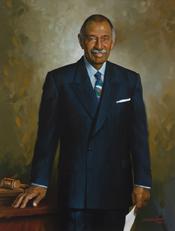
Mr. Chairman, I am glad that Mr. Coble offered language to mitigate concerns over his amendment's impact on tribal sovereignty. As initially drafted, the amendment by Mr. Coble could have had the…
Mr. Chairman, I am glad that Mr. Coble offered language to mitigate concerns over his amendment's impact on tribal sovereignty. As initially drafted, the amendment by Mr. Coble could have had the unintended effect of targeting tribal governments who are legitimately involved in the retailing of tobacco products. With the help of Mr. Cole and other Members, Mr. Coble has modified his amendment and has incorporated language that will go a long way to protecting tribal governments and tribal sovereignty. Specifically, a provision stipulating that enforcement against tribes or in Indian country, as defined in Title 18 Section 1151, will not be authorized by the pending bill has been incorporated.
Support for tribal sovereignty is a bi-partisan issue and collectively the Congress will continue to defend that fundamental principal of law. I realize that there are other sections that may need to be fixed as well because there has not been much time to refine the entirety of the Coble provision and that further refinements may be in order once we get to Conference with the Senate on this provision. I understand that the rule of law of enforcement in Indian country will fall to tribal governments and the Federal government will be protected through further amendment and I pledge to work in conference to ensure the rights of tribal governments are fully protected.
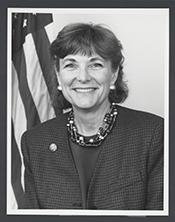
Mr. Chairman, I rise in support of this amendment. Combating terror finance is a nebulous, often difficult aspect of our fight against terrorism. But strength in this area is critical to our overall…
Mr. Chairman, I rise in support of this amendment.
Combating terror finance is a nebulous, often difficult aspect of our fight against terrorism. But strength in this area is critical to our overall success in detecting, tracking and stopping terrorist activity.
We've made remarkable progress in this area in the last 4 years in developing and sharpening our tools for combating terror finance. But we still have more work to do.
That's why I created with a number of my colleagues the bipartisan Congressional Anti-Terrorist Financing Task Force, to bring focus on the multitude of policies, agencies and jurisdictions which have a bearing on our effort to combat terror finance.
Like the task force, this amendment offered by my colleague from Pennsylvania is representative of the continuing need for improvement.
It strengthens our ability to detect and disrupt the financial lifelines upon which terrorists rely. It sets out severe penalties for terror financiers and clarifies the authority of law enforcement to investigate and prosecute illicit financial transactions.
Importantly, this measure acknowledges the vulnerability of informal value transfer systems such as hawalas to terrorist finance and money laundering.
This amendment helps the fight against terrorist finance. I encourage my colleagues to support the amendment and the underlying bill.
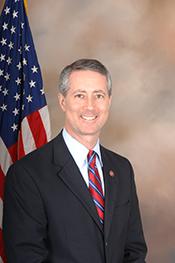
Mr. Chairman, I thank the chairman for yielding me this time. Mr. Chairman, I think we can meet some of the concerns expressed so far without adopting this amendment. Let us just back up for just a…
Mr. Chairman, I thank the chairman for yielding me this time.
Mr. Chairman, I think we can meet some of the concerns expressed so far without adopting this amendment.
Let us just back up for just a second. There is a lot of individual information somewhere in the country in little pieces. The challenge we have in the war on terrorism is looking around for those pieces that matter and trying to fit them together. That is really what data mining is. It is looking at various databases and coming up with the relevant pieces of information and helping us to form a picture about what really happens.
There has been some misunderstanding and I think some undue controversy about that for we will never get all those pieces of information together without these tools that help us do so. To the extent this amendment adds additional reporting requirements and sends a message that we want to discourage them in various agencies from using those tools, I think, does a disservice.
Maybe there are some protections that we can come up with that help address the concerns of the chairman of the Committee on the Judiciary, but I think to simply add more reporting requirements and have these people filling out more paperwork when they really ought to be figuring out who the terrorists are and what they are up to is a misuse of their time.
Mr. Chairman, I rise to address the amendment offered by the gentlemen from North Carolina that relates to the Federal Contraband Cigarette Trafficking Act. There is evidence that profits from the…
Mr. Chairman, I rise to address the amendment offered by the gentlemen from North Carolina that relates to the Federal Contraband Cigarette Trafficking Act. There is evidence that profits from the illegal sales of tobacco products have been funneled to groups whose interests are inimical to the safety of our country and its people and the Congress should do all we can to ensure that source of revenue is cut off.
However, Indian tribal governments that are legally involved in the retailing of tobacco products are clearly not the types of entities we are targeting with this provision.
As initially drafted, the Coble Amendment would have had the unintended effect of targeting tribal governments who are legitimately involved in the retailing of tobacco products.
With the great help of the gentlemen from Oklahoma (Mr. Cole) I understand an amendment has been incorporated that will go a long way to protecting tribal governments and tribal sovereignty.
I also understand, however, that we have not had much time to refine the entirety of the Coble Amendment and that further refinements need to be made. It is my understanding that the gentlemen from North Carolina has agreed to take up these outstanding issues in conference.
Reserving the right to object, Mr. Chairman, I am in strong opposition to the underlying amendment, and I also have great concerns about the unanimous consent request. Mr. Chairman, I believe the…
Reserving the right to object, Mr. Chairman, I am in strong opposition to the underlying amendment, and I also have great concerns about the unanimous consent request.
Mr. Chairman, I believe the unanimous consent request is designed to make minimal changes in the underlying amendment. I also believe that the unanimous consent request is designed to make the bill less objectionable to some Members and thereby encourage them to vote for it.
I am so opposed to the underlying amendment that I am therefore opposed to the unanimous consent request.
I yield to the gentleman from California.
Mr. Chairman, further reserving the right to object, I appreciate the gentleman's explanation. The underlying amendment makes unnecessary disclosure of very sensitive information. It is burdensome upon each of the departments that it requires this disclosure to be brought forward, and as a matter of fact, the explanation that the gentleman just gave saying that makes it only available to HPSCI and SSCI, the two intelligence committees, does not include the Committee on Armed Services, which has great responsibility for military defense intelligence.
So I do object, Mr. Chairman.

Mr. Chairman, I want to again thank and recognize the gentleman from Wisconsin (Chairman Sensenbrenner), the gentleman from North Carolina (Mr. Coble), and the gentleman from Virginia (Mr. Scott) for…
Mr. Chairman, I want to again thank and recognize the gentleman from Wisconsin (Chairman Sensenbrenner), the gentleman from North Carolina (Mr. Coble), and the gentleman from Virginia (Mr. Scott) for bringing this amendment forward. I would just like to reiterate and rise in support of this amendment.
As the gentleman from Wisconsin (Mr. Sensenbrenner) indicated, this amendment is about stopping terrorists. And as we are deliberating on this bill as a whole and the purpose being to do everything we can to stop terrorism, this amendment speaks right to the point.
As the gentleman from North Carolina (Mr. Coble) indicated, there are real cases that have been uncovered and have been tried in court in which known terrorist organizations such as Hezbollah have been engaged in the illegal trafficking of cigarettes from low tax states into high tax states using that money to fund their terrorist activities. That is what this amendment does. And as the gentleman from Wisconsin (Mr. Sensenbrenner) has said, all the modifications make sure that there is no impact on tribal sovereignty.
I urge my colleagues to support this amendment.

Mr. Chairman, I thank the gentleman for yielding me this time, and I rise in support of his amendment. As the chairman of the Permanent Select Committee on Intelligence just said, we did try to work…
Mr. Chairman, I thank the gentleman for yielding me this time, and I rise in support of his amendment. As the chairman of the Permanent Select Committee on Intelligence just said, we did try to work out a unanimous consent request. We agreed among us, but, sadly, others in this body did not agree.
The chairman of the Committee on the Judiciary is right. This is a modest amendment that will yield good information so that we will proceed to do data mining in an efficient way consistent with protecting the civil liberties of law-abiding Americans. That
is all it does. It requires only the Justice Department to prepare a report, not the Defense Department and not other departments in the government.
So my view is that we should vote for this amendment now and perfect it later. I agree with the chairman of the Committee on the Judiciary. It will help us do data mining the right way, and America will be safer for it.
Mr. Chairman, this has absolutely nothing to do whatsoever with sending messages about terrorism. It is trying to find out what is happening in the Federal Government today, and we do not know. We…
Mr. Chairman, this has absolutely nothing to do whatsoever with sending messages about terrorism. It is trying to find out what is happening in the Federal Government today, and we do not know. We have heard a lot today about oversight and accountability. That is what we are trying to do here.
Remember the so-called Total Information Program that was the brainchild of the former National Security Administrator that we funded to the tune of $170 million, and then defunded it? It was too late. We wasted $170 million. That is what this is about. It is providing the tools to the United States Congress to do its constitutional job of oversight.
Mr. Chairman, do you know what? We do not know what is happening. That is the real secret as far as the American people are concerned. We stumble on these things.
Bill Text
Latest available legislative text
        [Congressional Bills 109th Congress]
[From the U.S. Government Publishing Office]
[H.R. 785 Introduced in House (IH)]

109th CONGRESS
1st Session
H. R. 785

To coordinate cargo theft crime data collection and to amend title 18,
United States Code, to make improvements relating to cargo theft
prevention, and for other purposes.

_______________________________________________________________________

IN THE HOUSE OF REPRESENTATIVES

February 10, 2005

Mr. Stearns introduced the following bill; which was referred to the
Committee on the Judiciary

_______________________________________________________________________

A BILL

To coordinate cargo theft crime data collection and to amend title 18,
United States Code, to make improvements relating to cargo theft
prevention, and for other purposes.

Be it enacted by the Senate and House of Representatives of the
United States of America in Congress assembled,

SECTION 1. SHORT TITLE.

This Act may be cited as the ``Cargo Theft Prevention Act''.

SEC. 2. CARGO THEFT DATA COLLECTION.

(a) In General.--The Attorney General shall, within 18 months of
enactment of this Act, issue regulations to--
(1) allow for the reporting of cargo theft offenses to the
Attorney General by a carrier, facility, or cargo owner
promptly after such carrier, facility, or cargo owner becomes
aware of the offense, with such reports to contain information
regarding the offense as specified in regulations, including
the origin and destination of the shipment, the commodities
stolen, the time and location of the theft, and other
information regarding cargo theft, to the extent such
information is available to the reporting party;
(2) create a database to contain the reports made under
paragraph (1) and integrate them, to the extent feasible, with
other noncriminal justice and intelligence data;
(3) prescribe procedures for access to the database created
under paragraph (2) by appropriate Federal, State, and local
governmental agencies, while protecting the privacy of the
information in accordance with other applicable Federal laws;
and
(4) share the results and analysis of the information
collected in paragraphs (1) and (2) with the appropriate
Federal, State, and local government agencies, for the purpose
of assisting in the investigation of cargo theft and in the
arrest and prosecution of the perpetrators of cargo theft.
(b) Creation of Databases.--
(1) In general.--United States Government agencies with
significant regulatory or law enforcement responsibilities with
respect to cargo theft, to the extent feasible, modify their
information databases to ensure the collection and
retrievability of data relating to crime and terrorism and
related activities affecting cargo transportation.
(2) Designation of covered agencies.--The Attorney General,
after consultation with the Secretary of Homeland Security,
shall designate the agencies included within the requirement of
paragraph (1).
(c) Outreach Program.--The Attorney General, in consultation with
the Secretary of the Treasury, the Secretary of Transportation, the
National Maritime Security Advisory Committee established under section
70112 of title 46, United States Code, and appropriate Federal and
State agencies, shall establish an outreach program to--
(1) work with State and local law enforcement officials to
harmonize the reporting of data on cargo theft among the
States, localities and with the United States Government's
reports; and
(2) disseminate cargo theft information to appropriate law
enforcement officials.
(d) Annual Report.--The Attorney General shall submit an annual
report on the implementation of this section to the Committees on the
Judiciary of the Senate and the House of Representatives.
(e) Authorization of Appropriations.--There are authorized to be
appropriated to the Attorney General and Transportation Security
Administration of the Department of Homeland Security such sums as are
necessary for each of the fiscal years 2003 through 2007 to carry out
the requirements of this section, such sums to remain available until
expended.
(f) Limitation on Disclosure of Reports and Data.--Any reports made
pursuant to section 1(a)(1) and the data contained in the database
created under section 1(a)(2) shall be exempt from disclosure under the
Freedom of Information Act (5 U.S.C. 552).

SEC. 3. THEFT OF INTERSTATE OR FOREIGN SHIPMENTS OR VESSELS.

(a) Theft of Interstate or Foreign Shipments.--Section 659 of title
18, United States Code, is amended--
(1) in the first undesignated paragraph--
(A) by inserting ``trailer,'' after
``motortruck,'';
(B) by inserting ``air cargo container,'' after
``aircraft,''; and
(C) by inserting ``, or from any intermodal
container, trailer, container freight station,
warehouse, or freight consolidation facility,'' after
``air navigation facility'';
(2) in the fifth undesignated paragraph, by striking ``one
year'' and inserting ``3 years''; and
(3) by inserting after the first sentence in the eighth
undesignated paragraph the following: ``For purposes of this
section, goods and chattel shall be construed to be moving as
an interstate or foreign shipment at all points between the
point of origin and the final destination (as evidenced by the
waybill or other shipping document of the shipment), regardless
of any temporary stop while awaiting transshipment or
otherwise.''.
(b) Stolen Vessels.--
(1) In general.--Section 2311 of title 18, United States
Code, is amended by adding at the end the following:
```Vessel' means any watercraft or other contrivance used or
designed for transportation or navigation on, under, or immediately
above water.''.
(2) Transportation and sale of stolen vessels.--Sections
2312 and 2313 of title 18, United States Code, are each amended
by striking ``motor vehicle or aircraft'' and inserting ``motor
vehicle, vessel, or aircraft''.
(c) Review of Sentencing Guidelines.--Pursuant to section 994 of
title 28, United States Code, the United States Sentencing Commission
shall review the Federal Sentencing Guidelines to determine whether
sentencing enhancement is appropriate for any offense under section 659
or 2311 of title 18, United States Code, as amended by this Act.
(d) Annual Report of Law Enforcement Activities.--By December 31,
2006, and annually thereafter, the Attorney General shall submit to
Congress a report, which shall include an evaluation of law enforcement
activities relating to the investigation and prosecution of offenses
under section 659 of title 18, United States Code, as amended by this
Act. The Attorney General's report shall include an assessment of the
effectiveness of the cargo theft data collection program provided for
in section 1 thereof.
(e) Reporting of Cargo Theft.--The Attorney General shall take the
steps necessary to ensure that reports of cargo theft collected by
Federal, State, and local officials are reflected as a separate
category in the Uniform Crime Reporting System, or any successor
system, by no later than December 31, 2005.
<all>