Expressing support to the organizers and participants of the historic meeting of the Assembly to Promote the Civil Society in Cuba on May 20, 2005, in Havana.
Legislative Activity
Stay on top of the latest movement without scrolling through every action
Motion to reconsider laid on the table Agreed to without objection.
May 10, 2005 • 6:49 PM
View full timeline
Introduced in House
April 6, 2005
Referred to the House Committee on International Relations.
April 6, 2005
Referred to the Subcommittee on the Western Hemisphere.
April 6, 2005
Subcommittee Consideration and Mark-up Session Held.
April 20, 2005
Forwarded by Subcommittee to Full Committee by Unanimous Consent.
April 20, 2005
Committee Consideration and Mark-up Session Held.
April 27, 2005
Ms. Ros-Lehtinen moved to suspend the rules and agree to the resolution.
May 10, 2005 • 2:34 PM
Considered under suspension of the rules. (consideration: CR H3068-3071)
May 10, 2005 • 2:34 PM
DEBATE - The House proceeded with forty minutes of debate on H. Res. 193.
May 10, 2005 • 2:34 PM
At the conclusion of debate, the Yeas and Nays were demanded and ordered. Pursuant to the provisions of clause 8, rule XX, the Chair announced that further proceedings on the motion would be postponed.
May 10, 2005 • 2:55 PM
Considered as unfinished business. (consideration: CR H3084-3085)
May 10, 2005 • 6:24 PM
Passed/agreed to in House: On motion to suspend the rules and agree to the resolution Agreed to by the Yeas and Nays: (2/3 required): 392 - 22, 1 Present (Roll no. 162).(text: CR H3068)
May 10, 2005 • 6:49 PM
On motion to suspend the rules and agree to the resolution Agreed to by the Yeas and Nays: (2/3 required): 392 - 22, 1 Present (Roll no. 162). (text: CR H3068)
May 10, 2005 • 6:49 PM
Motion to reconsider laid on the table Agreed to without objection.
May 10, 2005 • 6:49 PM
Voting History
1 vote recorded • Roll call available
Floor Debate
22 membersWhat members said about H.Res. 193 on the floor
 JC
JC EJM
EJM ABS
ABS LD
LD JM+17
JM+17
Floor Debate
22 membersWhat members said about H.Res. 193 on the floor
Mr. Speaker, I rise today in commemoration of the 90th Anniversary of the Armenian Genocide. This is both a somber and encouraging day for both myself and many of my constituents, who are survivors…
Mr. Speaker, I rise today in commemoration of the 90th Anniversary of the Armenian Genocide. This is both a somber and encouraging day for both myself and many of my constituents, who are survivors or ancestors of survivors. Somber in memory of the millions who lost their lives, and encouraging in the success of the Armenian American community of building new lives in the U.S., as well as an independent Armenia.
April 28, 1915 will live as a day of infamy in the lives of all Armenians, all over the world. It was this day that the Turkish government ordered the deportation of 2.5 million Armenians out of the Ottoman Empire. Within hours, Turkish forces had rounded up over 300 Armenian scholars, and deported or killed them. Over the next year, 1.5 million Armenians were killed or deported to concentration camps to await certain death.
I have always supported the Armenian American community. However, my support for the community does not only stem from the size of the Armenian Community in Queens, but also because I see the strategic importance of the Caucasus region for the United States.
In 2003, I had the opportunity to visit Armenia and to plant a tree at the Genocide memorial. The independent country of Armenia is a living testament to honor the memories of the survivors.
I believe that by failing to recognize these barbaric acts, one becomes complicit in them. Let us never forget the 1.5 million Armenians who perished in 1915 and 1916.
Mr. Speaker, again I commemorate the 90th Anniversary of the Armenian Genocide, and hope that April 28th, 1915 will never be forgotten. I also ask that the New York Times story focusing on survivors of the genocide be inserted into the Record. Their words and memories speak louder than any speech we will hear today.
[From the New York Times, Apr. 23, 2005]
Armenian Immigrants Recall a 90-Year-Old Tragedy
(By Corey Kilgannon)
A cheery sign in the New York Armenian Home in Flushing,
Queens, yesterday informed its elderly residents in colorful
letters of the current date, season and weather.
And of an anniversary: ``Remember April 24, the Armenian
Genocide.''
A framed proclamation by Gov. George E. Pataki hung nearby,
declaring April 24 as Armenian Remembrance Day to commemorate
the Turkish massacres of an estimated 1.5 million Armenians
beginning in 1915. It called the killings ``the 20th
century's first such calculated effort to destroy people on a
massive scale'' and added that ``the Armenian Genocide led
academics to coin and utilize the very term genocide.''
It is doubtful that even with failing memories, any
residents at the home needed a reminder.
``This time of year, they all get disturbed and remember,''
said Jenny Akopyan, assistant director of the home.
Tomorrow, thousands of Armenian-Americans from across the
Northeast are expected to gather in Times Square to mark the
90th anniversary of the murders of their relatives and
forebears by Ottoman Turks during World War I.
On April 24, 1915, Turkish soldiers arrested hundreds of
Armenian leaders in Constantinople, then tortured and
executed them. The mass slaughter of Armenians over the next
several years is often called the first genocide of that
century and a precursor to the Holocaust.
The Armenian Home, on 45th Avenue in Flushing, opened in
1948 and has long housed many genocide survivors who escaped
by playing dead, fleeing or other means. Most of the
residents are from families decimated by the genocide, but
only a half dozen--all in their 90's--actually escaped it as
children.
The most recent death of a survivor was in August: Lucy
Derderian, age 103, who ``only survived the genocide because
her mother was smart enough to hide her under the dead bodies
during a massacre,'' said Aghavni Ellian, the home's
executive director.
Ms. Ellian walked into the home's day room, where about two
dozen elderly Armenian immigrants sat watching ``The Price Is
Right'' on a large television next to an ornate Christian
shrine bedecked in crimson and gold. She carried a lamb dish
that had been delivered for later: madal, a roast blessed by
a priest and traditionally eaten on April 24.
The residents had just finished small cups of thick, strong
Armenian coffee. Few survivors could offer completely lucid
recollections, but each had some snippet of horror seared
into memory.
Gulumya Erberber, 93, said that Turkish soldiers had
beheaded her father, a wealthy academic, and seized his
riches and several houses. She was 3 years old then, and her
mother fled with the five children to a mountain village
where the townspeople did not speak Armenian but did help the
family.
Israel Arabian, 99, leaned on his cane and related how he
was forced to work for a Turkish officer who took Mr.
Arabian's teenage sister ``as a wife.'' He ran away and grew
up in a Greek orphanage before eventually coming to New York
and settling in Queens.
Many Armenians bitterly denounce the Turkish government for
denying that the killings constituted genocide. In an
interview yesterday, Tuluy Tanc, minister counselor for the
Turkish Embassy in Washington, said the accusation of
genocide was ``unfair and untrue,'' a legal ploy to gain
reparations.
``We don't see what happened as genocide, quote-unquote,''
Mr. Tanc said. ``Unfortunate and tragic events took place
during World War I and bad things happened to Armenians, and
Muslims and Turks also.''
``The number killed is much less than they say--it's more
like 300,000 Armenians who lost their lives,'' he said,
adding that Turkish leaders had recently asked Armenia to set
up a commission to study the killings.
Onorik Eminian, 93, said she was a young child living in
the city of Izmir when the Turks killed her parents and other
relatives. She said she has never stopped having nightmares
about it, especially in April.
``I saw plenty, sir, plenty,'' she said. ``I saw them go in
and they broke our churches. They took old ladies, old like
me now, and shot them one by one. This I saw in front of my
eyes. They chopped the arms off our schoolteachers and hung
them from the trees in the street to teach us a lesson. We
watched our priest come delivering food, and they killed him
and threw the food into the street.''
``Are you sure you want to hear my sad story?'' she asked.
``I was playing in front of our house when they came on
horses. My grandmother pulled me in. The Turks grabbed my
father--he was hiding Armenians in his coffee shop--and I
cried, `Daddy, Daddy, don't go' and I held onto his leg. Then
one soldier told me to shut up and hit me right here with a
rifle. Look, I still got the mark.''
Weeping, she pointed to a bump on her forehead between her
eyebrows and dabbed her eyes with a tissue.
``I said, `Where's my father?' and they said, `Here's your
father,' and they held up his jacket and pants.''
She grew up in an orphanage, and eventually came to New
York, lived in Astoria and had two daughters who never saw
any mention of Armenian genocide in their history books.
``If you write this in the newspaper,'' she said, ``will
the Turks come here and kill me? I'm still afraid of them.''
Mr. Speaker, today we gather to remember and commemorate the Armenian Genocide, one of the darkest chapters of World War I, and the first of the series of genocides we saw in the 20th Century. The…
Mr. Speaker, today we gather to remember and commemorate the Armenian Genocide, one of the darkest chapters of World War I, and the first of the series of genocides we saw in the 20th Century.
The Armenian Genocide is sometimes called the ``Forgotten Genocide.'' In fact, as most of you know, back in 1939, prior to the invasion of Poland, Adolph Hitler argued that his plans for a Jewish holocaust would, in the end, be tolerated by the West, stating: ``After all, who remembers the Armenians.'' Who remembers the Armenians? Today, we provide an answer: We Do! We Remember!
We do so because it is important, indeed it is essential to remember and reflect upon these events, but we also do so because we know that the Armenian people today struggle on an ongoing basis to confront and surmount the legacies and the consequences of those dark days.
Consider, for a moment, what might have been.
At the end of the first World War, the American public was acutely aware of the atrocities that had been committed against the Armenian people from 1915 on--atrocities that we knew had resulted in the death of more than 1 million Armenians and left the remaining Armenian population starving and destitute.
At the time, U.S. Ambassador Henry Morganthau reported that ``When the Turkish
authorities gave the orders for these deportations, they were simply giving the death warrant to a whole race; they understood this well, and in their conversations with me, they made no particular attempt to conceal the fact.''
A military mission headed by Major General James Harbord in 1919 had been sent to report on conditions in the region and make recommendations to U.S. policy makers. General Harbord sent a clear message about the defenselessness of the Armenians and the dangers they still faced.
By the time of the Paris Peace negotiations at the end of the War, President Wilson was committed to the notion of using the proposed League of Nations to help the Armenians. In a September 6, 1919 speech on the Treaty creating the League, he spoke of the Armenian Genocide, ``When I think of words piled upon words, of debate following debate, when these unspeakable things that cannot be handled until the debate is over are happening, in these pitiful parts of the world, I wonder that men do not wake up to the moral responsibility of what they are doing. Great peoples are driven out upon a desert, where there is no food and can be none, and they are driven to die, and then men, women, and children thrown into a common grave, so imperfectly covered up that here and there is a pitiful arm stretched out to heaven, and there is no pity in the world. When shall we wake up to the moral responsibility of this great occasion?''
On May 24, 1920, Wilson proposed to create a U.S. mandate in Armenia, in which we would have sent in troops to maintain the peace and provide assistance to help the Armenian people establish a functioning government and economy.
But the proposed U.S. mandate never occurred. Republican Senator Henry Cabot Lodge from Massachusetts, the Chairman of the Senate Foreign Relations Committee, who earlier had championed the cause of the Armenians, refused to support President Wilson's proposed Mandate. Senator Lodge said at the time, ``To invite this country to take charge of that crossroads of the nations in Armenia, to commit itself to sending its troops there for an indefinite period, and to bear the expenses involved for an indefinite period, is something for which I could never bring myself to vote.'' And on June 1, 1920, he, along with the other Republican isolationists in the Senate voted 34 to 43 and 34 to 41 against two Democratic amendments that would have fully or partially authorized the Mandate.
And so, Armenia was left on its own, open to attack from both Turkey and the Soviet Union. And the Armenians made a fateful decision. Rather than accept Turkish dominance and the prospect of additional killings, they signed an agreement with the Soviet leadership's point man in the Caucuses--a man named Josef Stalin--to join the Soviet Union. That fateful decision led them to more than 60 years of Armenian suffering under the yoke of the Communists.
So, as we all gather together to consider the legacy of the Armenian genocide and the Diaspora it created, it is also appropriate for America as a nation to consider what can be done to give something back to those who, by tragic circumstances, were forced to live through unspeakable atrocities during the Genocide only to then come under the control of a brutal Soviet rule.
Armenia today faces enormous economic and political challenges: It has hostile neighbors. It faces blockades that stifle trade and economic opportunities. It needs economic and military assistance.
There is much that the U.S. government can and should do to assist the Armenian people: We should grant Armenia Permanent Normal Trading Relations status, so as to facilitate the growth of trade and economic relations. We should provide Armenia with the economic and military assistance it needs to develop its economy and ensure its security. We should press for an end to the Turkish and Azerbaijani economic blockades.
The writer Milan Kundera once wrote that ``The struggle of man against power is the struggle of memory against forgetting.'' There are those that would deny the Armenian Genocide, just as there are those that deny the reality of the Nazi Holocaust. In commemorating the Armenian Genocide, as we do this evening, we all collectively engage in that struggle of memory against forgetting. But we do this not only to remember the past, but to animate the future with a commitment to prevent such things from ever happening again, and to strive towards making a better future for the Armenian people, a people who have suffered so much.
In September of 1919, President Woodrow Wilson spoke of his vision of a future Armenia. He said, ``Armenia is to be redeemed . . . So that at last this great people, struggling through night after night of terror, knowing not when they may come out into a time when they can enjoy their rights as free people that they never dreamed they would be able to exercise.''
It has taken Armenia decades to reach a point where its people could enjoy their rights as a free people--the rights Wilson spoke of. Today, we have an opportunity to help ensure that they can build a better future. And so, I look forward to continuing to work with the Armenian- American community and Members of the Congressional Caucus on Armenia to address the issues facing this region, so that together we build something positive, something hopeful, something good for the future--a peaceful, prosperous Armenia with close ties to the United States.
Mr. Speaker, I rise today to honor the one and a half million Armenians who perished in the Armenian Genocide that began 90 years ago on April 24, 1915. This is a sacred obligation that we undertake…
Mr. Speaker, I rise today to honor the one and a half million Armenians who perished in the Armenian Genocide that began 90 years ago on April 24, 1915. This is a sacred obligation that we undertake each April--to ensure that future generations of Americans remember the first genocide of the 20th century and to ensure that the men, women and children who perished at the hands of the Ottoman Empire are not lost to history.
Mr. Speaker, there is no dispute that what happened to the Armenian people is genocide. Thousands of pages of documents sit in our National Archives. One of these documents is a report from the American Consul in Trebizond, Oscar Heizer. On July 28, 1915, Heizer cabled the U.S. Embassy in Constantinople to report on the massacre of 180 Armenian road workers, who were shot and stripped of their clothes before being buried in the woods.
Newspapers of the day were replete with stories about the murder of Armenians. ``Appeal to Turkey to Stop Massacres'' headlined the New York Times on April 28, 1915, just as the killing began. On October 7 of that year, the Times reported that 800,000 Armenians had ``been slain in cold blood in Asia Minor.'' In mid-December of 1915, the Times spoke of a ``Million Armenians Killed or in Exile.''
Prominent citizens of the day, including America's Ambassador to the Ottoman Empire, Henry Morgenthau, and Britain's Lord Bryce reported on the massacres in great detail. Morgenthau was appalled at what he would later call the ``sadistic orgies'' of rape, torture and murder. Lord Bryce, a former British Ambassador to the United States, worked to raise awareness of and money for the victims of what he called ``the most colossal crime in the history of the world.'' In October 1915 the Rockefeller Foundation contributed $30,000--a sum worth more than half a million dollars today--to a relief fund for Armenia.
Last week at the annual commemoration of the genocide here on the Hill, I had the honor to meet, Henry Morgenthau, the grandson of Ambassador Morgenthau. He is still carrying on his grandfather's mission to make America and the world aware of what happened.
The generation of Armenians with direct memory of the genocide is almost gone; their children are aging. Much of the rest of the world has moved on, reluctant to dredge up ``unpleasant'' memories and risk the ire of modern Turkey.
But even now, almost a century after the start of the genocide, some survivors are still with us. One of them, Ghazaros Kademian, is a constituent of mine. He is 96 now, but his mind is sharp and he remembers clearly the day when, as a six-year-old boy he and his family were forced from their house. He was from the village of Zaitoun, located southeast of present day Turkey. Kademian's father stayed behind to defend his homeland and was murdered. His mother took his hand and ran away.
Kademian and his mother had no shoes, coats, food, or money. They had to leave everything behind for the Turks. He does not remember all the details of their long journey, except it was harsh, cold, and dangerous, because they had no idea where they were going.
The boy and his mother ended their flight in Kirkuk, in what is now northern Iraq. He remembers very vividly that the first night in Kirkuk they hugged each other for warmth and slept in front of a church for protection. In the morning he woke up; but his mother did not move, she was frozen and dead. He was left alone, homeless, in a town where he did not speak the same language.
What happened to Ghazaros Kademian's family was terrible and tragic, but not uncommon. All over the Ottoman Empire Armenian children and their parents fled from their homes with only the clothes on their backs. But for those of us who care deeply about this issue, Kadmian's story is a reminder that we must redouble our efforts to ensure that our nation, which has championed liberty and human rights throughout its history, is not comp1icit in Ankara's effort to obfuscate what happened between 1915 and 1923. Worse still, by tacitly siding with those who deny the Armenian Genocide, we have rendered hollow our commitment to ``never again'' let genocide occur.
Within the next few days, several of my colleagues and I will be introducing a resolution commemorating the Armenian genocide. This should be an easy resolution for all of us--Republicans and Democrats-- to support.
The reason that we have yet to succeed in passing a resolution honoring the murdered Armenians is simple: The government of Turkey refuses to acknowledge the genocide and has spent millions of dollars and expended countless hours of diplomatic effort to prevent us from commemorating the suffering of the Armenian people. Turkey's opposition has always centered on its assertion that acknowledging the victims of its Ottoman forebears would cause an irreparable rift between the United States and an important ally.
Last summer, during consideration of the fiscal year 2005 Foreign Operations Appropriations bill, I offered an amendment to prohibit the Government of Turkey from using U.S. foreign aid to lobby against H. Res. 193, a resolution introduced by Representatives Radanovich, Schiff and the co-chairs of the Armenian Caucus, Representatives Knollenberg and Pallone, that officially recognizes the Armenian Genocide. H. Res. 193 had been cosponsored by 110 of our colleagues on both sides of the aisle.
My amendment touched off a flurry of activity by Turkey's lobbyists. According to a Foreign Agents Registration Act filing, lobbyists for the Government of Turkey made at least 32 separate contacts with U.S. Government officials over a 3-day period in an attempt to kill my amendment. These included telephone calls to the Speaker of the House, other Members, numerous congressional staff, an Assistant Secretary of Defense, National Security Council staff, the Office of the Vice President, and other State and Defense Department staff.
While Ankara's agents did not succeed in blocking adoption of the amendment by the House, it was stripped in conference and the full House never did vote on the Genocide Resolution.
In the name of Ghazaros Kademian and those no longer with us, I call upon the distinguished Speaker of the House to allow us to vote on a Genocide resolution this year. We must do it soon, for with each year the events of 1915-1923 recede a bit more into the dark of history.
Mr. Speaker, I thank the distinguished gentleman from south Florida (Mr. Wexler) for the time. This resolution is very important because it continues the very important, historic tradition begun here…
Mr. Speaker, I thank the distinguished gentleman from south Florida (Mr. Wexler) for the time.
This resolution is very important because it continues the very important, historic tradition begun here in this Congress, by this Congress in April of 1898 when, after a century of fighting by the people of Cuba for the independence of Cuba, the United States, because of the Congress of the United States, came out in support of Cuban independence. In April of 1898, this Congress passed what is very well- known in Cuban history, the joint resolution that recognized that Cuba is and of right ought to be free and independent. So this Congress began a tradition in April of 1898 that continues to this day, a tradition in support of the right of the Cuban people to be free.
For the last 46 years, the Cuban people unfortunately have been under the boot of a totalitarian dictatorship that, while it has perhaps been the most inept, certainly one of the most inept of the Communist dictatorships in having achieved the systematic, utter destruction of what was one of the most prosperous economies in this hemisphere; in that sense, it has been absolutely inept. In terms of totalitarian control, it has been quite effective, and it maintains an absolute, intense oppression over the Cuban people to this day.
My colleagues have mentioned the onslaught of 2 years ago that was condemned by a resolution offered by the gentleman from New Jersey (Mr. Menendez) a few weeks ago, and it was condemned by this House, the absolute campaign, if you will, of the march of 2003 that arrested dozens and dozen and dozens, almost 100 pro-democracy leaders and threw them in prison, but the campaign continues.
The campaign of oppression and intimidation, beginning in January of this year, the totalitarian Communist regime in Cuba has begun a systematic campaign of ethnic cleansing. Hundreds of young people, mostly young men, 95 percent of whom are black, have been rounded up and thrown in prisons beginning in January of this year in what the dictator calls Operation Containment, containment of the young people.
Now, this assembly was organized, as has been mentioned by my distinguished colleagues, by Martha Beatriz Roque Cabello and Felix Bonne Carcasses and Rene Gomez Manzano, is an important, historic development. There are some people who now say that we must reject the subterfuge seeking to attack this assembly, that they have not invited all pro-democracy groups. All pro-democracy groups, the organizers of this assembly have invited all individuals and organizations within Cuba who support democracy. Some say then they have not been invited. In fact, they have been invited, but that is not the problem of the organizer. That is the problem of somebody else, very important.
This is an important, extremely valiant effort that over 360 civil society groups, pro-democracy groups within the island have called for, and they seek to meet on May 20. So what this Congress today is saying is: We support you. We know what you are doing. We know the courage that it entails to say, within a totalitarian state, that a meeting will be held in support of freedom and democracy and free elections and the legalization of political parties and freedom of religion and freedom of the press and freedom of expression. Within the totalitarian state, to say that there will be a meeting engaged in such discussion is really a heroic act, and so today, what we are saying is that we recognize that, and we support you.
Simply to end, Mr. Speaker, as I commend the gentleman from Florida (Mr. Mario Diaz-Balart) for having brought forth this resolution today in such an important and timely manner, I simply want to read the names of some of the thousands of political prisoners who cannot have their voices heard. Obviously, they all deserve to be heard, but I would like to read some of their names.
It is my privilege and honor to serve in this Congress with my brother Mario, where there are two brothers who are serving in prison in Cuba simply because they came out publicly in support of freedom and democracy. One brother, Jose Daniel Ferrer Garcia, was sentenced to 25 years in the gulag for his support of democracy. The other one, Luis Enrique Ferrer Garcia, was sentenced to 28 years in the gulag because he supports democracy.
Someone who I admire very much, I have followed his long and distinguished fight for freedom for many years, has been languishing since 1990, mostly in solitary. His name is Jorge Luis Garcia Perez, also known Antunez. He was sentenced to 18 years because, ever since he was in high school, he said he favors democracy and rejects totalitarianism, and so he has suffered the consequences since then.
Juan Carlos Herrera Acosta, 20 years in the gulag.
Diosdado Gonzalez Marrero, 20 years in the gulag.
Felix Navarro Rodriguez, 25 years.
Prosperso Gainza Aguero, 25 years.
Hector Maseda Gutierrez, 20 years.
Claro Sanchez Altarriba, 15 years.
Victor Rolando Arroyo, 26 years.
And perhaps the best known, certainly someone who is a symbol of resistance, character, dignity, as all these men and women are, Dr. Oscar Elias Biscet, 25 years.
There are thousands, Mr. Speaker, of men and women like this, many, by the way, charged with what they call in the totalitarian system common crimes, like seeking to leave, seeking to flee to freedom. That is a common crime. So the regime does not even recognize them as political prisoners. There are thousands of political prisoners in Cuba such as these men whose names I have read. We owe them our solidarity.
Today, we are expressing our solidarity, and specifically through this resolution, our solidarity with the meeting convened for May 20, which will seek to develop ways to hasten what is inevitable, and that is an end to the totalitarian nightmare and the commencement of the dawn of freedom.
Mr. Speaker, last night, the House passed House Resolution 193 as a suspension bill. For people who may not know, suspension bills are meant to be noncontroversial measures the House typically passes…
Mr. Speaker, last night, the House passed House Resolution 193 as a suspension bill. For people who may not know, suspension bills are meant to be noncontroversial measures the House typically passes unanimously.
I voted no. Let me tell you why. Because it was a protest vote meant to encourage freedom and liberty for all Americans. Let us start with what it said.
H.R. 193 is a resolution that says in part, ``expressing support to the organizers and participants of the historic meeting of the Assembly to Promote the Civil Society in Cuba on 20 May 2005 in Havana. Whereas, Fidel Castro's terrorist regime has continued to repress all attempts by Cuban people to bring democratic change to Cuba and denies universally recognized liberties, including freedom of speech, association, movement and the press.''
I could go on but there is no need to. It is all right there in what I just read. We decry liberties denied Cubans while a Cuban-American in my city of Seattle is denied the right to go to Cuba to visit his son by the U.S. government.
Remember the grandstanding on Elian Gonzales? We wag our fingers at Fidel and shout about Cubans being denied liberty at every moment. Well, we are denying the right of an American to travel to Cuba for a few days to see his son. How hypocritical is that?
I am talking about the plight of Sergeant Carlos Lazo. He came to America from Cuba in the early 1990s floating on a raft in the ocean. He risked his life for a chance to come here. Talk about the quintessential story about risking everything to call America home. Carlos Lazo is the stuff of books and movies and news coverage. He wants none of it. He just wants to see his children in Cuba. And the United States government will not let him go.
Floating on the raft in the ocean, that is what Carlos Lazo did. That is about as courageous as it gets. So he arrives in America. He moves to the State of Washington. A man grateful to be alive, he determines to embrace his new country and do everything within his power to give back. He joins the Washington National Guard. Over a year ago, his unit dispatched to Iraq. Now Carlos serves his country in one of the most dangerous places in Iraq, Fallujah, as a medic. He serves on the ground in Iraq for a year.
When his duty is over, Carlos wants to go see his kids still in Cuba. Carlos goes to Miami, but he is denied the right to travel to Cuba. He is denied the right to board an airplane bound for Havana. He saw them in 2003, and he is told by the government: You cannot see them again until 2006. Three years.
Sergeant Lazo, who proudly served America, who risked his life to get here and risked his life to defend liberty, is now a man whose liberty has been denied. He cannot see his children in Cuba until the President lets him go.
When will Carlos be able to visit his children in Cuba? I ask that the Speaker, because the administration is in denial, call the White House. They want to perpetuate a bureaucracy and a failed policy, not assist an American who wants the sum total of what every parent wants, the right to see their kids.
The government has in place a policy which denies the basic liberties of an American hero, and we have not lifted one finger in this House to help Carlos Lazo. The Secretary of Defense is not interested in him. The White House is not interested in its citizen. The White House and this House are only interested in wagging fingers at Fidel Castro.
Carlos Lazo is a man who embodies everything Americans stand for, courage, determination, quiet thanks from a man grateful to have made a new life and a new home. And now Carlos is a man who cannot be united with his family. Carlos is a man who did not want to be anything but a quiet, grateful American and is forced to become a man in the spotlight, hoping someone will pay attention, hoping someone will let him see his kids.
H. Res. 193 is a suspension bill that would have us suspend disbelief. Carlos deserves the thanks of a grateful Nation and the immediate assistance of this administration and the Congress. We ought to add his name to H. Res. 193 so he can travel. We should do that and make a resolve that the United States of America, which sees itself as a beacon of liberty in the world, extend its support to Carlos Lazo and will facilitate his immediate travel to Cuba to be reunited with his kids.
Anything less than fighting and defending the liberty of Carlos Lazo from the State of Washington is the work of a Congress long on hyperbole and short on action in defense of liberty.
Mr. Speaker, call the Secretary of Defense before the day is out. I bet he is still in his office. Send Carlos Lazo to Cuba, to his sons in his former homeland, so he can be a free American.
If you want to make a real statement about what it means to be free, let one American be free, free to travel, free to be reunited with his children, free to show the people of Cuba, firsthand, what freedom means in this country.
Free to show Cubans firsthand that America does not have to prevent its citizens from leaving the country in order to keep them.
Mr. Speaker, use your office to intercede and let this House stand as a beacon of freedom and liberty for every American, not just some Americans.
So long as Carlos Lazo is forbidden from visiting his children in Cuba, America can only be known as the land where some are truly free and others are truly denied liberty.
Send Carlos Lazo to Cuba.
Show 8 more
Mr. Speaker, I rise this evening to commemorate the 90th anniversary of the Armenian genocide, which actually took place on April 24, last Sunday. As the first genocide of the 20th Century, it is…
Mr. Speaker, I rise this evening to commemorate the 90th anniversary of the Armenian genocide, which actually took place on April 24, last Sunday. As the first genocide of the 20th Century, it is imperative that we remember this atrocity and collectively demand reaffirmation of this crime against humanity.
Just this week I was joined by my co-chair of the Armenian Caucus and 176 additional Members of Congress in sending yet another joint congressional letter to President Bush urging him to use the word ``genocide'' in his April 24 statement. With over 178 signatures, which is 9 more than last year, the message in this letter is loud and clear: that 90 years is too long to wait for justice to be served and proper recognition to be made.
Mr. Speaker, I received today a copy of President Bush's statement with regard to the April 24 commemoration, and, unfortunately, once again he did not use the term ``genocide.'' And I think that is unfortunate because it has been consistently the case that this Congress and the United States in general over the last 90 years has referred to the Armenian genocide as a genocide, and it is unfortunate that the President continues not to use the term.
This past Wednesday the Caucus, with the cooperation of the Armenian American community, organized a commemorative event on Capitol Hill in the Cannon Caucus room. We were joined by over 350 members of the community as well as numerous Senators and Members of Congress who all spoke on one message: that the United States owes it to the Armenian American community, to the 1.5 million that were massacred in the genocide, and to its own history to reaffirm what is a fact.
As we saw on Wednesday night and as we have seen time and time again, the United States has a proud history of action and response to the Armenian genocide. During a time when hundreds of thousands were left orphaned and starving, a time when a nation was on the verge of complete extermination, the U.S. chose to step up. Individuals like Ambassador Morgenthau and Leslie Davis witnessed the atrocities firsthand, and their conscience did not allow them to simply look the other way. It is now time that the U.S. stops looking the other way, reaffirms what we all know to be fact, and properly recognizes the Armenian genocide.
I wanted to mention that I was very proud earlier this year when our Ambassador to Armenia, Ambassador Evans, referred to the Armenian genocide as a genocide, and it was unfortunate that he was essentially rebuked by the State Department because of the words he used. Because the fact of the matter is that when we talk about the Armenian genocide, we are simply acknowledging historical fact, and we feel very strongly that if at the time when the genocide occurred, the world and the United States, if we had taken more notice and had tried to prevent it, I think it would have served as a lesson so that the Nazi Holocaust against the Jews and so many other atrocities that took place in the 20th century would not have occurred. If we are going to see a situation in the future in this 21st century when we do not repeat the mistakes of the past, we must acknowledge the Armenian genocide.
We know even now, history in the last 100 years has witnessed more horrible episodes since the Armenian genocide. As we speak, the Sudanese Government is taking a page out of the Turkish Government's denial playbook and continuing the vicious cycle of genocide denial in what is happening in Darfur. If we are ever to live in a world where crimes do not go unpunished and fundamental human rights are respected and preserved, we must come to recognize the Armenian genocide, thus allowing for proper reparations and restitutions to be made.
I was very upset, Mr. Speaker, on Saturday when I read in the New York Times that the Turkish envoy to the United States continued to say that the only reason why Armenians and Americans wanted the genocide recognized was because they wanted restitution or they wanted reparations. That is simply not true. But it is also true that restitution and reparations must be made. For those who commit a state- sponsored genocide or a state-sponsored massacre, it is important that the state, in this case, Turkey, acknowledge that it occurred and that restitution and reparations are made, just as in the case with Germany in the case of the Nazi Holocaust against the Jews.
Mr. Speaker, I look forward to introducing a genocide resolution with my colleagues in the 109th Congress, and as we did in the 108th Congress and the 106th. We will do everything in our power to get legislation passed and reaffirm the U.S. record on the Armenian genocide. Today the United States has the profound responsibility of carrying on the tradition and the work of our predecessors in continuing to combat genocide whenever and wherever it takes place. We must show the world that individuals such as Ambassador Morgenthau did not stay quiet 90 years ago, and we in Congress certainly owe it to them not to stay quiet today.
Mr. Speaker, I move to suspend the rules and agree to the resolution (H. Res. 193) expressing support to the organizers and participants of the historic meeting of the Assembly to Promote the Civil…
Mr. Speaker, I move to suspend the rules and agree to the resolution (H. Res. 193) expressing support to the organizers and participants of the historic meeting of the Assembly to Promote the Civil Society in Cuba on May 20, 2005, in Havana.
Mr. Speaker, I ask unanimous consent that all Members may have 5 legislative days within which to revise and extend their remarks and include extraneous material on H. Res. 193.
Mr. Speaker, I yield myself such time as I may consume.
Mr. Speaker, I rise in strong support of House Resolution 193, and I commend the gentleman from Florida (Mr. Mario Diaz-Balart) for writing this important measure and bringing it to the floor. I would like to also thank the gentleman from Illinois (Mr. Hyde) and the ranking member of the Committee on International Relations, the gentleman from California (Mr. Lantos), as well as the House leadership, for helping us bring this resolution to the floor in such an expeditious manner.
Mr. Speaker, even the most violent and repressive dictatorships cannot extinguish freedom when it lives in people's hearts, and Cuba is no exception. The dictator Fidel Castro has always used fear to keep himself and his cronies in power.
Two years ago, the tyrant again attempted to silence the cries for liberty and democracy that emanate from every corner of the Cuban gulag. He arrested over 75 dissidents and sentenced them to prison terms each up to 25 years. What were their crimes? Simply daring to exercise their fundamental freedoms, for daring to be free men and women.
These 75 are just some of the most recent ones. There are many more Cuban prisoners of conscience who languish in squalid jail cells. However, Mr. Speaker, all of Cuba is an island prison; and today we rise to commend and support the activities of Cuba's peaceful internal opposition.
On May 20, Cuba's democratic opposition will convene in an Assembly to Promote the Civil Society in Cuba. This historic meeting will discuss ways to bring democracy and liberty to the nation of Cuba, which has suffered under a brutal dictatorship for more than four decades. May 20, 2005, will also mark the 103rd anniversary of the Cuban Republic, of Cuba's birth as a free nation.
Yet the Cuban opposition is determined to correct this injustice and reclaim their rights as free people in a free, democratic, and sovereign nation. The May 20th Assembly to Promote Civil Society in Cuba is an important step toward the fulfillment of this goal.
Martha Beatriz Roque Cabello, Felix Bonne Carcasses, and Rene Gomez Manzano and many others are the organizers of this landmark meeting. Despite the risks and the constant threats that the dictator holds over their heads, they are living examples to their countrymen of courage and determination, of how to follow in the footsteps of Pope John Paul, II, and be not afraid.
Just recently, a group of young Cubans held an essay contest focusing on a democratic transition in Cuba. One of the finalists, Edgar Lopez Moreno, struck a chord that doubtless resonates with the vast majority of his countrymen. He wrote: ``After 46 years of political ostracism and imposition by the Communist Party and its maximum leader, today the process of transition to democracy on the island is closer than ever.''
The winds of freedom are behind the Cuban opposition. The just nature of their cause has given them wings. Soon democracy will take flight in Cuba. Soon the Cuban people will free themselves from the grip of this dictator, but they need our help. They need our support, and it begins here and now.
I urge my colleagues to stand with these brave Cubans by joining me in voting for the resolution of the gentleman from Florida (Mr. Mario Diaz-Balart) today.
Mr. Speaker, I reserve the balance of my time.
Mr. Speaker, I yield such time as he may consume to the gentleman from Florida (Mr. Mario Diaz-Balart), the author of the resolution.
Madam Speaker, I have no further requests for time, and I yield back the balance of my time.
Madam Speaker, on that I demand the yeas and nays.
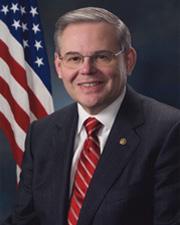
Madam Speaker, I am proud to join a bipartisan group of original cosponsors of this resolution which supports the development of democracy and civil society in Cuba. As you know, on May 20th,…
Madam Speaker, I am proud to join a bipartisan group of original cosponsors of this resolution which supports the development of democracy and civil society in Cuba. As you know, on May 20th, opposition leaders are organizing a historic Assembly on the 103rd Anniversary of Cuban independence.
In this momentous meeting of 365 irdependent organizations, Cuba will hear a dialogue of freedom and progress. This Assembly will continue a discussion--from within Cuba--of how to begin the process of reconstructing a democratic culture, promoting civil society, combating poverty, and establishing labor rights. They are Cuba's bravest and brightest--they are Cuba's future.
Who among us would not be supportive of the right to peaceful assembly and public discourse? That is what this resolution and Cuban civil society is calling for on May 20th.
As we learned in a Western Hemisphere Subcommittee hearing early this year, the organizers and the participants in this event are risking their personal freedom for the freedom of the Cuban people.
This resolution makes it clear that we oppose any attempt by the Castro regime to repress or punish the organizers and participants of the Assembly, as Castro has done with so many others who have spoken out against repression. News reports indicate that Cuban dissidents who are choosing to participate in the Assembly are already being harassed.
This past April 20th--not even a month ago--three of these dissidents took the time to speak to many of us about their situation. They told of the beatings, detentions, interrogations, harassment and political slander which they and other dissidents are being subjected to as the Cuban regime continues to try to repress and de-legitimize their struggle for freedom.
And let us not forget the crackdown on human rights two years ago, when Castro arrested 75 dissidents, subjected them to summary trials, and sentenced them to long jail terms. Many of the prisoners, along with other prisoners of conscience, spent over a year in solitary confinement. Some have been deprived of adequate medical treatment, and reports from Cuba detail beatings and harassment.
Clearly, the Castro regime has no respect for the Universal Declaration of Human Rights, which states in Article 4 that, ``No one shall be subjected to torture or to cruel, inhuman or degrading treatment or punishment.''
That is why I am proud of my resolution that passed with bipartisan support condemning Castro's brutal crackdown and demanding that the Cuban regime immediately release all political prisoners, legalize all political parties, labor unions, and the press, and hold free and fair elections.
On that day, we came together from both sides of the aisle, to stand together for a universal cause, human rights, and to celebrate the strength and perseverance of the Cuban people.
That is why I urge all of my colleagues to support this resolution. This resolution
says again that we stand behind those who risk repression and harassment to bring freedom to their long-suffering people.
It says that the international community is watching Castro, and that we will not accept the abuses of human and civil rights that the Castro regime employs so indifferently.
And it says that we believe in the Assembly and the ability of a group of individuals with a strong faith in democracy to free their people from a tyrant's restrictive grasp.
To my brothers and sisters who suffer in Castro's jails, under his regime, to their families and friends both here in the United States and in Cuba, to the leaders and participants in the Assembly to Promote Civil Society in Cuba, and to the Cuban people, I say that Castro's days are numbered. Over a hundred years ago, the Cuban people won the battle against brutality and oppression and fought for their freedom. I have no doubt that we will win again. I look forward to that day, which is coming soon, when on May 20, our independence day, we will all celebrate a free and democratic Cuba.
I urge my colleagues to vote ``yes'' on this resolution.
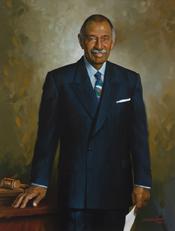
Mr. Speaker, tonight I rise to remind the world that the 24th of April marked the 90th anniversary of the Armenian Genocide, a systematic and deliberate campaign of genocide of the Ottoman Empire.…
Mr. Speaker, tonight I rise to remind the world that the 24th of April marked the 90th anniversary of the Armenian Genocide, a systematic and deliberate campaign of genocide of the Ottoman Empire. Also, it marked yet another year without the U.S. formally recognizing the atrocities that occurred. Considering how well documented the genocide is in the U.S. archives and through an overwhelming body of first-hand, governmental, and diplomatic evidence this is nothing less than a disgrace. I also rise to reaffirm my support for the adoption of the Genocide Resolution H. Res 193, which was introduced last Congress by Rep. Pallone. Unfortunately, even though this legislation passed unanimously out of my committee, had 110 co-sponsors and was placed on the House calendar, it was not allowed to be brought to the floor for a vote. The purpose of this legislation was prevent future genocides by stressing the importance of remembering and learning the lessons of past crimes against humanity, including the Armenian Genocide, Holocaust, and the Cambodian and Rwandan genocides in hopes of preventing future atrocities. In addition, this resolution strengthened America's commitment to the universal values of the Genocide Convention and asked the United States to commemorate the 15th anniversary of the Genocide Convention.
As Ranking Member of the House Judiciary Committee, it was an honor to be instrumental in preparing the report last year which gained unanimous approval at the committee level. The report described the Armenian genocide in the following terms: ``Beginning in 1915, the Islamic Turkish state of the Ottoman Empire sought to end the collective existence of the Christian Armenian population. From 1915 through 1918, during World War I, the Ottoman Empire subjected the Armenian people to deportation, expropriation, abduction, torture, massacre, and starvation. The atrocities were renewed between 1920 and 1923. It is estimated that one and a half million Armenians were killed out of over two million Armenians who had lived in the Ottoman Empire. It should be noted that these activities ceased with the institution of the new Republic of Turkey in October, 1923.'' Two weeks ago, I signed onto a bipartisan letter to President Bush, asking him to properly recognize the Armenian Genocide.
The Armenian Genocide is fully documented in U.S. history. In a July 24, 1915 cable, American Consul Davis noted that, ``I do not believe there has ever been a massacre in the history of the world so general and thorough as that which is now being perpetrated in this region or that a more fiendish, diabolical scheme has ever been conceived by the mind of man. What the order is officially and nominally to exile the Armenians from these
Vilayets may mislead the outside world for a time, but the measure is nothing but a massacre of the most atrocious nature. It would be that even if all the people had allowed to perish on the road. As a greater part of them, however, have been actually murdered and as there is no doubt that this was done by order of the government, there can be no pretense that the measure is anything else but a general massacre.''
Now more than ever as the world is gripped by unrest and terrorism, the memory of the Genocide underscores our responsibility to help convey our cherished tradition of respect for fundamental human rights and opposition to mass slaughter. We owe it to the victims of the Genocide to acknowledge what happened and to teach our students and children about their suffering, so that we can fulfill our obligation to ensure that genocide will never happen again. Our future generation should be able to say, ``I learned, I acknowledge, and I will work to prevent it from happening again.''
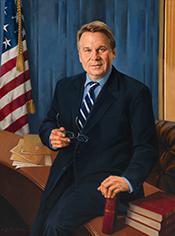
Mr. Speaker, I rise in strong support of H. Res. 193, which expresses support for the courageous advocates of freedom in Cuba, who are gathering ten days from now in Havana for the first Assembly to…
Mr. Speaker, I rise in strong support of H. Res. 193, which expresses support for the courageous advocates of freedom in Cuba, who are gathering ten days from now in Havana for the first Assembly to Promote the Civil Society conference which will focus on bringing democracy, liberty, and the rule of law to this enslaved island.
Madam Speaker, in recent years, this House has overwhelmingly passed numerous resolutions condemning the egregious human rights violations of the Castro regime. These violations, which have been continually cited through comprehensive, compelling reports, include the pervasive use of torture and vicious beatings of political prisoners. We know that this year the UN Convention on Human Rights in Geneva also passed a resolution condemning the government of Cuba's deplorable human rights record.
Today, we celebrate those brave Cubans who have been undaunted by Castro's reign of terror and who continue to speak out fearlessly for freedom in Cuba. Mr. Speaker, I note that on March 3, three of the main organizers of the Assembly to Promote the Civil Society testified via telephone at a joint hearing I chaired with the Africa, Global Human Rights, and International Operation Subcommittee and the Western Hemisphere Subcommittee. The hearing was appropriately entitled ``Year Two of Castro's Brutal Crackdown on Dissidents.''
The three who spoke at this hearing were Martha Beatriz Roque, an internationally renowned Cuban economist; Felix Bonne, a Cuban engineering professor; and Rene Gomez Manzano, a Cuban attorney. All three have spent time in Cuba's prisons for their pro-democracy activities and co-authored a book, ``The Homeland Belongs to Us.'' The courage they demonstrated through testifying was truly inspiring and they provided a tremendous witness of the desire of the Cuban people to be free.
Martha Beatriz Roque was arrested in the now infamous March 2003 crackdown of Cuba's bravest and brightest were rounded up, paraded before kangaroo courts on trumped up charges and given harsh prison sentences with sickening speed. She was sentenced to 20 years in prison but released in July of 2004 because of poor health. In an interview after her release, Roque said: ``I leave prison without having accepted any sort of conditions. I am a dissident and I will remain one.''
Madam Speaker, we gather today in support of Roque, Bonne, Manzano, and these other brave leaders as they prepare for this historic event. I have been invited to participate in the Assembly to Promote the Civil Society and sent my visa application through the Department of State to Cuba through the US Interest Section.
Madam Speaker, I note that in March of 2003, I also requested to travel to Cuba along with my colleague, Congressman Frank Wolf, but we were denied visas. This is a regime that has strongly advocated for trade and travel with the United States, and yet the government of Cuba would not give visas to two Members of Congress, each of whom have served in the House of Representatives for nearly 25 years.
What do they hide? What do they fear?
I hope that the Cuban government will allow me to travel. I hope to be with the brave leaders of freedom in Cuba on this day of peaceful advocacy. The world will be watching next week Mr. Speaker, and I hope that the regime will allow this event to take place. If they fail to do so, they will continue to experience alienation from the world community.
Our hopes and prayers are with the brave leaders of the Assembly to Promote the Civil Society next week. I urge my colleagues to strongly support this resolution that supports the brave advocates for freedom in Cuba.
Mr. Speaker, today we mark the 90th anniversary of the beginning of the Armenian Genocide. Every year we participate in this solemn commemoration but this year it has a special significance. For the…
Mr. Speaker, today we mark the 90th anniversary of the beginning of the Armenian Genocide. Every year we participate in this solemn commemoration but this year it has a special significance.
For the families of the victims and the survivors, the horrors of that bygone era remain so painful that it is hard to believe how much time has passed. The passage of years has not dimmed the memory or eased the grief. Not a relative or friend has been forgotten, nor have fond memories of native cities faded away.
Moreover, no accounting for mass murder has been made. Though many governments and legislative bodies around the world have recognized the Armenian Genocide, the Turkish Government consistently refuses to acknowledge what happened. For Armenians everywhere, Turkey's policy of aggressive denial sharpens the feeling of loss, embittering the lives of those who miraculously survived.
Today, those of us without Armenian blood share the sorrow of Armenians everywhere. I had the privilege in September 2000 of chairing hearings on the Armenian Genocide in the Subcommittee on International Operations and Human Rights of the International Relations Committee. The reading I have done over the years, which has included detailed descriptions of the atrocities, shock me. But, I am resolved to speak about this issue, loudly and often.
The Armenian Genocide has significance for all of us. It created a monstrous precedent which launched a century of genocides. In numerous countries and cultures, an ethnic group that controlled the state has used its instruments of coercion to slaughter members of a minority group, religion or class. It is enough to recall Adolf Hitler's smug remark, ``Who remembers the Armenians?'' to grasp the universality of what happened to the Armenians.
Much has changed in the world since the mass, planned murder in 1915--two world wars, the fall of the Ottoman, Habsburg and Romanov Empires, the rise of the American superpower and most recently, the fall of the Soviet Union. One would have thought that we would have grown wiser over the years. Alas, we have not learned the appropriate lessons from the 20th century's first genocide. Just a few years after Rwanda, at this very moment, another genocide is taking place in Darfur. Yet, instead of mounting a united response, the international community has waffled or slithered away from responsibility, as hundreds of thousands are slaughtered.
The record of man's inhumanity to man is awful enough to produce a feeling of resignation. But we must fight that tendency. We must continue to remind the world of what occurred in 1915 and keep calling on Turkey to won up. We must not restrain ourselves from speaking of the Armenian Genocide. Along with many of my colleagues, I urge President Bush to speak the truth to Ankara, which needs to come to terms with its own past.
As this somber time, I want to note one optimistic point: OSCE negotiators are guardedly hopeful about the prospects of resolving the Nagorno-Karabakh conflict. True, we have experienced such moments before and should not get our hopes up. Still, I am encouraged to hear that there is at least some reason for hope. We all pray for a peaceful solution to this conflict, which has caused over 30,000 deaths and many more casualties. Next year,
when we once again commemorate the Genocide of the Armenians, I hope their descendants will be living in peace with their neighbors, building a democratic, prosperous country that will be a light unto the world.
Mr. Speaker, I yield myself such time as I may consume. Mr. Speaker, I rise in strong support of this resolution. Mr. Speaker, I too want to commend the gentleman from Illinois (Mr. Hyde) and the…
Mr. Speaker, I yield myself such time as I may consume.
Mr. Speaker, I rise in strong support of this resolution. Mr. Speaker, I too
want to commend the gentleman from Illinois (Mr. Hyde) and the ranking member, the gentleman from California (Mr. Lantos), for facilitating consideration of this resolution. I also want to thank my good friend, the gentleman from Florida (Mr. Mario Diaz-Balart), the sponsor of this resolution, and the gentleman from New Jersey (Mr. Menendez), the ranking Democrat on the Subcommittee on the Western Hemisphere, for his never-ending battle for human rights in Cuba.
Mr. Speaker, 2 weeks ago on the House floor, we chastised the Cuban regime for its inexcusable continued detention of political dissidents, many of whom are jailed because of their conviction to seek freedom and democracy in Cuba. Unfortunately, there is no indication from Castro that he ever plans to implement political and economic reforms that would give hope to the approximately 11 million citizens on the island who have suffered for far too long.
Many internationally recognized human rights groups like Amnesty International and Human Rights Watch have denounced Castro's brutal dictatorship over the years and called for reforms, the release of political prisoners, and urged the totalitarian government to respect basic human freedoms.
This year the Human Rights Commission called attention to the injustices which continue to be inflicted upon those innocent individuals who toil in Castro's prisons. Undeterred, thousands of brave Cubans have sought to bring about political change through opposition and civil society organizations which are loosely coordinated by the Assembly of the Civil Society in Cuba.
The assembly is planning a historic meeting next week on the 103rd anniversary of Cuban independence. Mr. Speaker, I would like to encourage the organizers of the meeting of the assembly to include in the meeting political dissidents who may disagree with them about whether to engage officials within Castro's government on the transition process, in particular, the supporters of the Varela Project, a grassroots, non-violent, citizens' movement in Cuba that seeks fundamental political change by petitioning the Cuban government for a referendum on reform according to that country's constitution.
These groups should feel as though they are welcome within the broader coalition that opposes Castro's policies. Regardless of which groups of political activists attend the assembly, I am concerned that Castro's henchmen will once again try to suppress dissent through the use of force. As a result, I strongly concur with the sentiment expressed in the resolution urging the administration and the international community to stand ready to respond to such an atrocity.
This resolution demonstrates our unequivocal commitment to stand shoulder to shoulder with the Cuban people if such an unjustified response were to occur. As a result, Mr. Speaker, I strongly urge my colleagues to support House Resolution 193.
Mr. Speaker, I reserve the balance of my time.
Mr. Speaker, I yield as much time as he may consume to the gentleman from Florida (Mr. Lincoln Diaz-Balart).
Madam Speaker, I yield back the balance of our time.
Mr. Speaker, I want to thank the gentlewoman from Florida, also my dear friend the gentleman from Florida (Mr. Wexler) from West Palm Beach. Today, Congress is supporting these brave individuals in…
Mr. Speaker, I want to thank the gentlewoman from Florida, also my dear friend the gentleman from Florida (Mr. Wexler) from West Palm Beach.
Today, Congress is supporting these brave individuals in Cuba who, despite all of the dangers, are standing up for freedom, are standing up for democracy, from within Cuba, from within that totalitarian island.
The three main organizers, Martha Beatriz Roque Cabello, Felix Bonne Carcasses, and Rene Gomez Manzano, all three of which have suffered prison time by the Cuban dictatorship, are standing up because they know that the answer to the problems that the Cuban people face is simply just one: It is freedom, total, absolute freedom.
That entails the release of all political prisoners. It entails political parties. It entails freedom of press. It entails free elections, and they are standing up from within Cuba and with many other hundreds of their countrymen who are standing up, having this event on May 20 to express their sentiment and also to prepare and work for a free Cuba.
This resolution, Mr. Speaker, extends and supports solidarity to the organizers and to the participants of the Assembly to Promote the Civil Society, which again is on May 20 in Havana.
It urges the international community to support the assembly of these heroes that are standing up for freedom despite the risk.
It urges the administration and also the international community, Mr. Speaker, to oppose any attempts by Castro's terrorist regime to punish or repress the organizers and the participants.
It obviously shares, also, Mr. Speaker, the pro-democracy ideals of the assembly.
The commissions, Mr. Speaker, that these individuals are working with are hard to believe. The Department of State's 2004 Country Reports on Human Rights Practices, referring to the Castro regime, states the following:
``Members of the security forces and prison officials continued to beat and abuse detainees and prisoners, including human rights activists. Prison conditions remained harsh and life threatening, and the government restricted medical care to some prisoners as a method of control. Prisoners died in jail due to lack of medical care.''
President Bush said, Mr. Speaker, in his second inaugural address, and I am quoting him now, ``All who live in tyranny and hopelessness can know: The United States will not ignore your oppression or excuse your oppressors. When you stand for your liberty, we will stand with you.''
The Cuban people are standing tall, Mr. Speaker, for their freedom. Today, by voting for this resolution, the United States Congress stands with them, lets them know that they are not alone, that despite all the risks, despite the horrendous conditions that they are facing on a day- to-day basis, the United States Congress stands with them, admires them and supports what they are doing.
Cuba will be free because of the efforts of the heroic Cuban people, and it is wonderful, Mr. Speaker, to see that the Congress of the United States, once again, is supporting the Cuban people in their efforts, in their struggle to be free.
Show 11 more
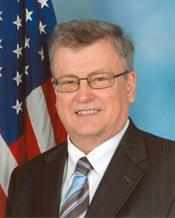
Mr. Speaker, I rise to remember the 90th anniversary of the Armenian Genocide of 1915-1923. We are familiar with these events. Hundreds of thousands of men, women, and children were driven from their…
Mr. Speaker, I rise to remember the 90th anniversary of the Armenian Genocide of 1915-1923. We are familiar with these events. Hundreds of thousands of men, women, and children were driven from their homes, starved, beaten, and shot. Government-orchestrated intimidation, government-sponsored deportations, and government- perpetrated slaughter are the hallmarks of the Armenian Genocide. They are also the hallmarks of other genocides with which we are all too familiar.
The Armenian Genocide was the first genocide of its kind, but it was not the last. It has served as a model of the Holocaust in Europe, the Killing Fields of Cambodia, and religiously motivated atrocities in the Sudan. We look regretfully and sorrowfully at the slaughter of so many in these cases, as well we should. These events demonstrate man's inherent sinfulness and the evil that comes so easily. No one denies the events in Europe, Asia, and Africa happened. Anyone rejecting these mass slaughters is themselves rejected. And yet, many suffer some kind of incredulity when it comes to the Armenian Genocide. We demand the perpetrators of these other genocides are made to account for their actions, but not the Armenian Genocide.
Photographs and eye witness account point overwhelmingly and undoubtedly to the massacre of over one million human beings, but no one has ever been held accountable. Ninety years after these events, the perpetrators are no longer living. In this world, they can no longer be held responsible for their actions. Their heirs, however, should be made to acknowledge the deeds of their fathers. But they are not.
Modern Turkey has made Armenian Genocide denial into an article of faith. Genocide denial is taught in schools, and is supported by the government. Anyone who deviates from the official line is considered a traitor. Indeed, the government of Turkey works feverishly to prevent any government from recognizing the Armenian Genocide. Recognition by the legislative bodies of France, Italy, Switzerland, and Russia has been met with harsh criticism from the Turkish government.
In 2000, only intense lobbying and ruthless pressure from Turkey prevented this House from recognizing the Armenian Genocide. It is shameful that the United States House of Representatives refuses to reaffirm the Armenian Genocide. Official American records on the Armenian Genocide are considered to be the most extensive in the world, and yet we refuse to reaffirm what already has been acknowledged to be the first genocide of the Twentieth Century. In past eras, American officials, including U.S. Ambassador Henry Morgenthau and President Ronald Reagan, boldly declared the savage butchery in eastern Anatolia and the Caucuses to be genocide.
By allowing Turkey to deny its past actions, we take a step backwards. By not reaffirming the events of 90 years ago, we do not live up to the ideals of our country. I reaffirm the Armenian Genocide in the House of Representatives. I know that it happened. I remember.
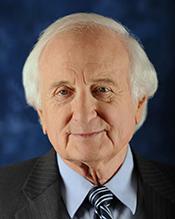
Mr. Speaker, I rise today to join my colleagues in commemorating the 90th anniversary of the Armenian Genocide. This past Sunday, April 24th, marked 90 years since the beginning to one of history's…
Mr. Speaker, I rise today to join my colleagues in commemorating the 90th anniversary of the Armenian Genocide.
This past Sunday, April 24th, marked 90 years since the beginning to one of history's dark chapters. On that day in 1915, the government of the Ottoman Empire began a brutal and systematic campaign of genocide against the Armenian people. It started with the execution of some 300 Armenian leaders, professionals and intellectuals. By 1923, over 1.5 million Armenians had been killed, and another 500,000 had been deported.
The Ottoman Empire claimed that it was acting to suppress civil unrest among Armenians during World War I. The absurdity of this justification for a reign of terror was pointed out at the time by no less credible a witness than our own Ambassador to the Empire, Henry Morganthau. His report to Washington described the Ottoman campaign as one of ``race extermination.''
The almost unimaginable pain and suffering endured by the Armenian people has been compounded since by the refusal of the Ottoman Empire and now the government of Turkey to acknowledge that the Genocide ever even occurred. Generations of Turks have been raised to deny this atrocity, perpetuating resentments and hostilities. By trying to defend the indefensible, the government of Turkey has denied the Armenian people, as well as its own people the chance to begin the process of healing these wounds.
Mr. Speaker, 90 years is far, far too long for a people to wait for an acknowledgment of the crimes committed against them. That is why I am proud to support the resolution that will be introduced in the coming days remembering the victims and honoring the survivors of the Armenian Genocide. This resolution will appropriately recognize these acts for what they were. Only with a common understanding of this dark period can we move forward and work to prevent similar tragedies in the future.
While we mark the loss and pain of the Armenian people every April 24th, it is my fervent hope that some day soon, it will no longer be necessary to urge the recognition of these terrible events as genocide. I am particularly disappointed that the President has once again failed to lead on this issue. Once again, President Bush's statement this weekend studiously avoided proper recognition of this tragedy.
Mr. Speaker, I ask that all my colleagues take the time to reflect on this anniversary, and that we renew our commitment to the victims of the Armenian Genocide and to each other to never allow such human suffering to occur again.
Mr. Speaker, ``those who cannot remember the past are condemned to repeat it.'' That saying is as true today as it was almost a hundred years ago when the philosopher George Santayana first wrote it.…
Mr. Speaker, ``those who cannot remember the past are condemned to repeat it.'' That saying is as true today as it was almost a hundred years ago when the philosopher George Santayana first wrote it.
So, today we are here to remember. We are here to remember that the Ottoman Empire brutally tortured and murdered 1.5 million Armenians 90 years ago and that half a million Armenians were forced to flee their country. Let us also remember and honor those who survived the genocide. Although few survivors of the Armenian Genocide are still living today, those who endured the horrors of 1915 are heroes for all time.
We are here to honor those who died and to call for recognition of the Genocide carried about by the Ottoman Turkish government. We are here to remember so we don't repeat the same mistake, anywhere, in any country of the world.
In my view, all Americans must recognize that the atrocities committed from 1915 to 1923 constitute genocide. We do not use that word lightly. But the word, itself, makes a powerful statement about the horrors suffered by the Armenian people. As Samantha Powers, the leading expert on genocide said in a letter to the editor of the New York Times, ``The extermination of Armenians is recognized as genocide by the consensus of scholars of genocide and Holocaust worldwide. The failure to acknowledge this trivializes a human rights crime of enormous magnitude.'' Today, the people of Armenia and her diaspora are proudly seeking to rebuild their country.
From the ashes of despair born of the genocide, and from the ravages of seven decades of communist rule, Armenians the world over are striving to secure a safe and prosperous future for Armenia and Nagorno-Karabagh.
As Armenian-Americans join with Armenians from throughout the world to help to rebuild their homeland, and as they seek to secure an economically prosperous state founded on firm democratic principles, I will stand by them.
As a Member of the House leadership and the House International Relations Committee, I promise to do all I can on behalf of Armenia and to ensure that the Armenian genocide is recognized. In closing, I remind you that Adolf Hitler once stated: ``Who today remembers the Armenians?''
I am here to say that we remember the Armenians. The children, grandchildren, and great grandchildren of the survivors and of those who perished, remember the Armenians. The friends and neighbors of Armenia, remember the Armenians. And here in the United States, we remember the Armenians.
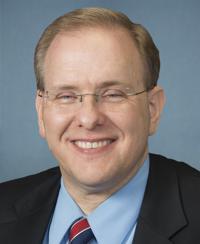
Mr. Speaker, I rise today to commemorate the 90th anniversary of the Armenian genocide, during which one and a half million Armenians were tortured and murdered, and more than half a million were…
Mr. Speaker, I rise today to commemorate the 90th anniversary of the Armenian genocide, during which one and a half million Armenians were tortured and murdered, and more than half a million were forced from their homeland into exile. Despite overwhelming documentation, the Turkish government has refused to admit or apologize for these atrocious acts, or even acknowledge the Armenian Genocide.
As Americans, we must guarantee that our foreign policy reflects our values of justice, equality and responsibility. These values should apply in all of our international interactions, including those with Turkey, a NATO ally. Turkey wishes to increase its global profile through accession to organizations such as the European Union. However, if Turkey wishes to gain the world's respect, it must earn it. It must demonstrate its commitment to peace and democracy in the region. It must reopen its borders, end its blockade of Armenia, and encourage Azerbaijan to end its aggressive rhetoric. And most importantly, it must accept responsibility for past injustices through an unconditional recognition of the Armenian Genocide. Only then can Turkey begin to come to terms with its history. Only then can Armenians seek justice from the Turkish government for the losses of so much and so many.
Last month, I was honored to lead a conference session for Rhode Island students in which we discussed the genocide and what steps our government should take to recognize that tragedy appropriately. I think practically every student present that morning was amazed that, despite overwhelming evidence and widespread support, Congress has not yet passed the genocide resolution. It is time for Congress and the White House to speak with one voice and ensure that our national ideals are reflected in our foreign policy. Consequently, I joined many of my colleagues in asking the President to recognize the Armenian Genocide in unambiguous terms, and I will again cosponsor the Genocide Resolution when it is reintroduced in the coming weeks.
As an ardent supporter of Rhode Island's Armenian-American community throughout my public service career, I am proud to join my colleagues to today in honoring the victims of the genocide by paying tribute to their memory, showing compassion for those who have suffered from such prejudice, and never forgetting the pain that they have endured.
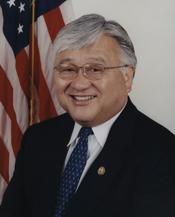
Mr. Speaker, I rise today to commemorate the anniversary of a tragic event. April 24th 2005 marks a solemn occasion in world history: the 90th anniversary of the Armenian Genocide. From 1915 to 1923,…
Mr. Speaker, I rise today to commemorate the anniversary of a tragic event. April 24th 2005 marks a solemn occasion in world history: the 90th anniversary of the Armenian Genocide. From 1915 to 1923, the Christian Armenian population endured a policy of systemic killing implemented by the then-Ottoman and early Turkish Empires, resulting in the ethnic slaughter of one and a half million Armenians.
Since that time, descendants of Armenian immigrants have proudly clung to their identity, prospering in communities throughout the world. Here in the United States, we are especially fortunate to have a vibrant Armenian community that has greatly enriched American civic life.
It is vital that we remember this dark period in history. Losing the memory of this tragic event would only perpetuate the injustice. For too long, the Armenian Genocide, the first genocide of the 20th Century, has been denied the recognition that it properly deserves. As human beings, we all have a responsibility to keep events such as the Armenian Genocide at the forefront of our collective historical memory. We cannot begin to overcome the challenges of the future until we acknowledge our past mistakes.
It is perhaps the tragedy of the 20th Century that a cataclysmic occurrence such as the Armenian Genocide has to share a place in our memory with other horrific events such as the wartime atrocities perpetuated during WWII, the ethnic cleansings in Cambodia and Bosnia, and the Rwandan genocide. I truly believe we must take the time and make the effort to find reconciliation between the perpetrator and victims of these events.
Currently, we are confronted by a genocide unfolding in Sudan, where tens of thousands die every month; we must not allow ourselves to turn a blind eye.
Mr. Speaker, recognizing the Armenian Genocide will help heal the wounds humanity has suffered in the past century. By acknowledging the horrors of our past and working to protect our future, we take one step closer to the goal of ``never again.''

Mr. Speaker, I rise in Commemoration of the 90th anniversary of the Armenian Genocide. This yearly commemoration is a testament to the lives and the legacy of the 1.5 million Armenians who lost their…
Mr. Speaker, I rise in Commemoration of the 90th anniversary of the Armenian Genocide. This yearly commemoration is a testament to the lives and the legacy of the 1.5 million Armenians who lost their lives, and it underscores our commitment to keeping the Armenian nation and culture alive.
As we revisit this dark period in Armenian history, we must be mindful of the lessons that can be learned from this tragedy. Blind hatred and senseless prejudice tear at the very fabric of our society even today. The victims of the Armenian Genocide, the Holocaust, ethnic cleansing in Kosovo, Rwanda, and Sudan, and acts of vicious terrorism remind us of the human cost of hate and implore us to prevent these tragedies from happening again.
I want to join my colleagues in renewing our pledge to the Armenian nation to ensure that Armenians around the world can live free of threats to their existence and prosperity. Azerbaijan continues to blockade Armenia and Nagorno-Karabagh, denying the Armenian people the food, medicine, and other humanitarian assistance they need to lead secure lives. A key component of this pledge is maintaining high levels of assistance to Armenia. As Ranking Member of the House Foreign Operations Appropriations Subcommittee, I will fight to maintain funding for Armenia, which recently became eligible for special Millennium Challenge Account funds.
We must also be cautious to balance our immediate foreign policy needs with the long-time concerns we have had about both the Azerbaijan and Turkish records. This includes reaffirming that the Section 907 waiver is not automatic and indefinite--it will be carefully evaluated. And it also involves close monitoring of assistance given to Turkey.
Building a strong, prosperous Armenia is the best way to honor the memory of the Genocide victims, and I am proud to be a partner in this effort.
Mr. Speaker, I rise today to commemorate the somber occasion of the 90th Anniversary of the Armenian Genocide, and to call upon the Administration to finally recognize this horrible crime for what it…
Mr. Speaker, I rise today to commemorate the somber occasion of the
90th Anniversary of the Armenian Genocide, and to call upon the Administration to finally recognize this horrible crime for what it truly was, systematic and deliberate murder.
The Armenian Genocide began on April 24, 1915, and within 8 years one and a half million Armenians were tortured and killed. Tortures that the Armenians were forced to endure included forced labor, rape, kidnapping, and death marches under the guise of ``temporary relocation.'' A grave injustice was intentionally committed by the Ottoman Empire during these years, and it is imperative that we now stand up and demand that this injustice be officially recognized by Turkey, the United States, and the world.
The senseless crime of genocide is one of the most reprehensible acts that can be committed by man. To attempt eradication of an entire population based on a misguided prejudice is absolutely vile, and the United States should do everything in its power to try and prevent such atrocities from happening in the future. Only by explicitly defining genocide and ensuring that all cases of genocide throughout history are appropriately identified can we effectively deter this crime. Particularly at this time of heightened vigilance around the world, it is absolutely imperative that America take a strong stance against the most troubling of all terrorist acts, mass killings.
We can not forget Adolph Hitler's haunting remark to his military staff prior to launching the Holocaust: ``Who, after all, remembers the annihilation of the Armenians.'' Let us stand up as a country and let the world know that we do remember.
Mr. Speaker, I join my colleagues in commemorating the 90th anniversary of the Armenian Genocide. Today we solemnly remember the victims of the Ottoman Government's 8- year campaign of terror against…
Mr. Speaker, I join my colleagues in commemorating the 90th anniversary of the Armenian Genocide.
Today we solemnly remember the victims of the Ottoman Government's 8- year campaign of terror against its Armenian population. During this brutal campaign, Armenian communities were systematically destroyed, one and a half million innocent men, women, and children were murdered, and over one million others were forcibly deported.
This somber anniversary is a tribute to the memory of the victims of the Armenian Genocide, and a painful reminder that the world's inaction and denial 90 years ago left a tragic precedent for other acts of senseless bloodshed. This year we marked the 60th anniversary of the liberation of the Auschwitz-Birkenau death camp. The road from Armenia to Auschwitz was direct. If more attention had been centered on the slaughter of innocent Armenians, perhaps the events of the Holocaust might never have been allowed to occur.
And, as we speak today, government-supported Janjaweed militias continue their systematic destruction of black Sudanese in Darfur. Thousands have been murdered,
raped, and starved to death, and over one million have been displaced from their homes. The Armenian Genocide stands as a tragic precedent to the brutal campaign of ethnic cleansing currently ravaging Darfur.
Today, we honor the memory of the victims of the Armenian Genocide, and vow once more that genocide will not go unnoticed or unmourned. We must stand up to governments that persecute their own people, and reaffirm our unwavering commitment to fight all crimes against humanity and the efforts to hide them from the rest of the world.
Mr. Speaker, I rise to commemorate the 90th anniversary of the Armenian Genocide. The Armenian Genocide is fully documented in the U.S. archives and through an overwhelming body of firsthand,…
Mr. Speaker, I rise to commemorate the 90th anniversary of the Armenian Genocide.
The Armenian Genocide is fully documented in the U.S. archives and through an overwhelming body of firsthand, governmental, and diplomatic evidence. The only party denying the Armenian Genocide is the Turkish government.
As a young man, I remember learning about the Armenian genocide by listening to the experiences of the men and women who experienced it firsthand. Many of the survivors of this experience fled to the United States, and through time established communities throughout the country, including my district.
California is home to the largest Armenian-American population in the United States. The California State Assembly designated April 24, 1997 as ``California Day of Remembrance for the Armenian Genocide of 1915- 23, and for the Victims of the Sumgait Pogroms of 1988 and Baku Riots of 1990.''
Morally, it is wrong for the American people to be complicit in the Turkish government's effort to deny the suffering and death of over 1.5 million people.
Turkey's denial of the Armenian Genocide sets a dangerous precedent that makes future genocides more likely. Adolf Hitler, while planning the Holocaust, silenced the potential reservations of his generals by asking: ``Who, after all, speaks today of the annihilation of the Armenians?''
As a Nation that values the freedom of speech and assembly, we must admit that this event occurred, and force Turkey to do likewise.
Additionally, we must ask the EU to refuse Turkey's application to join the EU until Turkey accepts their role in the genocide against the Armenian people.
Madam Speaker, I rise to express my strong support for this resolution--sponsored by my distinguished friend and neighbor, Mr. Mario Diaz-Balart of Florida--which recognizes the upcoming Assembly To…
Madam Speaker, I rise to express my strong support for this resolution--sponsored by my distinguished friend and neighbor, Mr. Mario Diaz-Balart of Florida--which recognizes the upcoming Assembly To Promote Civil Society in Cuba.
I am proud to associate myself with causes that seek to increase freedom, security, and prosperity for people throughout the world. On May 20th, we will mark Cuban Independence Day. This is the day Cuba proclaimed to the world its sovereignty and independence. Sadly, freedom for the Cuban people was short-lived. The world stood by as Cuba lost its liberty and slipped into the abyss of authoritarian rule and the clutches of Fidel Castro's thuggish regime.
Madam Speaker, today Cuba is a lonely island nation separated by 90 miles from the greatest beacon of freedom the world has ever known--the United States. Many in Cuba thirst for the waters of liberty, only to see those yearnings suppressed by a brutal dictator.
America has always stood for freedom, and always will. Under the leadership of President George W. Bush, we have endeavored to spread liberty to the Middle East and throughout the world. It is past time to shine the light of freedom on the despotic regimes in our own backyard.
Madam Speaker, I strongly support the right of the Cuban people to live in a free and democratic society. I am confident that the Assembly To Promote Civil Society in Cuba will help spark the flame of liberty on the island and the rest of the Americas. I urge my colleagues to stand for liberty and to champion the spirit of freedom for the people of Cuba.

Mr. Speaker, last Sunday, April 24, 2005 marked the 90th Anniversary of the Armenian Genocide. Beginning in 1915, an estimated one and a half million Armenians were systematically murdered over the…
Mr. Speaker, last Sunday, April 24, 2005 marked the 90th Anniversary of the Armenian Genocide. Beginning in 1915, an estimated one and a half million Armenians were systematically murdered over the next eight years.
There were nearly two million Armenians living in the Ottoman Empire on the eve of W.W.I. In an organized campaign of ethnically motivated genocide, the Ottoman Turks deported a million Armenians, separating families and destroying livelihoods. Hundreds of thousands more were murdered. They did not lose their lives, as common nomenclature refers to the situation. They were murdered. Many others died of starvation, exhaustion, and epidemics which ravaged the concentration camps.
On this 90th Anniversary, I join with my colleagues in Congress and the Armenian community worldwide in commemorating this solemn day of remembrance. In particular I commend the Armenian-Americans from my district who departed from the All Saints Community Center in Glenview, IL, to join dozens of Armenians from the Chicago area to peacefully protest at the Turkish Consulate in Chicago. This sort of activism is an important step to finally gaining official recognition of the genocide.
This anniversary serves as a reminder of the horrible campaigns of genocide that occurred in the past, from the Holocaust, to Rwanda, to today's atrocities in Darfur, Sudan. We must uphold our duties as global defenders of human rights and give the Armenian community, as the victims of the 20th Century's first genocide, the recognition they deserve.
Bill Text
2 versions available
        [Congressional Bills 109th Congress]
[From the U.S. Government Publishing Office]
[H. Res. 193 Engrossed in House (EH)]

In the House of Representatives, U.S.,

May 10, 2005.
Whereas Fidel Castro's terrorist regime has continued to repress all attempts by
the Cuban people to bring democratic change to Cuba and denies
universally recognized liberties, including freedom of speech,
association, movement, and the press;
Whereas thousands of political prisoners are currently imprisoned by Fidel
Castro's totalitarian regime;
Whereas in March 2003 Fidel Castro carried out a massive, island wide crackdown
on members of Cuba's pro-democracy movement, under which pro-democracy
activists were arrested, subjected to ``summary trials'', and sentenced
to up to 28 years in prison for their pro-democracy activities;
Whereas the Department of State's 2004 Country Reports on Human Rights
Practices, in referring to Castro's Cuba, states: ``Members of the
security forces and prison officials continued to beat and abuse
detainees and prisoners, including human rights activists. . . . Prison
conditions remained harsh and life threatening, and the Government
restricted medical care to some prisoners as a method of control.
Prisoners died in jail due to lack of medical care.'';
Whereas on May 20, 1902, the Republic of Cuba obtained its independence;
Whereas in the spirit of Jose Marti, many of the future leaders of a free Cuba
have called for a meeting of the Assembly of the Civil Society in Cuba,
an organization that consists of over 360 opposition and civil society
organizations in Cuba;
Whereas on May 20, 2005, the Assembly to Promote the Civil Society in Cuba seeks
to convene an historic meeting in Havana on the 103rd anniversary of
Cuban Independence;
Whereas the Assembly to Promote the Civil Society in Cuba will focus on bringing
democracy and liberty to the enslaved island of Cuba;
Whereas the Assembly to Promote the Civil Society in Cuba is led by three
courageous pro-democracy opponents of the Castro regime--Martha Beatriz
Roque Cabello, Felix Bonne Carcasses, and Rene Gomez Manzano;
Whereas organizers and participants are convening a meeting of the Assembly to
Promote the Civil Society in Cuba at great risk to themselves and their
families; and
Whereas President George W. Bush stated in his second inaugural address on
January 20, 2005: ``All who live in tyranny and hopelessness can know:
the United States will not ignore your oppression, or excuse your
oppressors. When you stand for your liberty, we will stand with you.
Democratic reformers facing repression, prison, or exile can know:
America sees you for who you are--the future leaders of your free
country.'': Now, therefore, be it
Resolved,  That the House of Representatives--
(1) extends its support and solidarity to the organizers and
participants of the historic meeting of the Assembly to Promote the
Civil Society in Cuba on May 20, 2005, in Havana;
(2) urges the international community to support the Assembly's
mission to bring democracy to Cuba;
(3) urges the Administration and international community to actively
oppose any attempts by the Castro regime to repress or punish the
organizers and participants of the Assembly; and
(4) shares the pro-democracy ideals of the Assembly to Promote the
Civil Society in Cuba and believes that this Assembly and others will
hasten the day of freedom and democracy for the people of Cuba.
Attest:

Clerk.