Providing for the adoption of the resolution (H. Res. 240) amending the Rules of the House of Representatives to reinstate certain provisions of the rules relating to procedures of the Committee on Standards of Official Conduct to the form in which those provisions existed at the close of the 108th Congress.
Legislative Activity
Stay on top of the latest movement without scrolling through every action
Motion to reconsider laid on the table Agreed to without objection.
April 27, 2005 • 8:35 PM
View full timeline
Introduced in House
April 27, 2005
The House Committee on Rules reported an original measure, H. Rept. 109-59, by Mr. Dreier.
April 27, 2005
Upon the adoption of H. Res. 241, H. Res. 240 is considered to be adopted.
April 27, 2005 • 7:01 PM
Placed on the House Calendar, Calendar No. 30.
April 27, 2005
Mr. Dreier moved to consider the resolution.
April 27, 2005 • 7:02 PM
On motion to consider the resolution Agreed to by voice vote.
April 27, 2005 • 7:03 PM
Considered as privileged matter. (consideration: CR H2616-2625)
April 27, 2005 • 7:03 PM
DEBATE - The House proceeded with one hour of debate on H. Res. 241.
April 27, 2005 • 7:03 PM
The previous question was ordered without objection. (consideration: CR H2624)
April 27, 2005 • 8:12 PM
Passed/agreed to in House: On agreeing to the resolution Agreed to by the Yeas and Nays: 406 - 20, 1 Present (Roll no. 145).(text: CR H2616)
April 27, 2005 • 8:34 PM
On agreeing to the resolution Agreed to by the Yeas and Nays: 406 - 20, 1 Present (Roll no. 145). (text: CR H2616)
April 27, 2005 • 8:34 PM
Motion to reconsider laid on the table Agreed to without objection.
April 27, 2005 • 8:35 PM
Voting History
1 vote recorded • Roll call available
Floor Debate
22 membersWhat members said about H.Res. 241 on the floor
DD NP
NP ABM
ABM JPM
JPM DH+17
DH+17
Floor Debate
22 membersWhat members said about H.Res. 241 on the floor
Mr. Speaker, by direction of the Committee on Rules, I call up House Resolution 241 and ask for its immediate consideration. Mr. Speaker, for the purpose of debate only, I yield the customary 30…
Mr. Speaker, by direction of the Committee on Rules, I call up House Resolution 241 and ask for its immediate consideration.
Mr. Speaker, for the purpose of debate only, I yield the customary 30 minutes to my very good friend from Rochester, New York, the distinguished ranking minority Member of the Committee on Rules, the gentlewoman from New York (Ms. Slaughter), pending which I yield myself such time as I may consume. During consideration of this resolution, all time yielded is for the purpose of debate only.
Mr. Speaker, this rule provides that upon its adoption, House Resolution 240 will be adopted. This will take us back to the 108th Congress's rules with regard to ethics, word for word, comma for comma, exactly the same rules that existed in the 108th Congress.
Mr. Speaker, our Founding Fathers understood the need for Members to scrutinize the actions of their peers. I commend those who, over the years, have volunteered for service to the House as members of the Committee on Standards of Official Conduct.
Mr. Speaker, the Father of our great Constitution, James Madison, in Federalist No. 57 said: ``The aim of every political constitution is, or ought to be, first to obtain for rulers men who possess most wisdom to discern, and most virtue to pursue the common good of society; and in the next place, to take the most effectual precautions for keeping them virtuous whilst they continue to hold their public trust.''
Now, it is not surprising that our Constitution contains in Article I, section 5 the peer review requirements for each House of the Congress. Article 1, section 5 is as follows: ``The House shall be the Judge of the Elections, Returns and Qualifications of its own Members,'' and ``may punish its Members for disorderly behavior.''
Now, Mr. Speaker, unfortunately, we have recently seen that there are those who have wanted to use the ethics process for political purposes. At the start of the 109th Congress, our great Speaker, the gentleman from Illinois (Mr. Hastert), decided, along with the membership of the Republican Conference and through a vote of the full House, to include reforms of the ethics process because we believed it was flawed and needed increased transparency and accountability. Mr. Speaker, we still believe that.
The reforms adopted at the start of the 109th Congress were an effort to address the fairness of the ethics process.
Now, as many of you know, the ethics complaints filed at the end of the 108th Congress placed Members in jeopardy without any notice or opportunity for due process. That is not fair to any Member or to the institution itself.
Speaker Hastert justly has been concerned about the rights of every single Member of this institution on both sides of the aisle, and he has also been very concerned about the integrity of this institution in the eyes of the American people. The Members of this great body and the American people deserve a structure which provides due process in the area of ethics.
Accordingly, we tried to take political jeopardy out of the ethics process with our changes at the beginning of this Congress.
Now, Mr. Speaker, in spite of this ongoing issue with which we have had to contend, we are extraordinarily proud of the fact that we have been able to successfully get the work of the American people done. We have been doing the American people's business with a great deal of success. We have engaged in a rigorous debate over ideas.
In just the first few months of this year, the beginning of the 109th Congress, we have shown strong bipartisan support, reaching across the aisle to Democrats and gaining support for funding for our troops, the energy bill, the highway bill, the Continuity of Congress bill, the border security issue, and other issues. And in the legislation that we just passed, 54 Democrats joined with Republicans to once again show that we are working in a bipartisan way to get the work of the American people done.
The fact is, the House needs an ethics committee, and today remains without one because, unfortunately, our friends on the other side of the aisle made a decision not to organize.
Mr. Speaker, this House needs an ethics committee which can begin its work. Unfortunately, we have seen our friends on the other side of the aisle choose not to organize the ethics committee.
I will say that my very good friend, the gentleman from Washington (Mr. Hastings), has worked valiantly to try and reach out and bring together bipartisan compromise to ensure that the ethics committee can get down to work and do its business, so that it can, in fact, comply with Article I, section 5 of the Constitution; and it is a struggle which the gentleman has been involved in for the past several months. And unfortunately, the gentleman has not been as successful as he would like.
We believe that with the action that we are about to take here today, that we can now move ahead with depoliticization of the ethics process and do the kinds of things that need to be done.
Now, as I said, we stand by the rules changes that we proposed, that underscore the importance of due process and underscore the importance of ensuring that we have an ethics committee which can guarantee the rights of every individual in this institution. But I believe that it is even more important now for us to move back to the rules of the 108th Congress. Why? So that we can, in fact, let the gentleman from Washington (Chairman Hastings) and the gentleman from West Virginia (Mr. Mollohan), the ranking member, and the other members of the ethics committee begin their work.
Mr. Speaker, I reserve the balance of my time.
Mr. Speaker, I have mentioned him several times in my remarks. I am now very pleased to yield 4 minutes to my friend, the gentleman from Pasco, Washington (Mr. Hastings), the hardworking member of the Committee on Ethics who actually chairs the committee and is ready to go to work.
Mr. Speaker, I yield 2 minutes to the gentleman from Miami, Florida (Mr. Lincoln Diaz-Balart), the distinguished vice chairman of the Committee on Rules.
Mr. Speaker, I am happy to yield 2\1/2\ minutes to the gentleman from Colorado Springs, Colorado (Mr. Hefley), the very distinguished former chairman of the Committee on Standards of Official Conduct, our friend.
Mr. Speaker, I am happy to yield 1\3/4\ minutes to the gentleman from Marietta, Georgia (Mr. Gingrey), a very hard-working new member of the Committee on Rules.
Mr. Speaker, may I inquire of the Chair how much time remains on both sides.
Mr. Speaker, I am happy to yield 1\1/2\ minutes to the very distinguished gentleman from Moore, Oklahoma (Mr. Cole), who serves on both the Committee on Rules and the Committee on Standards of Official Conduct.
Mr. Speaker, I yield 1\3/4\ minutes to the gentleman from Madison, Ohio (Mr. LaTourette), a former member of the Committee on Standards of Official Conduct.
Mr. Speaker, I am happy to yield 1\1/4\ minutes to the gentleman from Columbia, Missouri (Mr. Hulshof), another former member of the Committee on Standards of Official Conduct.
(Mr. HULSHOF asked and was given permission to revise and extend his remarks.)
Mr. Speaker, at this time I am very happy to yield 1 minute to my good friend, the gentleman from San Diego, California (Mr. Cunningham).
Mr. Speaker, I am happy to yield 1\1/2\ minutes to the gentlewoman from Hinsdale, Illinois (Mrs. Biggert), a very hardworking member of the Committee on Standards of Official Conduct.
Mr. Speaker, I am happy to yield 1\1/2\ minutes to my very good friend, the gentleman from Chattanooga, Tennessee (Mr. Wamp).
Mr. Speaker, I yield 1 minute to the gentleman from Goddard, Kansas (Mr. Tiahrt).
Mr. Speaker, I yield 1 minute to the gentleman from Monticello, Indiana (Mr. Buyer).
Mr. Speaker, I yield 1 minute to the gentleman from Texas (Mr. Gohmert).
Mr. Speaker, I yield myself the balance of my time.
Mr. Speaker, the distinguished minority leader just made a very compelling case for the bipartisan legislative accomplishments that we have had in this House in the past few months.
We have had between 41 and 122 Democrats join with Republicans in passing legislation dealing with bringing the price of gasoline down by passing the energy bill, passing bankruptcy reform, passing the class action bill, passing Continuity of Congress legislation, and making sure that we deal with a wide range of concerns the American people want us to address. Unfortunately, the minority leader did not vote for any of those pieces of legislation, along with that large number of Democrats.
We are going to deal in a bipartisan way with the ethics issue. We feel strongly that we were absolutely right in saying that Members should be entitled to choose their own lawyer and absolutely right in saying that there should be due process, and we were absolutely right in saying that Members should not be left out hanging, there should be a resolution to their case.
But the gentleman from Illinois (Mr. Hastert) has in his wisdom said it is very important for us to move ahead in a bipartisan way to do what those editorial boards correctly say should happen: we should be able to have a Committee on Standards of Official Conduct that works. That is what we believe is the right thing to do. I take my hat off to the gentleman from Illinois (Mr. Hastert) for stepping up to the plate and making it clear that is just what we should do. Vote for this resolution.
Mr. Speaker, I yield back the balance of my time, and I move the previous question on the resolution.
The previous question was ordered.
Mr. Speaker, I commend the gentlewoman from New York (Ms. Slaughter) for upholding a high ethical standard in the House, and I rise in strong support of the resolution before us. Mr. Speaker, this is…
Mr. Speaker, I commend the gentlewoman from New York (Ms. Slaughter) for upholding a high ethical standard in the House, and I rise in strong support of the resolution before us.
Mr. Speaker, this is a great day for the American people. Across the country they have spoken out and editorial boards have reflected their views throughout our nation that not any one of us is above the law. No Member of Congress is above the law.
I come to this podium as the House Democratic leader, but I also would note that I bring to my office that I serve in now and to this podium the experience of serving on the House Committee on Standards of Official Conduct for 6 years, and an additional 7th year to be part of the Livingston task force. Mr. Livingston, a Republican Member, chaired our committee, and the gentleman from Maryland (Mr. Cardin) was our ranking member on the task force that wrote the rules that we have been talking about this evening.
They were very important. We came together in a bipartisan way, hammered out all of the challenges that Members proposed, and came up with bipartisanship. When we did that, we were acting in the tradition of the Committee on Standards of Official Conduct in the House of Representatives, bipartisan in nature in terms of writing the rules and in implementing them.
My friends, we all should be deeply indebted to all of the Members who have served on the bipartisan Committee on Standards of Official Conduct. Anyone who has served on it will tell Members it is not an easy task, and one that any one of us would like to avoid. It is very hard to pass judgment on your peers.
What I learned on the committee was that there are only three things that matter in the discussion: the facts, the rules of the House, and the law of the land. Anything else, discussion, hearsay and the rest of it was irrelevant to the decision-making. So in a bipartisan way, friendships were developed, we worked together. Members are down in the lower levels of the Capitol for long, long hours; and it was sometimes very difficult and sad to make those judgments. We deliberated; we exchanged ideas. Indeed, we even prayed over our decisions because we knew what impact they would have on the lives of our colleagues.
In short, we took our responsibility to act in a bipartisan way very, very seriously. And so should the committee regarding the rules that we will be returning to now. They should be taken in the most serious way. I hope when we vote on these rules tonight, we will have a big vote and that big vote will show not only our support for this resolution but our respect for the Committee on Standards of Official Conduct and its need to act in a bipartisan way.
One concern that I do have that has not been addressed is something that has happened not by a rules change but by a practice, a one-time practice.
Mr. Speaker, this book is called the ``House Rules and Manual,'' and it determines how we function in the House and how each of the committees functions. This rule says here: ``All staff members shall be appointed by an affirmative vote of a majority of the committee.'' The rules governing staffing have been the standing rules of the House since the bipartisan task force recommendations were adopted in the 105th Congress, in the 106th Congress, the 107th Congress, the 108th Congress, and they are indeed the rules of the House now even without action being taken tonight.
Central to a bipartisan upholding of a high ethical standard is nonpartisan staffing of the Committee on Standards of Official Conduct. Certainly the Chair and the ranking member have their staff person for liaison purposes to the committee, but the work of the Committee on Standards of Official Conduct must be done in a nonpartisan way. Those are the rules of the House.
They must be upheld. They have been departed from in this Congress.
I would hope that it is implied in what we do here that the intent of Congress is to obey the rules of the House. If any Member has a different view of the intent of Congress regarding the hiring of staff for the committee in a nonpartisan way, I think that Member should speak up now because the intent of Congress should be clear, unequivocal, and not controversial.
I want to commend those that served during the 108th Congress, and especially the gentleman from Colorado (Mr. Hefley); and I agree with the gentleman from Colorado (Mr. Hefley) whole-heartedly: if there are rules changes that need to be made, let us subject these rules to the scrutiny that Members feel they should have, and let us do it in a bipartisan way.
In fact, on at least two, maybe three, occasions, I have brought that very proposal to the floor in a privileged resolution by saying, ``let us form a bipartisan task force to examine the rules and see how we go forward.'' We can still do that, but we cannot do it until these rules are in place for the committee to function and then to review them.
I commend the gentleman from West Virginia (Mr. Mollohan) and am so proud of the dignified, serious way he approached his responsibilities to upholding a high ethical standard. And the gentleman from Washington (Mr. Hastings) is absolutely right, we will not compromise ever on the integrity of the House. I support the gentleman's statement and associate myself with the gentleman's statement in that regard.
And as we return to bipartisanship in upholding a high ethical standard in the House, let us also heed the voice of the American people who want us to return to bipartisan cooperation in growing our economy so we can create good-paying jobs in our country. Let us expand access to affordable health care for all Americans. That is what the American people want us to do. Let us work in a bipartisan way to broaden opportunities for our children so no child is left behind and so our children can go to college without going into crushing debt.
Let us listen to the American people who want us to work in a bipartisan way to truly protect our homeland, to strengthen Social Security; and let us listen to the American people when they say, ``we need relief at the pump now. We cannot pay these high prices at the pump. We cannot pay these high prices at the pharmacy.''
I contend that ethics impact policy. Certainly a high ethical standard is its own excuse for being. Integrity of the House should be unquestioned, and part of our responsibility is to uphold that ethical standard. But ethics does impact policy. The American people must believe that we are working in this House in the public interest and not in the special interest. A higher ethical standard is essential to creating policy which is consistent with our values.
And so I support this resolution, and I urge our colleagues all to vote for it and hope that the strong vote that it will receive will not only speak to the resolution but speak to the respect that we all have for the ethics process, for the Committee on Standards of Official Conduct, for upholding a high ethical standard, and for saying not any one of us is above the law.
Mr. Speaker, I am pleased to rise in support of this resolution which will repeal the unfortunate ethics rules changes that the majority included in the House rules package that was adopted on…
Mr. Speaker, I am pleased to rise in support of this resolution which will repeal the unfortunate ethics rules changes that the majority included in the House rules package that was adopted on January 4 of this year.
For those of us who have opposed these rules changes from the outset, it has been a long, difficult effort and it is gratifying to see it finally succeed.
I have maintained from the outset, Mr. Speaker, that what is at issue in
these rules changes is in fact the fundamental question of whether the House is going to continue to have a credible ethics process, a credible ethics process that will command the respect and confidence of both the Members of the House and the public. And I firmly believe that nothing less than this is at stake here tonight.
Back in 1967, the House of Representatives in its wisdom also thought that it was important for the House to have a credible ethics process. The premise to ensuring credibility of that ethics process was bipartisanship. It was the standard by which the Ethics Committee's organization was measured; and the original committee established back in 1967 was, in fact, bipartisan. An equal number of Democrats and an equal number of Republicans. A unique situation in the House of Representatives where partisanship is the way we are organized, and rightly so. But it is not right with regard to the Ethics Committee.
Those founding Members, if you will, recognized that the Ethics Committee that was going to be able to do its job, if it is going to be able to have the confidence of the body, if it was going to be able to maintain the standards that reflect favorably upon the House of Representatives and enforce those standards in the face of the American people, then its decisions had to come from bipartisanship.
Mr. Speaker, that bipartisanship has been reflected each and every time the House of Representatives has reconsidered major rules changes. So far as I know, in each time that the House of Representatives has undertaken to change the rules with regard to the Ethics Committee, it has abided by that principle of bipartisanship by establishing a committee that was equally represented of Democrats and equally represented from Republicans.
These bipartisan task forces, one established in 1988 when the Democrats were in charge of the House, in the majority, one established in 1997 when the Republicans were in charge of the House of Representatives, each maintained this principle of bipartisanship. These bipartisan ethics rules task forces were charged with going off, sitting around a table and coming up with rules that they could recommend; and they were charged with recommending back to the House of Representatives.
On each occasion, those bipartisan task forces fulfilled that mission admirably. They negotiated in that proper environment ethics rules, each side saying why they objected to the other side's proposals and working out the compromises.
The gentleman from Maryland (Mr. Cardin), our colleague who is here tonight, performed distinguished service, along with his Democrat and Republican counterparts in that 1997 bipartisan task force, and it is under those rules which the committee was operating last year in the 108th Congress.
Mr. Speaker, whatever the motivation for the Speaker and the Republican leadership directing the Committee on Rules to change the Committee on Standards of Official Conduct rules, the process which they undertook was flawed from the beginning. Why? Because they violated that tradition and the principle that is embedded in that tradition to change Committee on Standards of Official Conduct rules through bipartisan task forces.
That is our first objection to the majority's rule changes of January 4 of this year, that because they could, because they were in the majority, come up with rules changes, direct the Committee on Rules to embed them in the House rules package, pass them in that omnibus package by the most partisan vote the House casts, all Republicans voting for, all Democrats voting against, and in that process, imposing in a partisan manner the rules changes.
It is no wonder that these three rules changes, the automatic complaint dismissal rule, the rule that allows the attorney of accused to represent all the witnesses, and the rule that allows anybody mentioned unfavorably to immediately opt for a trial rather than investigation, it is no wonder that in that partisan process those rules were flawed, and they were.
It is imperative that we change these rules. The gentleman from Illinois (Speaker Hastert) is doing the right thing here tonight by reversing his decision earlier this year and directing that this resolution be brought to the floor.
The committee, Mr. Speaker, can now organize. It can now get on with its business. It can now consider some of the very tough issues like staffing issues that have been referenced here; and if there is a concern about rules in the House, we can all move on a bipartisan basis in the right direction, through the right format, by forming a bipartisan task force to come up with bipartisan rules changes to the Committee on Standards of Official Conduct and, in the process, assure the Chamber and the American people that the credibility of the Committee on Standards of Official Conduct is going to be maintained.
I look forward to working with the gentleman from Washington (Chairman Hastings), my distinguished chairman, in moving forward with the business of the Committee on Standards of Official Conduct.
Mr. Speaker, this resolution is long, long, long overdue. We should not have to be here today at all. We should not have to fix something that the Republicans broke for no good reason. Let us be…
Mr. Speaker, this resolution is long, long, long overdue. We should not have to be here today at all. We should not have to fix something that the Republicans broke for no good reason.
Let us be clear and honest about this. The ethics rules are not being reinstated today because suddenly the majority has had a change of heart. They are being reinstated because the American people have been outraged by Republican attempts to dismantle the ethics process. They have demanded that the House do the right thing. They have demanded that we restore the sensible, bipartisan procedure we used to have.
We have heard a lot of complaints from some on the other side about the politicization of this ethics process; but, Mr. Speaker, the partisan politics are coming from the other side. In fact, the Republican leadership is still playing politics.
In my hand is a copy of some of the talking points put out by the House Republican Conference on this rule change. Here are just a few samples of the poisonous rhetoric being put out today by the other side.
They accuse the Democrats of ``questionable motives''; a ``cynical attempt to corrupt the process''; ``partisan hackery in the guise of `good government.'''
These talking points have the audacity to claim that Republicans are now taking the high road. Hardly. Their low-ball tactics continue, and I will insert these into the Record at this point so the American people can see what is going on here.
Return to the Rules of the 108th Congress
Despite the best good-faith efforts of the Ethics Committee
Chairman and the Republican Leadership, House Democrats have
left no way to restart the ethics process without a full and
complete return to the Rules of the 108th Congress. For the
good of the House, an operating but flawed Ethics Committee
is preferable to a more equitable, but non-operational
Committee.
House Republicans stand by the changes made to the rules of
the House at the outset of the 109th Congress, but believe it
is more important for the institution to have a functioning
Ethics Committee that may be flawed, than to have a more
perfect, but non-operational Committee.
The three major rules changes made at the start of this
Congress greatly increased the bipartisan nature of the
ethics process, prevented the Ethics Committee from being
used as a political tool, and ensured fairness for Members
targeted by politically motivated charges.
The three changes--guaranteeing Members the right to be
represented in front of the Committee by counsel of their
choice, ensuring Members' right to due process, and
eliminating the possibility that a charge could wind up ``in
limbo''--were opposed by House Democrats in a blatantly
political attempt to use the ethics process for electoral
gain.
Despite the questionable motives behind Democrat opposition
to the rules changes, House Republicans worked to come to an
agreement with the Minority in order to get the Ethics
Committee up and running.
Unfortunately--but not surprisingly--each attempt by either
the Republican Leadership or Chairman Hastings was rejected.
Chairman Hastings offered on numerous occasions to meet
with Ranking Member Mollohan in order to craft a compromise,
but was rebuffed. When he presented his written and signed
guarantee addressing Mr. Mollohan's concerns, Minority Leader
Pelosi called his good-faith effort ``a sham'' (Weekly Media
Availability, April 21, 2005).
Just one week prior to Leader Pelosi's statement, Ranking
Member Mollohan said: ``We would proceed by our rules, not
any other way'' (Pittsburgh Post-Gazette, April 14, 2005).
The Democrat intransigence clearly indicates their
intention to use the ethics process as a tool in their
political arsenal. Their
cynical attempt to corrupt the process by injecting political
rancor is odious, and will be seen for what it truly is--
partisan hackery in the guise of ``good government.''
But rather than let the Democrat ``my way or the highway''
strategy drag on, House Republicans have elected to take the
high road.
By returning to the Rules of the 108th Congress, the House
will once again have an operational Ethics Committee which,
while flawed, will at least be able to begin functioning.
Unlike the obstructionist Democrats who would rather
bluster about supposed abuses of power by the Majority than
actually come to an agreement on ethics, House Republicans
are committed to moving forward and protecting the integrity
of the House.
Mr. Speaker, I hope that today marks a real return to an honest, bipartisan ethics process and not just an attempt to change the subject.
I hope that members of the Committee on Standards of Official Conduct will continue to work in a bipartisan way and that the leadership of the House will let them do that work, without pressure or intimidation.
I hope the committee will continue the tradition of nonpartisan, professional staff members.
Only time will tell. In the meantime, Mr. Speaker, I take comfort in the knowledge that the American people are watching very, very closely.
Mr. Speaker, I would like to thank the distinguished chairman of the Rules Committee (Mr. Dreier) for his graceful words. And I want to say, Mr. Speaker, that no one has worked longer and harder over…
Mr. Speaker, I would like to thank the distinguished chairman of the Rules Committee (Mr. Dreier) for his graceful words. And I want to say, Mr. Speaker, that no one has worked longer and harder over the years or devoted more personal energy to the critically important institutional issues of this House than the chairman of the Rules Committee, the gentleman from California (Mr. Dreier).
Those issues do not win you many headlines back home but they are absolutely essential to our continuing ability to work in an effective bipartisan fashion history in the people's House.
So I thank the gentleman from California (Mr. Dreier) for his leadership in the past and his insistence in moving this resolution to the floor.
Mr. Speaker, I have introduced House Resolution 240 for one reason and one reason only: to restore a functioning ethics process here in the House. Regrettably, the Democrats have kept the Ethics Committee shut down now for more than 2 months. It simply must be restarted as soon as possible.
Members will recall that in January as part of our opening day rules package for the 109th Congress, the Members of this House adopted a series of much-needed ethics reforms. We adopted those reforms in order to ensure that the ethics rules treat Members of the House as fairly as possible.
We believe, for example, and still believe that it is unfair for the Ethics Committee to tell individuals called before the committee during an investigation whom they can or cannot hire as their lawyer. This right to counsel, after all, is a fundamental right enjoyed by all Americans, so we moved to protect it. In addition, we believed and still believe that it is unfair for Members to be publicly embarrassed when the committee issues a public letter of reprimand or admonishment or violation, et cetera, without providing the Member in question with any advance notice that they are being scrutinized by the committee in any way. So we moved to make sure that this never happens to any Member of either party in the future.
And finally, we believe and still believe that it is unfair for Members of either party to be kept in perpetual limbo after initial investigation of a complaint if a bipartisan majority of the committee cannot agree to proceed with the full-scale investigation. Contrary to many published reports, no investigation has ever been undertaken by the Ethics Committee without bipartisan support. But under the old rules of the 108th Congress, the burden of proof to get out from under an ethical cloud fell on the Member in question, whether Democrat or Republican. So we acted to restore fairness to that part of the ethics process as well.
Nevertheless, despite the fact that the full House adopted these rules, the Democrat members of our committee refused to accept the clear directive of the House and to let us organize our committee. For 2 months now, I have worked in good faith to address the substantive objections of the gentleman from West Virginia (Mr. Mollohan) to these rules, and I know that he holds these objections in a very sincere way. And while I have a great deal of respect for the gentleman from West Virginia, I regret that he has declined to consider any of my proposed compromises.
As it should be, membership on our committee is evenly divided between the majority and minority, which means that substantive action of any kind requires support from both sides of the aisle and a genuine commitment to compromise. However, Democrat leaders and the gentleman from West Virginia (Mr. Mollohan) have made clear that they remain absolutely unwilling to compromise on any of these matters and insist on overturning the expressed will of the House by returning to the rules of the 108th Congress.
Because I believe it is severely damaging to this institution to permit Members on the other side of the aisle to keep the doors locked on the Ethics Committee, I have concluded that we must return now to the rules of the past Congress, the 108th Congress. My resolution would do just that. But at the same time, Mr. Speaker, I am hopeful that once Democrats agree to put a functioning Ethics Committee back in business, they will then agree to work with us in a bipartisan way to address the real problems of unfairness to Members that are inherent in the 108th rules.
Mr. Speaker, the American people have every right to expect the highest ethical standards here in the House. Those of us charged with upholding the integrity of the institution stand ready to carry out our important responsibilities.
Accordingly, I urge adoption of H. Res. 240 so all of us who serve on the Ethics Committee, from both sides of the aisle, can get back to work.
Show 8 more

Mr. Speaker, I yield myself such time as I may consume. (Ms. SLAUGHTER asked and was given permission to revise and extend her remarks.) Mr. Speaker, this bill represents a true victory for the…
Mr. Speaker, I yield myself such time as I may consume.
(Ms. SLAUGHTER asked and was given permission to revise and extend her remarks.)
Mr. Speaker, this bill represents a true victory for the American people and provides some hope for the integrity of this body, which has been so badly tarnished by the actions of this majority that can one day be restored.
As a child, my parents taught me that integrity means doing what is right when no one is looking.
Well, 4 months ago when they thought no one was looking, the Republican majority of this House passed a rules package that gutted the House ethics standards and effectively neutered the House ethics committee, a committee that genuinely worked well and that had not had a complaint for years.
The changes were made in an obvious attempt to protect one man from further prosecution or investigation by the ethics committee. Four months later, after the world has been awakened to the unethical brand of sweep-it-under-the-rug politics, the Speaker has finally relented to public pressure and agreed to reinstate the ethics rules that have governed the House for years, rules that should have been governing the House during the 109th Congress from the very start.
You know, it is easy to do the right thing when the whole world is watching, and today the whole world is watching. And it appears that the majority, with their back against the wall, may finally do the right thing. It appears as though they will heed the call of the minority and the call of America to reinstate the ethics committee.
It appears they may heed the overwhelming call to return to the rules of the 108th Congress. And not just a section from part A, or a smidgeon of part B; but all of them.
Even now, at this low point, there is concern that the rules changes the majority proposes today will not include measures to ensure that the staff of the ethics committee remain nonpartisan. That, Mr. Speaker, would be a tragedy. And it is crucial that they maintain a professional and nonpartisan staff if the ethics committee will retains any credibility moving forward.
But even in defeat, it seems the majority has no shame. I will say that whatever the outcome today, they do not deserve a pat on the back for this apparent about-face.
And as I said earlier, we should always remember, it is easier to make the right decision when the world is watching. But what defines our character is what we do when no one is watching.
We saw clearly what this majority is all about. We have been witness to it for the past 4 months, and every day we discover new abuses of the rules by the Republican leadership and new abuses of the democratic process here in the House. Example: what happened in the report from the Judiciary Committee.
All of us owe the gentleman from West Virginia (Mr. Mollohan) a debt of gratitude for his resoluteness and steadfastness on this issue and for having the courage to fight against this clear attempt by the majority to subvert the democratic process and destroy the principles of ethics and integrity in the House.
Let us hope that America will not soon forget what the majority did and the Herculean effort it has required to convince them to reverse course.
Mr. Speaker, I reserve the balance of my time.
Mr. Speaker, I yield 4 minutes to the gentleman from Maryland (Mr. Hoyer), the minority whip.
Mr. Speaker, I yield 6 minutes to the gentleman from West Virginia (Mr. Mollohan).
Mr. Speaker, I am pleased to yield 3 minutes to the gentleman from Maryland (Mr. Cardin).
Mr. Speaker, I yield 2 minutes to the gentleman from Massachusetts (Mr. McGovern).
(Mr. McGOVERN asked and was given permission to revise and extend his remarks, and include extraneous material.)
Mr. Speaker, I yield 3 minutes to the gentlewoman from California (Ms. Matsui).
(Ms. MATSUI asked and was given permission to revise and extend her remarks.)
Mr. Speaker, I yield 2 minutes to the gentleman from Connecticut (Mr. Shays).
Mr. Speaker, may I inquire how much time remains?
And my colleague from California?
Mr. Speaker, I yield such time as she may consume to the gentlewoman from California (Ms. Pelosi), the minority leader of the House.
Mr. Speaker, I object to the vote on the ground that a quorum is not present and make the point of order that a quorum is not present.

Mr. Speaker, I thank the gentlewoman for yielding me time. I would observe at the outset that if the arguments propounded by the gentleman from California (Mr. Dreier) and the distinguished chairman…
Mr. Speaker, I thank the gentlewoman for yielding me time.
I would observe at the outset that if the arguments propounded by the gentleman from California (Mr. Dreier) and the distinguished chairman of the Ethics Committee, which they have made repeatedly over the last 4 months, were agreed to by the American public, we would not be here today. But those arguments were rejected.
A vote on this important legislation which will restore the bipartisan ethics rules that were originally adopted in 1997 and which functioned well in every Congress since then is long overdue. And I believe that it was inevitable.
Today is not a day for those of us on the Democrat side of the aisle to gloat. However, it is a day for those who instigated and supported these partisan rules changes in January to recognize that a serious mistake in judgment was made. That does not seem to be the case.
The gentleman from Colorado (Mr. Hefley) will observe, as he has in the past, that this is the first time, and I have served here for 24 years, the first time that the rules of the Ethics Committee were changed in a partisan action. As the former chairman, the gentleman from Colorado (Mr. Hefley) stated 2 weeks ago, ``We can't make rule changes unilaterally.'' We've never made rules for the Ethics Committee ``unilaterally.'' ``The way it was done was wrong.''
Today the Speaker recognizes the validity of that statement and seeks to rectify this error. It is a good step. However, let me say as clearly as I can, this legislation marks a beginning, not an ending. It is in reality a procedural prerequisite to a real, meaningful ethics process that ensures the American people of the integrity of this great institution. Surely every one of us wants that to be the reality.
In the last several months a great number of issues have become public that warrant an inquiry by the Ethics Committee. The press has asked me numerous times over the last 3 months, Are you going to file a complaint? And I have said, No, I am not going to file a complaint. And the reason I am not going to file a complaint is because I believe it is the responsibility of the Ethics Committee, particularly when ethics questions are raised in the public arena, that the Ethics Committee address those issues so that the public's confidence can be kept intact.
It is imperative now that the committee organize as soon as practicable so that it may conduct its important business. Let me also urge the chairman and the ranking member to honor the letter and the intent of the 1997 rules package by agreeing to hire a nonpartisan professional staff. I say that because the chairman indicated that he was going to treat this like any other committee and install his chief of staff.
His chief of staff, I am sure, has high integrity and great ability. I do not question that at all. But it is incumbent upon us to make sure that both sides have confidence in the leadership of this staff as was intended by the rules.
Mr. Speaker, the Ethics Committee is the only mechanism that this institution has to police itself. Today we have taken a vital step in restoring procedural vitality to our ethics process and ensuring public confidence in this institution. I urge my colleagues to vote for this bill.
Mr. Speaker, I just want to compliment the gentleman from Colorado (Mr. Hefley) for his comments. I support this resolution, and I think he has really stated the case very well, that the ethics…
Mr. Speaker, I just want to compliment the gentleman from Colorado (Mr. Hefley) for his comments. I support this resolution, and I think he has really stated the case very well, that the ethics process must work in a bipartisan manner.
In fact, I served on the Committee on Standards of Official Conduct for 6 years during some of the most difficult times, including the investigation of Speaker Gingrich and the House so-called banking scandal. At no time during any of that debate did we break
down on a partisan line in the Committee on Standards of Official Conduct. We worked things out. We figured out what needed to be done. The facts speak for themselves. So allowing for the Committee on Standards of Official Conduct process moving forward will allow it to operate in a nonpartisan way.
The revisions that were passed in a partisan manner on the first day of this session were wrong. They were wrong in process, and they were wrong in substance. The process needed to be bipartisan.
I had the opportunity to co-chair with Mr. Livingston the 1997 ethics task force that brought about the changes in our ethics rules. We worked together in a bipartisan manner to bring about those changes. That was not done in this case.
The substance of these rules changes made it very difficult for the committee to function. All one needed to do was to allow time to go by and there was automatic dismissal. Failure to act was rewarded. It encouraged the partisan divisions since there is an equal number of Democrats and Republicans on the Committee on Standards of Official Conduct. That is not the way that the ethics committee can function in a nonpartisan or bipartisan manner. The rules changes were flawed, and the process was flawed.
It is interesting that we have this resolution before us today. The reason is because the public understood what we did on the first day of this session, and they knew it was wrong.
This is the people's House, and the people's voice has been spoken and heard by this body. We, today, will correct a mistake that we made on the opening day of this session. It will allow us to restore a proper ethics process that truly can function to carry out one of our most sacred responsibilities.
Under the Constitution, we are required to judge the conduct of our own Members. This rules change will permit us to carry out that most sacred responsibility so we can restore public confidence in this body. This is a great institution, and this rules change will allow this institution to carry out that responsibility.
Mr. Speaker, I regret that we have been delayed 4 months in this work. I am glad tonight that we are correcting the mistake that was made. I urge my colleagues to support the resolution.
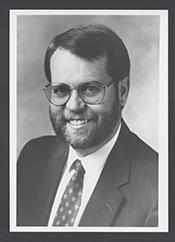
Mr. Speaker, I thank the gentleman from California (Mr. Dreier) for yielding me this time, and, Mr. Speaker, I am a recovering member of the Committee on Standards of Official Conduct. I just want to…
Mr. Speaker, I thank the gentleman from California (Mr. Dreier) for yielding me this time, and, Mr. Speaker, I am a recovering member of the Committee on Standards of Official Conduct. I just want to tell my story briefly about a complaint that was pending last year.
When the complaint was pending, these good government groups indicated that I was unfit to sit in judgment because the majority leader had donated to my campaign over 10 years and I was corrupt. When I voted unanimously with my colleagues to send a couple of letters to the majority leader, I then possessed the wisdom of Solomon. When the Speaker replaced me on the committee with other members this year, I am now up for sainthood in a number of churches across the country.
I tell this story because what I think what the Speaker was attempting to get at, during the course of that complaint there were press conferences held by people, rather than letting the Committee on Standards of Official Conduct do its work. And the Speaker saw that one of the rules changes was, you know what, you cannot choose your own lawyer. Well, that is ridiculous, and I do not think any of us would stand for that in any other venue.
He also, during consideration of one of the complaints, found that two members, who did not even have any part of what allegedly was going on, received letters from the committee saying, your conduct is in question. He felt that due process was required in that situation, and I agree with him, and I think most people in this body would agree with him.
I would hope as we make these changes, and I want to commend Speaker Hastert, because this is a magnanimous gesture on his part, it is tough to recognize and admit that maybe something was not done in an appropriate way and that we take a step back and do it, and Speaker Hastert has had the courage to do that today.
But the next step, Mr. Speaker, I will tell you, is going to be that there will be a complaint filed against a Republican or a Democrat and there will be these outside interest groups that say, if it is against the Democrat, the five Democrats on the committee are trying to protect their buddy; or if it is against a Republican, that the five Republicans are attempting to protect their friend and their buddy.
I would hope as we make these changes, with the Speaker's blessing,
that every Member of this House commit themselves to let the Committee on Standards of Official Conduct do their work, and we never impugn the integrity of the men and women who serve honorably.
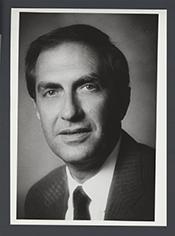
Mr. Speaker, I thank the gentleman very much for the time. Let me say that the Committee on Standards of Official Conduct was not broken. There was no deadlock ever. There were no partisan votes…
Mr. Speaker, I thank the gentleman very much for the time.
Let me say that the Committee on Standards of Official Conduct was not broken. There was no deadlock ever. There were no partisan votes ever. Almost every vote was unanimous. Every staff member was hired or fired in a bipartisan way; but at the same time, neither the process nor the rules are perfect, and they should be looked at. They just should not be looked at in the way we have done it. My colleagues have heard me say it over and over, and they are getting tired of it and I apologize, and maybe we will not have to talk about it anymore; but we cannot have a Committee on Standards of Official Conduct unless it is completely bipartisan in every way.
I want to praise the Speaker of the House for taking the leadership in this and getting us out of this mess. I want to praise the gentleman from Washington (Chairman Hastings) and the other members of the Committee on Standards of Official Conduct for trying to resolve this dispute.
I want to praise the gentleman from West Virginia (Mr. Mollohan) for trying to resolve the dispute and making sure that we continue with an absolute nonpartisan or bipartisan committee. There are ethics charges flying around this place that are being used in a political way, there is no question about it. I do not think the gentleman from West Virginia (Mr. Mollohan) is a part of that, however. I think he sincerely is concerned about the institution, and I think all of us are.
We should be open to reforming the ethics process when necessary; and I encourage the committee, and in a bipartisan way, to look at these rules and to look at other rules.
The gentleman from West Virginia (Mr. Mollohan) and I talked often about a package of rules that we would like to present to the House for consideration of changing, and I would encourage the committee to do that.
Some of the due process provisions of the rules that were made in the January decision are good, and the committee should give consideration to adopting them even if not directed by the House. I am encouraged by this effort to return to a bipartisan ethics process that existed during the last Congress.
I urge my colleagues to vote for this and to continue the effort to return the process to a bipartisan type of process that it absolutely must be. Then we can go from here and make sure that when we have a Committee on Standards of Official Conduct, it is an ethics committee we can all be proud of.
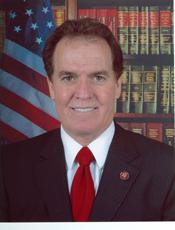
Mr. Speaker, I rise today in support of House Resolution 240, a bill providing for changes to the rules of the House of Representatives related to the procedures of the Committee on Standards of…
Mr. Speaker, I rise today in support of House Resolution 240, a bill providing for changes to the rules of the House of Representatives related to the procedures of the Committee on Standards of Official Conduct, the ethics committee.
Mr. Speaker, it is truly unfortunate the House of Representatives must take up this legislation that rescinds progressive reforms made to the practice of the Committee on Standards of Official Conduct.
Mr. Speaker, new rules were agreed upon that would have allowed a bipartisan majority to resolve ethics disputes in an expeditious and judicious fashion. These rules would have ensured that the House Committee on Standards of Official Conduct could never be used by either party, Republican or Democrat, as a weapon to malign and tarnish the reputation of any Member in this body for political purposes.
Yet, Mr. Speaker, the House Democrats have refused to accept these changes and, thus, have brought the Committee on Standards of Official Conduct to a screeching halt. Not only have the House Democrats essentially shut down the House Committee on Standards of Official Conduct but they have also used its demise for political gain.
Over the past few months, House Democrats have abandoned any substantial discussion of policy like Social Security modernization and resorted to an incessant stream of personal and political attacks upon Members of this body, especially upon one Member in particular.
The Democrats do not have a plan to strengthen Social Security for our seniors, but they will spend months upon months stonewalling and refusing to allow the Committee on Standards of Official Conduct to function. Mr. Speaker, if the House Democrats actually allowed the Committee on Standards of Official Conduct to meet and conduct investigations, then they would lose their ability to exploit tabloid sensationalism and would have to return to doing the work of the American people.
So, Mr. Speaker, the House must now consider a return to the old rules. Despite the flaws in the old rules, we in the majority cannot and will not accept a Committee on Standards of Official Conduct held hostage for purposes of political gain.
Mr. Speaker, I encourage my colleagues to support the bill.

Mr. Speaker, I thank the gentlewoman from New York for yielding me this time. I rise in support of this resolution to restore the integrity to our ethics process and reinstate the standards of…
Mr. Speaker, I thank the gentlewoman from New York for yielding me this time. I rise in support of this resolution to restore the integrity to our ethics process and reinstate the standards of previous Congresses, standards which regrettably this Chamber chose to erode earlier this year. That action marked the first time in the history of the House of Representatives that our ethics rules were altered on a partisan basis.
Our constituents deserve a Congress that holds itself to the highest of standards. Many generations of our predecessors acknowledged the importance of this by having the Committee on Standards of Official Conduct be evenly divided between the parties, regardless of any electoral outcome, by working together in a bipartisan fashion, and by ensuring that neither party would be allowed to use partisanship and power as a shield against behavior that falls short of the standards our constituents expect and deserve.
With this action earlier this year, this Congress fell short of this standard. The ethics process must operate on a bipartisan basis to ensure that it functions in an evenhanded and just fashion, and it must be prepared to act without regard to party in order for the people of this country to have any faith in it. Simply put, this Chamber's ethics and the standards to which we hold ourselves must be put to a higher plane than any one political party.
We should never have reached this point, but with today's long overdue action, my hope is that the House of Representatives will correct that error.
Mr. Speaker, I want to thank my distinguished colleague, the ranking member of the Committee on Standards of Official Conduct, the gentleman from West Virginia (Mr. Mollohan), for his determined and tenacious leadership on this matter. If it were not for his leadership and the leadership of others, it would have been all too easy for this to be ignored and the American people would not be seeing this victory. Had we not altered course, we could have done irreparable long-term damage to the institution that we all love. Instead, thanks to their efforts, we take much-needed corrective action.
Mr. Speaker, I urge my colleagues to support this much-needed resolution.
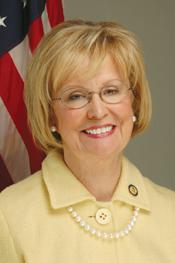
Mr. Speaker, I rise to urge my colleagues to vote for this resolution, not because I think it is a good resolution, but because I think it is the lesser of two evils. What is the first evil? Well,…
Mr. Speaker, I rise to urge my colleagues to vote for this resolution, not because I think it is a good resolution, but because I think it is the lesser of two evils. What is the first evil? Well, those on the other side of the aisle claim it was the process by which the rules were changed last January. Perhaps they are right. As a member of the committee, I happen to believe that the changes were good ones, but perhaps we will look at that on another day in a bipartisan way.
But we should make no mistake about it: The greater evil by far is in not allowing the ethics committee to meet and do its job. And why do I say this? It is because without a functioning ethics committee, some Members will be tried in the press by partisan interest groups or by innuendo and accusation instead of by facts and due process. At the same time, complaints against other Members will go unresolved and uninvestigated. That is not right.
My point is that an ethics committee was not created for one particular Member of Congress, it was created for all of us and for the good of this body. As a three-term member of the Committee, I have great respect for both the Republican and the Democrat members with whom I have served on the committee. Peer review is never easy, and it is impossible if we are not allowed to leave politics and partisanship at the door.
I commend the chairman, the gentleman from Washington (Mr. Hastings), for his hard work and perseverance. He inherited a challenge, acted as an honest broker, and did everything possible to resolve it. I also commend the leadership of Speaker Hastert on this issue.
I urge my colleagues on both sides of the aisle to vote ``yes'' to send us back to the table to do the jobs we have been assigned to do for this great body.
Show 9 more
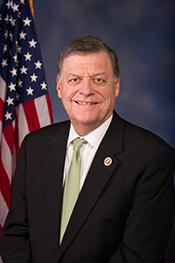
Mr. Speaker, I rise to support this resolution because I am convinced that it is the right and proper way to address a tough partisan division that exists at this time. I thank the Speaker and the…
Mr. Speaker, I rise to support this resolution because I am convinced that it is the right and proper way to address a tough partisan division that exists at this time. I thank the Speaker and the gentleman from Washington (Chairman Hastings) for their work in resolving this difficult issue.
As we move forward, Mr. Speaker, I think we would be well advised to operate according to the spirit of a statement once made by John Wesley, the founder of the Methodist Church. He said: ``Differences that begin in points of opinion seldom terminate there. How unwilling men are to grant anything good in those who do not in all things agree with themselves.''
Mr. Speaker, people of both sides in this dispute have acted honorably; however, many have questioned the integrity of those who disagreed with them on the substance of the questions at hand. It is my sincere hope that we do not question the motives and the intentions of the members of the Committee on Standards of Official Conduct as we go about our work. There has been far too much division and imputation of motives with respect to questions surrounding the Committee on Standards of Official Conduct and the rules by which it operates. That hurts the Committee, it reflects poorly on the House, and undermines public confidence in the institution.
Mr. Speaker, with that said, I commend the Speaker and the chairman of the Committee on Standards of Official Conduct for setting us on the path to providing this House with a functioning ethics committee and, therefore, I request all Members support this important rule.

Mr. Speaker, I thank my colleague for yielding me this time, and since I do not need the full 2 minutes, I will be yielding back some time, but I just want to say to her and to everyone in this…
Mr. Speaker, I thank my colleague for yielding me this time, and since I do not need the full 2 minutes, I will be yielding back some time, but I just want to say to her and to everyone in this Chamber, that the ethics process needs to be bipartisan, and so it is so right to return the rules back to the way they were.
I believe that the gentleman from Washington (Mr. Hastings) and the gentleman from West Virginia (Mr. Mollohan), the chairman and ranking members respectively, can work out whatever other differences that still remain. These are two good men.
And I also want to say that I have tremendous respect for Members of this Chamber from both parties for the good will and integrity they exhibit. I just think it is important for us to put this behind us and to move forward. It may be that on a bipartisan basis the chairman and ranking member and the full committee will come back with recommendations that this full body can consider.
It would be an absolute shame, I think, if the Committee on Standards of Official Conduct becomes a committee in which it is a place to just ``get Members'' and a place to score political points. And I hope and pray that it will be a committee that will see its primary purpose as maintaining the integrity of this Chamber and allowing us to all feel proud of what happens here.
So I thank my colleague for yielding me this time, and I think it was a mistake to have amended the rules and I am grateful that we are restoring them to the way they were.
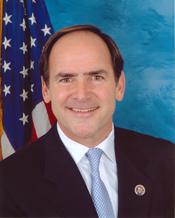
Mr. Speaker, once again today, the Speaker of the Whole House, the gentleman from Illinois (Mr. Hastert), has proven that he is a decent, fair, humble, and, today, magnanimous person, putting the…
Mr. Speaker, once again today, the Speaker of the Whole House, the gentleman from Illinois (Mr. Hastert), has proven that he is a decent, fair, humble, and, today, magnanimous person, putting the institution first.
The truth is neither party has an exclusive on integrity or ideas. There are good and decent people in both parties. But we are not your enemy. Al Qaeda is our enemy. We are competitors. We need to stick together and pursue unity and reconciliation. Sometimes that means setting your own beliefs aside, which the Speaker did today for the purpose of the institution, holding it up above our own view of how things should be done.
I have spoken out when I thought we were going in the wrong direction, but in this case I, frankly, think the rules proposals were reasonable. And if one Member's foot was not in a snare today, I think a lot of Members over here would have agreed to them. But that is not a discussion point anymore.
I appeal to both sides. Let us make sure that this ethics conflict does not turn into a circular firing squad. It is not in our country's best interest and it is not in this institution's best interest. Let us pursue, as much as we can in the competitive battles we fight on ideas and our agendas, let us pursue reconciliation and unity, especially when it comes to the ethics of this great institution, putting it above either party's political agendas. It will serve our country well, and the Speaker should be commended.
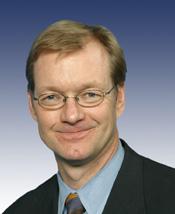
Mr. Speaker, I rise, gratefully, in support of this resolution, and applaud you, Mr. Speaker, for allowing it to come to the floor for consideration. My colleagues, there are those beyond this…
Mr. Speaker, I rise, gratefully, in support of this resolution, and applaud you, Mr. Speaker, for allowing it to come to the floor for consideration.
My colleagues, there are those beyond this venerable hall who would hope that this body would erupt in partisan ethical warfare. There may even be a handful of colleagues who have threatened ethical retaliation against another Member on the other side. There are others that, with tonight's vote, will try to claim some moral or ethical superiority because of the vote; and still others who will continue to seek some political advantage by taking the alleged improprieties of one Member and trying to tarnish the rest of that Member's party.
To those that I have described, you need not heed my words. But for the vast majority of my colleagues that I have not described, that are fair and decent and honorable and honest, I say to you, we need a functioning ethics process. Matter of fact, let me rephrase that. This institution requires a credible ethics process. The American public deserves that credible ethics process.
The integrity of this institution is at stake. The memory of those who have served, those that are going to come after us who serve, this resolution sets us back on the correct path. I urge its adoption.
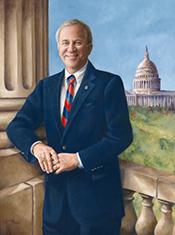
Mr. Speaker, some in the minority are obsessed with the vanity of power and they will hatchet the ethics process and people. I have taken down some of the words used here tonight by the minority:…
Mr. Speaker, some in the minority are obsessed with the vanity of power and they will hatchet the ethics process and people. I have taken down some of the words used here tonight by the minority: tarnish, gutted, subverted, destroyed, flawed, violated. What are they talking about? I am unceasingly amazed and gravely disturbed by the torrent of darkness caused by what I will refer to as false prophets of justice engaged in ignominious conduct. It is called the politicalization of the Committee on Standards of Official Conduct, and it is wrong.
I have been a victim of a vicious political attack and gone before the Committee on Standards of Official Conduct. I will assure Members, having been brought before the Committee on Standards of Official Conduct, and I was fortunately cleared by unanimous vote, but when another Member wants to make a partisan attack and go before the committee, that is wrong. So we are engaged in this session to clarify it. I supported the changes.
Mr. Speaker, to the American people, what are we talking about: the right to counsel, due process, notification, bipartisanship. That is what I demand. That is what I want, and I am going to vote against this.
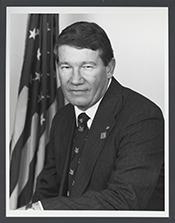
Mr. Speaker, I am not a member of the Committee on Standards of Official Conduct, nor have I ever been, nor do I ever want to be. I think we need to laud the members on both sides of that Committee.…
Mr. Speaker, I am not a member of the Committee on Standards of Official Conduct, nor have I ever been, nor do I ever want to be. I think we need to laud the members on both sides of that Committee.
The other side knows me as being very frank. I speak an open mind. My perception of the rules changes, and I think the perception of many of my colleagues, is that they were made because we felt there were partisan attacks against our leadership. I know most of the members on the Committee on Standards of Official Conduct, and I consider them friends.
Even during the time of Newt Gingrich, I thought the Committee on Standards of Official Conduct did a credible job, but we felt that David Bonior was being partisan. We also felt that part of the Democrat leadership was directing partisanship on this committee.
Now, maybe the rule was wrong, but we think also the partisanship is wrong. Using Mr. Hoyer's words, if we want a truly effective ethics committee, and I believe in my heart that most Members in this body want that, so I hope that that can happen. I pray that that can happen because we do not want a Hatfield-and-McCoy scenario. It would do disservice to this body.
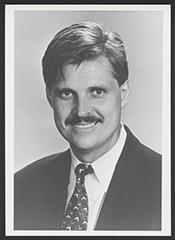
Mr. Speaker, I thank the gentleman for yielding me this time. Some people may say the majority party is in full retreat, that we were wrong in processing substance with the new rules. Well, that is…
Mr. Speaker, I thank the gentleman for yielding me this time.
Some people may say the majority party is in full retreat, that we were wrong in processing substance with the new rules. Well, that is incorrect. The new rules were fair and just, and according to the rules of the House, were passed by a majority vote.
Where the fault lies is with those who use the ethics rules for pure political attacks, those who use the failure to act as an attack against one Member. The opposition claims these existing rules are unethical. That is also incorrect. What is unethical is to unjustly smear someone in order to destroy their character.
Mr. Speaker, I think that is the attempt here, to unfairly attack one Member and use the House rules to do so. I admire the efforts of the gentleman from Illinois (Mr. Hastert) because I think the gentleman has gone above and beyond the call of duty to go back to the previous set of rules so we can move the process forward and continue the hard work, the successful work of the Republican-controlled House.

Mr. Speaker, my sister says of our four siblings, I may be the only true optimist. I am like the kid who got the horse manure for Christmas, and all he could do is run around asking, Where is the…
Mr. Speaker, my sister says of our four siblings, I may be the only true optimist. I am like the kid who got the horse manure for Christmas, and all he could do is run around asking, Where is the pony?
In this body on this issue when we look through and sift through the piles and piles of rhetoric, and we look at just the rules, the rules were fair. They are not perfect, but they are better than what was there. I was not familiar with the process they went through, but the right to know you are being investigated, you would want to know that. The right to due process, the concept of a speedy trial and speedy disposition. Members want to talk about partisanship, if it a 5-5 split, that is partisan. The only way we can get bipartisan is if we make it a 6 vote to go forward with an investigation. That is bipartisan. I thought they were good rules when I voted for them the first time. I hope we can move on. I am going to vote for them again. I think they are more fair.
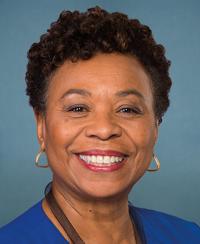
Mr. Speaker, on April 27, 2005, in order to attend to a family matter, I was unable to vote on rollcall no. 145. Had I been present, I would have voted ``aye'' on H. Res. 241, a resolution to reverse…
Mr. Speaker, on April 27, 2005, in order to attend to a family matter, I was unable to vote on rollcall no. 145. Had I been present, I would have voted ``aye'' on H. Res. 241, a resolution to reverse the harmful and inappropriate changes that were made to House ethics rules by H. Res. 5. I voted against H. Res. 5 which changed House ethics rules when it came to the Floor on January 4, 2005 and the overwhelming approval of H. Res. 241 only underscores that the changes in H. Res. 5 were overreaching by the majority party.
Bill Text
2 versions available
        [Congressional Bills 109th Congress]
[From the U.S. Government Publishing Office]
[H. Res. 241 Reported in House (RH)]

House Calendar No. 30
109th CONGRESS
1st Session
H. RES. 241

[Report No. 109-59]

Providing for the adoption of the resolution (H. Res. 240) amending the
Rules of the House of Representatives to reinstate certain provisions
of the rules relating to procedures of the Committee on Standards of
Official Conduct to the form in which those provisions existed at the
close of the 108th Congress.

_______________________________________________________________________

IN THE HOUSE OF REPRESENTATIVES

April 27, 2005

Mr. Dreier, from the Committee on Rules, reported the following
resolution; which was referred to the House Calendar and ordered to be
printed

_______________________________________________________________________

RESOLUTION

Providing for the adoption of the resolution (H. Res. 240) amending the
Rules of the House of Representatives to reinstate certain provisions
of the rules relating to procedures of the Committee on Standards of
Official Conduct to the form in which those provisions existed at the
close of the 108th Congress.

Resolved,  that upon adoption of this resolution, House Resolution
240 is hereby adopted.

House Calendar No. 30

109th CONGRESS

1st Session

H. RES. 241

[Report No. 109-59]

_______________________________________________________________________

RESOLUTION

Providing for the adoption of the resolution (H. Res. 240) amending the
Rules of the House of Representatives to reinstate certain provisions
of the rules relating to procedures of the Committee on Standards of
Official Conduct to the form in which those provisions existed at the
close of the 108th Congress.

_______________________________________________________________________

April 27, 2005

Referred to the House Calendar and ordered to be printed