SABIR Act
A bill to amend the Small Business Act to establish eligibility requirements for business concerns to receive awards under the Small Business Innovation Research Program.
Also known as Save America's Biotechnology Innovative Research Act of 2005

Legislative Activity
Stay on top of the latest movement without scrolling through every action
Read twice and referred to the Committee on Small Business and Entrepreneurship. (text of measure as introduced: CR S6759)
June 16, 2005
View full timeline
Introduced in Senate
June 16, 2005
Sponsor introductory remarks on measure. (CR S6758-6759)
June 16, 2005
Read twice and referred to the Committee on Small Business and Entrepreneurship. (text of measure as introduced: CR S6759)
June 16, 2005
Floor Debate
11 membersWhat members said about S. 1263 on the floor
 LA
 WHF
 JRB
 GVV
 JB+6
Floor Debate
11 membersWhat members said about S. 1263 on the floor
Mr. President, in case the President may be wondering, and I asked consent about this, these are 7,000 regulations. We have 6,000 autonomous institutions of higher education in the United States,…
Mr. President, in case the President may be wondering, and I asked consent about this, these are 7,000 regulations. We have 6,000 autonomous institutions of higher education in the United States, colleges and universities.
The Presiding Officer comes from the State that has some of the finest colleges and universities anywhere in America. I will not begin to name them because there are so many of them I might leave one out. Every single college or university, public or private, in North Carolina, Tennessee, or Colorado which has students with Federal grants or loans gets all of these boxes this year. These are the Federal regulations under title IV of the Higher Education Act that somebody at the smallest college or the biggest university must wade through in order to help students have Federal grants and Federal loans. The Federal grant and Federal loans are one of the great success stories of the United States of America. I will talk more about that.
Mr. President, 60 percent of our college students and university students at those 6,000 public and private and profit and nonprofit institutes of higher education, 60 percent of them have a Federal grant or loan to help pay for college. That has increased over the last 4 or 5 years about 10 times faster--9 times faster--than State funding for higher education.
But my goal today, in my remarks and in the bill I am introducing, is to make it easier for boys and girls and men and women who attend our colleges and universities--and many of them are mature, older students--to make it easier for them to go through these documents. And then, on the other hand, to make it easier for our colleges and universities to comply with all these rules and regulations. I would like for them to be spending their time and their money helping our students learn instead of spending their time and their money reporting to us what they are doing.
That is the purpose of what I want to do today. I am introducing the Higher Education Simplification and Deregulation Act of 2005, a bill that does what I just described. It will help students get access to available financial resources. Second, it will reduce the burden on colleges and universities imposed by Federal regulations so they can devote more of their time doing what they are meant to do: provide the highest quality postsecondary education in the world. And third, it will ensure that the autonomy and independence of our 6,000 institutions of higher education are preserved.
I am delighted I am able to interrupt the energy debate to talk about higher education because I think while it sounds like we are shifting gears, they really go together. If I am looking at our country today, and I had to take an exam this minute about the two greatest issues facing the United States of America, I would say, No. 1, terrorism, and, No. 2, competitiveness. ``Competitiveness'' a big word, meaning: How are we going to keep our jobs? How are we going to keep our standard of living in this country when we have 5 or 6 percent of the people in the world, and yet we produce a third of all the money, consume 25 percent of all the energy? And China and India and Singapore and Malaysia, not to mention Japan and Europe, are saying: Wait a minute. Our brains are as good as those American brains. A lot of our students have been going to the United States, creating jobs for those Americans. In fact, 572,000 foreign students are in this country today, basically improving our standard of living by their work here.
So we are in a very competitive time. Just as we have been saying in energy, here comes China, here comes Malaysia, here comes India buying up the oil reserves, driving up the price. Here comes Germany and other parts of the world with lower natural gas prices than we have. And our jobs are going toward them.
The other thing we could do to ensure our good jobs and to keep our higher standard of living is to focus on our brainpower. The great advantages the United States of America has had since World War II have been our low cost, reliable supply and access to energy, our science and technology edge, and our educational institutions. There are so many examples of that.
Mrs. Kay Bailey Hutchison, the senior Senator from Texas, and our majority leader, Senator Bill Frist, had a little session in the leader's office last year. They invited the former Brazilian President Fernando Henrique Cardoso. He was concluding his residency at the Library of Congress. I remember after he had said what he had to say, we asked our questions.
Senator Hutchison asked of President Cardoso: Mr. President, what is the one thing you are going to remember about the United States from your stay here at the Library of Congress that you will take with you back to your country of Brazil? Without a moment's hesitation, he said: The American university, the greatness and the autonomy of the American university.
I will tell you another story. A few years ago, I was asked to be the president of the University of Tennessee. It was 1988. I was glad to do it. I had been chairman of the board of the university for 8 years as Governor, and I appointed a lot of the trustees, but I was not a skilled university president. So I sought out David Gardner, the president of the University of California, which I regard, with all respect to North Carolina, at least at that time, to be the outstanding public university in America and perhaps one of the best in the world.
I said to David Gardner: Why is the University of California so good? Without a moment's hesitation, he said: First, autonomy. When California created the university--they created four branches of government, really: legislative, executive, judicial, and then the University of California. He said: Fundamentally, they give us the money, and then our board and we decide how to spend it. Our autonomy has permitted us to do the second thing, set very high standards. And then he said the third thing was the large amount of Federal dollars that follows students to the educational institution of their choice.
So autonomy, excellence, and choice--Federal dollars following students to the schools of their choice. That is how David Gardner explained the California model for excellence in higher education.
That model has worked for our country since the GI bill for veterans was enacted in 1944. I have wondered many times how we were fortunate enough to have decided to do it in the way they did it. This was for the veterans. It was the end of World War II. There were college presidents who were very upset about the idea of giving the veterans money and just telling them to go wherever they wanted to go to college.
The president of the University of Chicago said it would make the University of Chicago a hobo's jungle. But we know what it did. We had veterans coming back and taking their GI bill. Many of them took it to Catholic high schools and other high schools because they had not finished high school. But they went wherever they wanted, to any accredited institution. They went to Yeshiva. They went to Vanderbilt. They went to the historically Black colleges and universities across America--Harvard. It did not matter. If it was accredited, they chose the institution.
The same formula was applied when the Pell grants were created by this Congress in honor of Senator Pell, who was a former Member of this body; as is true with Senator Stafford and the Stafford loans. Instead of giving those grants and loans to the University of North Carolina and the University of Tennessee, they went to the student. The student then said: Well, I will decide where I want to go. I may want to go to Rhodes College, or I may want to go to Lenore Rhyne or I may want to go to the University of Florida or Yeshiva or Howard. They go where they want to go.
Because of that, we now have 6,000 autonomous institutions around the country. Many of them are nonprofit. Many of them are for profit. Eighty percent of our students go to public institutions, but 20 percent go to private institutions. Because it is a marketplace of 6,000 institutions, and some are, of course, better than others, because it is a marketplace, we have been able to adapt to a changing world that now has different subjects, different standards, a more global environment, and students who are, by and large, much older and have different needs than they did before.
If we had not had that kind of marketplace of colleges and universities, we would be stuck in the mud, and we would not have former President Cardoso of Brazil talking so well about our colleges and universities.
We do not just have some of the best colleges and universities in the world; we have almost all of them. And the rest of the world knows that. We do not have 572,000 foreign students studying in our country this year because we made them come, or even because we give them scholarships. They pay to come for the most part. They are the brightest students in most of these countries. And 60 percent of our postdoctoral students are from overseas. Half our students in computer and engineering graduate programs are from overseas. They are here for that reason. So we attract these students. The Federal Government has continued to be generous.
So there are two things I am introducing today with this bill. Number one, this legislation would simplify the financial aid process and expand access for students. We do it in these ways: (a) streamline the forms for Federal grants and loans, making access to student financial aid easier; (b) provide students who want to expedite their education and study year-round the Federal support to do so; (c) provide students with financial information about colleges and universities in a clear and concise manner that does not require additional reporting from institutions.
The second purpose of the bill is to protect that autonomy, that one word, that independence, that autonomy of these 6,000 institutions. That is, in my view, a critical element of why we have the best colleges and universities in the world.
What I mean by that is we did not order them to be good from Washington. That is not how they got to be great. They were autonomous and independent. We allowed them to be, and then we gave them students, followed by money, who created a competitive marketplace. And they became the best in the world.
So this legislation eliminates, streamlines, and evaluates regulations currently imposed on institutions of higher education with the goal of lessening the burden on schools. That way, universities can focus more on teaching and researching and less on maintaining reporting requirements for the Federal Government.
The bill, No. 1, appoints an expert panel to review Department of Education regulations and to recommend how those regulations might be streamlined or eliminated. Two, it accelerates the ``negotiated rulemaking process'' whereby universities negotiate new rules with the Department so that an end result can be reached without costly delays. And three, it develops a compliance calendar so that universities know what requirements they have to meet and when they to have meet them.
What I mean by that is, it will be up to us in the Federal Government to send to the University of North Carolina or Maryville College in Tennessee a list of the rules they have to comply with so they don't have to hire a whole team of people to try to wade through and read everything.
This is just one title of the Higher Education Act. It has several titles. So a compliance calendar would help deregulate.
These changes build on the successful model for American higher education. By making the financial aid process more user friendly and more accessible, more students will have Federal funds following them to the college or university of their choice. And by relieving some of the Federal regulatory burden, we are restoring university autonomy so they can spend more time teaching and researching and less time filling out paperwork.
I have two major purposes. The first is to simplify and expand access to financial aid, to make it easier for the 60 percent of our college students who fill out a form to get a Federal grant or loan; and second, to reduce the burdensome paperwork on the colleges and universities.
In terms of simplifying access, we need to remember that the faces and needs of our college students have changed. More typically these days, when I go to a graduation--this has been true for a number of years--the cry you hear from the audience is: Way to go, mom. It is the mom who is getting her degree, or the dad, going back to school, college, community college, trade school, university to get the skills they need to get a better job or another job in a rapidly changing world.
In 1970, we had 7.4 million students, 28 percent of whom were enrolled part time and 38 percent at two-year colleges. Only 28 percent were 25 or older. By 1999, enrollment had grown to 12.7 million, a 7.2- percent increase with 39 percent enrolled part time and 44 percent in two-year colleges. Nearly half our students in 1999 were in two-year colleges. Our financial aid system needs to catch up.
The first thing we can do is to simplify what we call the Free Application Federal Student Aid. As one might expect, it is known around here as FAFSA. Imagine that. You go out and try to talk to a family of someone who might be going to college for the first time and that family says let me talk to you about FAFSA.
I think we ought to change the name. I think we ought to make it easy for people to understand what we are talking about. I recently met a chief financial officer of a company who said she found the form challenging when helping her high school daughter fill out a form for financial aid. I can only imagine the challenge to a high school student, or a working mother, when trying to answer over 100 confusing questions, the vast majority of which are only applicable for the State of California.
So a second thing we can do is make sure students can use the Federal aid for education they need year round. Flexibility for year-round Pell grants is a part of this legislation so students can have the flexibility they need to go and continue their education in the summer. There is a disincentive for that. Not only is that inconvenient for students and working students, it tends to encourage institutions to waste the resources in the summertime, which they should be putting to better use.
The third thing we can do is make sure there is more information. That is why I suggest the ``best buy'' list--a list of the 100 schools with the lowest tuition and required fees, with the greatest availability of scholarships and grants. In other words, this would help parents and students decide where they could get the biggest bang for their buck.
Many of the ideas that are in our legislation came from the Advisory Committee on Student Financial Assistance. Senator Gregg, when he was chairman, and I invited them to work on this. They did a terrific job and they came up with 10 recommendations, 8 of which are in this bill, and I believe they have no cost to the budget.
The other area and my final comments have to do with the other side of the ledger. While we are making it easier for students to have access to financial aid, we should work to relieve the regulatory burden on colleges and universities represented by these boxes of 7,000 regulations that contain all the forms any college or university in Florida or Tennessee or North Carolina would receive this year to fill out. Thanks to the last two rounds of reauthorizing the Higher Education Act,
there are today more than 7,000 regulations associated with the title IV student aid program. With the exception of the Consumer Product Safety Commission and the Federal Trade Commission, every Federal agency is involved in regulating some aspect of higher education. That is incredible and it is absolutely ridiculous.
In 1997, Gerhard Casper, the president of Stanford University, said Stanford spends 7 cents out of every tuition dollar on compliance with Government regulations. This has only gotten worse in the last 9 years. We need to ease the burden. For example, under the Higher Education Act, universities are required to report how many full-time employees have dental insurance, whether the university is a member of a national athletic association, and the number of meals that are in a ``board'' charge. Colleges are required to hand every student a paper in-State voter registration form and cannot use modern technology such as Web registrations, which would actually reach more students. We are giving university staff busy work to do when they ought to be helping students.
Here is another example. When a major chemical company such as DuPont produces 55-gallon containers of a potentially hazardous waste, we require Dupont to report on how all that waste is disposed and ensure that it is done in a certain manner. This is a good regulation and idea. Right now, we are applying the same regulation and paperwork to a chemistry class at a college that might produce half a test tube of the same substance.
Mr. President, I don't know about the presiding officer, the Senator from Florida, and I now see the Senator from Virginia; I suspect that when we all go back to our States and speak to our Lincoln Day dinners, or when the Democrats go to the Jefferson Day dinners, we all say the thing we need to do once we pass these laws is to have more oversight and ease the burden of regulation. When I say that, I get a big round of applause, because at home people don't think we get any smarter when we fly to Washington, DC, each week. They think it would be absurd to know there are 7,000 regulations governing college grants and loans, and that Stanford University spends 7 cents out of--and this is a private university--every tuition dollar paying for the cost of Government regulations.
One reason we have an increased interest in regulating is because there are a great many Members of Congress, as well as people in the country, who worry about rising tuition costs. I worry about those, too. When I was Governor of Tennessee, we used to have a deal with the students. The State will pay 70 percent of the cost, and you pay 30 percent, and if we raise your tuition, we will raise the State contribution. That has changed, I am afraid, and I think it is important for us to know that. Tuition is not going up because the Federal Government is failing to do its job. Over the last 4 years, Pell grants, work-study, scholarships all gone up about 30 percent. At the same time, over the last 4 years, State spending for higher education is up 3.6 percent. I will say that again. This is according to various educational institutions, including the Center for Study of Education Policy, Illinois State University. In fiscal year 2001, there was a 3.4 percent increase in State funding for higher education. In 2002, there was a 1.2-percent decrease; in the next year, a 2.4-percent decrease. This is State funding for higher education. Last year, there was a 3.8-percent increase--3.6 over the 4 years.
So what our colleges and universities are feeling, and what our students are feeling, is decreased State support for higher education. One reason they are feeling that is because we have not given States the tools to control the growth in Medicaid spending. So in Tennessee, Florida, Virginia, and North Carolina, our colleges and universities are hurting because the Governors and legislatures are spending the dollars that ought to be going for excellence in universities. They are spending it on huge increases in Medicaid costs. That is part of our responsibility, too.
So I come to the floor today to introduce the Higher Education Simplification and Deregulation Act of 2005. I invite my colleagues to join me in it. We will be marking up a Higher Education Authorization Act next month. It affects 60 percent of the college students in the United States. I am sure we are going to continue to fund those grants and loans, as we have from here, but we also need to do two other things. One of them is in here, and that is not to get busy regulating more colleges and universities. We should be deregulating. The other thing we should do, which is not a part of this bill, is to keep our commitment to the Governors that, by about the fall of this year, we should give them the legislative tools they need--and I believe also relief from Federal court consent decrees, which are outdated--so they can manage the growth of Medicaid spending, so that in turn we can continue to support higher education.
Our energy bill and our higher education bill are at the forefront of our policies to keep our jobs and our competitiveness.
Here's one more example: If you grab a pint bottle of rubbing alcohol from your bathroom and take it to a university laboratory, it will immediately fall under the regulation and scrutiny of six different regulatory agencies:
(1) the air quality management district,
(2) the sewer district,
(3) OSHA,
(4) the local fire department,
(5) the county environmental health department, and
(6) the state hazardous waste agency.
While all of these are not directly governed by federal regulations, many are responding to them, and we should do our part to reduce this type of burden. In one instance, a prestigious institution in the Midwest was visited by the EPA and a bottle of dishwashing soap was found in a lab near a sink. The institution was fined for improper management of hazardous waste because the label was not still attached to the bottle. Even worse, the institution had to pay to have the soap analyzed to document that it was not hazardous.
Colleges are in the business of teaching students, not sending meaningless paperwork to the federal government. To fix this problem, my legislation would establish an expert panel to review federal regulations applicable to colleges and universities and make recommendations to the Secretary of Education and the Congress on how some of these regulations could be streamlined or eliminated. The bill also would assist institutions in complying with all these requirements by requiring the Department to develop a compliance calendar outlining specific deadlines for paperwork submissions.
In those cases where there is already clarity about how to deal with regulations, the bill takes action. The bill will accelerate the ``negotiated rulemaking process,'' a process whereby university representatives negotiate new regulations with the Department. Today this process can drag on for years, imposing unnecessary costs along the way due to uncertainty over a final outcome for the rule. Under my bill, that process would have a one year deadline. To give schools a chance to adjust to newly agreed regulations, institutions of higher education would be provided with a minimum of at least 270 days between the publication of any final regulations or guidance and the initiation of data collection related to new disclosure requirements.
The bill also reinstates provisions to allow schools with a low ``cohort default rate,'' meaning that less than 10 percent of their students fail to pay all their loans back on time, the option of distributing loan money to students right at the beginning of the year rather than waiting a month or spacing the money out over the period of a year. This is important since students incur many expenses up front during their education and need the flexibility to pay for fees, books, and other costs.
Mr. President, since the end of World War II, our system of higher education has been unmatched around the globe. According to the Institute of Higher Education at Shanghai University, more than half the world's top 100 universities are in the United States.
But our lead is slipping. During a trip to Europe, I discovered that Chancellor Schroeder of Germany is putting a strong emphasis on reforming his country's university system to mirror--and perhaps even eclipse--our own. British prime minister Tony Blair is overhauling his nation's system because he sees a growing gap between the quality
of American and British universities. Authorities in India and especially China are working harder than ever to improve the quality of education in their own countries and keep their brightest minds from leaving their countries. Australia and Canada are making strides as well. And, for the first time, we have witnessed a decline in graduate student enrollment. The Council on Graduate Schools estimated that foreign applications to graduate programs in the U.S. were down this year by five percent.
This greater competition means that not only do we find it harder than ever to attract foreign students, but our graduates will find it harder to compete for top-paying jobs in the global economy since they will be competing against talented, well-educated individuals from around the world.
Now is the time to fine-tune our own system of higher education and restore its greatest strengths: generous financial assistance for students, autonomy, and high standards. Generous support is most effective when students can access it with a minimum of hassle and with maximum flexibility to apply it to their accredited program. Freedom from over-regulation or control by government allows colleges and universities to quickly adjust to the needs of their students and focus on teaching and research. High standards are the natural result of a competitive system where schools compete among each other for dollars and students.
My bill restores the pillars of our higher education system and gives us the ability to move forward with confidence in the twenty-first century. I urge my colleagues to join me in this effort.
Mr. President, I ask unanimous consent to have printed in the Record a summary of the Higher Education Simplification and Deregulation Act of 2005.
Mr. President, this morning I am pleased to be joined on the floor by my distinguished colleague from the State of New York. Together we share an important goal to improve health care quality and…
Mr. President, this morning I am pleased to be joined on the floor by my distinguished colleague from the State of New York. Together we share an important goal to improve health care quality and reduce costs through the use of health information technology tools.
I had the wonderful opportunity of spending 20 years as a physician and as a heart surgeon before coming to this body. Like most physicians, I wanted to and, in fact, did use the very latest, most advanced technology, anything that could possibly, in my practice, make my patients live a healthier life, a better life, a more comfortable life.
But amidst the artificial heart assist devices, the lasers that are used to remove lesions in the windpipe or the trachea, CT scan machines, x-rays, digital x-rays, digital thermometers, doctors today, unfortunately, for the most part, keep patient records the very same way I did 10 years ago and, indeed, almost exactly as my dad did 60 years ago as he practiced medicine, and that is handwritten on paper in manila folders, typically stored in the basements of clinics or doctors' offices or hospitals.
It is amazing because we design hospitals, structures on computers today, we conduct medical research with computers, we use computers in nearly every aspect of the clinical setting, the delivery of medicine. From very compact bedside monitors to these massive MRI scanners we have today, computers power almost everything we use, everything we do in terms of diagnosis in medicine, in health care.
But--and this is what we have come to the floor to address--when it comes to health information, when it comes to electronic medical records, we are in the stone age and not the information age.
Imagine a traveler far away from home who gets in an automobile accident and is taken unconscious or confused to a hospital. Paramedics rush them to a hospital, and at the very moment that individual arrives at the door of that emergency room, the emergency room physician meets them, but emptyhanded, with no notification of allergies or past medical history or preexisting illnesses, all of which is potentially lifesaving information. That is inexcusable in this day and age.
My colleague from New York knows this all too well.
Mr. President, this needs to change and it must change. We must establish an interoperable privacy-protected electronic medical record for every American who wants one. Working together, our Nation can confront these challenges, and we can build an interoperable national health information technology system. We know it will save lives. We know it will save money. It will improve quality and it will lead to huge measurable progress in the medical field, in the health field.
We face enormous problems as a result of the underinvestment in health information technology. No industry as important to our economy as health spends as little on information technology. Our Nation has nearly 900,000 doctors and over 2.8 million nurses. Americans visit a doctor 900 million times per year. We have nearly 6,000 hospitals all over the country. Our health care system is enormous, yes, but it is dangerously fragmented. Even a small efficiency improvement can greatly reduce cost and improve quality, and there is plenty of room for improvement.
The problem is enormous and the problem is real. So what are we going to do about it? Senator Clinton and I propose three concrete steps to remedy these problems and establish a fully interoperable information technology system. First, we must establish standards for electronic medical records. Sharing data effectively requires more than just that fiber optic
cable, more than those Internet connections. It requires standards and laws that make it possible to exchange medical information in a privacy-protected way throughout our Nation.
The Government should not impose these standards on the private sector, but it has a duty, and indeed it has an obligation, to lead the way. Medicare, Medicaid, SCHIP, the Indian Health Service, and other Federal programs should lead the way and establish electronic health records for all of their clients.
The Veterans' Administration already leads the way with interoperable systems, but we need to get the VA to be able to talk to the Department of Defense.
Mr. President, as we talk about these systems and standards and words such as interoperability, which, as the Senator from New York said, does mean being able to connect it all together, people who are listening must ask: Well, how in the world do these electronic health records and the appropriate use of that data bring concrete benefits to them as individuals and to their families?
First, it will reduce waste and inefficiency in the system. It only makes sense that fragmented systems, with no interconnectivity at all, have inherent inefficiencies and waste. That is moved aside. That has a very direct impact on lower costs, making health care more affordable and thus available for people broadly.
It improves quality. Right now we know that medical errors occur. Too many medical errors occur in our health care system today. By the application of technology, we can move those medical errors aside. They will not occur and that improves quality.
They will empower patients. It gives that individual who is listening right now the knowledge and power to be able to participate in a consumer-driven system where choices can be made, where the focus is on the patient, that is provider friendly, that is driven by information and choice and empowerment to make that choice.
They will protect patient privacy and promote the secure exchange of life-saving health information. It is spelled out in the legislation. It is going to be privacy protected.
For the first time, they will seamlessly integrate this advancement in health information technology with quality measures, with quality advancements, harmonizing and integrating them in a way that simply has not been done in the past.
This proposal brings together people, as we can see, from across the political spectrum, and it will unlock the potential of medical information technology for all Americans.
I thank my colleague in this endeavor. As mentioned earlier, we began working on the information technology aspects of health care about a year ago and published our first op-ed together about July of last year.
In closing, this is not going to be an easy process. I look back at the technology in my past in medicine for 20 years, but then also in my dad's practice; he practiced medicine for 55 years. I remember he had one of the very earliest electrocardiogram, EKG, machines in the State of Tennessee. At that time--because there were so few machines and so few cardiologists--he would take referrals from all over the State of Tennessee. The machine itself was bigger than the desk before me, at the time.
What would happen then is, if there was a machine in a little rural community 100 miles away from Nashville, the machine there would take a piece of paper, they would run it through, they would send it by mail. It would take 2 days to get to Nashville. Dad would read it and send it back. Four days later, that doctor would be able to read that EKG.
Then, when I was about 9 or 10 years of age--because their bedroom was right around the corner from mine--I remember so well when he installed a telephone to put another big box there to have the first in Tennessee again of a machine--and it was amazing at the time--one could transmit these EKGs electronically over the telephone wire and have it interpreted at the bedside. He would keep it there because people, of course, have heart attacks in the middle of the night. Then it would take probably about 30 or 40 minutes to get the result back.
Of course, today we are at a point where with a little tiny machine, an EKG machine, we can get an instantaneous readout not just of the paper and of the EKG but the result actually read by the box.
I have been able to see huge progress in my own life and watching my dad's practice and my practice. Now we need to see all of that sort of progress condensed, applied not just to the technology but to the collection of information, the promotion of electronic health records, and the appropriate sharing of that information which is privacy protected. That is the sort of progress we are going to see. We are going to see it come alive on the Senate floor and with the House and work
in concert with the President of the United States to make sure that the great advantages, in terms of lowering costs, getting rid of inefficiencies, and promoting quality will be realized.
The bill that we will shortly introduce does present a comprehensive approach of medical information and the use of medical information as we address our health care challenges. It provides that important backbone and critical building block for a better, a stronger, and a more responsive health care system for all Americans.
Again, I thank my distinguished colleague from New York. We urge all of our colleagues to look at this bill and support this bill. With this legislation, there is no doubt in my mind that we will, yes, help save money and help save time, but most importantly we will save lives.
I ask unanimous consent that the text of the bill we will shortly send to the desk be printed in the Record.
Mr. President, I rise today to introduce the Hazardous Materials Vulnerability Reduction Act of 2005. It is regretful that I am introducing this legislation, as the Department of Homeland Security…
Mr. President, I rise today to introduce the Hazardous Materials Vulnerability Reduction Act of 2005. It is regretful that I am introducing this legislation, as the Department of Homeland Security has all of the legal authorities necessary to undertake the steps set out in this legislation. However, nearly 4 years after September 11, the Department of Homeland Security is still not doing its job. Quite frankly, officials at the Department of Homeland Security are either unaware, or even worse, they are purposely ignoring a grave threat to our cities. Hazardous materials being transported by 90-ton rail tankers has been described as a ``uniquely dangerous'' threat-- comparable only to a nuclear or biological attack. According to the Department of Homeland Security and the Department of Transportation, these materials pose special risks during transportation because their uncontrolled release can endanger significant numbers of people. In addition, there have been countless reports of lax security along the urban area rail routes they travel. Nevertheless, the administration has done nothing to reduce this threat. The legislation that I am introducing today will require the Department of Homeland Security to develop a comprehensive, risk-based strategy for reducing the threat of a terrorist attack on extremely hazardous materials in our Nation's high-threat cities. The steps set out in this legislation should have been taken years ago, but it is clear that the Department of Homeland Security will not act. I hope that my colleagues will join me in passing this legislation to require them to act.
Within just a few miles of where we stand right now, rail tankers carrying the world's most dangerous chemicals are being transported over tracks that are not sufficiently safeguarded or monitored. According to Richard A. Falkenrath, a former homeland security adviser to President Bush, this threat stands out ``as acutely vulnerable and almost uniquely dangerous.'' He is not alone in this opinion. The Homeland Security Council released a report in July 2004 indicating that an explosion, in an urban area, of a rail tanker carrying chlorine could kill up to 17,500 individuals and could require the hospitalization of nearly 100,000. An analysis by the Naval Research Laboratory depicted a more troubling scenario when it studied the potential for damage if an attack occurred while an event was being held on the National Mall, such as the annual Fourth of July celebration. According to this analysis, ``over 100,000 people could be seriously harmed or even killed in the first half hour.'' Let me say that again, according to a study by the Naval Research Laboratory ``over 100,000 people could be seriously harmed or killed in the first half hour.''
Terrorist groups already understand the potential impact of such an attack. The FBI and CIA have uncovered evidence that terrorists have targeted chemical shipments, and just a few months ago during testimony before the Senate Intelligence Committee, FBI Director Mueller indicated that threats to rail remain a key concern. This should not be a surprise. Rail systems are the most frequently attacked targets worldwide, and the wide open nature of their architecture makes them vulnerable at many points. In other words, rail systems present many soft targets. Incidentally, I have introduced separate legislation in the last three Congresses that would provide $1.2 billion to eliminate some of the vulnerabilities in our rail system; however, this legislation has not been supported by the Bush administration and it has not passed Congress. In fact, the administration has not asked for a single dime specifically for rail security. This is very troubling because we know that the modus operandi for many terrorist groups is to cause mass casualties and spectacular damage. According to the Chlorine Institute, an attack on a 90-ton tanker could create a toxic cloud 40 miles long and 10 miles wide. The Environmental Protection Agency estimates that in an urban area this toxic cloud could extend 14 miles. Can you imagine the psychological impact of a toxic cloud of poisonous gas expanding and moving slowly over one of our major metropolitan areas--leaving death and chaos in its path?
Given the potential damage and the direct threat against chemical rail tankers, you would think that the Bush administration has been busy reducing or eliminating this threat. Unfortunately, as with so many other areas involving our homeland security this does not appear to be the case. In January testimony before the Senate Homeland Security Committee, Mr. Falkenrath stated that ``to date, the Federal Government has not made a material reduction in the inherent vulnerability of hazardous chemical targets inside the United States.'' He went on to say that this should be the highest priority for the Department of Homeland Security. A Wall Street Journal article written last year--``Graffiti Artists Put Their Mark on War Against Terrorism''--provides a chilling example of the exposure of these chemical tankers. The reporter followed a graffiti artist to a railroad tunnel along tracks that run near I-395 not far from where we stand. As he was conducting the interview, a tanker carrying dangerous chemicals rolled by on an adjacent track. The graffiti artist noted that ``it wouldn't be hard at all for someone like Al Qaeda to wait right here for the right poison and bang! Good-bye Washington.''
This threat and the lack of action by the Department of Homeland Security has led many city officials to consider local legislation to ban shipments of hazardous materials. Right now, a dispute between the District of Columbia and the transportation companies joined by the Bush administration is being litigated in Federal courts. Other cities, such as Philadelphia and Boston are considering similar action. As a former county executive, I am sympathetic to the plight of local officials, and they should certainly be allowed to exercise their police powers in appropriate situations. I believe, and I am sure most local officials would agree, that it would be better to have a national, comprehensive policy on this issue. This is simply too important to have a patchwork strategy. The Department of Homeland Security should have already done this. Unfortunately, they have not, and this legislation will require the Department to take some basic, fundamental steps to enhance safety for the American people.
The legislation that I am introducing requires the Department of Homeland Security to issue regulations establishing a national policy for dealing with the transport of the world's most dangerous chemicals by rail through our high threat cities. It will require the Department to develop protocols for the notification of State and local officials, and it will require the Department to study and report to Congress regarding security enhancing measures such as secondary containment technologies, GPS tracking of shipments, and the feasibility of smaller, more secure tankers. The bill also includes a provision requiring the Department of Homeland Security to work with State and local officials, the rail industry and other stakeholders to develop a strategy for rerouting a small fraction of the most dangerous materials around our most threatened city. It is estimated that only 5 percent of all hazardous materials shipped by rail will be subjected to this regulation. Finally, the bill will provide $100 million to State and local governments and rail operators to purchase safety equipment and provide training to first responders and rail workers who are likely to discover and respond to an incident involving hazardous materials. An additional $10 million will be made available to the National Labor College to provide further training for rail workers.
I realize that the rail industry has invested considerable amounts of its own money to enhance security since September 11, and this legislation is not an indictment of their efforts. I have been pushing to get more Federal funding for rail security for years, but this plea has fallen on deaf ears within the administration. I realize that we cannot eliminate every conceivable risk, but at a time when we have troops overseas fighting the war on terror and our Nation's law enforcement agencies are on high alert, the least that we should do
is ensure that we have a national strategy for handling a threat that is comparable in scope to a nuclear or biological attack. I will close by again referring to the grave warning set out in the study by the Naval Research Laboratory--``over 100,000 people could be seriously harmed or even killed in the first half hour'' of an attack. The danger is simply too great to ignore, and I ask my colleagues to join me in passing this critical legislation.
Mr. President, I ask unanimous consent that the text of the bill be printed in the Record.
Mr. President, today I rise to introduce the Generating Opportunity by Forgiving Educational Debt for Service Act of 2005, a bill that will help Federal agencies and the Armed Forces recruit talented…
Mr. President, today I rise to introduce the Generating Opportunity by Forgiving Educational Debt for Service Act of 2005, a bill that will help Federal agencies and the Armed Forces recruit talented individuals to serve in all areas of the Federal Government and the military. This legislation is a modestly expanded version of a bill I introduced in the 108th Congress.
Current law authorizes Federal agencies to pay student loans up to $10,000 a year with a cumulative cap of $60,000, but the incentive is taxed. Known as GOFEDS, this bill would amend the Federal tax code and allow the Federal Government's student loan repayment programs to be offered on a tax-free basis.
In recent years, many educational institutions have established programs that repay a portion of the student loan debt their graduates owe. These programs are designed to encourage students to seek jobs with government or non-profit organizations that cannot pay salaries commensurate with the private sector upon graduation. Under current law, the amounts these institutions offer their graduates as student loan repayment are not taxed as income, provided the recipients choose to work for the government or non-profit organizations.
Unfortunately, the Federal Tax Code does not treat the Federal Government's loan repayment programs in the same way, considering such loan repayment as taxable income to the employee. As a result, the net benefit of any such program is reduced by the amount of tax that the individual has to pay on the debt repaid. This bill would amend the tax code so that the Government does not continue to undermine its own loan repayment recruitment incentive. This change will help Federal agencies recruit and retain well-qualified graduates.
This Congress, I have expanded GOFEDS to our military because recent reports indicate that all four services missed their recruiting goals last year. Unfortunately, military recruiting levels are now at a 30- year low. Under GOFEDS, military education loan programs, like the Active-Duty Loan Repayment Program will be offered on a tax free basis.
With more than half of the Federal workforce eligible for retirement in the next 5 years and surveys showing that fewer Americans find government services attractive, the need for this legislation is even more necessary. I believe the cost of this bill is minimal, but its potential impact is great. I urge all of my colleagues to support this legislation and I am confident that it can be enacted this year.
I ask unanimous consent that the text of the bill be printed in the Record.
Mr. President, I speak as Chairman of the Environment and Public Works Subcommittee on Clean Air, Climate Change, and Nuclear Safety to introduce a landmark, bipartisan piece of legislation--the Diesel Emissions Reduction Act of 2005.
This bill is cosponsored by Environment and Public Works Committee Jim Inhofe and ranking member Jim Jeffords and Senators Tom Carper, Johnny Isakson, Hillary Clinton, Kay Bailey Hutchison, and Dianne Feinstein. Focused on improving air quality and protecting public health, it would establish voluntary national and state-level grant and loan programs to promote the reduction of diesel emissions. Additionally, the bill would help areas come into attainment for the new air quality standards.
Developed with environmental, industry, and public officials, the legislation complements Environmental Protection Agency, EPA, regulations now being implemented that address diesel fuel and new diesel engines. I am pleased to be joined by a strong and diverse group of organizations and officials: Environmental Defense; Clean Air Task Force; Union of Concerned Scientists; Ohio Environmental Council; Caterpillar Inc.; Cummins Inc.; Diesel Technology Forum; Emissions Control Technology Association; Associated General Contractors of America; State and Territorial Air Pollution Program Administrators/ Association of Local Air Pollution Control Officials; Ohio Environmental Protection Agency; Regional Air Pollution Control Agency in Dayton, Ohio; Mid-Ohio Regional Planning Commission.
The cosponsors of this legislation and these groups do not agree on many issues--which is why this bill is so special.
The process for developing this legislation began last year when several of these organizations came in to meet with me. They informed me of the harmful public health impact of diesel emissions. Onroad and nonroad diesel vehicles and engines account for roughly one-half of the nitrogen oxide and particulate matter mobile source emissions nationwide.
I was pleased to hear that the administration had taken strong action with new diesel fuel and engine regulations, which were developed in a collaborative effort to substantially reduce diesel emissions. However, I was told that the full health benefit would not be realized until 2030 because these regulations address new engines and the estimated 11 million existing engines have a long life.
I was pleased that they had a constructive suggestion on how we could address this problem. They informed me of successful grant and loan programs at the State and local level throughout the Nation that were working on a voluntary basis to retrofit diesel engines.
I was also cognizant that the new ozone and particulate matter air quality standards were going into effect and that a voluntary program was needed to help the nation's 495 and Ohio's 38 nonattainment counties--especially those that are in moderate nonattainment like Northeast Ohio.
Additionally, I have visited with University of Cincinnati Medical Center doctors--as recently as this month--to discuss their Cincinnati Childhood Allergy and Air Pollution Study. Some of the early results indicate disturbing impacts on the development of children living near highways.
It became clear to me that a national program was needed. We then formed a strong, diverse coalition comprised of environmental, industry, and public officials. The culmination of this work is being revealed today in the Diesel Emissions Reduction Act of 2005.
This legislation would establish voluntary national and State-level grant and loan programs to promote the reduction of diesel emissions. It would authorize $1 billion over 5 years--$200 million annually. Some will claim that this is too much money and others will claim it is not enough--which is probably why it is just right.
We should first recognize that the need far outpaces what is contained in the legislation. This funding is also fiscally responsible as diesel retrofits have proven to be one of the most cost-effective emissions reduction strategies. Furthermore, as a former Governor, I know firsthand that the new air quality standards are an unfunded mandate on our states and localities--and they need the Federal Government's help.
This legislation would help bring counties into attainment by encouraging the retrofitting or replacement of diesel engines, substantially reducing diesel emissions and the formation of ozone and particulate matter.
The bill is efficient with the Federal Government's dollars in several ways. First, 20 percent of the funding would be distributed to States that establish voluntary diesel retrofit programs. 10 percent of the bill's overall funding would be set aside as an incentive for States to match the Federal dollars being provided. The remaining 70 percent of the program would be administered by the EPA.
Second, the program would focus on nonattainment areas where help is needed the most. Third, it would require at least 50 percent of the Federal program to be used on public fleets since we are talking about public dollars. Fourth, it would place a high priority on the projects that are the most cost effective and affect the most people.
Lastly, the bill would include provisions to help develop new technologies, encourage more action through non-financial incentives, and require EPA to outreach to stakeholders and report on the success of the program.
EPA estimates that this billion dollar program would leverage an additional $500 million leading to a net benefit of almost $20 billion with a reduction of about 70,000 tons of particulate matter. This is a 13 to 1 benefit-cost ratio.
The Diesel Emissions Reduction Act of 2005 enjoys broad bipartisan support, and it is needed desperately. I plan to work with the bill's cosponsors and the coalition to use every avenue to get it signed into law as soon as possible.
I ask unanimous consent that the text of the bill be printed in the Record.
Mr. President, our country is facing a crisis. Too many of our young people leave high school without the skills necessary to meet the demands of a global economy. According to a recent U.S. Chamber…
Mr. President, our country is facing a crisis. Too many of our young people leave high school without the skills necessary to meet the demands of a global economy. According to a recent U.S. Chamber of Commerce survey, 75 percent of employers report severe difficulties when trying to hire qualified workers, with 40 percent of job applicants having poor skills. As many as 3.3 million jobs may be sent overseas in the next 15 years, causing American workers to lose $136 billion in wages. The strength of our economy, and the future of our nation, largely rests on our ability to improve educational opportunities for all of our citizens.
An educated, skilled, and flexible workforce is essential to building a strong and dynamic economy, and, if we are going to maintain our country's ability to compete in a global economy, we must help prepare young people to meet the demands of the 21st century workforce. I introduce legislation that will ensure more students graduate high school ready for college and the workforce.
Only 68 percent of all students in the U.S. graduate high school on time with a regular diploma. And, the numbers are worse if the student is Hispanic, African American, Native American, has a disability, or is male. Sadly, a recent report indicates that students are dropping out at a younger age, resulting in an even less educated workforce.
For students who graduate with a high school diploma, too few go on directly to college. Astonishingly, only 38 percent of high school freshmen will earn a high school diploma and make the immediate transition to college directly after graduation. In New Mexico, the statistics are pretty staggering. For every 50 ninth graders in New Mexico, only 30 will graduate high school; 18 will enter college; 11 are still enrolled in their sophomore year; and 5.5 graduate from college within 6 years. We must do better.
We also know, unfortunately, that as many as 40 percent of this country's high school graduates are not prepared to meet the demands of college or a
competitive workforce. A survey of college professors reveals that half of all public school graduates are not adequately prepared to do college-level math or writing.
There is some good news, however; we know what works. Research conducted by the Department of Education shows that the single best predictor of college success is the quality and level of a student's high school classes. Students who take a solid college prep curriculum are less likely to need remedial classes, and are more likely to earn a college degree. In fact, evidence shows that the intensity and quality of high school curriculum is the greatest measure of completion of a bachelor's degree. Importantly, studies also show that not only do college-bound students benefit from rigorous courses, but that all students benefit from more rigorous coursework. Accordingly, it is critical that all of our young people have access to rigorous coursework in secondary school in order to meet the demands of postsecondary education and a competitive workforce.
Therefore, I introduce legislation that builds on this research and works toward a goal of ensuring that all secondary school students are enrolled in classes that prepare them to excel in college and in the workplace.
The GEAR UP program, Gaining Early Awareness and Readiness for Undergraduate Programs, was first authorized in 1998 and was designed to promote student achievement and access to postsecondary education among low-income students. Since that time, GEAR UP grants have served over a million students per year. In my home State of New Mexico, there are six GEAR UP programs that serve thousands of students in many different ways, including by instituting reading and math programs, taking students to colleges so they can begin to imagine themselves on a college campus, creating science fairs and technology training seminars, providing career and financial counseling, and many other vital services. And, the individuals who work with GEAR UP programs are some of the most dedicated professionals I have met.
I believe we can build on the successes of GEAR UP to ensure more students leave high school prepared for the academic rigor of college and a competitive workforce. My legislation, called Gearing Up for Academic Success, will support and strengthen GEAR UP so that it promotes lasting and systemic change in the schools served by the GEAR UP grant.
The legislation places a particular focus on encouraging more students to take college preparation courses, especially those who are at risk for dropping out of school. But, it also builds capacity within the school so that activities funded with a GEAR UP grant benefit not only the students who receive the services, but also future cohorts of students who enter GEAR UP schools after the initial grants have ended.
My legislation does not change the fundamental structure of GEAR UP; it maintains States and partnerships as eligible entities. The legislation, however, changes the focus and the types of activities the eligible entities must engage in. Eligible entities will now be required to provide activities that ensure more students participate in college preparation coursework. Further, my legislation requires the activities to be designed so as to benefit both current students as well as future cohorts of students.
As in current law, partnerships are comprised of school districts, institutions of higher education, and community organizations. The legislation also retains the focus on cohorts of students that exists in current law by requiring grantees to serve one grade level of students, beginning not later than the 7th grade, through the 12th grade. Unlike current law, however, partnerships will now be required to provide activities designed to ensure the secondary school completion and college enrollment of this cohort of students. The legislation will also require the partnership to focus on developing a more rigorous curriculum and on professional development opportunities for teachers of college prep courses. Consequently, future cohorts of students would benefit from the more rigorous curriculum and the professional development available to the teachers.
Partnerships may also engage in a wide variety of other activities permissible under current law, including providing mentoring and advising, creating summer programs at institutions of higher education, providing skills assessment, personal and family counseling, financial aid counseling, and activities designed to foster parent involvement in issues surrounding completion of high school and the attainment of a college education.
The State can play a more effective role in ensuring students graduate high school prepared for college, and accordingly, my legislation requires State grantees to focus on two types of activities. First, the State would be required to provide policy leadership to promote college readiness of students in the State, particularly those who are at risk of dropping out of school and those who are economically disadvantaged. And, second, the State will be responsible for promoting coordination and information sharing among all GEAR UP grantees in the state, providing technical assistance and training, disseminating information about best practices, and providing opportunities for eligible partnerships to coordinate their efforts.
This program is so worthwhile, and leadership at the State level is absolutely critical, and accordingly, propose changing the formula to make funds available to every State. When appropriations for GEAR UP exceed $400,000,000 per year, one third of the funds will be made available to each State by formula. The remainder of the allocation will go to eligible partnerships on a competitive basis.
We all can agree that it is in our national interest to ensure that all of our students leave high school prepared to meet the demands of the 21st century workforce. This legislation provides an opportunity to systemically change the way our secondary schools prepare all students for college and a competitive workforce. I ask unanimous consent the text of this bill be printed in the Record.
Show 7 more
Mr. President, I wish to express my appreciation to Senator Frist for his leadership on this issue because we certainly do need to bring our health care system out of the information dark ages. I am…
Mr. President, I wish to express my appreciation to Senator Frist for his leadership on this issue because we certainly do need to bring our health care system out of the information dark ages. I am pleased to be introducing this legislation today with the majority leader. It is a priority for both of us, and I look forward to continuing our partnership to move this legislation through the legislative process.
For several years, I have been promoting the adoption of health information technology as a means to improve our health care system and bring it into the 21st century. I introduced health quality and information technology legislation in 2003 to jump-start the conversation on health IT. I am very pleased that I have had the opportunity now to work with the majority leader for more than a year on realizing what we believe would work, that would enable patients, physicians, nurses, hospitals--all--to have access electronically in a privacy-protected way to health information.
We have a lot of challenges facing us in health care. We have a long way to go to achieve the goal of expanding access to quality, affordable health care for all Americans. But creating a health information technology infrastructure needs to be a key part of achieving our health care goals because we are facing an escalating health care crisis.
Information technology has radically changed business and other aspects of our lives. It is time to use it to bring our health sector into the information age.
Currently, the health industry spends 2 to 3 percent of its revenues on information technology, compared to roughly 12 percent in industries such as finance or banking. That is why you can go to an ATM virtually anywhere in the world and access money from your bank account.
But despite evidence that greater investments could yield returns, we have not put in place the necessary infrastructure to facilitate the necessary investment in an interoperable health information technology and quality infrastructure.
Mr. President, I could not agree more. The majority leader comes to this debate with a lifetime of experience and expertise. Researchers at Dartmouth University found that we waste as much as one-third of the $1.8 trillion we spend on health care on care that is not necessary.
Doctors write over 2 billion prescriptions each year by hand. With all respect to my doctors, some are unclear or even illegible. Handwritten prescriptions filled incorrectly result in as many as 7,000 deaths each year because we do not have access to a fail-safe system so that providing the prescription electronically, which also would trigger a response if it was interacting with another drug the patient was taking, is not yet available.
With that data, it is difficult, sometimes even impossible, to track the quality of care patients receive. We cannot reward good providers or work to improve those who provide inferior care.
Widening health care disparities really are a growing problem in our society. It is especially important because every moment that a doctor or a nurse spends with a patient is precious. For every hour that they spend with a patient, they spend one-half hour filling out those forms by hand. So we can save time, we can save money, and we can make it clear that this information will be easily electronically transportable where it is needed.
That is absolutely the case, especially as we tragically know so many young people who have been injured in Iraq or Afghanistan move from the DOD to the VA. We have to have a better system so that they can know what needs to be done for these brave young men and women.
Secondly, we believe our legislation should work to reduce barriers and facilitate the electronic exchange of health information among providers in a secure and private way to improve health care quality and meet community needs. When communities come together, as is beginning to happen all over the country, the Federal Government should help them implement an interoperable health IT system.
Interoperable sounds like a confusing word, but it means they can talk to each other, they can operate in the same overall system and do it in a way that complies with national standards. To speed up this process, we propose spending a total of $600 million--$125 million a year, over 5 years--to begin the work of rolling out interoperable electronic medical records systems around the Nation.
Finally, we must use the data we collect to focus intensely on improving the quality of health care. Our medical system, which is, and deserves to be, the envy of the world, still suffers from enormous and unpardonable disparities in the quality of care. Health IT will be a tool to help our dedicated health care professionals improve care, and efficiently, so that they spend more time at the bedside, more time at the office visit, and less on paperwork.
Through this legislation, we will begin to collect consistent data on the quality of health care delivered in America. As the largest health care payer in the country, the Federal Government has a responsibility to begin that process of collecting data on its own health care programs and share it with the public. Then, with this data, we can begin to move to a health care system that actually rewards providers who give their patients superior care.
I am delighted to be working on this very important national initiative with the majority leader because we are at a pivotal moment. Pockets of innovation and investment are developing all over the country. In my State, places like Rochester, NY, and in the majority leader's State, the Tri-Cities region of Tennessee, health care providers, employers and community groups are beginning the process of building a health information technology network. That is a positive first step, but it could be either a last step or a misstep because to truly achieve the promise of health information technology, we must ensure that these efforts do not become silos. In other words, there is one system for every hospital, one system for every clinical practice. They cannot talk to each other. So a person goes to one doctor. Their doctor is in New York, but they travel to Tennessee to visit friends, they are in an accident, and nobody knows how to get the information that will give them the best possible treatment.
So if we do this right, this comprehensive legislation will create a health information technology framework that improves quality, protects patient privacy and ensures interoperability through the adoption of health IT standards and quality measures.
We are marrying technology and quality to create a seamless, efficient health care system for the 21st century. I thank the majority leader, who has brought so much interest and expertise to this, for being a leader and making this happen in the next 18 months.

Mr. President, along with my colleague, Senator Lautenberg, I am introducing the Justice for Marine Corps Families-- Victims of Terrorism Act. I am submitting this legislation on behalf of the…
Mr. President, along with my colleague, Senator Lautenberg, I am introducing the Justice for Marine Corps Families-- Victims of Terrorism Act. I am submitting this legislation on behalf of the families of the brave servicemen who died when terrorists--with the support of the Government of Iran--sent a suicide bomber into the Marine Corps Barracks in Beirut, Lebanon, on October 23, 1983, killing 241 U.S. servicemen--18 sailors, 3 soldiers, and 220 marines.
This legislation clarifies a private right of action, in Federal courts, for U.S. citizens against state sponsors of terrorism and will ultimately make it easier for victims of such acts to collect court- ordered damages against state-sponsors of terrorism. The specific provisions of the legislation have been drafted to harmonize existing statutory law with the recent decision by the District of Columbia circuit in Cicippio-Puleo v. Islamic Republic of Iran, 353 F.3d 1024, D.C. Cir. 2004, which held that ``neither 28 U.S.C. Sec. 1605(a)(7) nor the Flatow Amendment to the Foreign Sovereign Immunities Act. . . ., nor the two considered in tandem, creates a private right of action against a foreign government.'' 353 F.3d 1024, 1032-33 (D.C. Cir. 2004). This bill will permit the families of the brave servicemen who died at the Marine Corps Barracks in Beirut, Lebanon, to collect court- ordered damages against state-sponsors of terrorism such as Iran.
The initial section of the bill clarifies that victims of a state- sponsored terrorist attack are permitted to bring a private suit against the sponsoring foreign terrorist government. Congress first allowed U.S. citizen victims of state sponsored terrorism to pursue private actions against a foreign terrorist government when we passed the Flatow Amendment in 1996. Now, some 9 years and over 50 successful cases later, the Federal Appellate Court for the District of Columbia Circuit in Cicippio-Puleo v. Islamic Republic of Iran, 353 F.3d 1024 D.C., 2004, has held that the Flatow amendment did not create a private right of action against a foreign terrorist government. Accordingly, the initial section of this bill will correct Cicippio-Puleo by explicitly inserting language into the Flatow amendment enabling U.S. citizens to once again bring private suits against foreign terrorist governments who have murdered or maimed their loved ones.
The second section of the bill eliminating many of the barriers which have prevented U.S. citizens from collecting on court ordered damages against state sponsors of terrorism. The bill does this by changing the legal standard of the Bancec doctrine from day to day-managerial control to those under the beneficial ownership of the state. The Supreme Court enunciated the so-called Bancec doctrine in First Nat'l City Bank v. Banco Para EI Comercio Exterior de Cuba, 462 U.S. 611, 626-27, 1983. In this case, the U.S. Supreme Court created a presumption against a party that seeks to satisfy an outstanding judgment against a foreign government by seizing the foreign government's assets. This section of the bill will ease the burden on the families of victims of terrorism by permitting them to attach the hidden assets of terrorist states held within the United States. Finally, the remaining portions of the bill would create a mechanism whereby a lien could be filed in any jurisdiction in the United States where a state sponsor of terrorism directly or indirectly owns assets. This would prevent foreign state sponsors of terrorism from removing these assets from the country after the passage of this legislation.
On October 23, 2004, in Philadelphia, I was privileged to take part in a memorial service held in honor of the servicemen killed in the 1983 Beirut attack. Some of the family members of those killed attended the event. Their moving comments about how they had been denied the ability to seek legal redress, despite clear findings implicating Iran in the attacks, were both poignant and persuasive. It is vitally important to victims' families that they have a private right of action against the state sponsor itself, not just against its officials, employees, or agents acting in their official capacity. These victims and their families deserve not only a day in court but also the ability to recover damages from these terrorist states that commit, direct, or materially support terrorist acts against American citizens or nationals. This bill reaffirms that the United States will not tolerate state-sponsored terrorism. Accordingly, I urge my colleagues to join us in support of this
bill. I yield the floor. I ask unaminous consent that the text of the bill be printed in the Record.
Mr. President, the United States biotechnology industry is the world leader in innovation. This is due, in large part, to the Federal Government's partnership with the private sector to foster growth…
Mr. President, the United States biotechnology industry is the world leader in innovation. This is due, in large part, to the Federal Government's partnership with the private sector to foster growth and commercialization in the hope that one day we will uncover a cure for unmet medical needs such as cystic fibrosis, heart disease, various cancers, multiple sclerosis, and AIDS.
However, the industry was dealt a major setback last year when the Small Business Administration--SBA--determined that venture-backed biotechnology companies can no longer
participate in the Small Business Innovation Research--SBIR--program. Prior to the SBA's decision, the SBIR program was an example of a highly successful Federal initiative to encourage economic growth and innovation in the biotechnology industry by funding the critical startup and development stages of a company.
Traditionally, to qualify for an SBIR grant a small business applicant had to meet two requirements: one, that the company have less than 500 employees; and two, that the business be 51 percent owned by one or more individuals. Now, according to the SBA, the term ``individuals'' means natural persons only, whereas for the past 20 years the term ``individual'' has included venture-capital companies. As a result, biotech companies backed by venture-capital funding in Missouri and throughout our Nation, who are on the cutting edge of science, can no longer participate in the program.
The biotech industry is like no other in the world because it takes such a long span of time and intense capital expenditures to bring a successful product to market. In fact, according to a study completed by the Tufts Center for the Study of Drug Development, it takes roughly 10-15 years and $800 million for a company to bring just one product to market. As you can imagine, the industry's entrepreneurs are seeking financial assistance wherever they can find it.
For the past 20 years, the SBIR program has been a catalyst for developing our Nation's most successful biotechnology companies. In addition to these important government grants, venture capital funding plays a vital role in the financial support of these same companies. The strength of our biotechnology industry is a direct result of government grants and venture capital working together.
However, some have argued that a biotech firm with a majority venture capital backing is a large business. This is simply a bogus conclusion. Venture capital firms solely invest in biotech start-ups for the possibility of a future innovation and financial return and generally do not seek to take control over the management functions or day-to-day operations of the company. Venture capital firms that seek to invest in small biotech businesses do not, simply by their investment, turn a small business into a large business. These are legitimate, small, start-up businesses. Let's not punish them.
Instead, we must work together to avoid stifling innovation. Let me be clear. Our impact today will foster cures and medicines tomorrow that were once thought to be inconceivable. However, the industry cannot do it alone. We must nurture biotechnology and help the industry grow for the future of our economy and for our well-being.
This bill that I am introducing today will do just that. It will ensure that the biotechnology industry has access to SBIR grants, as it has had for 20 years. It will level the playing field to ensure that SBIR grants are given to small businesses based on fruitful science and nothing else. This is still a young and fragile industry, and we are on the cusp of great scientific advances. However, there will be profound consequences if biotechnology companies continue to be excluded from the SBIR program.
Mr. President, I ask unanimous consent that text of the bill be in printed in the Record.

Mr. President, I am proud to join Senators Frist and Clinton in introducing the Health Technology to Enhance Quality Act of 2005. Our national health care system is in crisis. Forty-five million…
Mr. President, I am proud to join Senators Frist and Clinton in introducing the Health Technology to Enhance Quality Act of 2005.
Our national health care system is in crisis. Forty-five million Americans are uninsured, and this number continues to rise. Health care costs are increasing at almost double digit rates. Millions of Americans are suffering, and dying, from diseases such as diabetes or AIDS that could have been prevented or delayed for many years. And the chance of Americans receiving the right care, at the right time and for the right reason is no greater than the flip of a coin.
These health care issues are varied and complex, as are the solutions. But, as one of my constituents advised, it is time for us in the Congress to put on our hard hats, pick up our tool belts and get to work fixing our broken health care system.
One place to start is by bringing the health care system into the 21st century. In our lifetimes, we have seen some of the greatest advances in the history of technology and the sharing of information. Yet, in our health care system, too much care is still provided with a pen and paper. Too much information about patients is not shared between doctors or readily available to them in the first place. And providers too often do not have the information to know what care has worked most effectively and efficiently to make patients healthy.
Mistakes are easily made--medical errors alone kill up to 98,000 people a year, more people than the number who die from AIDS each year.
But embracing 21st century technology is not just about reducing errors and improving the quality of medical care. It is also about cost.
We spend nearly $1.5 trillion a year on health care in America. But a quarter of that money--one out of every four dollars--is spent on non- medical costs--most of it on bills and paperwork. Every transaction you make at a bank now costs them less than a penny. Yet, because we have not updated technology in the rest of the health care industry, a single transaction still costs up to $25--not one dime of which goes toward improving the quality of our health care.
The Health Technology to Enhance Quality Act of 2005 is going to help bring the health care system into the 21st century. This bill will lead to the development and implementation of health information technology standards to ensure interoperability of health information systems. The legislation codifies the Office of National Coordinator for Information Technology and establishes standards for the electronic exchange of health information. The bill also provides grant funding to support development of health information technology infrastructure as well as measurement of the quality of care provided to patients.
This legislation will help our health care system take a huge step forward. A vote for the Health TEQ Act is a vote for health care that is safe, effective, and affordable. I urge my colleagues to join us in passing this bill quickly.
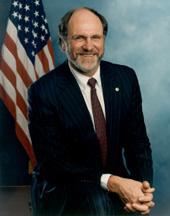
Mr. President, I rise today to introduce the Compassionate Assistance for Rape Emergencies Act. In the United States, more than 300,000 women are raped each year and an estimated 25,000 to 32,000…
Mr. President, I rise today to introduce the Compassionate Assistance for Rape Emergencies Act. In the United States, more than 300,000 women are raped each year and an estimated 25,000 to 32,000 become pregnant as a result. That is why I am reintroducing the Compassionate Assistance
in Rape Emergencies Act, or CARE Act.
This bill will ensure that women who are survivors of sexual assault have access to the medical care they need, including emergency contraception. Emergency contraception reduces a woman's risk of becoming pregnant by up to 89 percent when taken within 72 hours of the assault. I want to be clear: emergency contraception does not end a pregnancy. Instead, emergency contraception works before a pregnancy can occur.
There is widespread consensus in the medical community that emergency contraception is safe and effective. Yet, New Jersey is one of only six States that legally require all medical providers to offer this care to rape survivors. Before this law, one-third of New Jersey's hospitals did not provide this vital medication. New Jersey's law should be the national standard. The bill would require that all hospitals that receive Federal funding offer information and access to emergency contraception for victims of rape.
In January of this year I, along with 21 Senators, wrote a letter to the Department of Justice asking that they include information about emergency contraception in their national protocol for sexual assault hospital examinations. But they did not. In all 141 pages, the protocol fails to provide sexual assault victims with access to this needed information and treatment. The protocol instead leaves the door open for health care professionals to decide whether or not to discuss certain treatment options. Today, I want to close that door.
In order to provide comprehensive medical care, hospitals must also provide quick access to preventive medication that helps protect victims of sexual assault from potentially fatal sexually transmitted diseases, such as HIV and hepatitis B. We have an obligation to protect sexual assault victims from these life threatening infections.
We must not sit idly by while so many sexual assault survivors are deprived the medical care they need and deserve. Once these survivors seek treatment we ought to make sure that they get the treatment they need. Ideology should never stand between patients and the care they deserve.
Mr. President, I ask unanimous consent that the text of the bill be printed in the Record.
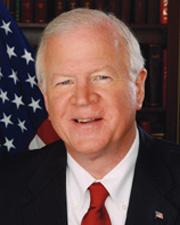
Mr. President, I rise today to honor a man who has been at the front of our country's fight for civil rights. Born a son of sharecroppers in Troy, AL, John grew up to become one of the leading…
Mr. President, I rise today to honor a man who has been at the front of our country's fight for civil rights. Born a son of sharecroppers in Troy, AL, John grew up to become one of the leading proponents fighting on the frontlines of the civil rights movement.
John grew up listening to speeches from the Reverend Martin Luther King Jr., and observing many courageous acts, such as the Montgomery bus boycotts. Through those examples, Lewis could no longer stand idly by while others suffered for his sake. He was motivated to become an active participant in these historical events. From organizing peaceful demonstrations, to riding in the fronts of buses, Lewis was a key leader and played a dynamic role in the civil rights movement.
From 1963-1966 Lewis served as chairman of the Student Nonviolent Coordinating Committee. In 1963 Lewis was named one of the Big Six Civil Rights leaders along with Martin Luther King Jr., James Farmer, Roy Wilkins, Whitney Young, and A. Phillip Randolph.
In August 1963, John Lewis was a keynote speaker at the momentous March on Washington where Martin Luther King, Jr. gave his ``I Have a Dream'' speech. On March 7, 1965, Lewis helped the now pivotal voting rights march from Selma to Montgomery, AL. Sustaining physical injuries for the principles he believed in, John Lewis remained steadfast in his commitment to promoting human rights in the United States. The violent reactions by Alabama state troopers that day sparked an outcry and
eventually served to facilitate passage of the Voting Rights Act of 1965.
Mr. President, as a congressman, statesman, humanitarian, the Nation has benefited greatly from the lifelong contributions of John Lewis. I am proud to introduce legislation honoring John Lewis.
Bill Text
Latest available legislative text
        [Congressional Bills 109th Congress]
[From the U.S. Government Publishing Office]
[S. 1263 Introduced in Senate (IS)]

1st Session
S. 1263

To amend the Small Business Act to establish eligibility requirements
for business concerns to receive awards under the Small Business
Innovation Research Program.

_______________________________________________________________________

IN THE SENATE OF THE UNITED STATES

June 16, 2005

Mr. Bond introduced the following bill; which was read twice and
referred to the Committee on Small Business and Entrepreneurship

_______________________________________________________________________

A BILL

To amend the Small Business Act to establish eligibility requirements
for business concerns to receive awards under the Small Business
Innovation Research Program.

Be it enacted by the Senate and House of Representatives of the
United States of America in Congress assembled,

SECTION 1. SHORT TITLE.

This Act may be cited as the ``Save America's Biotechnology
Innovative Research Act of 2005'' or ``SABIR Act''.

SEC. 2. ELIGIBILITY FOR PARTICIPATION IN SMALL BUSINESS INNOVATION
RESEARCH PROGRAM.

(a) In General.--Section 9 of the Small Business Act (15 U.S.C.
638) is amended by adding at the end the following new subsection:
``(x) Eligibility for Participation in SBIR Program.--
``(1) In general.--To be eligible to receive an award under
the SBIR program, a business concern--
``(A) shall have not more than 500 employees; and
``(B) shall be owned in accordance with one of the
ownership requirements described in paragraph (2).
``(2) Ownership requirements.--The ownership requirements
referred to in paragraph (1) are the following:
``(A) The business concern is--
``(i) at least 51 percent owned and
controlled by individuals or eligible venture
capital companies, who are citizens of or
permanent resident aliens in the United States;
and
``(ii) not more than 49 percent owned and
controlled by a single eligible venture capital
company (or group of commonly-controlled
eligible venture capital companies).
``(B) The business concern is at least 51 percent
owned and controlled by another business concern that
is itself at least 51 percent owned and controlled by
individuals who are citizens of or permanent resident
aliens in the United States.
``(C) The business concern is a joint venture in
which each entity to the joint venture meets one of the
ownership requirements under this paragraph.
``(3) Employee defined.--For purposes of paragraph (1)(A),
the term `employee' means an individual employed by the
business concern and does not include--
``(A) an individual employed by an eligible venture
capital company providing financing to the business
concern; or
``(B) an individual employed by any entity in which
the eligible venture capital company is invested other
than that business concern.
``(4) Treatment of other forms of ownership.--
``(A) Stock option ownership.--For purposes of this
subsection, in the case of a business concern owned in
whole or in part by an employee stock option plan, each
stock trustee or plan member shall be deemed to be an
owner.
``(B) Trust ownership.--For purposes of this
subsection, in the case of a business concern owned in
whole or in part by a trust, each trustee or trust
beneficiary shall be deemed to be an owner.
``(5) Exception for start-up concerns.--Notwithstanding
paragraphs (1) through (4), any business concern that is a
start-up concern shall be eligible to receive funding under the
SBIR program.''.
(b) Definitions.--Section 9(e) of the Small Business Act (15 U.S.C.
638(e)) is amended by adding at the end the following new paragraphs:
``(9) The term `eligible venture capital company' means a
business concern--
``(A) that--
``(i) is a Venture Capital Operating
Company, as that term is defined in regulations
promulgated by the Secretary of Labor; or
``(ii) is an entity that--
``(I) is registered under the
Investment Company Act of 1940 (15
U.S.C. 80a-51 et seq.); or
``(II) is an investment company, as
defined in section 3(c)(14) of such Act
(15 U.S.C. 80a-3(c)(14)), which is not
registered under such Act because it is
beneficially owned by less than 100
persons; and
``(B) that is not controlled by any business
concern that is not a small business concern within the
meaning of section 3.
``(10) The term `start-up concern' means a business concern
that--
``(A) for at least 2 of the 3 preceding fiscal
years has had--
``(i) sales of not more than $3,000,000; or
``(ii) no positive cash flow from
operations; and
``(B) is not formed to acquire any business concern
other than a small business concern that meets the
requirement under subparagraph (A).''.
(c) Regulations.--Before the date that is 90 days after the date of
the enactment of this Act, the Administrator of the Small Business
Administration shall--
(1) in accordance with the exceptions to public rulemaking
under section 553(b)(A) and (B) of title 5, United States Code,
promulgate regulations to implement the provisions of this Act;
(2) publish in the Federal Register a notification of the
changes in eligibility for participation in the Small Business
Innovation Research program made by this Act; and
(3) communicate such changes to Federal agencies that award
grants under the Small Business Innovation Research program.
(d) Effective Date.--The amendments made by this Act shall apply
with respect to any business concern that participates in the Small
Business Innovation Research program on or after the date of the
enactment of this Act.
<all>