Fourteenth Dalai Lama Congressional Gold Medal Act

Legislative Activity
Stay on top of the latest movement without scrolling through every action
Became Public Law No: 109-287.
September 27, 2006
View full timeline
Introduced in Senate
May 11, 2006
Sponsor introductory remarks on measure. (CR S4471-4472)
May 11, 2006
Read twice and referred to the Committee on Banking, Housing, and Urban Affairs.
May 11, 2006
Committee on Banking, Housing, and Urban Affairs. Ordered to be reported without amendment favorably.
May 18, 2006
Committee on Banking, Housing, and Urban Affairs. Reported by Senator Shelby without amendment. Without written report.
May 23, 2006
Placed on Senate Legislative Calendar under General Orders. Calendar No. 441.
May 23, 2006
Passed Senate without amendment by Unanimous Consent. (consideration: CR S5284, S5285; text as passed Senate: CR S5285)
May 25, 2006
Message on Senate action sent to the House.
May 26, 2006
Received in the House.
June 6, 2006 • 2:13 PM
Referred to the House Committee on Financial Services.
June 6, 2006
Ms. Ros-Lehtinen moved to suspend the rules and pass the bill.
September 13, 2006 • 8:13 PM
Considered under suspension of the rules. (consideration: CR H6505-6509)
September 13, 2006 • 8:13 PM
DEBATE - The House proceeded with forty minutes of debate on S. 2784.
September 13, 2006 • 8:13 PM
Passed/agreed to in House: On motion to suspend the rules and pass the bill Agreed to by voice vote.(text: CR H6505-6506)
September 13, 2006 • 8:35 PM
On motion to suspend the rules and pass the bill Agreed to by voice vote. (text: CR H6505-6506)
September 13, 2006 • 8:35 PM
Motion to reconsider laid on the table Agreed to without objection.
September 13, 2006 • 8:35 PM
Presented to President.
September 18, 2006
Signed by President.
September 27, 2006
Became Public Law No: 109-287.
September 27, 2006
Floor Debate
21 membersWhat members said about S. 2784 on the floor
 DKIDF
DKIDF TS
TS JG
JG NP+16
NP+16
Floor Debate
21 membersWhat members said about S. 2784 on the floor
Mr. President, it is hard to believe, but Congress has not made any substantive improvements to the Nation's transportation security systems since 2002. Yet nearly every day, we are provided further…
Mr. President, it is hard to believe, but Congress has not made any substantive improvements to the Nation's transportation security systems since 2002. Yet nearly every day, we are provided further reminders that our transportation modes, particularly port, cargo, rail, and public transit, remain vulnerable.
Given the urgent need for further improvements, Chairman Stevens and I have joined with the Banking Committee leaders, Senator Shelby and Senator Sarbanes, to advance a comprehensive transportation security bill that reflects the importance of our transportation infrastructure to the quality of life and economic health of the country.
Our legislation combines the port, cargo, and rail provisions of our Committee's Transportation Security Improvement Act with the Banking Committee's Public Transportation Terrorism Prevention Act. Together, the combined measure makes significant improvements to our port, cargo, rail, and public transit security nationwide.
It is important to note the level of Senate support for our approach. Not only have the elements of our bill been separately and unanimously approved by our respective Committees, our legislation has 42 Senate cosponsors on introduction. That kind of support demonstrates both the necessity of these improvements and the distinct possibility that we can move this bill this year.
The legislation that we introduce today, with its emphasis on the Coast Guard and the Transportation Security Administration, TSA, is the natural counterpart to the port security bill approved by the House of Representatives last week. The bills are directly compatible, and if the Senate moves quickly on this matter, we can proceed to conference and make real progress on transportation security before the session concludes.
This legislation reflects the port, cargo, and rail security expertise of the Commerce Committee and the public transit security expertise of the Banking Committee. On the Commerce Committee, we began examining port and cargo security in 1999 and had begun to craft security legislation even before the September 11 tragedy.
In 2001, our committee authored the landmark Maritime Transportation Security Act, MTSA, which established the foundation for the Nation's port and cargo security. Under the MTSA,
the Coast Guard became the lead agency on port security matters and created the Nation's current, international, inter-modal cargo security regime. That expertise and perspective is essential as we advance improvements to our maritime security laws.
However, the implementation of MTSA's security improvements has been weak and inconsistent. The Department of Homeland Security's budgets have not reflected port security's significance to the economy, and the Agency has missed numerous internal and legislated security deadlines. As a result, vulnerabilities remain.
Given the recent focus on the Nation's lingering, significant port security weaknesses, the country is now far more attuned to port and cargo security. The heartland is learning what the coasts have known for many years: Our national economy and physical security depend on strong port and cargo security.
Our legislation makes the many enhancements that are long overdue. It guides and enhances the Coast Guard's and the Department of Homeland Security's, DHS, authorities on maritime security. It improves examination of cargo before it reaches U.S. ports, provides a process for the speedy resumption of commerce in the event of an attack on a seaport, and expands the use of interagency operations centers.
Specifically, our legislation improves the examination of shipments before they reach U.S. shores. It calls upon the U.S. Customs and Border Protection, CBP, to develop standards for the evaluation, screening, and inspection of cargo destined for the U.S. prior to loading in a foreign port, and it provides greater targeting and scrutiny of high-risk cargo by requiring importers to file entry data 24-hours prior to loading at a foreign port.
Also, the legislation authorizes the random inspection of incoming cargo--a method which has proven to be 12 times more likely to find illicit shipments than traditional inspection methods.
In the event there is a seaport attack, our bill clarifies the requirements for expedited clearance of cargo through the Secure Systems of Transportation Program and extends the supply chain review to the initial point of loading. The bill also amends MTSA based on Government Accountability Office, GAO, recommendations to improve upon the Container Security Initiative, CSI, the Customs-Trade Partnership Against Terrorism Program, C-TPAT, and Automated Targeting System, ATS.
It is important to note that while our port security regime has significant weaknesses, the agencies involved have also begun to make some notable improvements in recent years. According to the Department of Homeland Security Inspector General's most recent report on the port security grant program, the DHS has made substantial progress on the program and is beginning to deliver funding to the Nation's ports efficiently and effectively.
Our legislation builds upon the port and cargo security systems that have taken 4 years to develop and provides the resources necessary to strengthen port security infrastructure, planning, and coordination. Other pending proposals have sought to reorganize the DHS yet again and add an additional layer of bureaucracy through a new Office of Cargo Policy. Such changes are counterproductive and suggest a lack of understanding of local stakeholders' actual needs and given the need for immediate improvements, they make little sense.
Our committee has also brought its transportation security expertise to bear on the challenges facing rail security. Consistent with the Rail Security Act approved unanimously by the Senate in 108th Congress, our legislation requires the Transportation Security Administration, TSA, to conduct a railroad sector threat assessment and submit prioritized recommendations for improving rail security. It also calls for the TSA and the Department of Transportation to clarify their respective roles for rail security.
Our legislation provides grants through TSA to Amtrak, freight railroads, and others to upgrade security across the entire railroad system. It provides funding through the Department of Transportation to make needed security and safety enhancements to Amtrak railroad tunnels in New York, Washington, and Baltimore.
Our bill creates a rail security research and development program through DHS and encourages the deployment of rail car tracking equipment for hazardous material rail shipments. It so requires railroads shipping high-hazard materials to create threat mitigation plans to protect high-consequence targets when specific threat information exists.
Finally, the bill authorizes studies to improve passenger rail screening and immigration processing along the U.S. northern border, creates a security training program for railroad workers, and provides whistleblower protections for workers who report security concerns.
All of these enhancements have been thoroughly vetted over several years of meticulous work. They have received the unanimous support of our committee membership, and in the case of the rail security provisions, the support of the full Senate in 2004.
In the 108th Congress, the Senate conclusive determined that transportation security and transportation safety could not be separated. Thus, given its oversight of the Coast Guard, TSA, and its general expertise in transportation matters, the Commerce Committee maintained jurisdiction over transportation security generally, and port, cargo, and rail security specifically. Similarly, the Banking Committee's expertise in urban transit has made it the Committee of jurisdiction for public transit security.
This expertise matters, particularly when crafting legislation that impacts how these systems operate. Transportation security legislation must reflect a balanced understanding of security, safety, and commerce. It is not enough to understand just one of those elements. Our economy is totally dependent upon efficient and effective transportation systems. Thus, our security policies must be robust, but they cannot ignore the realities of modern commerce nor the potential economic damage that could result from public policies that did not sufficiently take into account the resumption of our systems.
The legislation that we advance today reflects the Commerce and Banking Committees' expertise and understanding of this important balance. The time has come to advance these improvements, and nearly half of this body has already signed-on in support of this bill. Our legislation presents an opportunity to make immediate progress on transportation security, and it is my sincere hope that the Senate will act on this measure as soon as possible.
Mr. President, I rise today to introduce the Dalai Lama Congressional Gold Medal Act of 2006. This legislation would convey upon the 14th Dalai Lama, Tenzin Gyatso, one of Congress' most prestigious…
Mr. President, I rise today to introduce the Dalai Lama Congressional Gold Medal Act of 2006.
This legislation would convey upon the 14th Dalai Lama, Tenzin Gyatso, one of Congress' most prestigious awards for his advocacy of peace, tolerance, human rights, non-violence, and compassion throughout the globe.
I am deeply honored to be joined today by my colleague, Senator Thomas, and wish to express my appreciation to him for his willingness to be the lead Republican sponsor of this legislation.
Senator Thomas has long been an advocate for addressing the plight of the Tibetan people, and in 2001 joined with me in introducing the Tibetan Policy Act, the first piece of legislation outlining U.S. policy toward Tibet and its people. He was truly instrumental in helping to advance its passage in the Congress.
In fact, one of my proudest days as a U.S. Senator was on September 30, 2002, when President George W. Bush signed the Tibetan Policy Act into law.
Both Senator Thomas and I are also grateful that 73 of our Senate colleagues have agreed to be original cosponsors of this legislation honoring the Dalai Lama.
Under the rules, Congressional Gold Medals need the support of at least two-thirds, or 67 Senators, in order for the Senate Banking Committee to consider such authorizing legislation.
I look forward to working closely with Chairman Shelby and Ranking Member Sarbanes to ensure that the Dalai Lama Congressional Gold Medal Act can be taken up and passed out of the Banking Committee in a timely and efficient manner.
In my view, there is no international figure more deserving of the Congressional Gold Medal than His Holiness the Dalai Lama.
This is a man who has dedicated his life to the betterment of humanity as a whole. As one of the most respected religious figures in the world today, the Dalai Lama's teachings on peace, non-violence and ecumenical openness have been embraced by millions.
One of his greatest contributions has been his promotion of harmony and respect among the different religious faiths of the world.
In his own words: ``I always believe that it is much better to have a variety of religions, a variety of philosophies, rather than one single religion or philosophy. This is necessary because of the different mental dispositions of each human being. Each religion has certain unique ideas or techniques, and learning about them can only enrich one's faith.''
As the spiritual leader of Tibetan Buddhism, he has worked arduously for nearly 50 years to increase understanding between China and the people of Tibet.
He has also dedicated his life to the preservation of the Tibetan culture, religion, and language.
The Dalai Lama's story is a fascinating one.
In 1959, as a teenager, he fled his Tibetan homeland for neighboring India, where he established a government-in-exile that eventually settled at Dharmasala--in the Himalayan foothills.
While he admittedly once espoused independence for Tibet-- particularly in the face of the heavy-handed oppression of the Tibetan people by the Chinese Communists--the Dalai Lama foreswore this position nearly two decades ago.
Alternatively, he began to pursue a reasonable and flexible ``Middle Way Approach'' that would provide for cultural and religious autonomy for Tibetans, within the People's Republic of China.
In 1989, the Dalai Lama was the recipient of the Noble Peace Prize for his consistent and unfailing advocacy for the rights of the Tibetan people, along with his promotion of non-violence and peace throughout the globe.
In their recommendation, the Nobel Committee wrote:
The Committee wants to emphasize the fact that the Dalai
Lama in his struggle for the liberation of Tibet consistently
has opposed the use of violence. He has instead advocated
peaceful solutions based upon tolerance and mutual respect in
order to preserve the historical and cultural heritage of his
people.
In April 1991 , when the Congress welcomed the Dalai Lama in a ceremony in the Capitol Rotunda that was attended by the entire Congressional leadership, he offered a moving anecdote about receiving a small gift from President Franklin Roosevelt when he was a young boy.
That gift--a gold watch showing phases of the moon and the days of the week--became very special to him.
``I marveled at the distant land which could make such a practical object so beautiful,'' he said.
``But what truly inspired me were your ideas of freedom and democracy. I felt that your principles were identical to my own, the Buddhist beliefs in fundamental human rights freedom, equality, tolerance and compassion for all.''
I have been blessed to be able to call the Dalai Lama a friend for almost three decades. I first met him through my husband Richard during a trip to India and Nepal in the fall of 1978.
Incidentally, our first stop was in Dharmasala, where we met with His Holiness and invited him to visit San Francisco where I was mayor.
The Dalai Lama was grateful for the invitation. At that time, he had never even been to the United States.
For political reasons, the Chinese objected to his visiting the United States, and our government, which at that time was in the process of normalizing relations with the People's Republic of China, was sensitive to these concerns.
While the trip was postponed temporarily, as mayor I was delighted to receive the Dalai Lama and present him with a key to the city upon his arrival in San Francisco in September 1979.
During our many conversations over the years, His Holiness has often reiterated that, at its core, Buddhism espouses reaching out to help others, particularly the less fortunate. And it encourages us all to be more kind and compassionate.
The Dalai Lama's persona exudes these qualities. He has a great sense of humor, responds quite spontaneously, and his philosophies cross all religions, cultures, and ethnic lines.
I have visited with him many times since 1978, and while his principled beliefs have never wavered, his teachings have become more expansive. His message has never been more relevant in our troubled world.
At the same time, I also had the opportunity as mayor of San Francisco to become acquainted with several of China's future leaders through the San Francisco-Shanghai Sister City Relationship that I started with Mayor Wang Daohan in 1980.
Mayor Wang's immediate successors, Jiang Zemin and Zhu Rongji, were both later promoted to high-level positions in the Chinese Communist Party and Central Government after leaving Shanghai.
Consequently, since 1990, my husband and I have had many discussions with Jiang Zemin, Zhu Rongji, and other Chinese officials about the status of the Dalai Lama and the plight of the Tibetans in and outside of Tibet.
On three separate occasions over the past 15 years, I have hand- delivered letters from His Holiness to the Chinese leadership, asking for direct talks and reiterating that he does not seek independence for Tibet.
I know that at the same time President Bill Clinton, President George W. Bush, and many others in the U.S. Government have also encouraged a meaningful dialogue. For the most part, these efforts have had little success.
If His Holiness the Dalai Lama were to return to Tibet, his wish is, as he says, to be a simple monk and to be involved only in religious and cultural matters.
China will be a better nation when it embraces the aspirations of the Tibetan people.
Through the passage of this legislation, the United States Senate would recognize the Dalai Lama's worldwide contributions to peace and religious understanding.
Among past recipients of the Congressional Gold Medal are fellow moral and religious leaders, including Pope John Paul II and Mother Teresa, and fellow Nobel Peace Laureates, such as Elie Wiesel and Nelson Mandela.
By definition, a Congressional Gold Medal is reserved for the most heroic, courageous and outstanding--those who we wish to emulate in our life's actions.
I strongly believe that the Dalai Lama is such an individual.
I am proud that the U.S. Congress has a long record of showing support for the Dalai Lama's message of peace and compassion, and I look forward to joining my colleagues in recognizing him with this distinguished award.
Mr. President, today I introduce a bipartisan transportation security bill, which is a joint Commerce and Banking Committee bipartisan package co-sponsored by Senators Inouye, Shelby, Sarbanes, and…
Mr. President, today I introduce a bipartisan transportation security bill, which is a joint Commerce and Banking Committee bipartisan package co-sponsored by Senators Inouye, Shelby, Sarbanes, and 37 of our colleagues. This bill would dramatically enhance our Nation's port, rail, and transit security systems. The port and rail provisions of this package are identical to provisions of the transportation security bill, S. 1052, which was reported unanimously by the Commerce Committee last year. The transit provisions of the package are identical to those reported unanimously by the Banking Committee.
The events of 9/11 made clear that Congress needed to address the vulnerabilities within the Nation's transportation systems and dramatically increase security measures to protect the essential interstate flow of commerce.
Even before 9/11, the Commerce Committee led the Senate's effort to achieve the delicate balance between improved transportation security and the uninterrupted flow of commerce. In the weeks and months following the 9/11 terrorist attacks, the Commerce Committee developed the Maritime Transportation Security Act, which was signed into law by the President in 2002. The committee later expanded
MTSA by developing the Coast Guard and Maritime Transportation Act of 2004.
In MTSA, the Commerce Committee called on both public and private sector entities, including Federal agencies, the port community, vessel owners, shippers, and earners, to play a role in dramatically enhancing maritime security. The International Maritime Organization followed suit with its own improvements, many of which were based on the foundation set forth in MTSA.
The Commerce Committee spearheaded the establishment of a harmonized security credential for all transportation workers, authorizing the creation of a Transportation Worker Identification Credential, TWIC, program in the Aviation and Transportation Security Act (2001), and twice more in the Maritime Transportation Security Acts of 2002 and 2004. Additional statutory authority from the PATRIOT Act reinforced the importance of such a transportation credential.
TWIC is intended to improve identity management for all transportation workers, ensuring that only authorized personnel gain unescorted access to secure areas of the country's transportation system. TWIC is designed to mitigate the threat of terrorists exploiting certain physical and cyber security gaps in the transportation system.
The bill would require TSA to deliver a rulemaking on the implementation of the TWIC program. It has been over three and one half years since Congress first required such a card, and this provision sets a mandatory deadline of January 1, 2007 for rollout.
The bill that I propose also would direct the Coast Guard to expand the deployment of Interagency Operations Centers to ports throughout the United States. These centers, already operating in five cities, would bring together all port security and operations stakeholders into a single facility at major ports. This approach has proven effective at maximizing communication among Federal, State, and local entities charged with securing the ports.
In addition, the provision would require greater standards and requirements for cargo screening equipment, and call for additional data to be incorporated into the system used to target cargo and containers for searches.
While TWIC, Interagency Operation Centers, and equipment standards will help improve security on our shores, we must be cognizant of the fact that maritime security begins in foreign ports. We must cast our security net as far back into the inbound international supply chain as possible.
Two programs that were authorized by the Commerce Committee in MTSA address the need to pre-screen cargo bound for the United States--the Container Security Initiative CSI, and the Customs-Trade Partnership Against Terrorism, (C-TPAT).
CSI is a program in which U.S. inspectors are deployed to foreign nations to assist their foreign counterparts in the pre-screening of U.S.-bound cargo containers. C-TPAT is a voluntary supply chain security program that allows companies to seek certification from the Federal Government that such companies have taken sufficient steps to ensure that their supply chains are secure in exchange for expedited cargo clearance benefits at U.S. ports.
The bill that I introduce with my colleagues would require that basic program elements and standards be developed by DHS in order to provide CSI and C-TPAT participants a baseline understanding of the security standards expected of them.
Maritime security is not the only improvement that we must make--the unfortunate attacks on passenger trains in Madrid and the subways in London underscored weaknesses in rail transportation that our bill would seek to address. To improve rail security, our bill would require TSA to conduct railroad threat assessments and to prioritize recommendations. In addition, the legislation would create a rail security research and development program to encourage deployment of rail car tracking equipment for shipment of hazardous materials, and require threat mitigation plans when specific threat information exists. The bill also would authorize further studies of necessary improvements to passenger rail screening, in an effort to increase security in this mode of public transportation.
Our mass transit systems have pressing security needs, upon which our' colleagues on the Banking Committee are focused; as a result, transit security improvements are incorporated into our bipartisan bill. It is unfortunate that many transit agencies in the U.S. still lack sufficient resources to fulfill the post-9/11 recommendations of the Federal Transit Administration's security assessment. These needs are all the more pressing in light of recent DHS recommendations for U.S. mass transit systems to remain alert against the possibility of terrorist attacks. In response to this situation, our bill would create a needs-based grant program to identify and address risks and vulnerabilities within transit systems across the country. The bill would authorize $3.5 billion in funding over the next 3 years to transit agencies to invest in projects designed to resist and deter terrorist attacks, including: surveillance technologies; tunnel protection; chemical, biological, radiological, and explosive detection systems; perimeter protection; and a variety of other security improvements. The bill also would codify the role of an Information Sharing Analysis Center, which would provide security information to transit systems and ensure better communication among federal, state, local, and private sector entities.
To improve security, we must have clear objectives and methods to reach those goals. With limited resources, it is important to pinpoint risks and vulnerabilities that exist within our transportation systems, and address them accordingly. By combining provisions approved unanimously by the Commerce and Banking Committees, respectively, this bipartisan bill would make significant targeted improvements to the framework now in place to secure the Nation's port, rail, and transit environments.
As we seen in recent years, our Nation is not immune from major public health and medical emergencies such as the terrorist attacks on 9/11 or Hurricanes Katrina and Rita. Many of us were living…
As we seen in recent years, our Nation is not immune from major public health and medical emergencies such as the terrorist attacks on 9/11 or Hurricanes Katrina and Rita. Many of us were living under a false sense of security that the United States was not susceptible to major terrorist attacks. We also believed that our Federal, state, and local governments had all the appropriate emergency preparedness measures in place to handle even the worst-case disasters, like the devastation caused by Hurricane Katrina or a pandemic outbreak of avian flu.
Prior to 9/11, our Nation's public health system provided passive surveillance to detect and track the spread of infectious diseases and to educate the public on how to better protect themselves. Are we better prepared today to handle a national public health emergency than we were prior to 9/11? I would say yes. But, we need to do more.
In the five years since 9/11 our Nation's public health system has begun to transform into a health system able to respond to public health emergencies, whether it is a terrorist attack, such as the anthrax, or a natural event.
The Bioterrorism and Public Health Emergency Preparedness Act of 2002, which I co-authored, provided a number of critical provisions to strengthen our Nation's public health infrastructure after we were attacked on 9/11. The act has authorized almost $8 billion for state and local public health and hospital preparedness to increase medical surge capacity and surveillance capabilities. The act created the Office of Public Health and Emergency Preparedness at HHS to coordinate Federal public health and medical emergency preparedness and response, such as significant increases of vaccines, antivirals, and medical supplies, such as gloves, masks and first-aid equipment for rapid deployment anywhere in the U.S. through the Strategic National Stockpile. The act also strengthened border protection authorities, including quarantine and isolation, and food importation and our water supply.
While the Bioterrorism and Emergency Preparedness Act of 2002 improved our Nation's public health and medical response infrastructure, much work remain. We still cannot say with any certainty that states are more prepared than before 9/11 because we still do not have meaningful standards to evaluate our level of preparedness. Once states develop preparedness plans, we must test and evaluate them. Individuals throughout all levels of government and the private sector agree that one of the biggest public health weaknesses is the lack of adequate testing and evaluation of the response plans long before an emergency occurs.
Now that we've had almost five years to strengthen our capacity to respond effectively to a national emergency, we need to now shift our focus to areas that are especially at a high risk of a terrorist attack or a natural emergency. The Federal government must play a role, but cannot stand alone. The state and local public health and medical first responders will be on front lines during a national emergency. State and local governments have the in-depth knowledge of their own medical surge capacity and response plans and must play a significant role in their own preparedness preparations.
We need to do more to encourage states and regions to coordinate and share resources, including personnel, hospital beds and medical supplies during a major emergency. The public health and emergency medical response community agrees that it is critical to establish regional agreements among neighboring states. A regional approach will greatly increase a state's surge capacity to handle a major public health emergency. Incentivizing states to coordinate emergency preparedness planning is critical. My state of New Hampshire, along with Maine and Vermont, have established memo of understanding to share resources, such as medical personnel and hospital beds, during an emergency in the region.
Finally, we must establish coordination among all levels of government--from the Federal government all the way down to the city and town leaders. The Federal response during a national emergency is managed by the Department of Homeland Security and guided by the National Response Plan (NRP). The NRP directs the Department of Health and Human Services (HHS) to lead the Federal public health and medical response and support the state and local first-responders. It is essential that clear and robust lines of communication are developed between federal agencies to effectively prepare for and respond to national emergencies.
Our Nation has certainly had its share of very difficult circumstances to overcome in recent years. I believe these incidents have given us a real wake-up call that we must prepare at all levels of government to provide a rapid and robust response. I believe the bill I am introducing today will focus on all levels of government to be accountable and prepared to better respond to national public health and medical emergencies.
Well, at the time I think the message that I told myself was, we can't be holier than His Holiness. If it is okay with him, it was okay with me. I thank the gentleman for yielding, and I thank him…
Well, at the time I think the message that I told myself was, we can't be holier than His Holiness. If it is okay with him, it was okay with me.
I thank the gentleman for yielding, and I thank him for all of his leadership and assistance in bringing this important legislation to the floor. And I also commend Congresswoman Ileana Ros-Lehtinen for her leadership, not only on bringing the legislation, but her work on this important issue. Tom Lantos, Frank Wolf have just been relentless for His Holiness; and in the Senate, Senator Dianne Feinstein who represents California in the U.S. Senate but is a close personal friend also of His Holiness.
The Congressional Gold Medal is the most distinguished award bestowed by the United States Congress. It is reserved for the most heroic, most courageous, most outstanding individuals who have made lasting contributions to society, individuals such as John Paul II, Mother Teresa, Elie Wiesel, and Nelson Mandela.
Today, by honoring His Holiness the Dalai Lama, we not only honor him, but we add luster to this Congressional Gold Medal. We honor our Nation and the American people by awarding it to His Holiness. I am proud to be an original cosponsor of this legislation.
His Holiness often described himself in the following way: ``I am just a simple monk, no more, no less.'' But he represents much more to people throughout the world.
Tibetan Buddhists believe that the Dalai Lama is the earthly manifestation of the living Buddha. On the world stage, he is seen as the head of state and the spiritual leader of the Tibetan people. For millions, he is seen as a source of spiritual refuge and a connection to inner peace and harmony, that my colleague Mr. Kucinich was discussing.
His Holiness has traveled the world, building bridges between and among the different faiths. He has used his position to promote wisdom, compassion and nonviolence as a solution, not only in Tibet, but to other world conflicts.
His leadership is not only in the area of faith and harmony among people, but also in protecting the environment. I remember it was a great joy seeing him speak at the Earth Summit in Rio in 1992.
The Dalai Lama has made the human rights situation in Tibet an issue of international concern. Indeed, the situation in Tibet is a challenge to the conscience of the world. Under Chinese occupation, hundreds of thousands of Tibetans have died. Freedom to practice their religion and political expression have been severely curtailed. So powerful is the image of the Dalai Lama that Tibetans are imprisoned for simply owning a picture of him.
As a new Member of Congress in 1987, I was in attendance, at the invitation of my colleague from San Francisco Tom Lantos, when the Dalai Lama proposed the historic Five-Point Peace Plan toward resolving the future status of Tibet. The Dalai Lama proposed a ``Middle Way Approach'' that seeks genuine autonomy for Tibetans within the framework of the People's Republic of China. Autonomy, not independence.
In recent years, Tibetan envoys have traveled to China for five rounds of discussions on the status of Tibet. While open dialogue is a first step, it is clear that the Chinese government has been stalling all along.
The Chinese are missing an historic opportunity to negotiate with a partner who has the authority and the legitimacy to implement a comprehensive agreement. The Chinese are missing an opportunity for a solution that would ensure internal stability in Tibet and bolster China's reputation in the world.
The Dalai Lama has asked for international support for his efforts to engage the Chinese government. I am proud to say that the U.S. Congress has been a bedrock of support for the Tibetan cause. By awarding the gold medal to the Dalai Lama, Congress is sending an important signal of support for going further.
This is not the first gift our country has given to His Holiness. Of course, for many years and decades, we have given the gift of respect, of reverence and appreciation for all that His Holiness is and does. But when he was a little boy, the special relationship he had with America was demonstrated when Franklin Roosevelt, as President of the United States, gave His Holiness one of his favorite gifts which was a gold watch which had the phases of the Moon on the watch. It was a wonderful thing, a gift from the President to this little boy who had been named the Dalai Lama.
When His Holiness was driven out of Tibet by the Chinese invasion, it was one of the few things that he carried with him. So he had the gold watch, and now all these many years later, out of respect and reverence for him, he will have the Congressional Goeld Medal.
I urge my colleagues to support it and look forward to the day when we can present it to him in the halls of Congress.
Show 8 more
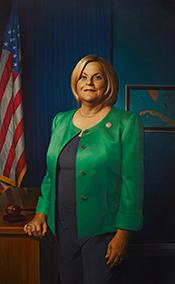
Mr. Speaker, I move to suspend the rules and pass the Senate bill (S. 2784) to award a congressional gold medal to Tenzin Gyatso, the Fourteenth Dalai Lama, in recognition of his many enduring and…
Mr. Speaker, I move to suspend the rules and pass the Senate bill (S. 2784) to award a congressional gold medal to Tenzin Gyatso, the Fourteenth Dalai Lama, in recognition of his many enduring and outstanding contributions to peace, non-violence, human rights, and religious understanding.
Mr. Speaker, I ask unanimous consent that all Members may have 5 legislative days within which to revise and extend their remarks on this legislation and insert extraneous material thereon.
Mr. Speaker, I yield myself such time as I may consume.
As the House author of this legislation, I rise in strong support of Senate bill 2784, the 14th Dalai Lama Congressional Gold Medal Act.
I would like to thank my dear friend and colleague, the ranking member of International Relations Committee, Congressman Tom Lantos, for his dedicated work on this legislation as the Democratic lead of this House bill. I also would like to commend the Financial Services chairman, Michael Oxley, and his staff for their great work on this resolution as well as the House leadership and their staff for their assistance in bringing this important legislation to the floor.
Mr. Speaker, as a senior member of the House International Relations Committee and as a member of the Congressional Human Rights Caucus, I have had the opportunity to meet personally with the Dalai Lama on several occasions, most recently in November 2005, when he spoke to Congress on issues relating to democracy, human rights, and Tibet.
Born to a peasant family, His Holiness was recognized at the age of two, in accordance with the tradition of Tibet, as the reincarnation of his predecessor, the 13th Dalai Lama, and thus an incarnation of the Buddha of Compassion.
His enthronement ceremony took place in the capital of Tibet on February 22, 1940, at the tender age of five. A decade later, on November 17, 1950, His Holiness was called upon to assume the position of head of state for the people of Tibet.
His Holiness is the embodiment of serenity and understandings. His inner peace and calm demeanor give us hope that a resolution can be reached on the issue of Tibet. As the 14th Dalai Lama, he is the manifestation of compassion. To look at him is to understand the meaning of Dalai Lama, which is ``Oceans of Wisdom.''
By awarding the Dalai Lama with the Congressional Gold Medal, we are recognizing his lifelong advocacy on behalf of peace, tolerance, human rights, nonviolence, and religious understanding throughout the world. By definition, a Congressional Gold Medal is the highest expression by Congress of national appreciation for the most heroic, courageous, and outstanding individuals.
Given the overwhelming support of this legislation as evidenced by the bipartisan support of 312 cosponsors in the House companion legislation, I am confident that Members of this Chamber deem that the Dalai Lama is indeed such an individual.
However, we are not the first to recognize the tremendous achievements of this humble man. In 1989, the 14th Dalai Lama received the Nobel Peace Prize for his work bringing democracy and freedom to his people. In the recommendation, the committee members of the Nobel Prize wrote: ``The committee wants to emphasize the fact that the Dalai Lama in his struggle for the liberation of Tibet consistently has opposed the use of violence. He has instead advocated peaceful solutions based upon tolerance and mutual respect in order to preserve the historical and cultural heritage of his people.''
The 14th Dalai Lama Congressional Gold Medal Act comes at a crucial and hopeful turning point in the ongoing negotiations between the Dalai Lama's representatives and the People's Republic of China.
In a speech delivered following His Holiness' acceptance of the Nobel Peace Prize, he said, ``It is my dream that the entire Tibetan plateau should become a free refuge where humanity and nature can live in peace and in harmonious balance. It would be a place,'' he continues, ``where people from all over the world could come to seek the true meaning of peace within themselves, away from the tension and pressures that occur in much of the rest of the world. Tibet could indeed become a creative center for the promotion and development of peace,'' he concluded.
Join me, I ask my colleagues, in paying homage to this fearless leader who has led the efforts to preserve the rich cultural, spiritual, and linguistic heritage of the people of Tibet while also promoting the safeguarding of other endangered cultures throughout the world.
Mr. Speaker, I urge my colleagues to join me in voting ``yes'' on the 14th Dalai Lama Congressional Gold Medal Act.
Mr. Speaker, I reserve the balance of my time.
Mr. Speaker, I have no further requests for time, and I yield back the balance of our time.
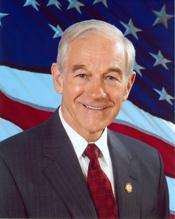
Mr. Speaker, with great sadness I must rise to oppose this measure granting a congressional gold medal to the 14th Dalai Lama. While I greatly admire and respect His Holiness the Dalai Lama, and…
Mr. Speaker, with great sadness I must rise to oppose this measure granting a congressional gold medal to the 14th Dalai Lama. While I greatly admire and respect His Holiness the Dalai Lama, and fully recognize his tremendous status both as a Buddhist leader and international advocate for peace, I must object to the manner in which this body chooses to honor him.
I wonder if my colleagues see the irony in honoring a devout Buddhist monk with a material gift of gold. The Buddhist tradition, of course, eschews worldly possessions in favor of purity of thought and action. Buddhism urges its practitioners to alleviate the suffering of others whenever possible. I'm sure His Holiness the Dalai Lama would rather see $30,000 spent to help those less fortunate, rather than for a feel- good congressional gesture.
We cannot forget that Congress has no authority under the Constitution to spend taxpayer money on medals and awards, no matter how richly deserved. And I reiterate my offer of $100 from my own pocket to pay for this medal--if members wish to honor the
Dalai Lama, all we need to do is pay for it ourselves. If all 435 of us contribute, the cost will be roughly $70 each. So while a gold medal sounds like a great idea, it becomes a bit strange when we see the actual cost involved.
If Congress truly wishes to honor the Dalai Lama, it could instead start by showing more respect for his views in the areas of foreign policy, war, and terrorism. The bellicosity often demonstrated on the floor of this institution toward entire nations and their people conflicts sharply with the peaceful teachings of the Dalai Lama.
Consider the following words of His Holiness:
``When September 11 happened, the next day I wrote a letter to President Bush as a friend--because I know him personally. I wrote this letter and expressed, besides my condolences and sadness, a countermeasure to this tragedy: a nonviolent response because that would have been more effective. So this is my stance. And then just before the Iraq crisis started, millions of people from countries like Australia and America expressed their opposition to violence. I really admired and appreciated this.''
``When the war started, some people immediately asked me if it was justified or not, whether it was right or wrong. In principle, any resort to violence is wrong.''
Consider also these thoughts from the Dalai Lama regarding the terrible pointlessness of war:
``We have seen that we cannot solve human problems by fighting. Problems resulting from differences in opinion must be resolved through the gradual process of dialogue. Undoubtedly, wars produce victors and losers; but only temporarily. Victory or defeat resulting from wars cannot be long-lasting. Secondly, our world has become so interdependent that the defeat of one country must impact the rest of the world, or cause all of us to suffer losses either directly or indirectly.''
``Today, the world is so small and so interdependent that the concept of war has become anachronistic, an outmoded approach. As a rule, we always talk about reform and changes. Among the old traditions, there are many aspects that are either ill-suited to our present reality or are counterproductive due to their shortsightedness. These, we have consigned to the dustbin of history. War too should be relegated to the dustbin of history.''
``Of course, the militaristic tradition may not end easily. But, let us think of this. If there were bloodshed, people in positions of power, or those who are responsible, will find safe places; they will escape the consequent hardship. They will find safety for themselves, one way or the other. But what about the poor people, the defenseless people, the children, the old and infirm. They are the ones who will have to bear the brunt of devastation. When weapons are fired, the result will be death and destruction. Weapons will not discriminate between the innocent and guilty. A missile, once fired, will show no respect to the innocent, poor, defenseless, or those worthy of compassion. Therefore, the real losers will be the poor and defenseless, ones who are completely innocent, and those who lead a hand-to-mouth existence.''
Mr. Speaker, in closing let me join my colleagues in stating my tremendous respect for His Holiness the Dalai Lama. While I cannot agree with forcible taxation to pay for gold medals, I certainly hope Congress takes the teaching of His Holiness to heart and begins to rethink our aggressive, interventionist foreign policy.
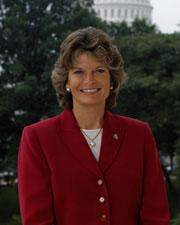
Mr. President, today I am pleased to join Senator Burns in introducing the Rural Physicians' Relief Act of 2006. This important legislation will bring needed assistance to physicians who provide…
Mr. President, today I am pleased to join Senator Burns in introducing the Rural Physicians' Relief Act of 2006. This important legislation will bring needed assistance to physicians who provide primary health services to rural America.
Physicians who provide health care in the most rural locations in America face challenges unlike their more urban counterparts. Often great distances, remote locations, limited transportation, and harsh climate combine to make health care delivery extremely difficult to say the very least. Patient populations are small and spread out across extremely remote areas. As a result, many of these areas tend to be the most medically underserved areas in the Nation.
In my State of Alaska, a State that is larger than the States of California, Texas and Montana combined, nearly one-quarter of the State's population lives in communities and villages that are only reachable by boat or aircraft. In fact, Alaska has fewer roads than any other State--even fewer roads than Rhode Island. And unlike Rhode Island where over 90 percent of the roads are paved, less than 20 percent of the roads are paved in Alaska.
This means that approximately 75 percent of Alaskan communities are not connected by road to another community with a hospital. This means that all medical supplies, patients, and providers must travel by air. These remote populations tend to be among the poorest in the State. Air travel equates to excessively high health care costs--generally 70 percent higher than costs in the lower 48 States. In short, ``rural'' takes on a new definition in Alaska.
In Alaska, patient access to health care is exacerbated because our State also faces a chilling crisis--we have 25 percent to 30 percent fewer physicians than our population needs. In fact, Alaska has one of the smallest numbers of physicians per capita in the country. We need a minimum of 500 more doctors just to be at the national average of physicians per capita. An American Medical News article recently declared Alaska's precarious situation: ``Alaska has long ranked among the worst states in terms of physician supply.''
Our physician shortage crisis will only worsen. There is an expected retirement of at least 118 physicians in Anchorage alone in the next 10 years. In the 1990s, there were 130 new doctors each year. Now that figure has dropped to only 31 new physicians since 2001. Outside of Anchorage, one in every eight physician positions is vacant.
Additionally, many physicians are forced out of the Medicare and Medicaid Programs because reimbursement rates simply do not cover the cost to treat those patients. With Alaska's growing population, especially of our elderly, this shortage will lead to the severe health care access crisis for all Alaskans.
On top of harsh physical challenges, Alaska's rural population also faces significant human challenges. These rural patient populations are often in the greatest need for primary health care services. Heart disease, stroke, and other cardiovascular diseases are the leading causes of death in Alaska. Women in our State have higher death rates from stroke than do women nationally; and mortality among Native Alaskan women is dramatically on the rise, whereas it is actually declining among Caucasian women in Lower 48. The prevalence of chronic disease such as diabetes and even tuberculosis is increasing faster in Alaska than any other State. Each of these health concerns is magnified because access to health care--especially in rural Alaska--remains our greatest challenge.
The legislation that Senator Burns and I introduce today seeks to lessen this problem. It will both assist physicians who currently practice in rural America and will provide an incentive to encourage physicians to practice in these remote and underserved areas. Specifically, it would give a physician who is a primary health services provider a $1,000 tax credit for each month that he or she provides services in a designated ``frontier'' area. Furthermore, physicians who treat a high percentage of patients from frontier areas would also be eligible for the tax credit.
Mr. President, my hope is to encourage physicians to practice medicine in rural Alaska and throughout rural America. Creating incentives that offset the high cost of providing care in the most remote areas of the Nation will go far in recruiting physicians to the areas that are most in need of their services.

Mr. President, today Senators Reid, Baucus, Bingaman, Harkin, Mikulski and Cantwell join me in introducing legislation to protect the pensions and health care of America's nuclear defense and energy…
Mr. President, today Senators Reid, Baucus, Bingaman, Harkin, Mikulski and Cantwell join me in introducing legislation to protect the pensions and health care of America's nuclear defense and energy workers who provide critical services to support our national defense and energy security.
Our bill reverses a policy the Bush administration recently issued to eliminate secure pensions and good health care for workers under Department of Energy contracts. This policy is bad for workers and bad for business. By attacking their secure pensions and quality health care benefits, this administration is undermining our government's ability to protect our Nation and strengthen our economy. And it is broadcasting a message that American workers' secure retirement and good health care should be put on the chopping block. The Federal Government should be setting a good example with strong benefits for workers, instead of leading a race to the bottom.
By refusing to cover the costs for secure pensions, this administration is forcing contractors to put their employees into defined contribution plans. Workers will bear the risks of uncertain stock markets and the risk of outliving their savings. And businesses, instead of being free to choose which type of retirement plan is best for their workers, will be forced into a one-size-fits-all model.
The American Academy of Actuaries, the professionals who understand as well as anyone the benefit system in America, strongly objects to the Department's new policy, pointing out that it takes away contractors' ability to choose the type of benefit plans offered to workers and undermines retirement security. They urge that this policy be immediately rescinded.
This is a particular concern given the timing of this announcement. Right now we have a pension bill in conference designed to strengthen the defined benefit pension system.
At this critical time, the administration should be supporting the growth and expansion of the defined benefit pension system. But instead it is going the other way, by forcing businesses to abandon defined benefit pension plans. This says to me that this President is not committed to a secure retirement for Americans. First he tried to privatize Social Security; now he's trying to use our federal contracting system to do the same with our Nation's nuclear defense workers.
The administration is also attacking employer-provided health care, by saying the government will not pay more than the average in the industry for health care costs under Department of Energy contracts. In other words, it will pay only the average or below.
And the quality health care benefits Department of Energy contractors offer workers will have to be replaced by limited medical plans that unfairly penalize the least healthy workers.
These high deductible plans don't work for people who need health care the most. Persons with chronic health conditions or who are hit with illness or injury will have to pay significantly more than they would with the comprehensive insurance that the administration's proposal eliminates. These individuals will never be able to find the funds to cover the care they need before meeting the high-deductible needed for their plan to cover them. Is this how we want to treat American workers?
If the President's goal is to cut spending for health care, this is the wrong way to go about it. Workers with the kind of high-deductible health plan President Bush has mandated for Department of Energy contractors are more likely to avoid, skip or delay the care that prevents a medical crisis. This means workers will get care when they are sicker and may need costly hospital or emergency room care. Shifting costs to workers drives up costs instead of cutting them.
Last week Senator Reid, Senators Baucus, Bingaman, Harkin, Mikulski, Cantwell, Murray and I sent a letter to the White House calling on the President to overturn this ill-conceived policy and call off his attack on the retirement security and health care of these skilled workers. We hope that the President will reconsider. But if he does not, we will be looking for every opportunity to address this issue through this legislation. I urge my colleagues to support this legislation.
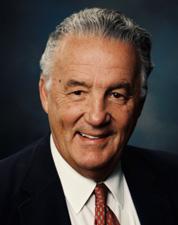
Mr. President, I am pleased to join with my colleagues in introducing legislation to improve security at our Nation's transit systems, rail lines, and ports. The transit title in this legislation was…
Mr. President, I am pleased to join with my colleagues in introducing legislation to improve security at our Nation's transit systems, rail lines, and ports. The transit title in this legislation was reported unanimously by the Banking Committee in November of last year, and the rail and port titles were reported on the same day by the Commerce Committee. Combining these titles into one piece of legislation makes extraordinary sense when one considers the urgent need to improve security in all areas of our Nation's multimodal transportation network.
As ranking member of the Banking Committee, which has jurisdiction over public transportation, I will focus my remarks on the transit portion of this legislation, though the need for improved security is equally great at our rail network and ports. Let me begin by noting that during the last Congress, the Senate unanimously passed the Public Transportation Terrorism Prevention Act of 2004, which is identical to the transit title in the legislation we are introducing today. Unfortunately, that legislation was never enacted into law, and the threat to transit continues. Just last week the Department of Homeland Security issued a new warning to transit systems to remain alert against possible terrorist attacks. According to the Associated Press, the warning said that four people had been arrested over the last several months in separate incidents involving videotaping of European subway stations and trains or similar activity, which provides ``indications of continued terrorist interest in mass transit systems as targets.''
Last year, the London subway system was the target of a tragic attack that left 50 people dead, and in 2004, almost 200 people were killed when bombs exploded on commuter rail
trains in Madrid. In fact, in 2002, the GAG reported that one-third of all terrorist attacks worldwide are against transit systems. Despite this significant threat, security funding has been grossly inadequate, and, as a result, our Nation's transit systems have been unable to implement necessary security improvements, including those that have been identified by the Department of Homeland Security. In an editorial last July, just after the London attacks, the Baltimore Sun stated that: Since September 11, 2001, the Federal Government has spent $18 billion on aviation security. Transit systems, which carry 16 times more passengers daily, have received about $250 million. That is a ridiculous imbalance.
The editorial goes on to state:
How would those in charge of the nation's public transit
systems spend the extra money? Chiefly for necessities like
security cameras, radios, training an extra security
personnel. Those aren't extravagant requests.
Let me give one example of a critical need right here with respect to Washington's Metro. Their greatest security need is a backup control operations center. This need was identified by the Federal Transit Administration in its initial security assessment and then identified again by the Department of Homeland Security in its subsequent security assessment. This critical need remains unaddressed because it has been unfunded. This legislation would authorize the funding to make this and other urgently needed security upgrades at transit systems around the country.
We know that transit systems are potential targets for terrorist attacks. We know the vital role these systems play in our Nation's economic infrastructure. We can wait no longer to make these security investments.
I thank the chairman of the Banking Committee, Senator Shelby, for his excellent leadership on transit security and Senator Reed for his strong and continued commitment on this issue. I also commend the leadership of the Commerce Committee for their foresight in moving the port and rail titles of this legislation. I thank all of our colleagues who have joined as cosponsors of this legislation, and I urge the full Senate to support it.
Mr. President, I ask unanimous consent that the Committee on Banking, Housing, and Urban Affairs be authorized to meet during the session of the Senate on May 18, 2006, at 9:30 a.m. to conduct a…
Mr. President, I ask unanimous consent that the Committee on Banking, Housing, and Urban Affairs be authorized to meet during the session of the Senate on May 18, 2006, at 9:30 a.m. to conduct a hearing on ``The Report of the Congress on International Economic and Exchange Rate Policies.''
Mr. President, I ask unanimous consent that the Committee on Banking, Housing, and Urban Affairs be authorized to met during the session of the Senate on Thursday, May 18, 2006, at 9:30 a.m. to mark up S. 1811, the ``San Francisco Old Mint Commemorative Coin Act;'' S. 633, the ``American Veterans Disabled for Life Commemorative Coin Act;'' and S. 2784, the ``Fourteenth Dalai Lama Gold Medal Act.''
Mr. President. I ask unanimous consent that the Senate Committee on Commerce, Science and Transportation be authorized to meet on Thursday, May 18, 2006, at 10 a.m. on S. 2686, the Consumer's Choice, and Broadband Deployment Act of 2006.
Mr. President. I ask unanimous consent that the Senate Committee on Commerce Science and Transportation be authorized to meet on Thursday, May 18, 2006, at 2:30 p.m. for an Executive Session.
Mr. President, I ask unanimous consent that the Senate Committee on Commerce Science and Transportation be authorized to meet on Thursday, May 18, 2006, at 2:30 p.m. for an Executive Session.
Mr. President, I ask unanimous consent that the Committee on Finance be authorized to meet during the session on Thursday, May 18, 2006, at 10:30 a.m., in 215 Dirksen Senate Office Building, to consider proposed legislation implementing the U.S.-Oman Free Trade Agreement, and the nomination of W. Ralph Basham, of Virginia, to be Commissioner of Customs, Department of Homeland Security.
TE PRESIDING OFFICER. Without objection, it is so ordered.
Committee on Foreign Relations
Mr. President, I ask unanimous consent that the Committee on Foreign Relations be authorized to meet during the session of the Senate on Thursday, May 18, 2006, at 9:30 a.m. to hold a hearing on Iran's Political/Nuclear Ambitions and U.S. Policy Options.
Mr. President, I ask unanimous consent that the Committee on Homeland Security and Governmental Affairs be authorized to meet on Thursday, May 18, 2006, at 10 a.m. to consider the nomination of Robert I. Cusick to be Director of the Office of Government Ethics.
PRESIDING OFFICER. Without objection, it is so ordered.
select committee on intelligence
Mr. President, I ask unanimous consent that the Select Committee on Intelligence be authorized to meet during the session of the Senate on May 18, 2006 at 9:30 a.m. to hold a confirmation hearing on General Michael V. Hayden to be Director of the Central Intelligence Agency.
Mr. President, I ask unanimous consent that the Select Committee on Aging be authorized to meet May 18, 2006 from 10 a.m.-12 p.m. in Dirksen 628 for the purpose of conducting a hearing.
Mr. President, I ask unanimous consent that the Committee on Homeland Security and Governmental Affairs' Subcommittee on Federal Financial Management, Government Information, and International Security be authorized to meet on Thursday, May 18, 2006, at 2:30 p.m. for a hearing regarding ``Unobligated Balances: Freeing up Funds, Setting Priorities and Untying Agency Hands.''
Mr. President, I ask unanimous consent that the Committee on Foreign Relations Subcommittee on Near Eastern and South Asian Affairs be authorized to meet during the session of the Senate on Thursday, May 18, 2006, at 2:30 p.m. to hold a hearing on Nepal: Transition from Crisis to Peaceful Democracy.
Mr. Speaker, I rise in strong support of our legislation to award the Congressional Gold Medal to His Holiness the Dalai Lama. I would first like to express my great appreciation to my dear friend…
Mr. Speaker, I rise in strong support of our legislation to
award the Congressional Gold Medal to His Holiness the Dalai Lama.
I would first like to express my great appreciation to my dear friend Congressman Barney Frank not only for yielding me some time, but, far more importantly, for being a tireless champion in advancing human rights. Let me also thank the chairman of the Financial Services Committee, my friend, Mr. Oxley, for expediting consideration of this legislation, as well as my colleague from the International Relations Committee, Ileana Ros-Lehtinen, and for her leadership on this legislation on behalf of the Tibetan people and all human rights issues.
Mr. Speaker, 19 years ago this month, His Holiness the Dalai Lama at the invitation of my wife, Annette, addressed the Congressional Human Rights Caucus that I cofounded and which I currently chair with our colleague Frank Wolf. The historic speech His Holiness delivered was his first major policy address outside of India and the first time he had ever appeared before the Congress.
The Dalai Lama unveiled his Five Point Peace Plan for Tibet. We did not know it at the time, but what we heard was to become the foundation for the Dalai Lama's fight on behalf of the people of Tibet.
While we were welcoming His Holiness on Capitol Hill, the State Department and the White House refused to meet with him. The individuals responsible for crafting our foreign policy back then crouched under their desks unwilling to risk the ire of the Chinese Government by meeting with the true leader of the Tibetan people.
Nearly two decades later, His Holiness regularly meets with Presidents and Secretaries of State. During his last visit to Washington, this brave man, small of stature but with an infinite heart, was greeted by dozens of Members of Congress. Tens of thousands of Washington residents packed an auditorium for several nights to hear his words of wisdom.
His Holiness has used his international acclaim to speak out forcefully against the cultural and religious annihilation of the Tibetan people. Rather than resorting to force, the Dalai Lama has actively pursued a negotiated solution to the Tibetan issue with the Chinese Government. In five rounds of discussions, representatives of the Dalai Lama have argued with determination to the Chinese that the Tibetan people must have true religious, cultural, and economic autonomy, and that the current marginalization of the Tibetan people in their own land must end.
Awarding the Congressional Gold Medal to His Holiness the Dalai Lama will send a strong signal of congressional support for a negotiated settlement to the Tibetan issue that preserves Tibetan culture and promotes genuine autonomy for the long-suffering people of Tibet.
Through his words and through his deeds, the Dalai Lama has made an enduring contribution to peace, nonviolence, human rights, and religious understanding. With our action here today, Mr. Speaker, His Holiness will join the ranks of Pope John Paul II, Elie Wiesel, Nelson Mandela, and Mother Teresa, all of whom have been awarded the Congressional Gold Medal, a pantheon of peacemakers. I strongly support passage of this legislation.
Mr. Speaker, this is a very important piece of legislation recognizing one of the truly great advocates of human rights in our time, a man who in the face of enormous adversity generated by the…
Mr. Speaker, this is a very important piece of legislation recognizing one of the truly great advocates of human rights in our time, a man who in the face of enormous adversity generated by the People's Republic of China's oppression has really held forth the banner of human rights.
I therefore am delighted to yield as much time as he may consume to our champion of human rights here in the House of Representatives, the ranking member of the Committee on International Relations who has for his entire life been a very vigorous defender of the cause of freedom in a variety of also adverse circumstances, the gentleman from California (Mr. Lantos).
Mr. Speaker, I now yield to another staunch defender of human rights throughout the world, the gentleman from Ohio (Mr. Kucinich), such time as he may consume.
Mr. Speaker, I thank the gentleman. And to close out our side here, and I think the debate, I yield such time as she may consume to a woman who has not only been a leader in human rights but was an early advocate and personal friend of the Dalai Lama.
Let me say, Mr. Speaker, that a few years ago when he spoke at Brandeis University in the district of my colleague, Mr. Markey and I were there to meet him, and he had taken a stand that may have been a little controversial. And the first thing he said to me was, this was years before the gentlewoman from California had ascended to leadership. He said, ``Congressman, please tell Nancy Pelosi not to be angry; I am going to explain this to her.'' So when the Dalai Lama is concerned about her opinion of him, I think that says a great deal about her own commitment and dedication. And, of course, he did explain; and, no, she was not angry. She respected him then, she respects him now, and I am delighted to yield to her such time as she may consume.
Mr. Speaker, I yield myself such time as I consume just to express to the government of the People's Republic of China, on behalf I think of this entire House, a plea that they understand that their desire to be recognized as a great Nation, their security in this world will be enhanced, not diminished, if they reach out to this great leader who has moved in a direction beyond what some would want him to go to try and reach a compromise involving autonomy for the people of Tibet.
It is simply unbecoming for a Nation with the economic might of China, with the potential military might of China to appear to be frightened of this gentle, loving advocate of human dignity.
So we urge the Chinese Government, the entire House does, to reconsider its unwillingness to meet halfway as the Dalai Lama has agreed to do, and to give him the ability to return to Tibet, to a people that yearns for him, to reconcile with the people of Tibet and with the Dalai Lama, and the Chinese Government will be the beneficiaries, not the victims.
Mr. Speaker, I am glad that the House is able to pass this bill, unanimously I believe we will be doing it
Mr. Speaker, I yield back the balance of my time.
Show 8 more
I want to thank the gentleman from Massachusetts for his own commitment to human rights and thank Mr. Lantos for the lifetime of work that characterizes not only himself but Mrs. Lantos as well. This…
I want to thank the gentleman from Massachusetts for his own commitment to human rights and thank Mr. Lantos for the lifetime of work that characterizes not only himself but Mrs. Lantos as well.
This is an important moment for this Congress because through recognizing the Dalai Lama with the Congressional Gold Medal, we also recognize his lifetime of work which has been about elevating the human spirit. Because in that we transcend the little labels of Democrat and Republican, liberal and conservative, and we come to an understanding of human unity, those principles which unite us all. We learn through celebrating the Dalai Lama's life and his contributions the transformative power of love, the transformative power of compassion.
In his work, he has challenged us to look at those things in our lives which cause anger, to look at those things in our lives which relate to negativity, and to consciously work on those things so that we become more perfect. Wasn't that really the message of our Founders with respect to the creation of the United States itself, that the work of our government should ever be to form a more perfect Union?
So it is that the spiritual work of the Dalai Lama informs all of us that we can perfect ourselves, that we can practice daily, taking a walk down the path towards a more meaningful life. He teaches us patience. And certainly, in this great body, patience is something that lends us to understanding of each other, to having compassion for each other.
This is an important moment for this Congress, when we understand that the Dalai Lama's teachings involve karma, an understanding of the power and the consequences of every thought, word, and deed, knowing that for every action there might be another action that follows. The symmetry between Buddhism and some of the teachings of Christianity is instructive here. Buddhists talk, and the Dalai Lama talks, about the law of karma. Christianity, we know of teachings that say as you sow, so shall you reap. So much of our lives are penetrated by spiritual dimensions that we often don't pay much attention to. But in moments like this when we celebrate the life and the work of a single person, we come to an understanding of not only his relationship to us and our relationship to him, but of our relationship to each other. And so when we celebrate him, we are celebrating ourselves, too, and our higher potential, not only as public servants but as human beings.
The Dalai Lama speaks about a path to tranquility. Is it possible in a public forum which is centered on such vigorous debate that we can find tranquility? His teachings would say, yes, because tranquility is an inner condition.
So, Mr. Speaker, the honorable Ileana Ros-Lehtinen, our leader Ms. Pelosi, this is an important moment for this Congress, and I am proud to play a small part in recognizing the great work and person of the Dalai Lama.
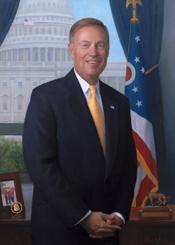
Mr. Speaker, I rise today to urge support of S. 2784, the ``Fourteenth Dalai Lama Congressional Gold Medal Act,'' and urge its immediate passage. This legislation was introduced by the Senator from…
Mr. Speaker, I rise today to urge support of S. 2784, the ``Fourteenth Dalai Lama Congressional Gold Medal Act,'' and urge its immediate passage.
This legislation was introduced by the Senator from California, Mrs. Feinstein, and is identical to H.R. 4562, introduced by the gentle lady from Florida, Ms. Ros-Lehtinen. The House version currently has 312 co- sponsors, is compliant with all House and Financial Services Committee rules, and has been scored as budget-neutral by CBO.
Under the legislation, the Speaker and the President Pro Tempore of the Senate are authorized to present, on behalf of Congress, a gold medal to Tenzin Gyatso, the Fourteenth Dalai Lama, or spiritual, cultural and, in effect, governmental leader of Tibet, who has lived in exile from his native country since 1959, when he fled the power of the People's Republic of China.
Mr. Speaker, the Dalai Lama has spent the 47 years of his exile peacefully seeking to establish a form of autonomous self rule for Tibet. In doing so, he has earned the great respect of the world community for the quiet, disciplined and non-violent way he has chosen to lead his struggle--in fact, the respect is so great that in 1989, he was awarded the Nobel Peace Prize. The Nobel Committee said the award came ``for his consistent resistance to the use of violence in his people's struggle to regain their liberty . . . He has instead advocated peaceful solutions based upon tolerance and mutual respect in order to preserve the historical and cultural heritage of his people.''
Mr. Speaker, Tibet is a long way from the United States, and a far different land about which most Americans know little. But the Dalai Lama's basic beliefs--peace, human rights, preservation of culture and of the environment, and the promotion of harmony and respect among religions--are so familiar to all of us that we may feel we know this quiet man in some special way, and he us. In fact, at a ceremony in the Capitol Rotunda in 1991, the Dalai Lama said of his childhood view of the United States: ``What truly inspired me were your ideas of freedom and democracy. I felt that your principles were identical to my own, the Buddhist belief in fundamental human rights, freedom, equality, tolerance and compassion for all.''
Mr. Speaker, the Congressional Gold Medal is the highest civilian honor the Congress can bestow. Previous recipients have included Pope John Paul II, Mother Teresa and Elie Wiesel. His Holiness, the Fourteenth Dalai Lama, stands with them in his beliefs, and in the way his life embodies them. It is appropriate and, perhaps, overdue that we confer upon him this medal, this mark of respect and admiration. I urge immediate passage of this bill.
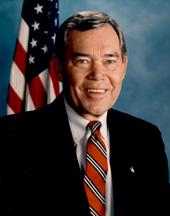
Mr. President, I rise today with my colleague from California in offering this legislation to award the 14th Dalai Lama with the prestigious Congressional Gold Medal. Mr. President, the Dalai Lama…
Mr. President, I rise today with my colleague from California in offering this legislation to award the 14th Dalai Lama with the prestigious Congressional Gold Medal.
Mr. President, the Dalai Lama has been one of the leading voices in advocating for peace, tolerance, human rights, nonviolence, and compassion throughout the globe. He has worked tirelessly for nearly 50 years to increase understanding between the Tibetan and Chinese people. In these difficult times, I believe it is necessary to recognize those who fight to bring people together. There are few international figures more deserving of receiving this award.
In 1959, the Dalai Lama fled his Tibetan homeland for neighboring India, where he established a government in exile. Under his ``Middle Way'' approach, he has worked arduously for the past two decades to find a reasonable and peaceful solution for providing cultural and religious autonomy for Tibetans within the People's Republic of China. He has also been a steadfast and vigorous advocate for peace and human rights for all people across the globe.
In 1989, he received the Nobel Peace Prize for his efforts. In their recommendation, the Nobel Committee noted that in his struggle for the liberation of Tibet, the Dalai Lama has consistently opposed the use of violence, and has instead advocated peaceful solutions based upon tolerance and mutual respect.
The Dalai Lama's worldwide contributions to peace, religious understanding, and the advancement of human rights are innumerable. He has made it his life's work to promote harmony and respect among the different religious faiths of the world. In his own words: ``I always believe that it is much better to have a variety of religions, a variety of philosophies, rather than one single religion or philosophy. This is necessary because of the different mental dispositions of each human being. Each religion has certain unique ideas or techniques, and learning about them can only enrich one's faith.''
By definition, a Congressional Gold Medal is reserved for the most heroic, courageous, and outstanding those who we wish to emulate in our own lives. The Dalai Lama is such an individual, and I urge all of my colleagues to join Senator Feinstein and myself in honoring him with this distinctive award.
Mr. President, I rise today to introduce the Pharmaceutical Technology and Education Enhancement Act. The legislation that I introduce today would improve pharmaceutical and biotechnological…
Mr. President, I rise today to introduce the Pharmaceutical Technology and Education Enhancement Act. The legislation that I introduce today would improve pharmaceutical and biotechnological development and manufacturing through education and research at our nation's institutions of higher education. By expanding pharmaceutical science, technology and engineering research within our universities, this bill aims to expedite the drug manufacturing process,
thereby producing quality pharmaceuticals at a more affordable cost to consumers.
In 1999, 8.2 percent of total health care spending in the United States was attributed to prescription drugs. By 2010, prescription drugs are expected to account for 14 percent of our nation's health care spending. In addition, the average cost of bringing a new drug to market has risen 50 percent in the last five years, now costing as much as $1,700,000,000.
The trend of rising pharmaceutical costs is disturbing as it discourages innovation and impedes efforts to fight disease and address important public health concerns. High pharmaceutical manufacturing costs associated with outdated manufacturing processes significantly contribute to the rising cost of prescription drugs and overall health care in our country.
This legislation would establish a partnership between the Food and Drug Administration and other federal agencies, the pharmaceutical and medical industries, and the National Institute for Pharmaceutical Technology and Education whose member institutions include Purdue University, in my home state of Indiana, and ten other exemplary research universities throughout the country. This collaboration will expand the ability of those in the academic research field to contribute to the medical technology and pharmaceutical industries to create better quality products with more efficient, less costly manufacturing.
Without a change in the pharmaceutical manufacturing process, health care costs in this country will continue to rise and prevalent public health concerns will remain unanswered. Engaging the academic community in this process is vital and I urge my colleagues to join me as co- sponsors of this important legislation.

Mr. Speaker, I rise in strong support of S. 2784, which authorizes the awarding of the Congressional Gold Medal to Tenzin Gyatso, the 14th Dalai Lama. The Congressional Gold Medal is the highest…
Mr. Speaker, I rise in strong support of S. 2784, which authorizes the awarding of the Congressional Gold Medal to Tenzin Gyatso, the 14th Dalai Lama. The Congressional Gold Medal is the highest expression of national appreciation for exceptional service and for lifetime contributions. The medal has been awarded to individuals from all walks of life. Dr. Martin Luther King, Jr. and Coretta Scott King, Pope John Paul II, the Navajo Code Talkers, Rosa Parks, Frank Sinatra, and Elie Wiesel are among those who have been honored. The Dalai Lama is well qualified to join the list of individuals who have received this most distinguished of honors.
Tenzin Gyatso, the Fourteenth Dalai Lama is recognized in the United States and throughout the world as a leading figure of moral and religious authority. He is the unrivaled spiritual and cultural leader of the Tibetan people, and has used his leadership to promote democracy, freedom, and peace for the Tibetan people through a negotiated settlement of the Tibet issue, based on autonomy within the People's Republic of China.
This Dalai Lama has led the effort to preserve the rich cultural, religious, and linguistic heritage of the Tibetan people and to promote the safeguarding of other endangered cultures throughout the world.
For his efforts on behalf of humanity, this Dalai Lama was awarded the Nobel Peace Prize in 1989. His efforts to promote peace and non- violence throughout the globe, and to find democratic reconciliation for the Tibetan people through his ``Middle Way'' approach has won him world-wide acclaim.
This Dalai Lama has significantly advanced the goal of greater understanding, tolerance, harmony, and respect among the different religious faiths of the world through interfaith dialogue and outreach to other religious leaders and, perhaps most important, he has used his moral authority to promote the concept of universal responsibility as a guiding tenet for how human beings should treat one another and the planet we share.
For these reasons, I strongly support S. 2784 and urge my colleagues to join me in voting to award the Congressional Gold Medal to Tenzin Gyatso, the 14th Dalai Lama.
Mr. Speaker, I rise in support of S. 2784 to award a congressional gold metal to Tenzin Gyatso, the Fourteenth Dalai Lama, in recognition of his many enduring and outstanding contributions to peace,…
Mr. Speaker, I rise in support of S. 2784 to award a congressional gold metal to Tenzin Gyatso, the Fourteenth Dalai Lama, in recognition of his many enduring and outstanding contributions to peace, non-violence, human rights, and religious understanding.
I am honored to support the Dalai Lama to receive the Congressional Gold Metal. He has dedicated himself to the Tibetan people and the pursuit freedom. He is the head of state and spiritual leader of the Tibetan people--the epitome of strength and courage, revered around the world for his commitment to the cause of human rights and religious freedom--a man who wants only to be able to return to his country in peace and to lead his people in the practice of their religion. He had led the effort to preserve the rich cultural heritage of the Tibetan people.
I traveled to Tibet in 1997 and saw with my own eyes the suffering the Tibetan people endure. I visited monasteries and talked with many people. Several monks spoke to me in secret and shared with me the horrors taking place in Tibet. I heard stories of monks and nuns who were dragged away to prison and tortured.
These monks and nuns are not alone. Religious persecution is spread across China. Catholic bishops are in prisons and labor camps. Protestant House Church leaders are routinely harassed and detained. Large numbers of Muslims in China are in prison because of their faith. Young Muslim Uighur boys and girls are not even allowed to enter a mosque until they are 18-years-old.
I have been standing on the floor of this House talking about human rights in China and the Dalai Lama for two decades. The world is now looking for resolutions to the human rights problems in China and Tibet. There has been a dialogue taking place between the Dalai Lama's envoys and the Chinese, and that is good. But we now need to see some concrete results from these talks. The Tibetan people deserve to live in peace.
I am proud to support the Dalai Lama for the Congressional Gold Medal. He has kept the cause of human rights alive in Tibet and in other places around the globe. He is a true hero to me and many others throughout the world.
Mr. President, I am joined today by Senator Murkowski in introducing the Rural Physicians Relief Act of 2006. This legislation is intended to bring needed relief to doctors in rural America. As those…
Mr. President, I am joined today by Senator Murkowski in introducing the Rural Physicians Relief Act of 2006. This legislation is intended to bring needed relief to doctors in rural America.
As those of us from rural States are well aware, our constituents face many unique challenges when seeking quality health care. Our populations are small and spread out across extremely remote areas. Incidentally, the costs of operating even the most basic medical practice are simply too much for many physicians. As a result, many areas of our States tend to be some of the most medically underserved areas in the Nation.
To give you an idea of the situation in Montana, nearly 286,000 or one third of my constituents live in what are known as frontier areas. According to the United States Census Bureau, these are counties with fewer than seven people per square mile. That means that 46 of Montana's 56 counties are classified as frontier--24 of those have fewer than two people per square mile and 10 of those have less than one per square mile. However, what is even more striking is 9 of these frontier counties have no doctors at all, and 10 others have fewer than 3. Consequently, a large percentage of Montanans must travel great distances simply to get basic medical treatment.
The legislation that Senator Murkowski and I are introducing today seeks to alleviate this problem. It will provide incentives to encourage physicians to practice in these remote and underserved areas. Specifically, it would give a physician who is a Primary health services provider a $1,000 tax credit for each month that he or she provides services in a frontier area. Furthermore, physicians who treat a high percentage of patients from frontier areas would also be eligible for the tax credit.
All too often many of our constituents are at a disadvantage simply because of where they live. While this legislation will not completely solve the problem, it will go a long way toward bringing quality health care to those in rural America.
Mr. President, I ask unanimous consent that the text of the bill be printed in the Record.
I ask unanimous consent the Senate proceed to the immediate consideration of Calendar No. 440, S. 633, Calendar No. 441, S. 2784, and H.R. 4501 which was received from the House, en bloc. I ask…
I ask unanimous consent the Senate proceed to the immediate consideration of Calendar No. 440, S. 633, Calendar No. 441, S. 2784, and H.R. 4501 which was received from the House, en bloc.
I ask unanimous consent the bills be read a third time and passed, the motions to reconsider be laid upon the table, and any statements relating to the bills be printed in the Record.
Bill Text
6 versions available
        [Congressional Bills 109th Congress]
[From the U.S. Government Publishing Office]
[S. 2784 Enrolled Bill (ENR)]

S.2784

One Hundred Ninth Congress

of the

United States of America

AT THE SECOND SESSION

Begun and held at the City of Washington on Tuesday,
the third day of January, two thousand and six

An Act

To award a congressional gold medal to Tenzin Gyatso, the Fourteenth
Dalai Lama, in recognition of his many enduring and outstanding
contributions to peace, non-violence, human rights, and religious
understanding.

Be it enacted by the Senate and House of Representatives of the
United States of America in Congress assembled,

SECTION 1. SHORT TITLE.

This Act may cited as the ``Fourteenth Dalai Lama Congressional
Gold Medal Act''.

SEC. 2. FINDINGS.

Congress finds that Tenzin Gyatso, the Fourteenth Dalai Lama--
(1) is recognized in the United States and throughout the world
as a leading figure of moral and religious authority;
(2) is the unrivaled spiritual and cultural leader of the
Tibetan people, and has used his leadership to promote democracy,
freedom, and peace for the Tibetan people through a negotiated
settlement of the Tibet issue, based on autonomy within the
People's Republic of China;
(3) has led the effort to preserve the rich cultural,
religious, and linguistic heritage of the Tibetan people and to
promote the safeguarding of other endangered cultures throughout
the world;
(4) was awarded the Nobel Peace Prize in 1989 for his efforts
to promote peace and non-violence throughout the globe, and to find
democratic reconciliation for the Tibetan people through his
``Middle Way'' approach;
(5) has significantly advanced the goal of greater
understanding, tolerance, harmony, and respect among the different
religious faiths of the world through interfaith dialogue and
outreach to other religious leaders; and
(6) has used his moral authority to promote the concept of
universal responsibility as a guiding tenet for how human beings
should treat one another and the planet we share.

SEC. 3. CONGRESSIONAL GOLD MEDAL.

(a) Presentation Authorized.--The Speaker of the House of
Representatives and the President pro tempore of the Senate shall make
appropriate arrangements for the presentation, on behalf of the
Congress, of a gold medal of appropriate design, to Tenzin Gyatso, the
Fourteenth Dalai Lama, in recognition of his many enduring
contributions to peace and religious understanding.
(b) Design and Striking.--For purposes of the presentation referred
to in subsection (a), the Secretary of the Treasury (referred to in
this Act as the ``Secretary'') shall strike a gold medal with suitable
emblems, devices, and inscriptions to be determined by the Secretary.

SEC. 4. DUPLICATE MEDALS.

The Secretary may strike and sell duplicates in bronze of the gold
medal struck pursuant to section 3 under such regulations as the
Secretary may prescribe, at a price sufficient to cover the cost
thereof, including labor, materials, dies, use of machinery, and
overhead expenses, and the cost of the gold medal.

SEC. 5. STATUS OF MEDALS.

(a) National Medals.--The medals struck pursuant to this Act are
national medals for purposes of chapter 51 of title 31, United States
Code.
(b) Numismatic Items.--For purposes of sections 5134 and 5136 of
title 31, United States Code, all medals struck under this Act shall be
considered to be numismatic items.

SEC. 6. AUTHORITY TO USE FUND AMOUNTS; PROCEEDS OF SALE.

(a) Authority To Use Fund Amounts.--There is authorized to be
charged against the United States Mint Public Enterprise Fund such
amounts as may be necessary to pay for the costs of the medals struck
pursuant to this Act.
(b) Proceeds of Sale.--Amounts received from the sale of duplicate
bronze medals authorized under section 4 shall be deposited into the
United States Mint Public Enterprise Fund.

Speaker of the House of Representatives.

Vice President of the United States and
President of the Senate.