Native Hawaiian Government Reorganization Act of 2007
 Rep. Neil Abercrombie (D-HI)
Legislative Activity
Stay on top of the latest movement without scrolling through every action
Read the second time. Placed on Senate Legislative Calendar under General Orders. Calendar No. 449.
October 26, 2007
View full timeline
Introduced in House
January 17, 2007
Sponsor introductory remarks on measure. (CR E133)
January 17, 2007
Referred to the House Committee on Natural Resources.
January 17, 2007
Committee Consideration and Mark-up Session Held.
May 2, 2007
Reported by the Committee on Natural Resources. H. Rept. 110-389.
October 18, 2007
Placed on the Union Calendar, Calendar No. 243.
October 18, 2007
Rules Committee Resolution H. Res. 764 Reported to House. Rule provides for consideration of H.R. 505 with 1 hour of general debate. Previous question shall be considered as ordered without intervening motions except motion to recommit with or without instructions. Measure will be considered read. A specified amendment is in order.
October 22, 2007 • 7:02 PM
Rule H. Res. 764 passed House.
October 24, 2007 • 1:11 PM
Considered under the provisions of rule H. Res. 764. (consideration: CR H11974-11989)
October 24, 2007 • 1:11 PM
Rule provides for consideration of H.R. 505 with 1 hour of general debate. Previous question shall be considered as ordered without intervening motions except motion to recommit with or without instructions. Measure will be considered read. A specified amendment is in order.
October 24, 2007 • 1:11 PM
DEBATE - The House proceeded with one hour of debate on H.R. 505.
October 24, 2007 • 1:12 PM
The previous question was ordered pursuant to the rule. (consideration: CR H11986)
October 24, 2007 • 2:13 PM
Mr. Flake moved to recommit with instructions to Natural Resources. (consideration: CR H11986-11988; text: CR H11986)
October 24, 2007 • 2:13 PM
DEBATE - The House proceeded with 10 minutes of debate on the Flake motion to recommit with instructions. The instructions contained in the motion seek to report the bill back to the House with an amendment to make applicable the United States Constitution's Bill of Rights, the Federal Civil Rights laws, and burden or immunities clauses to the bill.
October 24, 2007 • 2:13 PM
The previous question on the motion to recommit with instructions was ordered without objection. (consideration: CR H11987)
October 24, 2007 • 2:23 PM
On motion to recommit with instructions Failed by the Yeas and Nays: 178 - 235 (Roll no. 999).
October 24, 2007 • 2:49 PM
Passed/agreed to in House: On passage Passed by the Yeas and Nays: 261 - 153 (Roll no. 1000).(text: CR H11974-11978)
October 24, 2007 • 3:04 PM
On passage Passed by the Yeas and Nays: 261 - 153 (Roll no. 1000). (text: CR H11974-11978)
October 24, 2007 • 3:04 PM
Motion to reconsider laid on the table Agreed to without objection.
October 24, 2007 • 3:04 PM
Received in the Senate. Read the first time. Placed on Senate Legislative Calendar under Read the First Time.
October 25, 2007
Read the second time. Placed on Senate Legislative Calendar under General Orders. Calendar No. 449.
October 26, 2007
Voting History
2 votes recorded • Roll call available
Floor Debate
16 membersWhat members said about H.R. 505 on the floor

 +11
+11
Floor Debate
16 membersWhat members said about H.R. 505 on the floor
Mr. Speaker, I'm very grateful and thank you. I want to thank Mr. Bishop for his kind remarks. It exemplifies, I think, the kind of relationship we have on the Resources Committee. And I want to…
Mr. Speaker, I ask unanimous consent that all Members may have 5 legislative days within which to revise and extend their remarks, and include extraneous material on the subject of my special order.…
I thank my friend for yielding. I feel like Bill Murray in ``Groundhog Day,'' the movie. I've only been in Congress for 3 years, but my respect for Mr. Abercrombie has grown. I try to take…
Mr. Speaker, I rise in support of the rule. I thank Chairman Slaughter and Vice Chair McGovern for the rule which fairly gives the only amendment to be filed due consideration pursuant to House…
Mr. Speaker, I want to thank my friend and namesake from Florida (Mr. Hastings) for yielding me the customary 30 minutes, and I yield myself such time as I may consume. (Mr. HASTINGS of Washington…
Show 8 more
I thank the gentleman for yielding. I have an amendment that has been made in order which I plan to offer later. When I came on the floor yesterday, I was approached by several Members who pointed…
Mr. Speaker, I rise today in strong support of H.R. 505, the Native Hawaiian Government Reorganization Act, which begins to provide a measure of justice for the indigenous native people of the…
Mr. Speaker, will the gentleman yield? Mr. Speaker, I want to commend the gentlemen for his remarks concerning the legislation that has been recently considered and passed in the Congress in…

Mr. Speaker, I thank very much my very good friend Chairman Rahall. He has shown a lot of courage and also caring and sensitivity to the situation that confronts these particular Indian tribes. I see…

Mr. Speaker, I rise in support H.R. 505, and I do so in recognition of the long-standing ties between Native Hawaiians and Alaska Natives, who themselves underwent a struggle to be recognized for the…

Mr. Speaker, pursuant to House Resolution 764, I call up the bill (H.R. 505) to express the policy of the United States regarding the United States relationship with Native Hawaiians and to provide a…
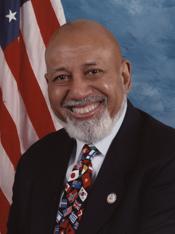
Mr. Speaker, by direction of the Committee on Rules, I call up House Resolution 764 and ask for its immediate consideration. Mr. Speaker, for the purpose of debate only, I yield the customary 30…
Mr. Speaker, I thank the gentleman and my colleague for yielding time. I rise in strong support of H.R. 835, the Hawaiian Homeownership Opportunity Act of 2007 and ask for my colleagues' support of…
Show 11 more
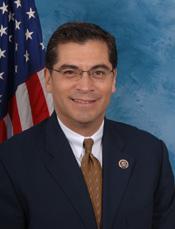
Mr. Speaker, more than anything else I'd like to thank Chairman Mike Honda from California for organizing tonight's special order to celebrate Asian Pacific American Heritage Month because it's…
Mr. Speaker, pursuant to House Resolution 377, I call up the bill (H.R. 1294) to extend Federal recognition to the Chickahominy Indian Tribe, the Chickahominy Indian Tribe-Eastern Division, the Upper…

Mr. Speaker, I rise today in honor of Asian Pacific Heritage Month and to recognize the contributions of Asian and Pacific Island Americans to our Nation. First, I want to thank my colleague from…
Mr. Speaker, pursuant to House Resolution 269, I call up the bill (H.R. 835) to reauthorize the programs of the Department of Housing and Urban Development for housing assistance for Native…
Mr. Speaker, I rise today to join my fellow Congressional Asian Pacific American Caucus, CAPAC members, and my other colleagues in celebrating Asian Pacific American Heritage Month. I'd like to, of…
Mr. Speaker, inasmuch as this is a discussion on the rule and not necessarily on the bill itself, I would like to confine my remarks, at least in this initial phase of dealing with the issue, on some…
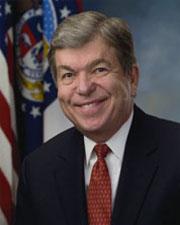
I yield to my good friend, the gentleman from South Carolina, for the purpose of inquiring about next week's schedule. I thank the gentleman for that information. There are really a couple of bills I…
Mr. Speaker, I rise in strong support of H.R. 505. First, I want to commend the author of this bill, my good friend and colleague, the gentleman from Hawaii, for his leadership and tireless efforts…
Mr. Speaker, I thank the gentlelady from California for yielding me time. I rise today in support of H. Res. 1153, celebrating Asian Pacific American Heritage Month. First, I want to thank the…

Mr. Speaker, I yield myself such time as I may consume. And the first thing I would like to acknowledge is both my respect and friendship with my colleague from Hawaii, Mr. Abercrombie. I have…

Mr. Speaker, I'm going to vote for this bill because I believe it represents a significant step forward in ensuring that the Commonwealth's interests are safeguarded when it comes to preventing…
Bill Text
4 versions available
        [Congressional Bills 110th Congress]
[From the U.S. Government Publishing Office]
[H.R. 505 Placed on Calendar Senate (PCS)]

Calendar No. 449
110th CONGRESS
1st Session
H. R. 505

_______________________________________________________________________

IN THE SENATE OF THE UNITED STATES

October 25, 2007

Received and read the first time

October 26, 2007

Read the second time and placed on the calendar

_______________________________________________________________________

AN ACT

To express the policy of the United States regarding the United States
relationship with Native Hawaiians and to provide a process for the
recognition by the United States of the Native Hawaiian governing
entity.

Be it enacted by the Senate and House of Representatives of the
United States of America in Congress assembled,

SECTION 1. SHORT TITLE.

This Act may be cited as the ``Native Hawaiian Government
Reorganization Act of 2007''.

SEC. 2. FINDINGS.

Congress finds that--
(1) the Constitution vests Congress with the authority to
address the conditions of the indigenous, native people of the
United States;
(2) Native Hawaiians, the native people of the Hawaiian
archipelago that is now part of the United States, are
indigenous, native people of the United States;
(3) the United States has a special political and legal
relationship to promote the welfare of the native people of the
United States, including Native Hawaiians;
(4) under the treaty making power of the United States,
Congress exercised its constitutional authority to confirm
treaties between the United States and the Kingdom of Hawaii,
and from 1826 until 1893, the United States--
(A) recognized the sovereignty of the Kingdom of
Hawaii;
(B) accorded full diplomatic recognition to the
Kingdom of Hawaii; and
(C) entered into treaties and conventions with the
Kingdom of Hawaii to govern commerce and navigation in
1826, 1842, 1849, 1875, and 1887;
(5) pursuant to the Hawaiian Homes Commission Act, 1920 (42
Stat. 108, chapter 42), the United States set aside
approximately 203,500 acres of land to address the conditions
of Native Hawaiians in the Federal territory that later became
the State of Hawaii;
(6) by setting aside 203,500 acres of land for Native
Hawaiian homesteads and farms, the Hawaiian Homes Commission
Act assists the members of the Native Hawaiian community in
maintaining distinct native settlements throughout the State of
Hawaii;
(7) approximately 6,800 Native Hawaiian families reside on
the Hawaiian Home Lands and approximately 18,000 Native
Hawaiians who are eligible to reside on the Hawaiian Home Lands
are on a waiting list to receive assignments of Hawaiian Home
Lands;
(8)(A) in 1959, as part of the compact with the United
States admitting Hawaii into the Union, Congress established a
public trust (commonly known as the ``ceded lands trust''), for
5 purposes, 1 of which is the betterment of the conditions of
Native Hawaiians;
(B) the public trust consists of lands, including submerged
lands, natural resources, and the revenues derived from the
lands; and
(C) the assets of this public trust have never been
completely inventoried or segregated;
(9) Native Hawaiians have continuously sought access to the
ceded lands in order to establish and maintain native
settlements and distinct native communities throughout the
State;
(10) the Hawaiian Home Lands and other ceded lands provide
an important foundation for the ability of the Native Hawaiian
community to maintain the practice of Native Hawaiian culture,
language, and traditions, and for the survival and economic
self-sufficiency of the Native Hawaiian people;
(11) Native Hawaiians continue to maintain other distinctly
native areas in Hawaii;
(12) on November 23, 1993, Public Law 103-150 (107 Stat.
1510) (commonly known as the ``Apology Resolution'') was
enacted into law, extending an apology on behalf of the United
States to the native people of Hawaii for the United States'
role in the overthrow of the Kingdom of Hawaii;
(13) the Apology Resolution acknowledges that the overthrow
of the Kingdom of Hawaii occurred with the active participation
of agents and citizens of the United States and further
acknowledges that the Native Hawaiian people never directly
relinquished to the United States their claims to their
inherent sovereignty as a people over their national lands,
either through the Kingdom of Hawaii or through a plebiscite or
referendum;
(14) the Apology Resolution expresses the commitment of
Congress and the President--
(A) to acknowledge the ramifications of the
overthrow of the Kingdom of Hawaii;
(B) to support reconciliation efforts between the
United States and Native Hawaiians; and
(C) to consult with Native Hawaiians on the
reconciliation process as called for in the Apology
Resolution;
(15) despite the overthrow of the government of the Kingdom
of Hawaii, Native Hawaiians have continued to maintain their
separate identity as a single distinct native community through
cultural, social, and political institutions, and to give
expression to their rights as native people to self-
determination, self-governance, and economic self-sufficiency;
(16) Native Hawaiians have also given expression to their
rights as native people to self-determination, self-governance,
and economic self-sufficiency--
(A) through the provision of governmental services
to Native Hawaiians, including the provision of--
(i) health care services;
(ii) educational programs;
(iii) employment and training programs;
(iv) economic development assistance
programs;
(v) children's services;
(vi) conservation programs;
(vii) fish and wildlife protection;
(viii) agricultural programs;
(ix) native language immersion programs;
(x) native language immersion schools from
kindergarten through high school;
(xi) college and master's degree programs
in native language immersion instruction; and
(xii) traditional justice programs; and
(B) by continuing their efforts to enhance Native
Hawaiian self-determination and local control;
(17) Native Hawaiians are actively engaged in Native
Hawaiian cultural practices, traditional agricultural methods,
fishing and subsistence practices, maintenance of cultural use
areas and sacred sites, protection of burial sites, and the
exercise of their traditional rights to gather medicinal plants
and herbs, and food sources;
(18) the Native Hawaiian people wish to preserve, develop,
and transmit to future generations of Native Hawaiians their
lands and Native Hawaiian political and cultural identity in
accordance with their traditions, beliefs, customs and
practices, language, and social and political institutions, to
control and manage their own lands, including ceded lands, and
to achieve greater self-determination over their own affairs;
(19) this Act provides a process within the framework of
Federal law for the Native Hawaiian people to exercise their
inherent rights as a distinct, indigenous, native community to
reorganize a single Native Hawaiian governing entity for the
purpose of giving expression to their rights as native people
to self-determination and self-governance;
(20) Congress--
(A) has declared that the United States has a
special political and legal relationship for the
welfare of the native peoples of the United States,
including Native Hawaiians;
(B) has identified Native Hawaiians as a distinct
group of indigenous, native people of the United States
within the scope of its authority under the
Constitution, and has enacted scores of statutes on
their behalf; and
(C) has delegated broad authority to the State of
Hawaii to administer some of the United States'
responsibilities as they relate to the Native Hawaiian
people and their lands;
(21) the United States has recognized and reaffirmed the
special political and legal relationship with the Native
Hawaiian people through the enactment of the Act entitled, ``An
Act to provide for the admission of the State of Hawaii into
the Union'', approved March 18, 1959 (Public Law 86-3; 73 Stat.
4), by--
(A) ceding to the State of Hawaii title to the
public lands formerly held by the United States, and
mandating that those lands be held as a public trust
for 5 purposes, 1 of which is for the betterment of the
conditions of Native Hawaiians; and
(B) transferring the United States' responsibility
for the administration of the Hawaiian Home Lands to
the State of Hawaii, but retaining the exclusive right
of the United States to consent to any actions
affecting the lands included in the trust and any
amendments to the Hawaiian Homes Commission Act, 1920
(42 Stat. 108, chapter 42) that are enacted by the
legislature of the State of Hawaii affecting the
beneficiaries under the Act;
(22) the United States has continually recognized and
reaffirmed that--
(A) Native Hawaiians have a cultural, historic, and
land-based link to the aboriginal, indigenous, native
people who exercised sovereignty over the Hawaiian
Islands;
(B) Native Hawaiians have never relinquished their
claims to sovereignty or their sovereign lands;
(C) the United States extends services to Native
Hawaiians because of their unique status as the
indigenous, native people of a once-sovereign nation
with whom the United States has a special political and
legal relationship; and
(D) the special relationship of American Indians,
Alaska Natives, and Native Hawaiians to the United
States arises out of their status as aboriginal,
indigenous, native people of the United States; and
(23) the State of Hawaii supports the reaffirmation of the
special political and legal relationship between the Native
Hawaiian governing entity and the United States as evidenced by
2 unanimous resolutions enacted by the Hawaii State Legislature
in the 2000 and 2001 sessions of the Legislature and by the
testimony of the Governor of the State of Hawaii before the
Committee on Indian Affairs of the Senate on February 25, 2003,
and March 1, 2005.

SEC. 3. DEFINITIONS.

In this Act:
(1) Aboriginal, indigenous, native people.--The term
``aboriginal, indigenous, native people'' means people whom
Congress has recognized as the original inhabitants of the
lands that later became part of the United States and who
exercised sovereignty in the areas that later became part of
the United States.
(2) Adult member.--The term ``adult member'' means a Native
Hawaiian who has attained the age of 18 and who elects to
participate in the reorganization of the Native Hawaiian
governing entity.
(3) Apology resolution.--The term ``Apology Resolution''
means Public Law 103-150 (107 Stat. 1510), a Joint Resolution
extending an apology to Native Hawaiians on behalf of the
United States for the participation of agents of the United
States in the January 17, 1893, overthrow of the Kingdom of
Hawaii.
(4) Commission.--The term ``commission'' means the
Commission established under section 7(b) to provide for the
certification that those adult members of the Native Hawaiian
community listed on the roll meet the definition of Native
Hawaiian set forth in paragraph (10).
(5) Council.--The term ``council'' means the Native
Hawaiian Interim Governing Council established under section
7(c)(2).
(6) Indian program or service.--
(A) In general.--The term ``Indian program or
service'' means any federally funded or authorized
program or service provided to an Indian tribe (or
member of an Indian tribe) because of the status of the
members of the Indian tribe as Indians.
(B) Inclusions.--The term ``Indian program or
service'' includes a program or service provided by the
Bureau of Indian Affairs, the Indian Health Service, or
any other Federal agency.
(7) Indian tribe.--The term ``Indian tribe'' has the
meaning given the term in section 4 of the Indian Self-
Determination and Education Assistance Act (25 U.S.C. 450b).
(8) Indigenous, native people.--The term ``indigenous,
native people'' means the lineal descendants of the aboriginal,
indigenous, native people of the United States.
(9) Interagency coordinating group.--The term ``Interagency
Coordinating Group'' means the Native Hawaiian Interagency
Coordinating Group established under section 6.
(10) Native hawaiian.--
(A) In general.--Subject to subparagraph (B), for
the purpose of establishing the roll authorized under
section 7(c)(1) and before the reaffirmation of the
special political and legal relationship between the
United States and the Native Hawaiian governing entity,
the term ``Native Hawaiian'' means--
(i) an individual who is 1 of the
indigenous, native people of Hawaii and who is
a direct lineal descendant of the aboriginal,
indigenous, native people who--
(I) resided in the islands that now
comprise the State of Hawaii on or
before January 1, 1893; and
(II) occupied and exercised
sovereignty in the Hawaiian
archipelago, including the area that
now constitutes the State of Hawaii; or
(ii) an individual who is 1 of the
indigenous, native people of Hawaii and who was
eligible in 1921 for the programs authorized by
the Hawaiian Homes Commission Act (42 Stat.
108, chapter 42) or a direct lineal descendant
of that individual.
(B) No effect on other definitions.--Nothing in
this paragraph affects the definition of the term
``Native Hawaiian'' under any other Federal or State
law (including a regulation).
(11) Native hawaiian governing entity.--The term ``Native
Hawaiian Governing Entity'' means the governing entity
organized by the Native Hawaiian people pursuant to this Act.
(12) Native hawaiian program or service.--The term ``Native
Hawaiian program or service'' means any program or service
provided to Native Hawaiians because of their status as Native
Hawaiians.
(13) Office.--The term ``Office'' means the United States
Office for Native Hawaiian Relations established by section
5(a).
(14) Secretary.--The term ``Secretary'' means the Secretary
of the Interior.
(15) Special political and legal relationship.--The term
``special political and legal relationship'' shall refer,
except where differences are specifically indicated elsewhere
in the Act, to the type of and nature of relationship the
United States has with the several federally recognized Indian
tribes.

SEC. 4. UNITED STATES POLICY AND PURPOSE.

(a) Policy.--The United States reaffirms that--
(1) Native Hawaiians are a unique and distinct, indigenous,
native people with whom the United States has a special
political and legal relationship;
(2) the United States has a special political and legal
relationship with the Native Hawaiian people which includes
promoting the welfare of Native Hawaiians;
(3) Congress possesses the authority under the
Constitution, including but not limited to Article I, section
8, clause 3, to enact legislation to address the conditions of
Native Hawaiians and has exercised this authority through the
enactment of--
(A) the Hawaiian Homes Commission Act, 1920 (42
Stat. 108, chapter 42);
(B) the Act entitled ``An Act to provide for the
admission of the State of Hawaii into the Union'',
approved March 18, 1959 (Public Law 86-3, 73 Stat. 4);
and
(C) more than 150 other Federal laws addressing the
conditions of Native Hawaiians;
(4) Native Hawaiians have--
(A) an inherent right to autonomy in their internal
affairs;
(B) an inherent right of self-determination and
self-governance;
(C) the right to reorganize a Native Hawaiian
governing entity; and
(D) the right to become economically self-
sufficient; and
(5) the United States shall continue to engage in a process
of reconciliation and political relations with the Native
Hawaiian people.
(b) Purpose.--The purpose of this Act is to provide a process for
the reorganization of the single Native Hawaiian governing entity and
the reaffirmation of the special political and legal relationship
between the United States and that Native Hawaiian governing entity for
purposes of continuing a government-to-government relationship.

SEC. 5. UNITED STATES OFFICE FOR NATIVE HAWAIIAN RELATIONS.

(a) Establishment.--There is established within the Office of the
Secretary, the United States Office for Native Hawaiian Relations.
(b) Duties.--The Office shall--
(1) continue the process of reconciliation with the Native
Hawaiian people in furtherance of the Apology Resolution;
(2) upon the reaffirmation of the special political and
legal relationship between the single Native Hawaiian governing
entity and the United States, effectuate and coordinate the
special political and legal relationship between the Native
Hawaiian governing entity and the United States through the
Secretary, and with all other Federal agencies;
(3) fully integrate the principle and practice of
meaningful, regular, and appropriate consultation with the
Native Hawaiian governing entity by providing timely notice to,
and consulting with, the Native Hawaiian people and the Native
Hawaiian governing entity before taking any actions that may
have the potential to significantly affect Native Hawaiian
resources, rights, or lands;
(4) consult with the Interagency Coordinating Group, other
Federal agencies, and the State of Hawaii on policies,
practices, and proposed actions affecting Native Hawaiian
resources, rights, or lands; and
(5) prepare and submit to the Committee on Indian Affairs
and the Committee on Energy and Natural Resources of the Senate
and the Committee on Resources of the House of Representatives
an annual report detailing the activities of the Interagency
Coordinating Group that are undertaken with respect to the
continuing process of reconciliation and to effect meaningful
consultation with the Native Hawaiian governing entity and
providing recommendations for any necessary changes to Federal
law or regulations promulgated under the authority of Federal
law.
(c) Applicability to Department of Defense.--This section shall
have no applicability to the Department of Defense or to any agency or
component of the Department of Defense, but the Secretary of Defense
may designate 1 or more officials as liaison to the Office.

SEC. 6. NATIVE HAWAIIAN INTERAGENCY COORDINATING GROUP.

(a) Establishment.--In recognition that Federal programs authorized
to address the conditions of Native Hawaiians are largely administered
by Federal agencies other than the Department of the Interior, there is
established an interagency coordinating group to be known as the
``Native Hawaiian Interagency Coordinating Group''.
(b) Composition.--The Interagency Coordinating Group shall be
composed of officials, to be designated by the President, from--
(1) each Federal agency that administers Native Hawaiian
programs, establishes or implements policies that affect Native
Hawaiians, or whose actions may significantly or uniquely
impact Native Hawaiian resources, rights, or lands; and
(2) the Office.
(c) Lead Agency.--
(1) In general.--The Department of the Interior shall serve
as the lead agency of the Interagency Coordinating Group.
(2) Meetings.--The Secretary shall convene meetings of the
Interagency Coordinating Group.
(d) Duties.--The Interagency Coordinating Group shall--
(1) coordinate Federal programs and policies that affect
Native Hawaiians or actions by any agency or agencies of the
Federal Government that may significantly or uniquely affect
Native Hawaiian resources, rights, or lands;
(2) consult with the Native Hawaiian governing entity,
through the coordination referred to in section 6(d)(1), but
the consultation obligation established in this provision shall
apply only after the satisfaction of all of the conditions
referred to in section 7(c)(6); and
(3) ensure the participation of each Federal agency in the
development of the report to Congress authorized in section
5(b)(5).
(e) Applicability to Department of Defense.--This section shall
have no applicability to the Department of Defense or to any agency or
component of the Department of Defense, but the Secretary of Defense
may designate 1 or more officials as liaison to the Interagency
Coordinating Group.

SEC. 7. PROCESS FOR THE REORGANIZATION OF THE NATIVE HAWAIIAN GOVERNING
ENTITY AND THE REAFFIRMATION OF THE SPECIAL POLITICAL AND
LEGAL RELATIONSHIP BETWEEN THE UNITED STATES AND THE
NATIVE HAWAIIAN GOVERNING ENTITY.

(a) Recognition of the Native Hawaiian Governing Entity.--The right
of the Native Hawaiian people to reorganize the single Native Hawaiian
governing entity to provide for their common welfare and to adopt
appropriate organic governing documents is recognized by the United
States.
(b) Commission.--
(1) In general.--There is authorized to be established a
Commission to be composed of 9 members for the purposes of--
(A) preparing and maintaining a roll of the adult
members of the Native Hawaiian community who elect to
participate in the reorganization of the single Native
Hawaiian governing entity; and
(B) certifying that the adult members of the Native
Hawaiian community proposed for inclusion on the roll
meet the definition of Native Hawaiian in section
3(10).
(2) Membership.--
(A) Appointment.--
(i) In general.--Not later than 180 days
after the date of enactment of this Act, the
Secretary shall appoint the members of the
Commission in accordance with subparagraph (B).
(ii) Consideration.--In making an
appointment under clause (i), the Secretary may
take into consideration a recommendation made
by any Native Hawaiian organization.
(B) Requirements.--Each member of the Commission
shall demonstrate, as determined by the Secretary--
(i) not less than 10 years of experience in
the study and determination of Native Hawaiian
genealogy; and
(ii) an ability to read and translate into
English documents written in the Hawaiian
language.
(C) Vacancies.--A vacancy on the Commission--
(i) shall not affect the powers of the
Commission; and
(ii) shall be filled in the same manner as
the original appointment.
(3) Expenses.--Each member of the Commission shall be
allowed travel expenses, including per diem in lieu of
subsistence, at rates authorized for employees of agencies
under subchapter I of chapter 57 of title 5, United States
Code, while away from their homes or regular places of business
in the performance of services for the Commission.
(4) Duties.--The Commission shall--
(A) prepare and maintain a roll of the adult
members of the Native Hawaiian community who elect to
participate in the reorganization of the Native
Hawaiian governing entity; and
(B) certify that each of the adult members of the
Native Hawaiian community proposed for inclusion on the
roll meets the definition of Native Hawaiian in section
3(10).
(5) Staff.--
(A) In general.--The Commission may, without regard
to the civil service laws (including regulations),
appoint and terminate an executive director and such
other additional personnel as are necessary to enable
the Commission to perform the duties of the Commission.
(B) Compensation.--
(i) In general.--Except as provided in
clause (ii), the Commission may fix the
compensation of the executive director and
other personnel without regard to the
provisions of chapter 51 and subchapter III of
chapter 53 of title 5, United States Code,
relating to classification of positions and
General Schedule pay rates.
(ii) Maximum rate of pay.--The rate of pay
for the executive director and other personnel
shall not exceed the rate payable for level V
of the Executive Schedule under section 5316 of
title 5, United States Code.
(6) Detail of federal government employees.--
(A) In general.--An employee of the Federal
Government may be detailed to the Commission without
reimbursement.
(B) Civil service status.--The detail of the
employee shall be without interruption or loss of civil
service status or privilege.
(7) Procurement of temporary and intermittent services.--
The Commission may procure temporary and intermittent services
in accordance with section 3109(b) of title 5, United States
Code, at rates for individuals that do not exceed the daily
equivalent of the annual rate of basic pay prescribed for level
V of the Executive Schedule under section 5316 of that title.
(8) Expiration.--The Secretary shall dissolve the
Commission upon the reaffirmation of the special political and
legal relationship between the Native Hawaiian governing entity
and the United States.
(c) Process for the Reorganization of the Native Hawaiian Governing
Entity.--
(1) Roll.--
(A) Contents.--The roll shall include the names of
the adult members of the Native Hawaiian community who
elect to participate in the reorganization of the
Native Hawaiian governing entity and are certified to
be Native Hawaiian as defined in section 3(10) by the
Commission.
(B) Formation of roll.--Each adult member of the
Native Hawaiian community who elects to participate in
the reorganization of the Native Hawaiian governing
entity shall submit to the Commission documentation in
the form established by the Commission that is
sufficient to enable the Commission to determine
whether the individual meets the definition of Native
Hawaiian in section 3(10).
(C) Documentation.--The Commission shall--
(i) identify the types of documentation
that may be submitted to the Commission that
would enable the Commission to determine
whether an individual meets the definition of
Native Hawaiian in section 3(10);
(ii) establish a standard format for the
submission of documentation; and
(iii) publish information related to
clauses (i) and (ii) in the Federal Register.
(D) Consultation.--In making determinations that
each of the adult members of the Native Hawaiian
community proposed for inclusion on the roll meets the
definition of Native Hawaiian in section 3(10), the
Commission may consult with Native Hawaiian
organizations, agencies of the State of Hawaii
including but not limited to the Department of Hawaiian
Home Lands, the Office of Hawaiian Affairs, and the
State Department of Health, and other entities with
expertise and experience in the determination of Native
Hawaiian ancestry and lineal descendancy.
(E) Certification and submittal of roll to
secretary.--The Commission shall--
(i) submit the roll containing the names of
the adult members of the Native Hawaiian
community who meet the definition of Native
Hawaiian in section 3(10) to the Secretary
within two years from the date on which the
Commission is fully composed; and
(ii) certify to the Secretary that each of
the adult members of the Native Hawaiian
community proposed for inclusion on the roll
meets the definition of Native Hawaiian in
section 3(10).
(F) Publication.--Upon certification by the
Commission to the Secretary that those listed on the
roll meet the definition of Native Hawaiian in section
3(10), the Secretary shall publish the roll in the
Federal Register.
(G) Appeal.--The Secretary may establish a
mechanism for an appeal for any person whose name is
excluded from the roll who claims to meet the
definition of Native Hawaiian in section 3(10) and to
be 18 years of age or older.
(H) Publication; update.--The Secretary shall--
(i) publish the roll regardless of whether
appeals are pending;
(ii) update the roll and the publication of
the roll on the final disposition of any
appeal; and
(iii) update the roll to include any Native
Hawaiian who has attained the age of 18 and who
has been certified by the Commission as meeting
the definition of Native Hawaiian in section
3(10) after the initial publication of the roll
or after any subsequent publications of the
roll.
(I) Failure to act.--If the Secretary fails to
publish the roll, not later than 90 days after the date
on which the roll is submitted to the Secretary, the
Commission shall publish the roll notwithstanding any
order or directive issued by the Secretary or any other
official of the Department of the Interior to the
contrary.
(J) Effect of publication.--The publication of the
initial and updated roll shall serve as the basis for
the eligibility of adult members of the Native Hawaiian
community whose names are listed on those rolls to
participate in the reorganization of the Native
Hawaiian governing entity.
(2) Organization of the native hawaiian interim governing
council.--
(A) Organization.--The adult members of the Native
Hawaiian community listed on the roll published under
this section may--
(i) develop criteria for candidates to be
elected to serve on the Native Hawaiian Interim
Governing Council;
(ii) determine the structure of the
Council; and
(iii) elect members from individuals listed
on the roll published under this subsection to
the Council.
(B) Powers.--
(i) In general.--The Council--
(I) may represent those listed on
the roll published under this section
in the implementation of this Act; and
(II) shall have no powers other
than powers given to the Council under
this Act.
(ii) Funding.--The Council may enter into a
contract with, or obtain a grant from, any
Federal or State agency to carry out clause
(iii).
(iii) Activities.--
(I) In general.--The Council may
conduct a referendum among the adult
members of the Native Hawaiian
community listed on the roll published
under this subsection for the purpose
of determining the proposed elements of
the organic governing documents of the
Native Hawaiian governing entity,
including but not limited to--
(aa) the proposed criteria
for citizenship of the Native
Hawaiian governing entity;
(bb) the proposed powers
and authorities to be exercised
by the Native Hawaiian
governing entity, as well as
the proposed privileges and
immunities of the Native
Hawaiian governing entity;
(cc) the proposed civil
rights and protection of the
rights of the citizens of the
Native Hawaiian governing
entity and all persons affected
by the exercise of governmental
powers and authorities of the
Native Hawaiian governing
entity; and
(dd) other issues
determined appropriate by the
Council.
(II) Development of organic
governing documents.--Based on the
referendum, the Council may develop
proposed organic governing documents
for the Native Hawaiian governing
entity.
(III) Distribution.--The Council
may distribute to all adult members of
the Native Hawaiian community listed on
the roll published under this
subsection--
(aa) a copy of the proposed
organic governing documents, as
drafted by the Council; and
(bb) a brief impartial
description of the proposed
organic governing documents;
(IV) Elections.--The Council may
hold elections for the purpose of
ratifying the proposed organic
governing documents, and on
certification of the organic governing
documents by the Secretary in
accordance with paragraph (4), hold
elections of the officers of the Native
Hawaiian governing entity pursuant to
paragraph (5).
(3) Submittal of organic governing documents.--Following
the reorganization of the Native Hawaiian governing entity and
the adoption of organic governing documents, the Council shall
submit the organic governing documents of the Native Hawaiian
governing entity to the Secretary.
(4) Certifications.--
(A) In general.--Within the context of the future
negotiations to be conducted under the authority of
section 8(b)(1), and the subsequent actions by the
Congress and the State of Hawaii to enact legislation
to implement the agreements of the 3 governments, not
later than 90 days after the date on which the Council
submits the organic governing documents to the
Secretary, the Secretary shall certify that the organic
governing documents--
(i) establish the criteria for citizenship
in the Native Hawaiian governing entity;
(ii) were adopted by a majority vote of the
adult members of the Native Hawaiian community
whose names are listed on the roll published by
the Secretary;
(iii) provide authority for the Native
Hawaiian governing entity to negotiate with
Federal, State, and local governments, and
other entities;
(iv) provide for the exercise of
governmental authorities by the Native Hawaiian
governing entity, including any authorities
that may be delegated to the Native Hawaiian
governing entity by the United States and the
State of Hawaii following negotiations
authorized in section 8(b)(1) and the enactment
of legislation to implement the agreements of
the 3 governments;
(v) prevent the sale, disposition, lease,
or encumbrance of lands, interests in lands, or
other assets of the Native Hawaiian governing
entity without the consent of the Native
Hawaiian governing entity;
(vi) provide for the protection of the
civil rights of the citizens of the Native
Hawaiian governing entity and all persons
affected by the exercise of governmental powers
and authorities by the Native Hawaiian
governing entity; and
(vii) are consistent with applicable
Federal law and the special political and legal
relationship between the United States and the
indigenous, native people of the United States;
provided that the provisions of Public Law 103-
454, 25 U.S.C. 479a, shall not apply.
(B) Resubmission in case of noncompliance with the
requirements of subparagraph (a).--
(i) Resubmission by the secretary.--If the
Secretary determines that the organic governing
documents, or any part of the documents, do not
meet all of the requirements set forth in
subparagraph (A), the Secretary shall resubmit
the organic governing documents to the Council,
along with a justification for each of the
Secretary's findings as to why the provisions
are not in full compliance.
(ii) Amendment and resubmission of organic
governing documents.--If the organic governing
documents are resubmitted to the Council by the
Secretary under clause (i), the Council shall--
(I) amend the organic governing
documents to ensure that the documents
meet all the requirements set forth in
subparagraph (A); and
(II) resubmit the amended organic
governing documents to the Secretary
for certification in accordance with
this paragraph.
(C) Certifications deemed made.--The certifications
under paragraph (4) shall be deemed to have been made
if the Secretary has not acted within 90 days after the
date on which the Council has submitted the organic
governing documents of the Native Hawaiian governing
entity to the Secretary.
(5) Elections.--On completion of the certifications by the
Secretary under paragraph (4), the Council may hold elections
of the officers of the Native Hawaiian governing entity.
(6) Reaffirmation.--Notwithstanding any other provision of
law, upon the certifications required under paragraph (4) and
the election of the officers of the Native Hawaiian governing
entity, the special political and legal relationship between
the United States and the Native Hawaiian governing entity is
hereby reaffirmed and the United States extends Federal
recognition to the Native Hawaiian governing entity as the
representative governing body of the Native Hawaiian people.

SEC. 8. REAFFIRMATION OF DELEGATION OF FEDERAL AUTHORITY; NEGOTIATIONS;
CLAIMS.

(a) Reaffirmation.--The delegation by the United States of
authority to the State of Hawaii to address the conditions of the
indigenous, native people of Hawaii contained in the Act entitled ``An
Act to provide for the admission of the State of Hawaii into the
Union'' approved March 18, 1959 (Public Law 86-3, 73 Stat. 4), is
reaffirmed.
(b) Negotiations.--
(1) In general.--Upon the reaffirmation of the special
political and legal relationship between the United States and
the Native Hawaiian governing entity, the United States and the
State of Hawaii may enter into negotiations with the Native
Hawaiian governing entity designed to lead to an agreement
addressing such matters as--
(A) the transfer of lands, natural resources, and
other assets, and the protection of existing rights
related to such lands or resources;
(B) the exercise of governmental authority over any
transferred lands, natural resources, and other assets,
including land use;
(C) the exercise of civil and criminal
jurisdiction;
(D) the delegation of governmental powers and
authorities to the Native Hawaiian governing entity by
the United States and the State of Hawaii;
(E) any residual responsibilities of the United
States and the State of Hawaii; and
(F) grievances regarding assertions of historical
wrongs committed against Native Hawaiians by the United
States or by the State of Hawaii.
(2) Amendments to existing laws.--Upon agreement on any
matter or matters negotiated with the United States, the State
of Hawaii, and the Native Hawaiian governing entity, the
parties are authorized to submit--
(A) to the Committee on Indian Affairs of the
Senate, the Committee on Energy and Natural Resources
of the Senate, and the Committee on Resources of the
House of Representatives, recommendations for proposed
amendments to Federal law that will enable the
implementation of agreements reached between the 3
governments; and
(B) to the Governor and the legislature of the
State of Hawaii, recommendations for proposed
amendments to State law that will enable the
implementation of agreements reached between the 3
governments.
(3) Governmental authority and power.--Any governmental
authority or power to be exercised by the Native Hawaiian
governing entity which is currently exercised by the State or
Federal Governments shall be exercised by the Native Hawaiian
governing entity only as agreed to in negotiations pursuant to
section 8(b)(1) of this Act and beginning on the date on which
legislation to implement such agreement has been enacted by the
United States Congress, when applicable, and by the State of
Hawaii, when applicable. This includes any required
modifications to the Hawaii State Constitution in accordance
with the Hawaii Revised Statutes.
(c) Claims.--
(1) Disclaimers.--Nothing in this Act--
(A) creates a cause of action against the United
States or any other entity or person;
(B) alters existing law, including existing case
law, regarding obligations on the part of the United
States or the State of Hawaii with regard to Native
Hawaiians or any Native Hawaiian entity;
(C) creates obligations that did not exist in any
source of Federal law prior to the date of enactment of
this Act; or
(D) establishes authority for the recognition of
Native Hawaiian groups other than the single Native
Hawaiian Governing Entity.
(2) Federal sovereign immunity.--
(A) Specific purpose.--Nothing in this Act is
intended to create or allow to be maintained in any
court any potential breach-of-trust actions, land
claims, resource-protection or resource-management
claims, or similar types of claims brought by or on
behalf of Native Hawaiians or the Native Hawaiian
governing entity for equitable, monetary, or
Administrative Procedure Act-based relief against the
United States or the State of Hawaii, whether or not
such claims specifically assert an alleged breach of
trust, call for an accounting, seek declaratory relief,
or seek the recovery of or compensation for lands once
held by Native Hawaiians.
(B) Establishment and retention of sovereign
immunity.--To effectuate the ends expressed in section
8(c)(1) and 8(c)(2)(A), and notwithstanding any other
provision of Federal law, the United States retains its
sovereign immunity to any claim that existed prior to
the enactment of this Act (including, but not limited
to, any claim based in whole or in part on past
events), and which could be brought by Native Hawaiians
or any Native Hawaiian governing entity. Nor shall any
preexisting waiver of sovereign immunity (including,
but not limited to, waivers set forth in chapter 7 of
part I of title 5, United States Code, and sections
1505 and 2409a of title 28, United States Code) be
applicable to any such claims. This complete retention
or reclaiming of sovereign immunity also applies to
every claim that might attempt to rely on this Act for
support, without regard to the source of law under
which any such claim might be asserted.
(C) Effect.--It is the general effect of section
8(c)(2)(B) that any claims that may already have
accrued and might be brought against the United States,
including any claims of the types specifically referred
to in section 8(c)(2)(A), along with both claims of a
similar nature and claims arising out of the same
nucleus of operative facts as could give rise to claims
of the specific types referred to in section
8(c)(2)(A), be rendered nonjusticiable in suits brought
by plaintiffs other than the Federal Government.
(3) State sovereignty immunity.--
(A) Notwithstanding any other provision of Federal
law, the State retains its sovereign immunity, unless
waived in accord with State law, to any claim,
established under any source of law, regarding Native
Hawaiians, that existed prior to the enactment of this
Act.
(B) Nothing in this Act shall be construed to
constitute an override pursuant to section 5 of the
Fourteenth Amendment of State sovereign immunity held
under the Eleventh Amendment.

SEC. 9. APPLICABILITY OF CERTAIN FEDERAL LAWS.

(a) Indian Gaming Regulatory Act.--
(1) The Native Hawaiian governing entity and Native
Hawaiians may not conduct gaming activities as a matter of
claimed inherent authority or under the authority of any
Federal law, including the Indian Gaming Regulatory Act (25
U.S.C. 2701 et seq.) or under any regulations thereunder
promulgated by the Secretary or the National Indian Gaming
Commission.
(2) The foregoing prohibition in section 9(a)(1) on the use
of Indian Gaming Regulatory Act and inherent authority to game
apply regardless of whether gaming by Native Hawaiians or the
Native Hawaiian governing entity would be located on land
within the State of Hawaii or within any other State or
Territory of the United States.
(b) Taking Land Into Trust.--Notwithstanding any other provision of
law, including but not limited to part 151 of title 25, Code of Federal
Regulations, the Secretary shall not take land into trust on behalf of
individuals or groups claiming to be Native Hawaiian or on behalf of
the native Hawaiian governing entity.
(c) Real Property Transfers.--The Indian Trade and Intercourse Act
(25 U.S.C. 177), does not, has never, and will not apply after
enactment to lands or lands transfers present, past, or future, in the
State of Hawaii. If despite the expression of this intent herein, a
court were to construe the Trade and Intercourse Act to apply to lands
or land transfers in Hawaii before the date of enactment of this Act,
then any transfer of land or natural resources located within the State
of Hawaii prior to the date of enactment of this Act, by or on behalf
of the Native Hawaiian people, or individual Native Hawaiians, shall be
deemed to have been made in accordance with the Indian Trade and
Intercourse Act and any other provision of Federal law that
specifically applies to transfers of land or natural resources from,
by, or on behalf of an Indian tribe, Native Hawaiians, or Native
Hawaiian entities.
(d) Single Governing Entity.--This Act will result in the
recognition of the single Native Hawaiian governing entity. Additional
Native Hawaiian groups shall not be eligible for acknowledgment
pursuant to the Federal Acknowledgment Process set forth in part 83 of
title 25 of the Code of Federal Regulations or any other administrative
acknowledgment or recognition process.
(e) Jurisdiction.--Nothing in this Act alters the civil or criminal
jurisdiction of the United States or the State of Hawaii over lands and
persons within the State of Hawaii. The status quo of Federal and State
jurisdiction can change only as a result of further legislation, if
any, enacted after the conclusion, in relevant part, of the negotiation
process established in section 8(b).
(f) Indian Programs and Services.--Notwithstanding section 7(c)(6),
because of the eligibility of the Native Hawaiian governing entity and
its citizens for Native Hawaiian programs and services in accordance
with subsection (g), nothing in this Act provides an authorization for
eligibility to participate in any Indian program or service to any
individual or entity not otherwise eligible for the program or service
under applicable Federal law.
(g) Native Hawaiian Programs and Services.--The Native Hawaiian
governing entity and its citizens shall be eligible for Native Hawaiian
programs and services to the extent and in the manner provided by other
applicable laws.

SEC. 10. SEVERABILITY.

If any section or provision of this Act is held invalid, it is the
intent of Congress that the remaining sections or provisions shall
continue in full force and effect.

SEC. 11. AUTHORIZATION OF APPROPRIATIONS.

There are authorized to be appropriated such sums as are necessary
to carry out this Act.

Passed the House of Representatives October 24, 2007.

Attest:

LORRAINE C. MILLER,

Clerk.
Calendar No. 449

110th CONGRESS

1st Session

H. R. 505

_______________________________________________________________________

AN ACT

To express the policy of the United States regarding the United States
relationship with Native Hawaiians and to provide a process for the
recognition by the United States of the Native Hawaiian governing
entity.

_______________________________________________________________________

October 26, 2007

Read the second time and placed on the calendar