Madam Speaker, I ask unanimous consent that all Members have 5 legislative days to revise and extend their remarks and include extraneous material in the Record on the topic of my Special Order.…
Madam Speaker, I ask unanimous consent that all Members have 5 legislative days to revise and extend their remarks and include extraneous material in the Record on the topic of my Special Order.
Madam Speaker, another opportunity to be here on the floor on Monday night during the Congressional Black Caucus message hour, and you are in the chair. What a privilege.
I rise tonight, Madam Speaker, during this message hour to pause to address an ongoing crisis in Darfur. For many years now we have seen the devastating atrocities taking place in the Darfur region of Sudan. With the support of the Sudanese Government, the janjaweed militia has ravaged the people of Darfur, raping, torturing, murdering and forcing hundreds of thousands of Darfuris to flee to refugee camps in neighboring Chad and the Central African Republic. We saw the same devastation in Rwanda over a decade ago; and the American people have made their voices heard on this issue, vowing never again to remain silent when humanity is threatened.
The Congressional Black Caucus has been a leader on this issue. I, along with many of my Congressional Black Caucus colleagues, were some of the first Members of Congress to speak out about this issue. We have been to the Sudanese embassy to protest. Many were arrested. We have visited the region numerous times and we have repeatedly addressed this issue with President George Bush in meetings, asking him to take immediate action. Yet, once again, we come to the House floor to challenge this administration to take a stand in Darfur.
Madam Speaker, today's Washington Post had this to say about our progress in Darfur: ``A year and a half later, the situation on the ground in Darfur is little changed. More than two million displaced Darfuris, including hundreds of thousands in camps, have been unable to return to their homes. The perpetrators of the worst atrocities remain unpunished. Despite a renewed U.N. push, the international peacekeeping troops that Bush has long been seeking have yet to materialize. Just this weekend, peace talks in Libya aimed at ending the 4-year conflict appear to be floundering because of a boycott by key rebel groups.
``Many of those who have tracked the conflict over the years, including some in his own administration, say Bush has not matched his words with action, allowing initiatives to drop because of inertia or failure to follow up, while proving unable to mobilize either this bureaucracy or the international community.''
I continue to quote from the Washington Post: ``The President, who famously promised not to allow another Rwanda-style mass murder on his watch, has never fully chosen between
those inside his government advocating more pressure on Sudan and those advocating engagement with the Islamist government. So the policy has veered from one approach to the other.''
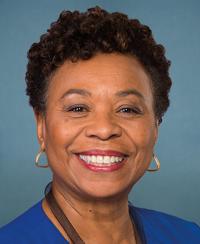
Today, I am pleased to say that the House passed three resolutions on Darfur, which I will discuss as I come back to the microphone. I am pleased to be joined again this evening, Madam Speaker, by one of my colleagues and good friends, Congresswoman Barbara Lee of California. She has been out front, particularly on this issue. We have had an opportunity to have press conferences with several leading Hollywood- types who have really been with us on the issue.
Madam Speaker, I am happy to yield such time as she may consume to the great woman from the great State of California (Ms. Lee).
Madam Speaker, I include for the Record from today's Washington Post, October 29, 2007, this first part of the article entitled, ``U.S. Promises on Darfur Don't Match Actions'' by Michael Abramowitz.
[From the Washington Post, Oct. 29, 2007]
U.S. Promises on Darfur Don't Match Actions
(By Michael Abramowitz)
In April 2006, a small group of Darfur activists--including
evangelical Christians, the representative of a Jewish group
and a former Sudanese slave--was ushered into the Roosevelt
Room at the White House for a private meeting with President
Bush. It was the eve of a major rally on the National Mall,
and the president spent more than an hour holding forth,
displaying a kind of passion that has led some in the White
House to dub him the ``Sudan desk officer.''
Bush insisted there must be consequences for rape and
murder, and he called for international troops on the ground
to protect innocent Darfuris, according to contemporaneous
notes by one of those present. He spoke of ``bringing
justice'' to the Janjaweed, the Arab militias that have
participated in atrocities that the president has repeatedly
described as nothing less than ``genocide.''
``He had an understanding of the issue that went beyond
simply responding to a briefing that had been given,'' said
David Rubenstein, a participant who was then executive
director of the Save Darfur Coalition, which has been sharply
critical of the administration's response to the crisis. ``He
knew more facts than I expected him to know, and he had a
broader political perspective than I expected him to have.''
Yet a year and a half later, the situation on the ground in
Darfur is little changed: More than 2 million displaced
Darfuris, including hundreds of thousands in camps, have been
unable to return to their homes. The perpetrators of the
worst atrocities remain unpunished. Despite a renewed U.N.
push, the international peacekeeping troops that Bush has
long been seeking have yet to materialize.
Just this weekend, peace talks in Libya aimed at ending the
four-year conflict appeared to be foundering because of a
boycott by key rebel groups.
Many of those who have tracked the conflict over the years,
including some in his own administration, say Bush has not
matched his words with action, allowing initiatives to drop
because of inertia or failure to follow up, while proving
unable to mobilize either his bureaucracy or the
international community.
The president who famously promised not to allow another
Rwanda-style mass murder on his watch has never fully chosen
between those inside his government advocating more pressure
on Sudan and those advocating engagement with its Islamist
government, so the policy has veered from one approach to
another.
Meanwhile, a constant turnover of key administration
advisers on Darfur, such as former deputy secretary of state
Robert B. Zoellick and presidential aide Michael Gerson, has
made it hard for the administration to maintain focus.
``Bush probably does want something done, but the lack of
hands-on follow-up from this White House allowed this to
drift,'' said one former State Department official involved
in Darfur who did not want to be quoted by name criticizing
the president. ``If he says, `There is not going to be
genocide on my watch,' and then 2\1/2\ years later we are
just getting tough action, what gives? He has made
statements, but his administration has not given meaning to
those statements.''
Since the United States became the first and only
government to call the killing in Darfur genocide, Bush and
his aides have grappled with how to provide security for
civilians in a large, remote area in the heart of Africa.
While almost everyone involved in Darfur policy agrees that
an African Union peacekeeping force of just 7,000 troops is
not up to the task, the United States has refused to send
troops and, despite promises of reinforcements, has yet to
secure many additional troops from other countries. At the
same time, it has been unable to broker a diplomatic
resolution that might ease the violence.
Even Bush has complained privately that his hands are tied
on Darfur because, with the U.S. involvement in Iraq and
Afghanistan, he cannot be seen as ``invading another Muslim
country,'' according to people who have spoken with him about
the issue.
``It's impossible to keep Iraq out of this picture,'' said
Edward Mortimer, who served as a top aide to then-U.N.
Secretary General Kofi Annan and says resentment over Iraq
caused many countries to not want to cooperate with the
United States on Darfur.
Bush advisers argue that the lack of success reflects the
limitations of working through institutions such as the
United Nations, NATO and the African Union. They cite the
billions of dollars of U.S. relief aid that has kept millions
of Sudanese alive. They say U.S. pressure has kept the issue
on the world's agenda.
``If there was ever a case study where the president sees
the limitations and frustrations of the multilateral
organizations, it is the issue of Darfur,'' said Dan
Bartlett, former White House counselor. ``Everybody for the
most part can come to a consensus: Whether you call it
genocide or not, we have an urgent security and humanitarian
crisis on our hands. Yet these institutions cannot garner the
will or ability to come together to save people.''
There is no doubt that responsibility for inaction on
Darfur can be spread around. The Sudanese government has
resisted cooperation at every step in the saga and has been
shielded at the United Nations by China, its main
international protector. Few other Western nations, with the
notable exception of Britain and some Nordic countries, have
shown much interest in resolving the crisis. The process of
raising peacekeepers from U.N. members has proved tortuously
slow.
``There's an enormous stain on the world's conscience,''
said Mitchell B. Reiss, former State Department policy
planning chief. ``We collectively stood by and let it happen
a decade after it happened in Rwanda.''
A President's Passion
In late 2005, Bush gathered his most senior advisers to
discuss what to do about Darfur. He wanted to know whether
the U.S. military could send in helicopter gunships to attack
the militias if they launched new attacks on the refugee
camps. Could they also shoot down Sudanese military aircraft
if necessary? he asked. His aides worried that the United
States could get involved in another shooting war, and the
president backed off.
``He wanted militant action, and people had to restrain
him,'' said one senior official familiar with the episode.
``He wanted to go in and kill the Janjaweed.''
The meeting underscored both Bush's personal investment in
Sudan, dating back to the beginning of his administration,
and his instinct, which aides have kept in check, to take
direct action.
Many close to Bush believe that this intense interest in
the issue was heavily influenced by American evangelicals,
who have adopted the cause of Christians in southern Sudan.
Even before the crisis in Darfur, in western Sudan, one of
Bush's foreign policy goals was to try to end the civil war
between the Muslim government in Khartoum and rebels in the
south, a conflict that had lasted more than two decades and
cost more than 2 million lives.
Former Senator John C. Danforth (R-Mo.), whom Bush
appointed as his special envoy for Sudan, said the
president's interest in the country is rooted in a larger
sense of morality. ``This isn't a country that has much
strategic interest for the United States,'' he observed.
Bush's initiative to broker a north-south deal worked.
Despite difficult negotiations, Sudanese President Omar
Hassan al-Bashir agreed in January 2005 to a plan to share
power and oil revenues with the rebels--and even gave the
south the right to secede in six years if the leadership
could not reconcile their differences.
But by then a separate conflict had exploded in Darfur, as
long-standing conflicts between African farmers and Arab
herders over land, and a failure by the Khartoum government
to redress local grievances, boiled over into armed
rebellion.
The government turned to a tactic it had employed in
fighting the southern rebels: arming local Arab militias, the
Janjaweed, to carry out a counterinsurgency on its behalf.
The militias rampaged throughout Darfur starting in mid-2003,
burning hundreds of villages, raping women and summarily
executing African villagers, according to numerous human
rights reports. More than 200,000 people have died in Darfur
since the crisis erupted, according to U.N. estimates. Some
estimates place the figure as high as 450,000.
Many familiar with Sudan believe that Bush and his aides
initially averted their gaze to the flaring violence in
Darfur because raising the issue might interfere with the
difficult negotiations with Bashir. Some U.S. officials saw
another reason for the reluctance to get involved: preserving
a burgeoning intelligence relationship with Khartoum, which
had begun sharing critical information about al-Qaeda and
other Islamic extremists.
``There was a tendency not to see Darfur initially for what
it was,'' said Gerard Gallucci, who served in 2003 and 2004
as the top U.S. diplomat in Khartoum. It was well known among
Western governments, he said, that Sudan ``was using terror
to cleanse black Muslim Africans from land that they had
promised the Janjaweed.''
Such claims are vigorously contested by Danforth and other
Bush advisers, who say the president repeatedly warned Bashir
about the consequences of sending Arab militias after
defenseless civilians.
Over time, Bush has become increasingly outspoken about the
situation in Darfur, raising the issue with foreign leaders
and meeting privately with dissidents and other little-known
political players in Sudan to encourage a solution. In recent
months, he has singled out Bashir for harsh condemnation,
accusing him of subverting efforts to bring peace to Darfur.
Meeting with the Darfur activists, Bush acknowledged that
Sudan had cooperated in anti-terrorism initiatives--but he
insisted that Khartoum could not ``buy off'' the United
States, Rubenstein said.
Last spring, when the White House worked on a new plan to
try to press Sudan's government to accept international
peacekeepers, it was the president himself who was the
driving force in the interagency process, many officials
involved the debate said. According to national security
adviser Stephen J. Hadley, Bush refused to accept a program
developed to confront Sudan because he was concerned that it
was not tough enough. He kicked it back to the bureaucracy.
``I've had it with this incrementalism,'' Hadley quoted the
president as saying in the Oval Office. ``We're going to
lead, and if people don't want to follow us, they're going to
have to stand up and explain why they are willing to let
women continue to be raped in Darfur.''
At one point, one senior official said, Bush wanted action
to crimp Sudan's booming oil business, a move that would have
severely aggravated relations with China--and that no one
else in the government favored.
There was stunned silence in the room, the official said,
when Hadley disclosed Bush's idea to other government
officials. Hadley made clear he was not interested in having
a discussion, but the administration never went as far as the
president seemed to be demanding. Instead, Treasury officials
came up with a sanctions plan aimed at tracking and squeezing
key individuals and companies in the Sudanese economy,
including the oil business.
I want to thank the gentlewoman from California, my good friend Barbara Lee, for her leadership on so many issues. As we come to the floor tonight, I want to thank her for her work that she has done in Darfur and thank her for joining me again in this hour.
As has been said previously, there were three pieces of legislation on Darfur that were voted on on the floor today, and one of those resolutions happened to be a resolution authored by my colleague and good friend Sheila Jackson-Lee from the great State of Texas.
She has had many great opportunities to take the lead on some of these issues as well. I have to say she and Barbara Lee have been wonderful about helping me with this CBC message hour every week.
I am happy to yield to my colleague and good friend Sheila Jackson- Lee of Houston, Texas.
Madam Speaker, I want to thank both of my colleagues for their leadership. Congresswoman Sheila Jackson-Lee, all that you've done around this issue and so many other issues, thank you so much and again for joining me as we do this Congressional Black Caucus message hour.
I'm so pleased today that the House passed the three resolutions on Darfur. One of them, H. Res. 573, recognizing and commending the efforts of the United States public and advocacy groups to raise awareness about and help end the worsening humanitarian crisis and genocide in Darfur, Sudan, and for other purposes.
H. Res. 726, calling on the President of the United States and the international community to take immediate steps to respond to and prevent acts of rape and sexual violence against women and girls in Darfur, Sudan, eastern Chad and the Central African Republic.
And, finally, H. Res. 740, condemning in the strongest terms the attacks on African Union peacekeepers that occurred in Haskanita, Darfur, Sudan, on September 29, 2007.
I want to reference back for a moment to the person that Congresswoman Sheila Jackson-Lee mentioned and that was my friend from ECOWAS, and ECOWAS is an acronym for the Economic Commission of West African States, and my friend who went to Case Western Reserve Law School as I did is Dr. Muhammad Chambas. Was there something else you wanted to say about Dr. Chambas?
The Congresswoman is referencing H. Res. 573, and I want to add my comments to encourage the young people on the college campuses across this country. Many of us recognize in the history of the United States many of the great movements were begun by young people, by students sitting at lunch counters and just the involvement of so many young people.
One of the things that people often have said about young people these days is that they're self-centered and only concerned about what's going on in their own lives. I found that not to be true, and I had the opportunity even as recently as this weekend, I happened to be in Iowa campaigning for my candidate for President.
And while I was campaigning there, campaigning for Senator Clinton, I met with a group of young University of Iowa students who were complaining about the fact that nothing has happened in Darfur and that they are expecting this government to step up on their behalf.
So I want to join my colleague in commending college students, as well as all of the nonprofit organizations across the world who are trying to focus a light or shine a light on what's happening in Darfur.
I want to talk for a moment about the whole issue of sex crimes against women and girls in Darfur. One of the worst things to happen to a woman, and particularly a young woman, is for her to be sexually abused or raped.
We recognize in this country the impact that this has had. In fact, we recognize it such that we passed the VAWA Act which is the Violence Against Women Act, to help address the issue of violence against women.
When you begin to think about the fact that there are thousands of women and girls in these various refugee camps and the things that happen, all we need do is to focus on what happened with Katrina. We had people of the United States of America in a football stadium, and the stories about what happened to young women that were raped right there in Louisiana, in New Orleans, being raped. So you can imagine, if you exponentially take a look at that and see how many thousands of women and children are there, and these women venture out just to get things to help themselves and to continue to live and the fact that they would be subjected to rape and others does not make sense.
I can only think about that movie, ``Time to Kill,'' where that young girl in the South who was like 7 or 8 years old got raped by three men and raped her such that she was never able to have any children. It just makes no sense that we would not focus, and let me give you a few statistics.
During war, rape and sexual violence are often used systematically as a weapon of intimidation, humiliation, terror and ethnic cleansing. We know right here in America that generally rape is not about sex. It really is about being in control, being in charge. It has nothing to do with the sexual act itself. I won't say ``nothing.'' In many instances, when you're involving children, it does in fact have to do with the sexual act, but it means being in charge.
It's estimated that between 250,000 and 500,000 women and girls were raped during the genocide in Rwanda. On September 2, the International Criminal Tribunal for Rwanda found Jean-Paul Akayesu guilty of rape and held that rape and sexual assault constitute crimes against humanity.
On October 31, the United Nations Security Council adopted Security Council Resolution 1325, calling on all parties to an armed conflict to take special measures to protect women and girls from gender-based violence, particularly rape and other forms of sexual abuse.
The Rome Statute of the International Criminal Court, which entered into force July 1, 2002, states that rape and any other form of sexual violence of comparable gravity may constitute both crimes against humanity and war crimes.
Since 2003, mass rape committed by members of the Sudanese armed forces and affiliated militia with the support of the Government of Sudan has been a central component of the Government of Sudan's violence and ethnic cleansing in Darfur.
Can you imagine this is the army, the militia of a country just having their way, going into camps and violating women and girls, thousands of women and girls who have been violated as a result.
Women and girls leaving internally displaced persons camp in Darfur and refugee camps in Eastern Chad to seek firewood, water or outside sources of income are often attacked and subjected to rape. My colleague already spoke to that issue. It is just outrageous that this could continue to happen.
On March 9, 2007, members of the United States-United Nations High Level Mission on the Situation of Human Rights in Darfur reported that rape and sexual assault have been widespread and systematic, terrorizing women and breaking down families and communities and that women are also attacked in and around refugee camps in eastern Chad.
Think about this: systemic, widespread, terrorizing of women and girls. Systemic. That is just something that I can't even imagine that we would continue to allow happen in another country. We know how great the impact of rape and sexual assault on women and girls in our country over time, and imagine what it would be in a country where they don't have available to them what our women and girls have available to us. Be it counseling, medical care, long-term mental health counseling, it just doesn't happen.
So I'm just so happy that the House passed by way of suspension bills today three resolutions around Sudan.
Finally, I think that what I would say at this point is that the people of America and all of these nonprofit organizations and the children across this country, women and children and students, must stand up. They must speak up about what's going on in Darfur, and you all know that old statement, that piece of speech that someone gave, and I can't think of the author, and it said, if you're quiet when they come for other people, who's going to speak up when they come for you? And that is what we should all be thinking about, that we need to speak up on behalf of the people of Darfur and say enough is enough; we're not going to have this happen anymore.
The United States, under the leadership of George Bush, who's been talking loud and saying nothing on this issue and not moving forward, should move forward to make sure that there are people and peacekeepers going into this area and making sure that these people are taken care of.
With that, I would again commend the Chair of the Congressional Black Caucus, Congresswoman Carolyn Cheeks Kilpatrick, for her leadership and thank her for giving me the opportunity to lead the Congressional Black Caucus message hour every Monday evening and to give us the opportunity to step up, speak out, and really shine a light on issues that the Congressional Black Caucus is concerned about and that the people of America, regardless of their color, are concerned about.
Again, thank you very much, Madam Speaker. It's always good to be leading a Special Order when you're in the chair. I thank you for your leadership as well.