Mr. Speaker, I yield myself such time as I may consume. Mr. Speaker, my State of Louisiana has faced four hurricanes, a recession, and now an oil spill. And every one of us in this body has faced and…
Mr. Speaker, I yield myself such time as I may consume.
Mr. Speaker, my State of Louisiana has faced four hurricanes, a recession, and now an oil spill. And every one of us in this body has faced and looked into the eyes of those who lost their homes and lost their jobs. And every one of us in this body feels deep compassion for those who are in those dire straits. And we all want to help. Republicans want to help those looking for work, we want to help those who are struggling with this current economic slowdown, but we also agree with the American people that new spending must be paid for.
This latest unemployment insurance extender bill fails to do what the American people want us to do. Instead, the Democratic approach adds another $34 billion to the already staggering $13 trillion national debt. And that's not because we have a shortage of ineffective, inefficient, wasteful spending that we could cut to offset what's needed to pay for this. We want to do this, but we want to do what the American people want us to do--and that is to pay for it.
Republicans have repeatedly called for the cutting of unspent stimulus spending to offset this new stream of spending. The majority leader himself, Mr. Hoyer, said on June 13, there is ``spending fatigue'' across this country and that ``if we have dollars not yet expended in the recovery act'' that they should be redirected for new spending such as this.
Mr. Speaker, 18 months ago the administration told the American people that their trillion-dollar stimulus plan would create millions of jobs and keep unemployment below 8 percent. Instead, 2 million jobs more have been lost and unemployment surged to nearly 10 percent. Overall, 47 out of 50 States have lost jobs since the Democrats' February 2009 stimulus bill, including my home State of Louisiana.
Instead of supporting this economy and getting Americans back to work, jobs have been lost, our debt continues to spiral out of control, and the only solution we have here, without an ability to amend, without an ability to offer some alternative approach, is to add another $34 billion in new spending without offsetting it. New spending is unnecessary, and Republicans have been calling for this wasted stimulus money to be put to better use by supporting the long-term unemployed. I suggest the best way to create jobs is to stop destroying good-paying jobs that already exist. And let me explain what I mean by that.
This is the single most important issue in my home State of Louisiana. The people of Louisiana are facing job loss. In addition to a failed economic policy, a failed stimulus, President Obama's ill- conceived and unwarranted and--in the words of a Federal judge-- arbitrary and capricious ban on offshore drilling is galvanizing residents across the gulf coast like I've never seen before. And the long term implications of this, Mr. Speaker, are real. Real lives are affected by this.
Because of this policy, tens of thousands of good-paying jobs along the gulf coast are immediately at risk, and it doesn't have to be this way. But unfortunately, the elites in this administration and the President himself refuse to understand this.
Six weeks ago, the Louisiana delegation--the entire delegation, Democrats and Republicans, House and Senate--requested a meeting with the President in writing. And we have not even gotten a response back. Frankly, Mr. Speaker, that's just unacceptable, and it's irresponsible.
Already three gulf rigs have left American waters heading to other parts of the world, and the trend is going to continue at an accelerated rate. And once a rig is gone, it could be years before it returns--if it ever returns at all. Each one of these deepwater rigs employs 1,400 workers. You take 1,400 workers and multiply it by six, and those are the immediate support workers. These are jobs that are being lost.
And smaller companies that cannot afford to move are simply losing their workers. People are losing their jobs, costing thousands of jobs.
I met recently with about 35 companies. These are all small companies affected by this. And there was an African American couple. He got started doing janitorial work. And he worked very hard for years to do this, saved his money and started a small business, an oil service company that he was so proud of. The American dream, by God. He started this company and grew it to 20 workers. And he had accelerating work until this ban on drilling, and now he has no work, and he's seeing his life savings go down the drain. Why? Because of an ill-founded, government-imposed moratorium that makes no sense.
These are rig workers and energy engineers, they're plumbers, they're electricians, they're dock workers. They work in the maritime industry. And yet this is the kind of policy we're getting. This ban hurts everybody. We stand united on the gulf coast to support good-paying jobs.
This stimulus has failed, and it's time to direct these funds into more beneficial areas to help those who are chronically unemployed.
The last time this House acted, Mr. Camp, the ranking member of our Ways and Means Committee, offered a motion to extend these benefits while paying for the spending by using unspent funds from the failed stimulus bill. The House could immediately act on that same type of provision today with the Senate following suit to get these benefits to the long-term unemployed in a way that helps the economy, job creation--instead of hampering job creation even more.
That is what we should be doing and what would most help the unemployed get benefits that they need today and the jobs that they need tomorrow.
The American people want President Obama and this Congress to spur entrepreneurship and American competitiveness and to create good-paying jobs. Instead, the President and this Congress continue on a path of increasing uncertainty leading to high unemployment and runaway spending. I urge my colleagues to vote ``no'' on this bill.
I reserve the balance of my time.
Mr. Speaker, this is the eighth time this unemployment benefit insurance is extended. I think that, in and of itself, speaks for the failure of the economic policies.
Secondly, a massive tax increase in the face of economic uncertainty is only going to hurt economic growth and job creation, and on our side of the aisle, we'll work to find the offset to avoiding these tax increases on the American people.
And finally, I just want to point out that private sector growth in the year 2010, the rate of private sector growth has actually been slower than what we saw in the Great Depression.
I am pleased to yield 4 minutes to the gentleman from Georgia (Mr. Linder), the ranking member on one of the subcommittees of Ways and Means.
Mr. Speaker, just to briefly respond to the previous speaker, we want to look forward. We don't want to look back. We don't want a cynical look to the past; we want a positive vision to the future for the American people, which means we want to go along and promote growth in the economy and do an extension of unemployment benefits in a responsible way by paying for it, eliminating wasteful spending in the stimulus package as the offset.
I am pleased to yield 2 minutes to the gentlewoman from Florida (Ms. Ginny Brown-Waite), a member of the House Ways and Means Committee.
I yield the gentlewoman an additional 20 seconds.
Mr. Speaker, yes, it is an investment, but it is one we can pay for. And that's the sad state that we're in today because we are being refused the ability to even offer those kinds of amendments.
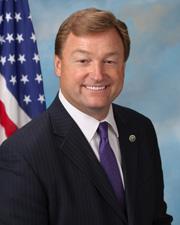
Mr. Speaker, I yield 4 minutes to my friend, a member of the Ways and Means Committee, the gentleman from Nevada (Mr. Heller).
Mr. Speaker, in addition to what Mr. Hoyer said about using the unused stimulus funds, Mr. Obey has hailed amendments to the Supplemental Appropriations bill made on July 1 that were paid for by repeatedly cutting unspent projects in the stimulus law. And in the other body, the chairman of the Senate Finance Committee, Mr. Baucus, has suggested the same. And that's what we're saying here. There is a better way to do this, a fiscally responsible way to not only take care of the forgotten man and woman today, but to prevent even more from being forgotten in the future.
Mr. Speaker, I am pleased to yield 3 minutes to the gentleman from Louisiana (Mr. Scalise). Mr. Scalise and I have worked together on American competitiveness, trying to achieve energy independence to meet our national security needs and to grow jobs.
Mr. Speaker, I have to respond to my friend from the State of Washington.
I would say that I would not have the audacity to speak for the people of Washington, because I haven't had the chance to actually get to know them. I can tell the gentleman that I do know the fishermen, the oystermen, the shrimpers, and those who run boats down in my State of Louisiana.
If they were here on the House floor today, they would say, ``Please do not kick us when we're down. Lift this ban on drilling because, if not, it is going to kill our economy.'' These are the same fishermen and oystermen and shrimpers who are losing their jobs.
That's why we need sensible policies, Mr. Speaker. We are all for extending the unemployment benefit insurance, but we know we can do it in a responsible way--by paying for it with unspent stimulus money.
I reserve the balance of my time.
Mr. Speaker, I yield 3 minutes to the gentleman from Texas (Mr. Hensarling), who serves on the President's Fiscal Responsibility Commission.
Mr. Speaker, I remind my friend, the distinguished majority leader of the House, that in the 1990s, during the Clinton administration, there was a great bipartisan effort that led to those balanced budgets because there was a Republican majority.
I will yield.
I will reclaim my time, and I will remind the majority leader that we have the opportunity to go forward now and not cast blame on the past. So I would say that President Obama actually got it right in a statement of administration policy on November 2009 regarding unemployment benefit extensions, which was fully paid for. And here is what he said. I quote, ``Fiscal responsibility is central to the medium-term recovery of the economy and the creation of jobs. The administration therefore supports the fiscally responsible approach to expanding unemployment benefits embodied in the bill.''
All we're saying is there is a better way to do this, and that is to pay for this extension.
I reserve the balance of my time.
Mr. Speaker, I yield 2 minutes to the gentleman from Texas (Mr. Hensarling).
Mr. Speaker, I yield myself the balance of my time.
This is about whether we're going to pay for this or not. Consider that this is the eighth time this Congress is going to extend these benefits. The eighth time. That's an indication that the current economic policy of this administration and this Congress is a failure.
I mentioned earlier the fact of the matter is we have a choice. We can do this in a fiscally responsible way, or we can choose to run up additional debt on our children and grandchildren to the tune of $34 billion between now and November.
Again, I think the President, President Obama, got it right in the statement of administration policy in November 2009 when the unemployment benefit extension was actually paid for. Again, I'm going to quote what he said: ``Fiscal responsibility is central to the medium-term of the economy and the creation of jobs. The administration therefore supports the fiscally responsible approach to expanding unemployment benefits embodied in the bill.''
Now, if fiscal responsibility helps the economy and job creation, then the fiscal irresponsibility of this bill before us will hurt the economy and job creation.
And I think the American people have spoken. They want us to do this, but they want us to pay for it. Let's do the right thing and actually pay for the spending we approve and help our economy grow, help job creation. As the administration said, a fiscally responsible approach is what's needed.
With that, Mr. Speaker, I yield back the balance of my time.
Mr. Speaker, on that I demand the yeas and nays.