Madam Speaker, I want to thank the gentleman from Florida (Mr. Webster) for yielding me the customary 30 minutes. I yield myself such time as I may consume. (Mr. McGOVERN asked and was given…
Madam Speaker, I want to thank the gentleman from Florida (Mr. Webster) for yielding me the customary 30 minutes. I yield myself such time as I may consume.
(Mr. McGOVERN asked and was given permission to revise and extend his remarks.)
Oh, my goodness, I don't even know where to begin. I first would like to publicly thank the Reading Clerk for his patience in slogging through the reading of this terribly complicated and confusing rule. I think the mere reading of this rule says it all, demonstrating how messed up this process is.
Madam Speaker, Speaker Boehner used to be fond of criticizing bills by saying, they wouldn't pass the ``straight face'' test. Well, let me tell you, I'm having trouble keeping a straight face right now, not when I look at this incredibly partisan, slapdash set of bills before us, not when I look at the awful, convoluted process that got us here.
Madam Speaker, this process is an absolute travesty. The Republican leadership took a thousand-page bill--the most partisan transportation bill in congressional history--and made it worse. They took a bill that was written in secret and jammed through the Transportation Committee and inserted unrelated and controversial provisions like Keystone pipeline, ANWR, offshore drilling, and cuts in Federal pensions. Even worse, they changed the rules in the middle of the game because yesterday morning, after everyone had submitted their amendments to the original single bill, Speaker Boehner decided to split it into three separate measures, and he said it was in the name of transparency. Transparency? Give me a break. It was more like the Valentine's Day massacre of transparency.
You know a bill is bad when the Competitive Enterprise Institute, Taxpayers for Common Sense, and the Natural Resources Defense Council are all opposed to how it's structured. Talk about strange bedfellows.
Transportation Secretary Ray LaHood, a former Republican Congressman, called H.R. 7 ``the most partisan transportation bill that I have ever seen,'' and ``the worst transportation bill I've ever seen during 35 years of public service.''
The chairman of the Transportation Committee calls this a bipartisan product. Madam Speaker, making Democratic amendments in order in and of itself and then defeating them doesn't make a bill bipartisan. Transportation bills, by their nature, have always been truly bipartisan, written together by the majority and minority. Republicans and Democrats in the past have not only worked in good faith on this bill, but they have put their differences aside and did their jobs. I should know. I served on the Transportation Committee during a Republican-controlled House in my first term, and I served as a conferee to the 1998 reauthorization bill.
Yet H.R. 7 abandons years of good-faith efforts by members of both parties to thoughtfully and responsibly craft a bipartisan transportation bill that reflects the priorities and vital importance of infrastructure investments across this country. H.R. 7 slashes investments in Federal highways by $15.8 billion from current levels over the bill's duration. It does so at a time when our roads and bridges are crumbling before our eyes. This bill ignores that harsh reality. It guts transit funding by de-linking dedicated Federal funding from the highway trust fund and lumping it in with a smorgasbord of other transportation accounts that will be forced to compete for annual appropriations.
What's most egregious and irresponsible about this bill--worse than the hyperpartisanship, worse than the atrocious process--is that this bill will result in 550,000 job losses. We should be focused, Madam Speaker, on creating good jobs in manufacturing and construction--two sectors hardest hit with job losses--not kicking them while they're already down.
And like so many other bills, Republicans couldn't let an opportunity pass to help their friends at Big Oil. Oil companies are making more money, hand over fist, to the tune of tens of billions of dollars in record profits every year. Now we're seeing gas prices rise again. Yet Republicans continue to provide $40 billion worth of taxpayer-funded subsidies to companies that don't need them and don't deserve them.
Last night in the Rules Committee, I tried to end taxpayer subsidies to Big Oil. But instead of asking ExxonMobil, BP, Chevron, Shell, and other Big Oil companies to pay their fair share while prices at the pump rise, the Republicans doubled down for their corporate friends and blocked my amendment. I offered it three different ways last night, and all three ways were rejected, not even given the courtesy of consideration on this House floor. I will offer it again today, if the Rules Committee meets, but I have no doubt the other side will continue what they usually do: stand with Big Oil and continue to block my amendment.
Allowing more oil and gas drilling off our coasts and opening up the treasured Arctic National Wildlife Refuge to drilling will do nothing to lower gas prices in the short term, let alone pay for this bill. At best, it will be years before any money would come from the new drilling areas.
And let's not forget the Keystone provision that's jammed in here that would automatically deem--I used the word ``deem''--the environmentally harmful pipeline approved.
Oh, and then there's the provision to force Federal employees--who are currently under a 2-year pay freeze--to nearly triple their contributions to their Federal retirement accounts. The Republican leadership has, once again, found a way to take a swipe at Federal employees, even in a surface transportation bill.
This part is really confusing. The Republicans are using this attack on Federal employees to pay for the highway bill, but they are also, apparently--according to press reports--using the same revenue to pay for the payroll tax extension. Perhaps my friend from Florida--and I'm happy to yield to him--could explain to us how they expect to use the same pot of money to pay for two separate things.
Well, maybe we'll get an answer later on in the debate.
Madam Speaker, Democrats want a fully funded, commonsense transportation bill that puts people back to work. We want a bill that makes our roads and bridges safer, not more dangerous. We want a bill that is good for America. This is not that bill. This bill before us is nothing but red meat political propaganda at its worst. It simply makes no sense. It will not become law. We should scrap this bill and start over and do it the right way. That's the way we've always done it. We should do it in a bipartisan way, come together, and help to get a really good transportation bill that will put people back to work.
I reserve the balance of my time.
Madam Speaker, I yield myself such time as I may consume.
I don't know what the gentleman is talking about. All I do know is this bill underfunds our highway and transportation system. It guts mass transit. It's not good for any State in this country. We deserve a better bill.
Also what I have learned is all of these new Members who came to Washington and say they want a more open process are giving us one of the most convoluted processes I think I have ever witnessed on this floor.
At this time, it is my privilege to yield such time as she may consume to the gentlewoman from New York (Ms. Slaughter), the ranking member of the Rules Committee.
Madam Speaker, let me yield myself such time as I may consume.
Madam Speaker, let me just make a couple of points to remind my colleagues of a few things. One is, this bill breaks the tradition of bipartisan action to rebuild our economy, to create jobs, and strengthen our economy. This bill, the Republican bill, kills 550,000 American jobs. It kills them. It cuts highway investments in 45 States and bankrupts the highway trust fund by $78 billion.
I would like to include for the Record a statement by the ranking member, Mr. Rahall, talking about CBO's estimate, prediction that this would bankrupt the highway trust fund.
News From the House Committee on Transportation and Infrastructure,
Rep. Nick J. Rahall, II--Ranking Member
For Immediate Release: February 13, 2012.
Breaking News--CBO: Republican Surface Transportation Proposal Bankrupts Highway Trust Fund--Republican Leadership's Bill Falls $78
Billion Short Over Ten-Year Period
Washington, DC.--According to a new analysis released this
afternoon by the non-partisan Congressional Budget Office
(CBO), the Republican Leadership's surface transportation
bill that the House is expected to act on later this week
would bankrupt the Highway Trust Fund by 2016 and create a
$78 billion funding shortfall over a ten-year period.
``The Republican Leadership's partisan signature `jobs'
bill is not sustainable, and would lead America's
transportation programs down a reckless path toward
bankruptcy,'' said U.S. Representative Nick J. Rahall (D WV),
top Democrat on the House Transportation and Infrastructure
Committee. ``There is no doubt we need to pass a long-term
bill that creates certainty, but the only thing this bill
does is make certain the Highway Trust Fund will go belly up
even before the end of the bill.''
New projections released today by CBO show the balance of
the Highway Account of the Highway Trust Fund will go broke
by fiscal year 2016 under the Republican Leadership's
controversial plan. Over a ten-year period, the bill would
create a $78 billion funding shortfall in the Highway Trust
Fund, adding greater uncertainty to the future integrity of
surface transportation programs.
``Despite attempts by Republican Leadership to cobble
together a hodgepodge of funding that included giveaways to
Big Oil, cutting pensions for middle-class American workers,
and a bailout from the General Fund, the bill is going to
create a huge funding shortfall that will jeopardize the
ability of States and local communities to move forward with
construction projects down the
road,'' said Rahall. ``Instead of working with Democrats in a
bipartisan fashion to create jobs, Republicans are advancing
a partisan proposal that will destroy 550,000 American jobs
while putting the future of transportation programs in
doubt.''
CBO's analysis of H.R. 7, which is also available on the
House Transportation and Infrastructure Committee Democrats'
Website at: http://go.usa.gov/QET.
I also want to point out to my colleagues both from Utah and Florida, under this bill, Utah would lose $159 million over 5 years in highway funding according to the Federal Highway Administration. That, according to economists, is 5,531 jobs. In Florida, there would be a cut of $880 million over 5 years compared to current law; and according to economists, that would destroy 30,637 jobs. Now granted, this thing is over 1,000 pages, so I could forgive my colleagues for not reading the fine print on the bill; but if they read the fine print and they were advocating these kinds of reductions for their States, let me just say I'm glad they're not my Congressmen.
At this point, I'd like to yield 2 minutes to the gentlewoman from the District of Columbia (Ms. Norton).
Madam Speaker, I'm happy to yield to the gentleman from Florida, or anybody, who can explain to me what's happening. I just got an email from the Rules Committee saying that the meeting on the transportation bill that was scheduled for 2 o'clock today to deal with hundreds of amendments that Members have offered has now been postponed subject to the call of the Chair. I'm wondering whether my friend from Florida or Utah or somebody could tell me whether they have any idea why the meeting was canceled and when it's going to be rescheduled.
I'm happy to yield to the gentleman.
I just say to the gentleman, from my understanding, there's already been a cutoff for amendments, that people can't file new amendments as we speak. Or is the gentleman telling me something different?
We've passed the amendment deadline----
Well, I appreciate that.
Let me ask the gentleman this: yesterday, we were told--well, I'm reading right now news reports that one of the problems is that one of your offsets to the payroll tax cut, which is going after Federal workers' pensions, is the same offset that you have in the highway bill.
Is that the reason why this is being postponed, because the Republican leadership can't quite figure out how they're paying for any of this stuff?
I thank the gentleman.
Madam Speaker, at this time, I would like to insert in the Record the Statement of Administration Policy making it very clear that this bill would be vetoed.
Statement of Administration Policy
H.R. 7--American Energy and Infrastructure Jobs Act of 2012
(Rep. Mica, R Florida, and Rep. Duncan, R Tennessee, Feb. 14, 2012)
The Administration strongly opposes the Rules Committee
Print of H.R. 7, which includes H.R. 3408, the Protecting
Investment in Oil Shale the Next Generation of Environmental,
Energy, and Resource Security (PIONEERS Act) and H.R. 3813,
the Securing Annuities for Federal Employees Act of 2012.
H.R. 7 does not reflect the historically bipartisan nature of
the Transportation and Infrastructure Committee. The
Administration has serious concerns with provisions in the
bill that would make America's roads, rails, and transit
systems less safe, reduce the transportation options
available to America's traveling public, short circuit local
decision-making, and turn back the clock on environmental and
labor protections.
This bill would reduce safety throughout the Nation's
transportation system by failing to make necessary
investments in roads and bridges, limiting funding to State
and local governments for highway safety, and repealing
requirements that help ensure the safe handling of hazardous
materials by railroads. The bill also fails to adequately
improve transit safety in accordance with recommendations of
the National Transportation Safety Board and legislation
submitted by the Administration in December 2009.
H.R. 7 eliminates programs that ensure the Nation's
metropolitan areas have sufficient resources to provide
multiple transportation options to help reduce congestion.
H.R. 7 also eliminates a thirty-year legacy of dedicated
transit funding from the Highway Trust Fund. The bill
allocates Federal funding for transit in a manner that
undermines local decision making regarding the operation of
local transit systems. This bill also reduces authorized
funding levels for Amtrak and loosens the requirements on
loan programs, putting taxpayer dollars at risk. In addition,
the bill inappropriately targets funding towards systems that
carry only a small number of the Nation's bus passengers.
Finally, while the Administration appreciates that the bill
does not contain earmarks, H.R. 7 eliminates funding for a
number of discretionary grant programs, missing an
opportunity to promote competition and innovation.
H.R. 7 would also significantly weaken environmental
protections for transportation projects and undermine civic
engagement in the decision-making process. The bill includes
arbitrary timelines that deem an environmental and
substantive review satisfactory regardless of a project's
complexity and impact. The bill also limits judicial recourse
of parties affected by transportation projects in a manner
that undermines well-established judicial principles.
The Administration is committed to promoting safe and
responsible domestic oil and gas production as part of a
broad energy strategy that will protect consumers and reduce
the Nation's dependence on foreign oil. Unfortunately, the
bill includes pay-fors that open up pristine natural habitats
not suitable for resource extraction and undermine prudent
development of the Nation's oil and natural gas resources by
opening the Arctic National Wildlife Refuge to industrial
development, mandating lease sales in new offshore areas with
no Secretarial discretion for determining which areas are
appropriate and safe for such exploration and development,
and preempting a Bureau of Land Management environmental
impact statement on oil shale extraction. Further, this bill
seeks to circumvent a longstanding process for determining
whether cross-border pipelines are in the national interest
by mandating the permitting of the Keystone XL pipeline
project despite the fact that the pipeline route has yet to
be identified and there is no complete assessment of its
potential impacts, including impacts on health and safety,
the economy, foreign policy, energy security, and the
environment.
The Administration is committed to working on a bipartisan
basis on a surface transportation reauthorization bill that
provides the necessary funding to modernize the Nation's
surface transportation infrastructure,
increase transportation options, maintain and create good
paying jobs, and ensure lasting economic competitiveness.
Because this bill jeopardizes safety, weakens environmental
and labor protections, and fails to make the investments
needed to strengthen the Nation's roads, bridges, rail, and
transit systems, the President's senior advisors would
recommend that he veto this legislation.
I yield 2 minutes to the gentleman from Texas (Mr. Reyes).
Madam Speaker, I yield myself such time as I may consume.
This gets more and more interesting. I share the gentleman from Ohio's concern, especially in light of the fact that the Rules Committee canceled their meeting today at 2 o'clock that was scheduled to go over all these amendments.
We have no idea what's going on. My guess is the leadership on their side has no idea what's going on. This process is so convoluted and it lacks transparency. I, quite frankly, think my colleagues should be ashamed of bringing this kind of a bill under this kind of process to the floor.
At this time, I yield 3 minutes to the gentleman from Massachusetts (Mr. Markey), the ranking member of the Committee on Natural Resources.
Madam Speaker, I yield 2 minutes to the gentleman from New Jersey (Mr. Andrews).
(Mr. ANDREWS asked and was given permission to revise and extend his remarks.)
I yield 2 minutes to the gentleman from Oregon (Mr. Blumenauer).
Madam Speaker, I yield 30 seconds to the gentlewoman from Texas (Ms. Jackson Lee.)
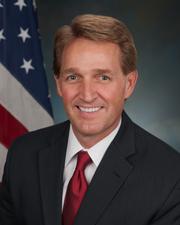
Madam Speaker, I yield 30 seconds to the gentleman from Arizona (Mr. Flake).
Madam Speaker, may I inquire from the gentleman how many more speakers he has left, because we have a lot. We ran out of time, so I'm the last speaker.
Madam Speaker, I yield myself the remaining time.
Madam Speaker, this bill is awful, this process is awful, and I think it's beyond salvageable. I just want to talk about one thing in closing.
Madam Speaker, oil companies get taxpayer subsidies for oil injection, extraction, drilling, manufacturing, pricing, and inventory floors. They get taxpayer subsidies, while making tens of billions of dollars in record profits, and taxpayers continue to get fleeced with rising gas prices.
At the end of this debate, I will try to defeat the previous question. If the previous question is defeated, I will offer an amendment to eliminate one of these subsidies for the Big Five oil companies. The Big Five oil companies do not need, they do not deserve this subsidy, and the American people don't deserve these rising gas prices.
I ask unanimous consent to insert the text of the amendment in the Record, along with extraneous materials immediately prior to the previous question.
Madam Speaker, this is a reasonable amendment. The American people are tired of getting gouged at the pump by these big oil companies that are making record profits and, at the same time, we continue with taxpayer subsidies to give them these handouts. Enough is enough.
I urge my colleagues to vote ``no'' and defeat the previous question. I urge a ``no'' vote on the rule, and I yield back the balance of my time.
Madam Speaker, on that I demand the yeas and nays.
Mr. Speaker, I demand a recorded vote.