Mr. Speaker, I ask unanimous consent that all Members may have 5 legislative days in which to revise and extend their remarks and include tabular and extraneous material on the conference report to…
Mr. Speaker, I ask unanimous consent that all Members may have 5 legislative days in which to revise and extend their remarks and include tabular and extraneous material on the conference report to accompany H.R. 2112.
Mr. Speaker, pursuant to House Resolution 467, agreed to earlier today, I call up the conference report on the bill (H.R. 2112) making appropriations for Agriculture, Rural Development, Food and Drug Administration, and Related Agencies programs for the fiscal year ending September 30, 2012, and for other purposes, and ask for its immediate consideration.
Mr. Speaker, I yield myself 5 minutes.
I rise today to present the conference report on H.R. 2112, the Consolidated and Further Continuing Appropriations Act of 2012. The House passed H.R. 2112, the bill making appropriations for the Department of Agriculture, Rural Development, Food and Drug Administration and Related Agencies, on June 16. The bill has since been amended to include the Commerce-Justice-Science and the Transportation-HUD appropriations bills as well as a continuing resolution to keep the rest of the government operating until December 16.
With the help of our ranking member, the gentleman from Washington, Norm Dicks, we successfully negotiated with our Senate counterparts to craft this agreement, which is the first appropriations conference report to hit this floor since 2009. This report is the next step in meeting the spending targets set by the Budget Control Act, which will save the taxpayers billions and help continue the effort to bring the Nation's deficit under control. In fact, this bill keeps us on track to cut regular discretionary spending by $98 billion compared to the President's fiscal year 2012 request and some $47 billion below the fiscal year 2010 level.
When all appropriations work this year is completed, it will be the second year in a row that we have reduced total discretionary spending, a remarkable and historic achievement. Yet while we've made significant cuts, we were also able to fund important priorities, such as food and drug safety, Federal law enforcement, agricultural and scientific research, trade, infrastructure, and economic growth. Additionally, we're helping communities, States, businesses, and families deeply affected by a record-breaking year of destructive natural disasters and catastrophes.
We scrubbed the information from the agencies and were able to reduce the disaster spending in this bill by $850 million compared to the Senate-passed bill. These funds are only for disaster assistance and do not grow the baseline budgets or the scope of the Federal agencies.
This bill, Mr. Speaker, is the next step in breaking the status quo of excess Federal spending that's throwing our budgets out of whack.
Our House conferees thoroughly examined each and every program and agency to ensure that we are reducing spending wherever possible. In this bill, this includes terminating wasteful, poorly planned and controversial programs such as high-speed rail, NOAA's Climate Change Office, and the Livable Communities program. In fact, Mr. Speaker, we have terminated 20 programs for a savings of $456 million.
This legislation also reins in executive branch overreach by including several important policy items. These provisions kill job- killing regulations that create economic uncertainty and limit government involvement in issues of life and liberty, including several provisions protecting human life and the Second Amendment right to keep and bear arms.
Finally, this legislation includes a continuing resolution that will keep the remainder of the government operating until December 16, allowing us an appropriate amount of time, I think, to finish negotiations on the remaining nine appropriations bills so that we will have all 12 out of the way, leaving the Appropriations Committee clear sailing in January to bring to the floor of the House 12 separate appropriations bills.
I'm very pleased that we were able to reach agreement on this bill. It has become all too rare a thing in this Congress to come to an agreement such as this, and I'm proud to say that this conference report was approved by all but one of the 38 House and Senate conferees from both parties, which goes to show us we work best when we work together. While there are no doubt items where Members might disagree in the bill, there are many achievements in this bill of which we can be justly proud.
However, we could not have done this without the tremendous help from our ranking member, Norm Dicks, as well as the dedicated conferees on both sides of the aisle from both Chambers. Chairman Wolf, Chairman Kingston, Chairman Latham, Ranking Members Farr, Fattah, and Olver, as well as our dedicated staff, have worked tirelessly over the last few weeks to bring this bill to completion, and they have all of our sincere thanks and appreciation for a job well done.
I yield myself an additional 1 minute.
I am proud, Mr. Speaker, that your Appropriations Committee is presenting to you the first Appropriations Conference Report since 2009 and the first conference report of this Congress. Your Appropriations Committee is working.
In closing, I strongly urge my colleagues to support this bill. It's vital we pass this bill to prevent a government shutdown, rein in overzealous regulations, and help put our budgets and our economy on track.
[GRAPHIC] [TIFF OMITTED] TH17NO11.001
[GRAPHIC] [TIFF OMITTED] TH17NO11.002
[GRAPHIC] [TIFF OMITTED] TH17NO11.003
[GRAPHIC] [TIFF OMITTED] TH17NO11.004
[GRAPHIC] [TIFF OMITTED] TH17NO11.005
[GRAPHIC] [TIFF OMITTED] TH17NO11.006
[GRAPHIC] [TIFF OMITTED] TH17NO11.007
[GRAPHIC] [TIFF OMITTED] TH17NO11.008
[GRAPHIC] [TIFF OMITTED] TH17NO11.009
[GRAPHIC] [TIFF OMITTED] TH17NO11.010
[GRAPHIC] [TIFF OMITTED] TH17NO11.011
[GRAPHIC] [TIFF OMITTED] TH17NO11.012
[GRAPHIC] [TIFF OMITTED] TH17NO11.013
[GRAPHIC] [TIFF OMITTED] TH17NO11.014
[GRAPHIC] [TIFF OMITTED] TH17NO11.015
[GRAPHIC] [TIFF OMITTED] TH17NO11.016
[GRAPHIC] [TIFF OMITTED] TH17NO11.017
[GRAPHIC] [TIFF OMITTED] TH17NO11.018
[GRAPHIC] [TIFF OMITTED] TH17NO11.019
[GRAPHIC] [TIFF OMITTED] TH17NO11.020
[GRAPHIC] [TIFF OMITTED] TH17NO11.021
[GRAPHIC] [TIFF OMITTED] TH17NO11.022
[GRAPHIC] [TIFF OMITTED] TH17NO11.023
I reserve the balance of my time.
Will the gentleman yield?
And in that H.R. 1, the fiscal year '11 omnibus bill, as you recollect, we had some 500 amendments.
Everybody.
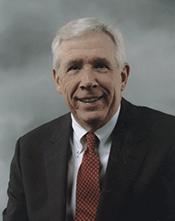
Mr. Speaker, I yield 3 minutes to the chairman of the Commerce, Justice, Science Subcommittee, a very hardworking chairman who also happens to be a colleague of mine in the class of 1980, the so-called Reaganauts, Chairman Frank Wolf.
Mr. Speaker, I yield 3 minutes to the gentleman from Iowa, chairman of the Transportation and HUD portion of this bill, a very vital part of the bill--the chairman has handled it very, very well--Chairman Tom Latham.
I yield the gentleman an additional minute.
Mr. Speaker, I yield 3 minutes to the gentleman from Georgia, the chairman of the Agriculture Subcommittee, a very important part of this bill, Mr. Kingston.
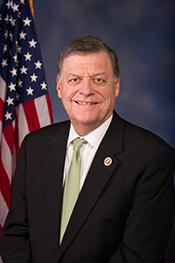
Mr. Speaker, I yield 2 minutes to a very distinguished member of our committee, Oklahoma's Mr. Cole.
Mr. Speaker, I yield 2 minutes to the gentleman from Texas, a member of the conference committee, Mr. Carter.
Mr. Speaker, could I ask the remaining time?
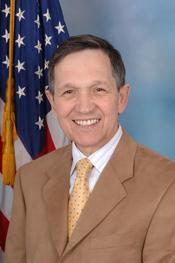
Mr. Speaker, I yield 2 minutes to the gentleman from Ohio, a member of the conference committee, Mr. LaTourette.
Mr. Speaker, I yield 2 minutes to a member of the conference committee, the gentleman from Alabama (Mr. Bonner).
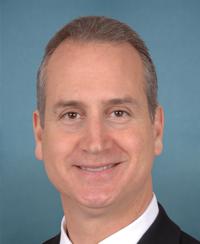
Mr. Speaker, I yield 2 minutes to the gentleman from Florida, a member of our committee, Mr. Diaz-Balart.
Mr. Speaker, I yield 2 minutes to the gentleman from Mississippi, a member of our committee and a very valued member, Mr. Nunnelee.
Mr. Speaker, I yield 1 minute to the gentleman from New Hampshire (Mr. Bass).
May I inquire of the time remaining.
Mr. Speaker, I am the last remaining speaker on my side, so I will yield to the gentleman.
Mr. Speaker, I yield myself the balance of my time.
I want to say a special thanks to my friend from Washington, Norm Dicks, for being a hardworking, cooperative ranking member. We worked together on this bill, and we will continue to do that. And I also want to thank the staff. You know, they don't get enough thanks. These are the people that do practically all the work, day and night, weekends included, holidays included. So thank you to all of the staff, majority and minority, for producing this work.
Let me close, Mr. Speaker, by emphasizing that this conference report is only the first step toward finishing fiscal '12, and I urge my colleagues to support this conference report.
Let me also remind our colleagues that there are no earmarks in this bill. A lot of people said, you cannot pass a bill without earmarks. Well, this bill has no earmarks, not one, not a single one. It also reduces dramatically Federal spending. And when we finish--and I want my colleagues to hear this plainly and clearly--when we finish all 12 bills, we will be at $1.043 trillion, not a penny more. We will be at $1.043 trillion, as provided by the cap under the Budget Control Act. I guarantee that number. I guarantee that number, hear me. So I urge an ``aye'' vote on this first step towards fiscal sanity.
I yield back the balance of my time.