To award a congressional gold medal on behalf of the Tuskegee Airmen, collectively, in recognition of their unique military record, which inspired revolutionary reform in the Armed Forces.
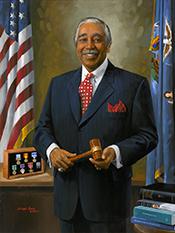 Rep. Charles B. Rangel (D-NY)
Legislative Activity
Stay on top of the latest movement without scrolling through every action
Became Public Law No: 109-213.
April 11, 2006
View full timeline
Introduced in House
March 10, 2005
Referred to the House Committee on Financial Services.
March 10, 2005
Sponsor introductory remarks on measure. (CR E458)
March 16, 2005
Sponsor introductory remarks on measure. (CR E1484-1485)
July 13, 2005
Referred to the Subcommittee on Domestic and International Monetary Policy, Trade, and Technology.
August 24, 2005
Mr. Ney moved to suspend the rules and pass the bill, as amended.
February 28, 2006 • 3:33 PM
Considered under suspension of the rules. (consideration: CR H407-414)
February 28, 2006 • 3:34 PM
DEBATE - The House proceeded with forty minutes of debate on H.R. 1259.
February 28, 2006 • 3:34 PM
At the conclusion of debate, the Yeas and Nays were demanded and ordered. Pursuant to the provisions of clause 8, rule XX, the Chair announced that further proceedings on the motion would be postponed.
February 28, 2006 • 4:11 PM
Considered as unfinished business. (consideration: CR H416)
February 28, 2006 • 7:01 PM
Passed/agreed to in House: On motion to suspend the rules and pass the bill, as amended Agreed to by the Yeas and Nays: (2/3 required): 400 - 0 (Roll no. 16).(text: CR H407)
February 28, 2006 • 7:18 PM
On motion to suspend the rules and pass the bill, as amended Agreed to by the Yeas and Nays: (2/3 required): 400 - 0 (Roll no. 16). (text: CR H407)
February 28, 2006 • 7:18 PM
Motion to reconsider laid on the table Agreed to without objection.
February 28, 2006 • 7:18 PM
The title of the measure was amended. Agreed to without objection.
February 28, 2006 • 7:18 PM
Received in the Senate and Read twice and referred to the Committee on Banking, Housing, and Urban Affairs.
March 1, 2006
Senate Committee on Banking, Housing, and Urban Affairs discharged by Unanimous Consent.(consideration: CR S2426)
March 27, 2006
Senate Committee on Banking, Housing, and Urban Affairs discharged by Unanimous Consent. (consideration: CR S2426)
March 27, 2006
Passed Senate without amendment by Unanimous Consent.
March 27, 2006
Cleared for White House.
March 27, 2006
Message on Senate action sent to the House.
March 28, 2006
Presented to President.
March 30, 2006
Signed by President.
April 11, 2006
Became Public Law No: 109-213.
April 11, 2006
Voting History
1 vote recorded • Roll call available
Floor Debate
20 membersWhat members said about H.R. 1259 on the floor

 +15
+15
Floor Debate
20 membersWhat members said about H.R. 1259 on the floor
Mr. Speaker, the modesty of the chairman of the Congressional Black Caucus amazes even me, because destiny would have it that this is the last day of African History Month and he is the chairman of…
Mr. Speaker, I move to suspend the rules and pass the bill (H.R. 1259) to authorize the President to award a gold medal on behalf of the Congress, collectively, to the Tuskegee Airmen in recognition…
Mr. Speaker, let me thank the distinguished gentleman from North Carolina. Let me, as well, appreciate the fact, as Mr. Rangel has said, that we have a bipartisan moment. I thank the chairman, Mr.…
Mr. Speaker, I thank the chairman and I thank my colleague, the ranking member, Mr. Rangel, for his dedication and perseverance in obtaining the highest congressional honor for one of the most…
Mr. Speaker, today I rise in strong support of H.R. 1259, which authorizes the President to award the Tuskegee Airmen with the Congressional Gold Medal of Honor. In 1941, an experiment that began as…
Show 8 more
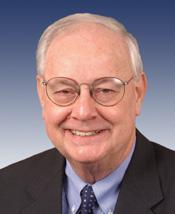
Mr. Speaker, I have had the pleasure of meeting the Tuskegee Airmen, the survivors, on a number of occasions. A number of them live in my home State of Michigan, especially Major General Lucius…
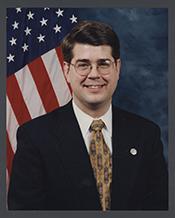
Mr. Speaker, I rise today in support of H.R. 1259, a Resolution authorizing the President to award a gold medal on behalf of the Congress to the Tuskegee Airmen. This recognition of the Tuskegee…
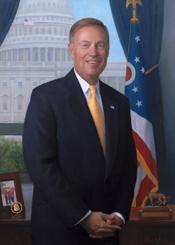
Mr. Speaker, they never lost a bomber. The African-American fighter pilots we know today as the Tuskegee Airmen, flew more than 15,000 sorties, mostly bomber-support missions, over North Africa,…
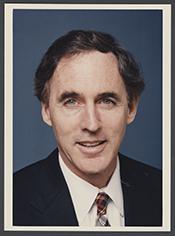
Mr. Speaker, I rise today in strong support of H.R. 1259. This resolution authorizes the President to award a gold medal on behalf of Congress to the Tuskegee Airmen in recognition of their unique…

Mr. Speaker, I rise in support of H.R. 1259, authorizing the President to award a gold medal on behalf of the Congress to the Tuskegee Airmen. At a time when their country did not see fit to protect…

Mr. Speaker, I yield myself such time as I may consume. Mr. Speaker, I am a proud cosponsor of this bill, but that is not why I am here. I am here because of the protocols of the House. The protocols…
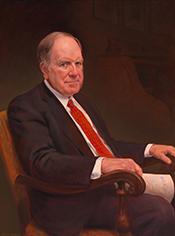
Mr. Speaker, I thank the gentleman for yielding. Mr. Speaker, I cannot rise to the heights of Charlie Rangel, but I rise in tribute to the Tuskegee Airmen. For years, it seems we have considered…
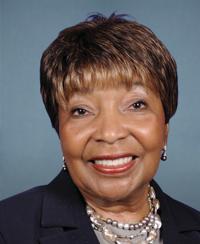
Mr. Speaker, I rise today in support of H.R. 1259, which recognizes the Tuskegee Airmen for their exemplary performance during World War II, and for paving the way for full integration of the U.S.…
Show 8 more
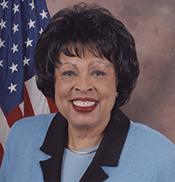
Mr. Speaker, on July 19, 1941, the United States military began a revolutionary program in Alabama to train black Americans as military pilots. The program helped change military culture and negative…
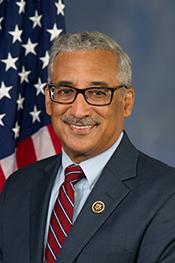
Mr. Speaker, I rise in strong support of H.R. 1259. By authorizing the Tuskegee Airmen to receive the Congressional Gold Medal, we are not only recognizing an exemplary military record, but also…
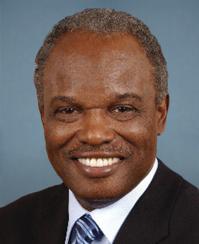
Mr. Speaker, I thank Mr. Watt and certainly Mr. Rangel for their leadership on this, and Mr. Ney of Ohio for his leadership on this. What an honor it is for me to stand here and to speak some words…

Mr. Speaker, I rise today in strong support of this resolution, H.R. 1259, to authorize the President to award a gold medal on behalf of the Congress, collectively, to the Tuskegee Airmen in…
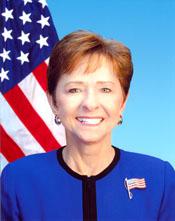
Mr. Speaker, I was unable to participate in the following votes. If I had been present, I would have voted as follows: February 28, 2006: Rollcall vote 14, on the motion to suspend the rules and pass…
Mr. Speaker, I was absent on Tuesday, February 28, 2006, due to unavoidable circumstances in my Congressional District. Had I been present, I would have voted: ``yea'' to H.R. 1096--Act Commemorating…
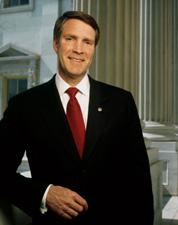
Mr. President, I ask unanimous consent that the Committee on Banking, Housing, and Urban Affairs be discharged from further consideration of H.R. 1259, and the Senate proceed to its immediate…
Mr. Speaker, I ask unanimous consent that all Members may have 5 legislative days within which to revise and extend their remarks on H.R. 1259 and H.R. 2872 and to insert extraneous material thereon.
Bill Text
5 versions available
        [Congressional Bills 109th Congress]
[From the U.S. Government Publishing Office]
[H.R. 1259 Enrolled Bill (ENR)]

H.R.1259

One Hundred Ninth Congress

of the

United States of America

AT THE SECOND SESSION

Begun and held at the City of Washington on Tuesday,
the third day of January, two thousand and six

An Act

To award a congressional gold medal on behalf of the Tuskegee Airmen,
collectively, in recognition of their unique military record, which
inspired revolutionary reform in the Armed Forces.

Be it enacted by the Senate and House of Representatives of the
United States of America in Congress assembled,

SECTION 1. FINDINGS.

The Congress finds the following:
(1) In 1941, President Franklin D. Roosevelt overruled his top
generals and ordered the creation of an all Black flight training
program. President Roosevelt took this action one day after the
NAACP filed suit on behalf of Howard University student Yancy
Williams and others in Federal court to force the Department of War
to accept Black pilot trainees. Yancy Williams had a civilian
pilot's license and had earned an engineering degree. Years later,
Major Yancy Williams participated in an air surveillance project
created by President Dwight D. Eisenhower.
(2) Due to the rigid system of racial segregation that
prevailed in the United States during World War II, Black military
pilots were trained at a separate airfield built near Tuskegee,
Alabama. They became known as the ``Tuskegee Airmen''.
(3) The Tuskegee Airmen inspired revolutionary reform in the
Armed Forces, paving the way for full racial integration in the
Armed Forces. They overcame the enormous challenges of prejudice
and discrimination, succeeding, despite obstacles that threatened
failure.
(4) From all accounts, the training of the Tuskegee Airmen was
an experiment established to prove that so-called ``coloreds'' were
incapable of operating expensive and complex combat aircraft.
Studies commissioned by the Army War College between 1924 and 1939
concluded that Blacks were unfit for leadership roles and incapable
of aviation. Instead, the Tuskegee Airmen excelled.
(5) Overall, some 992 Black pilots graduated from the pilot
training program of the Tuskegee Army Air Field, with the last
class finishing in June 1946, 450 of whom served in combat. The
first class of cadets began in July 1941 with 13 airmen, all of
whom had college degrees, some with Ph.D. degrees, and all of whom
had pilot's licenses. One of the graduates was Captain Benjamin O.
Davis Jr., a United States Military Academy graduate. Four aviation
cadets were commissioned as second lieutenants, and 5 received Army
Air Corps silver pilot wings.
(6) That the experiment achieved success rather than the
expected failure is further evidenced by the eventual promotion of
3 of these pioneers through the commissioned officer ranks to flag
rank, including the late General Benjamin O. Davis, Jr., United
States Air Force, the late General Daniel ``Chappie'' James, United
States Air Force, our Nation's first Black 4-star general, and
Major General Lucius Theus, United States Air Force (retired).
(7) 450 Black fighter pilots under the command of then Colonel
Benjamin O. Davis, Jr., fought in World War II aerial battles over
North Africa, Sicily, and Europe, flying, in succession, P-40, P-
39, P-47, and P-51 aircraft. These gallant men flew 15,553 sorties
and 1,578 missions with the 12th Tactical Air Force and the 15th
Strategic Air Force.
(8) Colonel Davis later became the first Black flag officer of
the United States Air Force, retired as a 3-star general, and was
honored with a 4th star in retirement by President William J.
Clinton.
(9) German pilots, who both feared and respected the Tuskegee
Airmen, called them the ``Schwartze Vogelmenschen'' (or ``Black
Birdmen''). White American bomber crews reverently referred to them
as the ``Black Redtail Angels'', because of the bright red painted
on the tail assemblies of their fighter aircraft and because of
their reputation for not losing bombers to enemy fighters as they
provided close escort for bombing missions over strategic targets
in Europe.
(10) The 99th Fighter Squadron, after having distinguished
itself over North Africa, Sicily, and Italy, joined 3 other Black
squadrons, the 100th, the 301st, and the 302nd, designated as the
332nd Fighter Group. They then comprised the largest fighter unit
in the 15th Air Force. From Italian bases, they destroyed many
enemy targets on the ground and at sea, including a German
destroyer in strafing attacks, and they destroyed numerous enemy
aircraft in the air and on the ground.
(11) 66 of these pilots were killed in combat, while another 32
were either forced down or shot down and captured to become
prisoners of war. These Black airmen came home with 150
Distinguished Flying Crosses, Bronze Stars, Silver Stars, and
Legions of Merit, one Presidential Unit Citation, and the Red Star
of Yugoslavia.
(12) Other Black pilots, navigators, bombardiers and crewman
who were trained for medium bombardment duty as the 477th Bomber
Group (Medium) were joined by veterans of the 332nd Fighter Group
to form the 477th Composite Group, flying the B-25 and P-47
aircraft. The demands of the members of the 477th Composite Group
for parity in treatment and for recognition as competent military
professionals, combined with the magnificent wartime records of the
99th Fighter Squadron and the 332nd Fighter Group, led to a review
of the racial policies of the Department of War.
(13) In September 1947, the United States Air Force, as a
separate service, reactivated the 332d Fighter Group under the
Tactical Air command. Members of the 332d Fighter Group were ``Top
Guns'' in the 1st annual Air Force Gunnery Meet in 1949.
(14) For every Black pilot, there were 12 other civilian or
military Black men and women performing ground support duties. Many
of these men and women remained in the military service during the
post-World War II era and spearheaded the integration of the Armed
Forces of the United States.
(15) Major achievements are attributed to many of those who
returned to civilian life and earned leadership positions and
respect as businessmen, corporate executives, religious leaders,
lawyers, doctors, educators, bankers, and political leaders.
(16) A period of nearly 30 years of anonymity for the Tuskegee
Airmen was ended in 1972 with the founding of Tuskegee Airmen,
Inc., in Detroit, Michigan. Organized as a non-military and
nonprofit entity, Tuskegee Airmen, Inc., exists primarily to
motivate and inspire young Americans to become participants in our
Nation's society and its democratic process, and to preserve the
history of their legacy.
(17) The Tuskegee Airmen have several memorials in place to
perpetuate the memory of who they were and what they accomplished,
including--
(A) the Tuskegee Airmen, Inc., National Scholarship Fund
for high school seniors who excel in mathematics, but need
financial assistance to begin a college program;
(B) a museum in historic Fort Wayne in Detroit, Michigan;
(C) Memorial Park at the Air Force Museum at Wright-
Patterson Air Force Base in Dayton, Ohio;
(D) a statue of a Tuskegee Airman in the Honor Park at the
United States Air Force Academy in Colorado Springs, Colorado;
and
(E) a National Historic Site at Moton Field, where primary
flight training was performed under contract with the Tuskegee
Institute.

SEC. 2. CONGRESSIONAL GOLD MEDAL.

(a) Award Authorized.--The Speaker of the House of Representatives
and the President pro tempore of the Senate shall make appropriate
arrangements for the award, on behalf of the Congress, of a single gold
medal of appropriate design in honor of the Tuskegee Airmen,
collectively, in recognition of their unique military record, which
inspired revolutionary reform in the Armed Forces.
(b) Design and Striking.--For the purposes of the award referred to
in subsection (a), the Secretary of the Treasury (hereafter in this Act
referred to as the ``Secretary'') shall strike the gold medal with
suitable emblems, devices, and inscriptions, to be determined by the
Secretary.
(c) Smithsonian Institution.--
(1) In general.--Following the award of the gold medal in honor
of the Tuskegee Airmen under subsection (a), the gold medal shall
be given to the Smithsonian Institution, where it will be displayed
as appropriate and made available for research.
(2) Sense of the congress.--It is the sense of the Congress
that the Smithsonian Institution should make the gold medal
received under paragraph (1) available for display elsewhere,
particularly at other appropriate locations associated with the
Tuskegee Airmen.

SEC. 3. DUPLICATE MEDALS.

Under such regulations as the Secretary may prescribe, the
Secretary may strike and sell duplicates in bronze of the gold medal
struck under section 2, at a price sufficient to cover the costs of the
medals, including labor, materials, dies, use of machinery, and
overhead expenses.

SEC. 4. NATIONAL MEDALS.

Medals struck pursuant to this Act are national medals for purposes
of chapter 51 of title 31, United States Code.

SEC. 5. AUTHORIZATION OF APPROPRIATIONS; PROCEEDS OF SALE.

(a) Authorization of Appropriations.--There is authorized to be
charged against the United States Mint Public Enterprise Fund, an
amount not to exceed $30,000 to pay for the cost of the medals
authorized under section 2.
(b) Proceeds of Sale.--Amounts received from the sale of duplicate
bronze medals under section 3 shall be deposited in the United States
Mint Public Enterprise Fund.

Speaker of the House of Representatives.

Vice President of the United States and
President of the Senate.