To amend title 10, United States Code, to provide permanent authority for the exemption for certain members of the uniformed services from an otherwise-applicable requirement for the payment of subsistence charges while hospitalized.
Legislative Activity
Stay on top of the latest movement without scrolling through every action
Received in the Senate and Read twice and referred to the Committee on Armed Services.
October 14, 2003
View full timeline
Introduced in House
September 3, 2003
Sponsor introductory remarks on measure. (CR E1679)
September 3, 2003
Referred to the House Committee on Armed Services.
September 3, 2003
Referred to the Subcommittee on Total Force.
September 11, 2003
Mr. McHugh moved to suspend the rules and pass the bill, as amended.
October 8, 2003 • 2:08 PM
Considered under suspension of the rules. (consideration: CR H9325-9327)
October 8, 2003 • 2:08 PM
DEBATE - The House proceeded with forty minutes of debate on H.R. 2998.
October 8, 2003 • 2:08 PM
At the conclusion of debate, the Yeas and Nays were demanded and ordered. Pursuant to the provisions of clause 8, rule XX, the Chair announced that further proceedings on the motion would be postponed.
October 8, 2003 • 2:26 PM
Considered as unfinished business.
October 8, 2003 • 3:31 PM
Passed/agreed to in House: On motion to suspend the rules and pass the bill, as amended Agreed to by the Yeas and Nays: (2/3 required): 399 - 0 (Roll no. 537).(consideration: CR H9333-9334; text: CR H9325)
October 8, 2003 • 3:31 PM
On motion to suspend the rules and pass the bill, as amended Agreed to by the Yeas and Nays: (2/3 required): 399 - 0 (Roll no. 537). (consideration: CR H9333-9334; text: CR H9325)
October 8, 2003 • 3:31 PM
Motion to reconsider laid on the table Agreed to without objection.
October 8, 2003 • 3:31 PM
Received in the Senate and Read twice and referred to the Committee on Armed Services.
October 14, 2003
Voting History
1 vote recorded • Roll call available
Floor Debate
21 membersWhat members said about H.R. 2998 on the floor
 NP
NP JK
JK JBL
JBL DRO
DRO JL+16
JL+16
Floor Debate
21 membersWhat members said about H.R. 2998 on the floor
Mr. Chairman, I thank the distinguished gentleman from Wisconsin (Mr. Obey), our ranking member on the Committee on Appropriations, for yielding me time and for his excellent work in putting together…
Mr. Chairman, I thank the distinguished gentleman from Wisconsin (Mr. Obey), our ranking member on the Committee on Appropriations, for yielding me time and for his excellent work in putting together the Obey substitute, the Democratic substitute, which unfortunately cannot come to the floor today but nonetheless would be a brilliant, brilliant way for us to reconstruct Iraq, provide for our troops, and bring them home safely and soon, having stabilized Iraq.
Mr. Chairman, I want to commend the very distinguished chairman of the Committee on Appropriations for his always reasonable approach to challenges that we have.
Mr. Chairman, I commend the gentleman from California (Mr. Lewis) for his great service, and I will say more on that later, as well as the gentleman from Pennsylvania (Mr. Murtha), for what they have added to this package.
Mr. Chairman, I would like to say to the distinguished chairman, the gentleman from Florida (Mr. Young), that I am glad to hear that exit strategy means something different to him than some of our colleagues on the gentleman's side of the aisle who said exit strategy means cut and run. The gentleman and I know that that is not what that means.
We all know that we must support our troops. We respect their courage, their patriotism, the sacrifices they are willing to make for our country. We also know that for their successful completion of their mission, that we must invest in the infrastructure in Iraq; and we know that we cannot come home until that mission is accomplished. So that is not what this debate is. There is no difference about that.
The difference is how we go about doing it, and I think there is a big difference there. I would like to say something about the lack of planning on the part of the administration. It is in the spirit of that context that I rise in opposition to President Bush's request for $87 billion to bail out his failed policy in Iraq.
Mr. Chairman, as Members of Congress, we all recognize that we have no greater responsibility than that which is charged to us in the Preamble of the Constitution: to provide for the common defense. We have all take that responsibility seriously on both sides of the aisle and all over the country.
The United States military is the best-trained, best-led, best- equipped fighting force the world has ever known. This excellence is due to the dedication of our courageous military men and women and their commanders. It is also due to the commitment of this and previous Congresses over many years to provide for the common defense, by ensuring that our forces have the tools and technologies that they need to prevail on the battlefield.
Again, we respect our men and women in uniform and we should respect them when they are on the battlefield and when they come home. And out of respect for them, I would have hoped that our colleagues could join us in discharging the petition to eliminate the tax on disabilities that exist in current law on our disabled vets.
Going back to the war, whatever our position was on going to the war, once we went in, we were one team, one fight. Our military performed their duties excellently. It is painfully clear, though, that this administration had no plan to protect our men and women in Iraq against the possibility of a guerilla campaign. The war supplemental last spring is proof enough. The President asked for and the Congress provided $63 billion to ensure that our soldiers could complete their mission successfully and securely. Yet, as revealed by our esteemed colleague, the gentleman from Pennsylvania (Mr. Murtha), a decorated veteran whose defense credentials are beyond question, our military personnel are short of Kevlar inserts for their body armor, short of tracks for their Bradley fighting vehicles, short of jammers to protect them from the detonation of explosive devices, and short of spare parts generally for the equipment on which they rely. Again, our men and women in uniform deserve better.
When the President asked for this $65 billion, we gave it to him. We never got an accounting for it. When the President hit with his bombshell of asking for $87 billion more, we said we would like to see an accounting of the $63 billion that was appropriated for last summer. We want to know why our men and women in uniform do not have the protection they need to fight this war, this postwar period. We want an accounting, a justification for the $87 billion that the White House is asking for now. We want an accountability for this failed policy.
The $87 billion request did not yet even include the funding for the Kevlar and the jammers and the spare parts and the tracks. It really was not until the gentleman from Pennsylvania (Mr. Murtha) made a big issue of it, and I commend him and I commend the gentleman from California (Mr. Lewis) for
putting this in the bill with the help, of course, of the chairman of the committee. But it was not in the President's request.
It was not in the President's request to protect our troops with what they needed. They had a chance to do it and they did not. I find that very, very unacceptable. As General Zinni said, and others have repeated here, the level of sacrifice has not been matched by the level of planning. What he exactly said is this: ``They should never be put on a battlefield without a strategic plan, not only for fighting, our generals will take care of that, but for the aftermath and winning that war. Where are we, the American people, if we accept this level of sacrifice without that level of planning?'' General Zinni.
America wants to know. What was that $63 billion spent on besides the gold-plated, single-source, no-bid contracts for politically connected contractors? We simply do not know. So that is why we take issue with the $87 billion request.
Don't take it from me. General Petraeus, a great general whom many of us have met in our visits to the theater, he has said that U.S. engineers called for $15 million to turn a cement factory into a state- of-the-art factory. Our troops working with the Iraqis got it up and running, not for $15 million, but for $80,000, for $80,000. We were not responsible for a $15 million state-of-the-art factory. It is up and running at $80,000. You hear this over and over again.
Again, to date there has been no accounting for that money, no accountability for the policy. As a result, American soldiers are taking virtually all the risks, and American taxpayers are paying virtually all the bills.
Our men and women in uniform deserve better. The American people deserve better. Make no mistake, the President's supplemental request is an $87 billion bailout for mistakes and miscalculations of this administration. They have miscalculated the risk. We saw and heard General Zinni's statements about that. They misunderstood the challenge, and they misrepresented the cost.
One week into the war, Deputy Secretary of Defense Paul Wolfowitz told the gentleman from Pennsylvania (Mr. Murtha) and the gentleman from California (Mr. Lewis) and their Subcommittee on Defense of the Committee on Appropriations, ``We are dealing with a country that can really finance its own reconstruction and relatively soon.''
How wrong was that? And we know that this is not the end of it. The administration has told us that they need 50 to $75 billion more for infrastructure. When we asked them why they did not put this in the President's $87 billion request, they said that they were going to get it from oil revenues and from our allies. Again, a miscalculation. That funding is obviously not happening. So let us be clear, what we were considering today is not a final payment; it is a down payment. It is an installment on more to come.
The American people look to us to ask the difficult questions, to ensure accountability and not to rubber stamp a policy that has failed in terms of its planning and, therefore, endangered our sons and daughters in uniform. We all appreciate what we need to do. We must address the needs of our forces in Iraq. We must bring stability to that country. We must invest in the infrastructure.
The administration wants us to do a gold-plated, no-bid contract version of the story. They want the gold-plated version, and they have a tin ear to what the American people are saying. They say honor our responsibilities, honor our men and women in uniform, but please do not put our children into debt, our grandchildren into debt without some idea of how this is going to be paid for and what the cost will be.
We would have been better off if we had internationalized this from the start, but we did not. So now what we need to do, again, is what the gentleman from Pennsylvania (Mr. Murtha) has said over and over. We need to energize Iraq, turn on the lights and water so we can proceed with the reconstruction.
To hear the administration tell the tale, this has all been done, but nonetheless, more is required. We must ``Iraqtize'' it by giving the Iraqis more authority and responsibility to do what they need to do for their country. And we must internationalize the effort so our troops once again are not taking all the risks and our taxpayers paying all the bills.
The question before us today is simple, what is the best way to achieve this goal. It is a complicated matter, but the question is what is the best way to go about it. The answer to me is clear, the Obey substitute. It is a more responsible approach, both fiscally and militarily. It does more for our men and women in uniform before, during and after deployments.
The Obey amendment better protects American taxpayers and their children and their grandchildren because it is paid for, and by having the World Bank administer a loan program for a portion of the reconstruction effort, it will stimulate more international financial support.
In short, the Obey amendment does more to support our troops and encourage international participation in stabilizing and rebuilding Iraq and costs the American taxpayers less. It deserves our support.
Unfortunately, the Obey amendment will not be allowed to be presented and voted on the floor, and I know why. It is brilliant. If it were presented as an alternative to the $87 billion Bush request, it would probably attract Republican support. It would have an impact on this failed policy. So, sadly, we will not have a chance to vote on it. It is really always interesting to me that it is against the rules of the House to make a proposal that is paid for, that makes it out of order.
I think that we ought to see the Obey substitute and the whole debate in the context of where we are as a country. Here we are, the greatest military power that ever was. Our economy, hopefully soon on the upturn, is the greatest engine for economic growth in the world. The power of our ideas have been a source of strength to us and to others in the world forever. So we are strong in every way, and yet never ever have we been more dependent on other countries for the security of our people.
If we are going to succeed in Iraq, we must reach out to others. President Kennedy said it best in his inaugural address. Some of us were in school at the time and heard the inaugural address, and everybody knows the statement ``Citizens of America, ask not what your country can do for you, but what you can do for your country.'' Children learned that in school. Others of us heard it. It is history for some. It was our youth for others of us.
The very next line in that speech--is ``to the citizens of the world, ask not what America can do for you, but what we can do working together for the freedom of mankind.'' Let that be our clarion call, what we, working together with the people of the world, can do for the freedom of mankind. We must not find ourselves in a situation where there is a tyrant, and good riddance to him, where we have to go in with inadequate intelligence, inadequate international support and, again, have our kids take all of the risk.
Let us show the greatness of our country, as well as the strength of our country. We could do that by supporting the Obey amendment today. In the absence of that, let us hope that we can have our policy recognize once again that the security of our great country has never been more dependent on others.
With that, Mr. Chairman, I again reiterate my opposition to the $87 billion bailout of the failed Bush policy and support of the Obey amendment.
Mr. Chairman, I appreciate the gentleman from California yielding me time, and I want to thank him for his leadership, as well as the Chairman of the Full Committee, for his leadership on this bill.…
Mr. Chairman, I appreciate the gentleman from California yielding me time, and I want to thank him for his leadership, as well as the Chairman of the Full Committee, for his leadership on this bill.
Mr. Chairman, the total amount of this supplemental appropriation bill is over $86 billion. The foreign operations chapter totals $21.071 billion. That is $221 million less than the President's request. My remarks today will be on that part of the bill.
Mr. Chairman, let me first say that I strongly support the objectives the President seeks to achieve with this supplemental request for Iraq and Afghanistan. This supplemental bill supports our men and women in uniform and it provides reconstruction resources to stabilize and improve conditions in those countries that will enable us to bring our troops home soon. These reconstruction funds are essential to achieving our national security and our foreign policy objectives and to defeating terrorism. This portion of the supplemental is essential to providing for a more stable and a more peaceful world.
I want to applaud Ambassador Bremer and the men and women in our Coalition Provisional Authority and various Federal agencies that are part of our U.S. team for their dedicated service under the most difficult of circumstances. The task they and their counterparts in Afghanistan have before them amounts to no less than the creation of an entire nation, with all its attendant institutions and infrastructure. This is a daunting task, and they deserve our bipartisan support to complete it.
I think my colleagues recognize that our objectives will not be achieved quickly, and the financial costs will be great. Even so, the costs of reconstruction efforts may seem large, but they are small compared to the costs of failure. We cannot, we must not, fail.
Mr. Chairman, we must learn from history, as several have already said on this floor. After the First World War, we retreated as our allies required reparations and we helped to create economic chaos in Germany.
After the Second World War, the Marshall Plan and our efforts in Japan led to stability and to global economic growth, a very different outcome. The investments made then and in our defense capabilities ultimately led to our victory over communism in the Cold War.
The Greatest Generation, as it is sometimes called, understood the importance of economic and political reconstruction in Europe and Japan. It shouldered the costs of the Marshall Plan, some $13 billion, or about 5 percent of our gross domestic product at that time. In this age of terrorism, the stakes could be just as great for our security. By way of comparison, this $21 billion for reconstruction of Iraq and Afghanistan represents less than one-fifth of one percent of our GDP today.
Mr. Chairman, we must get this right. We cannot allow Iraq to become a failed state, to disintegrate into several states that foment terrorism and instability. We must not repeat mistakes, such as were made in the last century, when within the space of a single generation, we sent the sons and younger brothers of First World War veterans to the same battlefields in Europe.
These funds must be considered an investment, an investment in security both in the region and on American soil, and a responsibility. We must not confront, a generation in the future, with the terrible knowledge that we removed two tyrants, only to leave vacuums into which their cousins in tyranny would return.
The needs are great. But, just as John Taber, the chairman of the House Committee on Appropriations in 1947, led Congressional scrutiny of the Truman administration's Marshall Plan request, our committee, led by the gentleman from Florida (Chairman Young) and this House, has a responsibility to review the details of this reconstruction effort, and the Committee on Appropriations and this House also have a responsibility to ensure that taxpayer dollars are used efficiently and in a process that is transparent. I know my colleagues take that responsibility seriously.
Since the Committee on Appropriations received the President's request, we have held several hearings and numerous meetings to examine it. The bill before the House represents reductions of almost $1.7 billion in programs in Iraq, and increases in programs for Afghanistan and Pakistan of almost $600 million. We also have some $858 million to support the Coalition Provisional Authority, or CPA, as it is called, that was not included in the foreign operations portion of this request.
We have assigned the highest priority for projects that can be implemented and executed during 2004, or that are not likely to be funded by others. The resulting bill is a balanced approach to supporting a complex, crucial mission in Iraq and Afghanistan, and it provides much-needed emergency appropriations to further the fight against terror in other countries.
Let me highlight a few of the parts of the bill before us.
There is $18.65 billion for Iraq. That is a reduction of $1.7 billion from the President's request. $3.2 billion is for security and law enforcement. The sooner we build strong security and police forces that have respect for the rule of law, the sooner we can bring our men and women home. But this job cannot be left half done. These funds will add thousands of Iraqi police and security personnel to keep peace on their streets, to bring their own criminals to justify, to control their own borders.
There is nearly $10 billion to provide reliable drinking water, sanitation and electricity service. I would note with considerable joy that Iraq's electricity levels have recently exceeded prewar levels for the first time, but this accomplishment is tenuous. Many plants rely more on improvisation than on fuel to keep running. Virtually all generating facilities are in desperate need of repair or replacement.
Improperly treated solid waste threatens drinking water, and water- borne illnesses continue to plague Iraq's population. Correcting these problems will entail costly, long-term investments, but they are investments that will contribute directly to development, to peace and stability.
Finally, this recommendation includes $2.1 billion for rebuilding and improving Iraq's oil infrastructure. These funds will not only repair the damage done by saboteurs and years of underinvestment and neglect, but will improve security for pipelines, refineries and drilling stations. The Iraqi Governing Council and its ministers will rely on oil sales for salaries and operations, including the funds required for thousands of security positions added by this supplemental. As the many acts of sabotage have already demonstrated, Iraq's reliance on the United States and the international community will continue as long as its oil production is hampered. The committee includes a specific account for the operating expenses of the Coalition Provisional Authority, as I mentioned earlier.
The CPA is overseeing one of the most costly and important foreign assistance programs in U.S. history. Its operating costs should be treated in the same manner as those of any other major implementing agency of foreign assistance such as USAID. This separate account does nothing to change or reduce the authority of the Secretary of Defense with regard to the CPA.
Not included in this bill, however, is $1.7 billion for a variety of programs which were requested by the administration. These include items that, in our view, cannot possibly be completed over the next 15 months, or that are not needed to meet an emergency, or that could better be completed by an international organization or other group. For instance, we have eliminated $400 million for two high-security prisons. We have left in $100 million for one prison, and $99 million for rehabilitating existing structures.
Also not included is a $150 million down payment on a $700 million state-of-the-art children's hospital in Basra. Children's health is very important, but we have put $100 million of that into rehabilitating some of the clinics in Iraq.
Let me turn for one moment to Afghanistan. It is a country at a critical stage. We have to root out the Taliban and these other criminals from the bordering region of Pakistan, and we have to have the support of the Afghan public to succeed. In this bill we include $1.24 billion for Afghanistan. That is $400 million over the President's request. The level includes an additional $297 million to support the development and outfitting of the Afghan National Army, $191 million for roads, $95 million for electricity, and $69 million for elections and improved governance.
I know there is much discussion about whether these funds for Iraq should be direct assistance or extended as credit to be repaid later as a loan. I believe it would be a huge mistake to make these funds as a loan instead of as direct assistance as the bill provides.
The greatest burden for all of us is the knowledge that decisions we make as Congressmen and Congresswomen directly put the lives of Americans at risk. Already, men and women from many of the districts represented in this body have died in Iraq and Afghanistan. I firmly believe the supplemental bill as reported will go a long way to rebuilding a stable, free Iraq and Afghanistan and will support other initiatives to make Americans safer at home and abroad.
Mr. Chairman, I am sure we will hear from Members who say they support the military portions of this bill, but not the reconstruction. I do not agree that such a distinction can be made or should be made. During our first hearing on reconstruction, I asked our commander of CENTCOM, General John Abizaid that question, and to conclude, I would like to quote his answer. He said, ``There is no strictly military solution to the problems we face. It requires that we move together on the political front, the economic front, on the reconstruction front in a manner that is synchronized and coordinated. If we don't do that, I do not believe we can be successful. So you can pay the military to stay there, but you are only paying us to stay forever.''
Mr. Chairman, General Abizaid's remarks are right on the mark. We need to support the President in carrying out foreign policy initiatives just as firmly as we support our troops on the ground. We need to build a stable and a peaceful Iraq and Afghanistan, because it is the right thing to do and because it is in America's national security interests.
Mr. Chairman, last night I testified before the Rules Committee as they were preparing to draft the rule governing debate on this Supplemental Appropriation bill, and I made a sincere plea that just…
Mr. Chairman, last night I testified before the Rules Committee as they were preparing to draft the rule governing debate on this Supplemental Appropriation bill, and I made a sincere plea that just as we are fighting to provide freedom for the Iraqi people, I hoped that we in Congress would be allowed the same kind of democratic freedoms to debate and vote on the many issues related to this bill.
Once again I was disappointed by the decision of the Rules Committee to not act and protect my amendments and dozens of others put forward by my colleagues so that they might be considered during debate on this bill. So I find it very difficult to support this request from the President, which would address none of the outstanding concerns I have raised about providing for accountability on the cost of the war, about developing a plan for the reconstruction of Iraq and for troop deployments, and finally about not placing the burden of the cost of the reconstruction entirely on a future generation of American taxpayers.
Last year I voted against the Resolution on this floor that sent us to war against Iraq, opposed to the policies of preemption and unilateralism and of giving an open ended and undefined mandate to wage war in Iraq. I coauthored an alternative at that time that would have required the President to work through the United Nations to build international support culminating in a new U.N. resolution authorizing military action in Iraq and providing for an expedited consideration of a use of force resolution by the Congress at that time. The Bush Administration and the Republican Majority in Congress strenuously opposed this proposal, and it was ultimately voted down.
It was voted down because we were told by President Bush and his supporters that there was an imminent threat from Saddam Hussein, who was planning on a moment's notice to attack the United States with weapons of mass destruction. We were told that Saddam Hussein was linked with al-Qaeda and the September 11th terrorist attack on the United States. We were told that we had a strong international coalition of allies poised to take action and share the burden of war and peace with us. We were told that we had a plan for post-war reconstruction and finally, that Iraq had the financial resources and infrastructure to pay for its own reconstruction.
Yet here we are today, almost a year later, debating an $87 billion supplemental appropriation bill for ongoing military action and reconstruction in Iraq. This is in addition to the roughly $79 billion supplemental that Congress appropriated for this war last April.
We have yet to find Saddam Hussein or any weapons of mass destruction in Iraq. There is no viable international support for this policy. There remains no plan for reconstruction, and President Bush's father knew full well about these potential problems in pursuing this type of policy in Iraq. In his book, ``A World Transformed,'' which was published before his son took office, he wrote: ``Trying to eliminate Saddam Hussein, extending the ground war into an occupation of Iraq, would have violated our guideline about not changing objectives midstream, engaging in `mission creep,' and would have incurred incalculable human and political costs . . . Apprehending [Saddam Hussein] was probably impossible. We had not been able to find Noriega in Panama, which we knew intimately. We would have been forced to occupy Baghdad and, in effect, rule Iraq. The coalition would immediately have collapsed, the Arabs deserting it in anger and other allies pulling out as well.''
While the Administration continues to be unable to provide any details about what the last $79 billion Congress appropriated for this war was spent on or what the costs of a continued U.S. presence in Iraq might be, an analysis conducted by Congressman Spratt, Ranking Member of the House Budget Committee, concludes that if Congress approves the 2004 supplemental the President has submitted, and does not spend any new money on Iraq after 2004, the cost to the United States, including interest on the public debt, will reach $178 billion over the next decade. This includes only the cost of operations in Iraq, and excludes all estimated costs from 2003 and 2004 supplementals related to Afghanistan.
The point has been made repeatedly about the need to sacrifice. Yet the only people sacrificing for this country currently are the men and women who wear the uniform. Further burdens shouldn't be placed upon them and their children, both incurring more deficit and having this nation pay for this by increasing the already burdensome national debt.
I have drafted amendments to address many of my concerns with this bill, and my first amendment proposes that we pay for the President's $87 billion supplemental appropriation request for ongoing military operations and reconstruction in Iraq and Afghanistan by suspending a portion of the reductions in the highest income tax rate for individual taxpayers.
It would reduce the total tax cut of the wealthiest top .7 percent of Americans from $690 billion to $600 billion over the term of the tax cut by reducing the top tax rate to 38.2 for the 6-year period between 2005 and 2010. The top rate for wealthiest .7 percent of Americans has dropped this year from above 39 percent down to 35 percent. This amendment would affect less than 5 percent of the $1.8 trillion tax cut enacted during the last 3 years.
I would like to stress that it does not take away the tax cut. The tax rate for the top .7 percent of Americans would still be lower than it was last year. Instead of receiving 100 times the tax cut that middle-class America received, at $600 billion the top .7 percent of Americans would still get 60 times what the middle-class American gets. They would still receive $1 billion more than every other American combined will get from the tax cut.
The average income of the top .7 percent of Americans is $1 million per year. This amendment would affect, at a minimum, people who have an income before standard deductions and exemptions of over $400,00 in gross income. It would also affect those with a net taxable income of over $312,000 after deductions and exemptions. It does not impact or change individuals' capital gains tax rates or dividend exemptions.
My second amendment seeks to provide accountability to the American people on the President's Iraq foreign policy. Specifically, it would provide the full request to the Department of Defense to meet the needs and re-supply American service men and women deployed around the world. It also would provide $4.5 billion for security, law enforcement, justice, public safety and public safety infrastructures, Iraqi boarder enforcement, enhanced security communications, and the establishment of the Iraq Defense Corps. However, it would limit to $5 billion the funding for other discretionary Iraq reconstruction efforts of the administration until April 2004 unless the Congress enacts specific legislation authorizing additional funding requested by the President for reconstruction in Iraq.
It requires the President to submit a detailed report to Congress by March 2004 estimating the total cost of U.S. operations, setting out a strategy for securing international support, a schedule, including costs and timetables for an establishment of Iraqi armed forces and a security force, an estimated schedule of the establishment of an Iraqi constitution and an estimated schedule of U.S. deployments and ultimate withdrawal from Iraq.
Finally, this amendment would require the President to certify in a report to Congress that the U.N. Security Council has authorized a multi-national force under U.S. leadership and provides a central role for the U.N. in the political and economic development and reconstruction. The report must also certify that U.S. reconstruction efforts are being implemented according to a detailed plan that includes fixed timetables and costs, with a significant financial contribution from other nations.
The third amendment I am proposing calls for the General Accounting Office to conduct a detailed study of the policy of preemption and unilateralism and its effect on the military deployment capabilities, readiness, recruiting and
retention rates, morale, total force structure, and end strength of the Armed Forces, including the Reserve components.
Finally, when I held a town hall meeting on Monday night, October 13, about this supplemental appropriation request, I heard the story of Pene Palifka of East Hartford. Her son, Bill, is serving in the 248th Engineer Company in Iraq. She came forward and provided the money herself to get a Kevlar vest for her son over there, because as it has been reported and as I heard directly from soldiers serving in Iraq when I visited there in August, there is a shortage of roughly 40,000 of these vests. That's simply wrong. Congress appropriated funding in the last supplemental to procure and distribute these vests last April, but this still has not been done.
So, my fourth amendment provides for the direct reimbursement from the United States Treasury to service members or their families who purchase protective body armor for deployments as part of the global war on terrorism.
However, I understand that because the Rules Committee did not act to protect these amendments that they would be subject to a point of order and that I will be blocked from getting a vote on them. We should be able to debate these issues. We should be able to vote on these issues.
I will continue to pursue these efforts and seek answers to the many questions we all still have about this policy, but I cannot support this bill if it does not address or make progress on these fundamental issues.
Mr. Chairman, I yield 1\3/4\ minutes to the distinguished gentlewoman from California (Ms. Harman), the ranking member on the Permanent Select Committee on Intelligence. (Ms. Harman asked and was…
Mr. Chairman, I yield 1\3/4\ minutes to the distinguished gentlewoman from California (Ms. Harman), the ranking member on the Permanent Select Committee on Intelligence.
(Ms. Harman asked and was given permission to revise and extend her remarks.)
Mr. Chairman, could I inquire how much time is remaining on each side?
Mr. Chairman, I yield 2 minutes to the distinguished gentlewoman from Connecticut (Ms. DeLauro).
Mr. Chairman, I yield 1\1/2\ minutes to the distinguished gentleman from West Virginia (Mr. Rahall).
(Mr. Rahall asked and was given permission to revise and extend his remarks.)
Mr. Chairman, I yield 1\1/2\ minutes to the distinguished gentleman from Massachusetts (Mr. Frank).
Mr. Chairman, I yield 1\1/2\ minutes to the distinguished gentleman from New York (Mr. Owens).
(Mr. Owens asked and was given permission to revise and extend his remarks.)
Mr. Chairman, I yield 1\1/2\ minutes to the gentleman from Georgia (Mr. Lewis).
Mr. Chairman, I yield 1\1/2\ minutes to the gentleman from Maryland (Mr. Wynn).
Mr. Chairman, I yield myself 30 seconds. Mr. Chairman, my remarks are directed to the staffers of all of those Members on the Democratic side of the aisle who have asked us for time on this bill. Our dilemma is we now have about 40 people on the list. Only two of them are in the Chamber. If they do not want to lose their time, I would suggest that some of them come to the Chamber now or they are going to lose their time forever.
Mr. Chairman, I yield 1\1/2\ minutes to the gentleman from Washington (Mr. McDermott).
Mr. Chairman, I yield 1\1/2\ minutes to the gentlewoman from Indiana (Ms. Carson).
Mr. Chairman, I yield 1\1/2\ minutes to the distinguished gentleman from Arizona (Mr. Pastor).
(Mr. PASTOR asked and was given permission to revise and extend his remarks.)
Mr. Chairman, I yield 1\1/2\ minutes to the gentleman from California (Mr. Filner).
Mr. Chairman, I yield 1\1/2\ minutes to the gentleman from Florida (Mr. Deutsch).
Mr. Chairman, I yield 1\1/2\ minutes to the distinguished gentleman from Rhode Island (Mr. Langevin).
Mr. Chairman, I yield 1\1/2\ minutes to the gentleman from Florida (Mr. Davis).
Mr. Chairman, I yield 1\1/2\ minute to the distinguished gentleman from Texas (Mr. Rodriguez).
Mr. Chairman, I yield 1\1/2\ minutes to the gentleman from New Jersey (Mr. Pascrell).
Mr. Chairman, I yield 1\1/2\ minutes to the gentleman from North Carolina (Mr. Watt).
Mr. Chairman, I yield 5 minutes to the gentleman from California (Mr. Waxman), the distinguished ranking member of the Committee on Government Reform who has done considerable work on the need for accountability in contracting on this issue.
Mr. Chairman, I yield 1\1/2\ minutes to the distinguished gentleman from Texas (Mr. Turner), a ranking member of the Select Committee on Homeland Security.
Mr. Chairman, I yield 1\1/2\ minutes to the gentleman from Massachusetts (Mr. Tierney).
Mr. Chairman, I yield 1\1/2\ minutes to the gentlewoman from the District of Columbia (Ms. Norton), who can speak in this Chamber, even though, unfortunately, she is not allowed to vote.
(Ms. NORTON asked and was given permission to revise and extend her remarks.)
Mr. Chairman, I yield 1\1/2\ minutes to the distinguished gentleman from New Jersey (Mr. Holt).
Mr. Chairman, I yield 1\1/2\ minutes to the gentleman from Maryland (Mr. Cummings).
Mr. Chairman, I yield 2 minutes and 15 seconds to my distinguished colleague, the gentleman from Wisconsin (Mr. Kleczka).
Mr. Chairman, I yield 1\1/2\ minutes to the distinguished gentlewoman from Texas (Ms. Eddie Bernice Johnson).
Mr. Chairman, I yield myself 30 seconds.
Mr. Chairman, once again I would attempt to notify any Members who are watching that if they are on the Democratic list for speaking on this matter, they need to get to the House floor pronto or they will lose their opportunity.
Mr. Chairman, I yield 2 minutes to the distinguished gentlewoman from Florida (Ms. Corrine Brown).
Mr. Chairman, I yield 3 minutes to the gentleman from New York (Mr. Meeks).
Mr. Chairman, I yield 4 minutes to the distinguished gentleman from Massachusetts (Mr. Markey).
Mr. Chairman, how much time is remaining?
Mr. Chairman, because we are in search of absent speakers, I will yield myself 5 minutes until some of them arrive.
Mr. Chairman, I want to take this time to address one issue that I have seen appear in the newspapers on almost a daily basis. There is somehow an impression on the part of a number of Members of this House and a number of members of the press that somehow we will endanger our ability to provide a responsible reconstruction package in Iraq if we scale back the reconstruction package now before us. I would like to suggest why that is not true, and to do so, I am simply going to read several paragraphs from the dissenting views that I filed with the committee in the report accompanying this bill, and here is what I wrote for that purpose.
``While the Committee wisely pared back some of the more outlandish projects proposed by the Coalition Provisional Authority, the bill the committee is sending to the House does little to alter the underlying approach to reconstruction envisaged by the CPA. That approach relies on huge contracts with large, multinational corporations to provide high tech and capital-intensive construction, training and services to Iraq requiring the importation of heavy equipment, highly-paid consultants and the payment of corporate overhead and profits.
``The consequence of this approach is that the American taxpayer will pay much more than he or she should; the amount of construction or reconstruction that can be performed within available funds will be significantly less than might otherwise be accomplished; the development of Iraqi businesses and institutions to deal with such problems will be negligible and the number of Iraqis who will be employed will be far fewer than could be productively used if less capital-intensive and lower-tech approaches were followed. In short, we will be paying more for smaller results and particularly smaller results with respect to employment and other economic changes necessary to bring about greater political stability.''
Then I go on to cite one example. After U.S. engineers had told Major General Patraeus that it would cost $15 million to bring a concrete factory up to Western standards, the commander of the 101st Airborne Division gave the contract to local Iraqis who were able to get that cement plant running for just $80,000.
It seems to me that the message that Congress ought to be sending the administration is that we need to focus more on low tech, indigenous strategies for development rather than simply getting in the old habit of going to the big multinationals like Halliburton and others and saying, okay, boys, what can you do for us with your high-paid consultants and high fees.
So that is why it seems to me that the responsible thing to do is to scale back this package until the administration revisits its approach. In the end, if they do that, we will provide better benefits to Iraq and better benefits to the American taxpayer.
Mr. Chairman, I yield 4 minutes to the distinguished gentlewoman from California (Ms. Watson).
Mr. Chairman, I yield 2 minutes to the distinguished gentleman from Ohio (Mr. Brown).
Mr. Chairman, I yield 2 minutes to the distinguished gentlewoman from New York (Mrs. Maloney).
Mr. Chairman, may I inquire how much time remains on this side.
Mr. Chairman, I yield 2 minutes to the distinguished gentleman from Tennessee (Mr. Tanner).
Mr. Chairman, I yield 2 minutes to the distinguished gentlewoman from Texas (Ms. Jackson-Lee).
Mr. Chairman, how much time do we have remaining?
Mr. Chairman, I yield 5 minutes to the distinguished gentleman from Pennsylvania (Mr. Murtha), the ranking Democrat on the Subcommittee on Defense of the Committee on Appropriations.
Mr. Chairman, I yield 2 minutes to the gentleman from Illinois (Mr. Emanuel).
Mr. Chairman, I have a parliamentary inquiry.
It is my understanding that after this leg, we will still have an hour of general debate remaining under the rule that was adopted; is that not correct?
I thank the Chair.
Mr. Chairman, I yield for the purpose of making a unanimous consent request to the gentleman from New Mexico (Mr. Udall).
(Mr. UDALL of New Mexico asked and was given permission to revise and extend his remarks.)
Mr. Chairman, I yield 30 seconds to the gentleman from Tennessee (Mr. Ford).
Mr. Chairman, I know that that 15 seconds has been bugging you all day. I am going to yield it back.
Madam Chairman, I thank the chairman for yielding me this time. I doubt that I will take the entire 10 minutes at this moment; but it is very important, I think, for the Members of the House to join…
Madam Chairman, I thank the chairman for yielding me this time.
I doubt that I will take the entire 10 minutes at this moment; but it is very important, I think, for the Members of the House to join together and recognize the long-term impact that we may be about effecting today as we consider this very important supplemental.
In anybody's book, $87 billion is a lot of money. Indeed, it was not very long ago, 2 weeks ago, the President signed into law the appropriations for the 2004 national defense funding. Those dollars pay for the fiscal year that is ahead of us, for the expenses of housing, of training, of providing food and forage for the men and women who make up our forces. The moneys also involve paying for the assets that they use whether they be airplanes, ships at sea, or arms that they must carry. Those dollars also pay for the research and development that allow us to stay on the cutting edge for the wars that we may have to fight somewhere over the horizon. All of that is a piece of national security or the national defense, a total in that package in excess of $370 billion.
There is just not any question that defending America, being the strongest country in the world, is an expensive process. To say the least, our national defense is a priority for the country. Over half of our discretionary money goes into these pools because our people have long recognized that our freedom is critical to our future, and we know very well that maintaining that freedom is a price we must and we are willing to pay.
The one thing that is not often said, peace is one thing, maintaining our freedom is very critical, but war is an entirely different thing. War is really expensive. We remain strong as a country because we are peacemakers. From time to time we find ourselves in a circumstance where war is a requirement if we are going to stabilize our future in this shrinking world. We found ourselves in this circumstance in the Middle East. And the war on terrorism, which is a direct result of 9- 11, and the President's taking head-on the challenge of terrorism throughout the world has put us on a track that suggests that America is the only remaining superpower, and we will lead the point insofar as not just maintaining the peace is concerned but also ferreting out terrorism wherever it might exist, wherever it may be harbored.
And today we find ourselves in the midst of Iraq, following a military incursion on our part that directly dealt, began to deal with the fact that in that country was one of the world's worst terrorists. Saddam Hussein and his regime absolutely will be remembered in history as one of the worst of all time. Indeed, what he has done to his people, the attitudes and view of the world that he has harbored in his country are among the worst that we have experienced. It rivals all that which Hitler was about and the Holocaust. It certainly rivals Stalin.
But to go to Iraq and see firsthand what a terrorist is all about when he runs a country, Saddam Hussein cared nothing about his people. Only those who were his closest supporters did he care about. But from there he did not shy away a moment for murdering by the thousands his own people.
To travel to Iraq and see what might happen or even be happening in other countries, to visit the killing fields where indeed we can see in some locations mounds of dirt dug up, we can see clothes sticking out of these mounds of dirt. People have gone there seeking to find the location of their loved ones who were murdered on the very spot. To be in a killing field where the farmer, the local killer designated by Saddam Hussein, chooses to bury people by the thousands under his fields where he grows his crops, it is an incredible scene, one that is impossible to believe almost unless one goes and visits Iraq today.
To look at the past, what Saddam Hussein and his regime have done to his people, and people like him threaten to do to the world, certainly is a very important awakening for those of us who have had the chance to visit.
We traveled not long ago to Iraq, 17 of us, Democrats and Republicans, liberals and conservatives, some who supported the war, some who did not; and we came back together almost hand in hand. We spent time thinking through what we had learned and seen and, indeed, thinking through what our responsibilities were. There is little doubt that that trip is made up of people who now support our effort to fight the war on terror. Indeed, the support from that group, if it is reflected in the House, would suggest we are going to have a very solid bipartisan base of support for this supplemental.
Speaking for a moment to the supplemental itself, most of the money, the $87 billion we are talking about, most of the money is going to our forces, to secure and sustain our troops. Some $65 billion of the money goes to our troops. The balance, about $18.5 billion, is for the reconstruction of Iraq.
Let me speak to that piece of it for a moment for the Members have heard me talk about finances for our troops time and time again, but to that piece of it that the gentleman from Arizona (Mr. Kolbe) is responsible for, the reconstruction of Iraq. It is very important for all of us to know that that money is designed simply to jump-start this economy, to begin the work that is necessary, to make sure that we can put pressure on the world to help with Iraq's circumstance.
For once we relieve it of this huge burden of debt that Saddam Hussein created, really some mix that involves over $200 billion worth of debt. We then can apply some of the funding we are talking about in this bill to reconstructing some of their basic utilities, creating circumstances where decent water systems can go forward, where an industrial base is possible, where investment for the world economy makes sense. Once Iraq gets to that point, that engine will have begun to run, and I am confident if we follow through here, if we have the patience and the hope to follow through, Iraq will progressively come in among free nations. For the first time in their history, people will have a chance for freedom, and they will see the doorway and the promise of private economic opportunity.
Indeed, what we are about to do today is history-making. If we go forward here with hope and patience, there is little doubt that the bill we pass today will change the world that is the Middle East. We have the potential of adopting a model that will put pressure on the whole system there, and it is my view that then there truly will be real hope for democratic and free change in the countries in the Middle East, and, indeed, we will be back on the roadway to peace.
Mr. Chairman, I yield 10 minutes to the gentleman from Arizona (Mr. Kolbe).
Mr. Chairman, I welcome and applaud the gentleman's support. In the meantime, it is my privilege to yield 4 minutes to the gentleman from Ohio (Mr. Boehner).
Mr. Chairman, I yield 2 minutes to the gentleman from Pennsylvania (Mr. Platts), one of those Members who experienced our fabulous trip to Iraq recently.
Mr. Chairman, may I inquire as to the amount of time remaining.
Mr. Chairman, will the gentleman from Wisconsin (Mr. Obey) perhaps use some of his time? And I think the gentleman from Florida (Chairman Young) will want to close.
Mr. Chairman, I yield myself such time as I may consume.
Mr. Chairman, just recently I went to Walter Reed Hospital, and there I visited Chris Knapp, a constituent of mine from Yucca Valley, California. He had been driving a Bradley not so long before that that was struck by enemy fire. He was hit by shrapnel, was proud of the fact. He showed me the Purple Heart that the President presented him with the day before, as well as the President's personal coin.
He talked most, however, about Sergeant Ramirez, who had been so kind to him when he was injured. He did not talk about the fact that the night after he had been with the President, they had taken out his right eye.
He urged me to communicate that they need our support. They are there for a purpose called freedom. It was Chris Knapp and his buddies and Sergeant Ramirez who are fighting the good fight over there. All they are asking for today is our real support and not our lip service.
Mr. Chairman, I must say it is my privilege and pleasure to yield the balance of my time to the gentleman from Florida (Mr. Young), the chairman of our committee who provides the endless base of support and provides the point for the fight for our people in Iraq that are defending freedom.
Show 8 more
Mr. Speaker, I thank the gentleman for yielding me this time, and I appreciate the gentleman for bringing this very important bill to the floor, especially under suspension of the rules. The…
Mr. Speaker, I thank the gentleman for yielding me this time, and I appreciate the gentleman for bringing this very important bill to the floor, especially under suspension of the rules.
The gentleman from New York (Mr. McHugh) is a very dedicated supporter of our military and is an important member of the Committee on Armed Services. And as chairman of the subcommittee, he does an important job. I know of no one who is more committed to the members of our military than the gentleman from New York (Mr. McHugh) and the gentleman from California (Chairman Hunter).
What we are talking about today has to do with soldiers wounded on the battlefield in a military hospital recovering from those wounds who are charged $8.10 a day for the food they consume while they are in the hospital recovering from wounds received on the battlefield. When I learned about that, I have to tell Members, I could not believe it. So I did a little research, and my research told me this is true. This is the case; this is in the law.
I spoke to the administrators and commanders of the military hospitals at Walter Reed Army Hospital, at the National Naval Medical Center at Bethesda, at the Hospital at Landstuhl, Germany, and they all said, yes, we have to do this, it is in the law, but it is more trouble than it is worth. They said they are actually embarrassed when they have to hand a soldier, when he left their hospital a bill for the food that he or she consumed while in that hospital recovering from wounds received on the battlefield. That is not right. That is outrageous.
So I introduced H.R. 2998 to repeal that law. Actually, while we were moving the defense appropriations bill, I was able to include that bill in the defense appropriations bill which was signed into law on September 30.
So immediately the problem was fixed but was only fixed for a year because appropriations bills only last for a year. So I asked the gentleman from California (Chairman Hunter) and the gentleman from New York (Chairman McHugh) if they would report this bill to the floor so that we could have a vote on it. I asked for a vote because so many of our colleagues, when they learned of this, were just as outraged as I was, and they asked that we have a vote. So we will ask for a vote on this bill because so many of our Members want to vote for this bill. Nearly 300 of our colleagues, Mr. Speaker, have co-sponsored this legislation.
This is something that really needs to be fixed. It was fixed for 1 year, but this fix makes it permanent. This repealed the law permanently, and we will not be embarrassed again by handing a soldier who is leaving in a wheelchair with both legs amputated or an arm amputated or vision totally destroyed or handicapped for life and we are not going to insult them by asking them to pay $8.10 a day for the food that they consumed while in that military hospital.
I thank the gentleman very much for bringing this very important bill to the floor.
Mr. Speaker, I rise in strong support of H.R. 2998, legislation I introduced to permanently
repeal an outrageous law that requires our combat wounded military to pay for their food while hospitalized recovering from their wounds.
I want to thank my friend and colleague, the Chairman of the House Armed Services Committee, Mr. Hunter, and the Chairman of the Total Force Subcommittee, Mr. McHugh, and all the members of the Committee for their support of my legislation and their willingness to expedite its consideration by the House. There are no greater friends to our troops in the field then Chairmen Hunter and McHugh and the members of their Committees.
This is a law that has been on the books since 1958 for hospitalized officers and since 1981 for enlisted personnel. I only learned about it late this summer from my wife Beverly, who spends considerable time visiting with injured soldiers, sailors, Marines, airmen, and Coast Guardsmen at the Walter Reed Army Medical Center and the National Naval Medical Center in Bethesda. A family member of a Marine reservist who had to have a part of his foot amputated brought it to her attention.
This law is a serious affront to those injured in battle. Upon being discharged from the hospital, our enlisted personnel and officers are actually served with a bill to pay for their ``subsistence'' while in the hospital. The current daily rate for these charges is $8.10. For those who pass through more than one hospital on their way to recovery, they are served with multiple bills.
We learned about this from our visits with Staff Sergeant William L. Murwin, who spent 26 days in the hospital recovering from injuries incurred in Iraq. Sergeant Murwin is a reservist in the Marine Corps who was injured when a 10-year-old Iraqi dropped a grenade in the HUMVEE he was driving. As a result of the explosion, Sergeant Murwin is a partial amputee, having lost a large part of his foot.
Upon his discharge July 18th to return home to Nevada and his job as a sheriff's deputy, Sergeant Murwin was handed a bill from the hospital for $210.60 to pay for his food and subsistence. Beverly and I paid this bill for Sergeant Murwin because we consider it an injustice to ask those who have served us so courageously in Afghanistan and Iraq to pay for their food while hospitalized.
Legislation I introduced on September 4th, and which is cosponsored by 256 of my colleagues, amends current law to prohibit service members injured in combat or training from being billed for the food while hospitalized. It has been endorsed by a wide range of veterans service organizations including The Air Force Sergeants Association, AMVETS, the Association of the United States Army, The Enlisted Association of the National Guard, The Fleet Reserve Association, The Military Officers Association of America, The Military Order of the Purple Heart, The Naval Reserve Association, and The Reserve Officers Association of the United States, among others.
Upon learning about these hospital charges, I researched the issue and found that Congress initiated the system of charging for subsistence costs for officers who were hospitalized in 1958 under Public Law 85-861. The 97th Congress amended this law in 1981 with Public Law 97-22 to include enlisted service members. Although I can find no one who claims responsibility for this legislation, I have found in the five weeks since introducing my legislation overwhelming support for its immediate repeal.
To end this injustice to our injured troops, I included my legislation in the conference report on the Fiscal Year 2004 Defense Appropriations Bill, which the House and Senate approved last month and President Bush signed into law on September 30th. Being that it was included in an appropriations bill, that provision only extends through Fiscal Year 2004. The legislation we consider today will make the repeal permanent.
Mr. Speaker, this is a long overdue correction to our statutes. No one wants to see these men and women have to write a check for their hospital stay, least of all the staff of our Nation's military hospitals. I have personally talked with the senior staff at our major military hospitals both here and in Germany and they all support this legislation and say that not only is the collection of these checks an insult to our troops but it is more of an administrative burden than it is worth.
We all agree that we should be honoring and thanking those in uniform for their service to the cause of peace and freedom, not billing them for their food. And we should be doing all we can to help them recover from their injuries, not ask them to write a check to the U.S. Government upon their discharge from the hospital to begin their period of convalescence.
It is my hope that my colleagues in the House will join in supporting this legislation today as a fitting tribute to all those who serve so valiantly and unfortunately have returned home injured, missing limbs, and in many cases being permanently disabled. It is the least we can do for our Nation's keepers of peace and defenders of freedom.
Mr. Chairman, I yield myself 8 minutes. Mr. Chairman, my grandmother was a salty woman who originally came from Maine and settled in Wisconsin. She said once to my sister, ``Look, Kathy, just because…
Mr. Chairman, I yield myself 8 minutes.
Mr. Chairman, my grandmother was a salty woman who originally came from Maine and settled in Wisconsin. She said once to my sister, ``Look, Kathy, just because you want to get married, doesn't mean you have to say yes to the first idiot who walks through the door.'' I think we all know that is true.
That is the same principle that we ought to apply when we review administration requests to spend money. Just because we want to do something, does not mean that the Congress has to just swallow willy- nilly the first slap-dash, sloppy, naive package that is sent down to us. The Congress has the right and an obligation to use its judgment and to be selective.
It was suggested a couple of moments ago by one of the speakers that, in essence, whether you vote yes or no on this package is a measure of whether or not you want to oppose terrorism or not. Absolute baloney. There is not a Member of this House who does not want to fight terrorism.
Less than a week after 9/11, the gentleman from Florida (Mr. Young) and I pushed through this House a $40 billion package to respond to terrorism, and, if I recall, that package passed virtually unanimously. We then went on to try to get the White House to increase its budget for homeland security items so we could strengthen protection in our ports, strengthen protection of the airways and strengthen protection afforded by our first responders in our local communities all across this country. The President threatened to veto that extra money. Nobody suggested he was soft on terrorism when he did that. He had a different view of how that money should be used than we did. He wanted to use it for tax cuts instead of homeland security. That is his right. I did not happen to agree with it.
We spent $60 billion on a package directed at our activities against Iraq just a few months ago, and yet, in spite of the maximum flexibility we gave the administration, we still find out today that there are 40,000 soldiers who were not given the Kevlar linings to their flak jackets. So, in other words, they did not have the body armor that they needed when they went into combat.
We also find out that the Pentagon, the civilian leadership of the Pentagon, in its infinite wisdom, did not manage affairs in such a way that would deliver all of the electronic jammers that were necessary so that our troops would stop being blown up by remotely detonated bombs.
We also discovered that, despite all of that money that we gave them, they did not provide the Kevlar blankets for the Humvees, so they were getting blown up on the roadbeds.
Now, we discover that 80 percent of American troops in Iraq still do not have access to anything but putrid water, so whole units get dysentery.
So with all due respect to one of the previous speakers, we have a right, and indeed an obligation, to exercise our judgment.
Every dollar that we spend on this request is a dollar that will not be spent on education, will not be spent on health care, will not be spent to modernize our own electrical grid, will not be spent on community development, will not be spent for any other domestic purpose. So if we are going to deny funding for those programs, we had doggone well better know that this money is going to be used for the best possible purpose, in the wisest and smartest possible way.
That is the issue here, not a measure of someone's patriotism or their judgment or their dedication to the antiterrorist fight. If someone were to suggest otherwise on this floor today, that would be demagoguery not worthy of institution. So I hope that does not happen.
What we have an obligation to do today is to ask whether this package, as presented, does as much as it should to support our troops and allow them to return home safely. I do not believe it does.
Does it do as much as it should to restore the readiness of U.S. military to respond to future crises in the Middle East, or any other part of the world? In my view, it does not.
Does it provide Iraq with the right kind of assistance, or will the principal beneficiaries be the large multinational corporations who charge an arm and a leg for services that can be delivered for a dime on the dollar in Iraq by other people? I do not think it does provide enough protections.
Does this package place a fair share of burden on American taxpayers vis-a-vis taxpayers from other countries? I do not believe it does.
Most of all, is it not gutless for this institution to refuse to pay for this package, rather than charging the bill to our kids?
Before we prattle on about ``shared sacrifice,'' I think we ought to see whether we are really willing to ask anybody to sacrifice, except the people in the military, who are stuck with discombobulated lives because of mixed up troop rotations, the Reserve and Guard being told they have to serve another year.
What is wrong with asking that at least we pay for this package, so that we can save $4 billion a year in interest payments that can be used on deserving and needy programs here at home? Nothing is wrong with that, and yet the majority will not grant us the right to even offer that amendment so we can get a vote on it.
That is what is wrong with this House, that is what is wrong with this package. And that is why I intend to vote no, until the administration does come to us and tell us two things: (1) Gives us an accounting of the $60 billion they have already spent, they have not done so; and (2) gives us a clear understanding of what their plans are for spending on this operation for the next 5 years. They have steadfastly refused to provide that, and, until they do, this Congress has a responsibility to exercise the only power that our Founding Fathers gave us that means a whit, the power of the purse.
We have an obligation to our taxpayers and our constituents to know what we are doing and to know what the government is going to be doing with their tax dollars. We do not know enough at this point to provide this money carte blanche. When we do, I will be happy to vote for it, but not until.
Mr. Chairman, I yield 5 minutes to the distinguished gentleman from Maryland (Mr. Hoyer), the minority whip.
Mr. Chairman, I yield 4 minutes to the distinguished gentlewoman from New York (Mrs. Lowey).
Mr. Chairman, I yield 2 minutes to my colleague from Wisconsin (Mr. Kind).
Mr. Chairman, I yield 5 minutes to the distinguished gentleman from Virginia (Mr. Moran), a member of the Subcommittee on Defense of the House Committee on Appropriations.
Mr. Chairman, I yield myself 1\1/4\ minutes.
Mr. Chairman, once you fire the bullet, you do have an obligation to clean up the mess; and that is why I certainly agree with virtually every task in Iraq that the gentleman from Florida (Mr. Young) just described.
I do not agree with those who believe that we should just provide a military package and not provide a reconstruction package. That would be, in my view, irresponsible. But having said that, I think the problem is that the package that is being proposed is insufficient in terms of what it does to help the troops; and it is wasteful in terms of what it does in Iraq, and badly through out to boot. That is why we have been asking questions of the administration about their future plans.
The gentleman from Florida (Mr. Young) says we need to finance an exit strategy. The problem is we have no exit strategy. Until we do, we are going to be floundering and we will have a tremendous number of American lives disrupted. So that is why I have come to a different conclusion on this specific package than the gentleman from Florida (Mr. Young).
Mr. Chairman, how much time do I have remaining?
Mr. Chairman, I yield 1 minute to the gentleman from Florida (Mr. Young). I know that the gentleman inadvertently used some of his time, and I will be happy to yield him 1 minute so that the gentleman could add to his time for closing.
Mr. Chairman, I yield the remainder of my time to the gentlewoman from California (Ms. Pelosi), the distinguished minority leader.
Mr. Speaker, I move to suspend the rules and pass the bill (H.R. 2998) to amend title 10, United States Code, to exempt certain members of the Armed Forces from the requirement to pay subsistence…
Mr. Speaker, I move to suspend the rules and pass the bill (H.R. 2998) to amend title 10, United States Code, to exempt certain members of the Armed Forces from the requirement to pay subsistence charges while hospitalized, as amended.
Mr. Speaker, I ask unanimous consent that all Members may have 5 legislative days within which to revise and extend their remarks on H.R. 2998, the bill under consideration.
Mr. Speaker, I yield myself such time as I may consume.
(Mr. McHugh asked and was given permission to revise and extend his remarks.)
Mr. McHugh. Mr. Speaker, we are here today through the attention, diligence, and concern of a single individual, the gentleman from Florida (Mr. Young). The very effective and very dedicated chairman of the Committee on Appropriations has brought this, I think, very not just unnecessary but distasteful provision in our laws to our attention, and we are here today under the gentleman's leadership to reverse that.
This is a great example of what we do not know can hurt us, a provision that I do not believe that many Members were aware even existed; but again through the gentleman's attention and devotion, we are about to resolve and correct it.
Mr. Speaker, I rise in strong support of H.R. 2998, a bill introduced by the Chairman of the Appropriations Committee, Mr. Young, to exempt service members receiving medical treatment in military hospitals for combat wounds from being charged for the cost of their meals while hospitalized.
I would like to commend the gentleman from Florida for bringing this bill to the attention of the House. I think it is important that my colleagues understand the personal side of this story because it is so characteristic of Chairman Young.
The need for this legislation became apparent to the Chairman during a visit that he and his lovely wife Beverly made to Walter Reed Army Medical Center and Bethesda Naval Hospital to provide comfort and support to the personnel wounded in Iraq and Afghanistan, and their families. While visiting with one of the wounded, he was made aware of a legal requirement for hospitalized service members to repay their basic allowance for subsistence to compensate the government for the meals they received.
What Chairman Young immediately recognized was that the authors of the law requiring this payment did not contemplate that service members wounded in combat would be subjected to the same requirement right along with the member who had received routine treatment. He understood that America would not want its combat wounded to be confronted with a food bill when they departed the hospital.
It is the Chairman's nature to look after the welfare of our fighting men and women and to correct injustice when he encounters it. In looking out for the troops, he was also looking out for each member of this House. He knew that the right thing to do was to ensure that those wounded in combat or combat-like activities must not be bothered with a bill for their meals. For that, all the members of the House owe the Chairman a debt of gratitude.
The Chairman first took out his check book and personally paid the bill for the service member who had brought this issue to his attention. He then took action to include a provision in the Defense Appropriations Bill for Fiscal Year 2004 to ensure that an immediate fix was put into place. I am proud to say that today we will follow Chairman Young's leadership and make that temporary fix a permanent change to the law.
Again, I commend Chairman Young for this bill and thank him for his diligence in protecting the interests of our service members.
I urge my colleagues to vote yes on H.R. 2998.
Mr. Speaker, I yield 5 minutes to the gentleman from Florida (Mr. Young), the author and the motivator behind this very worthy piece of legislation.
(Mr. Young of Florida asked and was given permission to revise and extend his remarks.)
Mr. Speaker, I yield myself such time as I may consume.
Mr. Speaker, I thank the ranking member of the Total Force Subcommittee, who is always a gentleman and very cooperative.
I have a prepared statement that I will enter in its entirety into the Record, but I wanted everyone for the record to know and to reflect on the reality, and the gentleman from Florida (Mr. Young) is far too modest and far too much of a gentleman to point it out. He said it came to his attention. It did come to his attention.
What he did not mention, and I am not surprised that he did not mention, is that this gentleman, I think in part because he is a Member of Congress but I know mostly because he is such a deep, concerned and caring individual, in tandem with his lovely wife, Beverly, who is also deeply concerned and has headed up a program that is concerned about our veterans and about our men and women in uniform, have for years now paid visits to those brave men and women who have been wounded in service to this country. In fact, I learned about some of the wounded from the 10th Mountain Division, a division that I proudly represent from northern New York, who were in treatment at Walter Reed from the gentleman from Florida's (Chairman Young) visitation there.
For years he and his wife have quietly gone there, giving aid and comfort to individuals just to let them know that others care. And how it came to his attention is that, number one, in visiting with one of these young heroes, he heard about their being wounded and then heard about the bill that this young hero was presented with.
What he also did not happen to mention either was the fact that the gentleman from Florida (Mr. Young) was so offended and outraged, as well he might have been, that he and his wife wrote a check out of their personal funds for several hundred dollars to pay for that young man's bill for the food that he received while he was trying to recover from what was a partial amputation from his battlefield wounds.
This is a reflection of this man, who all of us have the honor and opportunity to serve with him understand so clearly is a caring, concerned individual and the kind of individual, as his partner is as well, Beverly, whom we are proud to call a colleague and honored and deeply appreciative of the fact that we can call him friend.
So this was not just something that came in a letter. It was not just something on a chance visit that he happened to hear about. This was a continuing pilgrimage by the gentleman from Florida (Mr. Young) and his wife, Beverly, to visit our wounded as they have done repeatedly year in and year out, not for pride or glory, not to put out press releases, but because they care. I think it is important for the record to show that, what an honorable man this individual is and how he and his wife brought this incredibly wrong provision to our attention.
I again thank the gentleman from Arkansas for that opportunity for me to say at this moment those comments in respect and admiration of the sponsor of this legislation.
Mr. Speaker, I reserve the balance of my time.
Mr. Speaker, I yield 3 minutes to a gentleman from the great State of Nevada (Mr. Porter), who has the opportunity to represent the hero that I mentioned that the gentleman from Florida (Chairman Young) and his wife encountered, a brave young man now struggling with his recovery.
Mr. Speaker, I yield myself such time as I may consume.
Once again, let me thank the gentleman from Arkansas (Mr. Snyder), my partner on the Total Force Subcommittee, for his leadership and assistance but most of all again the gentleman from Florida (Chairman Young) for his leadership, his insight, and his continuing concern.
This is something that we need to fix; and, fortunately, because of the efforts of the gentleman from Florida (Chairman Young), we have the opportunity to do it today. I certainly urge all of our colleagues to join us in supporting this very worthy measure.
Mr. Speaker, I yield back the balance of my time.
Mr. Speaker, on that I demand the yeas and nays.
Mr. Chairman, I thank the gentleman for yielding me this time. I rise in support of this supplemental. We must give our troops in the field who have performed brilliantly in deposing the despotic…
Mr. Chairman, I thank the gentleman for yielding me this time.
I rise in support of this supplemental. We must give our troops in the field who have performed brilliantly in deposing the despotic Taliban and Hussein regimes the equipment and materiel they need to succeed in their mission. That tragically was not done with our previous appropriation. It must be done with this one. Failure in Iraq is not an option, and additional funding is vital to our efforts.
I also believe that the reconstruction grants in this bill are inextricably linked to our opportunity to achieve success. As The Washington Post stated yesterday, ``Rebuilding the electricity grid, fixing the water supply, getting the oil flowing, maintaining public safety, all of this is central to hopes for stability and representative government.''
However, Mr. Chairman, my support today does not come without reservations or deep concern about administration failures to date. American troops and American taxpayers are bearing a disproportionate share of the burden, and I believe the responsibility for that falls directly on the Bush administration and its failed diplomacy.
Virtually every assumption that the administration made going into Iraq has either been wrong or has yet to be proved correct. Administration officials disputed General Shinseki's prediction that we would need several hundred thousand troops to succeed in Iraq. He was right. Today, we do not have enough military personnel to secure Iraqi weapons caches. Assistant Defense Secretary Wolfowitz prior to the war assured us that ``we are dealing with a country that can really finance its own reconstruction, and relatively soon.'' Consideration of this bill today demonstrates the falsity of that claim.
Furthermore, the administration's postwar planning has been abysmal. As Senator Hagel, a Republican of Nebraska, stated in September, ``I think the Bush administration did a miserable job of planning for post- Saddam Iraq. They treated many in the Congress, most in the Congress, like a nuisance. To that extent our allies are treated like the people's elected representatives here. This Congress has a constitutional duty to hold the executive branch accountable.''
I am pleased that the Committee on Appropriations and the gentleman from Florida (Mr. Young) and the gentleman from California (Mr. Lewis), as well as the gentleman from Wisconsin (Mr. Obey) and the gentleman from Pennsylvania (Mr. Murtha), have scrutinized this legislation last week and made modifications and adopted amendments I offered requiring the administration to provide quarterly reports on a range of issues and advanced review of no-bid contracts raising justifiable concerns of war profiteering.
Finally, I believe the international community must recognize that the interests of the civilized world coalesce in Iraq; and thus the law-supporting nations of the world have an obligation, yes, a duty, to assist in securing and reconstructing Iraq. I urge the international community to step up and meet its responsibility at the donor conference next week.
Mr. Chairman, I supported our policy to remove the Hussein regime from power. It was a dangerous, genocidal regime that threatened the security of the region and the world. Having undertaken this task, we must succeed. The American people expect it, and our security demands it. We must, therefore, Mr. Chairman, on behalf of the brave young men and women who are bearing the risks and burdens of this endeavor, and our taxpayers who are bearing its costs, carefully and with conviction review the policies, plans, and actions being proposed and taken to accomplish this critical mission. The gentleman from Wisconsin (Mr. Obey) is correct in that.
The war on terrorism is a very different kind of war. There are no defined battlefields and no easily identifiable enemy. It is a global war, and it is, like all wars, dangerous and costly. But it is a war we must win if freedom and security are to be achieved in this
21st century. I will, therefore, support this effort to accomplish that victory.
Mr. Chairman, I will vote for this emergency supplemental appropriations bill providing $87 billion for our continuing efforts in Iraq and Afghanistan.
We must give our troops in the field, who have performed brilliantly in deposing the despotic Taliban and Hussein regimes, the equipment and materiel that they need to succeed in their missions. That tragically was not done with our previous appropriation. It must be done with this one.
Failure in Iraq is not an option. And additional funding is vital to our efforts.
I also believe the reconstruction grants in this bill are inextricably linked to our opportunity to achieve success.
As the Washington Post stated yesterday: ``Rebuilding the electricity grid, fixing the water supply, getting the oil flowing, maintaining public safety--all this is central to hopes for stability and representative government.''
However, Mr. Chairman, my support today does not come without reservation or deep concern about administration failures to date.
American troops and American taxpayers are bearing a disproportionate share of the burden, and I believe the responsibility for that falls directly on the Bush administration and its failed diplomacy.
Virtually every assumption that this administration made going into Iraq has either been wrong or yet to be proved correct.
Administration officials disputed General Shinseki's prediction that we would need several hundred thousand troops to secure Iraq.
Today, we do not have enough military personnel to secure Iraqi weapons caches.
Assistant Defense Secretary Wolfowitz assured us that: ``We're dealing with a country that can really finance its own reconstruction and relatively soon.''
Consideration of this bill today demonstrates the falsity of that claim.
Furthermore, the administration's post-war planning has been abysmal. As Senator Hagel stated in September: ``I think [the Bush administration] did a miserable job of planning for a post-Saddam Iraq. They treated many in the Congress, most in the Congress, like a nuisance.''
To that extent, our allies are treated like the people's elected representatives here.
This Congress has a constitutional duty to hold the executive branch accountable.
I am pleased that the appropriations committee scrutinized this legislation last week, and made modifications and adopted amendments I offered requiring the administration to provide quarterly reports on a range of issues and advanced review of no-bid contracts, raising justifiable concern and outrage about war profiteering.
Finally, I believe the international community must recognize that the interests of the civilized world coalesce in Iraq.
And thus the law-supporting nations have an obligation to assist in securing and reconstructing Iraq.
I urge the international community to step up and meet its responsibility at the donor conference next week.
Mr. Chairman, I supported our policy to remove the Hussein regime from power. It was a dangerous, genocidal regime that threatened the security of the region and the world.
Having undertaken this task we must succeed. The American people expect it and our security demands it.
We must, therefore, on behalf of the brave young men and women who are bearing the risks and burdens of this endeavor and our taxpayers who are bearing its costs, carefully and with conviction review the policies, plans and actions being proposed and taken to accomplish this critical objective.
The war on terrorism is a very different kind of war. There are no defined battlefields and no easily identifiable enemy. It is a global war. And, it is, like all wars, dangerous and costly. But, it is a war we must win if freedom and security are to be achieved in this 21st century. I will support this further effort to accomplish that victory.

Mr. Chairman, I thank the gentleman from Wisconsin for yielding me this time. I rise today to join every Member of this Chamber in supporting the American men and women serving in Iraq, Afghanistan,…
Mr. Chairman, I thank the gentleman from Wisconsin for yielding me this time.
I rise today to join every Member of this Chamber in supporting the American men and women serving in Iraq, Afghanistan, and elsewhere around the globe. We are indebted to their service, to their courage, to what they do to preserve the American Dream and freedom.
However, let us not confuse support for our troops with support for any half-baked plan, or lack of a plan, for securing our troops and rebuilding Iraq. Let us not fool ourselves into believing that our shared patriotism somehow absolves us, Members of Congress, from the responsibility to stand up and criticize a flawed policy.
On September 7, President Bush addressed the Nation and called upon this body to pass $87 billion in supplemental appropriations. Within minutes after the President's address and every day since, my constituents have been telling me that they are alarmed by this request. Some tell me that $1,000 per family is a lot of money when they think the President is just throwing money at a problem without having a plan to fix it. Some tell me that we should be spending the money to address obligations here at home, like paying for the adequate health care for our veterans from previous wars, as well as the veterans from this war.
Others tell me that the President should not ask Congress for more money until he secures more international support, or that we should not have to bear the cost alone. Some tell me that when the government is borrowing money to give tax cuts to the wealthy, we should not be borrowing this $87 billion from our children.
And like my constituents, I have all of these reservations and more.
I had hoped the President would send Congress a detailed, long-term plan for the reconstruction of Iraq. I had hoped the President would come with a plan for help from our allies. He has failed to do that.
I would support the Obey substitute if it were allowed, but without significant changes, I cannot support the President's request at this time.
I had hoped that by now the President would have secured the significant financial support of our allies. I had hoped that by now thousands of our men and women serving in Iraq would see international troops coming to relieve them so that some of them might return home.
Instead, the President has sent his request to Congress before developing a clear plan for reconstruction. He has sent his request before he has secured hardly any international financial support. And he has sent his request before he has convinced our allies to provide multinational forces to internationalize the troop presence in Iraq. In effect, he is asking the American people to subsidize his failed diplomacy and poor post-war planning.
Nevertheless, a Member of Congress should not vote no on this request out of spite. I believe that Congress can and should pass a supplemental bill that will adequately support our troops in Iraq. The President has committed us to helping to stabilize and rebuild Iraq and we must live up to that commitment. However, we cannot blindly approve whatever the President requests, especially when his request is not well thought-out and when it includes wasteful spending.
There are two parts to this $87 billion request. About two-thirds is to support military operations and our troops, while the other third is for reconstruction. There are serious problems with both. First, the military portion gives the Secretary of Defense the authority to reprogram almost $40 billion. In other words, the President is so unsure of what programs need support that he has given the Secretary the power to change how $40 billion worth of this bill will be spent. Forty billion dollars is a large petty cash fund. Why don't we just write the Secretary a personal check and send him on his way?
There are problems with the reconstruction portion of the bill, too. Imagine; the bill calls for $900,000,000 to import oil to Iraq. We spend money we don't have so that we can import oil to the country with the world's second largest oil reserves. I am pleased that my colleague Rep. David Obey and the other members of the Appropriations Committee were able to eliminate some of the $1.7 billion worth of the most wasteful portions of the President's request, including hundreds of millions of dollars to build luxury prisons in Iraq, hundreds of millions to buy state-of-the-art garbage trucks, and millions to send Iraqis to business school.
I am also pleased that they were able to guarantee that the Pentagon will have no flexibility when it comes to procuring bulletproof body armor and other critical need safety equipment for our troops. We must keep our troops safe. Unfortunately, these changes only scratch the surface of what is necessary to fix this request.
How can Americans be asked to spend a billion dollars to import oil into one of the largest oil producing countries in the world? Another amendment would make sure that this Administration is adopting competitive practices when awarding contracts to companies that are hired to help with Iraq's construction. Still, another would invest in making sure we have trained linguists who can speak the languages employed by terrorists.
I also would vote for the Obey substitute, if the Chair would allow a vote. It would help pay for the reconstruction of Iraq by eliminating the tax cut currently enjoyed by the top one percent of Americans. We cannot afford to go any deeper into debt that this Administration has taken us and we cannot saddle middle class Americans with a financial burden that they cannot afford and should not be asked to bear.
A year ago I stood here on the House floor and I voted against the resolution authorizing the President to launch a unilateral, preventive war against Iraq. At the time, I defended my vote, arguing that it was ``at the least premature, and more likely contrary to our national interest,'' for Congress to authorize military action against Iraq. Today, our troops are in Iraq and we have made a commitment as a nation to make sure they complete their mission. But as I stand here again, I cannot help but ask whether voting for this $87 billion request right now is at the least premature, and most likely, contrary to our national interest.
Madam Chairman, I yield myself 1 minute. I do so to point out that we have debated this bill for a long time now, 6 hours on the general debate, 1 hour under the rule; and now we will have another…
Madam Chairman, I yield myself 1 minute.
I do so to point out that we have debated this bill for a long time now, 6 hours on the general debate, 1 hour under the rule; and now we will have another hour's debate plus the amending process. The largest amount of dollars in this bill will go for our troops, for our national defense, for our soldiers and all of our military forces who are involved in the war in Afghanistan and Iraq. The second largest portion of the bill has to do with construction in Iraq, the development of creating a constitutional system where the Iraqis can control their own destiny and our troops can come home. And I want our troops to come home, and that is why I want to get this money appropriated so that we stabilize the country of Iraq to the point that our troops can come home.
Madam Chairman, I yield 10 minutes to the distinguished gentleman from California (Mr. Lewis), who is the chairman of the Committee on Appropriations' Defense Subcommittee, who has led a large delegation to Iraq and has covered the country very well, has returned with just a tremendous report on what is actually happening there without regard to any spin control by the media. He has done a really good job as chairman of this subcommittee. He did an outstanding job in leading his delegation to Iraq.
Mr. Chairman, I have listened to the debate yesterday, and today, and probably will listen late into the evening tonight. And I must say that while I have some strong disagreements with some of these statements made and some very strong support and endorsement of some of the speeches and statements that have been made, I believe that the Congress does itself proud today. I think the level of debate is very high, and I think the Congress should get good marks. At the end of the day, I am satisfied that we are going to pass this bill because it is important. And this bill is designed to help fix many of the things that have been complained about in the Iraqi operation.
We want an exit strategy. Everyone wants an exit strategy. I remember asking President Clinton years ago, what is our exit strategy for Bosnia?
Well, he said, it is not that easy to make that decision. It depends on how long it takes to stabilize the country.
Well, we are still in Bosnia. However, I will state that the United States Armed Forces have done a really good job there. Bosnia has been stabilized.
Bosnia is really coming back economically. It was worth the investment to stop the murder that was taking place in Bosnia.
What we are doing today is appropriating the money to provide the exit strategy for our American troops plus the equipment that they need in order to carry out their mission and in order to protect themselves to the best extent possible.
The large amount of the money, that is for our own Armed Forces, does not seem to have developed any controversy. I think we are all for that.
Where the controversy has developed is over the money to help to establish a government in Iraq and to support a government in Afghanistan. What we are talking about here is bringing our troops home as soon as we can. I want them out of there tomorrow, if possible. I do not want to go visit any more wounded soldiers and Marines in the hospitals. I want the killing to stop.
One of our colleagues on the other side said, stop the war; stop the killing. I agree. We did not start the war. We did not start the war. We did our very best as we prosecuted this war to make sure that we did it without targeting any nonmilitary targets and without attacking those who were not involved in Saddam's regime. By stabilizing this country, by helping to build a school system, by helping to build a monetary system, by helping to build a judicial system, by helping to build a police force, and by helping to build a security force, we can prevent any more tyrants like Saddam Hussein from taking control in Iraq. That is our exit strategy, to make those things happen; and that is what this money is for, to make those things happen.
Mr. Chairman, how much time do I have remaining?
Mr. Chairman, I reserve the balance of my time.
Mr. Chairman, I yield myself the remaining time. I thank the gentleman from Wisconsin (Mr. Obey) for giving me the additional minute, and I am very happy that the gentlewoman who made a very persuasive speech ended up talking about freedom of mankind, and she is exactly right.
But what does an Iraq or any other nation controlled by a dictator, a tyrannical dictator like Saddam Hussein, contribute to the freedom of mankind? I do not think it contributes anything.
I said earlier we did not start this war. This war started on February 26,
1993, when the World Trade Center was bombed by terrorists, six lives lost.
This was further exacerbated on June 25, 1996, when the Khobar Towers in Saudi Arabia was bombed. Nineteen American airmen living in the towers lost their lives.
August 7, 1998, American embassies in Kenya and Tanzania were bombed. Two hundred and fifty-nine lives were lost, bombed by terrorists.
October 12, 2000, the USS Cole, an American destroyer off the coast of Yemen, bombed, 17 sailors killed and many others injured.
Our responses were rather tepid, some investigations, some strong words and threats, but not much action.
Then, on September 11, 2002, hijacked airplanes crashed into the World Trade Center, 3,000 lives were lost. A hijacked plane crashed into the Pentagon, 189 lives lost. A hijacked plane crashed in rural Pennsylvania, 45 lives lost.
After September 11, the United States of America moved strongly and aggressively with the strong leadership of President George W. Bush to do something about it, more than just talk, more than just words, but action, to eliminate the threat of terrorism so that the freedom of mankind can be enjoyed by everybody, not just of those who live here in America.
I would say, Mr. Chairman, what we do today is an investment in our future, a future free from the threat of terrorism, from the fear of terrorists. We are making an investment in a future for our kids and our grandkids and our great grandkids and future generations for time to come, as we eliminate that terrible scourge of terrorism throughout the world.
Mr. Chairman, I will cast my vote on the $87 billion supplemental appropriation for Iraq based on two conflicting influences. First, this central premise: we simply cannot invade a country, destroy…
Mr. Chairman, I will cast my vote on the $87 billion supplemental appropriation for Iraq based on two conflicting influences.
First, this central premise: we simply cannot invade a country, destroy its infrastructure, leave it without lights, water, or jobs, and then walk away from it. We made a commitment to rebuild Iraq, and voting against this bill is effectively canceling the check.
Conversely, Mr. Chairman, is my belief that this bill, and particularly the political process that brought it to the Floor, is deeply flawed. There is no doubt in my mind that the Administration is essentially holding the safety of our troops hostage to the passage of this bill without any of the commonsense compromises sought by the Democratic Caucus.
The issue for me, Mr. Chairman, is whether flaws should override final passage of the appropriation. I have come to the conclusion that the Administration's irresponsible handling of Iraq and this supplemental bill cannot allow us to irresponsibly defeat it. But, I cast my vote with the demand that the Administration use these resources to make immediate and dramatic improvements in several areas of engagement in Iraq.
We used force in Iraq based on the view that we could create a transformative model in the Middle East of democracy, prosperity, human rights, education and empowerment. Defeating this appropriation would be the equivalent of saying we are canceling the check for those vital goals. It is the equivalent of saying, ``We broke the merchandise, and now we are returning it.''
And to what are we returning it? Waging war on Iraq and refusing to pay for the peace would not create a transformative model of peace and prosperity, but of violence and poverty. It would bolster the calls for jihad against the West. It would fuel permanent resentments against our country and the West. It would be handing terrorists a long-term victory after we supposedly won a short-term war. It would create a rubble-strewn stage on which Baathists could stand, holding Iraq as an example to the world: ``What have the Americans brought: no jobs, no lights, no roads.'' They would exploit the instability and proselytize an ideology that places suicide bombings ahead of ballots as the agent of change in society. They would make Afghanistan under the Taliban look like a summer camp.
Additionally, Mr. Chairman, there is the issue of our troops. Last week, I met in my Long Island office with two soldiers who are serving in Iraq. They were home on rest and recreation. I believe the Administration's horrible planning of post-war activities has already left our troops exposed and fatigued. The Pentagon's own Stars and Stripes newspaper has surveyed our troops and found widespread dissatisfaction, low morale, weak sense of mission, and potentially serious reenlistment problems. Our soldiers need flak jackets, they need armored vehicles, they need communications equipment, they need a much more serious program of military police and civil affairs training.
When things go wrong, as they have in Iraq up to this point, there are two ways to respond. We can say, ``What went wrong and who do we blame? or we can say, ``What went wrong and how do we fix it?'' Refusing to fund our troops and the construction of Iraq is not the way to fix the Administration's current failures there. The way to fix those failures is to fund improvements and require accountability and responsibility.
Therefore, Mr. Chairman, I use this vote today to put the Administration on notice that it must use these resources to improve the following specific areas: create broader alliances; crack down on cronyism and war profiteering; hasten the supply of flak jackets and armored vehicles needed by our troops, end the strain and fatigue on our Guard and Reserve and provide them with a realistic return date, and account for every penny that is being spent. If the Administration fails basic tests of responsibility and accountability, then they cannot and should not ask for my vote again.
Finally, Mr. Chairman, I also wish to express my outrage at the leadership of this House for putting politics over the military, for putting partisanship over the very lives of our troops. The Republican leadership has steadfastly refused to even consider Democratic amendments that would have made this bill more palatable by releasing funds in increments on an as-needed basis. The Republican leadership refused to move forward like statesman President Harry Truman working with a responsible Republican Senate to create and implement a transparent Marshall Plan. Instead, they have forsworn consensus for cronyism and have basically said, ``It is our way or the highway.'' They have essentially held our troops as political hostages to a cynical legislative strategy: either vote for the bill as we demand it, or leave our troops behind.
I will not play that cynical game, Mr. Chairman. To protect our troops and bring them back to Long Island safe, I will vote for this
bill. But let everyone understand that this Administration and the leadership of this Congress has compounded bad planning with bad politics, and is shamefully exploiting the vulnerability of our troops to advance a legislative strategy.
It is for the future of a safer world, a stable Middle East, and the lives and well-being of our troops that I support this bill. It is not for the present policies and politics of those who drafted it and sullied it with partisanship. I rise to vote ``aye'' because I am proud to stand with our troops during these dark days. But I am not proud to stand with those who exacerbated the problems and manipulated the process. The future will judge them. The present requires me to support this bill with the improvements I have stipulated.
Mr. Chairman, I yield myself such time as I may consume. What I was going to do was just announce the time remaining. In addition, I would announce that once we have completed this time of general…
Mr. Chairman, I yield myself such time as I may consume. What I was going to do was just announce the time remaining.
In addition, I would announce that once we have completed this time of general debate under the unanimous consent agreement of yesterday, we
would then rise and reconvene under the rule for an additional 1 hour of general debate as provided by the rule on the bill.
At this point then, I will begin the debate.
Mr. Chairman, I yield 5 minutes to the gentleman from Pennsylvania (Mr. Weldon).
(Mr. Weldon of Pennsylvania asked and was given permission to revise and extend his remarks.)
Mr. Chairman, at this time my next speaker is detained, and I reserve the balance of my time.
Mr. Chairman, in view of the fact that the gentleman from Wisconsin has substantially more time, I wonder if he would be willing to go ahead with additional speakers.
Mr. Chairman, I yield 3 minutes to the distinguished gentleman from Florida (Mr. Weldon), who is a member of the Committee on Appropriations.
Mr. Chairman, I yield 3 minutes to the gentleman from Indiana (Mr. Chocola).
Mr. Chairman, I yield 3 minutes to the very distinguished gentleman from California (Mr. Cunningham), a member of the Committee on Appropriations.
Mr. Chairman, I yield 3\1/2\ minutes to the gentleman from Pennsylvania (Mr. English).
Mr. Chairman, I yield 5 minutes to the very distinguished gentleman from Tennessee (Mr. Wamp), a member of the Committee on Appropriations.
(Mr. WAMP asked and was given permission to revise and extend his remarks.)
Mr. Chairman, I yield myself 15 seconds.
I announce to the gentleman who just spoke that the United Nations has now voted unanimously to agree to the resolution offered by the United States of America on the issue of Iraq.
Mr. Chairman, I yield 3 minutes to the gentleman from Texas (Mr. Paul).
(Mr. PAUL asked and was given permission to revise and extend his remarks.)
Mr. Chairman, I yield 3 minutes to the distinguished gentleman from Delaware (Mr. Castle).
Mr. Chairman, I yield 2 minutes to the gentleman from South Carolina (Mr. Wilson), a member of the Committee on Armed Services.
Mr. Chairman, I yield 3 minutes to the gentleman from Arizona (Mr. Hayworth) for the purpose of a colloquy.
Mr. Chairman, will the gentleman yield?
Mr. Chairman, I would like to assure the gentleman from Arizona that I understand the importance of this issue. At a time when we are spending nearly $90 billion to support the mission of our Nation and our troops, we should be willing to ease the strain on our soldiers and their families.
The gentleman from Arizona is a cosponsor of a bill, H.R. 2998, that I introduced to help ease the financial burden on returning troops and, in this case, troops who are charged a subsistence fee for their stay in military hospitals. So I am supportive of the gentleman's goal.
I would also like to mention that the Department of Defense has plans to expand the R&R program to include airports beyond BWI, which should help some. Airports in Los Angeles, Atlanta, and Dallas-Fort Worth should become part of the program before the end of the year.
I want to thank the gentleman from Arizona for bringing this matter to the attention of the House. I agree that it is an issue of great importance, and I can give the gentleman assurance that the Senate provision will be given every consideration by this chairman.
Mr. Chairman, I yield 2 minutes to the gentleman from Michigan (Mr. Upton).
Mr. Chairman, I yield 3 minutes to the gentleman from Connecticut (Mr. Shays).
Mr. Chairman, I yield 3 minutes to the distinguished gentleman from Indiana (Mr. Pence).
(Mr. PENCE asked and was given permission to revise and extend his remarks.)
Mr. Chairman, I have no further speakers at this time, and I reserve the balance of my time.
Mr. Chairman, I yield 3 minutes to the distinguished gentleman from Illinois (Mr. Crane).
Mr. Chairman, I yield 1 minute to the distinguished gentlewoman from Illinois (Mrs. Biggert).
Mr. Chairman, I yield 4 minutes to the very distinguished gentleman from Illinois (Mr. Kirk), a member of the Committee on Appropriations.
Mr. Chairman, I yield myself 2 minutes, once again, to briefly explain that when we have concluded this phase of the debate, then the Committee will rise, and we will officially then take up the bill. We will go through the regular process of calling up the bill under the rule.
Mr. Chairman, I yield for the purpose of making a unanimous consent request to the gentleman from Iowa (Mr. Latham), a member of the Committee on Appropriations.
(Mr. LATHAM asked and was given permission to revise and extend his remarks.)
Mr. Chairman, under the balance of the debate time, I have a series of thoughts that I would like to present, but I am going to wait until we actually have the bill before us.
In the meantime, I just want to make this one closing thought before yielding to the majority leader. We have talked so often about what our constituents have told us, this week, last week, the week before. After Desert Storm, over a decade ago, one complaint was we went to war against Saddam Hussein, but we never finished the job. This finishes the job. I still hear that complaint today. We got rid of Saddam Hussein and most of his henchmen, and now we are finishing the job to get our troops back home. We cannot do that until we have established, as the United Nations agreed today to help expedite the establishment, a government in Iraq, to establish a form of constitution and to provide those things that a government would provide for their people.
Mr. Chairman, I yield the balance of my time to the gentleman from Texas (Mr. DeLay), the very distinguished majority leader.
Show 11 more

Mr. Chairman, I thank the gentleman for yielding me the time. Mr. Chairman, the $87 billion supplemental request, in its present form, is profoundly flawed, and if it is not improved by responsible…
Mr. Chairman, I thank the gentleman for yielding me the time.
Mr. Chairman, the $87 billion supplemental request, in its present form, is profoundly flawed, and if it is not improved by responsible amendments, among them one I have proposed, I will reluctantly oppose it.
I take a backseat to no one when it comes to support of our Nation's defense and our intelligence community, but I believe there are better options to support our troops and rebuild Iraq, while respecting the American taxpayer in the process.
Simply put, the plan that Congress is being asked to fund is not ready for prime time. Our troops, our veterans and America's families deserve better.
Among my concerns are deficiencies in prewar intelligence that have not been acknowledged by the administration, let alone fixed. If our intelligence is flawed, our forces presently in Iraq are at risk, and our predictions about threats posed by other hot spots like Iran and North Korea will lack credibility.
Second, we have only belatedly reached out to those with extensive experience in stabilization and reconstruction. Iraq is the sixth such rebuilding effort in a decade; yet lessons learned from earlier experiences have been largely ignored.
Third, we are at best limping along in our quest for an international reconstruction strategy, one that restores wealth to the Iraqi people and enjoys the support of the United Nations and other countries capable of contributing to a successful result.
Fourth, by sending forward a second emergency funding request, the President has again bypassed the annual budgeting process and its critical constraints.
Fifth, we owe it to our veterans to fully fund their needs. My amendment would do this in the context of a balanced budget framework.
Mr. Chairman, the United States has a moral obligation to finish the job in Iraq, Afghanistan and elsewhere, and I
support finishing the job, but we must not provide this administration or any other with a blank check.
Mr. Chairman, the $87 billion supplemental request in its present form is profoundly flawed--and if it is not improved by amendment on the House floor, I intend to oppose it.
I take a back seat to no one when it comes to my support of our Nation's defense and our intelligence community. But I believe there are better ways to support our troops and rebuild Iraq while respecting the American taxpayer in the process.
Simply put, the plan that Congress is being asked to fund is not ready for prime time. Our troops, our veterans and America's families deserve better.
Members of this body rightly have complained about the Bush administration's lack of a sustainable strategy for Iraq and the lack of a sincere attempt to explain the supplemental's details.
The failure to spend funds wisely in Iraq and Afghanistan is already having a profound effect on our fighting men and women there. Earlier this week newspapers reported that ceramic inserts for soldiers' flak jackets--to be paid for with $300 million already appropriated--still have not been delivered and might not arrive until December. This is irresponsible. U.S. troops in Iraq and Afghanistan are targets of daily attacks; wearing the inserts is literally a matter of life and death should they be hit by assault rifle fire.
I also have serious concerns about our policy going forward.
First, deficiencies in pre-war intelligence have not been acknowledged by the Administration, let alone fixed. If our intelligence is flawed, our forces are at risk. And our predictions about threats posed by other hot spots like Iran and North Korea will lack credibility. This supplemental does nothing to fix these problems.
Second, we have only belatedly reached out for those Americans with extensive experience in stabilization and reconstruction. Iraq is the sixth such rebuilding effort in a decade. Yet, lessons learned from earlier experiences have been largely ignored.
Third, we are at best limping along in our quest for an international reconstruction strategy--one that restores wealth to the Iraqi people and enjoys the support of the United Nations and other countries capable of contributing to a successful result.
Fourth, by sending forward a second emergency funding request and demanding that the crisis requires its immediate passage, the President has bypassed the annual budgeting process and its fiscal constraints. It is even more troubling in this case since the Administration resisted for months the call for openness and honesty about the true costs of managing post-war Iraq.
Fifth, we owe it to our veterans and those soldiers returning from the war on terrorism to fully fund the benefits to which they are entitled--and to make up the $1.8 billion shortfall in health care funding in the fiscal year 2004 VA-HUD bill.
Since 9/11, I have called for a wartime budget that would fully fund the war on terror as well as reconstruction and stabilization in Iraq within a balanced budget framework. Americans are prepared to make hard and responsible choices. Every previous war has been paid for by the generation that fought it, and not by saddling our children and grandchildren with mountains of debt.
The United States has a moral obligation to finish the job in Iraq, Afghanistan and elsewhere--and I support finishing that job.
To this end, I would support, as I believe many other Members would, an incremental approach to the supplemental package--one that provides funding in installments and only after certain benchmarks and milestones are met.
But I am not prepared to provide this Administration with another blank check.
Mr. Chairman, I rise, reluctantly, in support of this supplemental appropriations bill. I do so not because the President has called us to this task, but in spite of that fact. I do so not because of…
Mr. Chairman, I rise, reluctantly, in support of this supplemental appropriations bill.
I do so not because the President has called us to this task, but in spite of that fact.
I do so not because of my sympathy for the people of Baghdad, although I am sympathetic, but because failure is not an option.
The Middle East was, before the war, it remains today, and it will be tomorrow, a region of critical importance to our Nation. We have close allies who depend on America for their freedom; we have vital economic interests; we have ongoing challenges from regimes like Iran and Syria that continue to sponsor terrorism and pursue weapons of mass destruction. We can not walk away.
I rise in support of this massive $87 billion expenditure not because it is the final step in securing Iraq, but with the knowledge that it is in fact just the one more step on a long and hard road this Congress agreed to embark upon in October of last year.
If anyone here thinks we just have to swallow this one bitter pill, they are sadly deluded.
Mr. Chairman, there should be no mistake: over the next few years, Iraq is going to cost this Nation billions upon billions of dollars. And because of the majority's tax-cutting fanaticism, these billions are going to come in the form of debt--to be paid by our children and our children's children. And this, because the majority party has squandered our surplus by their tax pay off to their wealthiest contributors.
Nonetheless, I believe this is money that must be spent. Despite the administration's lies. Despite the President's massaging of the facts. Despite the shameful manipulation and distortion of intelligence that was used to justify the war. Despite the inept and pathetic failure of our diplomacy before the war. Despite the astonishing incompetence of our planning for after the war. Despite the stupid fantasies about an exile takeover and a speedy exit. Despite the incomprehensible pig- headedness that characterized our initial reconstruction efforts. Despite our arrogance toward the international community and so many of our allies.
Despite all these appalling failures and breaches of public trust, there is still the necessity of protecting our Nation. There are still American men and women struggling to accomplish our Nation's tasks in Iraq; they need and are entitled to our support. There are still Islamist terrorists pouring into Iraq to pursue their crusade of terrorism against our Nation; they need to be stopped, they need to be destroyed. There are still millions of Iraqis who are counting on us not to abandon them to mercies of Saddam's loyalists and the invading jihadis, they need to be reassured we will not betray them. These vital tasks cannot continue without the money in this bill.
In the context of September 11th can anyone really believe that abandoning Iraq would not produce a greater haven for terrorists there then the Taliban produced in Afghanistan?
There is no easy way out of this. Pursuit of a quick or cheap solution is as fanciful as a mirage in the desert.
The rest of the world is not going to clean up this mess. While we should aggressively pursue every avenue to involve the international community in this tremendous and critical project, we cannot expect the world to come to our rescue. The Bush Administration did our Nation a terrible disservice in conducting our international relations in such an arrogant and high-handed way. We have alienated much of the world and repairing this error, I fear, will take far longer than resolving the debts we will accumulate from rebuilding Iraq.
Since 1776, our choice as Americans has always been to act, to take our fate in our own hands. We may appeal to heaven, but we should not depend on divine assistance. We may solicit the aid of allies, but we must not place our national destiny in the hands of others. We may fervently hope for success, but we cannot allow hope to be the keystone of our policies. Our Nation has been built and sustained by action, by deeds, and by hard choices.
Today we are called upon to make just such a hard choice: to open the American treasury to rebuild a defeated nation, and to pile up debt upon ourselves and our children (having yesterday given away our ``rainy-day funds'' to Republican rain-makers) so that we might pursue a more secure world tomorrow.
Mr. Chairman, we don't have to like it, and I can tell you, I don't. I am bitter and fighting mad about the sly deceit and mendacity that has characterized this Administration's Iraq policy and that is continuing to this day.
But we have a job to do and it costs money. It costs a lot of money. And it will cost even more money in the future.
The alternative, however, is not just ruins left in Baghdad, the alternative is a failed state, a new home for terrorists and their plans. The choice is fighting terrorism by cleaning up the squalor in which terrorism thrives, or taking our chances, and hoping everything turns out OK.
I can not--I will not--vote to put our Nation's future into the unthinking hands of fate, or worse, into the hands of the people we are fighting at this very moment in Iraq.
We must succeed. I urge all Members to support the bill.
Mr. Chairman, I thank the distinguished chairman for yielding time to me, and I rise just to make one point to my colleagues and friends, and that is, to compare what we are being asked to do today…
Mr. Chairman, I thank the distinguished chairman for yielding time to me, and I rise just to make one point to my colleagues and friends, and that is, to compare what we are being asked to do today with what we have done since I have been in this Congress for 17 years.
Mr. Chairman, President Bush, with the strong support of both parties and both bodies, agreed to commit us to end the reign of Saddam Hussein in Iraq and to aid in removing the Taliban in Afghanistan, and we committed to that effort with a great vote in both bodies. This is much like what happened during the previous 8 years under President Clinton when he requested us to deploy our troops 38 times in 8 years.
I want to call the attention of my colleagues to the fact that in the previous 40 years, from 1950 to 1990, all the Presidents combined deployed our troops 10 times. In the 8 years from 1991 until 1999, 2000, largely under President Clinton, our troops were deployed 38 times. One of those deployments, actually under President Bush, Senior, in Desert Storm, was actually reimbursed $51 billion from our allies. In the other 37 deployments, Mr. Speaker, this Congress, largely controlled by the Republican party, gave President Clinton the money that he needed for every deployment.
Let us look at some of those deployments. They were in Somalia, East Timor, Macedonia, Cambodia, Colombia, Bosnia. In fact, Mr. Speaker, here is the irony of what we are debating today. Eleven times we have approved supplementals in the 1990s for President Clinton, after the fact, to reimburse our military for the costs that we spent for the deployments that he got us into, 11 supplementals.
In addition, Mr. Chairman, we cut our Defense budget so bad that Democrats and Republicans on this floor restored $43 billion over 6 years that had to be put in because those moneys went from our military budget to subsidize the deployments.
What did we deploy in the 1990s? Let us see, Mr. Chairman. We subsidized troops from other countries and Kosovo and Bosnia and Macedonia. We paid for OSCE inspectors. We built hundreds of schools. Mr. Chairman, during the 1990s, under President Clinton, this Congress built hundreds of schools. In fact, we did more than build hundreds of schools. We trained police forces. We trained and equipped local police forces. In fact, Mr. Chairman, we used taxpayer money to send fire trucks to Sarajevo. We paid for fire equipment. We rebuilt countries. In fact, in addition, we started small business loans.
All of these things were done with 11 supplementals for the 37 deployments that President Clinton got us into, but Mr. Chairman, there is one difference. President Clinton never came up to us in advance and said this is what it is going to cost. He simply put the troops in harm's way. He started the process of building the schools, training the police departments and doing all the other nation-building work, and then came to us and said to the Congress, you find the money. So $43 billion of that money came out of our Defense budget and we had to replace it.
In addition to that, we spent 10s of billions of dollars of supplemental money through 11 supplemental bills which were supported with the Republican party in control.
Mr. Chairman, there is an inconsistency here. I did not hear my colleagues saying back in Bosnia we were told we would be out in December 1996, that it should be a loan. We have now spent $25 billion in Bosnia. We are still there. Where is the loan request? Where was the loan request from the Bosnian government? Where was the loan request from Kosovo? Where was the loan request from Macedonia, from East Timor, from Colombia?
This Congress supported Democratic President Bill Clinton, and I think this Congress has an obligation. I think this Congress has an obligation to be consistent. We as Republicans supported the funding through 11 supplementals to pay for those same items that President Bush has asked for here, and if we total up the amount of money of these 37 supplementals, it is far in excess of what we are talking about with this bill. The difference is we have been asked to approve it in advance. In every other case, in the 1990s, it was done after the fact.
I yield to the gentleman from Tennessee.
Mr. Chairman, I will remind my colleague I was the one who took 11 Members of Congress, including five from his side, to Vienna, and the reason was, we did not disagree with the actions against Milosevic. We felt we had not put enough pressure on Russia, and in going to Vienna, and my colleague can ask the gentleman from Hawaii (Mr. Abercrombie), the gentleman from Vermont (Mr. Sanders), and the gentleman can ask the gentlewoman from Florida (Ms. Corrine Brown), we wrote the plan that became the basis of the G-8 agreement to end the war. If we had brought Russia in earlier, we could have avoided much of that.
Reclaiming my time, I supported removing Milosevic.
Mr. Chairman, I thank the chairman for yielding me this time. And certainly I appreciate the leadership of the gentleman from California (Chairman Lewis) and the gentleman from Arizona (Chairman…
Mr. Chairman, I thank the chairman for yielding me this time. And certainly I appreciate the leadership of the gentleman from California (Chairman Lewis) and the gentleman from Arizona (Chairman Kolbe) as this most important investment in Iraq worked its way through the full Committee on Appropriations. Our committee scrubbed this bill down and reduced it, streamlined it, built in much more accountability; and I think collectively Republicans and Democrats came together to do an important work to bring this bill to the floor, and I certainly rise in support of making this necessary investment.
I also want to say over the last 3 weeks it has been an interesting experience for me because I began to ask questions and look at ways to propose an amendment to make a portion of this investment, this reconstruction investment, a loan as opposed to a grant. That is a long story that I will not try to go back through except to say that when I met last week face to face with the President of the United States about whether this investment in Iraq should be a loan or a grant and he explained to me that negotiations were under way, I have to say that today at the United Nations with the resolution that our country achieved, what he told us last week is coming true, and that is support is building among other nations for making this necessary investment and for liberating on a permanent basis an Arab country.
And Iraq is a true test for freedom and opportunity for our allies and this great Nation, and I just want to come to the floor today to say, while I had differences of opinion about how to go about it, we need to come together as a Nation, as a people, and as a Congress on the fact that we must succeed in Iraq. At this point we have no choice but to go forward and finish what we have started. We cannot afford to fail; and the world must see us in a bold, successful move at this point in the history of the world to open up freedom in the Arab world, and what better place to do it than where tyranny and oppression were rampant.
Years ago I was a Member of this body and came to the floor with concerns about President Clinton's efforts in Eastern Europe, but I have also said in recent weeks that I was wrong and that that investment that our country made in resources and danger and peril for our troops to remove a genocidal murderer named Slobodan Milosevic was a very successful and necessary effort to promote freedom and better secure our country and so is this mission in Iraq, and we must not flinch.
We must invest the full amount. While I would love to see a portion of this made into a loan and I made my case and presented that argument; at the end of the day, those leaders in the executive branch in negotiations with the G-7 nations, our allies, others in the region from the Saudis to the Kuwaitis to the Qatars, they are talking about ways to write down this so-called debt; I call it bankruptcy debt. That debt that Saddam Hussein built up should not be payable, and I believe that the pressure is mounting for Germany and France and Russia and others to write that debt down dramatically. Ambassador Bremer told me that that is the goal, to have that debt written down or written off. And I do not want the U.S. taxpayer to invest a dime that might go to those other countries; and we built in conditions in this bill that would not allow that to happen.
But at the end of the day the bottom line, after we weigh in and have this debate and make our case and stand our ground and carry out our constitutional responsibility, is we need to do this. Whether one supported it from
the start or not, here is where we are today, and we have got to finish what we started and make the necessary investments. We cannot afford not to, and freedom comes with a huge price. For some brave Americans it is the loss of life, it is their limbs, it is going into harm's way on our behalf. For taxpayers, it is investments. We thank everyone for these investments; but the cost of freedom is high, very high today, but we cannot afford not to do it or invest it. We must finish what we started, and we must preserve our country with some preemptive action on the other end of the world. And I see it that way. I see Saddam Hussein as a threat, and terrorism is looking for a place to take root; and we cannot let it take root. We took decisive action, and now we have got to win the peace. And it is expensive, but we do not have any choice but to do this. And I hope everybody comes together to make this necessary investment.
We are all Americans, and we are at the waterfront. Democrats and Republicans, we are all patriots and we are standing with our country. Make one's case. At end of the day, support this necessary investment.
Mr. Chairman, I just heard somebody mention Halliburton. This $87 billion is not about loans or grants; it is not about Halliburton or Bechtel. This is about a war that we are committed to. We voted…
Mr. Chairman, I just heard somebody mention Halliburton. This $87 billion is not about loans or grants; it is not about Halliburton or Bechtel. This is about a war that we are committed to. We voted for this war. Whether individuals voted for it or not, the Congress committed ourselves to this war.
This is about a commitment to our troops thousands of miles away and a mission that we have had trouble getting them trained for, that they are not used to, about the lack of MOSes, people in specialties that are not in the jobs they should be in. This is about finishing a war as quickly as possible and allowing our men and women of the Armed Forces to come home victorious; to, indeed, march into the sunlight. This is about keeping our troops safe and not coming home in body bags so that they can again be with their mothers, fathers, wives, husbands, and children. In order to do that, they not only need the money for the military side, they need the reconstruction money.
The administration sometimes refers to this significant effort of our troops in Iraq as a low-intensity conflict. This minimizes the effort of our 150,000 troops still in the theater and around Iraq. This is not a low-intensity conflict when you cannot tell the activated Reserves and Guards, who have been active duty for 2 out of 6 years, what time they are coming home. This is not a low-intensity conflict when we are wearing out our equipment, when we have a third of our Bradleys that are deadlined because of lack of tracks or when we have people short of body armor. This is not a low-intensity conflict when I find a 67-year- old Reservist calling the office because the Army called him and said we would like you to volunteer to come back because your specialty is short, and if you do not volunteer, we are liable to call you back.
I called the Army, and it turns out they said, no, we are not going to call anybody back involuntary. But it shows the shortages. We have a shortage of MOSes. Those are the specialties, important military specialties. We have 6,300 that are not in the jobs that they should be in. We have the number of people there, but we do not have the trained personnel because the shortages are starting to come up in the replacement area.
Now, I have been to the hospitals, and I have talked to the troops in Iraq. They are not complaining about incidentals. They are complaining about what would save their lives, things that are essential to their lives. They complain about the lack of potable water. They complain about equipment that will save them, if they run over a land mine; equipment that will stop bombs from detonating in their path; equipment that will save them from shrapnel and fragments that penetrate the body armor or penetrate their bodies.
I saw a poll in ``Stars and Stripes,'' and the general said, well, these polls, we always have people complain. The military always complains. But these are not the same kind of complaints I have heard in the past. These are serious complaints. These are complaints which are life-saving, essential to their life. This is about giving the resources needed to stabilize and secure Iraq as quickly as possible to bring our troops home as whole human beings to live out their lives in the sunlight.
Every time I go to the hospitals, every time I talk to them, and the gentleman from Florida (Mr. Young) has been there, his wife has been there, and many of my colleagues have been there to the hospitals, and they appreciate us coming, and they talk about how the body armor saved their lives. The inserts in the body armor were the key. When our subcommittee, and most of us have been on that subcommittee 15 to 20 years, for most of us our entire career, and everything we do is to try to protect the troops, try to make sure they have what they need, and when bureaucrats stop the money from getting out to them, that is almost criminal.
Let me say this. The reconstruction money is just as important as the money that we are putting in for the combat. We have to win what I call the ``X factor.'' The X factor is winning the hearts and minds of the Iraqi people. We have seen polls that show they are in favor of us. We have sent people over there, and they say they are all happy with us. Well, let me tell you this. If they were happy with us, if they were for us, they would not allow people to fire RPGs, which are missile- guided weapons, at our Humvees and then disappear into the crowd. We have a lot of work to do.
I urge the people to vote for this entire supplemental. It is absolutely essential to the troops' security.

Mr. Chairman, I will support passage of this Iraq Supplemental Appropriations bills for our troops and their families. I will support this bill because we must support our troops and we must continue…
Mr. Chairman, I will support passage of this Iraq Supplemental Appropriations bills for our troops and their families.
I will support this bill because we must support our troops and we must continue to engage the effort in Iraq to its successful conclusion. I have the honor of representing the Army's Fort Bragg, Pope Air Force Base and many Guard and Reserve units in North Carolina. Many of them are serving in Iraq while their families here at home pray for their safety and speedy return. This bill increases funds to purchase body armor for our troops and to contract for the clearing of unexploded ordnance. The bill provides funding for the contracting of security guards to replace reservists currently performing these duties. The Army has indicated this provision would permit the demobilization of 7,000 to 10,000 reserve component soldiers. The bill also includes a provision to continue the increased monthly rate of hazardous duty pay and Family Separation Allowances through September 30, 2004. These provisions are very important to the military families in my district because they have a very real impact in relieving some of their financial burden. I am proud my Democratic colleagues in the House and I have successfully led the fight to secure these needed funds.
I will support this bill because America must heed history's lessons from the previous century. After the Allied victory in the First World War, war-weary America turned its back on the European countries that had been ravaged by the war. Postwar Europe's chaotic power vacuum gave rise to Benito Mussolini and Adolph Hitler and led to great destruction and human suffering before they could be defeated. Constructive engagement in postwar Iraq is critically important to America's long- term interests. As the world's sole remaining Superpower, America simply cannot afford to fail to lead.
I have serious reservations about this vote because despite the brilliant and valiant action of our soldiers to defeat the evil regime of Saddam Hussein, this administration has failed to implement an adequate plan to win the peace. This administration has failed to level with the American people and the Congress about the true costs and duration of the ongoing war in Iraq. I voted to authorize the use of force to overthrow Saddam Hussein, had the world is undoubtedly a better place with him out of power. But the Administration's evasions and misrepresentations of the truth represent a deeply troubling lack of honesty. The American people and their Representatives in Congress deserve true and honest presentation of the facts, especially on such weighty matters of war and peace.
I am also concerned that the Administration has failed to work cooperatively with our friends and allies abroad to secure international support to share the burden for rebuilding Iraq. It is not only in America's interest that Iraq emerge from Saddam's grip as a stable, peaceful nation; it is also in the world's interest. The Administration's diplomatic failures have forced the American taxpayers to bear too much of the burden for an effort that should draw a great international coalition. This Administration must redouble diplomatic efforts to bring all the nations of the world on board the efforts to rebuild Iraq and secure relief from Iraq's international debt incurred by the deposed regime.
Finally, I am reluctant to support this bill because this Administration has failed to provide effective leadership on real problems we have right here at home in America. The Administration is shortchanging education by $20 billion under the new No Child Left Behind law. Despite more than $300 billion in unmet school construction needs, this Administration has provided no leadership to upgrade educational infrastructure in America. And as rural North Carolina begs for a tobacco buyout, this Administration refuses to act to give our struggling farmers some hope for economic security for their families. These are just a few examples of the failure of leadership of this Administration.
In conclusion, Mr. Chairman, despite my reservations, I will support this bill because failure to lead is not an option. I will support this bill because it is the best option we have before us to win the peace in Iraq. I will support this bill on behalf of the people of North Carolina's Second Congressional District and the men and women in our armed forces.

Mr. Chairman, there are moments in history where we are aware that decisions we are making will affect the world in the future. Today we stand at such a moment, charged with the enormous task of…
Mr. Chairman, there are moments in history where we are aware that decisions we are making will affect the world in the future. Today we stand at such a moment, charged with the enormous task of helping to rebuild Iraq. We must be up to the challenge.
Our own history offers us guidance about how to best rebuild a wartime adversary.
After World War I, Germany was soundly defeated and the parties gathered in Versailles to negotiate the terms of surrender. The talks came to a question of who was responsible for the aftermath. Was Germany responsible? Should a country with a new government be burdened by the debts of a defeated regime? Should they be responsible for reconstruction and reparations?
We all realize how the reparations inflicted upon Germany at that time created an atmosphere of despair. We are also aware of how this atmosphere was exploited by the evil monster Adolf Hitler.
Mr. Chairman, we know how this story ended in Germany and it could end up that way in Iraq: a leader, or a sect, seeks to rebuild a fractured national pride with acts of violence committed in the name of a downtrodden people.
The assistance we are voting for today will significantly contribute to preventing an ending such as that. This assistance is for the defense of our troops abroad and our citizens at home, as we make the world safer for all of our friends and allies.
A free and democratic Iraq will be a beacon for hope in the Middle East. It will show to the people of the region that democracy is possible, that the United States does not impose its will, only the ability for peoples to decide their own destiny.
Great challenges require courageous decision. The easy road has sometimes been taken in the past and we know its disastrous consequences.
The long and fiscally difficult road has also been tried by the United States of America. An alliance scarred by battle once again sat across from debt heavy and defeated nations and the alliance did not make the same mistake of 1918. The U.S. eventually formulated a systematic recovery program that became known as the Marshall Plan.
The Marshall Plan was not entirely made up of U.S. aid, it also called on the devastated European nations to eventually contribute to their own recovery. Yet the first installment of $4 billion in aid required great political will. At the time $4 billion represented 13 percent of the entire budget. That act of Congressional courage helped to remake Western Europe into a subcontinent of strong economies, strong democracies, and thus strong allies. Again, we all know how the success of that plan contributed to the creation of a stable, free and democratic Western Europe.
We all acknowledge there are many domestic issues that we must address as a Congress. Protecting our Homeland is perhaps the greatest mission before us. It is my belief that working for stability in Iraq and the Middle East is essential in order to protect our citizens at home. We do not set the correct example if we only support freedom and safety at home. That is why I applaud President Bush for setting the course of reconstruction in Iraq. Encouraging progress is already happening, schools are opening, electricity is turning on, new currency is being distributed today, but we have the ability to do so much more. As Iraqi people see continued progress in rebuilding, we help keep Americans safe at home.
Mr. Chairman, the great American poet Robert Frost once wrote, ``Two roads diverged in a yellow wood.'' We know that one road today leads to debt and internal strife. We
know the harder road leads to reconstruction and reconciliation.
In a section of the world that has already imperiled too many lives, in a country whose previous, savage regime caused too much suffering and too many deaths, we in Congress are obligated by the lessons of our history to support an emerging Iraqi democracy with our wisdom, our experience and our resources.
The vote we are about to cast will have enormous repercussions. If this assistance has the same effect that the Marshall Plan funding had in Western Europe, it will help create a stable, democratic Iraqi government and a lifelong ally of the United States.
My colleagues, today we must act with the same vision as our forebearers in this House. We must support our troops in the field and the reconstruction of Iraq.

Mr. Chairman, I rise in support of this very important legislation. I was honored to join the gentleman from California (Chairman Lewis) and 16 other Members of the House on our trip to Iraq just a…
Mr. Chairman, I rise in support of this very important legislation.
I was honored to join the gentleman from California (Chairman Lewis) and 16 other Members of the House on our trip to Iraq just a few short weeks ago. I was honored to convey the sincere gratitude of my constituents and all Americans to our troops for the devoted service and immeasurable contributions to the safety and security of our Nation.
Our brave soldiers, sailors, airmen and Marines have exhibited remarkable courage, skill, and ingenuity in defeating Saddam's Hussein's military. They are now exhibiting an equal level of courage, skill, and ingenuity in rooting out the remnants of regime loyalist, foreign terrorists, and common criminals who are determined to obstruct Iraq's transformation into a peaceful, democratic nation.
Much of our time in Iraq focused on getting a firsthand understanding of the status of stabilization and normalization efforts. Our delegation met extensively with United States Army General Ricardo Sanchez and Major General Raymond Odierno and other senior American and coalition nation military and civilian leaders. These individuals presented compelling arguments, emphasizing the importance of funding electrical, water, and security infrastructure improvements throughout Iraq to ensure that we win the peace just as we won the war.
Generals Sanchez and Odierno emphasized that infrastructure improvements will not only improve the quality of life for Iraqi citizens, but also the security of American troops in Iraq. General Sanchez stated that sustaining the existing level of troops in Iraq for the foreseeable future is critical for achieving and maintaining a safe and secure environment in all corners of Iraq.
The General emphasized, however, that we are not going to win the peace militarily. Rather, the peace will be won through Iraq's economic revitalization, political transformation, and the establishment of Iraq's own security forces.
Our delegation's visit to a mass grave site just outside of Al Hillah, in southern Iraq, and the newborn intensive care unit at Al Yarmuk Hospital in Baghdad were two of our more emotional and somber visits. What these visits told us, though, is we must finish the job and do right by our soldiers in Iraq.
The remains of approximately 3,000 men, women, and children were found in the Al Hillah grave site, one of countless mass grave sites throughout Iraq. These individuals, including infant children, were executed by Saddam Hussein's regime in the spring of 1991 as part of the regime's mass execution of at least 30,000 Iraqi Shiites.
The chief administrator at Al Yarmuk Hospital, an Iraqi physician, described Saddam Hussein's refusal to invest in Iraq's healthcare system over many years. The tragic death of one of the newborns in the intensive care unit during our visit emphasized Iraq's healthcare challenges, including a staggering infant mortality rate of over 100 infant deaths per 1,000 births.
While there is much work to be done and many challenges to be overcame, there were many signs that peace has gained a strong foothold throughout Iraq. Children cheering on the Coalition forces escorting our convoy, grateful and hopeful words of Iraqi civic leaders, civilian traffic congestion on the streets, children playing soccer, the return of power generation to pre-war levels, the training and deployment of 40,000 Iraqi police officers, and the existence of more than 150 free and independent newspapers in Iraq.
With the continued support and assistance of the United States and our allies, the people of Iraq are on the path to transforming their country into a peaceful, thriving democratic nation. The funds for civilian infrastructure projects contained in this legislation will help ensure that the years of despair, fear, and torture under Saddam Hussein's regime are successfully replaced with freedom, justice, and hope for a bright and promising future for all Iraqi citizens.
Finally, and more importantly, as Generals Sanchez and Odierno emphasized, these supplemental funds will help to ensure that our courageous men and women in uniform have the resources they need to fulfill their challenging mission in Iraq and in the broader War on Terrorism. I urge all members to support this legislation.
Mr. Chairman, October of last year, I voted against the Authorization for Military Force Against Iraq. Leading up to that vote, the Administration supplied a wide array of reasons justifying an…
Mr. Chairman, October of last year, I voted against the Authorization for Military Force Against Iraq. Leading up to that vote, the Administration supplied a wide array of reasons justifying an immediate invasion, reasons that they had to revise, change, and pull back. Some examples are: the Administration initially claimed, when they first started advocating the use of military force, there was a link between Saddam Hussein and the September 11th attacks, however, British and U.S. intelligence revealed that was not true; around the same time, the Administration claimed they had the authority to remove Saddam Hussein under a 1998 resolution, however, the authorization of military forces was later brought before Congress at the President's request; the Administration said it was prepared to go it alone, and then decided to ask for the support of as many allies as possible, including the United Nations; the Administration claimed Iraq has weapons of mass destruction and delivery systems capable of reaching beyond their borders, yet this assertion has since been proven false by the intelligence community and coalition forces. These are some examples of the mixed message from the Administration. One final concern I had was the failure of the Administration to answer the question as to the timing of abandoning the containment policy that had been working for the past decade.
In March, with over one hundred thousand Coalition forces in and around Iraq, I stated we could not turn back. The fact remained that Saddam Hussein was a vicious and brutal dictator and the Iraqi people, Middle East security and the security of the entire world would be better off without him. To not liberate Iraq at that point would be detrimental to American leadership in the world. As I predicted at the start of the war, the troops' actions resulted in a quick resolution of the war but led to prolonged occupation involving guerrilla operations.
With each week that goes by, we continue to lose more American lives in Iraq. Recently, President Bush requested an additional $87 billion to pay for the occupation and rebuilding of Iraq. While I am not against increasing funds to stabilize Iraq, the Administration must provide more than a mere spending request. A clear and workable plan is necessary.
Furthermore, I believe a broader post-war contingency is needed consisting not only of American and other coalition soldiers but also military police, civilian advisors, and international troops. In addition, I support continued efforts to return control back to the Iraqi people. By training Iraqi police forces, government employees, and civilian personnel, we will be leading the nation and the Iraqi people toward a more stable and efficient democracy. This is an approach top State Department and Pentagon officials have recently stated is necessary as part of the post-war strategy.
Now, more than ever, America needs the monetary and manpower support of our allies to rebuild Iraq. We should diligently re-establish relations with the international community so peace and stability can be brought to the region. The United States should begin working immediately with the United Nations and our friends around the world to share in all aspects of the post-war reconsideration efforts. More flexibility is needed in allowing other nations to share in the rebuilding process. Securing Iraq unilaterally has the potential for failure; therefore, involving other countries in the nation-building efforts should be a core objective.
Some have argued we have already invested too much in Iraq and we need to pull all of our troops out immediately. However, abandoning post-war operations in Iraq now is simply not an option. Leaving now not only would be damaging to the Iraqi people, but would also weaken America's position on the world stage. The consequences for the United States in the Middle East would be severe. Larger efforts by the Administration to help bring the international community into the fold are necessary, but so are our continued Iraq rebuilding efforts. Even if other countries refuse to participate, the United States cannot afford to have this job left unfinished now, and we must continue to strongly support efforts to provide Iraq with stability.
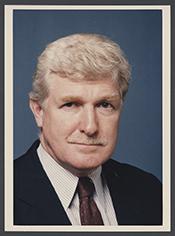
Mr. Chairman, we have said it many times, we need to restate it, though, apparently, again, there is no question between the debating sides here whether Saddam Hussein was a tyrant. The world is far…
Mr. Chairman, we have said it many times, we need to restate it, though, apparently, again, there is no question between the debating sides here whether Saddam Hussein was a tyrant. The world is far better off without him. And we are glad he is gone. We certainly hope he is gone. There is no debate as to the priority that we want to place on our troops. Obviously, that is our highest priority. And we will do what we see as necessary to protect their lives and provide for their families.
But, Mr. Chairman, there is something else involved here that goes beyond the issue of Iraq. This is about the integrity of this institution, the role it has to play vis-a-vis the executive branch. It is about the precedent that we establish with such important votes.
We had a hearing today with the comptroller of the Department of Defense, the Committee on the Budget did. It was similar to the hearing we had last week with Secretary Rumsfeld. We were told again that there is no time frame for when we might be moving our troops out of Iraq. Remember when the time frame was imposed on President Clinton with regard to Bosnia? Pretty tight time frame, as I recall. Today, were told that there was no estimate as to how many troops might be required or what the composition might be between National Guard and Reserve versus enlisted personnel.
I remember when we put pretty tight controls in Bosnia and Kosovo, even though it was a multilateral effort, led by NATO. We were told today that there was no estimate as to the ultimate cost of this conflict or of the reconstruction.
Now, how many times do we have to be told that we are being taken for granted, that the power of the purse that we hold, which is really all that our constituents expect us to use as leverage, is not there if we continue to give a blank check? And that basically is what the administration is asking for in this supplemental.
I support the Obey amendment because, in fact, it does provide for the troops. Even more specifically, it will not let the administration get away again with getting $60 billion and not spending it on the most basic necessities of individual and collective protection for our troops on the battlefield. And Iraq still is a battlefield.
But it also requires some burden sharing, not as much as the first President Bush required, where he got most of the war paid for by other countries because we had taken the time to build a coalition. It is time we used our leverage to require that there be some burden sharing of this conflict, some considerations for the other needs of the American taxpayer.
The Obey amendment makes sure that we use the World Bank. Seven billion will collateralize another 35 billion. It will quadruple the amount of money that we put in, that the taxpayers put in. Because it is not our money, as we are continually reminded, it is the taxpayers we are talking about.
But, most importantly, we have to acknowledge that it is not acceptable to engage in conflict, putting our troops at risk with the use of a pattern of deception. I know we do not like to hear this, but how many times were we told there was a connection between 9/11 and Saddam Hussein? President Bush admitted just a short while ago, no, there was no connection. We were told by the Vice President that they had nuclear capability. Now, he admits he misspoke. That is not acceptable. This is a bad precedent.
I have tremendous respect for my colleagues on both sides of the aisle, for the gentleman from California (Mr. Lewis), the gentleman from Florida (Mr. Young). Their commitment to our troops, to our military superiority and to our military doing the right thing is unparalleled. No question. But, we have a responsibility. It is an institutional responsibility and a moral responsibility not just to do right by the taxpayer, but, to also do right by the troops, to do right by this institution, to demand answers to legitimate questions: How long? How many troops? What will be the cost? What is the commitment? We have not been given answers to those questions. And we should not approve this supplemental until we are given answers, straight answers.
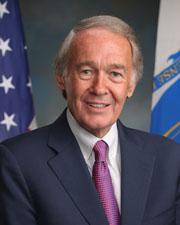
Mr. Chairman, last fall we were told that Congress needed to authorize military force against Iraq in order to convince the U.N. to send the inspectors back into Iraq. But as soon as we did so, the…
Mr. Chairman, last fall we were told that Congress needed to authorize military force against Iraq in order to convince the U.N. to send the inspectors back into Iraq. But as soon as we did so, the Bush administration pulled the rug out from under the U.N. inspectors and decided it would use the authority Congress granted them to fight a unilateral war.
Now we are learning that there were no weapons of mass destruction in Iraq. Congress and the American people were deceived, misled, and manipulated with false and misleading intelligence and political spin from the Bush White House.
Now the Bush administration cannot find any weapons of mass destruction. It cannot find Saddam Hussein. It cannot find Osama bin Laden. It cannot find Taliban leader Mullah Omar, and it cannot even find out who within the White House staff leaked the name of that covert CIA operative.
What does the Bush administration now ask the Congress for? They ask us to trust them and to grant their request for another $87 billion going into Iraq, a blank check with no clear vision of how we are going to extricate ourselves from this morass.
Now, I hear a lot of talk from the administration and its supporters about how we are crafting with this legislation a new Marshall Plan for Iraq. Well, let me tell you, when George Marshall was crafting a plan for Harry Truman to reconstruct Europe after the devastation of World War II, he was not setting up a sweetheart, no-bid contract system for companies associated with the old Pendergast Machine in Kansas City.
That is what we are seeing today with the contracts being given to Halliburton and other favored companies. We are providing broad transfer and reallocation authority to the executive branch that gives the Bush administration virtually unfettered discretion to spend the monies we appropriate in any way they wish. At the same time the President asks us to spend $87 billion in Iraq, he is also going around the country giving speeches calling for additional tax cuts for the top 1 percent wealthiest people in the United States of America.
So if you are wealthy in this country, you get tax cuts and fat government contracts. But if you are an ordinary working American, you get Social Security and Medicare trust funds raided, the 50 percent who are in nursing homes, the elderly dependent upon Medicaid, payments for their nursing home care, they are cut; and meanwhile it is all raided for the reconstruction of Iraq, while at the same time tax cuts of the same amounts are being given to the wealthiest 1 percent in our country.
So the Republicans are busy at work coming up with new schemes to increase your Medicare co-pays, means test your benefits, increase payments for seniors with home health care visits. All of it is wrong, just plain wrong. It is a blank check. It gives the President and Secretary Rumsfeld too much authority. And it fails to do what is needed to build international support for peacekeeping and reconstruction in Iraq or craft an appropriate exit strategy to get our troops back home. And that can only happen if we have multilateral support for this effort, if we have a real vision for what is going on.
As long as this administration believes that it is going to bring Jeffersonian democracy at the point of a gun to an occupied country, then we are operating with one of the most naive political schemes ever put together in the history of this world. And it is time for us to be ensuring that the Congress makes this administration accountable, rather than handing over a blank check with no accountability with at least 60 to 70 percent of this money capable of being reprogrammed by the administration at its own whim without Congress voting upon it again, all of it a mistake of historic proportions.
This is where Congress must check in. It did so after World War II. Today it is just providing a blank check.
Bill Text
3 versions available
        [Congressional Bills 108th Congress]
[From the U.S. Government Publishing Office]
[H.R. 2998 Referred in Senate (RFS)]

1st Session
H. R. 2998

_______________________________________________________________________

IN THE SENATE OF THE UNITED STATES

October 14, 2003

Received; read twice and referred to the Committee on Armed Services

_______________________________________________________________________

AN ACT

To amend title 10, United States Code, to provide permanent authority
for the exemption for certain members of the uniformed services from an
otherwise-applicable requirement for the payment of subsistence charges
while hospitalized.

Be it enacted by the Senate and House of Representatives of the
United States of America in Congress assembled,

SECTION 1. PERMANENT AUTHORITY FOR EXEMPTION FOR CERTAIN MEMBERS OF THE
UNIFORMED SERVICES FROM REQUIREMENT TO PAY SUBSISTENCE
CHARGES WHILE HOSPITALIZED.

Subsection (c) of section 1075 of title 10, United States Code (as
added by section 8146(a)(2) of the Department of Defense Appropriations
Act, 2004 (Public Law 108-87)), is repealed.

Passed the House of Representatives October 8, 2003.

Attest:

JEFF TRANDAHL,

Clerk.