Private Property Rights Implementation Act of 2006

Legislative Activity
Stay on top of the latest movement without scrolling through every action
Read twice and referred to the Committee on the Judiciary.
November 13, 2006
View full timeline
Introduced in House
February 16, 2006
Referred to the House Committee on the Judiciary.
February 16, 2006
Referred to the Subcommittee on the Constitution.
May 23, 2006
Subcommittee Hearings Held.
June 8, 2006
Reported (Amended) by the Committee on Judiciary. H. Rept. 109-658.
September 14, 2006
Placed on the Union Calendar, Calendar No. 391.
September 14, 2006
Mr. Sensenbrenner moved to suspend the rules and pass the bill, as amended.
September 25, 2006 • 4:16 PM
Considered under suspension of the rules. (consideration: CR H6965-6971, H6993; text of measure as introduced: CR H6965-6966)
September 25, 2006 • 4:17 PM
DEBATE - The House proceeded with forty minutes of debate on H.R. 4772.
September 25, 2006 • 4:17 PM
At the conclusion of debate, the Yeas and Nays were demanded and ordered. Pursuant to the provisions of clause 8, rule XX, the Chair announced that further proceedings on the motion would be postponed.
September 25, 2006 • 4:54 PM
Considered as unfinished business. (consideration: CR H7370)
September 26, 2006 • 12:57 PM
Failed of passage/not agreed to in House: On motion to suspend the rules and pass the bill, as amended Failed by the Yeas and Nays: (2/3 required): 234 - 172 (Roll no. 477).
September 26, 2006 • 1:06 PM
On motion to suspend the rules and pass the bill, as amended Failed by the Yeas and Nays: (2/3 required): 234 - 172 (Roll no. 477).
September 26, 2006 • 1:06 PM
Motion to reconsider laid on the table Agreed to without objection.
September 26, 2006 • 1:06 PM
Rules Committee Resolution H. Res. 1047 Reported to House. Rule provides for consideration of H.R. 4772 with 1 hour of general debate. Previous question shall be considered as ordered without intervening motions except motion to recommit with or without instructions. Measure will be considered read. Bill is closed to amendments. The amendment in the nature of a substitute recommended by the Committee on the Judiciary now printed in the bill shall be considered as adopted.
September 27, 2006 • 8:13 PM
Considered under the provisions of rule H. Res. 1047. (consideration: CR H7916-7925, H7990-7991)
September 29, 2006 • 11:00 AM
Rule provides for consideration of H.R. 4772 with 1 hour of general debate. Previous question shall be considered as ordered without intervening motions except motion to recommit with or without instructions. Measure will be considered read. Bill is closed to amendments. The amendment in the nature of a substitute recommended by the Committee on the Judiciary now printed in the bill shall be considered as adopted.
September 29, 2006 • 11:00 AM
DEBATE - The House proceeded with one hour of debate on H.R. 4772.
September 29, 2006 • 11:01 AM
DEBATE - The House resumed debate on H.R. 4772.
September 29, 2006 • 11:10 AM
The previous question was ordered pursuant to the rule. (consideration: CR H7925)
September 29, 2006 • 11:57 AM
POSTPONED PROCEEDINGS - The Chair put the question on adoption of the bill H.R. 4772 and announced that by voice vote, the ayes had prevailed. Mr. Nadler demanded the yeas and nays and the Chair postponed further proceedings on the question of adoption of H.R. 4772 until later in the legislative day.
September 29, 2006 • 11:58 AM
Passed/agreed to in House: On passage Passed by the Yeas and Nays: 231 - 181 (Roll no. 511).(text: CR H7916-7917)
September 29, 2006 • 6:31 PM
On passage Passed by the Yeas and Nays: 231 - 181 (Roll no. 511). (text: CR H7916-7917)
September 29, 2006 • 6:31 PM
Motion to reconsider laid on the table Agreed to without objection.
September 29, 2006 • 6:31 PM
Received in the Senate.
September 30, 2006
Read twice and referred to the Committee on the Judiciary.
November 13, 2006
Voting History
2 votes recorded • Roll call available
Floor Debate
17 membersWhat members said about H.R. 4772 on the floor
 PS
PS LMSSC
LMSSC JN
JN EB+12
EB+12
Floor Debate
17 membersWhat members said about H.R. 4772 on the floor
Mr. Speaker, by direction of the Committee on Rules, I call up House Resolution 1054 and ask for its immediate consideration. Mr. Speaker, for the purpose of debate only, I yield the customary 30…
Mr. Speaker, by direction of the Committee on Rules, I call up House Resolution 1054 and ask for its immediate consideration.
Mr. Speaker, for the purpose of debate only, I yield the customary 30 minutes to the gentlewoman from New York (Ms. Slaughter), pending which I yield myself such time as I may consume. During consideration of this resolution, all time yielded is for the purpose of debate only.
Mr. Speaker, the rule before us today will provide for consideration of three measures of vital importance to our Nation: The conference report for Fiscal Year 2007 Homeland Security Appropriations bill, the Private Property Rights Implementation Act of 2006 and the Military Commissions Act of 2006. This rule will enable the House to consider these bills and complete this important work on behalf of the American people.
Mr. Speaker, I rise today in strong support of this rule and the underlying legislation. These three bills address some of our Nation's most pressing priorities. First, the Homeland Security Appropriations Conference Report funds our most important Federal programs aimed at securing the Nation against terrorist attacks. It provides $34.8 billion for the operations and activities of the Department of Homeland Security in fiscal year 2007, an increase of $2.3 billion over fiscal year 2006 and $2.7 billion above the President's request.
The conference agreement aggressively addresses our most critical homeland security needs, including border and immigration security; nuclear detection; port, cargo and container security; transportation security; natural disaster preparedness and response; and support to State and local first responders.
This legislation secures our homeland first and foremost by protecting our borders and revitalizing immigration enforcement, because border security is homeland security. It provides over $21 billion for border protection, immigration enforcement and related activities. It includes an increase of $2.1 billion over funding in 2006. This includes $5.2 billion for the Secure Border Initiative and additional funding to support technology, personnel and infrastructure to prevent terrorists and other criminals from exploiting our borders and immigration system.
Among other security-enhancing measures, this funding includes $2.77 billion for Border Patrol, adding 1,500 new Border Patrol agents, for a total of 14,800. It includes $1.2 billion for border fencing, vehicle barriers, technology and infrastructure; $4.2 billion for immigration and customs enforcement; $1.38 billion for Immigration and Custody Enforcement custody operations, adding 6,700 detention beds, for a total of 27,500; and $28.2 million to assist State and local efforts to enforce immigration laws.
This conference report also recognizes the need to enhance port, container and cargo security by providing the funds necessary to secure our ports and inbound cargo in order to prevent terrorists and criminals from exploiting the international commerce system.
It supports our first responders by paying attention to the needs of high-threat areas, firefighters and emergency management. It supports ongoing efforts to enhance the current inventory of our Nation's critical infrastructures, develop secure communication systems with Federal, State and local entities, and it continues to work with the private sector to implement protective measures around the Nation's infrastructure.
This agreement continues ongoing efforts to enhance security for all modes of transportation, including ports, rails and aviation with a focus on developing and installing next-generation technology to inspect cargo, baggage and passengers. And it supports traditional missions, such as drug interdiction, law enforcement, maritime safety and Presidential protection.
Finally, this conference report provides for the necessary and appropriate oversight of the Department of Homeland Security. It fences off $1.6 billion from being spent until DHS meets certain planning and management requirements. Under these requirements, DHS must develop a comprehensive strategy and plan for port, cargo, container security, and for the Secure Border Initiative. Department of Homeland Security must also provide expenditure plans for the border security system, U.S.-VISIT, Federal Protective Service, business transformation for CIS, explosive detection systems in airports, Customs information technology systems, and overall better financial data throughout the department, and in particular, science and technology.
Finally, the agreement directs the preparedness Directorate and FEMA to improve its capacities in communications, training and other capacity assessments, including management logistics, emergency housing, debris removal and victim registration.
Second, this rule provides for consideration of the Military Commissions Act of 2006 as modified by the other body. The House version of this legislation passed the House on Wednesday by a vote of 253-168 and was sent to the other body. Today's legislation again provides congressional authorization for military commissions to try alien unlawful enemy combatants for war crimes committed before, on or after 9/11/2001. It amends the War Crimes Act to criminalize grave breaches of Common Article 3 of the Geneva Conventions, while fully satisfying U.S. treaty obligations. It also authorizes the establishment of military commissions to try alien unlawful enemy combatants, which is the legal term used to define international terrorists and those who aid and support them, for war crimes. While this new chapter is based upon the Code of Military Justice, it also creates an entirely new structure for these trials.
These commissions will only be used to try alien terrorists for war crimes. Any U.S. citizen will be tried within the Federal United States judiciary. These alien terrorists acquitted of a war crime will still be detained as enemy combatants according to the principle in international law that there exists an undisputable right to keep the enemy from returning to the battlefield. Thus, an acquittal at a war crime trial will not result in terrorists being released. This legislation also provides for an independent certified military judge to preside over all proceedings.
This agreement creates the process necessary to prosecute terrorists effectively and fairly, while also protecting American troops and intelligence agents fighting the global war on terror.
I would like to thank Chairman Duncan Hunter and Chairman Sensenbrenner for all of their hard work in reaching an agreement with the other body that keeps Americans safe while observing the rule of law.
Third, this rule provides for the consideration of legislation to give private property owners the ability to litigate cases in Federal court when local and State regulations deprive owners the use of their own land.
Although this legislation already passed the House this week with the support of the majority of its Members, it did not achieve the support of the super majority needed to pass under the suspension of the rules.
So, today, the House will once again have the opportunity to support this commonsense bill to ensure that property owners have the same access to Federal courts as other plaintiffs claiming a violation of their constitutional rights.
It removes the judicial detour of forcing claimants raising solely Federal claims to first pursue their litigation in State court on the very same case and dramatically reduces the amount of time that property owners must spend in negotiation and litigation before takings claims that can be heard on their merits.
I congratulate the gentleman from Ohio (Mr. Chabot) for all of his hard work in constructing and perfecting this legislation, and I look forward to supporting his efforts on the floor later this afternoon.
Mr. Speaker, I am proud of this work product that the majority has brought to the floor today. I encourage all of my colleagues to support this rule and the underlying legislation that will keep Americans safer, uphold the rule of law and protect the private property rights of citizens. I encourage each of my colleagues to join me in supporting this rule and the three underlying bills.
Mr. Speaker, I reserve the balance of my time.
Mr. Speaker, during the last few years, Members of Congress have spoken very plainly and openly to this administration about our thoughts and ideas and hopes and dreams, about how we can better protect not only this country and our borders but the rule of law, and this administration has been very open to hearing from Members of Congress about these thoughts and concerns.
Our next speaker is a gentleman who has engaged the administration, has talked about how important border initiatives are, to make sure that not only are we secure on our border but to make sure that we deal effectively and carefully with people who have come to this country, to make sure that they are safe, to make sure that they are not harmed in that process. If they have broken the law, they will take the full measure of law as it is given, but that we do so in a compassionate way.
Our next speaker is the chairman of the Rules Committee, the gentleman from California (Mr. Dreier), and I yield to him such time as he may consume.
(Mr. DREIER asked and was given permission to revise and extend his remarks.)
Mr. Speaker, I yield myself such time as I may consume.
Mr. Speaker, in the month of August, I had an opportunity with several other Members to go to Laredo, Texas, to visit our border to see the border operations and to see the things that were happening there. I had a chance to run across Texas Army National Guard personnel who were attempting to not only work but work successfully with Border Patrol and other Customs and Immigration enforcement personnel.
I wanted to draw attention to how important our National Guard has been from each of our States in protecting our borders, working on border security and doing those things that are necessary. This came as a result of a plan that happened with input from Congress, that happened through the great work that was done not only with the President but also with local Governors and people who are interested in doing this.
I had a chance to go with the Honorable Jo Bonner from Alabama down to Laredo. And both he and I together had a chance to see firsthand how the Army National Guard worked with Border Patrol. We went out that night to see firsthand their needs.
Mr. Speaker, that is what is in this bill, the ability that we have to protect our border, to provide the necessary resources, to make sure that our men and women who are with official law enforcement and also those who are with the Guard are able to make sure that this country is protected.
That is what is in this bill. I am proud of it. I am going to ask for everyone's vote for not only the rule but also the underlying legislation.
Mr. Speaker, I reserve the balance of my time.
Mr. Speaker, here we are talking about the rule for Homeland Security, and yesterday, the Rules Committee had an opportunity to speak very plainly with the appropriators who were responsible for this Homeland Security appropriations bill. We spoke with them about several matters. One of them was about the air marine operation under the CBP, Customs and Border Protection.
I would like for my colleagues to know, who have joined me and others in the effort to talk about the air interdiction program that we have about drugs that come into this country, that this bill provides $600 million for their border and air space protection.
Secondly, we had an opportunity to talk about the fugitive operation teams that nationwide are gathered together under Customs and Border Protection to make sure that the apprehension of those people who are illegal aliens that are in our country here who are fugitives and who are dangerous are picked up and dealt with by our judicial system in this country.
Over and over and over, the things that we have talked about that were necessary and needed throughout the years are contained with funding in this bill. I am very happy to say that I am proud of what this administration has done by listening to us, and perhaps more importantly, our appropriators, like Hal Rogers who brought this bill, who listened and who have done something about it.
Mr. Speaker, I yield 5 minutes to the gentleman from Georgia (Mr. Gingrey).
Mr. Speaker, I yield myself such time as I may consume.
Our previous speaker has just hit on probably one of the most important aspects of freedom in America, and that is the right of a person to be able to own property, the ability that we have to have our house to be our castle. Yet as we talk about the issue, I would like to add my dimension to it.
The bottom line is that we are engaged in this on behalf of people who own property, people who own property who have grown weary of having local government take their property without due compensation for the benefit of local government, and we are going to protect the private property owner. We believe private property rights are very important, and that is why we are getting engaged, because we have seen local communities do for their own best interest those things that they wanted to do by taking private property from a person.
We believe it is a simple part of what the Constitution is about. We believe that private property rights are important. I do understand the argument, and it is related to a person who cannot fight government even in their own local community when that is what government wants to do.
We are going to give a level playing field to those individuals because we believe that the individualist who owns his own property should have equal rights also, not just to be taken advantage of by local communities.
Mr. Speaker, that is also in this rule. We support the underlying legislation.
Mr. Speaker, I reserve the balance of my time.
Mr. Speaker, I want to thank the gentleman for bringing this up as an issue, because I think, once again, it shows clearly the differences between our parties and the way we think about this.
It is true that the Republican Party would be accused of having a balanced approach not only to making sure that these chemical companies have taken care of their responsibility for security but making sure also that we protect the jobs that come with those and the security of the towns in which they are located in.
We heard the gentleman use words like stronger, tougher, harder and making it more difficult. Everything he talked about was to simply make it harder for these companies to operate in America. Tougher sanctions, more rules, more regulations and being tough on the chemical companies. Yes, we get it, run them out of town. Run them out of the country. Take the jobs and leave.
Mr. Speaker, we are not going to do that in this bill. We are going to bring a balance, a balance that says that these chemical companies are a natural asset to the United States of America. As a part of our ability not only to make sure that we can receive the things that we need, technology and these things which chemical companies provide, that make our lives better every day, we are not going to run them out of town and we are not going to run them out of the country.
They have a responsibility to make sure that their internal elements are safe and the controls they put in place are doing the right thing. They want to take care of their responsibilities, and we are going to make sure that that is balanced. So we are not going to allow the tougher sanctions, the tougher things that our friends on the other side of the aisle want to do. We are going to strike a balance, a balance for safety, a balance for comprehension that what we want is to make sure that they are good corporate citizens and that they look closely at where their own frailties exist.
That is why this bill is going to pass today, because we are not going to run them out of town. We are not going to speak from a position of weakness; we are going to speak from a position of strength. That is another one of the differences between the Republican Party. We are going to balance it out and do the right thing.
Mr. Speaker, I reserve the balance of my time.
Mr. Speaker, I want to join my colleagues in thanking the
Honorable Martin Sabo for his service to this House and for his additions of the things he has brought forth in this legislation, not only working in a bipartisan basis but also his leadership on behalf of making sure that the next generation understands things like port security and other things which the gentleman has specialized in.
Mr. Speaker, I would also like to thank our Speaker, Dennis Hastert, and majority leader, John Boehner, for their vision and hard work to bring this bill forward today. They worked very closely with Chairman Hal Rogers and Chairman Jerry Lewis of the Appropriations Committee, Duncan Hunter of the Armed Services Committee, Chairman Jim Sensenbrenner of the Judiciary Committee, and certainly Steve Chabot of the Judiciary Committee.
This bill we bring forward today is a negotiated product, one where we have worked hard with not only members of the administration, but we have taken, as Members of Congress, trips to see our borders wherever they might be, the northern border or the southern border. We have our appropriators, who have taken time to understand the intricate details and the needs of this great Nation. We have engaged with the Department of Defense to talk about those things that will be necessary to protect our men and women on the battlefield. We have taken time to make sure that we have talked to our CIA, Central Intelligence Agency, about the way that they need to do business and those attributes about who they engage across the world and how we can treat fairly, yes, but treat properly those who would engage in killing Americans and bringing down reigning terror in our cities.
Mr. Speaker, I want to say that this underlying legislation is very important to America's learning lessons from the prior years and bringing those lessons to bear to protect this great Nation. We will speak from a position of strength, not fear. We will not worry about the things that we cannot get done but the things that we can get done. We will learn from our mistakes, and we will learn that, as terrorism in the 21st century evolves, we will, too. That is what these bills are all about.
I am proud of our country, and I say God bless America. Mr. Speaker, I ask for all the Members to support this bill.
Mr. Speaker, I yield back the balance of my time, and I move the previous question on the resolution.
Mr. Speaker, I yield myself such time as I may consume. (Ms. SLAUGHTER asked and was given permission to revise and extend her remarks.) Mr. Speaker, I thank the gentleman from Texas for yielding me…
Mr. Speaker, I yield myself such time as I may consume.
(Ms. SLAUGHTER asked and was given permission to revise and extend her remarks.)
Mr. Speaker, I thank the gentleman from Texas for yielding me this time.
Mr. Speaker, these are not the circumstances under which we should be considering this legislation. The bills before us deal with nothing less than the security of our homeland and the fundamental nature of our Nation. Our citizens deserve better than to have their elected representatives rush to pass all of these bills in one day, bills that say a great deal about who we are as a society and where we are headed as a country.
The Homeland Security Appropriations Conference Report and the Military Commissions Act before us are manifestations of how this country has chosen to respond to the challenges that confront us, challenges to our safety and our peace of mind.
Will we respond with flawed acts that undermine our economic vitality and sacrifice the very liberties we are theoretically fighting to protect? Or will we be measured in our response and do what is necessary to preserve our liberty from both threats abroad and the consequences of fear and mistrust here at home?
Mr. Speaker, this homeland security legislation means a great deal to my constituents in western New York and to the tens of millions of Americans who live in northern border communities throughout our country.
Our relationship with Canada is truly a unique one. Ours is the longest unguarded border in the world, a demonstration of the spirit of trust and openness shared by our two great nations. That spirit has produced and sustained a thriving cross-border tourism industry and hundreds of billions of dollars in trade between our two countries every year.
Border economies on both sides of the divide depend on that trade and tourism. So it would be shortsighted and self-destructive to permit a flawed border security plan to cut off such a lifeline. Unfortunately, the Western Hemisphere Travel Initiative, put forth with so much fanfare by the Department of Homeland Security and the Department of State, threatens to do just that. In the name of heightened security, this plan, if implemented in its current form, will mean that millions of tourists from both countries will stay home and businesses will stop shipping their goods across the border. In its current form, this plan is a disaster waiting to happen. And considering that Canada is our largest trading partner, we have no choice but to fix it before it is too late. And what we need first is an extension of the WHTI implementation deadline, which I am relieved to see is still in this bill. Backing up the implementation until June or at least January of 2009 will give us the time we need to fix this program where it is broken.
My colleague and good friend from New York Representative McHugh and I have fashioned a bipartisan, commonsense bill that will correct the most egregious failings of WHTI and make it work for our constituents instead of against them. The Protecting American Commerce and Travel Act, or PACT Act, has gained the support of a wide range of Representatives in this body. It will ensure border security while at the same time keeping it open to travel and trade. I urge all of my colleagues to consider and pass the PACT Act in the months ahead. We don't have to choose between economic security and physical security. We can and we must have both.
Mr. Speaker, the Western Hemisphere Travel Initiative was a flawed reaction to a perceived threat and today threatens the liberty and prosperity of our country more than those it supposedly protects us from.
In the same way, the Military Commissions Act before us represents a shocking assault on the fundamental
freedoms and liberties that we have been told we are fighting to defend. This bill will dramatically increase the President's right to detain men and women the world over and to hold them indefinitely without charge. What is more, it will serve as a backdoor legalization of all but the most brutal of interrogation methods, taking our Nation down a path that we have chastised so many other countries for following.
Yesterday in the Senate, my friend and New York delegation colleague, Senator Hillary Clinton, told a story about our country's first great military leader, a man who went on to become our first great political leader.
On Christmas Day in 1776, in the midst of the Revolutionary War, General George Washington launched a daring raid that culminated in the capture of numerous Hessian soldiers. They were foreign mercenaries known for their brutality and who were fighting for the British. Despite what they had done to American soldiers, he ordered his men to treat them humanely. He said, ``Let them have not reason to complain of our copying the brutal example of the British Army.''
George Washington, the man who so influenced our national consciousness, who was so deeply responsible for who we are as a people, wanted the world to know that the new American Army did not abuse its prisoners of war. He also wanted to do whatever he could to win the hearts and minds of the Hessians. If even one came to see the virtue of America and lay down his arms, that would be a victory in the fight for our Nation's freedom and independence.
Mr. Speaker, I think we have heard some of the best arguments against this bill from General Washington's successors: the men and women who have held top positions of responsibility in our Armed Forces. They have told us over and over again that if we ignore our country's longstanding commitment to the rules of war and international treaties like the Geneva Conventions, we will be putting our own soldiers and our own Nation at risk. Opening the door to detainee abuse and indefinite detention will make our soldiers more likely to be tortured and dehumanized so that they fall into enemy hands, and that means our own country will be less safe.
A world based on the rule of law is more safe, not less safe, than a world based on power alone. To argue that those who oppose this detainee bill want to let terrorists roam free is both wrong and illogical. Suspected terrorists who have evidence against them will be convicted by courts of law. They will stay behind bars. At the same time, a steadfast commitment to due process will both defend our most cherished freedoms and free the innocent from unwarranted punishment. Doing so will protect our liberty and deprive our enemies of one of the main tools that they are using to recruit their new followers.
We will show the world that the United States practices what it preaches about freedom and democracy and human dignity. We will bring others over to our side and make them less likely to take up arms against us.
There is a reason why Colin Powell recently warned us that the world is beginning to doubt the moral basis of our fight on terrorism. He said it because it is true and because such a reality is a truly dangerous one. What is more, humane interrogation methods will prevent us from chasing after ghosts, from following the fleeting leads of false confessions born not from knowledge but from desperation.
General Washington saw the value of a world based on law and principle over 200 years ago, and he saw it at a time when his fledgling Nation was truly in a fight for its very survival. And for us to pass a bill today that abandons some of the most fundamental principles of the civilization that we have sworn to defend would be an insult to all those who came before us, to all those who fought and struggled so that we could live free.
Mr. Speaker, it is such a respect for law and eternal principles that this administration and far too many in this Republican leadership lack. The proof lies in a provision of this bill which has received so little notice it is shameful but that is profoundly revealing about its true nature.
Ten years ago Congress passed a law called the War Crimes Act. Under that bill violating the Geneva Conventions is a crime in the United States. The administration argued that the Convention does not apply to enemy combatants, a term of its own invention. But the Supreme Court disagreed. In other words, the administration officials who have spent the last 5 years creating and directing our torture policy, as well as the government employees who have carried it out, could be liable for criminal prosecution for violating the War Crimes Act.
And so they have decided in this bill to go back in time to 1997 and to rewrite the War Crimes Act to make their actions legal. And that is exactly what this bill does. To call this strategy cynical and self- serving, Mr. Speaker, is an understatement. When President Bush signs this bill, he will be signing away any responsibility for the potentially criminal policies that he and those in his administration have enacted during the past 5 years. When he signs this bill, he will be signing a pardon for himself and for all other architects of these disastrous, self-defeating, and immoral policies.
But we have a choice here today. We can take a principled stand on behalf of the principles that make us great. We can choose to reject a future in which America can no longer honestly claim that it respects human rights, a future in which our own shortsighted, selfish, and immoral retreat into fear and suspicion has left us less safe and more isolated than ever before. We can choose to embrace our true nature and, in so doing, take a great step toward the creation of a world led by law and free from fear.
It is our choice, Mr. Speaker. And I implore all of my friends in this body, please, let us today make the right one.
Mr. Speaker, I reserve the balance of my time.
Mr. Speaker, I yield 6 minutes to the gentleman from Minnesota (Mr. Sabo).
Mr. Speaker, I yield 2 minutes to the gentleman from New Jersey (Mr. Pallone).
Mr. Speaker, I yield 3\1/2\ minutes to the gentleman from Oregon (Mr. Blumenauer).
Mr. Speaker, I am pleased to yield 5\1/2\ minutes to the gentleman from Massachusetts (Mr. Markey).
Mr. Speaker, I will use my remaining time to close, but, first, I wish to insert for the Record an editorial from this morning's New York Times called, ``More Comfort for the Comfortable.'' That is the way they describe the Private Property Rights Implementation Act. They say it is a deeply misguided giveaway for big real estate developers.
[From the New York Times, Sept. 29, 2006.]
More Comfort for the Comfortable
Congress, which has done so little this session to address
the nation's real problems, is expected to vote today on a
deeply misguided giveaway for big real estate developers. The
bill would create new property rights that could in many
cases make it difficult, if not impossible, for local
governments to stop property owners from using their land in
socially destructive ways. It should be defeated.
The Private Property Implementation Act would make it
easier for developers challenging zoning decisions to bypass
state courts and go to federal court, even if there was not a
legitimate federal constitutional question. Zoning
regulations are quintessentially local decisions. This bill
would cast this tradition aside, and involve the federal
government in issues like building density and lot sizes.
The bill would also make it easier for developers to sue
when zoning decisions diminished the value of their property.
Most zoning does that. Developers would make more money if
they could cram more houses on small lots, build skyscrapers
200 stories tall, or develop on endangered wetlands. The bill
would help developers claim monetary compensation for run-of-
the-mill zoning decisions on matters like these. It would
also make it easier for them to intimidate local zoning
authorities by threatening to run to federal court.
Zoning is not an attack on property rights. It is an
important government function, and most Americans appreciate
that it helps keep their own neighborhoods from becoming more
crowded, polluted and dangerous. If more people knew the
details of this bill, there would be wide opposition. As it
is, attorneys general from more than 30 states, of both
parties, have joined the U.S. Conference of Mayors, the
National Conference of State Legislatures and leading
environmental groups in opposing it.
The bill does a lot of things its supporters claim to
abhor. House Republicans were elected on a commitment to
states' rights and local autonomy, and opposition to
excessive litigation and meddling federal judges. It is
remarkable how quickly they have pushed these principles
aside to come to the aid of big developers.
Mr. Speaker, I will be asking Members to vote ``no'' on the previous question. If the previous question is defeated, I will offer an amendment to the rule to instruct the enrolling clerk to strike from the conference report several last-minute provisions that may compromise chemical plant security.
Mr. Speaker, I ask unanimous consent that the text of the amendment be printed in the Record immediately before the vote on the previous question.
Mr. Speaker, these provisions were not in either the House or Senate-passed versions of the Homeland Security bill. They were drafted in secret and slipped into the conference report without the input of any Democrats in the conference. Even worse, these provisions may make chemical facilities more vulnerable to security problems and not less.
When we talk about balance, I think Homeland Security was supposed to be about rules and regulations. The new language weakens the Homeland Security Secretary's ability to enforce chemical facility site security plans. It takes the authority away. It allows the Secretary to preempt tougher State laws to ensure chemical facility security, and it severely restricts the rights of citizens to take any legal action to enforce chemical facility security requirements. Securing our chemical plants is far too important to be compromised by a secretive and inadequate security plan.
I want to stress that a ``no'' vote on the previous question will not stop consideration of the conference report, but a ``no'' vote will allow the House to remove these inadequate and dangerous provisions. Again, please vote ``no'' on the previous question.
Mr. Speaker, I yield back the balance of my time.
Mr. Speaker, I object to the vote on the grounds that a quorum is not present and make the point of order that a quorum is not present.
Mr. Speaker, on that I demand the yeas and nays.
Mr. Speaker, I thank the gentleman for yielding. I want to, first, thank the gentleman from Wisconsin for his leadership and his cosponsorship of this bill, also the 35 other cosponsors and the 234…
Mr. Speaker, I thank the gentleman for yielding.
I want to, first, thank the gentleman from Wisconsin for his leadership and his cosponsorship of this bill, also the 35 other cosponsors and the 234 Members of this body that voted for it. It passed just the other day by a margin of 60 votes. Now, it needed two- thirds, so that is the reason for our being here today. But there is really overwhelming support. I also want to thank the gentleman from Tennessee, Bart Gordon, for his leadership as well in support of this legislation.
Just to address a couple of the points that were made before I get into the bulk of my speech here, the gentleman from Michigan mentioned that this elevates property owners above all other constitutional rights and individuals who are trying to establish their constitutional rights. It doesn't do that at all. It puts them on the same level as other people who have a constitutional right that they are trying to enforce. And they should under existing law already have their constitutional rights. This is a fifth amendment right in the Bill of Rights. A person cannot have their property taken without just compensation, without due process of law, and this is just putting them on the same level with all the other constitutional rights that we enjoy in this country.
The gentleman from New York said that this is radical and dangerous. I would venture to say there aren't too many things that this side has tried to pass in the 12 years that I have served with the gentleman that the gentleman hasn't considered to be radical and dangerous, with some exceptions where we have been on the same side. But I think this is not radical nor is it dangerous.
I would be happy to yield to the gentleman from New York.
Reclaiming my time, Mr. Speaker, as I had indicated, there have been times when the gentleman has not said things we are doing are radical and dangerous, and I agree with that part of what we just talked about.
But the gentleman talks about this being only for big developers and not the little guy, so to speak. I would just note that H.R. 4772, this particular legislation, levels the playing field for small and middle- class property owners and retirees. The expense of bringing a Federal takings claim through the labyrinth of procedures in place today is disproportionately borne by private citizens who cannot draw on the public treasury to defend their rights. This bill, more than any big developer, helps small developers and the middle class, whose finances are particularly strained by the costs of defending their fifth amendment property rights.
This bill helps, for example, elderly retirees who may have all their savings tied up in their home that the government is trying to take away from them for whatever. When their home is unjustly taken by the government, the elderly should not have to spend 10 years paying for expensive lawyers to defend themselves in court. And that is what happens in communities all over this country right now. They should be allowed to go right to the Federal court and defend their federally protected property rights, and this bill would allow them to do just that.
On February 16 of this year, when I authored this, along with the gentleman from Tennessee (Mr. Gordon), this Private Property Rights Implementation Act, and I want to thank the gentleman, as I already did, we introduced this legislation as a result of recent Supreme Court decisions last term, Kelo and San Remo. They, quite frankly, ignored the constitutional rights of property owners.
The fifth amendment to the Constitution, as I stated before, states: No person shall be ``deprived of life, liberty, or property, without due process of law, nor shall private property be taken for public use, without just compensation.'' And that is exactly what we are talking about remedying by this bill.
The House of Representatives acted to correct the Kelo decision by passing a bill, H.R. 4128, by a bipartisan vote of 376-38. Today, Congress has an opportunity to restore the rights taken away by the San Remo decision by passing this bill which will correct that decision.
Now, here is the problem. Strange as it sounds, under current law, property owners are now blocked from raising a Federal fifth amendment takings claim in Federal court. And here is why: The Supreme Court's 1985 decision in Williamson County v. Hamilton Bank requires property owners to pursue to the end all available remedies for just compensation in State court before the property owners can file suit in Federal court under the fifth amendment.
Then just last year, in the case of San Remo Hotel v. City and County of San Francisco, the Supreme Court held that once a property owner tries their case in State court, the property owner is prohibited from having their constitutional claim heard in Federal court, even though the property owner never wanted to be in State court with their Federal claim in the first place. The combination of these two rules means that those with Federal property rights claims are effectively shut out of the Federal court on their Federal takings claims, setting them unfairly apart from those asserting any other kind of Federal right, such as those asserting free speech or freedom of religion or other rights that could be established under the Constitution.
The late Chief Justice Rehnquist commented directly on this unfairness, observing in his concurring opinion in San Remo that ``the Williamson County decision all but guarantees that claimants will be unable to utilize the Federal courts to enforce the fifth amendment's just compensation guarantee.'' The Second Circuit Court of Appeals has also stated that ``it is both ironic and unfair if the very procedure that the Supreme Court requires property owners to follow before bringing a fifth amendment takings claim, a State court takings action, also precluded them from ever bringing a fifth amendment takings claim in Federal court.
H.R. 4772, the Private Property Rights Implementation Act, will correct the unfair legal bind that catches all property owners in what amounts to a catch-22. This bill, which is based on Congress's clear authority to define the jurisdiction of the Federal courts and the appellate jurisdiction of the United States Supreme Court, would allow property owners raising Federal takings claims to have their cases decided in Federal court without first pursuing a wasteful and unnecessary litigation detour, and possibly a dead end, in State court.
H.R. 4772 would also remove another artificial barrier blocking property owners' access to Federal court. The Supreme Court's Williamson County decision also requires that before a case can be brought for review in Federal court, property owners must first obtain a final decision from the State government on what is an acceptable use of their land. This has created an incentive for regulatory agencies to avoid making a final decision at all by stringing out the process and thereby forever denying a property owner access to the court. Studies of takings cases in the 1990s indicate that it took property owners nearly a decade of litigation, which most property owners, let us face it, especially a small property owner, can't afford, before takings claims were ready to be heard on the merits in any court, whether it is State or Federal.
To prevent that unjust result, this bill would clarify when a final decision has been achieved and when the case is ready for Federal court review. Under this bill, if a land use application is reviewed by the relevant agency and rejected, a waiver is requested and denied, and an administrative appeal is also rejected, so they have gone through this long process, then a property owner can bring their Federal constitutional claim, and, again, this is a Federal constitutional claim, in a Federal court. The bill would not change the way agencies resolve disputes; rather, H.R. 4772 simply makes clear the steps the property owner must take to make their case ready for court review.
This bill also clarifies the rights of property owners raising certain types of constitutional claims in other ways.
First, it would clarify that conditions that are imposed upon a property owner before they can receive a development permit must be proportional to
the impact a development might have on the surrounding community.
Second, it would clarify that if property units are individually taxed under State law, then the adverse economic impact the regulation has on a piece of property should be measured by determining how much value the regulation has taken away from the individual lot affected, not the development as a whole.
Third, the bill would clarify that due process violations involving property rights should be found when the government has been found to have acted in an arbitrary and capricious manner.
This legislation also applies these same clarifications to cases in which the Federal Government is taking the private property. This legislation is endorsed by a number of organizations: the National Association of Homebuilders; the National Association of Realtors; the U.S. Chamber of Commerce; the National Federation of Independent Businesses, which is oftentimes small businesses, most of the time; the United States Farm Bureau; and the Property Rights Alliance.
Again, this legislation passed. A majority of more than 60 votes for this legislation, as opposed to against it just a couple of days ago.
Again, I want to thank the gentleman from Wisconsin (Mr. Sensenbrenner) for his leadership and also the gentleman from Tennessee (Mr. Gordon) for his leadership.
It is your time.
Mr. Speaker, I thank the gentleman for yielding. We have the same zoning laws that are in many other places around the country. There is an appeals process that we go through, and there is a three- step process under this particular legislation: You have to be denied. You have to then appeal. You have to go a third level. And if you lose at all of those, then the owner has the option to go to either State court or Federal court under this legislation, which seems perfectly reasonable.
Of course there are. We have various zoning boards. We have various agencies. We have the same basic things in our community that most of the other communities have. And I was on the community commission. We have appeals of all kinds of nature at all times.
Mr. Speaker, I thank the gentleman for yielding.
Mr. Speaker, if the gentleman is bringing up statewide office holders in Ohio for credibility purposes, I think the gentleman should probably review the political situation in Ohio and some of the stature that some of those folks hold right now. If you are making an argument to support your side of the case, there are a number of them that are let's say not at the height of popularity as we speak here today.
But just to mention a couple of things that the gentleman touched upon, especially the environmental concerns, for example. There is nothing in this bill that would prohibit the protection of land for environmental, health and safety reasons.
However, if the land is so regulated as to deny the owner any use of it, then, yes, the owner needs to be paid just compensation. The fifth amendment does not have an exemption for environmental laws or any other laws. In fact, the best approach would be to purchase the land, possibly through eminent domain, rather than trying to pull a fast one and harm the property owner or take that person's property without just compensation.
The basic idea is that individual property owners should not bear all of the costs of protecting our communities. A few land owners should not have to sacrifice their own land and economic well being for the betterment of a town or a city; rather, the town should give them just compensation. That is what we are supposed to do in this society.
If we are taking it from a particular individual, and they cannot use their land as they want to see fit, the rest of us, through the appropriate way, should give them just compensation.
The fifth amendment should apply in all taking cases, and we should not be carving out exceptions when it comes to public health and safety, just like in the Kelo legislation we passed; we did not carve out exceptions for the private use of eminent domain because some property is not as desirable to the community at large. All property should be treated the same.
And if there is public health or environmental needs to take the land, owners should be compensated for its taking. There are limits to what the government can do. And that limit is called the Bill of Rights. When the government takes private property, owners must be fairly compensated for their land.
Mr. Speaker, I thank the gentleman for yielding. I just make two quick points.
The gentleman from Oregon disparages the reputation of the gentleman who testified at the committee, Mr. Trauth, who was an attorney, on the types of cases that he takes. I would just note that I oftentimes agree with people who come and testify, disagree. They are lawyers. They represent various sides.
I yield to the gentleman from Oregon.
Reclaiming my time, I happen to know that he also represents people that are at lower income levels that maybe are having their houses taken away by somebody. As all lawyers do, they represent a whole range of cases.
And the other gentleman from Washington talked about how awful this legislation the Republicans are trying to pass is. I would just note to the gentleman that there were 37 Democrats that voted for this legislation just the other day.
I thank the gentleman for yielding.
Mr. Speaker, will the gentleman yield?
I agree that this is not directly related to Kelo, although there is, I think in many people's minds, some connection, and I think rightfully so.
Mr. Speaker, I yield myself such time as I may consume. Mr. Speaker, the Constitution provides for just compensation where government takes property. On that there is general agreement. There is also…
Mr. Speaker, I yield myself such time as I may consume.
Mr. Speaker, the Constitution provides for just compensation where government takes property. On that there is general agreement. There is also agreement that the ability of government to take property must be strictly limited to a public purpose and that the power to take property must be used sparingly and judiciously. Those are not controversial points.
This bill is something different, something radically and dangerously different. This bill goes far outside the bounds of the Constitution to reward big developers and polluters whenever local government tries to preserve the quality of life in our communities by controlling the spread of huge landfills or sprawling subdivisions or factory farms or adult bookstores.
Under this bill, a developer could circumvent local government and normal State court consideration, drag our local governments into Federal court, and demand payment every time our constituents want to preserve their health or quality of life.
The threat of Federal court litigation, expensive Federal court litigation, is real and troubling. One representative of the National Association of Home Developers said this bill would be a ``hammer to the head'' of every local official. That is what this bill does.
It greatly expands the definition of a taking. It would require the government to provide compensation in cases where the Constitution does not. It would allow developers to game the system by arbitrarily dividing their lots to squeeze money out of communities.
Should we have to pay someone to keep them from poisoning our drinking water or ignoring our zoning laws or opening an adult bookstore? That seems to be the claim of developers who want to fill in wetlands at will or build garbage dumps the size of small towns. Is it a taking for which me must compensate the developer if we make them pay their fair share of the cost of the new roads, sewers, water lines and schools that will be needed to support their new subdivision?
Should local taxpayers have to pay a developer whenever any conditions are imposed on a developer before allowing him to move forward? That's what this bill does.
Let's have no doubt this is a big developers' bill. My friend, the sponsor of this bill, has trumpeted the fact that the bill is supported by the home builders, the realtors, the Chamber of Commerce, the National Federation of Independent Business, and the U.S. Farm Bureau.
It is opposed by environmental organizations, the American Planning Associations, consumer organizations, and your mayors, your Governors and your attorneys general of the States. Which side are you on?
One of the majority's witnesses at our hearing on this bill was Mr. Frank Kottschade, a major local developer who complained that he didn't get everything that he wanted from his local government.
Another was an attorney, Joseph Trauth, who represents Wal-Mart, Home Depot and GE in zoning cases. Small developers. He is proud of the fact that he helped the Rumpke landfill in Hamilton, Ohio, expand by 65 acres.
That is who the bill is for, not for homeowners who want to protect their homes and communities.
Let me clear up some confusion. Many Members of this House were outraged by the Supreme Court's Kelo decision which dealt with the use of eminent domain to take private property from one person and give it to another private party in order to promote economic development.
The distinguished chairman spoke of Kelo. This bill has nothing to do with Kelo and nothing to do with eminent domain. It is not about taking property. It is about regulating responsible use of property. It is about stopping the ability of local governments to pass zoning laws, environmental protection laws, to enforce them to protect the local residents against those who would pollute the environment, build every inch and fill our suburban towns with 200-story buildings.
You have heard Kelo discussed in this debate because the real purpose of this bill is simply indefensible. This bill has to do with zoning, environmental protection, and environmental regulation. This is about protecting homeowners from abuse by developers and polluters. The bill, actually, is about stopping the ability of local governments to protect homeowners from abuse by developers and polluters.
I would just note the irony that the Republican leadership the other day moved a bill that would limit the rights of religious minorities under the 1871 Civil Rights Act. This bill expands the rights of developers and polluters under the same 1871 Civil Rights Act and allows them to extort local communities. That is the Republican civil rights agenda.
Mr. Speaker, I reserve the balance of my time.
Mr. Speaker, will the gentleman yield?
Mr. Speaker, I will concede that when we passed last week my bill to recognize Congress's support for a memorial at the World Trade Center site, after it had been held in committee for 2 years, that was not radical and dangerous.
Mr. Speaker, I yield 3 minutes to the distinguished gentleman from New York.
(Mr. BOEHLERT asked and was given permission to revise and extend his remarks.)
Mr. Speaker, I yield 5 minutes to the gentleman from Oregon (Mr. Blumenauer) who has been instrumental in local development, planning efforts in local government.
Mr. Speaker, I yield 45 seconds to the gentleman from Oregon (Mr. Blumenauer).
Mr. Speaker, I yield 1 minute to the gentleman from California (Mr. Farr).
Mr. Speaker, I yield 2 minutes to the gentleman from Washington (Mr. Inslee).
(Mr. INSLEE asked and was given permission to revise and extend his remarks.)
Mr. Speaker, how much time is remaining?
Mr. Speaker, I yield 1 minute to the gentleman from Oregon (Mr. Blumenauer).
Mr. Speaker, I yield myself such time as I may consume.
Mr. Speaker, it is important to get this debate back on track as to what we are talking about, not what we are not talking about, because the gentleman on the other side keeps bringing up matters that were not debated, that is not before us in this bill.
This bill has nothing to do with Kelo. It has nothing to do with whether there should be compensation for a taking. If the government wants to take your house for a new highway, they have got to pay you. That is the fifth amendment. If the government wants to take your house to give it to somebody else to build something that they judge for public purpose, the Supreme Court said they can do it in Kelo. A lot of people do not like it. That is the Kelo controversy. That is not this controversy.
This controversy has nothing to do with that. This controversy is saying the following: If local government passes regulations legislating land use, you cannot destroy a wetland; you cannot build a building more than 50 stories tall; you cannot build more than five houses on an acre, because it is a suburb and we do not want too much crowding; you cannot build a factory next to the houses; you cannot build a mine in a residential neighborhood. These are limitations on the use of property. It does not say you cannot use your property. It says you cannot build a mine here or you can only build 5 houses on that lot, not 2,500 houses.
Should these kinds of limiting regulations that governments all across our land grant all the time in order to protect local homeowners, in order to protect local property values, in order to protect the quality of life in local communities, should these laws remain possible? This bill says they should not remain possible.
This bill says that in two ways. One, we are going to drag the local community into Federal court where, contrary to the implications of the other side, it is a lot more expensive to litigate generally in Federal court than it is in a local court. So we are going to say that if the megadeveloper who wants to build 300 homes or 50 stories or 100 stories on that local lot next to your house, against the local zoning, he can take you right into Federal court, make you spend a lot of money and not go through the local process and not go through the local court process. That is very dangerous.
That is why the proponents of this bill, the home builders, said this is a hammer to the head of local officials. It is intended to be a hammer to the head of local officials. And who do the local officials represent? The local people who care about their property value, that is who they represent. But we are going to put a hammer to their heads because to hell with the property values of our local communities; to hell with the local planned development; we do not want big developers to be inhibited from building 300 houses on an acre instead of only three or four or whatever the local zoning code says.
Secondly, question: Is it a taking? The big developer buys 100 acres, has a 100-acre plot, two of them are a wetlands. The local government says or the law says you cannot build on the wetlands, you can only build on 98 of your 100 acres. The Supreme Court has always said you look at the totality of the property to determine whether that is a taking requiring compensation, and it is not, because you can build on 98 percent of your property, until this bill comes along and says no you cannot; you can subdivide the lots and if you want to protect that wetland, you have to pay for it.
The bill also says, in effect, that if you want to say that you cannot build 100 houses on that property, you can only build 10, you have to pay the developer for the difference between 10 houses and 100 houses, 90 percent.
Now, Mr. Chabot says, well, why should the government not pay the property owner if he cannot use his property. Well, the issue is not that. The issue is why should the local government, which wants to regulate or limit use of property in certain ways, have to pay the difference between what they say you can do with your property which they are not taking and everything conceivably you could do?
If the answer is yes, no local government will be able to pay that, no local community can pay that, and you cannot have local land use regulations, you will have to have the 50 story building there because no one can stay the difference between a 10-story limitation in the zoning instead of 50 on every lot.
So this is a question of whether you can have local language regulation, whether you can protect local communities at all.
Finally, let me say that this bill is clearly unconstitutional because this bill says you go right into Federal court. In the Williamson decision in 1985, the Supreme Court held that a takings claim, a claim that you are taking property without due process of law, is not right for Federal court review if the property owner had not obtained a final decision from the appellate administrative agency and the property owner had not first filed the claim in State court to challenge the government action. The court held that these requirements are constitutional requirements, not statutory. We cannot give them the right to go straight into Federal court because the rule, the court said, is compelled by the very nature of the inquiry required by the just compensation, that is, the takings clause, because the fact it is applied in deciding a takings claim simply cannot be evaluated until the administrative agency has arrived at a final decision regarding how it will apply the regulation it issued for the particular land in question.
Just 7 years ago, in 1999, the Supreme Court said again, a Federal court cannot entertain a takings claim under section 1983 or unless or until the complaining land owners are denied an adequate ``deprivation remedy,'' in other words has been denied State court review.
So by forcing the case right into Federal court this is clearly unconstitutional.
Mr. Speaker, I reserve the balance of my time.
Mr. Speaker, just to clarify, this bill does not simply deal with sending cases to Federal courts. It deals with the substantive law to be considered there.
Mr. Speaker, I yield 30 seconds to the gentleman from Oregon (Mr. Blumenauer).
Mr. Speaker, I am pleased to yield 1\1/4\ minutes to the gentleman from Washington (Mr. Inslee).
(Mr. INSLEE asked and was given permission to revise and extend his remarks.)
Mr. Speaker, I yield myself the balance of my time.
Mr. Speaker, this bill deals with when a government exercises zoning power and the big developer disagrees with that, what happens. It says you go into Federal court right away, which is more expensive for the local government to defend, and which is unconstitutional, as I mentioned a few minutes ago, because you have to go through the State remedy.
But second of all, it changes the substantive law to enable the developer to say that any reduction in his use of the property, that says you cannot have more than X number of houses on the property or you cannot destroy all the wetlands on the property, anything that will help preserve the local communities, all the regulations it would depend on to preserve property values, to preserve local communities, they are all gone because you have to pay for them and no local government is going to pay for them.
So nobody is going to be able to go to their local zoning board and complain. They will have to go to the Supreme Court, which will not have time for them.
Mr. Speaker, on that I demand the yeas and nays.
Mr. Speaker, I think we all agree that the Constitution's protection of property rights must be preserved. Let us be clear. This bill has nothing do with the Kelo decision, though they keep…
Mr. Speaker, I think we all agree that the Constitution's protection of property rights must be preserved.
Let us be clear. This bill has nothing do with the Kelo decision, though they keep mentioning that. It has nothing to do with eminent domain procedures. Separate issue.
The Constitution provides for just compensation when Government takes property for a public purpose; and when it does it up front, that is eminent domain. On that much there is general agreement.
This bill is something different, something radically and dangerously different. It goes far outside the bounds of the Constitution to reward big developers and polluters whenever local government tries to preserve the quality of life in our communities by controlling the spread of huge landfills or sprawling subdivisions or factory farms or adult bookstores. It does it primarily by making a number of changes to the substance of law. I will not even talk about, I will allude to it, but I am not going to talk in detail about the forum shopping that this brings into Federal court.
By the substantive changes in the law, the bill attempts to accomplish a partial legislative override of the so-called property as a whole rule in takings litigation.
The bill states that taking claims shall be decided with reference to each subdivided lot regardless of ownership, ``if such lot is taxed or is otherwise treated and recognized as an individual property unit by State, territory or the District of Columbia.''
Regulations, local zoning regulations, wetlands regulations, commonly restrictive elements of some proportion of a property, while allowing development of other portions.
Under the well-established property as a whole rule, courts evaluating tax's claims, that is, evaluating a claim that some regulation is in fact a taking of private property without due process of law and therefore unconstitutional, must consider the impact of the regulation on the owner's entire property.
Courts routinely apply this rule in situations where the property has been subdivided to separate tax lots or otherwise legally subdivided on the grounds that this type of property subdivision is irrelevant to the taking's analysis.
This bill would override this established application of the property as a whole rule. For example, if a developer owned property subdivided into 100 lots, two of which were classified as wetlands, the bill would force taxpayers to pay the developer to prevent the development of those two lots, notwithstanding that he is able to build on 98 percent of the land.
The Constitution and our historic traditions have never guaranteed the ability to build on every square inch of property. This modification of the property as a whole rule would represent a substantial change in takings doctrine and would force taxpayers to pay someone for any reduction in the inability to use any inch of property under any zoning regulation.
So if you own a single family home in a suburb and you do not want to see every inch built right up to your lot line, have your Congressman vote for this bill, if you do want to see that, rather.
If you want to protect the ability of your town council to say we want zoning on half-acre lots, then you cannot support this bill. Because any town council that said you have to have at least a half acre or quarter acre or whatever is saying you cannot build on every inch and the public must pay for that.
The public will never pay for that. It is much too expensive, which means you cannot have any zoning regulations, you cannot have any limitation on density, and you cannot have any environmental regulations to prevent building on wetlands or other environmentally sensitive areas. That is what this bill does.
The bill also provides that in a case alleging a deprivation of substantive due process, the Government actions ``shall be judges to whether it is arbitrary, capricious and abuse of discretion or otherwise not in accordance with law.''
Prior to the New Deal, prior to 1937, in the so-called Lochner era, the due process clause provided the constitutional basis for a very activist Supreme Court decision striking down a wide variety of regulations: Minimum wage laws are unconstitutional, maximum hour laws are unconstitutional, factory safety laws are unconstitutional. Why? Because it was a violation of substantive due process.
This bill language seeks to revive this Lochner doctrine by promoting the revival of an expansive reading of the due process clause. Since the 1930s, the courts have applied the due process clause with considerable deference toward the elected branch of the government. Republicans talk all the time about activist courts, we do not want them, they say deference to the elected branch of the government, except here.
Reflecting this approach, Justice Samuel Alito, while sitting as a Judge of the Court of Appeals for the 3rd Circuit, rejected a due process challenge to a municipal ordinance on the basis that the Government action violates substantive due process only when it ``shocks the conscience.''
This bill would replace this relatively deferential, widely accepted standard with a wider standard focusing on whether the Government acted arbitrarily, capriciously or with an abuse of discretion.
In addition, the bill states the Government action should be judged based on whether it is otherwise not in accordance with law. This language would convert every single legal dispute over the application of garden variety zoning regulations, garden variety maximum hour, minimum wage, factory safety, environmental, whatever laws into a constitutional due process issue.
This bill goes so far to destroy the ability of communities to control the spread of huge landfills or of sprawling subdivisions or factory farms or adult bookstores. You want an adult bookstore on every block, and the town council cannot stop it, vote for this bill.
A developer can circumvent local government and normal State court consideration, drag our local governments into Federal Court and demand payment every time our constituents want to preserve their health or quality of life.
The threat of Federal court litigation is real and troubling. One representative of the National Association of Homebuilders said this bill would be a hammer to the head of every local official. Is that what we should be doing? Congress and the Federal Courts will now become a super national zoning board?
Whatever danger to the environment this legislation may pose, it is green in at least one respect. It is an outstanding example of recycling, taking us all back to those memorable days of Newt Gingrich's Contract on America, where even the Republican Congress rejected this kind of legislation in those days.
Later versions of that effort, which have been called kinder and gentler by at least one legal scholar, focused on procedural issues, a euphemism for the kind of forum shopping in this bill.
This bill is much less kind and less gentle. It greatly expands the definition of a taking. It would require the Government to provide compensation in the kinds of cases I spoke of a few minutes ago where the Constitution does not require compensation. It would allow developers to game the system by dividing their lots to squeeze money out of our communities.
Should we have to pay someone off to keep them from poisoning our drinking water? Should we have to pay people off if we want to control suburban sprawl? Is it a taking if we make them pay for some or all of the costs of the new roads, sewer lines, water lines and schools that will be needed when they are done? This bill says ``yes''.
Should local taxpayers have to pay a developer whenever any conditions are imposed on a developer before allowing them to move forward? This bill says ``yes''.
My Republican colleagues on the Judiciary Committee often rail against ``trail lawyers'' who engage in forum shopping. Now this bill, proposed by those same Members, would write forum shopping into the law to benefit one large group against everybody else: large real estate developers against every member of local government and every local constituent who cares about their community.
Let us have no doubt that this is a big developers' bill.
One of the majority's witnesses at the hearing we had on this bill last year was Frank Kottschade, a major local developer. Another was an attorney who made an impassioned plea for small property owners. But it turned out that the bio from his firm's Web site said that he represented such small property owners as Wal-Mart, the Rumpke landfill in a major expansion effort, Home Depot and General Electric. That is who this bill is for.
And let me clear up some confusion. Many Members of this House were outraged by the Supreme Court's Kelo decision, which dealt with the use of eminent domain to promote economic development. This bill, I will repeat, has nothing to do with Kelo, nothing to do with eminent domain. This bill has to do with destroying the ability of our local communities to enforce the zoning regulations, environmental protection, environmental regulation and any kind of limitation on any kind of development.
If that is what you want to do, if you want the Federal Government to come in and be the master of zoning and overrule all local regulations so that local government may as well go out of business, because Congress knows best, and in fact not even Congress, the courts know best, then vote for this bill.
Mr. Speaker, I thank the gentleman for yielding.
Mr. Speaker, first of all, we are told that this is a terrible situation because under current law, given Supreme Court decisions, you have to go to State court; you cannot adjudicate your Federal constitutional rights in Federal court. You can always appeal
any final court State decision. If you claim that the Supreme Court of Tennessee has violated your Federal constitutional rights, you can always appeal that into the Federal courts. So no one is disputing that. So that is a bogus claim.
Secondly, of course, the bill does not say directly that the local government must pay anybody who is denied any opportunity to do anything; but it has that effect because, for example, the law does not carve out an exception from the fifth amendment. The fifth amendment applies to everything, but the courts have long held that if you have a 100-acre plot of land and 2 acres, let us say, are wetlands that you cannot develop and you can develop 98 of 100 acres, if you look at the property as a whole and there is no taking there.
What this bill says is if they say 2 acres are wetlands and you cannot build on it or after half an acre or 35 square feet, the local government must pay for that; and for that matter if the local government says that you can only build on half acre lots, you cannot fill up every inch, then you are not using every inch of your land, you are prevented, and that is a taking of property.
Basic law always has been understood that as long as you can substantially use your land, not every inch of it, not to the extent, that is not a taking.
This says it is a taking. So if New York City zoning says the you can only build 75 stories, you cannot build 300 stories, under this bill, the local government would have to pay for the value of the 225 stories that you cannot build. This is way beyond takings law, and that destroys all local regulations. That is why this bill should be defeated.
Show 8 more
Mr. Speaker, I thank the gentleman for yielding. And I would just point out, before I get out to my main statement, I think to the contrary, rather than elevating private property rights above other…
Mr. Speaker, I thank the gentleman for yielding.
And I would just point out, before I get out to my main statement, I think to the contrary, rather than elevating private property rights above other constitutional rights, it basically puts them on the same level, the same playing field, right to free speech, right to religion. In the fifth amendment it says a person's property cannot be taken away without due process of law, and all we are doing is putting people's rights relative to property under the same constitutional rights as all the others, which they have not had up to this point.
I introduced H.R. 4772, the Private Property Rights Implementation Act, earlier this year to help Americans defend their constitutionally protected rights. And I want to thank the gentleman from Tennessee (Mr. Gordon) for his leadership in this area and for being the principal Democratic cosponsor. We thank him very much for that.
Most Americans are familiar with one recent decision involving all Americans' property rights, which Chairman Sensenbrenner referred to earlier, the case of Kelo v. The City of New London, in which the Supreme Court held that the Constitution allows government to take private property from one citizen and give it to businesses. The House of Representatives acted to correct that decision by passing H.R. 4128, under the leadership of Chairman Sensenbrenner, by a very wide margin, 376-38.
However, the Supreme Court, during its last term, handed down another bad decision that fails to protect the private property rights of all Americans, and correcting that decision through this legislation we will be addressing today should have the same bipartisan support.
Here is the problem: strange as it sounds, under current law property owners are now blocked from raising a Federal fifth amendment takings claim in Federal court. Here is why:
The Supreme Court's 1985 decision in which Williamson County v. Hamilton Bank requires property owners to pursue to the end all available remedies for just compensation in State court before the property owner can file suit in Federal court under the fifth amendment. Then just last year, in the case of San Remo Hotel v. City and County of San Francisco, also referred to by Chairman Sensenbrenner, the Supreme Court held that once a property owner tries their case in State court, the property owner is prohibited from having their constitutional claim heard in Federal court even though the property owner never wanted to be in the State court with their Federal claim in the first place.
The combination of these two rules means that those with Federal property rights claims are effectively shut out of Federal court on their Federal takings claims, setting them unfairly apart from those asserting any other Federal rights such as those asserting free speech or religious freedom rights, as I mentioned before.
The late Chief Justice Rehnquist commented directly on this unfairness, observing in his concurring opinion in San Remo that ``the Williamson County decision all but guarantees that claimants will be unable to utilize the Federal courts to enforce the fifth amendment's just compensation guarantee.'' The Second Circuit Court of Appeals has also noted that ``it is both ironic and unfair if the very procedure that the Supreme Court required property owners to follow before bringing a fifth amendment takings claim, a State court takings action, also precluded them from ever bringing a fifth amendment takings claim'' in Federal court.
H.R. 4772, the Private Property Rights Implementation Act, this act, which I introduced along with, again, Congressman Gordon, will correct the unfair legal bind that catches all property owners in what amounts to a catch-22. This bill, which is based on Congress's clear authority to define the jurisdiction of the Federal courts and the appellate jurisdiction of the U.S. Supreme Court, would allow property owners raising Federal takings claims to have their cases decided in Federal court without first pursuing a wasteful and unnecessary litigation detour, and possible dead end, in State court.
H.R. 4772 would also remove another artificial barrier blocking property owners' access to Federal court. The Supreme Court's Williamson County decision also requires that before a case can be brought for review in Federal court, property owners must first obtain a final decision from the State government on what is an acceptable use of their land. This has created an incentive for regulatory agencies to avoid making a final decision at all by stringing out the process and thereby forever denying a property owner access to court. Studies of takings cases in the 1990s indicate that it took property owners nearly a decade of litigation, which most property owners cannot afford, before takings claims were ready to be heard on the merits in any court.
To prevent that unjust result, H.R. 4772 would clarify when a final decision has been achieved and when the case is
ready for Federal court review. Under this bill if a land use application is reviewed by the relevant agency and rejected, a waiver is requested and denied, and an administrative appeal is also rejected, then a property owner can bring their Federal constitutional claim in a Federal court.
The bill would not change the way agencies resolve disputes. Rather, H.R. 4772 simply makes clear the steps the property owner must take to make their case ready for court review.
H.R. 4772 also clarifies the rights of property owners raising certain types of constitutional claims in the following ways:
First, it would clarify that conditions that are imposed upon a property owner before they can receive a development permit must be proportional to the impact that development might have on the surrounding community.
Second, it would clarify that if property units are individually taxed under State law, then the adverse economic impact of a regulation has on a piece of property should be measured by determining how much value the regulating is taking away from the individual lot affected, not the development as a whole.
And, third, the bill would clarify that due process violations involving property rights should be found when the Government has been found to have acted in an arbitrary and capricious manner.
This legislation also applies the same clarifications to cases in which the Federal Government is taking the private property. And I would just note that some of the groups that strongly support this legislation are the home builders, the Realtors, the Chamber of Commerce, the National Federation of Independent Business and the U.S. Farm Bureau.
I would urge my colleagues to join in supporting this bipartisan legislation. I want to again thank Mr. Gordon for his leadership.
Mr. Speaker, I thank the gentleman for yielding me time.
In response to some of the issues raised by the gentleman, my good friend from New York (Mr. Nadler), I would just note a couple of things.
There is nothing in this bill that would prohibit municipalities from taking land to protect health and safety or any government from protecting the environment. However, if the land is so regulated as to deny the owner any use of it, then, yes, the owner needs to be paid just compensation. That is what this bill does.
The fifth amendment does not have an exception for environmental laws, for example. In fact, the best approach would be to purchase the land through eminent domain, for example, rather than trying to pull a fast one and harm the property owner. The basic idea is that the individual property owners should not bear all of the costs of protecting our communities.
A few landowners should not have to sacrifice their own land and economic well-being for the betterment of a town or a city. Rather, the town should give them their just compensation.
To quote the California Supreme Court in Ehrlich, 1977, ``the United States Constitution, through the takings clause of the fifth amendment, protects us all from being arbitrarily singled out and subjected to bearing a disproportionate share of the costs.''
Communities can enact all of the necessary zoning and land use requirements to protect the public welfare, but they cannot exact or enact unconstitutional regulations.
Environmental groups wrote in their opposition letter to H.R. 4772 that, ``developers could use this hammer'', and I think the gentleman mentioned this, ``developers could use this hammer to side-step land use negotiations and avoid compliance with local laws that protect neighboring property owners and the community at large.''
This is simply not true. Reasonable protections will not violate the Constitution. But what these groups are really saying is that environmental regulations should be immune from court review.
The fifth amendment should apply in all takings cases, and we should not be carving out exceptions when it comes to public health and safety.
Just like in the Kelo legislation we passed, we did not carve out exceptions for the private use of eminent domain because some property is not as desirable to the community at large. All property should be treated the same; and if there is a public health or environmental need to take the land, owners should be compensated for its taking.
The point is that there are limits to what the government can do, even for public health and safety, and that limit is called the Bill of Rights.
This is what we are doing. We are essentially giving private property owners the same rights as other people would have in court if they brought a first amendment claim for free speech or freedom of religion or on whatever else. They are all on the same par and people should be treated fairly.
Mr. Speaker, I appreciate the gentleman's courtesy. Our friend from New York set the right tone. Basically I must respectfully disagree with the chairman of the committee. Maybe everything has been…
Mr. Speaker, I appreciate the gentleman's courtesy. Our friend from New York set the right tone.
Basically I must respectfully disagree with the chairman of the committee. Maybe everything has been said, but I do not think everything has been heard. That is why his attorney general joined with 35 other attorneys general in saying this is flawed, unnecessary, dangerous legislation.
They basically flunk Property Protection 101. It ignores the fact that planning and zoning is to protect everybody's property. Now, the gentleman from Cincinnati would not yield to me. I wonder, if I yielded him 30 seconds, if he would answer a question.
Does Hamilton County or the City of Cincinnati have any protective zoning and planning mechanisms that occasionally require more than one decision to be able to reach a rational decision? I yield 30 seconds to the gentleman
My question is, in Hamilton County or Cincinnati, does it ever occur that there are other activities locally in dealing with the local planning and zoning process that would require an additional step or two? I yield 30 more seconds.
I appreciate the gentleman's clarification, because I have the same experience you have. I was a county commissioner. I was the commissioner of public works for the City of Portland. I had example after example where there were imperfect applications that were thrown over the transom. I can think of one where there was a massive shopping center that was going to be in an industrial area where they wanted a zone change that required extensive efforts to protect everybody's property protection.
I find it outrageous that you are going to be proposing, under your legislation, short-circuiting that local property protection.
It is ironic that the same committee is telling us that the Supreme Court is not competent to deal with issues of marriage, same-sex marriage. It is not competent to deal with something as complex as the flag amendment. Somehow you are going to be rocketing proposal after proposal into the Federal courts where the Supreme Court has already said that it is not the best place to deal with things that are uniquely local and State in nature.
It is not the small property owner that is going to benefit from this. The little old grandma that you are talking about in the first instance is not filing complex planning and zoning proposals, in the main. This will be utilized by large developers who can wear down communities. And we have seen it happen. When it happens to small communities, where all of the fire power that was arrayed before the Judiciary Committee comes to bear, wearing them down, it is going to make it very difficult to provide those local protections.
Now, Mr. Speaker, that is why unions, planning associations, Clean Water Action, why the Defenders of Wildlife, over a dozen other environmental and conservation groups, including the Trust for Historic Preservation, and as I mentioned 36 attorney
generals, including Mr. Chabot's attorney general in Ohio, say this is flawed and unnecessary legislation.
Mr. Speaker, I would respectfully suggest that rather than trying to drive a wedge into the planning process in local communities, processes that are designed to help to provide protections for everybody, I would strongly suggest that this legislation be rejected.
Mr. Speaker, I would point out that there are 35 other attorney generals that are Republican and Democratic, from Alabama, from Connecticut, from Iowa, Louisiana, Maryland, Massachusetts, Maine, Kentucky, noting the gentleman in the chair, from Idaho--I think he is a Republican--Delaware, Arizona, Alaska, Michigan, Montana, New Jersey, New York, Oregon, Rhode Island, Tennessee, Oklahoma, New Mexico, Nevada, Mississippi, Utah, Vermont, West Virginia, Wyoming. I mentioned Wisconsin, and I do think we ought to reemphasize again Ohio, the home State of the sponsor of this legislation. All these attorneys general oppose this legislation.
Mr. Speaker, I looked at the website of one of the witnesses that Mr. Chabot brought from Cincinnati, and looked at a couple of the things that he has been successful in achieving, as significant expansion in a landfill, siting a 1,000-foot radio and TV tower.
These are the sorts of things that I worked on as a county commissioner; I assume Mr. Chabot worked on when he was a county commissioner. It took years, for example, for us to deal with sitings for radio tower emissions because local people, neighbors and representation from industry were going crazy.
But the lengthy process was worth it; we produced the safest standards in the
country that the industry ultimately adopted. Using Mr. Chabot's approach, it would allow those powerful interests to have bypassed us and gone to Federal court. We could not have stood up to them.
The neighborhood would have been at risk. It is exactly the sort of thing that people elect local officials like we used to be to protect. I think it is outrageous that Congress is going to undermine them.
Mr. Speaker, will the gentleman yield?
Mr. Speaker, I was not disparaging the gentleman. I was talking about his cases that he advertised.
Mr. Speaker, I just want to clarify. I find it interesting that my colleague from Cincinnati somehow thinks that, because I noted his witness represents people siting radio towers in landfills, that I was disparaging him. I did not say anything like that. I gave real-life examples of why his bill is going to destroy property values.
If you have a 1,000-foot radio tower next to you or a landfill expansion, in your home town that may make one person more money, but it has the potential of eroding the protections of everybody around them. Those are the real-life examples that they refuse to acknowledge.

Mr. Speaker, I thank my friend for his very kind words, but we do want to adjourn by this evening; so I appreciate the fact that he kept it relatively brief. And I want to thank him for his typical…
Mr. Speaker, I thank my friend for his very kind words, but we do want to adjourn by this evening; so I appreciate the fact that he kept it relatively brief. And I want to thank him for his typical superb management of this very important rule and to say that I am very pleased that we have been able to work in a bipartisan way.
At least two of the three provisions in this rule deal with the single most important issue that we face: the security of the American people. Our Homeland Security appropriations bill and I believe this tribunal bill, which will be made in order under this rule, is critical to the security of the United States of America, and that is our top priority.
I guess I should begin, since he is looking so relaxed there, by saying time and time again in the Rules Committee, my colleague Ms. Slaughter and others said that it was Martin Sabo's last appearance before the Rules Committee. Well, I had every confidence, when people joked about the prospect of bringing a conference agreement back on the Homeland Security appropriations bill, that it would happen. And many people rolled their eyes. But thanks to the leadership of Martin Sabo and Harold Rogers and, of course, David Obey and Jerry Lewis, we have been able to come together with a very important
Homeland Security appropriations conference report.
So I would like to join in extending great appreciation to Martin Sabo for his stellar service to this body over the years and for his commitment to dealing with transportation issues and now homeland security and to say that we will miss him greatly.
This measure, Mr. Speaker, that we are going to consider, the appropriations bill itself, is absolutely essential if we are going to focus on the security of our borders and deal with it in a responsible way. And I am happy that Ms. Slaughter was able to work on her compromise. Again, it is a bipartisan compromise, as she just said in her statement, that we have been able to deal with.
And similarly, I am proud of another item that is included in this bill that is once again a bipartisan measure, and that is legislation that was introduced in the Senate by my California colleague, Dianne Feinstein, and I was privileged to introduce it here in the House. We had an actual unanimous recorded vote on this measure, and it was to recognize that we have a problem at our border; that being since September 11, 2001, the discovery of 38 tunnels, one of which came from Canada into the United States, 37 from Mexico into the United States. And what we discovered is that there is actually no criminal penalty for people who are tunneling or the utilization of property here in the United States for tunnels to come up. And what has happened? Through those tunnels we have seen tremendous problems with both human and narcotrafficking.
So in this measure that we pass, we will be actually implementing criminalization of that kind of action, once again demonstrating our commitment to securing our Nation's border.
Similarly, we obviously are very concerned about the fact that in heavy urban areas and in five particular areas, we have seen just across the border, above ground, large problems of human and narcotrafficking, and for those areas we are going to see the construction of border fences.
I do not like the idea of fences. I really do not like the idea of fences at all. But our empirical evidence, Mr. Speaker, has shown that for the 14 miles along the border between Tijuana, Mexico, and San Diego, California, we have seen a great improvement in the standard of living and quality of life because of this border fence which has been established.
In fact, there has been a 50 percent reduction in the crime rate in San Diego, in large part attributed to the fact that we have this fence here.
I look forward to the day when we will be able to take down all of these fences. But, frankly, as long as we have human trafficking and narcotrafficking the way it is today, I do not believe that we as a Nation have a choice. And so in those areas where we have heavy urban populations on both sides the border, I think it is essential that we do this.
There are other areas where utilization of 21st century technology, using motion detectors, using unmanned aerial vehicles and other things will be very beneficial in our quest to ensure that we secure our Nation's borders.
Now, as we look at our items in this bill, I believe that the funding that is provided is going to help us deal with the overall global war on terror. Again, if you think about the preamble of the U.S. Constitution, I always argue that, in that preamble, the five most important words of the preamble are: Provide for the common defense.
And those five words, I believe, are addressed very successfully with this Homeland Security Appropriations Conference Report. So, Mr. Speaker, I am very proud of the work that has been done in a bipartisan way, Democrats and Republicans coming together, to do the right thing.
I hope it can be used as a model for many of the things that we proceed with in the future.

Mr. Speaker, I thank the gentlewoman very much, and this rule is just another appalling case of Republican leadership siding with special interests over the security interests of our country. In…
Mr. Speaker, I thank the gentlewoman very much, and this rule is just another appalling case of Republican leadership siding with special interests over the security interests of our country.
In July, the Homeland Security Committee reported a bipartisan chemical security bill. We know that al Qaeda wants to hit huge chemical facilities in our country that could cause between 10,000 and hundreds of thousands of injuries. That was a good bill. It was bipartisan.
It required that there be mandatory enforceable security provisions that apply to all chemical facilities in America. It required the company shift to safer chemicals and methods to reduce the consequences of a terrorist attack. The bill ensured that the States could set higher security standards. The bill contained red teaming exercises to test whether or not security around these chemical facilities was, in fact, adequate. It contained worker training provisions to upgrade workers' ability to protect against an al Qaeda attack. It contained civil and criminal provisions, and it contained whistle-blower protections for chemical industry workers if any Paul Revere-like figure would rise up to warn that there was a danger at a chemical facility.
Democrats and Republicans alike praised the committee's work, and Republicans promised to protect the language as it came out on to the House floor.
But instead, the House Republican leaders refused to allow it to be considered for a vote on the House floor. Instead, the Republicans on the Homeland Security Committee and on the Energy and Commerce Committee acquiesced to the wishes of the chemical industry behind closed doors to negotiate the weak, inadequate language contained in the conference report.
In public, the Republicans profess their support for strong chemical security legislation, but in private, they provided their chemical industry allies with an early Christmas present, the weak legislation the industry had been pursuing all along, and that is what we are now going to debate on this House floor; not the bipartisan secure chemical bill, but the chemical industry-written bill that the Republicans are now bringing out here in a closed rule that will not have any debate at all.
And by the way, if back home you have a Governor, you have a mayor that is very concerned about the ability of their hometown or their State to put stronger security measures around a chemical facility, well, after today you can just tell your Governor, your mayor, it is up to the Department of Homeland Security. They are not going to be able to increase it back at home. This bill is going to make it possible for the chemical industry to keep the local governments and the State governments wrapped up in red tape forever as those local communities, those local heroes, and by the way, if there is an al Qaeda attack, people are not going to call the Department of Homeland Security. They are going to call the local police, the local fire, the local emergency medical personnel. They are going to be the ones that have to respond, and when this bill is passed their hands are going to be tied behind
their back in terms of their ability to put stronger, tougher protections around these chemical facilities, especially in urban areas.
It also reduces the number of facilities that have to be covered. Instead of all of the facilities that could cause upwards of 10,000 fatalities or injuries, they eliminate 90 percent of the facilities from having to be covered by the provisions of the legislation that we are talking about here today. And by the way, the Department of Homeland Security is prohibited from disapproving of a facility's security plan because of the absence of any specific security measure.
So the Department of Homeland Security looks at a chemical facility, sees that there is a problem, they still cannot disapprove that plan. How in the world can the Department of Homeland Security be effective if their hands are tied behind their back? This is an area that we know is at the top of the al Qaeda terrorist target list, chemical facilities; and on the last day, professing to care about homeland security, and by the way, if al Qaeda is going to attack today, all the wiretapping, everything else that you want to do, if there is a secret group already in America poised to hit a chemical facility, then you better have the protection that is built around it.
What you are doing today in this bill is you are making it infinitely more likely that al Qaeda can make a successful attack against a chemical facility. You are gagging the Democrats. You are handing it over to the chemical industry for them to decide on their bottom line cost-basis analysis of the type of security they want to put in place.
Right now, it is harder to get into some nightclubs in New York City than it is for al Qaeda to get into a chemical facility in the United States of America. That is the bottom line on the bill the Republicans are bringing out here today.
Vote ``no'' on this Republican rule.

Mr. Speaker, I yield myself such time as I may consume. Mr. Speaker, I rise in disagreement with this bill, the Private Property Rights Implementation Act, just as I have done in the 105th and 106th…
Mr. Speaker, I yield myself such time as I may consume.
Mr. Speaker, I rise in disagreement with this bill, the Private Property Rights Implementation Act, just as I have done in the 105th and 106th Congresses. I also call to the attention of the Members of the House that this bill is different from the Kelo Supreme Court decision that dealt with eminent domain, another, to me, unhappy decision which I was not overjoyed about.
But this bill does little more than single out developers and corporations for a special fast track into the Federal court.
In November of last year, I was proud to join with my colleagues on both sides of the aisle to protect property owners from takings in the name of ``economic development.'' Such takings did not constitute public uses and were found to be totally inconsistent with the fifth amendment to our Constitution. But today my friends on the other side of the aisle are arguing that the bill we are taking up today, 4772, is another effort to protect property owners. They say the bill simply makes it easier for property owners to have their day in court, in Federal court, that is.
H.R. 4772 will permit land developers to forum shop between State and Federal courts when they pursue regulatory takings claims against the government. And, unfortunately, instead of advancing our constitutional principles, this bill undermines longstanding interpretations of the fifth amendment. The Supreme Court has ruled on two different occasions, in Williamson County and in San Remo, that landowners must pursue remedies for just compensation from the State in a State court. This bill goes directly against that concept.
The Court has confirmed that a Federal court cannot properly consider a takings claim unless or until a landowner has been denied an adequate remedy. To do otherwise would make cases unconstitutionally ripe for Federal review and also limit a Federal court's ability to abstain from State questions.
Unfortunately, that is exactly what H.R. 4772 will do. It will allow regulatory takings claims into Federal courts prematurely. With the threat of Federal litigation, States and localities will be restricted in their land use decisions. For example, it will be harder for jurisdictions to protect against groundwater contamination or waste dumps or adult bookstores. This is a serious proposition, and once again I think the committee is moving in the wrong direction to bring it to the floor at this time.
Most disturbingly, this bill elevates the rights of property owners over all other categories of persons with constitutional claims. Are the rights of real estate developers more important than the rights of other Americans?
It is simply not true that there is anything special or unique about real property takings that warrants special protections for developers. This is unfortunate legislation which undermines equal justice under law, which, to me, is the very cornerstone of our legal system.
Mr. Speaker, I reserve the balance of my time.
Mr. Speaker, I yield such time as he may consume to the ranking member of the Subcommittee on the Constitution, the gentleman from New York (Mr. Nadler).
Mr. Speaker, how much time remains on this side?
Mr. Speaker, I yield 2 minutes to the gentleman from New York (Mr. Nadler), the ranking member of the Subcommittee on the Constitution.
Mr. Speaker, I yield 3 minutes to the gentleman from Oregon (Mr. Blumenauer) who has studied this issue very carefully.
Mr. Speaker, I yield myself the remainder of the time.
There has been one other mischaracterization made that should be corrected here, because it has been said on the other side more than once that the plaintiff in these kinds of cases is required to stay in the State courts and that we are now moving him up in line with others, but there are many circumstances that require the exhaustion of a State court remedy before you can come into the Federal court.
For example, the termination of parental rights requires an exhaustion of State rights. The detention and violation of the sixth amendment right to counsel requires an exhaustion of the State rights before you move into the Federal court. Confinement for juvenile offenders in violation of the eighth amendment requires the same thing, so does denial of Medicaid benefits in violation of first amendment religious protections.
What we see here is the most incredible use of determining who goes into Federal court and who can go in quickly and easily, and we do not think that developers have done anything to justify that.
So in the name of all the local lawmakers, in the name of those who have any respect for the rights of States in these matters, who respect the traditions that have been well-established in the law for determining how we deal with these claims, we urge a ``no'' vote on
Mr. Speaker, on that I demand the yeas and nays.

Mr. Speaker, I thank the gentlewoman for yielding me time. Thank you for your great service on Rules Committee. And to the chairman, I thank him for his kind remarks. Mr. Speaker, I am a strong…
Mr. Speaker, I thank the gentlewoman for yielding me time. Thank you for your great service on Rules Committee.
And to the chairman, I thank him for his kind remarks.
Mr. Speaker, I am a strong supporter of the base bill on homeland security funding. But there is one part of that bill which I think we could significantly improve. So I would ask Members today to vote against the previous question so that we can offer a separate concurrent resolution to the conference report which would delete from the bill four provisions as it relates to the regulation of chemical plants that, in my judgment, significantly weaken the legislation.
As background, the whole question of setting security standards for chemical plants is an issue that has concerned me for a long time. We have had a void in the ability of the Secretary to act to adopt any regulation as it impacts most chemical plants in this country.
This year, while we were considering the appropriations bill, we offered and adopted in committee an amendment that gave authority to the Secretary to adopt regulations relating to the security of chemical plants.
We envisioned that as being a temporary solution, while the authorizers had time at some point to pass regular authorizing legislation. That was stricken by a point of view on the House floor. In the Senate, fortunately, in an amendment by Bob Byrd, adopted that same amendment. And that is what we had in conference.
There then proceeded negotiations between the authorizers. And it ended up being a partisan negotiation between majority Members in the House and Senate which produced the recommended plan for the regulation of chemical plants, which the conference committee substituted for the Byrd amendment.
That more detailed recommendation has not been subject to debate in either the House or the Senate or considered in that form by any of our committees. And it has four provisions which I think significantly weakens the authority of the Secretary to adopt regulations. I think we should strike them.
The first one is a provision that states that: The Secretary may not disapprove a site security plan submitted under this section based on the presence or absence of a particular security measure.
What that means, I frankly do not know. The reality is that any security measure is going to deal with a whole series of particular security measures. Some are going to be more important than the other. Why we limit the authority of the Secretary in this fashion is beyond me. I do not know what it means. There must be some relevance to it. But it clearly would seem to limit the ability of the Secretary to adopt a comprehensive security measure.
Then we have another provision which is rather strange. And it says that if we proceed in court and any information is provided on plants to that court, then that unclassified information becomes classified when it reaches the courtroom. I know of no other instance in our government where unclassified information becomes classified because it goes to court.
I have no idea what the precedent for any such action is. It is unique. It is new. And we should not have it in this bill. I do not know, as I read this bill, whether the States have the ability to adopt security standards which are stricter than the Federal law. Some read this language to say it prohibits the States from having stricter standards.
I read it as being unclear, and where we turn that issue over is not to our judgment but to the courts. As I read the language, if a State adopts stricter standards and the Secretary approves them, I expect it will be challenged in court. If they adopt stricter standards and the Secretary rejects them, that will be challenged in court.
In my judgment, the States should have that ability. But whether we think they should or should not have it, it is a decision we should make and not simply leave it to the vagaries of what a particular court might decide.
Another provision in this bill simply says that it prohibits the public from filing any suit to enforce the provisions of this law. Again, that makes no sense to me and goes contrary to what we normally do in this country.
I am glad we are finally moving forward with chemical plant security. However, the negotiations, not by the conferees on the appropriation bill but by the negotiators from the two authorizing committees, have produced a
version of chemical security regulation that in my judgment is much weaker than it need be, and we should clarify it and strike those provisions. Not add anything new, but simply make sure that the Secretary has greater authority and to make sure that States have the right to adopt stricter regulation if they so desire.
So I urge the rejection of the previous question so that we can offer such an amendment.

Mr. Speaker, Colorado has been one of the fastest-growing States, and we have our share of contentious land-use disputes--in fact, sometimes it seems we may have more than our share. And I do think…
Mr. Speaker, Colorado has been one of the fastest-growing States, and we have our share of contentious land-use disputes--in fact, sometimes it seems we may have more than our share.
And I do think the federal government has a role to play in helping our communities to respond to the problems that come with that rapid growth.
But I don't think the help that's needed is greater involvement of the federal courts in more and more local land-use decisions. And that's what this bill is all about.
This bill does not deal with the questions about use of eminent domain for economic development projects that were involved in the case of Kelo v. New London which attracted so much attention when the Supreme Court issued its decision last year.
I voted for a resolution (H. Res. 340) expressing disapproval of that decision, and for a bill (H.R. 4128) that responded to the decision by barring any state or political subdivision from exercising its power of eminent domain for economic development if that state or political subdivision received federal economic development funds. That bill also would make a state or political subdivision violating that prohibition ineligible for any such funds for two fiscal years, bar the federal government from exercising its power of eminent domain for economic development, and establish a private cause of action for any private property owner who suffers injury as a result of a violation of the bill.
I thought that was an appropriate response to the Kelo decision. But this bill is quite different, and I cannot support it.
I do not think it is needed. The vast majority of land-use disputes, including claims that local regulations or decisions amount to a ``taking'' of property, are resolved at the local or state level without significant delay.
There is no need to short-circuit the decisionmaking process under local and state law. There is no need to bypass our state courts, because, as noted in a letter signed by Attorney Generals of 32 States, ``State courts . . . are ideal forums for resolving disputes involving state and local planning issues [and] . . . the bill thus runs counter to the admonition of Justice Alito . . . that the federal judiciary should avoid procedural rules under which it could be `cast in the role of a zoning board of appeals.' ''
I also don't think the bill is sound policy. I am very concerned that it would severely tilt the field in favor of one interest, developers, and make it even harder for our communities to meet the challenges of growth and sprawl. It would saddle taxpayers of our towns, cities, and counties with the costs of expensive federal litigation. That's one reason it is opposed by the Colorado Municipal League as well as the National League of Cities, the National Association of Counties, the U.S. Conference of Mayors, the National Council of State Legislatures, and the Council of State Governments.
It's also not good for our federal courts. When the House considered similar legislation previously, the Judicial Conference of the United States--the body that speaks for our federal judges--said it ``may adversely affect the administration of justice'' and ``contribute to existing backlogs in some judicial districts.''
Finally, as a non-lawyer who takes very seriously the oath we all have taken to support the Constitution, I have listened carefully to the views of the many lawyers--including distinguished Members of the Judiciary Committee--who have concluded that the bill is likely unconstitutional.
Even if I thought the bill was otherwise desirable, that would make me hesitate. But, as I've said, the bill has other serious shortcomings--and the constitutional issues that have been raised mean that enacting this bill would inevitably lead to even more protracted and expensive litigation that would go all the way to the Supreme Court. However the Court might finally rule, that additional litigation is not something that I think is necessary or that Congress should encourage. So, again, I cannot vote for this bill.

Mr. Speaker, pursuant to House Resolution 1054, I call up the bill (H.R. 4772) to simplify and expedite access to the Federal courts for injured parties whose rights and privileges under the United…
Mr. Speaker, pursuant to House Resolution 1054, I call up the bill (H.R. 4772) to simplify and expedite access to the Federal courts for injured parties whose rights and privileges under the United States Constitution have been deprived by final actions of Federal agencies or other government officials or entities acting under color of State law, and for other purposes, and ask for its immediate consideration.
Mr. Speaker, I ask unanimous consent that all Members may have 5 legislative days within which to revise and extend their remarks and include extraneous material on H.R. 4772 currently under consideration.
Mr. Speaker, I yield myself such time as I may consume.
I rise in support of H.R. 4772, the Private Property Rights Implementation Act. Members will recall that this bill was debated on Monday and failed under suspension of the rules, and this is the same bill that is being brought up today under a rule.
I would thus hope that all of the debate that we had for and against the bill would be incorporated by reference into the Record, and that Members could kind of modulate their arguments because we have heard them all before and we don't need to repeat them, as will I.
Mr. Speaker, the vast majority of Americans were outraged by a recent Supreme Court decision that severely undermined constitutionally protected property rights. The case of course is the notorious Kelo v. City of New London. In Kelo, the Supreme Court held that a city can take private property from one citizen and give it to a large corporation for economic development purposes.
I, along with Judiciary Committee Ranking Member Conyers, led the charge to correct that terrible decision by introducing H.R. 4128, the ``Private Property Protection Act'' which passed the House of Representatives by the overwhelming bipartisan margin of 376-38. However, that bill now languishes in the other body despite overwhelming public support.
In any case, the Supreme Court's recent disregard for constitutionally protected private property is unfortunately not confined to the Kelo decision. In the case of Williamson County v. Hamilton Bank, which was reaffirmed last term in the case of San Remo Hotel v. City and County of San Francisco, the Supreme Court upheld a set of procedural rules that effectively prohibit private property owners from ever getting into Federal court to have their Federal property rights claims heard on the merits.
I congratulate again the gentleman from Ohio (Mr. Chabot) for authoring this vitally important legislation that will finally allow property owners to defend their Federal property rights in Federal court.
This bipartisan legislation was reported out of the Judiciary Committee by a voice vote on July 12. I hope it will receive the same bipartisan support on the floor today, and urge my colleagues to support the bill.
Mr. Speaker, I reserve the balance of my time.
Mr. Speaker, I yield 2 minutes to the gentleman from Texas (Mr. Conaway).
Mr. Speaker, I yield such time as he may consume to the gentleman from Ohio (Mr. Chabot), the author of the bill.
Mr. Speaker, I yield myself 15 seconds just to amplify the fact that my Democratic attorney general was just defeated in the primary, and I reserve the balance of my time.
Mr. Speaker, I yield such time as he may consume to the gentleman from Ohio (Mr. Chabot) who I think is right, and his attorney general is wrong.
Mr. Speaker, once again I yield such time as he may consume to the gentleman from Ohio (Mr. Chabot).
Mr. Speaker, I yield 2 minutes to the gentleman from Arizona (Mr. Flake).
Mr. Speaker, I yield back the balance of my time.
Show 11 more
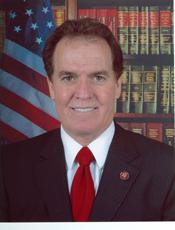
Mr. Speaker, I thank my Rules Committee colleague for yielding the time. I rise in support today for this rule and, of course, the underlying conference report, H.R. 5441, the Department of Homeland…
Mr. Speaker, I thank my Rules Committee colleague for yielding the time.
I rise in support today for this rule and, of course, the underlying conference report, H.R. 5441, the Department of Homeland Security Appropriations Act for Fiscal Year 2007. I would like to commend Chairmen Lewis and Rogers and, of course, our dear friend Martin Sabo for their tireless effort in keeping our homeland safe.
H.R. 5441 is one more piece of pro-security legislation advanced by this Congress, and its passage prior to our adjournment, Mr. Speaker, is critical to ensuring funding for homeland security programs that do keep our Nation safe.
This is a comprehensive bill. It addresses several aspects of our porous border problem. It provides increased technologies for use in explosion detection. It beefs up maritime and chemical security and, most importantly, overhauls FEMA.
As we know a big part of keeping our homeland safe is protecting these borders. The bill includes $1.8 billion in emergency funding for border and maritime security. It includes $1.2 billion for the construction of a border fence, and it provides for the hiring of an additional 1,500 border patrol agents and includes a commonsense provision brought forth by our chairman of the Rules Committee criminalizing the construction of border tunnels.
However, Mr. Speaker, despite the great things in this legislation, I realize that it is not a perfect bill. One of the most notable problems is securing our ports of entry with better background check technology. As you remember, we passed language in the 9/11 bill and in the REAL ID Act last year to require biometric passports by a certain deadline, along with the proper equipment to read the high-tech identification. The deadline was extended 6 months, and with this appropriation bill, unfortunately, it is extended another 17 months because someone in the other Chamber from a northern border State put language in there to further delay this crucial, crucial program. We cannot afford to keep extending the deadline when our security is at stake.
Mr. Speaker, shoe bomber Richard Reed, we all remember him, entered our country on an unsecured visa waiver. This visa waiver program allows 28 countries, their folks, to come into this
country with nothing, really, to prove their identification. He came in with a visa waiver. We have to know who is coming into our country to prevent terrorists from having a free pass.
Despite all the improvements made in this appropriations bill, they are meaningless without securing our ports of entry.
Mr. Speaker, all week long we have witnessed this Congress passing legislation to fund critical Department of Defense programs, to try terrorist detainees in military courts and to listen in on the communications of terrorist operatives plotting our destruction. Heather Wilson from New Mexico explained that so well yesterday on this floor.
It is unfortunate that throughout this week we have witnessed obstructionism on just about every front and some on the other side advocating for a cautious approach to fighting terrorism out of concern of treating the terrorists fairly. In my opinion, Mr. Speaker, this is the wrong approach, and we must remain aggressive in our efforts to keep America safe.
I encourage all of my colleagues on both sides of the aisle to keep this in mind, to ensure we give our government the tools it needs to protect our homeland.
I urge support of this rule and the underlying legislation.

Mr. Speaker, I thank the gentleman for yielding. I appreciate this opportunity to explain my concerns with the bill, H.R. 4772, the Private Property Rights Implementation Act of 2005. I oppose the…
Mr. Speaker, I thank the gentleman for yielding. I appreciate this opportunity to explain my concerns with the bill, H.R. 4772, the Private Property Rights Implementation Act of 2005. I oppose the bill because I am concerned that it will weaken local land use, zoning, and environmental laws by encouraging costly and unwarranted ``takings'' litigation in Federal court against local officials.
Mr. Chairman, H.R. 4772 would fundamentally alter the procedures governing regulatory takings litigation. Those procedures are required by the U.S. Constitution and have been repeatedly reaffirmed by the U.S. Supreme Court, as recently as last year. The bill purports to alter these requirements by giving developers, corporate hog farms, adult bookstores, and other takings claimants the ability to bypass local land use procedures and State courts. Indeed, the National Association of Home Builders candidly referred to a prior version of the bill as a ``hammer to the head'' of local officials. Developers could use this hammer to side-step land use negotiations and avoid compliance with local laws that protect neighboring property owners and the community at large.
In addition, section 5 of the bill purports to dramatically change substantive takings law as articulated by the Supreme Court and other Federal courts by redefining the constitutional rules that apply to permit conditions, subdivisions, and claims under the Due Process Clause. The existing rules, developed over many decades, allow courts to strike a fair balance between takings claimants, neighboring property owners, and the public. The proposed rules would tilt the playing field further in favor of corporate developers and other takings claimants, even in the many localities across the country where developers already have an advantage.
As a result, H.R. 4772 would allow big developers and other takings claimants to use the threat of premature Federal court litigation as a club to coerce small communities to approve projects that would harm the public. By short-circuiting local land use procedures, H.R. 4772 also would curtail democratic participation in local land use decisions by the very people who could be harmed by those decisions.
The bill also raises serious constitutional issues. The provisions that purport to redefine constitutional violations ignore the fundamental principle established in Marbury v. Madison (1803) that it is ``emphatically the province and duty'' of the Federal courts to interpret the meaning of the Constitution. Moreover, under longstanding precedent, a landowner has no claim against a State or local government under the Fifth Amendment until the claimant first seeks and is denied compensation in State court. Federal courts would continue to dismiss these claims, as well as claims that lack an adequate record where claimants use the bill to side-step local land use procedures. The bill will create more delay and confusion by offering the false hope of an immediate Federal forum for those who have not suffered a Federal constitutional injury. In short, this bill is a great threat to federalism, our local land use protections, neighboring property owners, and the environment. Therefore, I urge my colleagues to vote against the bill.
Mr. Speaker, I appreciate this opportunity to explain my concerns with the bill, H.R. 4772, the Private Property Rights Implementation Act of 2005. I oppose the bill because I am concerned that it…
Mr. Speaker, I appreciate this opportunity to explain my concerns with the bill, H.R. 4772, the Private Property Rights Implementation Act of 2005. I oppose the bill because I am concerned that it will weaken local land use, zoning, and environmental laws by encouraging costly and unwarranted ``takings'' litigation in federal court against local officials.
Mr. Speaker, H.R. 4772 would fundamentally alter the procedures governing regulatory takings litigation. Those procedures are required by the U.S. Constitution and have been repeatedly reaffirmed by the U.S. Supreme Court, as recently as last year. The bill purports to alter these requirements by giving developers, corporate hog farms, adult bookstores, and other takings claimants the ability to bypass local land use procedures and state courts. Indeed, the National Association of Home Builders candidly referred to a prior version of the bill as a ``hammer to the head'' of local officials. Developers could use this hammer to side-step land use negotiations and avoid compliance with local laws that protect neighboring property owners and the community at large.
In addition, section 5 of the bill purports to dramatically change substantive takings law as articulated by the Supreme Court and other federal courts by redefining the constitutional rules that apply to permit conditions, subdivisions, and claims under the Due Process Clause. The existing rules, developed over many decades, allow courts to strike a fair balance between takings claimants, neighboring property owners, and the public. The proposed rules would tilt the playing field further in favor of corporate developers and other takings claimants, even in the many localities across the country where developers already have an advantage.
As a result, H.R. 4772 would allow big developers and other takings claimants to use the threat of premature federal court litigation as a club to coerce small communities to approve projects that would harm the public. By short-circuiting local land use procedures, H.R. 4772 also would curtail democratic participation in local land use decisions by the very people who could be harmed by those decisions.
The bill also raises serious constitutional issues. The provisions that purport to redefine constitutional violations ignore the fundamental principle established in Marbury v. Madison (1803) that it is ``emphatically the province and duty'' of the federal courts to interpret the meaning of the Constitution. Moreover, under longstanding precedent, a landowner has no claim against a state or local government under the Fifth Amendment until the claimant first seeks and is denied compensation in state court. Federal courts would continue to dismiss these claims, as well as claims that lack an adequate record where claimants use the bill to side-step local land use procedures. The bill will create more delay and confusion by offering the false hope of an immediate federal forum for those who have not suffered a federal constitutional injury. In short, this bill is a great threat to federalism, our local land
use protections, neighboring property owners, and the environment. Therefore, I urge my colleagues to vote against the bill.
Mr. Speaker, this week, due to a death in the family, I have requested and received a leave of absence. Since Monday, September 25, I have missed the following rollcall votes. I have noted how I…
Mr. Speaker, this week, due to a death in the family, I have requested and received a leave of absence. Since Monday, September 25, I have missed the following rollcall votes. I have noted how I would have voted had I been present:
Roll No. 471, September 25, H.R. 5059, on motion to suspend the rules and pass, ``nay''; 472, September 25, H.R. 5062, on motion to suspend the rules and pass, ``nay''; 473, September 25, H.R. 6102, on motion to suspend the rules and pass, as amended, ``yea''; 474 September 26, H. Res. 1038, on agreeing to the resolution, ``nay''; 475, September 26, H. Res. 1039, on agreeing to the resolution, ``nay''; 476, September 26, H.R. 5092, on motion to suspend the rules and pass, as amended, ``nay''; 477, September 26, H.R. 4772, on motion to suspend the rules and pass, as amended, ``nay''; 478, September 26, motion, motion to resolve into secret session, ``yea''; 479, September 26, S. 403, on passage, ``nay''; 480, September 26, H.R. 2679, on passage, ``nay''; 481, September 26, H. Res. 723, on motion to suspend the rules and agree, as amended, ``yea''; 482, September 26, H. Res. 992, on motion to suspend the rules and agree, as amended, ``yea''; 483, September 26, H. Res. 989, on motion to suspend the rules and agree, as amended, ``yea''; 484, September 26, H. Res. 1017, on motion to suspend the rules and agree, ``yea''; 485, September 26, H.R. 6164, on motion to suspend the rules and pass, ``yea''; 486, September 26, H.R. 5631, on agreeing to the conference report, ``yea''; 487, September 27, H. Con. Res. 483, on agreeing to the resolution, ``nay''; 488, September 27, H. Res. 1042, on ordering the previous question, ``nay''; 489, September 27, H. Res. 1042, on agreeing to the resolution, ``nay''; 490, September 27, H.R. 6166, on motion to recommit with instructions, ``yea''; 491, September 27, H.R. 6166, on passage, ``nay''; 492, September 27, H.R. 5637, on motion to suspend the rules and pass, as amended, ``yea''; 493, September 27, H.R. 6115, on motion to suspend the rules and pass, ``yea''; 494, September 27, S. 2856, on motion to suspend the rules and pass, as amended, ``yea''; 495, September 28, H. Res. 1045, on ordering the previous question, ``nay''; 496, September 28, H. Res. 1046, on ordering the previous question, ``nay''; 497, September 28, H. Res. 1046, on agreeing to the resolution, ``nay''; 498, September 28, H. Res. 1052, on ordering the previous question, ``nay''; 499, September 28, H. Res. 1052, on agreeing to the resolution, ``nay''; 500, September 28, H.R. 4954, on motion to instruct conferees, ``yea''; 501, September 28, H.R. 5825, on motion to recommit with instructions, ``yea''; 502, September 28, H.R. 5825, on passage, ``nay''; 503, September 28, H.R. 6143, on motion to suspend the rules and pass, as amended, ``yea''; 504, September 29, H. Res. 1054, on ordering the previous question, ``nay''; 505, September 29, H. Res. 1054, on agreeing to the resolution, ``nay''; 506, September 29, H. Res. 1053, on ordering the previous question, ``nay''; 507, September 29, H. Res. 1053, on agreeing to the resolution, ``nay''; 508, September 29, S. 8930, on passage, ``nay.''
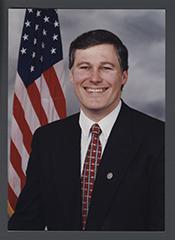
Mr. Speaker, it is difficult to understand my friends on the Republican side of the aisle's efforts to stick this burden on the taxpayers and allow developers to do the equivalent of developer's…
Mr. Speaker, it is difficult to understand my friends on the Republican side of the aisle's efforts to stick this burden on the taxpayers and allow developers to do the equivalent of developer's gerrymandering to increase their profits. Why should the taxpayers have to succumb to developers doing to the taxpayers what politicians have done to the voters?
Politicians, what they have done to the voters is carved out these little districts to try to keep their seats safe. If this bill were to become law, which it will not, it will allow developers to carve up their little development, fancy little lines to extract the maximum amount of money from the taxpayers.
Where is the reason to allow developers to decide their own rules, to write their own paycheck from the taxpayers? We have laws on the books enforced by supreme courts that say that, if you have your property taken as a whole, you get compensation. But this bill will game the system, will create this arbitrary system where the developer decides, not the courts, and that is a massive gambit to allow the guy who wants to build a strip club or a gambling spot or a strip mall in your neighborhood to make it impossible for your local community to have meaningful zoning to protect your neighborhood.
And it is done for one single reason, to put money in developers pockets in a way that is not fair. And, by the way, this is not about grandma out in her backyard. It is about people wanting to break up large chunks for a subdivision, and decide that they are going to take a wetlands. Right now, if there is a wetlands, and we have lost humungous amounts of wetlands in the last couple hundred years; whether there is a taking depends on the whole property.
Do not allow this gambit to take place. It is not fair. It is not Constitutional, and it is not going to pass.
Mr. Speaker, there is a lot of anger about eminent domain law right now because of the Kelo decision, and I am one of the people who disagrees with that decision. I do not believe it is wise to allow eminent domain to be used for private purposes, and I think it was a poorly decided decision.
But I want to make sure that the Members understand. This bill does nothing to fix that problem. If you are angry about Kelo, this bill is not medicine. It does nothing to change the standards for when eminent domain can be used by Federal or municipal governments.
So this does not solve the problem, and I want to yield to Mr. Chabot, if I could, for a moment. I just want to make sure that we are on the same page on this. I have looked diligently through this and can find nothing that changes the eminent domain standard that would overturn the Kelo decision.
Do you agree with me on that assessment?
I yield to the gentleman from Ohio.
Mr. Speaker, I want to make clear it is not the impression in people's minds that counts in Congress. It is what is in people's bills, and in this bill is nothing to solve the Kelo problem.
We should not let anger about Kelo allow developers to game taxpayers. This bill should be rejected.
Mr. Speaker, I yield myself such time as I may consume. Mr. Speaker, I don't want to be controversial, but H.R. 4772 has nothing to do with Kelo. What the chairman said about it, and our agreement…
Mr. Speaker, I yield myself such time as I may consume.
Mr. Speaker, I don't want to be controversial, but H.R. 4772 has nothing to do with Kelo. What the chairman said about it, and our agreement about it is correct; but the reason why H.R. 4772 has nothing to do with homeowners like those in Kelo is that the bill has nothing to do with eminent domain abuses. H.R. 4772 has everything to do with land developers and corporations and regulatory takings claims, and I include for the Record four editorials from The Washington Post, the New York Times, the Atlanta Journal Constitution and the Sacramento Bee.
[From washingtonpost.com, Sept. 29, 2006]
Take It Back
The House moves a radical bill to hobble local land-use rules
The House of Representatives is scheduled to take up today
a terrible piece of legislation designed to strengthen the
hands of developers in their battles with government.
Congress considered and rejected a similar bill in 1997 and
again in 2000. Now it's back--only worse.
The bill deals with legal claims under the ``takings''
doctrine--a requirement of the Fifth Amendment under which
government has to compensate property holders when it seizes
their land. Under current law, landowners must give local
governments a chance to resolve such disputes and state
courts a fair chance to adjudicate them before bringing the
federal courts into the picture. The House bill would let
developers make federal courts their first stop. This would
give developers a big club to wield over local policymakers,
gum up the federal courts with local land-use disputes, and
diminish the rightful autonomy of state and local governments
on the most local of questions.
Then--and here's where this year's bill is even worse than
its predecessors--the substantive rules concerning takings
and other constitutional challenges to land-use regulations
also would be changed in developers' favor. Right now,
federal courts are leery of such challenges in land-use
cases, generally deferring to local authorities. Under this
proposal, however, they would have to invalidate as a
violation of due process any local decision that was
``arbitrary, capricious, [or] an abuse of discretion.'' The
bill, in short, would make it easier for landowners to get
into court and, once there, easier to block regulations or to
demand payment for compliance with them.
Conservatives often style themselves as champions of
federalism, and some conservative judges--including Justice
Samuel A. Alito Jr. while he served on the U.S. Court of
Appeals for the 3rd Circuit--have taken principled stands on
preserving local authority over land use. In 1994, Judge
Frank H. Easterbrook of the 7th Circuit wrote in frustration:
``Federal courts are not boards of zoning appeals. This
message, oft-repeated, has not penetrated the consciousness
of property owners. . . .'' It's time for it to penetrate the
consciousness of members of Congress.
Mr. Speaker, I move to suspend the rules and pass the bill (H.R. 4772) to simplify and expedite access to the Federal courts for injured parties whose rights and privileges under the United States…
Mr. Speaker, I move to suspend the rules and pass the bill (H.R. 4772) to simplify and expedite access to the Federal courts for injured parties whose rights and privileges under the United States Constitution have been deprived by final actions of Federal agencies or other government officials or entities acting under color of State law, and for other purposes, as amended.
Mr. Speaker, I ask unanimous consent that all Members may have 5 legislative days within which to revise and extend their remarks and include extraneous materials on H.R. 4772, currently under consideration.
Mr. Speaker, I yield myself such time as I may consume.
Mr. Speaker, I rise in support of H.R. 4772, the Private Property Rights Implementation Act, to help all Americans defend their property rights.
We are all painfully aware of one Supreme Court decision that threatens to deny Americans their constitutionally protected property rights. I refer to the notorious case of Kelo vs. The City of New London, in which the Supreme Court held that a city can take private property from one citizen and give it to a large corporation for ``economic development'' purposes. I led the charge to correct that terrible decision by introducing H.R. 4128, which passed the House of Representatives by the overwhelming bipartisan margin of 376-38. However, that bill now languishes in the other body despite overwhelming popular support.
Unfortunately, the Supreme Court's recent disregard for constitutionally protected private property is not confined to the Kelo decision. In the case of Williamson County v. Hamilton Bank, which was reaffirmed last term in the case of San Remo Hotel v. City and County of San Francisco, the Supreme Court upheld a set of procedural rules that effectively prohibit property owners from ever getting into Federal court to have their Federal property rights claims heard on the merits. I applaud the gentleman from Ohio (Mr. Chabot) for authoring this vital legislation which will allow property owners to finally have their Federal property rights protected by the Federal courts.
This bipartisan legislation was reported out of the House Judiciary Committee by a voice vote on July 12, and I hope that this bill will receive similar bipartisan support on the floor today.
I urge my colleagues to defend the private property rights of all Americans by supporting this bill.
Mr. Speaker, I reserve the balance of my time.
Mr. Speaker, I yield 7 minutes to the author of the bill, the gentleman from Ohio (Mr. Chabot).
Mr. Speaker, I yield 2 minutes to the gentleman from Tennessee (Mr. Gordon), showing that this bill is truly bipartisan.
Mr. Speaker, I yield 3 minutes to the gentleman from Ohio (Mr. Chabot).
Mr. Speaker, I yield back the balance of my time.
Mr. Speaker, I rise in strong opposition to this bill. This bill is a bad idea that comes before us periodically but, happily, has never been enacted. And I hope it meets a similar fate this time.…
Mr. Speaker, I rise in strong opposition to this bill. This bill is a bad idea that comes before us periodically but, happily, has never been enacted. And I hope it meets a similar fate this time.
This bill is, quite simply, an effort to take away the rights of each and every property owner who wants to alter or even block an unwanted development. It should really be called the ``Private Property Rights Obliteration Act.''
If you are a homeowner and you would like a new mall or a new apartment building to be a little smaller so it does not overwhelm your neighborhood with traffic and all the other attendant problems, this bill will make it next to impossible for you to succeed. If you are a homeowner and you don't want a bar to be built right around the corner from your house, this bill will make it almost impossible to succeed. If you are a small businessman and you want to control where a big-box store is going to be built, this bill will make it almost impossible for you to succeed.
In 2000, the last time we debated this, the developers, quite rightly, described this bill as a hammer to the heads of local officials who are trying to guide and manage development. It is a very dangerous bill.
It is also a very odd bill. Here we have supposed conservatives begging Federal courts to intervene in the most local of matters. Why? So that the developers can scare localities into not doing their most fundamental jobs.
Now this time around, the proponents of the bill have come up with some new ingenious arguments for the bill. The only problem is that these arguments are wildly inaccurate. So let me make this clear to my colleagues: This bill does not deal at all with eminent domain or property seizures or the Supreme Court's Kelo decision. Let me restate that, it is so important: This bill does not deal at all with eminent domain or property seizures or the Supreme Court's Kelo decision, which was decided years after the bill was written.
This bill is only about localities exercising their zoning authority. It is not about localities taking property by eminent domain.
And by the way, the substantive problem in Kelo was that a developer was kicking people out of their homes. This bill would only strengthen the hand of developers to an unprecedented degree.
So let us not undermine our Nation's neighborhoods and localities with this unprecedented and radical change in law. Let us listen to all the local governments and environmental groups that have always opposed this bill. Let us make sure our constituents retain their ability to shape their own neighborhoods. Vote ``no.''
Mr. Speaker, I appreciate the gentleman's courtesy for permitting me to speak on this bill. In a prior life, I spent 10 years administering programs like this with the city of Portland. Our community…
Mr. Speaker, I appreciate the gentleman's courtesy for permitting me to speak on this bill.
In a prior life, I spent 10 years administering programs like this with the city of Portland. Our community is like many around the country that have, as the gentleman from New York referenced, sophisticated planning and zoning regulations. These are elements that are developed as a result of local community pressure to balance interests.
I find no small amount of irony that some of these friends of ours who think that the courts are not capable of ruling on marriage want to strip away the powers of the Federal court to deal with issues of the Pledge of Allegiance, who all of the sudden want to overrule over a century of development that deals with planning and zoning in this country.
There are appeals that take place each and every day from coast to coast in almost every State of the Union where people have some differences of opinion. There are elaborate mechanisms that deal with local appeals, where there is negotiation that takes place between the development community, the local officials, planning and zoning boards that end up giving something that makes sense for the community, makes sense for the developer, makes sense for the protection of the environment and health and development standards.
Under this legislation, one time if a developer does not get what he or she wants on any meaningful application, whatever that might mean, they can be thrown into the Federal judiciary. I would suggest that there is a reason why the American Planning Association, Defenders of Wildlife, the National Trust for Historic Preservation, Natural Resource Defense Council, the League of Cities, the people who are dealing with how to make communities more livable and to make them work, are opposed to this legislation.
This has, as has been pointed out, nothing to do with Kelo. These are areas where reasonable exercise of the planning mechanisms over 33 States have developed from coast to coast trying to look at the big picture and trying to balance it.
This is a stealth attack on what communities are trying to do to equip people to be able to deal with the consequences of growth and development pressures and what we learn on an ongoing basis about the impacts environmentally and in terms of better ways of being able to accomplish objectives in the development community.
I would respectfully suggest that it is far better to allow this process to work rather than trying to drag the Federal courts into it unnecessarily.

Mr. Speaker, I rise in strong opposition to this rule because the legislation would seriously undermine efforts to secure chemical facilities across the country. I want to join in the comments made…
Mr. Speaker, I rise in strong opposition to this rule because the legislation would seriously undermine efforts to secure chemical facilities across the country. I want to join in the comments made by the ranking member, Mr. Sabo.
Back in July, the Homeland Security Committee passed by voice vote a bill that would go a long way towards fixing the chemical security problem in the aftermath of 9/11. This is one of the most glaring problems in our post-9/11 security efforts that has been neglected here in Washington by the Congress and by the administration.
Yet rather than moving forward with this bill out of the Homeland Security Committee, bringing to it the floor and having an open debate; Republicans have decided to craft an industry-friendly proposal behind closed doors and stick it in the Homeland Security Appropriations Conference Report.
Now, this is no way to deal with such a serious security issue. EPA data indicates that there are more than 100 chemical plants across the country that could put over 1 million people at risk in the event of a serious accident or terrorist attack. More than 7,000 chemical plants could put 1,000 people or more at risk.
Yet under the cover of a conference report, the Republican leadership has seriously undermined our efforts to secure these chemical facilities. The language here exempts thousands of chemical plants not deemed ``high risk'' by the Department of Homeland Security, along with 3,000 drinking water and wastewater facilities that use large quantities of chlorine.
It also prohibits the Department of Homeland Security from doing anything to move towards the use of inherently safer technologies or substances. And it fails to protect the rights of States like my own, New Jersey, to implement stronger security requirements at chemical plants.
Mr. Speaker, the consequences of an incident at a chemical facility could be dire for residents of my State of New Jersey. We saw this last Tuesday when an accidental release of sulfur dioxide sent 59 people to the hospital. If that is what happens from one simple mistake, I shudder to think of the consequences of an attack by determined terrorists.
We need to reject this rule. Strip this weak chemical security language from the conference report and move ahead with strong legislation like what the Homeland Security Committee already passed here in the House.
Mr. Speaker, I appreciate the gentlewoman's courtesy and her leadership. This is sort of a bizarre rule that is limiting debate on three very critical areas, but I would like to just focus on one…
Mr. Speaker, I appreciate the gentlewoman's courtesy and her leadership.
This is sort of a bizarre rule that is limiting debate on three very critical areas, but I would like to just focus on one because under the guise of protecting property rights, H.R. 4772 is back before us, and it will undermine the quality of life for most Americans.
I find no small amount of irony that our friends on the Republican side of the aisle who say that they support local control are now going to gut some of the most basic protections for neighborhoods, businesses, and the environment to make sure that they are decided at the State and local level. Remember, these are our same friends who have come to us with provisions to strip away from these same Federal courts being able to rule on the Pledge of Allegiance or on marriage. Those are too important to be given to the Federal courts, but you are going to take away opportunities for people to be able to deal with the most fundamental of issues in terms of neighborhood quality and throw that into the Federal courts without having an opportunity to work it through at the State and local level.
The Supreme Court itself has recognized that State and local courts are the best way to deal with things that are inherently local in nature. I spent 10 years as a commissioner of public works in the city of Portland. I watched development proposal after development proposal come over the transom. If your rules were in place, it would not help the little developer because they would not have the firepower to be able to go through the Federal process, but it would have been an amazing club for big developers to have their way for proposals that were incomplete, inadequate, or not carefully thought through. In some cases, there were things that were making mistakes. In others, they were trying to do something that would have threatened adjacent businesses, adjacent homeowners. What we did was work with them, going through the process, and as a result, time after time, we had better results.
This would undercut that effort. That is why 36 attorney generals, including Mr. Chabot's attorney general, says that this is an unnecessary Federal intrusion and it ought to be resisted.
Bill Text
4 versions available
        [Congressional Bills 109th Congress]
[From the U.S. Government Publishing Office]
[H.R. 4772 Referred in Senate (RFS)]

2d Session
H. R. 4772

_______________________________________________________________________

IN THE SENATE OF THE UNITED STATES

September 30 (legislative day, September 29), 2006

Received

November 13, 2006

Read twice and referred to the Committee on the Judiciary

_______________________________________________________________________

AN ACT

To simplify and expedite access to the Federal courts for injured
parties whose rights and privileges under the United States
Constitution have been deprived by final actions of Federal agencies or
other government officials or entities acting under color of State law,
and for other purposes.

Be it enacted by the Senate and House of Representatives of the
United States of America in Congress assembled,

SECTION 1. SHORT TITLE.

This Act may be cited as the ``Private Property Rights
Implementation Act of 2006''.

SEC. 2. JURISDICTION IN CIVIL RIGHTS CASES CONCERNING REAL PROPERTY.

Section 1343 of title 28, United States Code, is amended by adding
at the end the following:
``(c) Whenever a district court exercises jurisdiction under
subsection (a) in an action in which the operative facts concern the
uses of real property, it shall not abstain from exercising or
relinquish its jurisdiction to a State court if the party seeking
redress does not allege a violation of a State law, right, or
privilege, and no parallel proceeding is pending in State court, at the
time the action is filed in the district court, that arises out of the
same operative facts as the district court proceeding.
``(d) In an action in which the operative facts concern the uses of
real property, the district court shall exercise jurisdiction under
subsection (a) even if the party seeking redress does not pursue
judicial remedies provided by a State or territory of the United
States.
``(e) If the district court has jurisdiction over an action under
subsection (a) in which the operative facts concern the uses of real
property and which cannot be decided without resolution of an unsettled
question of State law, the district court may certify the question of
State law to the highest appellate court of that State. After the State
appellate court resolves the question so certified, the district court
shall proceed with resolving the merits. The district court shall not
certify a question of State law under this subsection unless the
question of State law--
``(1) is necessary to resolve the merits of the Federal
claim of the injured party; and
``(2) is patently unclear.
``(f)(1) Any claim or action brought under section 1979 of the
Revised Statutes of the United States (42 U.S.C. 1983) to redress the
deprivation of a property right or privilege secured by the
Constitution shall be ripe for adjudication by the district courts upon
a final decision rendered by any person acting under color of any
statute, ordinance, regulation, custom, or usage, of any State or
territory of the United States, which causes actual and concrete injury
to the party seeking redress.
``(2) For purposes of this subsection, a final decision exists if--
``(A) any person acting under color of any statute,
ordinance, regulation, custom, or usage, of any State or
territory of the United States, makes a definitive decision
regarding the extent of permissible uses on the property that
has been allegedly infringed or taken, without regard to any
uses that may be permitted elsewhere; and
``(B) one meaningful application to use the property has
been submitted but denied, and the party seeking redress has
applied for but is denied one waiver and one appeal, if the
applicable statute, ordinance, regulation, custom, or usage
provides a mechanism for waiver by or appeal to an
administrative agency.
The party seeking redress shall not be required to apply for a waiver
or appeal described in subparagraph (B) if such waiver or appeal is
unavailable or can not provide the relief requested, or if pursuit of
such a mechanism would otherwise be futile.''.

SEC. 3. UNITED STATES AS DEFENDANT.

Section 1346 of title 28, United States Code, is amended by adding
at the end the following:
``(h)(1) Any claim brought under subsection (a) that is founded
upon a property right or privilege secured by the Constitution, but was
allegedly infringed or taken by the United States, shall be ripe for
adjudication upon a final decision rendered by the United States, which
causes actual and concrete injury to the party seeking redress.
``(2) For purposes of this subsection, a final decision exists if--
``(A) the United States makes a definitive decision
regarding the extent of permissible uses on the property that
has been allegedly infringed or taken, without regard to any
uses that may be permitted elsewhere; and
``(B) one meaningful application to use the property has
been submitted but denied, and the party seeking redress has
applied for but is denied one waiver and one appeal, if the
applicable law of the United States provides a mechanism for
waiver by or appeal to an administrative agency.
The party seeking redress shall not be required to apply for a waiver
or appeal described in subparagraph (B) if such waiver or appeal is
unavailable or can not provide the relief requested, or if pursuit of
such a mechanism would otherwise be futile.''.

SEC. 4. JURISDICTION OF COURT OF FEDERAL CLAIMS.

Section 1491(a) of title 28, United States Code, is amended by
adding at the end the following:
``(3) Any claim brought under this subsection founded upon a
property right or privilege secured by the Constitution, but allegedly
infringed or taken by the United States, shall be ripe for adjudication
upon a final decision rendered by the United States, that causes actual
and concrete injury to the party seeking redress. For purposes of this
paragraph, a final decision exists if--
``(A) the United States makes a definitive decision
regarding the extent of permissible uses on the
property that has been allegedly infringed or taken,
without regard to any uses that may be permitted
elsewhere; and
``(B) one meaningful application to use the
property has been submitted but denied, and the party
seeking redress has applied for but is denied one
waiver and one appeal, if the applicable statute,
ordinance, regulation, custom, or usage provides a
mechanism for waiver by or appeal to an administrative
agency.
The party seeking redress shall not be required to apply for a
waiver or appeal described in subparagraph (B) if such waiver
or appeal is unavailable or can not provide the relief
requested, or if pursuit of such a mechanism would otherwise be
futile.''.

SEC. 5. CLARIFICATION FOR CERTAIN CONSTITUTIONAL PROPERTY RIGHTS
CLAIMS.

Section 1979 of the Revised Statutes of the United States (42
U.S.C. 1983) is amended by adding at the end the following: ``If the
party injured seeks to redress the deprivation of a property right or
privilege under this section that is secured by the Constitution by
asserting a claim that concerns--
``(1) an approval to develop real property that is subject
to conditions or exactions, then the person acting under color
of State law is liable if any such condition or exaction,
whether legislative or adjudicatory in nature, including but
not limited to the payment of a monetary fee or a dedication of
real property from the injured party, is unconstitutional;
``(2) a subdivision of real property pursuant to any
statute, ordinance, regulation, custom, or usage of any State
or territory, or the District of Columbia, then such a claim
shall be decided with reference to each subdivided lot,
regardless of ownership, if such a lot is taxed, or is
otherwise treated and recognized, as an individual property
unit by the State, territory, or the District of Columbia; or
``(3) alleged deprivation of substantive due process, then
the action of the person acting under color of State law shall
be judged as to whether it is arbitrary, capricious, an abuse
of discretion, or otherwise not in accordance with law.
For purposes of the preceding sentence, `State law' includes any law of
the District of Columbia or of any territory of the United States.''.

SEC. 6. CLARIFICATION FOR CERTAIN CONSTITUTIONAL PROPERTY RIGHTS CLAIMS
AGAINST THE UNITED STATES.

(a) District Court Jurisdiction.--Section 1346 of title 28, United
States Code, is amended by adding at the end the following:
``(i) If a claim brought under subsection (a) is founded upon a
property right or privilege secured by the Constitution that concerns--
``(1) an approval from an executive agency to permit or
authorize uses of real property that is subject to conditions
or exactions, then the United States is liable if any such
condition or exaction, whether legislative or adjudicatory in
nature, including but not limited to the payment of a monetary
fee or a dedication of real property from the injured party, is
unconstitutional;
``(2) a subdivision of real property pursuant to any
statute, ordinance, regulation, custom, or usage of any State
or territory, or the District of Columbia, then such a claim
against an executive agency shall be decided with reference to
each subdivided lot, regardless of ownership, if such a lot is
taxed, or is otherwise treated and recognized, as an individual
property unit by the State or territory, or the District of
Columbia, as the case may be; or
``(3) an alleged deprivation of substantive due process,
then the United States shall be judged as to whether its action
is arbitrary, capricious, an abuse of discretion, or otherwise
not in accordance with law.
In this subsection, the term `executive agency' has the meaning given
that term in section 105 of title 5.''.
(b) Court of Federal Claims Jurisdiction.--Section 1491 of title
28, United States Code, is amended by adding at the end the following:
``(4) If a claim brought under subsection (a) is founded upon a
property right or privilege secured by the Constitution that concerns--
``(A) an approval from an executive agency to permit or
authorize uses of real property that is subject to conditions
or exactions, then the United States is liable if any such
condition or exaction, whether legislative or adjudicatory in
nature, including but not limited to the payment of a monetary
fee or a dedication of real property from the injured party, is
unconstitutional;
``(B) a subdivision of real property pursuant to any
statute, ordinance, regulation, custom, or usage of any State
or territory, or the District of Columbia, then such a claim
against an executive agency shall be decided with reference to
each subdivided lot, regardless of ownership, if such a lot is
taxed, or is otherwise treated and recognized, as an individual
property unit by the State, or territory, or the District of
Columbia, as the case may be; or
``(C) an alleged deprivation of substantive due process,
then the United States shall be judged as to whether its action
is arbitrary, capricious, an abuse of discretion, or otherwise
not in accordance with law.
In this paragraph, the term `executive agency' has the meaning given
that term in section 105 of title 5.''.

SEC. 7. DUTY OF NOTICE TO OWNERS.

(a) In General.--Whenever a Federal agency takes an agency action
limiting the use of private property that may be affected by the
amendments by this Act, the agency shall, not later than 30 days after
the agency takes that action, give notice to the owners of that
property explaining their rights under such amendments and the
procedures for obtaining any compensation that may be due them under
such amendments.
(b) Definitions.--For purposes of subsection (a)--
(1) the term ``Federal agency'' means ``agency'', as that
term is defined in section 552(f) of title 5, United States
Code; and
(2) the term ``agency action'' has the meaning given that
term in section 551 of title 5, United States Code.

SEC. 8. SEVERABILITY AND EFFECTIVE DATE.

(a) Severability.--If any provision of this Act or the amendments
made by this Act or the application thereof to any person or
circumstance is held invalid, the remainder of this Act, the amendments
made by this Act, or the application thereof to other persons not
similarly situated or to other circumstances shall not be affected by
such invalidation.
(b) Effective Date.--The amendments made by this Act shall apply to
actions commenced on or after the date of the enactment of this Act.

Passed the House of Representatives September 29, 2006.

Attest:

KAREN L. HAAS,

Clerk.