Amending the Rules of the House of Representatives to ensure that Members have a reasonable amount of time to read legislation that will be voted upon.
Legislative Activity
Stay on top of the latest movement without scrolling through every action
Referred to the House Committee on Rules.
March 2, 2006
View full timeline
Introduced in House
March 2, 2006
Sponsor introductory remarks on measure. (CR E261)
March 2, 2006
Floor Debate
23 membersWhat members said about H.Res. 709 on the floor
 RC"
RC" DD
DD WMT
WMT SJL
SJL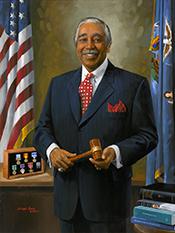 CBR+18
Floor Debate
23 membersWhat members said about H.Res. 709 on the floor
Mr. Chairman, I rise in opposition to the bill because it does nothing to reduce corruption and lobbying. Mr. Chairman, I had an amendment that was adopted in the Judiciary Committee. That language…
Mr. Chairman, I rise in opposition to the bill because it does nothing to reduce corruption and lobbying.
Mr. Chairman, I had an amendment that was adopted in the Judiciary Committee. That language was subsequently stripped from the bill by the Rules Committee. That amendment would have simply required a study of the practice by which some lobbyists appear to be charging percentage contingent fees for obtaining earmarks in appropriations bills. Now, when you combine that idea with the K Street Project where you are supposed to be hiring a Republican lobbyist who is supposed to be contributing back to the legislators, you can see just how ugly a practice this can be. My amendment would have simply asked for a study of the prevalence of that practice.
Mr. Chairman, these kinds of contracts are illegal when lobbyists are representing foreign governments and are illegal in some activities involving the Executive Branch. They are illegal in 39 State legislatures. However, it does not appear to be illegal lobbying Congress under Federal law. The Congressional Research Service in a memorandum dated September 21, 2000 cites a legal treatise which says that these contracts furnish the strongest incentive to the exertion of corrupting and sinister influences and are utterly void against public policy.
Supreme Court Justice Oliver Wendell Holmes was cited in that same memorandum as saying that they have a tendency in such contracts to provide incentives towards corruption. In fact, an 1853 Supreme Court case said that common law will not lend its aid to enforce a contract to do an act which is inconsistent with sound morals or public policy, or which tends to corrupt or contaminate by improper influences the integrity of our social or political institutions.
Mr. Chairman, true lobbying reform ought to remove corruption from lobbying, and if we are going to be serious about that, we ought to at least study the prevalence of these contracts which everybody knows has a corrupting influence. By removing the amendment, it is clear that that was not the purpose of the bill, and I urge my colleagues to oppose the legislation.
Congressional Research Service,
Washington, DC, Sept. 21, 2000.
memorandum
Subject: Contingency Fees for Lobbying Activities.
From: Jack Maskell, Legislative Attorney, American Law
Division.
This memorandum is prepared in response to requests from
congressional offices for information about whether one may
lawfully have a contingency fee arrangement for ``lobbying''
activities in which the fee for such lobbying activities is
contingent upon the success of ``lobbying'' efforts in having
legislation passed in the United States Congress.
There is no statute under federal law which expressly
addresses the issue of contingency fees with respect to all
lobbying activities generally before the Congress.
Contingency fees may be expressly barred, however, under
certain circumstances. There is in federal law an express
prohibition against contingency fee arrangements with respect
to seeking certain contracts with the agencies of the Federal
Government. Activities which might generally or colloquially
be called ``lobbying,'' but which involve making
representations on behalf of private parties before federal
agencies to obtain certain government contracts, may thus be
subject to the contingency prohibitions. The reason for such
ban has been explained as follows: ``Contractors'
arrangements to pay contingent fees for soliciting or
obtaining Government contracts have long been considered
contrary to public policy because such arrangements may lead
to attempted or actual exercise of improper influence ....''
Contingency fees are also prohibited for lobbying the
Congress by persons who must register as agents of foreign
principals under the Foreign Agents Registration Act. The
prohibition is upon agreements where the amount of payment
``is contingent in whole or in part upon the success of any
political activities carried on by such agent.'' The covered
``political activities'' of such agents under the Foreign
Agents Registration Act include any activity which the agent
``intends to, in any way influence any agency or official of
the Government of the United States ... with reference to
formulating, adopting, or changing the domestic or foreign
policies of the United States ...,'' and thus include the
activities of ``lobbying'' Members and staff of Congress on
legislation or appropriations.
Although there is no general, express federal law barring
all contingency fees for successful lobbying before Congress,
there is a long history of judicial precedent and traditional
judicial opinion which indicates that such contingency fee
arrangements, when in reference to ``lobbying'' and the use
of influence before a legislature on general legislation, are
void from their origin (ab initio) for public policy reasons,
and therefore would be denied enforcement in the courts. In
some instances contingency fee arrangements based on the
success of legislation have been upheld in a few courts,
however, when the duties contracted for were professional
services that did not involve traditional, statutorily
defined ``lobbying'' or the use of personal influence before
the legislature, or where the client had a legitimate claim
or legal right to be asserted in a matter before the
legislature (e.g., ``debt legislation'').
The concern of potential temptations from overzealousness
and undue influences which certain ``all or nothing''
contingency arrangements might engender has also been the
reason behind the public policy disfavoring contingency fees
in the case of lobbying the legislature. As summarized in one
legal treatise: ``Agreements under which the compensation for
procuring or influencing legislative action is made
contingent upon the success of the undertaking furnish the
strongest incentive to the exertion of corrupting and
sinister influences to the end that the desired legislation
may be secured, and there is a long line of cases which holds
that if the agreement is one in which the compensation is
contingent upon success in accomplishing the end sought, it
is utterly void as against public policy.''
The United Stats Supreme Court addressed the issue in
Hazelton v. Sheckells, in 1906. In that case the Court
refused specific performance of a contract to convey a deed
as compensation for services where ``the services
contemplated as a partial consideration of the promise to
convey were services in procuring legislation upon a matter
of public interest, in respect of which neither of the
parties had any claim against the United States.'' As
established in the conveyance document, such agreement
``was in substance a contingent fee,'' dependent upon the
passage of legislation by the Congress. Justice Oliver
Wendell Holmes, writing for the Court, explained that it
was the ``tendency'' in such contract agreements to
provide incentives towards corruption, and not necessarily
any actual corrupt activity in a particular contract or
case, that made these contingent arrangements void for
public policy reasons. Thus, the Court found that even
though the services in this case were legitimate, that
``[t]he objection to them rests in their tendency, not in
what was done in the particular case,'' especially since
if there had been undue or improper influence ``it
probably would be hidden and would not appear.'' The Court
stated that ``in its inception'' the contingency fee
arrangement ``necessarily invited and tended to induce
improper solicitations, and it intensified the inducement
by the contingency of the reward.'' The Court found that
earlier Supreme Court precedent had established ``that all
contracts for a contingent compensation for obtaining
legislation were void,'' and refused to enforce the
contract in question.
The judicial disfavor expressed by the Supreme Court for
contingency contracts for lobbying on general legislation
dates back at least to 1853, when in Marshal v. Baltimore &
Ohio R.R., supra, the Court with reference to secret
contingent contracts explained:
``It is an undoubted principle of the common law, that it
will not lend its aid to enforce a contract to do an act . .
. which is inconsistent with sound morals or public policy;
or which tends to corrupt or contaminate, by improper
influences, the integrity of our social or political
institutions. . . . Legislators should act from high
consideration of public duty. Public policy and sound
morality do therefore imperatively require that courts should
put the stamp of disapprobation on every act, and pronounce
void every contract the ultimate or probable tendency of
which would be to sully the purity or mislead the judgments
of those to whom the high trust of legislation is confided.
``. . . Bribes in the shape of high contingent
compensation, must necessarily lead to the use of improper
means and the exercise of undue influence. Their necessary
consequence is the demoralization of the agent who covenants
for them; he is soon brought to believe that any means which
will produce so beneficial a result to himself are ``proper
means''; and that a share of these profits may have the same
effect of quickening the perceptions and warming the zeal of
influential or ``careless'' members in favor of his bill.''
In a more recent federal case on this subject, a United
States Court of Appeals in 1996, in Florida League of
Professional Lobbyists, Inc. v. Meggs, upheld against a
constitutional challenge on First Amendment
grounds the State of Florida's specific legislative ban on
contingency fee contracts for lobbying. The court there
reaffirmed, albeit reluctantly, the long-recognized judicial
precedents concerning the general public policy against such
contingency fees for lobbying. The court noted that there was
no direct precedent overturning the older Supreme Court cases
directly on point on contingency fees and lobbying, but did
seem sympathetic and responsive to the plaintiff's arguments
that more modern cases on the First Amendment and
compensation for advocacy might eventually warrant a
different outcome on this issue:
``Florida points out that in cases decided well before the
articulation of `exacting scrutiny,' the Supreme Court
specifically held that contracts to lobby for a legislative
result, with the fee contingent on a favorable legislative
outcome, were void ab initio as against public policy . . .
[citations omitted]. The League does not contest the
applicability of these older decisions to this case. And, we
are persuaded that these decisions permit a legislature to
prohibit contingent compensation. The League, however,
suggested at argument that the extensive, interim
developments of First Amendment law established conclusively
that the Supreme Court today would strike a contingent-fee
ban on lobbying.
``This prediction may be accurate, but we are not at
liberty to disregard binding case law that is so closely on
point and has been only weakened, rather than directly
overruled, by the Supreme Court.''
As to State statutory bans on contingency fees for
lobbying, it should be noted that as of this writing most of
the States (39) have existing in their state codes an express
prohibition against such contingency fees for lobbying
activities. See, for example, Alabama (Sec. 36-25-23(c),
Michie's Ala. Code); Alaska (sec. 24.45.121 (a)(6), Alaska
Statutes); Arizona (sec. 41-1233(1), Arizona Rev. Statutes);
California (Government Code, Sec. 86205(f), Annotated Calif.
Codes); Colorado (sec. 24-6-308, Colorado Rev. Statutes);
Connecticut (Sec. 1-97(b), Conn. Gen. Statutes Ann.); Florida
(Sec. 11.047 [legislature]; Sec. 112.3217 [executive branch],
Florida Statutes Ann.); Georgia (sec. 28-7-3, Official Code
of Georgia Ann.); Hawaii (sec. 97-5, Hawaii Rev. Statutes
Ann.); Idaho (sec. 67-6621(b)(6), Idaho Code); Illinois
(S.H.A. 25 ILCS 170/8); Indiana (sec. 2-7-5-5, Burns Ind.
Statutes Ann.); Kansas (sec. 46-267, Kansas Statutes Ann.);
Kentucky (sec. 6.811(9), Kentucky Rev. Statutes); Maine
(Title 3, Sec. 318, Maine Rev. Statutes Ann.); Maryland
(State Government, Sec. 15-706, Michie's Ann. Code of Md.);
Massachusetts (Ch. 3, Sec. 42, Mass. Gen. Laws Ann.);
Michigan (sec. 4.421(1) Mich. Compiled Laws Ann.);
Minnesota (sec. 10A.06, Minn. Statutes Ann.); Mississippi
(sec. 5-8-13(1), West's Ann. Miss. Code); Nebraska (sec.
49-1492(1), Revised Statutes of Neb.); Nevada (sec.
218.942(4), Nev. Revised Statutes Ann.); New Mexico (sec.
2-11-8, New Mexico Statutes); New York (Book 31,
Legislative Law, Sec. 1-k, McKinney's Consolidated Laws of
N.Y. Ann.); North Carolina (sec. 120-47.5(1), Gen.
Statutes of N.C.); North Dakota (54-05.1-06, N.D. Century
Code Ann.); Ohio (sec. 101-77, Page's Ohio Rev. Code
Ann.); Oklahoma (Title 21, Sec. 334, Oklahoma Statutes
Ann.); Oregon (sec. 171.756(3), Oregon Rev. Statutes);
Pennsylvania (65 Pa. Cons. Statutes Ann. Sec. 1307(a));
Rhode Island (sec. 22-10-12, Gen. Laws of R.I.); South
Carolina (Sec. 2-17-110(A), Code of Laws of S.C.); South
Dakota (sec. 2-12-6, S.D. Codified Laws); Texas
(Government Code, 305.022, Vernon's Texas Codes Ann.);
Utah (sec. 36-11-301 (Utah Code Ann.); Vermont (Title 2,
266(1), Vt. Statutes Ann.); Virginia (Sec. 2.1-791, Code
of Va.); Washington (Sec. 42.17.230(f), West's Rev. Code
of Wash. Ann.); Wisconsin (sec. 13.625(d), Wise. Statutes
Ann.).
As noted, the weight of judicial opinion has been either to
uphold such restrictions against challenges, or in some cases
in the absence of an express statute to judicially find such
contingency fee arrangements void for public policy reasons.
In one instance in the 1980's, however, a provision, enacted
as a result of a state initiative, barring all contingency
fees for legislative lobbying activities was struck down by a
state court as an overbroad intrusion into the right to
petition the government. The Supreme Court of Montana found
the law ``overbroad because it precludes contingent fee
agreements that are properly motivated as well as those that
are improperly motivated'' and as such, the ``ability of
individuals and organizations to fully exercise their right
to petition the government may be severely curtailed by this
broad prohibition.''
While the existing state of the law is clearly for most
States to continue to expressly prohibit by law contingency
fee agreements with respect to legislative lobbying on
general legislation, and to have those prohibitions upheld
(or to consider such contingency agreements void for public
policy reasons where there is no express law, as is the case
with respect to lobbying before Congress), other
interpretations have permitted such arrangements where an
agent, attorney or representative is seeking legislation
based upon a claim or similar legal interest or right to be
asserted against the government, or when such action involves
conduct and activity that is done in the normal course of
client representation by an attorney and is not expressly
contemplated by the original contract.
There have also been cases where legitimate professional
services are contracted for, such as, for example, the
drafting of legislative language, as opposed to merely
engaging another's ``influence'' to ``lobby,'' when such an
arrangement for services, even if based on the contingency of
the passage of legislation, has been permitted. Such cases
have been described as related to contracts where the
``services rendered thereunder did not partake of anything in
the nature of lobbying....'' Although relating to
legislation, the services in question were not necessarily
within a specific or narrow definition of ``lobbying'' in the
sense that nothing that was contracted for involved any
activities attempting to ``exert private or personal
influence with members of the legislature, or in interviewing
or bringing pressure to bear on them....'' In making
arguments for allowing such contingent fees in cases of
professional services rendered in relation to legislation
where no undue influences are contemplated or used, and no
traditional ``lobbying'' is conducted, it has been suggested
that such permissibility of the fee arrangement would have no
more ``influencing'' tendency than in the permissible
instance of one representing oneself before the legislature
(and thus having an even greater financial stake than an
agent in the outcome), or if an agent or attorney represented
a client before a judicial panel, i.e., a court.
Jack Maskell,
Legislative Attorney.
Mr. Chairman, I yield myself such time as I may consume. Mr. Chairman, I was just listening to the debate on the last bill considered under suspension of the rules, and I saw a wonderful sense of…
Mr. Chairman, I yield myself such time as I may consume.
Mr. Chairman, I was just listening to the debate on the last bill considered under suspension of the rules, and I saw a wonderful sense of bipartisanship as we were able to pass, I suspect we may have a vote on it, but I know it will pass overwhelmingly, the legislation by our good friend from Dallas, Texas, Ms. Eddie Bernice Johnson.
It is my hope that, as we proceed with this very important issue, that that same sense of bipartisanship can prevail. Because I believe that it is absolutely essential to dealing with the challenge that lies ahead.
Mr. Chairman, as you know very well, recent scandals involving elected representatives from both political parties have underscored the very urgent need for us to reform ethics and lobbying rules.
The American people and Members of Congress are very correctly incensed about this. I believe that it is absolutely outrageous some of the things that we have seen from both political parties over the past several months.
Action, common-sense action, Mr. Chairman, is absolutely needed, and that is why I am very proud that Speaker Dennis Hastert 4 months ago stepped up to the plate and said this is exactly what we need to do, is we need to take strong action.
Republicans and Democrats have worked together tirelessly on this issue over the past 4 months. The goal is to strengthen and reform House rules, as well as that 1995 Lobbying Disclosure Act which we very proudly put into place when we won the majority back in 1994.
Our aim, our goal, is a Congress that is effective, a Congress that is ethical, and a Congress that is worthy of the public trust. Now, I know that the American people should understandably have a healthy skepticism towards this institution. That is what Thomas Jefferson wanted. But, at the same time, it is very important that we do what we can to enhance the level of trust that the American people have in their elected representatives.
We know right after this began, at the beginning of this second session of the 109th Congress, we stepped right up and were able to take very bold action to bring about reform. On our very first day of legislative business we voted to level the playing field by ending the access to the House floor and gym by former Members of Congress who are registered lobbyists. This rule change was supported by 379 of our 435 Members.
At the beginning of the last month, we took a second step in the name of balance and fairness. In another bipartisan vote, the House closed an enormous loophole in campaign finance regulations. Integrity in our elections was a key focus of our reform efforts, and the 527 Reform Act makes sure campaign finance laws apply across the board.
Now we are considering the comprehensive reform package, H.R. 4975, the Lobbying Accountability and Transparency Act of 2006. Mr. Chairman, this legislation seeks to uphold the highest standards of integrity when it comes to Congress' interaction with outside groups.
I am very proud of the process and the results of this multi-month effort that we have seen. Anyone, anyone, Democrat and Republican alike, outside groups, academics, anyone who wanted to offer any suggestion, any proposal at all, make any comment on any part of the legislation has had that opportunity. This has been a very thorough and, again, a very bipartisan process.
Mr. Chairman, we already conducted a very spirited and worthwhile debate just last Thursday when we were considering the rule that allows us to consider this legislation; and, from that debate, it was very clear to me that there is a lot of confusion over H.R. 4975. Frankly, Mr. Chairman, as I have read editorials for a wide range of publications here in this town and across the country, there is an awful lot of confusion as to what this bill actually does. So I thought that I would take just a moment to summarize for our friends here in the House and for anyone who might be following this, any editorial writer out there, I would like to summarize what this legislation will and will not do.
Mr. Chairman, this legislation will enhance transparency and accountability in Congress through increased disclosure and tighter rules. No matter what anyone says, Mr. Chairman, this legislation does increase transparency
and accountability through toughening up disclosure and tightening the rules.
Mr. Chairman, this legislation will fulfill the public's right to know who is seeking to influence their Congress.
This legislation will provide brighter lines of right and wrong and more rigorous ethics training so that everyone can understand what is right and what is wrong here. I was taught that as a kid, but obviously there has been some confusion and in the past there have been gray areas. This legislation creates that clear definition and provides an opportunity for greater training for Members and staff so they can have an understanding of it.
This legislation will significantly reform the earmark process to foster more responsible and accountable government spending.
I read one editorial in which they said this bill does not tackle the so-called Bridge to Nowhere issue. Well, Mr. Chairman, anyone who has followed this debate knows that full well that last week when we were debating the rule, the Speaker, the majority leader, I, the whip, others made have a very strong commitment, working with the Appropriation Committee, that the Senate has passed language which we think is very good.
It is language which says that when we look at the issue of earmark reform so we can have greater accountability when it comes to spending that it should not simply focus on the appropriations process. It should be universal and go across the board to the other committees as well. That commitment was made a week ago, and yet some people seem to think that we are not willing to take that on.
Mr. Chairman, this legislation will considerably increase fines and penalties for violating the transparency and accountability provisions.
This legislation will give a new authority to the House Inspector General to perform random audits of lobbyist disclosure forms and refer violations to the Department of Justice.
Now, Mr. Chairman, here is what this legislation will not do. It will not permit business as usual. It will not perpetuate the status quo.
Mr. Chairman, while this body is united in its desire for reform, we clearly have disagreements over some of the specifics. Some think that this bill goes too far; some think that this bill does not go far enough; and, frankly, I wish that this bill were stronger than it is. But we are getting ready to take this very important step to go into conference with the Senate; and, as we do that, I believe that we can come back with a stronger bill. This is what I am hoping will happen, but we must proceed with this measure so that we can make that happen.
Yet today we stand, as I said, on the starting blocks of our reform effort, and the single most important thing that we can do at this stage is to keep the process of reform moving. That is really what this is all about today, Mr. Chairman. We know full well that they are going to get a lot of people standing in the way, and yet we need to take this step forward, and that is what H.R. 4975 does.
There is no question whatsoever that this bill, regardless of what anyone says about it, that it represents progress. It is a move in the right direction, and a lot of us want to do more, but this is a bill that moves us in the right direction.
There is no question at all that it is a vast improvement over the status quo, and there is no question that it does put us on a path towards that very important conference that we will have with our friends in the other body.
Now, of course, Mr. Chairman, there are many up there who want to engage in nothing but criticism. They want to say no. They want to defeat this effort for real reform. They want to just criticize what it is that we are trying to do here when we have been able to fashion a bipartisan package. But to what end? To protect the current system? Because this is really what is going to happen. I mean, if we pass the previous question, if we defeat this legislation, all we will be doing is perpetuating the status quo because it will slow the process of reform. The same system that we have spent 4 months decrying, as we sought this reform, would be perpetuated.
It defies logic, Mr. Chairman, to criticize the current standards and then vote to keep them in place, because that is exactly what will happen. With their recommittal motion, that is exactly what will happen with any attempt to defeat this measure.
Mr. Chairman, Winston Churchill, I think said it very well, when he wrote: Criticism is easy; achievement is difficult.
Mr. Chairman, this is no time for us to recoil in our effort to bring about reform. By voting yes for this bill, the House will vote for achievement, for progress and for rebuilding the trust of the American people. A vote for H.R. 4975 is a vote for reform.
Mr. Chairman, after we pass this bill, let me tell you what is next on our agenda: more reform. The Republican party is the party of reform. The Republican party has and will continue to reach out to our Democratic colleagues who are reform-minded to continue down this road towards reform.
The drive for reform never stops. We have demonstrated that consistently in the past, and we will continue to do so in the future. It is a continuous, ongoing process that takes both perseverance and commitment.
Mr. Chairman, I believe that it is absolutely essential for us to continue down the road towards reform so that we can make this institution more effective and more respected.
Mr. Chairman, I reserve the balance of my time.
Mr. Chairman, let me just say that I have not been in Alice in Wonderland until I heard my colleague talk about it. So much for bipartisan comity. I am very proud to be working with Democrats on this important legislation, but as I listen to this mischaracterization of our strong bipartisan reform effort, I am somewhat stunned.
Mr. Chairman, I am very happy to yield 4 minutes to an individual who has worked as hard or harder than anyone on this issue of reform, the distinguished chairman of the Committee on Standards of Official Conduct, my Rules Committee colleague, the gentleman from Pasco, Washington (Mr. Hastings).
Mr. Chairman, I am very happy to yield 1\1/2\ minutes to my very good friend from Charleston, West Virginia, a hardworking member of the Rules Committee (Mrs. Capito).
Mr. Chairman, may I ask of the Chair how much time is remaining on each side.
Mr. Chairman, I yield myself 30 seconds to respond.
My friend said, if we have a small bill. We don't have a small bill. This is a very, very strong package that we have come forward with.
He has talked about outside organizations that have criticized this. I am very happy that three of the recommendations that outside organizations have provided to us are included in this. We have included input from a wide range of entities.
This is a package that does double the disclosure rate for lobbyists when it comes to their activities that relate to this institution. We have very strong reforms.
Mr. Chairman, I yield 1\1/2\ minutes to the gentleman from Mesa, Arizona (Mr. Flake).
Mr. Chairman, that is exactly what I was going to say, what the Chair just said. I am sure that my colleague from Chicago, my very good friend, was not in any way impugning the integrity or motives of any of his colleagues in this institution.
And I should say that the legislation itself very specifically says that no Member may have any decision that is impacted that influences an outside hiring decision that another Member raises, and so that is raised in this.
Mr. Chairman, I yield 1\1/2\ minutes to my very good friend, a great reformer, the gentleman from Phoenix (Mr. Shadegg).
Mr. Chairman, for a unanimous consent request, I yield to my good friend from Vienna, Virginia, my classmate (Mr. Wolf).
(Mr. WOLF asked and was given permission to revise and extend his remarks.)
Mr. Chairman, I yield 1 minute to the very hardworking chairman of the Committee on Administration, our friend from Grand Rapids, Michigan (Mr. Ehlers).
Mr. Chairman, I yield 1 minute to the gentleman from Dallas (Mr. Hensarling), a very hardworking reformer of this institution.
It appears again that my friends on the other side don't have any remaining speakers. I know you are waiting and want to reserve the balance of your time. Absolutely, in a bipartisan sense of comity, we want you to reserve the time.
I yield 1\1/2\ minutes to the gentleman from New Jersey (Mr. Garrett).
Mr. Chairman, for a unanimous consent request, I yield to our hardworking and very senior colleague from Davenport, Iowa (Mr. Leach).
(Mr. LEACH asked and was given permission to revise and extend his remarks.)
Mr. Chairman, I yield 2 minutes to our hardworking friend from Utah (Mr. Bishop), a member on the Rules Committee.
Mr. Chairman, I yield myself the balance of my time.
Mr. Chairman, as I said at the outset, we have gone through a long, bipartisan, 4-month process to get to where we are. Speaker Hastert began in January saying we need as an institution
to step up to the plate and deal with the issue of lobbying and ethics reform, and that is exactly what we have done.
Again, we have worked with Democrats and Republicans, outside organizations; and, as I have listened to the debate and the statements made from my colleagues on the other side of the aisle, it is very obvious to me that they have failed to read this legislation.
Mr. Chairman, in virtually every single area that my friend from Rochester just addressed, this is addressed in the legislation. And if it is not actually addressed in the legislation itself, we have made commitments that we are going to, as we move this process forward, get into a conference with the Senate and address some of these issues of concern.
Critics seem to be absolutely intent on telling us what this bill is not. Everything that was said by my friend from Rochester was in the negative. Just imagine if we went through every single day lamenting what is not. Today is not Christmas; that is terrible. Today is not Thanksgiving, and that is terrible. Today is not my birthday, and that is terrible. But what does it get us? It does not get us a thing. Searching for storm clouds on a clear day is a recipe for inaction and defeatism.
Mr. Chairman, Speaker Hastert and I and the leadership team here and the Republicans and, I am happy to say, some Democrats have indicated to me that they are interested in not defeatism; they are interested in pursuing vigorous reform.
As I listened to the litany of what this bill is not, I think it is very important again, as I have read some of these editorials which mischaracterize the legislation, as I listened to the rhetoric that mischaracterized this legislation, let us again look at the bill and just four simple things of what this bill is: This bill actually doubles the fines, doubles the fines, for lobbyists who fail to disclose. This bill adds the possibility of jail time for failing to comply with the Act. This bill adds oversight to make sure disclosure information is accurate. It gives the public full, online access to disclosure reports. It withdraws the government-funded pension for people who commit the crimes that we have outlined in the legislation.
So, Mr. Chairman, anyone who tries to say that they are supporting a recommittal motion, are going to vote against this legislation because it does not do enough is, in fact, standing in the way of reform.
Many people said we should get this thing out. The Speaker and I said we wanted this to pass by early March. Obviously, we needed more and more input from Members, from outside organizations, from academics, from our constituents who are concerned about this issue. And, Mr. Chairman, we extended beyond that early March date. Here we are now in early May, having listened to so many different people, and we have come up with a bill that I believe is strong. I believe it is bold. I hope we will be able to do more, but this is legislation that allows us to move forward in a positive way.
Mr. Chairman, I yield back the balance of my time, and I move that the Committee do now rise.
Mr. Speaker, pursuant to House Resolution 966, I call up the bill (H.R. 5970) to amend the Internal Revenue Code of 1986 to increase the unified credit against the estate tax to an exclusion…
Mr. Speaker, pursuant to House Resolution 966, I call up the bill (H.R. 5970) to amend the Internal Revenue Code of 1986 to increase the unified credit against the estate tax to an exclusion equivalent of $5,000,000, to repeal the sunset provision for the estate and generation-skipping taxes, and to extend expiring provisions, and for other purposes, and ask for its immediate consideration.
Mr. Speaker, I reserve the balance of my time.
Mr. Speaker, I yield myself such time as I may consume.
Does anyone here think it is rather odd if we designed a bill to fail we would place in it what apparently the Members on the other side say is one of our really primary focuses, and that is to allow people who have worked all their lives to hang on to a little bit of what they get after death for their family? Why would you couple those two together if you wanted it to fail?
The so-called extenders are 7 months overdue. They need to be extended. Why would you put a minimum wage in this structure, and extenders, if you built a bill to fail?
I think it is going to be very tortured discussion on the floor, because our colleagues on the other side just can't quite get their arms around the fact that the Republicans are for a significant change in the estate tax, they are for extending the extenders, and we are for a minimum wage.
All you have to do is vote ``yes.'' Now, that probably is your biggest difficulty, voting ``yes'' on a bill that is in front of you. If you vote ``yes,'' as the gentleman from Maryland said, minimum wage goes from $5.15 to $7.25. If you vote ``yes,'' you join us in encouraging the Senate. And if you want to find the graveyard for the minimum wage, I suggest you go over and visit the other body.
What we have done is tried to package this to succeed in getting the minimum wage through the other body. And if we can work together, all you have to do is start by voting ``yes,'' and then it could be contagious, we could go over and get the Senate to vote ``yes,'' and we could have a minimum-wage increase to $7.25 in 3 years. We could also extend the extenders, and we could also have a very reasonable appropriate structure for allowing people to hang on to a little bit more of what they work for and accumulate over their lifetime.
I know the cost of making that happen is high. It means you'd actually have to vote ``yes.''
Mr. Speaker, I reserve the balance of my time.
Mr. Speaker, I yield myself briefly.
Gee, I know you work for the minimum wage, and I know you want a higher minimum wage, but the way the offer was packaged was such that I had to vote ``no.'' So don't blame me that you didn't get an increase in the minimum wage, because I voted ``no.''
As I said, this is going to be very difficult. All you have to do is vote ``yes.''
Mr. Speaker, it is my pleasure now to yield 3 minutes to the gentleman from New York (Mr. Sweeney).
Mr. Speaker, I yield myself briefly.
All we have to do to provide an increase in the minimum wage is to vote ``yes.''
And I wonder how that person working for a minimum wage feels when you say, I couldn't vote ``yes'' for the increase in the minimum wage because I was offended the way it was presented to us. And you need to know that the way I feel about the process in the House of Representatives is more important than providing you with an increase in the minimum wage.
Mr. Speaker, it is now my pleasure to yield 2 minutes to the gentleman from Pennsylvania, a valued member of the Ways and Means Committee, Mr. English.
Mr. Speaker, I want to thank the gentleman from Ohio for his vote.
I want to yield 3 minutes to the gentleman from New Jersey (Mr. LoBiondo).
Mr. Speaker, I yield myself such time as I may consume. I was kind of stunned when my colleague from Ohio indicated that he was going to support this bill. I believe him when he wants to support it for the minimum wage. And then it struck me: he is not going to be in a gerrymandered district. He is running statewide. He is actually going to have to respond. In an environment where if he doesn't pick the position that people believe is the right one, he could lose. But if he were in a district in which he could vote virtually any way he wanted and wanted to slant the issues in ways that provided a political benefit rather than a real benefit, I just wonder.
Gee, that means maybe if we had more competitive seats, we would have more folks voting for policies that actually benefit people like raising the minimum wage, because a ``yes'' vote tonight will raise the minimum wage.
It is now my pleasure to yield 2 minutes to the gentleman from Illinois, a member of the Ways and Means Committee, Mr. Weller.
Mr. Speaker, it is my pleasure to yield 3 minutes to a valued member of the committee, the chairman of the House subcommittee, the gentlewoman from Connecticut (Mrs. Johnson).
Mr. Speaker, I yield myself such time as I may consume.
I keep telling my friend from New York that there is a really big country west of the Hudson. It is 9 p.m. in California. The sun is shining in the United States. I understand east of the Hudson, but there is a big country west of the Hudson.
I told you this was going to be a strange debate.
The gentleman from California is right. He counted backward: ten, nine, eight, seven, six. We have not increased the minimum wage. It is about time we increased the minimum wage.
Are you offended that we finally got it? Is that what you are offended about? Or is it the fact that when you were the majority for 40 years, Medicare never saw one preventative service, they never saw one wellness program, and there was no drug program? We became the majority and all of that occurred.
I am now beginning to figure this out. These people are going to have to tear up these old, yellowed speeches they have been giving for decades because the Republicans get it.
There is one other thing we get. It is a concept you are beginning to hear about. It is called ``multi-tasking.'' You do not really have to come with one subject. You can actually do several things at the same time. And there is a degree of synergy involved in those things. You heard the gentlewoman from Connecticut, that there are interactive aspects in this.
So I am really somewhat confused. Is it that you want to keep on giving speeches that Republicans do not understand that we should raise the minimum wage, that you do not want to rewrite the speech? Or is it because on every one of those hackneyed, worn political positions, you do not have a position anymore?
We are for raising the minimum wage. We agree with you. It is time to raise it. Your arguments are now: But it is not packaged correctly.
It is after midnight. I would love to be doing this at 7 p.m. You know the difficulties in moving. We just passed a massive pension bill. We got it done. It is 9 o'clock. You are going to complain that you are going to vote against this because we are doing it after midnight? Is it so offensive to you that you have to stay up a couple of hours and have presented to you a package which is very difficult for you to get your hackneyed, yellowed political speeches around?
Yes, we are Republicans. Are we for increasing the minimum wage? Yes. Do we want to get the extenders done before we go out because it is 7 months too late? Yes. Do we want to help people who want to hang on to a little bit of what they have built over their lifetimes? Yes. And you are going to vote ``no'' because it is put together in a way that offends you?
I wonder what that person hoping for an increase in the minimum wage thinks when they are told, I wanted to help you, but I was offended in the way in which the opportunity to help you was presented to me.
Who is kidding who?
Mr. Speaker, I reserve the balance of my time.
Mr. Speaker, I reserve my time.
Mr. Speaker, it is my pleasure to yield 2 minutes to the gentleman from Arizona (Mr. Hayworth), a member of the Ways and Means Committee.
(Mr. HAYWORTH asked and was given permission to revise and extend his remarks.)
Mr. Speaker, it is my pleasure to yield 2 minutes to the gentleman from Louisiana (Mr. McCrery), the chairman of the Social Security Subcommittee.
Mr. Speaker, I yield myself such time as I may consume.
Mr. Speaker, it sounds to me like somebody is saying on this issue, I have a hostage, and if you try to force me to vote for minimum wage, I am going to kill the hostage.
There is a minimum-wage increase in this legislation. The argument that somehow, and I will say it again, somehow the fact that we didn't act earlier is a sufficient rationale for you to not vote for it now, to say that we have
other items in this bill and we are hiding the minimum wage with other attractive packages to Republicans, I will repeat to you, is a way we might actually be able to get it through the other body, since the other body would not allow a clean minimum wage to pass through it. And they have exhibited that a number of times.
I know it is difficult for you, and I know it is going to take a period of time in terms of understanding that when we say this is a bill that contains extenders, that this is a bill that contains a reasonable and appropriate adjustment on estate taxes. The reason I say that is this is almost identical to the bill that got 43 Democrat votes just a few weeks ago.
And when I say there is an increase in the minimum wage in this bill, I have heard all kinds of tortured arguments about package and process, but I can't understand for the life of me, if we are such hypocrites, and this is a sham, why you don't take us up on it and show how wrong we are by voting for a minimum-wage provision and then see what we do with it.
What we are going to do with this is try to make law. This will pass this House. Join me. Let's go over to the Senate and do everything we can together to get the Senate to pass it.
Or is it that if it actually happened and the President signed it, and we had an increase in the minimum wage, you would have to draw one more line through those easy arguments that are now outdated about the difference between Republicans and Democrats, because it is hard enough to believe that Democrats no longer have a monopoly on improving Medicare with quality measures and putting prescription drugs in.
But don't Republicans have any shame? Coming to the floor trying to raise the minimum wage, what are we going to do? Well, the first thing you have to say is, okay, guys, we can't vote ``yes''. Why? Test us. Let's make law. It has been 10 years. Let's raise the minimum wage. I understand that we are also going to save the extenders.
I understand we are going to put in a reasonable estate tax change. But what I am asking you to do, rather than to wring your hands and figure out how you are going to explain you didn't want to vote for the increase in the minimum wage because of the way it was packaged is to test us. I want a test. Let's pass this. Let's go over to the Senate. Let's try to make law.
I yield to the gentleman from Rhode Island.
Mr. Speaker, reclaiming my time, millions of Americans are thankful they now have prescription drugs at significant savings. I know it is difficult because another line went through one of your typical political arguments. Test us. See if we are just kidding. See if this is a sham.
What I am inviting you to do is make law. I know it is a brave new world. But let's try it. Let's see if we can make law together. Your arguments have been so turned that you are explaining you are against raising the minimum wage because of the way it is being presented to you. It deserves to be clean. Okay. It's not.
I am offended that I would have to vote this way. By the way, you are still at $5.15. Test us. Let's make law.
Mr. Speaker, I reserve the balance of my time.
Mr. Speaker, I yield myself such time as I may consume.
Mr. Speaker, I really would like to travel with some of you folks to restaurants and hotels and watch you go back and find someone who is getting the minimum wage and make that pitch to them. Because what they are going to say is, gee, you are right, I am glad you voted against increasing the minimum wage so I could get a few more bucks.
I understand doing it here on the floor. I understand doing it in those expensive fund-raisers that you hold. I have a really difficult time seeing someone who says, would you just give me an increase in the minimum wage buying that argument.
Mr. Speaker, I reserve the balance of my time.
Mr. Speaker, I yield myself the balance of the time.
Mr. Speaker, perhaps you did not hear the gentleman from New York's closing statement, that we are just going to have to throw the poor folks out with it. Let me get this straight. We want to vote ``aye''. That would produce a higher minimum wage. We want to vote ``aye''. That will provide those low-income people, especially in States like Texas, with a State and local sales tax deduction.
We want to vote ``aye'', so the work opportunity tax credit can continue. We want to vote ``aye'' so the welfare-to-work program will continue. But you are for those low-income folk. So you want to vote ``no'', which would deny the minimum wage, which would deny the State and local sales tax, which would deny the work opportunity tax credit, which would deny the welfare-to-work, and you are going to convince these folk that what you are doing is protecting them.
Well, let me tell you, if I had a gerrymandered district like some of you folks do, I guess I could get away with it. I do not. When you look at this vote tonight, no matter how much you squirm, no matter how much you squeal, no matter how much you protest, it is very simple.
An ``aye'' vote increases the minimum wage. An ``aye'' vote allows State and local sales tax to be deducted. An ``aye'' vote allows the work opportunity tax credit to continue. An ``aye'' vote allows the welfare-to-work program to continue.
No matter how much you are offended, if you vote ``no'', none of those will happen. Mr. Speaker, I have said it already, I will say it again to The gentleman from New York, this is an opportunity. This is a positive gesture on my part. Join me in making sure that those low- income people you are so compassionate about but cannot support will come with me and I will support them so that your compassion and my support, in terms of a ``yes'' vote, will actually deliver them something other than rhetoric.
So I would love to have you vote ``yes'' so we are both supporting them. But you go ahead, bring your compassion, I will bring the ``yes'' vote along with the majority of people here bringing a ``yes'' vote, and we will pass it.
Mr. Speaker, I rise in opposition to the motion.
Mr. Speaker, speaker after speaker after speaker on the other side of the aisle went in the well. What was the common plea? Give us a clean vote on minimum wage. Just give us a clean vote on minimum wage. You have got 169 pages here. They wrote it. They can't even write a motion to recommit that is a clean vote on the minimum wage. I am offended. And any other Member who is offended, vote ``no'' on the motion to recommit.
I yield back the balance of my time.
Mr. Speaker, I would love to make law with the distinguished chairman, Mr. Rangel, but it sure is tough. We have been 50 years in the desert, 50 years on an increase relevant to minimum wage. It is…
Mr. Speaker, I would love to make law with the distinguished chairman, Mr. Rangel, but it sure is tough. We have been 50 years in the desert, 50 years on an increase relevant to minimum wage. It is the lowest in 50 years.
Rather than take the 250 Members of this body who are willing to have an up and down vote, and my good friend who is the chairman, and I do believe he is a good friend, knows that the Senate is not, the other body is not going to take this bill the way it is. This is a joke.
Ten million people are going to be denied the minimum wage with this bill. This is a joke. No one is going to take this on the other side. So we do this in the midnight hour. We have a headline. We go home to campaign. You will. We will go home and tell the truth.
Give us an up and down vote on a $7.25 minimum wage up or down vote.
The joke is on you. This is an untruth and it makes no sense to put people who have been in the desert without getting any money for this joke, because you know your Senate Republicans are not taking this joke.
Mr. Speaker, it is time to vote up or down. Give us the 250 Members who will vote on a minimum wage. Vote for it now and throw this bill out the window.
Mr. Speaker, I rise in opposition to H.R. 5970, the Permanent Estate Tax, Minimum Wage, and Extenders Bill. But I would be remiss if I did not point out that it is clear that Republicans are playing politics with a pay raise for millions of American workers. We have had enough politics. It is time for a new direction.
Mr. Speaker, the Republican leadership is ignoring the American people, holding a pay raise for American workers hostage for partisan purposes. H.R. 5970 contains ``poison pills'' that will prevent the minimum wage increase from becoming law, most importantly a costly tax cut for multi-millionaires.
Mr. Speaker, H.R. 5970 is just a cynical, political ploy to defeat a minimum wage increase. It is a cruel hoax on the 6.6 million people who would get a raise with a minimum wage increase and would give a huge tax break to only 7,500 of the richest households in America.
The cynicism behind this ridiculous bill is as obvious as the Republicans devotion to giving away tax breaks to the wealthy and a hard time to the middle and working class. The aim of the H.R. 5970 is to make it look like Republicans support a minimum wage increase, while ensuring its demise in the Senate by attaching ``poison pills.''
Republicans' poison pill will cost nearly $753 billion when fully in effect, and impact less than 1 percent of all Americans, and Republicans are using that to derail an increase in the minimum wage for 6.6 million Americans.
Mr. Speaker, the only way to ensure that a minimum wage increase becomes law is to allow a straight up-or-down vote on H.R. 2429, the Fair Minimum Wage Act, which provides an increase to $7.25 an hour.
Mr. Speaker, Democrats have a New Direction for America, which raises the minimum wage and brings economic opportunity and security to all Americans, not just the privileged few.
oppose estate tax repeal
Mr. Speaker, I have voted for estate tax relief before but I oppose this bill because it is irresponsible to cut taxes for the wealthy when the Nation is at war and the national debt is over $8 trillion. Indeed, Mr. Speaker, I think it is unconscionable to be considering voting another tax cut to the wealthiest 0.3 percent of Americans.
The Joint Committee on Taxation estimates that this estate tax proposal will cost the Federal Government $602 billion, plus an extra $160 billion when interest is accounted for. Only 0.5 percent of the richest families in America currently pay estate taxes. Moreover, under current law in 2009, only 3 out of every 1,000 estates will pay a penny in estate taxes--all couples with estates up to $7 million--99.7 percent--will pass on their entire estates tax-free. Any compromise proposal which deviates from 2009 current law--such as the bill before us--is therefore crafted entirely to benefit this tiny sliver of the richest estates. Particularly since I have voted for a fair estate tax initiative but this bill is not it.
According to recent polling data, nearly 60 percent of voters hold the initial, unaided view that estate tax should be left as is or reformed, and only 23 percent support repeal. When asked about the estate tax in the context of other budget priorities, voters rank repealing the estate tax as the last priority, and 55 percent of voters oppose repeal.
This so-called compromise, nearly as regressive and costly as a full repeal, is no compromise at all. Passing even this compromise legislation would constitute one of the most regressive tax cuts in the history of the United States. Middle- and lower-class Americans will be forced to shoulder the burden of radically decreasing the estate tax-- both monetarily and through decreased public programs. In order to cover the monetary gap, the government will plunge further into debt, which will limit its ability to address the Social Security solvency gap and reduce the money available for public programs. It will also have to tap other tax sources, like payroll taxes, which will overwhelmingly hinder lower-income families.
I urge my colleagues to uphold the core American values of fairness and belief in meritocracy by rejecting this tax cut.
increase minimum wage
If we really wish to help the most deserving American families, we should raise the minimum wage from $5.15 to $7.25 over 3 years. Mr. Speaker, did you know that today's minimum wage of $5.15 today is the equivalent of only $4.23 in 1995, which is even lower than the $4.25 minimum wage level before the 1996-97 increase? It is scandalous, Mr. Speaker, that a person can work full-time, 40 hours per week, for 52 weeks, earning the minimum wage would gross just $10,700, which is well below the poverty line.
A minimum wage increase would raise the wages of millions of workers. An estimated 7.3 million workers--5.8 percent of the workforce--would receive an increase in their hourly wage rate if the minimum wage were raised from $5.15 to $7.25 by June 2007. Due to ``spillover effects,'' the 8.2 million workers--6.5 percent of the workforce--earning up to a dollar above the minimum would also be likely to benefit from an increase.
Raising the minimum wage will benefit working families. The earnings of minimum wage workers are crucial to their families' well-being. Evidence from the 1996-97 minimum wage increase shows that the average minimum wage worker brings home more than half--54 percent--of his or her family's weekly earnings. An estimated 760,000 single mothers with children under 18 would benefit from a minimum wage increase to $7.25 by June 2007. Single mothers would benefit disproportionately from an increase--single mothers are 10.4 percent of workers affected by an increase, but they make up only 5.3 percent of the overall workforce. Approximately 1.8 million parents with children under 18 would benefit.
Contrary to popular myths and urban legends, adults make up the largest share of workers who would benefit from a minimum wage increase. Seventy-two percent of workers whose wages would be raised by a minimum wage increase to $7.25 by June 2007 are adults--age 20 or older. Close to half--43.9 percent--of workers who would benefit from a minimum wage increase work full time and another third--34.5 percent-- work between 20 and 34 hours per week.
Minimum wage increases benefit disadvantaged workers, and women are the largest group of beneficiaries from a minimum wage increase. 60.6 percent of workers who would benefit from an increase to $7.25 by 2007 are women. An estimated 7.3 percent of working women would benefit directly from that increase in the minimum wage.
A disproportionate share of minorities would benefit from a minimum wage increase. African-Americans represent 11.1 percent of the total workforce, but are 15.3 percent of workers affected by an increase. Similarly, 13.4 percent of the total workforce is Hispanic, but Hispanics are 19.7 percent of workers affected by an increase.
The benefits of the increase disproportionately help those working households at the bottom of the income scale. Although households in the bottom 20 percent received only 5.1 percent of national income, 38.1 percent of the benefits of a minimum wage increase to $7.25 would go to these workers. The majority of the benefits--58.5 percent--of an increase would go to families with working, prime-aged adults in the bottom 40 percent of the income distribution.
Among families with children and a low-wage worker affected by a minimum wage increase to $7.25, the affected worker contributes, on average, half of the family's earnings. Thirty-six percent of such workers actually contribute 100 percent of their family's earnings.
A minimum wage increase would help reverse the trend of declining real wages for low-wage workers. Between 1979 and 1989, the minimum wage lost 31 percent of its real value. By contrast, between 1989 and 1997--the year of the most recent increase--the minimum wage was raised four times and recovered about one-third of the value it lost in the 1980s.
Income inequality has been increasing, in part, because of the declining real value of the minimum wage. Today, the minimum wage is 33 percent of the average hourly wage of American workers, the lowest level since 1949. A minimum wage increase is part of a broad strategy to end poverty. As welfare reform forces more poor families to rely on their earnings from low-paying jobs, a minimum wage increase is likely to have a greater impact on reducing poverty.
Mr. Speaker, the opponents of the minimum wage often claim that increasing the wage will cost jobs and harm the economy. Of course, Mr. Speaker, there is no credible evidence to support such claims. In fact, a 1998 EPI study failed to find any systematic, significant job loss associated with the 1996-97 minimum wage increase. The truth is that following the most recent increase in the minimum wage in 1996-97, the low-wage labor market performed better than it had in decades. And after the minimum wage was increased, the country went on to enjoy the most sustained period of economic prosperity in history. We had historic low levels of unemployment rates, increased average hourly wages, increased family income, and decreased poverty rates. Studies have shown that the best performing small businesses are located in States with the highest minimum wages. Between 1998 and 2004, the job growth for small businesses
in States with a minimum wage higher than the Federal level was 6.2 percent compared to a 4.1 percent growth in States where the Federal level prevailed.
So much for the discredited notion that raising the minimum wage harms the economy. It does not. But it increases the purchasing power of those who most need the money, which is far more than can be said of the Republicans' devotion to cutting taxes for multimillionaires.
conclusion
Mr. Speaker, Americans overwhelmingly side with progressive principles of rewarding hard work with a liveable wage. In a recent poll conducted by the Pew Research Center, 86 percent of Americans favored raising the minimum wage. In the 2004 election, voters in Florida and Nevada, two States won by President Bush, overwhelmingly approved ballot measures to raise the minimum wage. Even in Nevada's richest county, Douglas, where Bush received 63.5 percent of the vote, 61.5 percent of voters supported raising the minimum wage.
Forty-three percent of Americans consider raising the minimum wage to be a top priority. In contrast, only 34 percent considered making the recent Federal income tax cuts permanent and only 27 percent consider the passage of a constitutional amendment to ban same-sex marriage as top priorities.
Members of Congress have legislated a minimum salary for themselves and have seen fit to raise it eight times since they last raised the minimum wage. It is time we gave the Americans we represent a long overdue pay raise by increasing the minimum wage to $7.25 over 3 years. Even this amount does not keep pace with the cost of living. The minimum wage would have to be increased to $9.05 to equal the purchasing power it had in 1968. And if the minimum wage had increased at the same rate as the salary increase corporate CEOs have received, it would now be $23.03/hour.
Thank you, Mr. Speaker. It is time for a new direction. I urge my colleagues to reject H.R. 5970.
Finally, I have supported and do support the sales tax relief for Texas; however, the Republican majority knows that their bill is going nowhere and will not be heard by the Senate. We need an up or down vote on the minimum wage and an independent vote on sales tax relief on Federal income taxes for Texas--I would vote ``yea'' on both those two bills--which would not be a budget buster and deficit builder. The Republicans are simply playing games.
Mr. Speaker, I ask unanimous consent to yield 15 minutes my time to the gentleman from California (Mr. George Miller) for him to control. Mr. Speaker, I yield myself such time as I may consume. You…
Mr. Speaker, I ask unanimous consent to yield 15 minutes my time to the gentleman from California (Mr. George Miller) for him to control.
Mr. Speaker, I yield myself such time as I may consume.
You can tell that if it is going to happen after midnight, that the majority just ain't up to something good because everything bad they do, they wait until late at night and then they come.
So you take a look at this bill, and they call it the minimum wage bill. Well, that is good; so why would they wait until after midnight? Or you might take another look at the bill and you see that they are trying to help the poor miners. Well, that doesn't sound like Republicans to me. If they ever got enough religion to help poor miners, they would certainly want to do that in the sunlight. But, no, they wait until after midnight.
Then, of course, there are the extenders that really help schools and research and development. It sounds pretty decent. It does not sound that Republican to me.
There has to be a skunk at this picnic somewhere. And then you take a look and you find out that with all of
the wonderful, spiritual good that they want to do for so many people, the working poor, we find out that there are 7,500 families in this great country that are worth billions of dollars, that they cannot leave this Congress without saying, ``We helped you. You are the people we really love.'' And if you take a look to see, have they sent us letters, these rich people, most of them, saying, ``Hey, try to cut back on the war, try to help us with some health and education project?'' They are not asking for this money. And yet over $800 billion, we are prepared to take away from the Treasury at a time that our country needs it the most but it just cannot stand on its own two feet. So, therefore, we have to find a sweetness for it, and we have enough nerve to believe that someone is going to believe that you have a concern for the minimum wage.
After 9 or 10 years, you wake up at the end of the day, and you bring in the estate tax relief bill that is the real money, and because that sucker is so heavy it cannot get off the ground, you try to spray some perfume on this skunk, and you call it minimum wage, extenders, and help for the miners.
If you had any compassion at all, don't these people deserve to be treated separately? Do they have to be with 7,500 people who are close friends of yours? Should not the working people have a bill of their own just to increase the minimum wage? Should not the miners, their pensions and their health benefits, should they not have a bill of their own during the daytime hours? And certainly the incentives are so popular, why do you have to hold them hostage for where your hearts really belong?
So I knew that you were going to wait until midnight, but no one knew exactly what you were up to. But, hey, it is after midnight, you are on the floor, and you say if you want all of this good medicine, then swallow our pill with it, but if you say no, you say no to what is good. It does not make any sense. But I think the newspapers, television, everyone knows what is going on. You have gotten away with this for a long, long time. But there comes a time when people wake up to what is happening, and even though you have done it in the middle of the night, the sun will rise and people would understand.
Mr. Speaker, I reserve the balance of my time.
Mr. Speaker, I yield 1 minute to the gentleman from Maryland (Mr. Cardin), an outstanding member of the Ways and Means Committee.
Mr. Speaker, I yield 1 minute to the gentleman from North Dakota (Mr. Pomeroy), an outstanding member of our committee.
Mr. Speaker, I yield 1 minute to the distinguished gentleman from Rhode Island (Mr. Langevin).
(Mr. LANGEVIN asked and was given permission to revise and extend his remarks.)
Mr. Speaker, I yield 1\1/2\ minutes to the gentleman from Georgia (Mr. Scott).
Mr. Speaker, I yield 1 minute to the gentleman from Michigan (Mr. Levin), an outstanding member of the Ways and Means Committee.
(Mr. LEVIN asked and was given permission to revise and extend his remarks.)
Mr. Speaker, I yield myself such time as I may consume.
Mr. Speaker, I am glad that the chairman has taken his mask off and brought his sense of honesty to this debate. Yes. Test you. What you are basically saying is that if you want to give some help to these people that have such low wages, we then have to buy, in the same bill, the $800 billion relief that you are giving to 7,500 people. I understand what you are doing.
Why don't you call it the Estate Tax Relief Bill, which is sweetening up, you know, by just giving some of them minimum wage. And you say, if you don't like the rich people, if you don't want to get close to $1 trillion away, then of course vote against the minimum wage.
It is so unfair to call this a package. It is a package for the rich, that just as an afterthought, you throw in minimum wage. But, fortunately, the chairman has said what he is doing. Either you buy it as I put it or forget about it. I think that is so unfair to the working poor people in this country.
Mr. Chairman, I yield 1 minute to the gentleman from New Jersey (Mr. Rothman).
Mr. Speaker, I yield 15 seconds to the gentleman from New Jersey (Mr. Rothman) to respond to the distinguished gentleman.
Mr. Speaker, I yield 1 minute to the gentlewoman from Texas (Ms. Jackson-Lee).
(Ms. JACKSON-LEE of Texas asked and was given permission to revise and extend her remarks.)
Mr. Speaker, I yield myself the balance of our time.
Mr. Speaker, I want to thank the Republicans for their honesty in expressing their concern at this late hour for the minimum wage bill. At least we know on the record, they know what the situation is, they know how long it has been since these people have not been able to increase the minimum wage.
It would just seem to me, though, that honesty would dictate that this subject alone, the millions of people that are affected, would warrant that we not put it in any other kind of package, but we deal with it by itself because it deserves to be dealt with by itself.
Mr. Speaker, I do not think that you have to really be a politician to understand that when any bill is going to cost $800 billion, and it only has 7,500 people as a beneficiary, I think you can call that controversial. I think you can say that all of the editorials believe it is unfair. People are talking about a Nation at war, a Nation that has a deficit, a Nation that has Katrina, a Nation that does not fund its health system.
They are concerned about the deficit, they are concerned about the war, and they should be concerned about close to a trillion dollars loss in revenue for people that have these large estates.
Now, for those who believe that they should get relief. Good. But why mix the two? Why take the poor folks and hold them hostage because you cannot get enough political support to get what you really want out of this, not help, I mean you are just not known to be concerned about coal miners. It is not my fault.
You are not known to have compassion about working people. It is not my fault. You are known to be concerned about the wealthiest people in our Nation. That is not your fault, you just cannot help yourself.
But why would you bring these things together and just give us one vote? Why do you not give America an opportunity to determine which side you are on? Are you with the minimum wage enough so that you give them a vote to say this is what you believe in, or are you so scared to death politically that you cannot get this 800-trillion-dollar gorilla off the ground that you have to throw in something that sounds compassionate?
I do not know, but I know one thing, it all does not come out of the same committee. So you are not only mixing ideas in terms of tax incentives and giving away money, but what you are doing is taking committees with different jurisdictions, and bringing it together in the middle of the night, and asking people to vote on these things.
Mr. Speaker, I do not think it is fair. But I do believe that the American people will be able to determine the difference between our parties. That is what makes our country great. I want to thank you for being able to admit that you just cannot get your package off the ground unless you throw in poor folks' help with it.
I thank the gentleman from California.
For those who have been listening to this debate, you would notice that the Republicans have never talked about one part of this bill. I heard the distinguished chairman of the committee go through all of the things that he requested a ``yes'' for, and he never mentioned the giveaway for the rich in the estate tax repeal.
Everything that he talked about dealt with helping the poor folks get an increase in minimum wage. Well, that is the motion to recommit. I think he mentioned something, other people did, about helping the poor coal miners. That is here. I know he talked about the carefully skilled extension, the tax bills that expire, the extenders for that, and that is in it. And so since he didn't mention the estate tax repeal, a motion to recommit takes it away. And so we can all start reading from the same page and say this is like the Thomas-Rangel bill: it takes care of the poor that are working, the 6 million workers that deserve a pay increase. It takes care of the extenders that are so badly needed that takes care of a lot of kids and tax incentives for disadvantaged workers and school teachers and school renovations. And so it does a lot of these good things.
But how can we refuse to see, pardon the pun, the elephant in the living room? Because it is there, and that elephant is called estate tax repeal. And you can say it any way that you want; if you want to do the good things that are in this bill, package, if you will, you have got to buy that elephant. And we are saying that not all of us are prepared to do it. We can take care of those people who work every day and believe that this Congress should be there for them, not as Republicans, not as Democrats, but the Congress.
These people deserve better than waiting until after midnight and taking their destiny and tying it up with an $800 billion elephant to provide relief for the richest in this country. I urge you to support the motion to recommit tonight.
Mr. Speaker, I demand a recorded vote.
Show 8 more

Mr. Chairman, I thank my colleague, Ms. Slaughter, for exposing this bill for the sham it is. It is an insult to voters around this country, an attempt to create a perception that we are making…
Mr. Chairman, I thank my colleague, Ms. Slaughter, for exposing this bill for the sham it is. It is an insult to voters around this country, an attempt to create a perception that we are making changes when, in fact, we are not. And not only is the bill snake oil, but the process by which this bill is passed is snake oil.
The previous speaker talked about those who are trying to criticize the process from the outside. Well, let me just tell you a little story. When this bill was before the Judiciary Committee, I offered an amendment. It was a simple amendment to require registered lobbyists to disclose contributions they solicit and transfer to Members of Congress in the course of doing their business. It was an attempt to shine a light on the pay-to-play culture that we have seen in Washington. That amendment passed this Judiciary Committee on a bipartisan vote of 28-4.
The Washington Post then wrote an editorial about it, and I would like to cite from that editorial because what the editorial said very clearly was this was a provision that exposed, more than any other provision, the way Washington does business. And they said in very prescient manner, we are afraid to shine the light on this issue for fear that it will be shot down all the more quickly. But, in fact, no other disclosure requirement would be more useful in explaining the way Washington does business than this one.
Well, what happened? A funny thing happened on the way to the Rules Committee from the Judiciary Committee. When people voted ``yes'' in the daylight, it was taken out in the middle of the night, and then the Rules Committee denied us an opportunity to vote on that very provision here on the floor of the House, a sham process for a sham bill.
Now, this is a lot more than just about golf trips for Members of Congress paid for by lobbyists. The fundamental issue for the American people is what it is costing them every day because we don't have better rules to shine the light on lobbyists.
And we should look at the current gas prices right now. This institution and the President has signed now two bills in the last several years on energy. Both were said to be a big provision to reduce the price of gas. Well, we all know what a sham those bills were. What one of those bills did was create billions of dollars of subsidies to the oil and gas industry at a time that industry has experienced record profits and people are seeing high prices at the pump.
We heard the other day this Band-Aid proposal from the Republican Senate, $100 rebate. What the American people are looking for is not chump change. They are looking for real change in the process in Washington so that we can change this country and take it in the right direction.
Mr. Chairman, I am here today to ask that you grant me the opportunity to reinstate an amendment to H.R. 4975 that had been added in the Judiciary Committee, but was somehow stripped out en route to the Rules Committee.
My amendment simply requires ``registered lobbyists'' to disclose the fact that they have ``solicited and transmitted'' a campaign contribution. Moreover, my amendment would require that lobbyists, who serve as campaign treasurers and chairman of political committees to disclose that as well. This amendment was added to the Lobbying Disclosure Act on April 5, 2006 by a vote of 28 to 4.
It is ironic that an editorial about this amendment in the Washington Post, on April 13, 2006, stated--``We are almost reluctant to flag this provision for fear that it will be shot down all the more quickly, but in fact no other disclosure requirement would be more useful in explaining the way Washington does business than this one.''
I am not sure what appalls me more, the fact that the bill does precious little to address the problems that have created the culture of corruption on Capitol Hill or the fact that the few enhancements to the bill, added through the committee process, have been summarily deleted without a debate or vote. The irony is that the abuse of power that has taken place on the Hill, that undermines the confidence of the American people, is alive and well in the management of the bill that was originally designed to correct such abuses.
The bill before us today is a weak attempt to create the allusion of reform. It fails to address: the problems with the revolving door between public service and lobbying, the showering of benefits to Members of Congress by lobbyists who have business before them, the need to enhance a broken Ethics Committee process and the need to reform the campaign financing system that creates the dangerous intersection between congressional action and campaign fundraising.
The amendment that is before the Committee today, in my opinion, is a modest but important step in the direction to expose some sunlight on the activities where registered lobbyists have business before the Congress while at the same time soliciting and transmitting campaign contributions, in addition to serving as officers that run campaigns and political committees. I believe that these practices should be studied for the prospects of future regulation.
However, at the very least, I believe that we need to compel the disclosure of these activities to the American people. We need to create transparency around the campaign finance practices that a registered lobbyist performs, as well as, the business that they bring to Members of Congress. As Justice Brandeis has said, ``sunlight is the best disinfectant''. Moreover, this disclosure will allow the American people to see the whole picture, of lobbying activity, so that they may judge, for themselves, the propriety of the transactions that have become an everyday practice in Washington.
With public opinion of Congress at an all time low, we owe the American people a serious bill that is not a ``reform bill'' in name only. The culture of corruption that has plagued the 109th Congress is probably only rivaled, in infamy, by the Watergate era. The American people have seen Members of Congress: give appropriations earmarks in exchange for a Rolls Royce and lavish antiques; enjoy posh
golf trips in Scotland at the expense of Native American tribes who were exploited by nefarious lobbyists, determine which lobbyists on K Street get the lucrative contracts, channel campaign finances to Members' spouse and children, and bend the House rules to allow the House leadership to bend the arms of Members to force a particular vote outcome.
The American people are shocked and appalled by these activities. However, the real shocker is the reality that many people do not see, i.e. the nexus between these conflicts of interest and the pocketbooks of the American people. The effects can be seen in the influence of the oil industry in gaining subsidies while gas prices are skyrocketing, as well as the impact that the pharmaceutical industry had in drafting the Medicare Part D bill that prohibits drug importation and the competition for price reduction.
We need to restore the trust of the American people. We need to start today by allowing this bill to be made into a real lobbying reform bill. I urge the Committee to rule my amendment in order so that I have the chance to add my amendment to this bill a second time.
Real Lobbying Reform
a house committee tackles the nexus between campaign cash and
legislative influence
Don't hold your breath for this to turn up in the final
version of lobbying reform, but the House Judiciary Committee
approved an amendment last week that would help shed light on
the symbiotic relationship between lobbyists and lawmakers.
Offered by Rep. Chris Van Hollen (D-Md.), the provision would
require lobbyists to report not just the campaign
contributions they gave directly to lawmakers but also the
campaign checks they solicit for or deliver to lawmakers--in
other words, a measure of the real influence they wield.
Astonishingly, this proposal passed the Judiciary Committee
by a vote of 28 to 4--along with the underlying bill, a
proposal that started out weak and was watered down from
there.
We're almost reluctant to flag this provision for fear that
it will be shot down all the more quickly, but in fact no
other disclosure requirement would be more useful in
explaining the way Washington does business than this one.
That may help explain why, until now, it hasn't been a part
of any of the major proposals. The central role that
lobbyists play in hunting, gathering and delivering campaign
cash--rather than the checks they write directly--is the true
source of their power. But while both sides in the
transaction are well aware of how much Lobbyist X has raised
for Representative Y, the media and the public are--at least
based on the required disclosures--in the dark.
Presidential candidates--first George W. Bush and after
that Sen. John F. Kerry and other Democrats--have shown that
it's feasible to provide information about the amounts
bundlers have raised for them; their voluntary disclosure has
added significantly to public understanding. If lawmakers are
serious about effective reform, making certain the Van Hollen
amendment survives would be a good way to demonstrate their
commitment.
Mr. Chairman, I rise in strong support of this bill and commend the chairman for his hard work on it. Witness after witness on the other side has stood up and said, well, this is wrong with it, and…
Mr. Chairman, I rise in strong support of this bill and commend the chairman for his hard work on it.
Witness after witness on the other side has stood up and said, well, this is wrong with it, and that is wrong with it, and this is wrong with it. I want to make the point that, in the course of this debate, while we have been here on the floor, the press has broken a story that a businessman just pled guilty to paying a $400,000 bribe to a Member of this institution.
Now, I am not going to mention that Member's name. I don't think we need
to sink to that level. But it does yet, once again, in the midst of this debate, illustrate the need for this bill.
Of course you can always stand on the outside and criticize the efforts of those who are in the arena doing the job. But this bill does take steps forward.
My colleague on the other side just said it does nothing to change the policies that govern this institution. That is simply flat wrong. This bill, for example, enacts dramatic new earmark reform which has not existed prior to now, which will shine sunshine on earmarks so that if a Member tries to steer an earmark to their personal benefit, or any earmark, it can be seen.
I would have wished we would move quicker on this, and indeed, perhaps there are some things we could have done sooner. But it takes time to build a coalition. This bill ends the situation right now where a Member convicted of bribery may collect his pension funded by the American taxpayers after his conviction. If that doesn't create a different incentive in this institution, I don't know what it does.
I would reiterate the chairman's marks. You cannot oppose this legislation, vote against it and say you are voting for reform, because what you are doing is leaving in place the current rules which do not go far enough.
I include in the Record a letter from the Congressional Research Service referencing the loss of Federal pension annuity payments for conviction of certain crimes and contract issues.
Congressional Research Service,
Washington, DC, April 27, 2006.
memorandum
To: Honorable John B. Shadegg
From: Jack Maskell, Legislative Attorney, American Law
Division.
Subject: Loss of Federal Pension Annuity Payments for
Conviction of Certain Crimes and Contract Issues.
This memorandum is submitted in response to your request
for a brief legal analysis of the permissibility of changing,
by legislation, the annuity formula and availability of
annuity payments under the federal retirement system for
federal officers and employees, including Members of
Congress, if those employees, officers or Members commit
certain federal crimes in the future.
Constitutional considerations concerning the ex post facto
clause of the United States Constitution counsel against an
attempt to retroactively deprive former or current officers,
employees, or Members of Congress their federal pensions,
that is, based on a conviction of law for conduct that
occurred before the current legislative changes proposed to
the pension laws are enacted. A prohibited ex post facto law
is one which makes criminal an action which when engaged in
was innocent under the law or, as explained by the Supreme
Court in 1798: ``Every law that changes the punishment, and
inflicts a greater punishment, than the law annexed to the
crime, when committed. Chief Justice Marshall explained
simply and clearly that an ex post facto law ``is one which
renders an act punishable in a manner in which it was not
punishable when it was committed.'' Regarding specifically
the pensions of federal officers and employees, a lower
federal court in the celebrated Alger Hiss case found that
the ``Hiss Act'' was, if applied retroactively to deny Alger
Hiss his pension, punitive in nature and not regulatory, and
was therefore a prohibited ex post facto law adopted by
Congress after Hiss had engaged in the subject conduct:
The question before us is not whether Hiss or Strasburger
are good or bad men, nor is it whether we would grant them
annuities if we had unfettered discretion in the matter. The
question is simply whether the Constitution permits Congress
to deprive them of their annuities by retroactive penal
legislation. We conclude that it does not. We hold that as
applied retroactively to the plaintiffs the challenged
statute is penal, cannot be sustained as regulation, and is
invalid as an ex post facto law prohibited by the
Constitution.
Legislation which is prospective only, such as the
provisions of the current proposed pension changes in H.R.
4975, 109th Congress, do not appear to offend the
constitutional clause relating to ex post facto laws. The
provisions of H.R. 4975 would apply the further penalty of
loss of creditable service for one's federal annuities to
those who are convicted of particular federal offenses (such
as bribery, acting as an agent of a foreign principal, and
conspiracy to commit such offenses) only after, that is,
subsequent to, the enactment of the proposed legislation. It
is not a violation of the ex post facto clause to increase by
legislation the penalties of criminal offenses committed
after the enactment of that legislation.
As to any future annuity payments affected, even those
``earned'' or expected prior to the commission of the
particular crime in question, judicial precedents have
provided a clear indication that future annuity payments to
be provided by the Government for its officers, employees,
veterans or others, do not create a current property right or
interest in such future payments, but rather create a mere
``expectancy'' or ``government fostered expectation'' which
may be modified, revoked or suspended by the authority
granting it through subsequent legislation. That is, as
specifically found by federal courts, ``even where . . .
there has been compulsory contribution to a retirement or
pension fund the employee has no vested right in it until the
particular event happens upon which the money or part of it
is to be paid,'' and thus a ``pension granted by the
Government confers no right which cannot be revised, modified
or recalled by subsequent legislation.'' There would appear
to be no violation or abrogation of any specific ``contract''
by increasing the penalties for the violations of certain
specific crimes to include forfeiture or partial forfeiture
of anticipated federal annuity payments, even those future
benefits which had accrued (or for which credit had been
``earned'') prior to the commission of the crime. It should
be noted that the current provisions of the so-called ``Hiss
Act,'' originally adopted in 1954, operate in the manner
questioned, that is, a federal officer's or employee's
annuity payments, even those that were ``credited'' to him or
her or ``earned'' over the course of many years with the
federal government, may be forfeited upon the subsequent
conviction of one of the particular national security-related
crimes designated in the Hiss Act.
While there exists no current property interest or vested
right in future benefits and payments under the federal
retirement system, there are substantial arguments and
indications that there does exist a current, vested property
interest of federal employees in the contributions that the
employees or officers themselves make to the retirement
system. In a tax related case, a United States Court of
Appeals found that an employee's contributions to the
retirement system ``represent valuable rights which were
vested in him at the time . . .'' and are therefore currently
taxable income to the employee: ``Present vesting of a right,
even if its enjoyment is postponed to the happening of a
future event, is an important aspect of gross income for
income tax purposes.'' As to the employee contributions to
and earnings in one's Thrift Savings Plan, the legislative
history of the provisions establishing the Federal Employee
Retirement System (FERS) indicates that Congress intended for
such an account and its earnings to be a current vested
property interest of the employee, which is not merely a
promised future benefit, but rather ``is an employee savings
plan'' where the ``employee owns the money'' which is merely
being held ``in trust for the employee and managed and
invested on the employee's behalf . . . .'' The United States
Court of Appeals for the Federal Circuit has explained that
where there is more than the mere expectation in future
benefits, and where the employee's rights have already vested
in certain amounts, then the retiree has a ``protected
property interest'' in such amounts already vested.
There may thus be different legal and constitutional
considerations concerning the denial of future annuity
payments to federal employees, as opposed to the forfeiture
of one's own contributions to the retirement system or to the
Thrift Savings Plan. This is not to say, of course, that the
Government may not by law provide for the loss or abdication
of one's own ``property'' through fine, forfeiture or other
such transfer of that money or property, but rather that
legislation which would change the current law to require
loss or forfeiture of vested ``property'' must meet certain
constitutional criteria.

Mr. Speaker, I yield to the gentleman from Ohio (Mr. Kucinich) for the purpose of a unanimous consent request. (Mr. KUCINICH asked and was given permission to revise and extend his remarks.) Mr.…
Mr. Speaker, I yield to the gentleman from Ohio (Mr. Kucinich) for the purpose of a unanimous consent request.
(Mr. KUCINICH asked and was given permission to revise and extend his remarks.)
Mr. Speaker, I yield 2\1/2\ minutes to the gentleman from Maryland (Mr. Hoyer).
I yield 2 minutes to the gentleman from New Jersey (Mr. Andrews).
(Mr. ANDREWS asked and was given permission to revise and extend his remarks.)
I yield 2 minutes to the gentlewoman from California (Ms. Waters).
Mr. Speaker, I yield 2 minutes to the gentleman from Ohio (Mr. Brown).
Mr. Speaker, I yield 2\1/2\ minutes to the gentleman from Washington (Mr. Inslee).
(Mr. INSLEE asked and was given permission to revise and extend his remarks.)
Mr. Speaker, I yield myself such time as I may consume.
Mr. Speaker and Members of the House, it is rather interesting to see my colleagues on the Republican side of the aisle ask us whether we know that the minimum wage is $5.15 an hour. Apparently, they have just discovered that fact. I would ask them did they know that the minimum wage was $5.15 an hour 10 years ago and 9 years ago and 8 years ago and 7 years ago and 6 years ago and 5 years ago and 4 years ago? It was $5.15 an hour and you never raised a finger. You never raised a finger to help these individuals. We introduced a bill every year. I have asked for hearings in my committee every year to raise the minimum wage because these people have been stuck at $5.15 an hour. You control the House, you control the Senate, you control the White House. You could never find time for these people. You found time for the richest people in the country, but you never found time for the people at $5.15 an hour.
Now, as your political fortunes change, you get a letter from the most vulnerable members of your caucus, and you discover that people are working for $5.15 an hour. But even then you cannot play it straight. No, the only way you can do this bill for the people whom you now recognize need help, and they have needed it for many years, is to put a poison pill into the minimum wage increase of the estate tax cut, knowing that you will send it off to the Senate and it will be embroiled in the 18 days that we have left in this session and there will be no increase in the minimum wage.
You could vote for the motion to recommit. The extenders are not controversial. And apparently the minimum wage is not controversial on your side. Although when a clean minimum wage passed on the Health and Human Services appropriations bill, it came to a grinding stop, and your Speaker said we are not going to have a minimum wage increase, and your majority leader says, I haven't voted for one of these and I have not supported it for 25 years, with great pride. Did he know they were working for $5.15 an hour all that time? If he had his way, they would have been working for $3.15 an hour over the last 25 years.
So tonight what are we presented with? The appearance of a minimum wage increase, but it is really about driving the estate tax. But it is about driving the estate tax into a hostile environment in the Senate, where you will argue and you will argue and you will argue and the session will end, and those same people that are working for $5.15 an hour today will be working for $5.15 an hour next year and next month. As much compassion as you felt for them, you decided they ought to wait longer to get $7.25 in the bill you presented. As much compassion as you felt for them, you decided if they work for tips, you would take away their wages in the States that Mr. Inslee pointed out, in Washington and California and elsewhere. They would lose their wages under this bill.
So I think this newfound compassion is somewhat shallow, somewhat less than sincere for these people because you could not find time for them over the last 5 years. You could not find time to deal with their problems of working all year long and ending up with $10,700 and being in poverty. You could not find time for them when the price of gasoline went up and the price of rent went up and the price of education went up and the price of milk went up. You could not find time then. But all of a sudden, you can find time now, but only, only if you can stick it in with relief for the richest people in America, relief that you know will not happen in this legislation. And once again, these people will be denied. They will be denied at the hands of the Republican leadership that has been hostile to the minimum wage from the moment they came to this House of Representatives. They had never had any intention of supporting it, they had never voted for it, and it will not happen again.
Mr. Speaker, I yield back the balance of my time.
Mr. Speaker, I offer a motion to recommit.
I am in its present form.
Mr. Speaker, there has been a lot of discussion and there appears to be almost unanimity in this Congress that we should be raising the minimum wage. But it also is very clear from this discussion that if we proceed with the bill that is before us offered by the majority in this House, that we will not accomplish transferring that legislation into the law of the land, because that legislation has very little chance of passing in the time remaining in this House.
We offer this motion to recommit because in this motion we offer the minimum wage, we offer the extenders that are present in the bill that is before us, and the provisions for coal mining. These are important, they are widely supported in the Congress; we voted on them many times, and they are important for all the reasons people cited here today. But, most importantly, it will allow us to have in effect an up-or-down vote on the minimum wage because it will not have the poison pill of the estate tax, all of the costs, all of the deficit that is created by that legislation. It will not bring that controversy to this chance, the first chance in 9 years to raise the minimum wage for those people working at the federally mandated minimum wage of $5.15 an hour.
We have now seen that many, many Members of this Congress have decided that that is no longer acceptable in this country, that we cannot mandate under Federal law that that is the minimum wage for these people. And so we have an opportunity to change it, but the only real opportunity to change it comes with the motion to recommit, where we can clean this legislation up, we can take the poison pill out, we can take the deficit spending out, we can take the privilege out of this legislation, and we can address the important priorities of this Nation.
That is what we should be doing at this point in this session of this Congress. That is what we should be doing at 5 minutes after 1 o'clock in the morning. We should be addressing the important priorities of this Nation, and we should do it in the manner that ensures, that almost guarantees the opportunity to pass the minimum wage so that these people can help to lift themselves out of poverty, help to be able to provide the wherewithal for their families, and be able to continue in their employment.
We don't have to go the route that the Republicans went with the minimum wage where these people have to wait another 18 months. We don't have to go through this business of taking away the wages from people who earn tips. We don't have to do any of that. We can have a clean minimum wage, we can have clean extenders, clean coal provisions, and we can go about our way and take care of the priorities of this Nation.
Mr. Speaker, I yield to the gentleman from New York.
Mr. Chairman, I rise in opposition to H.R. 4975 because I do not believe it is truly reform. I had looked forward to the day on the floor when the House by its actions could demonstrate to the…
Mr. Chairman, I rise in opposition to H.R. 4975 because I do not believe it is truly reform.
I had looked forward to the day on the floor when the House by its actions could demonstrate to the American people that we take seriously the call for bold reforms in the wake of recent lobbying and ethics scandals.
In reviewing H.R. 4975, the Lobbying Accountability and Transparency Act, I am disappointed to say that today is not that day.
Last week I read in The Washington Post that some members are saying people don't care about lobby reform. Well, I care and I believe the American people care, too. A Washington Post-ABC News poll last month showed that 63 percent of Americans called ``corruption in Washington'' important to them.
Having worked in Washington for over three decades, I understand that lobbying is a part of everyday life in the nation's capital. Every day, good people walk the halls of Congress making the case for their constituency, advocating on any number of issues and causes with great passion and insight from cancer research to education reform to human rights awareness to environmental protection.
Yet something has gone terribly wrong with the general culture of Washington. Standards of conduct have shifted. What is acceptable today would not have been tolerated 20 years ago.
We must break the cycle of ``Washington business as usual'' which has impugned the honor and integrity of this institution.
The American people demand honesty and integrity in their government--as they should. Cosmetic changes will not suffice. Bold, sweeping reforms must be enacted.
Sadly, the bill before us today fails to meet that test, and I cannot support it.
I was encouraged when we began this process in early January and members were urged by the House leadership to provide ideas and suggestions on changes in lobby and gift rules. I sent a three-page letter with several recommendations which I believe should be a part of this debate. Several committees were then given the opportunity to come up with reforms under their jurisdiction.
But tinkering around the edges is not real reform. I believe this bill fails to fully acknowledge that the current system is broken, and it fails to offer genuine reform.
It pains me to say that we have reached the point where the ethics process in Congress has become paralyzed and unworkable. Bipartisanship and comity which used to be the norm have been replaced with partisanship and animosity. Rules with no enforcement are useless.
We had the opportunity through this legislation to establish an independent, non-partisan Office of Public Integrity to provide credibility in the ethics process and ensure fairness for every member on both sides of the aisle. But this bill has no provision to create that office.
While this legislation offers some increased lobbying disclosure reporting requirements and penalties for noncompliance, it doesn't go far enough.
With regard to the revolving door between congressional service and lobbying Congress, current law is a one-year cooling off period, and as I read it, this bill keeps the status quo, opening the door after a one-year ban--albeit with some added notification and disclosure requirements. To show real reform, we should be debating keeping the door closed for a much longer period of time, similar to the Senate bill which I understand is a two-year ban.
And it's not just Congress where the revolving door should be shut longer. I believe the executive branch needs scrutiny.
My amendment was made in order to restrict former ambassadors and CIA station chiefs from lobbying on behalf of the foreign nations where they have been stationed. Currently, an ambassador can leave the service of the United States one day and be hired the very next day as an agent of foreign nation where they had served. These officials see every decision the United States makes in relation to that country. They have access to intelligence, policy documents and other confidential information.
But under today's rules, the day they leave they have every legal right to use that same information on behalf of a foreign nation. Being an ambassador or CIA station chief is a high honor. That person becomes the face of our nation in the country where they are serving. We must safeguard the integrity of these positions.
Yet how can we debate subjecting certain executive branch officials to a five-year revolving door statute when this bill fails to extend the cooling off period for members leaving Congress or even allow debate on this matter? Therefore, I am withdrawing my amendment.
We also are supposedly here today considering legislation to tighten lobbying regulations in large part because of the lobbying scandal associated with former lobbyist Jack Abramoff and the information revealed about his ties to tribal casinos. The corruption which has been associated with the explosion of tribal gambling and political contribution is an issue I've been concerned about for nearly 10 years and one I have raised on this House floor numerous times.
These revelations have focused renewed attention on the need for Congress to thoroughly review the Indian Gaming Regulatory Act of 1988. We should have a provision in this bill to close the tribal contribution loophole that allows funneling of millions of dollars into campaign coffers.
How can we even begin to call this the Lobbying Accountability and Transparency Act without addressing the issues that initially fueled this debate?
Then we come to the issue of so-called earmark reform. True reform and transparency in the process of identifying how taxpayer dollars are being spent must be comprehensive reform. The spotlight has to shine on every committee--appropriating and authorizing including the tax writing committee. Lobbyists don't limit their work to appropriations issues. They lobby year round advocating for a myriad of issues across the committees of Congress--tax credits, defense programs, transportation projects. The narrow focus on only the appropriations process in the bill as written is not real reform. Real earmark reform must include projects in authorization bills like the ``Bridge to Nowhere.''
We had an opportunity today to make true, fundamental, substantive reforms in the way business is done in Washington and restore the confidence of the American people in this institution. This legislation before us and the few amendments allowed under the rule fail this institution and the American people. More amendments should have been allowed from members of both parties.
In a 1799 letter to Patrick Henry, George Washington said, ``The views of Men can only be known, or guessed at, by their words or actions.'' Would our Founding Fathers think our actions today are the best we can do to restore integrity to this institution?
I think they would say we can and we must do better.

Mr. Chairman, I yield myself such time as I may consume. There is certainly an ``Alice in Wonderland'' quality to this debate already this afternoon where Alice could believe 90 possible things…
Mr. Chairman, I yield myself such time as I may consume.
There is certainly an ``Alice in Wonderland'' quality to this debate already this afternoon where Alice could believe 90 possible things before breakfast, and to believe that we all worked together on this bill is absolutely not true. Democrats and Republicans have worked hard, but in different alleys, going in different directions.
To that end, I would like to submit for the Record at this point from The Post this morning an editorial entitled, ``Kill this Bill,'' along with several others. Every editorial group and outside organizations have said this bill is a hollow sham.
[From washingtonpost.com, May 3, 2006]
Kill This Bill
``Bold, Responsible, common-sense reform of our current
lobbying and ethics laws is clearly needed,'' House Rules
Committee Chairman David Dreier (R-Calif.) told his
colleagues on the House floor last week. ``We owe it to our
constituents. We owe it to ourselves. We owe it to this
institution.''
Very true--which is why House members should reject the
diluted snake oil that Mr. Dreier and the GOP leadership are
peddling as bold reform. Their bill, which is expected to
come before the House for a vote today, is an insult to
voters who the GOP apparently believes are dumb enough to be
snookered by this feint. The procedures under which it is to
be debated, allowing only meaningless amendments to be
considered, are an insult also--to the democratic process.
At best the bill would marginally improve the existing
arrangement of minimal disclosure, laxly enforced. Reporting
by lobbyists would be quarterly instead of twice yearly and
slightly more detailed (with listings of lobbyists' campaign
contributions--already available elsewhere--along with gifts
to lawmakers and contributions to their charities). Nothing
would crimp lawmakers' lifestyles: Still allowed would be
meals, gifts (skybox seats at sporting events, say) and cut-
rate flights on corporate jets. Privately sponsored travel
would be suspended, but only until just after the election.
The provisions on earmarks are similarly feeble. Lawmakers
who insert pet projects in spending bills would have to
attach their names to them--but that's all. If that happens,
these provisions wouldn't be subject to challenge. Earmark
reform that wouldn't allow a vote to stop future ``Bridges to
Nowhere'' isn't real reform.
Matching the anemic measure is the undemocratic procedure
under which it will be ``debated'' on the House floor. Nine
amendments are to be considered, including such tough-love
provisions as ``voluntary ethics training'' for members and
holding lobbyists liable for knowingly offering gifts whose
value exceeds the gift limit. (Not to worry: Legislators
wouldn't be liable for accepting them.) The Rules Committee
refused to permit votes on amendments to strengthen the
measure, including proposals to establish an independent
ethics office; to require lawmakers to pay full freight for
chartered flights; or to double the waiting period for
lawmakers to lobby their former colleagues from one year to
two. Neither would the majority risk an up-or-down vote on
the much more robust Democratic alternative.
Democrats tempted to vote for this sham because they're
scared of 30-second ads that accuse them of opposing lobbying
reform ought to ask themselves whether they really think so
little of their constituents. As for Republicans willing to
settle for this legislative fig leaf, they ought to listen to
Rep. Christopher Shays (R-Conn.). ``I happen to
believe we are losing our moral authority to lead this
place,'' Mr. Shays said on the House floor last week. He was
generous not to have put that in the past tense.
Mr. Chairman, I am pleased to yield 2 minutes to the gentleman from Virginia (Mr. Scott).
Mr. Chairman, I yield 1 minute to the gentleman from Washington (Mr. Baird).
Mr. Chairman, I yield 2 minutes to the gentleman from Massachusetts (Mr. Meehan).
Mr. Chairman, I yield 2 minutes to the gentleman from Texas (Mr. Doggett).
Mr. Chairman, I yield 3 minutes to the gentleman from Maryland (Mr. Hoyer), the minority whip.
(Mr. HOYER asked and was given permission to revise and extend his remarks.)
Mr. Chairman, I yield 3 minutes to the gentleman from Illinois (Mr. Emanuel).
Mr. Chairman, I yield 2\1/2\ minutes to the gentleman from Maryland (Mr. Van Hollen).
Mr. Chairman, I did have some speakers on the way, but at this moment, they are not on the floor, so I will reserve.
Mr. Chairman, I continue to reserve the balance of my time.
Mr. Speaker, I yield 3 minutes to the gentleman from Michigan (Mr. Conyers), the ranking member on Judiciary.
(Mr. CONYERS asked and was given permission to revise and extend his remarks.)
Mr. Chairman, I yield myself the balance of my time.
Mr. Chairman, there is no good reason for anybody to vote for this bill. As we said, practically every major newspaper and every good- government group has discredited it.
And let me tell you what it does not do:
It does nothing to prevent the abuses that regularly occur with conference reports, including the addition of secret, last-minute perks and protections for big business.
It does nothing to stop the majority leadership from jamming massive conference reports through the House before the ink is dry and before Members read the bill.
It does nothing to stop the majority from locking Democrats out of conference meetings and negotiations.
It does nothing to stop the majority from repeatedly waiving the rules on every bill that comes to the House floor.
It does nothing to stop the majority from shutting out Democrat amendments on the floor.
It does nothing to curb the practice of holding votes open on the floor to change the outcome of a vote.
It does nothing to keep lobbyists from writing major legislation behind closed doors.
It does not ban gifts from lobbyists.
It does not ban corporate travel.
It does not stop or slow the revolving door.
It does not do anything the majority says it does.
Voting for this bill violates the core principles of the Democratic Party and everything we have fought for in this Congress. No Member of this House should vote for this bill. It is not just a bad bill. It is a dishonest bill.
Mr. Chairman, I yield back the balance of my time.
Mr. Chairman, To be blunt, we can do better than this. Congress is missing the big picture. Ethics cannot be legislated, but the role of lobbyists and their disproportionate, sometimes corrupting,…
Mr. Chairman, To be blunt, we can do better than this.
Congress is missing the big picture. Ethics cannot be legislated, but the role of lobbyists and their disproportionate, sometimes corrupting, power can. The issue is money in politics and the need for campaign reform.
There is nothing wrong with any of the proposals being considered today except that they do not do enough. Neither this, nor I suspect any Democrat substitute, includes what really matters.
What is too often lost in debates surrounding Congressional ethics is the notion of the public interest and concern for the public good. Instead, in our discussions, especially off the Floor, a desire is frequently expressed to appeal to one or the other political party's base. Interest groups make it clear that they expect to be attended to and rewarded for support provided.
Thus, to understand American politics and the ethics abuses that are spurring the legislation under consideration one needs to examine American campaigns. Interest group money is seldom given as a token concern for good government. It is too often disbursed in a quasi- contractual manner: quids to be followed by quos, to be matched in subsequent election cycles for those who follow the rules. Simply put, large contributions imply obligational contracts between a candidate and large donors.
In a cyclonic cycle, legislators are caught in dozens of swirls that buffet the fabric of balanced democratic judgment. Priorities become impossible to set, thus making deficit financing a virtual inevitability. The last point should be stressed--federal deficits and the economic problems they create are not unrelated to campaign financing abuses. Deficits begin with choices on federal spending and taxation and each begins in promises and obligations, and all this begins in the way campaigns are run, in politics as usual--in commitments to large donors.
Lord Acton, the British statesman, immortalized his public service with the observation that power corrupts, with absolute power tending to corrupt absolutely. It strikes me that a fitting corollary to the Acton dictum is the notion that even more corrupting than aspiring to power is the fear of losing it. This fear leads to timidity, if not complacency, on reform agendas.
Today, for instance, we face one of the most troubling scandals of modern times. It uniquely involves PACs, Members of Congress, relatives of Members, lobbyists, insider-controlled non-profit organizations, and K Street interest groups acting surreptitiously and in concert to advantage themselves at the expense of the public. It is the story of raising cash, disguising sources and buying influence.
The Jack Abramoff affair is a disgrace. But care must be taken to recognize that it may not be aberrational. There is a systemic element to the problem and it involves the sullying role of money in politics. A government of the people, by the people and for the people cannot be a government where influence is purchasable. The subordination of individual rights to indiscriminate moneyed influence is the subordination of representative democracy to institutional oligarchy. Kakistocracy is the end result.
To put recent events in context, the legend of the Ring of Gyges is instructive. In The Republic, Plato's brother Glaucon tells the story of a shepherd in Lydia who finds a magical ring. After an earthquake revealed a cave, the story goes, Gyges discovered a gold ring on an enthroned corpse inside and put the ring in his pocket. Later with his fellow shepherds, Gyges noticed that when he turned the collet of the ring to the inside of his hand, he became invisible. When he turned the ring the other way, he reappeared. Confident that the ring was indeed magical, he contrived to be chosen as a messenger sent to the court. Once there, he used his invisibility power to seduce the queen, kill the king and take the kingdom.
Glaucon's story suggests that when individuals are invisible--i.e., in a democracy out of sight of their constituents--it is difficult to resist enticement and act virtuously. The current Congressional scandals suggest that some actors may have thought they had gotten hold of
Gyges' ring. That is why it is so important that new rules be applied to the political process. Transparency matters, but so do the rules that apply to conflicts of interest, many of which in the current system are quite legal.
What this body is considering today is a band-aid when surgery is required. We need to end political action committees and go to a system of small donations matched by federal funds. The public wants less expensive, less conflicted, less divisive politics. Public service, not political partisanship should be the goal.
Finally, with regard to the Abramoff scandal, it should be noted that one of the principal lobbying objectives of the gambling interests he represented was to block the kind of anti-internet gambling legislation that Representative Goodlatte and I have been pushing for the past 8 years. Passing internet gambling enforcement legislation is the unfinished business of a Congress in disrepute. It should, as I suggested to the Rules Committee, be part of this bill, as should the campaign reform amendment I requested be considered. But as chagrined as I am that the legislation before us doesn't do more, I am obligated to register appreciation for the commitment of leadership to bring forth a serious bill on the internet gambling issue by the first week of June.
Mr. Speaker, I appreciate the opportunity to address my concerns with H.R. 5970, a bill to raise the federally mandated minimum wage. Before addressing the substance of this bill, I must address the…
Mr. Speaker, I appreciate the opportunity to address my concerns with H.R. 5970, a bill to raise the federally mandated minimum wage. Before addressing the substance of this bill, I must address the flaws in the process under which this bill is brought before us. Neither I nor my staff had received any indication the bill before us tonight would be considered by the House until late this afternoon, and the only way a member of the general public could learn about this bill is to look on the Rules Committee website. Therefore, Members of Congress are being asked to vote for a major piece of legislation that was introduced just hours before being voted on the Friday night before Congress adjourns for the month of August.
The practice of rushing bills to the floor before individual Members have had a chance to study the bills is one of the major factors contributing to public distrust of Congress. Mr. Speaker, I have introduced legislation, the Sunlight Rule (H. Res. 709), to prevent situations like the one currently confronting Members. The Sunlight Rule prohibits any piece of legislation, including conference reports, from being brought before the House of Representatives unless it has been available to Members and staff in both print and electronic versions for at least 10 days. H. Res. 709 also requires that conference reports and manager's amendments that make substantive changes to a bill must be available in both printed and electronic forms at least 72 hours before a vote.
The announced purpose of this bill is to raise living standards for all Americans. This is certainly an admirable goal, however, to believe that Congress can raise the standard of living for working Americans by simply forcing employers to pay their employees a higher wage is equivalent to claiming that Congress can repeal gravity by passing a law saying humans shall have the ability to fly.
Economic principles dictate that when government imposes a minimum wage rate above the market wage rate, it creates a surplus ``wedge'' between the supply of labor and the demand for labor, leading to an increase in unemployment. Employers cannot simply begin paying more to workers whose marginal productivity does not meet or exceed the law- imposed wage. The only course of action available to the employer is to mechanize operations or employ a higher-skilled worker whose output meets or exceeds the ``minimum wage.'' This, of course, has the advantage of giving the skilled worker an additional (and government- enforced) advantage over the unskilled worker. For example, where formerly an employer had the option of hiring three unskilled workers at $5 per hour or one skilled worker at $16 per hour, a minimum wage of $6 suddenly leaves the employer only the choice of the skilled worker at an additional cost of $1 per hour. I would ask my colleagues, if the minimum wage is the means to prosperity, why stop at $6.65--why not $50, $75, or $100 per hour?
Those who are denied employment opportunities as a result of the minimum wage are often young people at the lower end of the income scale who are seeking entry-level employment. Their inability to find an entry-level job will limit their employment prospects for years to come. Thus, raising the minimum wage actually lowers the employment opportunities and standard of living of the very people proponents of the minimum wage claim will benefit from government intervention in the economy!
Furthermore, interfering in the voluntary transactions of employers and employees in the name of making things better for low wage earners violates citizens' rights of association and freedom of contract as if to say to citizens ``you are incapable of making employment decisions for yourself in the marketplace.''
Mr. Speaker, I do not wish my opposition to this bill to be misconstrued as counseling inaction. Quite the contrary, Congress must enact ambitious program of tax cuts and regulatory reform to remove government-created obstacles to job growth. However, Mr. Speaker, Congress should not fool itself into believing that the package of tax cuts included in this bill will compensate for the damage inflicted on small businesses and their employees by the minimum wage increase. This assumes that Congress is omnipotent and thus can strike a perfect balance between tax cuts and regulations so that no firm, or worker, in the country is adversely affected by Federal policies. If the 20th Century taught us anything it was that any and all attempts to centrally plan an economy, especially one as large and diverse as America's, are doomed to fail.
In conclusion, I would remind my colleagues that while it may make them feel good to raise the Federal minimum wage, the real life consequences of this bill will be vested upon those who can least afford to be deprived of work opportunities. Therefore, rather than pretend that Congress can repeal the economic principles, I urge my colleagues to reject this legislation and instead embrace a program of tax cuts and regulatory reform to strengthen the greatest producer of jobs and prosperity in human history: the free market.

Mr. Chairman, it is an honor and a privilege to serve in the U.S. Congress. Having been entrusted by our constituents with the responsibility to serve their interests in this body, we hold a sacred…
Mr. Chairman, it is an honor and a privilege to serve in the U.S. Congress. Having been entrusted by our constituents with the responsibility to serve their interests in this body, we hold a sacred trust to represent them openly, honestly, and selflessly.
Serving as a public official necessarily and rightly subjects an individual to heightened scrutiny of behavior. It is tragic that scurrilous actions perpetrated by Members of this body have further eroded the trust that Americans place in their electoral and representative system. Congress must act expeditiously and strongly to restore this trust.
Unfortunately, the legislation that we have before us today is nothing more than a sham. It is a feeble attempt to fool the public--a package of half-hearted cosmetic changes that merely nibble at the edges of a fundamentally flawed governing ethos.
H.R. 4975 falls far short of its two goals--fixing the systemic problems that have led to abuses of power, and restoring the faith of American citizens in the integrity of this institution.
Recent scandals prove that we need to do something to ensure that Congressional travel is legitimate. Domestic and international travel is an important way to inform our representation and see the effects of our decisions in different communities and countries. For example, Members of Congress should have the opportunity to travel to Israel, Burma, Greece, Brazil, or other destinations where the votes cast in this chamber have a real impact. Such trips are entirely different from golf junkets to Scotland. Nonprofits and educational agencies should continue providing this important service because it informs Members in a setting free of special interest lobbyists. However, H.R. 4975 does nothing to stop lobbyists from funding and arranging Congressional travel. Such travel should be permanently banned altogether. H.R. 4975 also fails because it imposes no restrictions on the use of corporate jets by Members, and does not require reimbursement of the flight's actual value.
Sunshine, as they say, is the best disinfectant, and H.R. 4975 does not do nearly enough to allow the public to know the interaction between elected officials and lobbyists. H.R. 4975 contains no meaningful disclosure requirements on lobbyist campaign finance activities on behalf of Members of Congress. We must let the public know about fundraisers, events ``honoring'' Members, or outright contributions that special interest lobbyists are lavishing upon elected officials. The bill has been stripped of any such requirements.
It is clear that the practice of ``earmarking'' is not the ideal way to fund the needs of the nation. Basing funding decisions not on merit, but on the influence and seniority of a Member of Congress inherently does a disservice to the nation. Earmarking needs to be severely restricted. At a minimum, each Member should be willing to fully disclose the requesting organization or person and explaining the purpose of the project publicly. Unfortunately, H.R. 4975 fails to achieve this goal. Its disclosure requirements apply only to appropriations bills--not to authorization or tax bills. It's a half- measure, at best, that would do nothing to stop wasteful and unnecessary projects like the ``Bridge to Nowhere.''
Sadly, the process by which this legislation comes before us has been fundamentally undemocratic. The Rules Committee disallowed the large majority of amendments that would improve this weak bill. It disallowed an amendment that would have required registered lobbyists to disclose lobbying contacts with Members of Congress and senior executive branch officials. It disallowed an amendment to increase the waiting period for Members and senior staff to lobby Congress. And it disallowed an amendment to require full payment and disclosure of charter flights.
The Democratic alternative is a better way. The Honest Leadership Open Government Act would address these shortcomings and more. It would prohibit special interest provisions from being inserted in legislation in the dead of night, before they can be adequately reviewed and debated. It would restore democracy in the House by prohibiting votes from being held open to twist arms and lobby Members on the floor, and would prohibit cronyism in key government appointments and government contracting. We would also permanently ban gifts and travel arranged or funded by lobbyists, mandate disclosure of lobbyist fundraising activities on behalf of Members, and close the revolving door between the public and private sector.
The Washington Post calls this bill, ``a watered-down sham.'' USA Today calls it an ``outrageous substitute for needed reform.'' Third party interest groups like Common Cause, Democracy 21, the League of Women Voters, Public Citizen, and U.S. P.I.R.G. have all condemned this weak and inadequate effort to kick the can down the road. We have an historic opportunity to reform the way business is conducted in Washington, D.C., and we are poised to miss that opportunity.
I urge my colleagues to oppose H.R. 4975 and support real reform.
Show 11 more
Mr. Chairman, the public outrage over the Jack Abramoff scandal presented Congress with an opportunity to support real reform by addressing the root cause of the corruption: the amount of money and…
Mr. Chairman, the public outrage over the Jack Abramoff scandal presented Congress with an opportunity to support real reform by addressing the root cause of the corruption: the amount of money and power located in Washington, D.C. A true reform agenda would focus on ending federal funding for unconstitutional programs, beginning with those programs that benefit wealthy corporations and powerful special interests. Congress should also change the way we do business in the House by passing the Sunlight Rule (H. Res. 709). The Sunlight Rule ensures that members of the House of Representatives and the American public have adequate time to read and study legislation before it is voted upon. Ending the practice of rushing major legislation to the House floor before members have had a chance to find out the details of bills will do more to improve the legislative process and restore public confidence in this institution than will imposing new registration requirements on lobbyists or making staffers waste their time at an ``ethics class.''
I am disappointed, but not surprised, to see that Congress is failing to go after the root cause of corruption. Instead, we are considering placing further burdens on the people's exercise of their free speech rights. H.R. 4975 will not deter corrupt lobbyists, staffers, or members. What H.R. 4975 will do is discourage ordinary Americans from participating in the policy process. Among the ways H.R. 4975 silences ordinary Americans is by requiring grassroots citizens' action organizations to divulge their membership lists so Congress can scrutinize the organizations' relationships with members of Congress. The result of this will be to make many Americans reluctant to support or join these organizations. Making it more difficult for average Americans to have their voices heard is an odd response to concerns that Congress is more responsive to special interests than to the American public.
This legislation further violates the First Amendment by setting up a means of secretly applying unconstitutional campaign finance laws to ``Section 527'' organizations. This is done by a provision in the rule under which this bill is brought before us that automatically attaches the ``527'' legislation to H.R. 4975 if H.R. 4975 passes the House and is sent to the Senate for a conference.
H.R. 4975 also contains minor reforms of the appropriation process to bring greater transparency to the process of ``earmarking,'' where members seek funding for specific projects in their respective district. I have no objection to increased transparency, and I share some of the concerns raised by opponents of the current earmarking process.
However, I would like to remind my colleagues that, since earmark reform does not reduce the total amount of spending, instead giving more power to the executive branch to allocate federal funds, the problem of members trading their votes in exchange for earmarks will continue. The only difference will be that instead of trading their votes to win favor with Congressional appropriators and House leadership, members will trade their votes to get funding from the Executive branch. Transferring power over allocation of taxpayer dollars from the legislative branch to the executive branch is hardly a victory for republican government. Reducing Congress's role in allocating of tax dollars, without reducing the Federal budget, also means State and local officials, to say nothing of ordinary citizens, will have less input into how Federal funds are spent.
Earmarks, like most of the problems H.R. 4975 purports to deal with, are a symptom of the problem, not the cause. The real problem is that the United States government is too big, spends too much, and has too much power. When the government has the power to make or break entire industries by changing one regulation or adding or deleting one paragraph in an appropriation bill it is inevitable that people will seek to manipulate that power to their advantage. Human nature being what it is, it is also inevitable that some people seeking government favors will violate basic norms of ethical behavior. Thus, the only way to effectively address corruption is to reduce the size of government and turn money and power back to the people and the several states.
The principals in the recent scandals where not deterred by existing laws and congressional ethics rules. Why would a future Jack Abramoff be deterred by H.R. 4975? H.R. 4975 is not just ineffective to the extent that it burdens the ability of average citizens to support and join grassroots organizations to more effectively participate in the policy process, H.R. 4975 violates the spirit, if not the letter, of the First Amendment. I therefore urge my
colleagues to reject this bill and instead work to reduce corruption in Washington by reducing the size and power of the Federal Government.
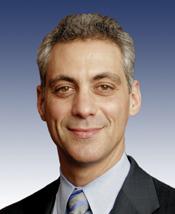
Mr. Chairman, last May, nearly a year ago, my colleagues Mr. Meehan, Senator Feingold and I introduced the first lobbying reform legislation in the Congress. It has the support of Public Citizen,…
Mr. Chairman, last May, nearly a year ago, my colleagues Mr. Meehan, Senator Feingold and I introduced the first lobbying reform legislation in the Congress. It has the support of Public Citizen, Common Cause, and non-partisan scholars like Norm Ornstein and Tom Mann, none of whom support the bill that is on the floor today.
We said then it would take bipartisan cooperation to get real reform. This legislation has chosen politics above progress, business as usual, rather than breaking the gridlock of the special interests.
Today, we are considering the incredible shrinking bill. With each passing day, it has become weaker and smaller. If we were going to vote on it tomorrow, it probably would be a blank page.
The Washington Post calls it a ``watered down sham,'' ``simply a joke,'' ``diluted snake oil,'' and ``an insult to voters who the GOP apparently believes are dumb enough to be snookered by this feint.''
The New York Times called it a ``laughingstock'' and ``an election year con.''
Republican Congressman Hefley, the former chairman of the Ethics Committee representing the Republican Caucus, said, ``In terms of ethic process reform, I don't think we have much of that here. And I think actually we are missing an opportunity here.''
Of the restrictive rule, he said, ``The bottom line for me is why can we not have debate and vote on these issues and a number of others? I believe we need to defeat the rule and then do what my majority leader and the chairman have said: work on a bipartisan basis on a new bill, on new rules that will allow some debate.''
He is upset because this bill does not offer an independent Office of Public Integrity. It does not ban gifts from lobbyists. It does not ban lavish junkets. It does not close the revolving door that allows Members of Congress and the administration to go to K Street and become lobbyists. In fact, there are more former Members who are lobbyists today in K Street than there are in either caucus; 270 former Members now lobby the institution. There is no disclosure of lobbyist contacts with members of the administration or disclosure of grass roots lobbying.
Mr. Chairman, we have an institutional problem; and it requires an institutional solution. Whether it is record gas prices, sky-high medical costs, out-of-reach tuition, the American people are paying a price for the House that Jack and Duke and Tom built; and they cannot afford much more.
When you guys came to Washington in 1994, you said you were going to change Washington; and Washington has changed you. It has become clear in the last 12 years, rather than have a contract with America, you have a contract with K Street.
When the gavel for the Speaker comes down, it is intended to open the people's House, not the auction house. When you look at the prescription drug legislation, you look at the energy legislation, you look at what they contributed, you see the results: $86 million for lobbying by Big Oil and $15 billion in taxpayer subsidies to Exxon and Mobil. There is $139 million in contributions and lobbying expenses by the pharmaceutical industry and $140 billion in additional profits by the pharmaceutical company. It is as plain as black and white.
What has happened here in Washington is as clear as night and day. You can either see it for what it is or accept it. This legislation does nothing to reform or change the business and the politics that is conducted here and the vicious circle between K Street and the administration and what happens here in the people's House.
This legislation was supposed to break that gridlock of that triangle. Instead, it reinforces and allows business as usual; and it allows the House that Tom and Jack and Duke built to continue.
You came here as revolutionaries. Rather than change Washington, Washington has changed you and all your principles. As Washington always says, you are firm in your opinion, it is your principles you are flexible on.
This time you have missed a historic opportunity to change Washington. What we have seen is the dominance of the special interests on the people's House. This election is about making sure that gavel returns to the American people and it does not open up this auction House but returns to the people's House.
Announcement by the Acting Chairman
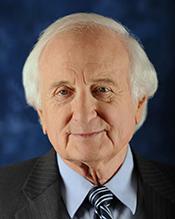
Mr. Chairman, I rise in strong opposition to this legislation. The American people are losing their faith in the integrity of Congress. Today we had a real opportunity to curb the influence of the…
Mr. Chairman, I rise in strong opposition to this legislation.
The American people are losing their faith in the integrity of Congress. Today we had a real opportunity to curb the influence of the special interests and lobbyists, and to disburse the cloud of corruption hanging over this Congress as a result of the improprieties of a small minority who have disgraced its good name.
Yet this watered-down attempt at reform falls far short of what we need to do to restore confidence in the legislative process. This bill is reform in name only. Under this bill companies could continue to fly members in their corporate jets at discount rates. Members could continue to accept lobbying jobs shortly after drafting and advocating for industry- friendly legislation. Members could influence private employment decisions with the threat of taking or withholding official actions. And special interest provisions could continue to be slipped into legislation at the eleventh hour. Instead of developing a real policy to govern gifts and meals, this legislation defers that decision until after the elections in November. This bill also postpones adoption of a clear policy regarding special interest and lobbyist- sponsored private travel.
The bill before the House is not going to fool anyone. Across the country, newspapers are blasting the GOP lobbying reform bill for the farce that it is.
The Washington Post has called it ``a watered-down sham that would provide little in the way of accountability or transparency.'' ``Congress still doesn't get it,'' said USA Today. The New York Times writes ``It's hard to believe that members of Congress mindful of voters'' diminishing respect would attempt such an election-year con.'' And the Houston Chronicle asks ``How many more members of Congress, their aides and lobbyists have to be convicted of fraud, bribery and abuse of voters' trust before legislators get the message that the public is serious about ethics reform?''
The Democratic reform plan, the Honest Leadership and Open Government Act, which I have cosponsored, would address each of these serious inadequacies, while further strengthening lobbyist disclosure requirements to shine some light into the relationship between campaign donors, lobbyists and Members of Congress.
Yet, in what has become a standard abuse of House Rules, Democrats were denied the opportunity to debate a number of substantive amendments seeking to improve and strengthen many components of the bill. Consideration of substitute legislation was blocked as well, denying Members the chance to vote on the actual reforms included in the Democratic Honest Leadership and Open Government Act.
The American people have seen the impacts resulting from the lax policies of this Republican Congress in many ways. Spiraling prescription drug costs, the skyrocketing cost of gasoline, waste, fraud and no-bid contracts in the Gulf Coast and Iraq, are all cases where a more open legislative process with reasonable oversight could have saved consumers thousands.
While this Republican Leadership may be perfectly content in perpetuating a clearly flawed status quo, sticking to business as usual regardless of the multiplying and increasingly brazen cases of misconduct, and promising more reform at some indefinite date in the future, I know the American people both demand and deserve a real response. This is simply a smoke screen by Members of the Majority to delay real action right here and right now.
Today Member after Member from the Republican Party came to the House floor not to extol the virtues of this legislation but to assure their colleagues that this was just a compromise, and that more would be done in conference and in the future. The American people do not want a compromise. They don't want to hear any more false promises of future action. The continuing cost of inaction has resulted in the loss of the confidence of the American people.
I will vote against this legislation today and support the Democratic motion to recommit to send the bill back to Committee with instructions to immediately report the measure back to the House with the text of the Honest Leadership and Open Government Act.
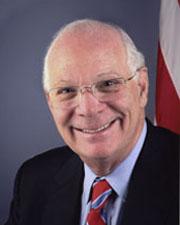
Mr. Chairman, this bill represents a missed opportunity for the House to address lobbying and ethics reform in a responsible manner. Our ethics process in the House of Representatives is broken, and…
Mr. Chairman, this bill represents a missed opportunity for the House to address lobbying and ethics reform in a responsible manner. Our ethics process in the House of Representatives is broken, and the actions of some members and lobbyists have brought discredit to the reputation of this body. That is why I am so disappointed in the response of the House leadership in bringing this extremely weak bill to the floor today, using a partisan process which deliberately shuts out debate on the most pressing reform issues before this House.
I served on the House Committee on Standards of Official Conduct from 1991 to 1997. I served as the ranking member of the adjudicative subcommittee that investigated and ultimately recommended sanctions against former Speaker Gingrich. In 1997 the House leadership appointed me to serve as the Co-Chairman of the House Ethics Reform Task Force, with my colleague Bob Livingston from Louisiana. Our bipartisan task force came up with a comprehensive set of reforms to overhaul the ethics process. We created a bipartisan package to change House and committee rules which the House adopted. This was the last bipartisan revisions of House ethics procedures.
Our bipartisan legislative package in 1997 also included a provision which authorized non-members to file complaints against members, provided that the complaints were in writing and under oath. Unfortunately, the full House rejected this proposal, and for the first time the House closed its doors to the receipt of outside ethics complaints. In March I testified before the Rules Committee and urged them to allow consideration of my amendment, which I subsequently filed with the Committee. I am disappointed that the Committee would not even allow my amendment to come up for a vote in the full House, and that it also refused to allow the House to consider the alternative approach offered by Mr. Shays and Mr. Meehan to create an independent Office of Public Integrity (OPI) to receive and investigate complaints from non- members.
Our ethics process has broken down in the past. Indeed, when our task force was meeting and deliberating in 1997, the House took the extraordinary step of imposing a moratorium of the filing of new ethics complaints.
I am afraid we have reached a similar crossroads in the House today. Some members have recently talked about ethics ``truces'' in which the political parties have voluntarily agreed to place a moratorium on filing ethics complaints, regardless of the merits of the charges. The Chairman of the Ethics Committee was removed from his position, perhaps as retaliation for agreeing, on a bipartisan basis, to repeatedly admonish the former House Majority Leader for ethical misconduct and transgressions. Outside good government groups have repeatedly called for non-members to be permitted to file ethics complaints. In December 2004 the Congressional Ethics Coalition, a nonpartisan group which included Common Cause, Democracy 21, Judicial Watch, and Public Citizen, issued a statement which called on Congress to authorize non- members to file ethics complaints against members of Congress.
The Committee on Standards of Official Conduct is the only committee of the House with an equal number of Democrats and Republicans. The Committee can only work effectively in a bipartisan manner. In March the Senate passed strong ethics and lobbying reform legislation by a vote of 90 to 8, and I am disappointed that the House is not given the similar opportunity today to pass a strong bill. I will support the Motion to Recommit which would substitute the text of H.R. 4682, which I have co-sponsored, which would strengthen our ethics and disclosure standards.
I urge my colleagues to reject this legislation.
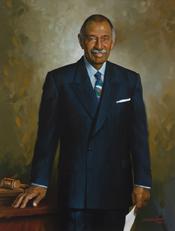
Ladies and gentlemen of the House, we have got a number of problems, as you have heard with the proposal here for lobbying accountability and transparency. The main thing I want to bring to your…
Ladies and gentlemen of the House, we have got a number of problems, as you have heard with the proposal here for lobbying accountability and transparency.
The main thing I want to bring to your attention is that, throughout the scandals that have illustrated how large sums of money were spent secretly to conduct lobbying campaigns, the current Lobbying Disclosure Act requires the disclosure of lobbying activities that involve direct contact with Members of Congress, but there is no disclosure requirement for professional lobbying firms that are retained to spend money on campaigns aimed at stimulating the public to lobby Congress, including multimillion dollar advertising campaigns. We need stronger revolving door provisions.
So I rise reluctantly against a Lobbying Accountability and Transparency Act that does not seriously reform the system. This bill really represents an effort for some to have it both ways, holding on to the financial benefits and perks they receive from lobbyists and other special interests, while claiming they have dealt with the lobbying ethics problems in Congress.
This Republican proposal is problematic because it does not address the problems that have given rise to the recent lobbying scandals and the falling confidence of Americans in the integrity of Congress.
The ban on privately sponsored travel, as you have heard, only exists through this year's elections. The corporate subsidized campaign travel and other officially related travel is still allowed. The current broken revolving door policy remains unchanged, and gifts are allowed.
So I come to you to tell you what it is we want: disclosure of the lobbying campaigns. We want stronger revolving door provisions. We want fundamental changes to gift, travel, and employment relationships among Members of Congress, the lobbying firms, and the lobbyists.
H.R. 4975, that is being handled so well by the gentlewoman from New York, in its current form is illusionary. There is not real lobbying and ethics reform.
So I urge my colleagues to reject this weak and ineffective legislation.
Mr. Chairman, the U.S. House of Representatives will vote on the ``Lobbying Accountability and Transparency Act of 2006'' (H.R. 4975) on Wednesday, May 3. The measure is a woefully inadequate response to the most significant ethics and lobbying scandals that have swept Capitol Hill in nearly three decades. Even lobbyists say so. When asked about the significance of the House lobbying reform bill by The Buffalo News, Paul Miller, president of the American League of Lobbyists answered: ``That little thing?''
In fact, the measure is a ruse that fails to address any of the major problems with congressional ethics and lobbying that have surfaced over the past year. When it comes to lobbying reform, Congress is not up to the task.
H.R. 4975 takes a cynical approach to reforming lobbying disclosure and behavior on Capitol Hill and is opposed by Public Citizen and other reform groups. The bill fails to restrict campaign fundraising activities by lobbyists, fails to ban gifts from lobbyists, fails to curb revolving door abuses, and fails to create an independent oversight and compliance office. It bans privately sponsored travel-- but only until after the next election. This legislation not only is inadequate, it makes a mockery of the lobbying reform drive.
To make matters worse, a very restrictive rule has been attached to the bill that prohibits floor consideration of any strengthening amendments, which means that the bill cannot be improved upon when the House considers it on Wednesday. Representative Chris Shays, Marty Meehan and others have offered a package of strong reforms that are prohibited from consideration because of this rule.

Mr. Chairman, I rise today in strong support of H.R. 4975, the Lobbying Accountability and Transparency Act. Mr. Chairman, the American people have every right to expect the highest ethical standards…
Mr. Chairman, I rise today in strong support of H.R. 4975, the Lobbying Accountability and Transparency Act. Mr. Chairman, the American people have every right to expect the highest ethical standards here in the people's House.
In order to uphold the integrity of Congress as an institution, we must go a step further to enhance transparency and accountability with respect to lobbying activities. The Lobbying Accountability and Transparency Act does just that while preserving the right of Americans to petition their government.
Much like other bills that are brought to this floor, this bill is a compromise, and I would like to commend Chairman Dreier for seeking input from Members on both sides of the aisle, but especially for the long, hard work that he has worked on this issue since the turn of the year. This was no easy task. And as the chairman said, this is only the start of the process. But because this is a compromise, I believe that there are areas in which this bill can be improved. For that reason, I am pleased that we will have an opportunity to consider an amendment later today that I have cosponsored that will further improve the bill with regard to privately funded travel for Members of Congress.
Much concern has been raised in recent months over abuse of House rules that permit Members and staff to accept privately funded travel connected with the performance of their official duties. Upon passage by the House, the legislation before us today would temporarily suspend such travel and direct the Ethics Committee to propose to the House new rules for approving and disclosing privately funded travel.
As several of my colleagues will note later on, I am sure, and have noted in the past, privately funded travel often serves a very useful purpose, and the temporary suspension is not intended to signal that something is inherently wrong with these private trips. Instead, the temporary suspension recognizes that, until a new travel system can be put in place, Members taking such trips do so at considerable risk of public criticism that is in many instances unwarranted.
For that reason, the bipartisan Lungren-George Miller-Hastings- Berman-Cole amendment was proposed as a stop gap measure designed to protect Members and staff who have already made plans to travel during the 6 weeks between now and mid-June when the House is expected to act on recommendations for new travel rules to be proposed by the Ethics Committee.
Very simply, our amendment provides that privately funded travel may be accepted during this interim period whenever two-thirds members of the Ethics Committee vote to approve the proposed trip. This mechanism, which will be in place for only a relatively short period of time, will make it possible for worthwhile trips to go forward while ensuring that all privately funded travel is carefully scrutinized for compliance with applicable House rules.
I am pleased that several of my distinguished colleagues on both sides of the aisle, including the new ranking minority member of the Ethics Committee, Mr. Berman, have had a hand in crafting this interim travel approval mechanism. I look forward to working closely with Mr. Berman not only to
ensure that this process runs smoothly but also on a bipartisan basis to develop clear and workable rules for approving privately funded travel that the Ethics Committee will communicate to all Members and staff.
Mr. Chairman, I urge adoption of the bill.
The only people in the State of Washington whose wages will be affected by this bill, should it pass, will have their minimum wage decreased. Every single worker who receives tips in the State of…
The only people in the State of Washington whose wages will be affected by this bill, should it pass, will have their minimum wage decreased. Every single worker who receives tips in the State of Washington will have their minimum wage decreased $1.78 an hour as a result of this ridiculous bill. Seven States are in the same position: Alaska, California, Minnesota, Montana, Nevada, Oregon and Washington. In seven States in this country, the only people who will be affected by this bill are those who will get their minimum wage slashed.
Where is the Republican desire to slash the minimum wage and call it an increase in the minimum wage? That is what you have written into this bill.
Now, we realize this bill isn't going to pass, and you think you are going to get relief from the voters because you voted for this when it isn't going to pass. Well, if it did pass, you would be cutting the minimum wage in the State of Washington by $1.78 an hour. The people who feed you, when you take your $30,000 pay increases we all have had over the last several years, you take your $30,000 pay increases, and you tell the people that serve your tostadas and your spaghetti that you can cut their minimum wage by $1.78 an hour. If you doubt me, ask Molly on your staff. She will tell you I am right. I don't know who the brilliant guy was who thought that that is good policy in this country. We Democrats think it is a very bad idea.
The situation is, you're not going to deliver a minimum wage of any dimension because of the way you packaged this, because you don't want to see a minimum-wage increase. That is why you packaged this with a poison pill. And this is not going to work for you, because mailmen who don't deliver the mail get punished. And you will be punished for this this November.
I will just say one thing: when you cut the minimum wage for restaurant tip workers in this country, I will say this, it is bad enough when you don't do a minimum-wage bill; it is worse when you do. The point I want to make is this bill is not going to pass because they put a poison pill in it. But I want to make sure people understand in the States of Washington, Montana, Nevada, California, those States, that if it did pass, they would be cutting restaurant workers.
Do you want to challenge that, Mr. Hayworth? I will yield to you. If you think that is wrong, you can walk up to your staff member and she will tell you that you are cutting restaurant workers $1.78 in the State of Washington. If you disagree with that, I will show you page 181 of your bill.
I yield to the gentleman from Arizona.
I am.
Mr. Speaker, will the gentleman yield?
Mr. Speaker, what we want to point out and we want to make sure, because I think I have confirmed this with the Republican staff, the way this works, if this bill passes, in the State of Washington the minimum wage goes down the next day $1.78 an hour.
The gentleman is correct. If the State legislature got together and essentially overrode the Republicans in Congress, they might be able to get it back up where it was. But you know what? You Republicans in the State legislature, I say ``you,'' Republican-controlled legislators, I will give you a clue: it is not going to happen. That is why we object to cutting the minimum wage in any State by any Congress of any party.
Unfortunately, that is what you are doing. You can confirm it with counsel. That is why we think it is an abomination.
Mr. Speaker, I rise today to express my disappointment that once again the Members of this House appear poised to let another opportunity pass us by that would have a meaningful impact in the lives…
Mr. Speaker, I rise today to express my disappointment that once again the Members of this House appear poised to let another opportunity pass us by that would have a meaningful impact in the lives of millions of American families. Today, we are voting on a bill that has been rushed to this House floor and purports to raise the Federal minimum wage. In reality, however, the bill before us seeks to muddy the waters about whether America's lowest paid workers deserve to make a living wage.
In stark contrast to the bill before us today, Mr. Miller, the ranking member of the House Committee on Education and the Workforce, has introduced very simple legislation that would increase the Federal minimum wage to $7.25 per hour over the course of the next 2 years. This bill was introduced in May of 2005 and has yet to receive a hearing.
The hastily drafted bill before us today, however, was only introduced earlier this afternoon, and the House leadership has brought it to the floor for a vote.
This legislation adds unrelated and controversial provisions, that I'm sure some hope will end the debate and ensure that a meaningful increase in our minimum wage never takes place. We should instead, be voting today on a straightforward bill that simply raises the Federal minimum wage to a level that ensures that working families can emerge from the grasp of poverty.
Before the House adjourns for the August recess, I believe we owe the American people a simple up-or-down vote on whether or not working Americans deserve a decent living wage.
The current minimum wage of $5.15 per hour is not a living wage. It is not a wage on which single individuals, working full time, can adequately support themselves, and it is most certainly not a wage on which a single mother or single father can raise a family.
Millions of hard-working Americans would directly benefit from a minimum wage increase. Some would argue that this would only benefit high school students and young adults who are being paid minimum wages on their first job at a fast food restaurant. In fact, more than 84 percent of workers who would directly benefit from a minimum wage increase are above the age of 20. In addition, nearly 60 percent of those individuals work full time, and 45 percent of them are married and/or have children.
They are the victims of our inaction, Mr. Speaker. In many cases, it is our children who will suffer. I am ashamed that nearly 36 million Americans live in poverty in our country, and that nearly 13 million of those who live below the poverty line are children. With a very simple vote today--on a very simple piece of legislation--we could dramatically increase the physical, mental, and financial wellbeing of countless American children. No one who works for a living should have to live in poverty, and the children of these working families must not be made to suffer for our collective lack of moral conviction.
I call on my friends on the other side of the aisle, and I ask them to partner with us to pass a meaningful increase in the Federal minimum wage. We must pass legislation that does not contain controversial provisions that divide us. Instead, we should speak with one voice, as one Congress, and tell working Americans that we value their work, that we understand their sacrifices, and that they deserve to make a living wage.
Mr. Chairman, who do our Republican friends believe they are fooling today with this so-called lobbying ``reform'' bill? I submit: not a soul. Certainly not the American people and certainly not…
Mr. Chairman, who do our Republican friends believe they are fooling today with this so-called lobbying ``reform'' bill?
I submit: not a soul. Certainly not the American people and certainly not editorial writers who have examined this legislation.
The San Antonio New Express called the Republican bill ``a disgraceful sham.''
The Milwaukee Journal Sentinel calls it ``miserable.''
The Philadelphia Inquirer says, ``The House is just playing pretend.''
The New York Times calls it ``an Orwellian shell of righteous platitudes about transparency and integrity.''
And public interest groups have derided this Republican bill as a ``complete joke,'' ``a total scam,'' and ``phony.''
Let no one here be mistaken: this bill is not driven by a desire to address the most serious lobbying and ethics scandal this body has experienced in a generation. I have said before, and I repeat: the failure of ethics and honesty have been of conduct, not of rules. But rules can both inform of expectations and propriety.
The greed and flagrant abuses of convicted felons, former Republican Member Duke Cunningham and Republican lobbyist Jack Abramoff, hang over this House like a dark cloud.
The K Street Project, proudly promoted by Mr. DeLay and Senator Santorum and the Republican leadership, in which quid pro quo was the blatantly articulated standard of conduct, is the most flagrant example of the aptly named ``culture of corruption.''
This empty shell of a bill is driven by one thing: the majority's cynical calculation that it will not pay a price with voters this November for failing to take meaningful steps to end this culture of corruption.
The chairman of the Rules Committee was quoted as saying that the adoption of the reform package ``would get this,'' meaning the repeated instances of rules violations and criminal conduct, ``behind us.''
The adoption of this bill or any bill will not do that. Only honest, ethical, principled behavior over a period of time will do that. But a strong reform package would have been a start. Sadly, that has not been an option before us today.
It does not diminish our moral responsibility, however, to demand and ensure ethical and honest behavior by all of us, not an endless political game of cross claims and allegations, but by an Ethics Committee that does not shun its responsibilities and sit moribund in the face of scandal after scandal. The people expect more of us. We should give it to them.
It may be fitting that this do-less-than-the-do-nothing Congress of 1948 Republican Congress is forcing Members to vote on this do-almost- nothing bill.
The American people see right through this ruse.
And they deserve better.
Lobbyists must be required to act honestly and ethically. But, it is Members who have sworn an oath before God and our fellow citizens to uphold the laws and protect the Constitution.
It is Members who bear the direct responsibility for the honest administration of the people's business. This Congress is not meeting that responsibility.
It is clear, Mr. Speaker, that the Republican leadership does not want a real debate on these issues.
Democrats offered a much stronger alternative, but the majority refused to allow it to be considered.
So much for openness, transparency and democracy.
I urge my colleagues: Vote against this Republican ruse.

Mr. Speaker, this bill is an example of the worst kind of political game playing. After months and months of short workweeks and long breaks, now the Republican leadership has brought the House into…
Mr. Speaker, this bill is an example of the worst kind of political game playing.
After months and months of short workweeks and long breaks, now the Republican leadership has brought the House into session late today-- and for what?
Certainly not for a simple vote on raising the minimum wage--even though that's long overdue.
No, instead the purpose of this grab-bag of a bill is to provide political cover for people who want to say they voted to raise the minimum wage but don't want their votes to actually produce that result.
That's why the Republican leaders have chained onto the minimum-wage increase the deadweight of an estate-tax revision bill like the one the House passed last month--a bill so badly flawed that it has already reached dead end in the other body. They know that the added weight will mean that even if this bill is launched from the House it will not fly, and will never reach the President's desk.
It's a cynical move. And it's a lost opportunity--because if the estate-tax part of this bill were good enough to give the package a long-shot chance of enactment, the bill would merit support.
But, like the version we passed last month, the estate-tax part of this bill does not have that chance, because it does not represent a true compromise. While benefiting only a very few--the very largest estates--it would irresponsibly reduce federal revenue at a time when the country is at war and the budget is already deeply in deficit. And to make matters worse, it includes unrelated provisions that are even less fiscally responsible, such as a special tax break for timber companies that would reopen a loophole that was closed when President Reagan signed the landmark Tax Reform Act of 1986.
My opposition to this bill does not mean I am opposed to reducing estate taxes. When the House considered the estate-tax bill last month, I supported an alternative that would have raised the amount of an estate excluded from taxes to $6 million per couple and increased this to $7 million by 2009. This not only would have provided relief for small businesses and family farmers, but it would have done so in a much more fiscally responsible way, because it would have reduced revenues by much less than this bill. It also would have simplified estate-tax planning for married couples, who could carry over any unused exemption to the surviving spouse and so assured that the full $7 million would be available.
Furthermore, that alternative would have transferred the revenue from the estate tax to strengthen the Social Security trust fund, a change that, according to the Social Security Actuary, would solve one quarter of the trust fund's shortfall.
If the Republican leadership allowed us to vote on that--even as an added burden on a bill to raise the minimum wage--I would vote for it. But they could not do that, because that kind of true compromise--a reasonable and responsible compromise that would have a good chance of approval in the Senate--would not fit their plan to use the estate tax as a weight to sink the minimum wage increase.
So, once again, I have no responsible choice but to oppose what the Republican leadership has put before us and to vote against this cynical maneuver disguised as a serious legislative proposal.

Mr. Chairman, I am pleased that the Lobbying Accountability and Transparency Act is being considered today. Accountability and transparency with respect to the lobbying profession is necessary to…
Mr. Chairman, I am pleased that the Lobbying Accountability and Transparency Act is being considered today.
Accountability and transparency with respect to the lobbying profession is necessary to ensure public confidence in how Members and staff of this House interact with the outside world.
And I further believe that this legislation will help brighten the lines for Members and staff in terms of what is permissible behavior and what is not.
Consistent with this need to have such bright line, I want to make certain that some of the language in the bill is understood to mean what it says and nothing more.
Under Section 105(7), lobbyists would be required to disclose ``the date, recipient, and amount of funds contributed by the registrant or an employee listed as a lobbyist by the registrant under paragraph (2)(C); (A) to, or on behalf of, an entity that is named for a covered legislative branch official, or to a person or entity in recognition of such official; or (B) to an entity established, financed, maintained, or controlled by a covered legislative official.''
Members have a longstanding history, and one that I respect, of raising money for and being otherwise involved with charitable organizations.
This provision would apply to charities when such charity is named for a covered legislative branch official, or when a charity recognizes a covered legislative official.
It would also apply to a charity that is established, financed, maintained or controlled by a covered legislative official. It would not apply in any other circumstance.
It would not apply, for instance, when the spouse of a Member engages in such activity independent of his or her spouse's official position.
Mr. Chairman, this is good legislation.
The Republican record is long, and it is strong on the issue of lobbying reform.
Republicans have delivered on ethics reform time and time again.
In 1989, we enacted a Bush Administration proposal that included numerous ethics reforms.
We cleaned up the House banking and post office scandals.
When we became the majority in 1995, we instituted more reforms, including the first significant lobbying disclosure bill.
And remember it is a Republican Justice Department that is prosecuting the cases that have led to this legislation.
This reform package represents a great improvement over the current system.
It will deter wrongful behavior by giving the public a better view of what their elected officials are doing in Washington.
These reforms will shine a light on Congress by making lobbying disclosure reports more frequent, accurate and accessible to the public.
This legislation is a welcome change in the rules governing lobbying and ethics.
I thank Chairman Dreier and the Congressional leadership for their worthwhile efforts.
Bill Text
Latest available legislative text
        [Congressional Bills 109th Congress]
[From the U.S. Government Publishing Office]
[H. Res. 709 Introduced in House (IH)]

109th CONGRESS
2d Session
H. RES. 709

Amending the Rules of the House of Representatives to ensure that
Members have a reasonable amount of time to read legislation that will
be voted upon.

_______________________________________________________________________

IN THE HOUSE OF REPRESENTATIVES

March 2, 2006

Mr. Paul submitted the following resolution; which was referred to the
Committee on Rules

_______________________________________________________________________

RESOLUTION

Amending the Rules of the House of Representatives to ensure that
Members have a reasonable amount of time to read legislation that will
be voted upon.

Resolved, That:
(a) The Rules of the House of Representatives are amended by adding
at the end the following new rule:

``rule xxix

``time to read legislation before voting

``1. Notwithstanding any provision of these rules, no bill, joint
resolution, conference report, or amendment between the Houses shall be
voted on by the House unless the text of that measure has been
available to all Members and their staffs in both printed and
electronic format for at least 10 days and any manager's amendment or
other amendment which makes substantive changes to the legislation has
been made available in both printed and electronic versions for at
least 72 hours before the scheduled vote on such legislation.
``2. Clause 1 shall not apply to--
``(1) the intelligence authorization bill, appropriations,
or other legislation containing classified information, or
conference report thereon, if Members have at least 7 days to
study the contents of such measure; and
``(2) congressional declarations of war or authorization of
military force to respond to attacks on the United States.
``3. (a) Any Member who votes for any measure that has been placed
before the House in violation of this rule shall be deemed to have
violated House ethics rules and be subject to censure.
``(b) Notwithstanding any provision of these rules, any citizen who
is eligible to vote and who is not an employee of the executive or
judicial branch of the Government may petition the Committee on
Standards and Official Conduct to investigate allegations that a Member
voted for any measure that violated this rule.''.
(b) Clause 6(c) of rule XIII of the Rules of the House of
Representatives is amended by striking the period at the end of
subparagraph (2) and inserting ``; or'' and by adding at the end the
following new subparagraph:
``(3) a rule or order that would waive the provisions of
rule XXIX.''.
<all>