Amending the Rules of the House of Representatives to require committees to hold hearings upon the issuance of certain reports from an Inspector General or the Comptroller General the subject matter of which is within the jurisdiction of such committees.
Legislative Activity
Stay on top of the latest movement without scrolling through every action
Sponsor introductory remarks on measure. (CR H4902-4904)
June 29, 2006
View full timeline
Introduced in House
May 24, 2006
Sponsor introductory remarks on measure. (CR H4902-4904)
June 29, 2006
Floor Debate
24 membersWhat members said about H.Res. 841 on the floor
 JAL
JAL TGM
TGM JPM
JPM SJL
SJL IS+19
IS+19
Floor Debate
24 membersWhat members said about H.Res. 841 on the floor
Mr. Speaker, there are few certitudes in these complicated times. Anyone who was not conflicted in the original decision to invade Iraq or who does not see a downside to all courses of action today…
Mr. Speaker, there are few certitudes in these complicated times. Anyone who was not conflicted in the original decision to invade Iraq or who does not see a downside to all courses of action today is not thinking. But I am hard pressed to believe anything except that the case for a steady, measured drawdown of troops in Iraq is compelling. The neocon desire to establish a semi-permanent presence in a divided Muslim country is foolhardy.
It is true that there are circumstances where it is better to fight over there than here at home. Afghanistan is a case in point. But we should not be so naive as to fail to recognize that there are also circumstances where fighting over there can increase the likelihood that conflict will spread to our shores. A decision to prolong unnecessarily our intervention in Iraq could be a case in point, as could a military confrontation with Iran.
There are tipping points in all struggles. The signs are evident that we are close today to a calamity if we do not recalibrate our policies. The irony is that our troops have lost no battles and shown great heroism, but Western occupation is intolerable for Muslims. It is also not the American way. The longer we stay, the greater the prospect that anarchistic acts will multiply and spread, perhaps to our shores.
The issue is no longer, as is so frequently asserted, the need to stay the course. It is to avoid overstaying our presence.
Sometimes it is harder to know how to end a war than to start one. Just as important to think through the ``why and how''' of committing troops to conflict, we must also think through the ``why and how'' of ending an engagement. Timing is a key element of both considerations.
For many Americans, including me, the war in Iraq has been difficult to justify. But all Americans, except perhaps a few who may be partisanly vindictive, should want as positive a result as possible, given the circumstances we now face. The decision to go to war may have been misguided and strategies involved in conducting it mistake-ridden; nonetheless there should be clarity of purpose in ending the conflict, with the goal neither to ``cut and run,'' nor simply to cut losses. At this junction of involvement we should define cogently our purposes and by so doing create a basis both for a viable future for Iraq and for a U.S. disengagement that respects the sacrifices of those who have served so valiantly in our armed forces and those of our coalition allies.
Americans understand that three rationales were given at successive stages for the war. The first involved Iraq's complicity in 9/11; the second was the imminent threat of Iraqi WMD; and the third was the desire to replace the despotic regime of Saddam Hussein with a free, democratic government. The first two arguments have proven frail. The third has some legitimacy, but to many of us it never seemed compelling, particularly in relation to the costs of the conflict.
In any regard, whether or not democracy provided a compelling rationale for starting the war, it offers the most appropriate rationale for ending it. If we do not prepare to leave Iraq on our terms, stating clearly that now that a Constitution has been adopted, elections held, and a government formed, we are prepared to proceed with a comprehensive and orderly draw-down of our troops, we will be viewed as an occupying power lacking credible motivations. When we eventually leave, the other side will claim they forced us out. That is why it is as critical to define the rationale for our disengagement as the reason for going to war. And democracy is the only rationale I know that can be used as a basis for ending our involvement in this conflict with any hope of suggesting a partial measure of success. The key is that we must control and be seen as controlling our own fate.
All Americans should be respectful of the sacrifices of our men and women in uniform. They have been placed in an untenable situation. If they had not been so heroic and in many cases so helpful in rebuilding neighborhoods and schools, the U.S. would face a far more difficult dilemma today.
But we have no choice except to assess whether Osama Bin Laden and his movement have not been given added momentum by our intervention in Iraq, and whether the ideologically advocated policy of establishing long-term bases or one of returning our troops home is likely to be the more effective strategy in prevailing in the world-wide war on terror.
Here, it should not be hard to understand that prolonged occupation of a country which encompasses an area of land where one of the world's oldest civilizations prospered is humiliating to a proud people and those elsewhere who share its great religion. It should also not be hard to understand that the neo-con strategy of establishing a long- term military presence in Iraq with semi-permanent bases raises the risk of retaliatory terrorist attacks at home and abroad.
Indeed, according to the University of Chicago scholar, Robert Pape, in his definitive book on suicide bombers, Dying to Win, the principal reason anarchists choose to wrap themselves in explosives and kill innocent civilians is to register martyred objection to the occupation of countries or territories by the armed forces of Western or other Democratic governments. Suicide bombing, by implication, will exist as long as occupations continue.
In this regard, a note about al Qaeda is in order. Just as neither Iraq with its secular leanings nor any Iraqis were responsible for 9/11, so Saddam Hussein apparently considered Osama Bin Laden as much a rival as a soul brother. It is Western military intervention that has precipitated al Qaeda's rapid growth in Iraq and elsewhere, creating a ``cause celebre'' for its singularly malevolent actions. If American withdrawal policy comes to turn on the question of anarchy--i.e., troops can't be drawn down as long as IEA attacks continue--we place ourselves in a catch-22 and, in effect, hand over decision-making discretion to those who wantonly kill. We allow the radical few to use our presence as the reason for their actions and at the same time cause our involvement to be held hostage to their villainy.
On the other hand, if we proceed with a turn-over of responsibilities to the new, freely elected Iraqi government, Sunni dissidents will confront a critical choice: to pursue the insurgency or join the political process. Pursuing the insurgency would be a risky gamble; if it fails, Sunnis may fall under Shiite domination
for years to come, and the demise of Abu Musab al-Zarqawi makes prospects of expanding influence through terrorist tactics less likely. Joining the political process, on the other hand, would guarantee Sunnis a role in governing the country.
Though the prudential and civilized choice may seem obvious to us, a continued American military presence in Iraq gives Sunni radicals a popular cause--ridding the country of the occupier--for rallying popular sentiment in Iraq and elsewhere and justifying continued violence. Announcing the commencement of an orderly drawdown of our troops, and trumpeting it widely, would rob radicals of this powerful cause, allowing moderate Sunnis to join the government and pursue sectarian interests through the constitutional process.
In the realm of policy timing can often be as important as substance. Just as Senator Dirksen once noted that a billion dollars here and a billion dollars there and pretty soon you're talking about real money, in foreign affairs a week here and a week there can soon add up to a policy dilemma.
It is possible, of course that civil strife will ensue when we withdraw, but this is just as likely to be the case in 2026 as 2006. In any regard, civil union is for the Iraqi people to manage. It's not for American troops to sustain. The authorization this Congress gave to the Executive to use force contemplated the clear prospect of military intervention in Iraq. It did not, however, contemplate prolonged occupation. If this is not understood by the Executive branch, the current overwhelming Iraqi polling sentiment favoring American troop withdrawal will be more than matched by shared American sentiment. And in a democracy no one can be a leader without followers.
The older I get, the more central I consider the human factor to be in international relations. Logic is never totally dominant. No one knows the exact origins of the seven deadly sins, but to the degree human nature is the least changed aspect of the human condition, it is relevant to today's debate to contrast two human foibles: avarice and pride. Let me suggest that avarice, the weakness of business classes, is fundamentally more pragmatic than pride, the weakness of politicians, and pride is fundamentally more dangerous than avarice.
For example, if a bookstore owner were to read two books and strongly prefer one to the other, he might inventory half a dozen of the one he prefers and one of the other. But if his customers buy the one he likes least, he will not reorder the one he likes. He will put it on the discount shelf and re-order the public's choice. His pride isn't hurt. In politics, on the other hand, the tendency is to avoid embarrassment, never acknowledge error. Mistakes are often repeated to avoid political inconsistency.
An anecdote comes to mind. In one of my early terms in Congress I was invited to the Library of Congress to a seminar Henry Kissinger was asked to give on the 1973 Paris Peace Accords. Before going, I perused one of his autobiographical tomes and was struck by a singular paragraph. In December 1968, Kissinger as the National Security Council Advisor-designate met with Richard Nixon, then the President-elect. They agreed, he wrote, that their policy would be to disengage from Vietnam. After Kissinger had delivered his lecture, I asked him about his pre-Presidency strategy talk with Nixon. Why, I inquired, didn't the Nixon administration immediately do what he said they had decided in December 1968, to do? Kissinger looked at me and responded: ``We meant with honor.'' I asked him if honor required escalation. ``Absolutely,'' he replied.
``Honor'' and ``pride'' do not have the same meaning. But in some circumstances they are clearly first cousins.
I mention this incident as a reflection of human nature and the psychology of decision-making. LBJ was too much of a Texan to reverse gear on his own policies; Nixon was too much a product of the Cold War to risk being perceived as less tough than his Democratic predecessor.
All wars evoke analogies to prior conflicts; Vietnam is on everyone's mind. My sense is that references to our Southeast Asian experience are somewhat oblique, but important to ponder. Of particular relevance is the advice of a former Vermont Senator, George Aiken, who suggested we just declare victory and get out of Vietnam. Aiken's advice was rooted in frustration, but wise as it was, represented more spin than reality. Given the strategies then in play, victory wasn't close at hand. Today, on the other hand, despite the escalation of world-wide violence and the precipitation of widespread mistrust of the United States, particularly in Muslim societies, the Administration can point to positive political change in Iraq. An Aiken approach might not be historically compelling, but it would have more currency now than when originally suggested.
In governance, judgment to be good must be timely. If we maintain a heavy presence much longer our president could find himself in a dilemma of the kind Lyndon Johnson and Richard Nixon came to know too well. Despite the overwhelming nature of our military capacities and the courageous commitment and sacrifice of our armed forces, well- intentioned policies can fail if they are inadequately justified, poorly executed, or pursued too long. The timing and explication of disengagement can be as consequential as the decision to intervene.
This is why clarity of purpose and flexibility of response are so crucial. Hasty withdrawal is problemsome; orderly, philosophically cogent decisions to wind down the military dimension of our presence in Iraq should, however, be our highest national interest priority.
It would be a mistake of historical proportions if respectful relations not only between America and the Moslem world but between America and its traditional allies were to rupture. We are obligated to see that they don't.
In a broader historical and philosophical context, the American intervention in Iraq underscores the need to probe the question of the limits of power of a superpower and the possible anomaly that there are liabilities of power, particularly for a superpower.
Does, for instance, overwhelming military might alone protect us from terrorism, or if wielded unwisely, does it escalate our vulnerability to terrorism?
Likewise, does overwhelming economic power ensure loyalty and buy friendship even from countries most indebted to the United States, or does it inspire resentment?
With each lED explosion and suicide bomb attack it becomes clearer that America and the world community are in a strategic pickle. In an era of anger, of divisions in the world based on economics, on color of skin, on ethnicity, on religious upbringing, on happenstance of family and place of birth, those who have causes--good and bad--have new globalized techniques of being heard and felt. Great leaders like Mahatma Gandhi and Martin Luther King appealed to the higher angels of our nature and achieved revolutionary change with non-violence. More mendacious leaders like Adolf Hitler, Saddam Hussein and Osama Bin Laden have sought to impose their wills on others through appeals of hate and reliance on increasingly wanton instruments of oppression.
The policy question Americans must think through is whether great powers may be more effective with policies of restraint rather than intervention. Just as Gandhi and King led non-violent revolutions which have proved more lasting than the barbarism of Stalin and Pol Pot, maintenance and embellishment of the American model of governance may itself be more intrusively revolutionary in oppressed societies than interventionist policies.
Caution and restraint are better models for 21st Century statecraft than naive adventurism.
With this admonition in mind, it is critical that Members of the Executive Branch must understand that how and what they say to justify various policies determines how others respond.
Anyone who ever studied physics may recall that Sir Isaac Newton set forth three fundamental laws, the second of which was that for every action there is an equal and opposite reaction. A decade ago when the Congress was led by an extraordinary upstart whose first name was Newt, I suggested, at first as a pun, the existence of a fourth ``Newt- onian'' law, this one of social physics: reaction is greater than action. My thoughts at the time related to the partisan bickering within Congress. But with the passage of time I have come to the conclusion that international slights have graver consequences than domestic.
When, for instance, we use words like ``evil,'' reference events like the Crusades, and employ tactics designed expressly to ``shock and awe,'' should we not expect others to think and respond in like or escalated terms, although the methods employed might in the current vogue be described as asymmetric?
This brings me to several broad precepts, one of which is seemingly trite, and others of which are intended to form a theoretical and practical framework for a recalibrated foreign policy.
First, the trite. Every society has a sage who cautions that wise leaders should put themselves in the shoes of their adversaries before reaching self-centered judgments. The profoundest illustration of this comes from literature rather than Clausewitz or Tsun Tsu.
When speaking to constituents of the rationale for and against the Iraq War, I have over the past couple of years referenced a set of books that provides more geo-political wisdom than balance of power strategists: the Alexandria Quartet by Lawrence Durrell.
Set in inter-war Egypt, each of Durrell's four books chronicles the same series of events through the eyes of a different participant. While the events repeat, the stories are profoundly different. The implicit moral is that one set of eyes, one set of interactions, is insufficient to gain a full grasp of what is happening around us. Likewise, in world politics one
country's perspective is not enough. The views of others matter. If we are to manage prudently the affairs of state, we have to use more than just our own eyes, rely on more than just our own experience, and reference more than our own historical circumstance.
The Muslim experience, for instance, gives substantially less weight than the Western experience to the two cataclysmic wars of the 20th century. Despite Lawrence's involvement in Arabia and the battles between Allied forces and Rommel's tanks, the engagements in the Middle East and North Africa were skirmishes compared with the struggles in Europe and the Far East. Not only do Muslims see the 20th century differently from Westerners, but Europeans and Americans have drawn different strategic parallels in the application of common experience to current challenges in the Middle East.
In the immediate aftermath of the First World War, historians and political strategists in Europe rightly concluded that the European alliance system had been too rigid and the assassination of a relatively minor figure, an archduke, should not have precipitated a war of such devastating consequences. Hence European leaders in the 1930's falsely concluded that historical wisdom necessitated initial accommodation with Hitler's adventurism. Too little flexibility caused one war; too little spine led to Munich. In the current context, President Bush sees himself as Churchill rather than Chamberlain, but Europeans see 9/11 as more analogous to the shots fired at Archduke Ferdinand than as a cause for a doctrine of preemption or war with Iraq, a war that could too easily spring into a clash of civilizations.
If we're ever going to have a chance to shape or deter the actions of others, we must understand their reasoning. Failing to understand or respect Muslim culture, for instance, resulted in the greatest intelligence failure of our era. It is, however, not the sole intelligence failure. In one of the greatest judgmental errors of our time, we appear to have attempted to combat the ideological posturing of others by ideologizing our own intelligence. Based on what is known today, policymakers wrongly implied Iraq played a role in the 9/11 attack and not only erred in assessing Saddam Hussein's WMD capacities but put too much faith in a narrow cadre of policymakers who suggested the United States would be welcomed as a liberating rather than conquering or, worse yet, colonizing force in Iraq. Estimates of the costs of war, of the ramifications of our involvement, of the expected reaction of the population and of the likelihood of foreign respect and support were dead wrong.
Now, given the anarchy that has mushroomed in the country, Washington is swept by occupation analogies of World War II. Japan and Germany, it is noted, were occupied for more than five years after hostilities ceased. Hence, many are suggesting, we must be prepared to stay at least this long in Iraq.
I have seldom been more apprehensive about an historical analogy. Japan and Germany were the instigators of war; their citizens understood this. The Muslim population throughout the world does not see it this way. They see the U.S. as the aggressor. Images from Al- Jazeera portray a country under siege. In the Moslem world Iraq looks more like a police-cordoned West Bank than a great and ancient society on the move to a better life. Outsiders are viewed as unwanted intruders acting out of great power self-interest, disrespectful of the culture and values of the country being occupied.
Yet if we take the most difficult geo-strategic issues of the day, it is impressive how we seem to misunderstand the fundamentals of human nature. Publics in many parts of the world are crying out for two aspirations: respect and hope. But our policy response is an entirely parochial one, rooted in the so-called doctrine of American Exceptionalism, which neo-cons do not define as refining a shining City on a Hill but as the right of a superpower to place itself above the legal and institutional restraints applied to others.
In the Neo-con world, values are synonymous with power. The implicit assumption is that American security can be bought and managed alone, without allies, without consideration of contrasting international views or the effect of our policies on others. Treaties like a Comprehensive Test Ban, which every President since Eisenhower has propounded, have been rejected, as have negotiations to strengthen the verification provisions of the Biological Weapons Convention.
Legitimacy is critical for all countries. There may be times and circumstances in which the U.S. national interest requires action without the support of our allies or without United Nations sanction. But the U.N., in particular, is ignored at great risk, especially when the international community is largely at odds with American policies. In this context, recent rhetorical attacks by ideologues in and out of government on the U.N. and other multilateral institutions would appear to particularly ill-serve the American national interest.
The diplomatic issue our government has to come to grips with today is the problem of sequencing. Which comes first--the chicken or the egg--is the most cheerful and abstract philosophical discussion Americans engage in. But which precedes the other--talk or war--is neither cheerful nor abstract. Experience would seem to indicate that while war may not be averted by negotiations, it is less likely to break out if direct dialogue occurs beforehand. In adversarial situations pacific results can seldom be achieved without human interaction. That is why our founders clearly contemplated that the new American Republic would have diplomatic relations with undemocratic states. It is why Prime Minister Rabin, when faulted for talking to Arafat, noted that you don't make peace with friends.
There are few examples in history where empty chair diplomacy has proved effective. Indeed, it is next to impossible to reach mutual accommodation if there is not mutual understanding and a modicum of trust and respect which only personal relationships can provide.
The sequencing dilemma is particularly evident with regard to Iran. Not only should we not fear to negotiate, we must understand that as the stronger party, we can afford to put on the table steps, particularly related to process, that weaker parties are less able to initiate without seeming to capitulate. Unfortunately, we have over a number of Administrations chosen to isolate rather than engage Iran. The question is whether isolationist policies drive a proud people to greater extremes. A stigmatic refusal to interact has characterized our policy toward Iran for a generation and, just as haplessly, Cuba for two.
Some of us have fretted for a long time that a more forthcoming U.S. diplomatic approach might have produced a more stable Persian Gulf. Five years ago Senator Specter and I invited to Capitol Hill the Iranian Ambassador to the U.N. In a long meeting over dinner in a small room on the Senate side of the Capitol, I indicated that while many of us would like to see more direct contact between the U.S. and Iran, normalization of relations was inconceivable unless Iran ceased supporting Hamas and Hezbollah. The ambassador responded with frankness. He chillingly acknowledged Iranian support of Hezbollah but then asserted that such support would cease the moment a peace agreement between Israel and the Palestinians was reached in a framework acceptable to the Palestinians.
The slight hope implicit in this position may or may not have reflected Tehran's real position at the time, but it is apparent that Ahmedinajad is far more radical today than Khatami was yesterday. While neither has nor had the power of the Ayatollahs, the hardening of Iranian public attitudes toward us and Israel makes questions about the effectiveness of our strategic and psychological isolation of Iran important to ponder.
Last week the administration suggested a possible policy shift. We indicated a willingness to join the Europeans in talks with Iran if Iran first agrees to freeze uranium enrichment activities. This approach might presage a nuanced new American flexibility. But much depends on the Iranian response. Our position appears to be that we will proceed with sanctions and contemplate sterner actions if Iran does not capitulate on the uranium issue, but we will not talk to the government unless it first acquiesces. In other words, the goal of negotiations must be achieved before we will negotiate. Conditional approaches like this are needlessly ``high wire''; nevertheless, in contrast with prior diplomatic intransigence they may represent the best hope yet of yielding a conflict-averting break-through on the NPT issue.
Yet policymakers in Washington appear to underestimate a series of strategic phenomena. Hezbollah is far larger, more sophisticated and experienced in terrorist undertakings than Al Qaeda. A preemptive strike on Iranian nuclear facilities would unleash a level of anarchy in world affairs that would be unprecedented. It would slow but not stop its ability to develop nuclear weapons. It would have little effect on Iran's ability to obtain such weapons elsewhere. The ``loose nuke'' phenomenon is real. A rich country has as good a chance to purchase or steal weapons of mass destruction as it does to develop them on its own. And if that country is attacked as part of an effort to block nuclear development, it has to be assumed it will have new incentives to seek and use such weapons. This prospect could presumably be heightened if bunker busting bombs tipped with small nuclear warheads are employed.
The U.S. thus faces a double catch-22: embargoing Iran hurts our economy more than theirs and attacking militarily the Iranian infrastructure ensures immediate asymmetric violent responses as well as the greater likelihood that weapons of mass destruction once obtained will be used against us and our allies at a later point.
This brings us to the last underestimation by Washington. We may be considering a conflict
of a few weeks duration--one to three weeks of intensive bombing. The Iranians may be thinking of a multi-decade or multi-century response. Western history has known a 30-year war. Eastern peoples carry in their hearts the burden of centuries of crusades, and many Islamic radicals today would like the 21st century to be a continuation of what they consider to be a struggle against Judeo-Christian intervention. Sequencing is a historical as well as diplomatic term of concern.
The Iranians, too, are in a quandary. They recognize that no American President can take the force option completely off the table. They suspect DOD has made extensive contingency plans and they see a President who has little hesitancy to take difficult, unpopular decisions. They know he is in his last term and does not want to pass on strategic problems to his successor. They may reason that a U.S. decision to attack is irrational because it would solidify a radical reaction in Iran, in other Muslim countries, and perhaps even within the U.S., but the government of Iran cannot be certain that the President will conclude that he would be passing on a bigger mess if he attacked rather than engaged.
The Iranian challenge is stickier than many Americans assume. The President may see himself in a position analogous to that of John Kennedy in the Cuban Missile Crisis. Kennedy was dealing with Khrushchev and a Soviet system that had many despotic dimensions. But while communism was manipulated in such a manner as to become a quasi- state religion, it is fundamentally about political and economic rather than spiritual relationships. Iran, on the other hand, is a theocracy in a region where religion and, too frequently, its perversion are dominant themes. Just as the Iranian government must understand the strong will of the President, Washington has to come to grips with the pride and principles of an adversary which is the inheritor of one of the oldest civilizations on earth. Each side may understand the consequences of individual actions, but that does not mean that decisions in one or the other country will not unfold domino-like in a manner that could be catastrophic for all. That is why human interrelationship--diplomacy--is so key.
Let me suggest a corollary to Lord Acton's maxim that power corrupts and absolute power tends to corrupt absolutely. The Leach corollary is that military power tempts and excessive power tends to tempt excessively. America's enormous military strength is critical at this stage in history. But while we are obligated to recognize that its maintenance is imperative, we must also realize that its utilization may not fit, and may indeed be counter-productive, in certain strategic settings.
Analogies between all wars exist, but comparisons between Iraq and Vietnam are frail. What must be understood is not that Iraq could be as bad as Vietnam; rather, that it is becoming far worse. Vietnam, after all, involved no WMD issues; and while the North was predominantly Buddhist and the South Catholic, there were no implications of a world- wide religious struggle; nor of a conflict that might last many decades, if not centuries. The issue at the time was Communism and fears that if Vietnam fell, neighboring governments would topple like dominoes. In retrospect, the real domino lesson of Vietnam was about political decision-making. Once the patriotic flag was raised, stands taken, words uttered, one doubtful decision precipitated another, and the pride of politicians did not allow a change of course until the people demanded common-sense reconsideration.
Interestingly, in the 19th century, two obscure Italian political theorists, Vito and Pareto, noted that for all the differences in political systems, one person alone at the top had the power to make critical decisions for a nation. While these decisions might be of a social magnitude, they are personal in the making.
Our Founders were moral as well as political thinkers. They feared kingly powers and wanted shared decision-making, especially when it came to war. But as we all have come to understand, modern times have produced wars without formal declarations approved by Congress. In response to Vietnam, Congress fashioned the War Powers Act to establish new constraints on the Executive. While most Constitutional scholars are convinced the Act would be declared unconstitutional if it were ever tested, it stands today as the law of the land. What is often overlooked, however, is that the Act also empowers the Executive wide- ranging options to commit American forces for a period of several months. Hence, there is little doubt that the administration assumes it has no need to come to Congress if it decides to launch an air assault on Iran, as long as it is only of multi-week duration.
Let me conclude with an observation about priorities, contrasts, and principles.
First, priorities. The Iraqi war has had the unfortunate effect of decreasing American attention on both Afghanistan and the Israeli- Palestinian dilemma, both of which have extraordinary consequences for U.S. national security. In addition, while I have assumed for most of my adult life that war and peace is the biggest issue in the world, the bigger challenge to life itself may be disease control. We have lost nearly 2,500 American troops in Iraq and 20 to 40 times as many Iraqis have been killed. But over the past two decades more than 20 million people have died of AIDS, and this number will double or triple in the next decade or two. Likewise, a new flu epidemic might match or exceed these numbers. Yet we are spending less on these problems than the cost of one month's fighting in Iraq.
Second, contrasts. Educated Americans are well aware of the ideas that Samuel Huntington and Joe Nye of Harvard have propounded about the dangers of a clash of civilizations and of the importance of soft as contrasted with hard power in diplomacy. These are important frameworks of thought for the American public to dwell upon. But I would add to those considerations the elements of individual judgment and the contrasting model of realism vs. pseudo-realism in policymaking. Realists look to effect, not to appearance. But Washington today has come under the sway of the grim neo-con notion that diplomacy, particularly multi-lateral diplomacy, is soft-headed. Is this not pseudo-realism? What is more realistic and more consistent with the American heritage than attempting to advance the rule of law? An earlier excess of pseudo-realism caused the Senate to reject Wilsonian idealism and ignore the League of Nations. Nevertheless, it approved U.S. participation in the World Court. Americans want law and order. Americans also prefer to work in alliances. It is neo-con nonsense, realism inverted, to press a foreign policy rooted in snubbing the concerns of others.
One of the myths of our time is that realism is principally about might. Actually, realism is about the human condition. A great power must maintain a strong military capacity, but it is the human condition that must be improved if national security is truly to be secured. Impoverished nations are breeding grounds for radicalism. Where there is no hope, there is nothing to lose. When life, as Hobbs described, becomes nasty, brutish, and short in a jungle of hopelessness, and humiliation, it becomes easily expendable, sometimes by martyred self- choice.
Finally, a note about principle. Never has it been more important to return to the basics. Whether it be tax policy or foreign policy, the concern must be for justice and the common good, what the 19th century British utilitarians described as concern for the greatest good of the greatest number.
The public wants its leaders to unify and uplift. Elections are about whether political leadership is up to the task. Democracies provide continual verdicts. This fall will be one measure.
Mr. Speaker, recently, I attended my oldest son's eighth grade graduation, and graduating with him was Jennifer Davis, the daughter of Karen and Major Miles Davis, who could not attend because he was…
Mr. Speaker, recently, I attended my oldest son's eighth grade graduation, and graduating with him was Jennifer Davis, the daughter of Karen and Major Miles Davis, who could not attend because he was deployed to Iraq.
Mr. Speaker, this is why I believe we owe Americans an account of our progress in the world war on terror, an assessment of the situation, the stakes, and the strategy for victory in the battle for Iraq, as well as an affirmation that we will defend our country, defeat the enemy, and win this unsought struggle for survival. Unfortunately, this resolution fails to do so, for it is strategically nebulous, morally obtuse, and woefully inadequate.
This resolution sanitizes the hard truth that the enemy is trying not only to intimidate us but to kill us. It provides an abashed defense of our Nation's sovereign right to preemptively eradicate the terrorists and their state sponsors before they kill us. It implies our preemption of this threat must meet a global test for legitimacy.
It further fails to affirm the battle for Iraq was waged because Saddam Hussein's regime was a direct threat to the United States of America and was in violation of mandatory treaty obligations of said United States of America.
It fails to stress our mission is to ensure a sovereign, free, secure and united Iraq at peace with the United States, its coalition partners and all other peaceable nations.
It fails to stress that terrorists seek to destroy the new unity government because it threatens the terrorists' aspirations for the United States of America, Iraq, our coalition partners and the broader Middle East.
It asserts how despite the enemy having declared Iraq a central front in the war on terror, the United States and its coalition partners will continue to support Iraq as only a part of the war on terror.
It omits any mention of the battle for Iraq's difficulties and does not offer a comprehensive strategy on how to conquer them. It overlooks the fact our troops' return home hinges upon creating Iraqi security forces and destroying the enemy's insurgency.
Finally, this resolution calls the terrorists our adversary, not our enemy.
Mr. Speaker, at the graduation I did not try to comfort Karen Davis by declaring her husband, Major Miles Davis, was in Iraq defending global peace and security or enforcing United Nations resolutions. No, I thanked Karen for her family's sacrifice because Miles was in Iraq honoring his solemn pledge to God and to us to support and defend the Constitution of the United States against all enemies.
So in this time of war when we ask the best of our troops and we ask the best of their families, we must ask the best of ourselves. We have not done so with this resolution, and that is why I will be voting ``present,'' because I am committed to victory in the war on terror.
Mr. Speaker, recently, I attended my oldest son's eighth grade graduation. Graduating with him was Jennifer Davis, the daughter of my childhood friend, Major Miles Davis, who could not attend. That night, I talked with Miles' wife, Karen, who told me how painful it was for their family to have Miles so abruptly deployed to Iraq.
Such heart rending scenes throughout our land are why I believe we owe Americans more in this resolution than a simple declaration of our resolve in Iraq. We owe them an account of our progress in the world War on Terror; an assessment of the situation, the stakes, and the strategy for victory in the battle for Iraq; and an affirmation we will defend our country, defeat the enemy, and win this unsought struggle for survival.
Thus, I rise to express my profound disappointment with this resolution before us, because it is strategically nebulous; morally obtuse; and woefully inadequate.
To begin, this resolution's purpose is limited to ``Declaring the United States will complete the mission in Iraq and prevail in the Global War on Terror, the struggle to protect freedom from the terrorist adversary.''
This is patently inadequate to the task at hand; and, unfortunately, under continued examination the resolution fares no better. To wit, the first ``Whereas'' clause informs us: ``. . . the United States and its allies are engaged in a Global War on Terror, a long and demanding struggle against an adversary that is driven by hatred of American values and that is committed to imposing, by the use of terror, its repressive ideology throughout the world.''
This clause elicits elementary questions: what ``values'' of ours cause our enemy to hate us; and what, precisely, is the enemy's ideology? Sadly, this clause provides no clues.
The second clause recounts how: ``. . . for the past two decades, terrorists have used violence in a futile attempt to intimidate the United States.''
This clause is too sanitized. The hard truth is the enemy has not tried to intimidate us. The enemy has tried to kill us and too often succeeded. The enemy does so because our very existence as sovereign citizens of a free Republic constitutes a beacon of hope for all who are--and all who yearn to be--free; thus, we are our enemy's paramount obstacle to world dominion.
Next the third clause right asserts: ``. . . it is essential to the security of the American people and to world security that the United States, together with its allies, take the battle to the terrorists and to those who provide them assistance.''
Agreed. But this clause must stress both a philosophic principle and a strategic tenet.
Philosophically, any state-sponsor of terror is a threat to the United States, because terrorism is an attack upon the self-evident, inalienable human rights to life, liberty and the pursuit of happiness.
Strategically, this clause falters as an oblique and abashed defense of our Nation's sovereign right to preemptively eradicate terrorists and their state-sponsors before they kill us. Instead, the clause must reaffirm our Nation's full right of self-defense.
The seventh clause decries how: ``. . . by early 2003 Saddam Hussein and his criminal, Ba'athist regime in Iraq, which had supported terrorists, constituted a threat against global peace and security and was in violation of mandatory United Nations Security Council Resolutions.''
Bluntly, this clause omits the obvious: By early 2003 Saddam Hussein and his criminal Ba'athist regime in Iraq, which had supported terrorists, constituted a threat against the United States of America and was in violation of mandatory treaty obligations to the United States of America.
By omitting the fact Hussein's regime deemed the United States not as just a part of the global community, but as a mortal enemy, this clause wrongly implies our preemption of his threat must and does meet a ``global test'' for legitimacy.
The eighth clause reiterates: ``. . . the mission of the United States and its Coalition partners, having removed Saddam Hussein and his regime from power, is to establish a sovereign, free, secure, and united Iraq at peace with its neighbors.''
Again, the point is missed. Our mission is to transform Iraq from a rogue dictatorship aiding terrorists into a representative democracy eradicating terrorists; and into a sovereign, free, secure, and united nation at peace with the United States, its Coalition partners, and all other peaceable nations.
Next, clause eleven's belief: ``. . . the terrorists seek to destroy the new unity government because it threatens the terrorists' aspirations for Iraq and the broader Middle East,'' also misses the point. As an American, I believe the clause should read: ``the terrorists seek to destroy the new unity government because it threatens the terrorists' aspirations for the United States of America, Iraq, our Coalition partners, and the broader Middle East.''
Now, at last, we reach the resolution's three lethal failings:
To start with, taken together, the ninth and fifteenth clauses raise a stark conundrum. Ignoring that the United States, in word and deed, first targeted Iraq as a ``central front'' in our War on Terror, clause nine notes: ``the terrorists have declared Iraq to be a central front in their war against all who oppose their ideology.''
Later, clause fifteen asserts: ``. . . the United States and its Coalition partners will continue to support Iraq as part of the Global War on Terrorism.''
These clauses' collective conundrum is this: if, after we militarily deposed Hussein, the terrorist enemy now deems Iraq a central front in its ``war against all those who oppose their ideology,'' why do we now view Iraq as but ``part of the Global War on Terror''? Upon this critical question and its ramifications, the resolution is silent.
The resolution's second lethal failing is found, interestingly enough, in clause twelve, which offers hopeful news of how we, our Coalition partners, and the Iraqis have: ``. . . scored impressive victories in Iraq, including finding and killing the terrorist leader Abu Musab al-Zarqawi.''
Well said. But nowhere does this resolution explain the battle for Iraq's past, present, and future difficulties, or proffer any concrete or comprehensive strategy as to how U.S., Coalition, and Iraqi forces will confront and conquer
these challenges. One irony proves the point. My allotted time to speak on this amendment is under the section dedicated to Iraqi reconstruction. Yet nowhere in this resolution appears the word ``reconstruction.''
The resolution's final, and paramount, failing occurs in clause thirteen, which assures us: ``. . . Iraqi security forces are, over time, taking over from the United States and Coalition forces a growing proportion of independent operations and increasingly lead the fight against terror in Iraq.''
This clause's logic implies the enemy will remain operationally active in Iraq when our military leaves the battlefield. This implication stems from the incessant lack of emphasis accorded the concomitant and equal pillar of the administration's military strategy in Iraq. Specifically, the time required to win and bring our troops home hinges upon creating Iraqi security forces and destroying the enemy's insurgency. Continuing to emphasize the creation of security forces while de-emphasizing the destruction of the terrorists' insurgency, will only lengthen the time required to accomplish the mission in Iraq and welcome our troops back.
Mr. Speaker, my time grows short, so, in conclusion, I will focus on the one word in the resolved clause which, in fact, inexplicably permeates the resolution; and, inexorably, precludes my support of this resolution. The offending word is ``adversary.''
Starkly and sanely understood, within Iraq and the overarching world War on Terror we do not have an adversary. We have an enemy. Thus, because words have meaning, even if I could ignore the fact this resolution is strategically nebulous, I will not overlook the fact it lacks the moral clarity to call the terrorists our enemy.
Mr. Speaker, at St. Edith's eighth grade graduation, I did not try to comfort Karen by declaring her husband Major Miles Davis was in Iraq defending global peace and security; I did not try to comfort Karen by proclaiming Miles was in Iraq to enforce violated U.N. resolutions; no, I thanked Karen for her family's sacrifice, because Miles was in Iraq honoring his solemn pledge to God and to us to ``support and defend the Constitution of the United States against all enemies.''
Mr. Speaker, amidst an anguished era ennobled by our sacrifices in the unsought struggle against a bloodthirsty enemy, we ask our troops to do their best; we ask their families to do their best; and we ask our fellow citizens to do their best But we, in ``the people's house,'' have not done our best; and upon this resolution I will be voting ``present.''
I submit for the Record President Franklin Delano Roosevelt's Ninth Annual Message to Congress, January 6, 1942.
In fulfilling my duty to report upon the state of the
Union, I am proud to say to you that the spirit of the
American people was never higher than it is today--the Union
was never more closely knit together--this country was never
more deeply determined to face the solemn tasks before it.
The response of the American people has been instantaneous,
and it will be sustained until our security is assured.
Exactly one year ago today I said to this Congress: ``When
the dictators . . . are ready to make war upon us, they will
not wait for an act of war on our part . . . They--not we--
will choose the time and the place and the method of their
attack.''
We now know their choice of the time: a peaceful Sunday
morning--December 7, 1941.
We know their choice of the place: an American outpost in
the Pacific.
We know their choice of the method: the method of Hitler
himself.
Japan's scheme of conquest goes back half a century. It was
not merely a policy of seeking living room--it was a plan
which included the subjugation of all the peoples in the Far
East and in the islands of the Pacific, and the domination of
that ocean by Japanese military and naval control of the
western coasts of North, Central, and South America.
The development of this ambitious conspiracy was marked by
the war against China in 1894; the subsequent occupation of
Korea; the war against Russia in 1904; the illegal
fortification of the mandated Pacific islands following 1920;
the seizure of Manchuria in 1931; and the invasion of China
in 1937.
A similar policy of criminal conquest was adopted by Italy.
The Fascists first revealed their imperial designs in Libya
and Tripoli. In 1935 they seized Abyssinia. Their goal was
the domination of all North Africa, Egypt, parts of France,
and the entire Mediterranean world.
But the dreams of empire of the Japanese and Fascist
leaders were modest in comparison with the gargantuan
aspirations of Hitler and his Nazis. Even before they came to
power in 1933, their plans for that conquest had been drawn.
Those plans provided for ultimate domination, not of anyone
section of the world, but of the whole earth and all the
oceans on it.
When Hitler organized his Berlin-Rome-Tokyo alliance, all
these plans of conquest became a single plan. Under this, in
addition to her own schemes of conquest, Japan's role was
obviously to cut off our supply of weapons of war to Britain
and Russia and China--weapons which increasingly were
speeding the day of Hitler's doom. The act of Japan at Pearl
Harbor was intended to stun us--to terrify us to such an
extent that we would divert our industrial and military
strength to the Pacific area, or even to our own continental
defense.
The plan has failed in its purpose. We have not been
stunned. We have not been terrified or confused. This very
reassembling of the Seventy-seventh Congress today is proof
of that; for the mood of quiet, grim resolution which here
prevails bodes ill for those who conspired and collaborated
to murder world peace.
That mood is stronger than any mere desire for revenge. It
expresses the will of the American people to make very
certain that the world will never so suffer again.
Admittedly, we have been faced with hard choices. It was
bitter, for example, not to be able to relieve the heroic and
historic defenders of Wake Island. It was bitter for us not
to be able to land a million men in a thousand ships in the
Philippine Islands.
But this adds only to our determination to see to it that
the Stars and Stripes will fly again over Wake and Guam. Yes,
see to it that the brave people of the Philippines will be
rid of Japanese imperialism, and will live in freedom,
security, and independence.
Powerful and offensive actions must and will be taken in
proper time. The consolidation of the United Nations' total
war effort against our common enemies is being achieved.
That was and is the purpose of conferences which have been
held during the past two weeks in Washington and Moscow and
Chungking. That is the primary objective of the declaration
of solidarity signed in Washington on January 1, 1942, by
twenty-six nations united against the Axis powers. . . .
Plans have been laid here and in the other capitals for
coordinated and cooperative action by all the United
Nations--military action and economic action. Already we have
established, as you know, unified command of land, sea, and
air forces in the southwestern Pacific theater of war. There
will be a continuation of conferences and consultations among
military staffs, so that the plans and operations of each
will fit into the general strategy designed to crush the
enemy. We shall not fight isolated wars--each nation going
its own way. These twenty-six nations are united--not in
spirit and determination alone, but in the broad conduct of
the war in all its phases.
For the first time since the Japanese and the Fascists and
the Nazis started along their blood-stained course of
conquest they now face the fact that superior forces are
assembling against them. Gone forever are the days when the
aggressors could attack and destroy their victims one by one
without unity of resistance. We of the United Nations will so
dispose our forces that we can strike at the common enemy
wherever the greatest damage can be done him.
The militarists of Berlin and Tokyo started this war. But
the massed, angered forces of common humanity will finish it.
Destruction of the material and spiritual centers of
civilization--this has been and still is the purpose of
Hitler and his Italian and Japanese chessmen. They would
wreck the power of the British Commonwealth and Russia and
China and the Netherlands--and then combine all their forces
to achieve their ultimate goal, the conquest of the United
States.
They know that victory for us means victory for freedom.
They know that victory for us means victory for the
institution of democracy--the ideal of the family, the simple
principles of common decency and humanity.
They know that victory for us means victory for religion.
And they could not tolerate that. The world is too small to
provide adequate ``living room'' for both Hitler and God. In
proof of that, the Nazis have now announced their plan for
enforcing their new German, pagan religion all over the
world--a plan by which the Holy Bible and the Cross of Mercy
would be displaced by Mein Kampf and the swastika and the
naked sword.
Our own objectives are clear; the objective of smashing the
militarism imposed by warlords upon their enslaved peoples--
the objective of liberating the subjugated nations--the
objective of establishing and securing freedom of speech,
freedom of religion, freedom from want, and freedom from fear
everywhere in the world.
We shall not stop short of these objectives, nor shall we
be satisfied merely to gain them and then call it a day. I
know that I speak for the American people--and I have good
reason to believe that I speak also for all the other peoples
who fight with us--when I say that this time we are
determined not only to win the war, but also to maintain the
security of the peace that will follow. . . .
The superiority of the United Nations in munitions and
ships must be overwhelming--so overwhelming that the Axis
nations can never hope to catch up with it. And so, in order
to attain this overwhelming superiority the United States
must build planes and tanks and guns and ships to the utmost
limit of our national capacity. We have the ability and
capacity to produce arms not only for our own forces, but
also for the armies, navies, and air forces fighting on our
side.
And our overwhelming superiority of armament must
be adequate to put weapons of war at the proper time into
the hands of those men in the conquered nations who stand
ready to seize the first opportunity to
revolt against their German and Japanese oppressors, and
against the traitors in their own ranks, known by the
already infamous name of Quislings. And I think that it is
a fair prophecy to say that, as we get guns to the
patriots in those lands, they too will fire shots heard
'round the world.
This production of ours in the United States must be raised
far above present levels, even though it will mean the
dislocation of the lives and occupations of millions of our
own people. We must raise our sights all along the production
line. Let no man say it cannot be done. It must be done--and
we have undertaken to do it. . . .
Our task is hard--our task is unprecedented--and the time
is short. We must strain every existing armament-producing
facility to the utmost. We must convert every available plant
and tool to war production. That goes all the way from the
greatest plants to the smallest--from the huge automobile
industry to the village machine shop.
Production for war is based on men and women--the human
hands and brains which collectively we call Labor. Our
workers stand ready to work long hours; to turn out more in a
day's work; to keep the wheels turning and the fires burning
twenty-four hours a day, and seven days a week. They realize
well that on the speed and efficiency of their work depend
the lives of their sons and their brothers on the fighting
fronts.
Production for war is based on metals and raw materials--
steel, copper, rubber, aluminum, zinc, tin. Greater and
greater quantities of them will have to be diverted to war
purposes: Civilian use of them will have to be cut further
and still further--and, in many cases, completely eliminated.
War costs money. So far, we have hardly even begun to pay
for it. We have devoted only 15 percent of our national
income to national defense. As will appear in my Budget
Message tomorrow, our war program for the coming fiscal year
will cost $56 billion or, in other words, more than half of
the estimated annual national income. That means taxes and
bonds and bonds and taxes. It means cutting luxuries and
other nonessentials. In a word, it means an ``all-out'' war
by individual effort and family effort in a united country.
Only this all-out scale of production will hasten the
ultimate all-out victory. Speed will count. Lost ground can
always be regained--lost time never. Speed will save lives;
speed will save this nation which is in peril; speed will
save our freedom and our civilization--and slowness has never
been an American characteristic. . . .
We cannot wage this war in a defensive spirit. As our power
and our resources are fully mobilized, we shall carry the
attack against the enemy--we shall hit him and hit him again
wherever and whenever we can reach him.
We must keep him far from our shores, for we intend to
bring this battle to him on his own home grounds.
American armed forces must be used at any place in all the
world where it seems advisable to engage the forces of the
enemy. In some cases these operations will be defensive, in
order to protect key positions. In other cases, these
operations will be offensive, in order to strike at the
common enemy, with a view to his complete encirclement and
eventual total defeat.
American armed forces will operate at many points in the
Far East.
American armed forces will be on all the oceans--helping to
guard the essential communications which are vital to the
United Nations.
American land and air and sea forces will take stations in
the British Isles--which constitute an essential fortress in
this great world struggle.
American armed forces will help to protect this
hemisphere--and also help to protect bases outside this
hemisphere, which could be used for an attack on the
Americas.
If any of our enemies, from Europe or from Asia, attempt
long-range raids by ``suicide'' squadrons of bombing
planes, they will do so only in the hope of terrorizing
our people and disrupting our morale. Our people are not
afraid of that. We know that we may have to pay a heavy
price for freedom. We will pay this price with a will.
Whatever the price, it is a thousand times worth it. No
matter what our enemies, in their desperation, may attempt
to do to us--we will say, as the people of London have
said, ``We can take it.'' And what's more we can give it
back--and we will give it back--with compound interest. .
. .
Many people ask, ``When will this war end?'' There is only
one answer to that. It will end just as soon as we make it
end, by our combined efforts, our combined strength, our
combined determination to fight through and work through
until the end--the end of militarism in Germany and Italy and
Japan. Most certainly we shall not settle for less.
That is the spirit in which discussions have been conducted
during the visit of the British prime minister to Washington.
Mr. Churchill and I understand each other, our motives, and
our purposes. Together, during the past two weeks, we have
faced squarely the major military and economic problems of
this greatest world war.
All in our nation have been cheered by Mr. Churchill's
visit. We have been deeply stirred by his great message to
us. He is welcome in our midst, and we unite in wishing him a
safe return to his home.
For we are fighting on the same side with the British
people, who fought alone for long, terrible months, and
withstood the enemy with fortitude and tenacity and skill.
We are fighting on the same side with the Russian people
who have seen the Nazi hordes swarm up to the very gates of
Moscow, and who with almost superhuman will and courage have
forced the invaders back into retreat.
We are fighting on the same side as the brave people of
China--those millions who for four and a half long years have
withstood bombs and starvation and have whipped the invaders
time and again in spite of the superior Japanese equipment
and arms.
Yes, we are fighting on the same side as the indomitable
Dutch.
We are fighting on the same side as all the other
governments in exile, whom Hitler and all his armies and all
his Gestapo have not been able to conquer.
But we of the United Nations are not making all this
sacrifice of human effort and human lives to return to the
kind of world we had after the last world war.
We are fighting today for security, for progress, and for
peace, not only for ourselves but for all men, not only for
one generation but for all generations. Weare fighting to
cleanse the world of ancient evils, ancient ills.
Our enemies are guided by brutal cynicism, by unholy
contempt for the human race. Weare inspired by a faith that
goes back through all the years to the first chapter of the
book of Genesis: ``God created man in His own image.''
We on our side are striving to be true to that divine
heritage. We are fighting, as our fathers have fought, to
uphold the doctrine that all men are equal in the sight of
God. Those on the other side are striving to destroy this
deep belief and to create a world in their own image--a world
of tyranny and cruelty and serfdom.
That is the conflict that day and night now pervades our
lives. No compromise can end that conflict. There never has
been--there never can be--successful compromise between good
and evil. Only total victory can reward the champions of
tolerance, and decency, and freedom, and faith.
Mr. Speaker, I ask unanimous consent that the time allocated by House Resolution 868 to the ranking minority members of four committees instead be controlled by the minority leader or her designees.…
Mr. Speaker, I ask unanimous consent that the time allocated by House Resolution 868 to the ranking minority members of four committees instead be controlled by the minority leader or her designees.
Mr. Speaker, I yield to the gentleman from Missouri.
Mr. Speaker, I yield myself 30 minutes.
All of us know, all of us understand stability in Iraq is important, not only to the United States but to the world.
It is no secret that Iraq is of particular importance because of its oil. The United States consumes 20.6 billion barrels of oil per day. Yet we produce only 5.1 billion barrels of oil a day. China is the second largest consumer, with 6.9 million barrels per day, and they produce 3.6 million barrels per day. Iraq has the fourth largest oil reserve in the world. Saudi Arabia is number one, Canada number two and Iran number three. So all of us agree Iraq is important. But how do we get to a conclusion?
Let me compare Gulf War I with Gulf War II. In Gulf War I, Kuwait was attacked by Saddam Hussein. It was a brutal attack. President Bush I immediately reacted. He sent his emissary, Secretary Cheney, to Saudi Arabia. They got an agreement from Saudi Arabia to use their land to put troops in. He immediately sent in the Airborne Division, and he immediately sent in F-16 fighters to deter Saddam Hussein. All of us knew that there was a possibility at that time that he would have complete control of the oil in the Middle East. So we knew how important it was.
Then President Bush started calling up the Reserves. He called a number of Members of Congress over to the White House, and he consulted and talked to them. I do not remember if the gentleman from Illinois was there, but there were seven or eight of us went to the White House. We talked to him about calling up the Reserves and having other people pay.
This is important not only to the United States. This is important internationally. This oil supply, this stability in the Middle East is important to the whole world, and he went to work. He called every major nation. He called Egypt, and this was no easy task for these countries to come around to decide to support the United States.
Matter of fact, President Mubarak said to me that King Hussein came to him and said if you support the United States, you will cut the throat of Saddam Hussein, and yet Egypt decided that they were going to go along with us.
Then he talked about that we needed to have a U.N. resolution, which we did have. Then we had to have a resolution in the Congress of the United States. But the big thing that he promoted was he got a coalition together, and this coalition ended up with 400,000 American troops and 160,000 coalition troops.
And I remember during this debate, I remember calling Secretary Cheney, calling General Scowcroft saying, you have got 250,000 troops over there, you don't need any more. Let's get this war going. And General Scowcroft said something I have never forgotten. He said, we are going to give General Schwarzkopf whatever he wants. He wants more troops, we are going to give him more troops. And Secretary Cheney called me and said we are going to have to send another 180,000 troops. We are going to have overwhelming force when we go into Kuwait.
And they did have overwhelming force. It went on for 6 months. The troops were out in the field, they trained, and when they went in they did a magnificent thing. It was overwhelming. And it was paid for by other countries. Sixty billion dollars came from other countries. President Bush I convinced other countries that they had to help pay for this because it was not only important to the United States, it was important to them, the stability in the Middle East.
Now, let me talk about the second Gulf War. The second Gulf War we had intelligence that said there were weapons of mass destruction; there was an al Qaeda connection. I believed that. As a matter of fact, I listened to the reports, and I was hesitant about the al Qaeda connection, but I believed that they had biological weapons. Matter of fact, a week or so before the war started, Ms. Pelosi, as the new minority leader, wanted to go overseas on her first trip. She wanted to visit the troops. Even though she had been against the resolution to go to war, she wanted to tell the troops she supported the troops. And anybody that votes for the Defense Subcommittee appropriations, anybody that belongs to the Armed Services Committee shows their support of the troops.
So we went over, and on our way over we stopped in Turkey. Imagine, the 4th Division was sitting outside Turkey. It was supposed to outflank the Iraqis. And the State Department asked me, okay, talk to the Turkish government about letting us go through. Now, we had the most modern division, the most technologically advanced division in the whole world sitting there off Turkey. I talked to them and I became convinced they weren't going to let us go through, even though they had voted the very day I was there, and they voted by a majority, but not the supermajority they needed to allow the United States to go through.
I went then to Kuwait and we listened to the commanders. The commanders told us that there is a red line drawn around Baghdad and if we cross the red line they are going to use biological weapons. And I believed that. I believed. As a matter of fact, they said if you cross this red line, we have already verified this by monitoring their telephones, by monitoring their cell phones. When we monitored cell phones of Saddam Hussein's headquarters they said use biological weapons. The troops believed it. They were prepared. They felt like they could go in there with protective gear, they could go in there with what they needed and the hot air, the winds, would dissipate the weapons. And, of course, they crossed the red line and nothing happened.
But I still thought there were weapons of mass destruction. I still thought there were biological weapons. I came back and we sent a team over there.
And the team went over and the team looked for those weapons of mass destruction. Matter of fact, at first a fella named Kay, that was so strong about it, former CIA, said, we will find them. And he looked for months and couldn't find anything at all. Absolutely no evidence of any kind of weapons of mass destruction. No biological weapon, no capability, no nuclear capability, no al Qaeda connection.
When we go to war, we should go to war, first of all, if it is a threat to our national security. It was a threat to our national security when you talk about the first war, because it destabilized and he would have controlled all the oil in the Middle East, which is so important to the free world. The second time was no threat to our national security. Now, we didn't find that out, those of us who voted for it, didn't find this out until after we had gone to war.
The second thing is you go with overwhelming force. I talked to one of the commanders who was in a meeting with five officials; there was him, there was Secretary Rumsfeld, there was Secretary Wolfowitz, General Pace, and General Myers. And he said we recommended 350,000 troops. And as you know, they gave him a lot less troops than that. The coalition troops at the most were up to 30,000 and now they are down to 20,000.
The first war, 160,000. And the first war was all paid for. It cost us $5 billion. The reason I remember this so vividly is I was chairman of the committee at the time the money came through our committee, and we then sent it over, reprogrammed it over to the Defense Department itself. But the discrepancy that we have seen, the mischaracterization, the optimistic predictions are the problems that I have had.
Now, I sent a letter, with Duncan Hunter and a number of other people, and I said to the President, we need 100,000 more troops. Well, the President decided he didn't need 100,000 more troops. Now, imagine this, we are on the ground and we have won the war. The troops did a magnificent job, as we knew they would, but they completely miscalculated the problems that we were going to have afterwards.
Now, I talked to a tribal leader the other day in Anbar Province. He told me that, as far as he saw, the first 6 months we had occupied Anbar. Now, Anbar is the province we are having the most trouble right now. It is where Ramadi and Fallujah are. Those are the areas where there is the most contention. In the first 6 months there wasn't a shot fired. Not a shot fired. I said, let me ask you right now, what kind of progress have we made economically? No water, no electricity, no jobs in Anbar Province. Two million people.
And we talk about Saddam Hussein. Almost 900,000 people left when Saddam Hussein was there. They left the country as refugees. The time we have been there 900,000 people have left the country. They voted with their feet. The President went in the other day, he says he was glad to see democracy in action. You know where he went? The same place I go, in the fortress. In the Green Zone. That is where he went. They are afraid to go outside the Green Zone.
When I first went there, the first two or three trips I went, I could go anyplace. I drove around all over Iraq. The last time I landed at Baghdad Airport, they flew me to Anbar Province down in Haditha, and we flew so low because of the threat we had to come up over the wires in order to get down, and I didn't see a person the whole time. There were 2 million people in Anbar Province. Not one project. Not one.
I said on the floor of the House the most important thing in that first supplemental, in the $87 billion, was the $18 billion that went for reconstruction. And of course there are so many projects that haven't been finished. Now, after we sent the letter about the 100,000, and during that period of time, we asked a fella named Hamre, who was the former Under Secretary of Defense, who went over to Iraq and he did a study for the Defense Department. He came back and said, you have got 3 to 6 months to get this straightened out.
And what did he suggest had to be done? They weren't big projects. He suggested we had to have trash picked up, sewage taken care of, electricity, and jobs. Those are the kinds of things he talked about, and securing the border. Those are the things he said had to be done in 3 to 6 months, and if it is not done, it will go the other way. And all of us know what has happened. All of us know what has happened with the insurgency.
Now, let me go through why I get so distressed by the reports that I get about how well it is going. First of all, the number of daily attacks in Iraq have gone from in 2004, daily, 53 attacks in 2004, 70 attacks in 2005, and in 2006, 90 attacks a day.
Estimated size of the insurgency. Now, we are supposed to be making progress. That is what we hear. The estimated size of the insurgency in 2004 was 15,000. In May of 2005 it was 16,000. In May of 2006 it was 20,000.
This is the way I measure whether there is progress or not progress.
The amount of cash paid to families, this is an important point, to Iraqi civilians killed or maimed by the operation involving American troops went from in 2004, $5 million to $20 million.
Now, what does that mean? The problem is that all of us want to solve the problem, all of us want to have a satisfactory answer in Iraq. The problem is the way we have to operate as a military. The reason we won the first Gulf War is we were fighting a conventional force and we wiped them out. Nobody can match our military. They are the best in the world. But now we are fighting a guerilla war, and that is the type of problem that we have.
For instance, we went into Fallujah, we put 300,000 people outside their homes and only 100,000 have come back now. And when we put 300,000 people outside their home, every one of those are an enemy.
Abu Ghraib. Why did Abu Ghraib happen? Abu Ghraib happened because we had insufficient forces and untrained people and unsupervised people in that prison.
Now, what do I mean by untrained? We had one fella, who happened to be from my district, that had a court order against him because he had abused his family, and he couldn't carry a gun in Pennsylvania. And he said, I can't do this. This is against my nature. I don't know anything about taking care of prisoners. He is now in jail. But the point is he was untrained in that particular job, and even though he told them, they put him in the job. And of course we know the tremendous consequence, at the very time we went into Fallujah, at the very time we put 300,000 people outside their home.
And listen, I endorse this. I know we have to have, when we go into an area, we have to use overwhelming force. That is the way the military has to operate. But, you see, these payments from $5 million in 2004 to $20 million last year, that is because when we go into a place we kill them inadvertently. And when we kill people inadvertently we make enemies, and Abu Ghraib was the biggest public relations disaster we had since My Lai during the Vietnam War.
The number of complete or reconstructed projects, as I said, in al Anbar Province, imagine now, this is one-third of the geography of Iraq, and they have 2 million people, zero. Zero. Number of civilians who died in Baghdad last month, 1,400, in sectarian violence. What is the definition of sectarian violence? A civil war.
All of us want to end this thing. All of us want to find a way to prevail in Iraq. This is a civil war and we are caught in a civil war. There is less than a thousand al Qaeda in Iraq. They have diminished al Qaeda. But we are caught in this civil war between 100,000 Shiias and 20,000 Sunnis fighting with each other.
The average monthly U.S. war expenditure in Iraq: $4.4 billion in 2003, $5 billion in 2004, $6.1 billion in 2005, and $8 billion. The average monthly expenditure, $8 billion. Now, think what I am saying. The first Gulf War, and Duncan Hunter remembers this, they paid internationally. We paid $5 billion. He was on the Armed Services Committee. He knows what I am talking about. We paid $5 billion and they paid $60 billion. They had 160,000 troops in the first Gulf War.
Now, let me talk about the sentiment and talk about the polls taken. We all look at the polls to see what is going on. Now, the only poll taken of U.S. forces in Iraq, about 3\1/2\ months ago: 72 percent of the American troops serving in Iraq think the U.S. should exit the country within a year.
Now, I can understand that. Let me tell you, it is hot, they are wearing 70 pounds every day when they are out there in the field, and I can certainly understand that. Forty-two percent say they do not know what the mission is. And that is devastating when they do not understand the mission.
A public opinion Iraqi poll, a segment of 18 provinces, all 18 provinces: More than half the Iraqis say they are headed in the wrong direction, and 82 percent say the economic situation is either poor or fair. Now, these are the Iraqis. Ninety percent say the security situation is poor or fair.
And who do they trust? Who do they trust for personal security? Forty-three percent trust the Iraqi police, 35 percent trust the Iraqi army, 6 percent trust the insurgents, 6 percent trust the insurgents, 4 percent trust the armed militia, and 1 percent, 1 percent trust the multinational force. In another poll taken at the beginning of this year, 47 percent approve the attacks on the United States forces, and 87 percent of the Iraqis endorse a timetable for withdrawal.
Our global image couldn't have been higher after the first Gulf War, with 80 to 90 percent of the people in the world thinking the United States did a marvelous job. We had recovered from Vietnam, finally, in the first Gulf War.
Ten of 14 countries polled said the war in Iraq has made the world more dangerous, and most of the countries rated the U.S. troops in Iraq a bigger danger to world peace than the threat posed by Iran. Britain, France, Germany, Spain, Russia, Egypt, Indonesia, Pakistan, Jordan, and Turkey all have more favorable ratings of China than the U.S.
Now, this resolution is a restatement of the failed policy of this administration, and it is no surprise that that is what this is.
We can't win this. This cannot be won rhetorically. We cannot sit here, stand here in an air-conditioned office and say we support the troops, say we support the policy.
I visit the hospitals every week, and the only person to visit them more than I do is Bill Young and his wife. I see these young people. I am so impressed by their determination, and I am so hopeful we can end this terrible tragedy.
When I got into this 6 months ago, I got into it because of the troops and because of the fact that I felt we couldn't do anything more militarily. We had done everything we could do militarily, and, second, because of the future of the military.
The bill we are going to pass next week, and very few people are going to vote against it, if you want to really support the troops, that is what you vote for. You vote for that legislation. That will say we will run out of money for personnel for the troops because we cut $4 billion out of the base bill by September. We will take care of that. We will find a way to do it. But the point is the base bill was cut by $4 billion.
Now let me tell you the difference in what I believe is the answer. I believe we redeploy and be ready; that is what I say. I say redeploy and be ready.
We are the targets. We are causing the problem. You know who wants us to stay in Iraq right now, the al Qaeda wants us there because it recruits people for them. China wants us there. North Korea wants us there. Russia wants us there. We are depleting our resources, just like Russia depleted their resources in Afghanistan. The same thing is happening with the United States. We will have spent $450 billion by the end of this fiscal year. Now think, the first gulf war we spent $5 billion. We have spent $450 billion.
Stay and we will pay, not only pay in dollars, in money; we are going to pay long term.
I figure it took us through the Reagan administration to pay for the Vietnam War. We had 18 to 21 percent interest rates during the Reagan administration, and the reason we did was because Lyndon Johnson, the President of the United States, said we can have butter and we can have guns, and he didn't raise the taxes he should have raised when we had the war going on.
So we continue to pay with lives lost in terms of financial treasure and more than $8 billion a month. We pay in terms of international reputation. We pay in terms of the future of our military. We stay and pay. I say redeploy and be ready.
Let me tell this one last story.
When I came out of Vietnam, they gave me this small bullet. It is a 45 caliber without any powder in it. It says: ``First Marines, everything is going to be all right.''
A month after I came out of Vietnam in 1967, Lyndon Johnson said, and I believed in the Vietnam War. I thought we were fighting communism. But Lyndon Johnson said, and they had an election, one month after I came out of Vietnam, everything was going to be all right. Do you know how many people we lost from 1967 until we pulled out? 37,000.
Rhetoric does not answer the problem. Only the Iraqis can solve the problem in Iraq. They are fighting with each other, and our troops are caught in between. I say it is time to redeploy and be ready.
Mr. Speaker, I yield myself 2 minutes.
Let me comment on a couple of things the distinguished gentleman from Illinois said.
He talks about early exit. This war has gone on, Mr. Chairman, this war has gone on longer than the Korean War. It has gone on longer than World War I, and it has gone almost as long as the European War.
If I believed we were making progress, we can't win this militarily. What I am saying is to redeploy, to get our troops out of harm's way is the key. I see no progress at all in this operation. I see the opposite.
When I see, you talk about al Qaeda being encouraged by what we say. Al Qaeda has gone from 15,000 to 20,000. Incidents have gone from 50 a day to 90 a day. That is the thing that worries me. And we are not making progress. We are losing progress.
I yield 10 minutes to the gentleman from Missouri (Mr. Skelton).
Announcement by the Speaker Pro Tempore
Mr. Speaker, I yield myself 2 minutes.
Mr. Speaker, I believe we send them a message when we vote on the armed services bill. Very few people voted against it. I believe we voted, in the defense subcommittee of appropriations, only 15 or 16 people voted against it. But Theodore Roosevelt said, ``If you disagree with a policy and you do not say anything, you are actually treasonous.''
I disagree with the policy. I do not disagree with supporting the troops. There is no one that supports the troops better than the Members of this Congress. And that is shown by the few people that vote against the bill.
One other thing: I think the gentleman made a mistake when he said we are for the war, against the war on terror. We are actually fighting for the war on terror is what we are doing. But I appreciate what the gentleman is saying.
I appreciate the fact that he and I both asked for more troops at one point. He was the lead sponsor at that particular time.
I recognize the gentleman from California for 13 minutes.
Mr. Speaker, I yield myself 1 minute.
This all sounds good. It is all rhetoric. It is rhetoric. The number of daily attacks in Iraq have gone from 2004, 53 attacks per day; May 2005, 70 attacks per day; May 2006, 90 attacks per day. Electricity is less than prewar level. No water available to all, only 1 hour a day, Mr. Speaker, and the oil production which was supposed to pay for the war is less than prewar production.
Mr. Speaker, I yield 3 minutes to the gentleman from California (Mr. George Miller).
(Mr. GEORGE MILLER of California asked and was given permission to revise and extend his remarks.)
I yield myself 1 minute.
One of the Members said, ask Spain about the threat. Fifty-six percent of the population of Spain believes the U.S. in Iraq is the most dangerous threat to world peace. They rank Iran lesser of a threat than the United States.
And one other thing. When we look back at the intelligence cuts, President Bush I felt it was a peace dividend and started to cut the intelligence budget years ago. So we have to make sure we don't let our rhetoric get ahead of the facts.
I yield 4 minutes to the gentleman from Illinois (Mr. Emanuel).
Mr. Speaker, I yield myself 2 minutes.
This is rhetoric. It is not getting better. I spoke out November 17, and things have gotten worse than it was 6 months ago. They are worse today than they were then.
When I left Vietnam in August of 1967, they gave me this bullet, and they said in this bullet that everything is going to be all right. The President of the United States said we just had an election, and we have a new election in Vietnam, and this was a month after I got out of Vietnam, and everything is going to be all right. We lost 37,000 people.
It is not a matter of whether we want to prevail in this operation, it is a matter of how we are going to do it, and I disagree with the way we do it. I disagree with the policy. That is what I disagree with. I think our troops have become the targets. Incidents have increased every day, and more Americans are being killed every day. And we are going to pay a heavy price in people being killed and also we are going to pay a heavy price for the individuals in the future with the debt increasing at $8 billion a month.
I yield 4 minutes to the gentlewoman from Connecticut (Ms. DeLauro).
Mr. Speaker, I yield myself 2 minutes. I was in Beirut the day after the attack, and I recommended to President Reagan, I recommended to the President of the United States, get out of Beirut because we didn't have enough troops; 2 months later he got out of Beirut because he didn't have enough troops.
I know what rhetoric is, and I know what fighting on the front lines are. I know the difference between them. I know that standing here does not solve the problem, and it has gotten better, it has gotten worse. That's the problem. And you are not talking about Iraq. The gentleman up there was talking about the war on terror. I am talking about Iraq. That's what I am talking about.
Mr. Speaker, I recognize the gentleman from South Carolina (Mr. Clyburn) for 4 minutes.
Mr. Speaker, I yield myself 1 minute.
The problem is that the opposite is happening. That is the problem we have. We can stand here and say we want to fight the terrorists in Iraq. Actually, al Qaeda we think is less than 1,000.
We think we are caught in a civil war. It is the way that we are doing it. The military cannot win this war. The military commanders, even General Pace admits we cannot win this militarily.
What we are caught in, we have become the target of the insurgency of the sectarian violence. It is the way that we are doing it is what I disagree with.
Mr. Speaker, I yield 4 minutes to the gentleman from Connecticut (Mr. Larson).
Mr. Speaker, I recognize the gentlewoman from California (Ms. Harman) for 30 minutes.
Mr. Speaker, I ask unanimous consent that the gentlewoman from California control the 30 minutes and yield to people.
Mr. Speaker, I yield 60 minutes to the gentlewoman from California (Ms. Waters) from the Out of Iraq Caucus, and I ask unanimous consent she control the time.
Mr. Speaker, I yield 2 minutes to the gentlewoman from California (Mrs. Capps).
Mr. Speaker, I recognize the gentleman from Arizona (Mr. Pastor) for a unanimous consent request.
Mr. Speaker, I yield 3 minutes to the gentleman from Ohio (Mr. Kucinich).
Mr. Speaker, I yield 3 minutes to the gentleman from New York (Mr. Hinchey).
Mr. Speaker, I yield 3 minutes to the gentlewoman from Ohio (Mrs. Jones).
Mr. Speaker, I yield 6 minutes to the gentleman from Maryland (Mr. Hoyer).
Mr. Speaker, I yield 30 minutes to the gentleman from Missouri (Mr. Skelton), and I ask unanimous consent that he be allowed to control the time and yield the time.
Mr. Speaker, I might offer that I am proudly a member of the Out of Iraq Caucus out of a duty and a sense of patriotism and love of my country. And so this is a very somber debate. And I remind my…
Mr. Speaker, I might offer that I am proudly a member of the Out of Iraq Caucus out of a duty and a sense of patriotism and love of my country. And so this is a very somber debate.
And I remind my colleagues of the very tense moments of the presentation of Secretary Powell before the United Nations. All of us were in a sense of awe, listening to the devastating evidence of why we should go to Iraq. So I come to this podium today with a very heavy heart because we are constrained, not Members of Congress, we are of no relevance, but the American people are constrained in not allowing a debate or dissent. That is what we are showing here today, that we can have no dissent, we can have no recognition that Democrats and others, we do have a plan.
And so, on the birthday of the Army, I want to salute the Army. Mr. Murtha, I want to salute you for your service and your plan. And I want to salute all of the United States military. And might I say that our soldiers are doing their job. They have done their job. And out of doing their job, the casualties are some 19,000, and today, I am very sad to say that 2,500 of them are now dead.
And so I come with a heavy heart to suggest that there are myths that we need to overcome. And one of them is that there is something called ``cut and run.'' It is not ``cut and run.'' It is the opportunity of involvement, debate and patriotism, a belief that we can put forward a plan that the American people will believe in.
The Bush Iraq policy has harmed the United States military, and I might say that I am glad to stand with a retired Marine Lieutenant General, Gregory Newbold, who says, ``my sincere view is that the commitment of our forces to this fight was done with a casualness and a swagger that are the special province of those who have never had to execute these missions or bury the results.''
And so I come again to suggest that no, there is no ``cut and run.'' There is reality. A Pentagon commission study concluded that the Army cannot maintain its current pace of operation in Iraq without doing permanent damage to the quality of the force.
We realize that the large and extended deployment of the National Guard units overseas has undermined the ability of the United States to deal with terrorist attacks or natural disasters. We realize that resources are being diverted and, therefore, we are not able to fight the global war on terror.
I don't want my friends to pigeonhole us. We want a debate and a plan to save lives, and we want a free, independent and democratic Iraq. That can happen with a new change, a new day, Democrats and others, who believe in leading this country to a new future.
I don't want the same old plan, and I am not ashamed of saying so. That is why I am here to open the doors to dissent, tell the American people to come marching into the United States Congress. Don't let us talk for you. You want redeployment. You want the troops out. You don't believe the Democrats believe in ``cut and run.'' You understand that the General, Lieutenant General, has said we are careful about this war. Come home.
Murtha plan, the Out of Iraq Caucus is proud of our patriotic stand.
Thank you Mr. Chairman. I thank the gentlelady for yielding. I rise to speak on H.R. 861, a resolution which declares that the ``United States will prevail in the Global War on Terrorism.'' I believe that it is the resolve of all Members of this House and of all Americans. But to prevail in the global war on terrorism, we must remain focused on the global war on terrorism, and not allow ourselves to be diverted or distracted.
Unfortunately, we have been distracted from waging a full-scale, all- out global war on terrorism by the President's fateful decision to go to war in Iraq. Before and after 9/11, Iraq was not a part of the global war on terror, much less the central front. It only became so when the President launched his ill-advised preemptive attack.
I am proud to be among the majority of House Democrats who voted against the Resolution Authorizing the Use of Military Force, AUMF, in 2002, which authorized the President to use military force to disarm Iraq of its alleged weapons of mass destruction, WMD. I voted against going to war in Iraq because I thought it a diversion from the important task facing the Nation and that was winning the global war on terror. History has shown that we were right. The ill-advised rush to war in Iraq has not only been a diversion from the war on terror but a strategic disaster of epic proportions. As Thomas Jefferson would say, to prove this let facts be submitted to a candid world.
(I) The Bush Iraq Policy Has Harmed the U.S. Military
We just learned today the sad news that the 2,500th soldier has been killed in Iraq. More than 19,000 others have been wounded. The Bush administration's open-ended commitment of U.S. troops to Iraq has weakened the U.S. Army, the Army National Guard, and the Army Reserves. The extended deployments in Iraq have eroded U.S. ground forces and overall military strength. A Pentagon-commissioned study concluded that the Army cannot maintain its current pace of operations in Iraq without doing permanent damage to the quality of the force. So more than 3 years of a continuous deployment of U.S. troops to Iraq has:
Contributed to serious problems with recruitment, with the U.S. Army missing its recruitment targets last year;
Forced the Army to lower its standards for military recruits; and
Led to military equipment shortages that hamper the ability of U.S. ground forces to do their job in Iraq and around the world.
The large and extended deployment of National Guard units overseas has undermined the ability of the United States to deal with terrorist attacks or natural disasters. For example, State officials in Louisiana and Mississippi struggled to overcome the absence of National Guard members from their States in the wake of Hurricane Katrina. In Louisiana, about 100 of the National Guard's high-water vehicles remain abroad--even as the State continues to rebuild from Hurricane Katrina. Coastal North Carolina is missing nearly half its Humvee fleet, and Guard officials there say shortages have forced the State to pool equipment from different units into one pot of hurricane supplies.
In addition, the equipment the Guard needs to help in the aftermath of natural disasters like Hurricane Katrina is in shorter supply because the gear is in use in combat zones, is battle-damaged, or has been loaned to cover gaps in other units.
(1) War in Iraq has diverted resources and attention from other fronts in the fight against global terrorist networks.
The killing of Abu Musab Al-Zarqawi last week was a major success for U.S. troops, but it is not likely to diminish Iraq's insurgency. Iraqis make up 90 percent of Iraq's insurgency, unlike foreign fighters like Zarqawi, and a primary motivation for Iraq's insurgency is the U.S. troop presence. Even after the Samarra shrine attack in February threatened to push Iraq into all-out sectarian civil war, the vast majority of attacks still target U.S. forces.
Outside of Iraq, the Bush administration has failed to present a realistic strategy for countering the threat posed by the global terror networks. In a recent survey of more than 100 of America's leading foreign policy experts conducted by Foreign Policy magazine and the Center for American Progress, eight in 10--84 percent--do not think that the United States is winning the war on terror. The war in Iraq has not helped America win the broader fight against global terrorists. Instead:
By invading Iraq without a realistic plan to stabilize the country, thei Bush administration created a new terrorist haven where none had previously existed.
By maintaining an open-ended military presence in Iraq, the Bush administration is presenting U.S. terrorist enemies with a recruitment tool and rallying cry for organizing attacks against the U.S. and its allies.
According to the National Counter-Terrorism Center, the number of large-scale terrorist attacks in Iraq increased by over 100 between 2004 and 2005, with a total 8,299 civilians killed in 2005.
Osama bin Laden remains at large and Al Qaeda offshoots proliferate.
By diverting resources and attention from Afghanistan to an unnecessary war of choice in Iraq in 2003, the Bush administration has left Afghanistan exposed to a resurgence of the Taliban and Al Qaeda. The United States needs to complete the mission in Afghanistan and cannot do it with so many troops bogged down in Iraq.
By focusing so many U.S. resources on Iraq, the Bush administration has taken its eye off the ball in places like Somalia, which was overrun by Islamist militias tied to Al Qaeda last week.
(2) The War in Iraq has increased the burden on U.S. taxpayers without stabilizing Iraq or making Americans safer.
Over the last 3 years, the United States has spent more than $300 billion in Iraq, yet the investment has failed to stabilize Iraq or improve the overall quality of life for most Iraqis. According to the Congressional Research Service, total assistance to Iraq thus far is roughly equivalent to total assistance, adjusted for inflation, provided to Germany--and almost double that provided to Japan from 1946 to 1952. Yet on key metrics like oil production, Iraq has failed to advance beyond pre-war levels, and quality of life indicators remain dismal:
Oil production is below pre-war levels--2.6 million barrels per day in 2003 vs. 2.1 million barrels per day in May 2006;
The majority of water sector projects and health care clinics planned in 2003 remain not completed, despite spending hundreds of millions of dollars;
One in three Iraqi children is malnourished and underweight, according to the United Nations Children's Fund.
Rather than a record of progress and achievement, the Bush administration's record is one of corruption and waste:
$8.8 billion given to Iraqi ministries by the Coalition Provisional Authority, CPA, remains unaccounted for, according to the Congressional Research Service;
Iraqi Defense Ministry officials spent $1 billion on questionable arms purchases;
The Interior Ministry has at least 1,100 ghost employees, costing $1.3 million a month.
In short, we have no strategy, no support from allies or friends in the region, a nascent civil war in the country we are supposed to be helping, an overstretched military, a misdirected counterterrorism effort, and a massive diversion of funds in support of a failed effort.
(II) Responding to Administration Myths and Fantasies
The Bush administration and its rubber-stamp Republican allies in the House have politicized national security in the past. They have used national security as a wedge issue to divide the country and push for policies that have not made Americans safer. But today a majority of Americans are now skeptical about the Bush administration's Iraq policy.
Myth 1: Democrats want to quit while we are ahead and the Iraqis are just getting started.
Conservatives argue that Democrats who criticize and offer alternatives are snatching defeat from the jaws of victory, retreating just as the Iraqi Government needs the most help.
Fact: The time has come for the United States to give Iraqis the incentive to stand on their own two feet and take control of their own affairs. In a few short months, the U.S. military involvement in Iraq will be longer than it took the United States to win World War II. The open-ended commitment of U.S. troops fuels as much as it retards the insurgency and civil conflict in Iraq. Nearly 9 in 10 Iraqis approve a time line for U.S. withdrawal, and 70 percent of the Iraqi public supports the withdrawal of U.S.-led forces by the end of 2007. A growing number of Iraqis, including the new prime minister, are saying that Americans must begin to leave.
U.S. troops have done their share. By getting rid of Saddam Hussein, they have given Iraqis an historic opportunity to take charge of their destiny.
By fostering the birth of the constitution and the holding of elections, they have assisted in the building of a new democracy. They have trained more than a quarter of a million Iraqi security forces. It would be self-defeating for the United States to want Iraq to succeed more than Iraqis do.
Myth 2: Democrats offer only ``cut and run'' and ``retreat and defeat.''
Facts: Belittling opponents will not divert attention from a failed policy. Staying the course and offering a vague and open-ended commitment of U.S. troops gives Iraqis a blank check and a veto of America's national security.
The future of Iraq cannot be more sacred to Americans than to Iraqis. Responsible redeployment offers Iraqis a chance to take responsibility for their political and security future after we have already aided in the creation of a new constitution, the staging of two elections, and the training of a quarter of a million security forces.
Myth 3: Democrats who raise questions and oppose the Bush Iraq policy are unpatriotic.
Over the past 3 years, the Bush administration has questioned the patriotism of its critics.
Facts: Our country's democratic system requires the active involvement of Congress on key policy questions--particularly at a time of war. The United States has a strong tradition of its Congress asking tough questions. During a time of war, including the hearings organized by Democratic Senators like Senator Harry Truman during World War II and Senator William Fulbright during Vietnam, even though the White House was controlled by Democrats.
It is the patriotic duty of Members of Congress to hold the executive branch accountable, especially during a time of war. Two prominent Vietnam war veterans, Republican Chuck Hagel and Democrat John Murtha, have recently argued that it is unpatriotic not to raise questions in a time of war. America suffers when Congress and the public are silent.
Myth 4: Democrats reject the Bush administration's efforts to advance freedom.
Facts: The Bush plan for Iraq is solidly grounded in a flawed view of combating terrorism, arguing that promoting a narrow vision of democracy will crowd out and defeat terrorists.
The United States must and should support real democratic transitions around the world. But the Bush administration's naive approach to democracy promotion--narrowly focused on elections--has failed by giving terrorist organizations an opening to seize the reins of power, as seen by the Hamas victory in the Palestinian elections earlier this year. Terrorists have been exploiting the Bush administration's flawed and narrow strategy focused on the most ostensible images of democracy, like purple fingers in elections.
Despite impressive gains in Iraq's political transition, the country remains in the very early and fragile stages of a long-term process of building a real democracy. Contrary to the rhetoric put forth by the Bush administration, Iraqis do not live in freedom, according to Freedom House, which measures trends in political rights and civil liberties over the past three decades. The rights of women and minorities are not protected; the rule of law is honored more in the breach than the observance; and political violence remains rampant. Despite much work left undone, the Bush administration has cut funding for programs to support freedom and democracy in Iraq this year.
Myth 5: Democrats who criticize the Bush policy hurt the morale of the troops.
The Bush administration and its conservative allies have said that offering criticisms and concrete policy alternatives on Iraq hurts the morale of U.S. troops.
Facts: There is no evidence that debate at home has any effect at all on the morale of troops. But other factors directly impact the lives of U.S. troops and morale--including going to war without the equipment and armor, not having a realistic strategy for Iraq and not taking care of the troops after they come home.
Not equipping the troops. When asked by a soldier in the field why U.S. troops did not have the right armor for their vehicles, Secretary of Defense Donald Rumsfeld said, ``As you know, you have to go to war with the Army you have, not the Army you want.'' Iraq was a war of choice, and the Bush administration had time to get ready.
Not taking care of the troops when they come home. The Bush administration has not developed policies to take care of the troops when they return from battle. Health care has proven inadequate, and wounded veterans have been hounded by debt collectors because of inefficiencies in the Pentagon's administrative systems.
Myth 6: Democrats who oppose the Bush Iraq policy are ignoring and not listening to the generals.
Facts: It is the Bush administration that has failed to listen to top U.S. generals before and during the invasion by not sending enough troops to stabilize the country. It is Secretary of Defense Rumsfeld who has constrained free expression in the military by firing or forcing out those who disagree.
Nonetheless, even the current commanding officers argue that the United States needs to take realistic steps to reduce its military presence to remove the fuel that fires the insurgency. For example, in October 2005, GEN John Abizaid, the commander of Central Command Forces, argued that the United States must reduce its ``military footprint'' in Iraq and the region as a means to create more stability, but President Bush has continued to stick with a ``stay the course'' message.
Myth 7: Democrats who criticize the Bush Iraq policy are helping the terrorists and giving them what they want.
The Bush administration has argued that questioning its plan emboldens America's terrorist enemies, an unconstitutional argument aimed solely at shutting off real debate at home. Harkening back to 2002, when Bush officials warned that people should ``watch what they say,'' President Bush and top officials in his administration have warned against ``irresponsible'' debate to limit and control democratic political debate at home, even while the Bush administration purports to advance democracy abroad.
Facts: Bush policies at Guantanamo and Abu Ghraib do more to undermine our place in the world than any words spoken by administration critics. The Bush administration policies that coerce rather than create cooperation through dialogue and common purpose undermine how others view us. A new poll by the Pew Research Center finds that America's image has slipped further, and global support has declined for the U.S.-led war on terrorism.
Myth 8: Democrats prefer a world with Saddam Hussein still in charge of Iraq.
Facts: Saddam Hussein was an evil dictator, and it is a good thing that he is no longer in power. But that is not the key question today. The key question is: Where is Iraq now, and where does it go from here? And the many mistakes made by the Bush administration--including sending in too few troops to secure the country and invading without a clear and realistic plan for Iraq's reconstruction--have made the situation in Iraq much worse off than it should have been.
Iraq has become a failing state and is suffering from several major internal conflicts--in large part the consequence of the Bush administration's failure to plan for the post-war situation. And moving forward requires Iraqis, not Americans, to be in charge of the future.
Myth 9: Democrats just want to criticize and politicize Iraq and do not have plans about what to do.
Facts: This is simply not true. A growing number of leading Democrats and other progressive leaders have offered sensible alternative visions about what the United States should do next to set the right course in Iraq. Nearly all progressive plans recognize that the United States must intensify its political and
diplomatic efforts in Iraq and that the commitment of U.S. troops to Iraq should not be permanent or open-ended.
Conclusion
Mr. Chairman, I close by quoting from the Declaration of Independence and the motto of the U.S. Army, which marks its 231st anniversary today. It may seem odd to quote the two together. But I do so because real patriots have courage--courage to face the truth and the courage to speak truth even when it is unpopular. The Declaration of Independence, with its affirmation of the inalienable human rights to life, liberty, and the pursuit of happiness gave patriots the courage to fight for a cause that was just but at the time thought by most to be unattainable. A motto of the U.S. Army is ``We will not falter, we will not fail.''
The war in Iraq does not help us in the global war on terror. There are only two directions to take in Iraq: President Bush's plan of staying the course and letting a future President clean up the mess, or the Murtha plan to change the direction of that course. I stand with Representative Murtha in calling for the redeployment of U.S. forces from Iraq to make our country safer, our military stronger, and the region more stable. I support the Murtha plan. It is the only plan for success in Iraq that is worthy of the sacrifices made by our troops. And I support a plan for greater coalition support for Iraq as it moves to protecting itself as a soverign nation.
Our troops in Iraq have never faltered and they have never failed. They were never defeated in battle. They won the war they were sent to fight. They completed their mission. They performed magnificently. Well done. Well done. Well done.
Our troops have earned the right to return home and be reunited with their families and loved ones. Now is not the time for us in Congress to falter or fail. Now is the time to embrace a plan for our troops in Iraq that offers a chance of success. We need a plan that will work. There is only one such plan. It is the Murtha plan that allows for redeployment of our troops as soon as practicable and allows for redeployment of troops at the perimeter of Iraq to be used in time of crisis. This is a plan that will work.
Announcement by the Speaker Pro Tempore
I thank the gentleman for yielding. Mr. Speaker, the media just reported the sad news that we have just reached a sad milestone: 2,500 Americans have lost their lives in the Iraq war. Mr. Speaker, I…
I thank the gentleman for yielding.
Mr. Speaker, the media just reported the sad news that we have just reached a sad milestone: 2,500 Americans have lost their lives in the Iraq war. Mr. Speaker, I respectfully ask at the outset of this very important debate that the House observe a moment of silence for all those who have given the ultimate sacrifice on behalf of our country.
Mr. Speaker, I appreciate the opportunity to speak on this issue today, this important issue for so many Americans across the country, from my home State of Missouri. So many families such as mine have young people in uniform. But this resolution before us today is not what we requested, nor is it what we were told we would have before us to debate. We expected a resolution confined to the country of Iraq and the conflict there. That is not what the resolution is. This resolution covers the Middle East waterfront, trying to blend together the Iraqi war and the war against terrorism, which has its genesis in Afghanistan.
Mr. Speaker, these are two separate and distinct wars. We did the right thing by going into Afghanistan, toppling the Taliban, which supported and protected the al Qaeda terrorists. And then came along the discussion, the international discussion about Iraq and Saddam Hussein and the weapons of mass destruction.
We made the decision, as a country, to go into Iraq. At that time, Mr. Speaker, knowing the history and the culture of the Middle East, I sent two letters to the President of the United States, one on September 4, 2002, and one on March 18, 2003, before we went into Iraq. My letters warned against the aftermath.
They sent an Assistant Secretary of State and an Assistant Secretary of Defense over to see me and said, ``Ike, it will be all right.''
We know what happened in the aftermath insurgency because we allowed the looting, we sent the Iraqi Army home, rather than give them a paycheck and a shovel, and didn't have enough troops to quell any insurgency. And it arose. And here we are, some 3 years later.
Despite the fact that this resolution is a broad one, let's talk about Iraq, which should be the complete subject of the resolution before us.
Mr. Speaker, this Nation is at a strategic crossroads. We are spending $8 billion a month, over $300 billion on this war. And more strikingly, we are losing, Mr. Speaker, a battalion's worth of casualties killed or injured between Iraq and Afghanistan. By far, most of them are, sadly, in Iraq. And there are increasing insurgent inspired attacks.
Now, what makes this resolution so interesting is the fact that it flies in the face of the law that we passed here in the Congress of the United States and the President signed. The bill, the defense bill of 2005 said this: ``Calendar year 2006 should be a period of significant transition to full Iraqi sovereignty with Iraqi security forces taking the lead for the security of a free and sovereign Iraq, thereby creating conditions for the phased redeployment of the United States forces from Iraq.'' That is the law of our land. That is what the defense bill said last year. ``Thereby creating conditions for the phased redeployment of the United States forces from Iraq.''
What does this mean to us in the long run? Well, farmers in Missouri know that the quality of the corn that they plant will bring about the quality of the corn that grows. And we find ourselves militarily eating our seed corn in the country of Iraq. Sadly, a few moments ago we had a moment of silence for the 2,500th American that sacrificed a life in that sad country. But it means eating up the equipment, and we are using equipment right and left and it is going to take 3 years to refurbish the United States Army if the war would stop today equipment- wise. There are challenges in recruiting and retention. But I have to tell you how proud I am of those young people in uniform today. But if we do not take serious thought about the phraseology that is in the law creating the condition for the phased redeployment of United States forces from Iraq, I think that we may be eating our military seed corn. And what does this mean? It means that the United States of America will be less prepared to either deter or defend an attack that might come at some future date.
This is serious business. We need to remain strong militarily. That is the way you deter problems. Should North Korea, somewhere in Asia, somewhere in Latin America, somewhere in Africa that would cause us to be involved, the question is, Mr. Speaker, would we be prepared militarily to meet that challenge?
That is why it is very important that we do our very best to take seriously the law regarding transition this year, the significant transition.
And what will it take? It will take the Iraqi government to stand up on its own, and it is on its way there, to transfer the security problem and situation to their police force and to their military, and we have some 250,000 Iraqi military either fully trained or nearly fully trained. We have to hand the baton over to them. We as a country, whether militarily or not, cannot determine the fate of Iraq. The Iraqis have to do it themselves, their own government, their own military, and their own police force. We can be of help. We have been of help. We have been there some 3 years. I think it is time for us to seriously look at where we are, where we are going, and do our very best to keep ourselves militarily strong for those days that are bound to happen.
And, Mr. Speaker, let me remind the Members I have been in Congress 29 plus years thanks to those wonderful folks in Missouri. During that time, we have had 10 military confrontations with other countries. History being what it is reflects that, and the future may hold something similar. We hope not. But the question is will we be militarily prepared when the time comes?
The Iraq adventure needs to be looked at in light of the law that we passed last year. The calendar year 2006 should be a period of significant transition to full Iraqi sovereignty with Iraqi security forces taking the lead for the security of a free and sovereign Iraq, thereby creating the conditions for the phased redeployment of United States forces from Iraq. That is the law. That is what the Congress passed. That is what the President signed. And that is where we are.
Mr. Speaker, I will enter into the Record at this point my letters in full to the President, dated September 4, 2002, and March 18, 2003.
Committee on Armed Services,
House of Representatives,
Washington, DC, September 4, 2002.
The President,
The White House,
Washington, DC.
Dear Mr. President: Thank you for inviting me to the
briefing this morning. I share your concern about the
continuing threat posed by Saddam Hussein and his efforts to
produce weapons of mass destruction (WMD). I would like to
offer my assistance as the administration considers how to
deal with this threat.
Before Congress can authorize any military action that
might be part of the administration's plan, we must have
answers to more questions than were able to be raised. at
today's meeting. Our constitutional duty requires us to
ensure that all implications of such action are considered in
advance. The case has not yet been fully made as to what the
threat is, why military force is an appropriate way of
addressing the threat, and why action must occur now. In
short, Congress and the American people must be clear on your
strategic vision before we can authorize a specific course of
action. I believe, like Clausewitz, that in strategy there is
an ``imperative . . . not to take the first step without
considering the last.''
Your strategy for dealing with Iraq must address the
fundamental questions of the threat, the method of acting,
and the timing. Furthermore, any strategy to eliminate Iraqi
WMD must also address several component issues, each of which
raises critical questions.
1. How to manage Iraq's transition to a stable post-Saddam
regime:
As I mentioned to you this morning, this is a crucial
question for administration strategy to answer in advance of
any military action. I have no doubt that our military would
decisively defeat Iraq's forces and remove Saddam. But like
the proverbial dog chasing the car down the road, we must
consider what we would do after we caught it.
As Sun-Tzu said in the classic strategic treatise, The Art
of War, ``To win victory is easy; to preserve its fruits,
difficult.'' Military planners and political leaders alike
knew this in World War II. Planning for the occupation of
Germany and Japan--two economically viable, technologically
sophisticated nations--took place well in advance of the
end of the war. The extreme difficulty of occupying Iraq
with its history of autocratic rule, its balkanized ethnic
tensions, and its isolated economic system argues both for
careful consideration of the benefits and risks of
undertaking military action and for detailed advanced
occupation planning if such military action is approved.
Specifically, your strategy must consider the form of a
replacement regime and take seriously the possibility that
this regime might be rejected by the Iraqi people, leading to
civil unrest and even anarchy. The effort must be to craft a
stable regime that will be geopolitically preferable to
Saddam and will incorporate the disparate interests of all
groups within Iraq--Shi'a, Sunni, and Kurd. We must also plan
now for what to do with members of the Baath party that
continue to support Saddam and with the scientists and
engineers who have expertise born of the Iraqi WMD program.
All these efforts require careful planning and long-term
commitment of manpower and resources. The American people
must be clear about the amount of money and the number of
soldiers that will have to be devoted to this effort for many
years to come.
2. How to ensure the action in Iraq does not undermine
international support for the broader war on terrorism:
In planning for military operations in Iraq, we cannot
ignore the lack of international support to date. Pre-emptive
action against Iraq is currently vocally opposed by many of
our allies and friends throughout the world and particularly
in the Middle East.
When we are seen as acting against the concerns of large
numbers of our friends, it calls into question the ``humble''
approach to international relations you espoused during the
presidential campaign. More than that, it has several
potentially damaging long-term consequences. First, it risks
losing the large number of partners needed to prosecute the
global war on terrorism. To ferret terrorist groups out of
their many hiding places, we must have broad allied support.
Second, it risks seriously damaging U.S. moral legitimacy,
potentially providing states like India and Pakistan with a
preemptive option that could drive long-standing conflicts
beyond containable bounds.
Finally and perhaps most dangerously, actions without broad
Arab support may inflame the sources of terrorism, causing
unrest and anger throughout the Muslim world. This dynamic
will be worse if Iraq attacks Israel--perhaps with weapons of
mass destruction--and draws them into the conflict. Iran,
which has the potential to seize a reformist path, may well
move away from the United States in the face of attacks that
could next be taken against them. Together, these dynamics
will make achieving peace in the Middle East more difficult
and may well provide the rationale for more terrorist attacks
against Americans.
These concerns do not make military action in Iraq
untenable. They do, however, highlight the depth and
importance of the issues to be addressed before we strike. We
need to ensure that in taking out Saddam, we don't win the
battle and lose the war.
3. How to ensure that the United States can execute this
operation successfully as well as its other military
missions:
As you are well aware, Mr. President, the consideration of
military action against Iraq comes at a time when U.S. forces
are actively engaged throughout the world in a range of
missions. Given the operational pressures these forces
currently face, we must ask what the risks and trade-offs
will be of defeating Iraq, particularly if Iraqi forces mass
in Baghdad for urban operations. How many casualties must the
American people be prepared to take in a worst-case scenario?
What will the impact of sustained operations be on so-called
high-demand, low-density assets? What military operations
might we have to forego because of continued demands in Iraq?
Will we still be prepared for the range of other threats that
might emerge throughout the world? With little allied support
and contributions, will we still be able to maintain military
spending on transformational technologies and on sound
quality of life for our forces if we are bearing a huge
wartime cost alone? What will be the impact on the domestic
economy of these resources drains and of the long-term costs
of reconstructing Iraq? These questions must be answered
before any military action commences so that the American
people understand the risks and the sacrifices involved.
I ask these questions only to highlight the complexity of
the undertaking and the need for Congress, the American
people, and our friends around the world to understand
exactly what is at stake and why we must act now. Only such a
comprehensive strategic approach will ensure that we commit
U.S. troops consciously and with full knowledge of the range
of challenges we face--both in the initial campaign and in
the long aftermath to follow. Even a strategy that has
military action as its centerpiece will require great
diplomatic efforts to ensure its success. I look forward to
hearing the administration's answers and to working with you
to find the best course of action.
Sincerely,
Ike Skelton,
Ranking Democrat.
Mr. Speaker, at this time I yield 3 minutes to the gentleman from South Carolina (Mr. Spratt).
Mr. Speaker, I yield 3 minutes to the gentleman from Texas (Mr. Ortiz).
(Mr. ORTIZ asked and was given permission to revise and extend his remarks.)
Mr. Speaker, I yield 2\1/2\ minutes to the gentleman from Massachusetts (Mr. Meehan).
Mr. Speaker, I yield 2\1/2\ minutes to the gentleman from Hawaii (Mr. Abercrombie).
(Mr. ABERCROMBIE asked and was given permission to revise and extend his remarks.)
I yield 2 minutes to the gentleman from Texas (Mr. Reyes).
Mr. Speaker, I yield 2\1/2\ minutes to the gentleman from Arkansas (Mr. Snyder).
Mr. Speaker, I take this opportunity, in light of the gentleman from Arkansas' comments, Dr. Snyder, to remind the body, Mr. Speaker, that it was the Investigation Subcommittee of the Armed Services Committee that produced the all important legislation we now call Goldwater-Nickels, which brought about jointness within the armed services.
And I also might mention that all 29 Democrats sent a letter to the chairman of the Armed Services Committee, from which we have not received an answer, recommending and asking that the Investigations Or Oversight Subcommittee be reestablished.
Mr. Speaker, I yield 1\1/2\ minutes to the gentleman from Washington (Mr. Smith).
(Mr. SMITH of Washington asked and was given permission to revise and extend his remarks.)
Mr. Speaker, I yield 1\1/2\ minutes to the gentlewoman from California (Ms. Loretta Sanchez).
Show 8 more
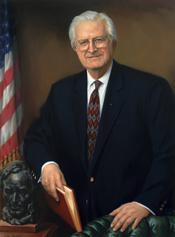
Mr. Speaker, pursuant to the rule, I call up the resolution (H. Res. 861) declaring that the United States will prevail in the Global War on Terror, the struggle to protect freedom from the terrorist…
Mr. Speaker, pursuant to the rule, I call up the resolution (H. Res. 861) declaring that the United States will prevail in the Global War on Terror, the struggle to protect freedom from the terrorist adversary, and ask for its immediate consideration.
Mr. Speaker, I ask unanimous consent that all Members may have 5 legislative days in which to revise and extend their remarks on H. Res. 861.
Mr. Speaker, I yield to the gentleman from Illinois, the Speaker of the House (Mr. Hastert).
Mr. Speaker, I yield myself such time as I may consume.
Mr. Speaker, I can't help but comment on my good friend Mr. Murtha's eulogy for the first gulf war. The problem we have had there is we quit too soon. We quit before the victory was secure. We left the Republican Army, we left Saddam Hussein, we just washed our hands and left. I hope we learned a lesson from that, what a mistake it was and it led to later difficulties.
Mr. Speaker, so much of what we do in this Chamber is inconsequential; but the subject of this debate is anything but trivial. Let us then be serious as life and death are serious.
The capacity to reproduce that fearful mushroom cloud which first terrorized the world in 1945 is multiplying and becoming the deadly plaything of rogue nations across the globe.
Partisans have charged the President with misleading us into war, ``misleading'' being a pale euphemism for lying. The acquisition is made more grave by the assertion that he concocted the war for purely political purposes.
By any measure this is a monstrous charge, but questions persist that must be answered if we are to honestly examine the President's rationale for intervention. It is essential to first understand the context in which the decision was made.
President Bush has cited two factors for his decision to intervene in Iraq: the first, his belief that Saddam was reconstituting his arsenal of weapons of mass destruction; and, secondly, that the Iraqi dictator was cooperating with al Qaeda and other terrorist organizations.
The threat from Saddam Hussein stretches back much further than many of today's critics care to remember. Saddam's effort to develop a nuclear weapon began in the 1970s, centered around the nuclear reactor being constructed at Osirak.
Despite the alarming evidence of its purpose, the world casually contemplated what it saw as a distant, perhaps even benign, development.
But the luxury of inaction was not available to Israel because her leaders knew that the country was certain to be among Saddam's first targets. They also knew that the responsibility for Israel's safety was theirs alone, and that the world would do nothing to save their country if they failed to act.
So act they did, launching a bold attack in 1981, destroying the reactor complex and setting Saddam's nuclear quest back many years. But far from praising this heroic act that benefited humanity, the world community responded with condemnation, even outrage. Yet, in hindsight, is anyone so foolish as to assert that Israel should have waited for the United Nations to confirm that a threat existed, that Israel should not have taken action to destroy the reactor, even in defiance of the international community?
Had Israel not acted, the future of the Middle East and the West would likely have unfolded quite differently and far more tragically.
Unchastened by this setback, Saddam continued his aggressive campaign to dominate the region and control the world's oil supply, launching a decade-long war against Iran in 1980 during which over a million people were killed and in which he used poison gas and other means of mass slaughter.
After being beaten back from Iran, his attention then turned to Kuwait,
which he invaded and annexed in 1990, assuming the world would meekly accept this fait accompli.
Many forget that for a time that outcome was a real possibility. Much of the initial response in the world community, and in this country, was one of let's look the other way and hope for the best.
Only when the United States decided to forcefully eject Saddam from Kuwait and to assume the principal burden for doing so was the international community finally persuaded to go along. We refused to allow our fate and that of the world to be shaped by a dictator, and all sensible people are glad of it.
What we providentially discovered after that war astonished the entire world. Despite years of inspections and the best efforts of numerous intelligence services, Saddam had managed to secretly construct a massive program to develop nuclear, chemical and biological weapons. The experts estimate that he was only 6 months from an operational nuclear device. Had he postponed his invasion of Kuwait by half a year, the world would now be a much darker place.
This record of unrelenting aggression and implacable menace was the only context in which a reasonable person could view Saddam's future designs. This was the background in which the events of 9/11 occurred.
Imagine yourself as President, confronting the fact that an unknown group of terrorists had incinerated 3,000 Americans in an attack carried out by individuals who gladly committed suicide to create this horror. We had no idea how extensive their resources were, how global the threat was, who were their allies, how massive were the hidden terrorists to come.
In this context, let us consider the alternative to our intervention in Iraq: The President is presented with evidence that once again Saddam Hussein has developing weapons of mass destruction, that he once again refuses to cooperate with international arms inspectors, that he has had contact with al Qaeda and other terrorist organizations, that he is even harboring terrorist organizations. And yet the President decides not to act. He decides to wait, to see if those same inspectors who had previously been deceived by Saddam will again give him a clean bill of health months or years in the future, to wait until our allies or the United Nations grudgingly grant us a narrow warrant to act. To wait until Saddam perhaps gives to some terrorist organization a nuclear, chemical, or biological weapon to detonate in some U.S. city.
To trust our fate to those who would destroy us is to die and leave no descendants.
Is it possible to imagine the storm of condemnation that would justifiably fall on a President who, by not acting, allowed Saddam to arm himself once again with nuclear, chemical or biological weapons? To allow the possibility that these might be made available to a terrorist organization, to acquiesce in the death of thousands, tens of thousands, perhaps of millions of Americans simply because the available evidence was not 99 percent, no, 100 percent certain?
For if al Qaeda had had a nuclear device, there can be no doubt it would have used it on 9/11 and we would be mourning the death of 3 million Americans, not a tragic 3,000.
Which then was the greater risk in the face of decades of evidence? To act or not to act? To trust Saddam? Who in this body is willing to assert that it is ever wise, that it is ever moral to risk the destruction of the American people? That is the context in which the decision to intervene in Iraq was taken.
Was our intelligence imperfect? In retrospect, that is obvious. But when is it ever perfect? Nor was this shortcoming uniquely ours. Every intelligence service in the world assumed that Saddam was once again engaged in developing weapons of mass destruction. After the invasion, we learned the astonishing fact that even Saddam's own generals believed he possessed them and was prepared to use them.
It is certainly worth noting that among the shrillest voices condemning our intelligence failure are many who once devoted their efforts to weakening our intelligence capabilities, who employed their energies towards imposing restrictions, cutting budgets, sounding alarms about imaginary ``rogue elephants.''
Permit me to quote from some of the most strident critics of this administration and its campaign against the terrorists.
The first is a United States Senator now serving with great distinction in the other body. And on September 23, 2001, 12 days after the events of 9/11 this Senator stated: ``The tragedy is at this moment that the single most important weapon for the United States of America is intelligence.
``We are weakest, frankly, in that particular area. So it is going to take us time to be able to build up here to do this properly.'' You will find that on CBS's Face the Nation, September 23, 2001.
But this same Senator, in 1995, introduced a bill, S. 1290, that would have reduced the intelligence budget by $300 million in each of the fiscal years, 1996, 1997, 1998, 1999 and 2000.
Then we have a gentlewoman serving with distinction in this body, from sunny California, and in 1998 she stated, ``it is time to totally eliminate the CIA.'' Congressional Record, March 18, 1997.
On several occasions in the 1990s, following the collapse of the Soviet empire, a majority of Democrats in the House voted to cut the U.S. intelligence budget. Yet, following the horrific events of September 11, the chorus of voices that had previously advocated reducing our intelligence capabilities quickly reversed their theme. Even they must thank God that they had been unsuccessful in their efforts. But on this subject we hear nothing but deafening silence.
One inescapable lesson of history is that passivity in the face of a threat is an invitation to strike. The desire to run away only encourages pursuit. We are seeing that fatal approach gather strength elsewhere in the world manifested in efforts to bind the hands of those who would attack terrorism at its source. The hope is that, as with the passing of a storm, the threat will move on and blue skies reappear and that the nightmare will at last be over. But the terrible reality is by succumbing to the fear of terrorism, by doing too little in the fear that we are doing too much, we condemn ourselves to a future of unending assaults.
Other countries have learned that, however meager their contribution to their own and the world's security, however ineffectual their actions, in the end the United States will rescue them. We will make the world right again. We will defend against all threats. We, however, no longer have that luxury. If we do not take action to defend ourselves, then we are lost because no one exists to rescue us if we fail.
So, aware of its responsibilities, aware of the horrific consequences that might occur from indecision and a reliance on trust and hope, President Bush acted to remove the threat posed by Saddam. What he did is called leadership. And for doing his duty for all of us, he has been denounced by many of the same people who would have denounced him had he not acted, denounced by people who bear no responsibility, who take no responsibility, even for their own actions.
Saddam is no longer a threat to anyone. That is a salutary lesson for those around the world who watch and wait for opportunities for unopposed aggression. They now know that their invulnerability has vanished. Even more important, and almost entirely unnoticed amid the torrent of criticism focused on President Bush, is that his actions have greatly enhanced the credibility of the United States. For the next time this or any President warns a foreign despot to cease actions we believe are threatening to us, there can be little doubt that we will take decisive and forceful action, no matter how great the opposition of the world community.
No one can credibly question that this greatly enhanced credibility paid off with Libya's decision to abandon its efforts to acquire weapons of mass destruction. Qaddafi understood what President Bush's critics still refuse to acknowledge, that this administration is determined to eliminate threats to our country, both actual and potential, and if necessary, will use force to do so.
That is in sharp contrast to the passivity of the previous administration, whose failure to react to the repeated attacks on the United States only encouraged our enemies to make further attacks. What other conclusion could al Qaeda and others have reached from our baffling inaction and response to their assaults on our embassy, on our military, on us? They were taught the false lesson that they were free to slaughter us and we would do nothing.
Incredibly, senior officials from the administration now shamelessly criticize this President for taking decisive measures to address the threat that they themselves could not be brought to contemplate. By acting first in Afghanistan, and then Iraq to remove Saddam, President Bush has rendered the need for future interventions much less likely.
It is unfortunate that the quest for political advantage and a high decibel partisanship have intruded into the national discussions of how best to address the problems we face in Iraq. But there can be no doubt that the more we appear disunited, and the more voluble our dissent into weakness, dissension and inaction, the greater the aid and comfort we give to our enemies.
The world of predictability and relative safety we once knew is gone. We are now engaged in a cruel, brutal struggle with those who would destroy us, one unprecedented in its challenge to our perseverance and courage, and one that will be fought not just in foreign lands but on our own soil.
To insist that decisions must await perfect intelligence, that the risk of action is to be more feared than the risk of inaction, that others will save us, is to guarantee our defeat. But defeat in this new and more dangerous world means annihilation. The smoking gun that some critics insist on might well be some of our cities.
We in this Chamber, our country, the entire world, owe this President not condemnation but our thanks for acting in Iraq, for refusing to wait for an avowed enemy to strike, for not temporizing and letting the forces of destruction wage unopposed their pitiless war to destroy everything we believe in.
To those faint of heart from temporary setbacks in Iraq or who seek to benefit politically from our differences there, permit me to quote from Thomas Paine. Thomas Paine wrote, ``These are the times that try men's souls. The summer soldier and the sunshine patriot will in this crisis shrink from the service of their country. But he that stands by it now deserves the love and thanks of men and women. Tyranny, like hell, is not easily conquered. Yet, we have this consolation with us, that the harder the conflict, the more glorious the triumph.''
Charles De Gaulle once said, ``France would not be true to herself if she weren't engaged in some great enterprise.'' Our great enterprise is the defense of freedom, and may we be worthy of the challenge.
Mr. Speaker, I reserve the balance of my time.
The war on terror and this whole thing began really in 1980 when our embassy was taken over in Iran and the bombing of the Marine barracks in 1983, Lebanon, embassy in 1983, USS Cole, Khobar Towers,…
The war on terror and this whole thing began really in 1980 when our embassy was taken over in Iran and the bombing of the Marine barracks in 1983, Lebanon, embassy in 1983, USS Cole, Khobar Towers, Nairobi, Tanzania.
I have so much that I want to say. I will just say this. If we were to set a date, the Mujahedin would say we defeated the Russians in Afghanistan, we defeated America in Iraq and the jihad would take place all over this world. This would be a very, very dangerous thing to say.
So I rise in strong, strong support of this resolution and say we can and will win this war. I remember when I read the book by Whittaker Chambers. He was a witness. He said when I left the Communist Party, I believed I was leaving the winning side and joining the losing side. Whittaker Chambers was wrong because of people like Ronald Reagan. We must be resolute. I rise in support of the resolution.
Mr. Speaker, I rise today in support of H. Res. 861 and to show my support for our troops serving in Iraq and Afghanistan who are on the front lines in the global war on terrorism. I commend our forces for the recent actions in targeting Abu Musab al-Zarqawi, the insurgent leader killed in an airstrike June 7. I also commend President Bush for his visit earlier this week to Iraq to meet with Prime Minister Nouri al-Maliki and encourage the work of the new Iraqi government.
I share the deep concerns about the continuing violence in post-war Iraq, which is taking the lives of U.S. military personnel and civilians. I continue to pray for the protection of the men and women who are putting their lives on the line every day to help the Iraqi people as they build their own government, and also for their families here at home who continue to make tremendous sacrifices.
I recognize there were good and reasonable people on both sides of the decision to send U.S. armed forces to Iraq. But whether or not you agreed with that decision, we are there now and cannot just walk away. Too much is at stake. The success of our efforts in Iraq and the success of the Iraqi people in establishing their own government are critical to the overall war against terror and to the security of our country and the world.
Our efforts in Iraq, many believe, are an important campaign in the global war on terrorism. Our world is a dangerous place, and as we learned on September 11, 2001, terrorism is not something in a far away land. We did not seek this war. We were attacked on our own soil, and this war is a different kind than any our Nation has ever fought. But it is one we are fighting to make our own nation and the world more secure. It is critical that we remain resolute in this fight.
I believe a case can be made that the war on terrorism really began more than 20 years ago with the attacks against America at the U.S. Embassy in Beirut, Lebanon. The bombing there in the spring of 1983 killed 63 and wounded 120. Later that year, 241 U.S. servicemen--220 Marines, 18 Navy members and three Army members--were killed when a truck bomb exploded at their barracks in Beirut. Those attacks were followed in 1993 by the first World Trade Center bombing in New York City, in 1996 by the Khobar Towers bombing in Saudi Arabia, in 1998 by the U.S. embassy bombings in Kenya and Tanzania, and in 2000 in the attack in Yemen on the USS Cole.
After the attacks on the two embassies in Africa in 1998, I became very concerned about the U.S. response to terrorism and authored the legislation creating the National Commission on Terrorism. On the cover of that report is a photo of the twin towers in New York on fire after the 1993 attack. The foreboding nature of that photo is now all too real as we relive the destruction of the World Trade Center on September 11, 2001.
Late last summer I returned to Iraq for a third time. I have now visited all but the Kurdish areas in northern Iraq. With each successive trip, I have seen improvements--renovated schools, cleaner water systems, new Iraqi army constituted. I also have seen the continuing and serious security problems and other challenges facing a liberated Iraq, and I
have heard caution from varied sources about the potentially cataclysmic consequences of America withdrawing before our mission is complete. I had the opportunity to speak with our troops who are performing their duties with professionalism and dedication. They are positive about their mission and are doing an outstanding job in fulfilling it.
One interesting comment I heard on that trip is that we can't expect to rebuild Iraq on our timetable, but rather it must be on Iraq's timetable. Life--and timetables--in Iraq are not the same as in the United States. This is a very key point, and one the Bush administration needs to do a better job of explaining.
It also is important to remember that the United States had its share of growing pains. While our revolution was in 1776 it was 11 years before our forefathers began to draft a constitution and it wasn't ratified until 1789. Few remember that our constitution was debated in complete secrecy. Delegates knew that they would generate heated differences and did not want to advertise their own dissensions or put crippling arguments into the mouths of the opposition. We also had leaders like George Washington, Ben Franklin, George Mason and James Madison who had the benefit of understanding British history in addition to being exposed to the workings of the House of Commons. Democracy and an elected government is truly a foreign concept to the Iraqi people.
The Bush administration also needs to do a better job of explaining what the consequences of ``failing'' in Iraq would mean to the average person in Chantilly, VA, Topeka, KS, or Portland, OR. I repeatedly asked people I met during the trip--from generals, to State Department officials, to members of the Iraqi government--what they thought ``failure'' would mean. The responses were frightening.
I heard references to Somalia--think of the movie ``Black Hawk Down''--and the former Yugoslavia with all its ethnic cleansing. The images that flashed in my mind when I heard these countries were disturbing. I was in Somalia during the crisis in 1993. I traveled to Sarajevo and the Yugoslavia region several times in the early to mid- 1990s where so many were killed. In fact, all the people I met with in Vukovar, Croatia, in 1991 were killed several months later and are now buried in mass graves.
Many speculated that civil war would break out in Iraq and even more foreign fighters from across the region would pour into Iraq in hopes of influencing the outcome. I was told almost all of the insurgents carrying out the suicide attacks are foreigners, most coming across the Syrian border from places like Syria, Saudi Arabia, Egypt, Sudan and Afghanistan. I was told militias continue to fight each other on a regular basis in some parts of the country.
If our mission fails and civil war comes, the country would almost certainly break into three parts: the Kurds in the north, the Sunnis in central Iraq, and the Shias in the south. It is believed the Kurds would most likely be able to keep from being drawn into the fighting and govern themselves. In the central region of the Sunni Triangle, warring factions would fight for control and most agree that there would be sheer chaos. Iran's presence was felt in the south as it tried to influence the recent elections and if civil war were to break out, elements in Iran may well involve themselves in the south.
With civil war, almost everyone I asked said that Iraq would become a haven from which terrorist groups could launch attacks against the United States and other countries. No one has to be reminded of what happened on 9/11. Thirty people from my congressional district died that day among the 3,000 who perished.
Al Qaeda and other terrorist groups would like nothing more than to have a new ``base'' from which to operate, much like Afghanistan in the 1990s after the Soviets were defeated. There is no denying that the terrorists have designs on the United States and, as one officer told me, ``We must win the war so we don't fight the next war in America.''
Terrorists are doing everything in their power to prevent the United States and its coalition partners from being successful in Iraq. They believe time is on their side and that they can ``wait out'' the United States. They will do anything--including blowing themselves up in busy marketplaces--to disrupt our progress and turn the Iraqi people against us. They believe that the war being fought in Iraq is not a ``military'' war but rather a ``political'' war and American public opinion will dictate when the United States leaves, not military success.
There is a general belief among terrorism experts that the top priority of terrorists is to seek chemical, biological, radiological or nuclear weapons. The video of two commercial airliners being flown into the World Trade Center is ingrained in every American's mind. I shudder to think what terrorists would do if they obtained a biological or chemical weapon.
Many I spoke with also said failure in Iraq could destabilize the entire Gulf region and possibly lead to the downfall of the governments of Jordan, Egypt and Saudi Arabia.
Failure also could have serious impact on the world's economy. Japan gets more than 75 percent of its oil from the region, Western Europe, 30 percent, and the United States, 22 percent. We saw what happened in the wake of Hurricane Katrina as consumers feared gas shortages. Failure in Iraq would make oil costs even higher and have a major negative impact throughout our entire economy.
Others said they believe the United States has a moral obligation to the people of Iraq to successfully complete what it started. They asked how the American public would feel if civil war were to break out and thousands upon thousands of innocent Iraqis were slaughtered in the subsequent fighting?
Finally, many believe the United States's credibility is at stake. In a piece in the Washington Post's Outlook section last September, Victor Davis Hanson, a military historian at Stanford University's Hoover Institution and the author of ``A War Like No Other,'' wrote:
. . . If we fled precipitously, moderates in the Middle
East could never again believe American assurances of support
for reform and would have to retreat into the shadows--or
find themselves at the mercy of fascist killers. Jihadists
would swell their ranks as they hyped their defeat of the
American infidels. Our forward strategy of hitting terrorists
hard abroad would be discredited and replaced by a return to
the pre-9/11 tactics of a few cruise missiles and writs. And
loyal allies in Eastern Europe, the United Kingdom, Australia
and Japan, along with new friends in India and the former
Soviet republics, would find themselves leaderless in the
global struggle against Islamic radicalism.
Failure cannot be an option in Iraq nor can creating an arbitrary deadline for pulling out U.S. troops. The ramifications on our country and other countries in the West would be huge. Our withdrawal must be event driven and not artificially tied to a calendar. Many I talked to said we must set conditions for victory, not dates for withdrawal.
The Bush administration needs to do a better job articulating just what is at stake and the potentially catastrophic consequences. No one believes we will lose the war on the ground in Iraq; it's here at home that there is a concern. I had one general officer say point blank that the ``center of gravity'' for our success in Iraq is the American public.
That said, I strongly believe that it would be of great value to have an independent review of ongoing operations in Iraq. I call this effort ``fresh eyes on the target'' and offered this suggestion following my latest trip to Iraq. On March 15, I was pleased to attend the announcement of the formation of the 10-member bipartisan Iraq Study Group, being led by former Secretary of State James Baker and former Congressman Lee Hamilton, who co-chaired the 9/11 Commission. The members, as are their co-leaders, are among America's most honorable and venerable citizens: former CIA Director Robert Gates, former U.S. Attorney General Ed Meese, former Clinton adviser Vernon Jordan, former Clinton Chief of Staff Leon Panetta, former Defense Secretary William Perry, former Virginia Senator Chuck Robb, former Wyoming Senator Alan Simpson, and former Supreme Court Justice Sandra Day O'Connor.
The study group was launched in partnership with the United States Institute of Peace, the Center for Strategic and International Studies, the Center for the Study of the Presidency, and the Baker Institute for Public Policy at Rice University. Its mission is to undertake a bipartisan, forward-looking assessment of the current and prospective situation on the ground in Iraq, its impact on the surrounding region, and its consequences on U.S. interests and it will focus on political, military, security and reconstruction in Iraq. The group will travel to Iraq and report to the American people. I understand they will meet with President Bush this week.
It will assess what is working and what changes should be made in helping the Iraqi people to establish their own government and stop the terrorist insurgency which is continuing to foment the violence of the Saddam Hussein regime. One of the most critical jobs of this panel is to determine the ramifications of failure to accomplish our country's mission in Iraq and to explain that to the American people.
In the 1930s, the world failed to stand up to fascism. When we--with our allies--did stand up and fight, we defeated fascism. It also took some time for the world to stand up to communism. But when we did, we defeated communism. Now we face al Qaeda and its leader Osama bin Laden, who in his own words has said he will use chemical, biological, radiological and nuclear weapons against us. We must continue the determined effort now that we have had in the wars over the years as we fight terrorism. Standing together, I believe we can defeat this threat to the freedoms and liberties and way of life we have fought to maintain for well over two centuries.
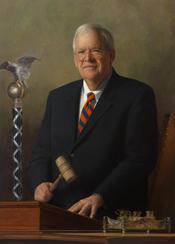
Mr. Speaker, one of our greatest Presidents, Ronald Reagan, was fond of saying that ``Freedom is never more than one generation away from extinction.'' President Reagan's wise words are still true…
Mr. Speaker, one of our greatest Presidents, Ronald Reagan, was fond of saying that ``Freedom is never more than one generation away from extinction.'' President Reagan's wise words are still true today.
Mr. Speaker, I rise in support of H. Res. 861. This resolution is about more than the war in Iraq and Afghanistan. It is about a global war to protect American ideals, and the democracy and values on which this great Nation was founded.
This resolution, Mr. Speaker, like this war itself, is about freedom. Just 12 days ago I returned from Iraq. I can tell this House that the morale of our fighting men and women there is sky high. They are not suffering from doubt and ``second guessing.'' And they are certainly not interested in the political posturing about the war that often goes on in this city. They know why they are there. They know they are liberators doing good. And they believe passionately in their mission.
It is not possible to talk to these men and women without being inspired by their courage, their determination, their professionalism and their patriotism.
I came home from Iraq believing even more strongly, that it is not enough for this House to say ``we support our troops.'' To the men and the women in the field, in harm's way, that statement rings hollow if we don't also say we support their mission.
The clarity with which our men and women in uniform understand the reason they are in Iraq is a stark contrast to some here at home who talk about this war as a ``war of choice.''
The facts are clear. America has been struck repeatedly. Despite the life-ending attacks on Khobar Towers, our East African embassies, the USS Cole and the first World Trade Center bombing, U.S. policy tended to confuse these attacks with isolated law-enforcement events. We failed to recognize them as
the escalating strikes that they were. We failed to identify the networks behind the bombs. We convinced ourselves that these attacks were just somehow random acts of violence. And yet the attacks continued.
The terrorists did not admire or appreciate our limited response. They did not come to the table to discuss points of political concern, and they did not de-escalate, demobilize or disappear. Our response was inconstant and limited, but their reactions were not. They plotted and they practiced, while we hoped for the best and fired an occasional cruise missile into the desert. We were wrong and we slumbered in denial.
And then came the day when terrorism slapped us in the face, awakening us to a stark reality. I remember it as a crisp, fall day. Where the clear blue sky was filled with fluffy white clouds. But that peaceful scene was transformed in an instant when planes went crashing into buildings and the clear sky turned to choking ash and soot.
I stood in my Capitol office, just a few yards from where I am speaking here today. I saw the black smoke rising from the Pentagon. The third plane had hit just across the river from this Capitol building.
On 9/11 the terrorists were not a distant threat, they were in our front yard, and they were very real and very deadly. In that moment, we were afraid. None of us had anticipated the lengths to which our enemies would go to destroy our American way of life, our ideals and our belief.
Of course, we knew that foreign terrorists had caused trouble elsewhere, maybe in Israel or in Northern Ireland, but we found it hard to imagine that they came to our shores hoping to kill tens of thousands of men, women and children, innocent, unarmed people, peacefully going about their daily lives.
It is hard, even now, to comprehend such enormous evil.
As we watched some of our fellow citizens leap from burning buildings to their deaths, our fear turned to anger and then anger to resolute determination.
America's response started high above a corn field in rural Pennsylvania. Brave men and women, armed with nothing more than boiling water, dinner forks and broken bottles, stood up, as Americans always do when our freedom is in peril, and they struck back.
We know from the messages they left behind that their final thoughts were for their families and their loved ones, but they also spoke of their love of their country.
``Freedom is never more than one generation from extinction.'' Perhaps the brave souls on United Flight 93 reflected Ronald Reagan's words because the generation represented on that plane, like the patriots at Concord Bridge, were not going to let freedom be extinguished, not on their watch.
We in this Congress must show the same steely resolve as those men and women on United Flight 93, the same sense of duty as the first responders who headed up the stairs of the Twin Towers.
We must stand firm in our commitment to fight terrorism and the evil it inflicts throughout the world. We must renew our resolve that the actions of evildoers will not dictate American policy. And we must decide, right here, today what kind of a Nation we want to leave for our children and their generation.
We are not alone in the fight on global terror. I cannot list them all, but they include countries large and small, rich and poor: Great Britain, Japan, Canada, Jordan, Portugal, Denmark, Mali, Latvia, Romania, Italy, Poland, South Korea. In fact, the number of countries working to defeat our common enemy continues to grow.
Pakistan, a nation that once recognized the oppressive Taliban regime, has changed its course and now works closely with the coalition to round up terrorists. Yemen, Indonesia, and Saudi Arabia have also moved aggressively within their borders to fight terrorism. Libya has given up her nuclear capability.
Today, more than three-quarters of al Qaeda's known leaders and associates have been detained or killed.
There is no doubt that since 9/11 our military, as well as our law enforcement intelligence agencies, have made great strides in uprooting terrorism. Nearly a dozen serious al Qaeda plots have been stopped since September 11th. But there is good reason for ongoing vigilance because the threat is still very real.
Just recently, our neighbor to the north, Canada, foiled a terrorist plot to storm that country's parliament and one of its major television headquarters. The terrorists planned to behead those they captured.
Mr. Speaker, today in parts of the Middle East, where once oppression choked out freedom, we are now seeing democracy take root.
Afghanistan was once a safe haven for the al Qaeda terrorist network. In remote training camps, terrorists planned and practiced attacks on the United States and other freedom loving peoples. Those camps are now gone. In their place is a developing democracy with an elected President and a new Constitution that gives unprecedented rights and freedoms to all Afghans.
Just 3 years ago, Afghan women were whipped in the streets; schooling was denied to girls. Today, women have the right to vote, and two Afghan cabinet ministers are women.
In Iraq, just 3 years ago, a brutal dictator sat in palatial luxury. Unhampered by the United Nations, Saddam and his family stole the Oil- for-Food money from starving Iraqi children in order to support their lifestyle of debauchery and brutality. Schoolgirls were raped. Iraqi patriots were thrown alive into meat grinders. Unspeakable atrocities of all kinds were common, including the use of chemical weapons on Saddam's own people, the Kurds.
Saddam invaded the sovereign nation of Kuwait. He harbored terrorists in his midst, and he defied 17 United Nations Security Council Resolutions.
Just a few days ago, I was listening to the radio, and a pundit remarked on the sectarian violence in Iraq. He observed that perhaps the Iraqi people were better off under Saddam. Given the unspeakable and systematic brutality of Saddam's regime, such a remark either reflects a serious misreading of history or a very naive and forgiving nature.
It might have been easier for us in America to turn our heads and look the other way, as much as the rest of the world did, but I would submit that Saddam was an evil cancer on the world. He was a threat to our country, and Mr. Speaker, America, not just Iraq, is better off today because Saddam Hussein sits in a court of law, answering for crimes he committed against humanity.
While I was in Iraq, I met with Prime Minister al Maliki as well as my counterpart, the Speaker of the Iraqi Parliament. We talked about the birth of democracy in Iraq.
I looked at the Speaker. I looked him in the eye and I said, ``Mr. Speaker, I admire you. The Iraqi people represent an ancient civilization, but your democracy is just beginning. Your challenges are great, but so too are your opportunities.''
I urged the Iraqi people to look forward and not back, to listen to the voices of reconciliation, not division, I urged them to choose unity.
They told me that they were succeeding in putting together a unity cabinet, and shortly after my return, they announced the names of the last three ministers that deal with critical security issues.
Each Iraqi official I met with, even the Iraqi Speaker, who originally viewed the U.S. presence in Iraq negatively, thanked me for the help America has given their country. He went further and urged us to stay with them while they build up the capacity to take over the task of providing security for their people.
Today in Iraq we are working together with Iraqi patriots, men and women elected by their fellow citizens.
Along with brave Iraqi soldiers and police, we are moving toward a day when the Iraqi Government on its own has the strength to protect their people, a day when our men and women, and their coalition partners, can come home.
The ``stand up'' of this new Iraqi Government, which is the fruit of three elections where Iraqi citizens held up their ink-stained fingers and resisted intimidation, brings us closer to that day.
President Bush told us from the beginning that this road would not be easy. We have lost many American lives. And each one is precious to us.
But our fighting men and women remain committed to the effort. Active duty retention and recruiting is meeting or exceeding all objectives, and we are making progress toward our goal, but the battle is not over.
It is a battle that we must endure and one in which we can, and will, be victorious. The alternative would be to cut and run and wait for them to regroup and bring the terror back to our shores. When our freedom is challenged, Americans do not run.
``Freedom is the very essence of our Nation,'' President Reagan said in 1990 when a section of the Berlin Wall was presented to his Presidential library. America, he said, ``remains a beacon of hope for oppressed peoples everywhere.''
President Reagan also observed that freedom is not passed on at birth. It must be fought for and protected and handed on. And that is happening. Freedom is being handed on.
Our soldiers, sailors, Coast Guardsmen, airmen, marines, and our Reserves are serving proudly and bravely in harsh conditions, far from their families.
When I was in Iraq, I told them that their task was important and how proud we all were of their service. But frankly our men and women in uniform did not need to be told. In fact, it is we who should listen to them.
They know their sacrifices on foreign shores are keeping the battle against terrorists out of our cities. They know that by going into harm's way they are keeping American freedoms safe, and they know that they are helping a proud but brutalized people to throw off tyranny and stand tall once again. They know that they are liberators, not occupiers.
Our men and women in uniform know all this, and they are proud of it. It is time for this House of Representatives to tell the world that we know it too; that we know our cause is right and that we are proud of it.
Stand up for freedom. Adopt this resolution.

Mr. Speaker, I yield myself such time as I may consume. Mr. Speaker, I want to thank the chairman of the Intelligence Committee for allowing me to take a little time early in this debate, although I…
Mr. Speaker, I yield myself such time as I may consume.
Mr. Speaker, I want to thank the chairman of the Intelligence Committee for allowing me to take a little time early in this debate, although I know the Armed Services Committee is going to come up a little later. And I wanted to talk about this war and touch on some of the subjects that my good friend Mr. Murtha has brought up over the last 15 or 20 minutes.
I was a new Member of Congress in 1983 when I went over to Beirut with a lot of those great members of the Armed Services Committee, and we got over there a couple of weeks before the Marines were blown up in the terrorist act that all Americans now have heard about and understand. And the reaction of the United States to that was basically to move out. And I know we all remember the Khobar Towers going up and a similar nonreaction from the United States. And we remember the embassies going up in North Africa and the national derision that followed the sending back of a couple of cruise missiles, one of which was alleged to have hit a drugstore, which was at most a symbolic response to the blowing up of those embassies in Africa. And I remember the Cole, and we all remember the Cole, and the destruction of that ship and the ensuing American casualties and the nonaction by the United States.
And then we were struck on 9/11, and we realized that it was wrong for us to treat these terrorist acts as isolated, compartmentalized acts that were unrelated. And at that point we struck back. And we undertook a mission first to Afghanistan, secondly a mission to Iraq.
And I do not think we have to plow old ground about Iraq. I think everybody understands Saddam Hussein, Gulf I. But I think it is important and it is good that my friend Mr. Murtha has pointed out that, in fact, even as we drove that armored spearhead north in this war against Iraq, taking Baghdad, Tommy Franks was intercepting communications even then from Iraqi officers to the effect that they were on the verge of using the ``special weapon,'' which we interpreted to be poison gas, a weapon of mass destruction, and he gave out orders that were right down to platoon and squad level, get ready for those weapons of mass destruction.
I can also remember giving a briefing, giving an invitation to every Member of this House, Democrat and Republican, before we voted on taking military action in Iraq, to come over and listen to intelligence experts in a closed briefing with no handlers, no White House personnel, and ask any question they wanted to ask about weapons of mass destruction. And they did that. Lots of them. We had over 100 Members at several of the briefings. And we had members of the intelligence apparatus of this country laying out differences. They talked about the aluminum tubes, how some people thought those were to be used in centrifuges for the conversion of uranium, the enrichment of uranium. Others thought they were to be used for rocket bodies. But we invited all the Members before they made that vote to give the President license to go into Iraq. They did that vote from an educated standpoint. They had an opportunity to pull all the information that they wanted.
Now, it has been stated that we did not have enough troops going into Iraq.
And I remember, as we were driving that armored spearhead north, and the Marines taking a piece of it, the Army taking a big piece of it, we had a number of experts appearing on national forums on a daily basis saying there were not enough troops. They used the term we are going to get ``bogged down,'' and what was interesting is even as they were on talk shows saying that there were not enough troops, the talk show would be interrupted with a news flash to the effect that Tommy Franks had taken yet another stronghold. And it was stated at the end of that drive toward Baghdad with what was described by some of the observers, some of the so-called experts, too few troops, that that lightning attack taking Baghdad would go down in history as an example of a low casualty level, and we did have an extraordinarily low casualty level, and a lightning advance in which the enemy in many cases was destroyed long before the American columns got to their land forces.
Now let us talk about troops in the occupation and the level of troops in the occupation because that has been brought up a number of times, and General Shinseki's statement about needing more than the number of troops that we had there has been used many times. There have been two arguments: one, that we needed to have more troops to make sure we could suppress the insurgents; and the other statement that was made, sometimes in the same speech, would be that we needed to put an Iraqi face on the security apparatus. Well, you can't have it both ways. You cannot have an American on every street corner and have an Iraqi face on the security apparatus.
And let me just say one last thing, which is a hard, tough truth for this House. But when the gentleman from Pennsylvania and I, as we watched the last of the 1990s unfold and the Clinton administration left the White House, we noticed in our defense committees that we went into that administration in the early 1990s with 15 American Army divisions. We came out of that administration with 10, count them, 10. Roughly 33 combat brigades. That is a fact of life. That is what we had to go into this operation with. Now we are moving and we are building toward 43 combat brigades right now. But we cut the military, we cut the U.S. Army, by almost 40 percent, and that is what we had to go into this war with.
Now, with respect to the gentleman's statements that in the first war we got lots of folks to chip in and pay for this thing, that is right. On the other hand, you had lots of self-interest. You had Saddam Hussein's tanks in third gear before we threw the 82nd Airborne in between him and his objectives, and you had everybody that had an oil well in that region scared to death and willing to pour money into this operation. So it is no surprise that countries out of self-interest will pile on and will help out. It is also no surprise that we have had lots of times in our national history when it has been tough to bring allies on board, when we had to have big pieces of this operation by ourselves and go it alone. And yet we were able to bring at least 20,000 coalition members into this operation.
And it is true we did not have the French and the Germans. But the French and the Germans were looking forward to major oil contracts with Saddam Hussein, and they did not want to go this time against their pocketbooks, and that is a fact of life.
I would be happy to yield.
I thank the gentleman. And, you know, that takes me to another point, which is the Iraqi Army. It has been said many times, and probably will be said again in this debate, that we should have kept the Iraqi Army intact.
Now, the road that is not taken is always the smoothest. But looking at the Iraqi Army, at Saddam Hussein's army, he had 15,000 Sunni generals. How are you going to maintain an efficient Iraqi Army that is responsive to a new fledgling civilian government with 15,000 Sunni generals running this thing?
We have had to build this army from the ground up. I think that history will show that that was the right thing to do. To have an efficient army, you have got to have a couple of things. You have got to have an army that has a chain of command which is responsive, that means that the private does what the sergeant says and the sergeant does what his platoon leader says, and right up the chain of command.
And you have also got to have an army that is responsive to the civilian government, to that new defense minister that was just put in place. I do not think you are going to do that with 15,000 Sunni generals. I have seen that statement tossed around so much that I hope to be able to talk to some of the folks a couple of years down the line when it is reflected.
Incidentally, people like Barry McCaffrey who have not been great friends of the administration's operation have said that looking at the Iraqi Army now, they see a core of strength, they see leadership emerging, and they see an Iraqi Army that is becoming effective.
So what are we doing? We have a mission, and the mission right now for the military is to provide a shield for this fledgling government as it goes into place, this new government. We are nation-builders. We are building a nation. It is also to train up the Iraqi military, and we are going to hand off this defense burden, that means our people come home after we train up and mature the Iraqi military.
If the question for us is, who is best equipped to decide when we take the training wheels off, when we let the Iraqi military go forward, I think we should leave that judgment up to the people who tracked down and brought to justice Mr. Zarqawi, a gentleman who said that he was going to take this war to Washington, DC, and London.
He is going to be a little late for that one, because we have an extremely competent American military on the ground in Iraq right now. I think the gentleman from Pennsylvania would agree with that.
So let's use that same judgment of those combat commanders who are training those Iraqi units in their areas of operation who say, okay, this battalion is just about matured, this one is not, this one needs more equipment, this one needs some more training. Let's rely on their judgment as to when we can hand that load off to them and let them bear the security burden.
Why should a Senator from Wisconsin or a Congressman from California try to impose an arbitrary date on when that maturity takes place. You cannot do it. So I would just ask my friends to give to those great Americans who are over there working this mission right now, let's send a united statement to them that there is value in this mission, there is value in their operation.
We are going to complete this mission. You know, they are lacking something that the Greatest Generation had. The Greatest Generation in World
War II had a united American public. When the 101st went into Northern Europe, they had a united American public. Let's give the 101st Airborne now in Mosul, and in that tough Sunni Triangle, let's give them the same support we gave them in Europe, a united American public and a united American Congress.
Let's give the 1st Marine Division that is out there in that tough province in the al Anbar Province out in Fallujah the same support we gave them when they were fighting Guadalcanal. The 1st Marine Division deserves a united American public and a united American Congress.
So let's send a message. The main message that is manifested in this resolution is that we should not have an arbitrary cut-off point, an arbitrary deadline, and, secondly, that we will complete this mission. Let's send this message to every soldier, every marine who is watching this thing from the mess halls in Mosul and Tikrit and Baghdad and Fallujah, the message that the United States House of Representatives stands with them.
Mr. Speaker, I reserve the balance of my time.

Mr. Speaker, before we went to war, President Bush and other administration officials made three promises to the American people: one, we would find weapons of mass destruction; two, we would be…
Mr. Speaker, before we went to war, President Bush and other administration officials made three promises to the American people: one, we would find weapons of mass destruction; two, we would be welcomed as liberators; and, three, the reconstruction of Iraq would pay for itself.
Well, all three promises proved to be false. Today I will focus on the reconstruction effort in Iraq and the massive waste, fraud, and abuse that have undermined our efforts.
Stuart Bowen is the Special Inspector General for Iraq reconstruction. He often talks about the reconstruction gap which is the chasm between the President's promises and reality.
Mr. Bowen is absolutely right: the gap is enormous. But it is dwarfed by the incompetency and corruption gaps in Iraq. The consequences of mismanagement and corruption are serious. Waste, fraud, and abuse have flourished. The taxpayer has been repeatedly gouged.
Iraq is not being rebuilt. We have lost credibility and are now viewed in Iraq as occupiers, and our troops did not get essential equipment when they needed it. We have now spent $50 billion on Iraq reconstruction, including $30 billion from U.S. taxpayers.
Let's look at what we got for the money. Despite spending $2 billion, Iraq's oil production is still well below prewar levels, running about a half million barrels below 2003 levels. We have invested $4 billion into improving electricity generation.
Not only is the administration 2,000 megawatts short of reaching its goal for peak output, but generation is actually below prewar levels. And we spent $6 billion on oil production and electricity generation. And we have actually lost ground.
The situation is the same for drinking water. In essence, we have squandered $50 billion. Profiteering has been rampant, and the taxpayer has gotten gouged and the work has not gotten done. And what is especially shameful about the wasteful spending is that we needed this money for our troops. When we first went into Iraq, our troops did not have enough body armor.
Families had to purchase armor off the Internet and ship it to Iraq in a desperate attempt to protect their loved ones. On congressional delegations, individual servicemembers have taken our staffs aside and begged for more night vision goggles.
Patriotic Americans even had to donate their frequent flier miles so troops who were dumped at the Baltimore airport by the Pentagon could make it home for the holidays. This should never have happened. It is inexcusable that our troops face desperate shortages of essential gear while billions of dollars were frittered away.
To understand the magnitude of this, there is no better place to start than Halliburton. Halliburton is the largest private contractor operating in Iraq. The company has three contracts that total more than $20 billion. We now know that political appointees, not career civil servants, decided to give Halliburton a secret no-bid contract for $7 billion to operate Iraq's oil fields.
As GAO has reported, the key decision that led to the award of the secret contract violated Federal procurement law. When a career attorney properly objected, he was simply overruled. And despite statements from the Vice President, we know now that his chief of staff, Scooter Libby, was personally briefed on this entire plan months before the war.
The decision to give those lucrative contracts to Halliburton has been expensive. According to Pentagon audits, Halliburton's total unreasonable and unsupported charges exceed $1.4 billion. Well, the examples of waste, fraud, and abuse are numerous. Halliburton charged $45 for a case of soda; $100 for a 15-pound bag of laundry.
When they had brand-new $85,000 Halliburton trucks, they abandoned them or torched them if they got a flat tire or experienced minor mechanical problems. Halliburton's contracts are cost-plus. That means that Halliburton is reimbursed for all of its costs, and then receives an extra percentage as additional profit.
In practical terms, this means that the more Halliburton spends, the richer it gets. Now we talked to former Halliburton employees who worked in Iraq. They told us the informal company motto was: ``Do not worry about price, it is cost plus.''
Halliburton was supposed to be in Iraq to provide support for the troops, but the company used one standard for the troops and a completely different standard for its own executives. Halliburton employees stayed at the five-star Kempinski Hotel in Kuwait, where it costs taxpayers $10,000 per day. This is the five-star Kempinski. This gorgeous hotel offered maid service, complimentary fruit baskets to Halliburton employees.
Our troops stayed in tents in the desert. At one point, a cost- conscious Army official asked Halliburton to move its employees into air-conditioned tents, but they refused.
To their credit, career government auditors identified these overcharges. When they examined Halliburton's second oil contract, they harshly criticized Halliburton's performance, citing profound systemic problems and exorbitant indirect costs. But their recommendations were rejected.
After reviewing Halliburton's first oil contract in Iraq, auditors recommended that the Army not pay $263 million in unreasonable and unsupported charges. But the Army ignored those auditors and paid Halliburton $254 million, over 95 percent of the disputed charges.
And in spite of the auditor's findings, Halliburton was paid nearly $100 million in profits and bonuses for overbilling taxpayers.
Well, Halliburton symbolizes what went astray in Iraq, but it is not the only contractor abusing the system. Parsons received the contract to rebuild health clinics throughout Iraq. But despite spending $186 million, Parsons completed just 20 of 142 health clinics they promised to build.
Another firm, Custer Battles, received two security contracts. A Federal jury recently found that the company committed 37 separate acts of fraud. These are not isolated instances. There are over 70 corruption investigations currently under way in Iraq. These cases involve allegations of
fraud, false claims, theft, bribery and kickbacks. Some of the worst problems in Iraq are almost beyond comprehension.
The U.S. management of the Development Fund for Iraq, which was the fund that held the proceeds of Iraqi oil sales, is a classic example of what not to do. The Coalition Provisional Authority handed out over $8.8 billion in cash, in cash, to Iraqi ministries. And they had no idea what happened to the money: $8 billion in cash simply vanished.
One former U.S. official who was in Iraq at the time, Frank Willis, described conditions as the Wild West. He said the lack of controls effectively created a free fraud zone.
Iraq was awash in brand-new $100 bills with no accountability to prevent corruption. All the while, the White House looked the other way and Congress put its head in the sand.
Under the Constitution, we are supposed to be a check and balance, but we have abdicated this responsibility. The Republican majority is terrific at applauding the President, and they are proving it again today with this dishonest resolution.
Congress isn't doing the serious and important work it must do to protect our troops, rebuild Iraq, look out for American taxpayers. Congress must be more than a cheerleading section for the White House.
The fiasco in Iraq was a windfall for some. Halliburton made more than $2 billion in profits last year. Its total revenue has increased by 66 percent since 2002. Another beneficiary was David Brooks. He is the CEO of a company that makes bulletproof vests. In 2001, Mr. Brooks reportedly earned $525,000. In 2004, he earned $70 million. Last year, the U.S. Marines recalled more than 5,000 of the company's armored vests. But by that time Mr. Brooks had pocketed $186 million.
Well, the American people might think that Congress would rise up in the face of such unconscionable profiteering. When our troops are willing to sacrifice so much, and they do sacrifice so much, how can we let others create cynical fortunes off their blood?
As we debate this resolution, 2,500 of our bravest men and women, have been killed in Iraq. Over 18,000 have been wounded, and the total cost of the Iraq war is over $300 billion. Those of us privileged to serve here have been spared any of the personal consequences of being on the front line, but we should not be spared the responsibility of doing our job.
We owe more to our troops than slapping ``I support our troops'' bumper stickers on our cars and extolling their courage. Instead of wasting time on bipartisan charades, we should acknowledge and fix our mistakes so that Iraqis can take over and our troops in Iraq can come home.
We owe more than empty promises to American families who are paying for this costly war in Iraq. They count on us to make sure that their money is spent well, and we haven't done that.
An honest unsparing look at the record of the past 3 years tells us a stark truth. The White House and Congress have failed our troops, the taxpayers and the Iraqi people. They deserve better than a partisan resolution that pats ourselves and the White House on the back.
It is shameful that we are squandering money on Halliburton at the very same time that we don't have enough money to protect our troops. It is shameful that Congress has abdicated its oversight and legislative responsibilities to rein in the incompetence and corruption that has undermined our efforts in Iraq.

Mr. Speaker, I thank the gentleman for yielding and, as prior speakers have done, I commend him for speaking truth to power. Mr. Speaker, 1,184 days ago American troops invaded Iraq to rid Saddam…
Mr. Speaker, I thank the gentleman for yielding and, as prior speakers have done, I commend him for speaking truth to power.
Mr. Speaker, 1,184 days ago American troops invaded Iraq to rid Saddam Hussein of weapons of mass destruction.
The weapons weren't there. But American troops still are. I have met some of those troops on my three trips to Baghdad and Afghanistan, as well as Pakistan, Qatar, and Saudi Arabia. Our Armed Forces and intelligence personnel are extraordinary. Many are on their third or fourth tours.
As a mother of two sons and two daughters, and as a newly minted grandmother, my heart goes out to families who have lost their dear ones. I am deeply moved by the courage, dignity and patriotism of the men and women recovering from grievous wounds at Walter Reed and other U.S. hospitals. And I have visited with them.
Our action in Iraqi created a failed state and, tragically, our postwar mission, as presently defined, cannot succeed. There are too few troops to stabilize the country. They are inadequately equipped.
They are fighting an insurgency we didn't predict, at constant risk from IEDs we can't find, with no clearly developed goals to help the new Iraq government achieve political and economic security, and no exit strategy.
Two major failures led us to war, and we had best learn some lessons or risk making the same mistakes again. As ranking member on the Intelligence Committee, these failures haunt me.
Had we got the intelligence right, I believe we could have made different choices, and the pain and loss and anger many feel could have been avoided.
First was a massive intelligence failure in assessing Saddam's WMD capability. The second, equally grave, was the politicization of intelligence by the President and a White House determined to push us toward war.
The failure to assess Saddam's WMD capability accurately has been well documented. As CIA weapons inspector David Kay put it, ``we were all wrong.'' Overriding the advice of intelligence professionals, administration officials put stock in bogus sources like CURVEBALL, and self-promoters like Ahmed Chalabi.
But simply calling Iraq an intelligence failure ignores the larger policy failures that created the false momentum toward war.
The administration cherry-picked intelligence and hyped the threat. They talked in ominous tones about ``mushroom clouds,'' even though many questioned evidence suggesting Saddam had nuclear weapons capability.
They made a mantra of the claim that 9/11 hijacker Mohammad Atta met with Iraqi agents in Prague, a claim that has been thoroughly discredited.
Deputy Defense Secretary Paul Wolfowitz famously predicted we would be greeted as liberators, that Iraqis would throw rose petals, ignoring intelligence community assessments about the potential for armed resistance.
Writing in Foreign Affairs, Paul Pillar, the intelligence community's senior Middle East analyst, described how the Bush administration disregarded the community's expertise, politicized the intelligence process, and selected unrepresentative raw intelligence to make its public case.
To date, nobody has been held accountable for this misuse of prewar intelligence.
The intelligence failures did not end when we invaded Iraq. Our President declared ``Mission Accomplished'' in May 2003. Senior U.S. officials in Iraq asserted in July 2003 that insurgent attacks represented ``a limited problem of some bitter-enders'' loyal to Saddam.
Yet, 3 years after Saddam's fall, 2,500 U.S. troops are dead, a number confirmed by the Pentagon just today, and insurgents appear more active than ever.
We have surged intelligence resources into Iraq in a frantic effort to find the next IED. As a result, we have taken our eye off the ball in Afghanistan, where Taliban fighters are reconstituting themselves, even as the United States reduces the number of troops there. Osama Bin Ladin and Ayman al Zawahiri are still at large, inspiring a new generation of recruits to the jihad.
Just as constant deployments to Iraq cause burnout in the Army, National Guard and Reserves, we are also burning out large numbers of intelligence professionals. And assigning them to Iraq means they are not available to address other national security challenges, like Iran and North Korea.
There has been good news. U.S. intelligence agencies operating with Special Operations Forces have tracked down many key terrorist leaders. The takedown of Zarqawi showed the importance of fusing human intelligence, imagery, signals intelligence and a military strike capability in real time. That is how intelligence ought to work. It was a huge tactical victory.
But tactical victories alone are not enough. We need a new strategy for Iraq, a dramatic change of course. We need to hold senior officials accountable for massive policy and management failures. Replacing Donald Rumsfeld, the chief architect of the postwar policy, is long overdue. He ignored the advice of senior military advisers, ignored the careful recommendations of those who understood nation-building, and ignored those horrified by a prison situation careening out of control. And he prides himself, even now, on refusing to change a failed policy.
Congress must also provide aggressive oversight to learn why the administration erred so grievously.
Since I returned from my third trip to Iraq last September, I have been calling on the administration to develop an exit strategy, and I believe it is now time to begin a phased, strategic redeployment of U.S. and coalition forces out of Iraq on a schedule designed by military commanders. A schedule designed by military commanders, not designed by the U.S. Congress.
I believe the U.S. is part of the solution in Iraq, but our large military presence is part of the problem. Beginning to reduce the ``footprint,'' while maintaining an over-the-horizon strike force, will improve our chances for success.
I think we have 3 to 6 months to advance three objectives: first, helping the new Iraqi Government provide electrical power, particularly in Baghdad, and deliver other critical economic and social services to the Iraqi people. Second, supporting the Iraqi Government in its effort to disarm Shiite militias and integrate them into a trained Iraqi national security force. Third, continuing the process, begun by our able Ambassador Khalilzad, of obtaining buy-in from Sunni political leaders. Achieving these objectives will enable us to leave Iraq in better shape than we found it.
Mr. Speaker, the next 3 months are critical. We have a moral obligation to assist Iraq on its path to democracy. But if clearly defined minimum objectives cannot be achieved within that time frame, the prospects for success in Iraq could all but disappear.
So a change in course is urgently needed. The President's visit to Baghdad was important, but it is not a substitute for needed policy changes. And Congress cannot be infinitely passive. This debate today will only have meaning if, in fact, it leads to a change of course in Iraq.
Mr. Speaker, it is time for Congress to lead. This resolution, in my view, is a press release for staying the course in Iraq. It does not signal a change in policy, and thus I cannot support it.
Mr. Speaker, how much time of my 30 minutes remains?
It is now my intention to yield to members of the minority of the House Intelligence Committee who are here.
First, I would yield 3\1/4\ minutes to Representative Boswell who is ranking member on our Subcommittee on Terrorism, Human Intelligence, Analysis and Counterintelligence.
(Mr. BOSWELL asked and was given permission to revise and extend his remarks.)
Mr. Speaker, I now yield 3 minutes to the gentleman from Texas (Mr. Reyes), a senior member of our committee and a member of the Armed Services Committee.
Mr. Speaker, I yield 3 minutes to my California sister, a member of our committee, the ranking member of the Technical and Tactical Intelligence Subcommittee, Ms. Eshoo.
Mr. Speaker, I now yield 3 minutes to Mr. Holt of New Jersey, ranking member of the Intelligence Policy Subcommittee.
Mr. Speaker, many on this side advocate a strategy for success.
Mr. Speaker, I yield 3 minutes to another member of our committee, Mr. Ruppersberger of Maryland.
Mr. Speaker, it is now my pleasure to yield 3 minutes to the rookie on our committee, Mr. Tierney of Massachusetts.
Mr. Speaker, I yield myself 15 seconds to explain to our colleagues that this side is not trying to go wobbly. We are trying to articulate what we believe would be a better strategy for success in Iraq.
For our final 2 minutes, I will yield the first minute to Representative Crowley of New York, a member of the International Relations Committee.
To the prior speaker, we are trying to articulate exactly what we should do.
Mr. Speaker, I now yield the final minute of the Intelligence Committee's time to Mr. Van Hollen of Maryland, a member of the National Security Subcommittee of the Government Reform Committee.
I thank Mr. Murtha for yielding me the 30 minutes.

Mr. Speaker, I yield myself such time as I may consume. Mr. Speaker, as Chair of the Middle East and Central Asia Subcommittee, I have traveled to Iraq, having led a delegation just this last…
Mr. Speaker, I yield myself such time as I may consume.
Mr. Speaker, as Chair of the Middle East and Central Asia Subcommittee, I have traveled to Iraq, having led a delegation just this last January. And I met with officials again and received a wealth of congressional testimony here in DC. All confirmed that the U.S.-led liberation of the Iraqi people is having a positive reverberation throughout the broader Middle East.
Iraq is a catalyst for hope, a vivid example that the future of the broader Middle East belongs to freedom and democracy. To fully comprehend just how far Iraq has come with the assistance of U.S. and coalition forces, we must consider the horror that was Iraq under Saddam Hussein: chemical attacks resulting in scores of innocent deaths; a gruesome campaign to exterminate Iraqi Kurds; the displacement of hundreds of thousands of Iraqi refugees who fled Saddam's persecution; the deaths of 400,000 Iraqi children in his regime's final years killed by malnutrition and disease due to the failed policies of his regime; the use of rape and the beheading of women as tools of coercion and intimidation as part of their regime opposition.
Mr. Speaker, now let us consider what has been accomplished thus far since we removed Saddam Hussein from power. The progress achieved serves to honor all of our men and women as this chart shows. They have fought, and some have fallen for the fulfillment of our noble, our just, and our necessary mission in Iraq.
Some of the highlights of progress, Mr. Speaker: Iraqis participated in elections three times since 2005, with ever-increasing voter participation each time. The Iraqi press is free and it is growing. Iraqi women are playing an increasingly pivotal role in their society.
A market-based economy is being established as Iraq emerges from three decades of Saddam's neglect. Over 260,000 Iraqi police and security forces have been trained and have been equipped. Iraq now has a democratically elected government for the first time in its history that includes all ethnic groups.
We should therefore focus on what we need to do to help ensure a free and secure Iraq and not on how soon we can leave it, ignoring that it is in our national security interest to succeed there.
The jihadists are determined and they have declared Iraq to be the central front of their campaign of terror. Are we to waver in front of these challenges? Absolutely not. Terrorist mastermind al Zarqawi, now dead, acknowledged in a February 2004 letter to al Qaeda the threat that success in Iraq posed to the extremist effort.
He said, Our enemy is growing stronger by the day, by God, this is suffocation. One of Osama bin Laden's closest associates wrote about Iraq a couple of years ago. And he said, a far more dangerous threat is secularist democracy, because it drives Muslims to refuse to take part in jihad.
Mr. Speaker, this clearly demonstrates that our efforts in Iraq are serving long-term efforts of spreading democracy as an antidote to Islamic terrorism and extremism.
Mr. Speaker, it reminds me of President Ronald Reagan's words in his first inaugural address when he said, ``Above all we must realize that no arsenal or no weapon in the arsenal of the world is so formidable as the will and the moral courage of free men and women.''
Every day the Iraqi people are proving how true that statement is. We too must demonstrate the will to press ahead. Leaders from the Arab world have confided their views on how important it is for their own efforts to have the U.S. in Iraq. However, the best evidence that we are on the right path comes from those closest to me, including my stepson, Dougie, and his fiance, Lindsay, both marine officers, both who have served as fighter pilots in Iraq.
And I hear it from one of my subcommittee staffers, Matt Zweig, who is currently deployed in Iraq. Their unwavering belief that success in Iraq will make us safer at home confirms that our strategy is correct and that our goals are sound.
They remind me that we must heed the advice issued by Winston Churchill when he said, ``One ought never to turn one's back on a threatened danger and try to run away from it. If you do that, you will double the danger. But if you meet it promptly and without flinching, you will reduce the danger by half.''
Mr. Speaker, we must not, we will not flinch in Iraq.
Mr. Speaker, I reserve the balance of my time.
Mr. Speaker, I am pleased to yield 2 minutes to the gentlewoman from Ohio (Ms. Pryce).
Mr. Speaker, I am pleased to yield 2 minutes to the gentleman from Michigan (Mr. Knollenberg), the chairman of the Subcommittee on Treasury, Transportation and HUD Appropriations.
Mr. Speaker, I am pleased to yield 1\1/2\ minutes to the gentleman from Virginia (Mr. Wolf), the chairman of the subcommittee on State, Justice and Commerce appropriations.
(Mr. WOLF asked and was given permission to revise and extend his remarks.)
Mr. Speaker, I am pleased to yield 2 minutes to the gentleman from Iowa (Mr. Leach) who is the chairman of the Subcommittee on Asia and the Pacific of the Committee on International Relations.
(Mr. LEACH asked and was given permission to revise and extend his remarks.)
Mr. Speaker, I am pleased to yield 2 minutes to the gentleman from New Jersey (Mr. Smith) who is the chairman of the Subcommittee on Africa, Global Human Rights and International Operations, of our International Relations Committee.
Mr. Speaker, I am pleased to yield 2 minutes to the gentleman from California (Mr. Rohrabacher), who chairs the Subcommittee on Oversight and Investigation for our International Relations Committee.
Mr. Speaker, I yield to Mr. Buyer for the purposes of a unanimous consent request.
(Mr. BUYER asked and was given permission to revise and extend his remarks.)
Mr. Speaker, I am pleased to yield 2 minutes to the gentleman from California (Mr. Royce), who is the chairman of the Subcommittee on International Terrorism and Nonproliferation of our International Relations Committee.
Mr. Speaker, I am pleased to recognize for 2 minutes
the gentleman from Michigan (Mr. McCotter), who has been to Iraq three times.
Mr. Speaker, I am pleased to yield 3\1/4\ minutes to the gentleman from Texas (Mr. McCaul), a member of the International Relations Committee.
Mr. Speaker, I yield myself such time as I may consume to clarify for the record that this resolution honors all those Americans who have taken an active part in the global war on terror, whether as first responders, protecting the homeland, as servicemembers overseas, as diplomats and intelligence officers, and in other roles.
And further, it honors the sacrifice of the United States Armed Forces and of partners in the coalition, and of the Iraqis and Afghans who fight alongside them, especially those who have fallen or have been wounded in the struggle, and honors as well the sacrifices of their families and of others who risk their lives to help defend freedom. This is a resolution to honor their sacrifice.
Mr. Speaker, I am pleased to yield 1\1/2\ minutes to the gentlewoman from Florida (Ms. Harris), a member of the House International Relations Committees.
Mr. Speaker, I yield 2 minutes to the gentleman from South Carolina (Mr. Barrett), who has traveled to Iraq and has witnessed the progress firsthand.
Mr. Speaker, I yield 2 minutes to the gentleman from Texas (Mr. Poe), a member of the International Relations Committee, who has traveled to Iraq, has met with our U.S. coalition, and Iraqi troops.
Mr. Speaker, before I yield to the gentlewoman from Connecticut, I would like to give myself such time right now as I might consume.
We have a strategy, and it is a strategy for success, Mr. Speaker. Every day in Iraq and in Afghanistan is proof positive that we are making progress and that we will prevail.
My colleagues on the other side of the aisle say we need to have a debate on how to win. And I would point them to the Intelligence, to the Armed Services Committee, our own International Relations Committee, the countless hearings and meetings we have held to address the issues that have been raised here. And while I will let Armed Services discuss their oversight, I would like to read just briefly some of the sessions held by our International Relations Committee on Oversight.
Full committee hearings in the 109th Congress, in the 108th Congress, full committee Members only meeting, subcommittee hearings in the 109th Congress, subcommittee hearings in the 108th Congress, classified briefings in the 108th and 109th Congresses, as well as a total of 9 resolutions of inquiry on Iraq referred to our committee.
Mr. Speaker, I yield 2 minutes to the gentlewoman from Connecticut (Mrs. Johnson).
Mr. Speaker, I yield 2 minutes to the gentleman from Louisiana (Mr. Boustany).
Mr. Speaker, I yield 2 minutes to the gentleman from Kentucky (Mr. Lewis).
(Mr. LEWIS of Kentucky asked and was given permission to revise and extend his remarks.)
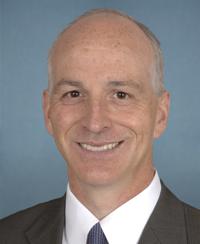
Mr. Speaker, this debate on this resolution, and the resolution itself, continues two very dangerous patterns that have sort of governed all of our actions in Iraq for far, far too long. First of…
Mr. Speaker, this debate on this resolution, and the resolution itself, continues two very dangerous patterns that have sort of governed all of our actions in Iraq for far, far too long.
First of all, there are no specifics, as Congressman Snyder said quite articulately, as to how we are going to achieve this victory.
When this debate was billed, we were told this was going to be the floor of the House, the People's House talking about how to deal with the very tough challenges that now present themselves in Iraq. Even the President admits that things have not gone the way we had planned, and we need to step up and figure out how to fix the problems.
And yet, this resolution doesn't say a thing about that. It says, terrorism is bad, our troops are good, and we want to win.
This House is failing in its mission with such an open statement that does not get at the how of winning. How are we going to deal with an open-ended commitment to Iraq? How are we going to pay the price for that? Is it even in the best interest of our goal of a stable and peaceful Iraq to say that our troops will stay there for as long as is necessary?
Those questions are not answered. Unless we in this House are willing to step up and put policy forward, we shouldn't say that this is a debate about the future of Iraq. It is not. We have many hard questions that need to be answered. This resolution does not do that.
And the second dangerous trend is the pattern of the President and the majority in this Congress to say anyone who disagrees with them is somehow unpatriotic and defeatist, which to my mind means that we all need a refresher course on why democracy is important. We are all very good at saying that it is important. It is important so that we hear all the voices, not just those who disagree with us. That way we can learn from our mistakes, which we desperately need to do in Iraq.
Mr. Speaker, I rise in disappointment--though I must say, not in surprise--about the exercise the House is engaged in today. This is not a true debate about our policy in Iraq. A real debate on Iraq would allow us to consider alternative proposals and vote on meaningful amendments that could help us improve the very difficult situation there. Instead we have before us an un-amendable, rhetorical document about the war on terrorism that barely focuses on Iraq itself, and certainly doesn't deal with the real challenges we face there. This process is an offense to our democracy.
What is even more troubling, Mr. Speaker, is that this kind of undemocratic approach is precisely what led to the Bush administration's many costly mistakes in Iraq. Americans have seen how the administration's stubborn single-mindedness and refusal to consider alternative views and dissenting opinions have cost us dearly in Iraq. The facts are all-too-well-known:
When General Shinseki said that far more troops would be needed to secure the peace in Iraq, he was ignored and soon retired--and the result was that the troops we did send struggled unnecessarily to prevent and control a massive insurgency.
When advisors warned the administration not to de-Baathify and disband the Iraqi military and security forces, they were ignored. As Prime Minister Tony Blair has publicly admitted, this was a grave mistake that effectively pushed thousands of military-trained, disempowered Sunnis into the streets, fueling the post-war insurgency.
And the administration's refusal to heed dissenting views on Iraq continues to this day. Now that the Special Inspector General for Iraq Reconstruction has brought to light massive amounts of waste, fraud, and abuse in the reconstruction contracting, I understand that the administration and the Republicans in Congress are trying to prematurely end his mandate.
This is a clear pattern, Mr. Speaker, and the consequences of this arrogant, undemocratic approach are real. It has cost us dearly in American lives and resources, undermined our efforts to build peace and stability in Iraq, and delayed our departure from the country.
Mr. Speaker, I supported the use-of-force authorization in October 2002 in order to give the President the leverage to hold Saddam Hussein accountable for his threatening behavior and refusal to submit to weapons inspections. And that is what makes it all the more frustrating that the President misused that authority by rushing to war and committing so many grave and costly mistakes in Iraq.
So no, Mr. Speaker, this is not a real debate. A real debate would allow us to consider the important questions in Iraq: Can we afford to make an open-ended commitment to staying in Iraq? Has our troop presence there reached the point where it is inhibiting a successful transition to full Iraqi sovereignty? Can our strained military and ballooning national deficit handle it?
How can we accelerate the transition to Iraqi sovereignty and responsibility for their own country? How best can we engage in more robust diplomacy with our allies and key regional players who can help bolster the new Iraqi government and contribute to its reconstruction?
How can we improve Congressional oversight so that we can identify and rectify the enormous mistakes the administration has made in Iraq?
These are the questions we should be debating, Mr. Speaker, because they directly affect our ability to achieve success in Iraq. We owe it to our brave men and women in uniform and to the American people to ask these questions. But instead, we have a resolution before us today that is basically irrelevant when it comes to the real issues in Iraq. It says, essentially, that we support fighting terrorism and that we are committed to achieving success in Iraq. I agree with that, but that doesn't say anything about how we get there. That is the important question.
Mr. Speaker, today Congress is continuing to utterly abdicate its oversight responsibility. Since the outbreak of war, this Congress has done little more than endorse the administration's policy in Iraq, instead of asking the tough questions and scrutinizing that policy, as the Constitution requires us to do.
Mr. Speaker, I hope, despite this Congress' refusal to conduct oversight, that we can be honest today as we look ahead in Iraq. We all want to see an Iraq that is stable, secure, and free. Our troops are doing an outstanding job, and they deserve our full support and respect. But the fact is that success or failure in Iraq increasingly depends on the decisions of Iraqi leaders, and they must understand that. In order to achieve success in Iraq we must accelerate the transition to Iraqi sovereignty.
I believe that significantly reducing our military footprint is critical for making that happen. While we cannot simply abandon Iraq at this point, drawing down our forces levels in a responsible way in the coming months will force the Iraqis to take greater responsibility for their own security and reduce their dependence on U.S. forces. It will also send an important message to the Iraqi people that Americans are not there to occupy the country, but rather seek to begin leaving as Iraqis take control of their own country.
Finally, Mr. Speaker, as we move forward in Iraq, both the future and the past matter. We must make the best of a difficult situation by working diligently to help Iraqis take full responsibility for running their country so that our overburdened troops can come home. And we must do so in a manner that does not give the violent Islamic terrorists in the world any greater strength. Yet we must also be willing to acknowledge and learn from our mistakes
so that we can chart a new path forward. That requires holding the Bush administration and this rubber-stamp Congress accountable for their failures.''
Show 11 more
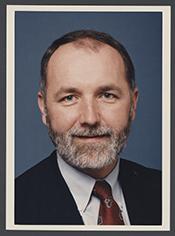
Mr. Speaker, I yield myself such time as I may consume. Mr. Speaker, this resolution in front of us today is about an urgent proposition. We are a nation at war, a nation at war with radical…
Mr. Speaker, I yield myself such time as I may consume.
Mr. Speaker, this resolution in front of us today is about an urgent proposition. We are a nation at war, a nation at war with radical Islamists. The war was not of our choosing, but it is the central struggle of our time, the first major conflict of the Information Age.
This debate is a defining one for the House and for our Nation. It is important to begin by explaining that the threats that we face are real. They are serious, and they are ongoing. We must address these threats by continuing to confront them aggressively rather than shying away from them because they are difficult. We begin the debate framing four fundamental issues that define the war with radical Islam.
First, our Nation is engaged in a long-term war. That war didn't begin on 9/11. We should maybe look back to 2/26. February 26, 1993, perhaps is when this war really did begin to come into focus. What happened on February 26, 1993? That was when the World Trade Center was attacked for the first time.
Second, al Qaeda views Iraq as a central front in its war against Western democracies. Bin Laden's stated goal is to establish a global Muslim caliphate whose historical center includes Iraq, and Zarqawi was operating in Iraq long before American troops entered that country.
Third, al Qaeda is a sophisticated enemy in the first war of the Information Age. In a war against terrorism, a critical battle is over intelligence. We must use every means at our disposal to obtain information about our enemies and counter their sophisticated information war.
Fourth, our Nation must recognize how this battle is evolving. We need to recognize the threat of home-grown terrorism, home-grown terrorism that has already been experienced in Spain, the United Kingdom, Australia, the Netherlands and, most recently, Canada.
We are a nation at war. America has been in an armed struggle with radical Islam for at least 15 years. The first clear declaration was the attack on the World Trade Center, 6 dead, 1,000 wounded. The Khobar Towers were attacked in June of 1996. Our ambassadors were attacked in Kenya and Tanzania in August of 1998 and the USS Cole was attacked in October of 2000.
In 1996 bin Laden declared war against the United States in its fatwa. Throughout the 1990s, there were multiple attacks. Almost 300 people were killed, and there was a minimal U.S. response. No one in the 1990s connected the dots.
But this war is not just limited to the United States. It is a global war against Western democracies. Our enemies are active across the globe, and they must be countered across the globe, not just by the United States but by our allies.
I would like to yield to my colleague from New Mexico, the chairwoman of our Technical and Tactical Intelligence Subcommittee, for a further explanation about the long-term focus of this war.
Reclaiming my time, I thank the gentlewoman for her comments.
A quote from Zawahiri to al Zarqawi in July of 2005: It has always been my belief that the victory of Islam will never take place until a Muslim state is established in the manner of a prophet in the heart of the Islamic world, end of quote.
Al Qaeda views Iraq as a central part of this global war on terror.
I would like to yield to my colleague from Michigan (Mr. Rogers).
I thank my colleague from Michigan for those comments.
The other thing that we have learned is that this is the first war in the Information Age. The Information Age provides some unique opportunities to our enemy. As we work to deny the terrorists their physical sanctuary, radical Islamists, using the tools of the Information Age, are working actively to develop a virtual sanctuary on the Internet which enables them to grow their movement around the globe.
Some have said, well, this is a battle that should be fought in Afghanistan. This battle is not limited to Afghanistan or Iraq. Tell that to the people in Spain, the Netherlands, the U.K., Canada or Australia that this is really just a battle about Afghanistan.
The Information Age is making this a very, very different battle than we have ever fought before. To explain that in more detail is my colleague from Texas (Mr. Thornberry).
I yield to Mr. Thornberry.
Mr. Speaker, this battle continues to evolve. We know that al Qaeda wants to attack us again in our homeland. That is why it is important to stay on the offensive, attacking them where they are and making sure that they do not have a safe haven to plan, to train and to develop the resources to attack us again.
But the other thing that they are trying to do is to develop the concept of homegrown terrorism, and it is something that is evolving.
I would like to yield to our chairwoman of the committee, Mrs. Davis.
I thank my colleague.
Reclaiming my time, it is why this resolution is so important, to send a clear signal that we are going to win this global war on terror; that we are going to be successful in Iraq; that we are going to fight the enemy where they are using all of the techniques that they use in an Information Age; and why we need to redouble our efforts to make sure that they cannot attack us; and that we stop the development of homegrown terrorism in this country.
Mr. Speaker, I reserve the balance of my time.
The historic blunder is that we didn't address this problem in the 1990s when it started rearing its ugly head.
I yield to my colleague for a unanimous consent request.
Mr. Speaker, I yield 3 minutes to our chairwoman, Mrs. Davis.
This Congress will not walk away from a mission, it will not walk away from its troops, and it will not walk away from its allies.
With that, I would like to yield 3 minutes to my colleague from Michigan (Mr. Rogers).
Mr. Speaker, I yield 3 minutes to a colleague from the Intelligence Committee, the gentleman from Alabama (Mr. Everett).
Mr. Speaker, I yield 3 minutes to the gentleman from Kansas (Mr. Tiahrt), my colleague from the committee.
Mr. Speaker, I yield 4 minutes to the distinguished gentleman from Florida, the chairman of the defense appropriations subcommittee, Mr. Young.
Mr. Speaker, I yield 3 minutes to my colleague from Arizona, a member of the Intelligence Committee, Mr. Renzi.
Mr. Speaker, I yield 3 minutes to our colleague from California, a member of the Intelligence Committee, Mr. Issa.
Zarqawi's document:
However, here in Iraq, time is now beginning to be of service to the American forces, harmful to the resistance, for the following reasons.
Time is on our side. We are making progress.
Mr. Speaker, I yield 3 minutes to the gentleman from Minnesota (Mr. Gutknecht).
Mr. Speaker, I yield 1 minute to the gentleman from New York (Mr. McHugh), a member of the committee.
Mr. Speaker, I yield 2 minutes to the gentlewoman from Pennsylvania (Ms. Hart).
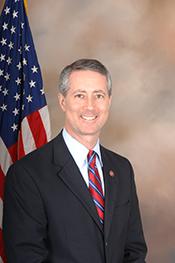
I thank the chairman for yielding. Mr. Speaker, part of the job of intelligence is to understand our enemy, and what we should clearly understand about our enemy in the war on terrorism is that they…
I thank the chairman for yielding.
Mr. Speaker, part of the job of intelligence is to understand our enemy, and what we should clearly understand about our enemy in the war on terrorism is that they are very sophisticated. They are sophisticated users of technology using, as Chairman Hoekstra just mentioned, the Internet in order to recruit, in order to train its people, in order to intimidate populations to go along.
They use Internet video games in order to help train and indoctrinate people in the Arab world to their way of thinking. They use the Internet for communication. They use videotapes and DVDs to get their message out. They have very adept users of technology.
But they are also adept at using media. As a matter of fact, Prime Minister Blair said recently that they play our own media with a shrewdness that would be the envy of many a political party. They know, for example, that one horrific act of cruelty shown on video will get far more attention than a thousand acts of kindness or patience from our soldiers.
They are agile and clever in using cruelty through the media in order to achieve their ends; and, Mr. Speaker, I think maybe the most important point we can make on their sophistication is that they know they cannot beat us militarily, and that is not their object. They are sophisticated enough to know that the way they can beat us is to influence our political decisions, to impact our political will.
There has been a very, what has now really become a classic study of this sort of warfare, often called 4th-generation warfare, a book called ``The Sling and The Stone,'' which traces this sort of attack from Mao's Tse-tung all the way through al Qaeda and its affiliated groups. One of the key points that the author makes, unlike previous generations of war, it does not try to win by defeating military's forces. Instead, it directly attacks the minds of enemy decision-makers to destroy the enemy's political will.
That is what is going on. Their use of technology, their use of cruelty, their use of the media has a target which is us because, as another author has written, it only takes a few hundred people in Washington, DC, to decide that this war is lost. So they are focusing their attention not on our strength, but on our weakness, which is potentially our political will.
That is why this resolution is important. It is why in order to meet a sophisticated threat, a political threat, which al Qaeda and its affiliated groups try to pose to us, we have to resist that sort of manipulation. Part of that resistance occurs on the floor of the House.
I thank the chairman for yielding.
Mr. Speaker, I ask unanimous consent to be able to control the remainder of the Intelligence Committee's time on this side of the aisle.
Mr. Speaker, I yield 2 minutes to the distinguished gentleman from Delaware (Mr. Castle).
Mr. Speaker, before yielding to the gentleman from Maryland, I yield myself 30 seconds to read a quote we mentioned earlier in this debate from Osama bin Laden. He said, ``This Third World war is raging in Iraq. The whole world is watching this war. It will end in victory and glory, or misery and humiliation.'' That is not this side of the aisle. That is Osama bin Laden.
Mr. Speaker, I yield 2 minutes to the gentleman from Maryland (Mr. Gilchrest).
Mr. Speaker, I yield 3 minutes to the distinguished gentleman from Mississippi, a leader on national defense affairs, Mr. Wicker.
Mr. Speaker, I yield 3 minutes to the distinguished gentleman from Pennsylvania (Mr. Murphy).
Mr. Speaker, I yield 4 minutes to the gentleman from Arizona (Mr. Shadegg).
Mr. Speaker, I yield 3 minutes to the distinguished gentleman from Florida, Dr. Weldon.
Mr. Speaker, I yield 2 minutes to a distinguished member of the defense appropriations subcommittee, the gentleman from New Jersey (Mr. Frelinghuysen).
(Mr. FRELINGHUYSEN asked and was given permission to revise and extend his remarks.)
Mr. Speaker, I yield 2 minutes to the distinguished gentleman from South Carolina (Mr. Brown).
Mr. Speaker, I yield 2 minutes to the chairman of the Transportation and Infrastructure Committee, the gentleman from Alaska (Mr. Young).
(Mr. YOUNG of Alaska asked and was given permission to revise and extend his remarks.)
Mr. Speaker, I yield 3 minutes to the gentleman from Texas (Mr. Brady).
Mr. Speaker, I would yield myself the remainder of the time allocated to the Intelligence Committee.
Mr. Speaker, I have listened to the first 5 hours of this debate, trying to listen carefully to each speaker. And it seems to me that some people try, as best they can, to isolate Iraq from the rest of the war on terror.
Now, that may be politically convenient for them to do, but it is not what the real world is like. As a matter of fact, it was not long ago that we found a letter from Zawahari, Osama's number two, to Zarqawi in Iraq talking about tactics.
Just as the Cold War had several battles across the globe, the war on terrorism has several battlefields across the globe. And I believe that it is clear from their own words, the terrorists see Iraq as the central front in our war against them now and into the future.
Secondly, we seem to have a lot of armchair strategists who want to redeploy this way or redeploy that way, because they say nothing is going right. I would recommend they read the document found this morning, or released this morning, that was found in Zarqawi's house.
It says that things are going pretty well for us, and not so well for them. I think it is a little early to give up.
Thirdly, there are a lot of people who want to debate the procedures or debate Congress's job or debate past decisions. And it is true, history will have to pass judgment on decisions that the military commanders and the President and the Congress have made in the past. They will do so when the air of partisanship has faded.
But the truth is, however you feel about where we are, we are where we are. And the question is, do we leave a job half done? Do we leave early, and leave those Iraqis who are willing to put their lives on the line by being part of the government or part of the police force or part of the military, do we abandon them when they are trying to build a country? I think that would be a mistake.
In fact, I think to retreat at this point, whether you call it a strategic retreat, a strategic redeployment, or whatever word you want to use to back up now, will only embolden the terrorists. We have seen time after time, when they sense political vacillation, they strike. They struck in Istanbul in 2003, in Madrid in 2004, in London in 2005.
Where they sense weakness, it is like an animal. Where they sense fear, they attack. We have got to do better and make sure we win this war.

Thank you, Mr. Chairman. Mr. Speaker, some of the worst acts of radical Islamic terrorism have been committed by homegrown terrorists, and homegrown terrorists are citizens or residents of the…
Thank you, Mr. Chairman.
Mr. Speaker, some of the worst acts of radical Islamic terrorism have been committed by homegrown terrorists, and homegrown terrorists are citizens or residents of the Western countries who, without any direct contact with al Qaeda, adopt a militant radical Islamic outlook, and they seek to conduct acts of terrorism in support of the global jihad.
Propaganda on the Internet, as we heard from you and from Mr. Thornberry, drives the movement. Groups like al Qaeda and the Zarqawi network use it to distribute their slick videos, to glorify the violent jihad.
Homegrown terrorists committed, as I think you have said before, recent acts in Spain, the Netherlands and the United Kingdom.
The Madrid attack, for instance, on March 11, 2004, a group of Moroccans living in Spain attacked passenger trains in Madrid killing 190 people; and the plot was conceived, it was organized, and it was equipped with no support from international terrorist groups.
Recent events have demonstrated that Europe is not the only place where homegrown Islamic militants can develop.
On June 4, 2006, the Royal Canadian Mounted Police arrested 17 Canadians for planning to attack Canadian government buildings.
We have seen homegrown Islamic extremist groups in the United States. Our Federal, our State, and our local law enforcement agencies have so far been able to stop them before they could launch attacks.
In August 2005, for instance, the FBI arrested four members of the JIS plotting to bomb military recruiting offices and synagogues in southern California, and this is the interesting part: The JIS was founded by an inmate at the California State Prison in Sacramento, and most members of the JIS are American citizens who were born and raised in the United States. They were radicalized and recruited into JIS while they were in prison; and as far as authorities know, none of these members had any contact with foreign terrorist groups.
Last February, the Justice Department indicted three men in Ohio for aiding insurgents in Iraq and planning to attack U.S. troops there. Two of the men were naturalized U.S. citizens, and one was a permanent legal resident. The men learned their craft by downloading terrorism instructional videos from jihadist Internet sites. They had no contact with al Qaeda. Had they not been arrested, they may have started looking for local targets that they could attack.
We cannot ignore the threat of homegrown terrorism. It is imperative that we understand which elements of our society are vulnerable to jihadist propaganda, how radicalization occurs, and how we can prevent Americans from becoming pawns of al Qaeda.
The British House of Commons concluded that the U.K. counterterrorism community did not anticipate the March 2005 suicide attacks because it did not understand homegrown terrorism and the radicalization process. We cannot make that same mistake.
At the same time, we cannot let our concern about homegrown threats breed suspicion and distrust of our fellow Americans. The diversity and the harmony of the American people is our country's greatest strength, and the global jihadist network we are fighting wants to divide us by inspiring homegrown terrorists whose attacks will spread.
And I think Mr. Thornberry said it best, they are using the media, the Internet. They are using that to divide our country, and that is what will take us down, Mr. Speaker. That is why it is imperative that we continue on this course and we continue to fight this war on the away front, not the home front.
Thank you, Mr. Chairman.
Mr. Speaker, an issue that hasn't received enough attention in the debate on the global war on terror is what happened to American intelligence during the 1990s.
To effectively wage the war on terrorism, we need a robust intelligence community that is capable of gathering intelligence aimed at eliminating the terrorist threat. Unfortunately, as the war escalated in 2001, the intelligence community was still reeling from policies that were implemented in the 1990s which undermined the ability of our intelligence agencies to predict 9/11 and to effectively fight the war today. Simply throwing people and money at the issue, it doesn't solve the problem. Developing expertise to replace what was lost in the 1990s is a long endeavor. It takes 5 to 7 years of training and experience to bring an operations officer up to full performance.
Mr. Speaker, I would like to list a few examples of what happened in the 1990s that hampered our intelligence community efforts leading up to and at the onset of the war.
Between 1992 and 1999, the CIA's presence overseas declined by almost one-third. Our intelligence agencies had their hands tied by the Deutch Doctrine, forbidding recruitment of sources that had shady backgrounds, limiting our ability to get information on potential terrorist attacks. The number of officers declined and overseas facilities were closed. And as a result of the crises in the Balkans and in Africa, et cetera, officers were sent to areas where many times they had little knowledge of the issues there and, in some places, the targets had little and sometimes no presence.
As a result, overall intelligence collection was decimated. James Pavitt, the former CIA Deputy Director for Operations, told the 9/11 Commission in April of 2004 that we were vastly underfunded and did not have the people to do the job, and noted that spending on CIA human collection was cut by 20 percent during the 1990s.
Analysis suffered equally in the 1990s, with low priority accorded to terrorism analysis. Intelligence analysts were
discouraged from writing original out-of-the-box assessments that might have raised awareness to terrorists staging unconventional attacks. And, instead, our analysts were pressured to craft politically correct analysis.
The death of Zarqawi and the arrests of 17 terrorist suspects in Canada are recent successes in the global war on terror. However, we still have a long way to go to rebuilding our networks of human sources. Reform has to continue, and we must acknowledge that many of the problems facing U.S. intelligence agencies today are the product of unwise and neglectful intelligence policies of the past.
It is simple to destroy, but it is much more difficult to build. Over the past 6 years, we have worked to rebuild our Nation's intelligence capability, and it may take a few more years to complete. There is not a moment to waste in carrying out these essential reforms to our intelligence community.
And I will say, Mr. Speaker, that we must continue this war. We must continue to let our intelligence community do their job.

I thank the gentlewoman for yielding. The gentlewoman has been a leader for freedom all around the globe, and this country should appreciate her for that. Mr. Speaker, I had the privilege to lead a…
I thank the gentlewoman for yielding. The gentlewoman has been a leader for freedom all around the globe, and this country should appreciate her for that.
Mr. Speaker, I had the privilege to lead a bipartisan all-female Congressional delegation to Iraq. It was one of the most emotionally overwhelming experiences of my professional life. We met women of enormous courage and hope.
They told us that they want to work, they want to vote. They want to be a part of their society, a democratic society. But we also heard about what life was like before the coalition came. We heard about the treatment of women under Saddam Hussein and during torture, oppression, that most of us could not imagine.
We were told of the heart wrenching stories of husbands torn from their homes in the middle of the night by brutal, secret police, and the women left behind, usually with children, faced with the impossible burden of providing for their families in a society that doesn't even allow women to work. Some were raped, some were tortured, but that was before liberation.
The road to liberation has been a rocky one. But our troops are doing good work every day in Iraq. We saw soldiers building schools and hospitals, vaccinating hundreds of children. They coach soccer. They tutor. They make a difference. They risk their lives every day to protect the newly acquired rights of Iraqis, but especially the women.
If I were asked to give one good reason why we should stay in Iraq, I would tell you to stay. We need to stay for the women.
Well, I saw women of diverse ethnicity, religion, socioeconomic classes. They were empowering each other with education, with hope, with friendship, just like Elizabeth Cady Stanton and Susan B. Anthony. Another courageous woman I met, Nasreen Barwari, the Minister of Public Works, was later the target of an assassination attempt. Her crime, being an outspoken woman in a important position. Thankfully she survived, but her bodyguard was killed. Her female colleague, Dr. Al- Hashimi of the Iraqi Governing Counsel, was not so lucky. She was tragically gunned down.
Ladies and gentlemen, if we stay in Iraq, one of the major reasons is to stay for the women.
Just over two years ago, I was privileged to lead a bipartisan, all- female congressional delegation to Iraq.
It was one of the most emotionally overwhelming experiences of my official life. We met women of enormous courage and hope. They told us they want to vote, to work, to be a part of the democratic process.
Some said they wanted to run for office and help create the laws that will build a new Iraq.
But we also heard about life before the coalition came.
We heard about the treatment of women under the Saddam regime-- enduring torture and oppression that most of us could not imagine.
We were told heart-wrenching stories of husbands torn from their homes in the middle of the night by a brutal secret police.
The women left behind, usually with children, faced the impossible burden of providing for their families in a society that didn't allow women to work or remarry.
Some were themselves raped and tortured.
But that was before liberation.
The road since liberation has been a rocky one.
But our troops are doing good work every day in Iraq.
We saw the soldiers building schools and hospitals, vaccinating thousands of children, and putting an archaic infrastructure back in operation.
They coach soccer, they tutor--they make a difference! And they are risking their lives to protect the newly acquired rights of all Iraqis--but especially women.
If I were asked to give you one good reason why we should stay in Iraq, I would tell you we should stay for the women.
If we can make the values of a free society--the rule of law--work for the women of Iraq, we create the conditions for these new democratic values to take root and spread.
While there I saw women of diverse ethnicities, religions, and socio- economic classes empowering one another with education, hope and friendship--much like Elizabeth Cady Stanton and Susan B. Anthony.
In Mosul, we met with the Women's Social and Cultural Society. They had been meeting secretly, but now felt safe enough to be public and actually welcome our delegation.
These women, accompanied by their wide-eyed daughters, are creating a new Iraq as they promote social, political and educational equality for all Iraqis. But they're not alone.
One of my favorite stories of the trip was of two Iraqi women who arrived one day at a fountain in the town center of Hillah dressed in traditional Muslim women's clothes but with a decidedly non-traditional mission.
A courageous woman I met, Nasreen Barwari, the Minister of Public Works later was the target of an assassination attempt.
Her crime? Being an outspoken woman in an important public position. Thankfully, she survived, though her bodyguard was killed.
Her female colleague, Dr. Al-Hashimi, of the Iraqi Governing Council, was not so lucky.
She was tragically gunned down outside her home.
The dangers Iraqi women face can't be underestimated nor can the obstacles put in their path to liberation. But these women remain undaunted!
We also visited the police academy in Baghdad where 29 women were training to be the first female police officers ever in Iraq.
These wonderful women told us how excited they were to be learning skills to hold their first job. Many had barely been out of the home setting before. Their exuberance was infectious.
We also went to a residential area in Mosul to talk with a group of neighborhood women--some educated, but many not. We met in the crowded living room of one of the members. All the rooms were packed. The electricity was only on for half of our afternoon together. But that was more than they had had in years. The curiosity of the men on the street outside was so thick you could cut it with a knife.
The women's group had many questions for us.
``How do we find our voice?'' they asked. ``How do we organize other women to make an impact? How can we affect the direction of this country?''
They were asking the most fundamental and basic questions of civic involvement--how to construct the foundation of the democratic process. As we left, their children came forward with flowers for us.
I think it's fair to say that U.S. soldiers have liberated more women in the last 4 years than anyone or anything else in the last 20--maybe longer.
Still, changing 2,000 years of tradition isn't going to happen with stroke of a pen. It will take time and patience.
This is not the time for us to abandon these courageous women--not when they have come so far.

Mr. Speaker, there is no more pressing issue in our country today than bringing an end to the war in Iraq as quickly as possible. I thank my colleagues on the other side who just completed their…
Mr. Speaker, there is no more pressing issue in our country today than bringing an end to the war in Iraq as quickly as possible.
I thank my colleagues on the other side who just completed their discussion of the war on terror. They remind us that it is a war in which we can never yield and about which we have no choice. They also remind us that Iraq has become a recruiting ground for those international terrorists; that Iraq has become a proving ground for those international terrorists; and that Iraq has become the motivation for many of those international terrorists, none of which existed before the President's choice to go to war, a war not of necessity, a war that was unjustified based upon falsified intelligence.
In fact, we see the new CIA Director said that intelligence that the administration used to make the case for war was wrong, inaccurate, and misleading. There were no weapons of mass destruction in Iraq, and there was no connection between 9/11 and Saddam Hussein.
The administration used fear to scare this country into war based upon those lies. He refused to properly prepare for the war and its aftermath, and now our soldiers, our families, and our Nation are paying an enormous price for this President's tragic blunder.
Two thousand five hundred Americans soldiers, we are informed today, have died in Iraq. 19,000 American soldiers have been wounded, many of them missing limbs and suffering other very serious debilitating injuries that will afflict them the rest of their lives. The war has cost almost a half a trillion dollars in taxpayer money, and America's international reputation and respect in the world has been severely damaged.
The President often says that he makes decisions about the future of Iraq based upon what the generals say; but when the time came to listen to the generals prior to Iraq, the President refused to listen to them. He refused to listen to them when they questioned the force structure that was available to us to go into Iraq at that time, but he went anyway. He refused to listen to them when questions were raised the day after we seized Baghdad.
What we now see is massive national chaos for which our soldiers were not trained, not given any instructions on how to deal with, and certainly did not have sufficient numbers to deal with. The President sent the troops into that war with that poor planning, that poor structure, and that poor understanding of what would take place afterwards.
The American public had to witness soldiers being forced to buy their own body armor, have their families buy it because we did not have a proper supply prior to going into that war. Many men and women were sent into battle with unarmored, old Humvees that were used for flood control in the California rivers before they showed up in Iraq, and those soldiers died because of that inadequate equipment and because of the roadside bombs that are the number one killer in Iraq.
We see the torture of detainees was approved at the highest levels in the Pentagon; and this, again, has led to an undermining of our position in the world, our moral position in the war in Iraq and the war against terrorism.
This is a policy blunder of historic proportions by this President, and it is very important that we understand that we are paying a huge price for these mistakes by this administration. Tragically, we stand here on the floor of this Congress today 3 years after the beginning of this war, but for 3 years questions were not raised in this Congress about that force structure, about that preparedness, about the detainee policy, about these actions that have so severely undermined us.
Yes, we saw the taking of Zarqawi, and what do we have there? We have the real use of smart intelligence on the war against terror. As you pointed out, they are not going to come after the 130,000 troops. They are not going to come after our strengths, but that is what people have been saying for a long time. That is what people have been writing about at the military schools, about the networking of terrorism and how you had to go after it. We went after it exactly the wrong way, in exactly the same way, as people who made these historic blunders throughout history, when confronting this kind of force.
Yes, we should provide the special ops; yes, we should provide the surveillance; yes, we should provide the intelligence and we should work together. In the case of Zarqawi, we saw, once the Jordanians were insulted enough by the attacks on their land, they put their intelligence sources to work, combined with ours, and Zarqawi was run down, and we provided the 500-pound bombs. We provided the special ops.
That is not what is happening day to day in the war in Iraq, and our troops are paying a horrible, horrible price for the lack of preparation, the lack of planning and the lack of prosecution of this effort and the initial mistake and lies by the President of the United States.
The President's policies in Iraq have severely undermined America's national security and made the world less safe.
In response to the clear failures in Iraq, the Republican Congress has acted like a rubberstamp for President Bush rather than the elected representatives of the people of America.
Republicans in Congress have hid their heads in the sand and refused to question the President, instead sheepishly pretending success is around the corner.
As a result, Iraq is engaged in a civil war that threatens to consume the country.
Congress has done nothing to stop the civil war in Iraq, nothing to hold the President accountable for the failures in Iraq, and nothing to put our troops on a safe and speedy path toward home, or to other parts of the world where they are needed to fight against terrorism.
The President and his allies in the Republican leadership in Congress have made up their minds.
They have a plan for Iraq. It is the same failed plan they started the war with. It is chaos with no end in sight.
There is no more that we can ask of America's troops. They have done everything they have been asked to do. It is time for them to serve their nation where they are needed most, and that is surely not in Iraq.
Now is not the time to stay the course of failure.
America needs a new direction in Iraq--a new direction that will make Americans safer.

Mr. Speaker, I yield myself as much time as I may consume. Mr. Speaker, I rise to speak on this resolution as the chairperson of the 72-member Out of Iraq Caucus of the House of Representatives.…
Mr. Speaker, I yield myself as much time as I may consume.
Mr. Speaker, I rise to speak on this resolution as the chairperson of the 72-member Out of Iraq Caucus of the House of Representatives. Tomorrow will mark the 1-year anniversary of the Out of Iraq Caucus.
My colleagues and I joined together to form the Out of Iraq Caucus to pressure the Bush administration into telling the truth about what is going on in Iraq, to admit their mistakes, and to admit their misjudgments, and to force them to devise a plan to bring our troops home.
The Bush administration cannot deny that they misled the world about the reasons we invaded Iraq. There were no weapons of mass destruction in Iraq. There was no connection between the unfortunate destruction of 9/11 and Saddam Hussein. We have not been welcomed with open arms in Iraq. We have no substantial support for this war by other countries. Yet, Mr. Bush, Mr. Cheney, Mr. Rumsfeld, Ms. Rice, Mr. Wolfowitz, and Mr. Karl Rove continue to squander the American taxpayers' dollars on a war that cannot be won with a military solution.
Here we are 3 years later, 2,500 American soldiers dead, 18,498 U.S. soldiers seriously injured, and Congress has appropriated over $320 billion for this war, and the costs will only continue to rise. Even Condoleezza Rice admitted there have been thousands of missteps. The American people are increasingly aware of this mismanaged, corrupt, and bungled war.
The company that Vice President Cheney served as CEO of, Halliburton, has been awarded no-bid contracts for billions of dollars, and they have had over $400 million in unsupported costs and another $1 billion in questioned costs. In simple words, they are cheating the American people. Yet they are not being held accountable for their criminal actions, and the administration has facilitated these illegal actions.
However, Congress has done virtually no oversight of this war, no hearing, no acknowledging the generals that are trying to tell us about Mr. Rumsfeld's mismanagement of this war. We have not done the oversight, and today, we find that we have this debate. It is not sufficient, nor has it been properly characterized. This resolution we are debating is a sham.
As a matter of fact, it is a trap. It is an attempt to force Democrats to sign on to a resolution that will do nothing to bring our troops home. Oh, they want to make us sound as if we are unpatriotic. They want to make us sound as if we do not support our troops. We love our troops. We are as patriotic as anybody, and so I would implore my colleagues not to get caught into this trap.
This resolution is not intended to solve any problems or chart a new course that will permit us to preserve the lives of our troops or to be successful in Iraq.
I know what is happening. My friends on the opposite side of the aisle are getting frightened. They went home on the break, and they heard the American people. They saw the polls, and they came back with a Karl Rove-constructed resolution to try and make it seem as if now they get it. But this resolution does nothing. It will only continue to mislead.
We formed the Out of Iraq Caucus to oppose any permanent bases in Iraq. We support H.J. Res. 73 to redeploy U.S. forces from Iraq, commonly referred to as the Murtha resolution.
There are a lot of misconceptions about what the Murtha resolution is. So let us take a minute and explain clearly what the resolution says.
Section 1 says: ``The deployment of United States forces in Iraq, by direction of Congress, is hereby terminated and the forces involved are to be redeployed at the earliest practicable date.'' They would have you believe this is meant to withdraw immediately. That is not what it says, and let us get that straight today. What that means is there will be no more U.S. troops sent to Iraq and that the troops in Iraq will be redeployed as soon as possible, a judgment that should be made by military officials on the ground. So stop misrepresenting what this resolution is all about.
Section 2 says that ``a quick-reaction U.S. force and an over-the- horizon presence of U.S. Marines shall be deployed in the region.'' That means a group of marines will remain in the Middle East to respond to threats that destabilize our allies in the region or the national security of the United States.
Section 3 says: ``The United States of America shall pursue security and stability in Iraq through diplomacy.'' This war cannot be won through military means alone. We must put the full weight of the United States behind diplomacy in order to end bloodshed in Iraq.
The Murtha resolution endorses these principles, and there is no reason why the entire Congress of the United States cannot get behind this resolution.
Mr. Speaker, the Out of Iraq Caucus supports the Murtha resolution as the clear plan for America. We support bringing our troops home, and stop saying we do not have a plan. We have a plan. It is a good plan. It is the Murtha resolution.
Mr. Speaker, I reserve the balance of my time.
Mr. Speaker, I yield 5 minutes to the gentlewoman from California (Ms. Lee).
Mr. Speaker, I yield to the gentlewoman from California, Representative Woolsey, 5 minutes.
Mr. Speaker, I yield to the gentleman from the State of Washington, Representative McDermott, 5 minutes.
(Mr. McDERMOTT asked and was given permission to revise and extend his remarks.)
I yield 5 minutes to the gentlewoman from Illinois (Ms. Schakowsky).
Mr. Speaker, I yield 4 minutes to the gentleman from Massachusetts (Mr. Frank).
I yield 4 minutes to the gentleman from New York (Mr. Owens).
(Mr. OWENS asked and was given permission to revise and extend his remarks.)
Mr. Speaker, I yield 3 minutes to the gentlewoman from Texas, Ms. Sheila Jackson-Lee.
(Ms. JACKSON-LEE of Texas asked and was given permission to revise and extend her remarks.)
Mr. Speaker, I yield 3 minutes to the gentlewoman from California (Ms. Watson).
Mr. Speaker, I yield 3 minutes to the gentlewoman from California, Representative Solis.
Mr. Speaker, I yield 3 minutes to the gentlewoman from Ohio, Representative Kaptur.
Mr. Speaker, I yield 3 minutes to the gentleman from Oregon (Mr. DeFazio).
Mr. Speaker, I yield 3 minutes to the gentleman from New York (Mr. Nadler).
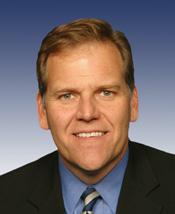
Thank you, Mr. Chairman. Mr. Speaker, Iraq is the central front in the war on terrorism, despite what you hear and, despite the pointing out of problems in a very difficult task, we ought not to be…
Thank you, Mr. Chairman.
Mr. Speaker, Iraq is the central front in the war on terrorism, despite what you hear and, despite the pointing out of problems in a very difficult task, we ought not to be asking politicians here in Washington, we ought to be listening to our enemy.
Osama bin Laden, quote, this third world war is raging in Iraq. The whole world is watching this war. It will end in victory and glory, or it will end in misery and humiliation.
With what you have talked about earlier, Mr. Chairman, from that letter from Zawahiri to al Zarqawi, he went on to say that prophet in the heart of Islam world, specifically Egypt, neighboring states of the peninsula and Iraq, they have declared war against the United States and all those who seek to find democracy and peaceful solutions.
Terrorist Abu Nidal found safe haven in Iraq and was killed in Baghdad in 2002. Zarqawi and his network were operating in Baghdad and the Kurdish-controlled region of Iraq a year at least before the start of the war. As a matter of fact, from that base of operations, they executed the assassination of an American diplomat in Jordan in 2002.
Our troops found a suicide vest factory that had 800 suicide vests equipped and ready to go in south Baghdad in April of 2003. Iraq was on the State Department sponsor of terrorism list. Saddam Hussein paid $25,000 cash to the family of suicide bombers in Israel.
You know, with every sacrifice made by our great American soldiers, for every girl that now walks in Iraq and Baghdad and goes to school, for every young mother that goes to a medical clinic to get treatment where there was none before, for every dead terrorist in Iraq, we make progress every day.
One platoon sergeant in Iraq, and I quote, I have yet to speak to an American here who thinks we are losing. Trust me, no soldier wants to be here. No one wants to cut and run either. Leaving would send the wrong signal to our enemies.
There are only two groups of people who want America to leave and withdraw in humiliation, Mr. Speaker, from Iraq.
President Bush met with the Shiia, the Sunnis, the Kurds just recently, just this last week. None of them, even the Sunnis, wanted the United States to leave. As a matter of fact, they asked for reassurance that we would stay with them in this difficult and tough struggle for freedom.
That would leave only the terrorists who want an early American withdrawal and some politicians in this town.
I would listen to what our enemies said when Zarqawi declared, ``We have declared a bitter war against the principle of democracy and all those who seek to enact it.'' They will kill American families at any given opportunity.
I would say, Mr. Speaker, that we should stand with our soldiers. We should stand with our families here that helped take the fight to the terrorists overseas. We should stand for victory, and we should stand with the United States of America.
Mr. Speaker, I am a little bit saddened by the comments of the gentleman from Illinois. You know, our enemies do not have a first Tuesday in November plan. They have a plan for a caliphate. They have well established themselves to murder Christians, Jews, Muslims, women, and children. They will behead you, they will shoot you, they will blow you up. They do not care.
To have the talk of rhetoric, because the electricity isn't where it is, let's come home in defeat; because the oil isn't going exactly the way we would like it, let's come home in defeat; that is no standard for victory.
What is the standard for victory? Where were we 4 years ago? Let us look at it in the global war, this World War III that Osama bin Laden declared in his own words. Pakistan, 4 years ago, was the only government supporting the Taliban in Afghanistan. They were working against the United States in Afghanistan. They supported, financed, gave as much comfort as they could to the enemy to produce terrorists, to attack Americans and Westerners all over the world. In Iraq, we know that Zarqawi was there a year before the war; that they used that operation to kill an American in Jordan, a diplomat of great service to our country. In Libya, they had a nuclear weapons program and self declared they would share it with anyone.
So 4 years later, not because I gave a great speech on the House floor but because very brave men and women put on the uniform and fought the terrorists with a military uniform so our children wouldn't have to fight it in a school uniform here at home, and now what has happened? Pakistan has joined us in the fight against terror. There are our allies just 4 years later in hunting down al Qaeda.
Afghanistan is now an ally in the war on terror. Their intelligence services, their military, as a matter of fact just this morning, launched a 10,000 troop crackdown on terrorists. This morning. Last week, Iraq launched a 70,000 security personnel crackdown on terrorists. This week, they are our allies now in the war on terror.
Libya. That is the components of the nuclear weapons program of Libya. It is now in the possession of the United States of America. They gave it to us not because we stood here and debated but because we had brave men and women with boots on the ground who showed courage and commitment and said we will take the fight to you. We will not allow you to take the fight to us.
Which country would you have go back? Which one would you say, ah, it wasn't important that they became an ally? Four Muslim nations have stood up against the ravages and the terror and the brutality of terror today because of actions our brave soldiers take overseas.
So don't get confused in every little problem that happens, and there are a lot of them. Sir, you served in Vietnam. You know this challenge. They are great, they are hard, and sometimes they are disappointing, yes. But at the end of the day, every great victory, every great victory ends with our heads held high and safety and security for the United States.
Let us not come home in humiliation. Let us not tell all of those families that their loved ones died in vain because we have a November time frame and not a time frame for victory.
Announcement by the Speaker Pro Tempore

Mr. Speaker, I thank the distinguished gentleman for yielding. Mr. Speaker, I rise in support of the resolution, and I commend the brave American and coalition soldiers who have risked their lives to…
Mr. Speaker, I thank the distinguished gentleman for yielding.
Mr. Speaker, I rise in support of the resolution, and I commend the brave American and coalition soldiers who have risked their lives to fight terror and promote freedom around the world, including the 14 courageous Delawareans who have lost their lives while honorably serving their State and this Nation.
Despite weeks of significant progress, we are now facing a critical stage in the war on terrorism. I believe an immediate withdrawal or the establishment of a hard deadline to withdraw will be comparable to an abandonment of the new Iraqi Government and would encourage the terrorists and violent factions to bide their time, inviting mayhem and guaranteeing chaos.
Such a decision may also embolden our enemies to, once again, attack our homeland and interests abroad, thus further endangering American citizens. The future of the Middle East and the security of free nations around the world depend upon the development of a strong and stable democracy in Iraq.
Therefore, in order to reach an acceptable level of stability in Iraq, it is extremely important that we, as an international community, intensify our efforts to reduce the influence of militias, restore electricity, rebuild schools, and assemble a modern and sustainable economy for the benefit of all Iraq's citizens. A greater emphasis on the development of the Iraqi security forces, with a focus on the selection and education of effective military officers, is absolutely imperative so that we may begin supplanting our forces in the region with Iraqi troops at the earliest date possible.
Mr. Speaker, it is essential that we honor our brave soldiers by continuing to work with our international partners to promote democracy and protect freedom around the world.
Mr. Speaker, I rise in support of the resolution and I commend the brave American and coalition soldiers and all other personnel who have risked their lives to fight terror and promote freedom both at home and abroad. These courageous men and women have made tremendous sacrifices to ensure our security, and they deserve our utmost respect and appreciation.
There have been three successful elections held in Iraq since the overthrow of Saddam Hussein's regime, and in recent weeks significant progress, both politically and militarily, has been made in the region. As a former member of the House Intelligence Committee, I firmly believe that the elimination of al-Zarqawi will prove to be a key psychological and organizational blow to al Qaeda's terrorist network.
Still, the facts are undeniable--progress in Iraq and Afghanistan has come at a tremendous cost. My small State of Delaware alone has lost fourteen brave soldiers, each of whom honorably served their State and Nation. My heart goes out to these noble Delawareans and their families.
And while elections and military victories are crucial, many challenges still lie ahead. We are now facing a critical stage in the war on terrorism, and it is essential that the international community come together to support Iraq's efforts to build a strong, unified government capable of steering the country toward a path of peace and democracy.
Although, several of my colleagues have suggested that the U.S. should set a hard deadline for withdrawal from the region, I believe such a course would be unwise. An immediate withdrawal, or the establishment of a hard deadline to withdraw, would be comparable to an abandonment of the new Iraqi government and would encourage the terrorists and violent factions to bide their time, inviting mayhem and guaranteeing chaos. Such a decision may also embolden our enemies to once again attack our homeland and interests abroad, thus further endangering American citizens. The future of the Middle East, and the security of free nations around the world, depends upon the development of a strong and stable democracy in Iraq.
Therefore, in order to reach an acceptable level of stability in Iraq, it is extremely important that we intensify our efforts to reduce the influence of militias, restore electricity, rebuild schools, and assemble a modem and sustainable economy for the benefit of all Iraq's citizens. A greater emphasis on the development of the Iraqi security forces--with a focus on the selection and education of effective military officers, is absolutely imperative. Over the last few years, we have trained and equipped thousands of Iraqi soldiers and police officers and it is now crucial that we do more to improve this process, so that we may begin supplanting our forces in the region with Iraqi troops at the earliest date possible.
Mr. Speaker, the thousands of Americans who have served in the war on terrorism exemplify the very courage and honor on which our Nation was formed. It is essential that we recognize their service by continuing to work with our international partners to promote democracy and protect freedom around the world.

Mr. Speaker, as a founding member of the Out of Iraq Caucus, I rise in strong support of our brave troops and in strong support of Congressman Murtha's plan for a responsible redeployment from Iraq.…
Mr. Speaker, as a founding member of the Out of Iraq Caucus, I rise in strong support of our brave troops and in strong support of Congressman Murtha's plan for a responsible redeployment from Iraq.
Americans want the truth about the Iraq war. Americans deserve the truth, and despite all the talk from those who declared this war, ineptly pursued this war, and still today justify this war, the American people in overwhelming numbers have determined for themselves the truth about this war.
Polls taken even after the killing of al Zarqawi show that only 33 percent of American adults think that the results of the war were worth the loss of life and other costs. Only 33 percent approve of the way George W. Bush is handling the situation in Iraq. Only 26 percent of Americans feel that the United States is better off because of the war.
The American people in their wisdom have been able to distinguish reality from rhetoric. The truth has been a major casualty in the war of Iraq.
It is worth reviewing just a few of the statements presented as truth that have been proven to be not true, never true, and still today not true:
Dick Cheney said in August 2002, ``Simply stated, there is no doubt that Saddam Hussein now has weapons of mass destruction.''
In March 2003, Donald Rumsfeld said, ``We know where they are. They're in the area around Tikrit and Baghdad and east, west, south and north somewhat.''
The President said in May 2003, ``We found the weapons of mass destruction.''
And Donald Rumsfeld on the cost, ``Well the Office of Management and Budget has come up with a number that is something under $50 billion for the cost. How much of that will be the U.S. burden and how much will be other countries is an open question.''
Dick Cheney said May 30, 2005, ``I think they are in the last throes, if you will, of the insurgency.''
And what happens to those experts who tell the truth? Are they heeded and embraced by the Bush administration? Hardly. Although it is now universally agreed we didn't have enough troops to avoid the chaos and violence after the initial invasion, when the Army's top general, Eric Shinseki, testified in February 2003 ``something on the order of several hundred thousand soldiers'' would be necessary to achieve victory in Iraq,'' he was immediately and publicly repudiated by Secretary Rumsfeld who said that ``the idea it would take several hundred thousand U.S. forces I think is far off the mark.'' Shinseki was quietly ushered into retirement, and Secretary Rumsfeld remains in place leading the failed Bush administration policy in Iraq.
When Dr. Lawrence Lindsey, former assistant for economic policy to the President, told the Wall Street Journal in September 2002 that the war's cost could reach $200 billion, he was fired by the President.
Yet by the end of this year we will have spend $450 billion in Iraq. Some say at the end of the day the war will cost $1 trillion taxpayer dollars.
Since the time the President announced on May 1, 2003 that ``major combat operations in Iraq have ended,'' more than 2,350 U.S. soldiers have lost their lives, and the President has not attended a single one of their funerals. And the United States is spending in excess of $8 billion a month to wage the war. That is $266 million a day, $11 million an hour, $185,000 a minute and $3,100 a second, every second for this war. Certainly we could have afforded body armor and proper Humvees for our soldiers.
We could have insured 165 million children for 1 year, provided more than 13 million American students with 4-year scholarships at public universities, fully funded global anti-hunger efforts for 11 years, give basic immunization to every child in the world for 92 years, and I believe that would have bought us more security than invading Iraq has done.
Our military men and women have done a magnificent job in the Iraq theater and deserve better. The civilian leadership in the White House and the civilian leadership in the Pentagon have failed. Time after time they have been wrong. They projected the cost of the war and got it wrong. They predicted the length of the war: wrong. They predicted the existence of weapons of mass destruction: wrong. They predicted the Iraqi reaction to our occupation: wrong. They got the reconstruction of Iraq wrong. When it came to providing needed equipment, they got it wrong.
And who will pay the price for those mistakes? None of the architects of this war. No one of them has been held accountable. The only ones paying the price are dead and wounded soldiers, our men and women in uniform.
We need a new direction in Iraq. The majority has nothing to offer in terms of a plan, just more political ploys, more talk, more mistakes like those cited today.
It is time to redeploy our troops from Iraq. There is a plan, the Murtha plan; and we should make sure that we are not establishing a permanent military presence there.
Parliamentary Inquiry

Mr. Speaker, I thank the gentlewoman for yielding. Mr. Speaker, the overwhelming majority of U.S. forces have performed their mission in an exemplary, professional fashion and deserve both our praise…
Mr. Speaker, I thank the gentlewoman for yielding.
Mr. Speaker, the overwhelming majority of U.S. forces have performed their mission in an exemplary, professional fashion and deserve both our praise and profound thanks.
Mr. Speaker, we all know that Iraq remains a dangerous place today because hate-filled fanatic, perhaps even psychotic, mass murderers bomb and shoot innocent men, women, and children. The terrorists have a morbid fascination with all things violent. There is nothing whatsoever benign or noble or praiseworthy about these people. They are mass murderers.
If left unchecked, the terrorists would impose dictatorship once again on Iraq and Afghanistan, which would result in more mass killings, systematic torture, rampant fear, political prisoners, and an end to freedom and liberty.
While I respect the right of those who criticize our Iraq policy and our solidarity with the Iraqi people, I do remain deeply disappointed that those who protest U.S. policy outside of this Chamber seldom, if ever, criticize the terrorists. No harsh, mocking words of condemnation of George W. Bush is left unspoken. You hear it on TV, talk shows, and at war protests; but no such righteous anger is directed at the mass murderers who blow up our soldiers or incinerate pious worshippers in prayer or kidnap, torture and kill humanitarian workers.
American coalition soldiers in Iraq are peacemakers who have the toughest job in the world. They are peacemakers who put their own lives at risk to create sufficient space and order so that democracy and respect for human rights can grow and peace can be established.
I want our soldiers to come home and to come home soon, but that fervent hope must be tempered with reality on the ground and what our commanders on the ground think best. To leave prematurely or pursuant to an arbitrarily arrived at deadline established by Members of Congress may unwittingly put more lives at risk and strengthen the fanaticism and hope of the terrorists.
Mr. Speaker, I rise in support of H. Res. 861.
The Hyde resolution honors--and profoundly thanks--all those American, Iraqi, Afghan, and coalition forces who have so courageously fought the war on terror, especially those who have lost their lives in the defense of freedom.
Our war dead--and wounded--define anew what it means to be brave and honorable and good.
And our condolences and prayers go to the families of the fallen.
The overwhelming majority of U.S. forces have performed their missions in an exemplary, professional fashion--and deserve both our praise and profound thanks.
We all know that Iraq remains a dangerous place today because hate- filled, fanatic--perhaps even psychotic--mass murderers bomb and shoot innocent men, women, and children. In the past their thugs were in the government suites and Hussein's opulent palaces--now some remain in the streets--hopefully not for long.
The terrorists have a morbid fascination with all things violent. There is nothing whatsoever benign or noble or praiseworthy about these people.
They are mass murderers.
If left unchecked, the terrorists would impose dictatorship once again on Iraq and Afghanistan, which would result in more mass killing, systematic torture, rampant fear, political prisoners and an end to freedom and liberty.
While I respect the right of those who criticize American policy and our solidarity with the Iraqi people, I remain deeply disappointed that many of those who protest U.S. policy outside of this chamber seldom-- if ever--criticize the terrorists.
No harsh, mocking thoughts of condemnation of President George W. Bush are left unspoken. You hear it on TV and radio talk shows and at war protests, but no such angst is directed at the mass murderers who blow up our soldiers or incinerate pious worshipers at prayer in Mosques or who kidnap, torture, and kill humanitarian workers trying to save and enhance the lives of the vulnerable.
American and coalition soldiers in Iraq and Afghanistan are peacemakers and they have the toughest assignment in the world. They are peacemakers who put their own lives at risk to create sufficient space and order so that democracy, respect for human rights, and peace can be established and grow.
I want our soldiers to come home--and soon.
But that fervent hope must be tempered with realities on the ground. What do our military commanders on the ground think? To leave prematurely or pursuant to an arbitrarily arrived at deadline established by members of Congress may unwittingly put more lives at risk and strengthen the fanaticism and hopes of the terrorists.
Still, public debate on exit strategy is important--even necessary-- because it puts pressure on us all to figure out how to prudently accomplish redeployment and it puts constructive pressure on Iraqi leaders to move more quickly to take ownership of their own security.
Mr. Speaker, I thank the gentlewoman for yielding me time on this very important matter. To my good friend Mr. Murtha, I also salute you as a Vietnam veteran, one that knows what the cost of war does…
Mr. Speaker, I thank the gentlewoman for yielding me time on this very important matter.
To my good friend Mr. Murtha, I also salute you as a Vietnam veteran, one that knows what the cost of war does to a family and to our country.
My friends on the other side of the aisle would have you believe that this is a simple choice between retreat and resolve. This is a false choice. It is a political stunt. This is about respect. This is about respect for our role to do our jobs as a Congress in oversight.
We can win this war with a comprehensive and reasoned approach to deployment of our troops. But the President's supporters characterize any disagreement as cutting and running. It does not wash. This is unfair and it is disingenuous and this is unpatriotic.
The real choice is between blind adherence to Secretary Rumsfeld's ill-conceived strategy and the somber assessment of the proper way to fight against an insurgency. Congress has an important role to play in this process, and that is what today's debate should be about.
In my role as a member of both the Intelligence and Armed Services Committees, I traveled to Iraq and paid a great deal of attention to the effects of this war and their impact on our military, on their families, and our intelligence apparatus. There have been and continue to be critical gaps in our intelligence system in this war.
When the Vice President says that our troops will be greeted as liberators, I have to think that we were not prepared. When the Army's chief of staff tells us that a successful campaign would require many more troops than we were planning to deploy, I have to think that we were not prepared. When the administration cannot get its story straight about the rationale for war and the connection between Iraq and al Qaeda, I have to think that we were not prepared for this war.
These mistakes, these gaps in our knowledge, frankly, cry out for oversight. It is not about resolve versus retreat. It is about respect for this Congress doing its job in oversight. This Congress could have and should have done a better job of conducting oversight and vigorously questioning the statements that have been made by this administration: statements about the presence of WMD or about connections to 9/11 or about the war taking no longer than 6 months.
In fact, when I asked the administration, before we went to this war, whether there was a connection between al Qaeda and Iraq, the answer was no. We could have made America safer by conducting vigorous oversight, but we as a Congress have failed to do that.
At the same time, while most of our men and women have served honorably and bravely, the unsustainable pace of our operations combined with an overstressed force has led to major problems. It led us on the road to Abu Ghraib and to some of the most heinous allegations lodged against our American troops in history.
Mr. Speaker, I am afraid that the conduct of this war has made us less safe. This is what this debate should be about. It has distracted us from the global war on terror. It has hurt recruiting and retention in the military. It has broken our Army for possibly the next decade or more. It has hurt
our ability to work with other nations. I think that is where the real debate should occur.
Mr. Speaker, I thank the gentleman for yielding me this time.
This afternoon, regrettably, we are talking about the cost of this war, the cost of the commitment of the American people: the cost in money, and the cost in lives, over 2,500 to date; the cost in wounded, over 18,000, with very little or no oversight, very little or no accountability, and certainly very little or no shared sacrifice in this country.
This resolution that we are discussing, because it is not even a debate, is more about politics than about practical solutions. Anyone that doubts that, all you have got to do is read the article in today's paper that sets out the political strategy by the majority leader in terms of this resolution.
Oversight, oversight, oversight. Where was our armor, both body armor and vehicle armor? What was our plan post ``Mission Accomplished'' press conference? Where were we during the issue of Abu Ghraib rendition and so many other things that have come up?
In fact, last night I went home and I switched on the TV and I just happened, by chance, to catch the program on HBO, Last Letters Home: The Families. And it occurs to me this afternoon that we owe those families from that HBO program, and the 2,500 other families, an apology, because they have made the sacrifice. They understand the cost of this war. And they must be wondering where the accountability and where the oversight is. We need to apologize to them and to the American people for not doing our job.
Bill Text
Legislative text isn't available for this bill yet.