Supporting intelligence and law enforcement programs to track terrorists and terrorist finances conducted consistent with Federal law and with appropriate congressional consultation.
Legislative Activity
Stay on top of the latest movement without scrolling through every action
Referred to the House Committee on Financial Services.
June 29, 2006
View full timeline
Introduced in House
June 29, 2006
Referred to the House Committee on Financial Services.
June 29, 2006
Floor Debate
22 membersWhat members said about H.Res. 900 on the floor
BF JPM
JPM MGO
MGO PS
PS LMS+17
Floor Debate
22 membersWhat members said about H.Res. 900 on the floor
Mr. Speaker, I yield myself 5 minutes. Mr. Speaker, people who want things to be done in a bipartisan manner should not engage in extreme partisanship at the outset. The resolution that is before us…
Mr. Speaker, I yield myself 5 minutes.
Mr. Speaker, people who want things to be done in a bipartisan manner should not engage in extreme partisanship at the outset. The resolution that is before us was drafted entirely by Republicans with no input from any Democrat, from the Intelligence Committee, from the Financial Services Committee, or anywhere else, and presented to us a little over 24 hours ago. We then asked for the right to offer amendments, or at least a substitute resolution. It was denied.
I find it extraordinary that repeatedly in the interest and in the name of democracy the majority degrades democracy. How can it be justified that no alternative can be offered? How can it be justified that no amendment can be offered?
Let me say again: We are telling the Shiia majority in Iraq that in their parliament they ought to make an effort to include the Sunni; that it is not simply the majority doing everything, but you work with the minority. You then give, Mr. Speaker, through your party, the opposite example by not allowing even a resolution to be offered for us to be voted on.
We have an alternative that is supported by a very large majority of our caucus. And now let me talk about that resolution, because let us be clear about what is not at issue today.
We have agreement that the method of tracking terrorists through their financial dealings is a good thing. The Democratic resolution, which the majority refuses to allow to be considered in their abusive use of their majority, says explicitly that we support efforts to identify and track terrorists and their financial supporters. So if it isn't unanimous, it is the fault of the majority by doing it so divisively.
We also in our resolution deplore the unauthorized disclosure of classified information. But we talk not simply about people who might print it, but the people in the administration who might release it. Earlier today someone said, well, what would happen if you gave out the name of spies? Well, ask the people in this administration who gave out the name of Valerie Plame. We hope that something will be done.
Here is the difference between the two resolutions: the Republican resolution, drafted entirely by them and withheld from us until its publication, agrees that we should track terrorist financing. So does the Democratic resolution. Theirs, however, includes a number of factual statements that I do not believe we yet have a basis for making.
Now, in some cases, some of those factual statements are about things that turn out, we think, not to have been true. For example, on page 3 of their resolution they have reference to a prior incident in which the Washington Times was accused of having disclosed classified information regarding efforts to monitor the communication of Osama bin Laden.
They don't mention the Washington Times because they like the Washington Times. They mention the New York Times. Times, they are a changing. If it is the New York Times, they don't like it, and they criticize it. If it is the Washington Times, they talk about a far more serious allegation about the Washington Times, that it gave away to Osama bin Laden how we knew where he was, but they don't mention them.
But now it turns out they may very well have been inaccurate about that, and I plan to submit an article from The Washington Post that defends the Washington Times.
But here is the problem we have: we want to say in our resolution, and we hoped it could have been unanimous, that we support this kind of tracking; that we don't want things to be disclosed. But what we are not prepared to say, and, frankly, nobody here is intellectually prepared to say it, people may say it on faith, but here is what they want to say: we find that the program has been conducted in accordance with all applicable laws, regulations, and executive orders; that appropriate safeguards and reviews have been instituted to protect individual civil liberties, and that Congress has been appropriately informed.
I think that the part about our being informed is very inaccurate, and I don't know the answer to the other. What you have done is to hijack the virtually unanimous support for tracking terrorist financing into an endorsement of the way the Bush administration has conducted itself. That is how it became partisan.
Why should this House vote now to say that the program has been conducted with all the safeguards, et cetera, et cetera? We don't know that. Members don't know that. Members on the other side are entitled to take it on faith. I know faith-based resolutions are very important to them, but I don't think as Members of the House of Representatives we ought to be asked to vote, the most solemn thing you do in a democracy as a representative, on factual statements when people cannot know whether they are true.
Again, I want to go back and say, how can you justify, in the name of democracy, denying us a chance to even present an alternative resolution supporting this program?
[From the Washington Post, Dec. 22, 2005]
File the Bin Laden Phone Leak Under `Urban Myths'
(By Glenn Kessler)
President Bush asserted this week that the news media
published a U.S. government leak in 1998 about Osama bin
Laden's use of a satellite phone, alerting the al Qaeda
leader to government monitoring and prompting him to abandon
the device.
The story of the vicious leak that destroyed a valuable
intelligence operation was first reported by a best-selling
book, validated by the Sept. 11 commission and then repeated
by the president.
But it appears fa be an urban myth.
The al Qaeda leader's communication to aides via satellite
phone had already been reported in 1996--and the source of
the information was another government, the Taliban, which
ruled Afghanistan at the time.
The second time a news organization reported on the
satellite phone, the source was bin Laden himself.
Causal effects are hard to prove, but other factors could
have persuaded bin Laden to turn off his satellite phone in
August 1998. A day earlier, the United States had fired
dozens of cruise missiles at his training camps, missing him
by hours.
Bush made his assertion at a news conference Monday, in
which he defended his authorization of warrantless monitoring
of communications between some U.S. citizens and suspected
terrorists overseas. He fumed that ``the fact that we were
following Osama bin Laden because he was using a certain type
of telephone made it into the press as the result of a
leak.'' He berated the media for ``revealing sources, methods
and what we use the information for'' and thus helping ``the
enemy'' change its operations.
White House spokesman Scott McClellan said Monday that the
president was referring to an article that appeared in the
Washington Times on Aug. 21, 1998, the day after the cruise
missile attack, which was launched in retaliation for the
bombings of two U.S. embassies in Africa two weeks earlier.
The Sept. 11 commission also cited the article as ``a leak''
that prompted bin Laden to stop using his satellite phone,
though it noted that he had added more bodyguards and began
moving his sleeping place ``frequently and unpredictably''
after the missile attack.
Two former Clinton administration officials first fingered
the Times article in a 2002 book, ``The Age of Sacred
Terror.'' Daniel Benjamin and Steven Simon wrote that after
the ``unabashed right-wing newspaper'' published the story,
bin Laden ``stopped using the satellite phone instantly'' and
``the United States lost its best chance to find him.''
The article, a profile of bin Laden, buried the information
about his satellite phone in the 21st paragraph. It never
said that the United States was listening in on bin Laden, as
the president alleged. The writer, Martin Sieff, said
yesterday that the information about the phone was ``already
in the public domain'' when he wrote the story.
A search of media databases shows that Time magazine had
first reported on Dec. 16, 1996, that bin Laden ``uses
satellite phones to contact fellow Islamic militants in
Europe, the Middle East and Africa.'' Taliban officials
provided the information, with one official--security chief
Mulla Abdul Mannan Niazi--telling Time, ``He's in high
spirits.''
The day before the Washington Times article was published--
and the day of the attacks--CNN producer Peter Bergen
appeared
on the network to talk about an interview he had with bin
Laden in 1997.
``He communicates by satellite phone, even though
Afghanistan in some levels is back in the Middle Ages and a
country that barely functions,'' Bergen said.
Bergen noted that as early as 1997, bin Laden's men were
very concerned about electronic surveillance. ``They scanned
us electronically,'' he said, because they were worried that
anyone meeting with bin Laden ``might have some tracking
device from some intelligence agency.'' In 1996, the Chechen
insurgent leader Dzhokhar Dudayev was killed by a Russian
missile that locked in to his satellite phone signal.
That same day, CBS reported that bin Laden used a satellite
phone to give a television interview. USA Today ran a profile
of bin Laden on the same day as the Washington Times's
article, quoting a former U.S. official about his ``fondness
for his cell phone.''
It was not until Sept. 7, 1998--after bin Laden apparently
stopped using his phone--that a newspaper reported that the
United States had intercepted his phone calls and obtained
his voiceprint. U.S. authorities ``used their communications
intercept capacity to pick up calls placed by bin Laden on
his Inmarsat satellite phone, despite his apparent use of
electronic `scramblers,' '' the Los Angeles Times reported.
Officials could not explain yesterday why they focused on
the Washington Times story when other news organizations at
the same time reported on the satellite phone--and that the
information was not particularly newsworthy.
``You got me,'' said Benjamin, who was director for
counterterrorism on the National Security Council staff at
the time. ``That was the understanding in the White House and
the intelligence community. The story ran and the lights went
out.''
Lee H. Hamilton, vice chairman of the Sept. 11 commission,
gave a speech in October in which he said the leak ``was
terribly damaging.'' Yesterday, he said the commission relied
on the testimony of three ``very responsible, very senior
intelligence officers,'' who he said ``linked the Times story
to the cessation of the use of the phone.'' He said they
described it as a very serious leak.
But Hamilton said he did not recall any discussion about
other news outlets' reports. ``I cannot conceive we would
have singled out the Washington Times if we knew about all of
the reporting,'' he said.
A White House official said last night the administration
was confident that press reports changed bin Laden's
behavior. CIA spokesman Tom Crispell declined to comment,
saying the question involves intelligence sources and
methods.
Mr. Speaker, I reserve the balance of my time.
Mr. Speaker, I yield 1 minute to the leader, the gentlewoman from California (Ms. Pelosi).
Reserving the right to object.
I reserve the right to object. We are being asked to move this very quickly, I guess, because of the baseball game.
If we could get the right to get a vote on our substitute, I wouldn't object. But as long as we aren't even being allowed to have a vote on our substitute, I don't know why we should be asked to hurry up the proceedings.
I would ask the gentleman if we could get unanimous consent now, in addition to this, to allow us to present our substitute. If we could get unanimous consent for that, then I would have no objection to this.
I will object now.
I ask unanimous consent that the House allow us to present our substitute for a vote.
Mr. Speaker, I yield myself 15 seconds to note that the substitute resolution we are being prevented from even allowing to be debated and voted on also condemns the unauthorized leak of information, and it just does it without the praise which we do not think has yet been substantiated for the Bush administration.
I yield 2 minutes to the gentleman from Michigan (Mr. Conyers).
(Mr. CONYERS asked and was given permission to revise and extend his remarks.)
Mr. Speaker, I yield 3 minutes to the ranking member of the Intelligence Committee.
Mr. Speaker, I yield myself 10 seconds.
I note that several on the other side have said, yes, it is true al Qaeda and the terrorists knew we were going to be tracking them financially. They just didn't know that would involve bank records. That seems to me wholly implausible.
Mr. Chairman, I yield 3 minutes to the gentleman from Maryland (Mr. Hoyer), the minority whip.
Mr. Speaker, I yield myself 10 seconds.
If that was all the resolution had said, we wouldn't be here. It also says that the Bush administration has carried this out in a perfect fashion. And yet you can have hearings during a war. Harry Truman showed how to do that and made for himself a great reputation and helped the war effort.
Mr. Speaker, I yield for the purpose of making a unanimous consent request to the gentlewoman from Texas (Ms. Jackson-Lee).
(Ms. JACKSON-LEE of Texas asked and was given permission to revise and extend her remarks.)
Mr. Speaker, I yield 2\1/2\ minutes to the dean of the House, who is a man of great experience in how to handle these conflicting issues, the gentleman from Michigan (Mr. Dingell).
(Mr. DINGELL asked and was given permission to revise and extend his remarks.)
Mr. Speaker, I yield 2 minutes to the gentleman from Alabama (Mr. Davis), a member of the Committee on Financial Services, one of those kept in the dark on this.
Mr. Speaker, I yield myself 10 seconds.
There is a very clear notice in the Republican resolution, and I call it that simply because that is how they decided it should be. They drafted it and didn't even show it to us until it was printed. They asked for no input. But it very clearly references the current criminal statute that is there, and I do not think that was for no reason.
Mr. Speaker, I yield 2 minutes to the gentleman from Massachusetts (Mr. Markey).
Mr. Speaker, I yield 1\1/2\ minutes to the gentleman from Illinois (Mr. Emanuel).
Mr. Speaker, I now yield 2 minutes to a senior member of the Financial Services Committee and one of the leaders on the whole question of how we should be dealing with our current problem, the gentlewoman from California (Ms. Waters).
Will the gentleman yield?
The gentleman made it a point to mention me and will not let me respond.
I yield myself 10 seconds to point out that, yes, it's true, Ms. Pelosi was briefed. In 2002, at the beginning of the program. She is not a fortune teller.
Regular order. I ask the gentleman to be seated. I asked the gentleman when he mentioned me to yield. He declined to do so. For him now to interrupt me without even asking for a yield is wholly outside the rules of the House, and I ask he be instructed in them.
I will yield to the gentleman exactly as he yielded to me. No.
The gentlewoman from California (Ms. Pelosi) was briefed at the outset. The other gentlewoman from California, the ranking member of the committee, was briefed, as I was offered a briefing, after it was about to be made public.
I now yield 1 minute to the gentlewoman from New York, a member of our committee.
May I ask, the gentleman has only one more speaker?
Me, too.
How much time do I have remaining, Mr. Speaker?
Mr. Speaker, I yield myself 3\1/2\ minutes.
I reiterate, the resolution that we have, very unfortunately, not been allowed to offer even as a recommit, because democracy abroad has a much greater appeal to my colleagues than democracy at home. Indeed, apparently, to the Republican Party in the House, democracy is a great spectator sport. They would like to see it in Afghanistan, they would like to see it in Iraq, but they don't want to practice it at home. It's too hard. Members might be able to make a fair choice.
Here is what our resolution says: we are for tracking the terrorists financially. We do not think there should be leaks. The biggest single difference is that we do not subscribe to their automatic praise that says that the White House, the administration, has done everything right. That is the biggest difference.
Now, no one really can say that. The chairman of the Intelligence Committee said the staff was briefed, some of the staff. Well, let's have a mock Congress, bring the staff in here, and let them vote on it. But those of you who weren't in the briefing and haven't talked to the staff, almost everybody, are not entitled to vote to say things that aren't true.
Let me talk about one of the things that I am unsure about. I don't want the terrorists tipped off and if they are being tipped off, we need to know about it. But we don't know that yet. The gentleman from Alabama earlier, Mr. Bachus; the chairman of the intelligence committee and others have said, well, yes, it's true that the terrorists learned from Bush administration statements that we were tracking their financial activities. But apparently they didn't know that that involved banks. Did they think we were going through their pockets? How can you acknowledge that people knew that they were being tracked financially but, oh, no, it didn't involve bank records.
Now, I don't know what the answer is. But neither do those who are ready to vote to say this caused that problem. I remind the Members, there is a factual statement here that says, it doesn't mention the Washington Times because you want to be nice to them, but it says that the Washington Times in 1998 made a disclosure that made it hard to find Osama bin Laden. That may well not be true. You are going to vote them this. There is this automaticity to your behavior. You are being asked to vote for things that I know most Members over there and over here can't say.
We are not asking you to vote the opposite. We are not saying the program had legal problems. We are not saying it was conducted badly. We are saying, look, and we could have this, we could have 430 votes to say, yes, it's a good thing to track the terrorists and it's a bad thing to leak. Those statements of policy could be made, but they wouldn't give any political advantage. To go beyond that and to turn this into a Bush commercial, to say without any basis that we know that they haven't violated their civil liberty, they haven't done privacy, let me say this. If that is in fact the case, if they have run this program as competently, as efficiently, and with as much respect for individual liberties as you say, then this resolution deserves more attention. Because that is a first. If they really have managed to break the record they have had before, wonderful. But you are taking it as they said on faith.
So let me close by saying once again what I have said in previous situations. We have told the Shiia in Iraq, please show some willingness to work with the minority.
We have asked in Afghanistan that people work together. We have said, do not be abusive of your majority power. Try to work together. And then the majority here engages in the most outrageous abuse of power you can think of.
I hope that all those watching will remember one important thing, do not try this at home.
Parliamentary inquiry, Mr. Speaker. Is a motion to recommit in order at this time?
Further parliamentary inquiry. Since we are in the whole House, would it be in order, by unanimous consent, to modify the rule so that the motion to recommit could become a motion with instructions, including the resolution we have alluded to today? Would that be in order to ask for a unanimous consent request?
Mr. Speaker, I then ask unanimous consent that our motion to recommit be made a recommit with instructions so our resolution, supported by the overwhelming majority of the Democratic Caucus, could receive a vote on the floor of the House.
Mr. Speaker, I mourn democracy.
Mr. Speaker, let's be honest. We are here today because there has not been enough red meat thrown at the Republican base before the Fourth of July recess. That is why we are here. So just in the nick…
Mr. Speaker, let's be honest. We are here today because there has not been enough red meat thrown at the Republican base before the Fourth of July recess. That is why we are here. So just in the nick of time, we have H. Res. 895.
The rule for this resolution is of course completely closed. Not even a substitute is made in order. The Republican leadership of this House does not even make a pretense of being fair and open and democratic any more. Under their leadership, this House makes the old politburo look like a New England town meeting. It is disgraceful.
This resolution purports to be about protecting our national security, about protecting the most sensitive secrets in the Federal Government. Mr. Speaker, no one in this House supports the disclosure of classified information that could genuinely endanger the lives of Americans.
But we all know that is not what is going on here. In reality, it is an attempt to punish and intimidate the New York Times and other newspapers for publishing a story about the administration's surveillance of international financial transactions.
The Times reported on surveillance of transactions to the Society for Worldwide Interbank Financial Telecommunication, or SWIFT.
But as the Boston Globe recently reported, the Bush administration itself has publicly and repeatedly talked about this issue since September 11.
Roger Cressey, a senior White House counterterrorism official until 2003, told the Globe: ``There have been public references to SWIFT before. The White House is overreaching when they say the New York Times committed a crime against the war on terror. It has been in the public domain before.''
Further, the Globe notes that a report to the U.N. Security Council in late 2001 said that SWIFT and other worldwide financial clearing houses ``are critical to processing international banking transactions and are rich with payment information. The United States has begun to apply new monitoring techniques to spot and verify suspicious transactions. The group recommends the adoption of similar mechanisms by other countries.''
How many times have we heard the Bush administration talking about the need to monitor and disrupt terrorist financial transactions? How many times have we heard them bragging about their success in doing so? Too many to count. So it does not even pass the laugh test when Members of Congress start using words like ``treason,'' when they start calling for criminal prosecution against newspapers, when they circulate ludicrous Dear Colleague letters threatening to revoke the Times credentials to cover Congress.
Even worse, Mr. Speaker, is the rank hypocrisy exposed by this resolution. The Bush administration and their Republican allies in Congress say they are outraged by leaks of sensitive information. Well, as the ranking member on the Rules Committee pointed out, where was their outrage when White House officials leaked the name of an undercover CIA officer in an attempt to smear her husband?
Where was their outrage when White House officials leaked false and misleading intelligence about weapons of mass destruction in Iraq in order to bolster their case for war? Those leaks, I should note, were made to the same New York Times that has their knickers in a twist today.
Where was their outrage when General Casey's plan for potential troop reductions in Iraq suddenly appeared in the Times and in other newspapers? Now, I assume that given their outrage today, we will never again see sensitive information attributed to a ``senior administration official'' or ``a senior House Republican.''
What is really going on here, Mr. Speaker, is that the administration and their allies have no problems with leaks to the press when those leaks advance their political agenda. But if a leak contradicts their agenda, suddenly they call it treason. They suffer from a case of selective outrage.
This administration is obsessed with secrecy, with controlling the flow of information in this country, with shutting out the other branches of government, with signing statements that make clear they have no intention of following the law, with bullying their critics into silence by questioning their patriotism.
Time after time this Congress has acquiesced. For the Republican leadership, oversight is a four-letter word. Not since Richard Nixon has it been more important to have an unfettered and free press, because that is the only check left on the imperial Presidency in America today.
Mr. Speaker, I am confident that the American people will see through this. And I urge my colleagues to do the same. Reject this closed rule and reject this resolution.
[From the Boston Globe, June 28, 2006]
Terrorist Funds-Tracking No Secret, Some S (Binde
(By Bryan Bender)
Washington.--News reports disclosing the Bush
administration's use of a special bank surveillance program
to track terrorist financing spurred outrage in the White
House and on Capitol Hill, but some specialists pointed out
yesterday that the government itself has publicly discussed
its stepped-up efforts to monitor terrorist finances since
the Sept. 11, 2001, attacks.
On Monday, President Bush said it was ``disgraceful'' that
The New York Times and other media outlets reported last week
that the US government was quietly monitoring international
financial transactions handled by an industry-owned
cooperative in Belgium called the Society for Worldwide
Interbank Financial Communication, or SWIFT, which is
controlled by nearly 8,000 institutions in 20 countries. The
Washington Post, the Los Angeles Times, and The Wall Street
Journal also reported about the program.
The controversy continued to simmer yesterday when Senator
Jim Bunning, a Republican of Kentucky, accused the Times of
``treason,'' telling reporters in a conference call that it
``scares the devil out of me'' that the media would reveal
such sensitive information. Senator Pat Roberts, a Kansas
Republican, requested US intelligence agencies to assess
whether the reports have damaged anti-terrorism operations.
And Representative Peter King, the chairman of the House
Homeland Security Committee, has urged Attorney General
Albetrto Gonzalez to pursue ``possible criminal prosecution''
of the Times, which has reported on other secret government
surveillance programs. The New York Times Co. owns The Boston
Globe.
But a search of public records--government documents posted
on the Internet, congressional testimony, guidelines for bank
examiners, and even an executive order President Bush signed
in September 2001--describe how US authorities have openly
sought new tools to track terrorist financing since 2001.
That includes getting access to information about terrorist-
linked wire transfers and other transactions, including those
that travel through SWIFT.
``There have peen public references to SWIFT before,'' said
Roger Cressey, a senior White House counterterrorism official
until 2003. ``The White House is overreaching when they say
[The New York Times committed] a crime against the war on
terror. It has been in the public domain before.''
Victor D. Comrass, a former US diplomat who oversaw efforts
at the United Nations to improve international measures to
combat terror financing, said it was common knowledge that
worldwide financial transactions were being closely monitored
for links to terrorists. ``A lot of people were aware that
this was going on,'' said Comras, one of a half-dozen
financial experts UN Secretary General Kofi Annan recruited
for the task.
``Unless they were pretty dumb, they had to assume'' their
transactions were being monitored, Comras said of terrorist
group. ``We have spent the last four years bragging how
effective we have been in tracking terrorist financing.''
Indeed, a report that Comras co-authored in 2002 for the UN
Security Council specifically mentioned SWIFT as a source of
financial information that the United States had tapped into.
The system, which handles trillions of dollars in worldwide
transactions each day, serves as a main hub for banks and
other financial institutions that move money around the
world. According to The New York Times, SWIFT executives
agreed to give the Treasury Department and the CIA broad
access to its database.
SWIFT and other worldwide financial clearinghouses ``are
critical to processing international banking transactions and
are rich with payment information,'' according to the 33-page
report by the terrorist monitoring group established by the
UN Security Council in late 2001. ``The United States has
begun to apply new monitoring techniques to spot and verify
suspicious transactions. The group recommends the adoption
of similar mechanisms by other countries.''
Some worry that the new disclosures will nonetheless hamper
US counter-terrorism efforts.
``I worked this stuff and I can guarantee that [revealing
the SWIFT] information made a difference,'' said Dennis
Lormel, a retired FBI special agent who helped establish the
bureau's Terrorist Financing Operations Section before
leaving government in 2003. ``The disclosure will have an
adverse impact on investigations. It was used in two specific
instances where it helped to track terrorists. We also used
it for lead value.''
But the White House has also been very public about its
efforts to track the overseas banking transactions of
Americans and other foreign nationals.
Less than two weeks after the 9/11 attacks, Bush signed an
executive order calling for greater cooperation with foreign
entities to monitor money that might be headed to terrorist
groups. The executive order was posted on the White House
website.
The document called for ``cooperation with, and sharing
information by, United States and foreign financial
institutions as an additional tool to enable the United
States to combat the financing of terrorism.''
Richard Newcomb, the head of the Treasury Department's
Office of Foreign Asset Control at the time, later publicly
credited the president for enabling US law enforcement and
intelligence agencies to nab suspected terrorists, including
followers of ``Hambali,'' Al Qaeda's leader in Southeast
Asia. The New York Times report said Hambali's capture in
2003 came with the aid of information gleaned from SWIFT.
Administration officials have said this week that the
disclosure of such details were particularly damaging to US
security.
Nevertheless, in July 2003--a month before Hambali was
captured--Newcomb told the Senate Government Affairs
Committee in detail about a program initiated after 9/11
between his office and the Pentagon to track Hambali's
financial network in Southeast Asia. The scope of the project
included Indonesia, the Philippines, Malaysia, and Singapore,
focusing on the finances of Jemaa Islamiyah, the Al Qaeda
group run by Hambali that was responsible for deadly bombings
in Bali in 2002.
He said the operation ``identified the key leaders, fund-
raisers, businessmen, recruiters, companies, charities,
mosques, and schools that were part of [Jamaa Islamiyah]
support network. Thus far, we have imposed sanctions against
two of these key nodes, and are coordinating action against
several others,'' Newcomb told the committee.
Other public documents have also detailed post-9/11 efforts
to follow terrorist money.
The Patriot Act approved by Congress after the attacks
emphasized providing new authorities for the Bush
administration to track and choke off terrorist funds around
the world. One part of the act, dealing specifically with
terrorist money, was described by the Treasury Department as
the most ``significant [anti-money-laundering] law'' since a
1970 law requiring banks to report cash transactions over
$10,000.
That section of the Patriot Act required the Bush
administration to ``adopt regulations to encourage further
cooperation among financial institutions, their regulatory
authorities, and law enforcement authorities'' to track
terrorist-related money laundering.
In testimony before Congress in early 2002, Juan C. Zarate,
deputy assistant Treasury secretary in charge of terrorism
and violent crime, discussed how the global exchange of
information was a key element in choking off their source of
funds.
He cited a special international meeting hosted a month
after the attacks by the International Financial Crimes
Enforcement Network, ``to eliminate existing impediments to
exchanging information'' between financial institutions and
to find solutions to the challenges of tracking terrorist
funds.
Will the gentleman yield?
That is not what I said.
Mr. Speaker, for the record, I just want to state that I deeply resent the gentleman from Texas deliberately mischaracterizing what I said here on the House floor; and let me repeat for him what I said: That no one in this House supports the disclosure of classified information that could endanger the lives of Americans.
I would simply say to the gentleman from Texas that the American people are sick and tired of the smears that have gone on here. We can have a debate. You don't need to smear or mischaracterize what I said.
Mr. Speaker, pursuant to House Resolution 896, I call up the resolution (H. Res. 895) supporting intelligence and law enforcement programs to track terrorists and terrorist finances conducted…
Mr. Speaker, pursuant to House Resolution 896, I call up the resolution (H. Res. 895) supporting intelligence and law enforcement programs to track terrorists and terrorist finances conducted consistent with Federal law and with appropriate Congressional consultation and specifically condemning the disclosure and publication of classified information that impairs the international fight against terrorism and needlessly exposes Americans to the threat of further terror attacks by revealing a crucial method by which terrorists are traced through their finances, and ask for its immediate consideration.
Mr. Speaker, I yield myself 6 minutes.
Mr. Speaker, today I am proud to present to the House for our consideration H. Res. 895, a resolution that expresses the sense of the House supporting intelligence and law enforcement programs that track terrorists and terrorist financing. Additionally, the resolution finds that the Terrorist Finance Tracking Program was conducted lawfully and with all due protections of civil liberties. The resolution condemns the unauthorized disclosure of classified information and states that the House expects the cooperation of news media organizations in these matters.
Mr. Speaker, this is a resolution that every Member can and should support. We are at war. Thanks to the great job being done by our members of the U.S. military and law enforcement, Americans feel safe to go about their daily lives, but we are still in fact at war. We depend on classified programs and classified information in order to successfully prosecute that war.
While there is the physical war that is being fought, of course another critical front in this war is terrorist financing, and that is where we focus our debate today. It is critical, because where terrorists place and spend their money is one of the best indicators about where the terrorists are located, who they are, and where they may strike again.
The editors at the New York Times would do well to reread the editorial they published on September 24 about 2 weeks after September 11, 2001. In part, it reads: ``The Bush administration is preparing new laws to help track terrorists through their money laundering activity and is readying an executive order freezing the assets of known terrorists. Much more is needed, including stricter regulations, the recruitment of specialized investigators, and greater cooperation with foreign banking authorities.'' The editorial concludes, ``If America is going to wage a new kind of war against terrorism, it must act on all fronts, including the financial one.''
All of that activity that was recommended by the New York Times so soon after 9/11 was taking place and was being done with an extraordinary amount of international financial cooperation by the U.S. Treasury and its Terrorist Finance Tracking Program. The program was being conducted in accordance with current U.S. and international law, with executive orders, with outside audits, and with all proper care being given to individual liberty. I need to add that it was also being conducted with significant success.
And part of that success was because this Congress passed the PATRIOT Act and our committee stepped forward with antimoney-laundering provisions that became a part of that PATRIOT Act, so important on the war against terror.
However, the recent front-page story in the aforementioned New York Times cut the legs out from under this program. Now the terrorists are well informed of the details of our methods and will find other ways to move money outside of the formal financial system. Now the terrorists will be driven further underground, and we will have to invest further years of work to uncover these new methods.
Unfortunately, a one-day story in the New York Times can ruin years of careful work by those who work to map terrorist networks and the flow of terrorist money. Obviously, the editors of the New York Times are more concerned about their sagging circulation rates and about damaging the Bush administration than they are about disrupting terrorist financing.
For those who may think we are overreacting, all you have to do is go back just a few days to the arrest of the seven terrorist suspects in Miami. That cell was looking to gain funding from al Qaeda to attack American targets. While law enforcement successfully broke that cell in plenty of time, we need to know about financial transactions like those while the attacks are in the planning stage.
In a recent column, Morton Kondracke asked the question: ``Would newspapers in the midst of World War II have printed the fact that the U.S. had broken German and Japanese codes, enabling the enemy to secure its communications? Or would they have revealed how and where Nazi spies were being interrogated? Nowadays, newspapers win Pulitzer Prizes for such disclosures.''
In the same column, Kondracke says: ``But the fundamental problem infecting much of Congress, the media, and the political class, especially those left of center, is that they are consumed with loathing for President Bush and all his works and are prepared to do anything to undermine him, even if it makes the country less safe.''
Continuing to quote Kondracke: ``Everyone in Congress and the CIA should see the movie `United 93' as a reminder of what we are up against. Muslim fanatics will not only try to destroy the Capitol, but also explode a nuclear bomb, if they can.''
Kondracke goes on: ``And people should heed the warning delivered by Princeton University Professor Bernard Lewis. Lewis cast the struggle with Islamic extremism in World War II terms. `It is 1937,' he said, `and we seem to be more in the mode of Chamberlain at Munich rather than Churchill.'''
Kondracke, again quoting Lewis: ``Osama bin Laden and other would-be Hitlers,'' he said, ``consider the United States an effete, degenerate, pampered enemy incapable of real resistance. It's part of the pattern that we fight among ourselves as much as against our enemies. This is more than serious. It's dire.''
These are the words of a well-respected journalist. A profound statement from Kondracke, but right on point.
Another respected voice on the issue is Michael Barone. On USNews.com, Michael Barone recently said: ``Why do they hate us? Why does the New York Times print stories that put America more at risk of attack? They say that these surveillance programs are subject to abuse, but give no reason to believe that this concern is anything but
theoretical. We have a press that is at war with an administration while our country is at war against merciless enemies. The Times is acting like an adolescent kicking the shins of its parents, hoping to make them hurt, while confident of remaining safe under their roof.''
Nobody could have said it better than Michael Barone and Morton Kondracke.
Mr. Speaker, this is a very serious issue. That is why the Congress is debating this resolution. I ask this resolution be supported strongly on a bipartisan basis.
I reserve the balance of my time.
Mr. Speaker, I am pleased to recognize the gentleman from Alabama (Mr. Bachus) for 5 minutes.
Mr. Speaker, I ask unanimous consent that the Chair be authorized to reduce to 5 minutes the minimum time for electronic voting, if ordered, on passage of H.R. 4761.
I object, and I withdraw my unanimous consent request.
Mr. Speaker, I yield 5 minutes to the gentleman from Kansas (Mr. Tiahrt).
Mr. Speaker, I am pleased to yield 3 minutes to the gentleman, Mr. King of New York, chairman of the Committee on Homeland Security.
Mr. Speaker, I yield 5 minutes to the chairman of the Intelligence Committee, the gentleman from Michigan (Mr. Hoekstra).
Mr. Speaker, I yield 1\1/2\ minutes to the gentleman from Arizona (Mr. Hayworth).
(Mr. HAYWORTH asked and was given permission to revise and extend his remarks.)
Mr. Speaker, I reserve the balance of my time.
Mr. Speaker, I will take a second to correct the gentleman from Alabama. There is not one word in this resolution that calls for prosecution of anything other than leakers. Not the media.
Mr. Speaker, I am pleased now to yield 2 minutes to the gentleman from Arizona (Mr. Renzi), the only member of the Financial Services Committee and the Intelligence Committee.
Mr. Speaker, I believe I have the right to close, and I reserve the balance of my time.
Me.
Mr. Speaker, I yield myself the balance of our time.
Mr. Speaker, this has been a lively debate. I just want to state some facts. We are at war. All of the decisions, virtually all of the decisions that have been made since 9/11 have been made in this Congress, the administration, with the express purpose of protecting the American people.
The PATRIOT Act, actions that were urged by the New York Times and other media, were undertaken expressly to protect the American people. And the fact that we have not had a major attack in this country is I think fairly good news and indicates to everybody that the system and what we have done is working.
We all served with Lee Hamilton. He was a great Member, well respected on both sides of the aisle. Lee Hamilton was the co-chairman, along with Governor Kean, of the 9/11 Commission. They testified before numerous committees. They wrote an excellent report.
And that report was critical looking backward on things that we had not done to better protect ourselves. We did not connect the dots. We had a wall between the CIA and the FBI. There were things that could have been done better.
And this was all constructive criticism. And then those gentlemen went out, not only did they testify, but they spoke in public. And they are still very active in that operation.
Why do you think, why do you think that Lee Hamilton asked the New York Times to resist publishing that information? Do you not think that he thought that our Nation was at risk and that that kind of information out in the public would notify al Qaeda and our enemies that we were in grave danger?
Why would somebody with the reputation of a Lee Hamilton or a Governor Kean make that extraordinary effort to try to keep a news organization from publishing that information? That is what this argument is all about. That is what this resolution is all about. This is serious business. This is not politics. This is about the safety of our children and our country.
And we talk about politics all of the time. I am frankly disappointed. Vote for this resolution and let us get on with the business at hand.
Mr. Speaker, I object.
Mr. Speaker, on that, I demand the yeas and nays.
Mr. Speaker, by direction of the Committee on Rules, I call up House Resolution 896 and ask for its immediate consideration. Thank you, Mr. Speaker. Mr. Speaker, for the purpose of debate only, I…
Mr. Speaker, by direction of the Committee on Rules, I call up House Resolution 896 and ask for its immediate consideration.
Thank you, Mr. Speaker.
Mr. Speaker, for the purpose of debate only, I yield the customary 30 minutes to the gentlewoman from New York, Congresswoman Louise Slaughter, pending which I yield myself such time as I may consume. During consideration of this resolution, all time is yielded for the purpose of debate only.
This rule provides for 1 hour of debate in the House equally divided and controlled by the chairman and ranking minority member of the Committee on Financial Services. It waives all points of order against consideration of the resolution and, as always, provides the minority with one motion to recommit, which may not contain instructions.
Mr. Speaker, I rise today in strong support of this rule and its underlying simple House resolution that allows the House of Representatives to take a very clear position on our collective commitment to identifying and tracking terrorist finances and our condemnation of the disclosure of any information that puts the lives of American citizens at risk.
Today, throughout the course of the debate, we will hear a great number of accusations hurled from those Members opposed to this resolution. It is their right to dissent. That is the basis of our democracy. However, it needs to be made clear at the outset what this resolution does and what it does not do. What this resolution does is simple:
It states that the U.S. House of Representatives supports efforts to identify, track and pursue suspected foreign terrorists and their financial supporters by tracking terrorist money flows and uncovering terrorist networks and that the House finds that the Terrorist Financing Tracking Program has been conducted in accordance with all applicable laws, regulations and executive orders, and that the appropriate safeguards and reviews have been instituted to protect civil liberties and that Congress was duly informed of this fact.
It also says that the House condemns the unauthorized disclosure of classified information and expresses concern that disclosure of this information may endanger the lives of American citizens and our efforts, and that the House expects the cooperation of all news media in protecting the lives of Americans and the capacity of the government to identify, disrupt and capture terrorists by not disclosing classified intelligence programs such as the Terrorist Finance Tracking Program.
This resolution does not single out or censure any specific media outlet for its disclosure of classified information that has put American lives at risk and made our allies less likely to share classified data in the future. Nor does it chill first amendment rights or prevent the news media from performing their constitutionally protected activities. We will hear these kinds of accusations today time and time again from the other side, Mr. Speaker, and it is important to make clear from the outset that they are simply not true.
The basis for the House taking this position is just as clear. We know that after our country was attacked on September 11, President Bush launched a full-on campaign against terrorist financing and authorized the Treasury Department to track the financial supporters of terrorist groups like al Qaeda, Hamas and Hezbollah to prevent any further attacks on American citizens either here or abroad.
We know that by following these monetary transfers, the United States has been able to locate and identify terrorists and their financers, chart shadowy terrorist networks, and keep funds out of the hands of these criminals. We also know that data provided by this program helped to identify a Brooklyn man who was convicted of laundering $200,000 through a Pakistani bank on behalf of al Qaeda. This program also facilitated the capture of the mastermind of the Bali resort bombing of 2002.
This terror finance-tracking program, better known as the SWIFT program, has been invaluable in protecting American lives and choking off the sources of terror funding. It is exactly the kind of limited, legal and effective program that we need to hunt down and starve terrorists of the funding that they use to attack American interests and citizens.
As with any national security program, the administration must be protective of the sources and methods it uses to execute its mission. Disclosure of this program has degraded our national security and injured our efforts to prevent terrorist activity by allowing our enemies to understand what steps we were taking to stop them. And in a situation where it is vital to always remain one step ahead of your enemy, the consequences of showing them our techniques has potentially devastating and life-threatening consequences.
Mr. Speaker, I urge all of my colleagues to speak with one voice today in recognizing the importance of identifying, tracking and ending the financing of terror and condemning any actions that would allow the unauthorized disclosure of information that helps our government to achieve this end. I urge the adoption of this rule and the underlying resolution.
Mr. Speaker, I reserve the balance of my time.
Mr. Speaker, the President of the United States did speak about this opportunity that we had as a result of what the Congress passed the law asking and giving the legal authority to the President to track financial transactions. The Congress had already spoken about it as we were debating whether we were going to pass that law. In fact, the President did as a result of these disclosures of finding terrorists say that we found financial ends and means by which terrorists were being supported.
But I will strongly disagree with the young woman from New York in her characterization that the President spilled the beans on all of this. Not true. It was someone going and talking to over 20 people, revealing intimate details of what the plan was. Not that it existed, but how it worked, where it was formed, where we gathered information, how things were done.
And that is a desperate attempt by someone to go and provide the enemy with information that would allow them to work around those things that we had established. What we are talking about is classified information, not the knowledge that something is happening. And classified information in detail about not just the summary of this, but in details, is what we are concerned about today.
So I disagree with the gentlewoman from New York. I believe that her characterization is not only wrong, but it is also aimed at the wrong people. We had hoped and would still hope that the minority today would see that what we are talking about is sharing of classified information and that we believe it is the wrong thing to do.
Mr. Speaker, I yield 6 minutes to the gentleman from Ohio (Mr. Oxley), the chairman of the Financial Services Committee.
(Mr. OXLEY asked and was given permission to revise and extend his remarks.)
Well, we just heard it. It's okay to leak classified information. New York Times, it's okay. Democrat Party, no problem. That is what the power of the press should be all about. We need them now more than ever, Mr. Speaker.
Mr. Speaker, I disagree with that.
Leaking classified information is wrong.
And the----
Mr. Speaker, we are asking for all Members of Congress to universally say today we believe the leaking of classified information is wrong. And that is what we are here for today. I am disappointed that we have Members of this body that say that is what a free press is all about, to leak classified information.
It is a real sad day in this House, Mr. Speaker.
Mr. Speaker, I yield 2 minutes to the gentleman from Kansas (Mr. Tiahrt).
Mr. Speaker, I yield 2 minutes to the gentlewoman from Michigan (Mrs. Miller).
Mr. Speaker, last night at the Rules Committee we had an opportunity to digest a lot of information about this, not only about the program but also about, theoretically, who knew what, where, and when. It is my understanding that every single member of the Intelligence House Committee received an invitation to attend a briefing. That is not an indication that every single member attended that open invitation.
I would allow the chairman of the Intelligence Committee, the gentleman
from Michigan (Mr. Hoekstra), 1 minute.
Mr. Speaker, you know, we do talk about disclosure, unauthorized disclosure of information. But I fail to see where this resolution talks about any newspaper where we mention them. We intentionally chose not to do that because that is not what the resolution is about today, Mr. Speaker.
Time after time we have heard our Democrat colleagues mention newspapers by name. That is not what this was about. We are simply trying to say that we believe that information that is considered private, sensitive, and that should not be disclosed should not be done.
It would be very simple for us to understand that the President may say, you know, we have spies that work for the United States, but if he disclosed who they were, what they did, how they went about doing their business, where they were located, who they came into contact with and their MO about how they did things, that clearly would be something that would be out of order.
So I will tell you, Mr. Speaker, we intentionally have not tried to chastise anyone. We are simply saying we believe the unauthorized disclosure should not be revealed.
Mr. Speaker, I yield 2 minutes to the gentleman from Michigan (Mr. McCotter).
Mr. Speaker, at this time I would like to yield 2 minutes to the gentleman from Florida (Mr. Feeney).
Mr. Speaker, at this time I would like to yield 2 minutes to the gentleman from the great State of Georgia (Mr. Gingrey).
Mr. Speaker, we are through with all of our speakers that we might have. We will then wait for the gentlewoman from New York to close, and then we will do so.
Mr. Speaker, at this time, I yield all time remaining to the Chairman of the Rules Committee, the gentleman from California (Mr. Dreier).
Mr. Speaker, I move the previous question on the resolution.
Mr. Speaker, I yield myself such time as I may consume. (Ms. SLAUGHTER asked and was given permission to revise and extend her remarks.) Mr. Speaker, for all those who will in future years look back…
Mr. Speaker, I yield myself such time as I may consume.
(Ms. SLAUGHTER asked and was given permission to revise and extend her remarks.)
Mr. Speaker, for all those who will in future years look back on the vote we take today as a window into the soul of this Congress, for all those who will see the approval or defeat of this bill as a testament to how committed this body was to the ideals from which our Nation draws its strength, for them, let me be very clear. On this day, the Republican majority shamelessly played politics with our most cherished principles.
From the very beginning, this resolution and this so-called debate has been about one thing and one thing only: election politics. Six months before our midterm elections, Republicans are falling back on the one play that has worked for them time and time again. They are sowing fear in the hearts of the American people and labeling any individual or organization that doesn't take its marching orders from the White House as a threat to our Nation.
Think of what we have heard from leading Republicans over the past few days. They have called the disclosure of the SWIFT anti-terrorist program a ``disgrace.'' They have accused the newspaper that first wrote about it, the New York Times, of forcing its, quote, arrogant, elitist, left-wing agenda on the rest of the country.
Mr. Speaker, if all this is true, then I have no choice but to conclude that our President, President Bush himself, is a disgraceful, arrogant, left-wing elitist, because it was Mr. Bush who leaked this story. Mr. Bush, as well as numerous top-ranking members of his administration, have proudly discussed their efforts to eliminate the finances of terrorists for 5 years. Not two weeks after September 11, 2001, President Bush told the world the United States had ``launched a strike on the financial foundation of the global terror network.'' Such claims have been made time and time again, not just by the President but by every top Republican official in power.
What is more, no fewer than 20 current and former administration officials spoke to New York Times reporters about the SWIFT program. Where do you think the Times heard it? The article that started this all could not have been written without their active help. What the New York Times did, as well as the Wall Street Journal, the Los Angeles Times, The Washington Post, and newspapers throughout the country through news services, was to
publish a story which had, in effect, already been published a thousand times over by the White House itself and had even been on the Internet.
The end result is a Republican administration intentionally leaking a story, as they did to Judith Miller of the New York Times who was then their heroine, both publicly and privately, and then punishing the newspaper for reporting on its leaks. In such a context, the notion that one of our newspapers violated our national security last week is ludicrous on its face.
Think of this degree of Republican hypocrisy and then consider this: the bill before us claims to stand against leaks. But it comes 6 years into an administration that has always been willing to leak even the most sensitive information if it thought it would benefit from it politically. It is the height of irony to think that when the Bush administration sought to silence critics of its pre-Iraq war intelligence claims, it chose to leak the classified identity of a CIA agent, as well as previously classified components of a national security estimate to, of all places, the New York Times. But it did so, and it did so willingly.
Where were the resolutions of protest from the majority during that scandal? Did we have any expression of outrage over the leaking of a covert agent who, I am told, not only jeopardized her contacts with the CIA but the entire intelligence network itself because people would not trust us anymore? Where were the resolutions of protest about that? Nowhere.
Where was the outrage when a national security asset, as well as all of her contacts in the intelligence community, were put into danger? There was none, because Republicans deemed that was a permissible leak, and it was profitable.
The Republican outrage we see today stinks to high heaven because the leak of Valerie Plame's identity last year came from high-up, the highest ranks of its own White House. And when all the contradictions inherent in this bill are laid bare, we can see what it is actually all about.
Republicans need to change the subject of the real debate everyday people are having in the country. That debate is about the wisdom of this 3-year, $400 billion war in Iraq that is still claiming American lives even today. It is about the numerous scandals of its own creation that the majority is scrambling to explain away. It is about the fact that Republicans have been entirely unwilling to exercise any form of meaningful oversight over the programs implemented by Congress and the White House with disastrous results to our Nation. It is about the very direction that America will take in the years ahead.
Democrats are eager to debate all of these issues. But Republicans, as we see today, are interested only in inventing enemies to point fingers at and turn the public against. And to do so, Mr. Speaker, they are willing to jeopardize even our most basic and fundamental principles. They are willing with this bill and with what they have and will say on the floor today to make it the province of Congress to dictate to our cherished independent media what it can and cannot report about and what it can and cannot say.
But blaming the messenger is nothing new in this country, Mr. Speaker. The first time a newspaper was punished by an elected official was in 1735 when a New York publisher wrote unflattering things about the Governor of the New York territory and was put in jail. Only a few decades later, the Alien and Sedition Acts were passed by Congress to silence those who opposed American involvement in a war with France.
But to today threaten retribution and legal action against virtually every news organization in this country simply to gain a few points in the polls? It is a debasement of this Congress and a desecration of our Nation's ideals.
Mr. Speaker, my friends on the other side of the aisle and in the White House have a right to be worried about what lies ahead for them, but what they do not have the right to do is to politicize our national security. They do not have the right to hypocritically and arbitrarily decide when the Nation has been endangered by a leak and when a leak is entirely acceptable. And they most certainly do not have the right to reshape this Congress into a body concerned with, in truth, little more than political retribution against an equally arbitrary ``enemies list.''
The American people expect this majority and this administration to guard information, not punish newspapers from writing about it after it has been officially revealed at the highest source of the government. Think about that for a moment. The President of the United States time after time after time has bragged on this program and yet pillories the New York Times and other papers for writing about it.
The citizens of this country understand that at the end of the day, the job of protecting our national security falls on the shoulders of our elected officials, not just on journalists whose primary duty is to objectively report on the world around us. Our citizens expect this body to do much more than it is doing here today. They expect it to follow a higher calling. And they are right.
Mr. Speaker, I reserve the balance of my time.
Mr. Speaker, I yield myself 2 seconds to say I am sorry this House did not care about the leaking of Valerie Plame to that extent.
Mr. Speaker, I yield 5 minutes to the gentleman from Massachusetts (Mr. McGovern).
Mr. Speaker, for the purposes of clarification, I yield 30 seconds to the gentleman from Massachusetts (Mr. McGovern).
Mr. Speaker, I am pleased to yield 5\1/2\ minutes to the gentlewoman from California (Ms. Matsui).
Mr. Speaker, I am pleased to yield 6 minutes to the gentleman from Florida (Mr. Hastings).
Mr. Speaker, I yield 4\1/2\ minutes to the gentleman from Massachusetts (Mr. Frank).
Mr. Speaker, I yield for a unanimous consent request to the gentleman from Washington (Mr. Inslee).
(Mr. INSLEE asked and was given permission to revise and extend his remarks.)
I yield for a unanimous consent request to the gentleman from California (Mr. George Miller).
(Mr. GEORGE MILLER of California asked and was given permission to revise and extend his remarks.)
Mr. Speaker, I continue to reserve.
Mr. Speaker, may I inquire if my colleague has more requests for time?
Mr. Speaker, I will be asking Members to vote ``no'' on the previous question so that I can amend the rule to allow the House to consider a resolution introduced by Financial Services Ranking Member Barney Frank instead of the press-bashing resolution made in order under this rule.
I ask unanimous consent to print the text of the amendment and a description immediately prior to the vote on the previous question.
Mr. Speaker, the Frank substitute resolution expresses Congress' support for intelligence and law enforcement programs that track terrorists and terrorist finances and are conducted consistent with Federal law and with appropriate Congressional consultation.
Vote ``no'' on the previous question so we can consider this resolution instead of H. Res. 896. Again, vote ``no'' on the previous question.
Mr. Speaker, I yield back the balance of my time.
Mr. Speaker, on that I demand the yeas and nays.
Show 8 more
Mr. Speaker, there is no American, Democrat or Republican, who does not want to pursue, capture and, if necessary, kill any al Qaeda who threatens our country. And what is happening here tonight is…
Mr. Speaker, there is no American, Democrat or Republican, who does not want to pursue, capture and, if necessary, kill any al Qaeda who threatens our country. And what is happening here tonight is an attempt to shoot the messenger, which is the New York Times and the Wall Street Journal and the L.A. Times, that there may be a program that is being conducted by this administration which may not be constitutional. It may not be proper oversight.
Now, we are told that Booz-Allen, an accounting firm, is checking for us. But we did not subcontract constitutional protections to an accounting firm. Enron hired Arthur Andersen; we know what happened to their investors. We are supposed to be the checks along with the Federal courts.
Now, they say that you don't have to worry, we already know what's going on. Well, the resolution says that the program only reviews information as
part of specific terrorism investigations and based on intelligence that leads to targeted searches. How do we know that?
The resolution says that the program is rooted in sound legal authority based on executive orders and statutory mandates. How do we know that?
The resolution says that the program consists of the appropriate and limited use of transaction information while maintaining respect for individual privacy. How do we know that?
This resolution says that the program has rigorous safeguards and protocols to protect privacy. How do we know that?
There have been no hearings. There has been no oversight. There have been no congressional investigations into this bank record surveillance program. Booz-Allen knows more about this program than the Members of the United States Congress and Federal judiciary. How do we know?
Instead, they shoot the messenger, the press of our country, for revealing that they trust an auditing firm more than the Federal judiciary.
Vote ``no.''
There is no question that our country must work acitvely and aggressively to put Al Qaeda out of business.
There is no debate abut this point--terrorists are planning to strike our country again, and we must not waiver in our efforts to prevent another attack.
But while we work to destroy Al Qaeda, we must not debase our Constitution.
While we track terrorists around the globe, we must not trample on the very principles that are the foundation of our democracy.
The Bill of Rights did not come with an expiration date.
Taking the fight to the terrorists and abiding by our constitutional requirements are not mutually exclusive responsibilities.
Mr. Speaker, I agree with many of the provisions in this resolution:
We must choke off funds used by terrorists to fund their activities; We must use our intelligence capabilities to detect and disrupt terrorist plots before they occur; We must work with our allies in the global war on terror.
But I cannot support a resolution that falsely claims that the Congress was appropriately consulted on this program, and appropriate oversight of the program was conducted. That is simply not true.
This Resolution is a perfect example of why the American people are getting fed up with the Republican Rubber Stamp Congress.
Just last Friday, the New York Times, the Wall Street Journal, and the Los Angeles Times reported on the existence of a secret Bush administration program to monitor banking transactions. These reports come just six months after earlier revelations about the existence of a program to monitor telephone call records. The reports themselves indicate that some of the Government officials familiar with the program had concerns with the scope and breadth of the bank record surveillance program. Congress was not fully notified about the program. No federal court approved the subpoenas that were sent to the international consortium called ``SWIFT'' that had these bank records.
So, what is the reaction of this Congress to these revelations?
Are we going to conduct hearings to evaluate this program?
Is there going to be any oversight to determine whether or not it fully complies with all Constitutional and legal requirements?
No, what we're going to do is take up this resolution and retroactively bless a program that we weren't told about.
What we're going to do is shoot the messenger--the news media--for informing this House and the American people that such a surveillance program existed.
The Bush administration has claimed that tapping bank records without a court order is legal. Perhaps it is--but shouldn't we conduct some oversight to find out?
But, the Bush administration also argued that waterboarding and other cruel interrogation techniques were fully legal. Once Congress found out about those techniques, it passed the McCain amendment to make it clear that such techniques were not legal.
The administration argued that trying prisoners at Guantamo Bay before military tribunals and denying them the protections of the Geneva Convention was also legal, but the Supreme Court just ruled earlier today that it was not.
Now the Bush administration argues that the secret bank records program is entirely legal. Perhaps it is. But, perhaps it is not based on the Bush administration record of expansive legal interpretations of executive authority, I don't think that this Congress should just take the administration's word for it. At minimum, we should be asking questions. We should be conducting some real oversight into this program to find out. We should be holding hearings to examine this program and to determine whether it fully complies with the laws--if necessary, in closed executive session.
The resolution before us today makes findings and reaches conclusions for which there is not yet evidence.
This resolution finds that the program ``only reviews information as part of specific terrorism investigations and based on intelligence that leads to targeted searches.'' How do we know that?
This resolution finds that the program ``is rooted in sound legal authority based on executive orders and statutory mandates.'' How do we know that?
This resolution says that the program ``consists of the appropriate and limited use of transaction information while maintaining respect for individual privacy.'' How do we know that?
This resolution says the program ``has rigorous safeguards and protocols to protect privacy.'' How do we know that?
This resolution says that this secret bank record program ``has been conducted in accordance with all applicable laws, regulations, and executive orders, that appropriate safeguards and reviews have been instituted to protect individual civil liberties.'' How do we know that?
There have been no hearings. There has been no oversight. There has been no Congressional investigation into this bank record surveillance program.
Instead of Congressional oversight, or approval by a Federal Judge, this program has relied on a consulting firm hired by the administration--Booz-Allen--as the only oversight mechanism to evaluate the legality of the financial surveillance program. The Bush administration should have subjected it to proper oversight by Congress and the courts. But it chose not to do so.
There is no factual or evidentiary basis for the findings and conclusions reached in this resolution, other than the claims issued by the Bush administration. Before this body goes on record in support of those claims, we have an obligation and a duty to actually hold the hearings and conduct the oversight needed to assure ourselves that the Constitutional rights and the privacy rights of the American people have been appropriately respected.
We should not be passing this resolution today, before we have those answers. That is the gentleman of Massachusetts (Mr. Frank) sought to offer a substitute amendment that would have represented a more appropriate response. The Frank substitute would have deleted the findings and conclusions in the resolution for which there is as yet not sufficient evidence. It would have supported efforts to identify, track and pursue suspected terrorist and to track their money flows in accordance with existing law, and it would have refrained from inappropriately charging the news media with harming our national security. But the rubber stamp Republican majority that controls this Congress refused to make this amendment in order. They're afraid of a real debate on real alternatives.
I urge rejection of this resolution. This body should be able to vote and debate on real alternatives to rubber-stamping whatever position the Bush administration takes.

Mr. Speaker, I want to begin by commending the gentleman from Massachusetts for the resolution he can't bring to the floor. I am proud to be a sponsor. And it starts off supporting intelligence and…
Mr. Speaker, I want to begin by commending the gentleman from Massachusetts for the resolution he can't bring to the floor. I am proud to be a sponsor. And it starts off supporting intelligence and law enforcement programs to track terrorists and terrorist finances conducted consistent with Federal law and with appropriate congressional consultation. What's wrong with that? What makes the Republican majority not want to hear the discussion on this amendment? Well, there may be some motive political about this selective crying out about information.
The SWIFT story bears no resemblance to security breaches, disclosure of troop locations, or anything that would compromise the security of individuals. As a matter of fact, I will insert into the Record the New York Times editorial of June 28, 2006.
Mr. Speaker, I want to point out further, where were these screams when the Los Angeles Times gave out information on this subject matter? Other newspapers, the Wall Street Journal came out. Nothing was said there. But now we are really worked up.
But why weren't we worked up when the information was published when Judith Miller published her so-called scoops on weapons of mass destruction in Iraq? Or the leaking of the identity of an undercover CIA agent? By the way, that is already a felony, as it already exists.
I cannot support the Oxley resolution. I urge my colleagues to vote ``no'' also.
It is clear this resolution is rebuking the New York Times for publishing information on the Government's access to banking records. In the myriad ``leaks'' that have been published in the press since 9/ 11, why is the House acting now, on this issue?
Because it is politically convenient to do so. When Judith Miller published her so called ``scoops'' on Weapons of Mass Destruction in Iraq, where was the majority then? Where was the call for investigation?
How about leaking the identity of an undercover CIA agent in an attempt to discredit her husband who was critical of the administration? I believe this House refused to take a stand on that issue numerous times, despite clear evidence that the Vice President personally leaked information.
It is clear that the majority would like to pick and choose which national security information can be reported on by the press. I'd like to remind them that under the First Amendment, that is not their prerogative. That is the consequence of a free press--it will sometimes print stories that the Government disapproves of.
There are already laws on the books criminalizing the leaking of classified information. This resolution is absolutely useless in the fair and thorough application of those laws to recent leaks.
In fact, the only purpose of this resolution is to chill freedom of the press, and put reporters and their papers on notice that the Republican majority will come for anyone who doesn't clear their stories with the administration first.
We all took an oath to uphold the Constitution. Therefore I cannot support legislation that on the one hand wholesale approves of a secret surveillance program none of us know
about, and takes a jab at the First Amendment on the other.
[From the New York Times, June 28, 2006]
Patriotism and the Press
(By Eric M. Tamarkin, Esq.)
Over the last year, The New York Times has twice published
reports about secret antiterrorism programs being run by the
Bush administration. Both times, critics have claimed that
the paper was being unpatriotic or even aiding the
terrorists. Some have even suggested that it should be
indicted under the Espionage Act. There have been a handful
of times in American history when the government has indeed
tried to prosecute journalists for publishing things it
preferred to keep quiet. None of them turned out well--from
the Sedition Act of 1798 to the time when the government
tried to enjoin The Times and The Washington Post from
publishing the Pentagon Papers.
As most of our readers know, there is a large wall between
the news and opinion operations of this paper, and we were
not part of the news side's debates about whether to publish
the latest story under contention--a report about how the
government tracks international financial transfers through a
banking consortium known as Swift in an effort to pinpoint
terrorists. Bill Keller, the executive editor, spoke for the
newsroom very clearly. Our own judgments about the uproar
that has ensued would be no different if the other papers
that published the story, including The Los Angeles Times and
The Wall Street Journal, had acted alone.
The Swift story bears no resemblance to security breaches,
like disclosure of troop locations, that would clearly
compromise the immediate safety of specific individuals.
Terrorist groups would have had to be fairly credulous not to
suspect that they would be subject to scrutiny if they moved
money around through international wire transfers. In fact, a
United Nations group set up to monitor Al Qaeda and the
Taliban after Sept. 11 recommended in 2002 that other
countries should follow the United States' lead in monitoring
suspicious transactions handled by Swift. The report is
public and available on the United Nations Web site.
But any argument by the government that a story is too
dangerous to publish has to be taken seriously. There have
been times in this paper's history when editors have decided
not to print something they knew. In some cases, like the
Kennedy administration's plans for the disastrous Bay of Pigs
invasion, it seems in hindsight that the editors were over-
cautious. (Certainly President Kennedy thought so.) Most
recently, The Times held its reporting about the government's
secret antiterror wiretapping program for more than a year
while it weighed administration objections.
Our news colleagues work under the assumption that they
should let the people know anything important that the
reporters learn, unless there is some grave and overriding
reason for withholding the information. They try hard not to
base those decisions on political calculations, like whether
a story would help or hurt the administration. It is
certainly unlikely that anyone who wanted to hurt the Bush
administration politically would try to do so by writing
about the government's extensive efforts to make it difficult
for terrorists to wire large sums of money.
From our side of the news-opinion wall, the Swift story
looks like part of an alarming pattern. Ever since Sept. 11,
the Bush administration has taken the necessity of heightened
vigilance against terrorism and turned it into a rationale
for an extraordinarily powerful executive branch, exempt from
the normal checks and balances of our system of government.
It has created powerful new tools of surveillance and
refused, almost as a matter of principle, to use normal
procedures that would acknowledge that either Congress or the
courts have an oversight role.
The Swift program, like the wiretapping program, has been
under way for years with no restrictions except those that
the executive branch chooses to impose on itself--or, in the
case of Swift, that the banks themselves are able to demand.
This seems to us very much the sort of thing the other
branches of government, and the public, should be nervously
aware of. We would have been very happy if Congressman Peter
King, the Long Island Republican who has been so vocal in
citing the Espionage Act, had been as aggressive in
encouraging his colleagues to do the oversight job they were
elected to do.
The United States will soon be marking the fifth
anniversary of the war on terror. The country is in this for
the long haul, and the fight has to be coupled with a
commitment to individual liberties that define America's side
in the battle. A half-century ago, the country endured a long
period of amorphous, global vigilance against an enemy who
was suspected of boring from within, and history suggests
that under those conditions, it is easy to err on the side of
security and secrecy. The free press has a central place in
the Constitution because it can provide information the
public needs to make things right again. Even if it runs the
risk of being labeled unpatriotic in the process.

Mr. Speaker, I thank the gentlewoman from New York for yielding me this time and for her leadership on our committee. Mr. Speaker, today we debate a resolution with far-reaching implications. It…
Mr. Speaker, I thank the gentlewoman from New York for yielding me this time and for her leadership on our committee.
Mr. Speaker, today we debate a resolution with far-reaching implications. It affirms the legal authority for the so-called Terrorist Finance Tracking program. It would also condemn the unauthorized disclosure of classified information. Finally, it sets the expectation that news outlets will yield to the government's decision whether or not to publish stories with classified information.
A vote in favor of this resolution would affirm each of these points: Assertions about a classified program that cannot be proved or disproved with the limited information available; assertions that implicitly threaten the freedom of press enshrined in our Constitution.
Because of the closed rule, Members are prevented from correcting its inaccuracies. So if the choice is simply an up-or-down vote, the resolution must be voted down.
Mr. Speaker, it is unclear how the information disclosed by the Wall Street Journal and New York Times and several other newspapers around the country differed from what was already in the public record.
As the Boston Globe documented yesterday, anyone with an Internet connection could have read the President's executive order authorizing increased efforts to track terrorist financing.
Public testimony to Congress has described how the administration is actively utilizing wire transfers and other financial transactions to track terrorists around the globe. As one former U.S. diplomat noted, ``We have spent the last four years bragging how effective we have been in tracking terrorist financing.''
Tracking financial transactions is a general principle of counterterrorism. The question should be the specific ways this administration uses this tool.
The administration's actions have indicated consistently that, in a time of war, it is above the law. This raises the concern over how well we as a Nation strike the balance between security and civil liberty and how we scrutinize the outcome.
This leads to a second, important point. Consultation and oversight by the full House and Senate Intelligence Committees is required to check the potential for abuse of power. It is not clear this happened as the resolution asserts.
Many Members sitting on those panels do not think the limited information given to them meets the required threshold of consultation. Without that, this body cannot judge the program's legal basis, nor ensure a balance is struck between security and civil liberties.
Notwithstanding information already in the public domain, some government officials may have disclosed classified information about this program. As a result, the Director of National Intelligence has begun a classified investigation. Anyone who leaked this information should be prosecuted to the full extent of the law.
Recent history is not encouraging, however. Three years ago next month, classified information was deliberately leaked to the press for political purposes by one or more senior White House officials. The intelligence community expressed outrage over the disclosure of Valerie Plame. A network of U.S. intelligence sources developed over the course of several decades was endangered.
At no time did the House leadership bring a resolution to the floor condemning the leak. Every effort by Democrats to investigate the incident was blocked. While the resolution before us references other past leaks of classified information by name, it remains silent about this particular incident.
Mr. Speaker, the fundamental challenge facing our Nation in the aftermath of 9/11 is how to guarantee the security of our citizens without sacrificing the fundamental principles upon which this great Nation is founded. Guaranteeing security is about the end goal. Guaranteeing those fundamental principles is about how we get there. We cannot allow either principle to erode, and the wisdom of including both in our Nation's founding document indicates that our greatest leaders did not see these ideas as contradictory.
My local newspaper, the Sacramento Bee, has an editorial of their own this morning which speaks to this subject, and I will insert the full text into the record at the end, but it reads in part, ``The first amendment's durability rests not only on its text but on a long- standing unwritten bargain between government and the press that both will do their best to avoid straying over that line.''
I could not agree more. I urge my colleagues to reject this rule and the underlying resolution.
Editorial: Who's Overreaching?
President Bush has condemned as ``disgraceful'' several
newspapers'' reports about a government program that monitors
international financial transactions. Some congressional
Republicans go further: Sen. Jim Bunning of Kentucky accused
the New York Times of ``treason'' and Senate Intelligence
Committee Chairman Pat Roberts of Kansas wants intelligence
agencies to assess the extent of damage to national security.
What's ironic about this is, first, that the news reports,
while they added much detail, merely described a program
that's been no secret to anyone who has followed the
administration's anti-terrorist efforts. And if there's any
investigative tool that most Americans would probably agree
is a proper one, it's tracking suspected terrorist finances.
A major component of that tool has been a Belgium-based
database called SWIFT--Society for Worldwide Interbank
Financial Telecommunication--that tracks millions of
financial' transfers, many of them between this country and
others. SWIFT serves as a clearinghouse for financial
institutions worldwide. The president was infuriated because,
he said, disclosure of the program to tap into SWIFT's
database ``does great harm to . . . America'' by tipping off
suspects.
That's debatable.
Amid the hue and cry from the White House and Capitol Hill,
less fevered voices
tried to put things in perspective. Roger Cressey, a former
U.S. counterterrorism official, said the White House is
``overreaching,'' that the SWIFT program ``has been in the
public domain before.'' And a former U.S. diplomat, Victor
Comras, who was involved at the United Nations in efforts to
combat terrorist financing, told the Boston Globe: ``A lot of
people were aware that this was going on,'' and that ``unless
they [terrorists] were pretty dumb, they had to assume''
their transactions were being monitored.
That makes sense. And so do the frenzied calls to crack
down on the news media, at least in a politically partisan
sense.
Never mind that some members of Congress had been briefed
on the program and that all Americans have known for years
about the Government's efforts to uncover terrorist financial
movements and seize assets.
This issue provides a convenient campaign weapon for
supporters of the Bush administration to use against ``soft-
on-terrorism'' officeholders, especially Democrats, and
against critics in the news media. All of the frothing in
Washington raises the possibility that some in Congress will
seek to muzzle the press with legislation, subpoenas or other
means of intimidation. The long-term effects of such actions
might stifle the free flow of information in a society that
treasures it, but whose current administration not only has
an overdeveloped passion for secrecy but has used that
secrecy to cover an array of abuses, including the abuse of
people in U.S. custody, some of whom turned out to be
innocent.
Such actions have tarnished America's reputation and
subverted its values. They deserve to be held up to the light
of day, no matter how unflattering the result may be to those
now in power.
The line between what's fair to publish and what might hurt
national security is a blurry one. The First Amendment's
durability rests not only on its text, but on a long-standing
unwritten bargain between government and the press that both
will do their best to avoid straying over that line. The
burden is on an administration that has gone much too far in
the name of national security to show that news organizations
have done the same in the name of press freedom. That's not
evident.

Mr. Speaker, I rise in strong support of House Resolution 895 by Chairman Oxley. I commend Chairman Oxley as the primary sponsor and author of the USA PATRIOT Act. He has been committed to combating…
Mr. Speaker, I rise in strong support of House Resolution 895 by Chairman Oxley. I commend Chairman Oxley as the primary sponsor and author of the USA PATRIOT Act. He has been committed to combating terrorist financing, and I want to commend him for his tireless efforts in bringing this resolution to the floor.
We are at war against a savage and relentless enemy. While Americans have a long-established right to know about the actions of their government, when we are at war, when there is a national security concern, there is also a well-founded historical precedent for conducting covert actions out of the media spotlight.
Now, there can be alternatives, as the gentleman from Massachusetts said, but there can be no alternatives to a strong national defense. There can be no alternatives to a strong national security. And the judges of what those are and how to conduct those should not be left to the New York Times. They are for this body to determine.
Following the death of Zarqawi, an internal al Qaeda memo was recovered from his hideout. It explicitly states that al Qaeda's efforts have been hurt by tightening the resistance's financial outlets. This statement serves as concrete evidence, concrete evidence that programs such as the administration's Terrorist Finance Tracking Program are both necessary and effective.
Remember, the 9/11 Commission was critical of the government's failure to track the sources of terrorist financing prior to the September 11 attack. However, in its final report, the commission applauded the government-wide effort to combat terrorist financing after 9/11 for making significant strides in using terrorist finance as an intelligence tool.
They were talking about this program. This program was an important stride.
Indeed, the program paid big dividends, including the arrest of the mastermind of the 2002 Bali bombing, a violent bombing that killed 202 innocent people. In fact, he was convicted based on information from this program, a program The New York Times made a determination to expose.
There is no doubt that America and our allies in the war on terror are safer today because of this program, which is exactly the sort of protection that Americans want and expect from their government.
Some question or debate whether al Qaeda knew about this valuable program. Do they know about it now? Do they know the details? The answer to the question is, yes, no doubt about it.
How do they know? Because they put it on the front page of the newspaper. Not just any paper, but the largest newspaper in the biggest city in the United States.
Who are they? They are the editors and publishers of The New York Times. If you are al Qaeda, the appropriate response to this publication is thank you. If you are indifferent, the answer is so what. But if you are an American citizen endangered by terrorists, the insensitivity, the arrogance, the irresponsibility of this paper and its publication, then the appropriate response is anger and outrage and this resolution.
Now, due to their irresponsible actions, this vital intelligence- gathering program is virtually defunct. No longer would terrorists conduct their financial business with the Swift cooperative. Sadly, no longer will we be able to track their actions. This clearly hampers, clearly hampers, our Nation's ability to conduct the war on terror.
Hopefully, our intelligence agencies will devise other means to effectively monitor our enemies. It won't be easy. They will have to start over. We won't be restricting their financial operations as well as we did before this publication. But at least I would hope that if we do fashion a new program that it will not be reported by the media outlets who want to get a scoop ahead of national security.
Let me close by thanking the chairman.
Mr. Speaker, I rise in strong support of House Resolution 895, which is sponsored by Chairman Oxley, expressing our support for the Administration's efforts to track terrorist financing through the U.S. Treasury Department's Terrorist Finance Tracking Program. Chairman Oxley--one of the primary authors and sponsors of the terrorist financing provisions in the USA PATRIOT Act--has been committed to combating terrorist financing, and I want to commend the Chairman for his tireless efforts and for bringing this resolution to the floor today.
We are at war with a savage and relentless enemy. While Americans have a long-established right to know about the actions of their government, when we are at war and when there is an overriding national security concern, there is also a well-founded historical precedent for conducting covert actions out of the media spotlight.
Following the death of Abu Musab al-Zarqawi, an internal al-Qaeda memo was recovered from the terrorist's hideout. It explicitly states that al Qaeda's efforts have been hurt ``by tightening the resistance's financial outlets.'' This statement serves as concrete evidence that programs such as the Administration's Terrorist Finance Tracking Program are both necessary and effective.
Remember, the 9/11 Commission was critical of the government for its failure to track the sources of terrorist financing prior to the September 11th attacks. However, in its final report, the Commission's Public Discourse Project applauded the government-wide effort to combat terrorist financing after 9/11 for making ``significant strides in using terrorism finance as an intelligence tool.'' This program was one such important stride.
Indeed, the program paid big dividends, including the arrest of the mastermind of the 2002 Bali bombing, a bombing in which 202 innocent people were killed. In fact, he was convicted based on information from this program.
There is no doubt that America and our allies in the war on terror are safer today because of this program, which is exactly the sort of protection that Americans want and expect from their government to prevent further terrorist attacks.
Some question or debate whether al-Qaeda knows about this valuable program. Do they know about it? Do they know the details? The answer to the questions is ``yes.'' No doubt about it. How do we know that? Because they put it on the front page of the newspaper. Not just any paper, but the largest newspaper in the biggest city of the United States.
Who are they? The editor and publisher of that very paper.
If you are al-Qaeda, the appropriate response is, ``thank you.''
If you are indifferent, the answer is, ``so what?''
If you are an American citizen endangered by the insensitivity, arrogance and irresponsibility of this newspaper, the appropriate response is anger and outrage!
Now, due to their irresponsible actions, this vital intelligence gathering program is virtually defunct. No longer will terrorists conduct their financial business with the Swift cooperative, and sadly no longer will we be able to track their actions. This result clearly hampers our nation's ability to conduct the War on Terror.
Hopefully, our intelligence agencies will devise other means of effectively monitoring our enemies and restricting their financial operations at least until that program, too, is reported by media outlets that place getting a scoop ahead of national security. Outrageous conduct such as that exhibited in the disclosure of this legal, effective program cannot be allowed to escape just condemnation. Therefore, this resolution.
Let me close by again thanking this Administration and Chairman Oxley for their efforts in combating terrorist financing. Their dedication and vigilance with regard to these issues have made our nation and the world a safer place.
I urge my colleagues to support House Resolution 895.
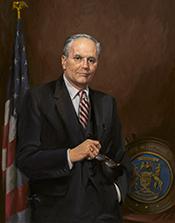
Mr. Speaker, there is no one in this Chamber or in this body that is not a loyal American and does not want to see to it that our troops, our Nation, and our security is protected. But this is not…
Mr. Speaker, there is no one in this Chamber or in this body that is not a loyal American and does not want to see to it that our troops, our Nation, and our security is protected. But this is not the way to do it.
This resolution is conceived in sin, and it is brought forward to us without an opportunity to consider it or discuss it properly. No hearings, no opportunity to amend, not adequate discussion, not an opportunity for a motion to recommit. All done in a closed fashion, sprung on this body with no time to consider. The end result: The opinion has to be that this is a clear, bald-faced attempt to strangle criticism of this administration. This is an attempt to silence the press.
I would quote to you what Tom Jefferson had to say some years ago: ``I am for freedom of the press and against all violations of the Constitution to silence by force and not by reason the complaints or criticisms, just or unjust, of our citizens against the conduct of their agents.''
Now, beyond that, Herbert Hoover: ``Absolute freedom of the press to discuss public questions is a cornerstone of American liberty.''
That is what we are talking about here, the first 10 amendments, the Bill of Rights of the Constitution.
This administration is perhaps the most deceitful and dishonest that I have seen in the 50 years I have served
in this body. They either do not know what they are talking about or they deliberately mislead. They told us about the weapons of mass destruction in Iraq. They told us about Iraqi connection to al Qaeda. They asked us to believe that the giving of no-bid contracts to Halliburton, which wastes billions of dollars, are in the public interest. They tell us that the insurgency is in its last throes. They tell us that they are protecting our civil liberties while they are tapping our phones and spying in our libraries and looking into our bank accounts. They tell us to trust them on everything because they are protecting our civil liberties.
Well, I don't think I can trust this administration to protect my civil liberties or those of the people that I serve. And I certainly don't believe that the majority has shown that we can trust them because they are not having a fair or decent debate on this. They are bringing to the floor a bill under a gag rule to gag the press, to intimidate the press, and to see to it that the one agency in this country that is telling the people the truth about what is going on over in Iraq and elsewhere and the functions of this administration is denied the opportunity to come forward and to tell the truth so that the people may know of the follies and abuses of this administration.
Mr. Speaker, I rise to denounce this resolution that we have before us today. I denounce it because, it is not only inaccurate--and inaccuracies have no place in carefully considered legislation--but also because I believe that it is a pernicious attack on the very foundation of a free society.
It is impossible to have a democracy without a free vibrant press, the claims of this Administration not withstanding.
It is the press that keeps our government transparent, and policy makers honest.
It is the press that informs the public, and we should have nothing to fear from an enlightened population.
In fact, what we should fear is a public that takes its cues from politicians rather than newspapers.
Over two-hundred years ago Thomas Jefferson said, ``I am for freedom of the press, and against all violations of the Constitution to silence by force and not by reason the complaints or criticisms, just or unjust, of our citizens against the conduct of their agents:''
Almost a century ago Walter Lipman wrote, ``A free press is not a privilege, but an organic necessity in a great society'' and the epitome of Republican presidents, Herbert Hoover, said. ``Absolute freedom of the press to discuss public questions is a foundation stone of American liberty;''
But this Congress and this President are cut from a whole different cloth. The press, and by extension the people, are things to be feared. They believe the press should be dismissed, and the public should be ignored.
This Administration seems to think that any oversight is bad oversight, and the Congress willingly agrees. In fact, the only thing that has kept the public as woefully informed as they are has been the press.
For the past five and a half years, the President and his deputies have told the American people ``Trust us.''
Trust us on the existence of weapons of mass destruction in Iraq.
Trust us on an Iraqi connection to Al Qeda.
Trust us on gigantic no bid contracts to Haliburton which wastes billions of dollars of the taxpayers money.
Trust us on mission accomplished.
Trust us on the insurgency being in its last throes.
Trust us that civil liberties are being protected as we pursue terrorists.
Trust us that we had no idea New Orleans levies could be breached.
Trust us that everything is legal and your civil liberties are protected.
Well, Mr. Speaker, I do not want to trust anymore. I cannot trust the claims of this Administration anymore, and the only people that have even attempted to keep them honest, and to inform the American people, is the press.
An uncomfortable truth was revealed in the New York Times, and a needless detail was included in a Washington Times story in 1998 that enabled Osama bin Laden to escape capture. Yet these are the prices we pay for a free press.
No one ever said that freedom was easy, or neat, or simple to manage. Rather it is hard, it complicates policy, and makes governing messy.
But it also works and it has made us a model to be emulated and to be envied throughout the world--and I would have it no other way.
I urge my colleagues to voted on the resolution.
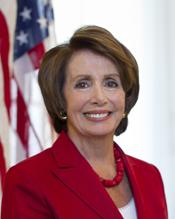
Mr. Speaker, as we approach the Fourth of July, that wonderful holiday where we celebrate America's Declaration of Independence, we must recall that our Founding Fathers understood and placed in our…
Mr. Speaker, as we approach the Fourth of July, that wonderful holiday where we celebrate America's Declaration of Independence, we must recall that our Founding Fathers understood and placed in our founding documents the important balance between liberty and security.
In that spirit, at the outset, let me reiterate that we all, Democrats and Republicans alike, support two principles. First, we support effective tools to fight terrorism, including the tracking of terrorist financing here and abroad under all applicable laws. Second, no one here condones disclosure of information that harms our vital national interest and makes locating terrorists and terrorist networks and disrupting their plans more difficult.
These basic principles and their frames, liberty and security, are contained in a balanced way in the substitute resolution offered by the distinguished gentleman from Massachusetts (Mr. Frank). Mr. Frank's resolution should have been permitted by the rule to be considered today.
But, again, in this closed Congress that we are in, we cannot consider alternatives. We can't even have a motion to recommit. I don't know what is so good about that as we go into the Fourth of July. But let us talk about the Republican resolution.
The Republican resolution before us today is quite clearly a document for political purposes. It makes sweeping and dubious conclusions on the facts and legality of the financial transaction surveillance program, unsupported by any fact-finding or oversight, and based upon representations by the President.
In a free society, we all have our roles and responsibilities. As public officials, we must safeguard our lawful intelligence activities, many of which have been conducted in secret. We respect that.
Our media, of course, have their public responsibilities. A free press is centered on reporting on the workings of government and on being alert, aware and free. They have an obligation to be responsible about their reporting of national security and to balance any reporting with the harm of disclosure.
Mr. Speaker, the Bush administration lacks credibility when it comes to complaining about leaks. The administration's record, and that of this Republican Congress, are marked by selective disclosures of classified information and selective expressions of displeasure over leaks.
When the identity of an undercover CIA officer was disclosed by high- ranking members of the administration in the White House, as part of a smear campaign against a critic of the Iraq war, the President did not fire any of the leakers. In fact, one of them was actually promoted. As Special Prosecutor Fitzgerald has told us, this disclosure could cause severe damage and irreparable harm to our national security.
Similarly, it was recently revealed that President Bush himself was alleged to have authorized for political purposes the selective leaking of intelligence information in a National Security Estimate.
Where was the outrage and the oversight from this Republican Congress? Nowhere to be seen. Repeatedly, this Republican Congress has spurned resolutions of inquiry and neglected congressional oversight responsibility to get to the bottom of leaks by the Bush administration.
So let us take this resolution for what it is. It is a campaign document. The Republican resolution contains a number of statements that simply cannot be factually confirmed and are not the result of congressional fact-finding or rigorous congressional oversight. The Republican resolution also contains a number of statements regarding the legality of the program and the safeguards it claims protects individual rights.
Let me just read what that is. This resolution finds that the Terrorist Financed Tracking Program has been conducted in accordance with all applicable laws, regulations, and Executive Orders, that appropriate safeguards and reviews have been instituted to protect individual civil liberties, and that Congress has been appropriately informed and consulted for the duration of the Program and will continue its oversight of the Program.
Continue its oversight of the program? There has never been any oversight of the program. The fact is, because there has never been any oversight of the program, there isn't one person in this body who will vote on this resolution who can attest to this statement. You are asking us to vote on something that we absolutely cannot attest to. Not any one of you can attest to this as a fact, because it isn't a fact.
So let us just go to where we began, to our founders, liberty and security. As I said before, when the identity of an undercover CIA officer was disclosed by high-ranking members of the administration as part of a smear tactic, nothing was done. Nothing was done by this Congress in terms of oversight. Nothing has been done.
The Frank substitute does not contain any of these unsupported conclusions. The Frank substitute is a resolution that is balanced and accurate and should command the support of all Members.
I intend to vote against this resolution. I wish that we could have the chance to vote for Mr. Frank's resolution. I think that would have been in keeping with the intentions of our Founding Fathers.
But let us keep in mind their constant admonition that in order to have security, we must have freedom. In order to have freedom, we must have security. We must have balance. This resolution does not.
Mr. Speaker, I thank the gentleman from Texas for yielding. And let me say at the outset I appreciate his good work on the Rules Committee and affording us the opportunity to testify last evening on…
Mr. Speaker, I thank the gentleman from Texas for yielding. And let me say at the outset I appreciate his good work on the Rules Committee and affording us the opportunity to testify last evening on this legislation.
I did not introduce this bill, or this resolution, for political purposes. I have a deep respect for our process and our institution here. I introduced that resolution to send a signal that a lot of people in this Congress, on both sides of the aisle, are pretty sick and tired of people leaking classified information, secret classified information, and having the media report it with no responsibility, no accountability whatsoever.
They are endangering our fighting men and women in Iraq and all over the world. They endanger the very freedoms that we enjoy. And it has been a continual frustration, whether it was the NSA revelations or the wire-tapping of al Qaeda suspects who are talking to people or emailing people in the United States.
This is the third time in a relatively short period of time that this country has been witness to essentially treasonous behavior on the part of individuals who leak classified information, clearly against the law, clearly against the law, and then brazenly reported in the front pages of major newspapers, aiding and abetting the enemy.
We are at war, ladies and gentlemen. Now, some of you folks find that an inconvenient fact, but we are at war. And when the Congress responded with the PATRIOT Act shortly after 9/11, that was supported by a broad array of Members on both sides of the aisle and with editorials in the New York Times and other newspapers telling the administration they better get on the case and set up ways that we can intercept terrorist financing.
Part of that legislation came out of my committee. We are pretty proud of what we did in that antimoney laundering, antiterrorist funding legislation that we made part of the PATRIOT Act. And guess what? It has worked. Now, that may drive some of these people crazy in certain editorial boards. But the fact is this program has worked effectively and efficiently since it was set up for the first time.
Even the New York Times in their editorial, the editorial board of the New York Times specifically called on Congress and the administration to set up programs to intercept and monitor financial reporting internationally. And this program has worked effectively well.
The President of the United States was not dumb enough to go out there and talk about methods and ways that this program worked, as the gentleman from Texas said. He talked about the program existing. But he did not say how it worked on a day-to-day basis. And now we have it spread all over the news media about how this program works. What is the average terrorist to think?
He is going to find a different way to move his money around, that is what he is going to do. He is going to change his behavior. So this resolution was set up to first of all say this is a very effective program. Let me just go over the four basic points of this resolution.
One, it supports the government's efforts to identify, track, and pursue terrorists and their financial supporters. Now, if you are against that, then vote ``no.''
Two, finds that the Treasury Department's Terrorist Financing Tracking Program has been conducted in accordance with law, with appropriate safeguards and reviews to protect individual civil liberties, and in consultation with and oversight by the Congress. If you don't like that, then vote against it.
Three, condemns the unauthorized disclosure of classified information. Who among us is not going to agree with that?
Four, calls on the news media organizations to stop disclosing classified intelligence programs that protect the lives of Americans and the capability of the government to identify, disrupt and capture terrorists.
That is what this resolution says. So read the resolution and then tell me what part of that resolution you don't agree with. And if you don't agree with it, then by all means vote ``no.''
I would like to close by quoting Mort Kondracke in a recent edition of Roll Call in his column. He says this: ``Would newspapers in the midst of World War II have printed the fact that the U.S. has broken German and Japanese codes, enabling the enemy to secure its communications, or reveal how and where Nazi spies were being interrogated?''
Mr. Kondracke goes on to say: ``Nowadays newspapers win Pulitzer Prizes for such disclosures.'' And then he goes on to say: ``The situation is very serious; in fact it is dire.'' It is dire. Now, I don't consider Mort Kondracke to be from the far right. But he has nailed this basic question that this resolution addresses.
We all, as Members of Congress, have a responsibility to protect this Nation and its people. And one of the ways we do it is making sure that we can track terrorist financing and do it and protect civil liberties, and we are doing just that.
And this resolution confirms that. I ask all of the Members on both sides of the aisle to support this resolution because this is really at the heart of a gut-check in this country, whether we are going to allow for this kind of behavior to take place, leaking classified information and then having newspapers win a Pulitzer Prize as a result.
Mr. Speaker, my colleague, the chairman of the Financial Services Committee, asked us to say where we disagree with this resolution. I would be glad to tell you that. This resolution makes factual…
Mr. Speaker, my colleague, the chairman of the Financial Services Committee, asked us to say where we disagree with this resolution. I would be glad to tell you that.
This resolution makes factual assertions that I do not believe any Member of the House can confidently and honestly make, and certainly not more than four or five could even pretend.
It says, for example, in the resolved clause that we know, those of us who would be voting for this, as a fact ``that the program has been conducted in accordance with all applicable laws, regulations, and executive orders; that appropriate safeguards have been used and been instituted to protect individuals' civil liberties.''
I don't believe any Member knows that. Maybe one or two will claim that. Do Members feel free to vote for things and say they know things which they don't?
It is also true in the whereases: ``Whereas the terrorist finance program consists of the appropriate and limited use of transaction information while maintaining respect for individual privacy.''
That may or may not be the case, but Members here don't know it. And let me talk about briefings, by the way. I am the senior Democrat on Financial Services, and I have been for 3\1/2\ years. I was, about a month ago, asked to a briefing. I was asked to a briefing and told that this was about to be made public and, therefore, they were going to brief me. But that if I listened to the briefing, when it was made public I couldn't talk about it.
Yes, I did not accept that briefing. It was a briefing only because it was about to be made public, and then I could not talk about it. But even if I had had the briefing, I do not believe I could in good conscience say these things.
Now, there are Members here who may have such faith in their administration that they will claim to say things which I know they don't know. Yes, faith-based programs are very useful, but I don't think faith-based resolutions do our job.
So I don't know that these things are wrong, but I disagree with making factual assertions about the program that may not be correct.
There is another factual assertion that may not be correct. And I know there has been a lot of concern about the Times. In the Republican majority's resolution there is an attack on the Times. It doesn't mention them. Quite sensitively, it doesn't mention the Times, but it talks about one of the most damaging allegations I have seen about a leak.
It says, on the bottom of page 2: ``In 1998, disclosure of classified information regarding efforts to monitor the communication of Osama bin Laden eliminated a valuable source of intelligence information on al Qaeda's activities.'' Now, that is a serious accusation to make against the Times. It is, of course, the Washington Times. Somehow, that adjective sort of disappeared.
There has been a lot of talk about the New York Times. It is the Washington Times who is referred to in your own resolution, Mr. Speaker, as having done a far more damaging specific thing. But the Washington Post came to the defense of the Washington Times and said, no, that was already known. Well, that is in controversy.
I am not prepared to vote for the resolution which accuses and convicts the Washington Times of having foiled our efforts to find Osama bin Laden when I don't know that as a fact. The Washington Post says it is unfair to the Washington Times.
You may be prepared, Mr. Speaker, to condemn the Washington Times so clearly for undermining our efforts to find Osama bin Laden. I am not.
But we are only here partly about the specifics. This is an outrage, the procedure. I do not understand how Members can hold up their heads when they advocate this.
Well over half of the Democratic Members saw this resolution for the first time at 4:15. There was no consultation about the draft. It was drafted entirely in a partisan way. We looked at it and said, we agree with some of it and not others. Yes, I think almost all Democrats agree that we should track the financial doings.
We have a resolution which takes much of the language from the Republican resolution and says that. It says we are in favor of tracking things, and we condemn leaks. We think it is wrong for people to leak. So we would like to have that in there. But we don't want to have to say, at the same time, that the Bush administration has done everything perfectly. We don't want to make some of the criticisms of the media that you make, including this denunciation of the Washington Times.
We are asking for a chance, in a democracy, to put forward our resolution where we could make clear that we disagree with some of the leaking; where we make clear that we think you should track the financial records of the terrorists; but we do not want to have to say that we also agree with the administration. That would seem to me a reasonable choice.
Mr. Speaker, to the discredit of the Republican Party, you have denied us that choice. This is not democracy, this is plebiscitary democracy. You demand a ``yes'' or ``no.'' Mubarak and Peron and Hugo Chavez would be proud of your understanding of the democratic process.
Show 11 more
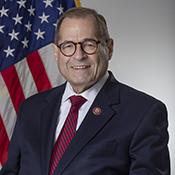
Mr. Speaker, today we see how a great Nation loses its freedom. This resolution seeks to chill free speech by punishing the New York Times and other publications for doing their job. That is…
Mr. Speaker, today we see how a great Nation loses its freedom.
This resolution seeks to chill free speech by punishing the New York Times and other publications for doing their job. That is unacceptable and, frankly, beneath the dignity of the United States Congress. All of us here took an oath to support and defend the Constitution. Yet those pushing this resolution seek to do just the opposite: to batter the Constitution's most hallowed pillar, the right of free speech and a free press.
Rampant lawbreaking by the Government, secrecy and selective leaks of classified information to cover up that illegality, and threats of retaliation and prosecution against anyone who dares to tell the truth.
How has the Republican Congress responded? Have they lived up to their responsibility to get to the truth? To subpoena administration officials or records? To hold anyone accountable?
No. The lapdog Republican Congress has worked hand and glove with the Karl Rove White House to cover up the administration's lies and crimes. The Republican Congress, with the chorus of cooperating media, has helped the administration retaliate against anyone who challenges them or tries to tell the American people the truth.
Does Osama bin Laden know that we had tapped into his phone lines? Of course. The administration leaked it to the Washington Times which published it. Any outrage here? No.
Did the White House leak the name of a CIA agent to friendly reporters to retaliate against a critic? Yes. Did the President promise to fire anyone who leaked? Yes. Now that we know it was the Vice President and Karl Rove, did the President make good on his promise? Of course not.
Does anyone here really think that Osama bin Laden didn't assume we were tracking bank transactions? Administration officials have testified before Congress that they did, and, for those members who read bills before they vote, we required the administration to do just this in the PATRIOT Act. Not a big secret.
Do you really think the terrorists didn't know we would be tapping their phones? The only people who were kept in the dark were the American people who were never told that their privacy was illegally being invaded by the government. Bin Laden doesn't care if the government gets a warrant, but law abiding citizens should and they have a right to know that, even if the President tries to cover it up.
If the President breaks the law and covers it up, if the Congress refuses to get the truth and joins the cover-up, then the free press is the only guardian of truth and democracy. That is why Thomas Jefferson said he would prefer a free press without a government to a government without a free press.
Free speech and a free press are what keep a Nation free.
Is it espionage to tell the American people that the President is breaking the law? Is it treason to report the truth? Of course not. It is the duty of a free press to tell the truth especially when people in power would prefer that the American people be kept in the dark.
Think of the thousands of young people who might still be alive if the press had more carefully scrutinized the lies and distortions used to lead this Nation to war in Iraq. Would we know about the illegal use of torture if the press hadn't uncovered it? Would we know that the government was spying on innocent citizens without a warrant?
No President should be able to cover up his wrongdoing just by declaring it ``secret.'' That is what some here are suggesting. We are a great and free Nation because the Government can't put you in jail simply for telling the truth, and the Government can't use its prisons to cover up its crimes.
A lawless President cannot hide behind the law. A cover-up Congress cannot complain if the truth gets out.
What sort of countries prosecute journalists? What sort of country hates free speech? Countries whose governments fear the truth. Stalin locked up journalists. So does China. Free nations do not. As Justice Brandeis wrote, ``Publicity is justly commended as a remedy for social and industrial diseases. Sunlight is said to be the best of disinfectants.''
Once again, the administration and its apologists tell us that this activity was legal
and the leak helps the terrorists. How do we know this? Because they say so and tell us to trust them.
After six years of lies and cover-ups, of law breaking and leaking, this administration and the Republican Congress cannot be trusted.
Let's get the facts. I haven't seen them, and I don't think the members who will be voting today have either. We only know what we read in the papers.
The American people deserve better from their representatives. They deserve and demand the truth. Thank G-d we have a free press. Thank G-d we are still a free people. If the Republican Congress is afraid to get to the truth, someone else will have to do it for them. For now, we have a free press. Perhaps next year we will have a Congress willing to assume its constitutional duties now abandoned by the lap-dog Republican Congress.
Mr. Speaker, we are a Nation at war. As a member of the Intelligence Committee, I am aware of many of the Nation's most important efforts to fight and win this war. I pay close attention to our…
Mr. Speaker, we are a Nation at war. As a member of the Intelligence Committee, I am aware of many of the Nation's most important efforts to fight and win this war. I pay close attention to our antiterrorist programs, particularly when the details are revealed without proper authorization and our best efforts are rendered ineffective.
I see a trend developing in the growing number of unauthorized disclosures of classified information. In the past few months, we have read countless articles revealing details and making allegations about a host of sensitive national security programs, from the President's Terrorist Surveillance Program to the Terrorist Finance Tracking Program.
Each time, individuals who lack the fortitude to publicly take responsibility for their actions have leaked the details about these classified programs. Each time, the news media gladly aids and abets them by publishing whatever secret that will sell another paper. I am shocked by the easy attitude of many in the media towards disclosing our Nation's secrets.
This past Sunday, June 25, the executive editor of The New York Times wrote a letter to the readers about the newspaper's decision to publish the details of the Terrorist Finance Tracking program. For me, the editor perfectly summed up the prevailing attitude of the media elite.
He wrote, ``The question we start with as journalists is not `why publish?' but `why would we withhold information of significance?' We have sometimes done so, holding stories or editing out details that could serve those hostile to the United States. But we need a compelling reason to do so.''
Frankly, Mr. Speaker, I take issue with that kind of arrogance. I can offer quite a few compelling reasons.
First, it is against the law.
Second, it puts our citizens at risk.
Third, publishing secrets in the open press cripples our capability to stop terrorists.
But don't just take my word for it. The WMD Commission reported this very fact to the President, and the Commission's precise language is quoted in the preamble to this resolution.
Fourth, publishing secrets in the open press costs us the cooperation of our allies.
I mentioned earlier that we are a Nation at war, but we are not alone in this war. The intelligence services of our allies cooperate with us and share their sense of information with us upon mutual understanding that this information won't be revealed.
When the secrets provided to us by our allies wind up on the front page, that sense of trust is deeply fractured. We appear unable to keep a secret. Our allies get hurt when they tried to help. They will be less likely to cooperate with us on sensitive intelligence matters in the future for fear of compromising their own sources and methods.
Finally, publishing secrets in the open press undermines people's confidence in the intelligence community. The American people support the extraordinary lengths which our government has gone to defend the Nation against the terrorists on September 11. Moreover, the American people rightly believe that our intelligence service, like our military, is the best in the world. The late Mr. Zarqawi could have attested to both sentiments.
However, when our secrets get published, the public's confidence in the intelligence community starts to ebb. Our intelligence community appears incompetent, unable to maintain the secrecy essential to carry out the mission. Our intelligence community also appears to be unsure of itself.
Mr. Speaker, I have no doubt about our efforts to fight the terrorists. Our House Intelligence Committee has conducted extensive oversight of sensitive anti-terror programs, including three briefings on the Terrorist Surveillance Program. We have had one briefing on the Terrorist Finance Tracking Program.
Mr. Speaker, I will like to make a note that the gentlewoman from California said there were no briefings on this information. I personally have had a briefing and also six on these various detainee issues. Unquestionably, these programs are legal, and they were very effective.
It is my hope, Mr. Speaker, that the Department of Justice convene a grand jury, provide immunity to the newspapers, the editors and reporters, if and only if they would reveal their government sources for these classified leaks.
We need to make clear to the men and women of our intelligence agencies, to our allies and to the American people that these leaks must and will stop. We need to make clear to those members of the news media that publishing leaks of sensitive national security information will not be tolerated.
This resolution does just that. I offer my support, and I urge my colleagues in the House to do the same.
Mr. Speaker, I would like to thank my colleague from California, the ranking member on the Intelligence Committee, for the work that we have done together on leaks, and I think the approach that we…
Mr. Speaker, I would like to thank my colleague from California, the ranking member on the Intelligence Committee, for the work that we have done together on leaks, and I think the approach that we have taken on the committee.
We, today, are on different sides. I rise in strong support of this measure.
Just a week ago, this program was one of the most highly classified and sensitive intelligence programs of our Nation. Former 9/11 Commission Chairman Tom Kean said that the idea of a U.S. having a tap into this type of information would have been, quote, impossible to believe, end of quote.
There is little dispute that the program is lawful. It is appropriate, and it has been an effective tool to identify terrorists and their financial networks. The Intelligence Committee has been briefed, has been conducting oversight.
My colleague has talked a little bit about the Members that were briefed. But also it is important to note, and as many of us know, much of the work that is done on any committee in the House or on the Senate side, there is significant work that is done by staff. Nine staff members, joint House, Senate, 9/11 inquiry staff, were briefed in May of 2002. HPSCI consistently, in 2002, 2003, twice in 2005 and three times in 2006, have been briefed on this program. The program has had extensive exposure to staff and to Members.
A week ago, this program was only about one thing, finding our enemies and keeping Americans safe. If it had been talked about in a secret setting or in a public setting, it would have violated the law, the rules of the House. Today I am not only talking about it; it seems like everyone in America may be talking about it. And the interesting thing is that perhaps the group that is most closely watching this and trying to understand exactly what this program may be capable of doing are our terrorist enemies. They are now aware of what we are doing.
Sure, we told them after 2002 we are going to track you financially, we are going to try to intercept your communications. We are going to try to find you in Afghanistan. We are going to try to find you wherever you may be. Sure, they knew that. But they never had the details of the specific tools that would be at our disposal to help us catch them, to help us stop their funding streams and enable us to go out and make sure that they could not attack us again successfully. That tool has now been compromised, along with other tools.
That is a disappointment. The newspapers bear a responsibility for that. I find it very interesting that as we go through this process, the New York Times has decided that on their part, they went through a process that indicated that now it is okay to release this information. We don't know what process that is. Some of us have had experiences with the New York Times before where they were going, quote, unquote, through their process. And it is a very, very questionable process that they go through, but we don't know and they don't talk about that process.
They don't talk about who they talk to. They don't talk about what information is provided to them, and they do not talk about what information they provide to the sources or to the people that they may be seeking information from.
I would love the New York Times to do an expose of their program and their review process that led them to this decision to publish this program. I would also like to see the expose of the process that they went through and the deliberative process and the information that they shared when they made the decision to go public with the terrorist surveillance program.
I think it would be enlightening to the American people to understand their process as they make these very, very critical decisions that have an impact on our national security.
And, finally, we do need to focus on finding the people that leaked this information, whether they are in the intelligence community, whether they are somewhere else, in the executive branch, or whether they are in Congress. I think we have a mutual goal and objective to stop these leaks, to do effective oversight, and to make sure that the intelligence community is working within the box that we have set. That function is the responsibility of the House and the Senate. It is not a function of America's press to go through that process in a way that is unaccountable to us and to the American people.
I urge my colleagues to support this resolution.
Mr. Speaker, I thank Ranking Member Slaughter for your extraordinary leadership on not just this subject but countless subjects dealing with the liberties of American citizens. Last night in the…
Mr. Speaker, I thank Ranking Member Slaughter for your extraordinary leadership on not just this subject but countless subjects dealing with the liberties of American citizens.
Last night in the Rules Committee, Ms. Slaughter said that this was an historic moment. I could not agree more with that fact.
This does not call for hyperbole or hyperventilation or fancy rhetorical flourishes. This particular measure has the weight that must have existed at the time that the Founding Fathers and Mothers of this country gave birth to the first amendment of the United States Constitution.
If there had been no reporting in the free press during the period of the colonies as to what King George and those persons were doing, there may never have been an American Revolution.
Almost exactly 35 years ago, the eminent Mr. Justice Potter Stewart in the Pentagon Papers said this: ``In the absence of the governmental checks and balances present in other areas of our national life, the only effective restraint upon executive policy and power in the areas of national defense and international affairs may lie in an enlightened citizenry, in an informed and critical public opinion which alone can here protect the values of democratic government,'' he wrote.
He continued, ``For this reason, it is perhaps here that a press that is alert, aware, and free most vitally serves the basic purpose of the first amendment. For without an informed and free press, there cannot be an enlightened people.''
I have had the distinct privilege of being the president of an international organization, the Organization for Security and Cooperation in Europe, its parliamentary assembly that Ms. Slaughter and others are members of as well; and during that period I was the lead election monitor in places where democracy is trying to find root but in places where journalists courageously went forward to offer information that should be offered against those administrations, Belarus being an example of that, where there is no free press and where the people cannot rise up, as they did in Ukraine where the press played a major role.
I believe this administration operates on the premise the best defense is a good offense. It is never any accountability with them. It is always somebody else did something. A guy lost his election to one of our distinguished colleagues from Utah last week. He said the devil was the reason that he did not have his campaign money. Maybe it is the devil that makes them do this.
We have flag burning proposals for constitutional amendment. We have gay marriage proposals for constitutional amendment. Yet when it comes to the basic freedom and liberty of this country, the press, we are presented with a resolution that condemns them. That is all it does. It does not sanction. It condemns them.
It is our opportunity to vent and say little things about The New York Times. Please add The Washington Times. Please add The Wall Street Journal. Please add other media entities that have reported along these lines.
I do not believe in what Fox News says, but I believe, and I do, for their right to say it.
You know better than to seek to amend the first amendment, and let us look at this resolution.
It is factually inaccurate when you say, ``Whereas appropriate Members of Congress, including the members of the Committee on Intelligence of the Senate and House of Representatives.'' I am a member of that committee. You say that they were briefed, and I am here to tell you that every member of that committee was not briefed on this particular program.
But I want you to listen to Ben Franklin. I want all of you to listen to Ben Franklin. He said, ``Those who would give up essential liberty to purchase a little temporary safety deserve neither liberty nor safety.''
Find all of the leakers, prosecute them, put them in jail, but let a free press stand in this Nation.
Mr. Speaker, will the gentleman yield?
Is the gentleman referring to the financial services program, as offered?
I would like to see that exact date, and I am here to tell you that we didn't receive such a briefing. And if you can tell me that this resolution holds that every member was briefed, I am here to tell you that that is not true.

Mr. Speaker, I rise in opposition to the rule and this measure. Mr. Speaker, today the House will vote on a resolution that is allegedly intended to reaffirm Congress's support for stemming the flow…
Mr. Speaker, I rise in opposition to the rule and this measure.
Mr. Speaker, today the House will vote on a resolution that is allegedly intended to reaffirm Congress's support for stemming the flow of money to terrorists. I support efforts by this Administration to cut the financial supply lines to terrorists.
But the resolution before us today is really just an open-faced attack on America's free press for telling the American people what its government is doing.
After 9/11, the Bush Administration announced that one of the ways it would go after terrorists was by cutting off their funding sources. A major part of this effort has been monitoring suspect international financial transactions.
I believe that, at the time, this was the correct decision. We can and must do everything we legally can to protect the country from those who wish to bring us harm.
The Administration's efforts to monitor financial transactions have been a frequent topic of public discussion: By members of the Administration; in open, on the record Congressional testimony; and in the United Nations.
However, to date, I am not aware of any harsh recriminations from the President or Republicans in Congress as a result of any of these discussions over the last few years.
But now that the program has been discussed in the New York Times and other newspapers, the radical right wing Republican enemies of a free press in America have come out swinging--again.
Congress had a choice when the NY Times reported on the SWIFT program. It could have announced hearings on the effectiveness of the SWIFT program and on the impact of public reporting on the SWIFT program. But it did not do that.
This extremist Congress instead has chosen a different, but very familiar, path--a partisan political attack for which it has become famous.
The Bush Administration and this republican-controlled Congress represent the most partisan and most anti-free press Republican party this nation has seen since the days of Richard Nixon and his infamous `enemies list.'
The fact remains that this president and this Republican Congress wants to manipulate the press to its advantage through the use of covert propaganda and through lying about intelligence and other matters, but it wants to curb the press's role in communicating to the American people information about the actions of its government.
That sounds more like the Soviet Union before the wall came down than the America that I know and love and whose freedom, and free press, is so revered around the world.
The fact is that the party in control of this Congress is out of gas when it comes to leading, they are out of gas when it comes to big bold new ideas to re-energize America.
They have resorted, nearly every day now, to their tired old whipping posts, including the free press, in a desperate effort to hold on to their power, an awesome power that they have failed to use to help America.
As this bill's sponsor, Mr. Oxley, so wisely stated earlier, we do need accountability in Government.
The President promised to hold those accountable in his Administration involved in leaking the identity of a covert CIA agent to the press. He has yet to do that. Instead he and his rubberstamp Congress choose to go after leaked information only when it suits their political agenda.
We have yet to hold anyone accountable for the falsified intelligence about Weapons of Mass Destruction. Instead we get the rubberstamp Congress's version of a weapon of Mass Distraction just in time for the November elections.
This Congress has not held anyone accountable for pulling military resources away from Afghanistan to prepare for the unjustified war and occupation of Iraq, which allowed Osama bin Laden to escape capture.
If only the Administration and its Republican allies in Congress were as aggressive in attacking Osama bin Laden as they are when attacking the press, we might be safer as a nation.
Mr. Speaker, I am proud to speak in support of this resolution. Mr. Speaker, this is a critical time in our Nation's history. Our Nation is at war, and we have seen serial leaks of very important…
Mr. Speaker, I am proud to speak in support of this resolution.
Mr. Speaker, this is a critical time in our Nation's history. Our Nation is at war, and we have seen serial leaks of very important classified top secret information. It is almost as if we are shadow boxing. We are talking about it in a moot court-type way or a theoretical way.
The fact is lives are at risk. The fact is in this particular situation, by the New York Times' own account it was a program that was working. It was a program for which the Times has raised no questions of illegality. It is a program under which the administration, the Secretary of the Treasury, the two cochairmen of the 9/11 Commission went to the New York Times and asked them, in the interest of national security, not to release the details of this program. But they went ahead and did it anyway. And that really, to me, casts a motive over why, questions the motive of the New York Times in doing this.
Back in December I strongly objected when they leaked the details of the NSA terrorist surveillance program. At least, in that instance, the Times raised what they thought were questions of legality. But that didn't even exist in this current situation which, to me, goes to the heart of an issue here, is what is the obligation of a newspaper, how absolute is the first amendment.
My belief in a democratic society, where there is always friction between freedom and responsibility, and while we give extensive rein to the first amendment, to freedom of speech, freedom of the press, no freedom can be absolute. With freedom comes responsibility. And to me the New York Times has clearly crossed that line of responsibility. Those who leaked the information, yes, they should certainly be prosecuted. To get to them is going to be very difficult to do, unless, as the gentleman from Kansas pointed out, reporters and editors are brought in before a grand jury and threatened with contempt if they do not disclose the names of their sources.
Then we will see if those who say they are so opposed to leaks will stand up and support that. Because reporters should not be sacrosanct. Newspapers should not be sacrosanct. It is fine to launch special investigations and hire special prosecutors to go after any other person in the country. But as soon as anyone focuses on the media, focuses on the New York Times, or the L.A. Times, or the Wall Street Journal, then panic sets in, as if special walls of protection must be set up around them. They are not entitled to that.
To me they have a responsibility. The New York Times has woefully failed in its responsibility. I say the jury might still be out on the L.A. Times and the Wall Street Journal as to whether or not, what their motives were. Did they only follow because the New York Times went first? I don't know. But no one should be immune from investigation here. They should be looked into very, very carefully. We should go after the leakers. And to me, the New York Times, is not just the facilitator of the leakers, they are coconspirators of the leakers because it was leaked to the Times and the Times leaked it to the American people and to the world. And because of that, our position as a Nation is weaker. Our people are at risk. Our people suffer and face the further suffering and death, and that will be on the hands of the New York Times. That blood will be on their hands.
I urge adoption of the resolution.
Mr. Speaker, I am not sure that the federal government's program examine records of international financial transactions collected by the Society for Worldwide Interbank Financial Telecommunications…
Mr. Speaker, I am not sure that the federal government's program examine records of international financial transactions collected by the Society for Worldwide Interbank Financial Telecommunications (SWIFT) is worth all the sound and fury that has surrounded the program since its existence was revealed last week. For one thing, this program appears to threaten civil liberties less than the already widely known ``Know Your Customer'' program or the requirement that American financial institutions file suspicious activity reports whenever a transaction's value exceeds $10,000. However, the program's defenders should consider the likelihood that having federal bureaucrats wade through mountains of SWIFT-generated data will prove as ineffective in protecting the American people as other government programs that rely on sifting through mountains of financial data in hopes of identifying ``suspicious transactions.''
According to investigative journalist James Bovard, writing in the Baltimore Sun on June 28, ``[a] U.N. report on terrorist financing released in May 2002 noted that a `suspicious transaction report' had been filed with the U.S. government over a $69,985 wire transfer that Mohamed Atta, leader of the hijackers, received from the United Arab Emirates. The report noted that `this particular transaction was not noticed quickly enough because the report was just one of a very large number and was not distinguishable from those related to other financial crimes.' '' Congress should be skeptical, to say the least, that giving federal bureaucrats even more data to sift through will make the American people safer.
Congress should examine all government programs that monitor the financial transactions of American citizens to ensure they are effective and they do not violate the rights of Americans. Unfortunately, many of my colleagues are attacking newspapers that inform the American people about government surveillance on the grounds that revealing that the federal government is monitoring financial transactions somehow damages national security. It is odd to claim that, until last Friday, neither the American people nor America's enemies had any idea that the government is engaging in massive surveillance of financial transactions, since the government has been openly operating major financial surveillance programs since the 1970s and both the administration and Congress have repeatedly discussed increasing the government's power to monitor financial transactions. In fact, such an expansion of the government's ability to spy on Americans' banking activites was a major part of the PATRIOT Act.
Congress should be leery of criticizing media reporting on government activity. Attacking the media for revealing information about government surveillance of American citizens may make reporters reluctant to aggressively pursue stories that may embarrass the government. A reluctance by the media to ``embarrass the state'' will make it easier for the federal government to get away with violating the people's rights. Media reports on government surveillance and other security programs can help Congress and the Americans people ensure the government's actions effectively protect Americans' security without infringing on basic constitutional liberties. I therefore urge my colleagues to reject this resolution.

Mr. Speaker, I rise in support of the Frank amendment because I believe I can embrace security and freedom and liberty. Mr. Speaker, I rise in opposition to H. Res. 895, the Oxley resolution. I…
Mr. Speaker, I rise in support of the Frank amendment because I believe I can embrace security and freedom and liberty.
Mr. Speaker, I rise in opposition to H. Res. 895, the Oxley resolution. I support efforts to identify, track, and pursue suspected foreign terrorists and their financial supporters by tracking terrorist money flows and uncovering terrorist networks. But it does not serve the nation well to condemn the media for performing its watchdog function even in a time of war. Indeed, it is especially important during wartime that the media be even more vigilant and aggressive in informing the public. I do not support the resolution because it encourages the media to become lapdogs who see their role as cheerleaders for the Administration rather than as
watchdogs who exist to safeguard the public interest.
During the 1790s under the Alien and Sedition Acts, and then again during the Civil War and World War I, the government prosecuted journalists. Today, we are again hearing government officials calling for prosecution of journalists who report on the conduct of the global war on terrorism and the war in Iraq and disclose to the American public information which the Administration would rather the American people not know. Some even accuse journalists who do so of treason.
But what these self-styled media critics fail to understand is that the American people have a need for a free press to check the excesses of government, and never more so than today.
Mr. Speaker, the resolution declares, without any proof or evidence, that the House of Representatives ``finds that the Program has been conducted in accordance with all applicable laws, that appropriate safeguards and reviews have been instituted to protect civil liberties, and that Congress has been appropriately informed and consulted and will continue Program oversight.''
This is a major flaw in the resolution. Affirming as fact claims that are not nothing more than unsupported assertions is not persuasive or in the best interest of the Congress and the country. Rather, it is merely argument by ipse dixit. Today the Supreme Court ruled that the Administration overstepped its bounds regarding Guantanamo Bay detainees. Who's to say that the Administration has not overstepped boundaries in the area of domestic spying as well? The fact is we simply do not know. We do not know because this Republican-led Congress has been derelict in its Constitutional duty of oversight.
Mr. Speaker, as a senior member of the Homeland Security Committee, I support efforts to identify and track down terrorists and oppose the leaking of classified information. But I will not play politics with this Nation's security. Nor will I support the majority's trampling on liberty and freedom of the press.
Most disconcerting is the chilling effect this ill-conceived resolution will have on the press. In the words of one of our distinguished founding fathers, George Mason, `The freedom of the press is one of the greatest bulwarks of liberty, and can never be restrained but by despotic governments.'
I oppose the resolution and urge its defeat.

Mr. Speaker, I rise to oppose this resolution and to support a more responsible alternative, which, unfortunately, is not made in order for debate. Mr. Speaker, there is not a single Member of this…
Mr. Speaker, I rise to oppose this resolution and to support a more responsible alternative, which, unfortunately, is not made in order for debate.
Mr. Speaker, there is not a single Member of this body who thinks tracking terrorist finances is a bad idea. As the 9/11 Commission said, ``follow the money.''
But any intelligence program, no matter how critical to national security, must comply with law and the Constitution. The Supreme Court ruled today in the Hamdan case that no President has unlimited powers; no President is above the law, even in matters of national security.
Although this program has been operating for over 4 years, virtually no one in this House knew about it, and there has been absolutely no oversight. Two Members were briefed in 2002 when the program began. One Member in 2003, two in 2005, that is a total of five. And now several dozen more, including me, last month, only after it became clear that the program had leaked. The only reason I and others were briefed is the administration wanted to stay ahead of the press curve.
Mr. Speaker, if you vote for the Oxley resolution, you are certifying that the program is in full compliance with all applicable law. As previous speakers have pointed out, the second finding of the resolution states the program has been conducted in accordance with all applicable laws, regulations, and executive orders; appropriate safeguards and reviews have been instituted to protect individual civil liberties, and Congress has been appropriately informed and consulted.
How can you know this? I don't know this. No Member has been briefed more than once. No hearings have been held and no reports issued.
Moreover, I feel this White House will use a ``yes'' vote as an authorization for further programs, scope unknown.
Mr. Speaker, I won't go there. Remember the authorization to use military force in Afghanistan? Until today, in the Hamdan decision, the White House has been using that vote to support unlimited detention as well as the NSA program.
There are some legitimate issues raised by this resolution. Leaks can get people killed. Those who leak highly sensitive intelligence information can damage our national security. The resolution many of us wanted to offer makes this clear. But if we prosecute newspapers and erode the first amendment, we will end up killing our Constitution.
In May, the House Intelligence Committee held open hearings on the role and responsibilities of the media in national security. We received over 25 submissions for the record, and the overwhelming sentiment was to tread lightly on action that could chill our first amendment freedoms.
Mr. Speaker, as I said in that hearing, if anyone wants to live in a society where journalists are thrown in prison, I encourage them to move to Cuba, China or North Korea to see if they feel safer.
This resolution asks Congress to give the administration another blank check. It is unworthy.

Mr. Speaker, I rise today in opposition to this partisan and ill-considered resolution. This resolution will do absolutely nothing to stop leaks. It's just another cheap, hypocritical political…
Mr. Speaker, I rise today in opposition to this partisan and ill-considered resolution. This resolution will do absolutely nothing to stop leaks. It's just another cheap, hypocritical political stunt.
My colleagues should know that only last month, the House Permanent Select Committee on Intelligence held an open hearing on the very issue of the media's role in leaks. What many of us observed at that hearing is that there are at least two contributing factors to leaks to the media. One of those is the use of the classification system to conceal improper, even potentially criminal, conduct by executive branch officials.
One example of this was the original report by General Taguba on the Abu Ghraib abuse investigation. It was originally classified SECRET/ NOFORN but ultimately declassified in its entirety when the images of prisoner abuse appeared in the media. To the best of my knowledge, the House Intelligence Committee has never investigated why that report-- which detailed criminal behavior by American military personnel--was classified in the first place. What I do know is that we in the Congress must never allow the classification system to be used to conceal criminal conduct--which brings me to the second factor contributing to leaks of classified information to the media: the refusal of this Congress to take its oversight responsibilities seriously.
As I've said before, this Congress doesn't exactly put out a welcome mat for those executive branch employees who seek to report misconduct or illegal activity by their agencies. If you don't believe me, just look at the status of the only bill before Congress right now that would actually offer some modest protections for national security whistleblowers.
H.R. 1317, Federal Employee Protection of Disclosures Act, was offered by my colleague, the gentleman from Pennsylvania (Mr. Platt), last year. This bill would clarify which disclosures of information are protected from prohibited personnel practices, and require that nondisclosure policies, forms, and agreements conform to certain disclosure protections. Last September, this bipartisan bill was reported favorably by the House Government Reform committee on a vote of 34-1, yet the Rules committee has refused to allow this bill to come to the floor for a vote on at least three occasions.
This resolution shoots the messenger. A more useful approach would address the problems of overclassification, the lack of oversight, and whistleblower protections. If you want to stop leaks, if you want to ensure that classified information doesn't appear in the press, then give executive branch employees who have concerns about their agency's conduct a place to go with their concerns without fear of retaliation so that we can do our job: oversight of the executive branch. I urge my colleagues to vote no on this resolution.

Mr. Speaker, I ask unanimous consent that H. Res. 900 be included in the Record at this point in time. Mr. Speaker, I rise in support of H. Res. 900. Let me read H. Res. 900's opening resolution:…
Mr. Speaker, I ask unanimous consent that H. Res. 900 be included in the Record at this point in time.
Mr. Speaker, I rise in support of H. Res. 900.
Let me read H. Res. 900's opening resolution: ``Supporting intelligence and law enforcement programs to track terrorists and terrorist finances conducted consistent with Federal law and with appropriate congressional consultation.''
Everybody in this body supports tracking terrorists. Everybody.
The gentleman who chairs the Intelligence Committee just talked about process. Neither the New York Times nor the Los Angeles Times nor the Wall Street Journal raise their hands and swear to defend the Constitution and protect the laws of the United States of America. We do that, and we have processes to determine how best to do that.
We are at war, and we ought to be united, and I will lament the fact that the Republican leadership continually presents resolutions designed to divide rather than to bring us together. There was not one second of hearing on the resolution before this body, not one. There was no process. There was no oversight. There was no fact-finding. There was no way to determine what, in fact, the facts are.
We are not the newspapers. We have sworn an oath before God and to our constituents to do our work in a way that protects and defends the Constitution and the statutes of this land. You have not done that. You have not brought us together. You have not said let us come together on a resolution. Not only that, but we have an alternative. I have read you its preamble, which accomplishes the same objective you want but without adopting premises that none of us, not one of the 435 of us, know that those premises are accurate.
I tell my friend, the gentleman from Ohio (Mr. Oxley), he has not had one minute of hearings in his committee on this resolution, not one.
Is that responsible? Is that the way the people of the United States want us to carry out important functions of government when we are at war? I think not. I think they expect more of us. We do not honor this institution or its processes or our Constitution by the actions we take today on this floor.
I will oppose this resolution, but I will support H.R. 900, which says very clearly and emphatically that we want to determine what terrorists are doing. We want to intercept the information from financial institutions that further a conspiracy to create terror and injury and damage to our country and to our people. But we should have done it, I tell the chairman, in a collegial way, in a cooperative way, in a partnership against terrorism, not in a partisan effort to divide and to make political points.
Bill Text
Latest available legislative text
        [Congressional Bills 109th Congress]
[From the U.S. Government Publishing Office]
[H. Res. 900 Introduced in House (IH)]

109th CONGRESS
2d Session
H. RES. 900

Supporting intelligence and law enforcement programs to track
terrorists and terrorist finances conducted consistent with Federal law
and with appropriate congressional consultation.

_______________________________________________________________________

IN THE HOUSE OF REPRESENTATIVES

June 29, 2006

Mr. Frank of Massachusetts (for himself, Ms. Pelosi, Mr. Hoyer, Ms.
Harman, Mr. Conyers, Mr. Obey, Mr. Kildee, Mr. Clay, Ms. Hooley, Mr.
Gutierrez, Mrs. Maloney, Ms. Berkley, Ms. Kilpatrick of Michigan, Ms.
Wasserman Schultz, Mr. Spratt, Mr. Baca, Mrs. Capps, Mr. Butterfield,
Mr. Brown of Ohio, Mr. Israel, Mr. Crowley, Ms. Carson, Mr. Jefferson,
Ms. Roybal-Allard, Mr. Kind, Mr. Evans, Mr. Bishop of New York, Mr.
Moran of Virginia, Mr. McGovern, Ms. Lee, Mr. Reyes, Mrs. Napolitano,
Ms. Velazquez, Ms. DeGette, Ms. DeLauro, Mr. Watt, Mr. Ross, Mr.
Higgins, Ms. McCollum of Minnesota, Mrs. McCarthy, Mr. Blumenauer, Mr.
Tierney, Mr. Honda, Mr. Cleaver, Mr. Skelton, Ms. Eshoo, Mr. Michaud,
Mr. Capuano, Mr. Gonzalez, Mr. Cardin, Mr. Al Green of Texas, Mr.
Grijalva, Ms. Baldwin, Mr. Levin, Ms. Millender-McDonald, Mr. Meehan,
Ms. Jackson-Lee of Texas, Mr. Melancon, Mrs. Tauscher, Mr. Meeks of New
York, Mr. Lantos, Ms. Moore of Wisconsin, Mr. Scott of Georgia, Mr.
McNulty, Ms. Schwartz of Pennsylvania, Mr. Nadler, Mr. Udall of New
Mexico, Mr. Inslee, Mr. Boswell, Mr. Gene Green of Texas, Mrs. Davis of
California, Mr. Berman, Ms. Waters, Mr. Lynch, Ms. Solis, Mr. Berry,
Mr. Baird, Mr. Ackerman, Mr. Gordon, Mr. Kennedy of Rhode Island, Ms.
Watson, Mr. Farr, Mr. Etheridge, Mr. Olver, Mr. Pomeroy, Mr. McDermott,
Mr. Sabo, Mr. Wexler, Mr. Dingell, Mr. Waxman, Mr. Schiff, Mr. Price of
North Carolina, Ms. Linda T. Sanchez of California, Mr. Andrews, Mr.
Becerra, Mr. Scott of Virginia, Mr. Davis of Alabama, Mr. Delahunt, Mr.
Langevin, Ms. Herseth, Mr. Jackson of Illinois, Ms. McKinney, Mr.
George Miller of California, Mr. Pascrell, Mr. Holt, Ms. Slaughter, Mr.
Davis of Florida, Mr. Udall of Colorado, Mr. Rothman, Ms. Matsui, Mr.
Miller of North Carolina, Ms. Bordallo, Mr. Weiner, Mr. Moore of
Kansas, Ms. Kaptur, Mr. Neal of Massachusetts, Mr. Cramer, Mr.
Ruppersberger, Ms. Corrine Brown of Florida, Mr. Larson of Connecticut,
Mrs. Christensen, Mr. Meek of Florida, Mrs. Lowey, Mr. Oberstar, Ms.
Zoe Lofgren of California, Mr. Snyder, Mr. Lipinski, Mr. Stupak, Mr.
Sherman, Mr. Salazar, Mr. Tanner, Ms. Woolsey, and Mr. Chandler)
submitted the following resolution; which was referred to the Committee
on Financial Services

_______________________________________________________________________

RESOLUTION

Supporting intelligence and law enforcement programs to track
terrorists and terrorist finances conducted consistent with Federal law
and with appropriate congressional consultation.

Whereas the United States is currently engaged in a global war on terrorism to
prevent future attacks against American civilian and military interests
at home and abroad;
Whereas intelligence programs are essential to gathering critical information
necessary for identifying, disrupting, and capturing terrorists before
they carry out further attacks;
Whereas there is a national security imperative for maintaining the secrecy of
our legitimate intelligence capabilities;
Whereas effective intelligence depends on cooperation with foreign governments
and individuals who trust the United States to protect their
confidences;
Whereas the unauthorized disclosure of sensitive intelligence information,
including the names of clandestine service officers of the Central
Intelligence Agency, inflicts significant damage to United States
activities in the global war on terrorism;
Whereas following the September 11, 2001, terrorist attacks, Congress passed the
USA PATRIOT Act, which included anti-terrorist financing provisions that
bolster Federal Government and law enforcement capabilities to find and
disrupt the financiers of terrorist organizations;
Whereas following the September 11, 2001, terrorist attacks, the President
directed the Federal Government to use all appropriate measures to
identify, track, and pursue not only those persons who commit terrorist
acts here and abroad, but also those who provide financial or other
support for terrorist activity;
Whereas consistent with this directive, the United States Government initiated a
classified Terrorist Finance Tracking Program and the Secretary of the
Treasury issued subpoenas to gather information on suspected
international terrorists through bank transaction information;
Whereas a few Members of Congress were notified of the existence of the
Terrorist Finance Tracking Program, with most notifications taking place
only after an intent to publish stories about the program was
communicated;
Whereas Congress has authorized the Secretary of the Treasury to explore the
implementation of systems to review all cross-border wire transactions;
Whereas the bipartisan 9/11 Commission recommended that ``Vigorous efforts to
track terrorist financing must remain front and center in U.S.
counterterrorism efforts''; and
Whereas persons in positions of trust and responsibility granted access to
highly sensitive intelligence programs should not violate their solemn
obligations not to disclose classified information: Now, therefore, be
it
Resolved, That the House of Representatives--
(1) supports efforts to identify, track, and pursue
suspected foreign terrorists and their financial supporters by
tracking terrorist money flows and uncovering terrorist
networks here and abroad in accordance with existing applicable
law, but notes that the expression of such support in this
resolution should not be construed as providing additional
authority for such efforts; and
(2) expresses concern that the unauthorized disclosure of
classified information may have made efforts to locate
terrorists and terrorist networks, and disrupt their plans,
more difficult.
<all>