













I
110th CONGRESS
2d Session
H. R. 6107
IN THE HOUSE OF REPRESENTATIVES
May 21, 2008
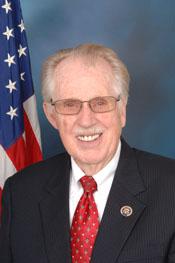
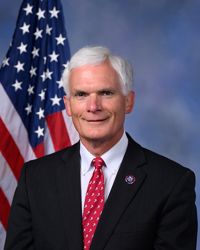
Mr. Young of Alaska (for himself and Mr. Bartlett of Maryland) introduced the following bill; which was referred to the Committee on Natural Resources, and in addition to the Committees on Energy and Commerce and Science and Technology, for a period to be subsequently determined by the Speaker, in each case for consideration of such provisions as fall within the jurisdiction of the committee concerned
A BILL
To direct the Secretary of the Interior to establish and implement a competitive oil and gas leasing program that will result in an environmentally sound program for the exploration, development, and production of the oil and gas resources of the Coastal Plain of Alaska, and for other purposes.
Short title
This Act may be cited as the
American Energy Independence and Price
Reduction Act
.
Definitions
In this Act:
Coastal Plain
The term Coastal Plain
means that area
described in appendix I to part 37 of title 50, Code of Federal
Regulations.
Secretary
The
term Secretary
, except as otherwise provided, means the
Secretary of the Interior or the Secretary’s designee.
Leasing program for lands within the Coastal Plain
In general
The Secretary shall take such actions as are necessary—
to establish and implement, in accordance with this Act and acting through the Director of the Bureau of Land Management in consultation with the Director of the United States Fish and Wildlife Service, a competitive oil and gas leasing program that will result in an environmentally sound program for the exploration, development, and production of the oil and gas resources of the Coastal Plain; and
to administer the provisions of this Act through regulations, lease terms, conditions, restrictions, prohibitions, stipulations, and other provisions that ensure the oil and gas exploration, development, and production activities on the Coastal Plain will result in no significant adverse effect on fish and wildlife, their habitat, subsistence resources, and the environment, including, in furtherance of this goal, by requiring the application of the best commercially available technology for oil and gas exploration, development, and production to all exploration, development, and production operations under this Act in a manner that ensures the receipt of fair market value by the public for the mineral resources to be leased.
Repeal
Repeal
Section 1003 of the Alaska National Interest Lands Conservation Act of 1980 (16 U.S.C. 3143) is repealed.
Conforming amendment
The table of contents in section 1 of such Act is amended by striking the item relating to section 1003.
Compliance with requirements under certain other laws
Compatibility
For purposes of the National Wildlife Refuge System Administration Act of 1966 (16 U.S.C. 668dd et seq.), the oil and gas leasing program and activities authorized by this section in the Coastal Plain are deemed to be compatible with the purposes for which the Arctic National Wildlife Refuge was established, and no further findings or decisions are required to implement this determination.
Adequacy of the Department of the Interior’s legislative environmental impact statement
The Final Legislative Environmental Impact
Statement
(April 1987) on the Coastal Plain prepared pursuant to
section 1002 of the Alaska National Interest Lands Conservation Act of 1980 (16
U.S.C. 3142) and section 102(2)(C) of the National Environmental Policy Act of
1969 (42 U.S.C. 4332(2)(C)) is deemed to satisfy the requirements under the
National Environmental Policy Act of 1969 that apply with respect to prelease
activities, including actions authorized to be taken by the Secretary to
develop and promulgate the regulations for the establishment of a leasing
program authorized by this Act before the conduct of the first lease
sale.
Compliance with NEPA for other actions
Before conducting the first lease sale under this Act, the Secretary shall prepare an environmental impact statement under the National Environmental Policy Act of 1969 with respect to the actions authorized by this Act that are not referred to in paragraph (2). Notwithstanding any other law, the Secretary is not required to identify nonleasing alternative courses of action or to analyze the environmental effects of such courses of action. The Secretary shall only identify a preferred action for such leasing and a single leasing alternative, and analyze the environmental effects and potential mitigation measures for those two alternatives. The identification of the preferred action and related analysis for the first lease sale under this Act shall be completed within 18 months after the date of enactment of this Act. The Secretary shall only consider public comments that specifically address the Secretary’s preferred action and that are filed within 20 days after publication of an environmental analysis. Notwithstanding any other law, compliance with this paragraph is deemed to satisfy all requirements for the analysis and consideration of the environmental effects of proposed leasing under this Act.
Relationship to State and local authority
Nothing in this Act shall be considered to expand or limit State and local regulatory authority.
Special areas
In general
The Secretary, after consultation with the State of Alaska, the city of Kaktovik, and the North Slope Borough, may designate up to a total of 45,000 acres of the Coastal Plain as a Special Area if the Secretary determines that the Special Area is of such unique character and interest so as to require special management and regulatory protection. The Secretary shall designate as such a Special Area the Sadlerochit Spring area, comprising approximately 4,000 acres.
Management
Each such Special Area shall be managed so as to protect and preserve the area’s unique and diverse character including its fish, wildlife, and subsistence resource values.
Exclusion from leasing or surface occupancy
The Secretary may exclude any Special Area from leasing. If the Secretary leases a Special Area, or any part thereof, for purposes of oil and gas exploration, development, production, and related activities, there shall be no surface occupancy of the lands comprising the Special Area.
Directional drilling
Notwithstanding the other provisions of this subsection, the Secretary may lease all or a portion of a Special Area under terms that permit the use of horizontal drilling technology from sites on leases located outside the Special Area.
Limitation on closed areas
The Secretary’s sole authority to close lands within the Coastal Plain to oil and gas leasing and to exploration, development, and production is that set forth in this Act.
Regulations
In general
The Secretary shall prescribe such regulations as may be necessary to carry out this Act, including rules and regulations relating to protection of the fish and wildlife, their habitat, subsistence resources, and environment of the Coastal Plain, by no later than 15 months after the date of enactment of this Act.
Revision of regulations
The Secretary shall periodically review and, if appropriate, revise the rules and regulations issued under subsection (a) to reflect any significant biological, environmental, or engineering data that come to the Secretary’s attention.
Lease sales
In general
Lands may be leased pursuant to this Act to any person qualified to obtain a lease for deposits of oil and gas under the Mineral Leasing Act (30 U.S.C. 181 et seq.).
Procedures
The Secretary shall, by regulation, establish procedures for—
receipt and consideration of sealed nominations for any area in the Coastal Plain for inclusion in, or exclusion (as provided in subsection (c)) from, a lease sale;
the holding of lease sales after such nomination process; and
public notice of and comment on designation of areas to be included in, or excluded from, a lease sale.
Lease sale bids
Bidding for leases under this Act shall be by sealed competitive cash bonus bids.
Acreage minimum in first sale
In the first lease sale under this Act, the Secretary shall offer for lease those tracts the Secretary considers to have the greatest potential for the discovery of hydrocarbons, taking into consideration nominations received pursuant to subsection (b)(1), but in no case less than 200,000 acres.
Timing of lease sales
The Secretary shall—
conduct the first lease sale under this Act within 22 months after the date of the enactment of this Act;
evaluate the bids in such sale and issue leases resulting from such sale, within 90 days after the date of the completion of such sale; and
conduct additional sales so long as sufficient interest in development exists to warrant, in the Secretary’s judgment, the conduct of such sales.
Grant of leases by the Secretary
In general
The Secretary may grant to the highest responsible qualified bidder in a lease sale conducted pursuant to section 4 any lands to be leased on the Coastal Plain upon payment by the lessee of such bonus as may be accepted by the Secretary.
Subsequent transfers
No lease issued under this Act may be sold, exchanged, assigned, sublet, or otherwise transferred except with the approval of the Secretary. Prior to any such approval the Secretary shall consult with, and give due consideration to the views of, the Attorney General.
Lease terms and conditions
In general
An oil or gas lease issued pursuant to this Act shall—
provide for the payment of a royalty of not less than 12½ percent in amount or value of the production removed or sold from the lease, as determined by the Secretary under the regulations applicable to other Federal oil and gas leases;
provide that the Secretary may close, on a seasonal basis, portions of the Coastal Plain to exploratory drilling activities as necessary to protect caribou calving areas and other species of fish and wildlife;
require that the lessee of lands within the Coastal Plain shall be fully responsible and liable for the reclamation of lands within the Coastal Plain and any other Federal lands that are adversely affected in connection with exploration, development, production, or transportation activities conducted under the lease and within the Coastal Plain by the lessee or by any of the subcontractors or agents of the lessee;
provide that the lessee may not delegate or convey, by contract or otherwise, the reclamation responsibility and liability to another person without the express written approval of the Secretary;
provide that the standard of reclamation for lands required to be reclaimed under this Act shall be, as nearly as practicable, a condition capable of supporting the uses which the lands were capable of supporting prior to any exploration, development, or production activities, or upon application by the lessee, to a higher or better use as approved by the Secretary;
contain terms and conditions relating to protection of fish and wildlife, their habitat, subsistence resources, and the environment as required pursuant to section 3(a)(2);
provide that the lessee, its agents, and its contractors use best efforts to provide a fair share, as determined by the level of obligation previously agreed to in the 1974 agreement implementing section 29 of the Federal Agreement and Grant of Right of Way for the Operation of the Trans-Alaska Pipeline, of employment and contracting for Alaska Natives and Alaska Native Corporations from throughout the State;
prohibit the export of oil produced under the lease; and
contain such other provisions as the Secretary determines necessary to ensure compliance with the provisions of this Act and the regulations issued under this Act.
Project labor agreements
The Secretary, as a term and condition of each lease under this Act and in recognizing the Government’s proprietary interest in labor stability and in the ability of construction labor and management to meet the particular needs and conditions of projects to be developed under the leases issued pursuant to this Act and the special concerns of the parties to such leases, shall require that the lessee and its agents and contractors negotiate to obtain a project labor agreement for the employment of laborers and mechanics on production, maintenance, and construction under the lease.
Coastal plain environmental protection
No significant adverse effect standard To govern authorized Coastal Plain activities
The Secretary shall, consistent with the requirements of section 3, administer the provisions of this Act through regulations, lease terms, conditions, restrictions, prohibitions, stipulations, and other provisions that—
ensure the oil and gas exploration, development, and production activities on the Coastal Plain will result in no significant adverse effect on fish and wildlife, their habitat, and the environment;
require the application of the best commercially available technology for oil and gas exploration, development, and production on all new exploration, development, and production operations; and
ensure that the maximum amount of surface acreage covered by production and support facilities, including airstrips and any areas covered by gravel berms or piers for support of pipelines, does not exceed 2,000 acres on the Coastal Plain.
Site-specific assessment and mitigation
The Secretary shall also require, with respect to any proposed drilling and related activities, that—
a site-specific analysis be made of the probable effects, if any, that the drilling or related activities will have on fish and wildlife, their habitat, subsistence resources, and the environment;
a plan be implemented to avoid, minimize, and mitigate (in that order and to the extent practicable) any significant adverse effect identified under paragraph (1); and
the development of the plan shall occur after consultation with the agency or agencies having jurisdiction over matters mitigated by the plan.
Regulations To protect coastal plain fish and wildlife resources, subsistence users, and the environment
Before implementing the leasing program authorized by this Act, the Secretary shall prepare and promulgate regulations, lease terms, conditions, restrictions, prohibitions, stipulations, and other measures designed to ensure that the activities undertaken on the Coastal Plain under this Act are conducted in a manner consistent with the purposes and environmental requirements of this Act.
Compliance with Federal and State environmental laws and other requirements
The proposed regulations, lease terms, conditions, restrictions, prohibitions, and stipulations for the leasing program under this Act shall require compliance with all applicable provisions of Federal and State environmental law, and shall also require the following:
Standards at least
as effective as the safety and environmental mitigation measures set forth in
items 1 through 29 at pages 167 through 169 of the Final Legislative
Environmental Impact Statement
(April 1987) on the Coastal
Plain.
Seasonal limitations on exploration, development, and related activities, where necessary, to avoid significant adverse effects during periods of concentrated fish and wildlife breeding, denning, nesting, spawning, and migration.
That exploration activities, except for surface geological studies, be limited to the period between approximately November 1 and May 1 each year and that exploration activities shall be supported, if necessary, by ice roads, winter trails with adequate snow cover, ice pads, ice airstrips, and air transport methods, except that such exploration activities may occur at other times if the Secretary finds that such exploration will have no significant adverse effect on the fish and wildlife, their habitat, and the environment of the Coastal Plain.
Design safety and construction standards for all pipelines and any access and service roads, that—
minimize, to the maximum extent possible, adverse effects upon the passage of migratory species such as caribou; and
minimize adverse effects upon the flow of surface water by requiring the use of culverts, bridges, and other structural devices.
Prohibitions on general public access and use on all pipeline access and service roads.
Stringent reclamation and rehabilitation requirements, consistent with the standards set forth in this Act, requiring the removal from the Coastal Plain of all oil and gas development and production facilities, structures, and equipment upon completion of oil and gas production operations, except that the Secretary may exempt from the requirements of this paragraph those facilities, structures, or equipment that the Secretary determines would assist in the management of the Arctic National Wildlife Refuge and that are donated to the United States for that purpose.
Appropriate prohibitions or restrictions on access by all modes of transportation.
Appropriate prohibitions or restrictions on sand and gravel extraction.
Consolidation of facility siting.
Appropriate prohibitions or restrictions on use of explosives.
Avoidance, to the extent practicable, of springs, streams, and river system; the protection of natural surface drainage patterns, wetlands, and riparian habitats; and the regulation of methods or techniques for developing or transporting adequate supplies of water for exploratory drilling.
Avoidance or minimization of air traffic-related disturbance to fish and wildlife.
Treatment and disposal of hazardous and toxic wastes, solid wastes, reserve pit fluids, drilling muds and cuttings, and domestic wastewater, including an annual waste management report, a hazardous materials tracking system, and a prohibition on chlorinated solvents, in accordance with applicable Federal and State environmental law.
Fuel storage and oil spill contingency planning.
Research, monitoring, and reporting requirements.
Field crew environmental briefings.
Avoidance of significant adverse effects upon subsistence hunting, fishing, and trapping by subsistence users.
Compliance with applicable air and water quality standards.
Appropriate seasonal and safety zone designations around well sites, within which subsistence hunting and trapping shall be limited.
Reasonable stipulations for protection of cultural and archeological resources.
All other protective environmental stipulations, restrictions, terms, and conditions deemed necessary by the Secretary.
Considerations
In preparing and promulgating regulations, lease terms, conditions, restrictions, prohibitions, and stipulations under this section, the Secretary shall consider the following:
The stipulations and conditions that govern the National Petroleum Reserve-Alaska leasing program, as set forth in the 1999 Northeast National Petroleum Reserve-Alaska Final Integrated Activity Plan/Environmental Impact Statement.
The environmental protection standards that governed the initial Coastal Plain seismic exploration program under parts 37.31 to 37.33 of title 50, Code of Federal Regulations.
The land use stipulations for exploratory drilling on the KIC–ASRC private lands that are set forth in Appendix 2 of the August 9, 1983, agreement between Arctic Slope Regional Corporation and the United States.
Facility consolidation planning
In general
The Secretary shall, after providing for public notice and comment, prepare and update periodically a plan to govern, guide, and direct the siting and construction of facilities for the exploration, development, production, and transportation of Coastal Plain oil and gas resources.
Objectives
The plan shall have the following objectives:
Avoiding unnecessary duplication of facilities and activities.
Encouraging consolidation of common facilities and activities.
Locating or confining facilities and activities to areas that will minimize impact on fish and wildlife, their habitat, and the environment.
Utilizing existing facilities wherever practicable.
Enhancing compatibility between wildlife values and development activities.
Access to public lands
The Secretary shall—
manage public lands in the Coastal Plain subject to subsections (a) and (b) of section 811 of the Alaska National Interest Lands Conservation Act (16 U.S.C. 3121); and
ensure that local residents shall have reasonable access to public lands in the Coastal Plain for traditional uses.
Expedited judicial review
Filing of complaint
Deadline
Subject to paragraph (2), any complaint seeking judicial review of any provision of this Act or any action of the Secretary under this Act shall be filed—
except as provided in subparagraph (B), within the 90-day period beginning on the date of the action being challenged; or
in the case of a complaint based solely on grounds arising after such period, within 90 days after the complainant knew or reasonably should have known of the grounds for the complaint.
Venue
Any complaint seeking judicial review of any provision of this Act or any action of the Secretary under this Act may be filed only in the United States Court of Appeals for the District of Columbia.
Limitation on scope of certain review
Judicial review of a Secretarial decision to conduct a lease sale under this Act, including the environmental analysis thereof, shall be limited to whether the Secretary has complied with the terms of this Act and shall be based upon the administrative record of that decision. The Secretary’s identification of a preferred course of action to enable leasing to proceed and the Secretary’s analysis of environmental effects under this Act shall be presumed to be correct unless shown otherwise by clear and convincing evidence to the contrary.
Limitation on other review
Actions of the Secretary with respect to which review could have been obtained under this section shall not be subject to judicial review in any civil or criminal proceeding for enforcement.
Federal and State distribution of revenues
In general
Notwithstanding any other provision of law, of the amount of adjusted bonus, rental, and royalty revenues from Federal oil and gas leasing and operations authorized under this Act—
50 percent shall be paid to the State of Alaska; and
except as provided in section 12(d), the balance shall be transferred to the ANWR Alternative Energy Trust Fund established by this Act.
Payments to Alaska
Payments to the State of Alaska under this section shall be made semiannually.
Rights-of-way across the Coastal Plain
In general
The Secretary shall issue rights-of-way and easements across the Coastal Plain for the transportation of oil and gas—
except as provided in paragraph (2), under section 28 of the Mineral Leasing Act (30 U.S.C. 185), without regard to title XI of the Alaska National Interest Lands Conservation Act (30 U.S.C. 3161 et seq.); and
under title XI of the Alaska National Interest Lands Conservation Act (30 U.S.C. 3161 et seq.), for access authorized by sections 1110 and 1111 of that Act (16 U.S.C. 3170 and 3171).
Terms and conditions
The Secretary shall include in any right-of-way or easement issued under subsection (a) such terms and conditions as may be necessary to ensure that transportation of oil and gas does not result in a significant adverse effect on the fish and wildlife, subsistence resources, their habitat, and the environment of the Coastal Plain, including requirements that facilities be sited or designed so as to avoid unnecessary duplication of roads and pipelines.
Regulations
The Secretary shall include in regulations under section 3(g) provisions granting rights-of-way and easements described in subsection (a) of this section.
Conveyance
In order to maximize Federal revenues by removing clouds on title to lands and clarifying land ownership patterns within the Coastal Plain, the Secretary, notwithstanding the provisions of section 1302(h)(2) of the Alaska National Interest Lands Conservation Act (16 U.S.C. 3192(h)(2)), shall convey—
to the Kaktovik Inupiat Corporation the surface estate of the lands described in paragraph 1 of Public Land Order 6959, to the extent necessary to fulfill the Corporation’s entitlement under sections 12 and 14 of the Alaska Native Claims Settlement Act (43 U.S.C. 1611 and 1613) in accordance with the terms and conditions of the Agreement between the Department of the Interior, the United States Fish and Wildlife Service, the Bureau of Land Management, and the Kaktovik Inupiat Corporation effective January 22, 1993; and
to the Arctic Slope Regional Corporation the remaining subsurface estate to which it is entitled pursuant to the August 9, 1983, agreement between the Arctic Slope Regional Corporation and the United States of America.
Local government impact aid and community service assistance
Financial assistance authorized
In general
The Secretary may use amounts available from the Coastal Plain Local Government Impact Aid Assistance Fund established by subsection (d) to provide timely financial assistance to entities that are eligible under paragraph (2) and that are directly impacted by the exploration for or production of oil and gas on the Coastal Plain under this Act.
Eligible entities
The North Slope Borough, the City of Kaktovik, and any other borough, municipal subdivision, village, or other community in the State of Alaska that is directly impacted by exploration for, or the production of, oil or gas on the Coastal Plain under this Act, as determined by the Secretary, shall be eligible for financial assistance under this section.
Use of assistance
Financial assistance under this section may be used only for—
planning for mitigation of the potential effects of oil and gas exploration and development on environmental, social, cultural, recreational, and subsistence values;
implementing mitigation plans and maintaining mitigation projects;
developing, carrying out, and maintaining projects and programs that provide new or expanded public facilities and services to address needs and problems associated with such effects, including fire-fighting, police, water, waste treatment, medivac, and medical services; and
establishment of a coordination office, by the North Slope Borough, in the City of Kaktovik, which shall—
coordinate with and advise developers on local conditions, impact, and history of the areas utilized for development; and
provide to the Committee on Resources of the House of Representatives and the Committee on Energy and Natural Resources of the Senate an annual report on the status of coordination between developers and the communities affected by development.
Application
In general
Any community that is eligible for assistance under this section may submit an application for such assistance to the Secretary, in such form and under such procedures as the Secretary may prescribe by regulation.
North Slope Borough communities
A community located in the North Slope Borough may apply for assistance under this section either directly to the Secretary or through the North Slope Borough.
Application assistance
The Secretary shall work closely with and assist the North Slope Borough and other communities eligible for assistance under this section in developing and submitting applications for assistance under this section.
Establishment of fund
In general
There is established in the Treasury the Coastal Plain Local Government Impact Aid Assistance Fund.
Use
Amounts in the fund may be used only for providing financial assistance under this section.
Deposits
Subject to paragraph (4), there shall be deposited into the fund amounts received by the United States as revenues derived from rents, bonuses, and royalties from Federal leases and lease sales authorized under this Act.
Limitation on deposits
The total amount in the fund may not exceed $11,000,000.
Investment of balances
The Secretary of the Treasury shall invest amounts in the fund in interest bearing government securities.
Authorization of appropriations
To provide financial assistance under this section there is authorized to be appropriated to the Secretary from the Coastal Plain Local Government Impact Aid Assistance Fund $5,000,000 for each fiscal year.
ANWR Alternative Energy Trust Fund
Establishment of trust fund
There is established in the Treasury of the United
States a trust fund to be known as the ANWR Alternative Energy Trust
Fund
, consisting of such amounts as may be transferred to the ANWR
Alternative Energy Trust Fund as provided in section 9.
Expenditures from ANWR Alternative Energy Trust Fund
In general
Amounts in the ANWR Alternative Energy Trust Fund shall
be available without further appropriation to carry out specified provisions of
the Energy Policy Act of 2005 (Public Law 109–58; in this section referred to
as EPAct2005
) and the Energy Independence and Security Act of
2007 (Public Law 110–140; in this section referred to as
EISAct2007
), as follows:
| To carry out the provisions of: | The following percentage of annual receipts to the ANWR Alternative Energy Trust Fund, but not to exceed the limit on amount authorized, if any: |
| EPAct2005: | |
| Section 210 | 1.5 percent |
| Section 242 | 1.0 percent |
| Section 369 | 2.0 percent |
| Section 401 | 6.0 percent |
| Section 812 | 6.0 percent |
| Section 931 | 19.0 percent |
| Section 942 | 1.5 percent |
| Section 962 | 3.0 percent |
| Section 968 | 1.5 percent |
| Section 1704 | 6.0 percent |
| EISAct2007: | |
| Section 207 | 15.0 percent |
| Section 607 | 1.5 percent |
| Title VI, Subtitle B | 3.0 percent |
| Title VI, Subtitle C | 1.5 percent |
| Section 641 | 9.0 percent |
| Title VII, Subtitle A | 15.0 percent |
| Section 1112 | 1.5 percent |
| Section 1304 | 6.0 percent. |
Apportionment of excess amount
Notwithstanding paragraph (1), any amounts allocated under paragraph (1) that are in excess of the amounts authorized in the applicable cited section or subtitle of EPAct2005 and EISAct2007 shall be reallocated to the remaining sections and subtitles cited in paragraph (1), up to the amounts otherwise authorized by law to carry out such sections and subtitles, in proportion to the amounts authorized by law to be appropriated for such other sections and subtitles.