Intelligence Authorization Act for Fiscal Year 2004
 Rep. Porter J. Goss (R-FL)
Legislative Activity
Stay on top of the latest movement without scrolling through every action
Became Public Law No: 108-177.
December 13, 2003
View full timeline
Introduced in House
June 11, 2003
Referred to the House Committee on Intelligence (Permanent Select).
June 11, 2003
Mr. Goss asked unanimous consent that the Committee on Intelligence (Permanent) have until midnight on June 17 to file a report on H.R. 2417. Agreed to without objection.
June 17, 2003
Reported (Amended) by the Committee on Intelligence (Permanent). H. Rept. 108-163.
June 18, 2003
Placed on the Union Calendar, Calendar No. 80.
June 18, 2003
Rules Committee Resolution H. Res. 295 Reported to House. Rule provides for consideration of H.R. 2417 with 1 hour of general debate. Previous question shall be considered as ordered without intervening motions except motion to recommit with or without instructions. Waives all points of order against consideration of the bill. The bill shall be considered for amendment under the five-minute rule. It shall be in order to consider as an original bill for the purpose of amendment under the five-minute rule the amendment in the nature of a substitute now printed in the bill, which shall be considered as read. Measure will be considered read. Specified amendments are in order. No amendment to the committee amendment in the nature of a substitute shall be in order except those printed in the Rules Committee report accompanying the resolution, and all points or order against said amendments are waived. Each amendment may be offered only in the order printed in...
June 24, 2003 • 9:49 PM
Rule H. Res. 295 passed House.
June 25, 2003 • 4:33 PM
Considered under the provisions of rule H. Res. 295. (consideration: CR H5870-5881)
June 25, 2003 • 4:33 PM
Rule provides for consideration of H.R. 2417 with 1 hour of general debate. Previous question shall be considered as ordered without intervening motions except motion to recommit with or without instructions. Waives all points of order against consideration of the bill. The bill shall be considered for amendment under the five-minute rule. It shall be in order to consider as an original bill for the purpose of amendment under the five-minute rule the amendment in the nature of a substitute now printed in the bill, which shall be considered as read. Measure will be considered read. Specified amendments are in order. No amendment to the committee amendment in the nature of a substitute shall be in order except those printed in the Rules Committee report accompanying the resolution, and all points or order against said amendments are waived. Each amendment may be offered only in the order printed in...
June 25, 2003 • 4:33 PM
House resolved itself into the Committee of the Whole House on the state of the Union pursuant to H. Res. 295 and Rule XXIII.
June 25, 2003 • 4:34 PM
The Speaker designated the Honorable Johnny Isakson to act as Chairman of the Committee.
June 25, 2003 • 4:34 PM
GENERAL DEBATE - The Committee of the Whole proceeded with one hour of general debate on H.R. 2417.
June 25, 2003 • 4:35 PM
Committee of the Whole House on the state of the Union rises leaving H.R. 2417 as unfinished business.
June 25, 2003 • 5:42 PM
Considered as unfinished business. (consideration: CR H5883-5903; text of measure as reported in House: CR H5883-5888)
June 25, 2003 • 6:23 PM
The House resolved into Committee of the Whole House on the state of the Union for further consideration.
June 25, 2003 • 6:25 PM
DEBATE - Pursuant to H. Res. 295 the Committee of the Whole proceeded with debate on the Cox amendment.
June 25, 2003 • 6:28 PM
DEBATE - Pursuant to H. Res. 295 the Committee of the Whole proceeded with debate on the Harman amendment.
June 25, 2003 • 6:39 PM
DEBATE - Pursuant to H. Res. 295 the Committee of the Whole proceeded with debate on the Hastings of FL amendment.
June 25, 2003 • 6:51 PM
POSTPONED VOTE - At the conclusion of debate on the Hastings (FL) amendment, the Chair put the question on adoption of the amendment and by voice vote, announced that the ayes had prevailed. Mr. Hastings (FL) demanded a recorded vote and the Chair postponed further proceedings.
June 25, 2003 • 7:14 PM
DEBATE - Pursuant to H. Res. 295 the Committee of the Whole proceeded with debate on the Kucinich amendment.
June 25, 2003 • 7:19 PM
POSTPONED VOTE - At the conclusion of debate on the Kucinich amendment, the Chair put the question on adoption of the amendment and by voice vote, announced that the noes had prevailed. Mr. Kucinich demanded a recorded vote and the Chair postponed further proceedings.
June 25, 2003 • 7:58 PM
DEBATE - Pursuant to H. Res. 295 the Committee of the Whole proceeded with debate on the Lee amendment.
June 25, 2003 • 7:59 PM
POSTPONED VOTE - At the conclusion of debate on the Lee amendment, the Chair put the question on adoption of the amendment and by voice vote, announced that the noes had prevailed. Ms. Lee demanded a recorded vote and the Chair postponed further proceedings.
June 25, 2003 • 8:22 PM
Considered as unfinished business. (consideration: CR H5943-5946)
June 26, 2003 • 10:18 AM
The House resolved into Committee of the Whole House on the state of the Union for further consideration.
June 26, 2003 • 10:18 AM
UNFINISHED BUSINESS - The Chair announced that the unfinished business was the question of adoption of amendments which had been debated on Wednesday, June 25, 2003, and on which further proceedings had been postponed.
June 26, 2003 • 10:18 AM
The House rose from the Committee of the Whole House on the state of the Union to report H.R. 2417.
June 26, 2003 • 11:00 AM
The previous question was ordered pursuant to the rule.
June 26, 2003 • 11:01 AM
The House adopted the amendment in the nature of a substitute as agreed to by the Committee of the Whole House on the state of the Union.
June 26, 2003 • 11:01 AM
POSTPONED ROLL CALL ON H.R. 2417 - The Speaker put the question on the adoption of H.R. 2417 and by voice vote, announced that the ayes had prevailed. Mr. Goss demanded the yeas and nays and the Speaker postponed further proceedings on the question of adoption of the bill until later in the legislative day.
June 26, 2003 • 11:05 AM
Considered as unfinished business. (consideration: CR 6/26/2003 H6256-6257)
June 27, 2003 • 2:32 AM
Passed/agreed to in House: On passage Passed by the Yeas and Nays: 410 - 9 (Roll no. 333).
June 27, 2003 • 2:41 AM
On passage Passed by the Yeas and Nays: 410 - 9 (Roll no. 333).
June 27, 2003 • 2:41 AM
Motion to reconsider laid on the table Agreed to without objection.
June 27, 2003 • 2:41 AM
Received in the Senate. Read twice. Placed on Senate Legislative Calendar under General Orders. Calendar No. 184.
June 27, 2003
Measure laid before Senate by unanimous consent. (consideration: CR 8/1/2003 S10858-10866)
July 31, 2003
Senate struck all after the Enacting Clause and substituted the language of S.1025 amended.
July 31, 2003
Passed Senate with an amendment by Unanimous Consent. (text: CR 8/1/2003 S10858-10866)
July 31, 2003
Senate insisted on its amendment, requested a conference.
July 31, 2003
Senate appointed conferee(s) Roberts; Hatch; DeWine; Bond; Lott; Snowe; Hagel; Chambliss; Warner; Rockefeller; Levin; Feinstein; Wyden; Durbin; Bayh; Edwards; Mikulski from the Select Committee on the Intelligence.
August 1, 2003
Senate appointed conferee(s) Allard; Nelson FL from the Committee on Armed Services.
August 1, 2003
Message on Senate action sent to the House.
September 3, 2003
Mr. Goss asked unanimous consent that the House disagree to the Senate amendment, and agree to a conference. (consideration: CR 11/19/2003 H11434-11440)
November 18, 2003 • 5:07 PM
On motion that the House disagree to the Senate amendment, and agree to a conference Agreed to without objection. (consideration: CR 11/19/2003 H11434)
November 18, 2003 • 5:08 PM
Motion to reconsider laid on the table Agreed to without objection.
November 18, 2003 • 5:08 PM
Ms. Harman moved that the House instruct conferees. (consideration: CR 11/19/2003 H11434-11440; text: CR 11/19/2003 H11434)
November 18, 2003 • 5:10 PM
DEBATE - The House proceeded with one hour of debate on the Harman motion to instruct conferees on H.R. 2417.
November 18, 2003 • 5:10 PM
The previous question was ordered without objection.
November 18, 2003 • 6:02 PM
On motion that the House instruct conferees Agreed to by the Yeas and Nays: 404 - 12 (Roll no. 633).
November 18, 2003 • 6:22 PM
The Speaker appointed conferees - from the Permanent Select Committee on Intelligence for consideration of the House bill and the Senate amendment, and modifications committed to conference: Goss, Bereuter, Boehlert, Gibbons, LaHood, Cunningham, Hoekstra, Burr, Everett, Gallegly, Collins, Harman, Hastings (FL), Reyes, Boswell, Peterson (MN), Cramer, Eshoo, Holt, and Ruppersberger.
November 18, 2003 • 6:23 PM
The Speaker appointed conferees - from the Committee on Armed Services for consideration of defense tactical intelligence and related activities: Hunter, Weldon (PA), and Skelton.
November 18, 2003 • 6:23 PM
Conference committee actions: Conferees agreed to file conference report.
November 19, 2003 • 10:49 AM
Conferees agreed to file conference report.
November 19, 2003
Conference report filed: Conference report H. Rept. 108-381 filed.(text of conference report: CR H11605-11622)
November 19, 2003 • 8:07 PM
Conference report H. Rept. 108-381 filed. (text of conference report: CR H11605-11622)
November 19, 2003 • 8:07 PM
The previous question was ordered without objection.
November 19, 2003 • 8:15 PM
Rules Committee Resolution H. Res. 451 Reported to House. Rule provides for consideration of the conference report to H.R. 2417. All points of order against the conference report and against its consideration are waived. The conference report shall be considered as read.
November 19, 2003 • 9:33 PM
Rule H. Res. 451 passed House.
November 20, 2003 • 10:49 AM
Mr. Goss brought up conference report H. Rept. 108-381 for consideration under the provisions of H. Res. 451. (consideration: CR H11667-11677, H11678)
November 20, 2003 • 11:51 AM
DEBATE - Pursuant to H. Res. 451, the House proceeded with one hour of debate on the conference report to accompany H.R. 2417.
November 20, 2003 • 11:51 AM
DEBATE - The House resumed debate on the conference report to accompany H.R. 2417.
November 20, 2003 • 12:27 PM
The previous question was ordered without objection.
November 20, 2003 • 12:58 PM
POSTPONED PROCEEDINGS - At the conlusion of debate on the conference report, the Chair put the question on adoption of the conference report and by voice vote, announced that the ayes had prevailed. Mr. Goss demanded the yeas and nays and pursuant to clause 8, Rule XX, the Chair postponed further proceedings on adoption of the conference report until later in the legislave day.
November 20, 2003 • 12:58 PM
Conference report agreed to in House: On agreeing to the conference report Agreed to by the Yeas and Nays: 264 - 163 (Roll no. 649).
November 20, 2003 • 2:13 PM
Motions to reconsider laid on the table Agreed to without objection.
November 20, 2003 • 2:13 PM
On agreeing to the conference report Agreed to by the Yeas and Nays: 264 - 163 (Roll no. 649).
November 20, 2003 • 2:13 PM
Conference papers: Senate report and manager's statement and message on House action held at the desk in Senate.
November 20, 2003
Motion to proceed to consideration of conference report to accompany H. R. 2417 agreed to in Senate by Voice Vote. (consideration: CR S15335)
November 21, 2003
Conference report considered in Senate by motion. (consideration: CR S15335-15358)
November 21, 2003
Conference report agreed to in Senate: Senate agreed to conference report by Voice Vote.
November 21, 2003
Senate agreed to conference report by Voice Vote.
November 21, 2003
Message on Senate action sent to the House.
November 21, 2003
Presented to President.
December 2, 2003
Signed by President.
December 13, 2003
Became Public Law No: 108-177.
December 13, 2003
Voting History
6 votes recorded • Roll call available
HOUSE
Roll Call AvailableNovember 20, 2003 at 2:15 PM
On Agreeing to the Conference Report
Majority required: 1/2 (50%)
264 - 163
HOUSE
Roll Call AvailableNovember 18, 2003 at 6:25 PM
On Motion to Instruct Conferees
Majority required: 1/2 (50%)
404 - 12
HOUSE
Roll Call AvailableJune 27, 2003 at 2:42 AM
On Passage
Majority required: 1/2 (50%)
410 - 9
Show 3 more votes
HOUSE
Roll Call AvailableJune 26, 2003 at 10:59 AM
On Agreeing to the Amendment
Majority required: 1/2 (50%)
185 - 239
HOUSE
Roll Call AvailableJune 26, 2003 at 10:51 AM
On Agreeing to the Amendment
Majority required: 1/2 (50%)
76 - 347
HOUSE
Roll Call AvailableJune 26, 2003 at 10:42 AM
On Agreeing to the Amendment
Majority required: 1/2 (50%)
418 - 0
Floor Debate
16 membersWhat members said about H.R. 2417 on the floor


 +11
+11
Floor Debate
16 membersWhat members said about H.R. 2417 on the floor
Mr. Chairman, will the gentleman yield? Mr. Chairman, I thank the gentleman for yielding. I would like to clarify for the record that the provisions of H.R. 2417, Intelligence Authorization Act for…
Mr. Speaker, by direction of the Committee on Rules, I call up House Resolution 295, and ask for its immediate consideration. Mr. Speaker, for the purpose of debate only, I yield the customary 30…
Mr. Chairman, I yield myself such time as I may consume and rise in support of H.R. 2417. First, I want to thank the chairman of our committee for the way he runs the committee. His approach is…
Mr. Chairman, I offer an amendment. Mr. Chairman, we now know that there were not vast stockpiles of weapons of mass destruction in Iraq when the U.S. invaded and that, therefore, Iraq did not pose…
Mr. Chairman, I rise today in support of H.R. 2417, a bill to reauthorize appropriations for FY 2004 for the intelligence and intelligence-related activities of the U.S. Government. It has been my…
Show 8 more
Mr. Chairman, I thank the gentleman for yielding. I rise to state that I fully support the agreement that has been worked out between the chairmen of the two committees on which I serve. Since the…
Mr. Chairman, I yield myself such time as I may consume. I am very pleased to bring the Intelligence Authorization Act for Fiscal Year 2004 to the floor today. As always, this authorization is the…
Mr. Chairman, I move to strike the requisite number of words. I support the gentlewoman's amendment also, and I am very pleased to acknowledge the atmosphere in this committee that allows us to…

Mr. Chairman, I rise in opposition to the Kucinich amendment. The gentleman from Ohio has woven an interesting story and made a number of bald and bold assertions, but I think it is important to look…
Mr. Chairman, I move to strike the last word. Mr. Chairman, the way I would characterize this amendment is as the cheap shot amendment. This is a totally political amendment. It is a totally cheap…

Mr. Chairman, I offer an amendment. Mr. Chairman, as chairman of the Select Committee on Homeland Security, I am pleased to rise in support of H.R. 2417. The amendment that I have introduced I will…

Mr. Speaker, I, too, wish to comment and respond that all of us know that individuals who accept the responsibility of the Permanent Select Committee on Intelligence go to it with nothing but good…
Mr. Speaker, I first want to thank my good friend, the gentleman from Florida (Mr. Goss), the distinguished chairman of the Permanent Select Committee on Intelligence, for yielding me the time, and I…
Show 11 more

Mr. Chairman, I move to strike the requisite number of words. I rise in support of the Kucinich amendment. I yield to the gentleman from Ohio. I yield to the gentleman from Florida. Mr. Chairman, I…

Mr. Chairman, I move to strike the requisite number of words. Mr. Chairman, I rise in opposition to my colleague's amendment, and I put it in the context of the work that this committee has done and…
Mr. Chairman, I move to strike the requisite number of words. Mr. Chairman, I rise to support the Hastings amendment and to again restate my appreciation for the service of the gentleman from Florida…
Mr. Chairman, I rise in support of H.R. 2417, the Intelligence Authorization Act for Fiscal Year 2004. I want to pay my respects and admiration to both the chairman and the ranking member who I think…

Mr. Chairman, I rise in strong support of the intelligence authorization bill, and I want to start by commending the gentleman from Florida (Mr. Goss) and the ranking member, the gentlewoman from…
Mr. Chairman, I thank the chairman for yielding me this time. I rise in strong support of the legislation. This Member would like to commend the exemplary bipartisan efforts of the chairman and the…
Mr. Chairman, I offer an amendment. Mr. Chairman, I rise today to offer an amendment to the Intelligence Authorization bill on behalf of myself and the following members who are immediate cosponsors…

Mr. Speaker, I rise to oppose the rule for the Intelligence Authorization Act for fiscal year 2004. I commend the gentleman from Florida (Mr. Goss) and the ranking member, the gentlewoman from…
Mr. Chairman, I rise in support of the intelligence authorization bill, and I thank the gentleman from Florida (Mr. Goss) for yielding me this time. This bill addresses vital intelligence needs, and…
Mr. Speaker, I wish to announce to all Members of the House that the Permanent Select Committee on Intelligence ordered the bill, H.R. 2417, the Intelligence Authorization Act for Fiscal Year 2004,…
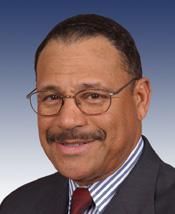
Mr. Chairman, I move to strike the requisite number of words. Mr. Chairman, I would like to take this opportunity to congratulate the gentleman from Florida (Mr. Hastings), the chairman, and the…
Bill Text
7 versions available
        [Congressional Bills 108th Congress]
[From the U.S. Government Publishing Office]
[H.R. 2417 Enrolled Bill (ENR)]

H.R.2417

One Hundred Eighth Congress

of the

United States of America

AT THE FIRST SESSION

Begun and held at the City of Washington on Tuesday,
the seventh day of January, two thousand and three

An Act

To authorize appropriations for fiscal year 2004 for intelligence and
intelligence-related activities of the United States Government, the
Community Management Account, and the Central Intelligence Agency
Retirement and Disability System, and for other purposes.

Be it enacted by the Senate and House of Representatives of the
United States of America in Congress assembled,

SECTION 1. SHORT TITLE; TABLE OF CONTENTS.

(a) Short Title.--This Act may be cited as the ``Intelligence
Authorization Act for Fiscal Year 2004''.
(b) Table of Contents.--The table of contents for this Act is as
follows:
Sec. 1. Short title; table of contents.

TITLE I--INTELLIGENCE ACTIVITIES

Sec. 101. Authorization of appropriations.
Sec. 102. Classified schedule of authorizations.
Sec. 103. Personnel ceiling adjustments.
Sec. 104. Intelligence Community Management Account.
Sec. 105. Office of Intelligence and Analysis of the Department of the
Treasury.
Sec. 106. Incorporation of reporting requirements.
Sec. 107. Preparation and submittal of reports, reviews, studies, and
plans relating to intelligence activities of Department of
Defense or Department of
Energy.

TITLE II--CENTRAL INTELLIGENCE AGENCY RETIREMENT AND DISABILITY SYSTEM

Sec. 201. Authorization of appropriations.

TITLE III--GENERAL PROVISIONS

Subtitle A--Recurring General Provisions

Sec. 301. Increase in employee compensation and benefits authorized by
law.
Sec. 302. Restriction on conduct of intelligence activities.

Subtitle B--Intelligence

Sec. 311. Authority of Federal Bureau of Investigation to award personal
services contracts.
Sec. 312. Budget treatment of costs of acquisition of major systems by
the intelligence community.
Sec. 313. Modification of sunset of application of sanctions laws to
intelligence
activities.
Sec. 314. Modification of notice and wait requirements on projects to
construct or improve intelligence community facilities.
Sec. 315. Extension of deadline for final report of the National
Commission for the Review of the Research and Development
Programs of the United States Intelligence Community.
Sec. 316. Improvement of information sharing among Federal, State, and
local
government officials.
Sec. 317. Pilot program on analysis of signals and other intelligence by
intelligence analysts of various elements of the intelligence
community.
Sec. 318. Pilot program on recruitment and training of intelligence
analysts.
Sec. 319. Improvement of equality of employment opportunities in the
intelligence community.
Sec. 320. Sense of Congress on recruitment as intelligence community
personnel of members of the Armed Forces on their discharge or
release from duty.
Sec. 321. External Collection Capabilities and Requirements Review
Panel.

Subtitle C--Counterintelligence

Sec. 341. Counterintelligence initiatives for the intelligence
community.

Subtitle D--Reports

Sec. 351. Report on cleared insider threat to classified computer
networks.
Sec. 352. Report on security background investigations and security
clearance procedures of the Federal Government.
Sec. 353. Report on detail of civilian intelligence personnel among
elements of the intelligence community and the Department of
Defense.
Sec. 354. Report on modifications of policy and law on classified
information to facilitate sharing of information for national
security purposes.
Sec. 355. Report on strategic planning.
Sec. 356. Report on United States dependence on computer hardware and
software manufactured overseas.
Sec. 357. Report on lessons learned from military operations in Iraq.
Sec. 358. Reports on conventional weapons and ammunition obtained by
Iraq in violation of certain United Nations Security Council
resolutions.
Sec. 359. Report on operations of Directorate of Information Analysis
and Infrastructure Protection and Terrorist Threat Integration
Center.
Sec. 360. Report on Terrorist Screening Center.
Sec. 361. Repeal and modification of report requirements relating to
intelligence activities.

Subtitle E--Other Matters

Sec. 371. Extension of suspension of reorganization of Diplomatic
Telecommunications Service Program Office.
Sec. 372. Modifications of authorities on explosive materials.
Sec. 373. Modification of prohibition on the naturalization of certain
persons.
Sec. 374. Modification to definition of financial institution in Right
to Financial Privacy Act.
Sec. 375. Coordination of Federal Government research on security
evaluations.
Sec. 376. Treatment of classified information in money laundering cases.
Sec. 377. Technical amendments.

TITLE IV--CENTRAL INTELLIGENCE AGENCY

Sec. 401. Amendment to certain Central Intelligence Agency Act of 1949
notification requirements.
Sec. 402. Protection of certain Central Intelligence Agency personnel
from tort liability.
Sec. 403. Repeal of obsolete limitation on use of funds in central
services working capital fund.
Sec. 404. Purchases by Central Intelligence Agency of products of
Federal Prison Industries.
Sec. 405. Postponement of Central Intelligence Agency compensation
reform and other matters.

TITLE V--DEPARTMENT OF DEFENSE INTELLIGENCE MATTERS

Sec. 501. Protection of certain National Security Agency personnel from
tort liability.
Sec. 502. Use of funds for counterdrug and counterterrorism activities
for Colombia.
Sec. 503. Scene visualization technologies.
Sec. 504. Measurement and signatures intelligence research program.
Sec. 505. Availability of funds of National Security Agency for national
security scholarships.

TITLE I--INTELLIGENCE ACTIVITIES

SEC. 101. AUTHORIZATION OF APPROPRIATIONS.

Funds are hereby authorized to be appropriated for fiscal year 2004
for the conduct of the intelligence and intelligence-related activities
of the following elements of the United States Government:
(1) The Central Intelligence Agency.
(2) The Department of Defense.
(3) The Defense Intelligence Agency.
(4) The National Security Agency.
(5) The Department of the Army, the Department of the Navy, and
the Department of the Air Force.
(6) The Department of State.
(7) The Department of the Treasury.
(8) The Department of Energy.
(9) The Department of Justice.
(10) The Federal Bureau of Investigation.
(11) The National Reconnaissance Office.
(12) The National Geospatial-Intelligence Agency.
(13) The Coast Guard.
(14) The Department of Homeland Security.

SEC. 102. CLASSIFIED SCHEDULE OF AUTHORIZATIONS.

(a) Specifications of Amounts and Personnel Ceilings.--The amounts
authorized to be appropriated under section 101, and the authorized
personnel ceilings as of September 30, 2004, for the conduct of the
intelligence and intelligence-related activities of the elements listed
in such section, are those specified in the classified Schedule of
Authorizations prepared to accompany the conference report on the bill
H.R. 2417 of the One Hundred Eighth Congress.
(b) Availability of Classified Schedule of Authorizations.--The
Schedule of Authorizations shall be made available to the Committees on
Appropriations of the Senate and House of Representatives and to the
President. The President shall provide for suitable distribution of the
Schedule, or of appropriate portions of the Schedule, within the
executive branch.

SEC. 103. PERSONNEL CEILING ADJUSTMENTS.

(a) Authority for Adjustments.--With the approval of the Director
of the Office of Management and Budget, the Director of Central
Intelligence may authorize employment of civilian personnel in excess
of the number authorized for fiscal year 2004 under section 102 when
the Director of Central Intelligence determines that such action is
necessary to the performance of important intelligence functions,
except that the number of personnel employed in excess of the number
authorized under such section may not, for any element of the
intelligence community, exceed 2 percent of the number of civilian
personnel authorized under such section for such element.
(b) Notice to Intelligence Committees.--The Director of Central
Intelligence shall promptly notify the Select Committee on Intelligence
of the Senate and the Permanent Select Committee on Intelligence of the
House of Representatives whenever the Director exercises the authority
granted by this section.

SEC. 104. INTELLIGENCE COMMUNITY MANAGEMENT ACCOUNT.

(a) Authorization of Appropriations.--There is authorized to be
appropriated for the Intelligence Community Management Account of the
Director of Central Intelligence for fiscal year 2004 the sum of
$221,513,000. Within such amount, funds identified in the classified
Schedule of Authorizations referred to in section 102(a) for advanced
research and development shall remain available until September 30,
2005.
(b) Authorized Personnel Levels.--The elements within the
Intelligence Community Management Account of the Director of Central
Intelligence are authorized 310 full-time personnel as of September 30,
2004. Personnel serving in such elements may be permanent employees of
the Intelligence Community Management Account or personnel detailed
from other elements of the United States Government.
(c) Classified Authorizations.--
(1) Authorization of appropriations.--In addition to amounts
authorized to be appropriated for the Intelligence Community
Management Account by subsection (a), there are also authorized to
be appropriated for the Intelligence Community Management Account
for fiscal year 2004 such additional amounts as are specified in
the classified Schedule of Authorizations referred to in section
102(a). Such additional amounts for research and development shall
remain available until September 30, 2005.
(2) Authorization of personnel.--In addition to the personnel
authorized by subsection (b) for elements of the Intelligence
Community Management Account as of September 30, 2004, there are
also authorized such additional personnel for such elements as of
that date as are specified in the classified Schedule of
Authorizations.
(d) Reimbursement.--Except as provided in section 113 of the
National Security Act of 1947 (50 U.S.C. 404h), during fiscal year 2004
any officer or employee of the United States or a member of the Armed
Forces who is detailed to the staff of the Intelligence Community
Management Account from another element of the United States Government
shall be detailed on a reimbursable basis, except that any such
officer, employee, or member may be detailed on a nonreimbursable basis
for a period of less than one year for the performance of temporary
functions as required by the Director of Central Intelligence.
(e) National Drug Intelligence Center.--
(1) In general.--Of the amount authorized to be appropriated in
subsection (a), $47,142,000 shall be available for the National
Drug Intelligence Center. Within such amount, funds provided for
research, development, testing, and evaluation purposes shall
remain available until September 30, 2005, and funds provided for
procurement purposes shall remain available until September 30,
2006.
(2) Transfer of funds.--The Director of Central Intelligence
shall transfer to the Attorney General funds available for the
National Drug Intelligence Center under paragraph (1). The Attorney
General shall utilize funds so transferred for the activities of
the National Drug Intelligence Center.
(3) Limitation.--Amounts available for the National Drug
Intelligence Center may not be used in contravention of the
provisions of section 103(d)(1) of the National Security Act of
1947 (50 U.S.C. 403-3(d)(1)).
(4) Authority.--Notwithstanding any other provision of law, the
Attorney General shall retain full authority over the operations of
the National Drug Intelligence Center.

SEC. 105. OFFICE OF INTELLIGENCE AND ANALYSIS OF THE DEPARTMENT OF THE
TREASURY.

(a) Establishment of Office.--(1) Chapter 3 of subtitle I of title
31, United States Code, is amended--
(A) by redesignating section 311 as section 312; and
(B) by inserting after section 310 the following:

``Sec. 311. Office of Intelligence and Analysis

``(a) Establishment.--There is established within the Department of
the Treasury, the Office of Intelligence and Analysis (in this section
referred to as the `Office'), which shall--
``(1) be responsible for the receipt, analysis, collation, and
dissemination of foreign intelligence and foreign
counterintelligence information (within the meaning of section 3 of
the National Security Act of 1947 (50 U.S.C. 401a)) related to the
operation and responsibilities of the Department of the Treasury;
and
``(2) have such other related duties and authorities as may be
assigned to it by the Secretary, subject to the authority,
direction, and control of the Secretary.
``(b) Assistant Secretary for Intelligence and Analysis.--The
Office shall be headed by an Assistant Secretary, who shall be
appointed by the President, by and with the advice and consent of the
Senate. The Assistant Secretary shall report directly to the
Undersecretary of the Treasury for Enforcement.''.
(2) The table of sections at the beginning of chapter 3 of such
title is amended by striking the item relating to section 311 and
inserting the following new items:

``311. Office of Intelligence and Analysis.
``312. Continuing in office.''.

(b) Construction of Authority.--Nothing in section 311 of title 31,
United States Code (as amended by subsection (a)), shall be construed
to alter the authorities and responsibilities of the Director of
Central Intelligence with respect to the Office of Intelligence and
Analysis of the Department of the Treasury as an element of the
intelligence community.
(c) Consultation With DCI in Appointment of Assistant Secretary.--
Section 106(b)(2) of the National Security Act of 1947 (50 U.S.C. 403-
6(b)(2)) is amended by adding at the end the following:
``(E) The Assistant Secretary for Intelligence and Analysis
of the Department of the Treasury.''.
(d) Conforming Amendments.--
(1) National security act.--Section 3(4) of the National
Security Act of 1947 (50 U.S.C. 401a(4)) is amended--
(A) in subparagraph (H), by striking ``the Department of
the Treasury,'';
(B) by redesignating subparagraphs (J) and (K) as
subparagraphs (K) and (L), respectively; and
(C) by inserting after subparagraph (I) the following new
subparagraph (J):
``(J) the Office of Intelligence and Analysis of the
Department of the Treasury;''.
(2) Title 31.--Section 301(e) of title 31, United States Code,
is amended by striking ``7'' and inserting ``8''.
(3) Title 5.--Section 5315 of title 5, United States Code, is
amended in the item relating to Assistant Secretaries of the
Treasury by striking ``(7)'' and inserting ``(8)''.

SEC. 106. INCORPORATION OF REPORTING REQUIREMENTS.

(a) In General.--Each requirement to submit a report to the
congressional intelligence committees that is included in the joint
explanatory statement to accompany the conference report on the bill
H.R. 2417 of the One Hundred Eighth Congress, or in the classified
annex to this Act, is hereby incorporated into this Act, and is hereby
made a requirement in law.
(b) Congressional Intelligence Committees Defined.--In this
section, the term ``congressional intelligence committees'' means--
(1) the Select Committee on Intelligence of the Senate; and
(2) the Permanent Select Committee on Intelligence of the House
of Representatives.

SEC. 107. PREPARATION AND SUBMITTAL OF REPORTS, REVIEWS, STUDIES, AND
PLANS RELATING TO INTELLIGENCE ACTIVITIES OF DEPARTMENT
OF DEFENSE OR DEPARTMENT OF ENERGY.

(a) Consultation in Preparation.--(1) The Director of Central
Intelligence shall ensure that any report, review, study, or plan
required to be prepared or conducted by a provision of this Act,
including a provision of the classified Schedule of Authorizations
referred to in section 102(a) or the classified annex to this Act, that
involves the intelligence or intelligence-related activities of the
Department of Defense or the Department of Energy is prepared or
conducted in consultation with the Secretary of Defense or the
Secretary of Energy, as appropriate.
(2) The Secretary of Defense or the Secretary of Energy may carry
out any consultation required by this subsection through an official of
the Department of Defense or the Department of Energy, as the case may
be, designated by such Secretary for that purpose.
(b) Submittal.--Any report, review, study, or plan referred to in
subsection (a) shall be submitted, in addition to any other committee
of Congress specified for submittal in the provision concerned, to the
following committees of Congress:
(1) The Committees on Armed Services and Appropriations and the
Select Committee on Intelligence of the Senate.
(2) The Committees on Armed Services and Appropriations and the
Permanent Select Committee on Intelligence of the House of
Representatives.

TITLE II--CENTRAL INTELLIGENCE AGENCY RETIREMENT AND DISABILITY SYSTEM

SEC. 201. AUTHORIZATION OF APPROPRIATIONS.

There is authorized to be appropriated for the Central Intelligence
Agency Retirement and Disability Fund for fiscal year 2004 the sum of
$226,400,000.

TITLE III--GENERAL PROVISIONS
Subtitle A--Recurring General Provisions

SEC. 301. INCREASE IN EMPLOYEE COMPENSATION AND BENEFITS AUTHORIZED BY
LAW.

Appropriations authorized by this Act for salary, pay, retirement,
and other benefits for Federal employees may be increased by such
additional or supplemental amounts as may be necessary for increases in
such compensation or benefits authorized by law.

SEC. 302. RESTRICTION ON CONDUCT OF INTELLIGENCE ACTIVITIES.

The authorization of appropriations by this Act shall not be deemed
to constitute authority for the conduct of any intelligence activity
which is not otherwise authorized by the Constitution or the laws of
the United States.

Subtitle B--Intelligence

SEC. 311. AUTHORITY OF FEDERAL BUREAU OF INVESTIGATION TO AWARD
PERSONAL SERVICES CONTRACTS.

(a) Authority.--(1) Title III of the National Security Act of 1947
is amended by inserting after section 301 (50 U.S.C. 409a) the
following new section:

``authority of federal bureau of investigation to award personal
services contracts

``Sec. 302. (a) In General.--The Director of the Federal Bureau of
Investigation may enter into personal services contracts if the
personal services to be provided under such contracts directly support
the intelligence or counterintelligence missions of the Federal Bureau
of Investigation.
``(b) Inapplicability of Certain Requirements.--Contracts under
subsection (a) shall not be subject to the annuity offset requirements
of sections 8344 and 8468 of title 5, United States Code, the
requirements of section 3109 of title 5, United States Code, or any law
or regulation requiring competitive contracting.
``(c) Contract To Be Appropriate Means of Securing Services.--The
Chief Contracting Officer of the Federal Bureau of Investigation shall
ensure that each personal services contract entered into by the
Director under this section is the appropriate means of securing the
services to be provided under such contract.''.
(2) The table of contents for that Act is amended by inserting
after the item relating to section 301 the following new item:

``Sec. 302. Authority of Federal Bureau of Investigation to award
personal services contracts.''.

(b) Reports on Exercise of Authority.--(1) Not later than one year
after the date of the enactment of this Act, and annually thereafter,
the Director of the Federal Bureau of Investigation shall submit to the
appropriate committees of Congress a report on the exercise of the
authority in section 302 of the National Security Act of 1947, as added
by subsection (a).
(2) Each report under this subsection shall include, for the one-
year period ending on the date of such report, the following:
(A) The number of contracts entered into during the period.
(B) The cost of each such contract.
(C) The length of each such contract.
(D) The types of services to be provided under each such
contract.
(E) The availability, if any, of United States Government
personnel to perform functions similar to the services to be
provided under each such contract.
(F) The efforts of the Federal Bureau of Investigation to fill
available personnel vacancies, or request additional personnel
positions, in areas relating to the intelligence or
counterintelligence mission of the Bureau.
(3) Each report under this subsection shall be submitted in
unclassified form, but may include a classified annex.
(4) In this subsection--
(A) for purposes of the submittal of the classified annex to
any report under this subsection, the term ``appropriate committees
of Congress'' means--
(i) the Select Committee on Intelligence of the Senate; and
(ii) the Permanent Select Committee on Intelligence of the
House of Representatives; and
(B) for purposes of the submittal of the unclassified portion
of any report under this subsection, the term ``appropriate
committees of Congress'' means--
(i) the committees specified in subparagraph (A);
(ii) the Committees on Appropriations, Governmental
Affairs, and the Judiciary of the Senate; and
(iii) the Committees on Appropriations, Government Reform
and Oversight, and the Judiciary of the House of
Representatives.

SEC. 312. BUDGET TREATMENT OF COSTS OF ACQUISITION OF MAJOR SYSTEMS BY
THE INTELLIGENCE COMMUNITY.

(a) Findings.--Congress makes the following findings:
(1) Funds within the National Foreign Intelligence Program
often must be shifted from program to program and from fiscal year
to fiscal year to address funding shortfalls caused by significant
increases in the costs of acquisition of major systems by the
intelligence community.
(2) While some increases in the costs of acquisition of major
systems by the intelligence community are unavoidable, the
magnitude of growth in the costs of acquisition of many major
systems indicates a systemic bias within the intelligence community
to underestimate the costs of such acquisition, particularly in the
preliminary stages of development and production.
(3) Decisions by Congress to fund the acquisition of major
systems by the intelligence community rely significantly upon
initial estimates of the affordability of acquiring such major
systems and occur within a context in which funds can be allocated
for a variety of alternative programs. Thus, substantial increases
in costs of acquisition of major systems place significant burdens
on the availability of funds for other programs and new proposals
within the National Foreign Intelligence Program.
(4) Independent cost estimates, prepared by independent
offices, have historically represented a more accurate projection
of the costs of acquisition of major systems.
(5) Recognizing the benefits associated with independent cost
estimates for the acquisition of major systems, the Secretary of
Defense has built upon the statutory requirement in section 2434 of
title 10, United States Code, to develop and consider independent
cost estimates for the acquisition of such systems by mandating the
use of such estimates in budget requests of the Department of
Defense.
(6) The mandatory use throughout the intelligence community of
independent cost estimates for the acquisition of major systems
will assist the President and Congress in the development and
funding of budgets which more accurately reflect the requirements
and priorities of the United States Government for intelligence and
intelligence-related activities.
(b) Budget Treatment of Costs of Acquisition of Major Systems.--(1)
Title V of the National Security Act of 1947 (50 U.S.C. 413 et seq.) is
amended by inserting after section 506 the following new section:

``Budget treatment of costs of acquisition of major systems by the
intelligence community

``Sec. 506A. (a) Independent Cost Estimates.--(1) The Director of
Central Intelligence shall, in consultation with the head of each
element of the intelligence community concerned, prepare an independent
cost estimate of the full life-cycle cost of development, procurement,
and operation of each major system to be acquired by the intelligence
community.
``(2) Each independent cost estimate for a major system shall, to
the maximum extent practicable, specify the amount required to be
appropriated and obligated to develop, procure, and operate the major
system in each fiscal year of the proposed period of development,
procurement, and operation of the major system.
``(3)(A) In the case of a program of the intelligence community
that qualifies as a major system, an independent cost estimate shall be
prepared before the submission to Congress of the budget of the
President for the first fiscal year in which appropriated funds are
anticipated to be obligated for the development or procurement of such
major system.
``(B) In the case of a program of the intelligence community for
which an independent cost estimate was not previously required to be
prepared under this section, including a program for which development
or procurement commenced before the date of the enactment of the
Intelligence Authorization Act for Fiscal Year 2004, if the aggregate
future costs of development or procurement (or any combination of such
activities) of the program will exceed $500,000,000 (in current fiscal
year dollars), the program shall qualify as a major system for purposes
of this section, and an independent cost estimate for such major system
shall be prepared before the submission to Congress of the budget of
the President for the first fiscal year thereafter in which
appropriated funds are anticipated to be obligated for such major
system.
``(4) The independent cost estimate for a major system shall be
updated upon--
``(A) the completion of any preliminary design review
associated with the major system;
``(B) any significant modification to the anticipated design of
the major system; or
``(C) any change in circumstances that renders the current
independent cost estimate for the major system inaccurate.
``(5) Any update of an independent cost estimate for a major system
under paragraph (4) shall meet all requirements for independent cost
estimates under this section, and shall be treated as the most current
independent cost estimate for the major system until further updated
under that paragraph.
``(b) Preparation of Independent Cost Estimates.--(1) The Director
shall establish within the Office of the Deputy Director of Central
Intelligence for Community Management an office which shall be
responsible for preparing independent cost estimates, and any updates
thereof, under subsection (a), unless a designation is made under
paragraph (2).
``(2) In the case of the acquisition of a major system for an
element of the intelligence community within the Department of Defense,
the Director and the Secretary of Defense shall provide that the
independent cost estimate, and any updates thereof, under subsection
(a) be prepared by an entity jointly designated by the Director and the
Secretary in accordance with section 2434(b)(1)(A) of title 10, United
States Code.
``(c) Utilization in Budgets of President.--(1) If the budget of
the President requests appropriations for any fiscal year for the
development or procurement of a major system by the intelligence
community, the President shall, subject to paragraph (2), request in
such budget an amount of appropriations for the development or
procurement, as the case may be, of the major system that is equivalent
to the amount of appropriations identified in the most current
independent cost estimate for the major system for obligation for each
fiscal year for which appropriations are requested for the major system
in such budget.
``(2) If the amount of appropriations requested in the budget of
the President for the development or procurement of a major system is
less than the amount of appropriations identified in the most current
independent cost estimate for the major system for obligation for each
fiscal year for which appropriations are requested for the major system
in such budget, the President shall include in the budget justification
materials submitted to Congress in support of such budget--
``(A) an explanation for the difference between the amount of
appropriations requested and the amount of appropriations
identified in the most current independent cost estimate;
``(B) a description of the importance of the major system to
the national security;
``(C) an assessment of the consequences for the funding of all
programs of the National Foreign Intelligence Program in future
fiscal years if the most current independent cost estimate for the
major system is accurate and additional appropriations are required
in future fiscal years to ensure the continued development or
procurement of the major system, including the consequences of such
funding shortfalls on the major system and all other programs of
the National Foreign Intelligence Program; and
``(D) such other information on the funding of the major system
as the President considers appropriate.
``(d) Inclusion of Estimates in Budget Justification Materials.--
The budget justification materials submitted to Congress in support of
the budget of the President shall include the most current independent
cost estimate under this section for each major system for which
appropriations are requested in such budget for any fiscal year.
``(e) Definitions.--In this section:
``(1) The term `budget of the President' means the budget of
the President for a fiscal year as submitted to Congress under
section 1105(a) of title 31, United States Code.
``(2) The term `independent cost estimate' means a pragmatic
and neutral analysis, assessment, and quantification of all costs
and risks associated with the acquisition of a major system, which
shall be based on programmatic and technical specifications
provided by the office within the element of the intelligence
community with primary responsibility for the development,
procurement, or operation of the major system.
``(3) The term `major system' means any significant program of
an element of the intelligence community with projected total
development and procurement costs exceeding $500,000,000 (in
current fiscal year dollars), which costs shall include all end-to-
end program costs, including costs associated with the development
and procurement of the program and any other costs associated with
the development and procurement of systems required to support or
utilize the program.''.
(2) The table of contents for the National Security Act of 1947 is
amended by inserting after the item relating to section 506 the
following new item:

``Sec. 506A. Budget treatment of costs of acquisition of major systems
by the intelligence community.''.

(c) Effective Date.--The amendments made by subsection (b) shall
take effect on the date of the enactment of this Act.
(d) Limitations.--(1)(A) For each major system for which funds have
been authorized for a fiscal year before fiscal year 2005, or for which
funds are sought in the budget of the President for fiscal year 2005,
as submitted to Congress pursuant to section 1105(a) of title 31,
United States Code, and for which no independent cost estimate has been
provided to Congress, no contract, or option to contract, for the
procurement or acquisition of such major system may be entered into, or
option to contract be exercised, before the date of the enactment of an
Act to authorize appropriations for fiscal year 2005 for intelligence
and intelligence-related activities of the United States Government.
(B) Subparagraph (A) shall not affect any contract for procurement
or acquisition that was entered into before the date of the enactment
of this Act.
(2) Commencing as of the date of the submittal to Congress of the
budget of the President for fiscal year 2006 pursuant to section
1105(a) of title 31, United States Code, no funds may be obligated or
expended for the development or procurement of a major system until the
President has complied with the requirements of section 506A of the
National Security Act of 1947 (as added by subsection (b)) with respect
to such major system.
(3) In this subsection, the terms ``independent cost estimate'' and
``major system'' have the meaning given such terms in subsection (e) of
section 506A of the National Security Act of 1947 (as so added).

SEC. 313. MODIFICATION OF SUNSET OF APPLICATION OF SANCTIONS LAWS TO
INTELLIGENCE ACTIVITIES.

(a) Modification.--Section 905 of the National Security Act of 1947
(50 U.S.C. 441d) is repealed.
(b) Clerical Amendment.--The table of contents for that Act is
amended by striking the item relating to section 905.

SEC. 314. MODIFICATION OF NOTICE AND WAIT REQUIREMENTS ON PROJECTS TO
CONSTRUCT OR IMPROVE INTELLIGENCE COMMUNITY FACILITIES.

(a) Increase of Thresholds for Notice.--Subsection (a) of section
602 of the Intelligence Authorization Act for Fiscal Year 1995 (Public
Law 103-359; 108 Stat. 3432; 50 U.S.C. 403-2b(a)) is amended--
(1) by striking ``$750,000'' each place it appears and
inserting ``$5,000,000''; and
(2) by striking ``$500,000'' each place it appears and
inserting ``$1,000,000''.
(b) Notice and Wait Requirements for Emergency Projects.--
Subsection (b)(2) of that section is amended--
(1) by redesignating subparagraphs (A), (B), and (C) as clauses
(i), (ii), and (iii), respectively;
(2) by inserting ``(A)'' after ``(2) Report.--'';
(3) by striking ``21-day period'' and inserting ``7-day
period''; and
(4) by adding at the end the following new subparagraph:
``(B) Notwithstanding subparagraph (A), a project referred to
in paragraph (1) may begin on the date the notification is received
by the appropriate committees of Congress under that paragraph if
the Director of Central Intelligence and the Secretary of Defense
jointly determine that--
``(i) an emergency exists with respect to the national
security or the protection of health, safety, or environmental
quality; and
``(ii) any delay in the commencement of the project would
harm any or all of those interests.''.

SEC. 315. EXTENSION OF DEADLINE FOR FINAL REPORT OF THE NATIONAL
COMMISSION FOR THE REVIEW OF THE RESEARCH AND DEVELOPMENT
PROGRAMS OF THE UNITED STATES INTELLIGENCE COMMUNITY.

(a) In General.--Subsection (a) of section 1007 of the Intelligence
Authorization Act for Fiscal Year 2003 (Public Law 107-306; 50 U.S.C.
401 note; 116 Stat. 2442) is amended by striking ``September 1, 2003''
and inserting ``September 1, 2004''.
(b) Effective Date.--The amendment made by subsection (a) shall
take effect as if included in the enactment of section 1007 of the
Intelligence Authorization Act for Fiscal Year 2003.

SEC. 316. IMPROVEMENT OF INFORMATION SHARING AMONG FEDERAL, STATE, AND
LOCAL GOVERNMENT OFFICIALS.

(a) Training Program for State and Local Officials.--Section 892(c)
of the Homeland Security Act of 2002 (Public Law 107-296; 6 U.S.C. 482)
is amended by adding at the end the following new paragraph:
``(3)(A) The Secretary shall establish a program to provide
appropriate training to officials described in subparagraph (B) in
order to assist such officials in--
``(i) identifying sources of potential terrorist threats
through such methods as the Secretary determines appropriate;
``(ii) reporting information relating to such potential
terrorist threats to the appropriate Federal agencies in the
appropriate form and manner;
``(iii) assuring that all reported information is
systematically submitted to and passed on by the Department for
use by appropriate Federal agencies; and
``(iv) understanding the mission and roles of the
intelligence community to promote more effective information
sharing among Federal, State, and local officials and
representatives of the private sector to prevent terrorist
attacks against the United States.
``(B) The officials referred to in subparagraph (A) are
officials of State and local government agencies and
representatives of private sector entities with responsibilities
relating to the oversight and management of first responders,
counterterrorism activities, or critical infrastructure.
``(C) The Secretary shall consult with the Attorney General to
ensure that the training program established in subparagraph (A)
does not duplicate the training program established in section 908
of the USA PATRIOT Act (Public Law 107-56; 28 U.S.C. 509 note).
``(D) The Secretary shall carry out this paragraph in
consultation with the Director of Central Intelligence and the
Attorney General.''.
(b) Report.--Not later than 60 days after the date of the enactment
of this Act, the Secretary of Homeland Security shall submit to
Congress a report that describes the Secretary's plan for implementing
section 892 of the Homeland Security Act of 2002 and includes an
estimated date of completion of the implementation.

SEC. 317. PILOT PROGRAM ON ANALYSIS OF SIGNALS AND OTHER INTELLIGENCE
BY INTELLIGENCE ANALYSTS OF VARIOUS ELEMENTS OF THE
INTELLIGENCE COMMUNITY.

(a) In General.--The Director of Central Intelligence shall, in
coordination with the Secretary of Defense, carry out a pilot program
to assess the feasibility and advisability of permitting intelligence
analysts of various elements of the intelligence community to access
and analyze intelligence from the databases of other elements of the
intelligence community in order to achieve the objectives set forth in
subsection (c).
(b) Covered Intelligence.--The intelligence to be analyzed under
the pilot program under subsection (a) shall include the following:
(1) Signals intelligence of the National Security Agency.
(2) Such intelligence of other elements of the intelligence
community as the Director shall select for purposes of the pilot
program.
(c) Objectives.--The objectives set forth in this subsection are as
follows:
(1) To enhance the capacity of the intelligence community to
undertake ``all source fusion'' analysis in support of the
intelligence and intelligence-related missions of the intelligence
community.
(2) To reduce, to the extent possible, the amount of
intelligence collected by the intelligence community that is not
assessed, or reviewed, by intelligence analysts.
(3) To reduce the burdens imposed on analytical personnel of
the elements of the intelligence community by current practices
regarding the sharing of intelligence among elements of the
intelligence community.
(d) Commencement.--The Director shall commence the pilot program
under subsection (a) not later than December 31, 2003.
(e) Various Mechanisms Required.--In carrying out the pilot program
under subsection (a), the Director shall develop and utilize various
mechanisms to facilitate the access to, and the analysis of,
intelligence in the databases of the intelligence community by
intelligence analysts of other elements of the intelligence community,
including the use of so-called ``detailees in place''.
(f) Security.--(1) In carrying out the pilot program under
subsection (a), the Director shall take appropriate actions to protect
against the disclosure and unauthorized use of intelligence in the
databases of the elements of the intelligence community which may
endanger sources and methods which (as determined by the Director)
warrant protection.
(2) The actions taken under paragraph (1) shall include the
provision of training on the accessing and handling of information in
the databases of various elements of the intelligence community and the
establishment of limitations on access to information in such databases
regarding United States persons.
(g) Assessment.--Not later than February 1, 2004, after the
commencement under subsection (d) of the pilot program under subsection
(a), the Under Secretary of Defense for Intelligence and the Assistant
Director of Central Intelligence for Analysis and Production shall
jointly carry out an assessment of the progress of the pilot program in
meeting the objectives set forth in subsection (c).
(h) Report.--(1) The Director of Central Intelligence shall, in
coordination with the Secretary of Defense, submit to the appropriate
committees of Congress a report on the assessment carried out under
subsection (g).
(2) The report shall include--
(A) a description of the pilot program under subsection (a);
(B) the findings of the Under Secretary and Assistant Director
as a result of the assessment;
(C) any recommendations regarding the pilot program that the
Under Secretary and the Assistant Director jointly consider
appropriate in light of the assessment; and
(D) any recommendations that the Director and Secretary
consider appropriate for purposes of the report.
(i) Appropriate Committees of Congress Defined.--In this section,
the term ``appropriate committees of Congress'' means--
(1) the Select Committee on Intelligence, the Committee on
Armed Services, and the Committee on Appropriations of the Senate;
and
(2) the Permanent Select Committee on Intelligence, the
Committee on Armed Services, and the Committee on Appropriations of
the House of Representatives.

SEC. 318. PILOT PROGRAM ON RECRUITMENT AND TRAINING OF INTELLIGENCE
ANALYSTS.

(a) Pilot Program.--(1) The Director of Central Intelligence shall
carry out a pilot program to ensure that selected students or former
students are provided funds to continue academic training, or are
reimbursed for academic training previously obtained, in areas of
specialization that the Director, in consultation with the other heads
of the elements of the intelligence community, identifies as areas in
which the current analytic capabilities of the intelligence community
are deficient or in which future analytic capabilities of the
intelligence community are likely to be deficient.
(2) A student or former student selected for participation in the
pilot program shall commit to employment with an element of the
intelligence community, following completion of appropriate academic
training, under such terms and conditions as the Director considers
appropriate.
(3) The pilot program shall be known as the Pat Roberts
Intelligence Scholars Program.
(b) Elements.--In carrying out the pilot program under subsection
(a), the Director shall--
(1) establish such requirements relating to the academic
training of participants as the Director considers appropriate to
ensure that participants are prepared for employment as
intelligence analysts; and
(2) periodically review the areas of specialization of the
elements of the intelligence community to determine the areas in
which such elements are, or are likely to be, deficient in analytic
capabilities.
(c) Duration.--The Director shall carry out the pilot program under
subsection (a) during fiscal years 2004 through 2006.
(d) Limitation on Number of Members During Fiscal Year 2004.--The
total number of individuals participating in the pilot program under
subsection (a) during fiscal year 2004 may not exceed 150 students.
(e) Responsibility.--The Director shall carry out the pilot program
under subsection (a) through the Assistant Director of Central
Intelligence for Analysis and Production.
(f) Reports.--(1) Not later than 120 days after the date of the
enactment of this Act, the Director shall submit to Congress a
preliminary report on the pilot program under subsection (a), including
a description of the pilot program and the authorities to be utilized
in carrying out the pilot program.
(2) Not later than one year after the commencement of the pilot
program, the Director shall submit to Congress a report on the pilot
program. The report shall include--
(A) a description of the activities under the pilot program,
including the number of individuals who participated in the pilot
program and the training provided such individuals under the pilot
program;
(B) an assessment of the effectiveness of the pilot program in
meeting the purpose of the pilot program; and
(C) any recommendations for additional legislative or
administrative action that the Director considers appropriate in
light of the pilot program.
(g) Funding.--Of the amounts authorized to be appropriated by this
Act, $4,000,000 shall be available until expended to carry out this
section.

SEC. 319. IMPROVEMENT OF EQUALITY OF EMPLOYMENT OPPORTUNITIES IN THE
INTELLIGENCE COMMUNITY.

(a) Findings.--Congress makes the following findings:
(1) It is the recommendation of the Joint Inquiry of the Senate
Select Committee on Intelligence and the House Permanent Select
Committee on Intelligence into Intelligence Community Activities
Before and After the Terrorist Attacks of September 11, 2001, that
the Intelligence Community should enhance recruitment of a more
ethnically and culturally diverse workforce and devise a strategy
to capitalize upon the unique cultural and linguistic capabilities
of first generation Americans.
(2) The Intelligence Community could greatly benefit from an
increased number of employees who are proficient in foreign
languages and knowledgeable of world cultures, especially in
foreign languages that are critical to the national security
interests of the United States. Particular emphasis should be given
to the recruitment of United States citizens whose linguistic
capabilities are acutely required for the improvement of the
overall intelligence collection and analysis effort of the United
States Government.
(3) The Intelligence Community has a significantly lower
percentage of women and minorities than the total workforce of the
Federal government and the total civilian labor force.
(4) Women and minorities continue to be under-represented in
senior grade levels, and in core mission areas, of the intelligence
community.
(b) Pilot Project To Promote Equality of Employment Opportunities
for Women and Minorities Throughout the Intelligence Community Using
Innovative Methodologies.--The Director of Central Intelligence shall
carry out a pilot project under this section to test and evaluate
alternative, innovative methods to promote equality of employment
opportunities in the intelligence community for women, minorities, and
individuals with diverse ethnic and cultural backgrounds, skills,
language proficiency, and expertise.
(c) Methods.--In carrying out the pilot project, the Director shall
employ methods to increase diversity of officers and employees in the
intelligence community.
(d) Duration of Project.--The Director shall carry out the project
under this section for a 3-year period.
(e) Report.--Not later than 2 years after the date the Director
implements the pilot project under this section, the Director shall
submit to Congress a report on the project. The report shall include--
(1) an assessment of the effectiveness of the project; and
(2) recommendations on the continuation of the project, as well
recommendations as for improving the effectiveness of the project
in meeting the goals of promoting equality of employment
opportunities in the intelligence community for women, minorities,
and individuals with diverse ethnic and cultural backgrounds,
skills, language proficiency, and expertise.
(f) Diversity Plan.--(1) Not later than February 15, 2004, the
Director of Central Intelligence shall submit to Congress a report
which describes the plan of the Director, entitled the ``DCI Diversity
Strategic Plan'', and any subsequent revision to that plan, to increase
diversity of officers and employees in the intelligence community,
including the short- and long-term goals of the plan. The report shall
also provide a detailed description of the progress that has been made
by each element of the intelligence community in implementing the plan.
(2) In implementing the plan, the Director shall incorporate
innovative methods for recruitment and hiring that the Director has
determined to be effective from the pilot project carried out under
this section.
(g) Intelligence Community Defined.--In this section, the term
``intelligence community'' has the meaning given that term in section
3(4) of the National Security Act of 1947 (50 U.S.C. 401(4)).

SEC. 320. SENSE OF CONGRESS ON RECRUITMENT AS INTELLIGENCE COMMUNITY
PERSONNEL OF MEMBERS OF THE ARMED FORCES ON THEIR
DISCHARGE OR RELEASE FROM DUTY.

It is the sense of Congress that the elements of the intelligence
community should, in the course of their civilian recruitment efforts
in the United States, endeavor to recruit as personnel of the
intelligence community citizens and, as appropriate, nationals of the
United States who are members of the Armed Forces who participated in
Operation Enduring Freedom, Operation Iraqi Freedom, and other
campaigns undertaken abroad upon the separation, discharge, or release
of such individuals from the Armed Forces.

SEC. 321. EXTERNAL COLLECTION CAPABILITIES AND REQUIREMENTS REVIEW
PANEL.

The President may establish an External Collection Capabilities and
Requirements Review Panel as specified in the classified annex to this
Act.

Subtitle C--Counterintelligence

SEC. 341. COUNTERINTELLIGENCE INITIATIVES FOR THE INTELLIGENCE
COMMUNITY.

(a) In General.--(1) Title XI of the National Security Act of 1947
(50 U.S.C. 401 et seq.) is amended by adding at the end the following
new section:

``counterintelligence initiatives

``Sec. 1102. (a) Inspection Process.--(1) In order to protect
intelligence sources and methods from unauthorized disclosure, the
Director of Central Intelligence shall establish and implement an
inspection process for all agencies and departments of the United
States that handle classified information relating to the national
security of the United States intended to assure that those agencies
and departments maintain effective operational security practices and
programs directed against counterintelligence activities.
``(2) The Director shall carry out the process through the Office
of the National Counterintelligence Executive.
``(b) Annual Review of Dissemination Lists.--(1) The Director of
Central Intelligence shall establish and implement a process for all
elements of the intelligence community to review, on an annual basis,
individuals included on distribution lists for access to classified
information. Such process shall ensure that only individuals who have a
particularized `need to know' (as determined by the Director) are
continued on such distribution lists.
``(2) Not later than October 15 of each year, the Director shall
certify to the congressional intelligence committees that the review
required under paragraph (1) has been conducted in all elements of the
intelligence community during the preceding fiscal year.
``(c) Completion of Financial Disclosure Statements Required for
Access to Certain Classified Information.--(1) The Director of Central
Intelligence shall establish and implement a process by which each head
of an element of the intelligence community directs that all employees
of that element, in order to be granted access to classified
information referred to in subsection (a) of section 1.3 of Executive
Order No. 12968 (August 2, 1995; 60 Fed. Reg. 40245; 50 U.S.C. 435
note), submit financial disclosure forms as required under subsection
(b) of such section.
``(2) The Director shall carry out paragraph (1) through the Office
of the National Counterintelligence Executive.
``(d) Arrangements To Handle Sensitive Information.--The Director
of Central Intelligence shall establish, for all elements of the
intelligence community, programs and procedures by which sensitive
classified information relating to human intelligence is safeguarded
against unauthorized disclosure by employees of those elements.''.
(2) The table of contents contained in the first section of such
Act is amended in the items relating to title XI by adding at the end
the following new item:

``Sec. 1102. Counterintelligence initiatives.''.

(b) Intelligence and National Security Aspects of Espionage
Prosecutions.--The Attorney General, acting through the Office of
Intelligence Policy and Review of the Department of Justice, and in
consultation with the Director of Central Intelligence, acting through
the Office of the National Counterintelligence Executive, shall
establish policies and procedures to assist the Attorney General in the
consideration of intelligence and national security-related equities in
the development of charging documents and related pleadings in
espionage prosecutions.

Subtitle D--Reports

SEC. 351. REPORT ON CLEARED INSIDER THREAT TO CLASSIFIED COMPUTER
NETWORKS.

(a) Report Required.--The Director of Central Intelligence and the
Secretary of Defense shall jointly submit to the appropriate committees
of Congress a report on the risks to the national security of the
United States of the current computer security practices of the
elements of the intelligence community and of the Department of
Defense.
(b) Assessments.--The report under subsection (a) shall include an
assessment of the following:
(1) The vulnerability of the computers and computer systems of
the elements of the intelligence community, and of the Department
of Defense, to various threats from foreign governments,
international terrorist organizations, and organized crime,
including information warfare (IW), Information Operations (IO),
Computer Network Exploitation (CNE), and Computer Network Attack
(CNA).
(2) The risks of providing users of local area networks (LANs)
or wide-area networks (WANs) of computers that include classified
information with capabilities for electronic mail, upload and
download, or removable storage media without also deploying
comprehensive computer firewalls, accountability procedures, or
other appropriate security controls.
(3) Any other matters that the Director and the Secretary
jointly consider appropriate for purposes of the report.
(c) Information on Access to Networks.--The report under subsection
(a) shall also include information as follows:
(1) An estimate of the number of access points on each
classified computer or computer system of an element of the
intelligence community or the Department of Defense that permit
unsupervised uploading or downloading of classified information,
set forth by level of classification.
(2) An estimate of the number of individuals utilizing such
computers or computer systems who have access to input-output
devices on such computers or computer systems.
(3) A description of the policies and procedures governing the
security of the access points referred to in paragraph (1), and an
assessment of the adequacy of such policies and procedures.
(4) An assessment of the viability of utilizing other
technologies (including so-called ``thin client servers'') to
achieve enhanced security of such computers and computer systems
through more rigorous control of access to such computers and
computer systems.
(d) Recommendations.--The report under subsection (a) shall also
include such recommendations for modifications or improvements of the
current computer security practices of the elements of the intelligence
community, and of the Department of Defense, as the Director and the
Secretary jointly consider appropriate as a result of the assessments
under subsection (b) and the information under subsection (c).
(e) Submittal Date.--The report under subsection (a) shall be
submitted not later than February 15, 2004.
(f) Form.--The report under subsection (a) may be submitted in
classified or unclassified form, at the election of the Director.
(g) Definitions.--In this section:
(1) The term ``appropriate committees of Congress'' means--
(A) the Select Committee on Intelligence and the Committee
on Armed Services of the Senate; and
(B) the Permanent Select Committee on Intelligence and the
Committee on Armed Services of the House of Representatives.
(2) The term ``elements of the intelligence community'' means
the elements of the intelligence community set forth in or
designated under section 3(4) of the National Security Act of 1947
(50 U.S.C. 401a(4)).

SEC. 352. REPORT ON SECURITY BACKGROUND INVESTIGATIONS AND SECURITY
CLEARANCE PROCEDURES OF THE FEDERAL GOVERNMENT.

(a) Report Required.--The Director of Central Intelligence, the
Secretary of Defense, the Attorney General, the Director of the Office
of Personnel Management, and the heads of other appropriate Federal
departments and agencies (as determined by the President) shall jointly
submit to the appropriate committees of Congress a report on the
utility and effectiveness of the current security background
investigations and security clearance procedures of the Federal
Government in meeting the purposes of such investigations and
procedures.
(b) Particular Report Matters.--The report shall address in
particular the following:
(1) A comparison of the costs and benefits of conducting
background investigations for Secret clearance with the costs and
benefits of conducting full field background investigations.
(2) The standards governing the revocation of security
clearances.
(c) Recommendations.--The report under subsection (a) shall include
such recommendations for modifications or improvements of the current
security background investigations or security clearance procedures of
the Federal Government as are considered appropriate as a result of the
preparation of the report under that subsection.
(d) Submittal Date.--The report under subsection (a) shall be
submitted not later than February 15, 2004.
(e) Appropriate Committees of Congress Defined.--In this section,
the term ``appropriate committees of Congress'' means--
(1) the Select Committee on Intelligence and the Committees on
Armed Services and the Judiciary of the Senate; and
(2) the Permanent Select Committee on Intelligence and the
Committees on Armed Services and the Judiciary of the House of
Representatives.

SEC. 353. REPORT ON DETAIL OF CIVILIAN INTELLIGENCE PERSONNEL AMONG
ELEMENTS OF THE INTELLIGENCE COMMUNITY AND THE DEPARTMENT
OF DEFENSE.

(a) Report Required.--The Director of Central Intelligence shall,
in consultation with the heads of the elements of the intelligence
community, submit to the appropriate committees of Congress a report on
means of improving the detail or transfer of civilian intelligence
personnel between and among the various elements of the intelligence
community for the purpose of enhancing the flexibility and
effectiveness of the intelligence community in responding to changes in
requirements for the collection, analysis, and dissemination of
intelligence.
(b) Report Elements.--The report under subsection (a) shall--
(1) set forth a variety of proposals on means of improving the
detail or transfer of civilian intelligence personnel as described
in that subsection;
(2) identify the proposal or proposals determined by the heads
of the elements of the intelligence community most likely to meet
the purpose described in that subsection; and
(3) include such recommendations for such legislative or
administrative action as the heads of the elements of the
intelligence community consider appropriate to implement the
proposal or proposals identified under paragraph (2).
(c) Submittal Date.--The report under subsection (a) shall be
submitted not later than February 15, 2004.
(d) Definitions.--In this section:
(1) The term ``appropriate committees of Congress'' means--
(A) the Select Committee on Intelligence and the Committees
on Armed Services, Governmental Affairs, and the Judiciary of
the Senate; and
(B) the Permanent Select Committee on Intelligence and the
Committees on Armed Services, Government Reform, and the
Judiciary of the House of Representatives.
(2) The term ``elements of the intelligence community'' means
the elements of the intelligence community set forth in or
designated under section 3(4) of the National Security Act of 1947
(50 U.S.C. 401a(4)).
(3) The term ``heads of the elements of the intelligence
community'' includes the Secretary of Defense with respect to each
element of the intelligence community within the Department of
Defense or the military departments.

SEC. 354. REPORT ON MODIFICATIONS OF POLICY AND LAW ON CLASSIFIED
INFORMATION TO FACILITATE SHARING OF INFORMATION FOR
NATIONAL SECURITY PURPOSES.

(a) Report.--Not later than four months after the date of the
enactment of this Act, the President shall submit to the appropriate
committees of Congress a report that--
(1) identifies impediments in current policy and regulations to
the sharing of classified information horizontally across and among
Federal departments and agencies, and vertically between the
Federal Government and agencies of State and local governments and
the private sector, for national security purposes, including
homeland security; and
(2) proposes appropriate modifications of policy, law, and
regulations to eliminate such impediments in order to facilitate
such sharing of classified information for national security
purposes, including homeland security.
(b) Considerations.--In preparing the report under subsection (a),
the President shall--
(1) consider the extent to which the reliance on a document-
based approach to the protection of classified information impedes
the sharing of classified information; and
(2) consider the extent to which the utilization of a database-
based approach, or other electronic approach, to the protection of
classified information might facilitate the sharing of classified
information.
(c) Coordination With Other Information Sharing Activities.--In
preparing the report under subsection (a), the President shall, to the
maximum extent practicable, take into account actions being undertaken
under the Homeland Security Information Sharing Act (subtitle I of
title VIII of Public Law 107-296; 116 Stat. 2252; 6 U.S.C. 481 et
seq.).
(d) Appropriate Committees of Congress Defined.--In this section,
the term ``appropriate committees of Congress'' means--
(1) the Select Committee on Intelligence and the Committees on
Armed Services, Governmental Affairs, and the Judiciary of the
Senate; and
(2) the Permanent Select Committee on Intelligence, the Select
Committee on Homeland Security, and the Committees on Armed
Services and the Judiciary of the House of Representatives.

SEC. 355. REPORT ON STRATEGIC PLANNING.

(a) Report.--Not later than February 15, 2004, the Secretary of
Defense and the Director of Central Intelligence shall jointly submit
to the appropriate committees of Congress a report that assesses
progress in the following:
(1) The development by the Department of Defense and the
intelligence community of a comprehensive and uniform analytical
capability to assess the utility and advisability of various sensor
and platform architectures and capabilities for the collection of
intelligence.
(2) The improvement of coordination between the Department and
the intelligence community on strategic and budgetary planning.
(b) Form.--The report under subsection (a) may be submitted in
classified form.
(c) Appropriate Committees of Congress Defined.--In this section,
the term ``appropriate committees of Congress'' means--
(1) the Select Committee on Intelligence and the Committee on
Armed Services of the Senate; and
(2) the Permanent Select Committee on Intelligence and the
Committee on Armed Services of the House of Representatives.

SEC. 356. REPORT ON UNITED STATES DEPENDENCE ON COMPUTER HARDWARE AND
SOFTWARE MANUFACTURED OVERSEAS.

(a) Report.--Not later than February 15, 2004, the Director of
Central Intelligence shall submit to the appropriate committees of
Congress a report on the extent of United States dependence on computer
hardware or software that is manufactured overseas.
(b) Elements.--The report under subsection (a) shall address the
following:
(1) The extent to which the United States currently depends on
computer hardware or software that is manufactured overseas.
(2) The extent to which United States dependence, if any, on
such computer hardware or software is increasing.
(3) The vulnerabilities of the national security and economy of
the United States as a result of United States dependence, if any,
on such computer hardware or software.
(4) Any other matters relating to United States dependence, if
any, on such computer hardware or software that the Director
considers appropriate.
(c) Consultation With Private Sector.--(1) In preparing the report
under subsection (a), the Director may consult, and is encouraged to
consult, with appropriate persons and entities in the computer hardware
or software industry and with other appropriate persons and entities in
the private sector.
(2) Consultations of the Director with persons or entities under
paragraph (1) shall not be treated as the activities of an advisory
committee for purposes of the Federal Advisory Committee Act (5 U.S.C.
App.).
(d) Form.--(1) The report under subsection (a) shall be submitted
in unclassified form, but may include a classified annex.
(2) The report may be in the form of a National Intelligence
Estimate.
(e) Appropriate Committees of Congress Defined.--In this section,
the term ``appropriate committees of Congress'' means--
(1) the Select Committee on Intelligence and the Committee on
Armed Services of the Senate; and
(2) the Permanent Select Committee on Intelligence and the
Committee on Armed Services of the House of Representatives.

SEC. 357. REPORT ON LESSONS LEARNED FROM MILITARY OPERATIONS IN IRAQ.

(a) Report.--As soon as possible, but not later than one year after
the date of the enactment of this Act, the Director of Central
Intelligence shall submit to the appropriate committees of Congress a
report on the intelligence lessons learned as a result of Operation
Iraqi Freedom, including lessons relating to the following:
(1) The tasking, collection, processing, exploitation,
analysis, and dissemination of intelligence.
(2) The accuracy, timeliness, and objectivity of intelligence
analysis.
(3) The intelligence support available to policymakers and
members of the Armed Forces in combat.
(4) The coordination of intelligence activities and operations
with military operations.
(5) The strengths and limitations of intelligence systems and
equipment.
(6) Such other matters as the Director considers appropriate.
(b) Recommendations.--The report under subsection (a) shall include
such recommendations on improvement in the matters described in
subsection (a) as the Director considers appropriate.
(c) Appropriate Committees of Congress Defined.--In this section,
the term ``appropriate committees of Congress'' means--
(1) the Permanent Select Committee on Intelligence and the
Committee on Armed Services of the House of Representatives; and
(2) the Select Committee on Intelligence and the Committee on
Armed Services of the Senate.

SEC. 358. REPORTS ON CONVENTIONAL WEAPONS AND AMMUNITION OBTAINED BY
IRAQ IN VIOLATION OF CERTAIN UNITED NATIONS SECURITY
COUNCIL RESOLUTIONS.

(a) Preliminary Report.--Not later than 90 days after the date of
the enactment of this Act, the Director of the Defense Intelligence
Agency shall, after such consultation with the Secretary of State and
the Attorney General as the Director considers appropriate, submit to
the appropriate committees of Congress a preliminary report on all
information obtained by the Department of Defense and the intelligence
community on the conventional weapons and ammunition obtained by Iraq
in violation of applicable resolutions of the United Nations Security
Council adopted since the invasion of Kuwait by Iraq in August 1990.
(b) Final Report.--(1) Not later than one year after the date of
the enactment of this Act, the Director shall submit to the appropriate
committees of Congress a final report on the information described in
subsection (a).
(2) The final report under paragraph (1) shall include such updates
of the preliminary report under subsection (a) as the Director
considers appropriate.
(c) Elements.--Each report under this section shall set forth, to
the extent practicable, with respect to each shipment of weapons or
ammunition addressed in such report the following:
(1) The country of origin.
(2) Any country of transshipment.
(d) Form.--Each report under this section shall be submitted in
unclassified form, but may include a classified annex.
(e) Appropriate Committees of Congress Defined.--In this section,
the term ``appropriate committees of Congress'' means--
(1) the Select Committee on Intelligence and the Committees on
Armed Services and Foreign Relations of the Senate; and
(2) the Permanent Select Committee on Intelligence and the
Committees on Armed Services and International Relations of the
House of Representatives.

SEC. 359. REPORT ON OPERATIONS OF DIRECTORATE OF INFORMATION ANALYSIS
AND INFRASTRUCTURE PROTECTION AND TERRORIST THREAT
INTEGRATION CENTER.

(a) Report Required.--The President shall submit to the appropriate
committees of Congress a report on the operations of the Directorate of
Information Analysis and Infrastructure Protection of the Department of
Homeland Security and the Terrorist Threat Integration Center. The
report shall include the following:
(1) An assessment of the operations of the Directorate and the
Center, including the capabilities of each--
(A) to meet personnel requirements, including requirements
to employ qualified analysts, and the status of efforts to
employ qualified analysts;
(B) to share intelligence information with the other
elements of the intelligence community, including the sharing
of intelligence information through secure information
technology connections between the Directorate, the Center, and
the other elements of the intelligence community;
(C) to disseminate intelligence information, or analyses of
intelligence information, to other departments and agencies of
the Federal Government and, as appropriate, to State and local
governments;
(D) to coordinate with State and local counterterrorism and
law enforcement officials;
(E) to receive information from Federal, State, and local
officials, and private sector entities, relating to the
respective responsibilities and authorities of the Directorate
and the Center; and
(F) to access information, including intelligence and law
enforcement information, from the departments and agencies of
the Federal Government, including the ability of the
Directorate to access, in a timely and efficient manner, all
information authorized by section 202 of the Homeland Security
Act of 2002 (Public Law 107-296; 6 U.S.C. 122).
(2) An assessment of the ability of the Center to fulfill the
responsibilities assigned to it by the President given its
structure, authorities, current assets, and capabilities.
(3) An assessment of the ability of the Directorate to fulfill
the responsibilities set forth in section 201 of the Homeland
Security Act of 2002 (6 U.S.C. 121) given its current assets and
capabilities.
(4) A plan of action (including appropriate milestones,
funding, and sources of funding) for bringing the Center to its
full operational capacity as called for in the Information on the
State of the Union given by the President to Congress under section
3 of Article II of the Constitution of the United States in 2003.
(5) A delineation of the responsibilities and duties of the
Directorate and of the responsibilities and duties of the Center.
(6) A delineation and summary of the areas in which the
responsibilities and duties of the Directorate, the Center, and
other elements of the Federal Government overlap.
(7) An assessment of whether the areas of overlap, if any,
delineated under paragraph (6) represent an inefficient utilization
of resources.
(8) A description of the policies and procedures to ensure that
the Directorate and the Center comply with the Constitution and
applicable statutes, Executive orders, and regulations of the
United States.
(9) The practical impact, if any, of the operations of the
Center on individual liberties and privacy.
(10) Such information as the President considers appropriate to
explain the basis for the establishment and operation of the Center
as a ``joint venture'' of participating agencies rather than as an
element of the Directorate reporting directly to the Secretary of
Homeland Security through the Under Secretary of Homeland Security
for Information Analysis and Infrastructure Protection.
(b) Submittal Date.--The report required by this section shall be
submitted not later than May 1, 2004.
(c) Form.--The report required by this section shall be submitted
in unclassified form, but may include a classified annex.
(d) Appropriate Committees of Congress Defined.--In this section,
the term ``appropriate committees of Congress'' means--
(1) the Select Committee on Intelligence and the Committees on
Governmental Affairs, the Judiciary, and Appropriations of the
Senate; and
(2) the Permanent Select Committee on Intelligence, the Select
Committee on Homeland Security, and the Committees on the Judiciary
and Appropriations of the House of Representatives.

SEC. 360. REPORT ON TERRORIST SCREENING CENTER.

(a) Report.--Not later than September 16, 2004, the President shall
submit to Congress a report on the establishment and operation of the
Terrorist Screening Center, established on September 16, 2003, by
Homeland Security Presidential Directive 6, including the matters
described in subsection (b).
(b) Covered Matters.--The matters referred to in subsection (a) are
the following:
(1) An analysis of the operations of the Terrorist Screening
Center to ensure that the Terrorist Screening Center does not
violate the Constitution, or any statute, Executive order, or
regulation of the United States.
(2) A description of the architecture of the database system of
the Terrorist Screening Center, including the number of databases
maintained, operated, or administered by the Terrorist Screening
Center, and the extent to which these databases have been
integrated.
(3) A determination of whether data from all watch lists
detailed in the April 2003 report of the Comptroller General of the
United States, entitled ``Information Technology: Terrorist Watch
Lists Should be Consolidated to Promote Better Integration and
Sharing'', have been incorporated into the Terrorist Screening
Center database system.
(4) A determination of whether there remain any relevant
databases that are not yet part of the Terrorist Screening Center
database system.
(5) A schedule that specifies the dates on which each Federal
watch list database identified in the report referred to in
paragraph (3), or determined under paragraph (4) to be not yet part
of the Terrorist Screening Center database system, were, or will
be, integrated into the Terrorist Screening Center database system.
(6) A description of the protocols in effect to ensure the
protection of classified and sensitive information contained in the
Terrorist Screening Center database system.
(7) A description of--
(A) the process by which databases in the Terrorist
Screening Center database system are reviewed for accuracy and
timeliness of data and the frequency of updates of such
reviews; and
(B) the mechanism used to ensure that data within a
particular database is synchronized and replicated throughout
the database system of the Terrorist Screening Center.
(8) A description of the extent to which the Terrorist
Screening Center makes information available to the private sector
and critical infrastructure components, and the criteria for
determining which private sector and critical infrastructure
components receive that information.
(9) The number of individuals listed in the Terrorist Screening
Center database system.
(10) The estimated operating budget of, and sources of funding
for, the Terrorist Screening Center for each of fiscal years 2004,
2005, and 2006.
(11) An assessment of the impact of the Terrorist Screening
Center on current law enforcement systems.
(12) The practical impact, if any, of the operations of the
Terrorist Screening Center on individual liberties and privacy.
(13) Such recommendations as the President considers
appropriate for modifications of law or policy to ensure the
continuing operation of the Terrorist Screening Center.
(c) Form of Report.--The report required by subsection (a) shall be
submitted in unclassified form, but may include a classified annex.

SEC. 361. REPEAL AND MODIFICATION OF REPORT REQUIREMENTS RELATING TO
INTELLIGENCE ACTIVITIES.

(a) Annual Evaluation of Performance and Responsiveness of
Intelligence Community.--Section 105 of the National Security Act of
1947 (50 U.S.C. 403-5) is amended by striking subsection (d).
(b) Periodic Reports on Disclosure of Intelligence Information to
United Nations.--Section 112(b) of the National Security Act of 1947
(50 U.S.C. 404g(b)(1)) is amended--
(1) in the subsection caption, by striking ``Periodic'' and
inserting ``Annual'';
(2) in paragraph (1), by striking ``semiannually'' and
inserting ``annually''; and
(3) in paragraph (3), by striking ``periodic'' and inserting
``the annual''.
(c) Annual Report on Intelligence Community Cooperation With
Counterdrug Activities.--Section 114 of the National Security Act of
1947 (50 U.S.C. 404i) is amended--
(1) by striking subsection (a); and
(2) by redesignating subsections (b) through (f) as subsections
(a) through (e), respectively.
(d) Annual Report on Covert Leases.--Section 114 of the National
Security Act of 1947, as amended by this section, is further amended--
(1) by striking subsection (d); and
(2) by redesignating subsection (e) as subsection (d).
(e) Annual Report on Certain Foreign Companies Involved in
Proliferation of Weapons of Mass Destruction.--Section 827 of the
Intelligence Authorization Act for Fiscal Year 2003 (Public Law 107-
306; 116 Stat. 2430; 50 U.S.C. 404n-3) is repealed.
(f) Annual Report on Intelligence Activities of People's Republic
of China.--Section 308 of the Intelligence Authorization Act for Fiscal
Year 1998 (Public Law 105-107; 111 Stat. 2253; 50 U.S.C. 402a note) is
repealed.
(g) Annual Report on Coordination of Counterintelligence Matters
With FBI.--Section 811(c) of the Counterintelligence and Security
Enhancements Act of 1994 (title VIII of Public Law 103-359; 50 U.S.C.
402a(c)) is amended--
(1) by striking paragraph (6); and
(2) by redesignating paragraphs (7) and (8) as paragraphs (6)
and (7), respectively.
(h) Annual Report on Postemployment Assistance for Terminated
Intelligence Employees.--Section 1611 of title 10, United States Code,
is amended by striking subsection (e).
(i) Annual Report on Activities of FBI Personnel Outside the United
States.--Section 540C of title 28, United States Code, is repealed.
(j) Annual Report on Exceptions to Consumer Disclosure Requirements
for National Security Investigations.--Section 604(b)(4) of the Fair
Credit Reporting Act (15 U.S.C. 1681b(b)(4)) is amended--
(1) by striking subparagraphs (D) and (E); and
(2) by redesignating subparagraph (F) as subparagraph (D).
(k) Reports on Acquisition of Technology Relating to Weapons of
Mass Destruction and Advanced Conventional Munitions.--Subsection
(b)(1) of section 721 of the Intelligence Authorization Act for Fiscal
Year 1997 (Public Law 104-293; 50 U.S.C. 2366) is amended by striking
``a semiannual'' and inserting ``an annual''.
(l) Conforming Amendments.--Section 507 of the National Security
Act of 1947 (50 U.S.C. 415b) is amended--
(1) in subsection (a)--
(A) in paragraph (1)--
(i) by striking subparagraphs (A), (C), (G), (I), (J),
and (L);
(ii) by redesignating subparagraphs (B), (D), (E), (H),
(K), (M), and (N) as subparagraphs (A), (C), (D), (G), (H),
and (I), respectively;
(iii) by inserting after subparagraph (A), as so
redesignated, the following new subparagraph (B):
``(B) The annual report on intelligence provided to the United
Nations required by section 112(b)(1).''; and
(iv) by inserting after subparagraph (D), as so
redesignated, the following new subparagraph (E):
``(E) The annual report on the acquisition of technology
relating to weapons of mass destruction and advanced conventional
munitions required by section 721 of the Intelligence Authorization
Act for Fiscal Year 1997 (Public Law 104-293; 50 U.S.C. 2366).'';
and
(B) in paragraph (2)--
(i) in subparagraph (A), by striking ``section 114(b)''
and inserting ``section 114(a)'';
(ii) in subparagraph (B), by striking ``section
114(d)'' and inserting ``section 114(c)'';
(iii) by striking subparagraphs (C), (E), and (F); and
(iv) by redesignating subparagraphs (D) and (G) as
subparagraphs (C) and (D), respectively; and
(2) in subsection (b)--
(A) by striking paragraphs (1) and (4); and
(B) by redesignating paragraphs (2), (3), (5), (6), (7),
and (8) as paragraphs (1), (2), (3), (4), (5), and (6),
respectively.
(m) Clerical Amendments.--
(1) National security act of 1947.--The table of contents for
the National Security Act of 1947 is amended by striking the item
relating to section 603.
(2) Title 28, united states code.--The table of sections at the
beginning of chapter 33 of title 28, United States Code, is amended
by striking the item relating to section 540C.
(n) Effective Date.--The amendments made by this section shall take
effect on December 31, 2003.

Subtitle E--Other Matters

SEC. 371. EXTENSION OF SUSPENSION OF REORGANIZATION OF DIPLOMATIC
TELECOMMUNICATIONS SERVICE PROGRAM OFFICE.

Section 311 of the Intelligence Authorization Act for Fiscal Year
2002 (Public Law 107-108; 22 U.S.C. 7301 note) is amended--
(1) in the heading, by striking ``two-year'' before
``suspension of reorganization''; and
(2) in the text, by striking ``ending on October 1, 2003'' and
inserting ``ending on the date that is 60 days after the
appropriate congressional committees of jurisdiction (as defined in
section 324(d) of that Act (22 U.S.C. 7304(d)) are notified jointly
by the Secretary of State (or the Secretary's designee) and the
Director of the Office of Management and Budget (or the Director's
designee) that the operational framework for the office has been
terminated''.

SEC. 372. MODIFICATIONS OF AUTHORITIES ON EXPLOSIVE MATERIALS.

(a) Clarification of Aliens Authorized To Distribute Explosive
Materials.--Section 842(d)(7) of title 18, United States Code, is
amended--
(1) in subparagraph (A), by striking ``or'' at the end;
(2) in subparagraph (B)--
(A) by inserting ``or'' at the end of clause (i); and
(B) by striking clauses (iii) and (iv); and
(3) by adding the following new subparagraphs:
``(C) is a member of a North Atlantic Treaty Organization
(NATO) or other friendly foreign military force, as determined
by the Attorney General in consultation with the Secretary of
Defense, who is present in the United States under military
orders for training or other military purpose authorized by the
United States and the shipping, transporting, possession, or
receipt of explosive materials is in furtherance of the
authorized military purpose; or
``(D) is lawfully present in the United States in
cooperation with the Director of Central Intelligence, and the
shipment, transportation, receipt, or possession of the
explosive materials is in furtherance of such cooperation;''.
(b) Clarification of Aliens Authorized To Possess or Receive
Explosive Materials.--Section 842(i)(5) of title 18, United States
Code, is amended--
(1) in subparagraph (A), by striking ``or'' at the end;
(2) in subparagraph (B)--
(A) by inserting ``or'' at the end of clause (i); and
(B) by striking clauses (iii) and (iv); and
(3) by adding the following new subparagraphs:
``(C) is a member of a North Atlantic Treaty Organization
(NATO) or other friendly foreign military force, as determined
by the Attorney General in consultation with the Secretary of
Defense, who is present in the United States under military
orders for training or other military purpose authorized by the
United States and the shipping, transporting, possession, or
receipt of explosive materials is in furtherance of the
authorized military purpose; or
``(D) is lawfully present in the United States in
cooperation with the Director of Central Intelligence, and the
shipment, transportation, receipt, or possession of the
explosive materials is in furtherance of such cooperation;''.

SEC. 373. MODIFICATION OF PROHIBITION ON THE NATURALIZATION OF CERTAIN
PERSONS.

Section 313(e)(4) of the Immigration and Nationality Act (8 U.S.C.
1424(e)(4)) is amended--
(1) by inserting ``when Department of Defense activities are
relevant to the determination'' after ``Secretary of Defense''; and
(2) by inserting ``and the Secretary of Homeland Security''
after ``Attorney General''.

SEC. 374. MODIFICATION TO DEFINITION OF FINANCIAL INSTITUTION IN RIGHT
TO FINANCIAL PRIVACY ACT.

(a) Modification of Definition.--Section 1114 of the Right to
Financial Privacy Act of 1978 (12 U.S.C. 3414) is amended by adding at
the end the following:
``(d) For purposes of this section, and sections 1115 and 1117
insofar as they relate to the operation of this section, the term
`financial institution' has the same meaning as in subsections (a)(2)
and (c)(1) of section 5312 of title 31, United States Code, except
that, for purposes of this section, such term shall include only such a
financial institution any part of which is located inside any State or
territory of the United States, the District of Columbia, Puerto Rico,
Guam, American Samoa, the Commonwealth of the Northern Mariana Islands,
or the United States Virgin Islands.''.
(b) Cross Reference Modification.--Section 1101(1) of such Act (12
U.S.C. 3401(1)) is amended by inserting ``, except as provided in
section 1114,'' before ``means any office''.

SEC. 375. COORDINATION OF FEDERAL GOVERNMENT RESEARCH ON SECURITY
EVALUATIONS.

(a) Workshops for Coordination of Research.--The National Science
Foundation and the Office of Science and Technology Policy shall
jointly sponsor not less than two workshops on the coordination of
Federal Government research on the use of behavioral, psychological,
and physiological assessments of individuals in the conduct of security
evaluations.
(b) Deadline for Completion of Activities.--The activities of the
workshops sponsored under subsection (a) shall be completed not later
than March 1, 2004.
(c) Purposes.--The purposes of the workshops sponsored under
subsection (a) are as follows:
(1) To provide a forum for cataloging and coordinating
federally funded research activities relating to the development of
new techniques in the behavioral, psychological, or physiological
assessment of individuals to be used in security evaluations.
(2) To develop a research agenda for the Federal Government on
behavioral, psychological, and physiological assessments of
individuals, including an identification of the research most
likely to advance the understanding of the use of such assessments
of individuals in security evaluations.
(3) To distinguish between short-term and long-term areas of
research on behavioral, psychological, and physiological
assessments of individuals in order to maximize the utility of
short-term and long-term research on such assessments.
(4) To identify the Federal agencies best suited to support
research on behavioral, psychological, and physiological
assessments of individuals.
(5) To develop recommendations for coordinating future
federally funded research for the development, improvement, or
enhancement of security evaluations.
(d) Advisory Group.--(1) In order to assist the National Science
Foundation and the Office of Science and Technology Policy in carrying
out the activities of the workshops sponsored under subsection (a),
there is hereby established an interagency advisory group with respect
to such workshops.
(2) The advisory group shall be composed of the following:
(A) A representative of the Social, Behavioral, and Economic
Directorate of the National Science Foundation.
(B) A representative of the Office of Science and Technology
Policy.
(C) The Secretary of Defense, or a designee of the Secretary.
(D) The Secretary of State, or a designee of the Secretary.
(E) The Attorney General, or a designee of the Attorney
General.
(F) The Secretary of Energy, or a designee of the Secretary.
(G) The Secretary of Homeland Security, or a designee of the
Secretary.
(H) The Director of Central Intelligence, or a designee of the
Director.
(I) The Director of the Federal Bureau of Investigation, or a
designee of the Director.
(J) The National Counterintelligence Executive, or a designee
of the National Counterintelligence Executive.
(K) Any other official assigned to the advisory group by the
President for purposes of this section.
(3) The members of the advisory group under subparagraphs (A) and
(B) of paragraph (2) shall jointly head the advisory group.
(4) The advisory group shall provide the Foundation and the Office
such information, advice, and assistance with respect to the workshops
sponsored under subsection (a) as the advisory group considers
appropriate.
(5) The advisory group shall not be treated as an advisory
committee for purposes of the Federal Advisory Committee Act (5 U.S.C.
App.).
(e) FOIA Exemption.--All files of the National Science Foundation
and the Office of Science and Technology Policy for purposes of
administering this section, including any files of a Federal, State, or
local department or agency or of a private sector entity provided to or
utilized by a workshop or advisory group under this section, shall be
exempt from the provisions of section 552 of title 5, United States
Code, that require publication, disclosure, search, or review in
connection therewith.
(f) Report.--Not later than March 1, 2004, the National Science
Foundation and the Office of Science and Technology Policy shall
jointly submit to Congress a report on the results of activities of the
workshops sponsored under subsection (a), including the findings and
recommendations of the Foundation and the Office as a result of such
activities.
(g) Funding.--(1) Of the amount authorized to be appropriated for
the Intelligence Community Management Account by section 104(a),
$500,000 shall be available to the National Science Foundation and the
Office of Science and Technology Policy to carry out this section.
(2) The amount authorized to be appropriated by paragraph (1) shall
remain available until expended.

SEC. 376. TREATMENT OF CLASSIFIED INFORMATION IN MONEY LAUNDERING
CASES.

Section 5318A of title 31, United States Code, is amended by adding
at the end the following:
``(f) Classified Information.--In any judicial review of a finding
of the existence of a primary money laundering concern, or of the
requirement for 1 or more special measures with respect to a primary
money laundering concern, made under this section, if the designation
or imposition, or both, were based on classified information (as
defined in section 1(a) of the Classified Information Procedures Act
(18 U.S.C. App.), such information may be submitted by the Secretary to
the reviewing court ex parte and in camera. This subsection does not
confer or imply any right to judicial review of any finding made or any
requirement imposed under this section.''.

SEC. 377. TECHNICAL AMENDMENTS.

(a) National Security Act of 1947.--Section 112(d)(1) of the
National Security Act of 1947 (50 U.S.C. 404g(d)(1)) is amended by
striking ``section 103(c)(6)'' and inserting ``section 103(c)(7)''.
(b) Central Intelligence Agency Act of  1949.--(1) Section 5(a)(1)
of the Central Intelligence Agency Act of 1949 (50 U.S.C. 403f(a)(1))
is amended by striking ``(c)(6)'' each place it appears and inserting
``(c)(7)''.
(2) Section 6 of that Act (50 U.S.C. 403g) is amended by striking
``section 103(c)(6) of the National Security Act of 1947 (50 U.S.C.
403-3(c)(6))'' and inserting ``section 103(c)(7) of the National
Security Act of 1947 (50 U.S.C. 403-3(c)(7))''.
(3) Section 15 of that Act (50 U.S.C. 403o) is amended--
(A) in subsection (a)(1), by striking ``special policemen of
the General Services Administration perform under the first section
of the Act entitled `An Act to authorize the Federal Works
Administrator or officials of the Federal Works Agency duly
authorized by him to appoint special policeman for duty upon
Federal property under the jurisdiction of the Federal Works
Agency, and for other purposes'(40 U.S.C. 318),'' and inserting
``officers and agents of the Department of Homeland Security, as
provided in section 1315(b)(2) of title 40, United States Code,'';
and
(B) in subsection (b), by striking ``the fourth section of the
Act referred to in subsection (a) of this section (40 U.S.C.
318c)'' and inserting ``section 1315(c)(2) of title 40, United
States Code''.
(c) National Security Agency Act of  1959.--Section 11 of the
National Security Agency Act of 1959 (50 U.S.C. 402 note) is amended--
(1) in subsection (a)(1), by striking ``special policemen of
the General Services Administration perform under the first section
of the Act entitled `An Act to authorize the Federal Works
Administrator or officials of the Federal Works Agency duly
authorized by him to appoint special policeman for duty upon
Federal property under the jurisdiction of the Federal Works
Agency, and for other purposes'(40 U.S.C. 318)'' and inserting
``officers and agents of the Department of Homeland Security, as
provided in section 1315(b)(2) of title 40, United States Code,'';
and
(2) in subsection (b), by striking ``the fourth section of the
Act referred to in subsection (a) (40 U.S.C. 318c)'' and inserting
``section 1315(c)(2) of title 40, United States Code''.
(d) Intelligence Authorization Act for Fiscal Year 2003.--Section
343 of the Intelligence Authorization Act for Fiscal Year 2003 (Public
Law 107-306; 116 Stat. 2399; 50 U.S.C. 404n-2) is amended--
(1) in subsection (c), by striking ``section 103(c)(6) of the
National Security Act of 1947 (50 U.S.C. 403-3(c)(6))'' and
inserting ``section 103(c)(7) of the National Security Act of 1947
(50 U.S.C. 403-3(c)(7))''; and
(2) in subsection (e)(2), by striking ``section 103(c)(6)'' and
inserting ``section 103(c)(7)''.
(e) Federal Information Security Management Act of 2002.--Section
3535(b)(1) of title 44, United States Code, as added by section
1001(b)(1) of the Homeland Security Act of 2002 (Public Law 107-296),
and section 3545(b)(1) of title 44, United States Code, as added by
section 301(b)(1) of the E-Government Act of 2002 (Public Law 107-347),
are each amended by inserting ``or any other law'' after ``1978''.
(f) Public Law 107-173.--Section 201(c)(3)(F) of the Enhanced
Border Security and Visa Entry Reform Act of 2002 (Public Law 107-173;
116 Stat. 548; 8 U.S.C. 1721(c)(3)(F)) is amended by striking ``section
103(c)(6) of the National Security Act of 1947 (50 U.S.C. 403-
3(c)(6))'' and inserting ``section 103(c)(7) of the National Security
Act of 1947 (50 U.S.C. 403-3(c)(7))''.

TITLE IV--CENTRAL INTELLIGENCE AGENCY

SEC. 401. AMENDMENT TO CERTAIN CENTRAL INTELLIGENCE AGENCY ACT OF 1949
NOTIFICATION REQUIREMENTS.

Section 4(b)(5) of the Central Intelligence Agency Act of 1949 (50
U.S.C. 403e(b)(5)) is amended by inserting ``, other than regulations
under paragraph (1),'' after ``Regulations''.

SEC. 402. PROTECTION OF CERTAIN CENTRAL INTELLIGENCE AGENCY PERSONNEL
FROM TORT LIABILITY.

Section 15 of the Central Intelligence Agency Act of 1949 (50
U.S.C. 403o) is amended by adding at the end the following new
subsection:
``(d)(1) Notwithstanding any other provision of law, any Agency
personnel designated by the Director under subsection (a), or
designated by the Director under section 5(a)(4) to carry firearms for
the protection of current or former Agency personnel and their
immediate families, defectors and their immediate families, and other
persons in the United States under Agency auspices, shall be considered
for purposes of chapter 171 of title 28, United States Code, or any
other provision of law relating to tort liability, to be acting within
the scope of their office or employment when such Agency personnel take
reasonable action, which may include the use of force, to--
``(A) protect an individual in the presence of such Agency
personnel from a crime of violence;
``(B) provide immediate assistance to an individual who has
suffered or who is threatened with bodily harm; or
``(C) prevent the escape of any individual whom such Agency
personnel reasonably believe to have committed a crime of violence
in the presence of such Agency personnel.
``(2) Paragraph (1) shall not affect the authorities of the
Attorney General under section 2679 of title 28, United States Code.
``(3) In this subsection, the term `crime of violence' has the
meaning given that term in section 16 of title 18, United States
Code.''.

SEC. 403. REPEAL OF OBSOLETE LIMITATION ON USE OF FUNDS IN CENTRAL
SERVICES WORKING CAPITAL FUND.

Section 21(f)(2) of the Central Intelligence Agency Act of 1949 (50
U.S.C. 403u(f)(2)) is amended--
(1) in subparagraph (A), by striking ``(A) Subject to
subparagraph (B), the Director'' and inserting ``The Director'';
and
(2) by striking subparagraph (B).

SEC. 404. PURCHASES BY CENTRAL INTELLIGENCE AGENCY OF PRODUCTS OF
FEDERAL PRISON INDUSTRIES.

Notwithstanding section 4124 of title 18, United States Code,
purchases by the Central Intelligence Agency from Federal Prison
Industries shall be made only if the Director of Central Intelligence
determines that the product or service to be purchased from Federal
Prison Industries best meets the needs of the Agency.

SEC. 405. POSTPONEMENT OF CENTRAL INTELLIGENCE AGENCY COMPENSATION
REFORM AND OTHER MATTERS.

(a) Postponement of Compensation Reform Plan.--Section 402(a)(2) of
the Intelligence Authorization Act for Fiscal Year 2003 (Public Law
107-306; 116 Stat. 2403; 50 U.S.C. 403-4 note) is amended by striking
``February 1, 2004,'' and all that follows through the end and
inserting ``the date of the enactment of the Intelligence Authorization
Act for Fiscal Year 2005.''.
(b) Contribution by CIA Employees of Certain Bonus Pay to Thrift
Savings Plan.--
(1) Civil service retirement system participants.--Section
8351(d) of title 5, United States Code, is amended--
(A) by inserting ``(1)'' after ``(d)''; and
(B) by adding at the end the following new paragraph:
``(2)(A) Only those employees of the Central Intelligence Agency
participating in the pilot project required by section 402(b) of the
Intelligence Authorization Act for Fiscal Year 2003 (Public Law 107-
306; 50 U.S.C. 403-4 note) and making contributions to the Thrift
Savings Fund out of basic pay may also contribute (by direct transfer
to the Fund) any part of bonus pay received by the employee as part of
the pilot project.
``(B) Contributions under this paragraph are subject to section
8432(d) of this title.''.
(2) Federal employees' retirement system participants.--Section
8432 of title 5, United States Code, is amended by adding at the
end the following new subsection:
``(k)(1) Only those employees of the Central Intelligence Agency
participating in the pilot project required by section 402(b) of the
Intelligence Authorization Act for Fiscal Year 2003 (Public Law 107-
306; 50 U.S.C. 403-4 note) and making contributions to the Thrift
Savings Fund out of basic pay may also contribute (by direct transfer
to the Fund) any part of bonus pay received by the employee as part of
the pilot project.
``(2) Contributions under this subsection are subject to subsection
(d).
``(3) For purposes of subsection (c), basic pay of an employee of
the Central Intelligence Agency participating in the pilot project
referred to in paragraph (1) shall include bonus pay received by the
employee as part of the pilot project.''.
(c) Report.--(1) The Director of Central Intelligence shall submit
to the congressional intelligence committees a report on the amount of
compensation (including basic pay, bonuses, and employer contributions
to the Thrift Savings Plan) of each employee of the Central
Intelligence Agency participating in the pilot project required by
section 402(b) of the Intelligence Authorization Act for Fiscal Year
2003 (Public Law 107-306; 116 Stat. 2403; 50 U.S.C. 403-4 note), and on
the amount that each such employee would have received had such
employee received compensation under the existing system of
compensation used by the Agency.
(2) The report required by paragraph (1) shall be submitted
together with the report required by paragraph (3) of such section
402(b).
(3) In this subsection, the term ``congressional intelligence
committees'' has the meaning given that term in section 402(d) of the
Intelligence Authorization Act for Fiscal Year 2003.

TITLE V--DEPARTMENT OF DEFENSE INTELLIGENCE MATTERS

SEC. 501. PROTECTION OF CERTAIN NATIONAL SECURITY AGENCY PERSONNEL FROM
TORT LIABILITY.

Section 11 of the National Security Agency Act of 1959 (50 U.S.C.
402 note) is amended by adding at the end the following new subsection:
``(d)(1) Notwithstanding any other provision of law, agency
personnel designated by the Director of the National Security Agency
under subsection (a) shall be considered for purposes of chapter 171 of
title 28, United States Code, or any other provision of law relating to
tort liability, to be acting within the scope of their office or
employment when such agency personnel take reasonable action, which may
include the use of force, to--
``(A) protect an individual in the presence of such agency
personnel from a crime of violence;
``(B) provide immediate assistance to an individual who has
suffered or who is threatened with bodily harm; or
``(C) prevent the escape of any individual whom such agency
personnel reasonably believe to have committed a crime of violence
in the presence of such agency personnel.
``(2) Paragraph (1) shall not affect the authorities of the
Attorney General under section 2679 of title 28, United States Code.
``(3) In this subsection, the term `crime of violence' has the
meaning given that term in section 16 of title 18, United States
Code.''.

SEC. 502. USE OF FUNDS FOR COUNTERDRUG AND COUNTERTERRORISM ACTIVITIES
FOR COLOMBIA.

(a) Authority.--Funds designated for intelligence or intelligence-
related purposes for assistance to the Government of Colombia for
counterdrug activities for fiscal year 2004, and any unobligated funds
available to any element of the intelligence community for such
activities for a prior fiscal year, shall be available--
(1) to support a unified campaign by the Government of Colombia
against narcotics trafficking and against activities by
organizations designated as terrorist organizations (such as the
Revolutionary Armed Forces of Colombia (FARC), the National
Liberation Army (ELN), and the United Self-Defense Forces of
Colombia (AUC)); and
(2) to take actions to protect human health and welfare in
emergency circumstances, including undertaking rescue operations.
(b) Applicability of Certain Laws and Limitations.--The use of
funds pursuant to the authority in subsection (a) shall be subject to
the following:
(1) Sections 556, 567, and 568 of the Foreign Operations,
Export Financing, and Related Programs Appropriations Act, 2002
(Public Law 107-115; 115 Stat. 2160, 2165, and 2166).
(2) Section 8077 of the Department of Defense Appropriations
Act, 2004 (Public Law 108-87; 117 Stat. 1090).
(3) The numerical limitations on the number of United States
military personnel and United States individual civilian
contractors in section 3204(b)(1) of the Emergency Supplemental
Act, 2000 (division B of Public Law 106-246; 114 Stat. 575), as
amended by the Foreign Operations, Export Financing, and Related
Programs Appropriations Act, 2002 (115 Stat. 2131).
(c) Limitation on Participation of United States Personnel.--No
United States Armed Forces personnel or United States civilian
contractor employed by the United States Armed Forces will participate
in any combat operation in connection with assistance made available
under this section, except for the purpose of acting in self defense or
during the course of search and rescue operations for United States
citizens.

SEC. 503. SCENE VISUALIZATION TECHNOLOGIES.

Of the amount authorized to be appropriated by this Act, $2,500,000
shall be available for the National Geospatial-Intelligence Agency
(NGA) for scene visualization technologies.

SEC. 504. MEASUREMENT AND SIGNATURES INTELLIGENCE RESEARCH PROGRAM.

(a) Research Program.--(1) The Secretary of Defense and the
Director of Central Intelligence shall jointly carry out a program to
incorporate the results of basic research on sensors into the
measurement and signatures intelligence systems of the United States,
to the extent the results of such research are applicable to such
systems.
(2) In carrying out paragraph (1), the Secretary of Defense and the
Director of Central Intelligence shall act through the Director of the
Defense Intelligence Agency's Directorate for MASINT and Technical
Collection (hereinafter in this section referred to as the
``Director'').
(b) Program Components.--The program under subsection (a) shall
review and assess basic research on sensors and technologies conducted
both by the United States Government and by non-governmental entities.
In carrying out the program, the Director shall protect intellectual
property rights, maintain organizational flexibility, and establish
research projects, funding levels, and potential benefits in an
equitable manner through the Directorate.
(c) Advisory Panel.--(1) The Director shall establish an advisory
panel to assist the Director in carrying out the program under
subsection (a).
(2) The advisory panel shall be headed by the Director who shall
determine the selection, review, and assessment of the research
projects under the program.
(3)(A) The Director shall appoint as members of the advisory panel
representatives of each entity of the MASINT community, and may appoint
as such members representatives of national laboratories, universities,
and private sector entities.
(B) For purposes of this subsection the term ``MASINT community''
means academic, professional, industrial, and government entities that
are committed towards the advancement of the sciences in measurement
and signatures intelligence.
(C) The term for a member of the advisory panel shall be
established by the Director, but may not exceed a period of 5
consecutive years.
(D) Members of the advisory panel may not receive additional pay,
allowances, or benefits by reason of their service on the advisory
panel, but may receive per diem in lieu of subsistence, in accordance
with applicable provisions under subchapter I of chapter 57 of title 5,
United States Code.
(4) The Director may accept contributions from non-governmental
participants on the advisory panel to defray the expenses of the
advisory panel.
(5) The Federal Advisory Committee Act (5 U.S.C. App.) shall not
apply to the activities of the advisory panel established under this
subsection.
(d) FOIA Exemption.--All files in the possession of the Defense
Intelligence Agency for purposes of administering the program under
this section, including any files of a Federal, State, or local
department or agency or of a private sector entity provided to or
utilized by the program, shall be exempt from the provisions of section
552 of title 5, United States Code, that require publication,
disclosure, search, or review in connection therewith.

SEC. 505. AVAILABILITY OF FUNDS OF NATIONAL SECURITY AGENCY FOR
NATIONAL SECURITY SCHOLARSHIPS.

(a) Availability of Funds.--Any funds authorized to be appropriated
for the National Security Agency for a fiscal year after fiscal year
2003 may be made available to the Independent College Fund of Maryland
(also known as the ``I-Fund'') for the purpose of the establishment and
provision of national security scholarships to the extent such funds
are specifically authorized for that purpose.
(b) Mechanisms of Availability.--Funds may be made available to the
Independent College Fund of Maryland under subsection (a) by grant,
contract, cooperative agreement, or such other appropriate mechanisms
as the Director of the National Security Agency considers appropriate.

Speaker of the House of Representatives.

Vice President of the United States and
President of the Senate.