Civic Engagement
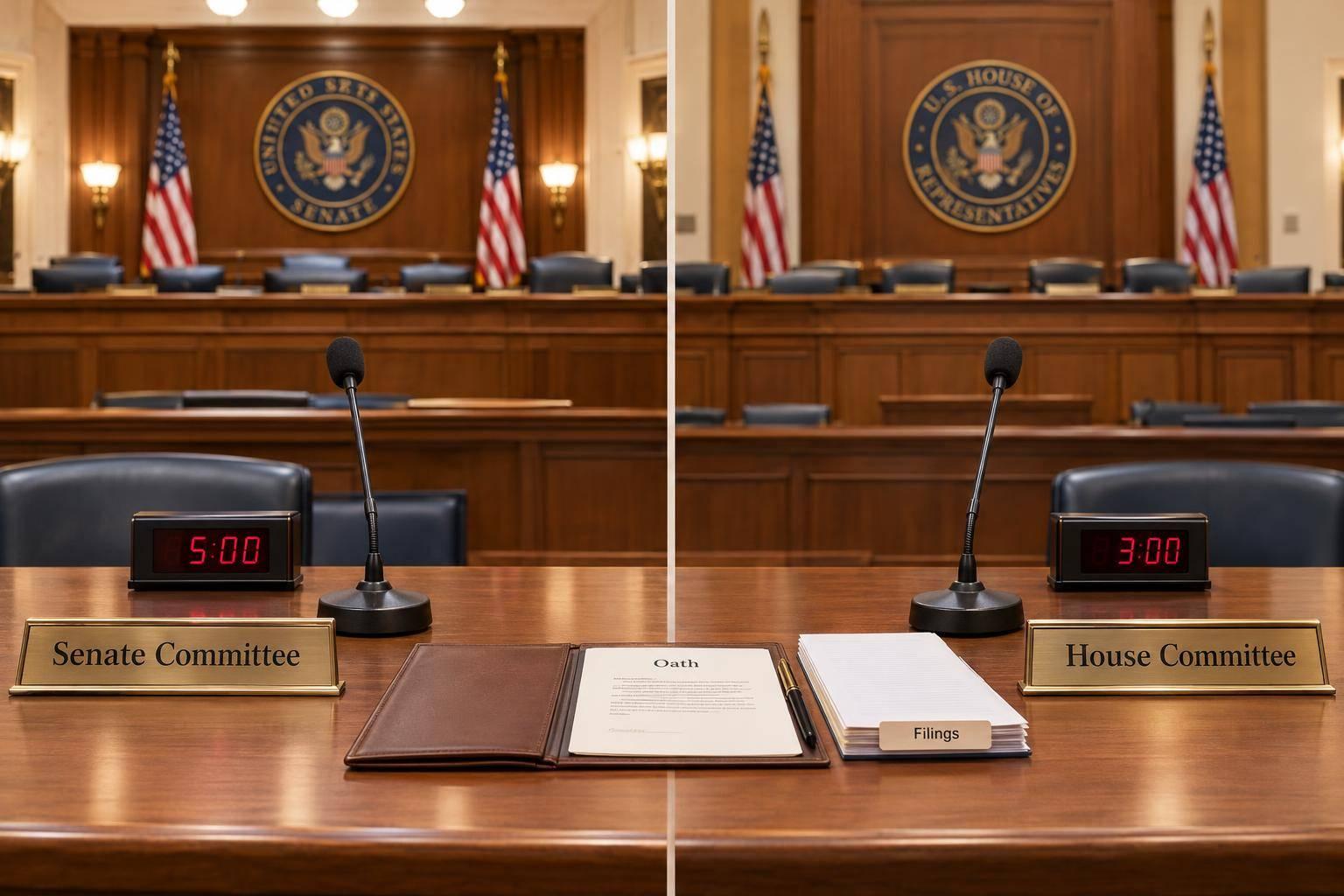
Committee Oral Testimony: Senate vs House
Master committee testimony: prepare for Senate vs House rules on timing, filings, oaths, concise openings, and Q&A.
9 min read
Tag
9 articles
Master committee testimony: prepare for Senate vs House rules on timing, filings, oaths, concise openings, and Q&A.

Methods to measure House–Senate companion bill sponsor ties, data limits, and why ties indicate association—not coordination.

October 1 doesn't renew reconciliation authority—four checks (fiscal-year authority, committee targets, budget window, Byrd Rule) determine what's in order.
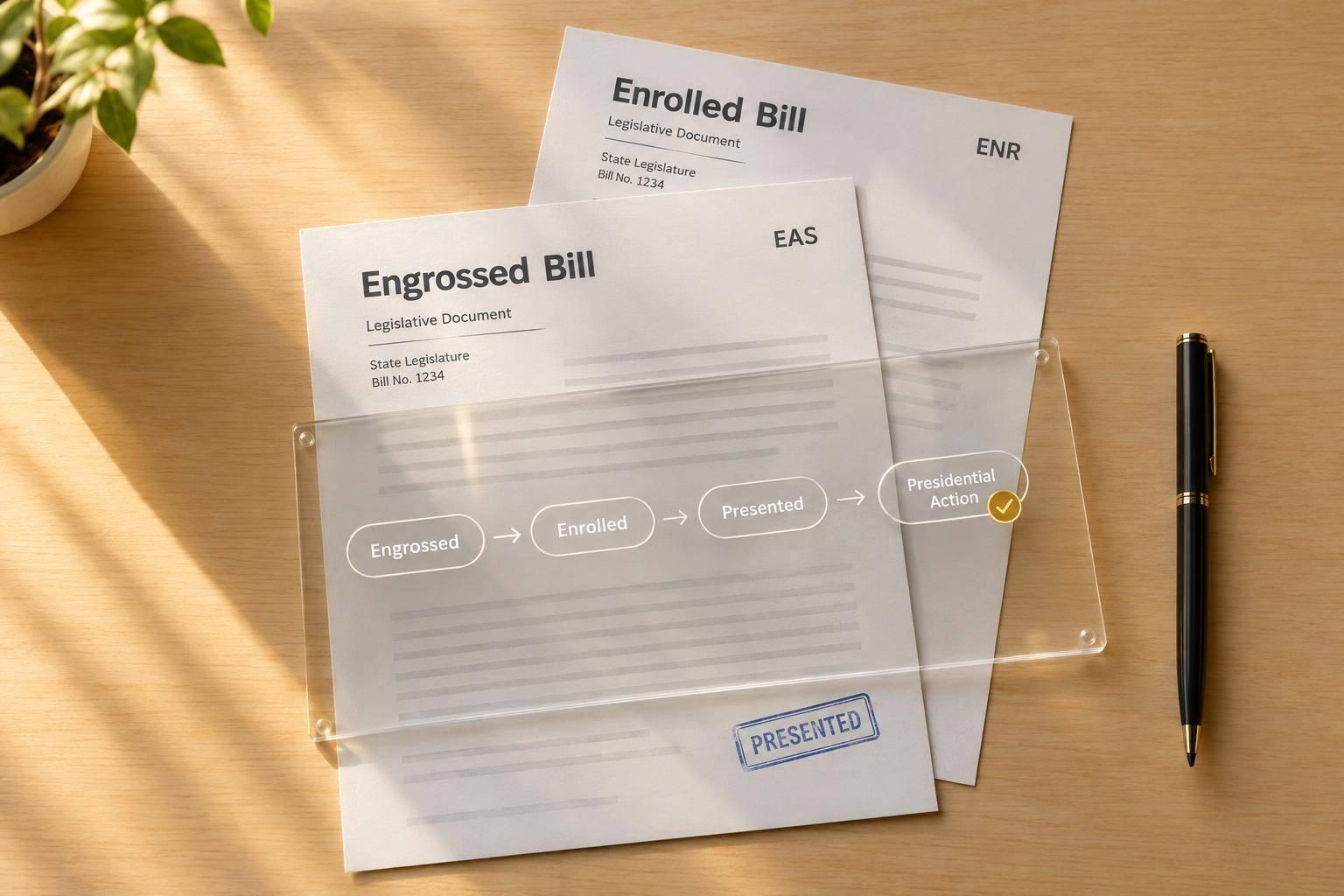
Learn how to distinguish engrossed versus enrolled bill versions, check version codes, and verify presentation and presidential action.

Explains what filing a bill starts, committee referral, sponsors/cosponsors, and why introduction doesn't guarantee a vote or law.
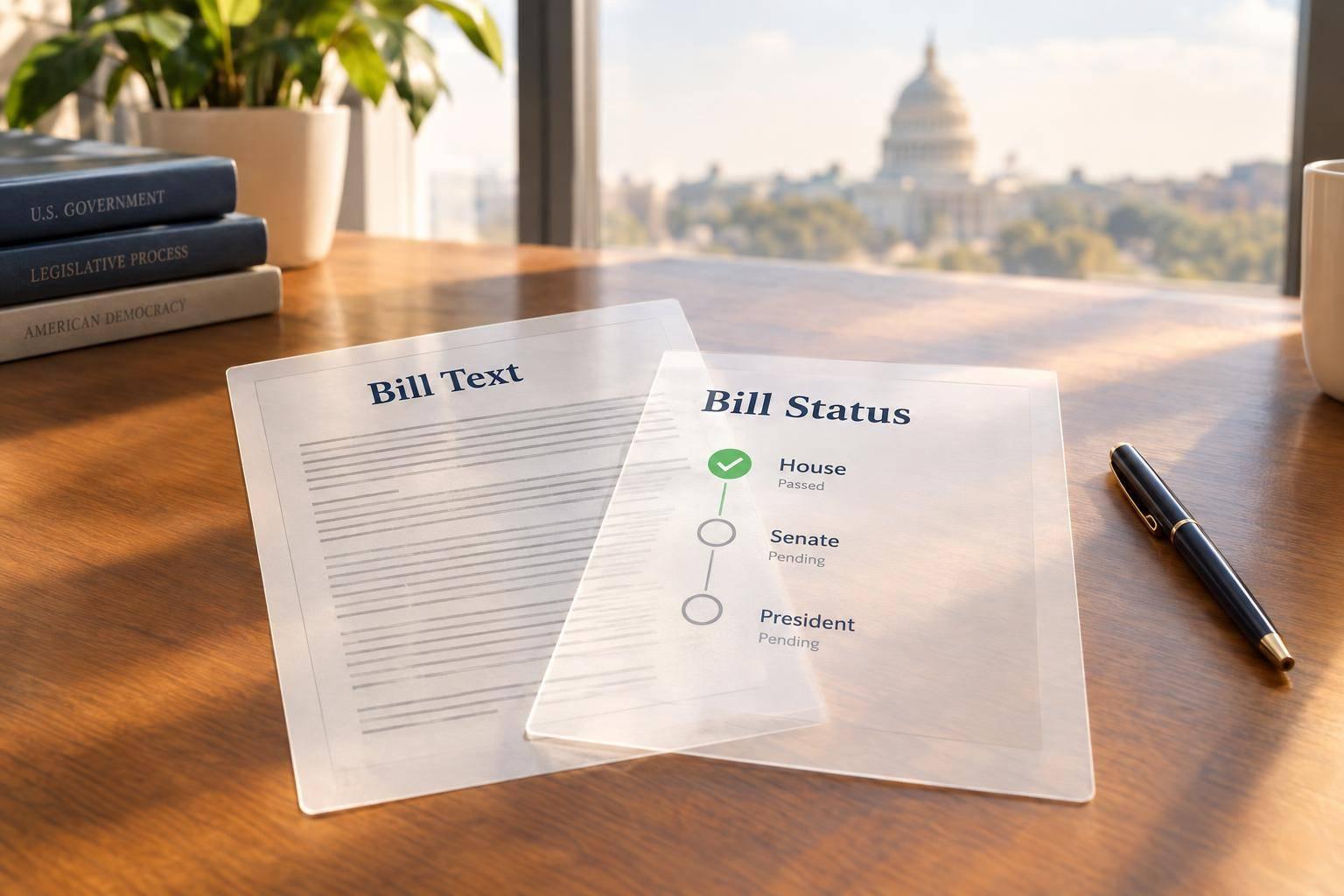
Always read a bill's text and status together - passage in one chamber doesn't make it law.

Five-step guide to tracking bills on Congress.gov: find bill number, sponsors, text, votes, and final outcome.

Ask what changes, who's affected, and when—use a 5-step checklist to map bill duties, definitions, dates, and coverage.
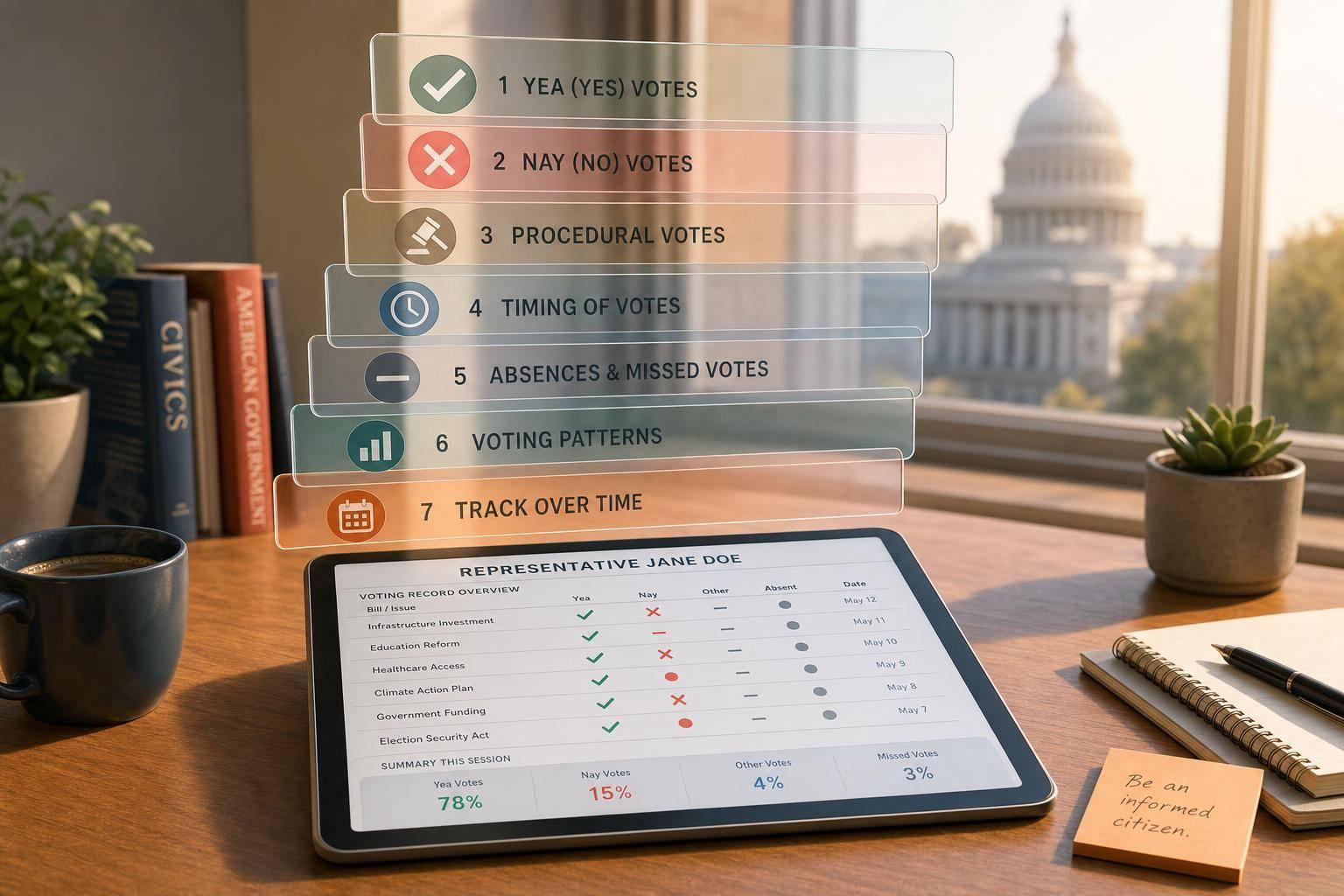
Track roll calls, procedural votes, and absences; combine official records, pattern tools, and a simple tracker to see how your rep votes.